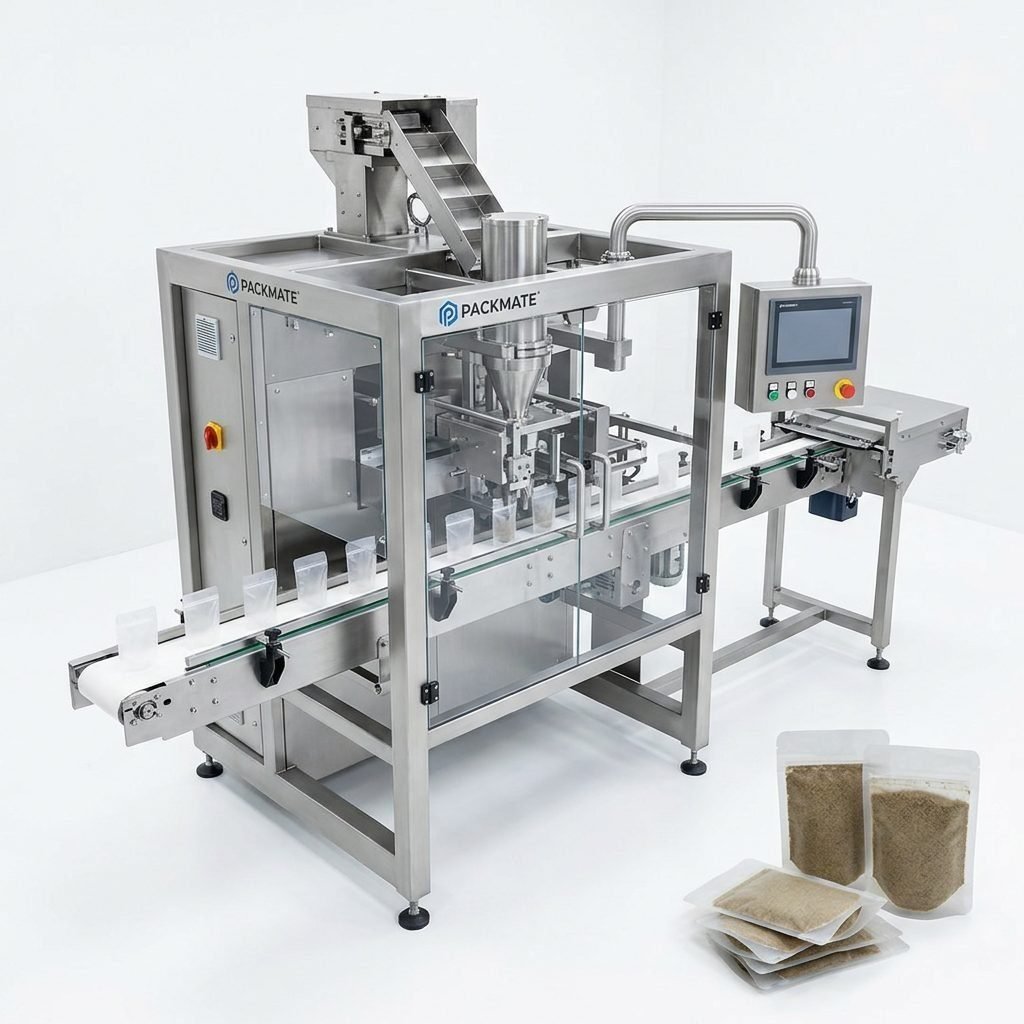
Choosing the right automatic nicotine pouch filling and sealing machine is a strategic decision for any manufacturer looking to scale production, improve product consistency, and meet international quality standards. This guide explores key technical considerations, production workflows, machine configurations, and practical tips for selecting a solution that fits your factory’s capacity, product format, and regulatory requirements.
Understanding Your Production Needs
Before evaluating machines, clearly define your target output and product formats. Typical nicotine pouch lines vary from single-lane sachet filling to high-speed multi-lane snus packaging systems. Identify the following:
🔶 Daily output target (pouches per minute, and daily volume)
🔶 Pouch size and weight range (e.g., micro-dose pouches 0.25–0.6 g vs larger consumer pouches)
🔶 Preferred pouch style (round, flat, stick, sachet, or custom shapes)
🔶 Regulatory and hygiene requirements (cleanroom class, material contact surfaces, traceability)
Production Scalability
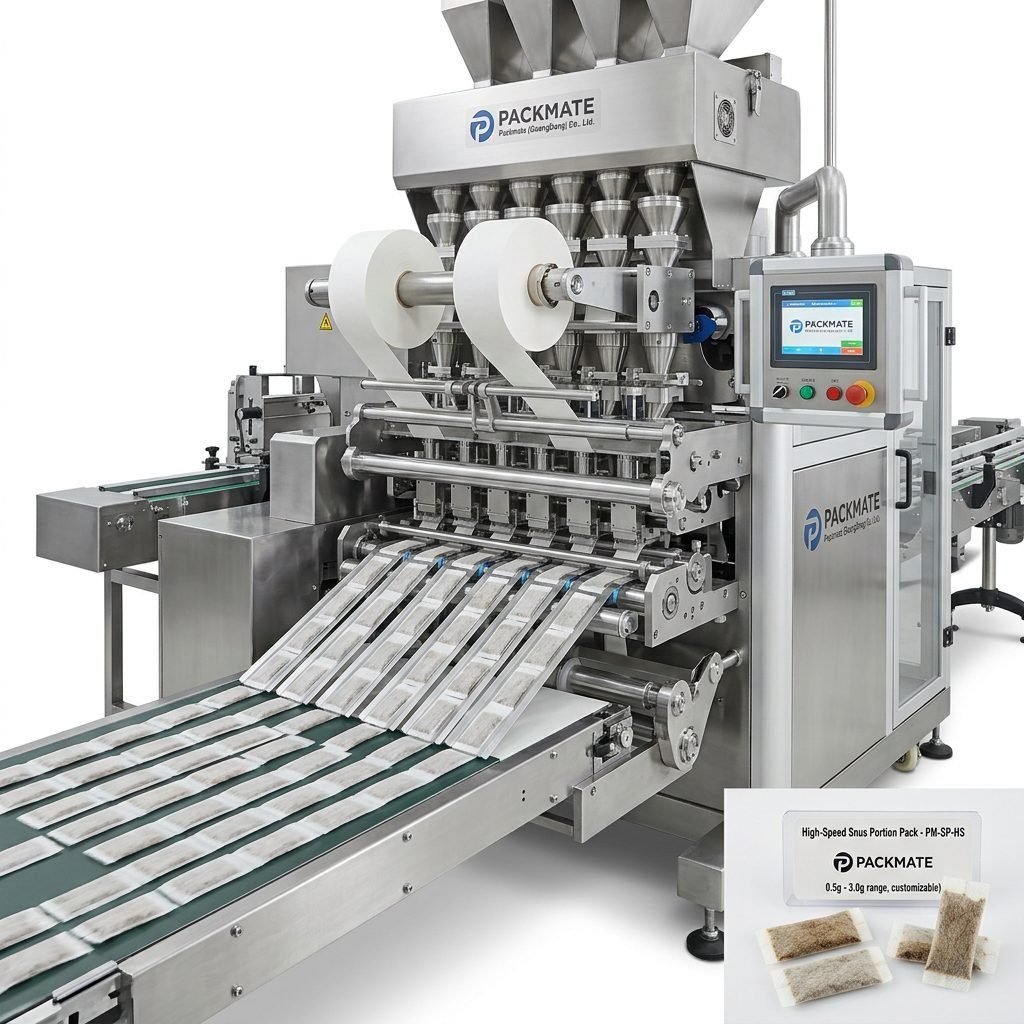
If your business expects growth, invest in modular, multi-lane machines that allow capacity expansion without complete replacement. Multi-lane systems are ideal for small-dose nicotine pouches and snus where increasing lanes multiplies throughput. Look for platforms that support incremental upgrades — adding modules, extra lanes, or higher-capacity feeders.
Core Technical Features to Compare
When you compare manufacturers and models, pay close attention to the following technical aspects:
✅ Filling accuracy and dosing mechanism: Electronic weighing, auger dosing, volumetric pistons, or micro-feeders — select a system that matches powder/granule characteristics and delivers consistent weight control with minimal giveaway.
✅ Sealing technology: Heat-seal, ultrasonic, or thermobonding — sealing choices depend on pouch film types, barrier requirements, and the need for reseal or child-resistant features.
✅ Material handling & film compatibility: Confirm the machine supports your selected films — laminated foils, monolayer films, compostable films — and has features like tension control and servo-driven film transport for precise forming.
✅ Cleaning and maintenance ease: Tool-less parts removal, quick-disconnect fittings, and clear access to product contact zones reduce downtime and support GMP compliance.
Automation & Industry 4.0 Readiness
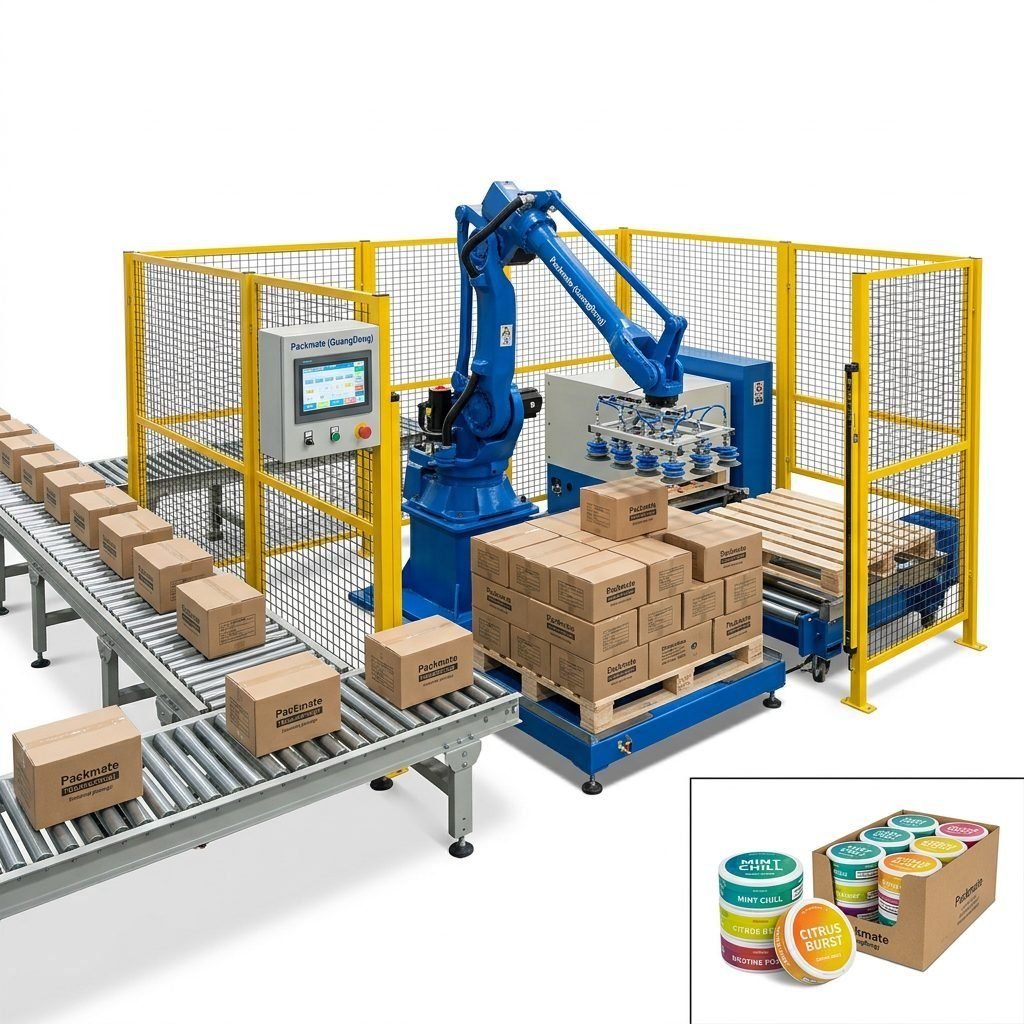
Modern packaging lines incorporate automation beyond filling and sealing: auto-feeders, inline weighers, metal detectors, vision inspection, and robotic case packers. Look for machines with open communication protocols (Ethernet/IP, Modbus, etc.), remote diagnostics, and data logging to support traceability and predictive maintenance.
Machine Types & When to Choose Each
There are several common classes of nicotine pouch packing machines. Selecting the right type depends on product form, hygiene, speed, and budget.
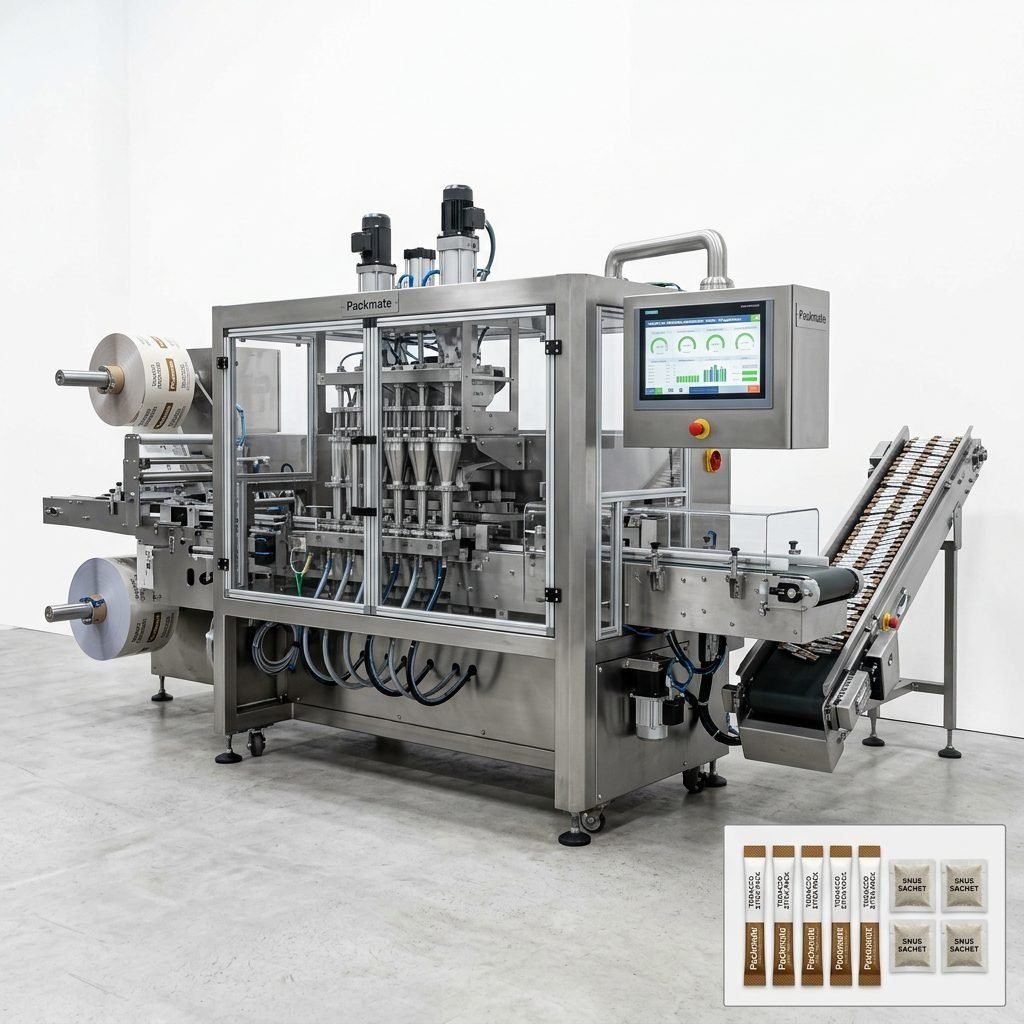
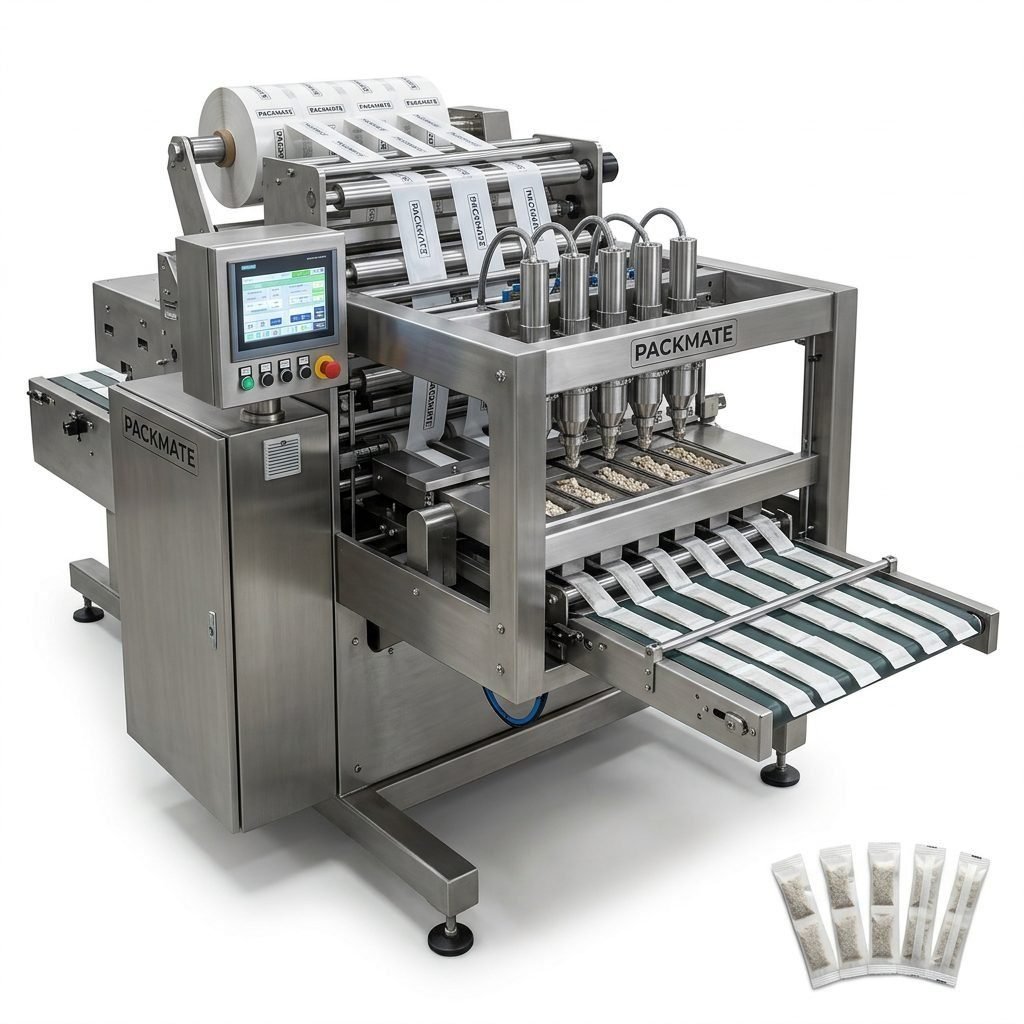
Stick Pack and Sachet Machines
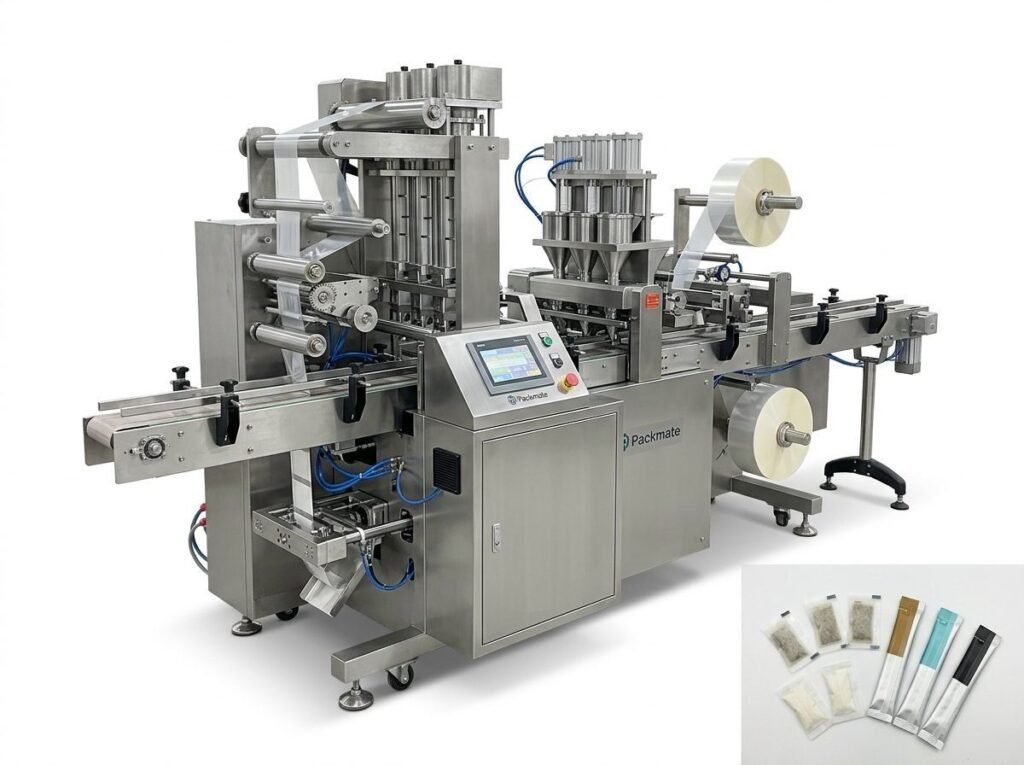
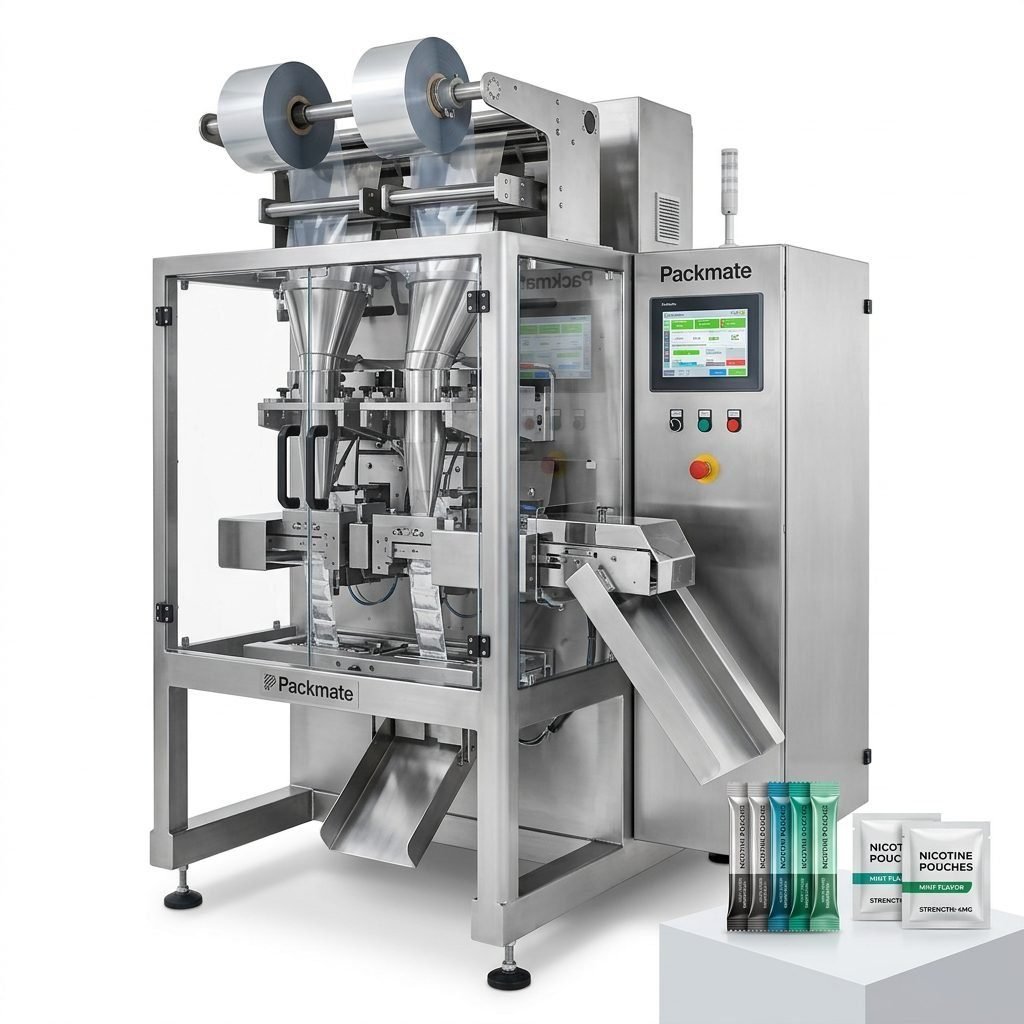
Best for single-serve stick pouches or sachets. These machines are compact, cost-effective, and suitable for flavored nicotine pouches in narrow format. They offer high speeds and simple film handling but may require special tooling for unique pouch shapes.
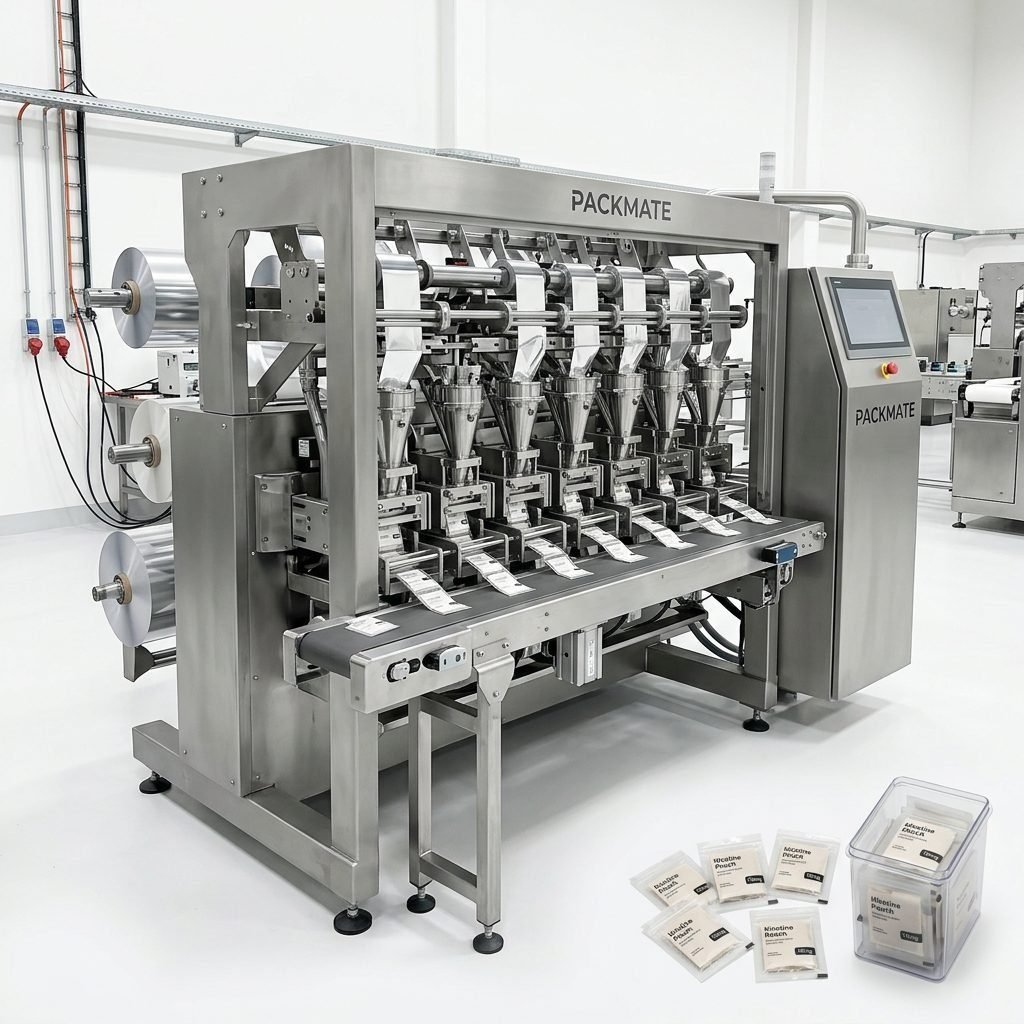
Snus / Multi-Lane Pouch Machines
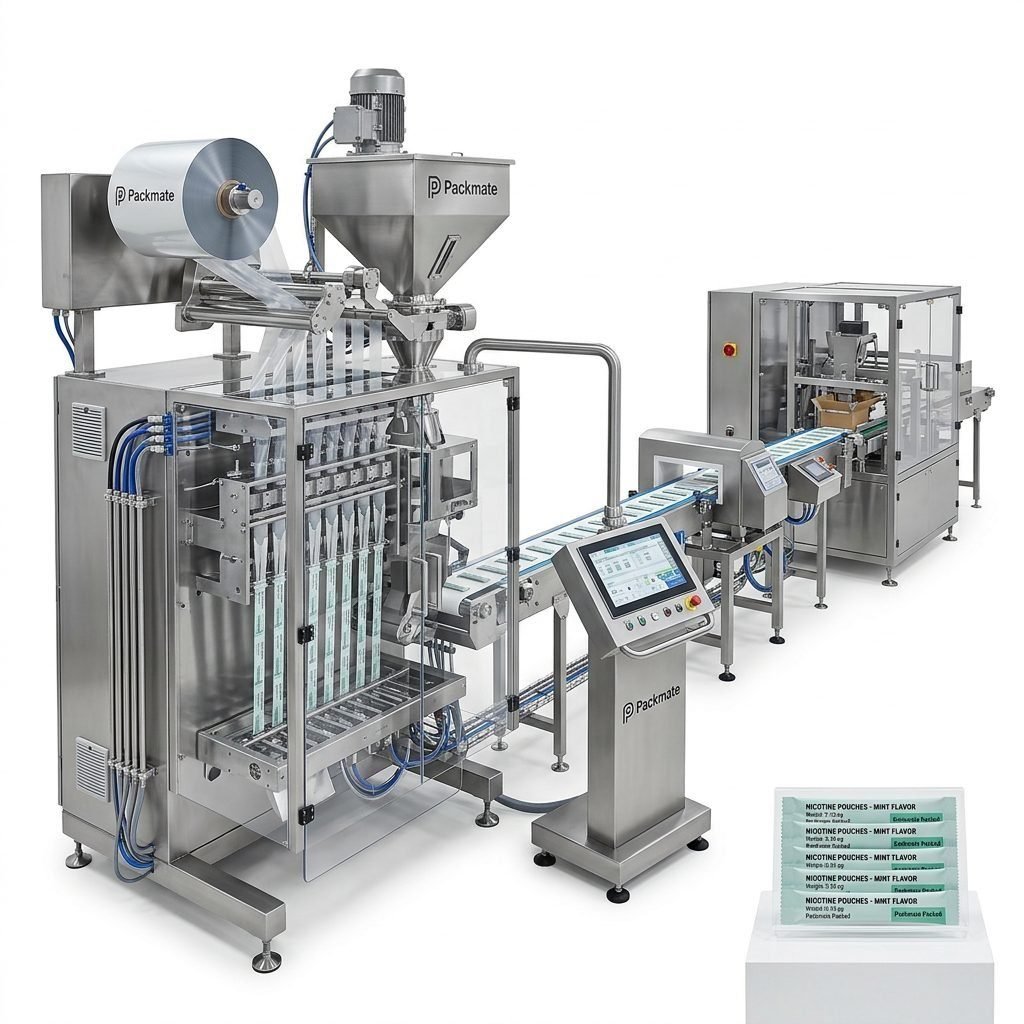
Ideal for high-volume nicotine pouch producers. Multi-lane platforms enable parallel filling across multiple lanes, significantly increasing throughput for micro-dose pouches. These systems often integrate advanced dosing systems and servo controls for synchronization.
Form-Fill-Seal (FFS) Systems
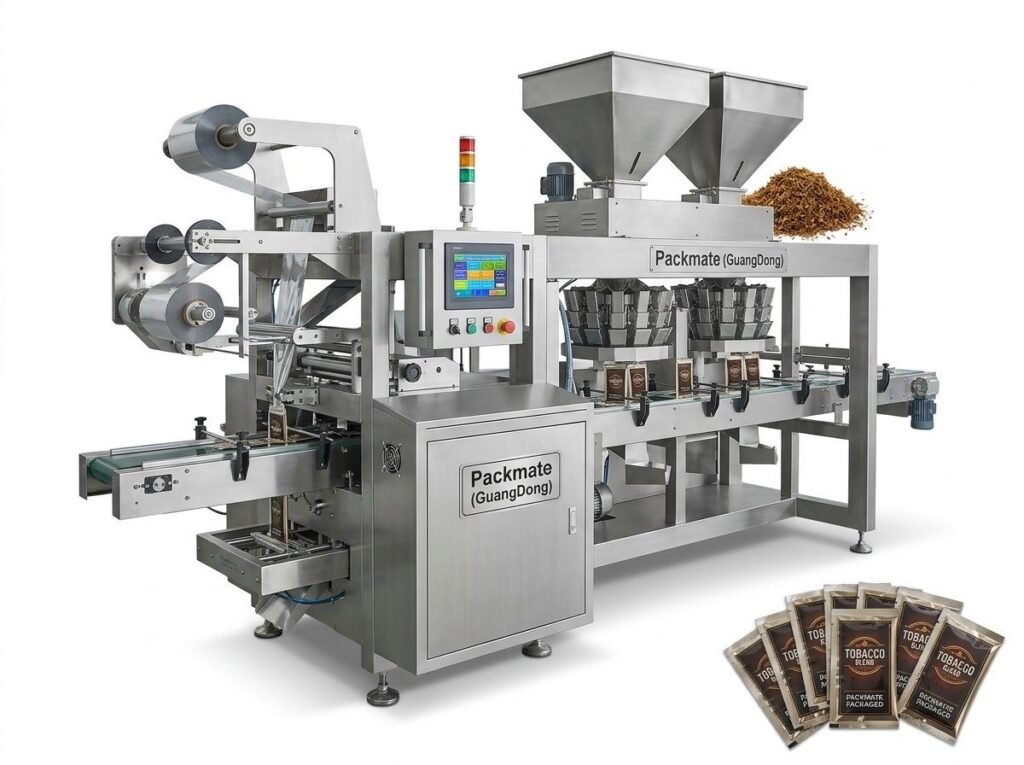
FFS machines form pouches from roll stock, fill, and seal them in one continuous operation. They are versatile and support complex barrier films and multi-layer structures. Choose FFS for full control over pouch geometry and robust sealing performance.
Material Considerations: Pouch Film & Fill
Material pairing is crucial: your chosen fill type (powder, granule, moisture-containing matrix) dictates the film barrier, sealant layer, and desiccant or barrier solutions. Discuss with suppliers about recommended film thickness, sealant layer type, and perforation requirements for breathability or freshness.
⚠️ Note: If you use tobacco or nicotine extracts with oils or high moisture, confirm compatibility with pump systems and that seals maintain integrity under shelf-life testing.
Quality, Compliance & Certifications
Ensure the machine meets international compliance standards. CE and ISO certifications demonstrate baseline manufacturing and safety practices. For nicotine products destined for specific markets, check local regulatory expectations for labeling, child-resistant packaging, and traceability features.
ℹ️ Packmate Snus Machine equipment complies with CE and ISO standards and is designed for global regulatory environments. Learn more about product families and solutions here: Snus & Nicotine Packaging Machines.
Factory Layout & Integration Tips
A well-designed layout minimizes manual handling and contamination risk. Key planning points include:
🔶 Separate raw material staging from finished goods to maintain product integrity.
🔶 Place upstream feeders (weighers, mixers) adjacent to the filling machine to shorten conveying distances.
🔶 Allow service aisles and access panels for maintenance — machines that require conveyor disassembly for daily cleaning will increase downtime.
Costs, ROI & Lifecycle Considerations
Purchase price is only the start — total cost of ownership includes spare parts, installation, commissioning, staff training, and maintenance contracts. Evaluate predictable costs:
✅ Spare parts availability and local service support
✅ Energy consumption and utility footprint
✅ Expected uptime and mean time between failures (MTBF)
Use realistic production simulations to calculate payback periods. Higher initial investment in precision multi-lane systems often pays back faster due to lower per-unit labor and higher throughput.
Vendor Selection: What to Ask Potential Suppliers
When speaking with machine manufacturers, request the following:
🔶 Detailed performance data: speeds, accuracy, power consumption, and required utilities.
🔶 References and case studies: examples of similar lines, ideally in your product category. Explore Packmate’s global cases here: Case.
🔶 Commissioning, training, and after-sales service commitments.
🔶 Spare parts lead times and local stocking options.
Factory Visit & Factory Strength
Whenever possible, visit the supplier’s manufacturing site to inspect production practices, machining capabilities, and quality control. A reputable supplier will have robust manufacturing facilities, such as advanced CNC centers and precision assembly lines. Packmate operates a 20,000㎡ factory with full assembly and testing capabilities — a strength worth considering when evaluating longevity and support.
Common Customizations & Add-Ons
Depending on your product and market, common options include:
🔶 Inline metal detection and x-ray inspection for safety compliance
🔶 Vision systems for print and seal verification, barcode or QR traceability
🔶 Robotic pick-and-place for secondary packaging and cartoning
🔶 Nitrogen flushing or modified atmosphere packaging (MAP) for extended shelf life
Operator Training & Safety
Proper operator training reduces human error and increases uptime. Confirm that the supplier includes:
🔶 Comprehensive on-site training for operators and maintenance staff
🔶 Clear documentation, spare parts lists, and troubleshooting guides
🔶 Remote support channels for quick diagnostics and firmware updates
Why Choose a Specialist Supplier
Specialist manufacturers focused on nicotine pouch and snus packing bring deep domain experience — from dosing micro-quantities reliably to compliance with sensitive product hygiene requirements. When evaluating vendors, check their product portfolio and whether they offer turnkey lines including weighing, filling, sealing, and secondary packaging. Examples of related product lines include Bag & Pouch Packaging Machines and complete Filling & Packaging Lines.
After-Sales and Global Support
A global supplier network and timely spare parts distribution are essential. Ask about service plans, warranty terms, and the possibility of training local technicians. Packmate emphasizes long-term technical support and international exhibition presence to showcase capabilities — more details at About Packmate and Our Exhibition.
Checklist: Final Decision Criteria
Use this quick checklist to compare final candidates:
🔶 Throughput vs. target production
🔶 Dosing accuracy and shrink/giveaway management
🔶 Film and pouch compatibility
🔶 Cleanability, maintenance access and spare parts
🔶 Vendor experience, references, and compliance certificates
Closing Thoughts
Selecting the best nicotine pouch filling and sealing machine requires balancing performance, flexibility, and total cost of ownership. Prioritize machines with proven dosing accuracy, robust sealing for your chosen films, and a clear service pathway. A trusted specialist with global turnkey capabilities can accelerate your time-to-market while protecting product quality and regulatory compliance.
Further Resources
For more technical details and product options, explore the supplier product pages and catalogs. Packmate offers comprehensive solutions across snus & nicotine packaging and auxiliary equipment — view their product families in the online catalog and support pages.
– Snus & Nicotine Packaging Machines
– Auxiliary Packaging Equipment
– Service & Support
Frequently Asked Questions
Q1: How do I determine the right machine speed for my line?
A: Estimate your daily production target and convert it to pouches per minute considering planned uptime and changeovers. Factor in growth margin and choose a machine or multi-lane configuration that comfortably meets peak demand.
Q2: What maintenance should I budget for annual running costs?
A: Budget for routine spare parts (seals, sensors, belts), annual calibration of weighing systems, periodic servo checks, and preventative service visits. Service contracts often reduce unexpected downtime and are worth the cost for high-volume operations.
Q3: Can machines be adapted to different pouch sizes and materials?
A: Yes — many platforms support interchangeable tooling, adjustable dosing heads, and programmable sealing profiles. Confirm quick-changeover features and the supplier’s experience with your target pouch formats.
Q4: Is multi-lane technology necessary for small-dose nicotine pouches?
A: For micro-dose pouches, multi-lane systems are highly efficient because they multiply throughput without increasing line speed per lane, improving accuracy and reducing mechanical stress. Consider multi-lane solutions if throughput targets are high.
Q5: How do I select a trustworthy supplier?
A: Evaluate supplier certifications (CE/ISO), factory capabilities, references, spare parts policy, on-site training offerings, and post-sale support. Visiting the factory or requesting virtual demonstrations and case studies helps validate claims.