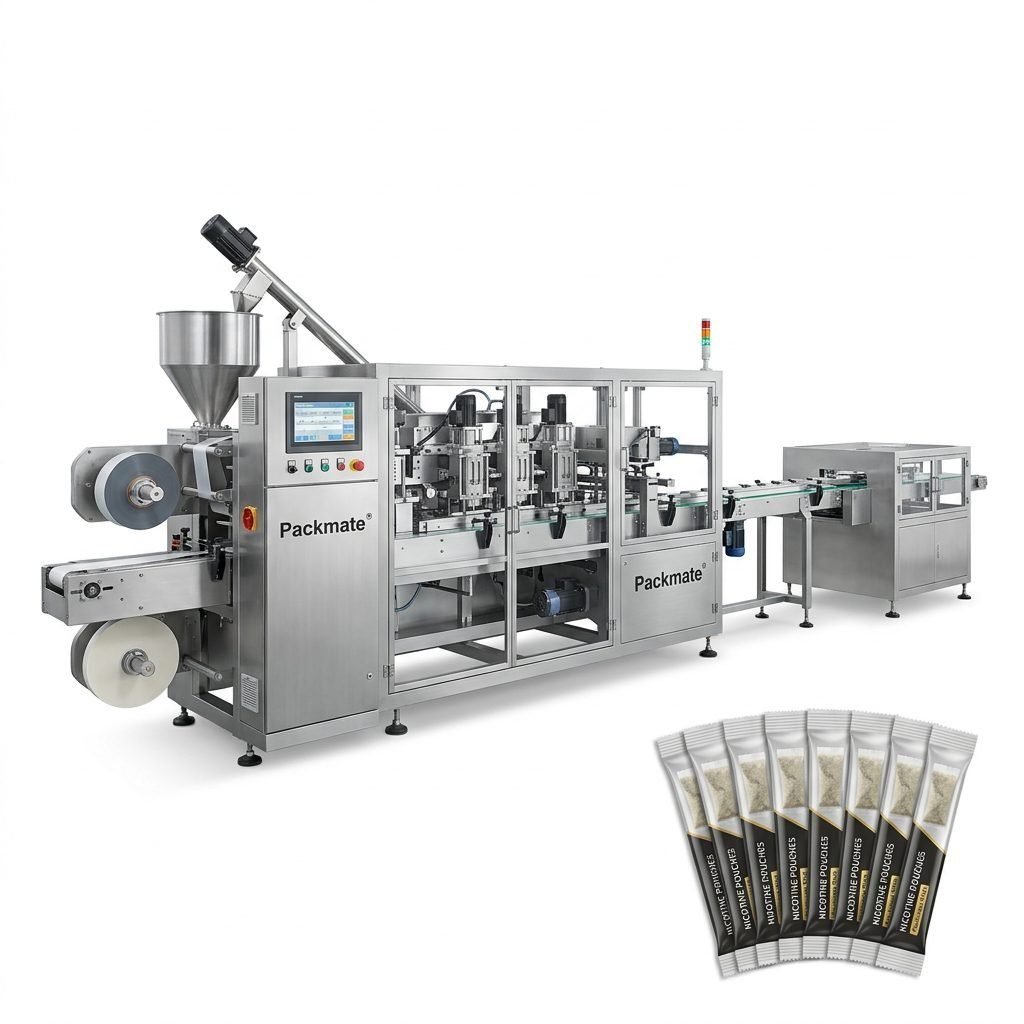
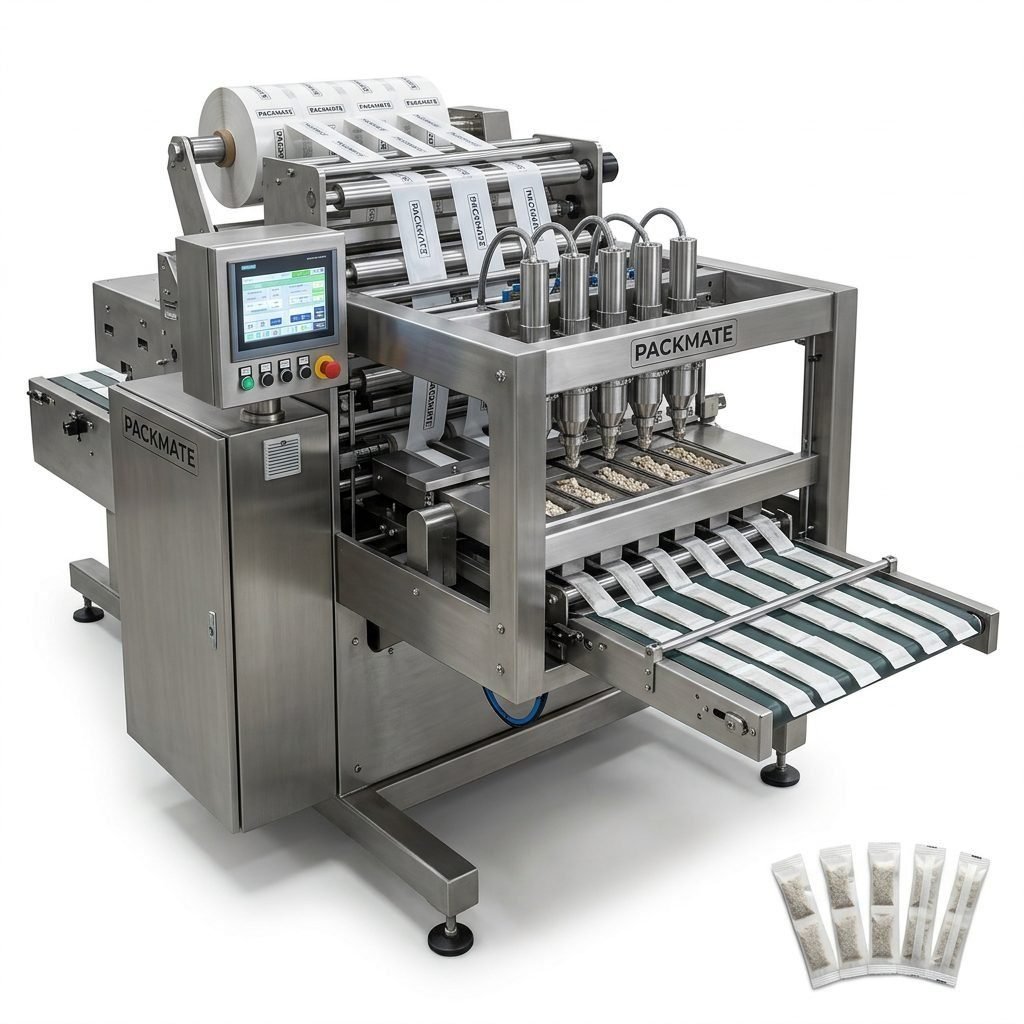
In the fast-evolving nicotine pouch market, building an efficient, reliable production line is essential for staying competitive. This guide walks packaging managers, engineers, and business owners through the design, selection, and optimization of a nicotine pouch production line — from raw material handling to finished carton packing — with practical insights drawn from decades of packaging engineering experience.
Production line overview: core stages and flow
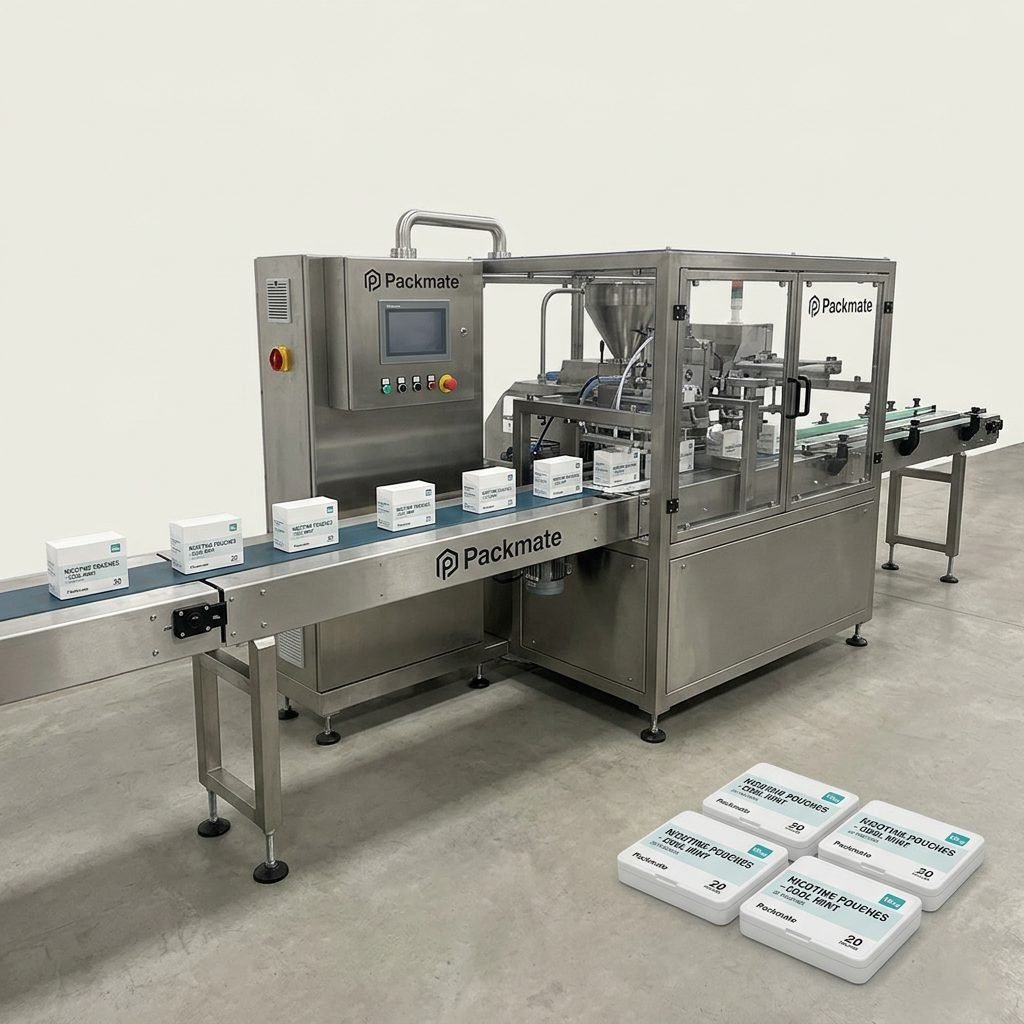
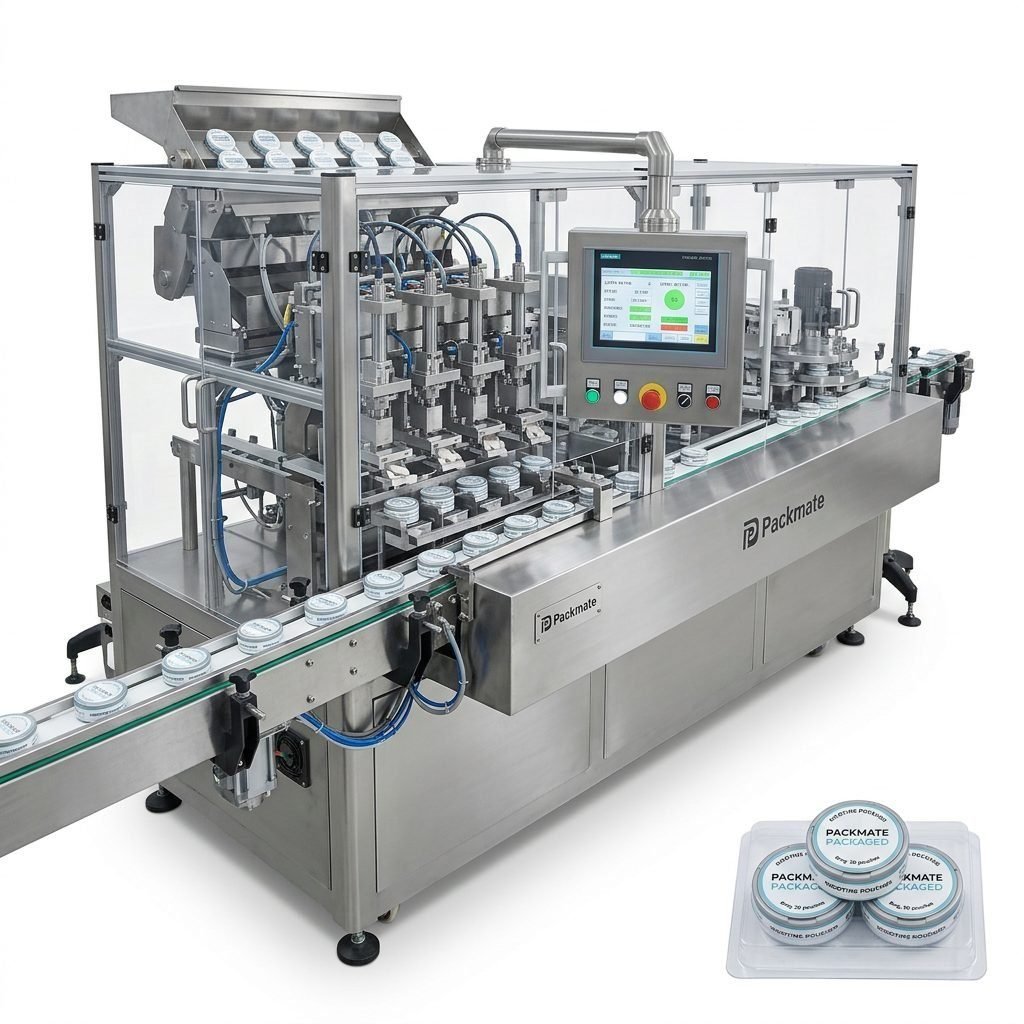
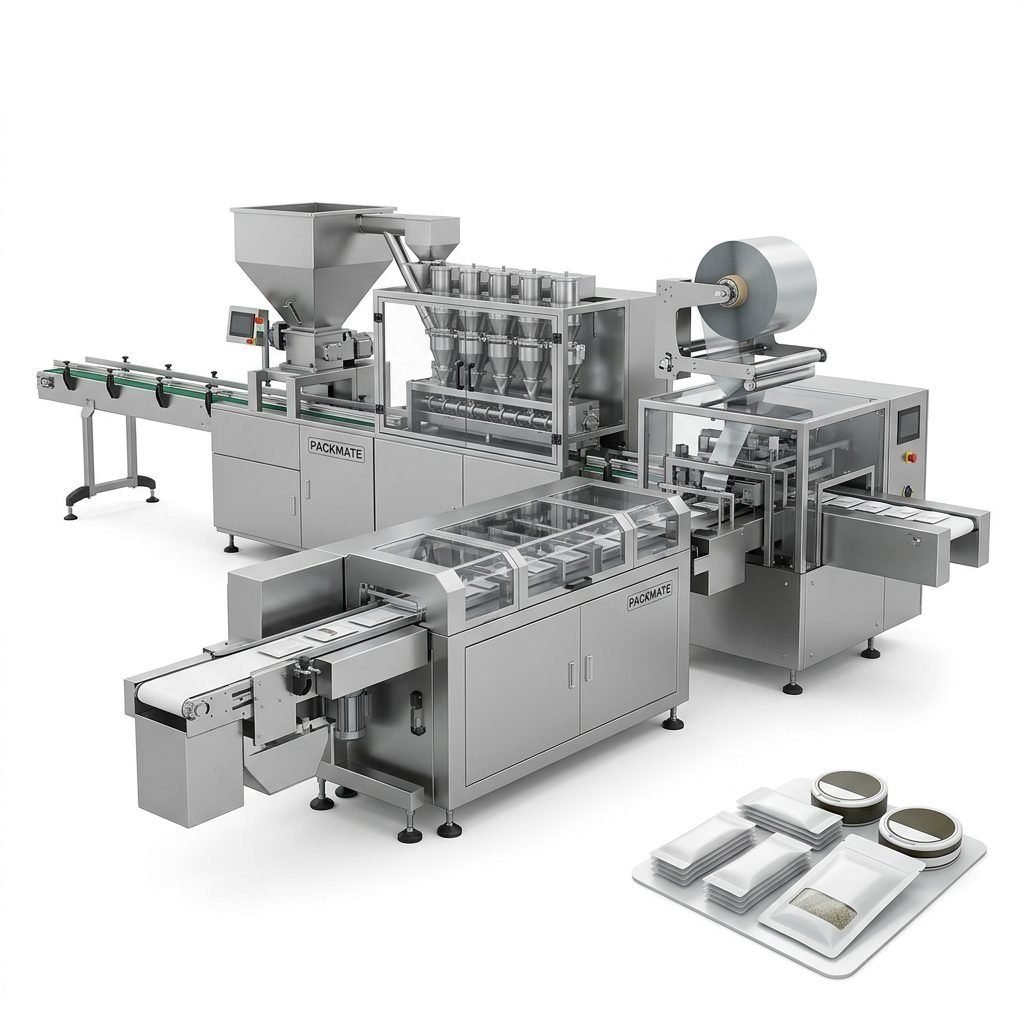
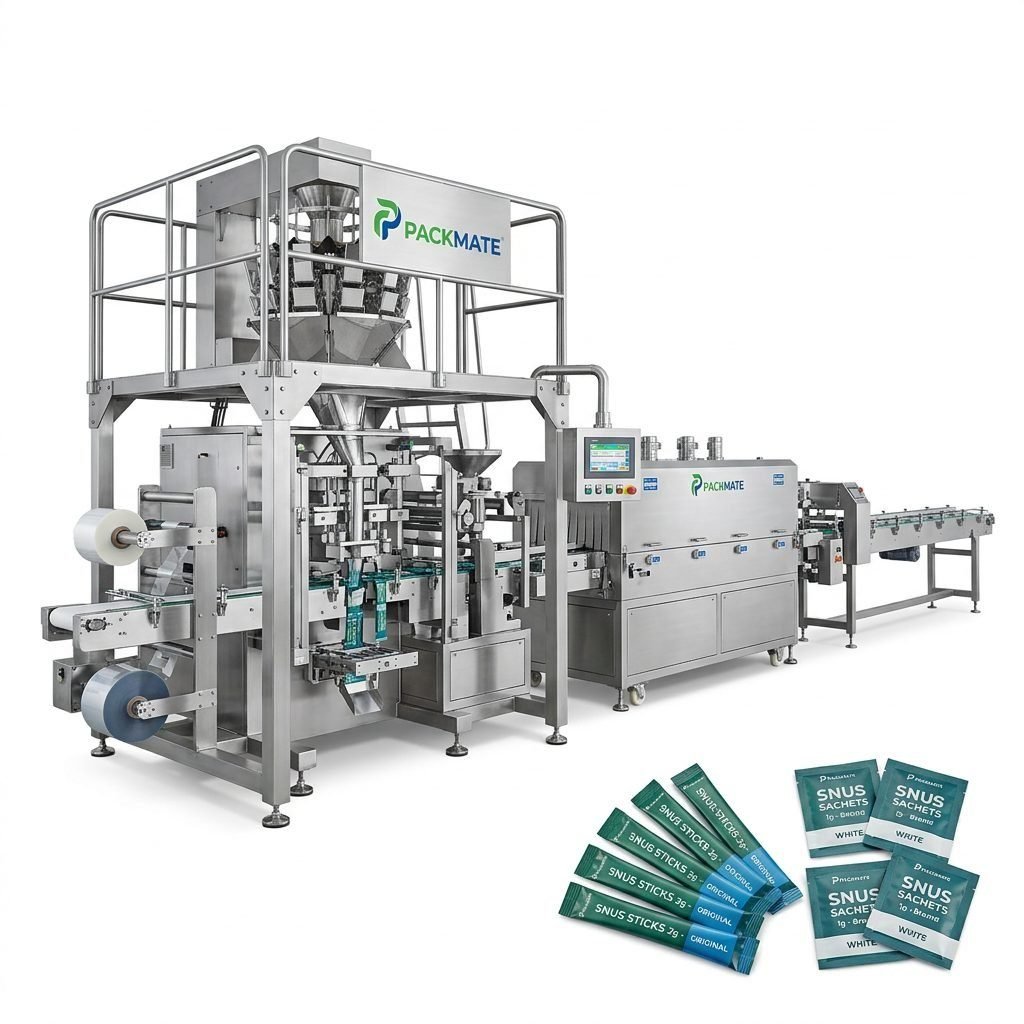
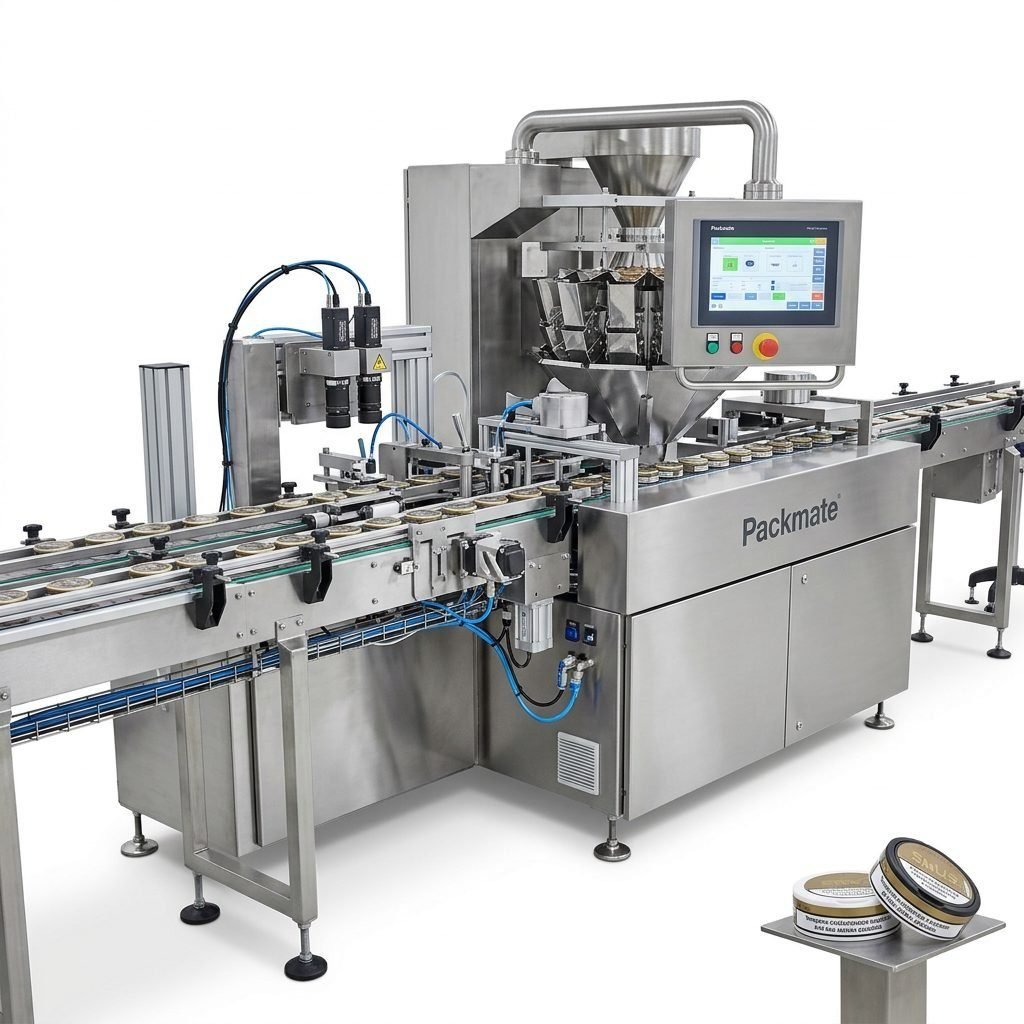
A modern nicotine pouch production line typically includes raw material dosing & weighing, blend/mixer systems, granulation or filler handling, precision pouch filling, pouch forming/sealing, checkweighing, metal detection, secondary packaging (carton or flow-wrap), and palletizing. Each stage must be synchronized to meet target output while ensuring product quality and safety.
🔶 Key takeaway: Choose machines that allow flexible lane configurations and modular upgrades. Multi-lane pouch machines and modular auxiliary equipment enable capacity scaling without full line replacement.
1. Raw material handling and dosing
Precise, hygienic material handling is the foundation of consistent nicotine pouch weight and feel. Use calibrated feeders, loss-in-weight systems, or multi-head weighers depending on formula complexity and throughput. For nicotine and other controlled ingredients ensure segregated dosing with traceability and secure access.
2. Blending and texture control
The blend must deliver repeatable moisture content and texture. Closed mixers with modular cleanout features reduce cross-contamination and minimize downtime. Online moisture measuring and feedback control help maintain pouch feel and release profile batch-to-batch.
3. Filling, pouch forming & sealing
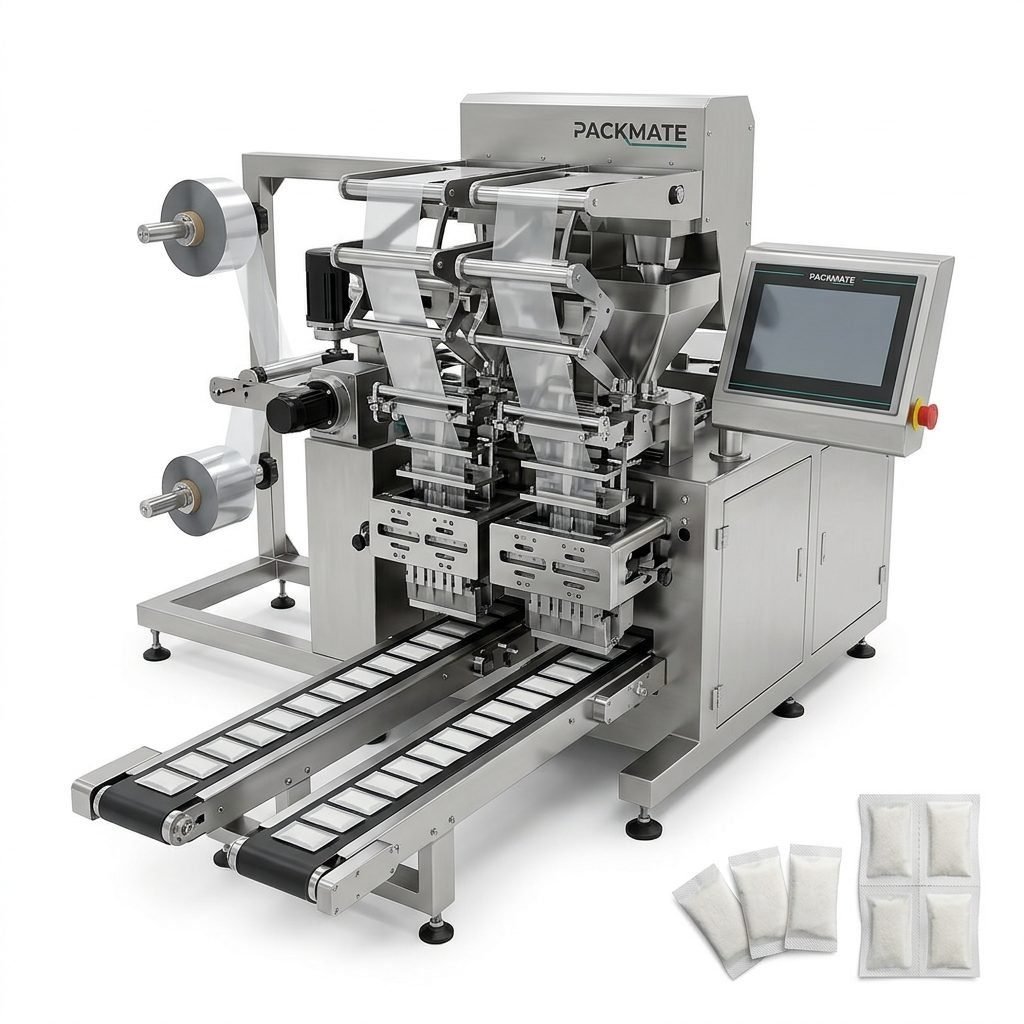
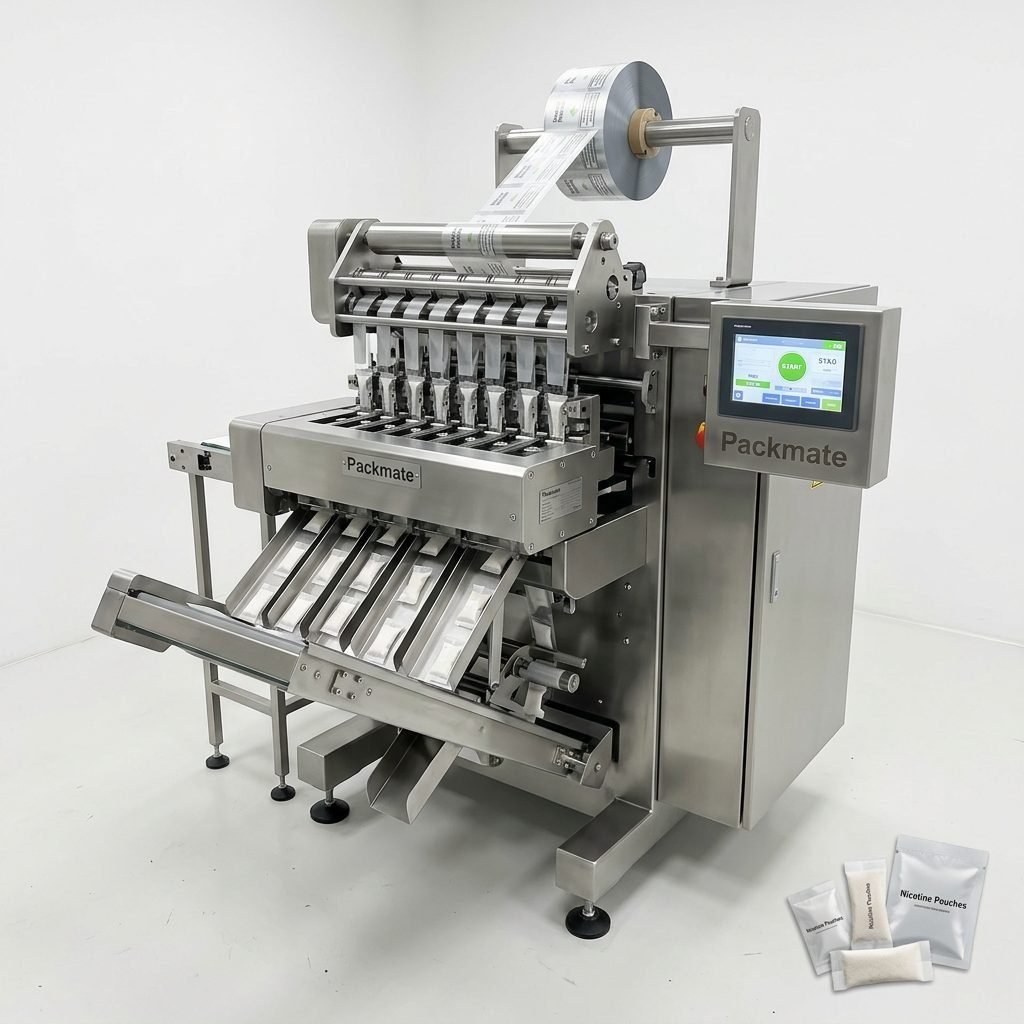
Precision filling units — servo-driven augers or piston fillers — ensure accurate portioning for tiny nicotine pouches. Pouch machines (stick, sachet or multi-lane pillow formats) must offer synchronized film handling and temperature-controlled sealing stations to prevent leaks and maintain aesthetics.
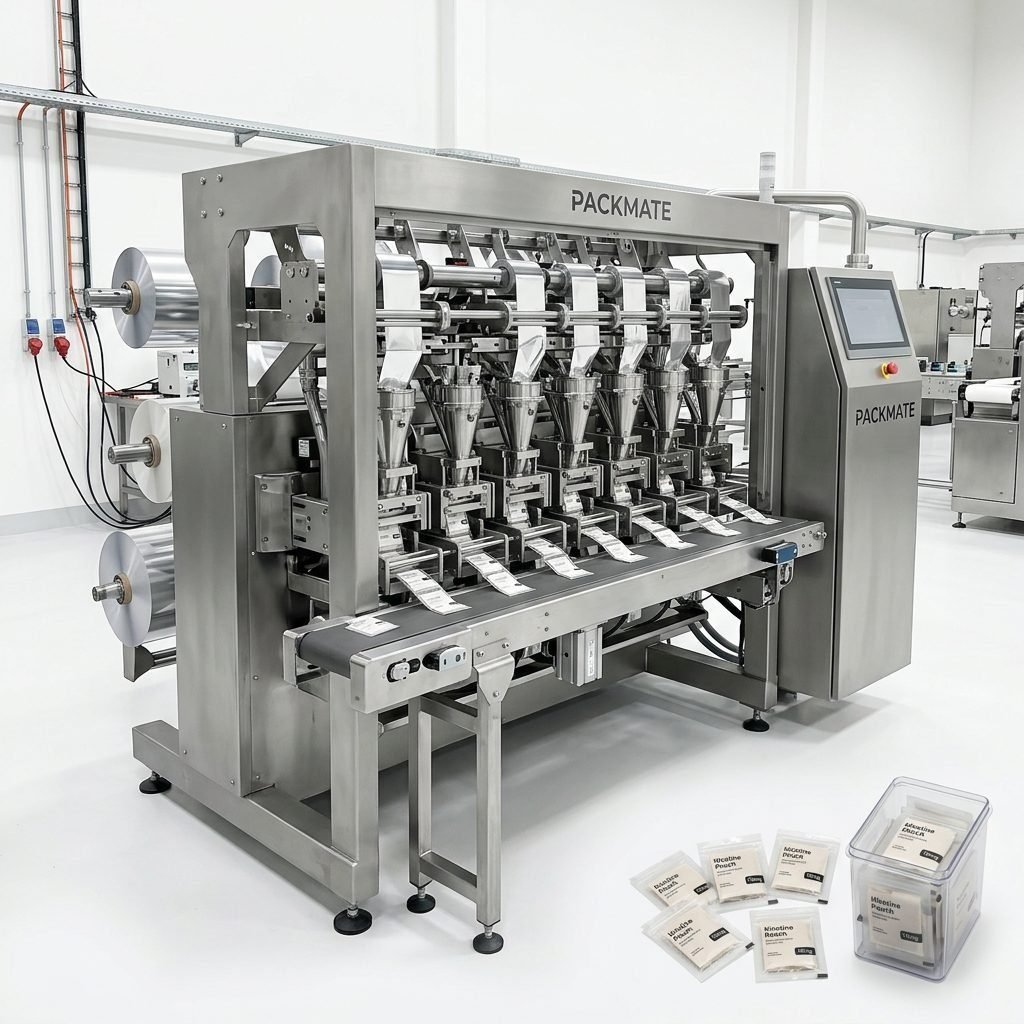
✅ Production tip: For high-speed small-dose pouches a multi-lane forming system can multiply capacity while keeping footprint compact. See modular options in Snus & Nicotine Packaging Machines.
Design choices that impact output and quality
Several decisions influence both CAPEX and OEE (overall equipment effectiveness): lane count, automation level, degree of CIP/COP design, PLC/HMI capabilities, and ancillary systems such as dryers or vacuum conveyors. Evaluate the balance between automation and manual flexibility based on SKU variety and forecasted volumes.
Lane configuration & scalability
Single-lane machines are simple and cost-effective for small batches; multi-lane systems (4/8/12 lanes) are the preferred choice for high-volume nicotine pouch producers. Look for mechanical symmetry so lanes can be added or taken offline without disrupting production.
Automation & Industry 4.0 readiness
Remote diagnostics, recipe management, and OEE dashboards enhance uptime and traceability. Prioritize machines with open communication protocols (OPC-UA, Modbus) to integrate into your MES and quality systems.
Hygiene, compliance and safety considerations
Compliance with CE and ISO standards is essential for global distribution. Material contact parts should be stainless steel (304/316 as needed), with smooth welds and CIP capability. Safety interlocks, access control, and clear product lot tracking give you regulatory confidence.
Note: nicotine handling often requires additional worker protection and documentation — plan layout and ventilation accordingly.
Quality control: in-line checks and offline testing
In-line checkweighers, vision systems for seal inspection, and metal detectors should be placed at strategic points. Establish a sampling plan for moisture, nicotine content, and microbial testing. Real-time alarms and data logging help prevent out-of-spec shipments and reduce waste.
⚠️ Quality alert: implement automatic rejection mechanisms. A single faulty pouch in a sealed carton can damage brand trust.
Traceability & serialization
Batch coding, inkjet or laser marking, and database links to raw material lots are becoming standard. A capable supplier will integrate coding systems so cartons and pouches link back to blend and filler batches.
Factory & manufacturing strength — why it matters
Partnering with a manufacturer that has strong CNC capabilities, precision assembly lines, and a large facility reduces lead times and improves spare parts availability. A proven factory will offer factory acceptance tests (FAT), witnessed runs, and clear documentation.
For turnkey solutions that include filling, weighing, and pouch systems explore integrated lines like those outlined in Filling & Packaging Lines and Weighing & Packaging Systems.
Installation, commissioning and training
A robust supplier provides onsite commissioning, operator training, and maintenance curriculum. Documentation should include spare parts lists, electrical and pneumatic diagrams, and recommended preventive maintenance schedules.
🔶 Training highlight: cross-train at least two operators per shift and create visual SOPs to reduce operator error and downtime.
Maintenance & spare parts strategy
Adopt a preventative maintenance program with scheduled inspections for belts, seals, and bearings. Maintain a critical spares kit for high-wear components to cut mean time to repair (MTTR). Many manufacturers provide service contracts; evaluate response time and remote support capabilities.
Cost considerations & return on investment
Budget for base equipment, installation, qualification, spare parts, operator training, and possible facility upgrades (compressed air, utilities, dust control). ROI is driven by yield, labor savings, and reduced waste — multi-lane automated lines often show faster payback in medium-to-high volume operations.
Customization and flexible packaging formats
Today’s market demands a variety of formats: sachet, stick pack, or custom small pouches. Choose suppliers who can adapt tooling and machine software to support multiple SKUs and film types without long changeover times. For sachet and stick pack options, consider reviewing Sachet & Stick Pack Machines.
Selecting a supplier: checklist
When evaluating manufacturers, use a checklist that includes:
-
Factory size and machining capabilities
-
Quality certifications (CE, ISO) and FAT procedures
-
Service and spare parts lead times
-
References and case studies across regions
-
Flexibility for customization and future upgrades
🔎 Supplier insight: Packmate Snus Machine combines 30+ years of engineering with a 20,000㎡ factory, offering turnkey lines, advanced CNC fabrication, and global installations — learn more About Packmate.
Case examples & scaling pathways
Case studies show how businesses moved from pilot benches to full production by adopting multi-lane pouch systems plus automated secondary packaging. Start with a pilot line to validate formulas and packaging materials, then scale with modular lanes and additional upstream automation.
From pilot to full-scale
Begin with a compact system that replicates production conditions. Use data gained to inform the design of the full line: throughput targets, lane count, and required QC stations. This approach limits costly design changes later.
Sustainable practices and material choices
Sustainable packaging is increasingly important. Look for film suppliers offering recyclable or lower-carbon films compatible with your sealing technology. Equipment should support material-efficient designs that minimize scrap and energy use.
Final selection checklist before purchase
Before signing a contract, confirm lead times, training and warranty coverage, FAT acceptance criteria, and spare parts stocking. Verify the supplier’s exhibition history and project references; visiting a live production line is invaluable. For real-world examples and exhibition appearances, review Our Exhibition and Case pages.
🔶 Bottom line: invest in modular, serviceable equipment from a manufacturer with proven turnkey capability to optimize performance, reduce risk, and accelerate ROI.
Next steps for procurement teams
Create a project brief with target throughput, SKU mix, space constraints, and regulatory requirements. Issue an RFQ to short-listed vendors and request FAT demonstrations, references, and a detailed quotation including installation and training. Engage facilities to review utility and layout needs early.
Contact & support
For tailored advice and turnkey production lines, consult experienced suppliers who combine design, manufacturing, and after-sales service. To reach out directly, visit the manufacturer’s contact page for project inquiries and service options: Contact Us.
Frequently Asked Questions
Q1: How do I choose between a single-lane and multi-lane pouch machine?
A1: Consider current and projected volumes, SKU variety, available floor space, and budget. Single-lane suits low-volume or pilot runs; multi-lane offers higher output and better per-unit cost on high-volume production.
Q2: What are the critical hygiene features for nicotine pouch production equipment?
A2: Food-grade stainless contact parts, CIP-friendly design, minimal crevices, sealed drives where dust is present, and dedicated lines or segregation for nicotine-containing operations are essential.
Q3: How long does it take to commission a complete production line?
A3: Small lines may be commissioned in weeks; complex turnkey lines with upstream automation typically need several months including site preparation, FAT, installation, and validation. Plan for operator training and process validation.
Q4: What routine maintenance tasks should be scheduled?
A4: Daily cleaning, belt and seal inspection, weekly lubrication checks, monthly alignment verifications, and quarterly spare parts reviews are common. Follow the supplier’s maintenance schedule closely.
Q5: Where can I find examples of integrated nicotine pouch lines?
A5: Explore product and case pages that showcase integrated solutions and completed projects, including multi-lane pouch systems and filling lines — see Bag & Pouch Packaging Machines for more examples.