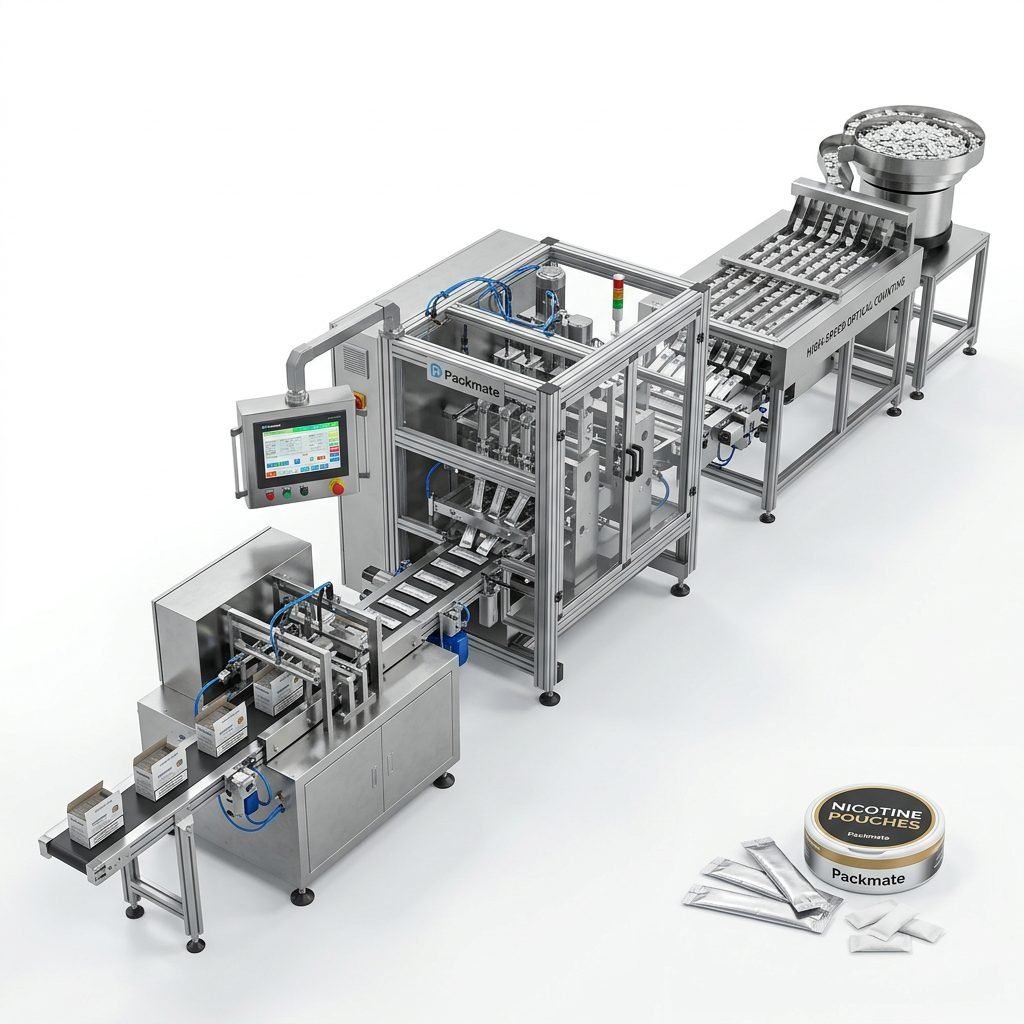
Entering the Guinea market with a snus or nicotine pouch production line requires more than buying a machine — it demands a partner who understands product performance, local consumer habits, tropical climate challenges, and after-sales service realities. This guide walks you through how to choose the best snus packaging machine supplier for your factory in Guinea, with practical evaluation criteria, local considerations, and actionable steps to secure reliable equipment and long-term support.
Why choosing the right supplier matters in Guinea
In Guinea, where the climate is typically hot and humid and infrastructure can be variable outside major cities, packaging machines must deliver consistent product quality while resisting environmental stress. A good supplier not only sells equipment but provides turnkey solutions including layout planning, humidity-protection packaging options, training, and local service arrangements. Look for a manufacturer with strong engineering background, proven global cases, and certifications such as CE and ISO.
Quick checklist:
Production capacity, humidity protection, multi-lane options, spare parts availability, local training, and compliance with international safety standards.
1. Verify manufacturing strength and experience
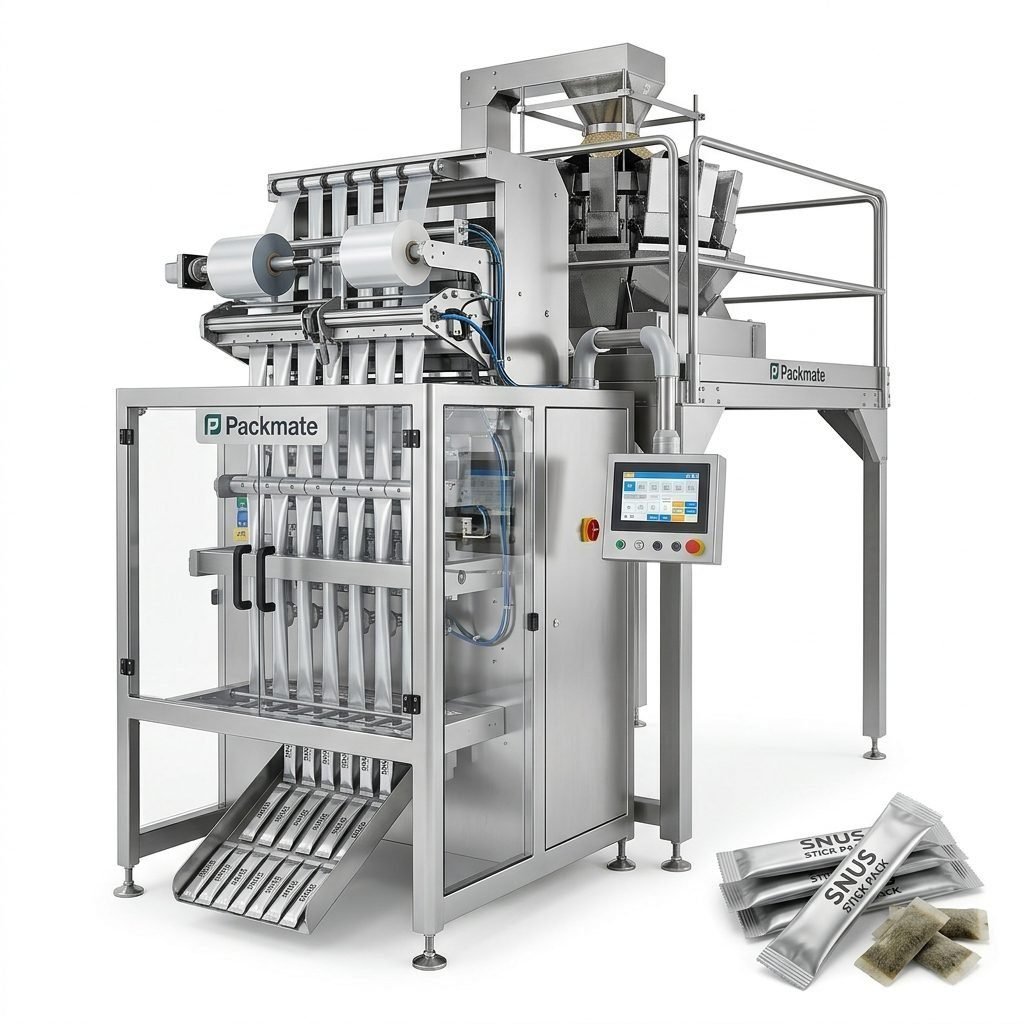
Choose suppliers with decades of engineering experience and substantial factory resources. A supplier with a 20,000㎡ manufacturing facility, advanced CNC machining centers, and over 30 years of industry experience demonstrates the capacity to produce high-precision components and maintain stable quality control. Such a partner can offer a wide range of machine models — from stick pack to multi-lane snus pouch systems — and provide tailor-made solutions to suit your line speed and sachet size.
2. Evaluate product range and customization
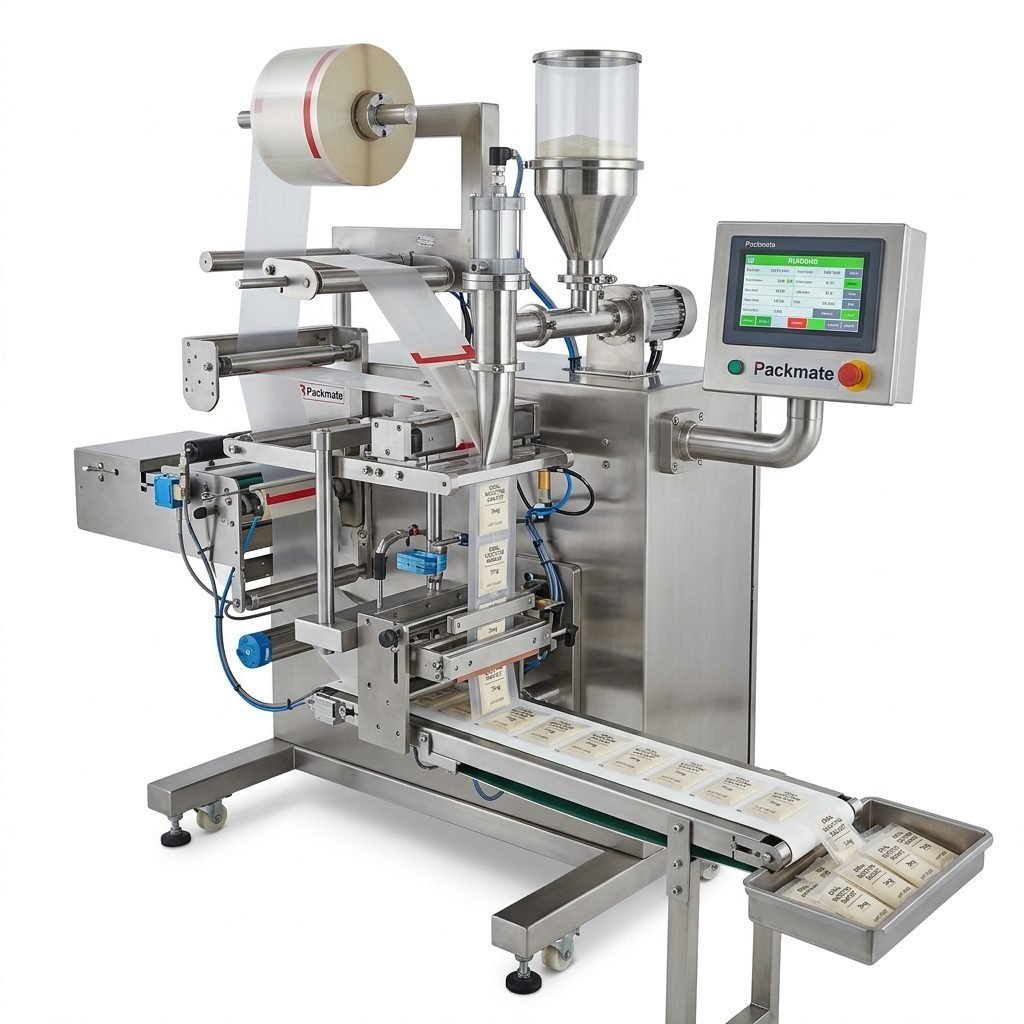
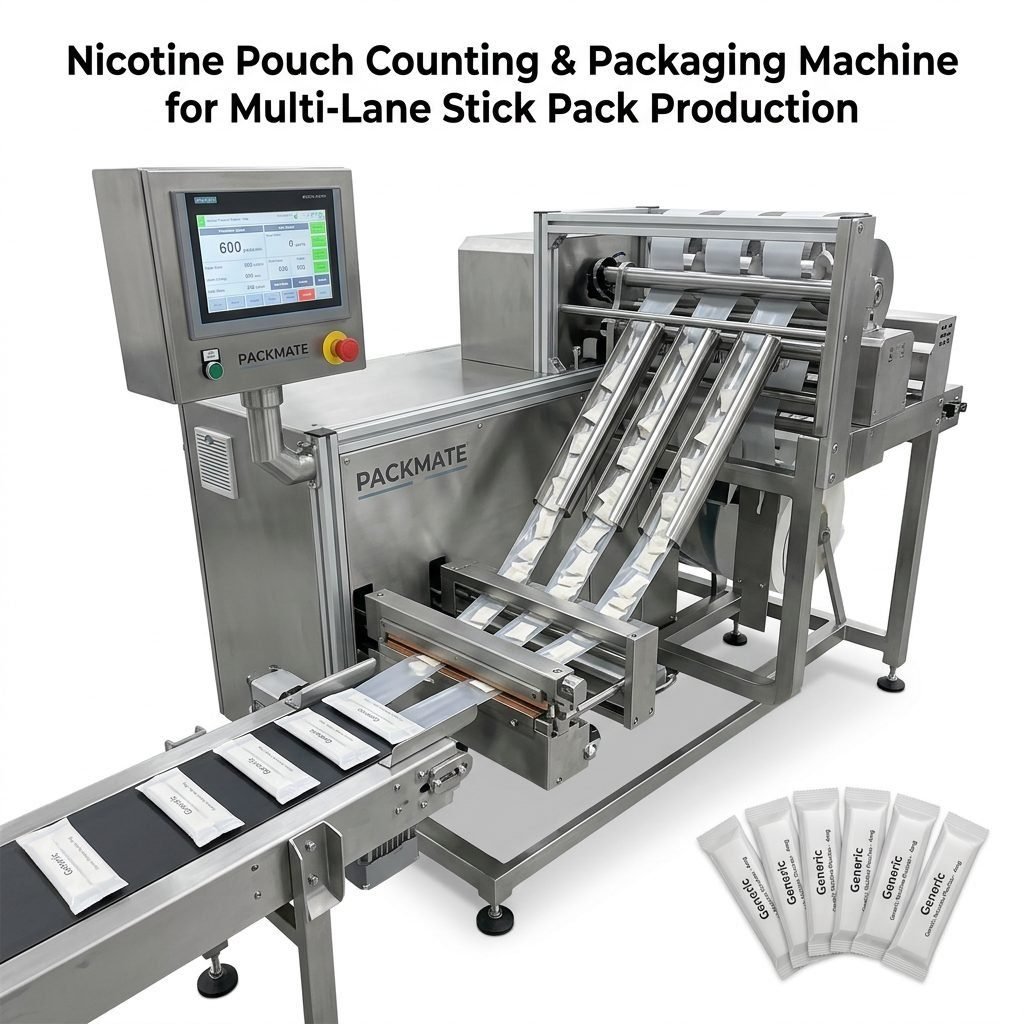
A broad product portfolio means the supplier understands different packaging needs: nicotine pouches, sachets, stick packs, powder/granule filling, and auxiliary equipment. If you need multi-lane systems for small-dose pouches common in the snus market, make sure the supplier has proven models. Reviewing their product catalog online helps — for example, inspect their Snus & Nicotine Packaging Machines and Bag & Pouch Packaging Machines to compare specifications and compatibility with local product sizes.
Visit the manufacturer’s product pages such as
Snus & Nicotine Packaging Machines,
Sachet & Stick Pack Machines, and
Filling & Packaging Lines for detailed configurations and options.
3. Check certifications and compliance
For exports and local acceptance, certifications such as CE and ISO are essential. They indicate compliance with safety, electrical, and quality standards. Confirm that the supplier provides documentation and can assist with any Guinea-specific import paperwork or testing requirements. Suppliers with global exhibition presence and international case studies often have experience navigating regulatory hurdles.
Tip:
Ask for copies of certificate documents and successful export records to African markets.
4. Assess service, spare parts, and training
In Guinea, quick access to spare parts and trained technicians can make or break uptime. Ensure the supplier offers clear after-sales service plans, local or regional parts depots, and on-site commissioning and operator training. Confirm average lead times for critical spare parts and whether the supplier provides remote support, video guidance, and diagnostic tools. Packmate emphasizes global turnkey solutions and long-term technical support — an important feature for reliable operation.
5. Consider local consumer preferences and packaging formats
Guinea’s tobacco consumption patterns and local retail formats influence packaging choices. Small, single-dose pouches and colorful printed sachets work well for markets where low-price affordability and on-the-go usage matter. Consider packaging that offers strong moisture barriers and resealable options if consumers expect to store pouches for several days. Also, low literacy levels in some regions favor pictorial or icon-based labeling — ensure your packaging machine can handle variable printing and labeling needs.
6. Account for climate and storage — choose materials wisely
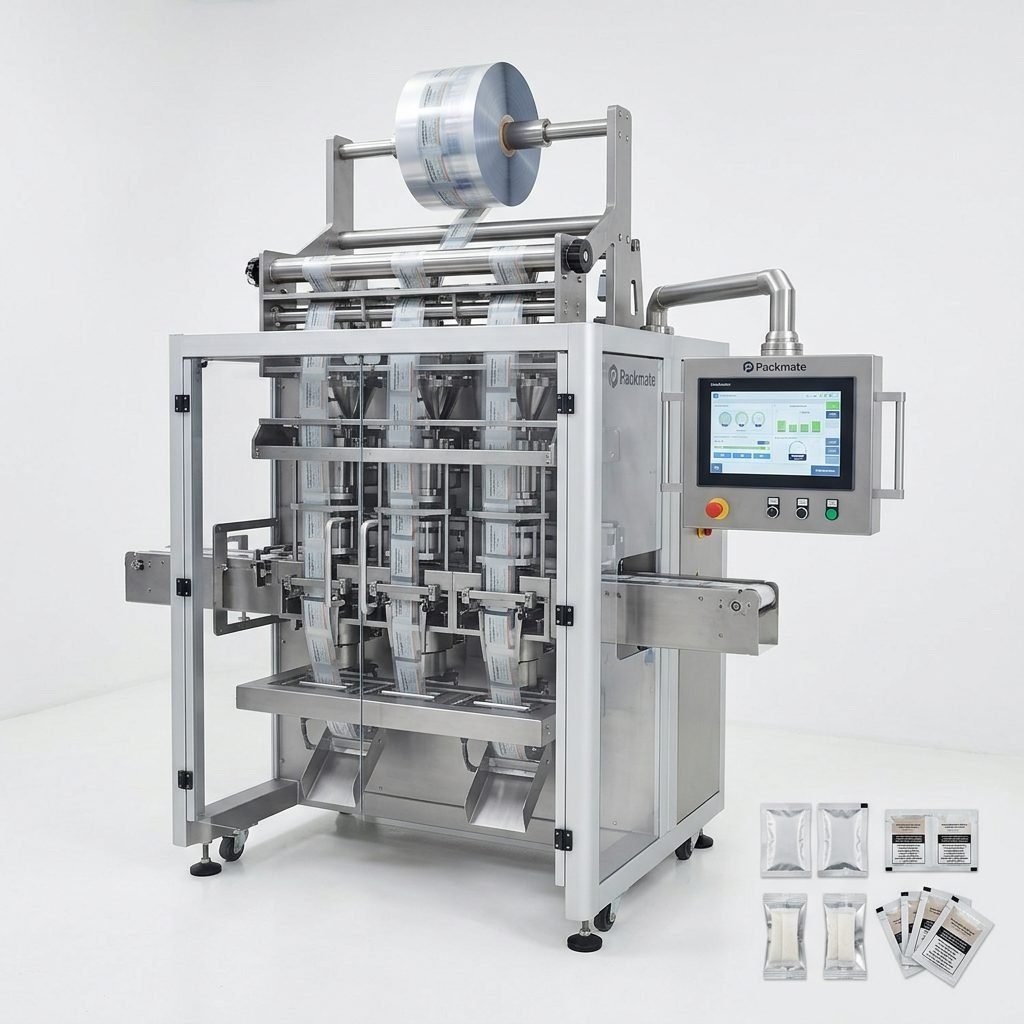
High humidity in Guinea increases the risk of moisture ingress. Packaging films should include metallized or laminated barrier layers to protect nicotine pouches. When selecting a supplier, confirm their machines can handle the chosen film types and seal reliably at high line speeds. Machines with controlled forming and precise sealing systems reduce product spoilage and maintain shelf-life in tropical conditions.
7. Inspect automation level and compatibility with your factory
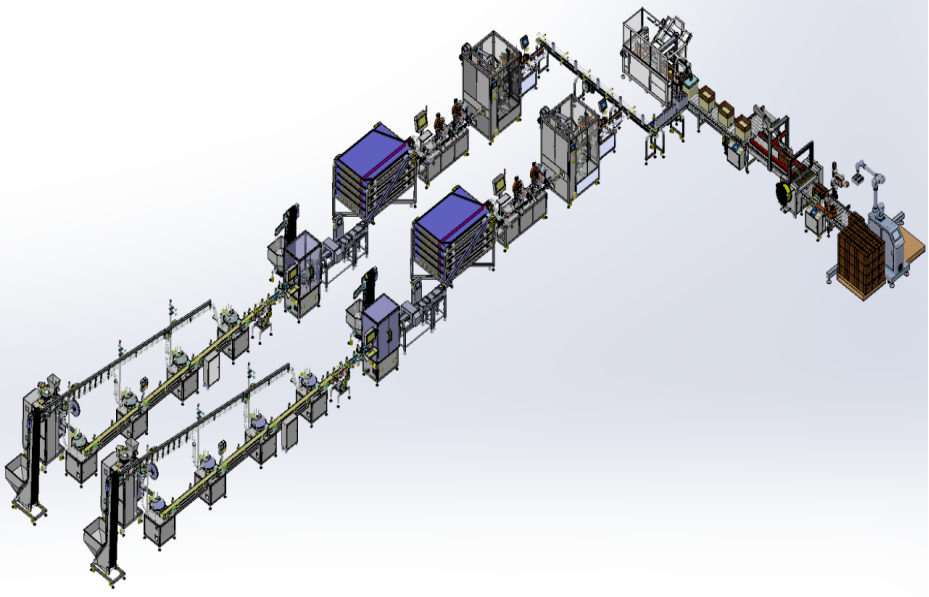
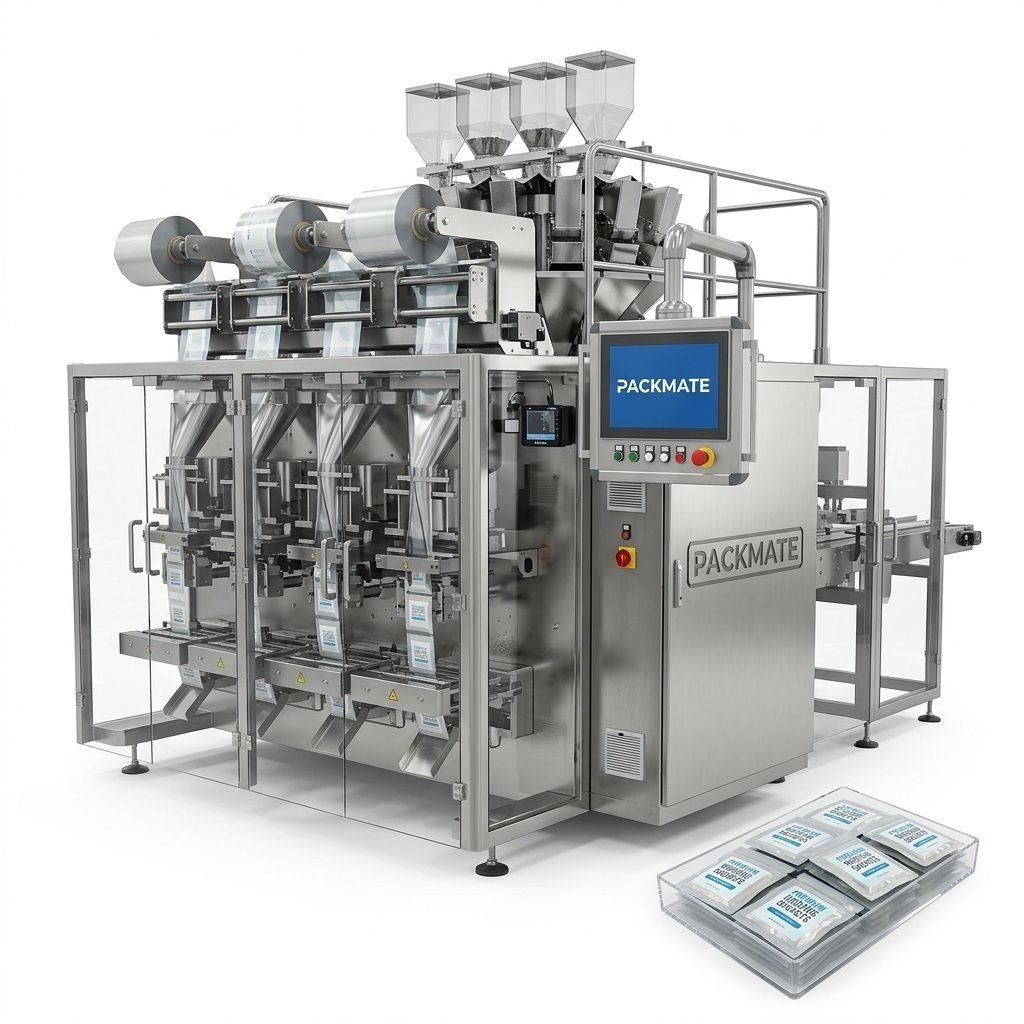
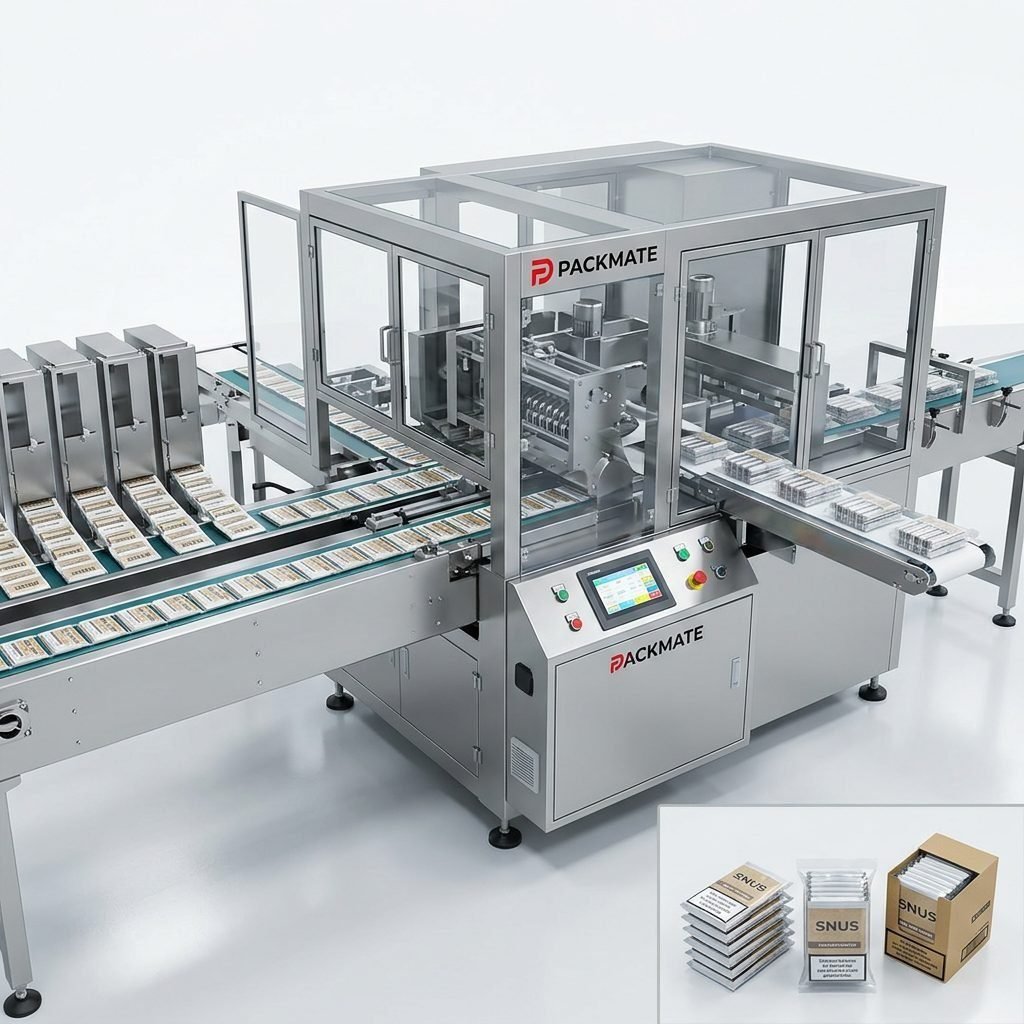
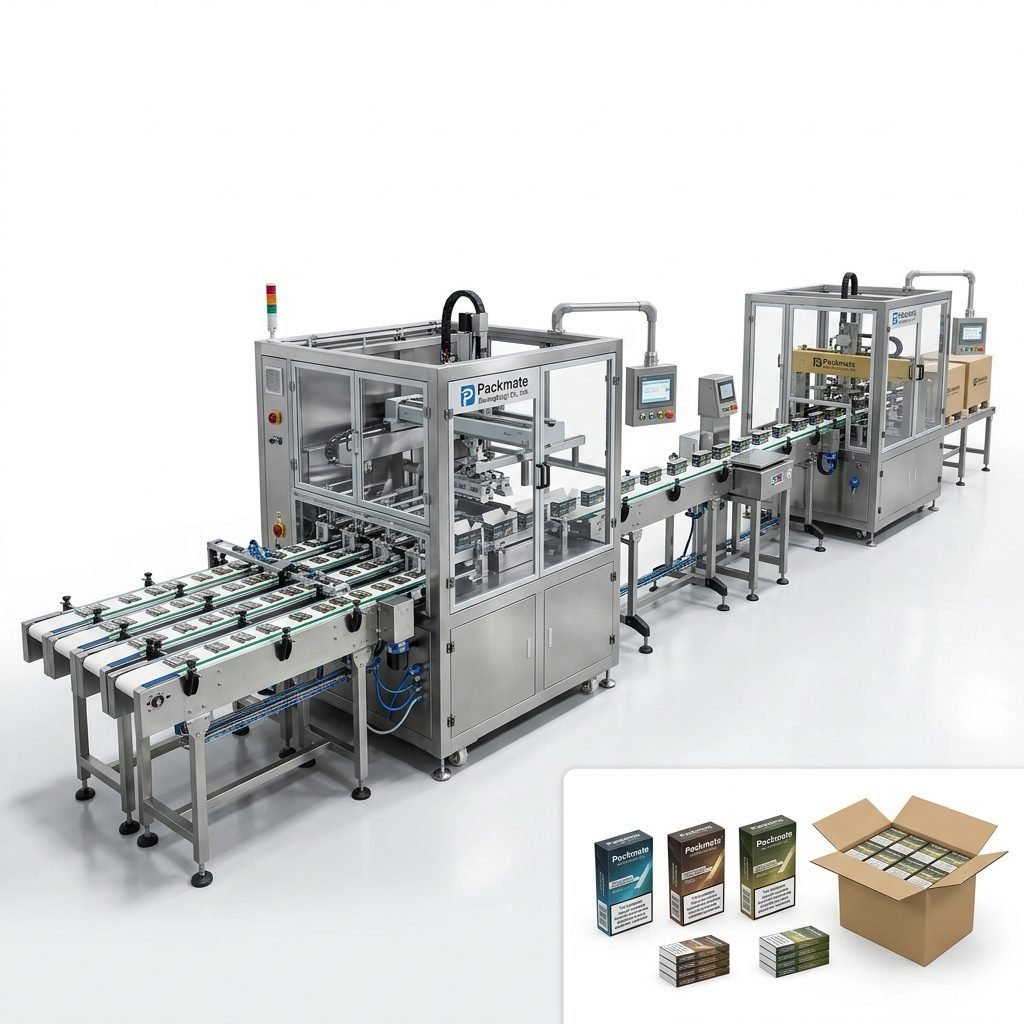
Decide whether you need semi-automatic or fully automated lines. Multi-lane machines maximize output for small-dose pouches while saving floor space. Evaluate conveyor layouts, hopper systems, weighers integrated with packaging modules, and upstream/downstream compatibility. If you plan expansion, choose a supplier offering scalable systems and modular upgrades.
Important:
Ask for a layout and electrical load plan to confirm your factory’s power and space will support the proposed line.
8. Review real-world case studies and references
Suppliers who can share global cooperation cases — especially in climates similar to Guinea — provide stronger assurance. Request case studies showing uptime statistics, production yields, and customer feedback. Review photographic or video evidence from exhibitions, demonstrations, and installed lines. You can read Packmate’s project references on their Case pages and exhibition records to validate performance.
Useful links for deeper review: Case and Our Exhibition.
9. Evaluate total cost of ownership, not just purchase price
Total cost includes maintenance, spare parts, energy consumption, downtime penalties, and training. A lower upfront price could mean higher downtime or expensive imported components. Request a complete cost-of-ownership estimate from potential suppliers and compare warranty terms, spare parts pricing, and recommended maintenance schedules.
10. Logistics, installation, and commissioning in Guinea
Confirm the supplier’s experience handling international shipping to West African ports, customs clearance assistance, and on-site installation services. A reliable supplier will provide detailed packing lists, transport recommendations, and project timelines. Consider air vs. sea freight costs and timelines, and whether the supplier will dispatch technicians to supervise commissioning.
Service note:
Ensure local electrical standards and backup power solutions are accounted for before installation.
Why Packmate Snus Machine is a viable option for Guinea factories
Packmate offers a comprehensive package: over 30 years of R&D history, a 20,000㎡ factory, and 50+ machine models including multi-lane snus pouch systems designed for high-precision small-dose production. Their equipment complies with CE and ISO standards and they provide turnkey production lines and long-term technical support — attributes that align with the needs of factories operating in Guinea’s climate and market environment.
Learn more about the company background and mission on their About Packmate page and review certificates on the Certificate page.
Practical steps to finalize your supplier selection
1) Prepare a detailed specification sheet: product formats, pouch sizes, target speeds, and film types. 2) Request machine demonstrations and videos of similar installations. 3) Ask for references and speak with existing customers. 4) Review the service level agreement and spare parts commitments. 5) Conduct a factory acceptance test (FAT) if possible before shipping.
Checklist before signing:
FAT report, spare parts list, training schedule, installation timeline, warranty terms, and export documentation support.
Local partnerships and cultural considerations
Building local partnerships with distributors or service agents in Guinea helps bridge language, logistics, and cultural gaps. Respect local business customs: establish clear written agreements and consider on-site visits to gain stakeholder trust. Localization of labeling — including local languages or pictograms — can improve consumer acceptance. Your supplier should support these localization needs and help adapt packaging artwork to local norms.
Making the final decision
Rank potential suppliers by performance, cost of ownership, after-sales service, and local adaptability. Consider doing a scoring matrix that includes machine uptime, ease of maintenance, spare part lead time, and training offerings. Suppliers who demonstrate transparency, provide detailed documentation, and offer regional service solutions should score highly.
Next steps and contact points
When you are ready, request a formal quotation including machine specifications, FAT plan, shipping terms, and a timeline for installation. Use the supplier’s contact channels and support pages to arrange factory visits or remote demos. For Packmate inquiries, their service and contact pages provide direct access to sales and technical teams.
Contact resources: Service and Contact Us.
Final considerations
Selecting a snus packaging machine supplier for Guinea involves technical, logistical, and cultural evaluation. Prioritize suppliers with proven multi-lane systems, robust sealing for humid climates, clear after-sales commitments, and the willingness to support local adaptation. By focusing on total cost of ownership and practical service guarantees, you increase the likelihood of a high-performing production line that meets local market expectations.
Frequently Asked Questions
Q1: What packaging film types are best for Guinea’s climate?
A1: Metallized or laminated barrier films with good moisture and oxygen resistance are recommended to protect nicotine pouches in hot, humid conditions.
Q2: How soon can a supplier ship and install a complete snus line?
A2: Typical timelines vary by customization and capacity. Standard lead times include manufacturing, FAT, shipping, customs clearance, and on-site commissioning — plan for several weeks to a few months. Confirm timelines in the quotation.
Q3: Are Packmate machines compliant with international safety standards?
A3: Yes, Packmate equipment adheres to CE and ISO standards. Always request certification copies and verify compliance for your import needs.
Q4: What after-sales support should I require?
A4: Require a clear SLA covering spare parts lead times, remote and on-site support, training, and preventive maintenance plans to ensure consistent uptime.
Q5: How do I adapt packaging design for Guinea consumers?
A5: Use pictograms, clear branding, and small single-dose options; incorporate local language elements and ensure regulatory labeling compliance. Work with your supplier to validate printing and labeling capabilities on the chosen machine.