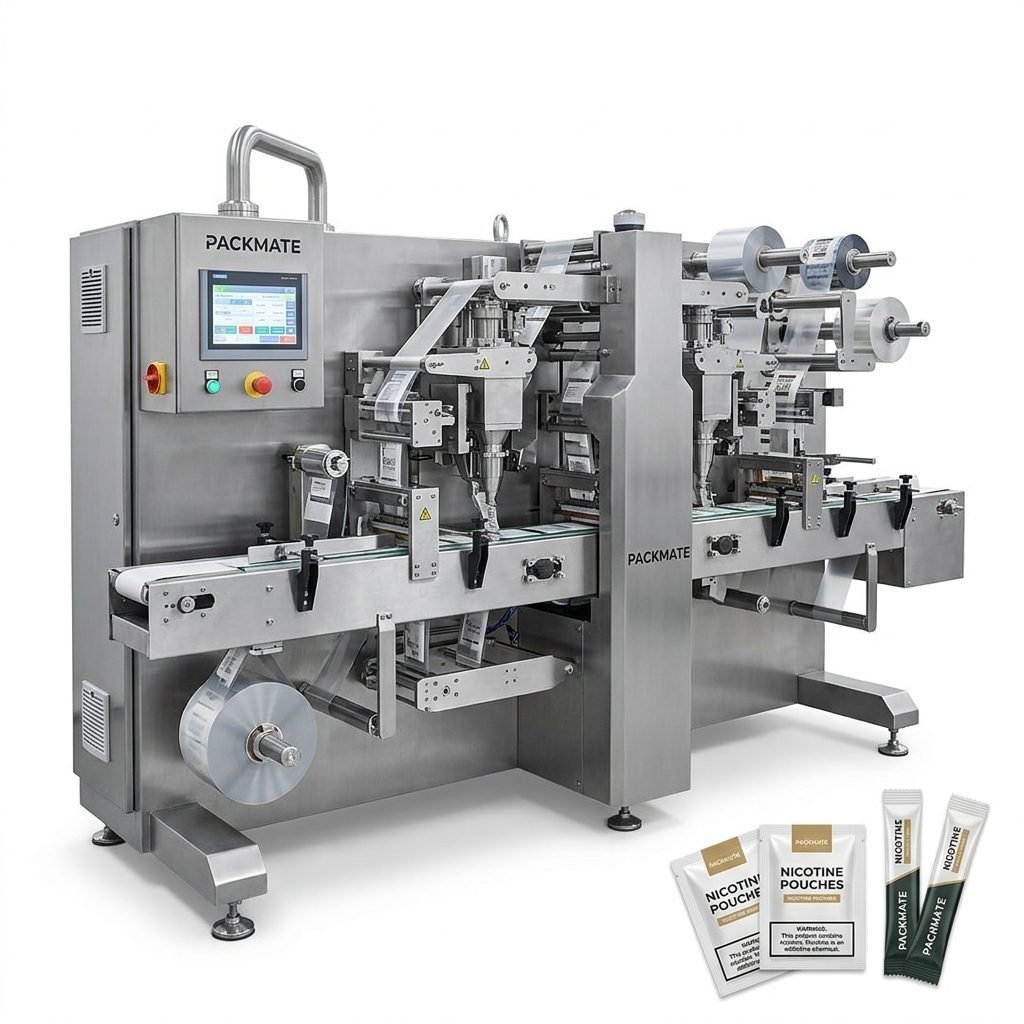
Choosing a reliable nicotine packaging machine supplier in South America requires more than just comparing price tags. You need a partner who understands local regulatory landscapes, seasonal climate impacts on materials, regional habits around consumption and retail presentation, and who can deliver robust after-sales support across long distances. This guide walks you through practical, actionable criteria to evaluate suppliers — from technical specifications to commercial terms — and highlights what to look for when sourcing snus and nicotine pouch packaging equipment for markets such as Brazil, Argentina, Chile, Colombia and Peru.
Why South America is a Strategic Market for Nicotine Packaging
South America shows a steadily growing interest in alternative nicotine products. Urban consumers in major cities like São Paulo, Buenos Aires, and Bogotá are open to discreet formats such as nicotine pouches and snus that fit modern lifestyles. In many countries, packaging and branding play a major role in retail success: consumers expect compact, easy-to-carry pouches with clear labeling in Spanish or Portuguese. Because of high temperatures and humidity across large regions, packaging integrity and seal quality are critical to preserve product texture and shelf life.
Local customs and language considerations
In Brazil, Portuguese labeling and documentation are mandatory for many regulated products, while most other South American markets require Spanish. Suppliers who provide templates and assistance for multilingual labeling, material certificates and user manuals in local languages will reduce market entry friction. Also remember that retail packaging aesthetics differ: some markets expect minimalistic designs while others prefer vibrant visual cues. A supplier familiar with local retail preferences can help tailor your packaging setup.
Key Regulatory and Compliance Factors
Regulations for nicotine products vary widely across South American countries. For example, Brazil’s ANVISA has specific rules and documentation requirements for nicotine-related items, while other countries may classify nicotine pouches differently. A trustworthy supplier should be able to provide machines and documentation that comply with international certifications like CE and ISO, and should support you with technical documentation for local regulatory filings.
When assessing suppliers, request certificates and test reports for machine safety and food-contact materials when applicable. Suppliers with transparent compliance records and a demonstrated history of exporting packaging lines across continents are preferable.
Recommended supplier documentation
Make sure the vendor can supply machine manuals, electrical schematics, material safety information, calibration and test reports, and CE/ISO certificates. Suppliers that offer multilingual manuals and operational training in Spanish or Portuguese reduce downtime and accelerate commissioning.
🔍 Quick checklist:
Ensure CE/ISO certificates, multilingual manuals, and paperwork for customs/import clearance.
Technical Specifications to Prioritize
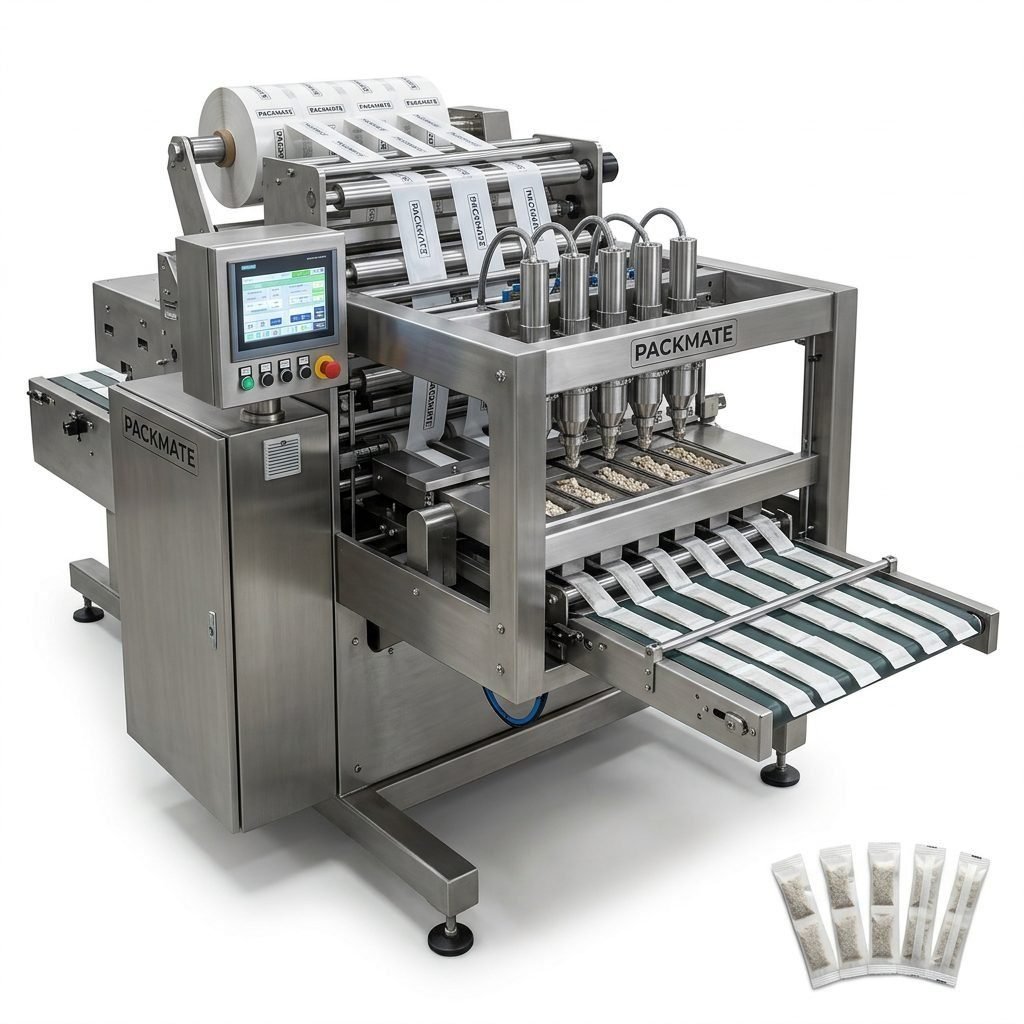
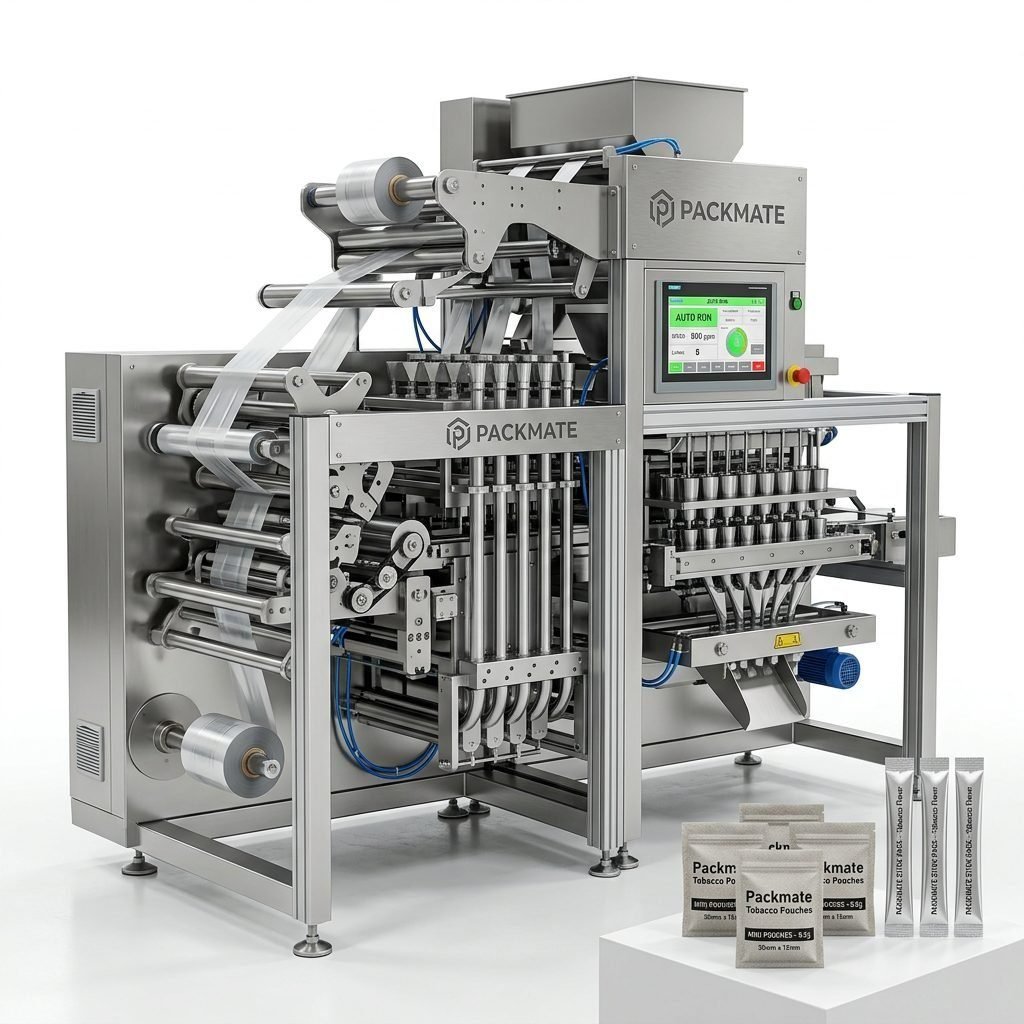
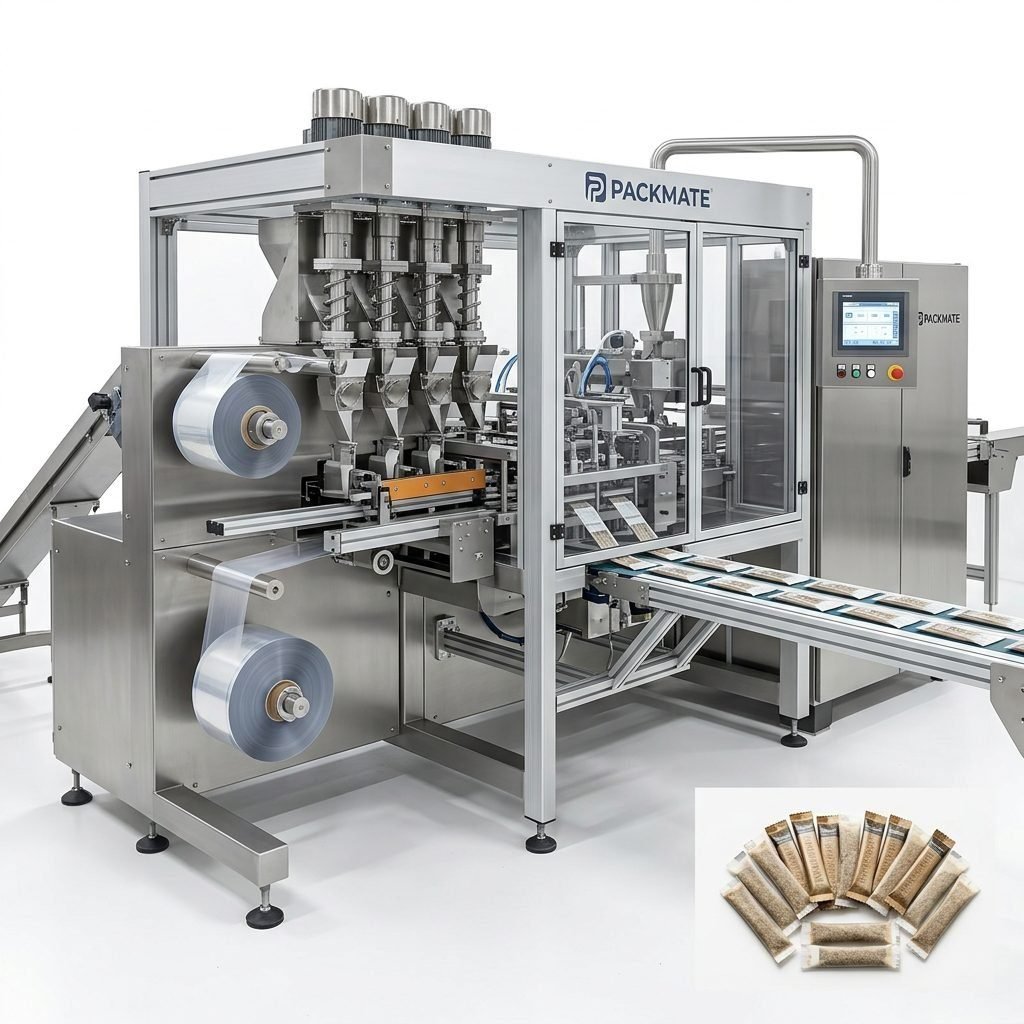
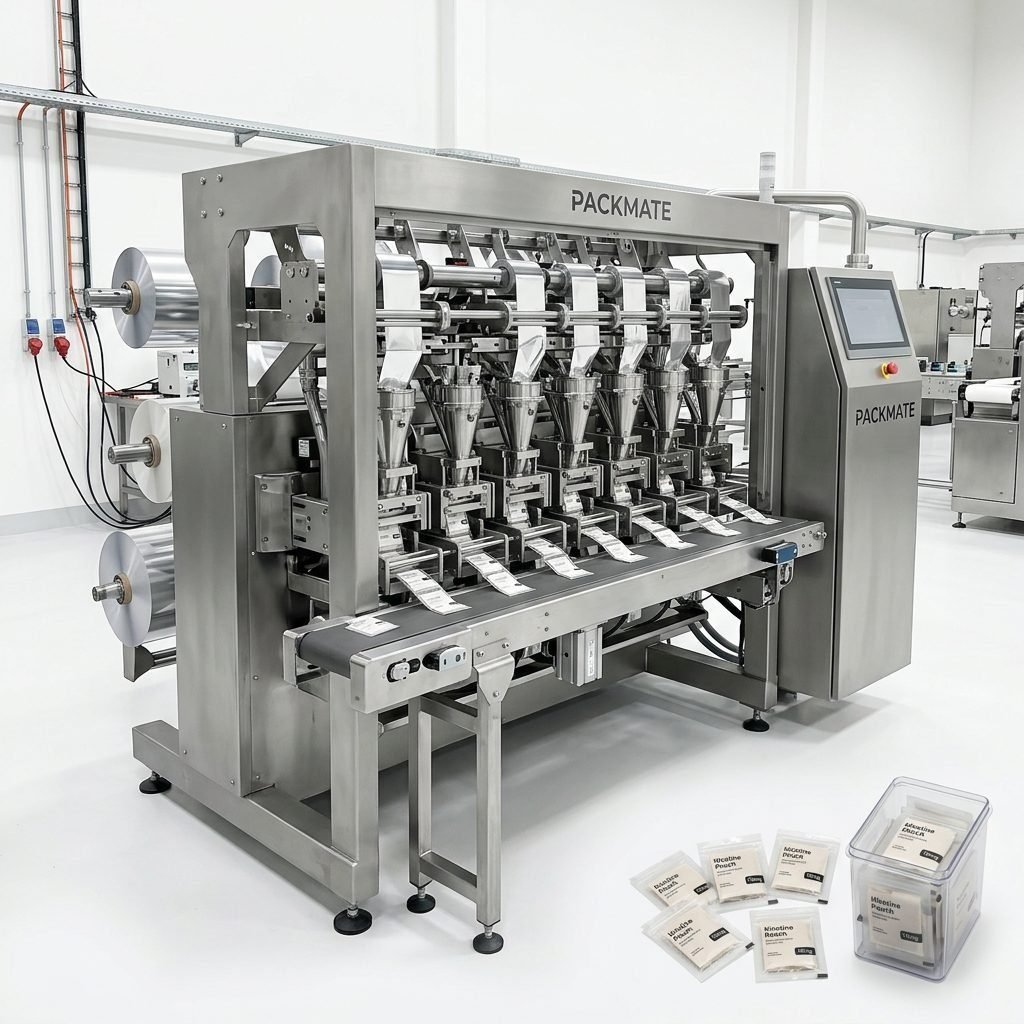
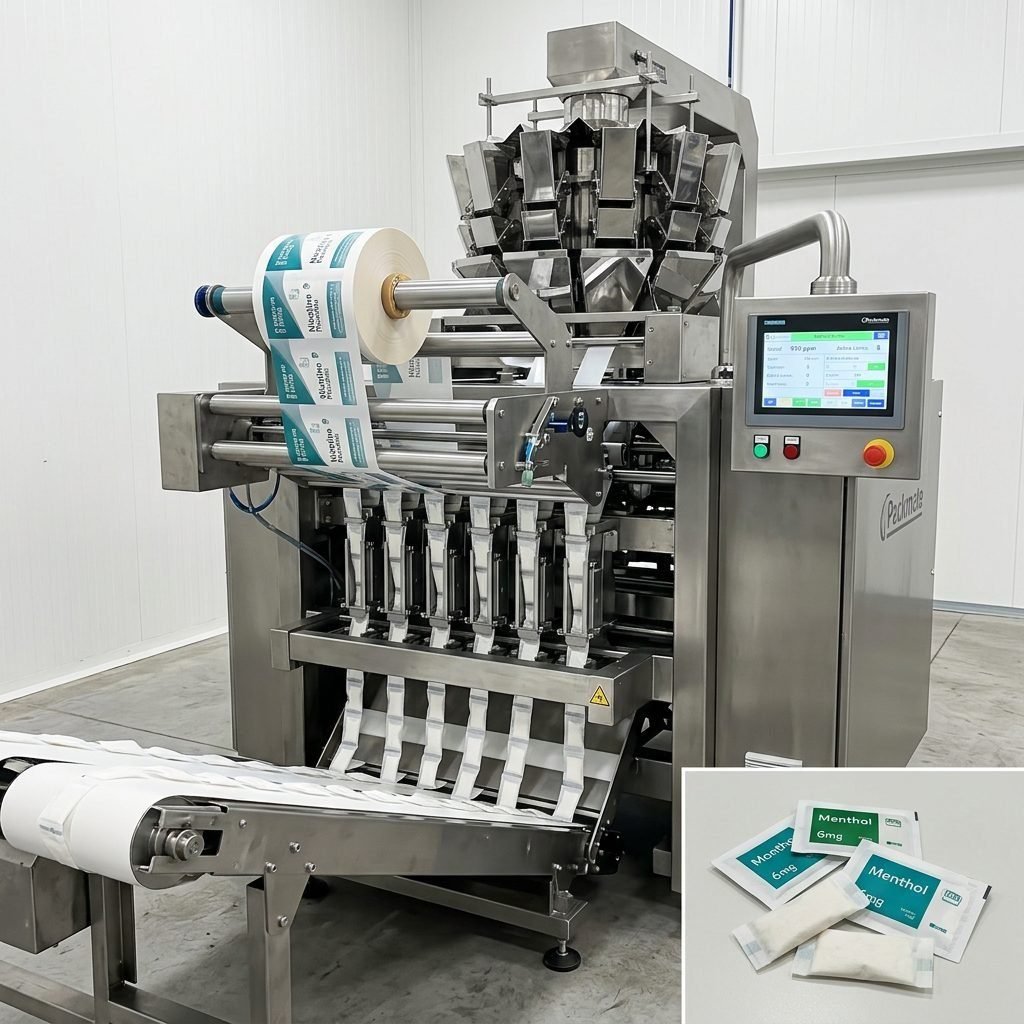
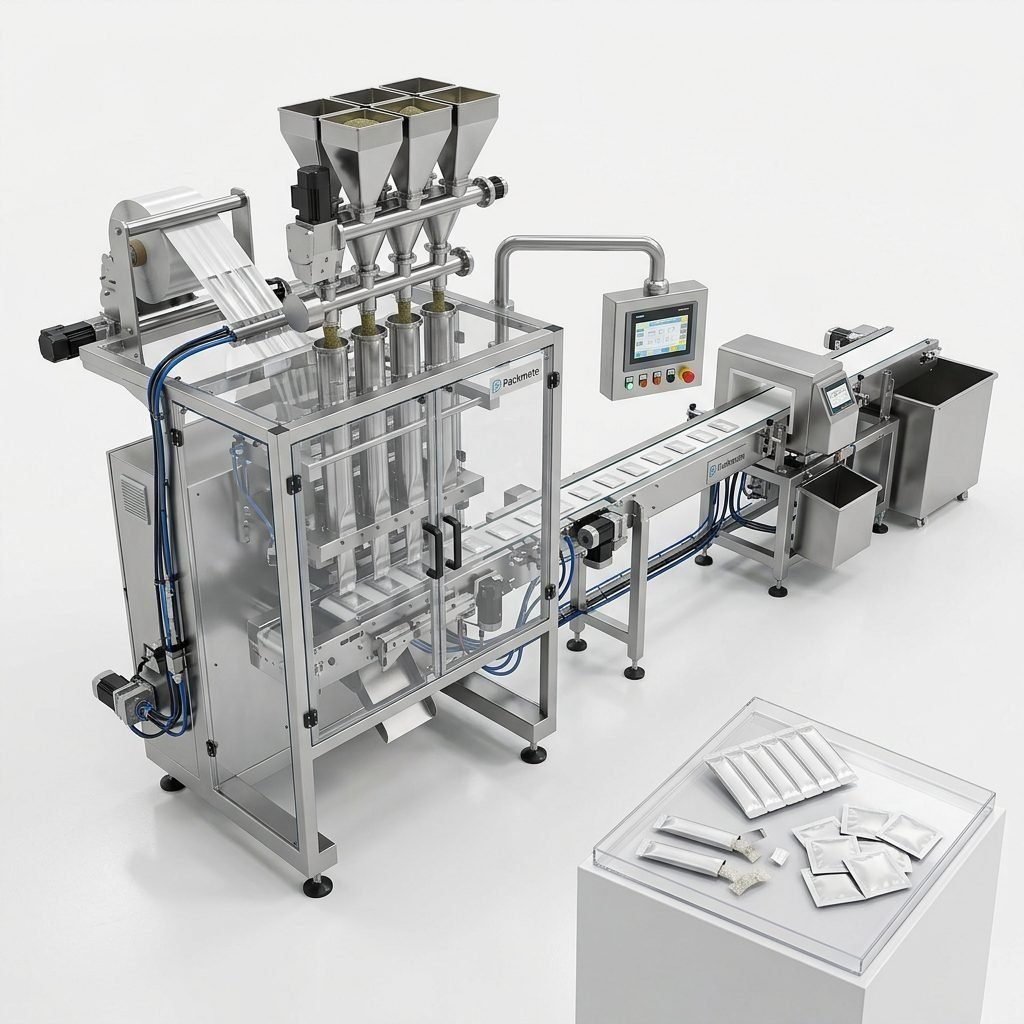
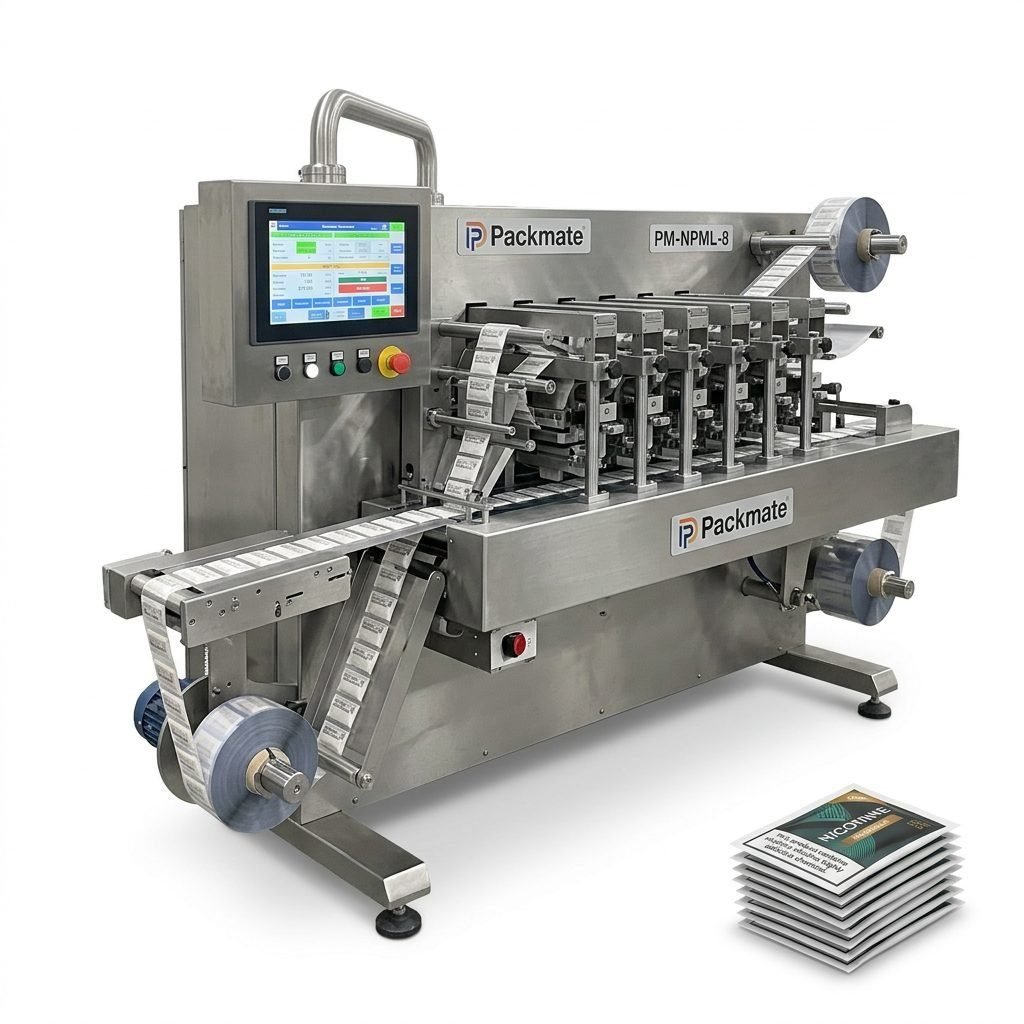
The right machine specs depend on your production scale, product variety and packaging formats. Common machine types for nicotine pouch lines include stick pack, sachet, and multi-lane systems for small-dose pouches. Consider the following technical metrics when comparing suppliers:
- Production speed (pouches/min) and the ability to maintain accuracy at target speeds.
- Multi-lane capability for higher throughput without increasing floor space.
- Filling accuracy and weighing tolerance, especially important with micro-dose pouches.
- Material compatibility: pouch films, foil laminates, biodegradable films, and barrier materials suited to humid climates.
- Sealing methods and seal durability under high temperature/humidity conditions.
- Ease of changeover between SKUs and quick tooling replacement for agile production.
- PLC control systems, HMI in preferred languages, and data logging for traceability.
Why multi-lane systems matter in South America
Space constraints in urban facilities, paired with the need to serve multiple markets, make multi-lane lines attractive. Suppliers experienced with multi-lane snus and nicotine pouch lines can deliver compact solutions that increase output while keeping costs per pouch competitive.
For sample machine models and proven configurations, review product categories such as Snus & Nicotine Packaging Machines and Sachet & Stick Pack Machines.
Quality Control, Manufacturing Strength and Factory Transparency
A reliable supplier should demonstrate manufacturing depth: advanced CNC machining centers, precision assembly lines and a robust quality testing regime. Vendors with 30+ years of engineering experience and a wide machine portfolio are more likely to provide mature solutions and long-term spare parts availability.
If possible, arrange a factory visit or request virtual demonstrations. Check for consistency across machines, inspector reports, and sample-run videos. Suppliers that showcase case studies, exhibition participation, or certification pages give added confidence — see company details like About Packmate and Certificate.
✅ Factory strengths to confirm:
Advanced machining, controlled assembly environment, FAT (Factory Acceptance Test) procedures, and a documented spare-parts policy.
After-Sales Service, Spare Parts and Local Support
After-sales support is often the difference between a successful line and a stalled one. Important service elements include spare parts availability, remote diagnostics, fast-response regional technicians or partnerships, and comprehensive commissioning and operator training. For South America, check whether the supplier offers training in Spanish or Portuguese and has logistics experience shipping to major ports such as Santos (Brazil), Buenos Aires (Argentina), and Callao (Peru).
Reliable suppliers will provide structured service plans and optional local stocking points for critical spare parts. Consider vendors who offer remote monitoring tools for predictive maintenance and quick troubleshooting.
Service offers to look for
Onsite commissioning, operator training, spare-parts kits, remote video support, and extended warranty packages. You may also want to see evidence of previous service cases in Latin America — supplier case studies often include installations and service records. See real-world examples in the supplier’s Case section.
Commercial Terms, Logistics and Payment Considerations
Commercial clarity is key. Clarify lead times, incoterms (EXW, FOB, CIF), delivery schedules, installation timelines, and payment terms. Many international suppliers accept T/T or L/C; smaller buyers may negotiate phased payments tied to milestones. Make sure the purchase agreement includes a clear list of deliverables such as spare parts, tooling for specific SKUs, and acceptance criteria.
For customs and import in South America, suppliers experienced with local documentation and export packaging for humid climates will help mitigate delays and product damage. Ask about wooden crating standards, desiccant use, and whether machines are tested for tropical shipment conditions.
Logistics tips for South American deliveries
Work with freight forwarders experienced at your destination port, and ensure all machine electrical specifications match local standards (voltage/frequency). Confirm spare parts kits are shipped with the machine or are available from a regional stock to avoid long downtime.
Inspection, Testing and FAT (Factory Acceptance Tests)
A comprehensive FAT is crucial. During FAT, validate production speeds, pouch integrity, seal quality, filling accuracy, film handling, and control interfaces in real production conditions. Request video documentation and sign-off procedures. A strong supplier will offer sample runs with your materials and provide documented testing results.
⚠️ FAT must include:
sample-run videos, speed acceptance, leakage tests, electrical and safety checks, and operator training sign-off.
How to Evaluate Supplier Credibility — Red Flags and Green Flags
When evaluating potential suppliers, look for the following indicators:
- Green flags: transparent factory tours, clear warranty and service policies, CE/ISO certificates, long industry track record, and documented customer references in global markets.
- Red flags: vague technical specs, reluctance to provide FAT or sample videos, inconsistent responses on spare parts availability, and no local language support for training.
Real-World Supplier Advantages — Example: Packmate Snus Machine
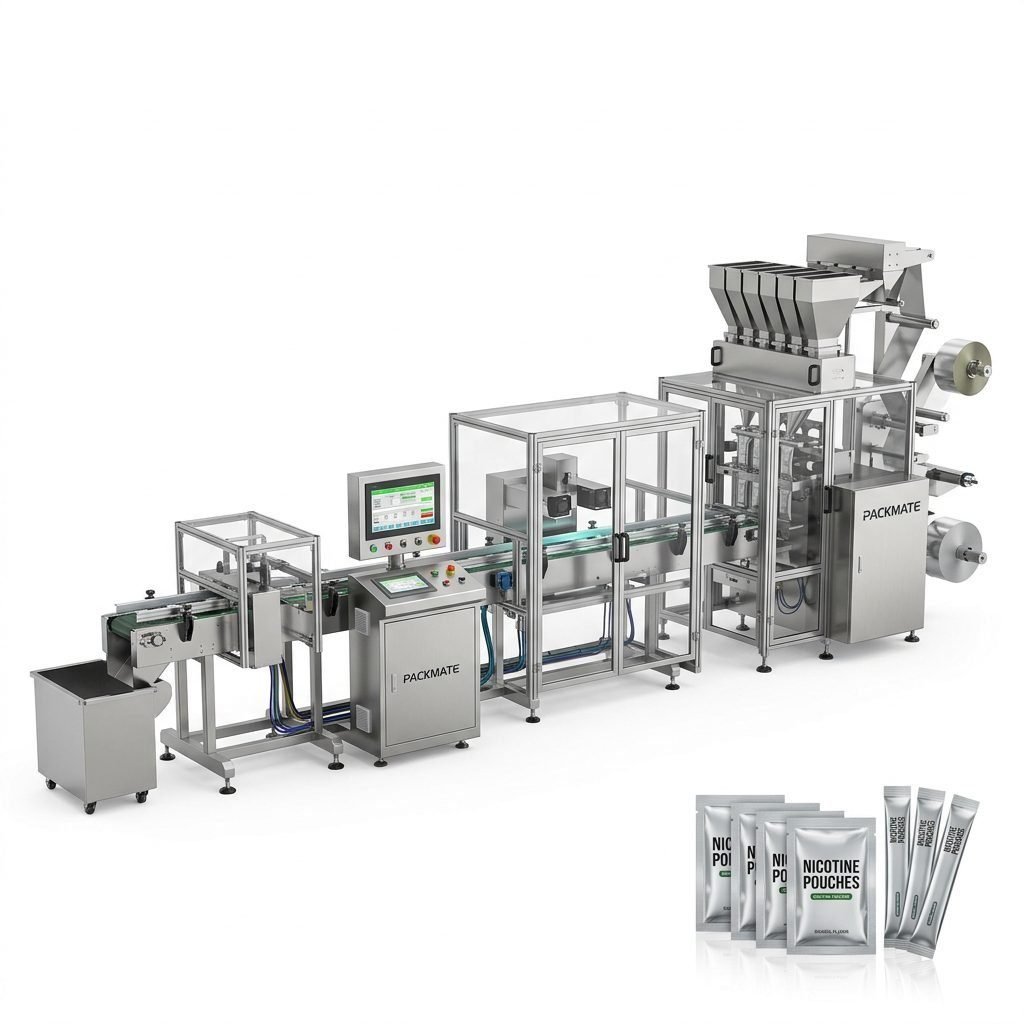
Suppliers with decades of R&D and a wide model range can often provide turnkey solutions from weighing to packaging. For instance, firms that offer dedicated snus and nicotine packing lines, advanced CNC manufacturing, and a portfolio of multi-lane machines are well positioned to support South American buyers. Explore specialized categories such as Snus & Nicotine Packaging Machines and related systems like Weighing & Packaging Systems to get a sense of mature vendor offerings.
Exhibition presence and references
Suppliers that participate in global exhibitions and publish case studies tend to be more reliable. Request references from other South American customers, or ask for contacts that can confirm on-the-ground performance and after-sales responsiveness. You can learn more about company activities via their Exhibition and Case pages.
Practical Steps to Secure the Right Supplier
1. Build a detailed RFP that includes target formats, expected throughput, film types, and environmental conditions at your plant.
2. Request a FAT and real-run video with your actual materials.
3. Verify certificates and ask for references in South America.
4. Confirm spare parts lead times, warranty terms, and multilingual training availability.
5. Negotiate clear delivery milestones, acceptance criteria, and payment schedule.
If you need help contacting a vetted supplier or want to explore specialized configurations for snus and nicotine pouch production, use the supplier’s Contact Us and Service pages to request a consultation and technical proposal.
Final Recommendations
Prioritize suppliers that combine engineering depth with proven export experience to South America. Emphasize machines that handle humidity-resistant materials, strong sealing systems, and multi-lane production to maximize ROI in constrained facilities. Ensure service contracts, FAT procedures, and multilingual support are clearly documented. Working with seasoned suppliers reduces the risk of delays and ensures your nicotine pouch products reach consumers with consistent quality.
📌 Pro tip:
When evaluating suppliers, ask for a small-scale pilot run in your intended packaging film under South American temperature/humidity settings. Real data beats brochures.
Frequently Asked Questions
Q1: How important is multi-lane capability for nicotine pouch production in South America?
A: Multi-lane machines are very helpful if you want high throughput while minimizing floor space — a major advantage in urban plants. They also reduce cost per pouch and allow flexible SKU production without large footprint expansion.
Q2: What certifications should I request from a supplier?
A: Request CE and ISO certificates at a minimum, plus material contact certifications if pouches have direct food-contact components. Suppliers should also provide FAT documentation and quality inspection reports.
Q3: How do I handle language and labeling requirements for Brazil and other South American markets?
A: Ensure product labels, manuals and safety documents are available in Portuguese for Brazil and Spanish for other markets. Work with suppliers who can offer labeling templates and assistance for regulatory filings.
Q4: What warranty and service terms should I negotiate?
A: Seek at least a 12-month warranty on electronics and mechanical parts, clearly defined spare-parts lead times, and options for extended maintenance contracts. Confirm remote support capabilities and training packages.
Q5: How can I verify a supplier’s past performance in South America?
A: Ask for customer references in the region, case studies, exhibition participation records, and sample video evidence of machines running with similar products. Visiting a local installation — if possible — is the most reliable verification.