Choosing the right snus packaging machine in the Czech Republic is a strategic decision that affects product quality, production efficiency, regulatory compliance, and long-term profitability. Whether you’re launching a new nicotine pouch brand, scaling an existing snus production line, or exploring improved packaging formats, understanding the technical, operational, and service-related considerations will help you select equipment that fits your production goals. This guide walks you through the key factors to evaluate, the common machine types, customization options, and practical tips for working with manufacturers and local partners in the Czech market.
Understand Your Production Requirements
Start by defining your current and projected output: target packs per minute, shift patterns, and seasonal variations. Small-batch startups and pilot plants often prioritize flexibility and low minimum order quantities, while established manufacturers need high-throughput multi-lane systems. Consider product characteristics such as: moisture level, pouch size, powder or granule texture, and whether you require pre-formed pouches or machine-formed sachets. These variables directly determine the best machine family for your line.
Key production metrics to document
✓ Target speed: packs/minute or pouches/minute.
✓ Product format: nicotine pouches, snus sachets, stick packs or multi-lane sachets.
✓ Fill type: powder, granule, blend, or liquid dosing needs.
✓ Package materials: laminate films, paper-based films, or barrier laminates.
✓ Future scalability: add lanes or modules as volume grows.
Choose the Right Machine Type
Packaging machines for snus and nicotine pouches come in several common types. Each offers trade-offs between flexibility, speed, and cost:
Sachet & Stick Pack Machines
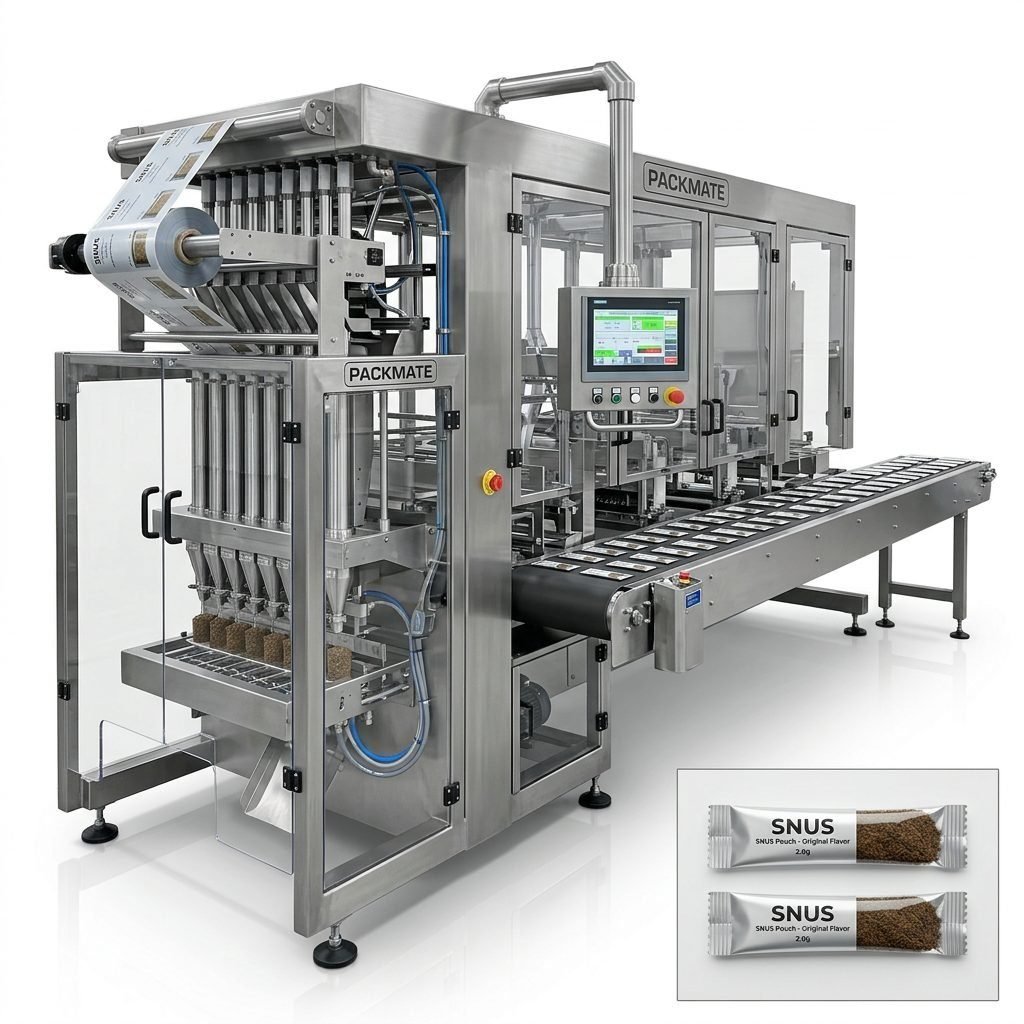
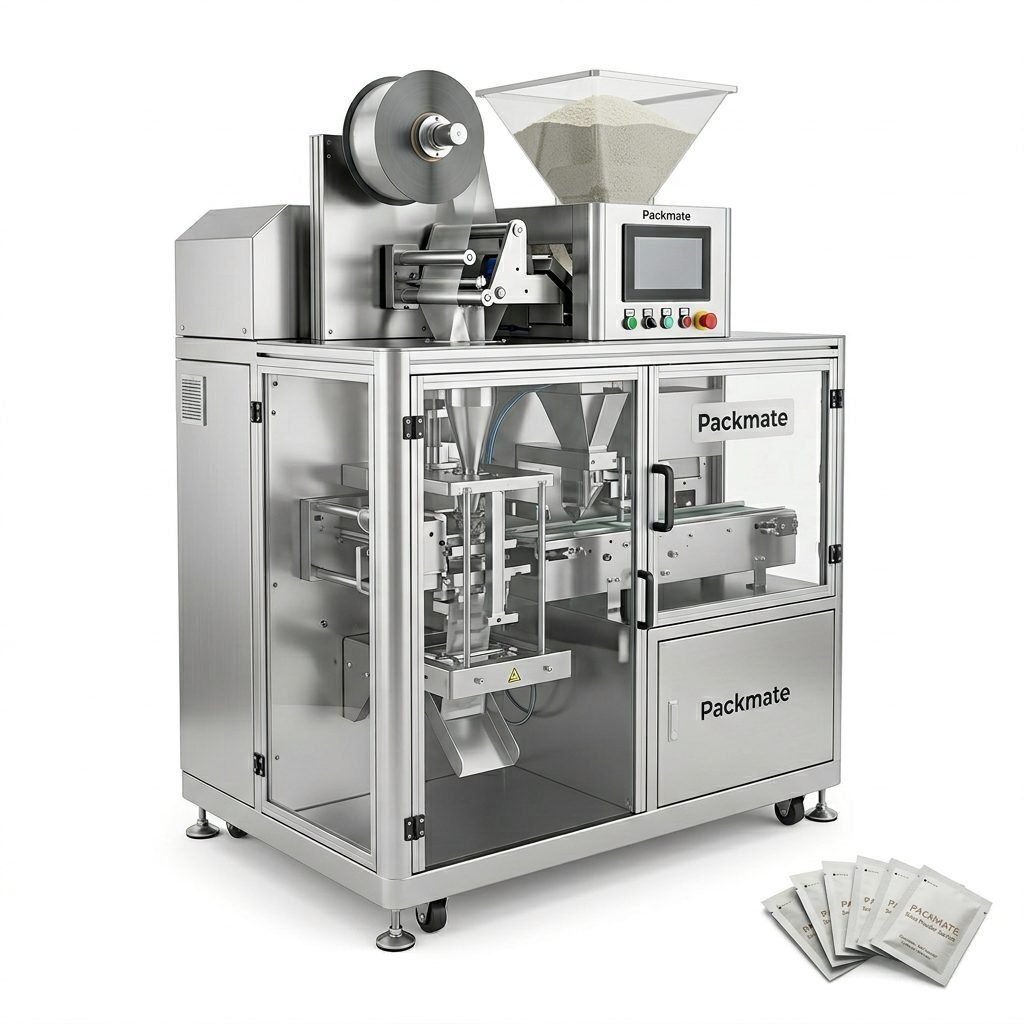
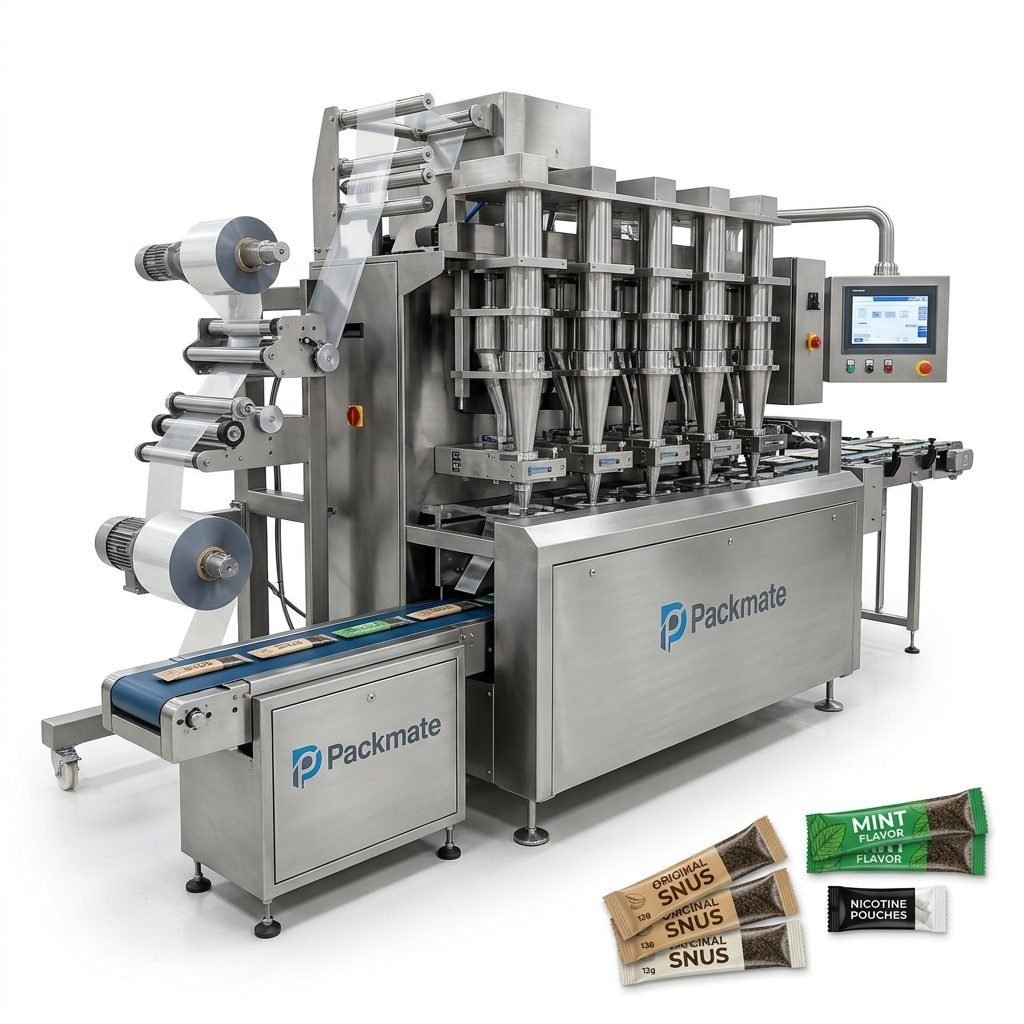
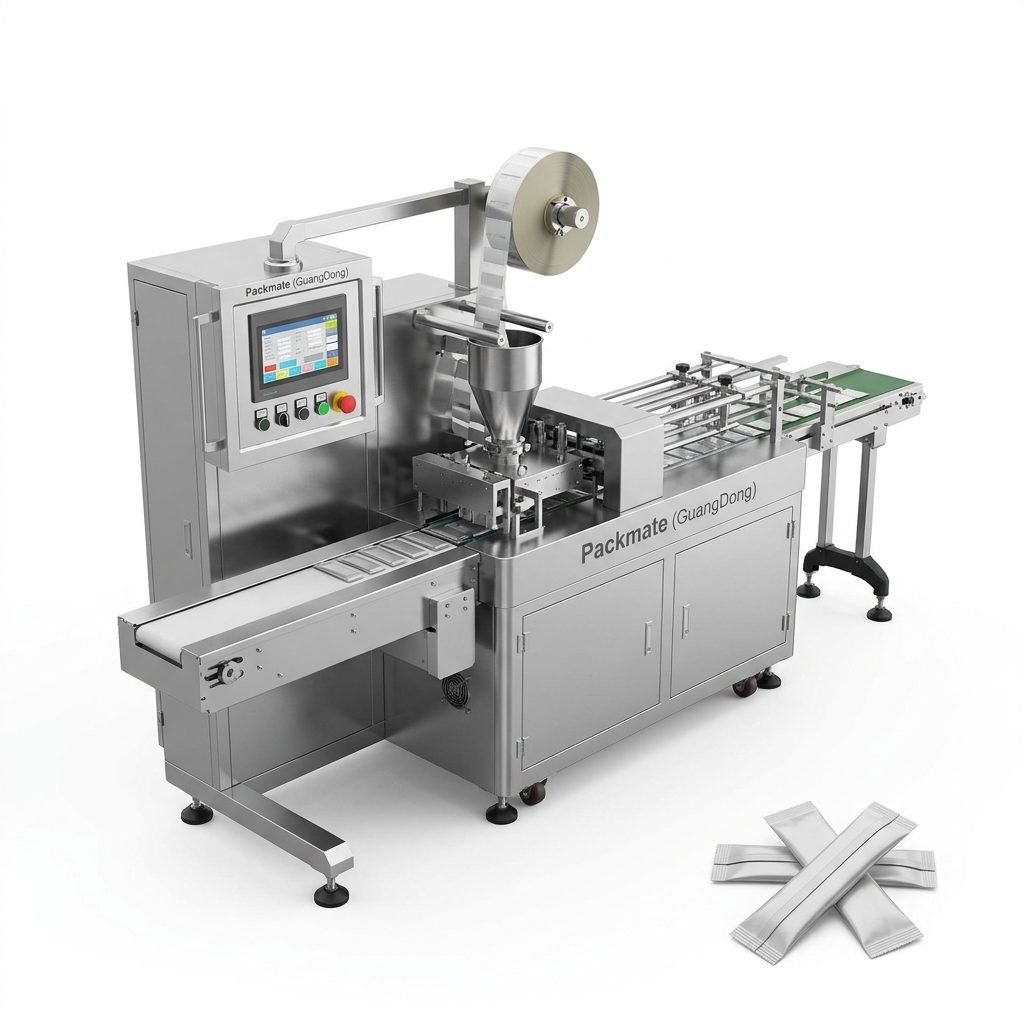
Sachet and stick pack machines are ideal for single-dose and elongated formats. They excel at controlled sealing and precise dosing for small pouches. If your product portfolio includes single-portion snus or stick-shaped packs, these machines provide reliable hermetic sealing and consistent portion control. For multi-format operations, check whether the model supports quick format changes and spare tooling availability.
Multi-lane High-speed Machines
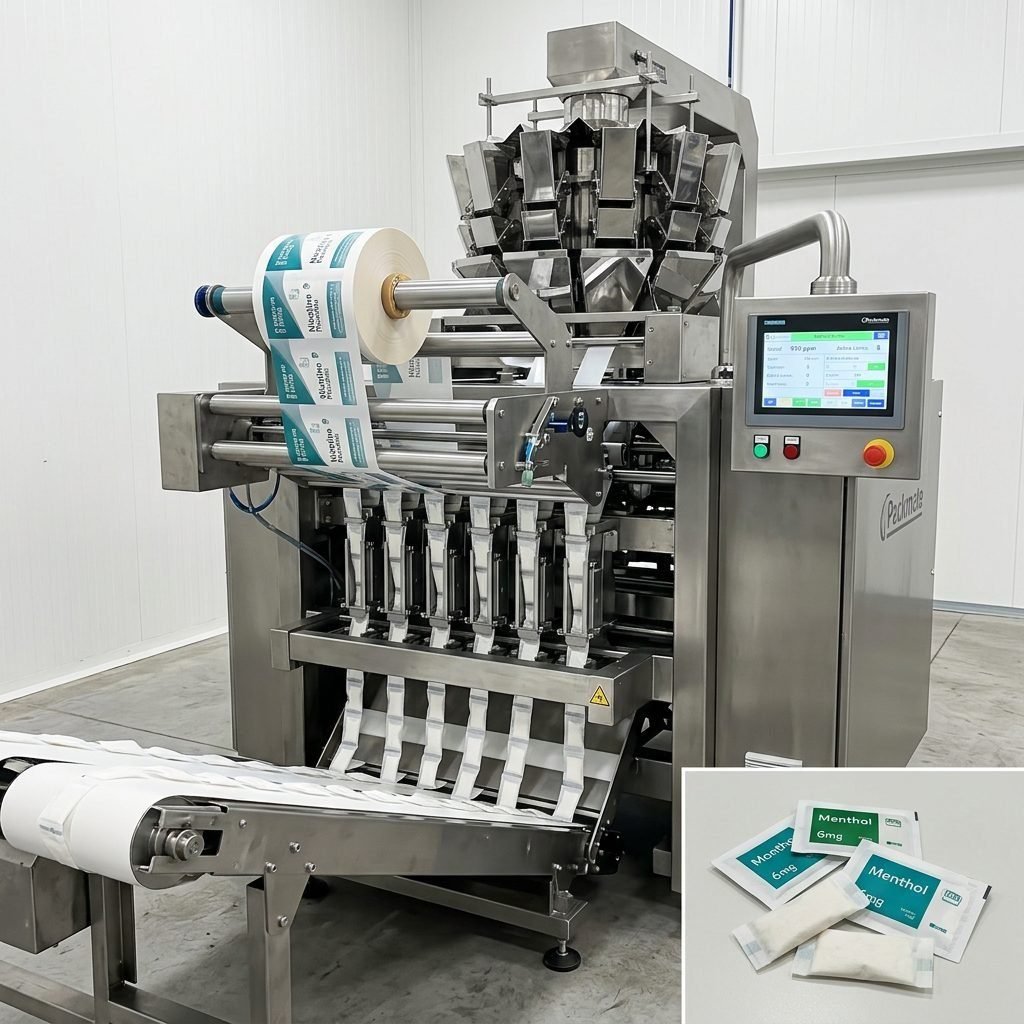
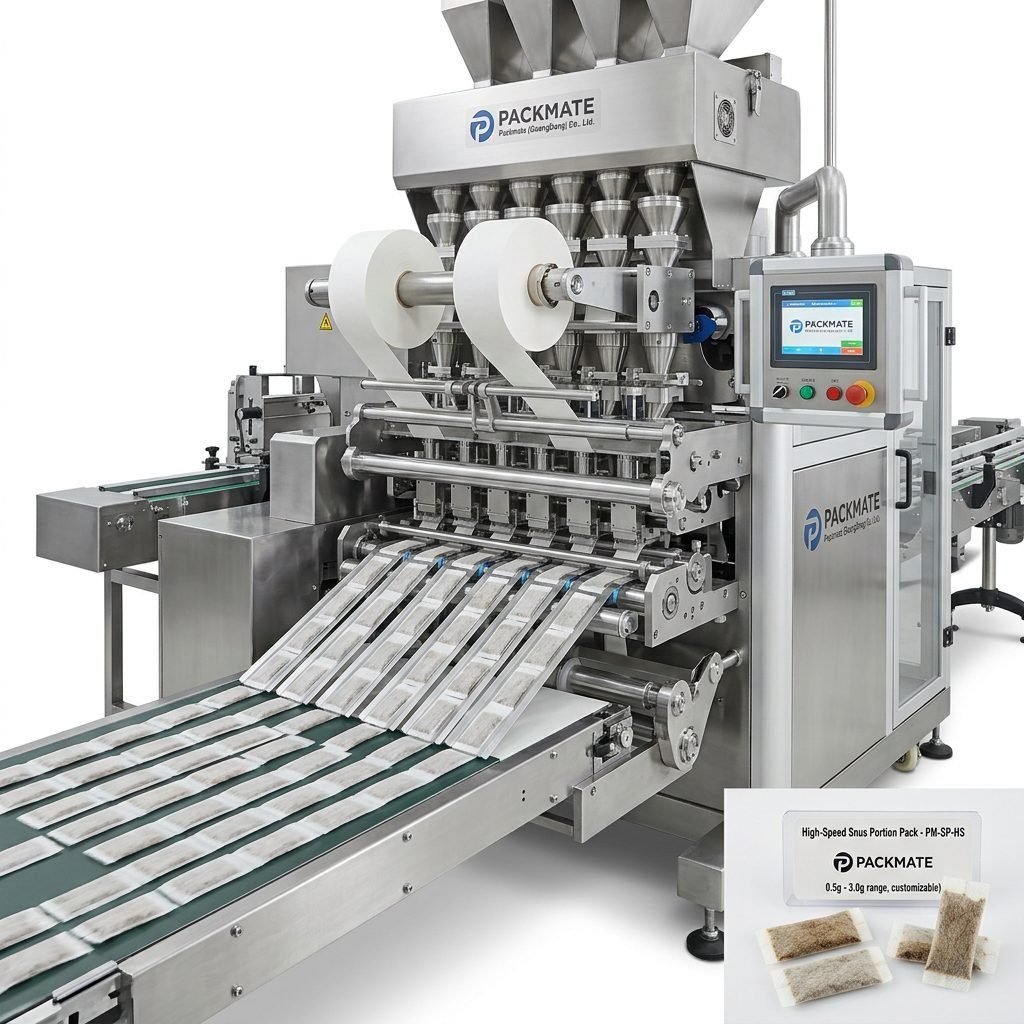
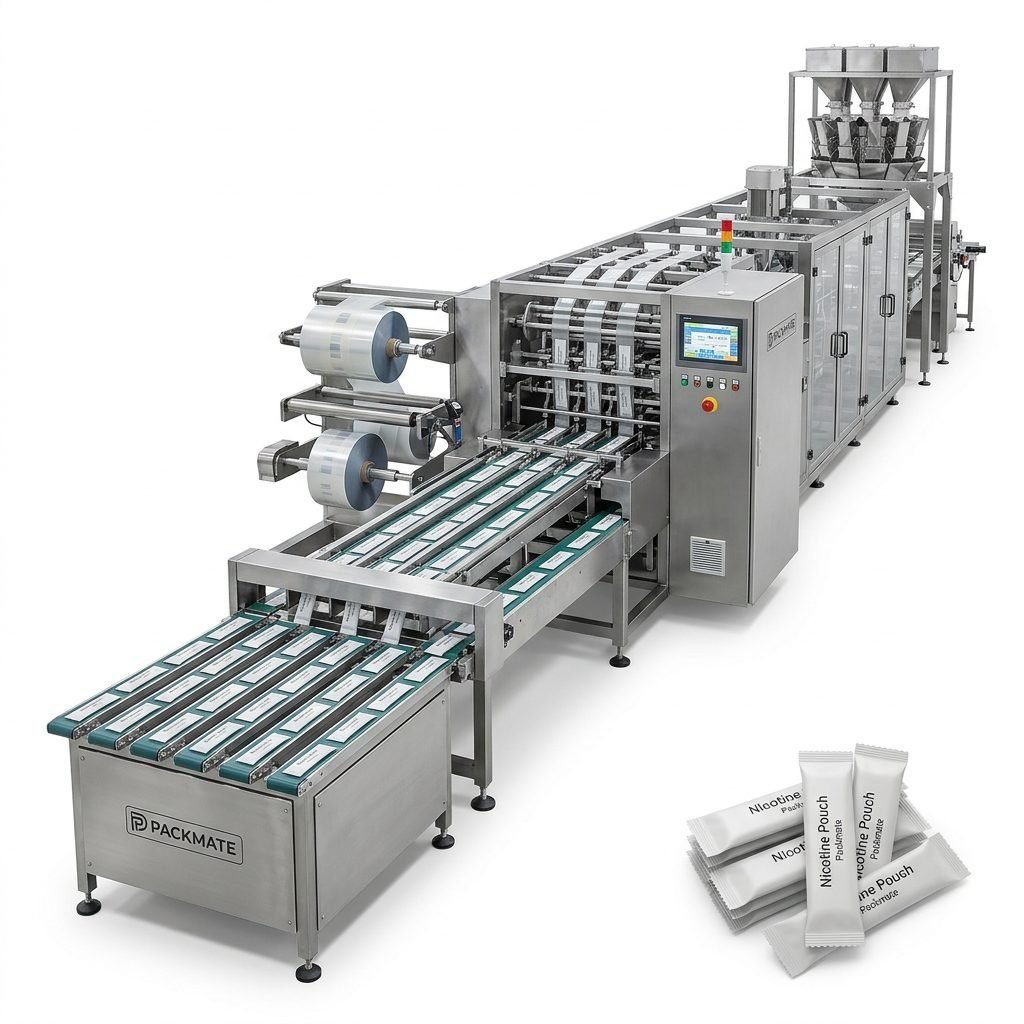
High-volume manufacturers often prefer multi-lane solutions that run multiple pouches in parallel lanes. Multi-lane machines increase throughput without dramatically increasing floor space. They are well suited to nicotine pouch production when output targets are high and product specifications are stable. Confirm that servo controls, synchronized dosing, and lane balancing features are available to reduce waste and downtime.
Form-Fill-Seal (FFS) Pouch Systems
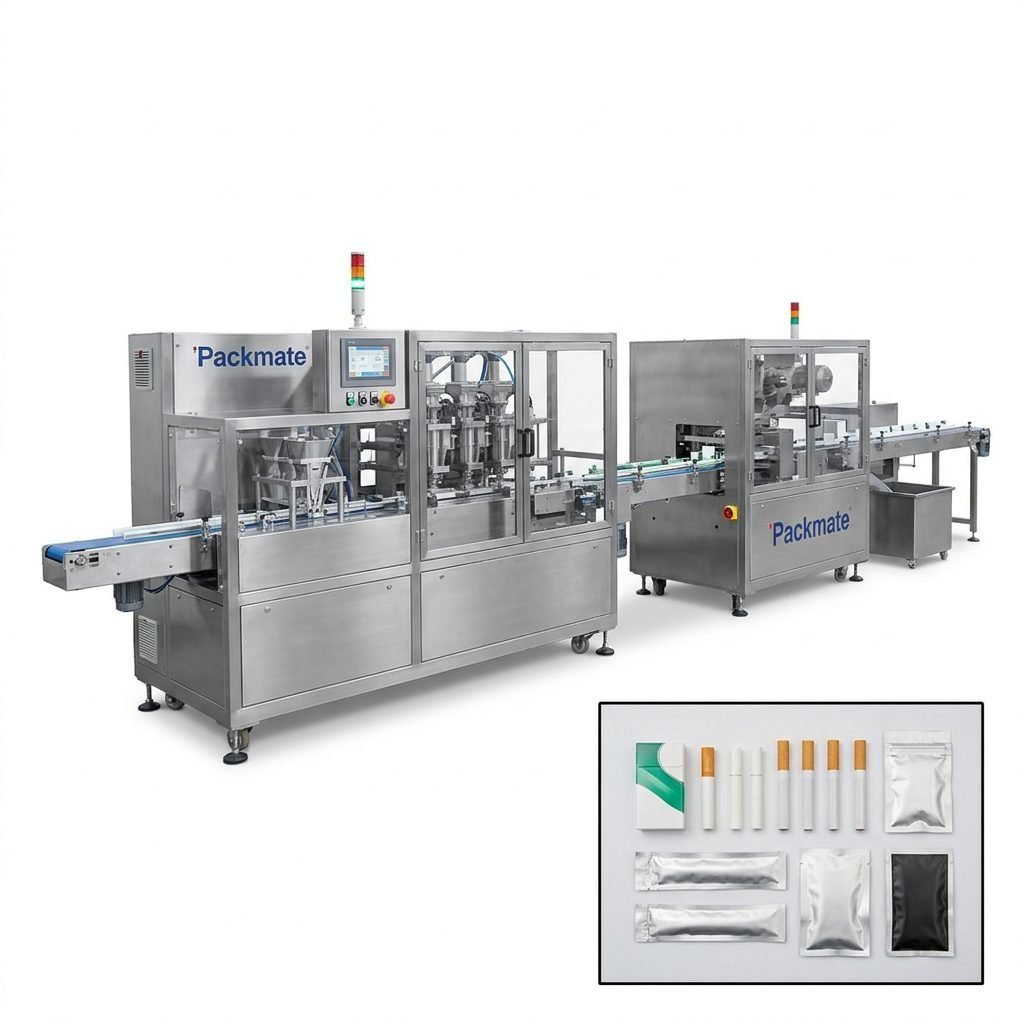
FFS systems can produce pre-formed pouches from a roll of film, fill, and seal in one continuous process. They are convenient for unique pouch shapes and custom barrier requirements. If your brand focuses on distinctive packaging or needs to integrate secondary features (zipper, tear notches), FFS systems provide design flexibility at the expense of more complex changeovers.
Technical Specifications to Compare
When evaluating models, a specification checklist will help you objectively compare options. Look beyond marketed speeds to the real-world production figures under your product conditions.
⚙️ Drive & control: servo drives and PLC control for repeatable precision.
📦 Dosing accuracy: weigh-fill or volumetric systems with ± tolerance specs.
🔍 Changeover time: quick-release tooling and menu-driven recipes.
🧰 Maintenance access: hygienic design, tool-less access points, and spare parts lists.
📈 OEE features: integrated production logging, fault diagnostics, and remote support options.
Material Compatibility and Packaging Materials
Film strength, sealant layers, and barrier properties influence machine settings and long-term seal integrity. Make sure your machine vendor has experience with the specific laminates and adhesives you plan to use. If you plan to use recycled or specialty materials, request material testing on the equipment prior to purchase. It’s common to ask for sample trials or factory acceptance tests (FAT) that validate film feed, wrinkle control, and hermetic seals.
Automation, Integration & Line Layout
Packaging lines rarely operate in isolation. Consider upstream filling/weighing systems and downstream secondary packaging, cartoning, or case packing. Integrated automation reduces manual handling and improves sanitary conditions, which is especially important for nicotine products. Confirm control system compatibility, communication protocols (e.g., Ethernet/IP, Modbus), and whether the supplier offers turnkey solutions.
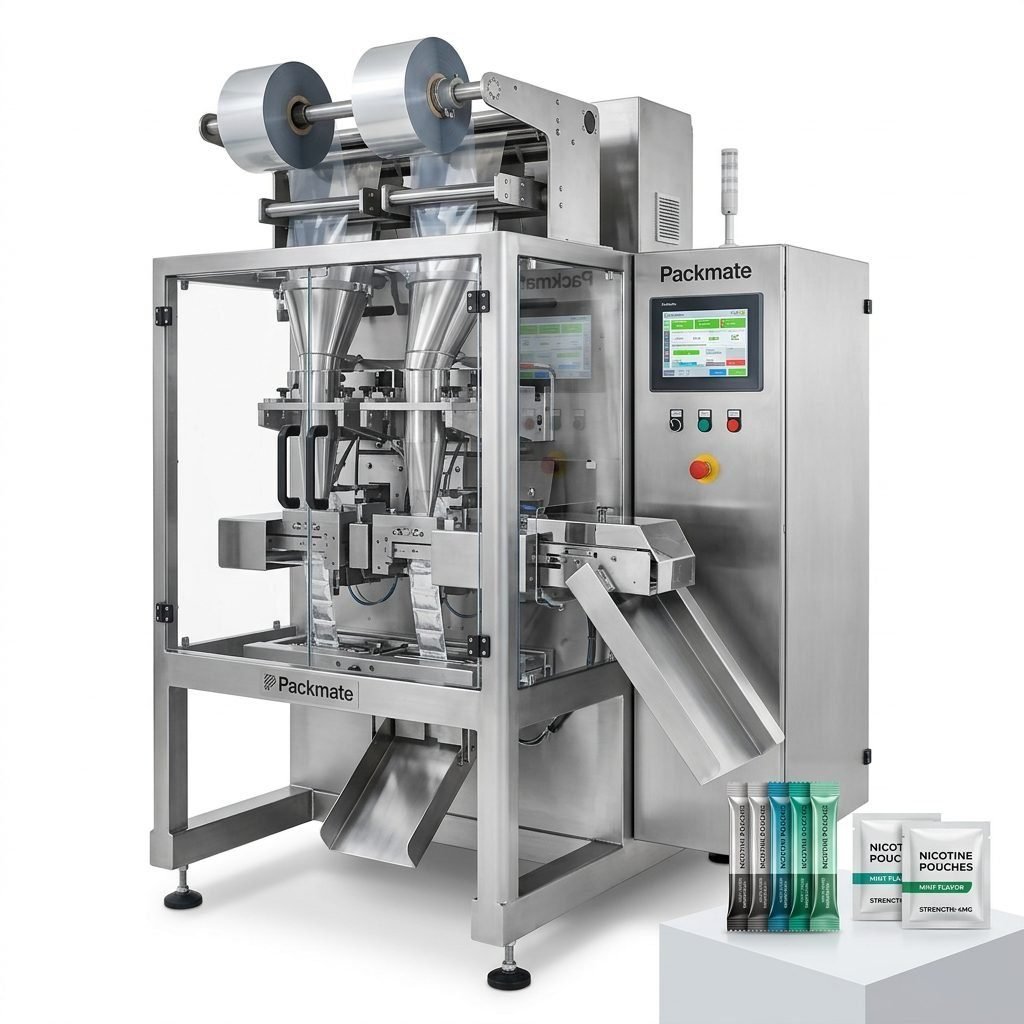
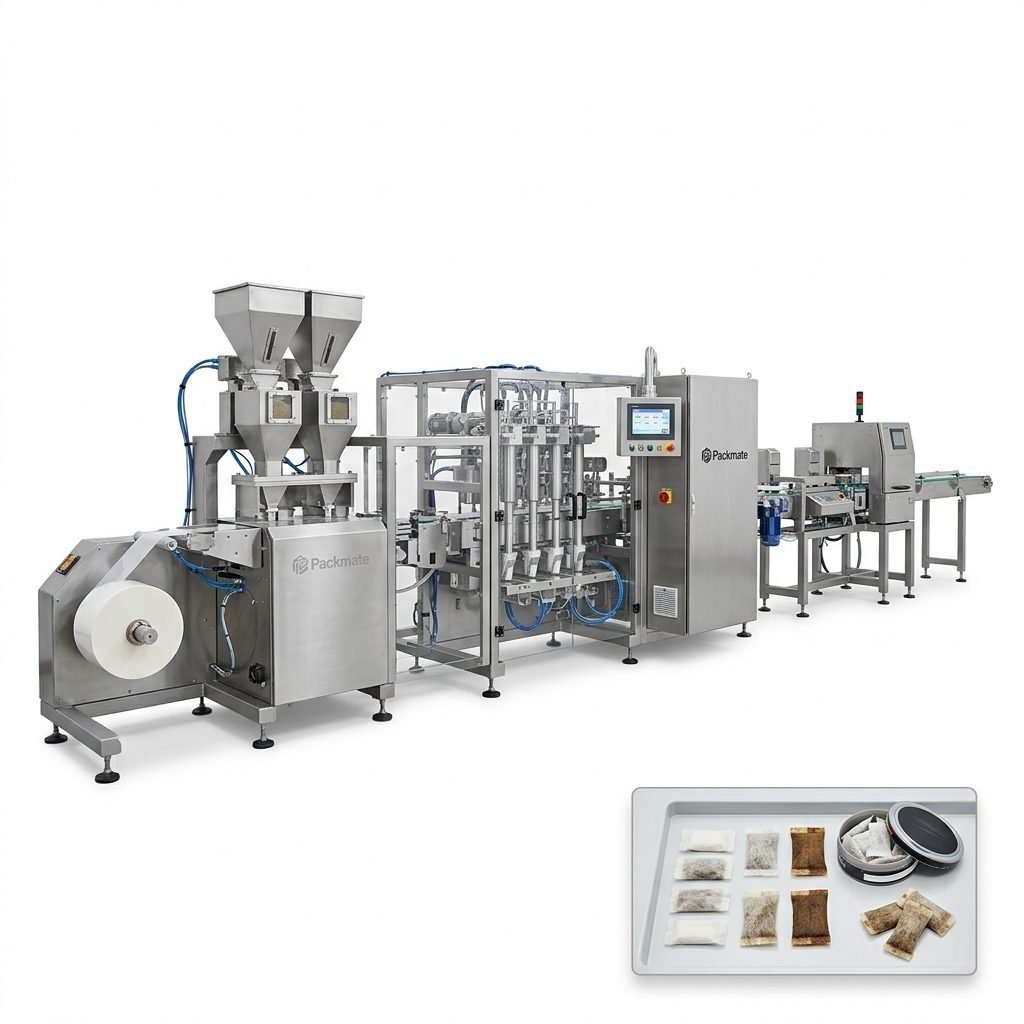
For example, Packmate offers full production lines including Snus & Nicotine Packaging Machines and Weighing & Packaging Systems that can be integrated to form a continuous, automated workflow.
Regulatory Compliance and Certifications
Ensure machines meet relevant EU and Czech safety and hygiene standards. CE and ISO certifications are baseline expectations for international suppliers. Additionally, inquire about materials contact certifications, cleanability protocols, and validation documentation. A compliant machine simplifies approval processes and reduces the risk of product recalls or production halts due to non-compliance.
Service, Spare Parts & Local Support in the Czech Republic
After-sale service is critical. Prioritize manufacturers with demonstrated global service networks or local partners who can provide timely on-site support, calibration, and spare parts. Response time expectations should be set in the contract, as should stock levels for critical wear parts. Remote diagnostic tools and IoT-enabled support significantly reduce downtime by enabling rapid troubleshooting.
Important: Request a service-level agreement (SLA) that clarifies response times, preventive maintenance schedules, and spare parts lead times. For customers in the Czech Republic, confirm if the vendor has local technicians, authorized distributors, or logistic partners for expedited parts delivery.
Customization & Futureproofing
Many manufacturers provide modular designs that allow upgrades like additional lanes, automatic carton erectors, or inline metal detectors. When evaluating suppliers, ask about upgrade paths and compatibility with future modules. A modular machine reduces total cost of ownership by allowing incremental capital investment as your business grows.
Factory Acceptance Tests & Pilot Runs
Never skip a factory acceptance test (FAT). A FAT verifies that the machine meets agreed-upon performance specifications using your materials and product formats. For critical purchases, arrange a pilot run in the supplier’s factory. Seeing your product run on the machine under realistic conditions will reveal hidden issues and refine acceptance criteria.
Packmate’s long engineering heritage and manufacturing capability — including advanced CNC machining centers and precision assembly — supports comprehensive FAT procedures and tailored factory trials. Learn more about the company’s capabilities at their About Packmate page.
Budgeting & Total Cost of Ownership
The cheapest machine upfront may cost more over its lifecycle. Consider energy consumption, spare parts, wear components, expected yield and scrap rates, and labor requirements. Factor in training costs for operators and technicians, and the value of remote support and diagnostics in reducing downtime. A clearer total cost of ownership (TCO) perspective often favors slightly higher-capability machines with better reliability and service.
How to Select the Right Supplier
Supplier selection should be based on engineering competence, proven case studies, and references. Ask for:
🔎 References and case studies: real-world examples of snus or nicotine pouch lines.
📄 Certifications: CE, ISO and product-contact material approvals.
🏭 Factory capability: machining centers, assembly lines and quality control processes.
🤝 After-sales program: training, spare parts, and local representation or partners.
For additional references and examples of completed projects, explore Packmate’s Case library and exhibition history at Our Exhibition.
Practical Steps for Czech Republic Buyers
– Create a detailed Request for Quotation (RFQ) that includes product samples, film specs, required speed, and acceptance criteria.
– Schedule on-site or virtual FATs and insist on performance tests using your materials.
– Verify customs, VAT, and import requirements for bringing machines into the Czech Republic; consider local installation support.
– Plan operator and maintenance training early to reduce commissioning time.
– Negotiate spare parts kits and an initial stock to cover 6–12 months of production.
Why Work with an Experienced Manufacturer?
An experienced manufacturer with a global footprint brings proven designs, tested components, and documented processes. They can also provide turnkey solutions that reduce integration complexity. Packmate, for instance, has over 30 years of engineering experience and offers a wide portfolio of machines including Sachet & Stick Pack Machines and full Filling & Packaging Lines to meet diverse production requirements.
Final checklist before purchase
• Confirm performance with your materials and product.
• Validate spare parts list and lead times.
• Agree on FAT criteria and acceptance tests.
• Ensure documentation, training and SLAs are contractually defined.
Conclusion
Selecting the best snus packaging machine in the Czech Republic requires a balanced assessment of machine capability, material compatibility, service support, and total cost of ownership. By documenting your production needs, insisting on factory acceptance tests, and partnering with a reputable manufacturer that offers integrated solutions and strong after-sales support, you reduce risk and set the foundation for efficient, compliant, and scalable production. For direct inquiries or tailored turnkey solutions, consider reaching out to manufacturers with proven snus and nicotine packaging expertise.
Frequently Asked Questions
1. What machine speed do I need for small-batch production?
Small-batch producers often prioritize flexibility over maximum speed. Machines with lower lane counts and modular add-ons allow fast changeovers and reduced minimum runs. Assess expected daily volumes and choose a model that provides consistent accuracy at your target throughput.
2. Can a single machine handle multiple pouch sizes and formats?
Many modern machines support multiple formats through modular tooling and recipe management. However, format changes require setup time and additional tooling investment. Discuss changeover times and spare tool sets with the supplier before purchase.
3. How important is local service in the Czech Republic?
Local service reduces downtime and simplifies spare parts logistics. If the manufacturer does not have a direct presence, ensure they have certified partners, clear SLAs, and remote diagnostic capabilities for rapid support.
4. Are factory acceptance tests necessary?
Yes. Factory acceptance tests validate machine performance with your specific materials and products. A successful FAT reduces commissioning time and minimizes surprises during installation.
5. Where can I find more information and product lines?
For detailed product ranges and technical documentation, visit manufacturer product pages such as the Bag & Pouch Packaging Machines and the Auxiliary Packaging Equipment listings. For direct contact, use the supplier’s Contact Us page to request quotations and arrange evaluations.