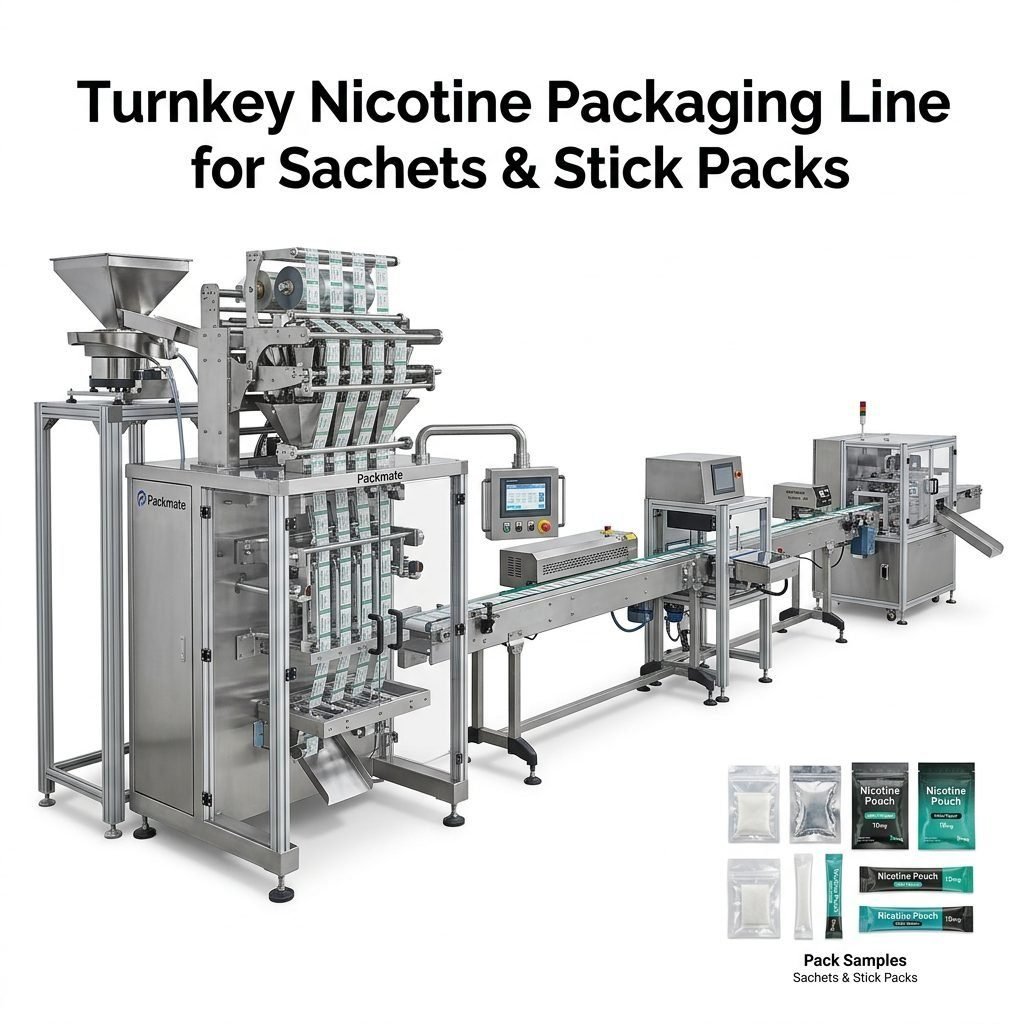
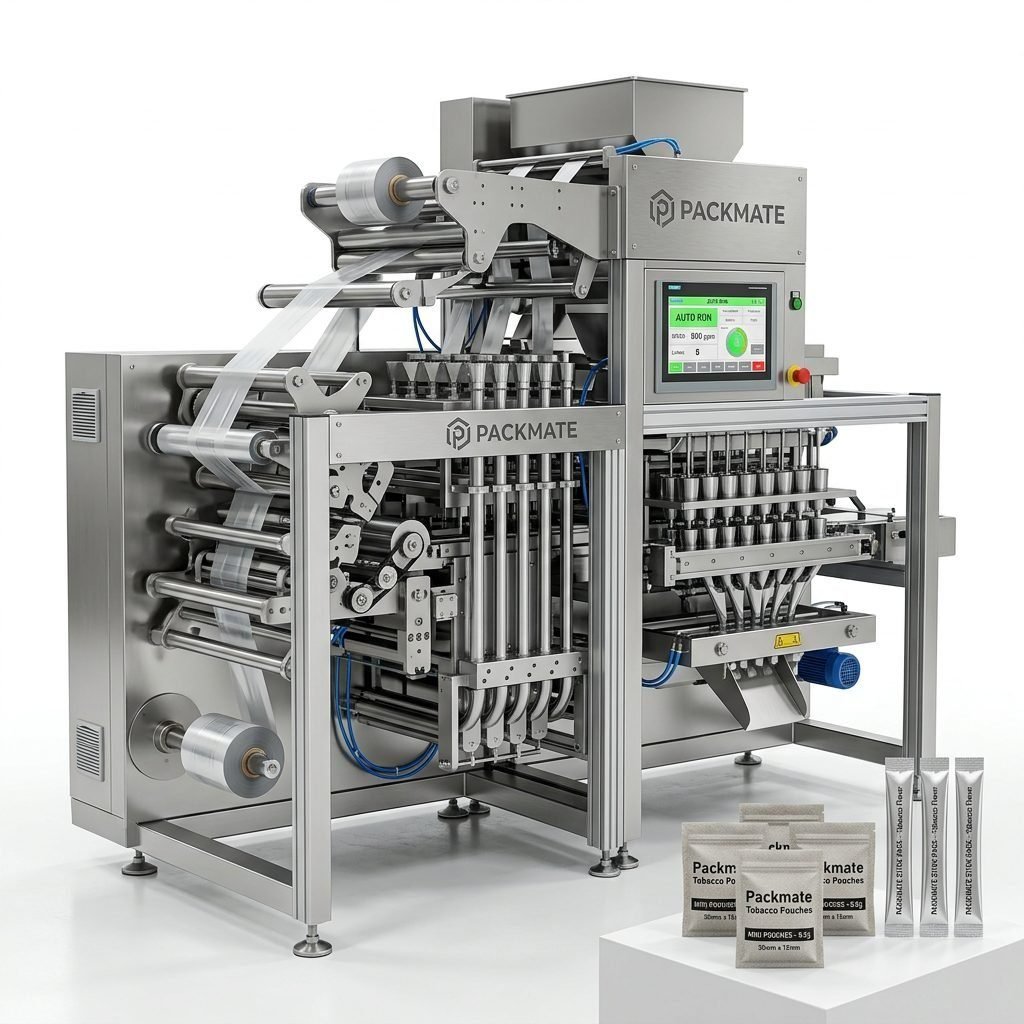
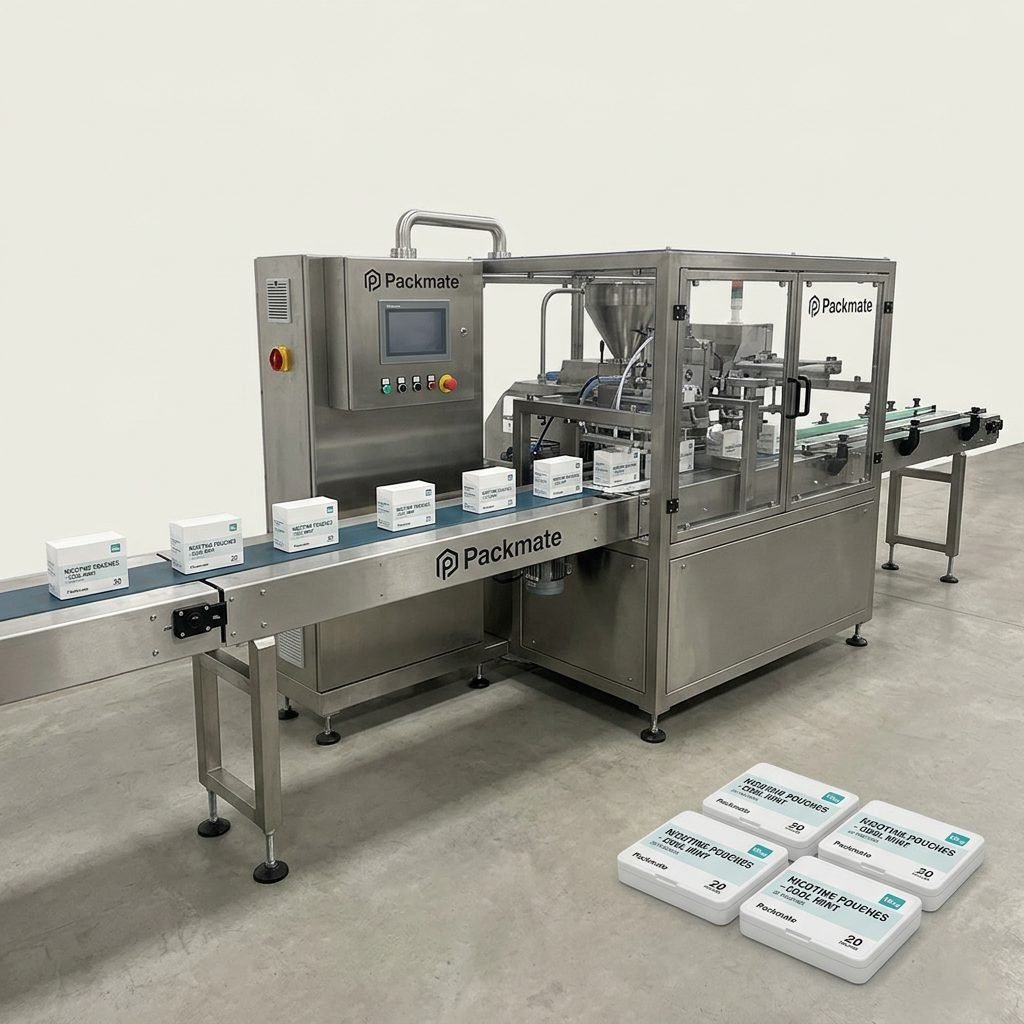
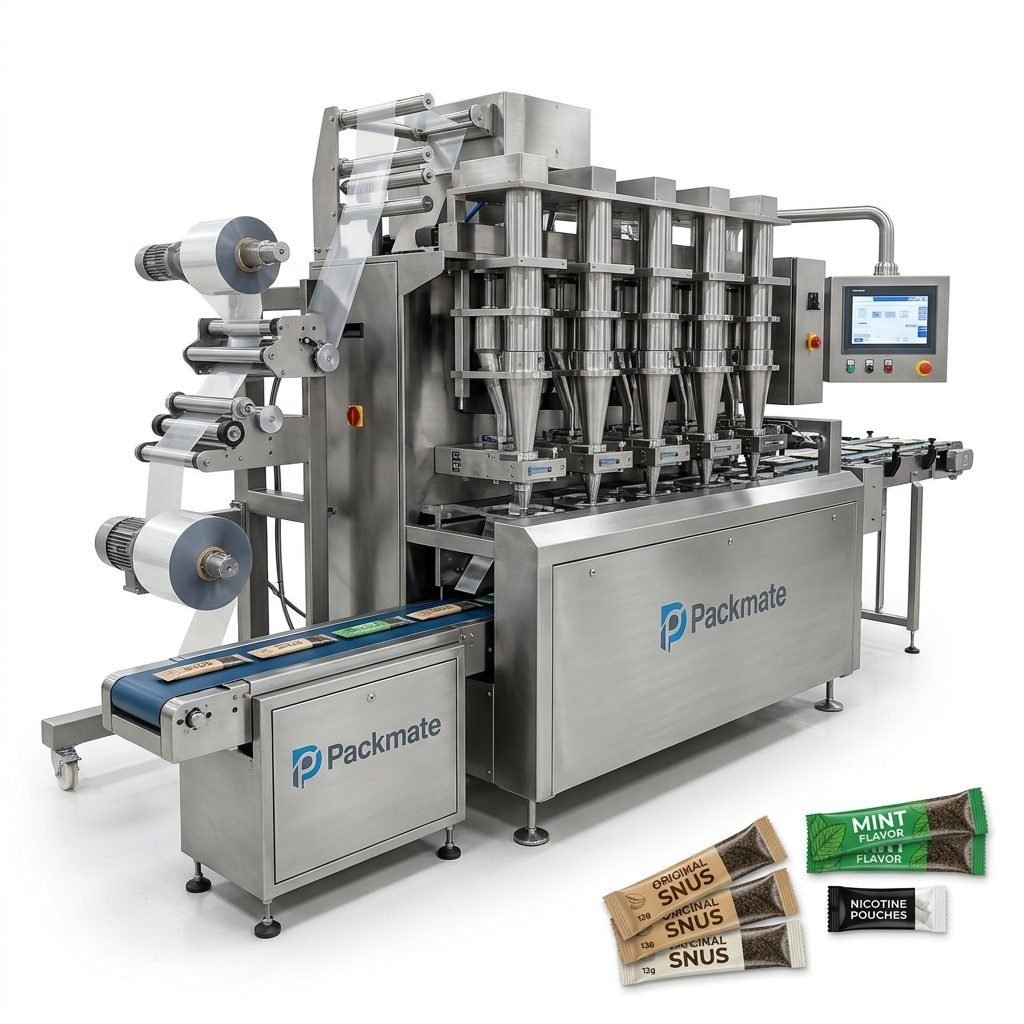
Choosing the right supplier for nicotine packaging machinery in the United States requires more than comparing price tags. Buyers must balance regulatory compliance, production reliability, customization capability, and long-term service. This guide walks you through practical steps, industry-specific considerations for US customers, and a checklist to ensure you select a partner who delivers performance, compliance, and value.
🔎 Understand the US Market Context and Buyer Expectations
The US nicotine and snus market is shaped by strict regulatory oversight, heightened consumer awareness, and fast-moving distribution channels. Buyers typically expect:
- Compliance with federal and state regulations (FDA, state labeling and packaging rules).
- High automation levels to minimize labor costs and ensure product consistency.
- Rapid after-sales response and accessible spare parts supply across the country.
- Clear documentation, CE/ISO certifications, and traceability for audits.
⚖️ Prioritize Compliance & Certifications
In the US, regulatory compliance is non-negotiable. Look for suppliers who can demonstrate:
- CE and ISO documentation for manufacturing standards.
- Support materials for FDA-related audits and quality management processes.
- Risk assessments and electrical/mechanical safety testing reports.
Suppliers that publish certificates and detailed technical dossiers (and can send copies on request) reduce your audit burden and speed up procurement approvals.
🔧 Evaluate Technical Capability & Machine Performance
Machine uptime, speed, and accuracy are the foundation of ROI. When comparing suppliers, assess:
- Production throughput: target cycles per minute, multi-lane capacity, and real-world throughput under typical product formulations.
- Dose accuracy: weight tolerances for nicotine pouch filling and sealing integrity.
- Changeover time: how fast the line adapts to another pouch size or format.
- Integration capability with upstream weighers and downstream packaging systems.
Case in Point
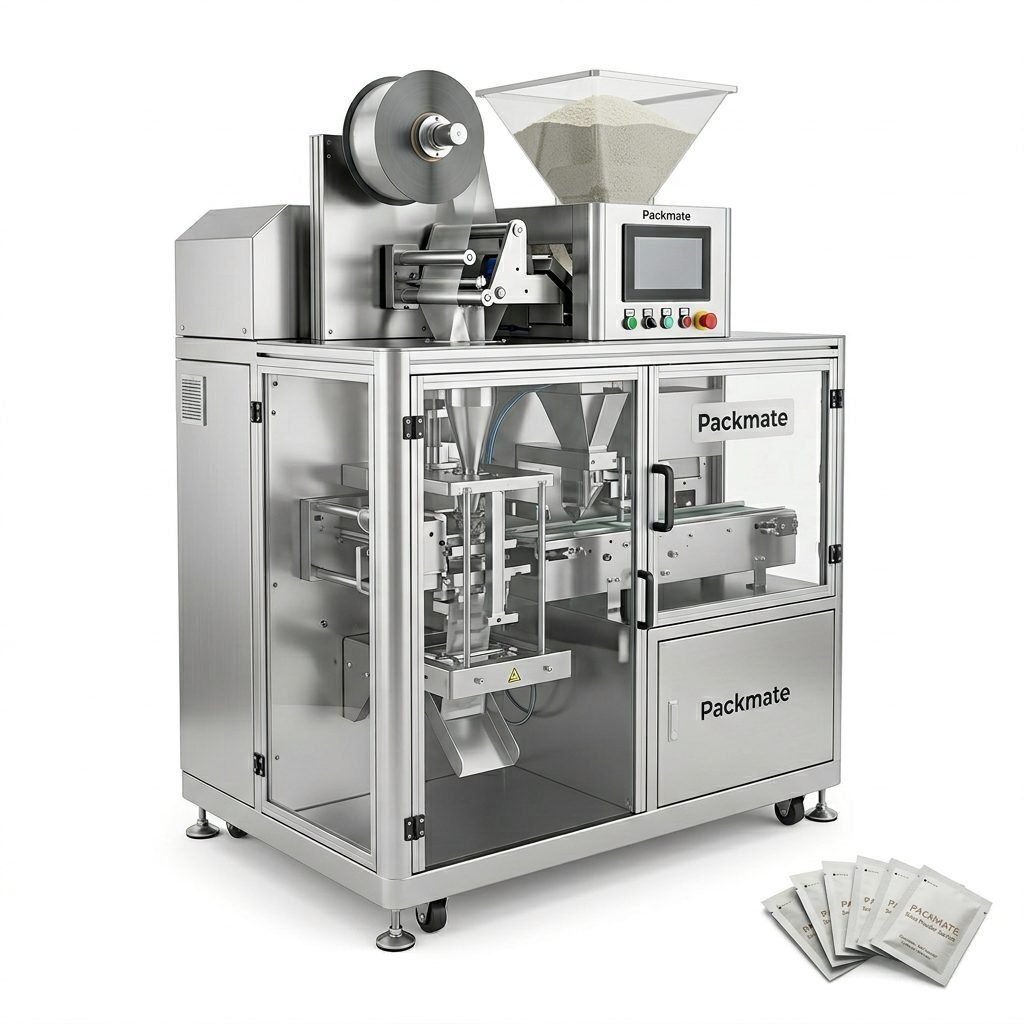
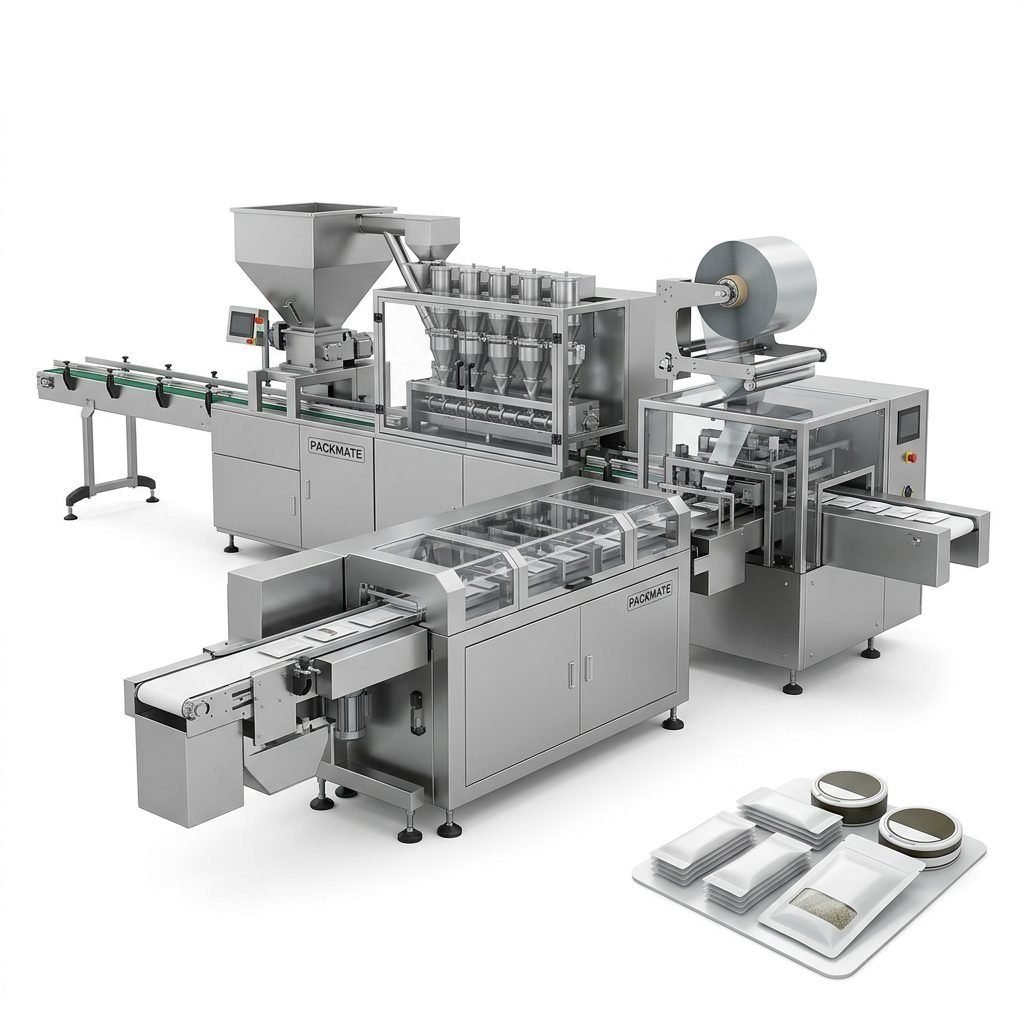
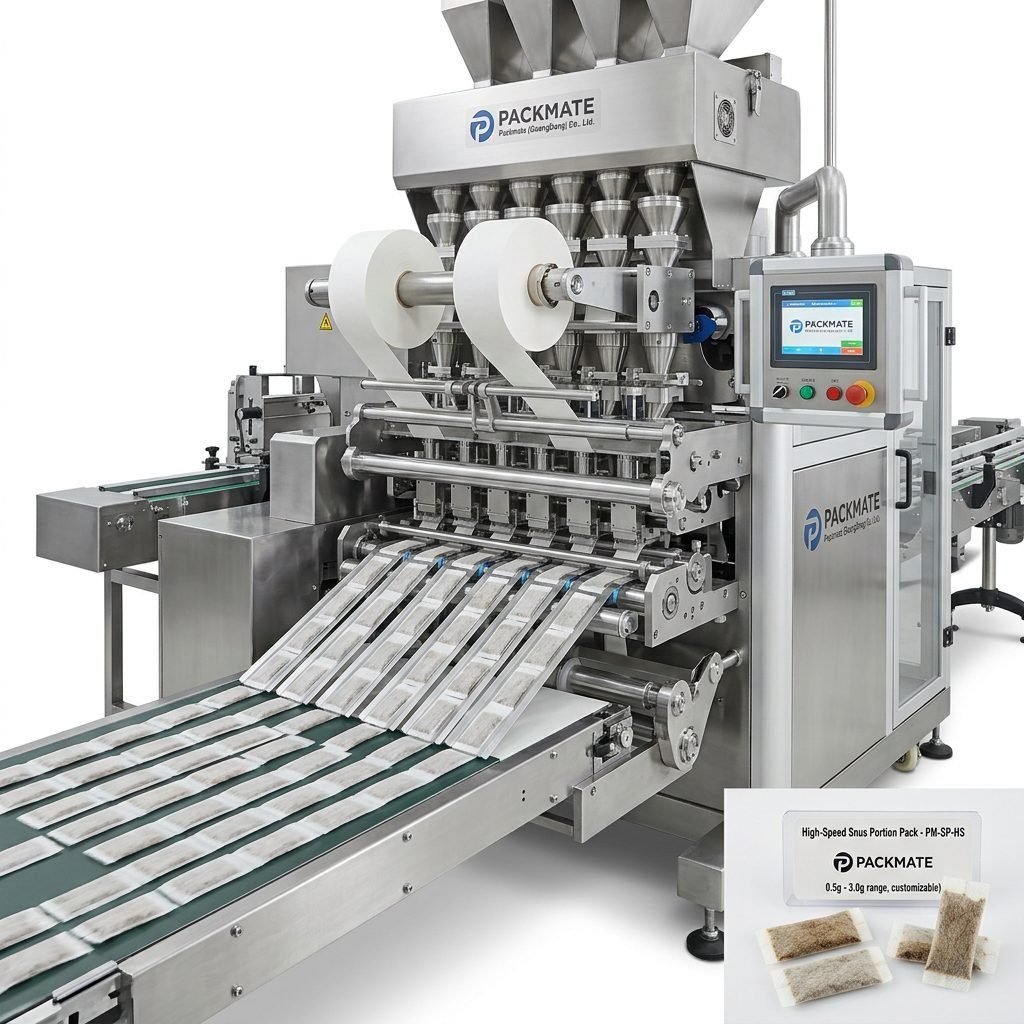
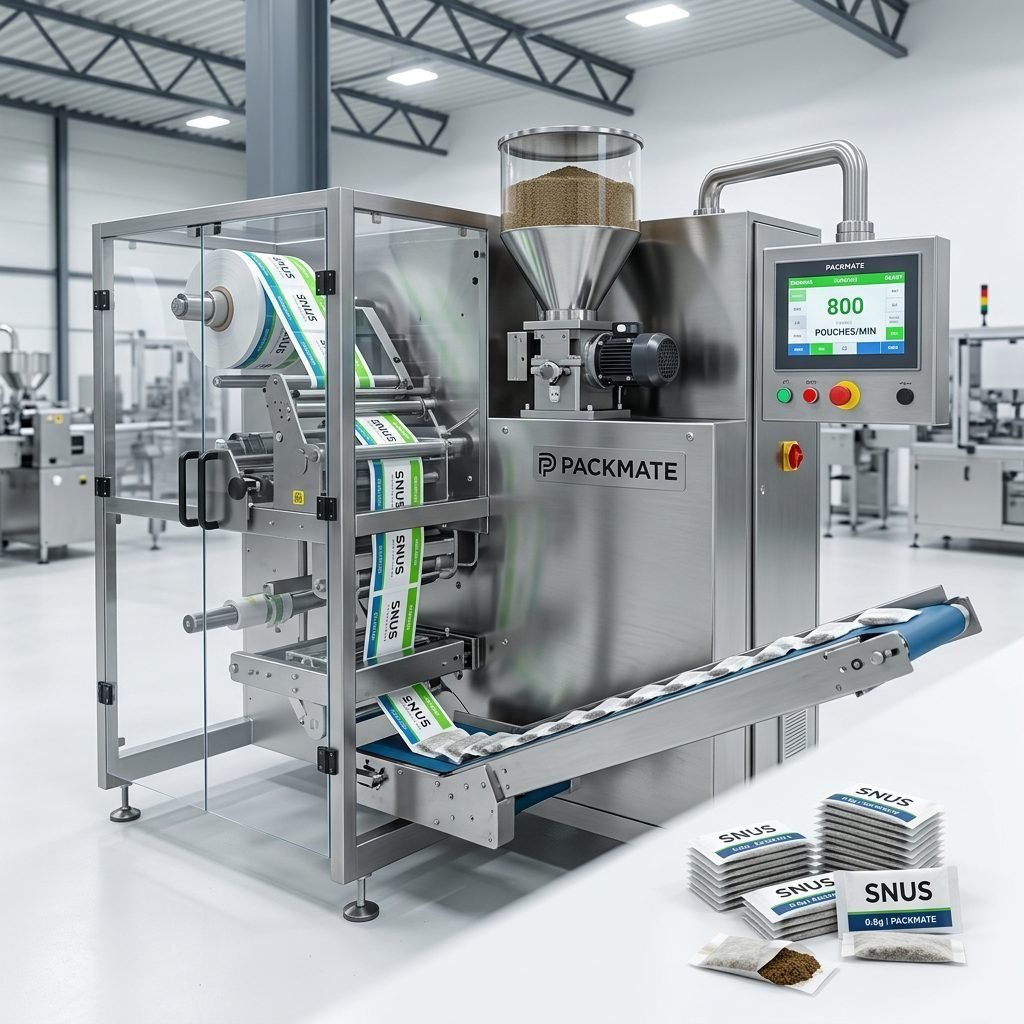
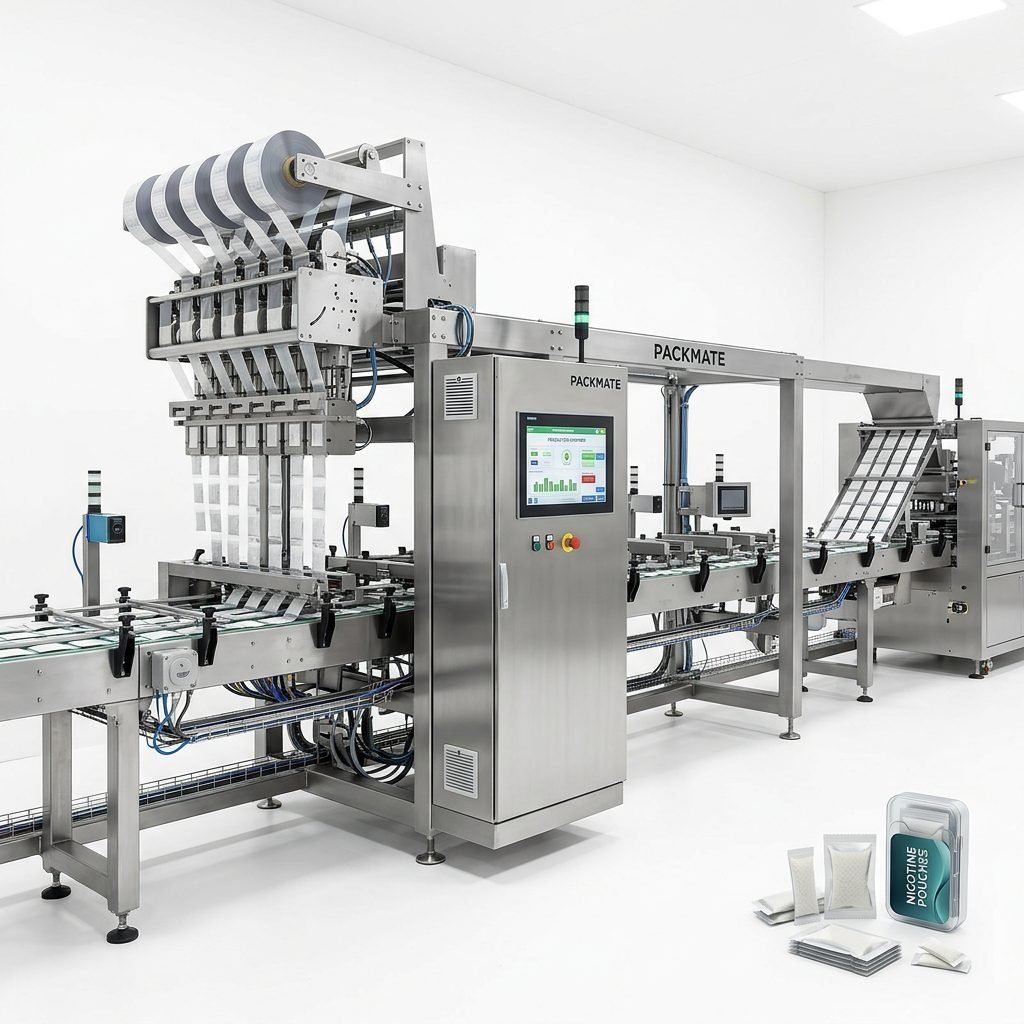
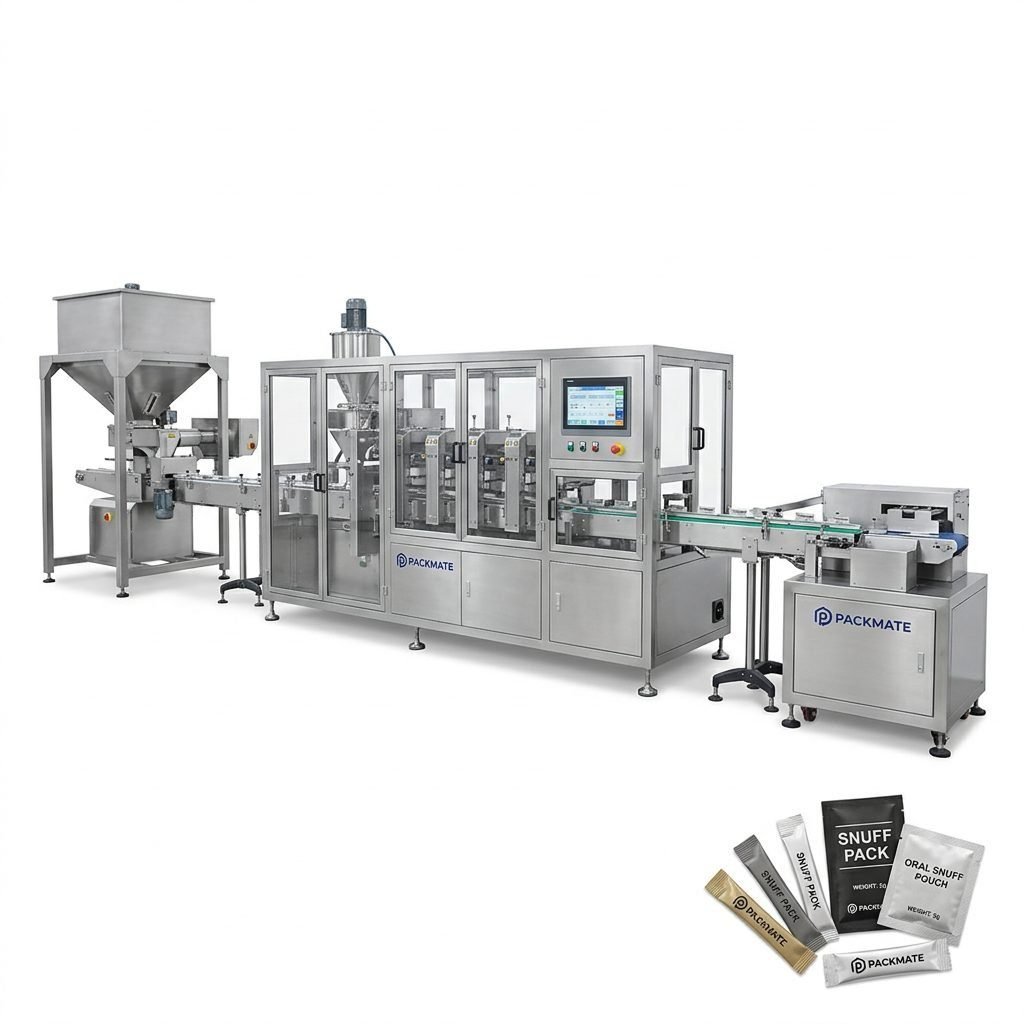
Manufacturers with decades of engineering experience can be especially valuable because they provide mature multi-lane solutions designed for small-dose pouches — reducing development time and helping US customers meet high demand while staying compliant.
🏭 Inspect Factory Strength & Manufacturing Systems
A supplier’s facility tells you a lot about consistency and capacity. Ask for:
- Factory size and production capacity (floor area, number of assembly lines).
- Availability of CNC machining centers and precision assembly systems.
- Quality control procedures and test rigs used for acceptance testing.
US buyers often prefer suppliers with visible engineering depth — e.g., 20,000㎡ facilities and 30+ years of experience — because these attributes typically translate into stable long-term delivery.
🤝 After-Sales Support & Spare Parts Logistics
After-sales service can make or break operations. Key elements to negotiate:
- Spares availability: guaranteed inventory, kits for wear parts, and lead times for critical components.
- Remote support: PLC/HMI troubleshooting, software updates, and video-guided maintenance to minimize downtime.
- Local presence or certified service partners in the US to reduce travel time and customs delays.
💰 Total Cost of Ownership vs. Initial Purchase Price
A low purchase price may hide higher operational costs. Compare proposals using:
- Energy consumption and consumables cost per unit.
- Expected MTBF (mean time between failures) and average repair time.
- Training, commissioning, and warranty terms.
- Resale value and modular upgrade paths.
🚚 Shipping, Customs & Lead Time Considerations for the US
US-based buyers must plan for international logistics, import duties, and in-country installation:
- Confirm EXW/FOB/CIF terms and typical lead times — high-demand machines may require month-long scheduling windows.
- Ask whether the supplier assists with customs documentation and whether machines are shipped with export compliance paperwork.
- Consider suppliers who offer on-site commissioning in the US or have local partners.
Fast, clear logistics planning avoids unnecessary delays and reduces the cost of idle production lines.
🔍 Factory Visits, References & Live Demonstrations
Whenever possible, request a factory tour or remote live demonstration. Evidence to gather:
- Videos of similar machines running with your product type and packaging format.
- Reference customers in the US or similar regulatory environments.
- Case studies showing uptime statistics and yield improvements.
Recommended Supplier Evidence
A reputable supplier will readily share case studies, certifications, and customer contact details. If they hesitate, treat that as a red flag.
📋 How to Structure Your RFQ: A Practical Checklist
Include these items in your request for quotation (RFQ) to get comparable offers:
- Product specifications: pouch size, fill weight, material, sealing type.
- Required output: target pouches per minute and daily production goals.
- Integration needs: upstream weighers, labeling, and case packing.
- Validation and documentation needs for regulatory compliance.
- Warranty, spare parts list, and expected lead time for delivery and installation.
Suppliers who respond with a structured proposal, timelines, and a clear spare parts plan make comparisons straightforward.
✅ Why Experienced Manufacturers Matter — A Real-World Example
Long-standing manufacturers that specialize in snus and nicotine pouch equipment bring unique advantages: refined multi-lane systems, proven dosing solutions for small-format pouches, and experienced R&D teams that can customize for US market demands. If you need to review product lines or get technical specs, consider visiting supplier product pages such as:
- Snus & Nicotine Packaging Machines
- About Packmate
- Contact Us for quotes and factory visit coordination.
- Case studies demonstrating global deployments and performance data.
🔔 Practical Negotiation Tips for US Buyers
US procurement teams should:
- Ask for a complete BOM and request pricing for spare parts and service plans up front.
- Negotiate training, a clear warranty period, and penalty clauses for missed delivery milestones.
- Request installation and FAT (Factory Acceptance Test) protocols with acceptance criteria.
Red Flags to Watch For
If a supplier cannot provide references, refuses to show test runs, or offers vague service commitments, proceed with caution. Lack of documentation often leads to costly surprises during commissioning.
🔁 Integration & Future-Proofing
Choose machines with modular design and upgrade paths. Consider:
- PLC and HMI platforms that support remote diagnostics and future software updates.
- Mechanical modules that can be swapped for different product formats.
- Compatibility with automated material handling and serialization systems commonly required by US distributors.
📌 Final Steps Before Signing a Contract
Complete this final checklist:
- Signed FAT protocol and acceptance criteria.
- Detailed installation and commissioning schedule with resource commitments.
- Warranty and spare parts agreement with delivery commitments to the US.
- Training plan for operators and maintenance team.
These items protect both buyer and supplier and set clear expectations for a successful launch.
📚 Helpful Resources & Next Steps
If you want to review equipment types and complementary systems, check the supplier’s product pages for complete line solutions, including weighing and auxiliary equipment:
❓ Frequently Asked Questions
Q1: What certifications should I insist on for nicotine pouch machinery?
A: Request CE and ISO certificates for manufacturing and quality management, plus any test reports for electrical safety and material compatibility. Suppliers with audit-ready documentation simplify your regulatory submission processes.
Q2: How important is spare parts inventory when choosing a supplier?
A: Critical. Fast access to wear parts and a recommended spares kit greatly reduces downtime. Verify lead times and ask for a recommended annual spares plan.
Q3: Should I prefer local US service partners or direct factory service?
A: Both models work. Local partners reduce travel time and customs complications; factory engineers can offer deeper technical support. Ideally, your supplier provides certified local partners plus remote factory support.
Q4: What are realistic lead times for multi-lane nicotine pouch lines?
A: Lead times vary by customization and factory backlog. Standard machines might ship in a few months; fully customized turnkey lines can take longer. Confirm delivery windows in writing.
Q5: How do I verify a supplier’s claims about throughput and accuracy?
A: Request a Factory Acceptance Test (FAT) with your product or representative samples and measurable acceptance criteria. Ask for reference customers and recorded performance data.
Selecting the best nicotine packaging machinery supplier in the United States is a balance of technical capability, compliance readiness, manufacturing strength, and after-sales support. Use the checklist above, request documented evidence, and prioritize suppliers who demonstrate experience with snus and nicotine pouch production to ensure a smooth, compliant, and profitable production ramp-up.