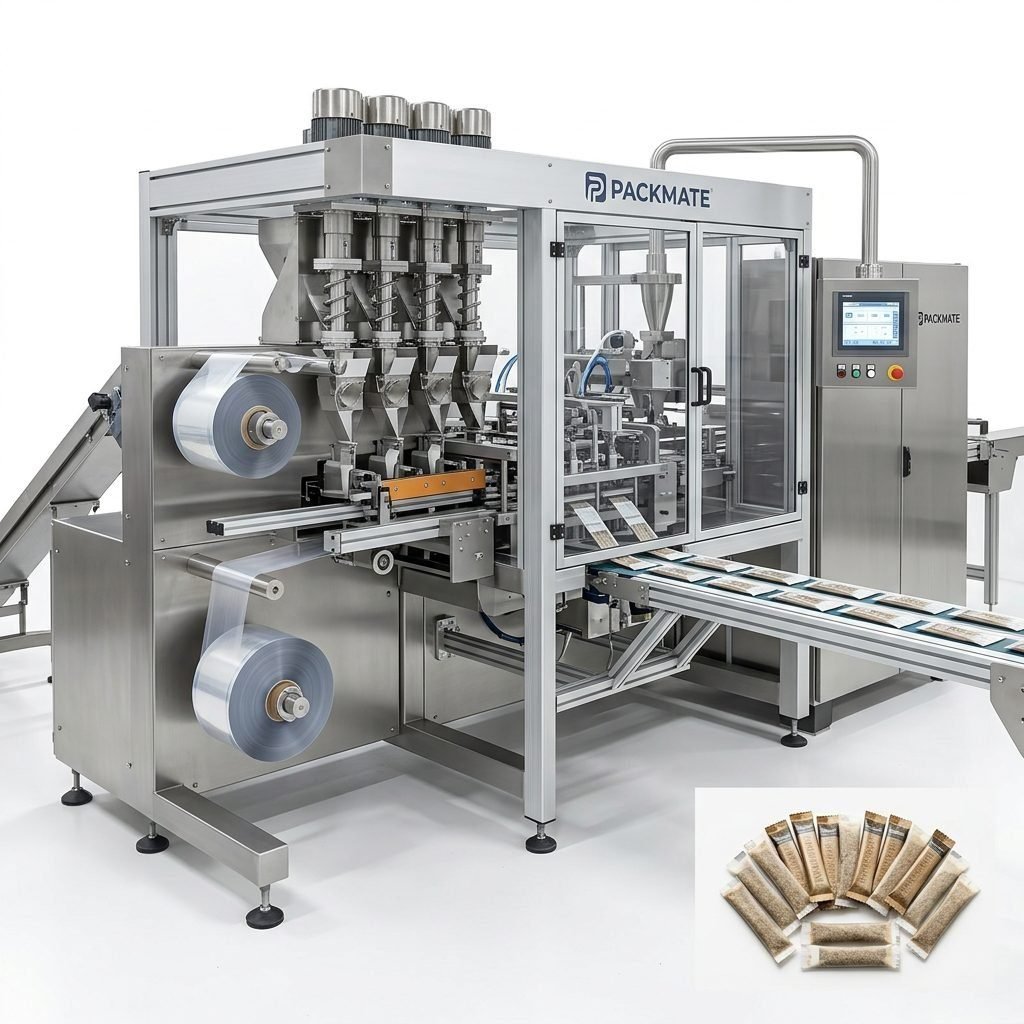
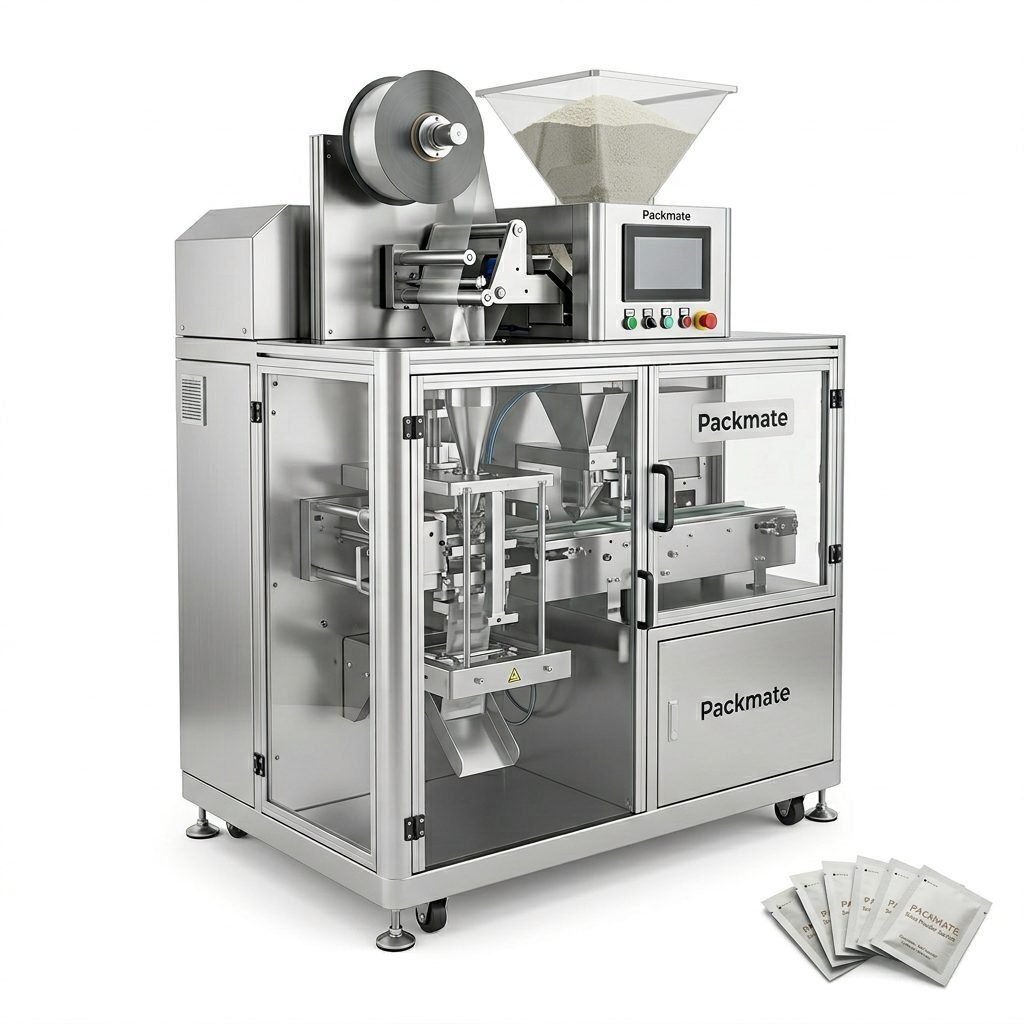
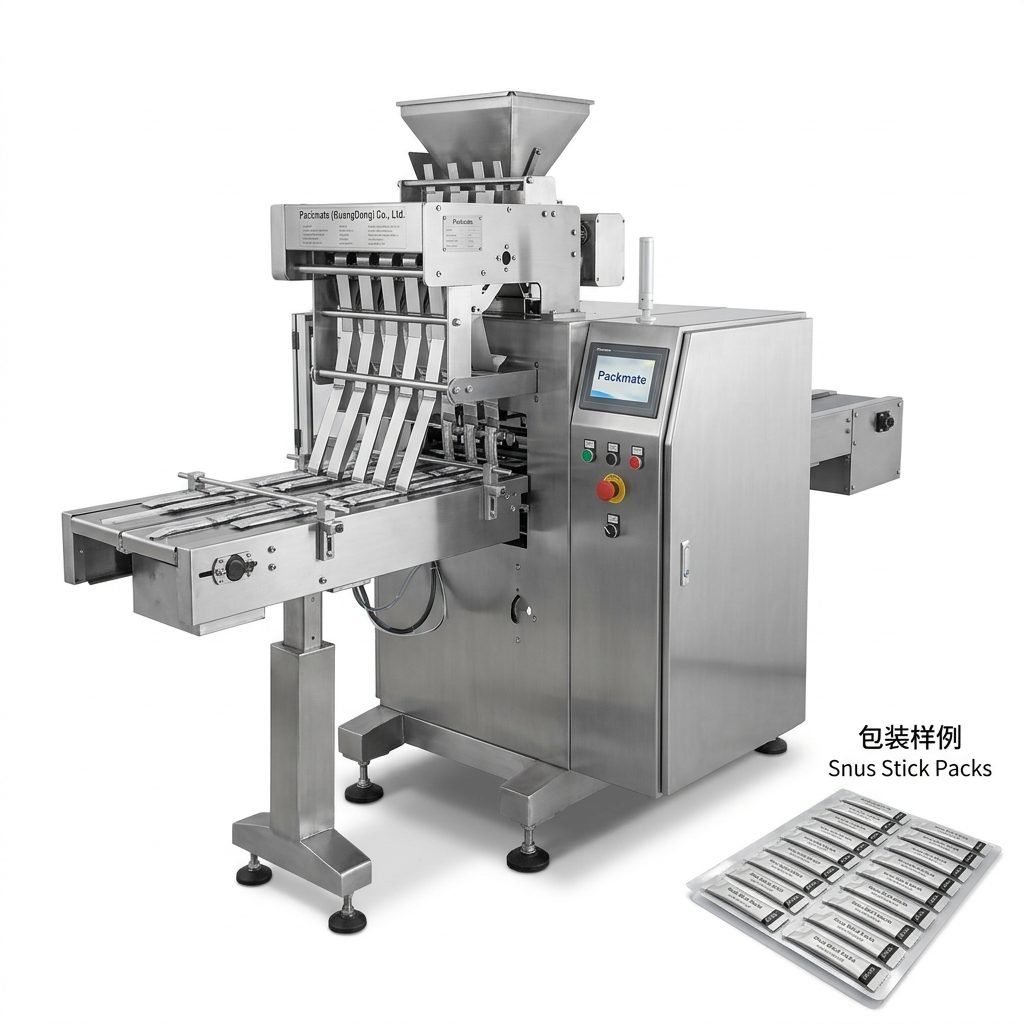
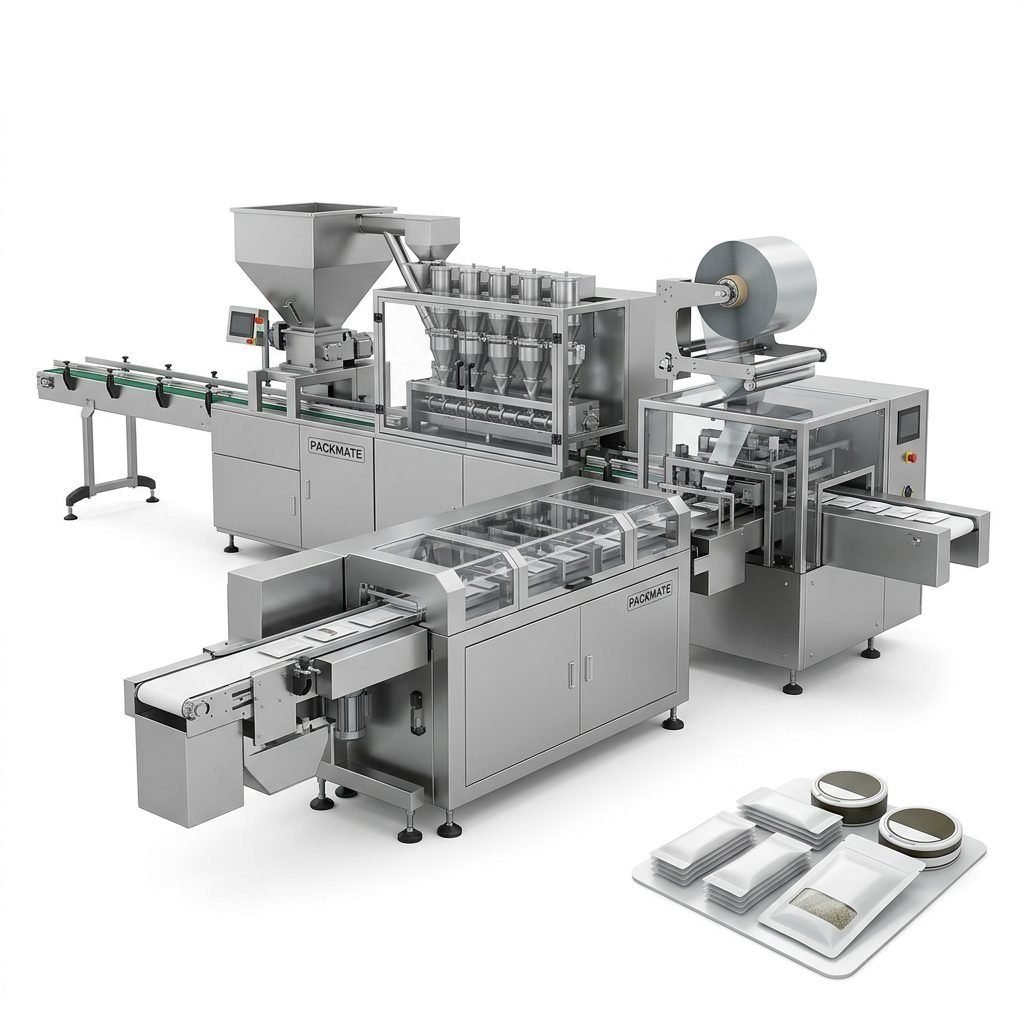
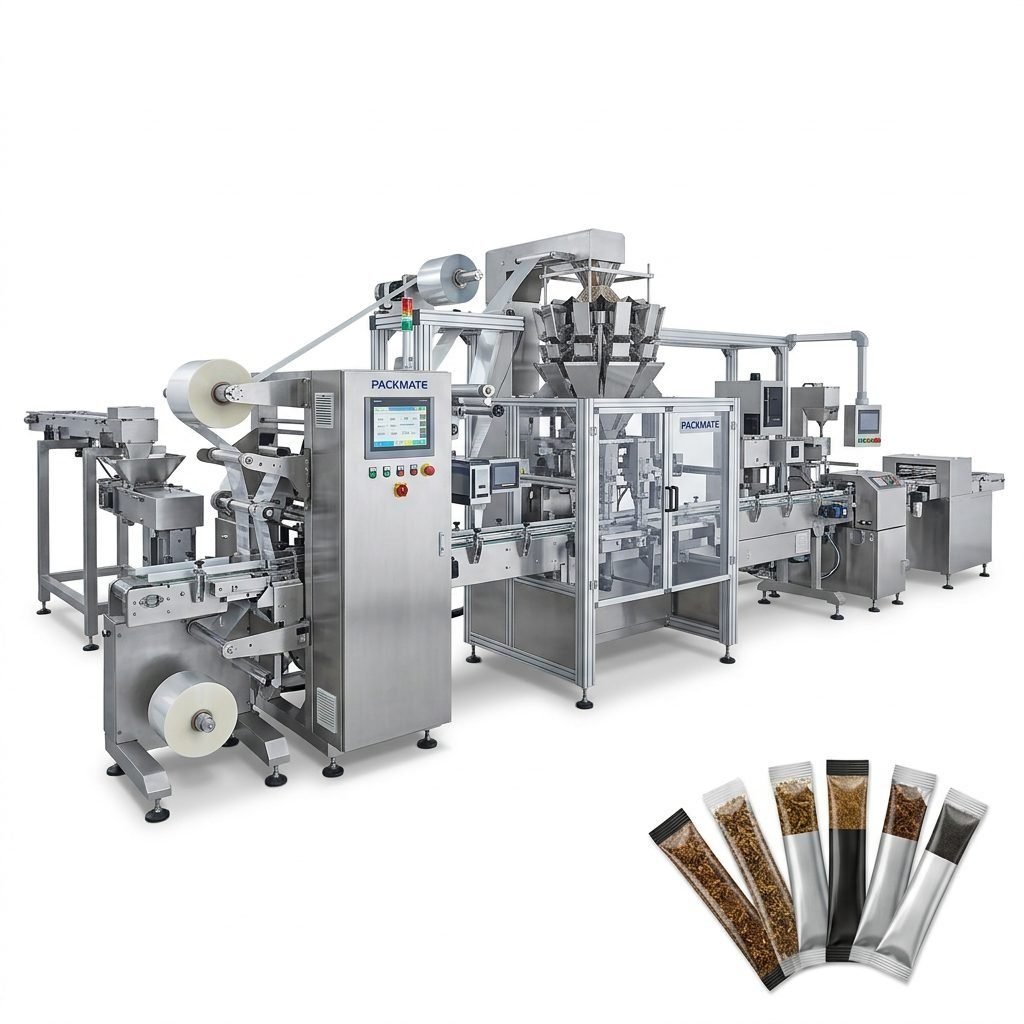
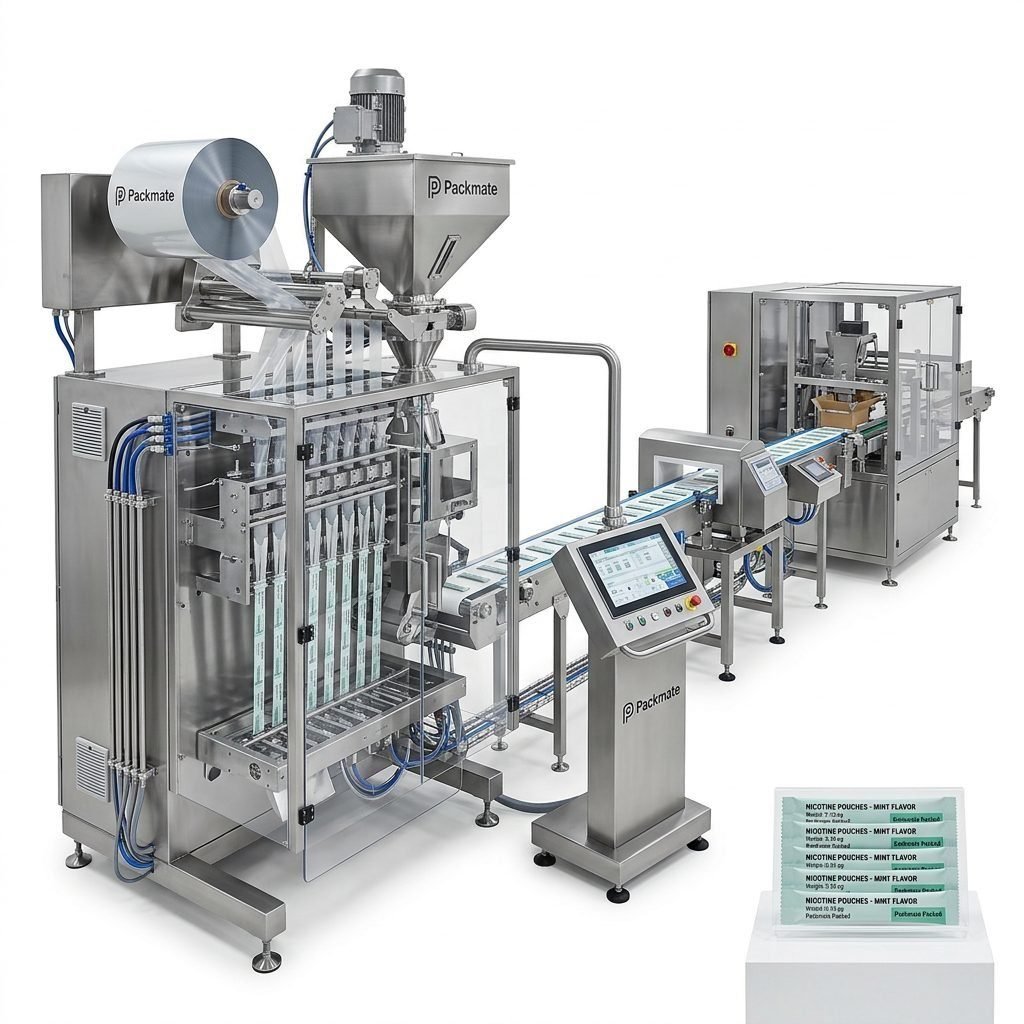
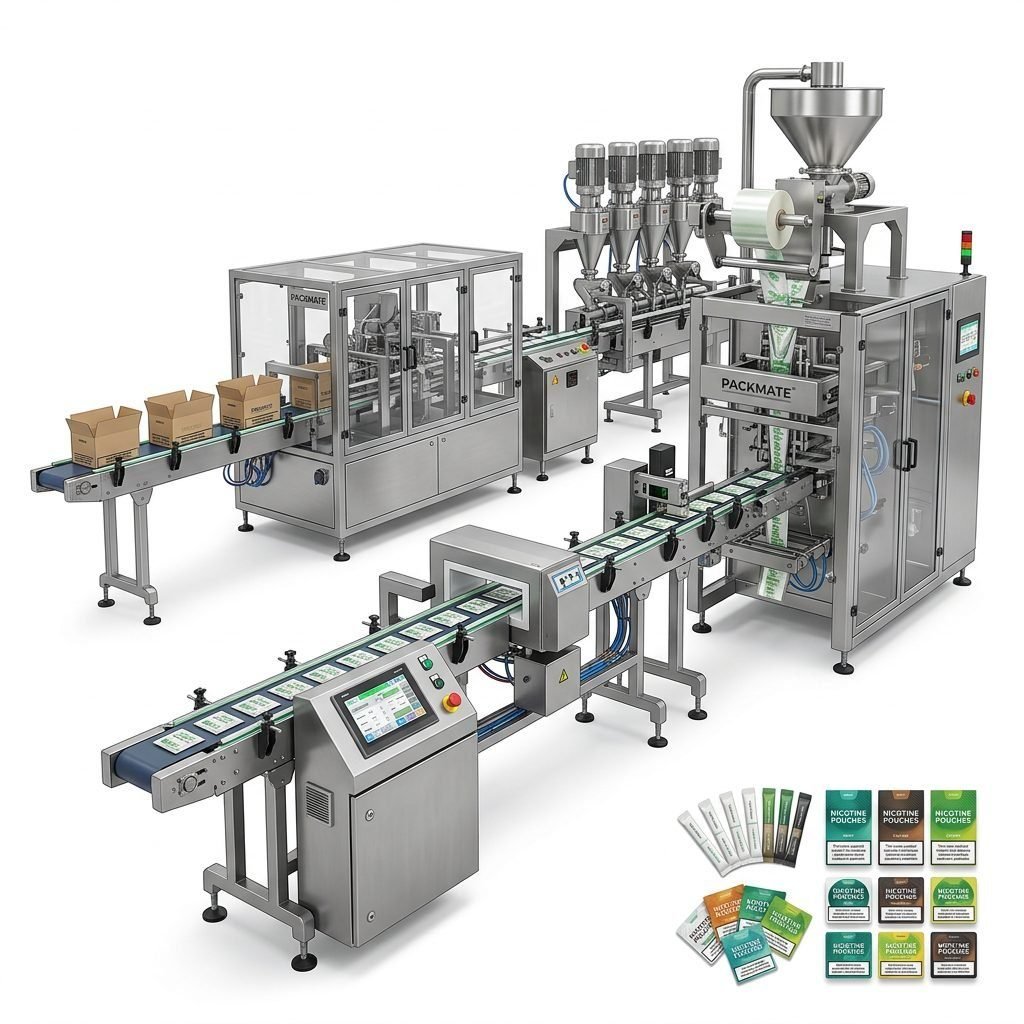
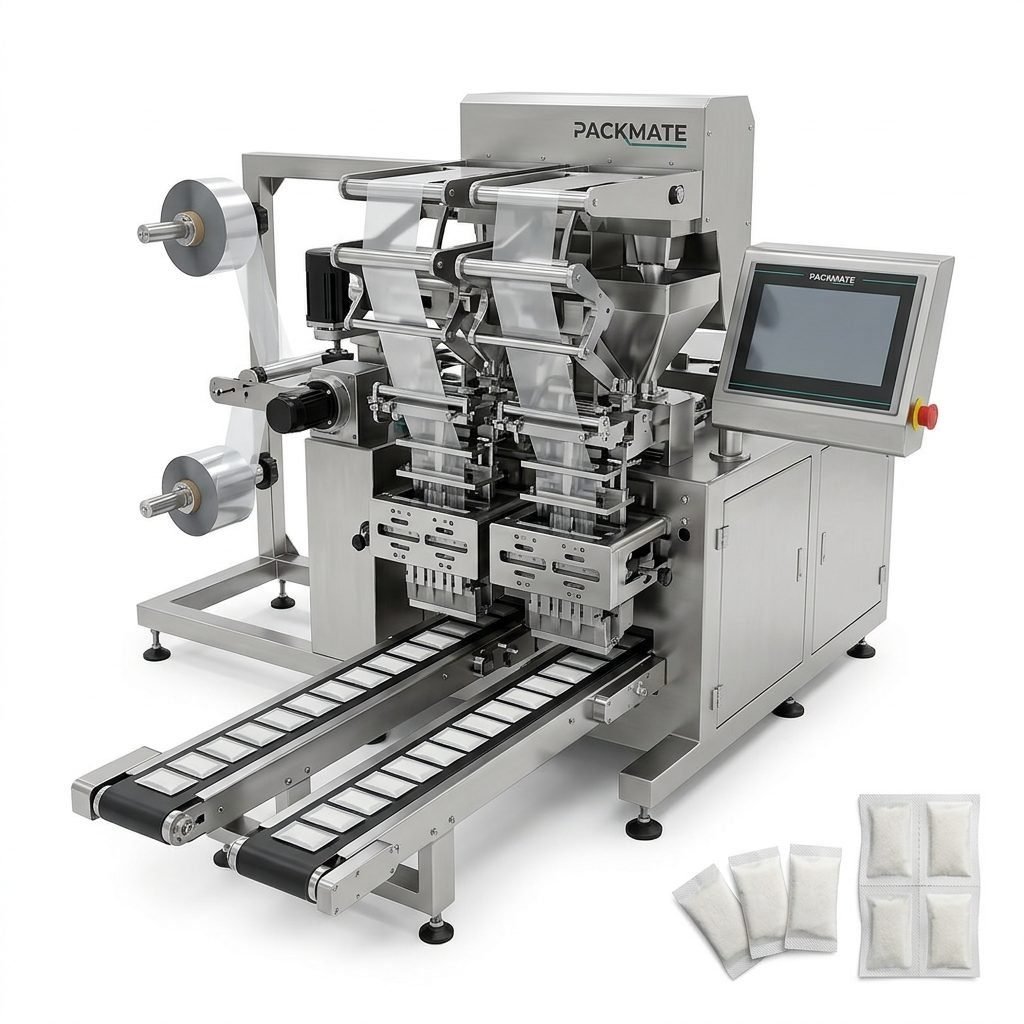
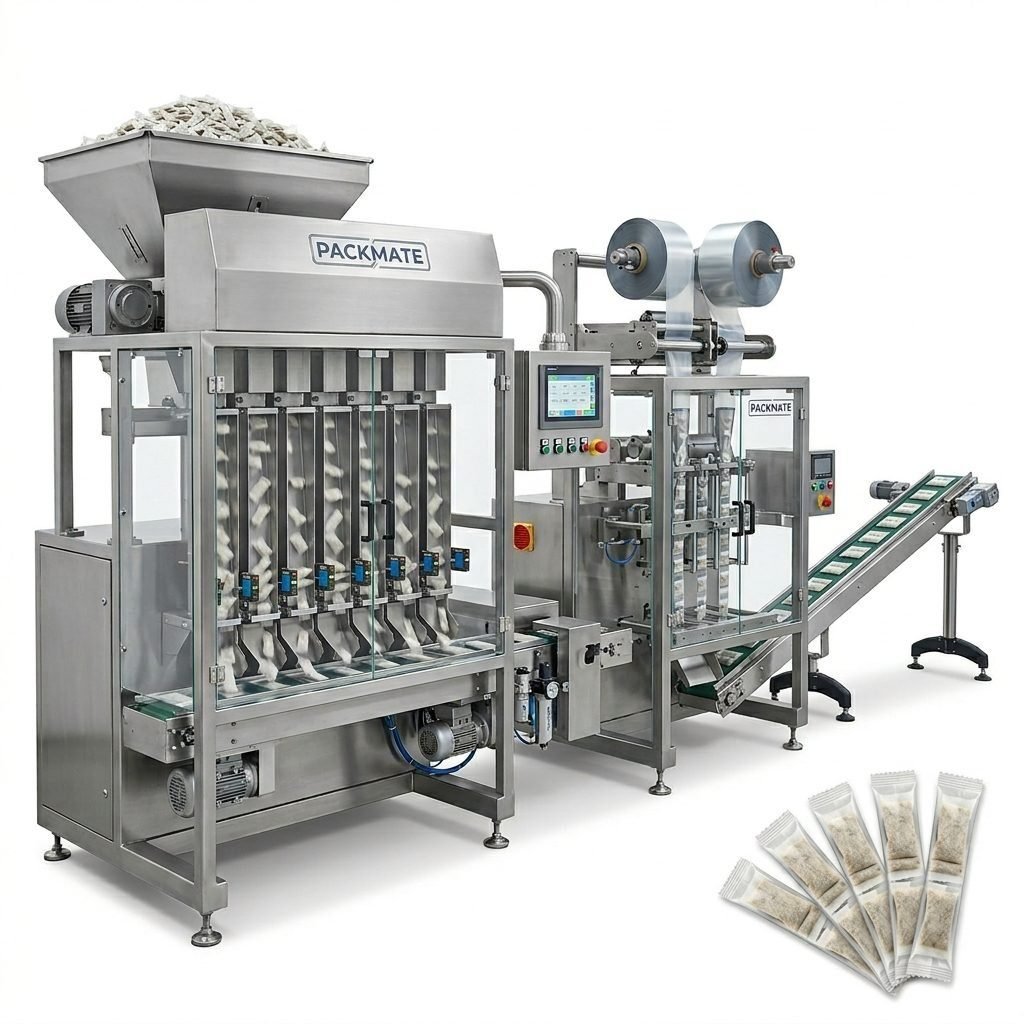
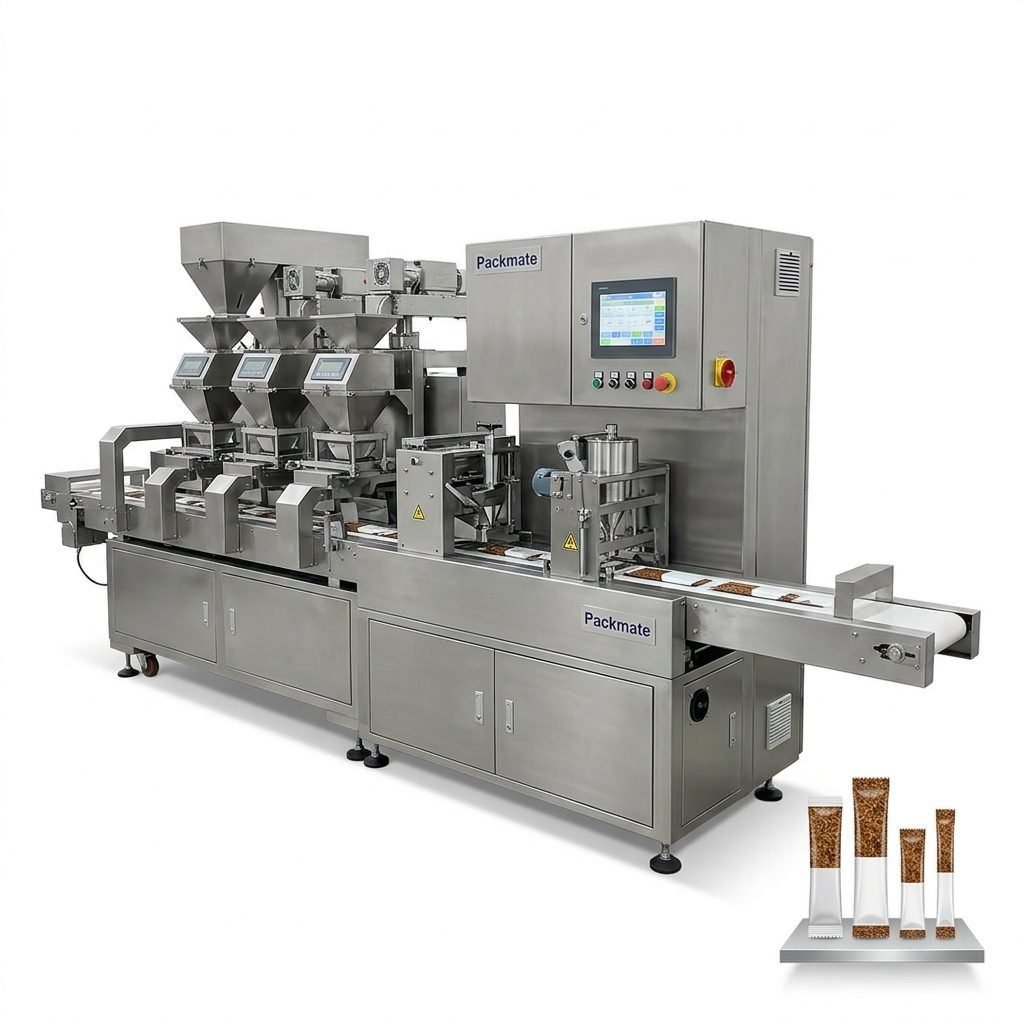
Choosing the right nicotine packaging machine for your production line is a strategic decision that affects product quality, regulatory compliance, and long-term operating costs. Whether you manufacture snus pouches, nicotine pouches, stick packs, or sachets, the ideal machine must match your product format, target capacity, dosing accuracy, and integration needs. This guide walks through the technical and commercial factors to consider, demonstrates how proven engineering practices reduce downtime, and highlights the kind of supplier capabilities that deliver reliable turnkey solutions.
Understand Your Product: Format, Material & Fill
The first step is clearly defining what you will pack. Nicotine products vary in format and require different handling:
⚙️ Nicotine pouches / snus: small-dose, soft pouches often need precise dosing and gentle pouch forming.
⚙️ Stick packs & sachets: usually produced at high speeds and require consistent sealing and cutting accuracy.
⚙️ Powder, granules or liquids: different filling systems (vibratory, auger, piston, or liquid pumps) are selected based on flow properties and accuracy.
Match your product to machine capabilities. If you plan to run multiple product types, prioritize modular systems that allow quick changeovers and interchangeable dosing heads.
Production Capacity & Line Layout
Define your required throughput in pouches/minute or packs/hour. Production speed determines whether you need single-lane, multi-lane, or high-speed stick pack equipment.
Key capacity considerations: number of lanes, machine cycle speed, and downstream handling (cartoning, case packing, and conveyors).
For high-output lines, multiple lanes are often the most efficient path to scale without increasing per-lane speed beyond reliable limits. Multi-lane systems designed for small-dose pouch production are a specialty for manufacturers focused on nicotine pouches.
Filling Accuracy & Dosing Technology
Filling precision is critical for nicotine products — both for regulatory reasons and for consistent consumer experience. Consider these factors:
🔍 Weighing vs volumetric dosing: check weigher integration for powders and granules when tight tolerance is required. See examples in weighing systems available for packaging lines at Weighing & Packaging Systems.
🔍 Auger and piston fillers: ideal for powders and pastes; verify ease of cleaning and repeatability.
🔍 Liquid pumps: use hygienic designs with CIP options if the product is liquid or contains liquid components.
Material Compatibility & Packaging Films
Film properties—sealant layers, barrier performance, and anti-static characteristics—affect seal integrity and shelf life. Confirm your machine supports the film widths, thicknesses, and sealing temperatures your chosen pouch or stick film requires.
For custom pouches or unique laminates, work with a supplier that can test and optimize sealing parameters during FAT (Factory Acceptance Test).
Regulatory Compliance & Certifications
Nicotine products face strict regulations across regions. Choose machines built to recognized international standards (CE, ISO) to simplify compliance and market access. Manufacturers with comprehensive certification records can provide documentation to support regulatory audits — learn more about certification options at Certificate.
Automation, Integration & Ease of Use
Modern packaging lines prioritize automated monitoring, recipe management, and minimal manual intervention:
⚡ HMI & PLC control: ensure intuitive recipe storage for fast product changeovers and accurate repeatability.
⚡ Industry 4.0 readiness: remote diagnostics, OEE dashboards, and alarm logging help reduce downtime.
⚡ Downstream compatibility: confirm synchronization with cartoners, case packers, and checkweighers to prevent bottlenecks. Explore modular solutions in Filling & Packaging Lines.
Selection Checklist
✅ Format compatibility: pouch, stick, sachet, multi-lane options
✅ Throughput & OEE: target speeds and spare capacity
✅ Dosing accuracy: weighing vs volumetric choices
✅ Hygiene & maintenance: ease of cleaning, spare parts access
✅ Supplier capabilities: engineering experience, factory testing, and global support
Supplier Evaluation: What to Ask & Verify
When selecting a manufacturer, evaluate technical depth and after-sales service:
🛠️ Proven track record: how many machines installed globally and relevant case studies? Check examples at Case.
🛠️ Factory capabilities: CNC machining, precision assembly, and in-house testing shorten lead times and improve quality. Manufacturers with a large facility and many models can often customize solutions faster.
🛠️ Commissioning & training: on-site start-up assistance, operator training, and preventive maintenance programs reduce ramp-up time. Review service offerings at Service.
Mechanical Design & Build Quality
Robust mechanical design results in less drift, lower scrap, and consistent sealing quality. Look for stainless-steel contact parts, hardened tooling, and precise gear drives. Confirm electrical components are from recognized brands and that the machine has a documented preventative maintenance schedule.
Testing, FAT & Documentation
A thorough FAT should include full-speed runs with your film and product, seal checks, and tolerance validation. Ask for complete documentation: mechanical drawings, electrical schematics, PLC code notes, and spare parts lists. This ensures a smooth installation and faster troubleshooting.
Common Pitfalls to Avoid
❗ Selecting a machine only by top speed without checking film handling and sealing reliability.
❗ Overlooking spare parts lead time for critical components (cutters, seal bars, weighing heads).
❗ Not validating dosing accuracy with real product at FAT.
❗ Ignoring long-term service arrangements and remote support capabilities.
Why Partner with an Experienced Manufacturer?
An experienced supplier brings engineering maturity: decades of R&D, a broad model range, and turnkey capability to integrate weighing, filling, and downstream packing. Firms that offer complete solutions for snus and nicotine packaging often provide:
🔧 Customized multi-lane systems for small-dose pouches to increase throughput while maintaining accuracy.
🔧 Advanced CNC manufacturing and precision assembly that reduce mechanical wear and service frequency.
🔧 Global service network and exhibition presence so you can evaluate machines in person — see upcoming events at Our Exhibition.
Practical Steps to Finalize Your Purchase
1) Define product specs: pouch size, fill weight, film materials, and target output.
2) Request machine data sheets and real performance metrics with your product samples.
3) Visit the factory or request a virtual FAT to witness machines running similar products.
4) Clarify warranty, spare parts kit, and remote support SLA.
5) Plan for operator training and spare parts inventory to minimize ramp-up risks.
Additional Resources
For specialized snus and nicotine pouch packaging, explore product categories and machine models to find the best fit:
Snus & Nicotine Packaging Machines — dedicated lines for snus pouch formats.
Sachet & Stick Pack Machines — high-speed stick pack and sachet solutions.
Bag & Pouch Packaging Machines — pouch form-fill-seal systems and customization options.
Making the Decision
The best nicotine packaging machine balances performance, accuracy, and lifecycle cost. Prioritize verified performance with your actual product, robust mechanical design, and a supplier who can support growth through modular upgrades and global service. A well-chosen machine will minimize waste, ensure regulatory compliance, and provide predictable operating costs for years.
Frequently Asked Questions
Q1: How do I choose between multi-lane and single-lane machines?
A1: Choose multi-lane when you need higher overall throughput without pushing per-lane speed to unreliable levels. Single-lane is often simpler and cheaper for lower volumes or when rapid product format changes are required.
Q2: What level of dosing accuracy can I expect for powder nicotine blends?
A2: With integrated weighing systems and proper calibration, many modern lines achieve tight tolerances within a few milligrams for small-dose pouches. Accuracy depends on product flow properties and the chosen dosing mechanism.
Q3: How important are FAT and on-site commissioning?
A3: Extremely important. FAT validates machine performance with your film and product before shipment. On-site commissioning ensures integration with your line, correct settings, and operator training to reach target OEE faster.
Q4: Can I upgrade a base machine to a multi-lane configuration later?
A4: Some modular machines are designed for future expansion, but confirm upgrade pathways and mechanical allowances before purchase. Discuss upgrade scenarios and costs with the supplier during selection.
Q5: Where can I view examples of installed lines and request a quote?
A5: Review manufacturer case studies and product pages to see installed lines and request detailed proposals. For more information about the company and its offerings, visit About Packmate or contact them directly via Contact Us.