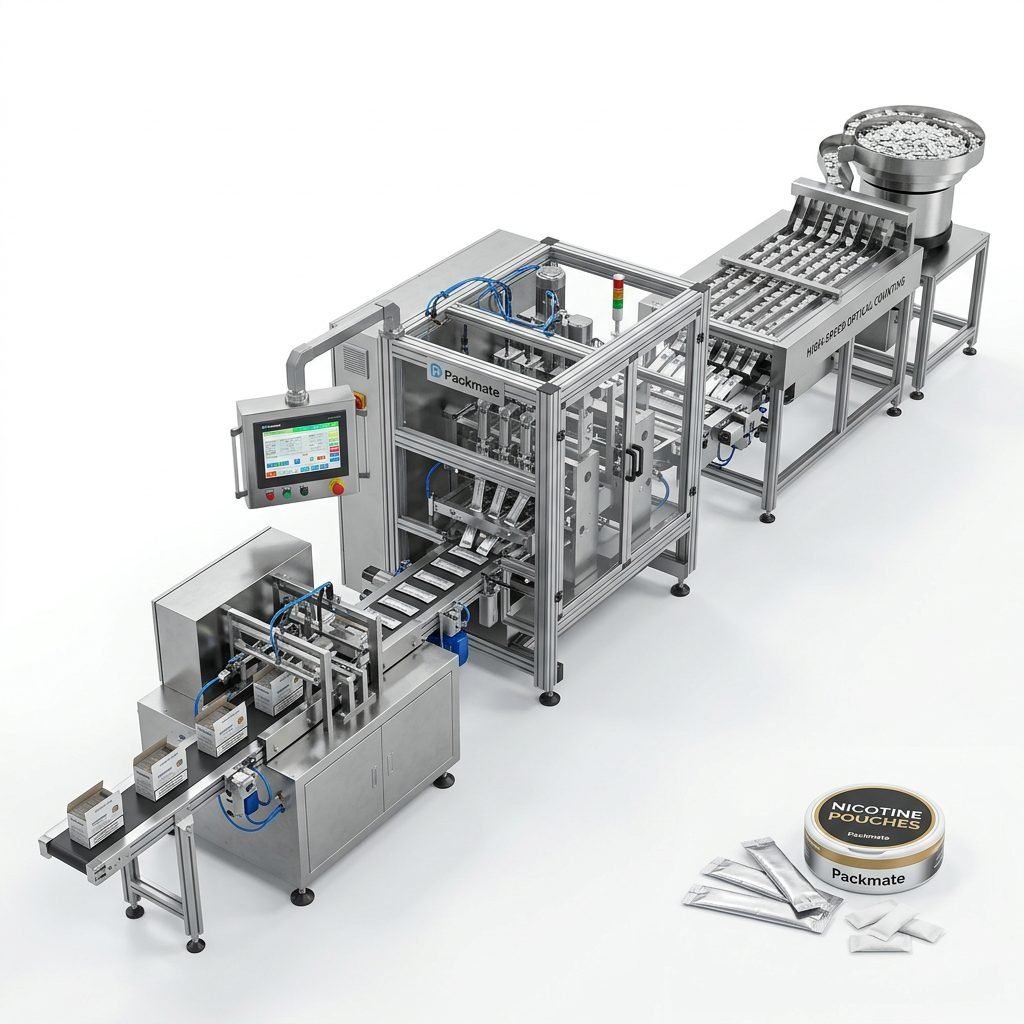
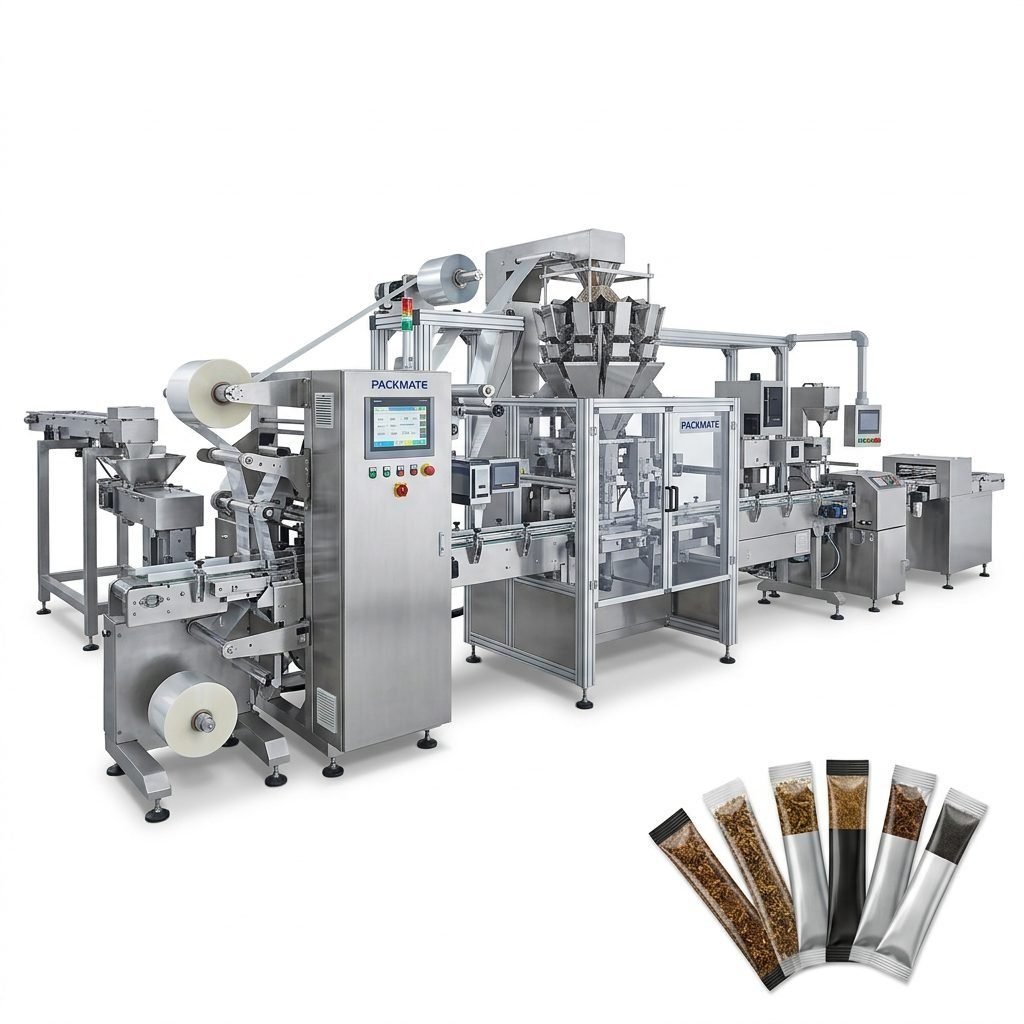
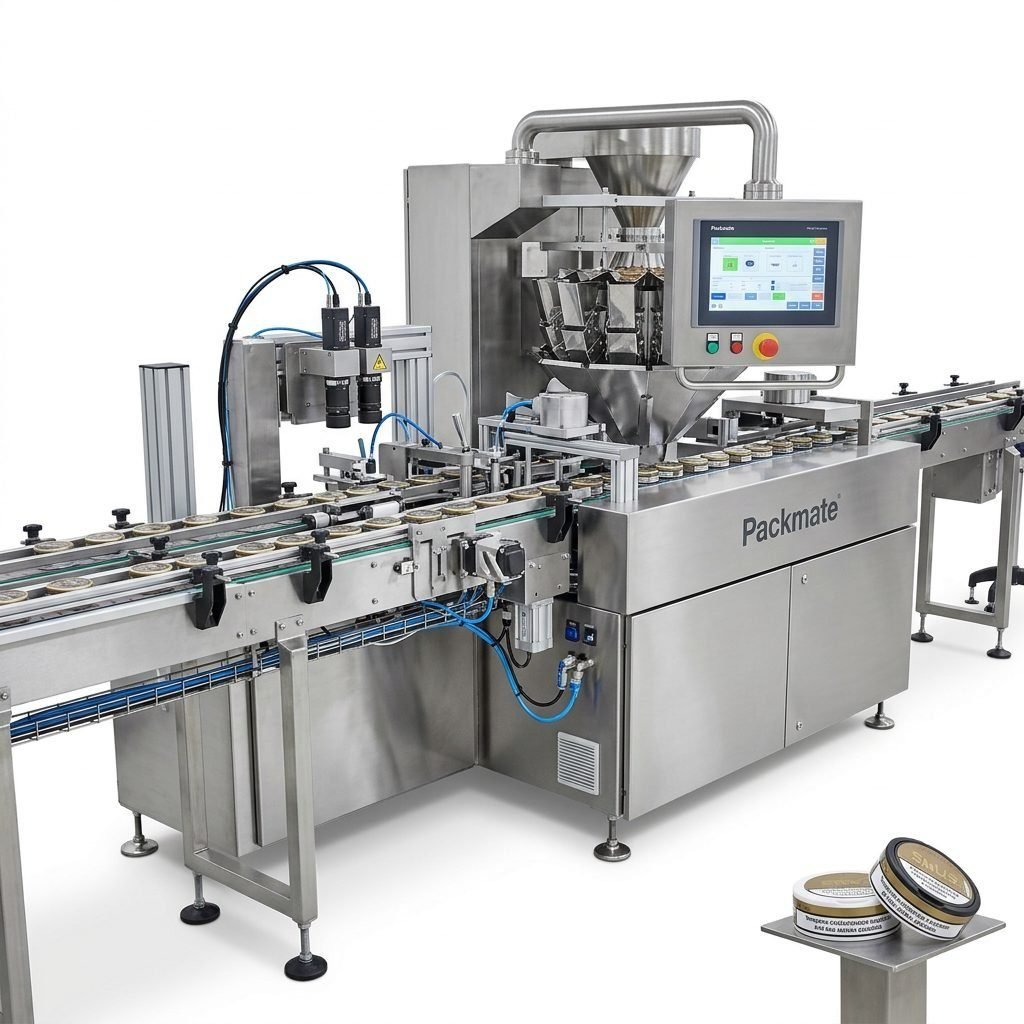
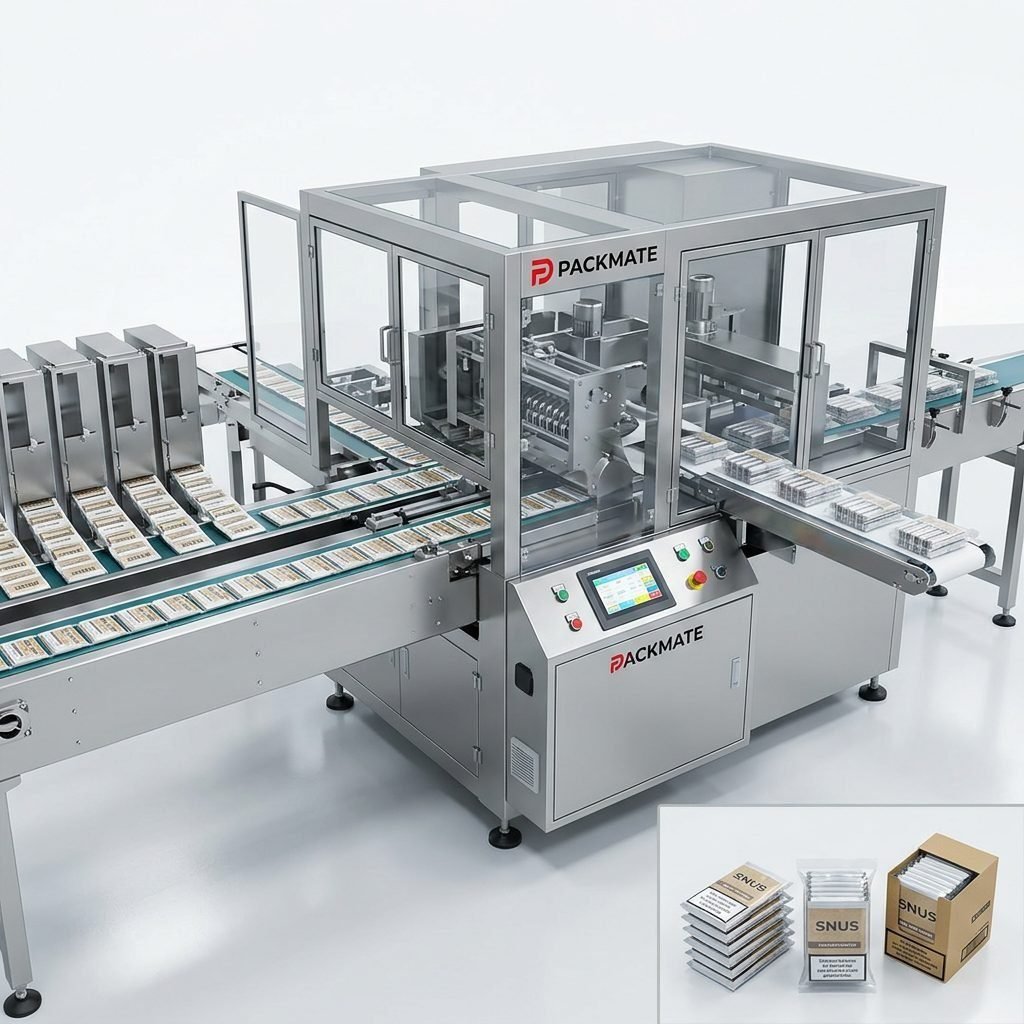
This operation guide walks you through efficient operation and maintenance of a snus packing machine line. It is written for production managers, technicians, and operators who want to optimize throughput, reduce downtime, and extend machine life. Practical steps, safety tips, daily checks, preventive maintenance routines, and troubleshooting methods are included, with clear visual cues and highlighted action points to make implementation straightforward.
Overview: How a Snus Packaging Line Works
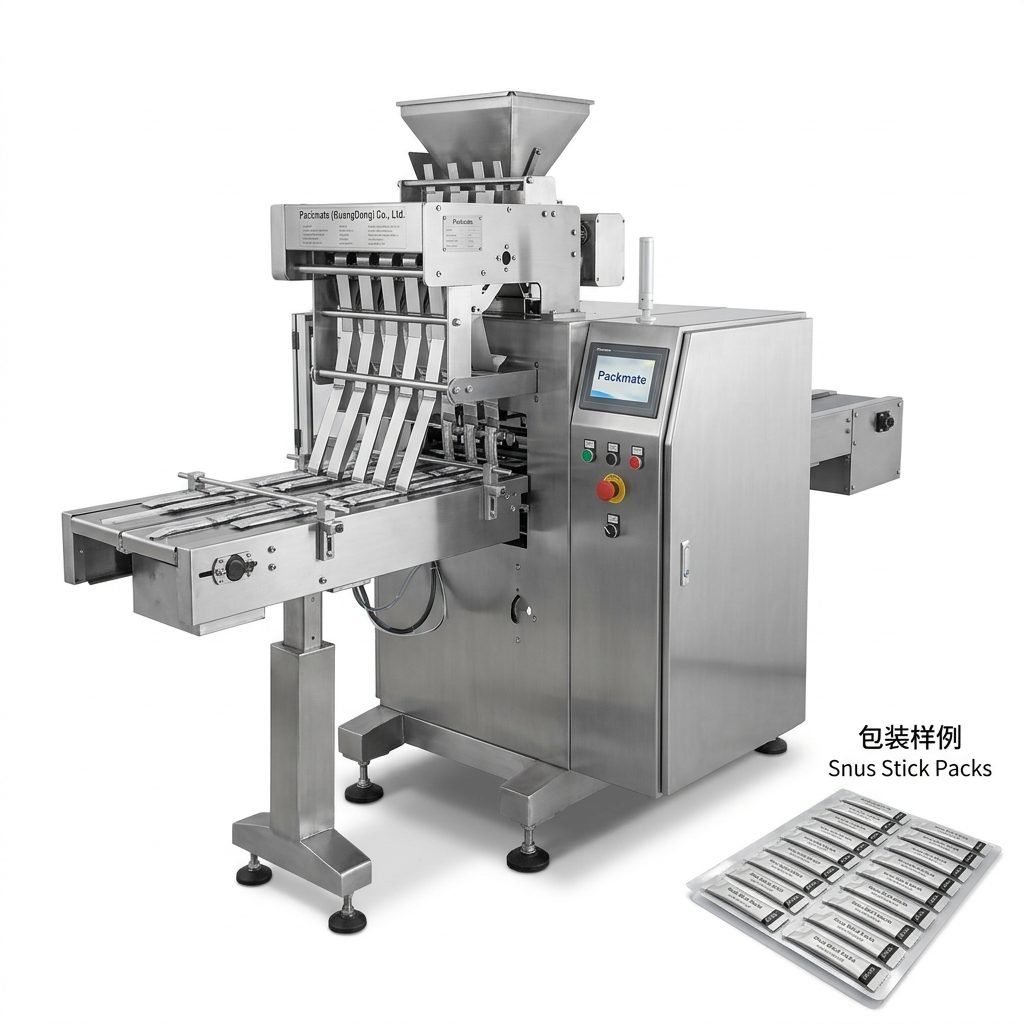
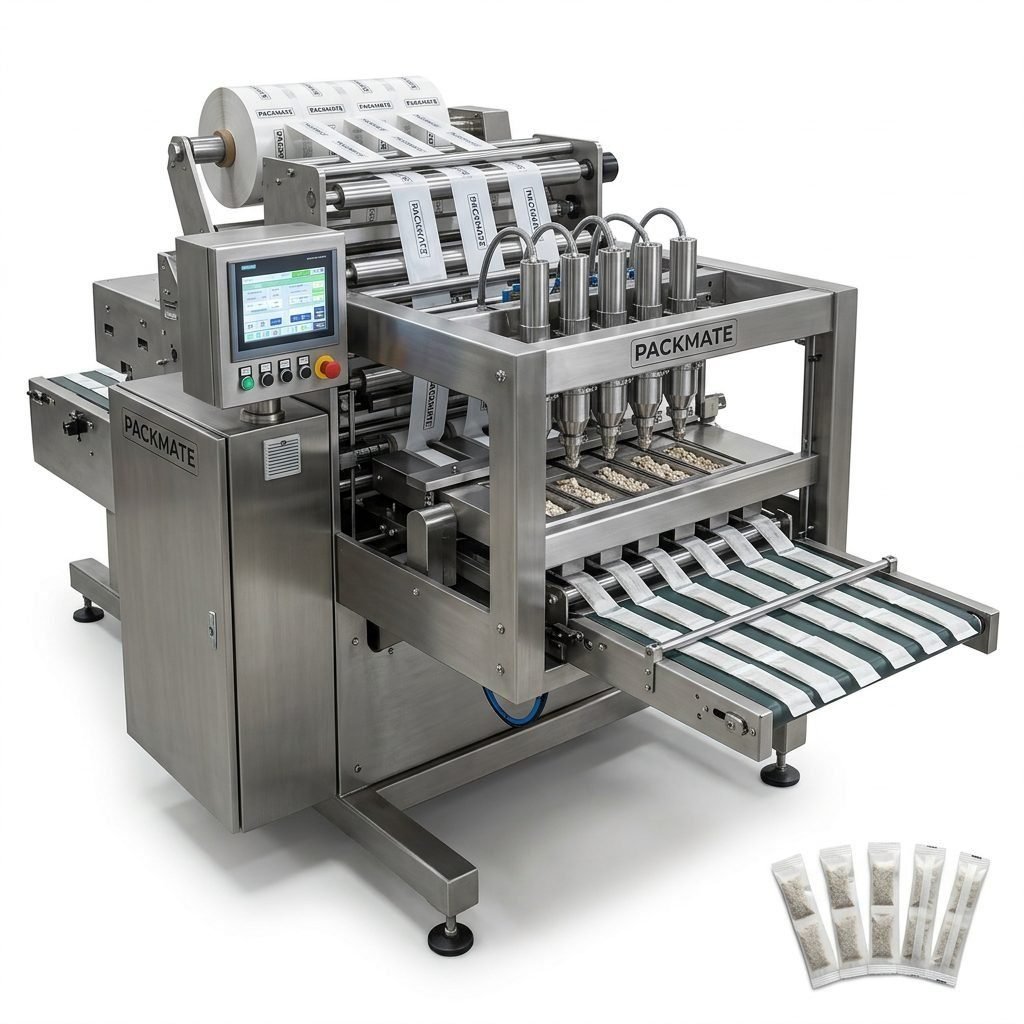
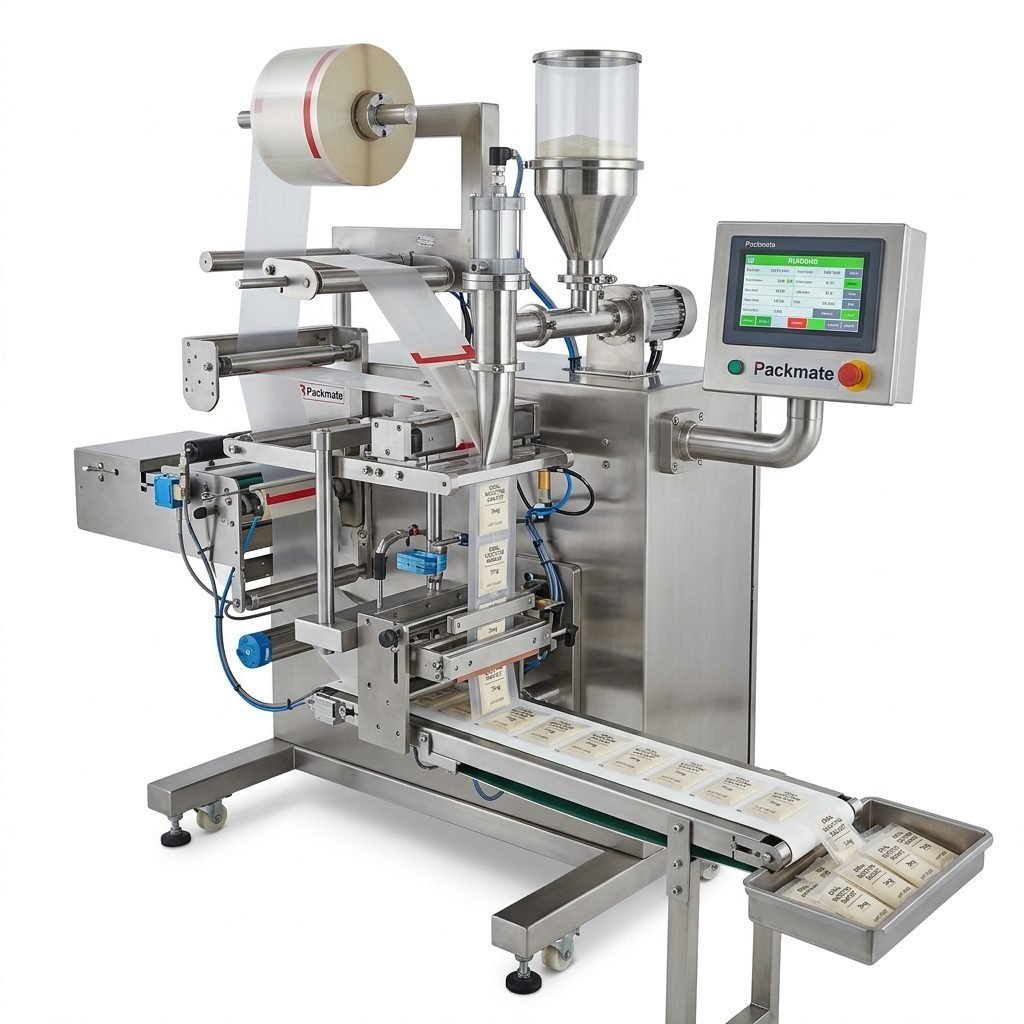
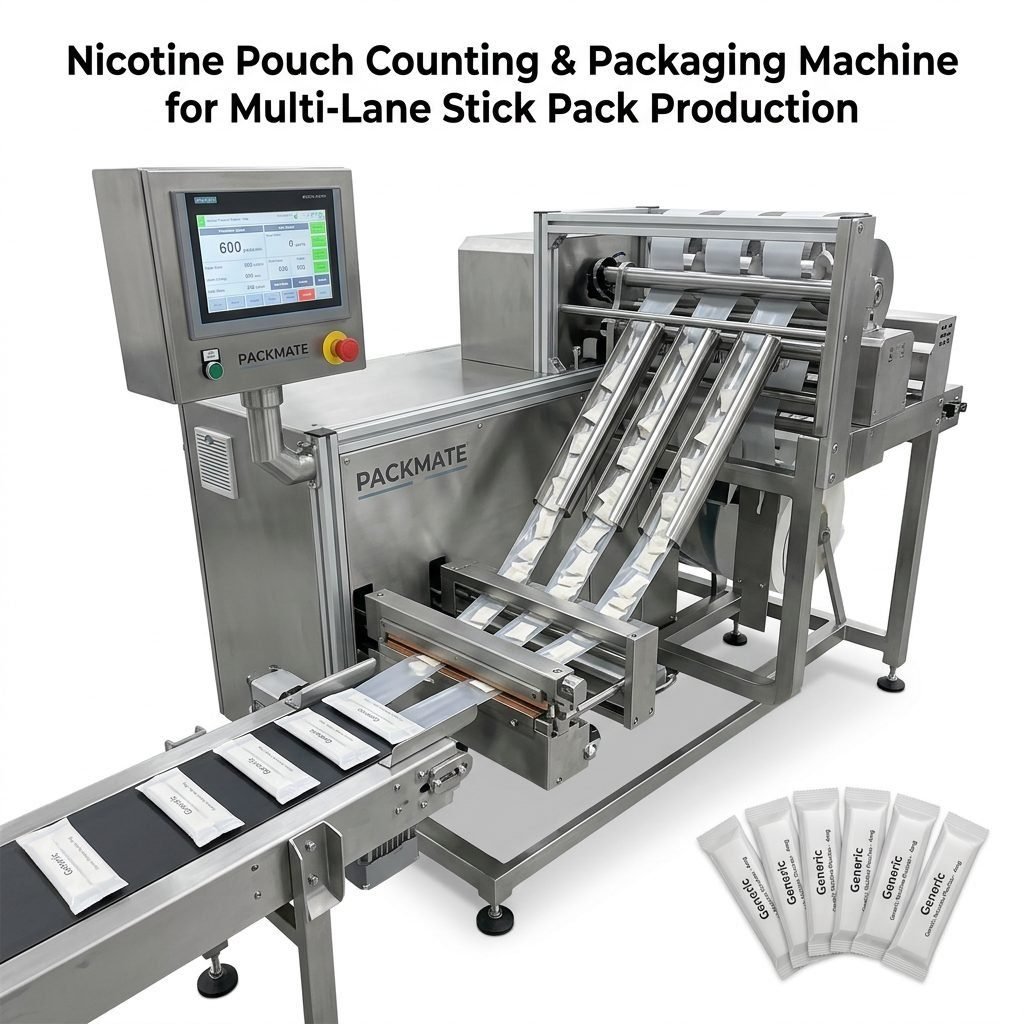
A typical snus packing line includes material feeding, dosing (weighing or volumetric), pouch forming or stick pack filling, sealing, cutting, date coding, and collection. Modern lines integrate multi-lane configurations, feeder synchronization, and automated quality checks to handle nicotine pouches, loose snus, or nicotine sachets with consistent accuracy.
📌 Key components: hopper & feeder, dosing/weigher, form-fill-seal head (or multi-lane sachet head), sealing jaws, servo drives, PLC/HMI, and rejection/inspection modules.
Preparing the Line for Production
Before starting, verify raw material specification, pouch stock, and consumables (sealing films, labels, inks). Confirm that operators have the production recipe loaded on the HMI and that all safety guards are in place. If your line integrates with upstream dosing or downstream cartoning, ensure communication protocols and conveyors are aligned.
For machine models and full solutions, reference the snus packaging product suites: Snus & Nicotine Packaging Machines and Sachet & Stick Pack Machines.
Startup Checklist (Step-by-step)
1) Confirm electrical and pneumatic supplies are stable.
2) Load the recipe and run a dry cycle (film present, no product) to verify film tracking and sealing temperatures.
3) Calibrate dosing or weighing heads with a known sample weight.
4) Start at low speed to fine-tune fill weight and sealing quality.
5) Inspect the first 50 pouches/sticks manually for visual and weight accuracy before ramping to full speed.
⚠️ Critical: Always verify sealing integrity on the minor pack samples. Weak seals will increase product loss and contamination risks.
Operational Best Practices for Efficiency
Maintain consistent raw material handling and keep reels of film prepped in an organized staging area. Use standardized recipes for each SKU to reduce changeover time. Plan changeovers during shift transitions and use pre-set parameters to speed up adjustments. Invest in multi-lane synchronized feeders to maximize throughput while keeping fill accuracy.
For turnkey solutions or to upgrade parts of your line, explore integrated options including weighing and filling modules at Weighing & Packaging Systems.
Daily Maintenance Routine
Daily checks should be short but consistent. Inspect sealing jaws for residue, confirm cutting knives are sharp and aligned, check film path alignment markers, and ensure reject chutes are clear. Lubricate bearings and guide rails as per the manufacturer’s checklist. Document any anomaly in the shift log to spot recurring issues.
✅ Quick daily checklist: seals, sensors, film tension, feeders, lubrication points, emergency stops.
Periodic Preventive Maintenance
Weekly and monthly preventive tasks include checking belt tension, verifying servo motor encoders, cleaning product-contact surfaces, validating safety interlocks, and replacing wear parts like cutting blades, belts, and O-rings before failure. Keep a spare parts kit on-site: common items include drive belts, seals, sensors, and heating elements.
Packmate (GuangDong) Co., Ltd. emphasizes robust manufacturing standards — if you need official spare parts or service, consult the Service and Contact Us pages for support.
Cleaning and Hygiene
For products intended for oral use, strict cleaning regimens matter. Use approved cleaning agents and follow a documented CIP (clean-in-place) or manual cleaning procedure. Remove and sanitize hoppers, feed screws, and product-contact guides at scheduled intervals. Ensure drying periods are adequate to prevent microbial growth.
Troubleshooting Common Issues
• Film wrinkles or mistracking: Check unwind tension and film core alignment; inspect dancer arms and tension sensors.
• Inconsistent fill weight: Re-calibrate weighing heads and inspect dosing nozzles for blockage.
• Poor seals or delamination: Verify temperature settings, clean sealing jaws, and confirm film compatibility.
• Frequent rejects at inspection: Re-calibrate vision systems, check light sources, and verify product orientation.
🔧 Troubleshooting tip: log errors and correlate them with batches, operators, and material lots to identify root causes faster.
Spare Parts and Upgrades
Maintain an inventory of critical spares tailored to your model and production load. Consider upgrades such as higher-precision weighers, servo-driven multi-lane heads, or integrated metal detectors to improve yield and regulatory compliance. For model options, review Bag & Pouch Packaging Machines and Auxiliary Packaging Equipment.
Operator Training and Documentation
A trained operator reduces errors and speeds up troubleshooting. Create clear SOPs, visual aids for changeovers, and a maintenance logbook. Include step-by-step photos or diagrams in your documentation (stored on a shared drive or tablet) and schedule periodic refresher training.
Safety and Compliance
Comply with CE and ISO standards by ensuring physical guards, emergency stops, and safety interlocks are functioning. For nicotine-containing products, follow local regulations for labeling, worker protection, and waste handling. Implement clear PPE rules and safety signage around the line.
📎 Note: Packmate machines are built with international certifications in mind; check the Certificate page for details.
Quality Control and Data Logging
Integrate in-line quality checks such as weight monitoring, vision inspection for seal integrity and print verification, and metal detection. Configure the HMI/PLC to log production counts, rejects, and alarms. Use this data for continuous improvement and compliance reporting.
When to Contact Manufacturer Support
Contact the machine supplier when you face repeated hardware faults, software anomalies beyond operator training, or if a major component (servo drive, main PLC, or custom forming head) requires replacement. For Packmate support and global service, visit the About Packmate and Service pages.
⚙️ Pro tip: keep software backups of PLC programs and HMI recipes; restore points save hours during a critical failure.
Optimizing for Different Product Types
Powdery snus, granular blends, and liquid-fill sachets each require tailored handling. Adjust hopper agitation, anti-bridging devices, and dosing methods accordingly. Use anti-static measures for fine powders and choose film materials compatible with the product moisture and sealing temperatures.
Final Checklist Before Shutdown
Clean product-contact areas, remove leftover product from hoppers, power down peripheral devices in sequence, and record shift data. Replace any worn parts identified during the shift and file a note for the maintenance team.
📈 Efficiency target: aim for planned equipment utilization (OEE) improvements by reducing changeover time and unplanned stops — incremental gains compound quickly.
Common Questions (FAQ)
Q1: How often should I replace the cutting blades and sealing elements?
A1: Replace cutting blades and sealing strips based on visual wear or after a set production hour interval (commonly every 2,000–5,000 operating hours depending on product abrasiveness). Keep spares on-site to avoid extended downtime.
Q2: What are the key daily checks to avoid contamination?
A2: Inspect hoppers and feed channels, clean sealing and cutting areas, verify rejected pouch containment, and ensure filters/drains are cleared. Implement a documented sanitation checklist.
Q3: My line rejects increase suddenly — where do I start troubleshooting?
A3: Start with film and seal check, then review recent material lot changes, verify sensor calibration, and examine the reject log on the HMI for patterns. If unresolved, escalate to technical support with production logs.
Q4: Can I upgrade to a multi-lane system to boost capacity without sacrificing accuracy?
A4: Yes — multi-lane systems designed for small-dose pouches can multiply throughput while maintaining accuracy if properly synchronized. Consult manufacturers for turnkey upgrades and integration options.
Q5: Where can I get certified spare parts and technical service?
A5: Reach out to your machine supplier’s service team or the manufacturer’s official channels for genuine parts and authorized service. For Packmate, use the Service and Contact pages for regional assistance.