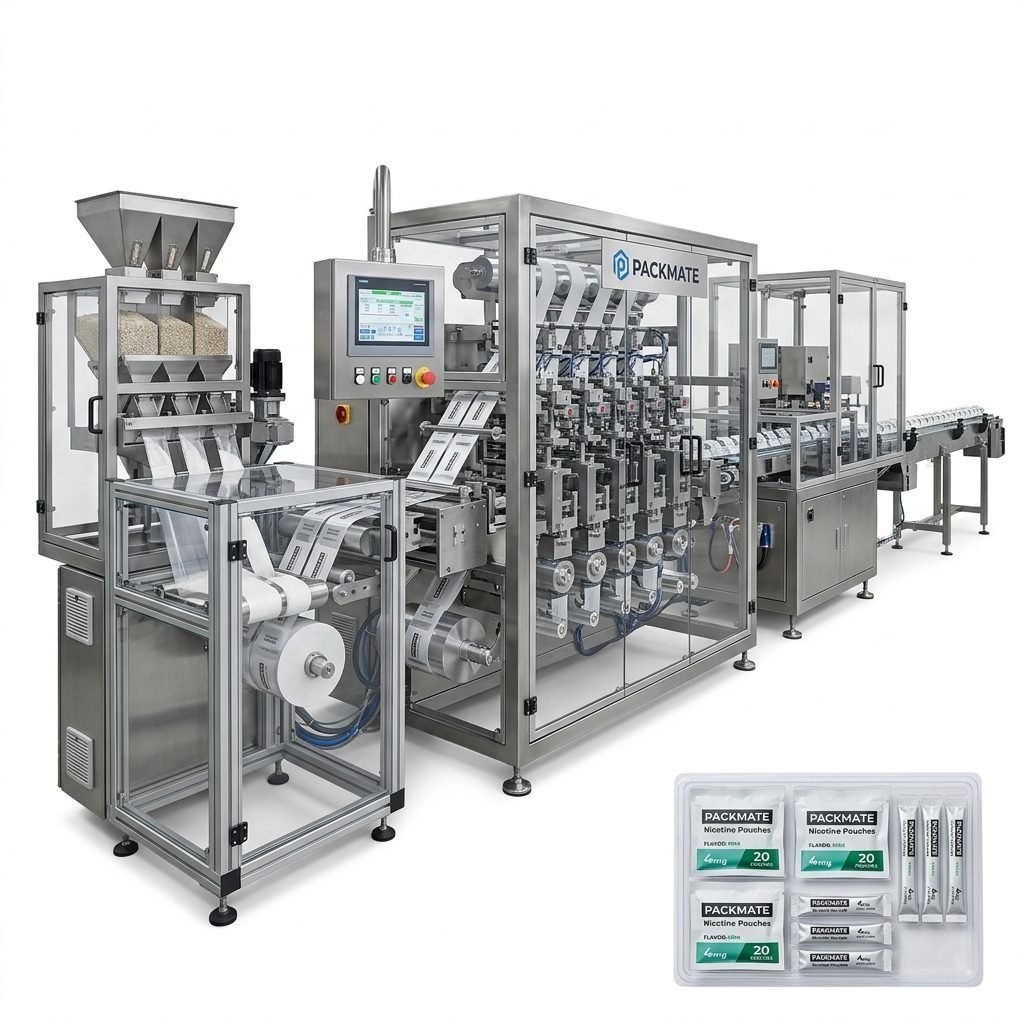
Mozambique is an evolving market for alternative nicotine products and their packaging solutions. As local tastes, import rules, and tropical climate (hot and humid coastal zones) affect product shelf life and distribution, choosing the right snus packaging machinery requires a careful mix of technical specs, regulatory awareness, and after-sales support. This buyer’s guide walks you through practical steps and local considerations to help manufacturers, distributors, and entrepreneurs in Mozambique select the ideal snus/nicotine pouch packaging line.
1. Know Mozambique’s Market, Culture & Regulations
Mozambique’s official language is Portuguese and local consumer behavior varies across urban and rural areas. Urban centers like Maputo and Nampula tend to adopt new nicotine products faster, while distribution often relies on wholesalers and informal retail networks. Important local factors to consider:
Compliance and import rules: nicotine products face strict regulations in many countries. Ensure your machine supplier provides equipment that can support traceability, tamper-evident seals, and labeling workflows required by Mozambican authorities or importers. Work with local legal counsel to confirm registration, taxes, and customs duties.
Climate impact: coastal humidity and heat can affect pouch films and seals. Choose machines with reliable sealing technologies and consider barrier films (aluminum-laminates or high-barrier multi-layer films) to protect product stability.
Practical tip
📌 Local labeling in Portuguese and multi-lingual packaging options will aid market acceptance. If you plan exports from Mozambique to neighboring countries, design labels to meet multiple jurisdictions.
2. Select the Right Packaging Format for Your Product
Different snus/nicotine pouch styles and distribution channels demand different machine types. Consider these common formats:
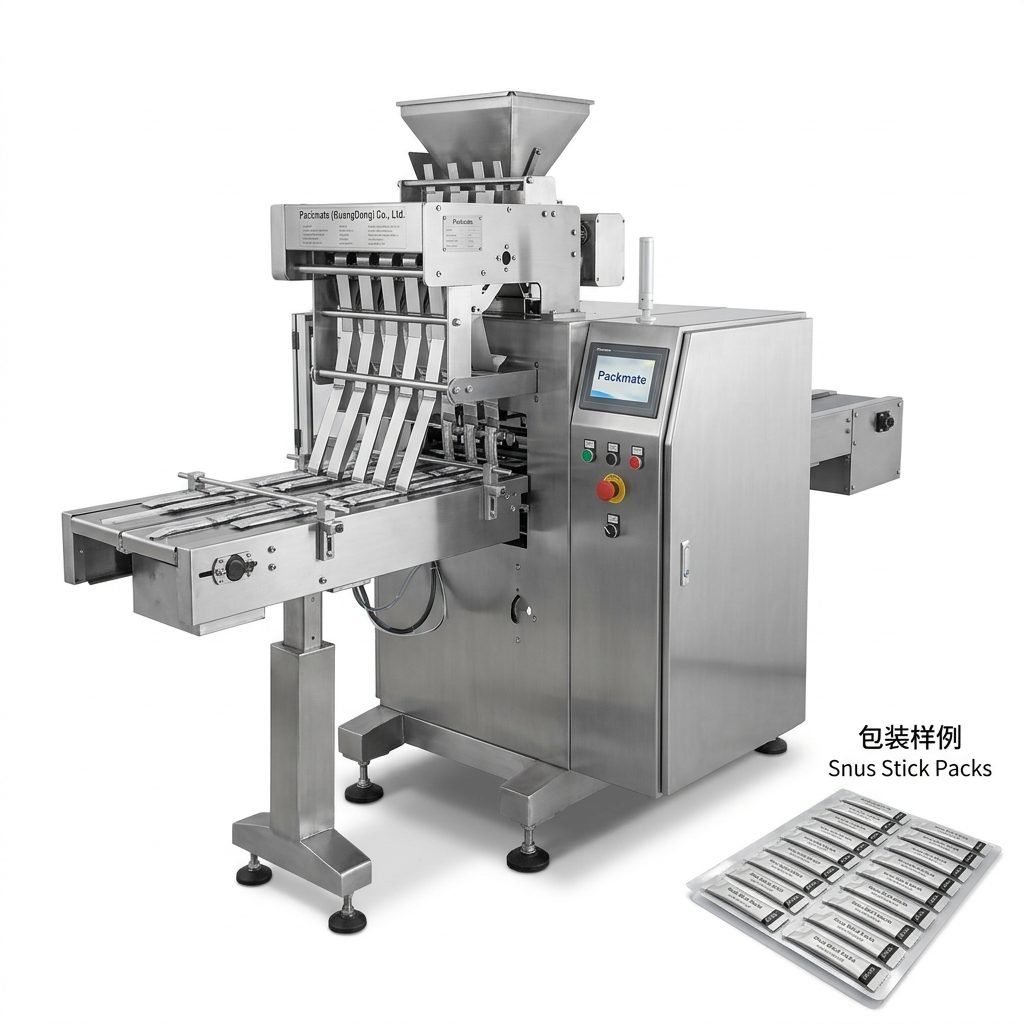
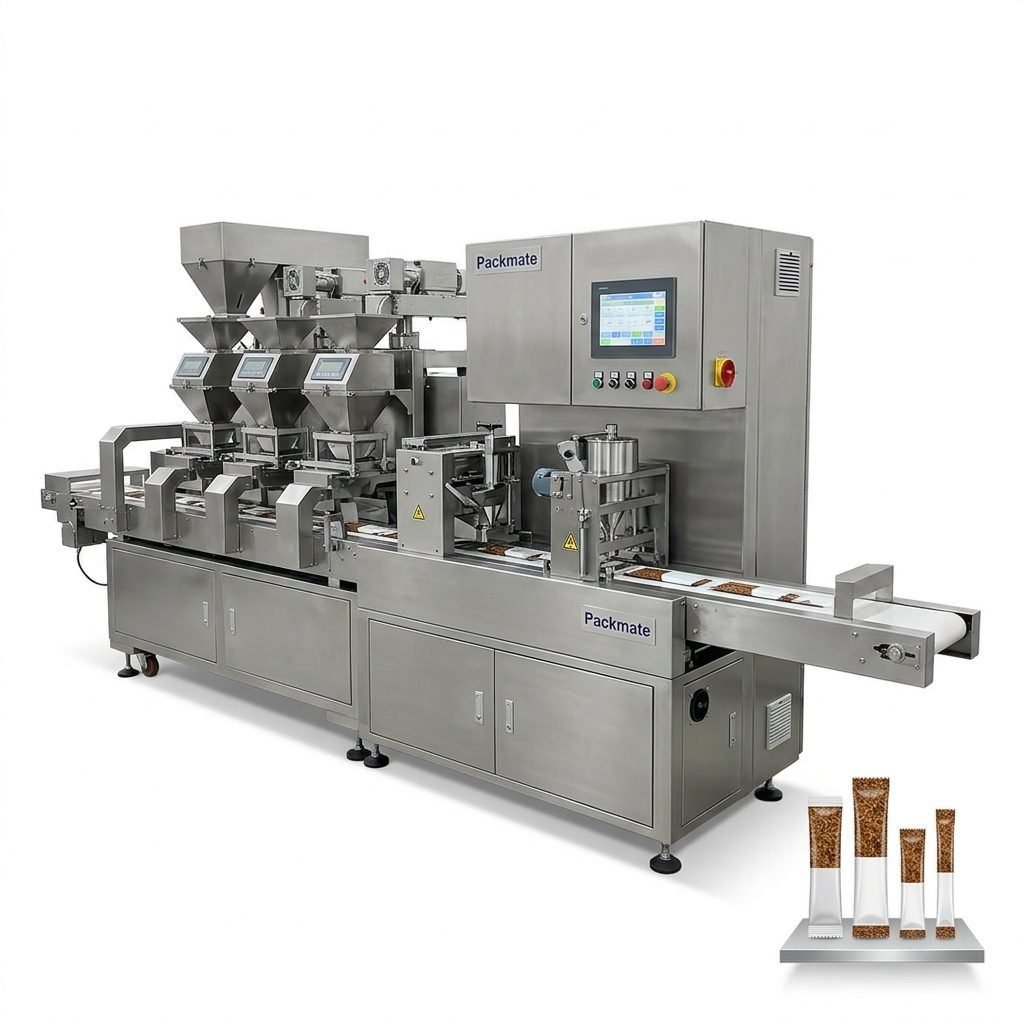
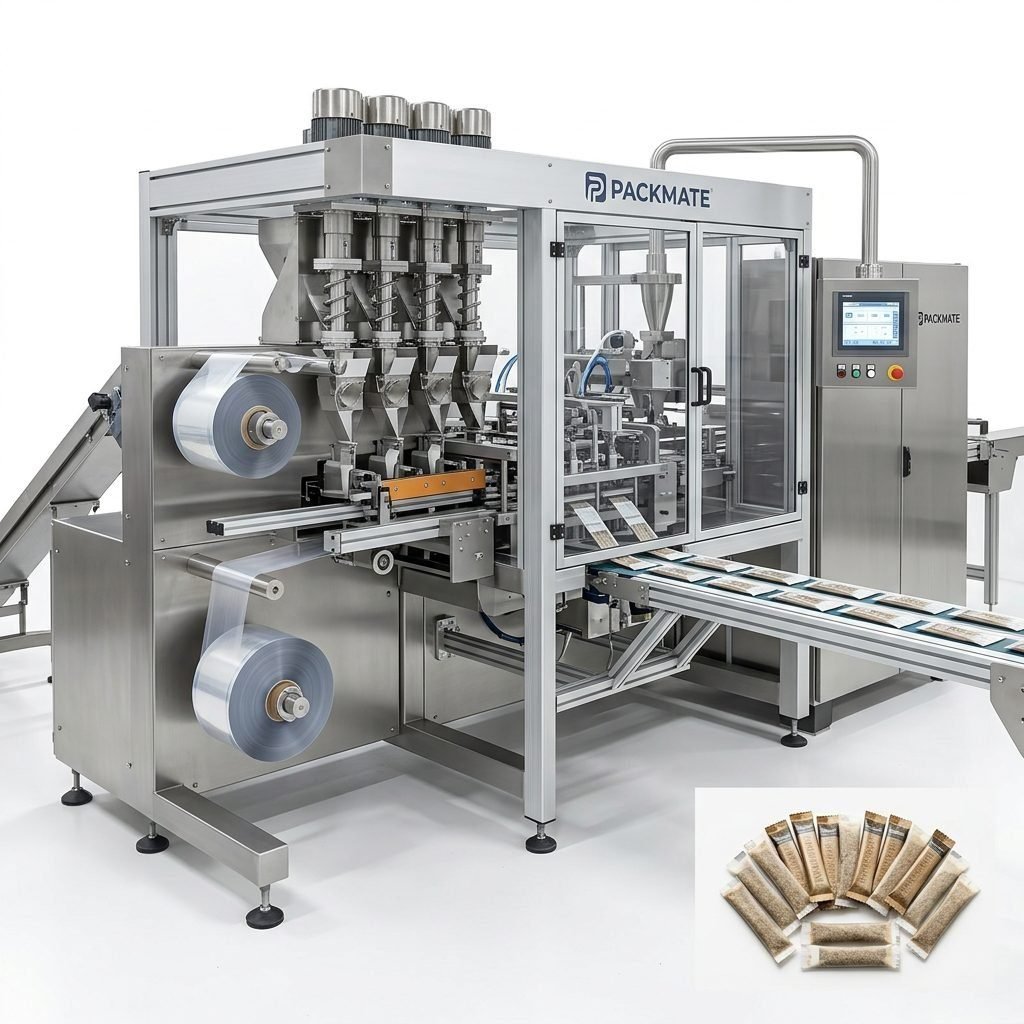
• Stick packs and sachets — ideal for single-dose retail. Machines for stick/sachet formats are highly flexible for different lengths and seal types.
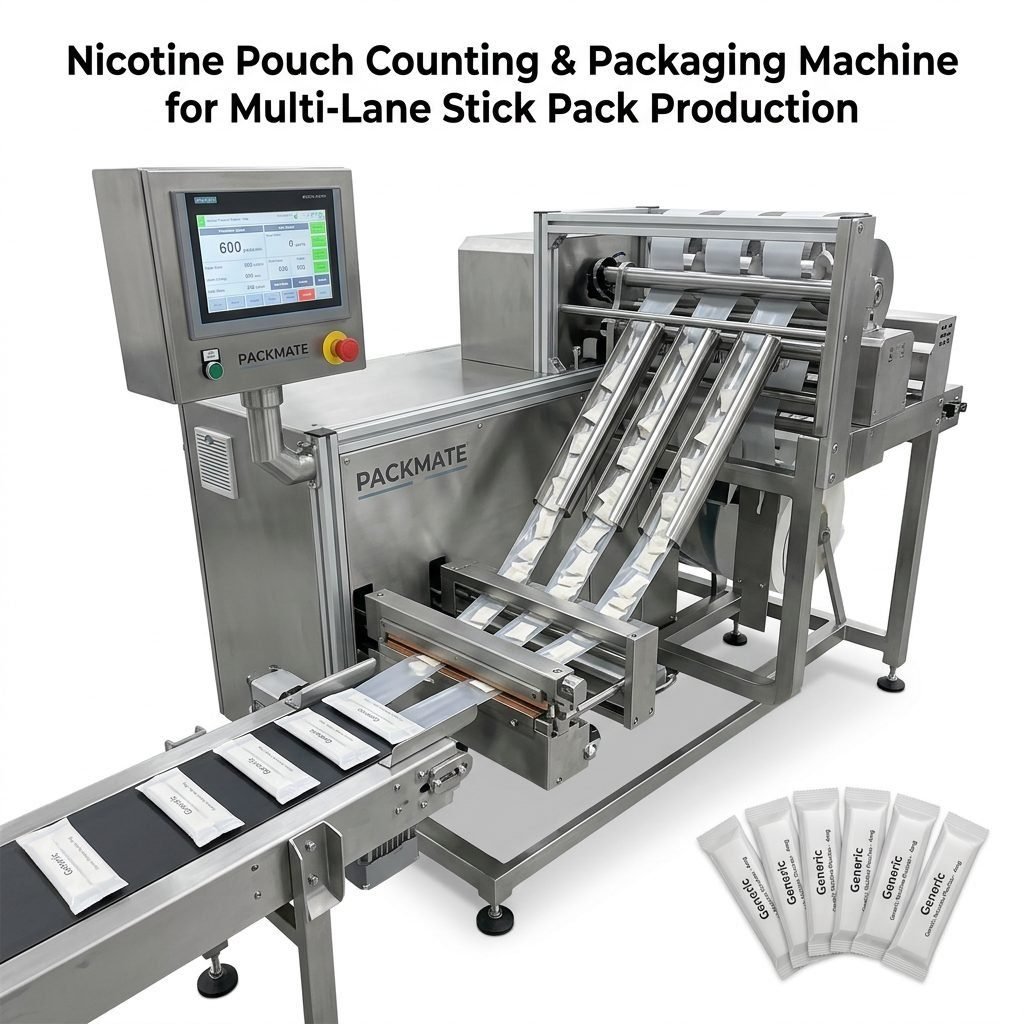
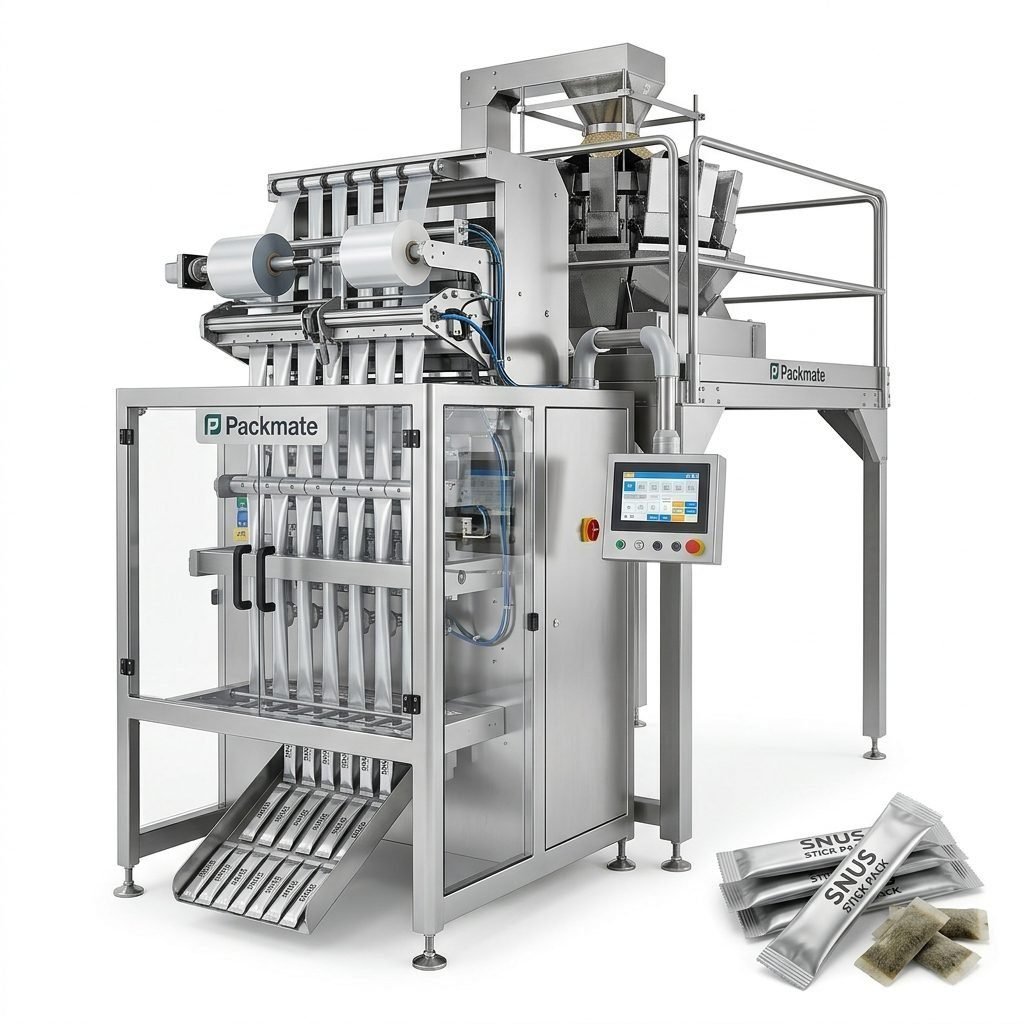
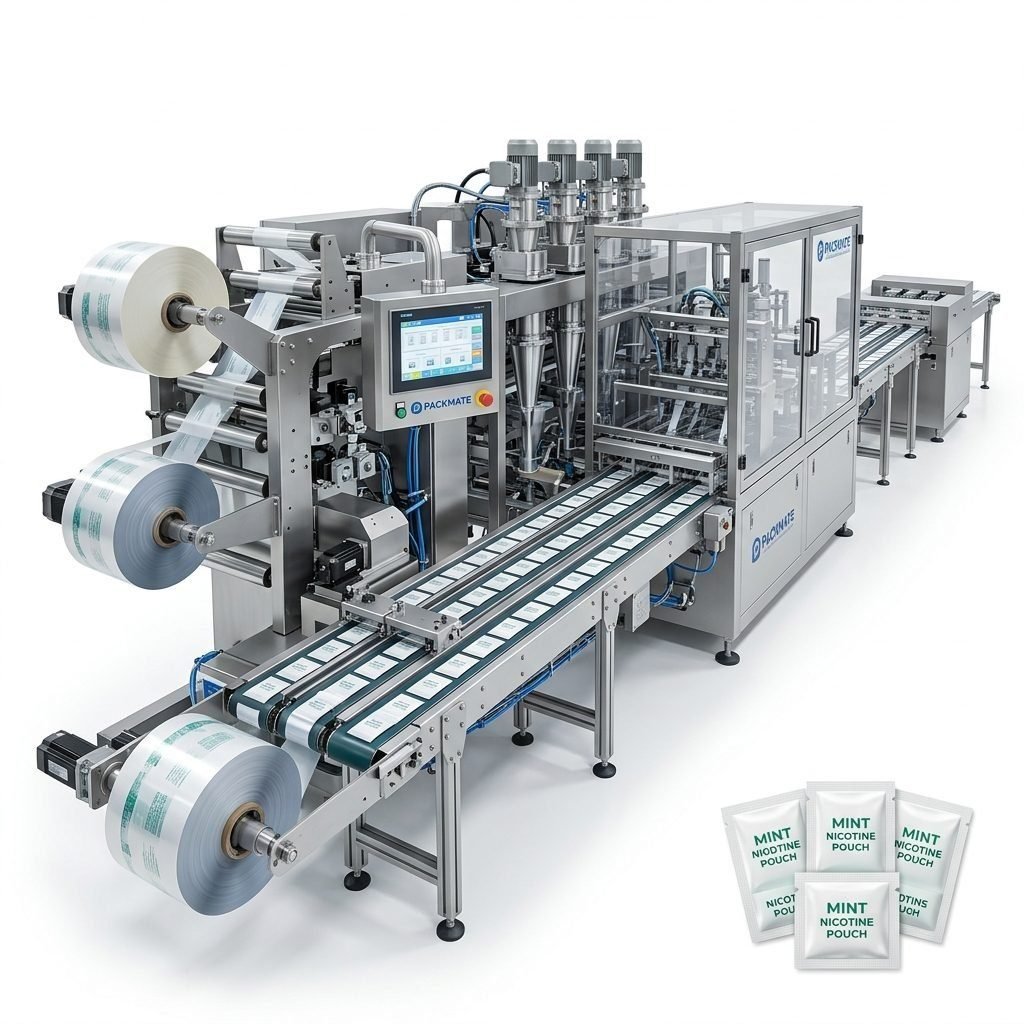
• Multi-lane pouch systems — for high-output manufacturers producing many small-dose pouches simultaneously. Multi-lane systems increase throughput and reduce per-unit cost.
• Pre-formed pouch and canning lines — if you need secondary packaging like tins or resealable pouches, consider integrated canning or cartoning modules.
Quick selection rule: For small Mozambican startups or pilot production, a flexible multi-format sachet or stick pack machine provides lower initial investment and allows fast product-market fit tests. For scaling to national distribution, upgrade to a multi-lane automated system.
3. Key Technical Specifications to Evaluate
When evaluating vendors and models, compare these core technical metrics:
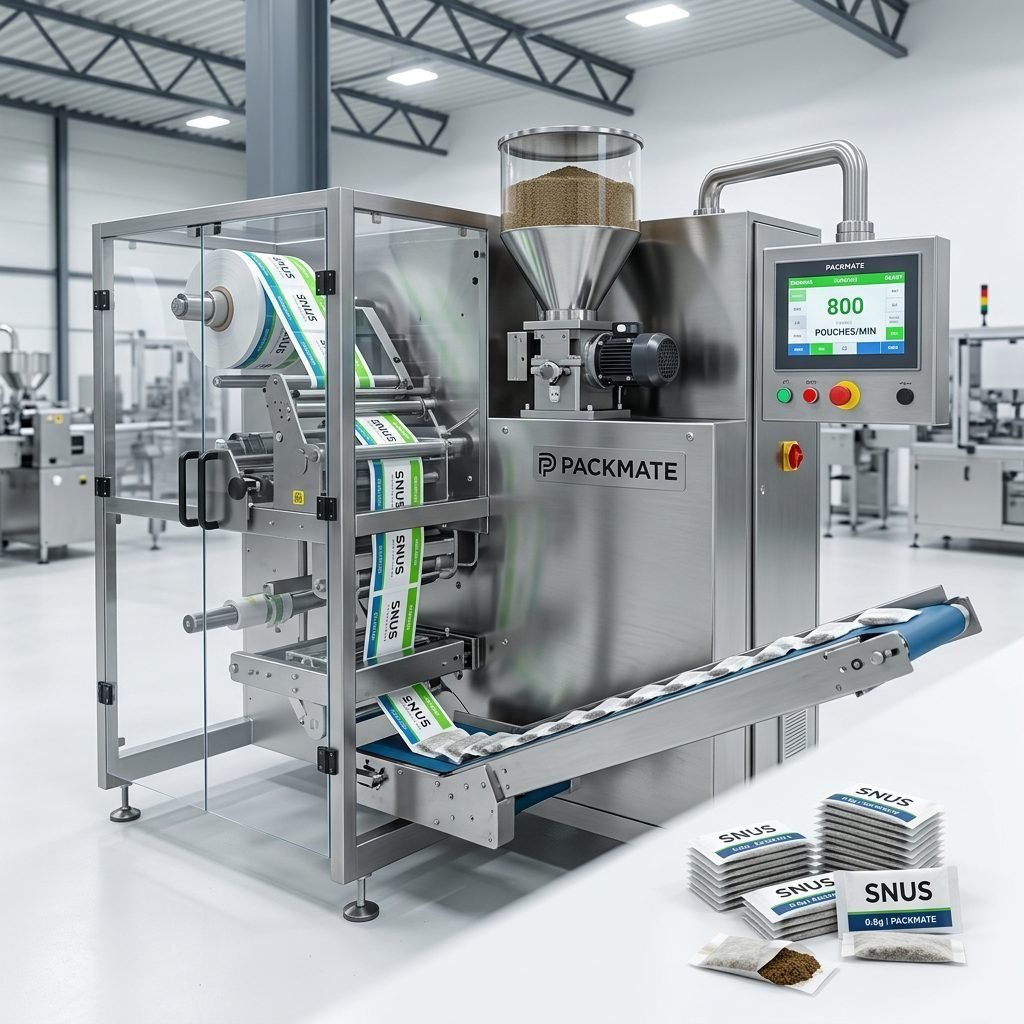
• Speed and throughput (pouches/min or lanes × pouches/min). Ensure the machine meets your daily production targets with headroom for growth.
• Accuracy in dosing (mg/g tolerance) — critical for nicotine pouches to meet legal and quality requirements. Look for machines integrated with weighing systems or high-precision auger/volumetric fillers.
• Sealing reliability and temperature control — robust seam integrity across different film types prevents leaks in humid climates.
• Materials compatibility — can the machine handle powders, wet mixes, granules, or liquid inserts common in snus formulations? If you plan multiple SKUs, modular tooling is helpful.
Integration essentials
Look for plug-and-play compatibility with weighing units, metal detectors, checkweighers, and secondary packaging modules. A single supplier providing multi-component integration reduces commissioning time and technical friction.
4. Materials, Films & Barrier Requirements
Material selection determines shelf life and consumer perception. In Mozambique’s climate choose films with excellent moisture and oxygen barrier properties. Typical options:
• Aluminum laminated film — strong barrier, good for long shelf life.
• Co-extruded PE/PA films — more economical, suitable for shorter shelf products with proper desiccants.
• Reclosable or resealable laminates — useful for consumer packs to maintain freshness after opening.
Note: Always validate film-to-machine compatibility with sample films before purchase to avoid expensive retrofits.
5. Automation Level, Footprint & Local Utilities
Decide the right balance between automation and local labor. In Mozambique, labor costs can be moderate, but local technical skills for complex maintenance may be limited outside major cities. Consider:
• Fully automated lines reduce dependence on manual operations and ensure consistent output.
• Semi-automated systems lower capital cost and may be easier to maintain locally.
• Footprint and power — verify machine dimensions for your facility and confirm local voltage/frequency compatibility. Ask suppliers for power consumption specs and optional local adapter kits.
6. Certifications, Testing & Quality Assurance
Choose suppliers whose equipment meets international standards. Important certifications and assurances include:
• CE and ISO compliance for machinery safety and quality.
• Factory acceptance testing (FAT) and site acceptance testing (SAT) — require FAT reports and video demonstrations before shipment.
Supplier transparency: Request spare parts lists, mean time between failures (MTBF) data, and references from existing customers — particularly suppliers with experience in snus/nicotine packaging.
7. After-Sales Service, Spare Parts & Local Support
After-sales support often determines uptime. Evaluate:
• Local agents or distributors in Southern Africa for rapid parts supply.
• Remote diagnostics, training programs, and on-site commissioning. Choose suppliers who provide comprehensive operator and maintenance training in Portuguese or with translated manuals.
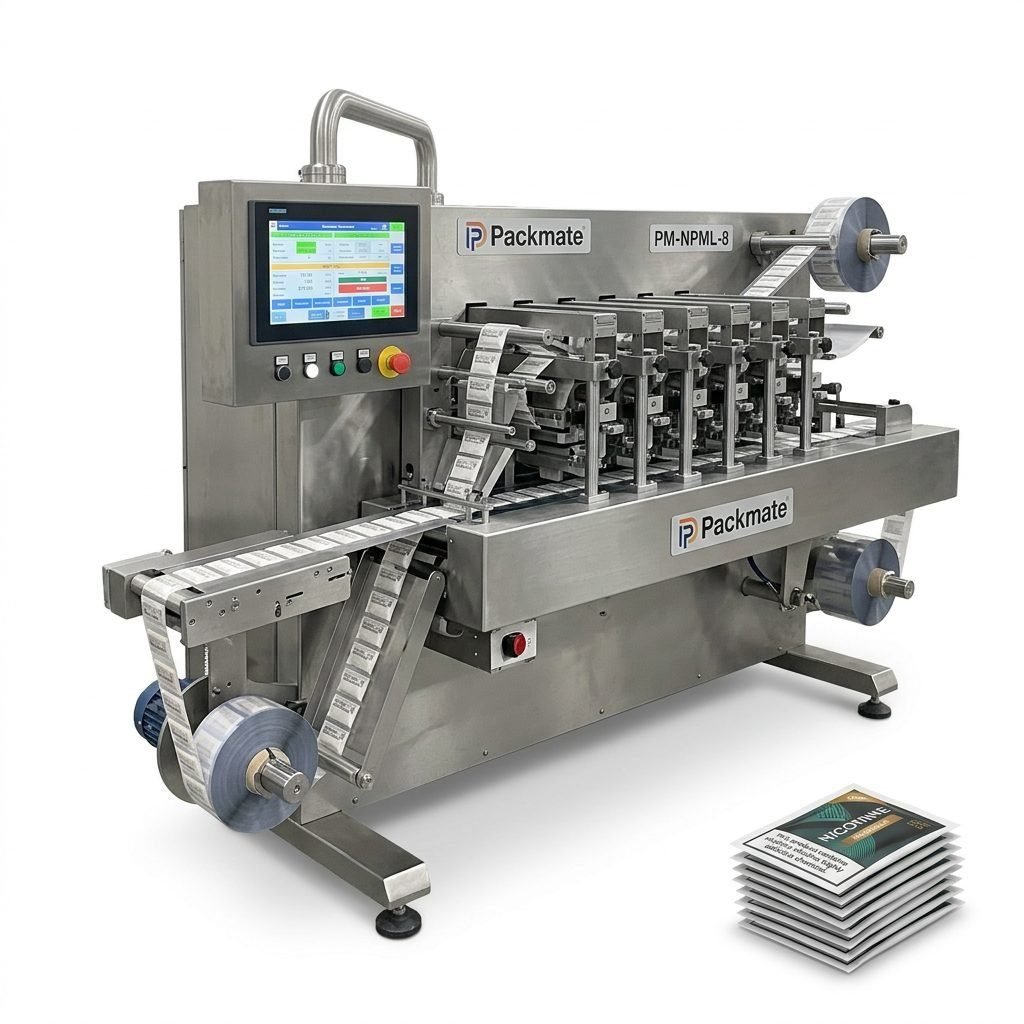
For modular combinations and reliable industry suppliers see Packmate’s solutions such as Snus & Nicotine Packaging Machines and Bag & Pouch Packaging Machines.
8. Budgeting, ROI & Total Cost of Ownership
Beyond purchase price, calculate:
• Installation, commissioning, and operator training costs.
• Spare parts inventory and expected consumables (sealing jaws, belts, sensors).
• Shipping, insurance, customs duties, and local VAT. Mozambique’s port of Beira and Maputo are common entry points — factor inland transport costs to your factory location.
Financing & pilot runs
If budget is constrained, negotiate pilot or rental arrangements to prove product-market fit before committing to a full-scale multi-lane line.
9. Pre-Purchase Checklist (Quick Reference)
✔ Production target: daily and monthly volumes;
✔ Formats required: stick/sachet/tin;
✔ Dosing accuracy: mg tolerance needed;
✔ Film compatibility: barrier film samples ready;
✔ Utilities & footprint: power, air, space verified;
✔ After-sales: spare parts availability and training in Portuguese;
✔ Compliance: CE/ISO and labeling requirements checked.
10. Why Consider Packmate for Mozambique?
Packmate Snus Machine has deep experience in snus, nicotine pouch, and multi-lane packaging lines. With over 30 years of engineering, a 20,000㎡ factory, and CE/ISO certifications, they deliver turnkey solutions and project support. Learn more about the company background and capabilities on the About Packmate page.
For specific machine families and case studies, review Packmate’s product pages and cases: Snus & Nicotine Packaging Machines, Sachet & Stick Pack Machines, and customer examples in the Case section.
Next steps
Contact suppliers early with a clear technical brief, production forecasts, and film samples. If possible, schedule a factory visit or live demo to inspect machine build quality and request FAT documentation. For direct inquiries or to start a project dialogue, use the supplier’s Contact Us page.
Final considerations for Mozambique
Selecting the right snus packaging machinery for Mozambique blends technical performance with local realities: climate-proof films, Portuguese-language support, robust after-sales networks, and regulatory compliance. Prioritize machines that deliver consistent dosing, sealing reliability, and easy maintenance — and partner with vendors who provide comprehensive training and spare part logistics for Southern Africa.
Frequently Asked Questions
Q1: What machine type is best for a small Mozambican startup producing limited SKUs?
A1: A flexible stick/sachet machine or a small multi-lane sachet line is often best. These machines have lower capital outlay and support quick SKU changes for market testing.
Q2: How do I manage humidity-related sealing failures?
A2: Use high-barrier films, ensure precise temperature control on sealing jaws, maintain a climate-controlled production area if possible, and test seals under simulated local conditions before full production.
Q3: What after-sales services should I insist on?
A3: Commissioning, training (in Portuguese if required), documented spare parts lists, remote diagnostics, and guaranteed response times for on-site support are essential.
Q4: Are there standard certifications my machinery should have?
A4: Yes — CE and ISO certifications are important for safety and quality. Also request FAT and SAT documentation and ask for reference installations in similar product categories.
Q5: How many film samples should I bring when requesting quotes?
A5: Provide representative samples of each film type and laminate you plan to use (including printed rolls and inner linings). Suppliers will validate machine settings and sealing profiles based on these samples.