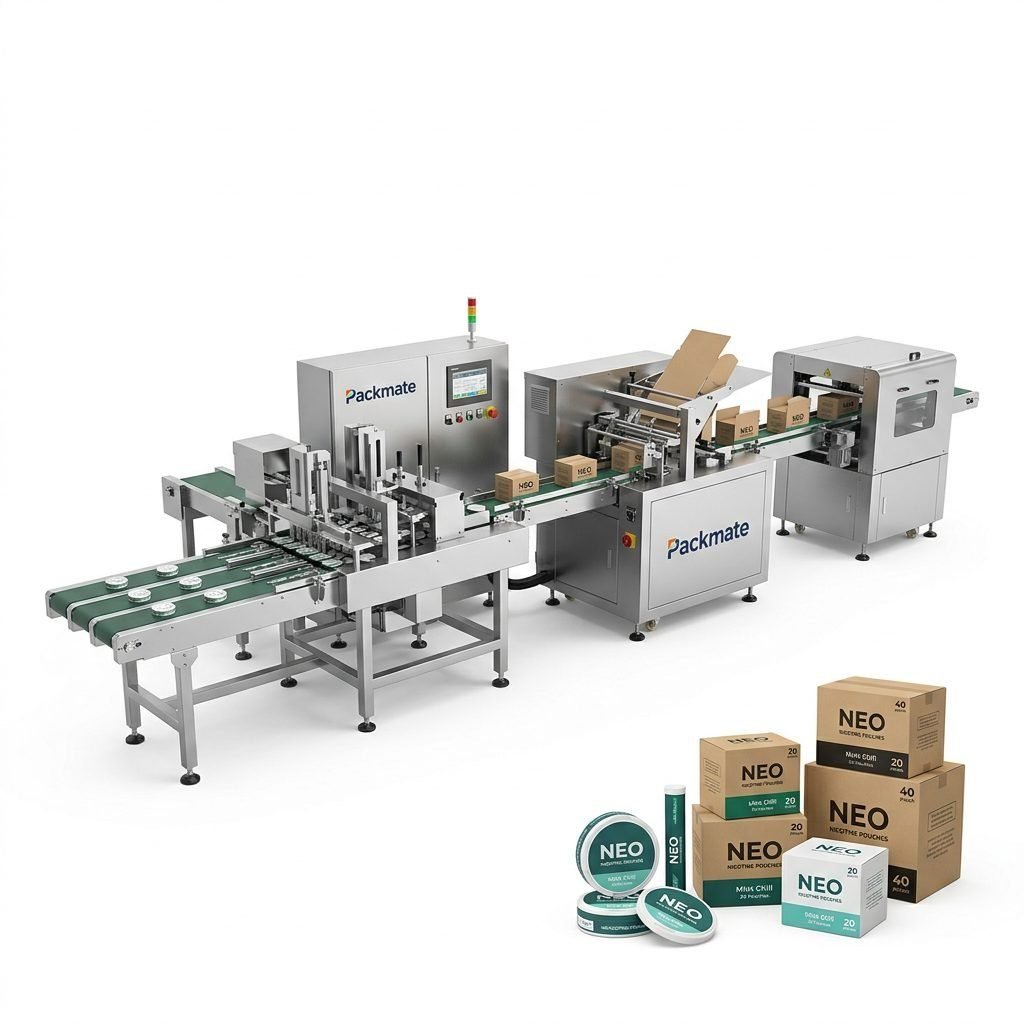
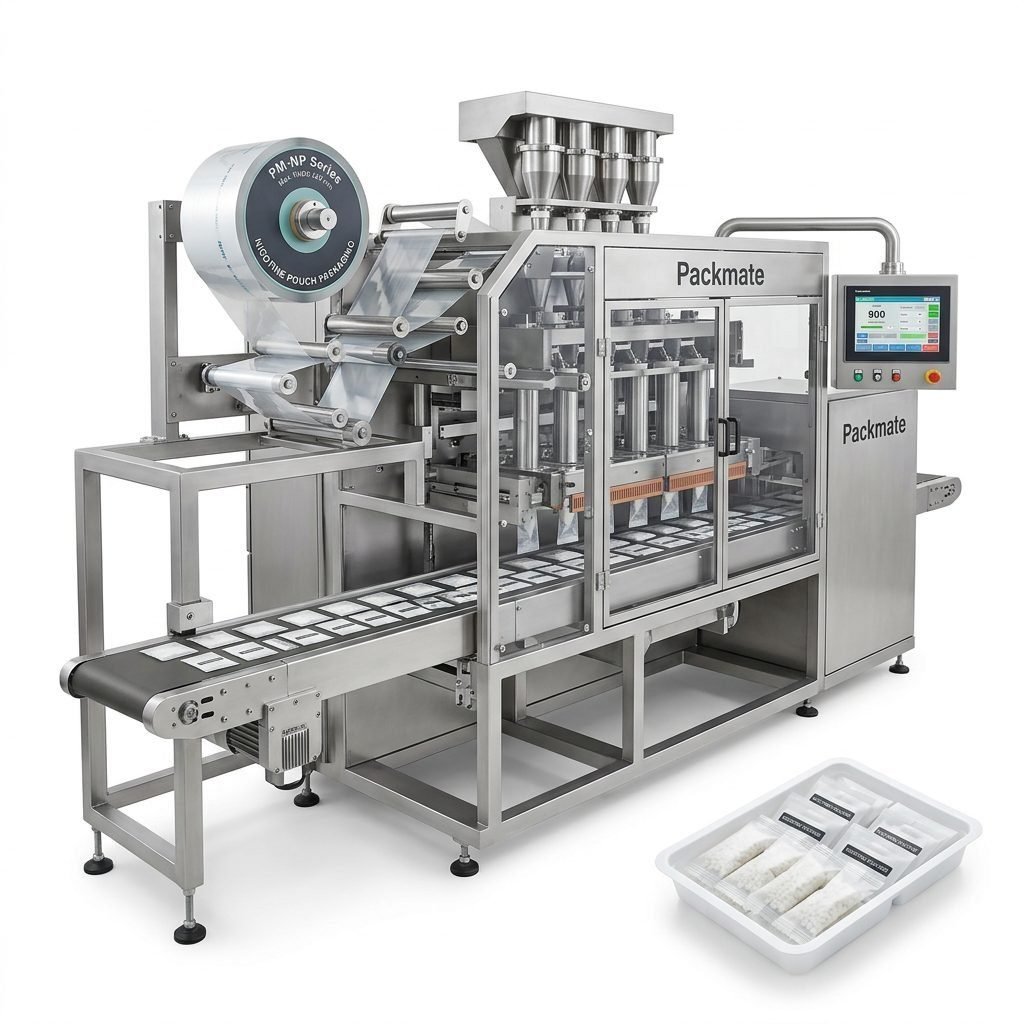
Selecting the right nicotine packaging machine manufacturer for your Estonian business is a strategic decision that affects product quality, regulatory compliance, and long-term profitability. Estonia’s market, influenced by Nordic preferences and strict EU regulations, demands machinery that delivers precision for small-dose pouches, flexible formats, and reliable after-sales support. This guide walks you through practical steps, local considerations, and technical checkpoints to help you choose the best partner for snus and nicotine pouch packaging.
Understand the Estonian Market and Local Customs
Estonia sits at the crossroads of Northern Europe and the Baltic region. Consumers and distribution channels often mirror trends from Finland and Sweden, where snus and nicotine pouches have strong market penetration. When you evaluate a machine supplier, consider:
✔️ Packaging sizes and dosing accuracy favored by Nordic users (often very small, precise pouches).
✔️ Labeling expectations: Estonian and Russian language support across packaging and documentation can ease market entry.
✔️ Regulatory environment: Estonia follows EU nicotine and tobacco product directives — machines must support compliant labeling, traceability, and hygienic production.
Cultural & Commercial Tips
Estonian buyers value transparency, punctual delivery, and long-term technical partnerships. Many companies prefer suppliers who can provide clear compliance documents, demonstrations at European trade shows, and prompt remote support in English or Russian. When sourcing overseas, prioritize manufacturers that have demonstrable experience exporting to EU markets.
Core Criteria to Evaluate a Nicotine Packaging Machine Manufacturer
Choosing a supplier is about more than price. Focus on attributes that affect uptime, product quality, and compliance:
🔧 Experience & Track Record
Manufacturers with decades of machine development are more likely to deliver refined, reliable equipment. Look for companies with a history of working on multi-lane systems and small-dose pouch lines.
📄 Certifications & Compliance
CE, ISO and documentation for EU customs and regulatory audits are essential. Confirm they can supply compliance paperwork for Estonian/EU inspections.
Other important factors include production capacity, availability of spare parts, flexibility for format changeovers, and the ability to provide local references or export cases into Baltic and Nordic markets. A well-rounded supplier will also offer turnkey lines, including weighing, filling, and packaging synchronization.
Why Consider Packmate (Packmate Snus Machine)?
If you are exploring proven suppliers, Packmate offers a compelling profile for companies entering or expanding in the Estonian market:
• 30+ years of industry engineering experience and a large manufacturing facility (20,000㎡).
• Over 50 machine models, including multi-lane systems optimized for nicotine pouch production.
• Advanced CNC machining and precision assembly lines ensure consistent quality and repeatability.
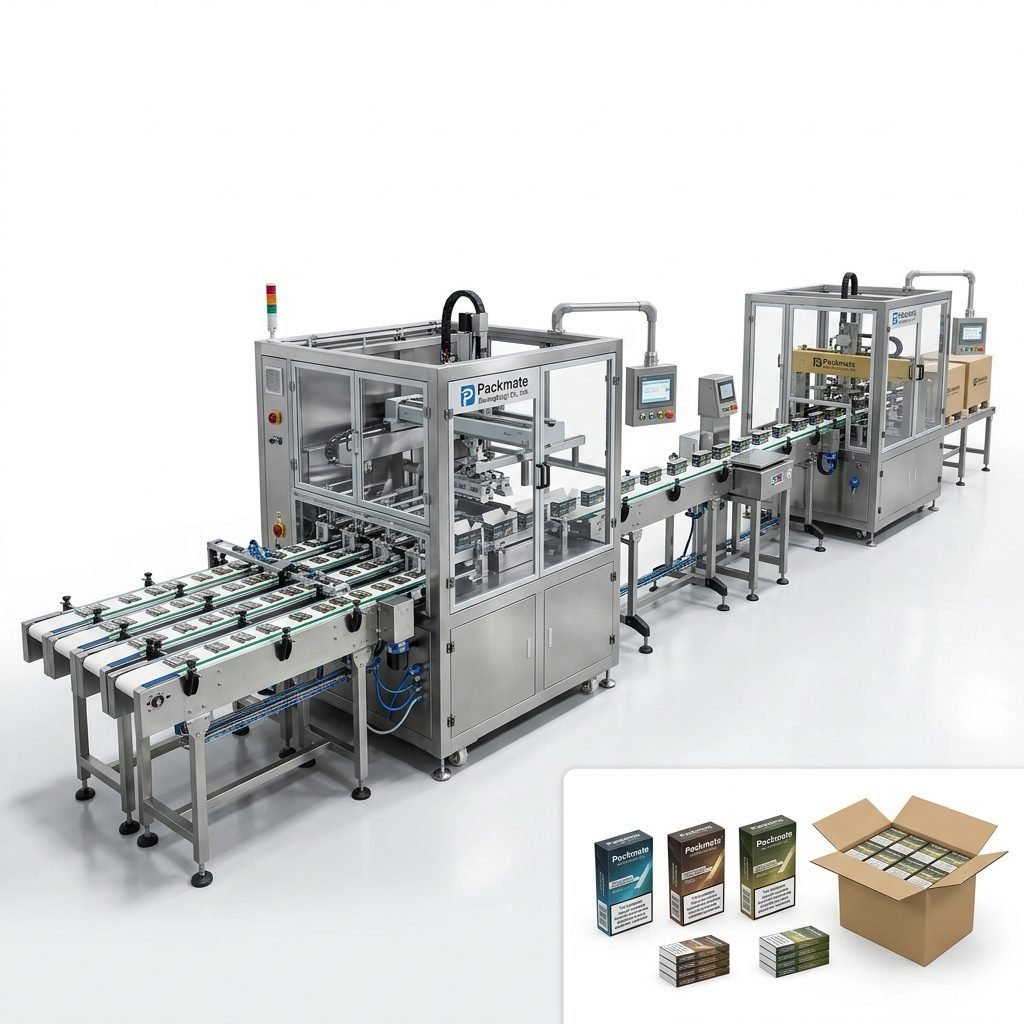
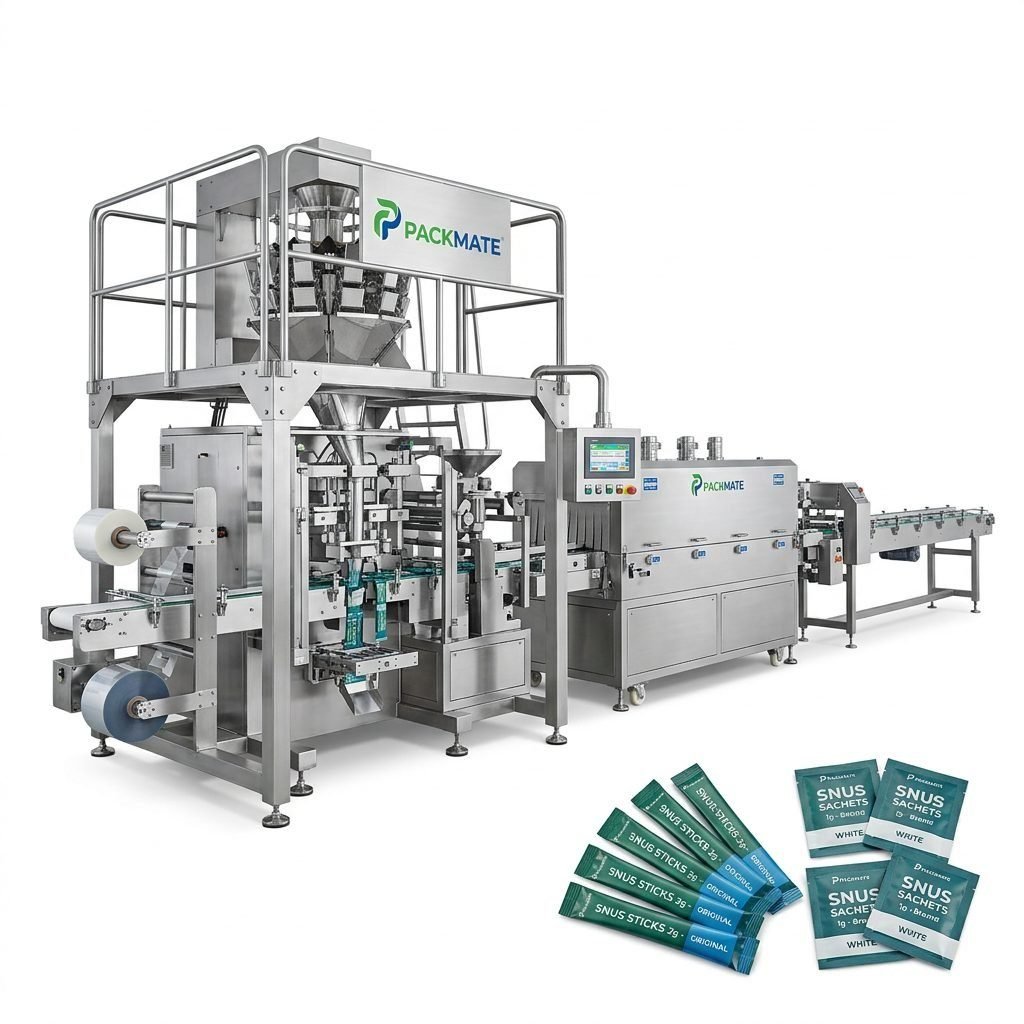
• Turnkey solutions spanning filling, weighing, and packaging lines—useful if you want an end-to-end installation in Estonia.
Learn more about specific product lines: Snus & Nicotine Packaging Machines and full Filling & Packaging Lines.
Which Machine Types Matter Most for the Estonian Market?
The most relevant formats include:
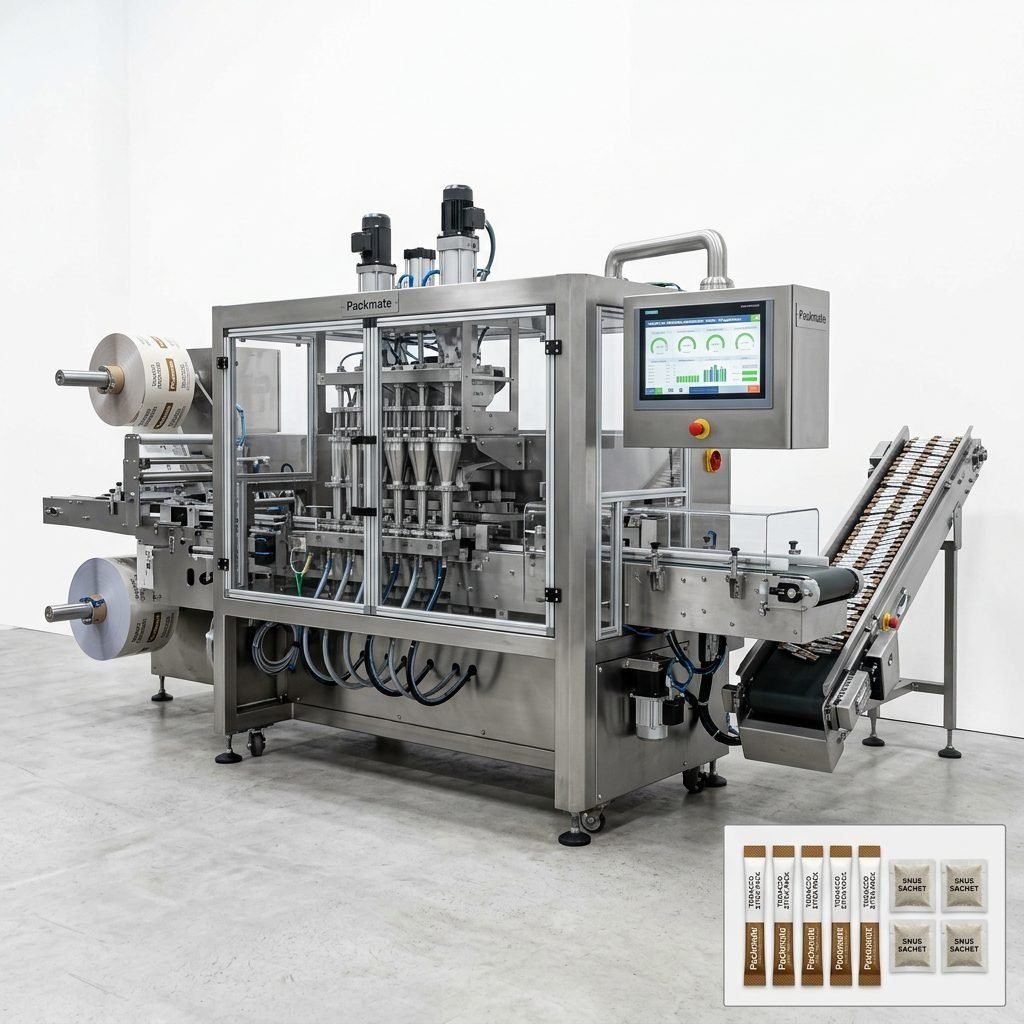
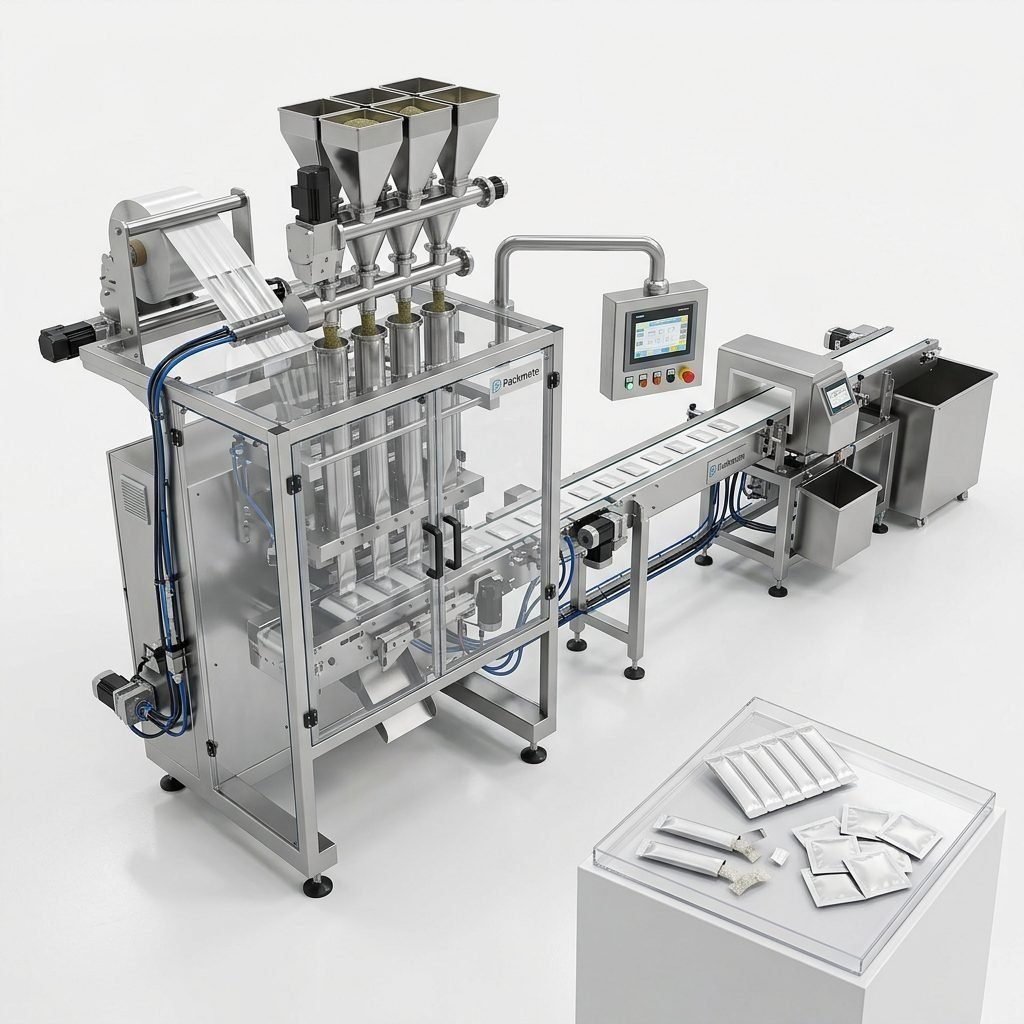
✔️ Stick pack machines — good for single-dose sticks and slim consumer segments.
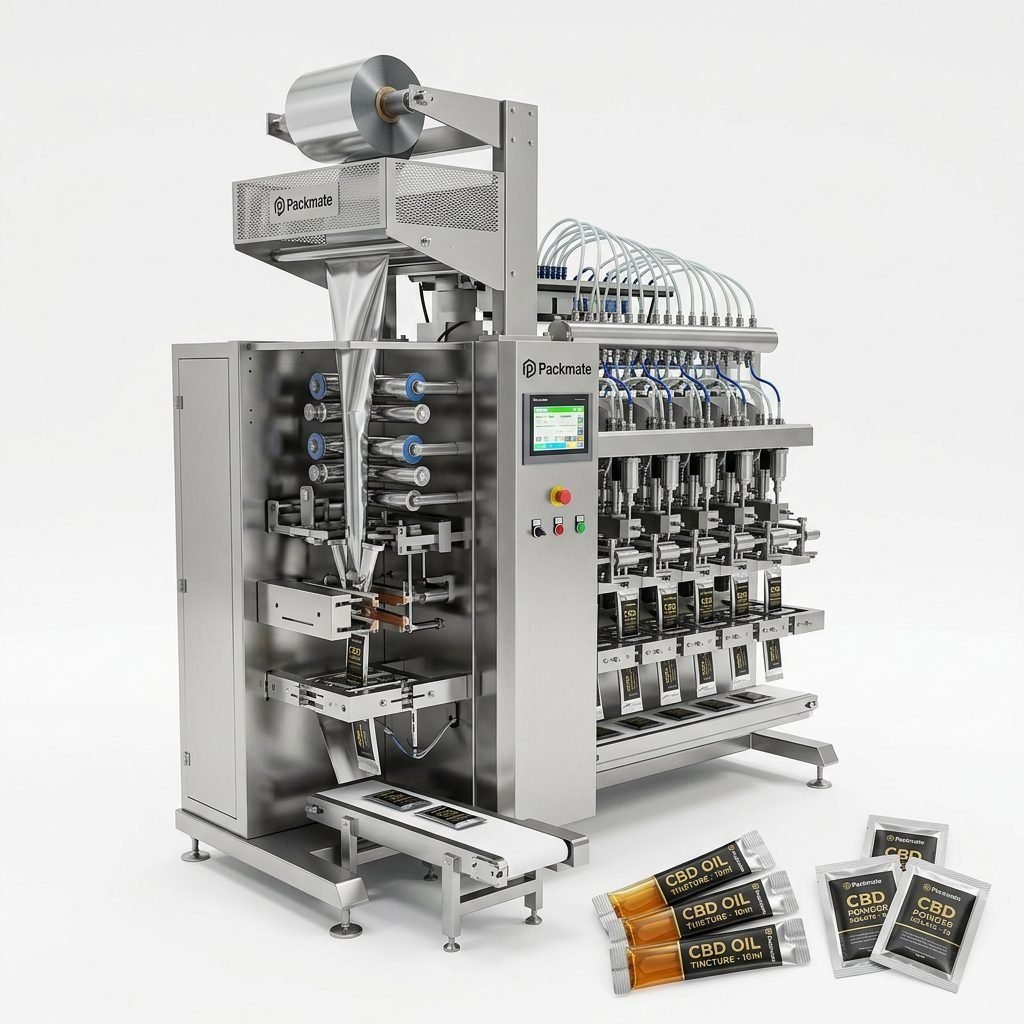
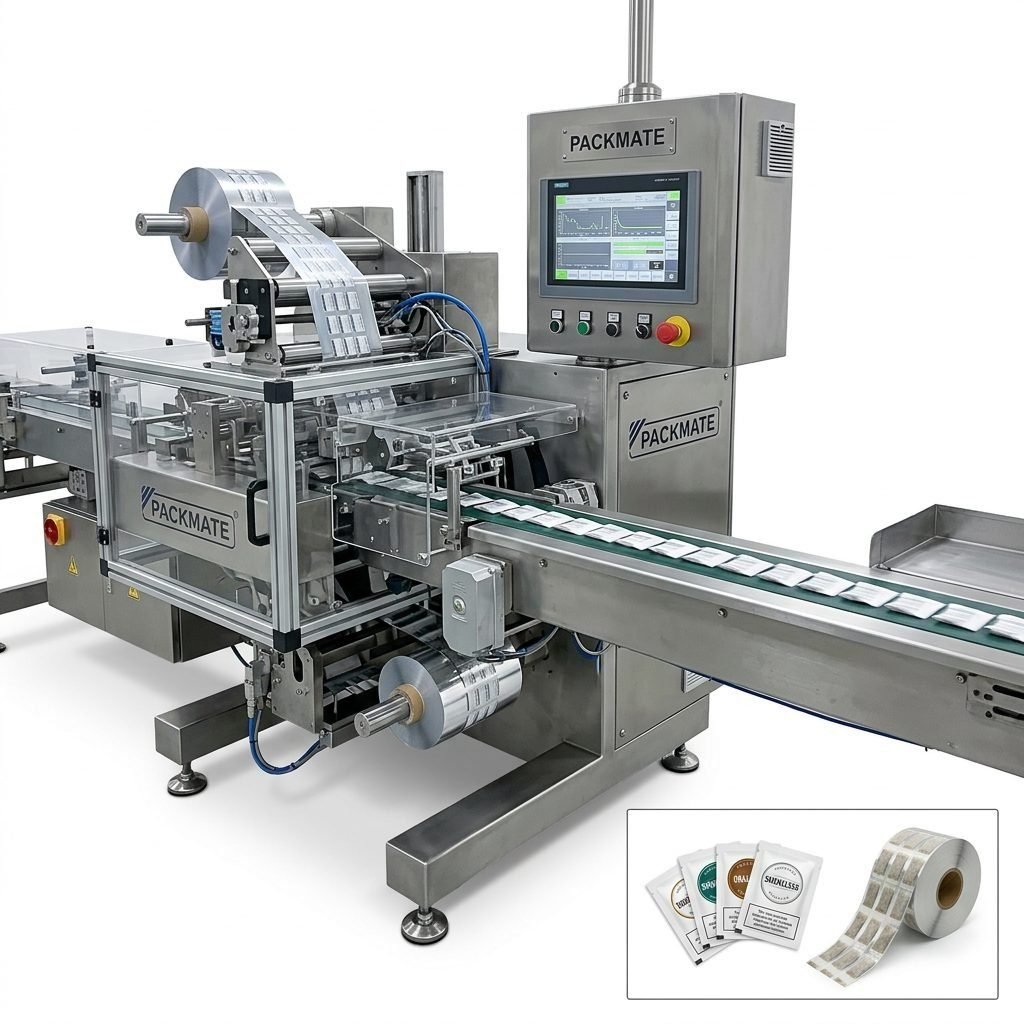
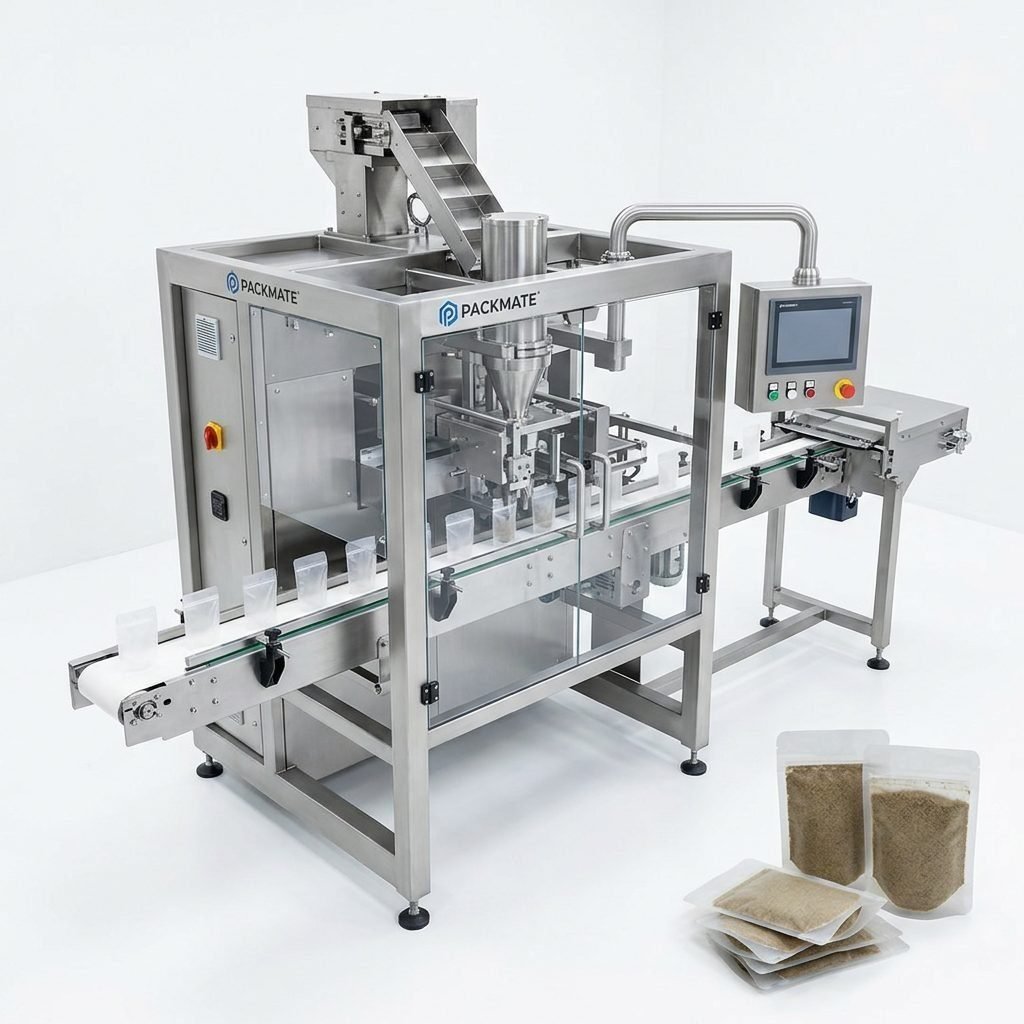
✔️ Sachet & multi-lane pouch machines — ideal for high throughput and compact pouch sizes typical in Nordic markets (Sachet & Stick Pack Machines).
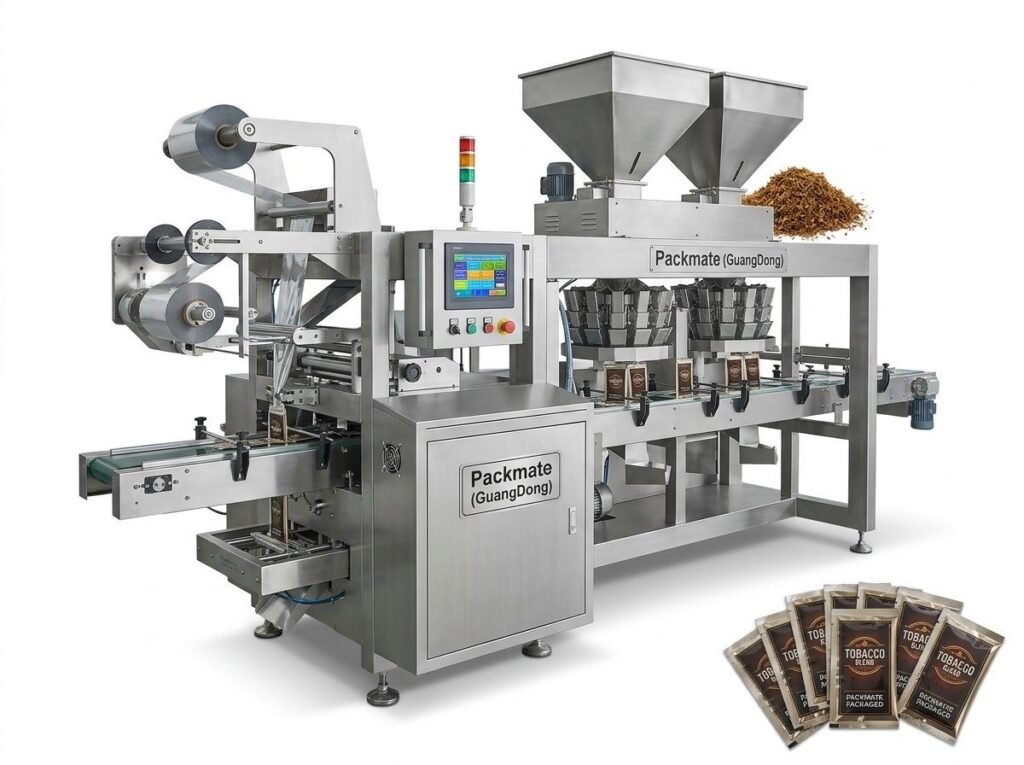
✔️ Weighing & filling systems — crucial when dosing tobacco-free nicotine powders with tight tolerances (Weighing & Packaging Systems).
Technical Features to Inspect During Evaluation
When you visit a factory, request demonstrations or video of machines running your product profile. Pay attention to:
⚙️ Accuracy & Repeatability — dosing accuracy should meet your tolerance for nicotine content per pouch.
🕒 Changeover Time — fast format changes reduce downtime for product trials and small-batch runs.
🧼 Cleanability & Hygienic Design — stainless steel contact parts and easy access for cleaning reduce contamination risk and speed audits.
📊 Integration — compatibility with weighing systems, vision inspection, and packaging lines for full traceability.
Automation & Industry 4.0
Modern machines should offer remote diagnostics, recipe storage, and PLC systems that can integrate with a factory’s MES. For Estonian customers targeting export to the Nordics, automated traceability and digital records can simplify compliance checks.
Compliance, Documentation, and Regulatory Readiness
Regulatory compliance is non-negotiable. Confirm the manufacturer can supply:
– CE and ISO certificates.
– Detailed machine manuals in English (and optionally Russian).
– FAT (Factory Acceptance Test) reports and IQ/OQ/PQ documentation for validation if needed.
– Export and customs paperwork aligned with EU entry requirements.
Logistics, After-Sales, and Local Support for Estonia
For Estonian operations, proximity to spare parts and quick technical support are vital. Consider suppliers who:
✅ Have an established European service network or partners who can handle installations and maintenance.
✅ Offer virtual commissioning, remote troubleshooting, and training modules for operators.
✅ Can provide clear shipping terms and assistance with Estonian customs and VAT procedures.
Exhibitions & Local Presence
Meeting suppliers at European exhibitions or viewing European case studies is a reliable way to validate performance. Packmate participates in global shows — check their exhibition schedule and case studies here: Our Exhibition and Case.
Cost Considerations vs. Total Cost of Ownership
Initial purchase price is only part of the equation. Estimate:
– Energy consumption and spare parts costs.
– Expected uptime and mean time between failures (MTBF).
– Flexibility for future product SKUs.
– Training and validation costs for compliance in Estonia.
Tip: A slightly higher upfront investment in a reliable, well-engineered line often pays off through reduced downtime, fewer recalls, and easier compliance when exporting to Nordic markets.
Factory Visit Checklist — What to Inspect
If possible, visit the manufacturer’s factory or ask for a live demo. Inspect:
– Assembly quality and surface finishes of contact parts.
– CNC and machining capabilities (evidence of precision manufacturing).
– In-house QA testing procedures and records.
– Spare parts inventory and lead times.
– Control system interfaces and language options.
Negotiation, Contracts and After-Sales Agreements
When finalizing your purchase agreement, ensure it covers:
– Clear warranty terms and defined response times for on-site support.
– Detailed list of spare parts included and parts recommended for stocking.
– Training for operators and maintenance staff (onsite or virtual).
– Scope of FAT, SAT (site acceptance test), and acceptance criteria for the installed line.
A Practical Example: Building a Small-Scale Estonian Nicotine Pouch Line
Scenario: You plan to produce several flavors of nicotine pouches in small batches for distribution across Estonia and Finland. A recommended setup:
– High-precision weighing and dosing system to ensure consistent nicotine content.
– Multi-lane sachet/snus pouch machine for compact, high-efficiency packaging.
– Vision inspection system for label and pouch integrity.
– Clean-in-place friendly design and easy changeover mechanisms for SKU flexibility.
For suppliers capable of delivering such integrated solutions, review turnkey portfolios like Bag & Pouch Packaging Machines and coordinate a solution that includes commissioning support: Contact Us.
Final Selection Checklist (Quick Reference)
✔️ Proven experience with snus/nicotine pouch lines.
✔️ CE & ISO certification plus export documentation.
✔️ Demonstrable multi-lane and small-dose production capability.
✔️ European service coverage or reliable remote support.
✔️ Clear FAT/SAT protocols and operator training.
Take the Next Step
Start by requesting detailed technical specifications, references from Nordic/Baltic customers, and an on-site or virtual demonstration tailored to your product. A trusted supplier will deliver not only machines but a scalable solution that supports your Estonian operations and export ambitions.
For more details about supplier capabilities and company background, review the manufacturer’s profile: About Packmate or browse product case histories: Case Studies.
Common Questions (FAQs)
Q: How important are CE and ISO certificates when buying for Estonia?
A: Extremely important — they demonstrate compliance with EU standards and simplify customs clearance and market inspections.
Q: Can manufacturers support multilingual documentation for packaging and machine manuals?
A: Ask for English and Russian manuals at minimum; many reliable suppliers can provide documentation tailored for Estonian market needs.
Q: What is a realistic lead time for a turnkey nicotine pouch line to Estonia?
A: Lead times vary by configuration and customization; typical ranges are 8–20 weeks for production plus shipping and on-site commissioning.
Q: Should I prioritize modular systems that allow future expansion?
A: Yes. Modular systems reduce long-term costs and allow you to add lanes, inspection systems, or automated packing as demand grows.
Q: How do I validate supplier performance before purchase?
A: Request FAT videos, customer references in similar markets, and agree on acceptance criteria in the contract. A good supplier will support FAT, SAT, and provide training and spare parts plans.