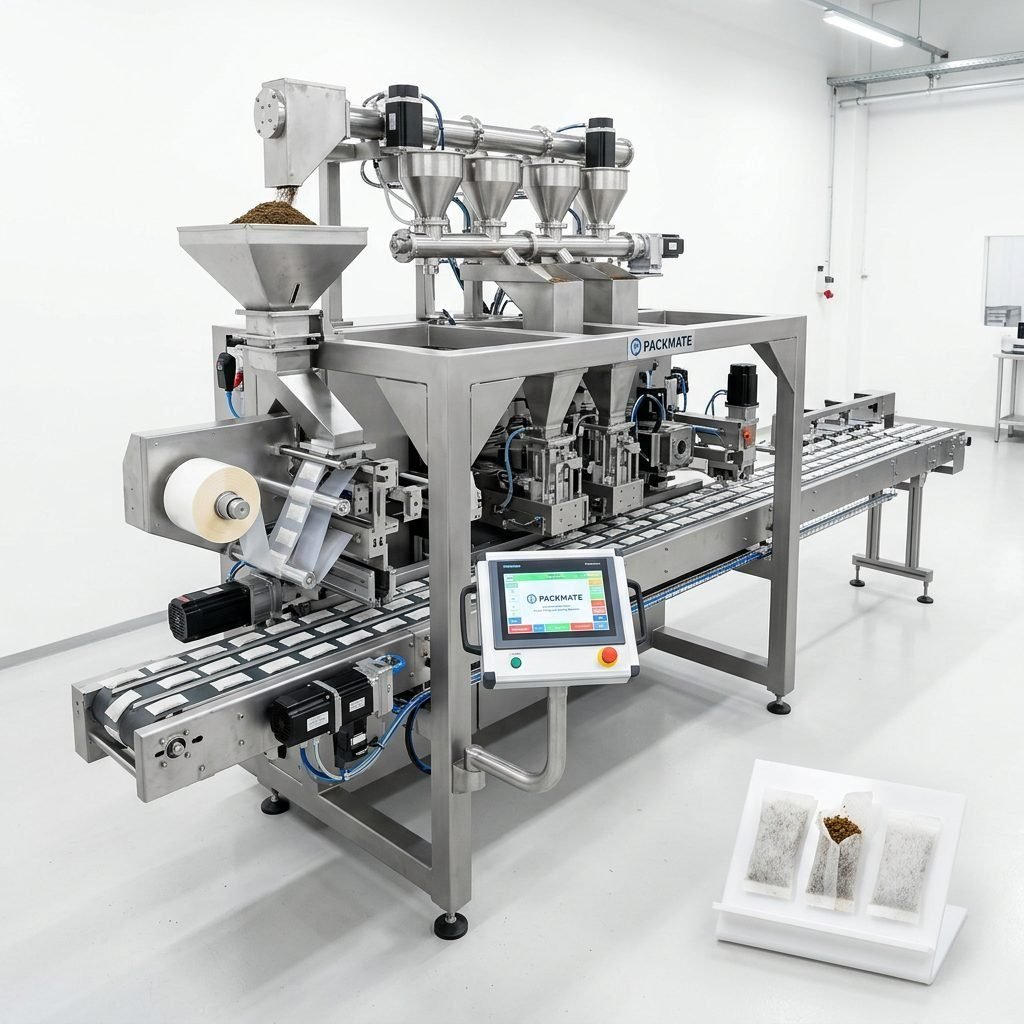
Choosing the right nicotine packaging machine manufacturer in Europe is a critical decision for any producer of snus, nicotine pouches, or related oral nicotine products. The right partner not only supplies robust equipment but also helps you scale production, meet regulatory demands, and align with local market habits — especially given Europe’s varied regulatory landscape and consumer expectations. This guide walks you through practical criteria, local considerations, and actionable steps to select the best manufacturer for your production needs.
Understand the European Market and Local Practices
Europe is not a single market when it comes to nicotine products. Countries like Sweden and Norway have long-standing traditions with snus and nicotine pouches, while many EU markets face strict advertising and product restrictions. When selecting a manufacturer, factor in:
- Regulatory compliance across EU member states and specific Scandinavian regulations.
- Packaging preferences — e.g., compact tubs in Nordic markets vs. sachets/stick packs elsewhere.
- Language and labeling requirements: multi-language labeling and compliance with local warnings.
Why cultural habits matter
In Nordic markets, consumers value consistency, discreet design, and portion size control. In some central European markets, convenience and novelty formats (stick packs or single-dose sachets) may be more popular. A manufacturer with experience supplying lines tuned to these preferences can help you enter local markets faster.
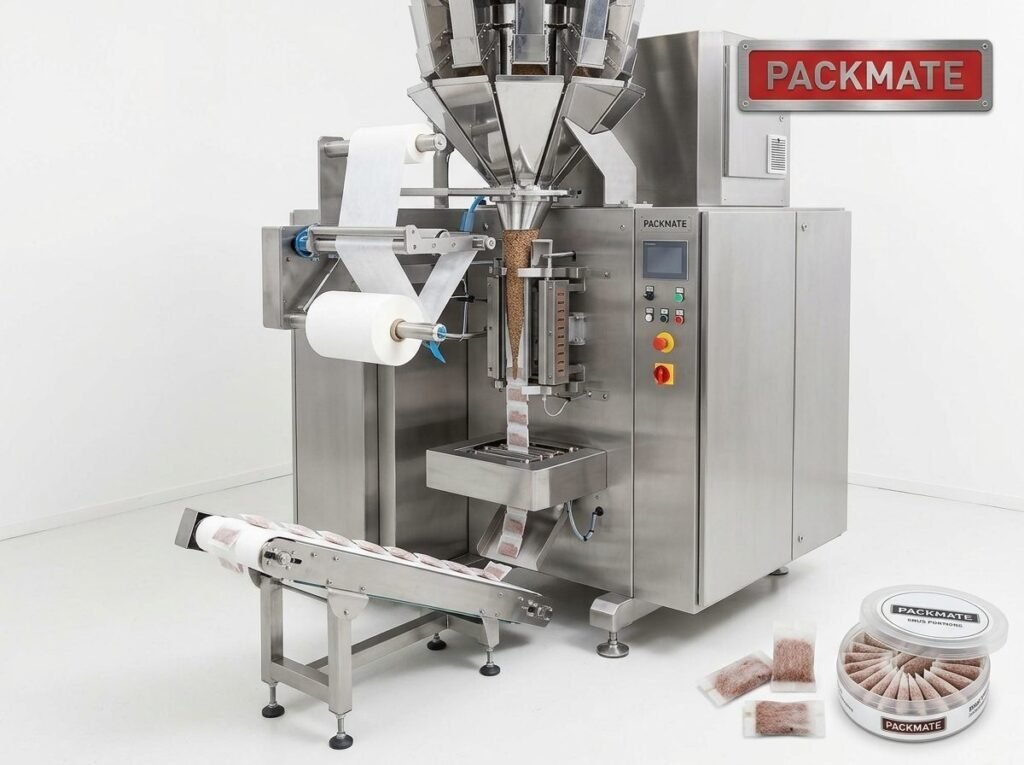
If your target market includes Sweden, prioritize manufacturers with proven snus packing experience — they understand pouch sizes, moisture control, and tray/tub filling nuances.
Key Technical Requirements to Evaluate
Your choice should be driven by technical compatibility with your product, plant layout, and production targets. Consider the following must-have features:
1. Machine type and format flexibility
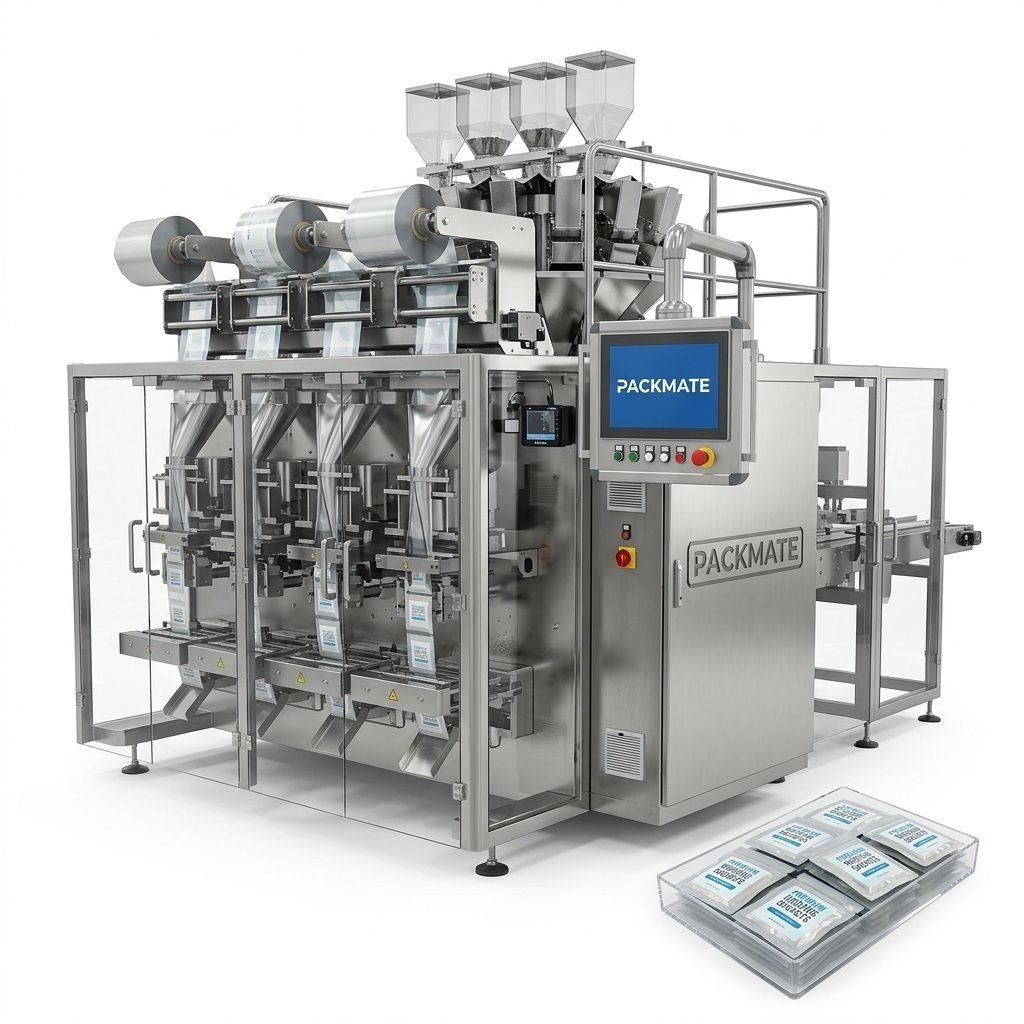
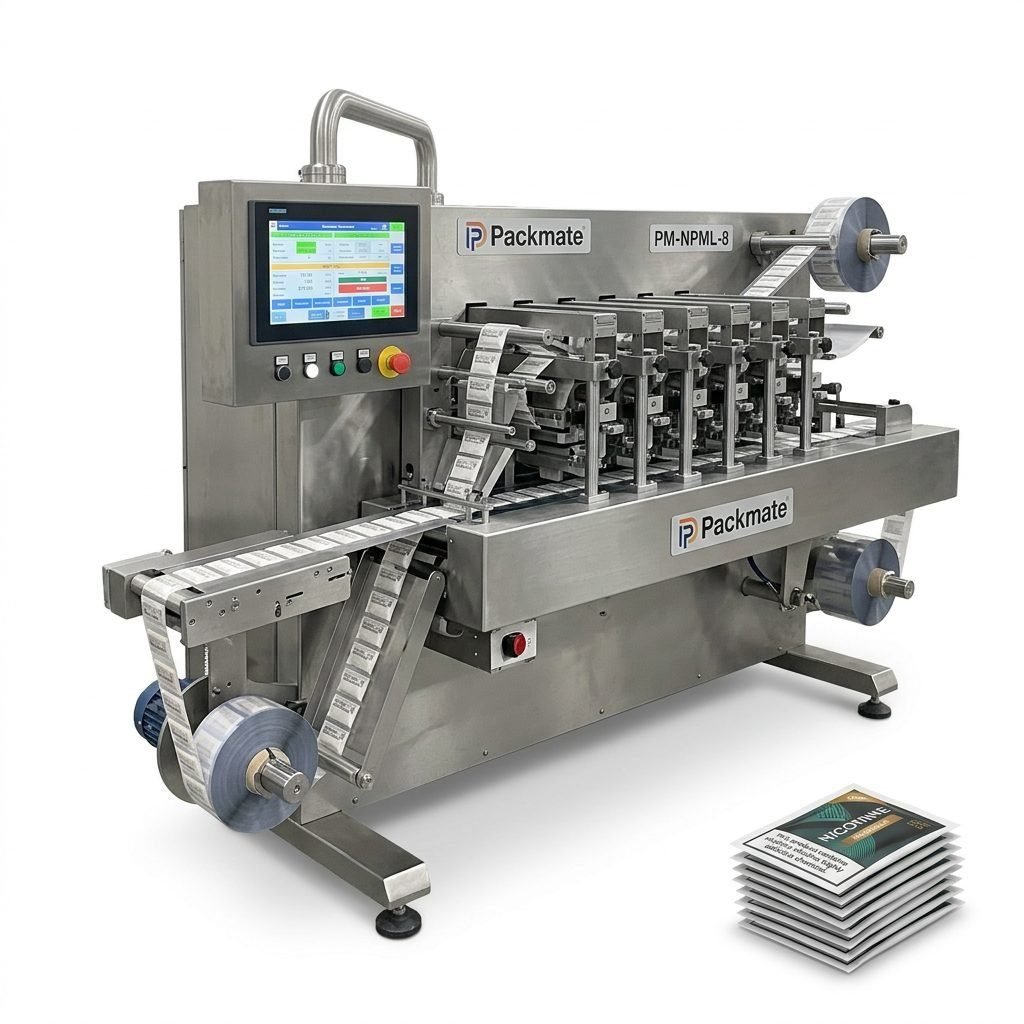
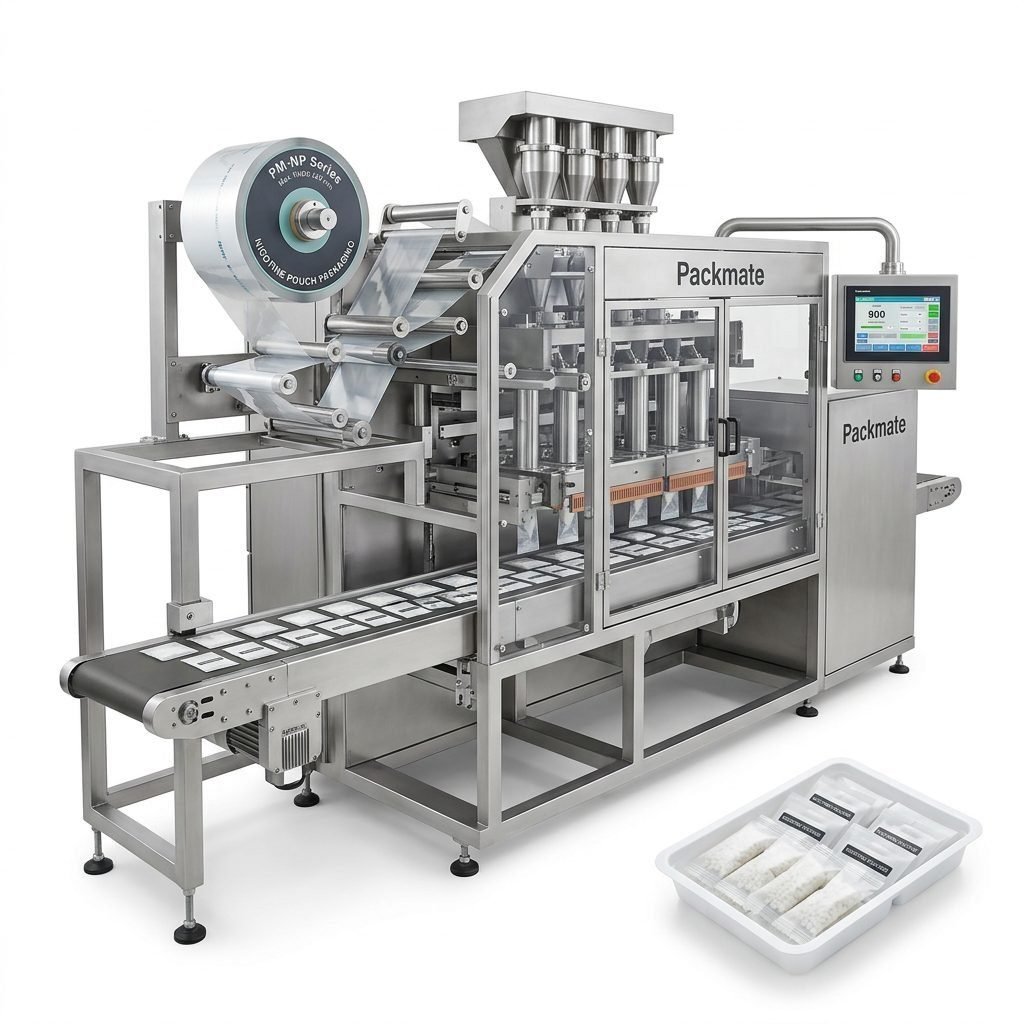
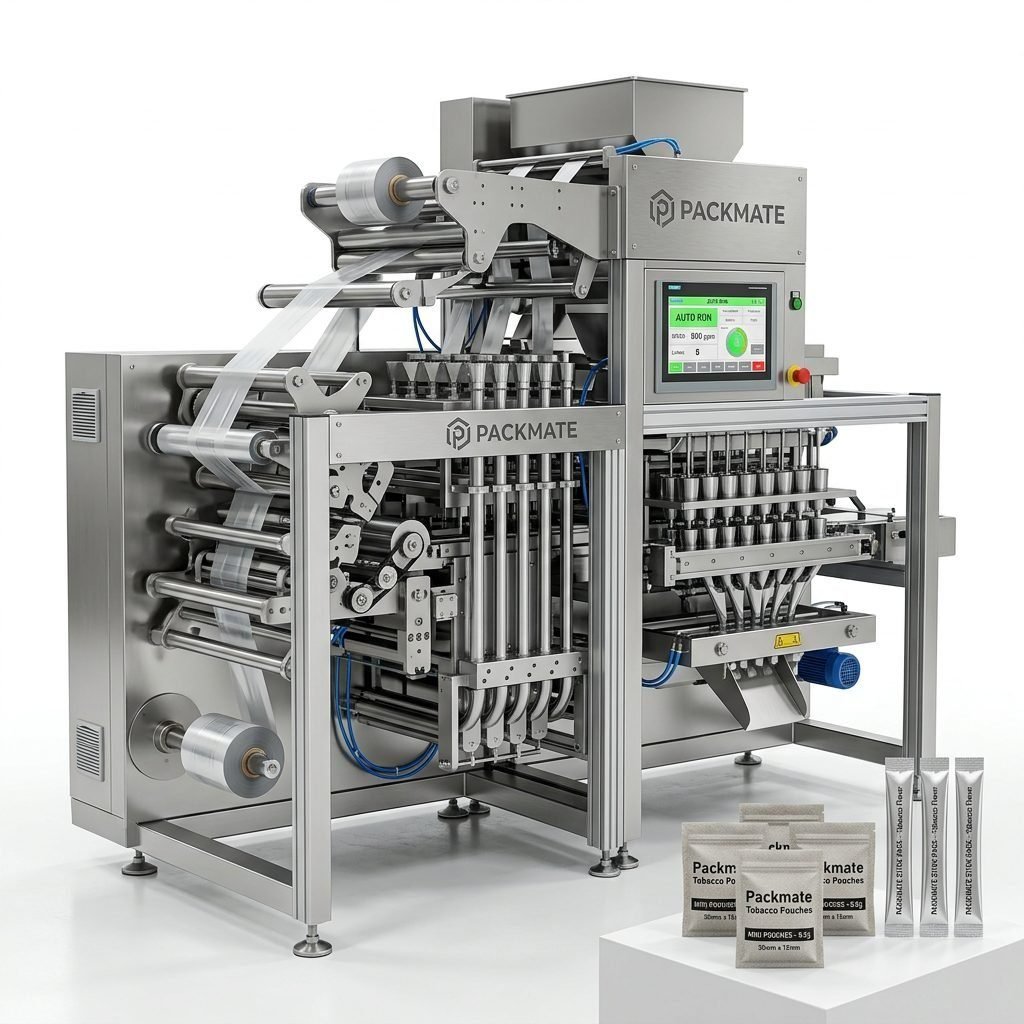
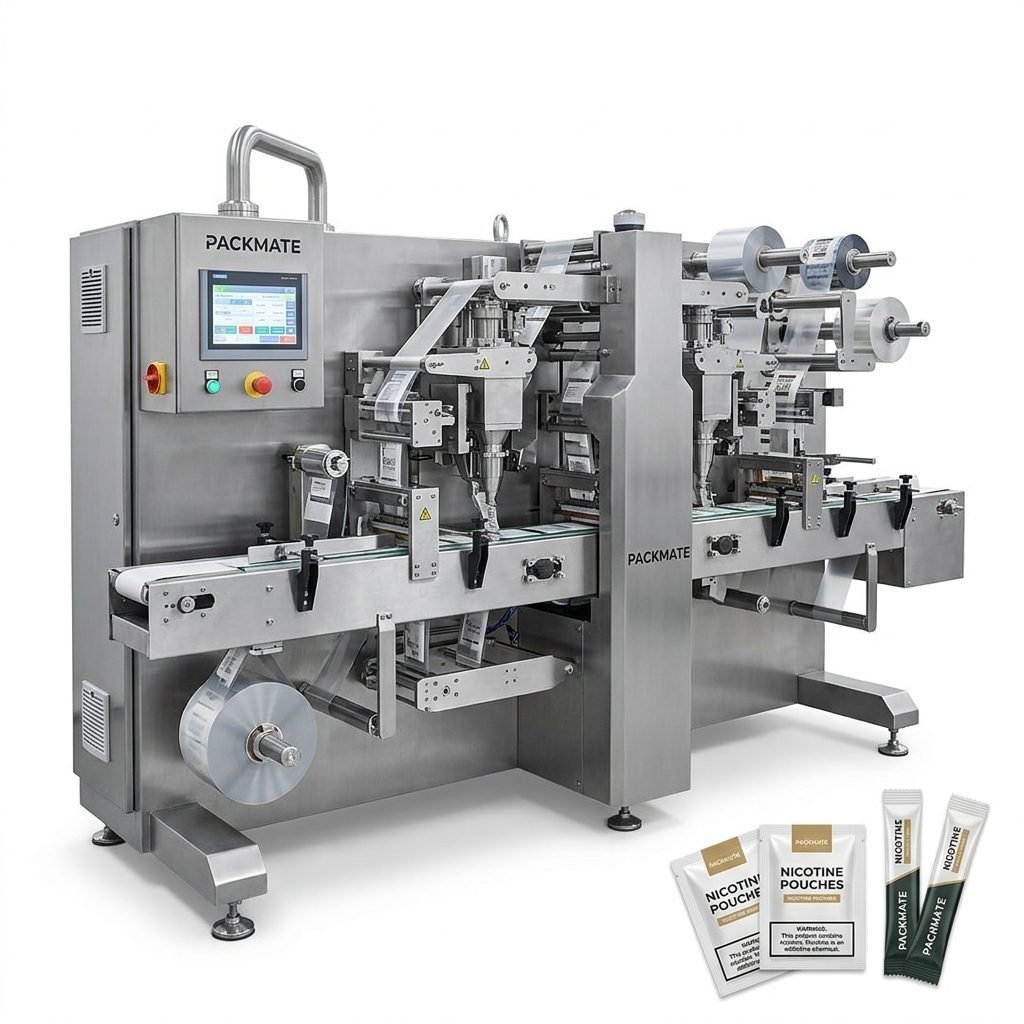
Do you need multi-lane snus pouch machines, stick packs, sachet machines, or a combination? Manufacturers offering modular systems let you switch formats or expand lanes as demand grows. For small-dose nicotine pouches, multi-lane precision is critical to maintain dose consistency.
2. Throughput and scalability
Define your target output (pouches/min or packs/hour). Evaluate whether the line supports incremental upgrades (add lanes, faster feeders) and whether the control system allows synchronized expansions without full replacement.
3. Precision dosing & contamination control
Nicotine pouch filling demands exact dosing and strict cleanliness. Look for high-precision weighers and filling systems, CIP-compatible components, and materials suitable for nicotine handling.
Choose suppliers whose machines are CE and ISO certified to avoid regulatory delays in Europe. Packmate Snus Machine, for instance, emphasizes CE/ISO compliance across its product range.
Assess Manufacturer Capabilities and Track Record
A strong maker is more than a machine vendor — they are a strategic partner. Evaluate:
- History and engineering depth (years of experience, R&D investment).
- Production capacity — a larger facility typically supports faster lead times and customization.
- Field references and international case studies, especially in European markets.
- After-sales service network and spare parts availability within Europe.
What to look for in evidence
Ask for factory photos, production floor videos, and test videos of machines running your product type. Check trade show participation and ask for customer references in Europe. Packmate’s exhibition presence and case studies are useful examples to assess manufacturer visibility and client trust.
Useful resources: Snus & Nicotine Packaging Machines, Sachet & Stick Pack Machines, and Case studies.
Customization, Integration and Turnkey Solutions
A top-tier manufacturer will offer tailored solutions — integrating filling, weighing, sealing, and secondary packaging into an efficient production line. Consider:
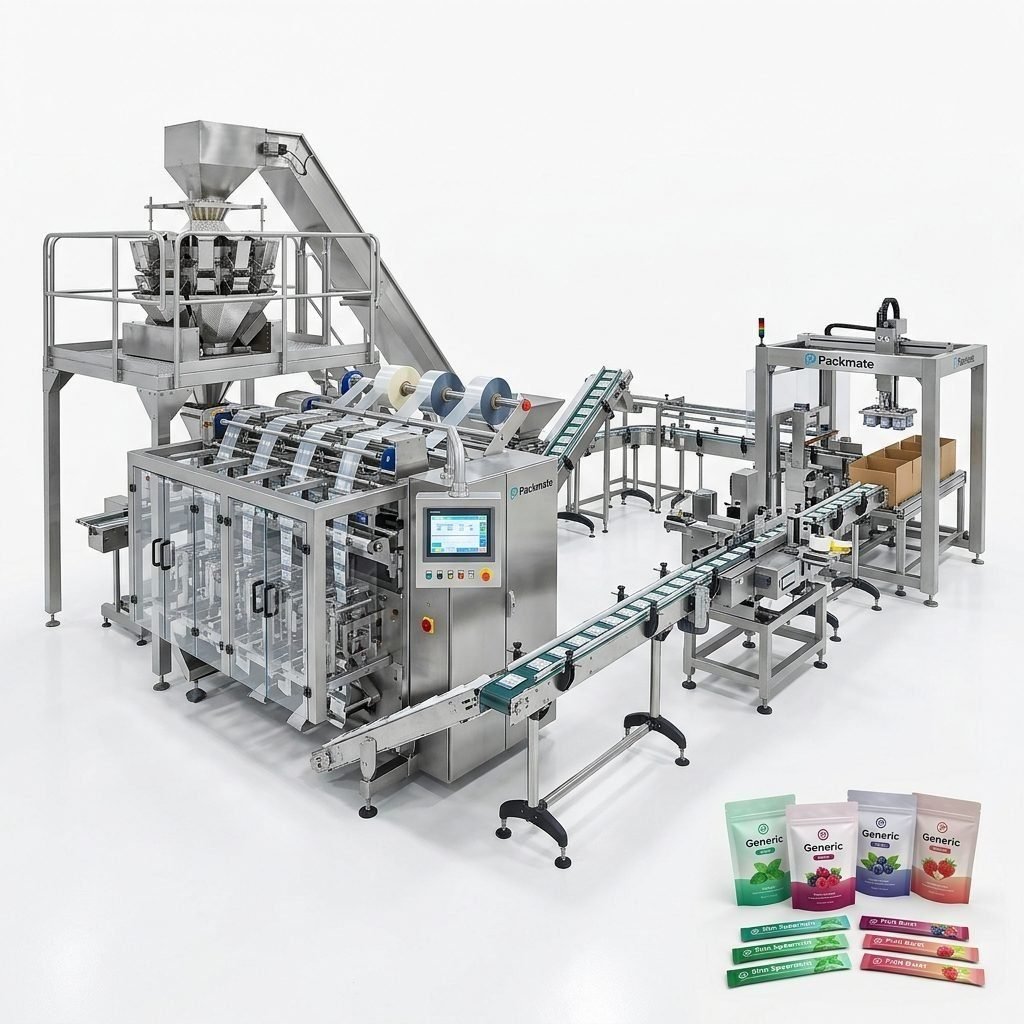
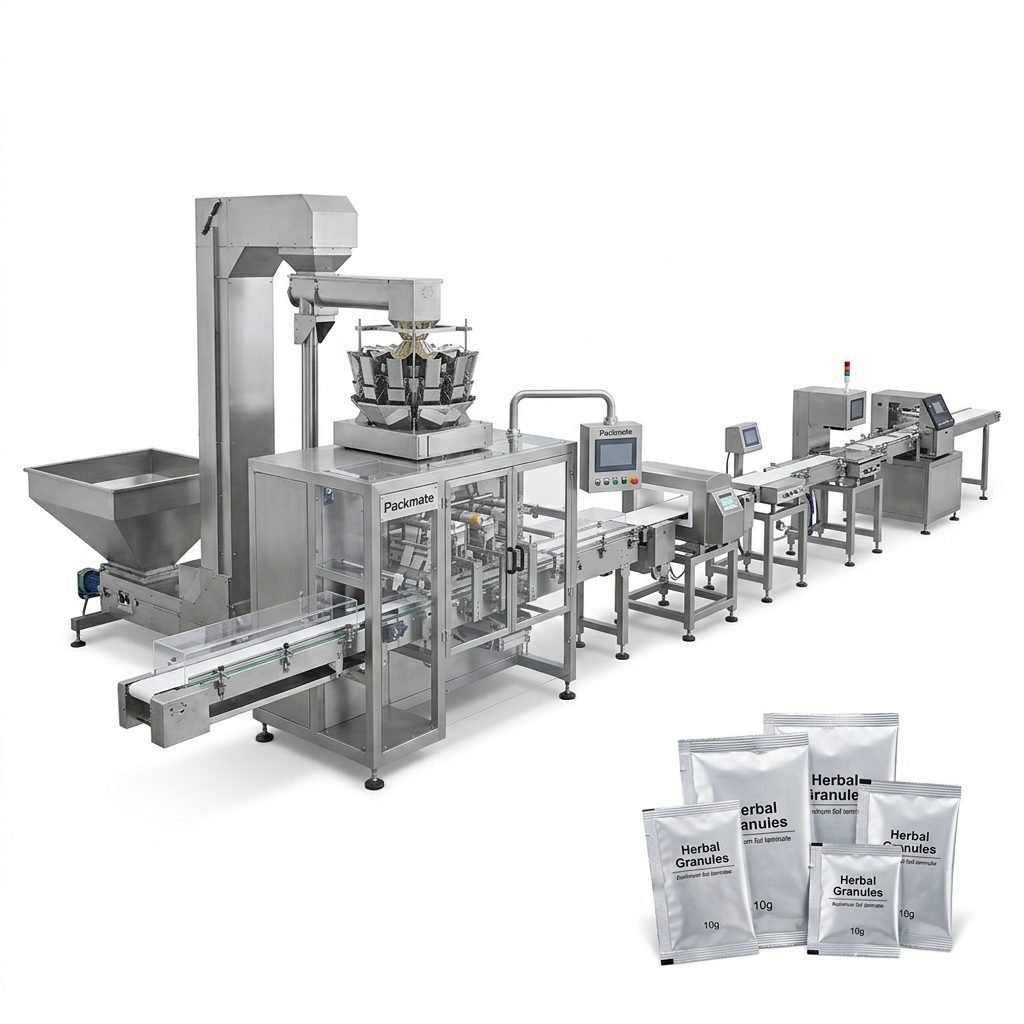
- Ability to supply complete lines (filling + packing + case packing + labeling).
- Experience with nicotine-specific materials and packaging substrates.
- Control systems that can integrate with your MES/WMS for traceability.
Packmate offers turnkey packaging lines covering snus packing, weighing & packaging systems, and auxiliary equipment — making it easier to procure a single-supplier integrated solution.
Integration checklist
Ensure the manufacturer provides: mechanical and electrical integration drawings, spare part lists, operator training, and FAT (Factory Acceptance Test) prior to shipment. For faster installations in Europe, ask about local commissioning teams or certified service partners.
Quality, Safety and Certifications
Safety and quality certifications are non-negotiable:
- CE marking for machinery safety in the EU.
- ISO quality management (e.g., ISO 9001) to ensure production consistency.
- Hygienic design features for nicotine handling and easy cleaning.
Check the manufacturer’s certification portfolio and ask to review certificates. For instance, the manufacturer’s certificate page can demonstrate compliance and is often linked from their site: Certificate.
After-sales Service and Spare Parts Logistics
Minimizing downtime is essential. Confirm the supplier offers:
- Quick spare parts delivery to Europe or in-region stocking.
- Remote diagnostics, software updates, and on-site support options.
- Training for operators and maintenance staff with clear documentation.
Prefer manufacturers that maintain regional partners or offer rapid courier dispatch to Europe — this reduces lead times on critical parts.
Cost Considerations and Total Cost of Ownership (TCO)
Purchase price is only part of the equation. Calculate TCO including:
- Initial machine cost and optional modules
- Installation, qualification, and validation costs
- Annual maintenance, spare parts, and consumables
- Energy consumption and operator labor requirements
Request a detailed quotation with breakdowns for each cost area and potential upgrade paths. Manufacturers with clear costing and upgrade options are easier partners for long-term planning.
Factory Visit and Factory Acceptance Test (FAT)
Performing a factory visit or witness testing is a best practice. During FAT:
- Verify machine performance on your product or a close surrogate.
- Assess build quality, material finishes, and sanitary design.
- Test controls, HMI, and integration capabilities.
If you cannot visit in person, request a live video demonstration and recorded testing on your product specs. Check the manufacturer’s references and product videos where possible.
Sustainability and Packaging Waste Considerations
European markets are increasingly focused on sustainability. Evaluate whether the manufacturer:
- Offers equipment optimized for minimal material waste and high first-pass yield.
- Supports recyclable or mono-material packaging formats.
- Designs machines for reduced energy consumption and efficient changeovers.
Practical sustainability metrics
Track metrics such as scrap rate per million pouches, average changeover time, and power consumption per 1,000 units. Suppliers that provide data-backed performance figures are preferable.
Making the Final Decision: Evaluation Checklist
Use a weighted checklist to compare vendors. Important criteria include:
- Regulatory compliance and certifications (CE, ISO).
- Proven experience with nicotine/snuspouch formats.
- After-sales support in or near Europe.
- Modularity, scalability and upgrade path.
- Total cost of ownership clarity.
- Ability to perform FAT and provide references.
- Visit or virtual-FAT confirmed
- Written warranty and spare parts SLA
- Training plan and documentation in your language
Why a Manufacturer Like Packmate Can Be a Strong Option
When evaluating suppliers, consider companies with deep snus and nicotine packaging expertise. Packmate Snus Machine is an example of a supplier that aligns with many buyers’ requirements:
- 30+ years of engineering experience and a 20,000㎡ manufacturing facility.
- 50+ machine models covering snus/nicotine pouch machines, stick pack and sachet lines.
- CE & ISO compliance, global turnkey solutions, and exhibition presence for live demos.
Learn more about Packmate’s solutions: About Packmate, Snus & Nicotine Packaging Machines, and full system offerings like Weighing & Packaging Systems.
Final Steps: Negotiation and Contracting
Before signing, ensure the contract includes:
- Detailed scope of supply, acceptance criteria and FAT protocols.
- Warranty terms, spare parts list with pricing, and response time commitments.
- Training schedules, installation and commissioning timelines, and penalties for missed milestones if required.
Include acceptance tests that replicate your high-speed production conditions. This avoids surprises during site commissioning.
Local logistics and customs
For European deployment, confirm shipping options, customs handling, and in-region installation support. Manufacturers who routinely ship to Europe will have experience with CE marking documentation, declarations of conformity, and customs paperwork.
Conclusion
Selecting the right nicotine packaging machine manufacturer in Europe requires a balanced assessment of technical fit, regulatory readiness, service capability, and cultural fit with local market practices. Prioritize manufacturers with proven snus experience, CE/ISO certification, and strong after-sales support. Use factory visits, FATs, and clear contractual terms to reduce implementation risk.
Frequently Asked Questions
Q1: How important is CE certification when buying a nicotine packing machine for Europe?
A1: CE certification is essential for machinery sold in the EU because it demonstrates conformity with EU safety and machine directives. It simplifies customs clearance and ensures the machine meets baseline regulatory requirements.
Q2: Can I visit the manufacturer before purchase and perform a FAT?
A2: Yes — a factory visit and FAT are strongly recommended. If a physical visit is not possible, request a live video FAT and recorded tests using your product to validate performance prior to shipment.
Q3: What after-sales support should I expect from a reliable supplier?
A3: Expect spare parts availability, remote diagnostics, operator and maintenance training, and defined SLAs for on-site support. Regional partners or local stocking in Europe can significantly reduce downtime.
Q4: How do I handle product-specific requirements like nicotine dosing accuracy and moisture control?
A4: Prioritize precision dosing systems, hygienic designs for easy cleaning, and environmental controls if moisture is critical. Discuss test runs with the manufacturer to ensure their system meets your tolerance thresholds.
Q5: Where can I find reliable information on different machine formats and suppliers?
A5: Manufacturer websites, case studies, trade shows, and independent industry reviews are useful. For product pages and catalogs, check resources such as the manufacturer’s product lines and catalog pages to compare models and capabilities.