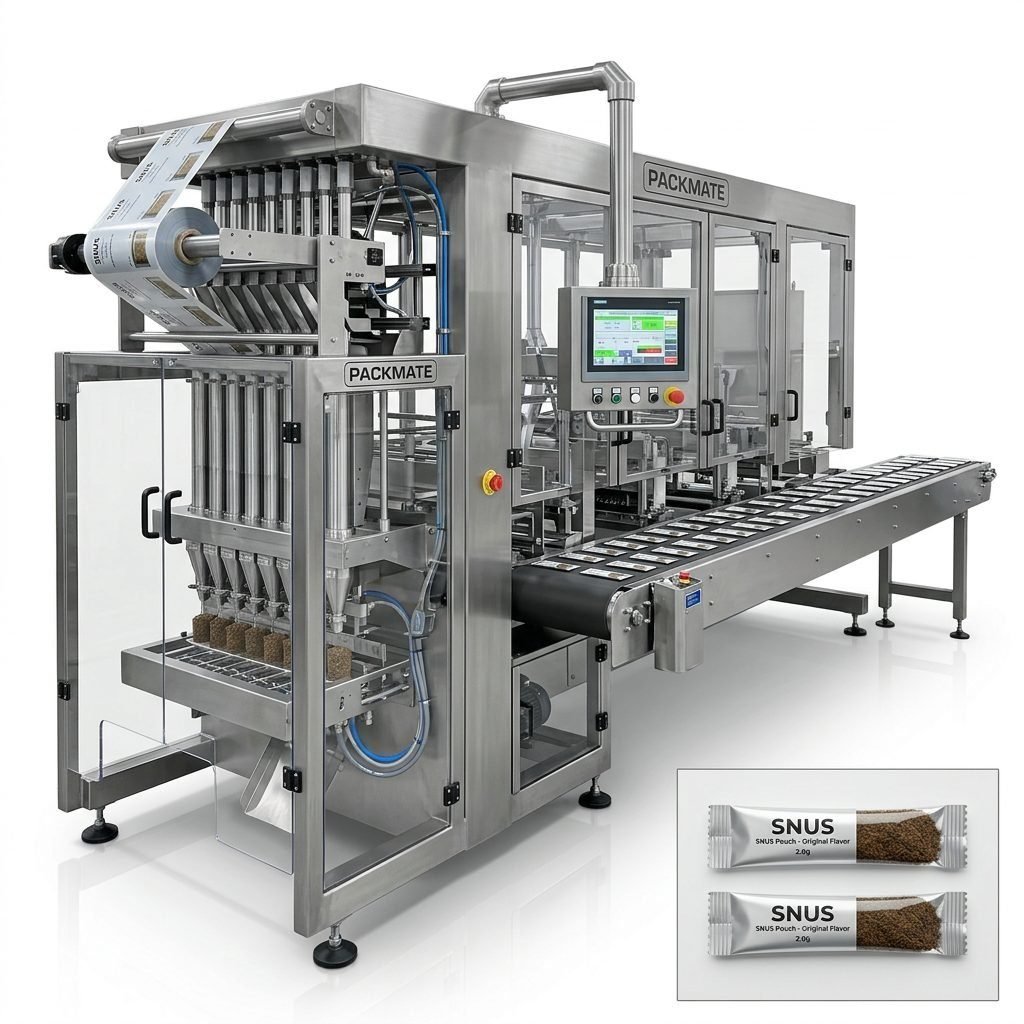
Choosing the right nicotine packaging machinery for production in Europe requires more than comparing speeds and prices. Manufacturers must balance regulatory compliance, consumer preferences across different European regions, production flexibility, and long-term service and support. This guide walks you through the critical factors to consider — from machine type and throughput to supplier qualifications and local market habits — so you can select equipment that delivers reliable output, regulatory compliance, and a rapid return on investment.
Understand the European Market and Local Habits
Europe is diverse in regulations and consumer customs. While snus (traditional tobacco snus) is legally available in Sweden, many EU countries restrict its sale. Nicotine pouches (tobacco-free) are rapidly gaining popularity across the continent, but national rules vary. You must plan packaging to meet local language requirements, health warnings, and specific labeling rules — and anticipate different consumer preferences: Nordic consumers often expect portioned and discreet formats, while Southern and Western European markets may prefer sachet or resealable packs for portability.
Regulatory Checklist for Europe
⚠️ Remember to confirm national interpretations of EU directives, labeling languages, batch traceability, and possible restrictions on flavors and marketing claims. Compliance is not optional — choose machinery that supports accurate batch coding, tamper-evident seals, and reliable serial numbering.
Match Machine Type to Your Product Format
The first practical decision is the machine type. Different technologies suit different product formats and production strategies. Your selection should align with product format, pouch size, dosing method, and future flexibility needs.
Popular machine formats
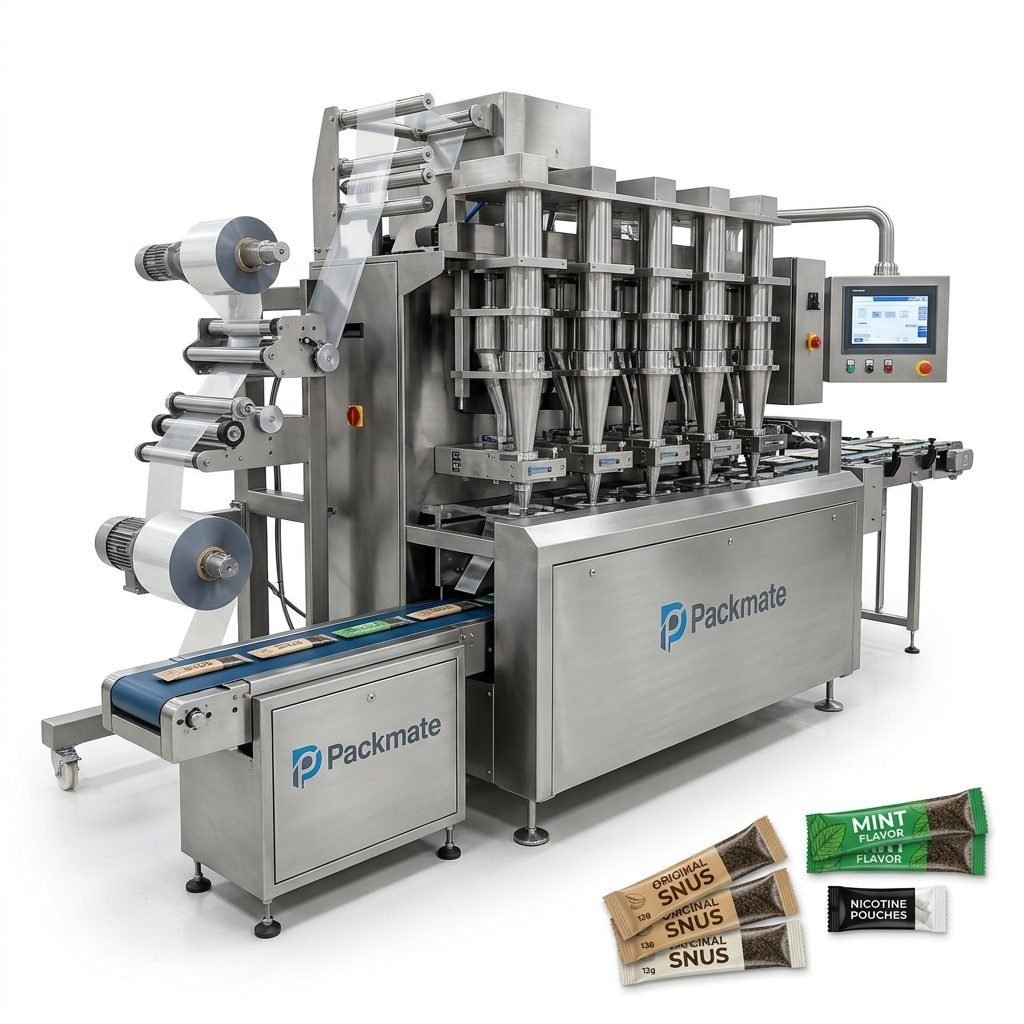
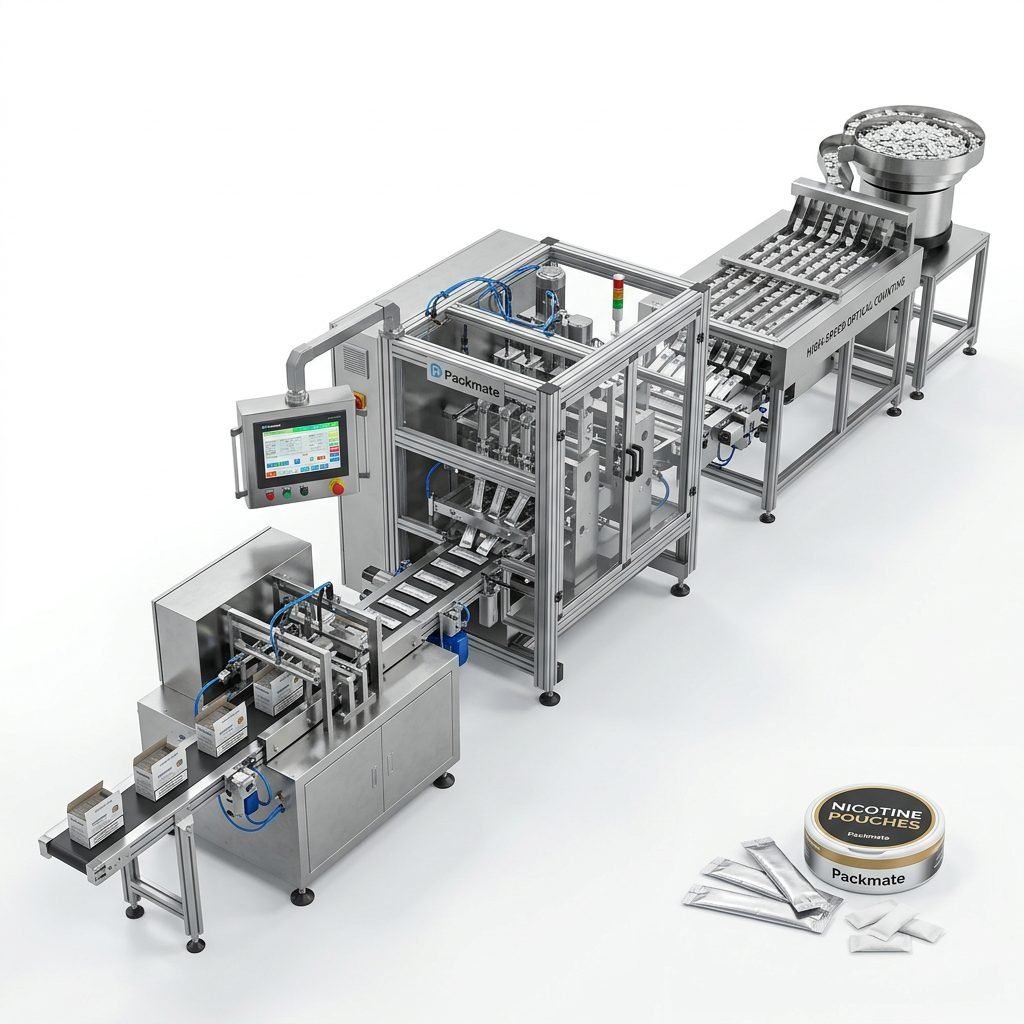
🔧 Snus & nicotine pouch machines (single-lane or multi-lane): Ideal for portioned pouches with precise dosing and high sealing quality. See examples of advanced options at Snus & Nicotine Packaging Machines.
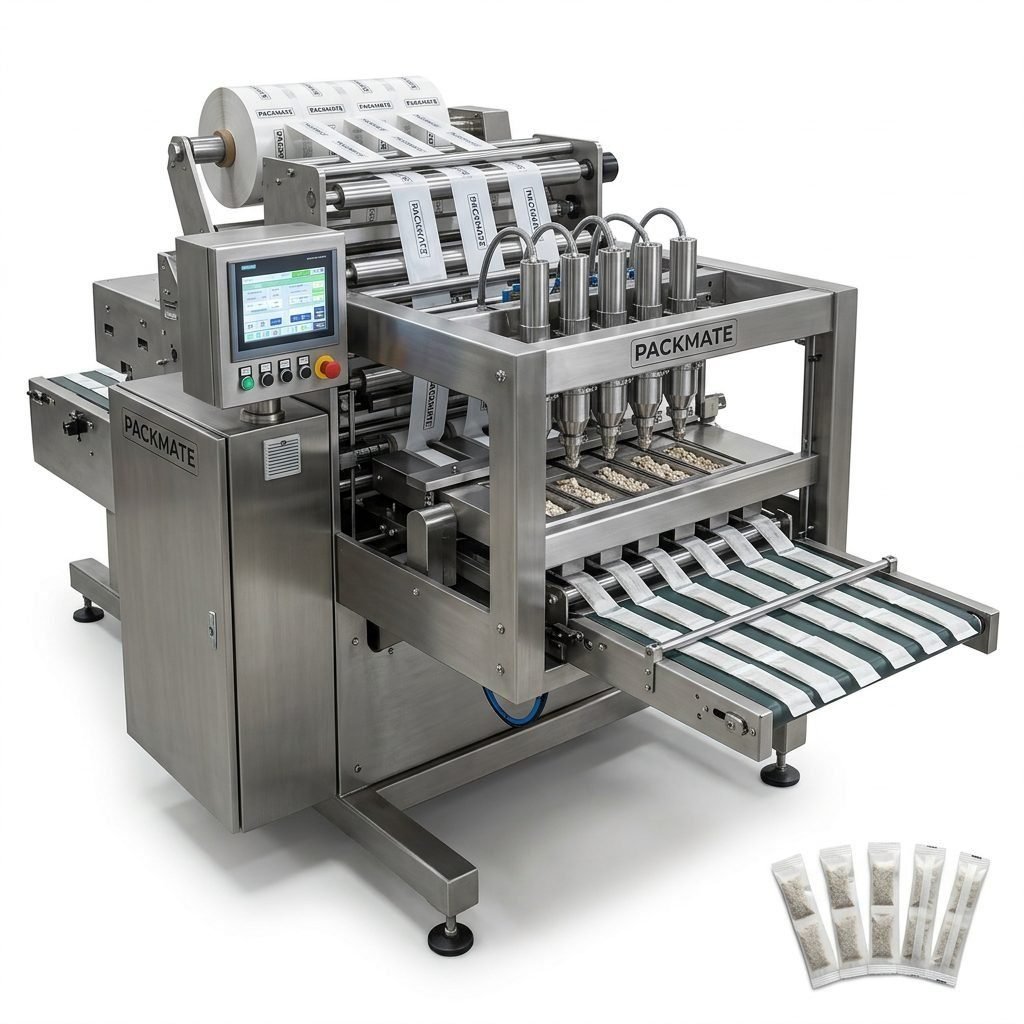
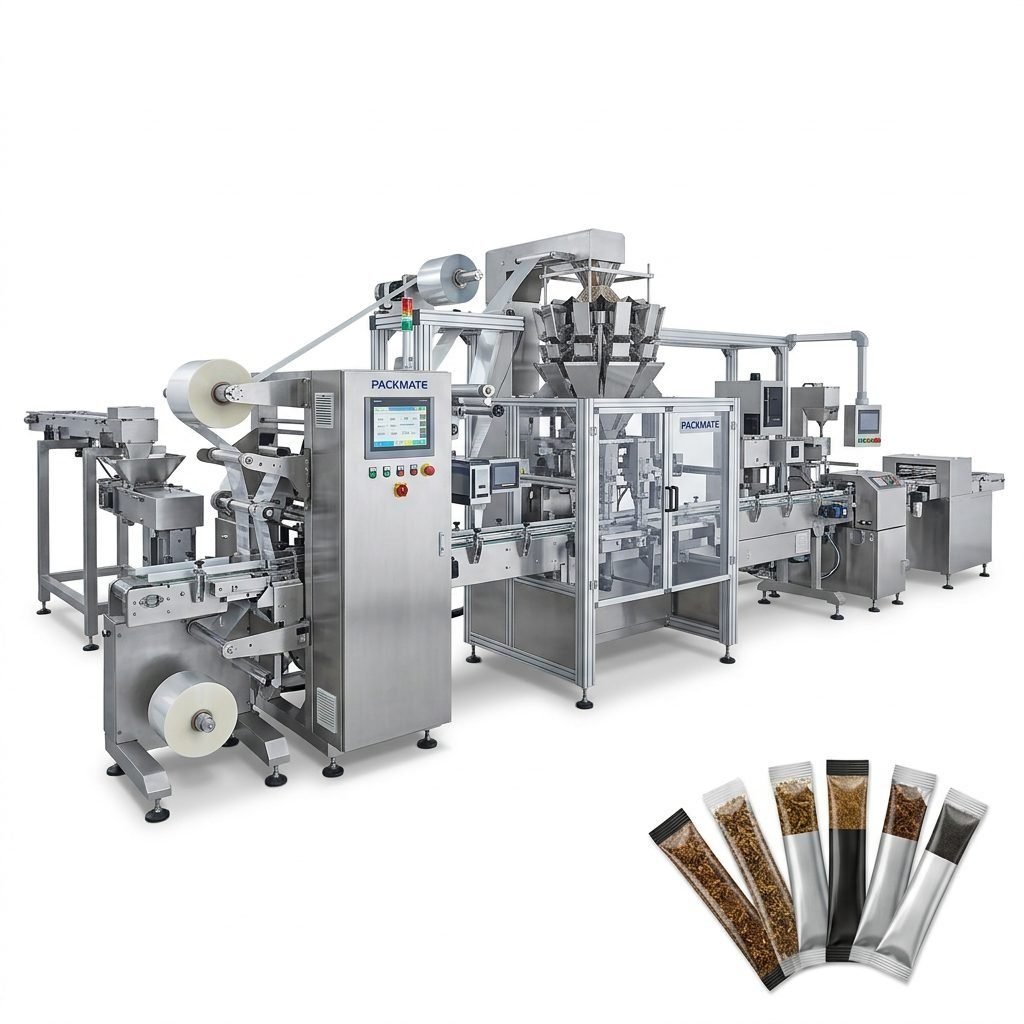
🔧 Sachet & stick pack machines: Best for sachet formats, single-dose sticks, and flexible packaging trials — great when launching new SKUs. Explore machine types at Sachet & Stick Pack Machines.
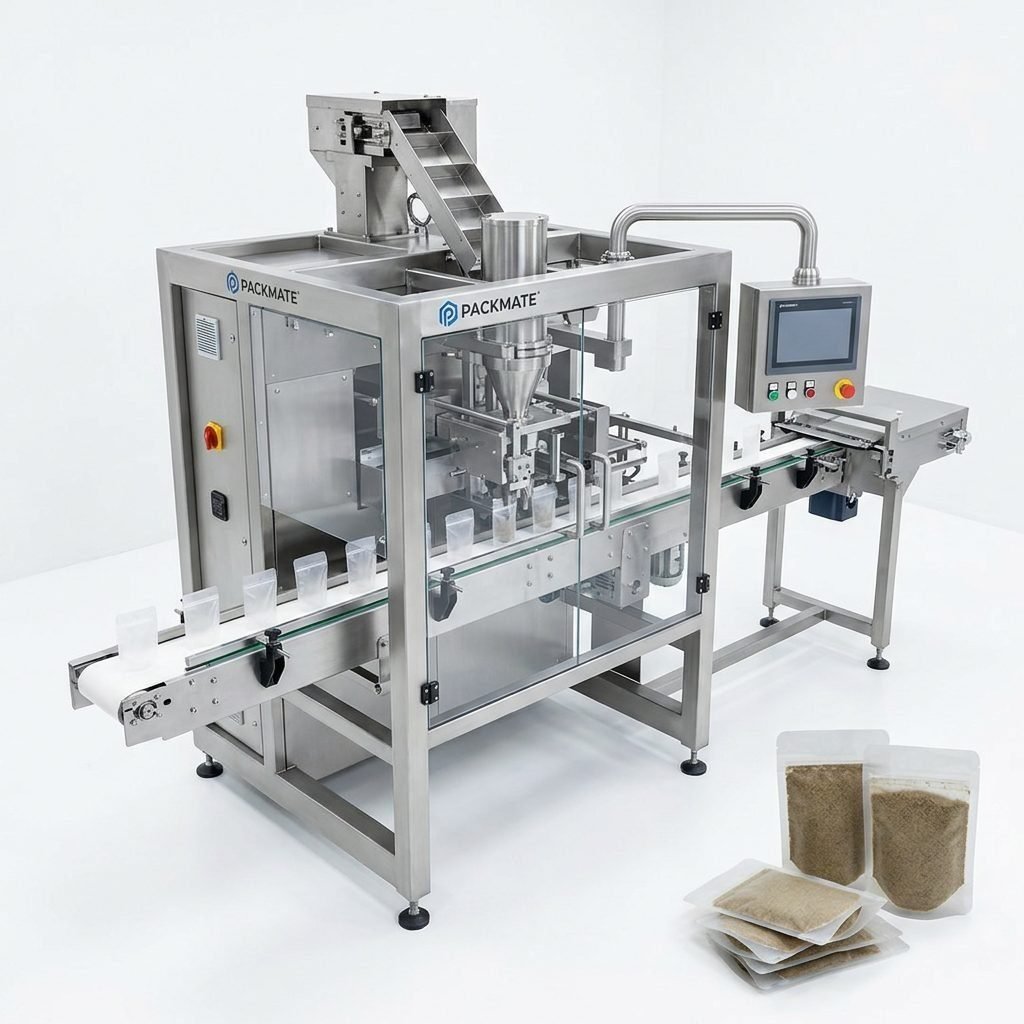
🔧 Bag & pouch packaging machines: Use these for resealable outer packs, pillow pouches, or retail-ready packaging that require secondary packaging automation. See options at Bag & Pouch Packaging Machines.
Core Technical Specifications to Prioritize
When comparing machines from different suppliers, pay attention to specifications that affect daily operations and product quality:
✅ Filling accuracy: Essential for consistent dose and regulatory compliance. Variance must be minimal to avoid waste and complaints.
✅ Sealing integrity: Reliable seals preserve shelf life and ensure tamper evidence.
✅ Speed vs. uptime: Rated speed is useful, but effective throughput depends on changeover time, maintenance intervals, and OEE.
✅ Material compatibility: Machines must handle your blend (powder, fiber, or granule) without dusting or cross-contamination.
✅ Integration capability: Ability to connect with upstream dosing/weighing and downstream case packing lines.
Why multi-lane systems are attractive
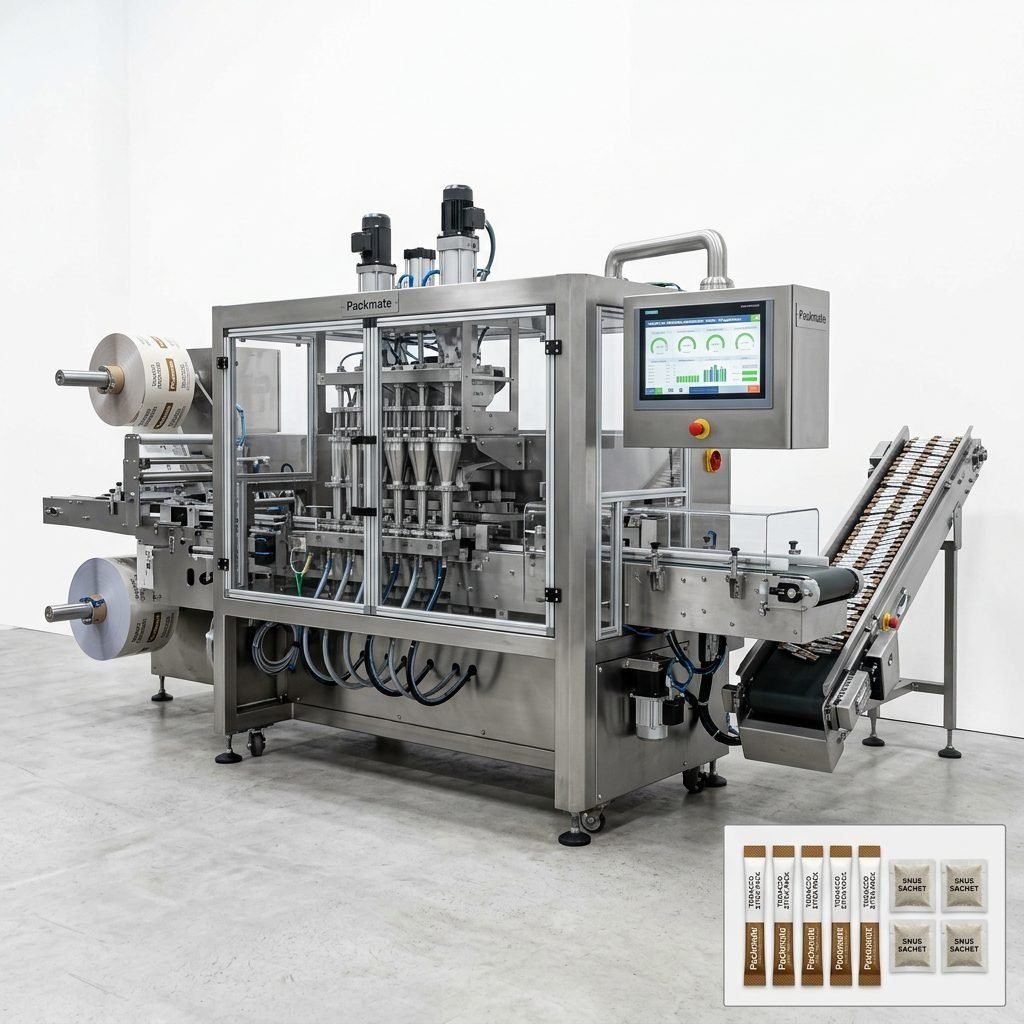
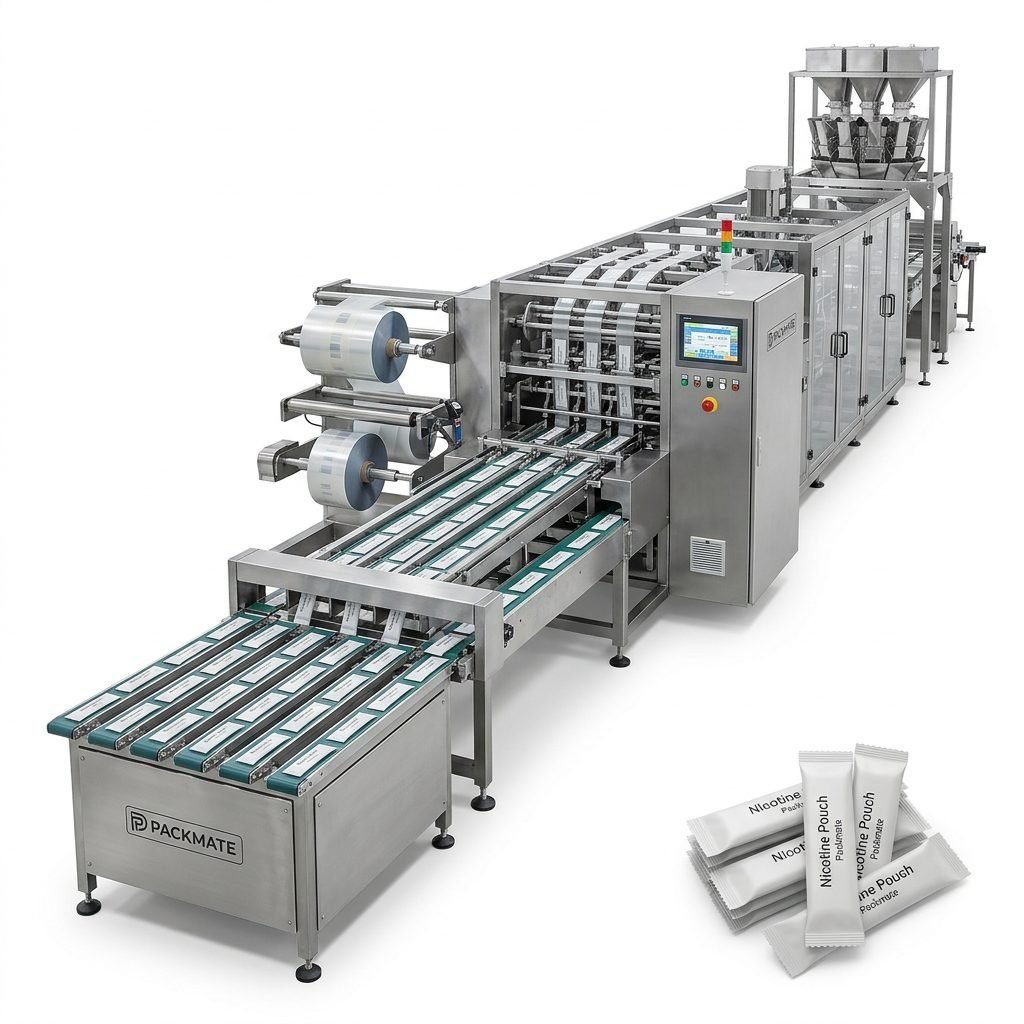
Multi-lane machines multiply output while keeping a compact footprint and consistent pouch quality. They are ideal when demand grows quickly or when you serve multiple SKUs with similar formats. However, they require precise synchronization and slightly higher initial investment.
Automation, Turnkey Lines and Auxiliary Equipment
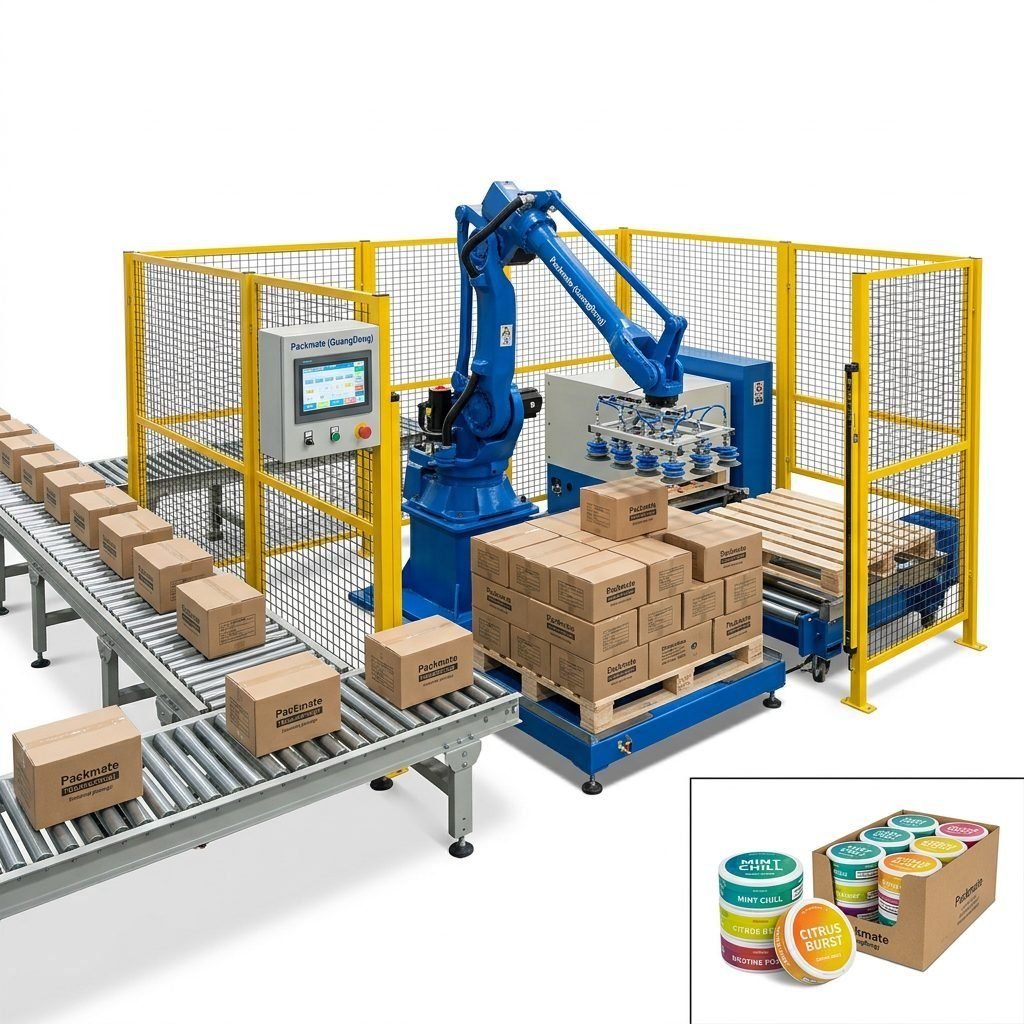
Fully automated lines reduce labor costs, increase throughput, and help maintain hygienic standards. Look for suppliers that can supply integrated solutions — weighing, dosing, pouch making, sealing, date coding, case packing, and palletizing — or easily integrate with your chosen subsystems.
For higher-level line components and upstream / downstream equipment, review modular systems like Weighing & Packaging Systems and Filling & Packaging Lines to ensure end-to-end compatibility.
Quality, Certification and After-Sales Support
In Europe, certifications such as CE and compliance with ISO standards are non-negotiable. Choose suppliers with robust quality control systems and transparent documentation. Reliable after-sales support, spare parts availability, and remote diagnostics reduce downtime and protect your investment.
🔎 Key proof points to request: CE/ISO certificates, FAT (Factory Acceptance Test) reports, case studies of similar European installations, spare parts lead times, and field service agreements.
Supplier credibility and track record
Suppliers with long-standing engineering experience and a complete manufacturing footprint provide better long-term support. For instance, Packmate Snus Machine brings over three decades of engineering experience, 50+ machine models, and a 20,000㎡ factory with advanced CNC and precision assembly systems — a strong indicator of manufacturing depth and spare-parts capability. Learn more About Packmate.
Commercial Considerations: Cost, ROI and Scalability
Price is only one component of total cost of ownership. Consider installation, training, spare parts, energy consumption, and expected lifetime. A machine with a slightly higher capital cost but lower maintenance needs and better yield often produces a superior ROI.
Total cost factors to evaluate
– Initial capital expenditure and financing terms.
– Energy efficiency and consumables usage.
– Maintenance intervals and ease of access to wear parts.
– Spare parts pricing and local support presence.
– Changeover time and flexibility for SKU expansion.
Installation, Validation and Operator Training
Installation in a European facility often includes rigorous installation qualification (IQ), operational qualification (OQ) and sometimes performance qualification (PQ). Confirm the supplier offers commissioning, on-site training in English (or local language where required), and full documentation. Proper training reduces operator errors and improves first-run yields.
Practical Checklist: How to Evaluate Machines and Suppliers
Use this quick checklist during supplier meetings and factory acceptance tests:
🔧 Machine demo: Witness machine running your product or close match.
✅ Traceability: Check batch coding and data capture options.
⚙️ Spares: Request a recommended spares list and lead times.
👥 Service: Confirm remote support SLA and on-site response times for Europe.
📁 Documentation: Manuals, electrical drawings, and validation protocols in your required language.
Seeing Machines Live: Exhibitions and Case Studies
European trade shows and supplier case pages are great for vetting real-world performance. Review case studies that reflect similar product formats and line speeds. Packmate showcases global cases and exhibition appearances that demonstrate machine reliability in multiple markets — see their case gallery at Case and exhibition schedule at Our Exhibition.
Local Considerations: Nordic Traditions and Southern European Markets
Northern Europe (Sweden, Norway, Finland) has a long tradition of portioned snus and strong consumer loyalty to established formats. Machines deployed here must deliver excellent portion consistency and traditional pouch aesthetics. In contrast, Southern and Western Europe may demand creative outer packaging and smaller retail pack sizes. Consider flexible equipment that handles multiple outer pack formats and labeling variations.
Cultural tips
• In Nordic countries, emphasize portion stability and discreet packaging.
• In markets with multilingual populations, plan for multi-language printing zones and variable data on packs.
• Sustainability concerns are growing: consider recyclable materials and machines that minimize film waste.
Why Choose an Experienced Manufacturer
Manufacturers with deep industry experience and a full manufacturing footprint are better positioned to provide durable equipment, rapid spare parts supply, and tailored solutions. Packmate Snus Machine exemplifies such a partner with more than 30 years of engineering experience, 50+ machine models, advanced CNC machining capabilities, and turnkey packaging solutions tailored for nicotine pouches and related products.
📌 Packmate strengths at a glance: 30+ years industry experience, 20,000㎡ factory, CE & ISO compliance, global turnkey solutions and strong field support.
Making the Final Decision: Practical Steps
1) Define product formats and target throughput.
2) Shortlist suppliers able to demonstrate similar European installations.
3) Request FAT, spare parts list, and a complete quote including commissioning and training.
4) Evaluate total cost of ownership over 5–7 years, not just initial price.
5) Visit a live demo or exhibition and meet the service team; ask for local references.
Where to Get More Information and Next Steps
If you need tailored advice or want to see machine examples and technical datasheets, view supplier catalogs and contact the manufacturer directly. For detailed product lines and support services, you may review Packmate’s full product portfolio and contact channels via their site.
Visit Contact Us to request a specification sheet or schedule a demonstration.
Frequently Asked Questions
Q: How important is multi-lane capability for small-dose nicotine pouches?
A: Multi-lane systems are highly beneficial when you need to scale output quickly while keeping a compact footprint. They multiply output with consistent pouch quality but require careful synchronization and maintenance.
Q: What certifications should I insist on for equipment used in Europe?
A: At minimum, ensure CE compliance and request ISO-related quality documentation. Ask for FAT reports, inspection records, and documentation to support installation, validation, and ongoing audits.
Q: How do I balance speed and accuracy when choosing a machine?
A: Evaluate effective throughput (actual output under real conditions) rather than maximum theoretical speed. Prioritize filling accuracy and reduced changeover time; a slightly slower machine with higher uptime often delivers better real-world productivity.
Q: Are turnkey solutions recommended?
A: Turnkey lines simplify integration, reduce commissioning time, and provide a single point of responsibility for performance. They are usually recommended for new facilities or rapid expansion.
Q: Where can I see real-world examples of nicotine packaging lines?
A: Check supplier case studies and attend industry exhibitions. For example, Packmate publishes case references and attends global exhibitions — visit their Case page to review installations.