Choosing the right snus packaging machinery manufacturer for your business in Grenada is a decision that affects product quality, regulatory compliance, profitability, and long-term growth. This guide lays out practical, market-sensitive steps to evaluate manufacturers, the technical features that matter for nicotine pouch and snus lines, and how to factor in Grenada’s climate, logistics, and customs so your investment delivers reliable performance and regulatory peace of mind.
🔎 Know Your Grenada Market: Demand, Culture & Regulations
Grenada is a small, English-speaking Caribbean nation with a tourism-driven economy and close community ties. When evaluating packaging machinery, consider that local demand for nicotine pouches and snus may be modest compared with larger markets, but opportunities exist for duty-free shops, regional distribution across CARICOM, and tourist-oriented retail. Importantly, Grenada’s regulatory environment tends to follow regional and international public health guidelines — ensure your packaging and labeling meet local requirements and any CARICOM or OECS rules that apply to tobacco/nicotine products.
⚠️ Climate & corrosion: Grenada’s warm, humid, and salty air (coastal exposure) means corrosion-resistant materials and IP-rated electronics are essential. Choose machines built from stainless steel (preferably 316 for coastal factories) and with protective enclosures for sensitive components.
⚓ Logistics & Power Considerations
Shipping to St. George’s and customs handling are practical concerns—machines may arrive by sea and require local agents for clearance. Also verify machine electrical specifications: Grenada uses 230V, 50Hz supply, so confirm whether your supplier can deliver compatible equipment or provide transformers and documentation for local electricians.
🧭 Key Technical Features to Evaluate
When comparing manufacturers, focus on features that affect reliability, yield, and product presentation. These are the functional priorities for snus/nicotine pouch packaging lines:
- Speed and throughput (packs/min) and whether multi-lane options are available for small-dose pouch production.
- Filling accuracy and dosing technology — essential to maintain consistent nicotine content and avoid material waste.
- Material compatibility — ability to handle powders, granules, and moisture-sensitive formulations.
- Changeover time and flexibility — look for modular designs and quick tool-less changeovers when producing multiple SKUs.
- Automation & integration — PLC/servo control, HMI with recipe management, and upstream/downstream compatibility for a turnkey line.
- Sanitary and corrosion-resistant construction — stainless steel surfaces, sealed bearings, and IP-rated electronics.
- Safety & compliance features — guards, interlocks, and adherence to international standards such as CE and ISO.
✅ Tip: Request sample pouches from the manufacturer after they run your formula. Producing real samples is the most reliable test of dosing precision, seal quality, and aesthetic finish.
📦 Machine Types & When to Choose Them
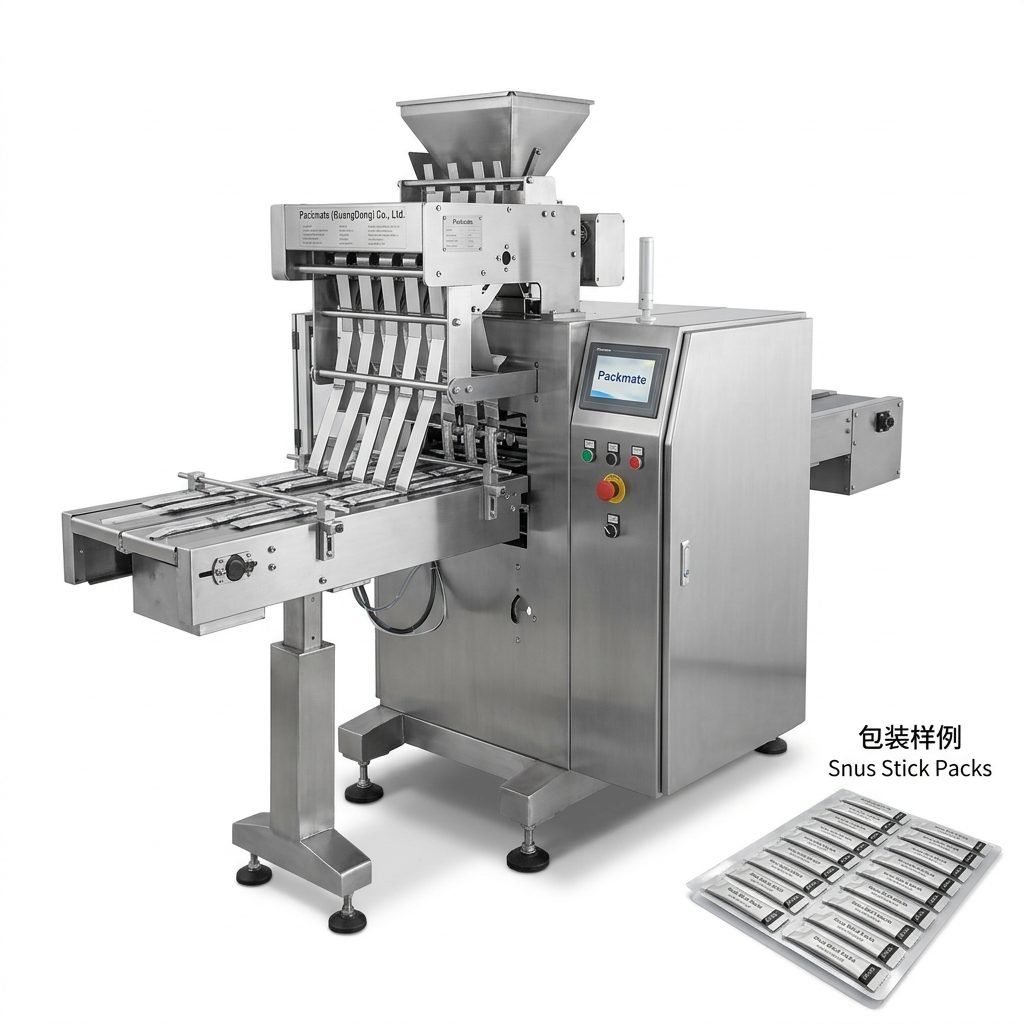
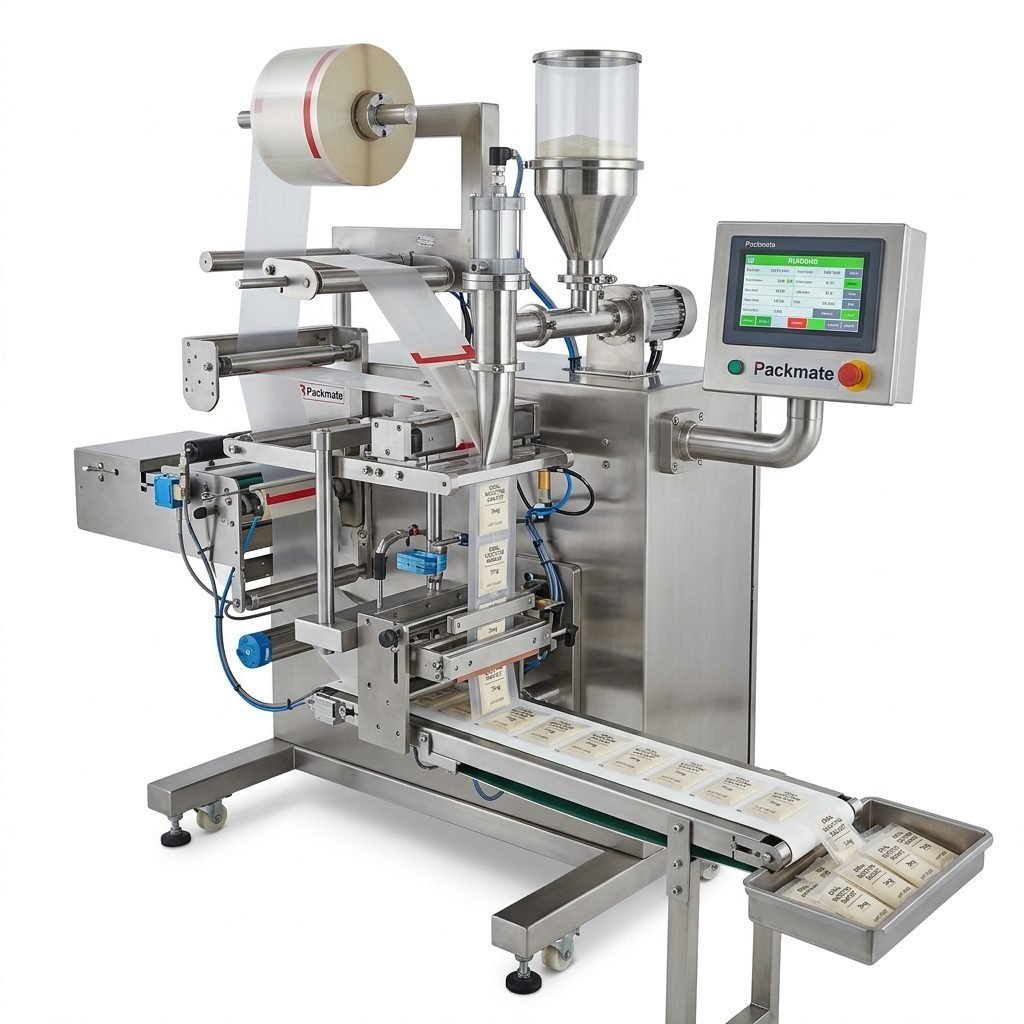
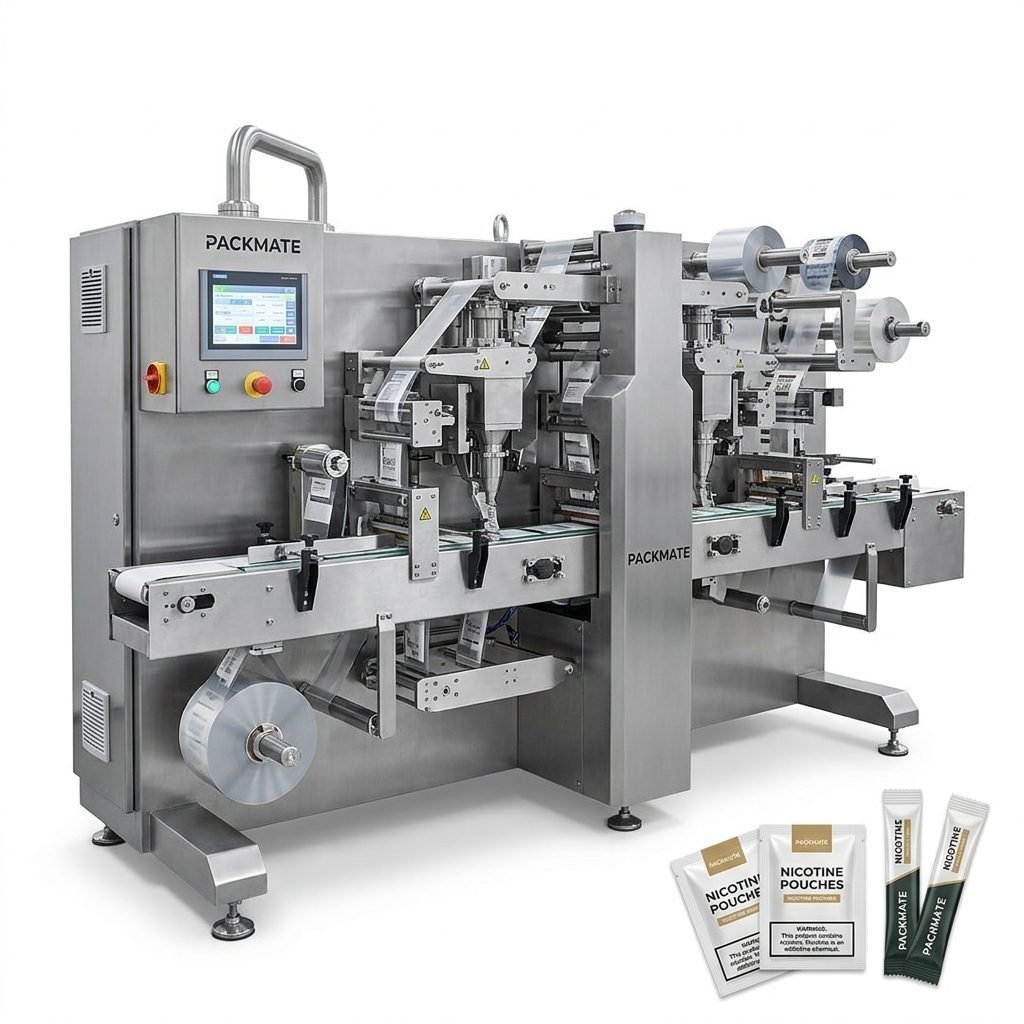
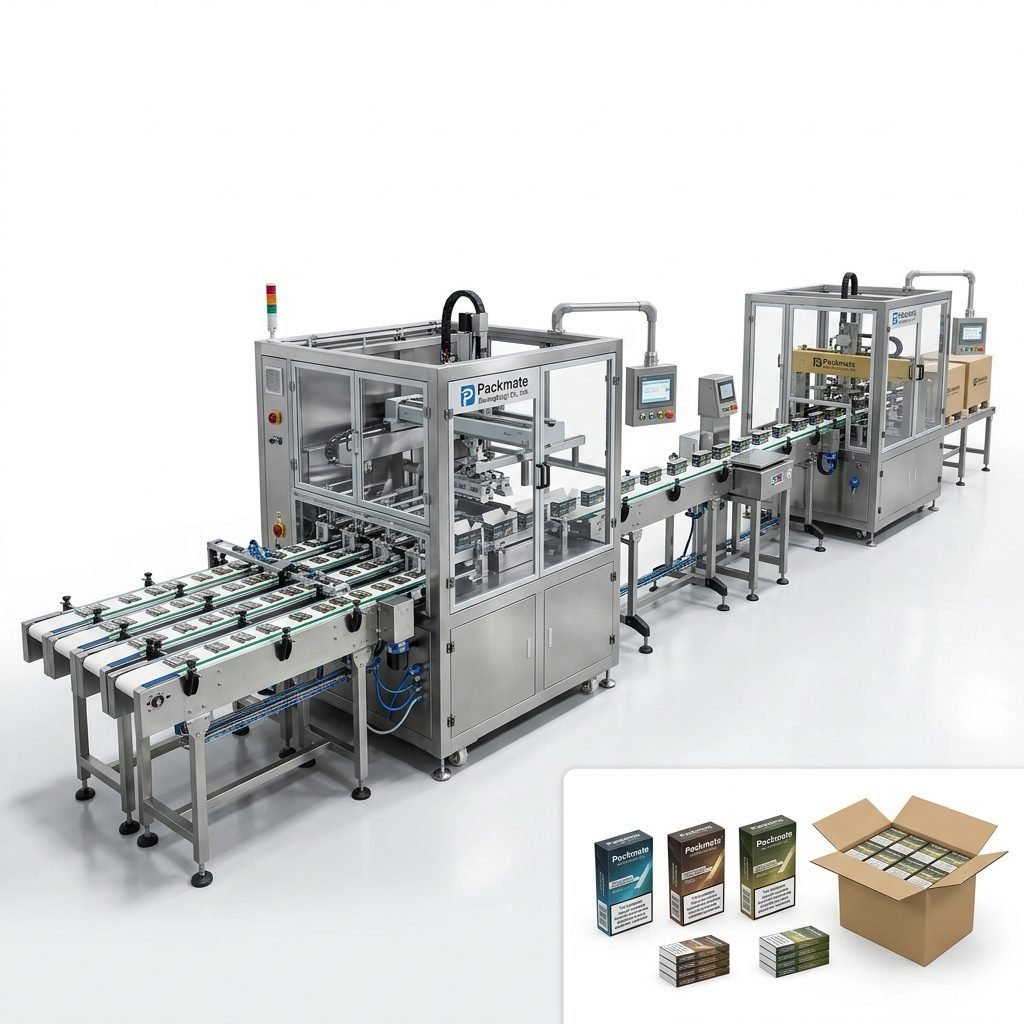
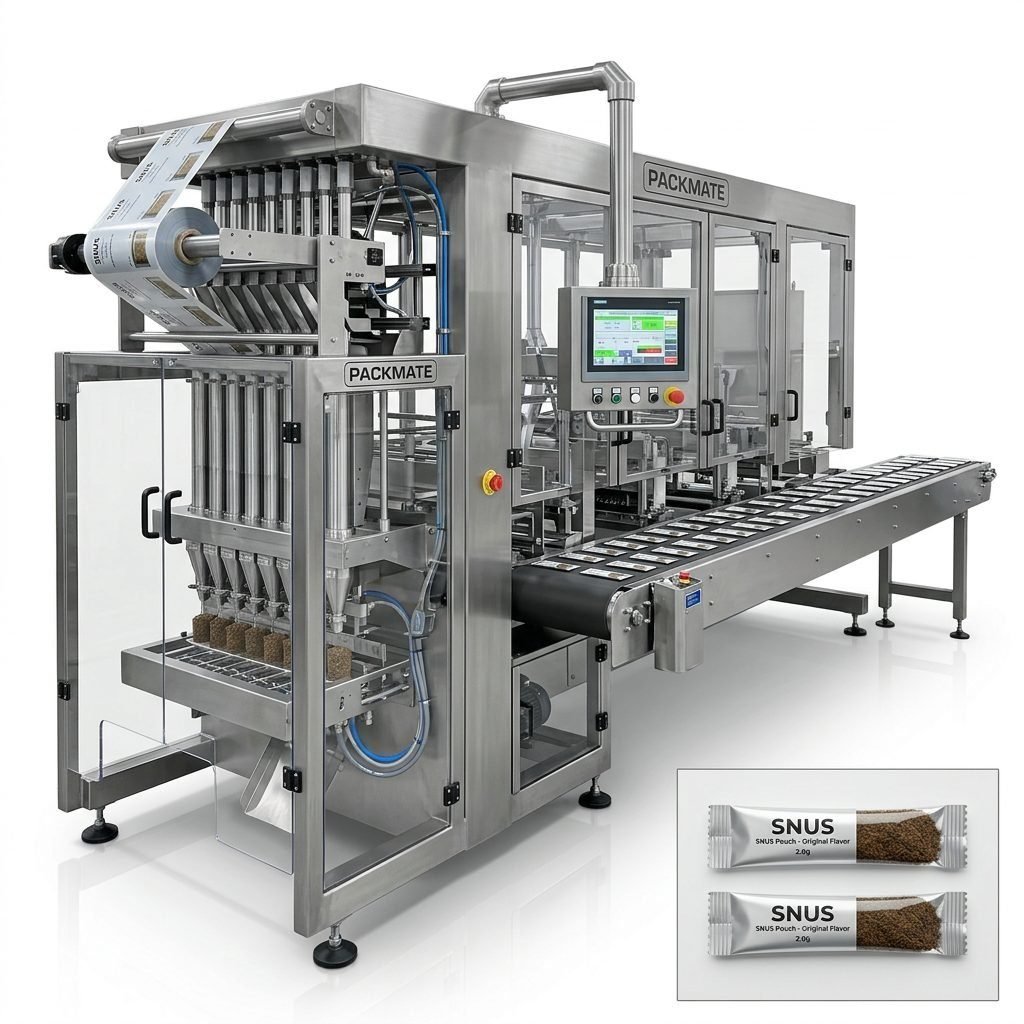
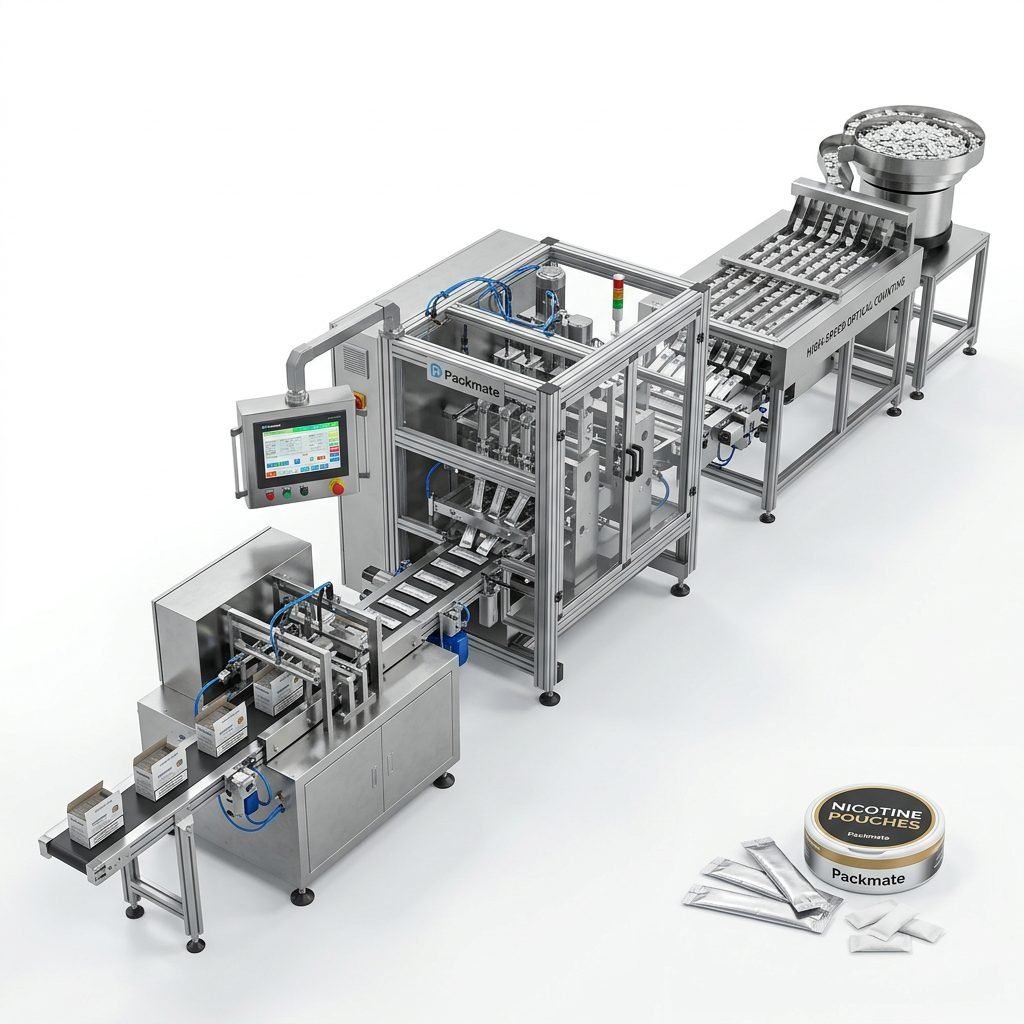
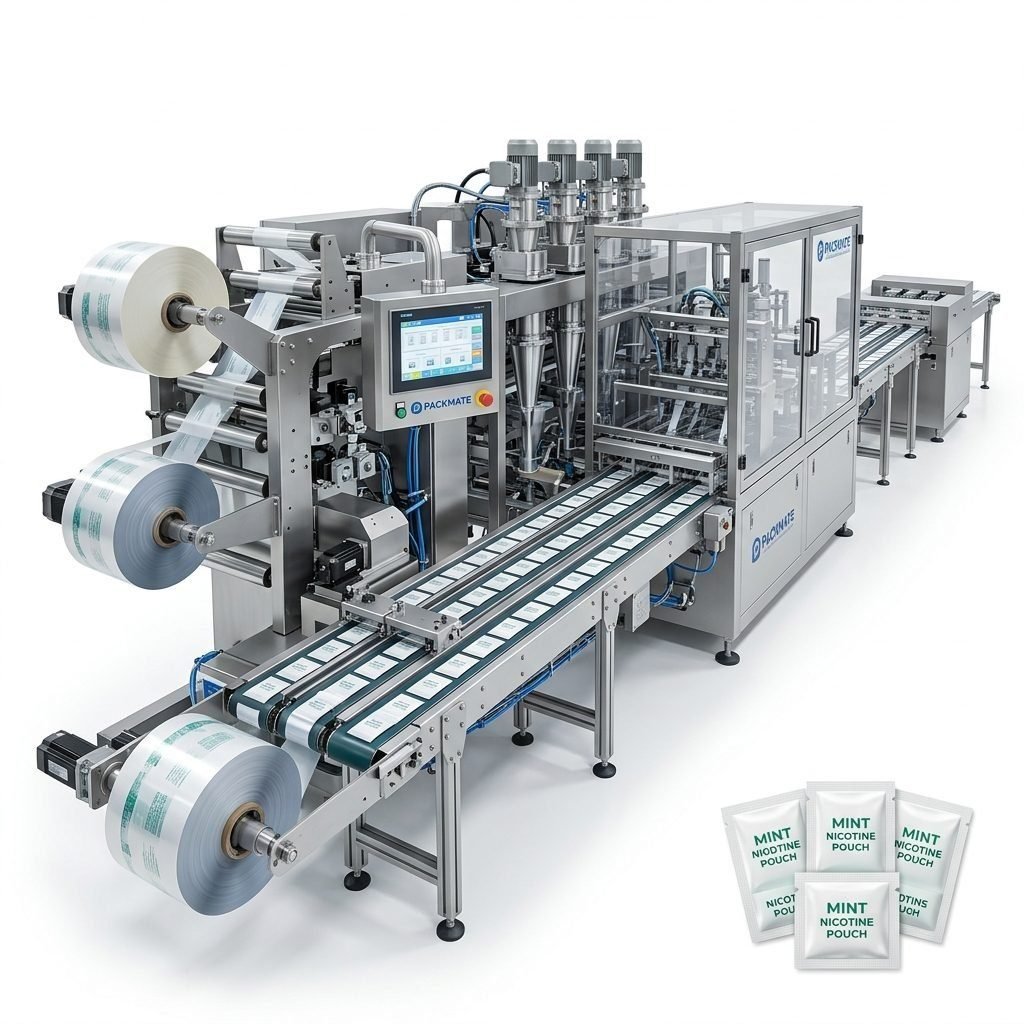
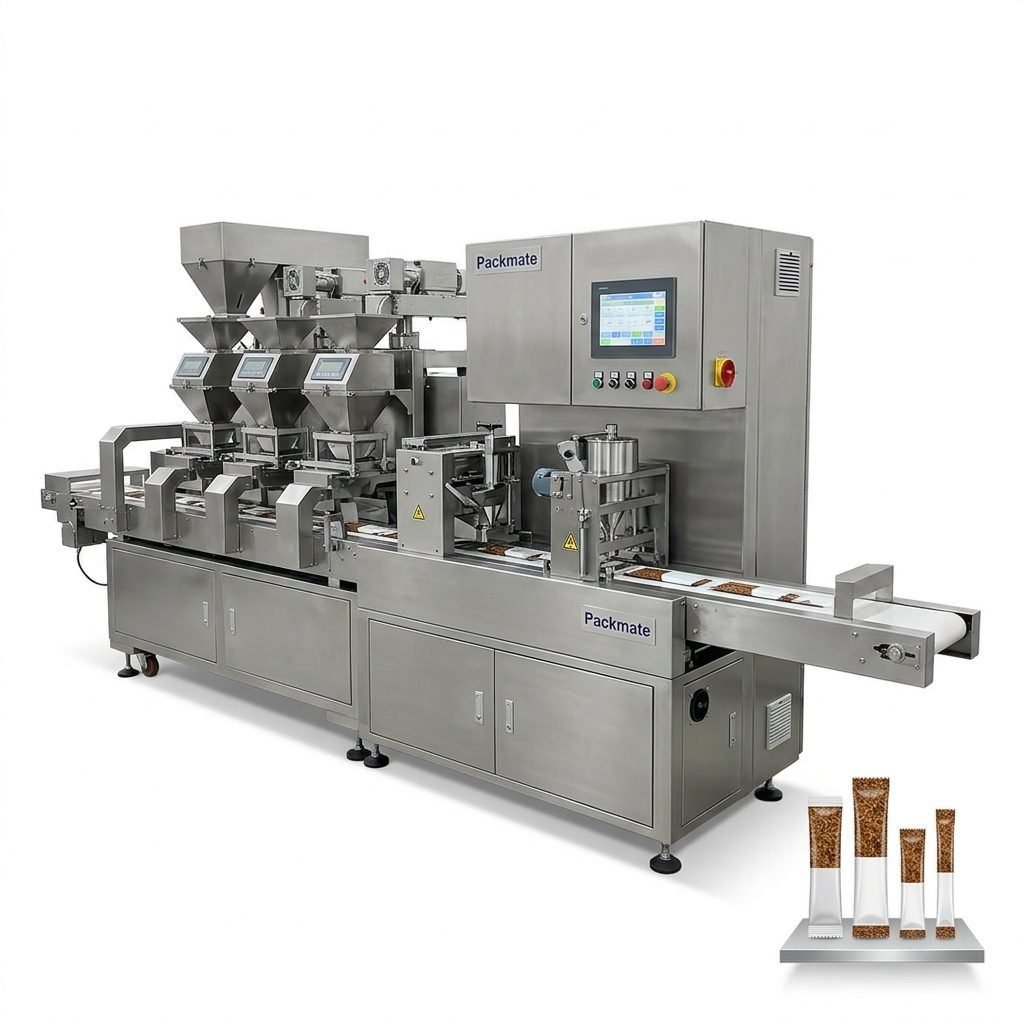
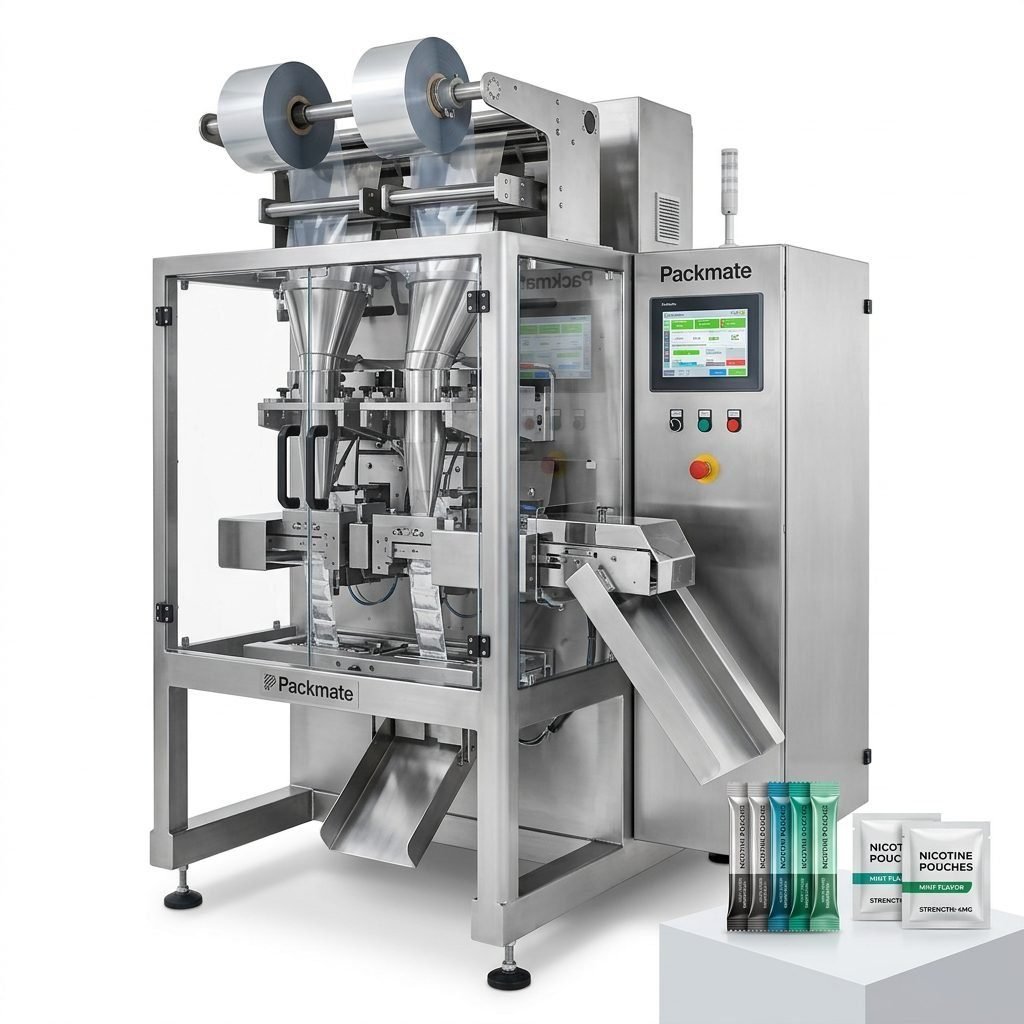
Packmate-style portfolios typically include stick pack machines, sachet machines, and multi-lane pouch systems. For snus and nicotine pouches:
- Multi-lane systems are ideal for small-dose pouches where high throughput and consistent dosing are required.
- Sachet & stick pack machines work well for single-serve formats or samples for tourist markets.
🏭 Manufacturer Capabilities & Factory Strength
Choose a manufacturer with demonstrated engineering depth and manufacturing capacity. Key indicators include years of R&D, a sizeable factory footprint, advanced CNC capabilities, and a large product range that signals the ability to customize and support your line long-term. A supplier with over 30 years of experience, 20,000㎡ facility, and 50+ machine models gives you options for scale and integrations.
When you evaluate suppliers, ask about:
- Factory tour availability or virtual factory walkthroughs.
- Production capacity and lead times for custom features.
- Quality control: inspection reports, FAT (Factory Acceptance Test) procedures, and testing protocols.
- Certifications: CE, ISO, and any other certificates that ease import and compliance.
If you want to see real-world projects, review manufacturer case studies and exhibition participation. Useful links for technical references and example solutions are often published by serious suppliers — for instance, review product categories like Snus & Nicotine Packaging Machines and success Case pages.
🔩 Service, Spare Parts & After-sales Support
Strong after-sales support is critical for remote markets such as Grenada. Confirm the supplier’s policies on spare parts delivery time, on-site commissioning, operator training, and remote troubleshooting. A manufacturer that offers dedicated commissioning teams and local partner networks will reduce downtime and operational risk.
🔧 Must-have: Clear spare parts list, lead times to Grenada, and documented maintenance schedules. Ask for a spares kit to be shipped with the line.
💡 Customization, Scale & Turnkey Solutions
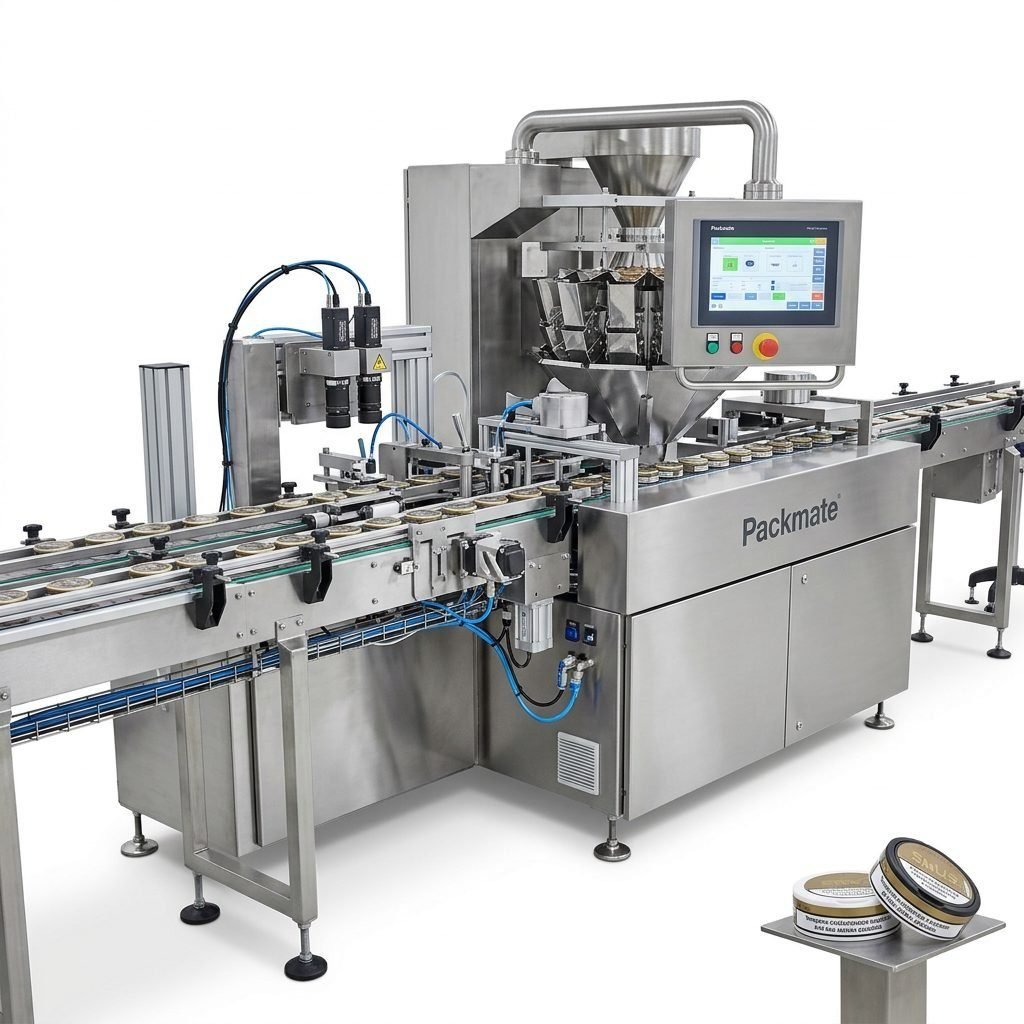
Your packaging needs will evolve. Select manufacturers that provide modular systems and scalable lines — for instance, the ability to add lanes, integrate upstream weighing systems, or connect cartoners and case packers. A turnkey approach that covers weighing, filling, pouch forming, sealing, secondary packaging, and checkweighing streamlines installation and reduces integration risk. See examples of integrated systems at the Weighing & Packaging Systems and Filling & Packaging Lines pages.
🎯 Scalability for Grenada-based Businesses
Given Grenada’s smaller domestic market, prioritize machines that support flexible production runs and easy SKU changeovers. Consider a dual strategy: start with a compact multi-lane system for domestic sales and tourist distribution, then scale to larger automated lines if regional export grows.
💲 Cost, ROI & Total Cost of Ownership
Purchase price is only part of the equation. For a realistic ROI calculation include:
- Shipping, customs duties, and local clearance fees when importing to Grenada.
- Installation, commissioning, and operator training costs.
- Spare parts inventory and typical maintenance intervals.
- Energy consumption (verify machine power ratings and local rates).
- Packaging materials, labels, and compliance-driven testing costs.
📐 Evaluation checklist: Ask the supplier for a sample ROI model based on your expected daily throughput and product formats. Compare worst-case maintenance scenarios, not just ideal conditions.
📦 Packaging Materials, Design & Regulatory Labels
Selecting the right film or pouch material is as important as the machine. For nicotine pouches and snus, barrier properties, moisture control, and seal integrity are critical. Work with your machinery supplier to validate compatibility with your chosen films and sealing temperatures. Additionally, ensure packaging artwork includes legally required health warnings, batch codes, and ingredient listings as required by Grenada or your target export markets.
If you need production partners or material vendors, review supplier portfolios such as Bag & Pouch Packaging Machines and Sachet & Stick Pack Machines to understand machine-film compatibility.
🧾 Selection Process & Factory Acceptance
Follow a structured selection process:
- Define required SKUs, formats, and production targets.
- Issue an RFP that includes technical specs, electrical requirements (230V 50Hz), and environmental conditions (humidity/corrosion exposure).
- Request references and case studies; if possible, visit a customer site or see demo runs at exhibitions.
- Perform a Factory Acceptance Test (FAT) where the supplier runs your product; insist on recorded metrics for accuracy, yield, and downtime.
- Negotiate warranty, spare parts lead time, and training packages; confirm on-site commissioning support for Grenada or remote assistance agreements.
📣 Documentation & Compliance
Ensure the supplier provides full technical documentation, electrical diagrams, operation and maintenance manuals, and CE/ISO certificates. This paperwork expedites customs clearance and ensures local technicians can maintain the equipment properly.
🤝 Final Considerations: Local Partnerships & Long-term Support
Because Grenada is remote from major manufacturing centers, prioritize suppliers who provide robust after-sales networks, reasonable spare parts shipping terms, and training for local engineers. If the manufacturer has global exhibition presence or partner networks, that’s a positive sign—inspect their Exhibition and About pages for proof of global activity and customer engagement.
🌴 Local insight: Leverage local freight forwarders experienced with St. George’s port and confirm any import documentation needed for tobacco or nicotine-related equipment to avoid delays.
🔚 Conclusion
Selecting the best snus packaging machinery manufacturer for your Grenada business blends technical assessment with practical logistics and regulatory planning. Prioritize corrosion-resistant construction, modular and scalable designs, proven dosing accuracy, strong after-sales support, and clear documentation. Use factory visits or FATs to validate performance and insist on spares and commissioning support tailored for Grenada’s climate and shipping environment. When in doubt, choose a supplier with documented global projects, certifications, and a transparent service policy to protect your investment.
Frequently Asked Questions
Q1: What machine materials are best for Grenada’s climate?
A1: Machines with stainless steel (304 minimum, 316 recommended for coastal sites), sealed electronics, and IP-rated enclosures help resist humidity and salt air corrosion.
Q2: How do I verify a manufacturer’s claims about dosing accuracy?
A2: Require an on-site or virtual Factory Acceptance Test (FAT) where your actual product and packaging material are run; request recorded metrics for fill weight tolerance and reject rates.
Q3: Are there local service partners in Grenada for snus machinery?
A3: Local certified partners may be limited; prioritize vendors who provide robust remote support, training for local staff, and fast spare parts shipment. Confirm freight forwarders familiar with St. George’s port processes.
Q4: What certification documents should I ask for before purchase?
A4: Ask for CE declarations, ISO quality certificates, calibration reports for dosing systems, electrical schematics compatible with 230V/50Hz, and documentation used during FAT.
Q5: Which product pages help evaluate machine options?
A5: Review specialized product categories for technical details and comparatives: Snus & Nicotine Packaging Machines, Sachet & Stick Pack Machines, and Weighing & Packaging Systems.
For tailored advice, factory references, or to request sample runs and a formal quotation, contact the manufacturer directly via their Contact Us page.