Entering the nicotine pouch and snus market in India requires careful planning around production equipment. Choosing the right packaging machinery isn’t just a technical decision — it’s a strategic business move that affects product quality, regulatory compliance, cost structure, and brand perception. This guide walks you through practical steps to evaluate, select, and implement nicotine packaging machinery in India, drawing on industry experience and supplier capabilities.
Understand the Indian Market and Cultural Context
🔍 India is a diverse market with strong regional preferences for tobacco and oral products. While traditional smokeless tobacco remains widely consumed, nicotine pouches are emerging as an alternative product category. Manufacturers and brands targeting this market must respect local habits: smaller pack sizes often sell better in price-sensitive regions, and clear ingredient labeling in regional languages can boost consumer trust.
🧭 Tip: account for festival seasons and regional distribution cycles. Demand can spike around festivals, requiring flexible production runs and reliable packaging speeds to meet deadlines.
Regulatory and Compliance Considerations
⚖️ Compliance is essential. India’s regulatory landscape for nicotine products can be complex and evolving. You must ensure that machinery and production processes support accurate labeling, tamper-evident seals, batch tracking, and hygiene standards. Equipment certified to international standards (such as CE and ISO) often simplifies export opportunities and reassures domestic regulators.
📌 Must-have: machinery documentation for validation, traceability systems, and the ability to integrate serialization and labeling modules for legal compliance and market acceptance.
Key Machine Types and What They Deliver
Choosing the correct machine family affects your flexibility, output, and cost. Consider the following popular systems:
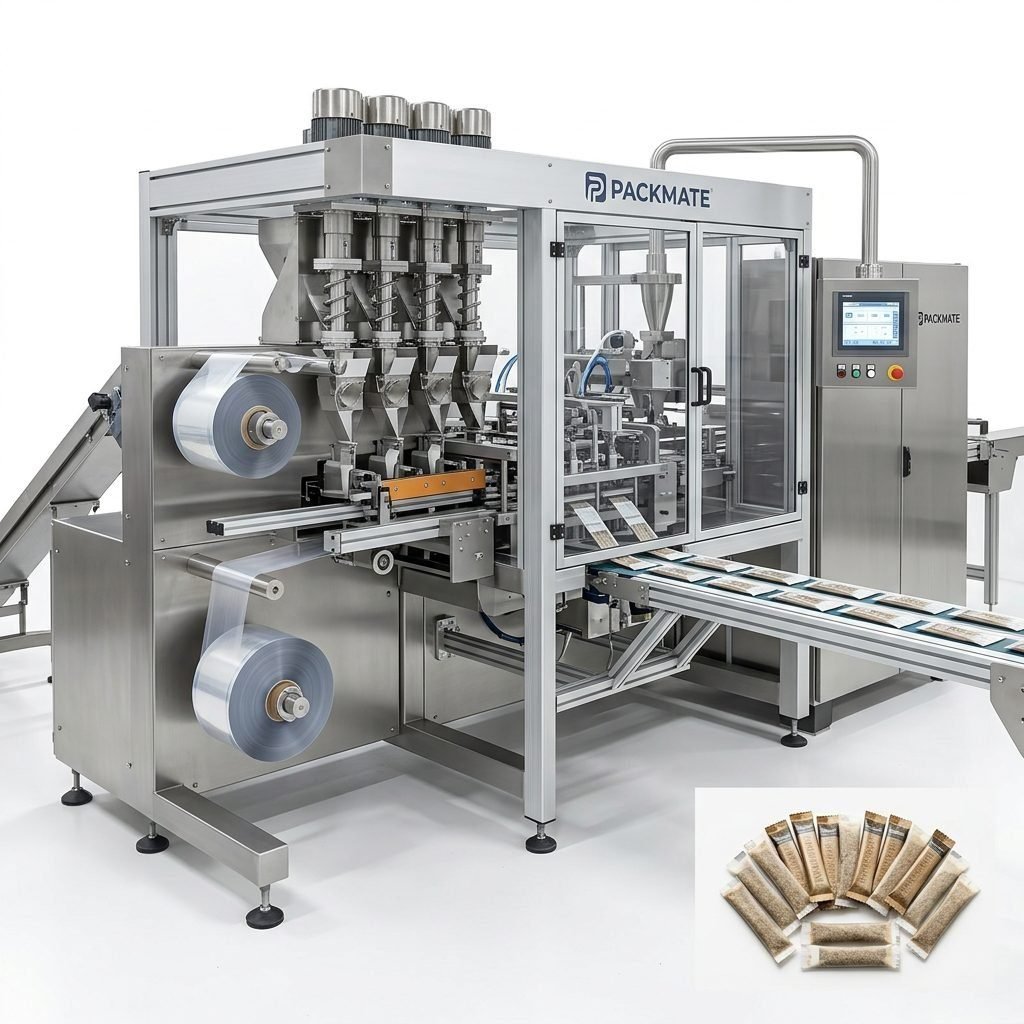
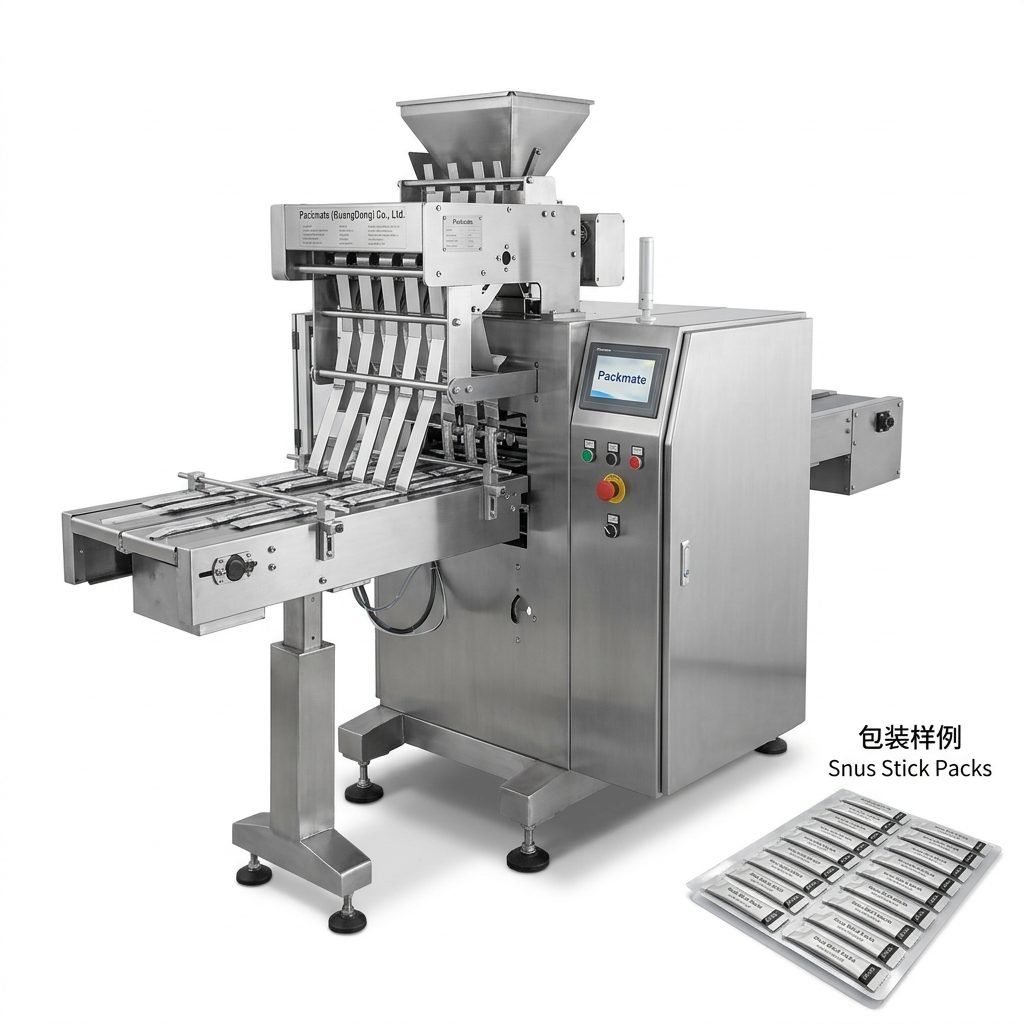
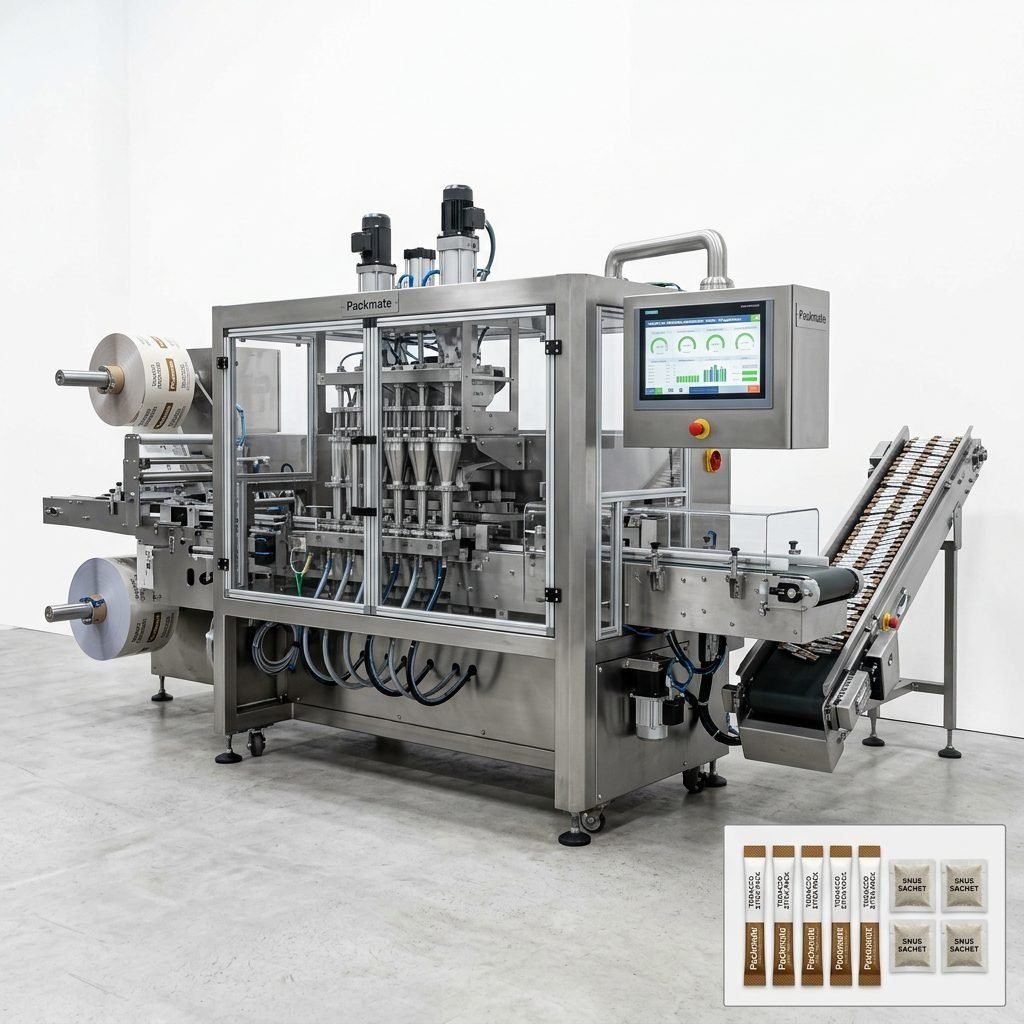
🔧 Stick pack machines — Ideal for single-dose nicotine sachets with high-speed output. These are common for compact, retail-friendly packaging.
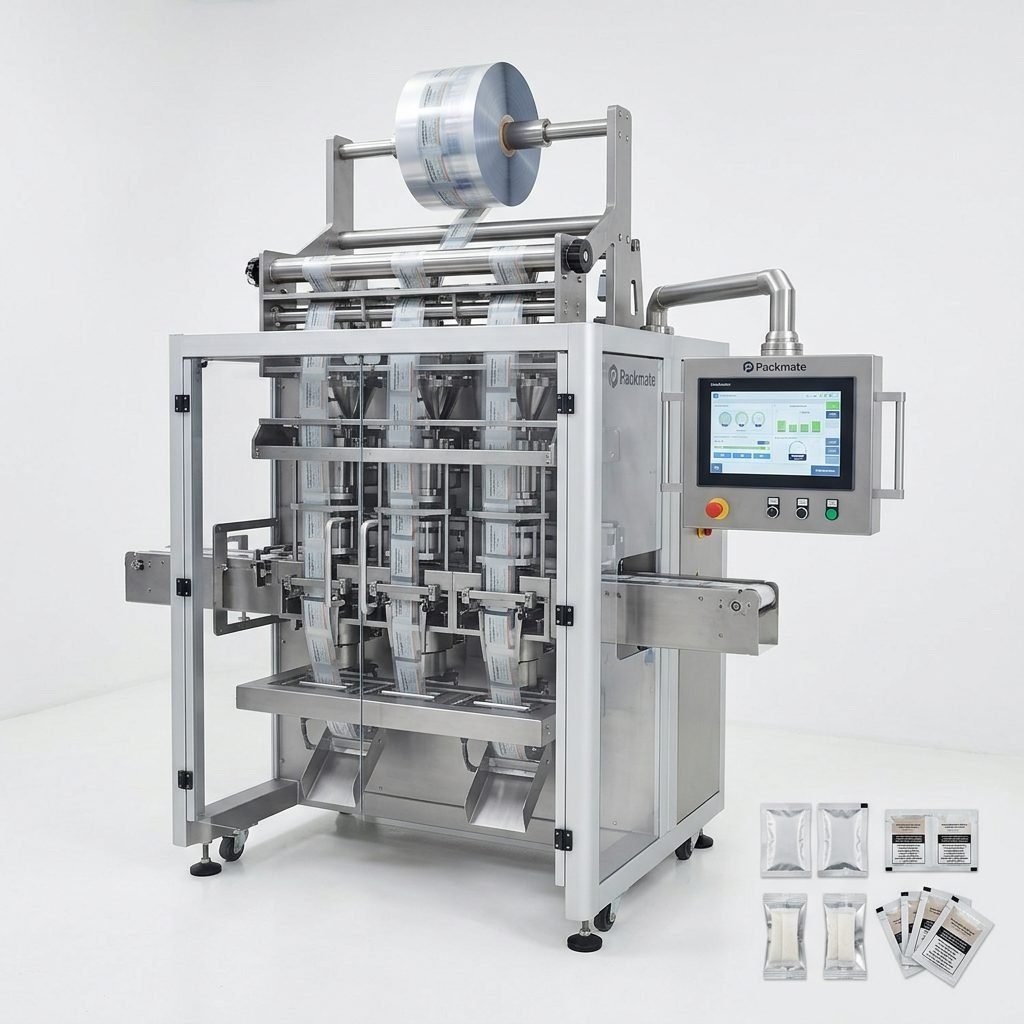
🔧 Sachet & multi-lane machines — Provide scalable throughput with options for multiple lanes, making them suitable for high-volume nicotine pouch production where small-dose consistency matters.
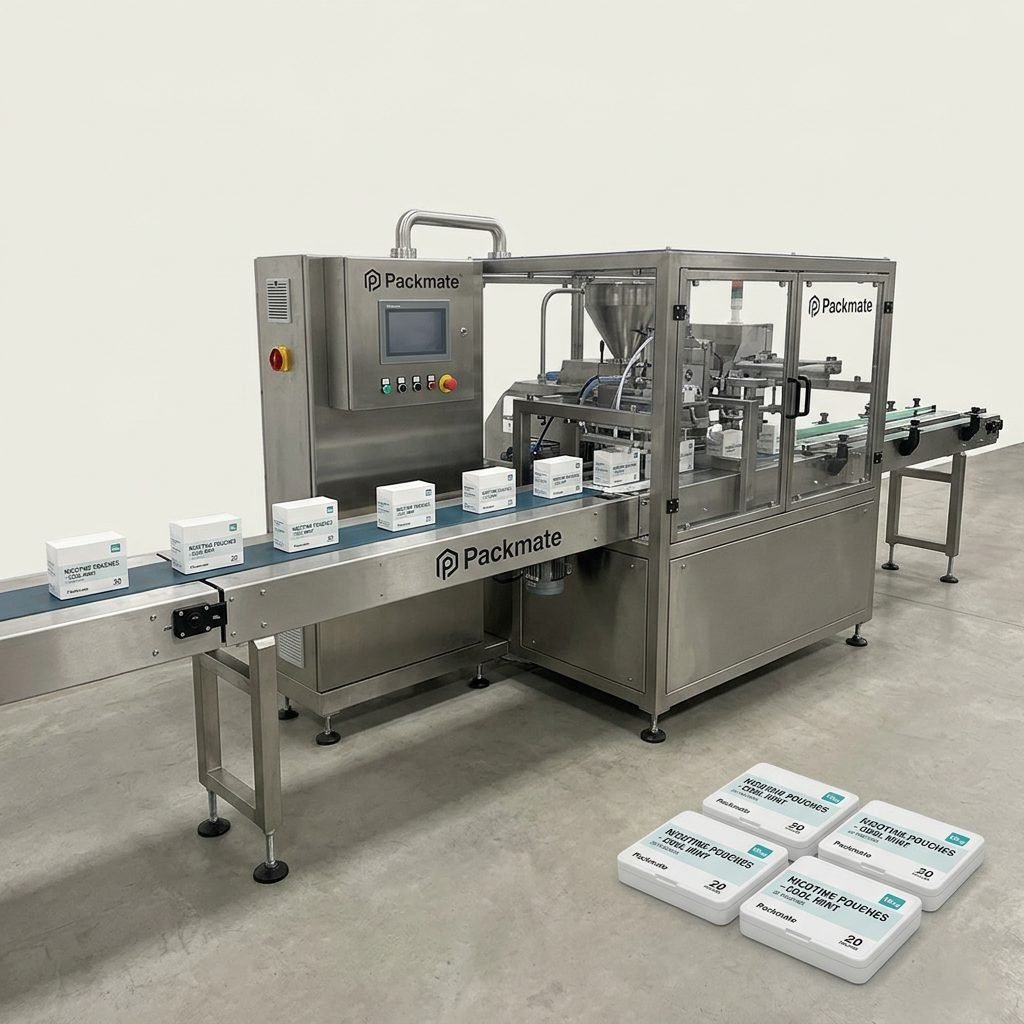
🔧 Bag & pouch machines — Best for outer packaging, resealable pouches, or multi-pack retail configurations. They support printing, windows, and zipper features for premium presentation.
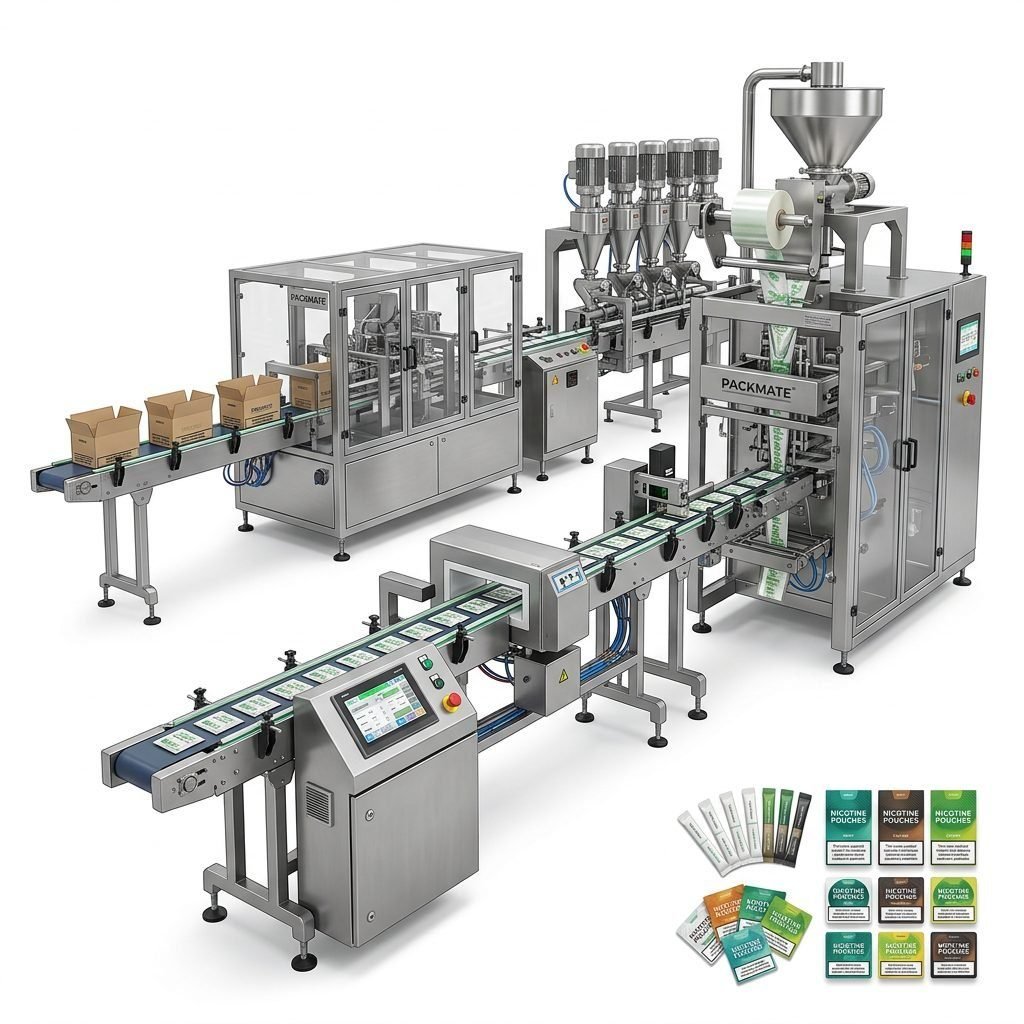
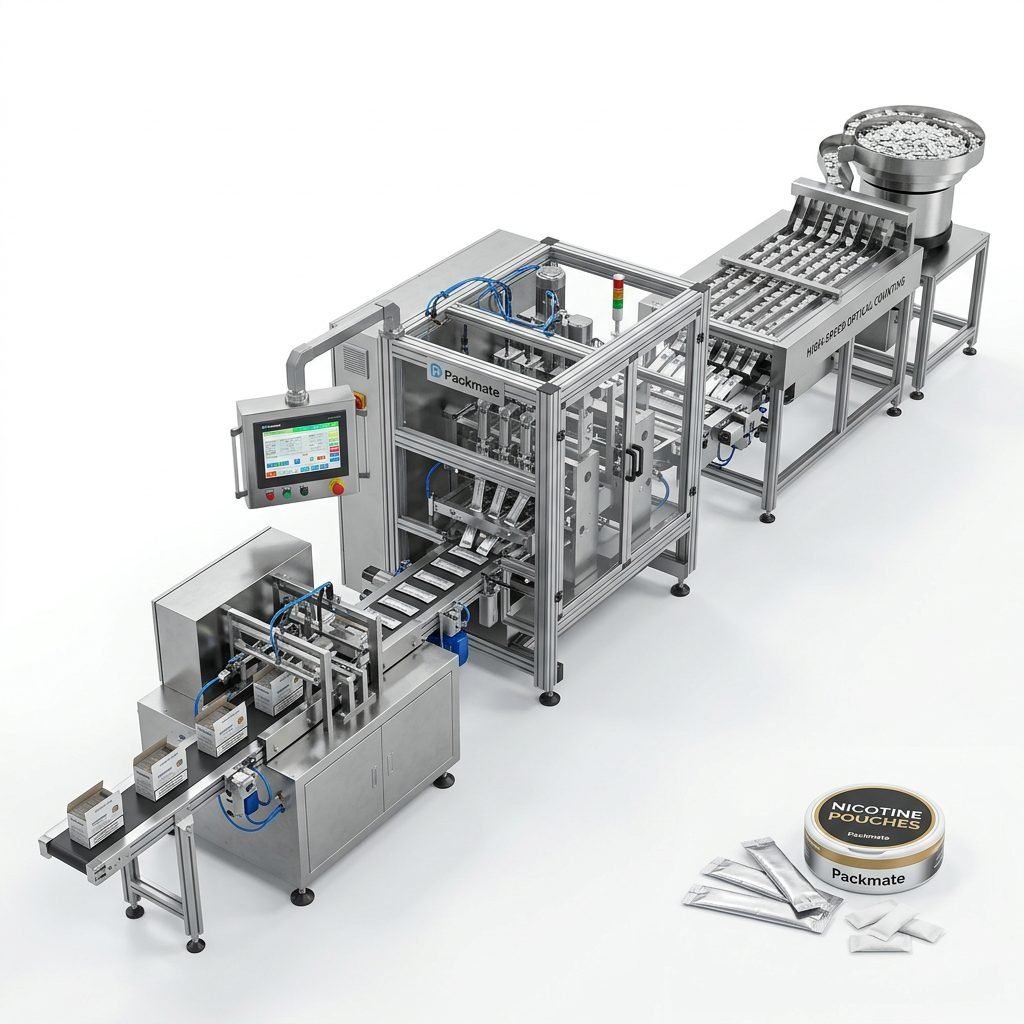
🔧 Complete filling & weighing lines — For powder or granular nicotine products, precise dosing is critical. Integrated weighing and filler modules reduce waste and ensure dose uniformity.
For specific product lines, explore supplier model pages such as
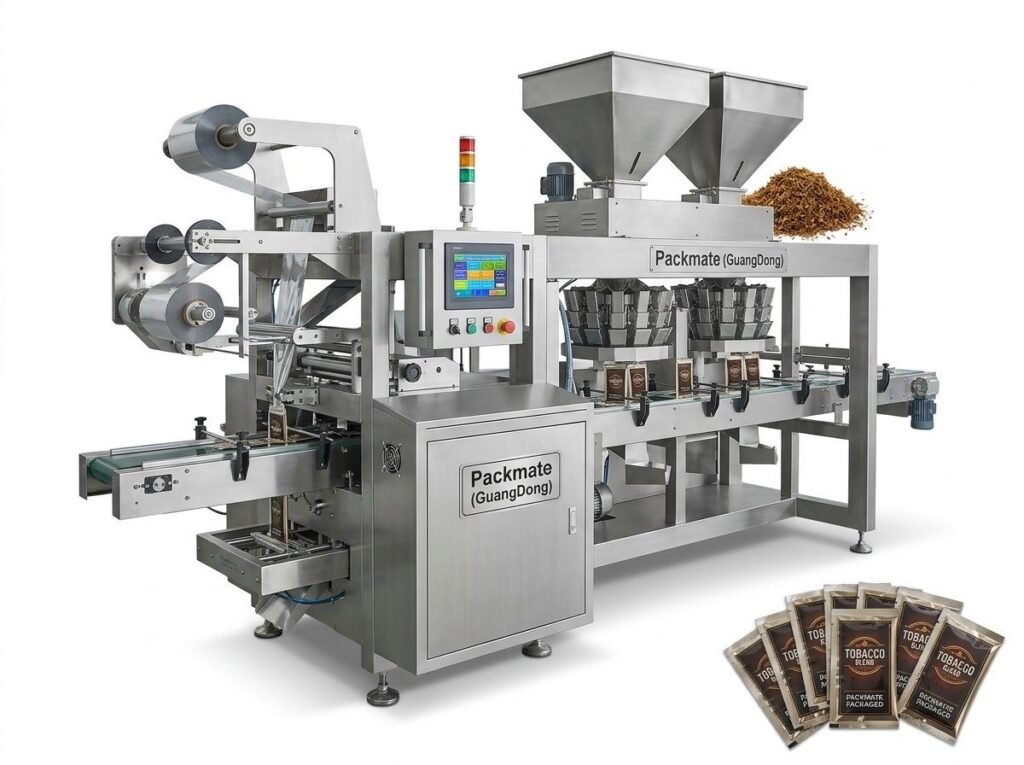
Snus & Nicotine Packaging Machines,
Sachet & Stick Pack Machines, and
Bag & Pouch Packaging Machines.
Single-lane vs Multi-lane: Throughput, Footprint, and Investment
📈 Multi-lane systems multiply output by running several production lanes in parallel. For example, a 4-lane snus pouch line can deliver near four times the capacity of a single-lane unit while saving floor space compared to multiple single-lane machines. However, complexity, maintenance needs, and initial investment rise with lane count.
⚠️ Decision driver: match lanes to projected demand. For emerging brands in India, starting with a flexible two-lane system often balances cost and scalability.
Technical Features to Prioritize
When assessing suppliers and models, prioritize machines that offer the following capabilities:
– Precise dosing and consistent pouch formation to ensure product uniformity and reduce waste. 🧪
– Quick changeover and easy format adjustment to support multiple pouch sizes and seasonal SKUs. 🔁
– Robust control systems (PLC + HMI) with recipe management so operators can reproduce runs reliably. 🎛️
– Hygienic design and easy-to-clean surfaces to meet food/pharma standards and reduce cross-contamination risk. 🧼
– Remote diagnostics and modular spare parts to reduce downtime in India’s geographically diverse market. 🌐
Energy, Utilities and Factory Considerations
🛠️ Indian factories vary widely in power stability and infrastructure. Choose machines tolerant to voltage fluctuations, or install stabilizers and UPS systems. Consider compressed air requirements, floor loading, and workshop layout for maintenance access. Evaluate local availability of electrical, mechanical, and pneumatic spare parts.
Supplier Evaluation: Beyond Price
Price is important, but long-term value comes from supplier reliability and support. Evaluate suppliers on:
📦 Delivery lead time and ability to meet installation schedules.
🔧 After-sales service, technician training, and preventive maintenance contracts.
📑 Certifications (CE, ISO) and production documentation for compliance.
🏭 Factory strength — look for manufacturer capacity, CNC capability, and assembly lines. Packmate Snus Machine’s profile demonstrates strong factory capability with a 20,000㎡ facility and advanced CNC centers.
✅ Checklist: Request references, machine videos, and case studies. See live demonstrations at exhibitions such as those listed on supplier event pages like
Our Exhibition.
Customization and Turnkey Solutions
Many Indian customers require customization for local labeling, multi-lingual printing, or bespoke packaging formats. A supplier offering turnkey lines — from filling to final packaging — reduces integration risks and ensures a single point of responsibility. Explore turnkey producers and their case histories (see
Case).
Cost, ROI and Financing
Calculate Total Cost of Ownership (TCO): purchase price, installation, training, spare parts, energy consumption, and expected yield losses. Higher-end machines often reduce downtime and waste, improving ROI over time.
💡 Financing options, leasing, or phased investments (start with a primary packing line and add automation later) help preserve working capital. Discuss supplier service contracts to lock predictable maintenance costs.
Installation, Training and Ramp-up
A planned installation and training schedule is critical. Suppliers that offer on-site commissioning, operator training, and remote support accelerate production start. For multi-shift operations, ensure multiple operators get certified training and a documented maintenance schedule.
🔑 Success factor: invest in operator training and spare parts kits to minimize initial learning curve losses.
Localization: Sourcing and Service in India
⚙️ Even when importing machines, plan for local service and parts supply. Work with suppliers that have regional partners or authorized service networks. Suppliers with global presence and export experience — and clear documentation like certificates (see
Certificate) — tend to provide reliable follow-up.
Packaging Material Compatibility
Material choices (film type, laminate, barrier properties) affect machine selection. Ensure your packaging material supplier and machine supplier jointly validate the format. Compatibility testing reduces trial runs and packaging failures.
Practical Implementation Roadmap
1. Define product SKUs, pouch formats, and expected volumes.
2. Shortlist machines by functionality: dosing accuracy, lane count, format flexibility.
3. Request factory acceptance tests (FAT) and site acceptance tests (SAT) documentation.
4. Validate compliance needs and ensure documentation for regulatory filings.
5. Plan installation, training, and initial spare parts inventory.
6. Launch small batch runs, collect quality data, then scale up.
Where to Learn More and See Machines
Visit manufacturer pages for detailed machine specifications and turnkey solutions such as Packmate’s offerings in snus and nicotine packaging. Explore product categories like
Weighing & Packaging Systems and
Filling & Packaging Lines to match your production needs.
Common Pitfalls and How to Avoid Them
⚠️ Pitfall: Buying machines solely on price. Lower initial capital can lead to higher downtime and repair costs.
⚠️ Pitfall: Underestimating utilities and installation requirements. Plan for power conditioning and floor preparation.
⚠️ Pitfall: Skipping FAT/SAT checks. Always validate machines before acceptance and require full test reports.
📣 Final reminder: choose a supplier that partners with you through the full lifecycle — from machine delivery to long-term maintenance. For additional commercial and technical support, review the supplier’s company profile such as
About Packmate and service pages at
Service.
Next Steps for Buyers in India
1) Map your SKU portfolio and expected monthly volumes. 2) Prioritize machines that offer format flexibility. 3) Schedule supplier demos and request on-site or virtual factory acceptance tests. 4) Budget for training and spare parts. 5) Prepare regulatory dossiers and packaging samples for validation.
Get Support
For direct consultation, reach out to manufacturers with clear technical briefs and production targets. If you need supplier contact details or case studies to compare options, check the supplier contact and catalog pages:
Contact Us and
Catalog.
Frequently Asked Questions
Q1: How do I determine the right throughput for my first machine purchase?
A1: Estimate expected monthly demand, factor in seasonal peaks (festivals, promotions), and add a safety margin of 15–30% to allow for growth. Start with flexible lane configurations to scale later.
Q2: What certifications should I request from a packaging machine supplier?
A2: Ask for CE and ISO certificates, FAT/SAT reports, and documentation for electrical and safety compliance. Supplier maintenance manuals and spare part lists are also essential.
Q3: Can I get local support for imported machines in India?
A3: Many global suppliers have authorized service partners or provide remote support and training. Verify local spare part availability and service response times before purchase.
Q4: How important is multi-lane technology for nicotine pouch production?
A4: Multi-lane systems significantly boost throughput while saving footprint. They are ideal for established brands with predictable demand. For smaller startups, a 2-lane system often balances cost with capacity.
Q5: What are the typical lead times and installation periods for a full packaging line?
A5: Lead times vary by supplier and customization level — typically 8–20 weeks for standard machines and longer for turnkey lines. Installation and commissioning usually require 1–3 weeks on-site, plus operator training.