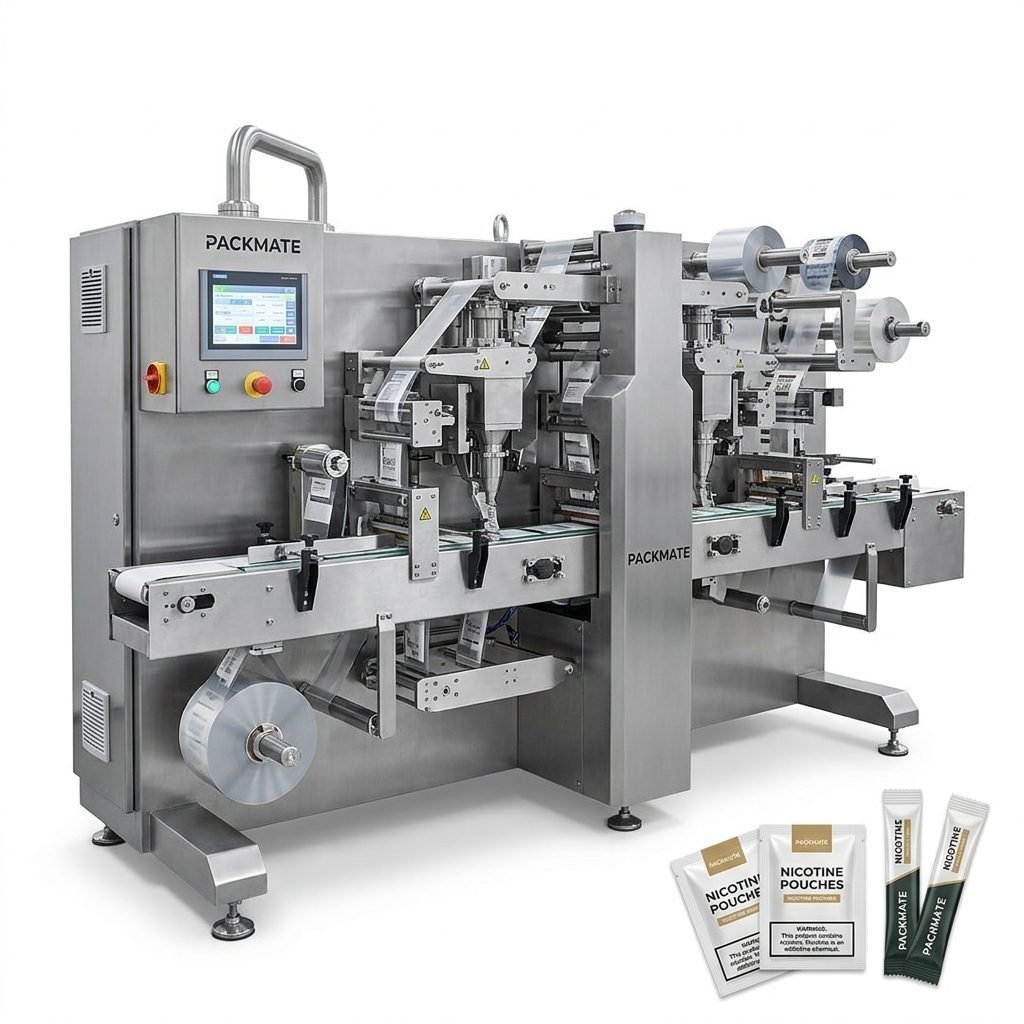
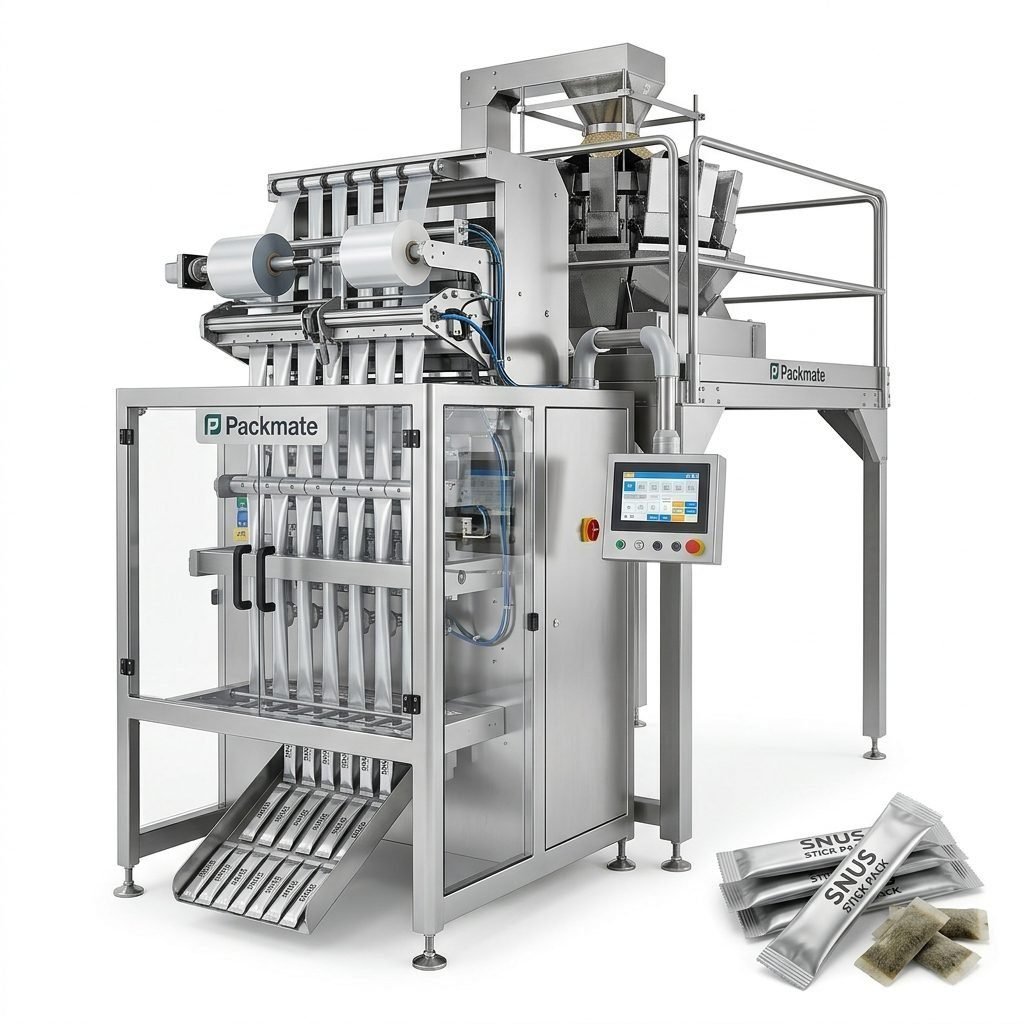
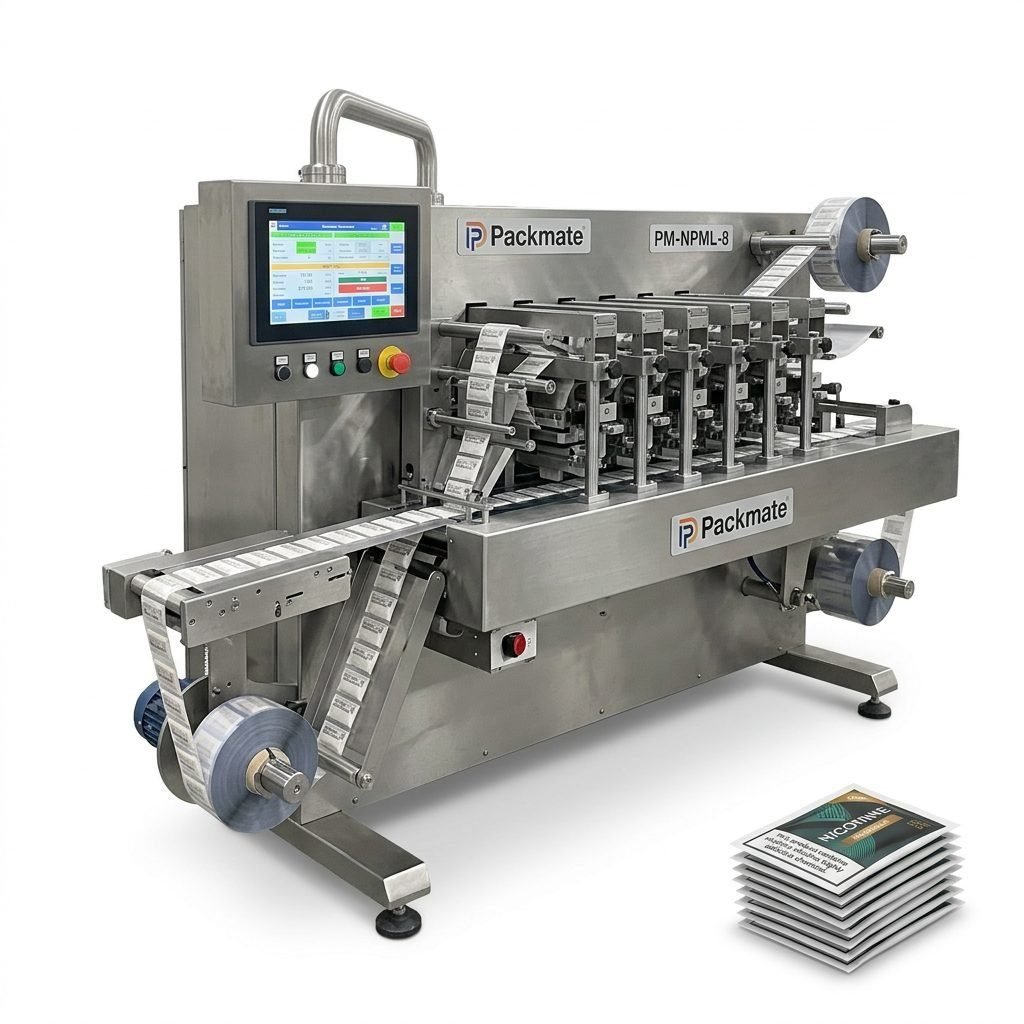
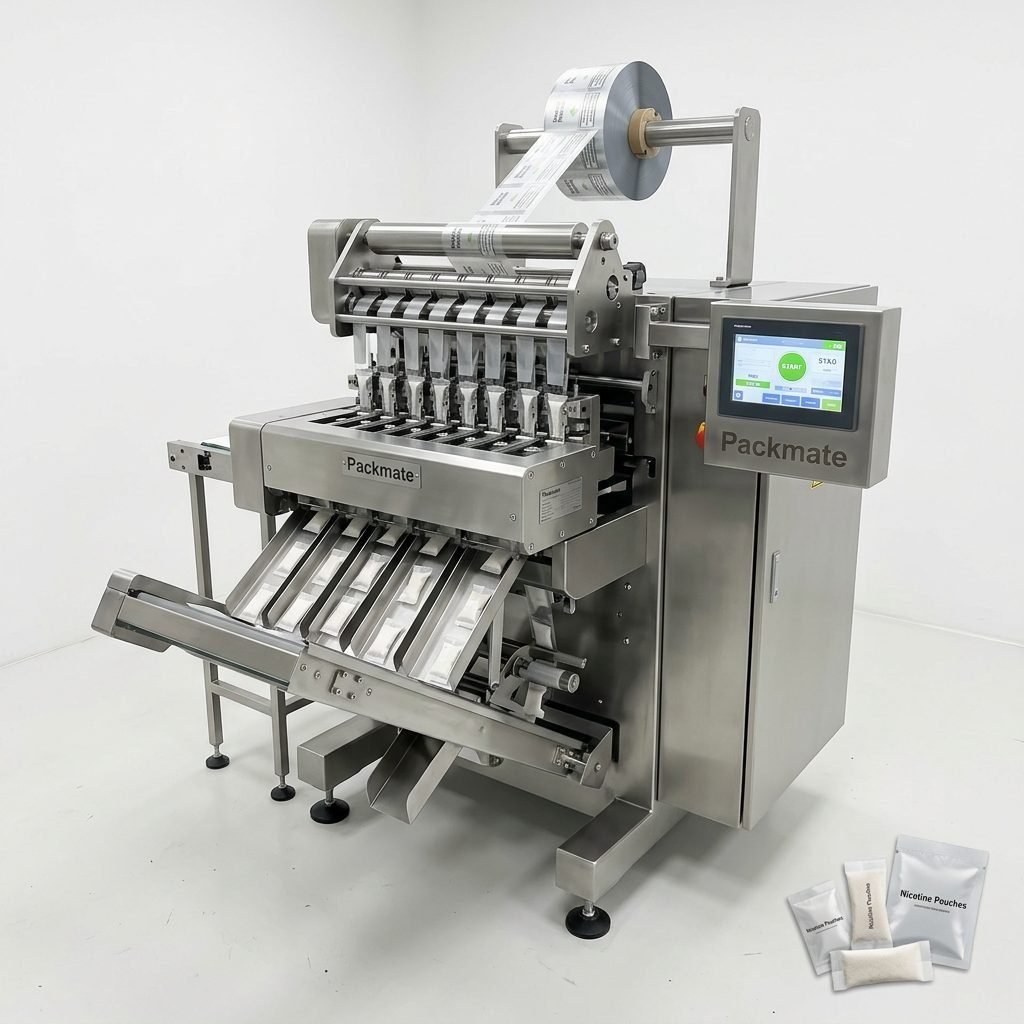
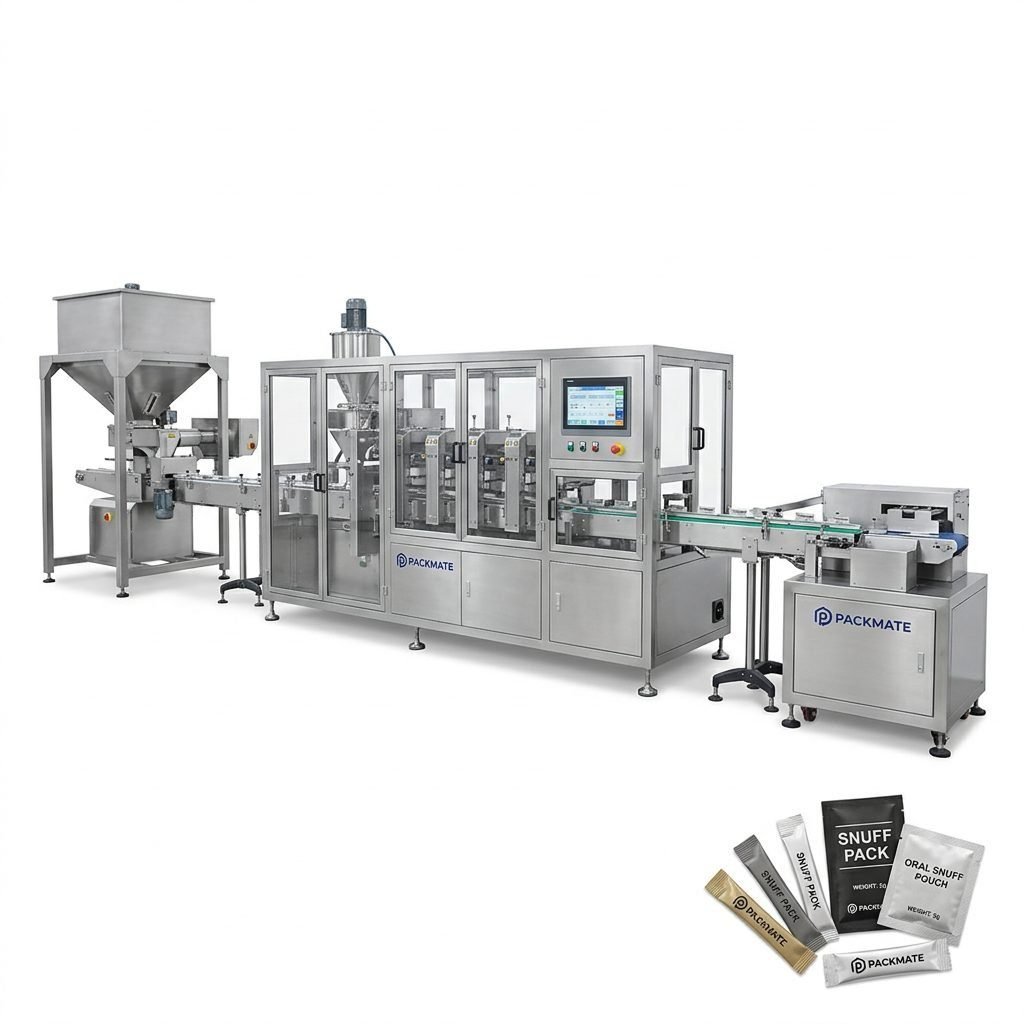
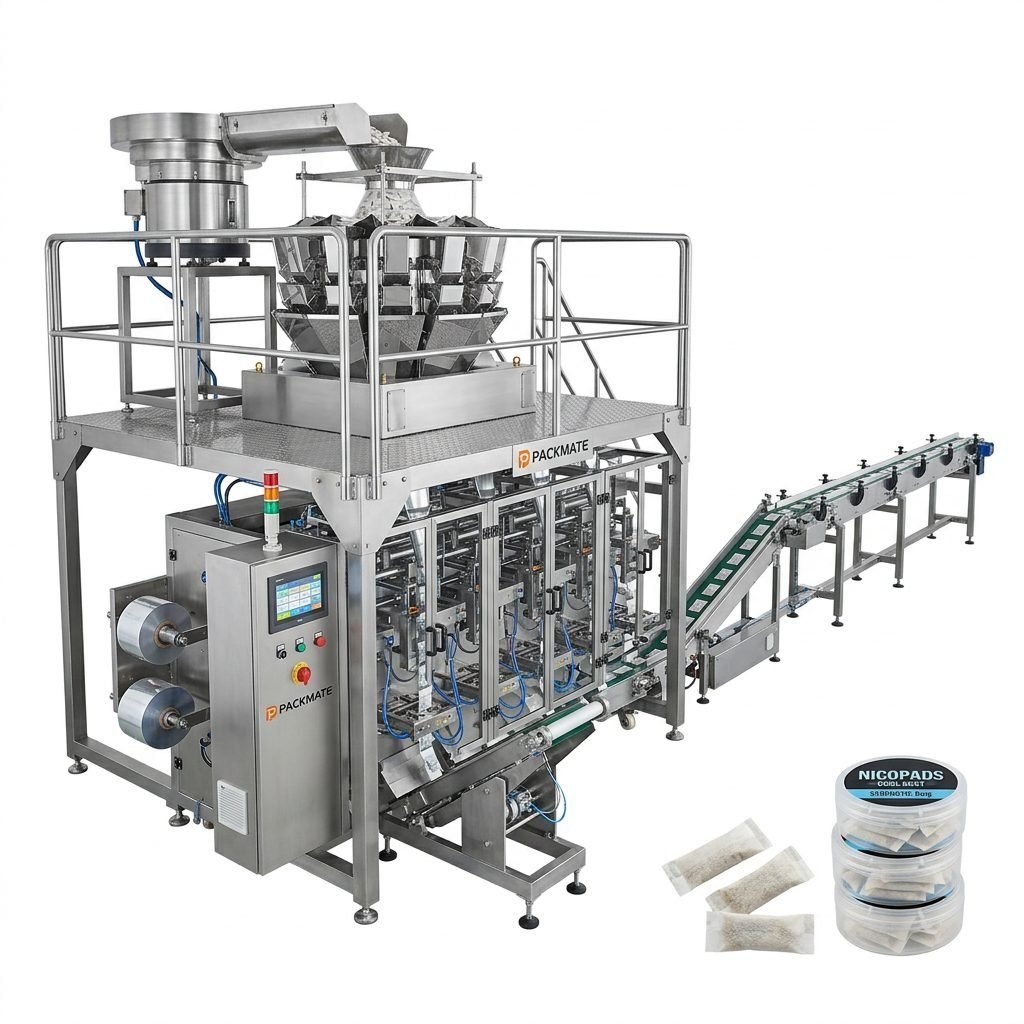
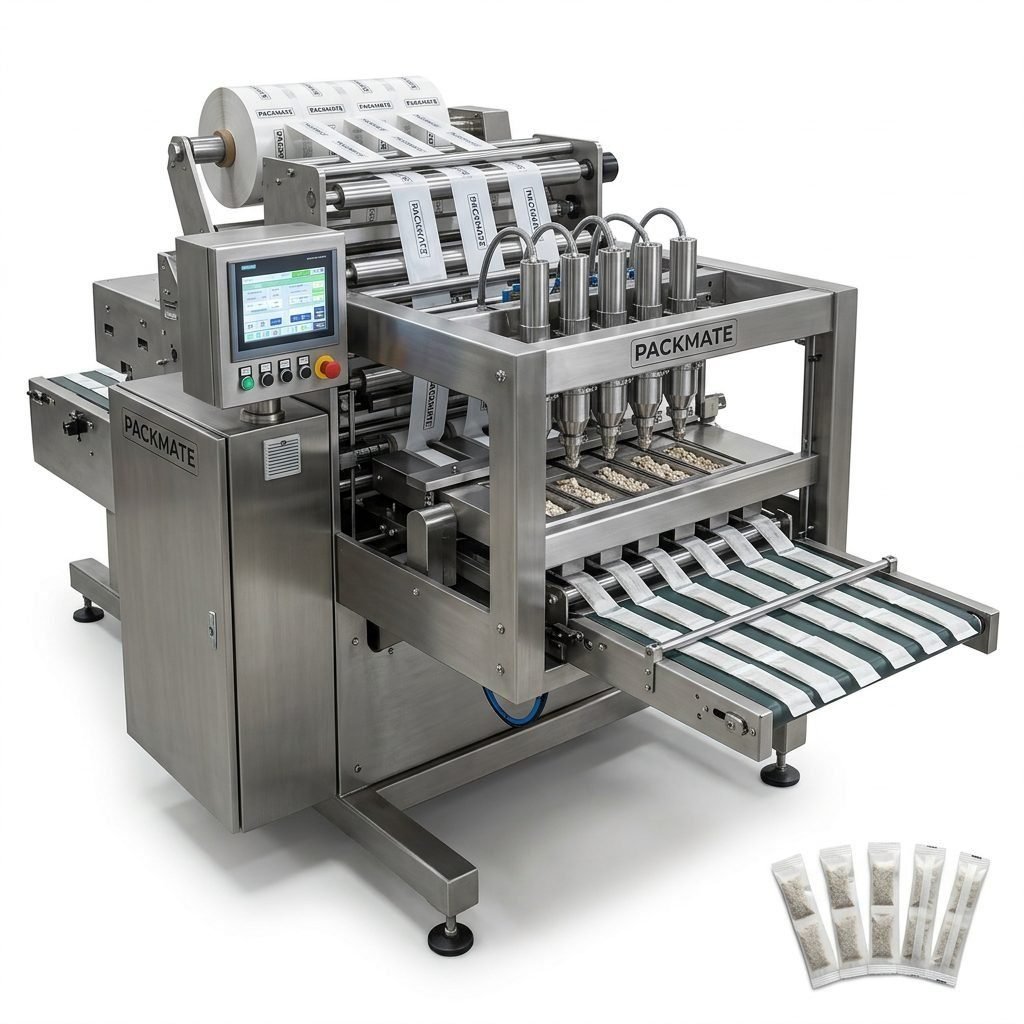
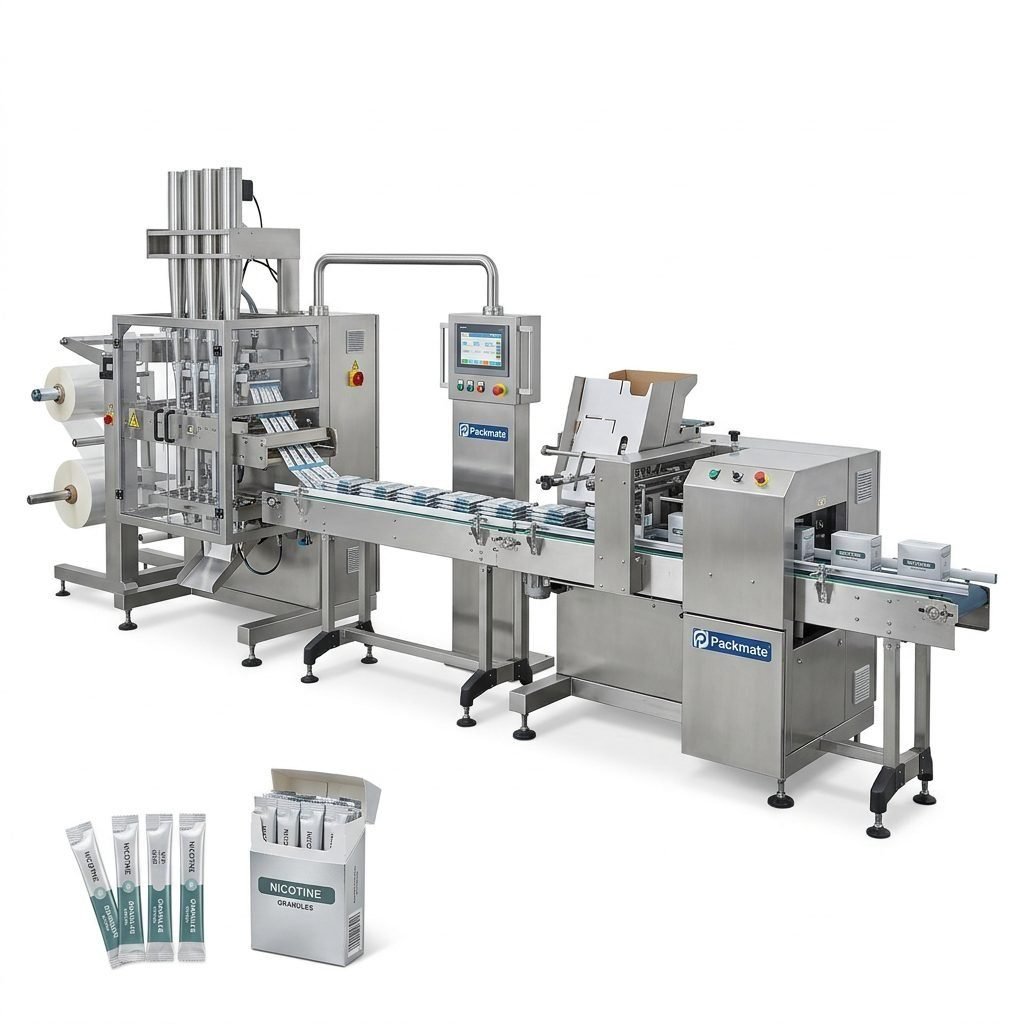
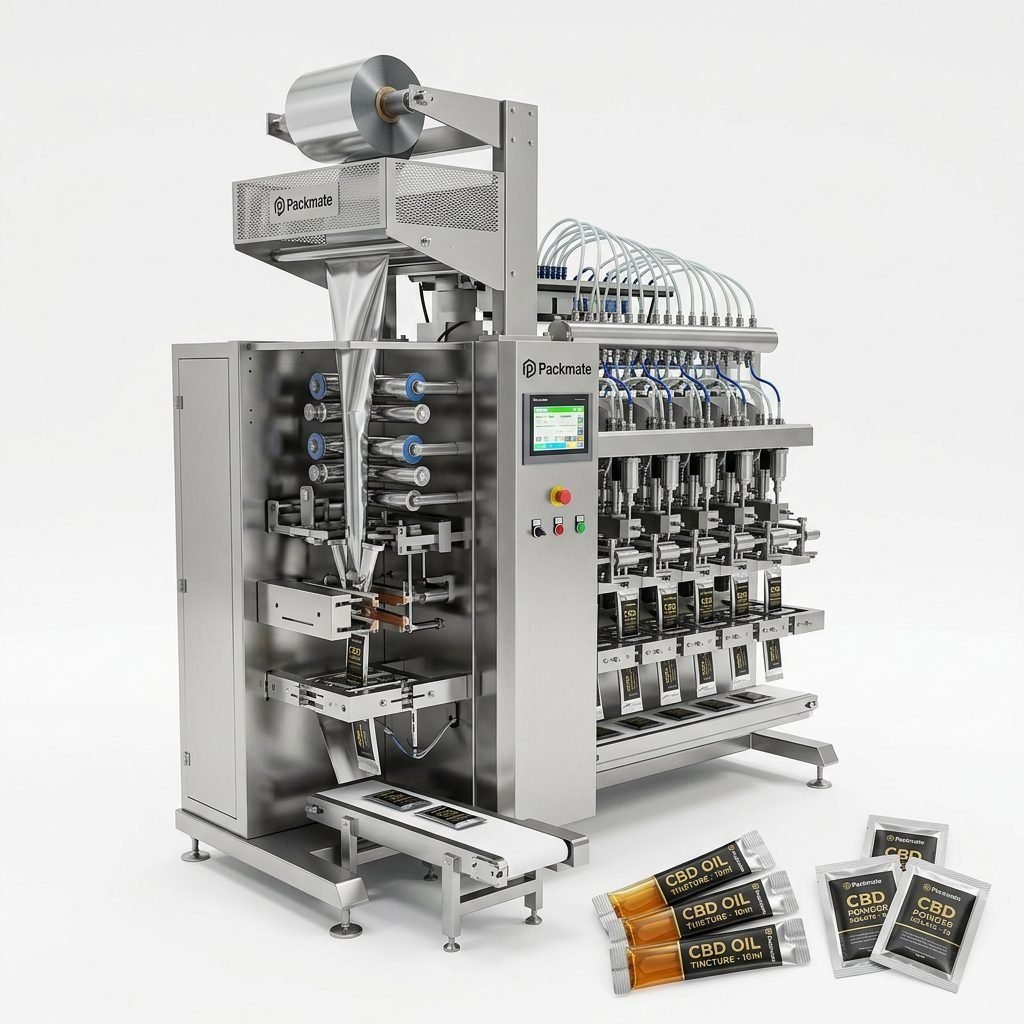
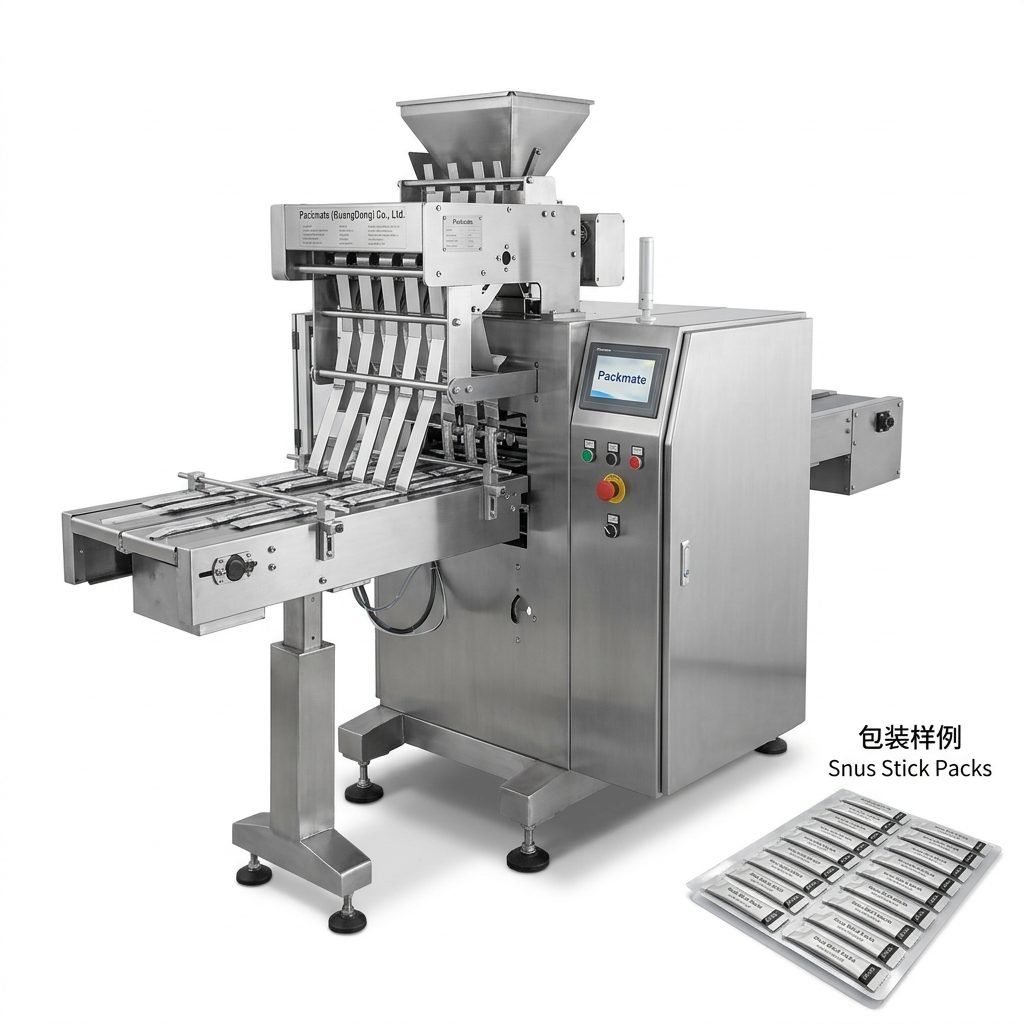
The nicotine pouch market is growing rapidly and manufacturers are under increasing pressure to deliver consistent, high-quality products at scale. A Nicotine Pouch Machine with PLC control provides a robust, automated packing solution designed for efficient pouch production, reduced labor, and higher throughput. This article explores how PLC-driven pouch packaging systems work, their key features and benefits, and why modern manufacturers choose integrated turnkey solutions for snus, nicotine pouches, and related products.
Why PLC Control Matters in Nicotine Pouch Production
PLC (Programmable Logic Controller) control is the backbone of modern packaging machinery. With PLC-based systems, manufacturers gain precise process control, easier troubleshooting, and flexible recipe management for multiple pouch formats. A PLC provides real-time monitoring, synchronized motion control, and safe operation through integrated interlocks and alarms.
Manufacturers using PLC-equipped machines benefit from faster changeovers, reduced downtime, and the ability to scale production without compromising product integrity. For companies producing nicotine pouches, where dose consistency and package hermeticity are critical, PLC control ensures repeatability and compliance with quality standards.
Key Advantages of PLC-Driven Nicotine Pouch Machines
Below are the most impactful advantages that PLC control delivers to pouch packaging lines:
⚙️ Precision & Repeatability: Motion coordination and servo control ensure each pouch is filled and sealed with minimal variation.
📈 Higher Throughput: Multilane systems synchronized by PLCs can significantly increase output per hour.
🔧 Faster Changeovers: Recipe-driven settings let operators switch pouch sizes and formats in minutes rather than hours.
Core Components of an Automated Nicotine Pouch Packing Line
A full automated packing line integrates several subsystems. Each part is controlled or coordinated via PLC to maintain consistent speed and product quality:
1. Feeding and Dosing Units — Accurate dosing systems (volumetric, auger, or electronic scales) deliver precise nicotine or filler dose into each pouch.
2. Form-Fill-Seal (FFS) or Pre-made Pouch Filling — Options include forming pouches from roll stock or filling pre-made pouches; PLC control synchronizes timing and sealing parameters.
3. Multi-lane Conversion — Multi-lane pouch machines increase production capacity by running several lanes in parallel, all managed by the PLC.
4. Vision and Inspection Systems — Integrated vision detects weight, seal integrity, and print quality for each pouch, with automatic reject handling.
Automation Features that Improve Operational Efficiency
Modern nicotine pouch machines feature a suite of automation tools that reduce manual interventions and maximize uptime:
• Remote diagnostics and data logging to help maintenance teams analyze faults quickly.
• HMI recipe management for storing parameters for different pouch sizes and recipes.
• Automatic splicing and material detection to minimize material waste and accelerate roll changes.
Design Considerations for Nicotine Pouch Machinery
When selecting a nicotine pouch machine, consider both current needs and future growth. Below are design elements that influence long-term value:
Durability: Choose machines built from corrosion-resistant materials and designed for continuous operation in high-output lines.
Serviceability: Modular components and easy access panels reduce repair time. PLC-based fault codes speed up troubleshooting.
Scalability: Look for multi-lane expansion options or add-on modules like automated cartoning and case packing to extend line capability.
Compliance and Quality Assurance
Regulatory and safety compliance are essential for nicotine pouch production. PLC systems can support compliance by automating traceability, process logs, and access control. Manufacturers should select machines that meet recognized international standards such as CE and ISO to ensure safe, consistent operation and easier market access.
Customization and Turnkey Solutions
Many producers prefer turnkey solutions that include formulation handling, pouch production, filling, sealing, and downstream packaging. Working with an experienced manufacturer can fast-track production startup and minimize integration risk. For specialized requirements, look for suppliers who can provide customized multilane systems, automated dosing, and complete plant layouts.
Packmate Snus Machine offers a broad portfolio covering Snus & Nicotine Packaging Machines, Bag & Pouch Packaging Machines, and full Filling & Packaging Lines. Explore product categories such as Snus & Nicotine Packaging Machines and Bag & Pouch Packaging Machines for detailed technical options.
Case Study Snapshot
A European client upgraded a single-lane nicotine pouch line to a 4-lane PLC-controlled system. The transition delivered a 3.5x increase in throughput and reduced reject rates by over 40% thanks to improved dosing accuracy and inline vision inspection. The manufacturer also benefited from remote monitoring and local training provided by the equipment supplier.
For additional real-world examples, see the factory case references at Case.
Operational Best Practices for Snus and Nicotine Pouches
To achieve consistent quality and maximize uptime, adopt these best practices:
✅ Standardize recipes and store them in the PLC to minimize human error.
✅ Implement routine calibration and preventive maintenance for dosing and sealing systems.
✅ Use inline quality checks and automatic reject mechanisms to keep defective packs out of the supply chain.
✅ Train operators on HMI navigation, fault codes, and safe shutdown procedures to reduce mean time to repair.
Why Choose a Specialist Manufacturer?
Working with a specialist like Packmate Snus Machine brings domain knowledge and proven designs tailored to small-dose pouch production. With over 30 years of engineering experience and a 20,000㎡ manufacturing facility, specialist manufacturers can offer:
• Purpose-built machines for snus and nicotine pouches.
• Certification and compliance support (CE, ISO).
• Turnkey integration with weighing, filling, and downstream packing modules.
Learn more about the company profile and manufacturing capabilities on the About Packmate page.
Installation, Commissioning, and After-Sales Support
Successful deployment of a PLC-controlled line requires thorough installation and commissioning. Reputable suppliers provide:
• On-site installation and performance validation.
• Operator and maintenance training tailored to your production team.
• Spare parts, remote troubleshooting, and long-term service agreements.
For details on after-sales services and spare parts, refer to the manufacturer’s Service and Contact Us pages.
Practical Tips for Line Optimization
Maximizing line efficiency is about both machine capability and operational discipline:
• Keep a log of product changes and the exact PLC recipe used to reproduce successful runs.
• Maintain consistent raw material specifications—film thickness, pouch material, and filling blend—to avoid unexpected sealing issues.
• Use data from PLC logs to target bottlenecks and schedule predictive maintenance before failures occur.
Selecting the Right Machine Model
Machine selection depends on product type, desired output, and budget. Key selection criteria include lane count, dosing method, sealing technology, and integration capability with upstream/downstream equipment. Many suppliers offer 50+ models to cover the spectrum from entry-level to fully automated multi-lane lines.
If you need a tailored solution, review the manufacturer’s Filling & Packaging Lines and Weighing & Packaging Systems for modular options that can be combined into a turnkey line.
📦 Material Compatibility: Verify machine compatibility with your pouch film, barrier requirements, and sealing tolerances.
🔍 Traceability: Ensure PLC supports batch coding and data export for regulatory records and QA audits.
Sustainability and Waste Reduction
Efficient PLC control can help reduce material waste by optimizing cut lengths, minimizing misfeeds, and ensuring consistent seals. Look for features like automatic reject recovery and minimal trim designs to reduce scrap. Sustainable packaging choices and reduced energy consumption are increasingly important for brand image and compliance in many markets.
For manufacturers who want to review real equipment and specifications, the product catalog and certification pages are useful starting points: Catalog and Certificate.
Conclusion
A Nicotine Pouch Machine with PLC control is a strategic investment for companies seeking reliability, repeatability, and scalability in pouch production. PLC-driven lines deliver measurable improvements in throughput, quality, and operational transparency. When combined with a supplier who provides turnkey integration, after-sales support, and customization, manufacturers can achieve fast time-to-market and maintain competitive advantage in the rapidly evolving nicotine pouch sector.
Further Resources
To learn more about machine types and practical implementations, check product pages for Snus & Nicotine Packaging Machines and Sachet & Stick Pack Machines, and contact a specialist for a line assessment.
Useful links: Sachet & Stick Pack Machines, Auxiliary Packaging Equipment.
Frequently Asked Questions
Q1: How does PLC control improve pouch sealing consistency?
A1: PLC coordinates heater timing, pressure settings, and conveyor indexing with precise timing, which results in uniform seals across every pouch and reduces the risk of leaks or weak seals.
Q2: Can a PLC-controlled machine handle different pouch sizes on the same line?
A2: Yes. PLC recipe management allows storage and quick recall of parameters for multiple pouch sizes, enabling rapid changeovers between product runs with minimal manual adjustments.
Q3: What production rates can multi-lane nicotine pouch machines achieve?
A3: Production rates vary by lane count and pouch format; multilane systems can multiply single-lane throughput by the number of lanes while maintaining individual pouch quality through synchronized PLC control.
Q4: How important is after-sales service for PLC-based packaging lines?
A4: After-sales service is critical for uptime. Remote diagnostics, timely spare parts supply, and technician support ensure the line runs reliably and minimizes production interruptions.
Q5: Where can I view real examples or get a consultation?
A5: View case studies and request a consultation through the manufacturer’s Case page or contact the sales team via the Contact Us link.