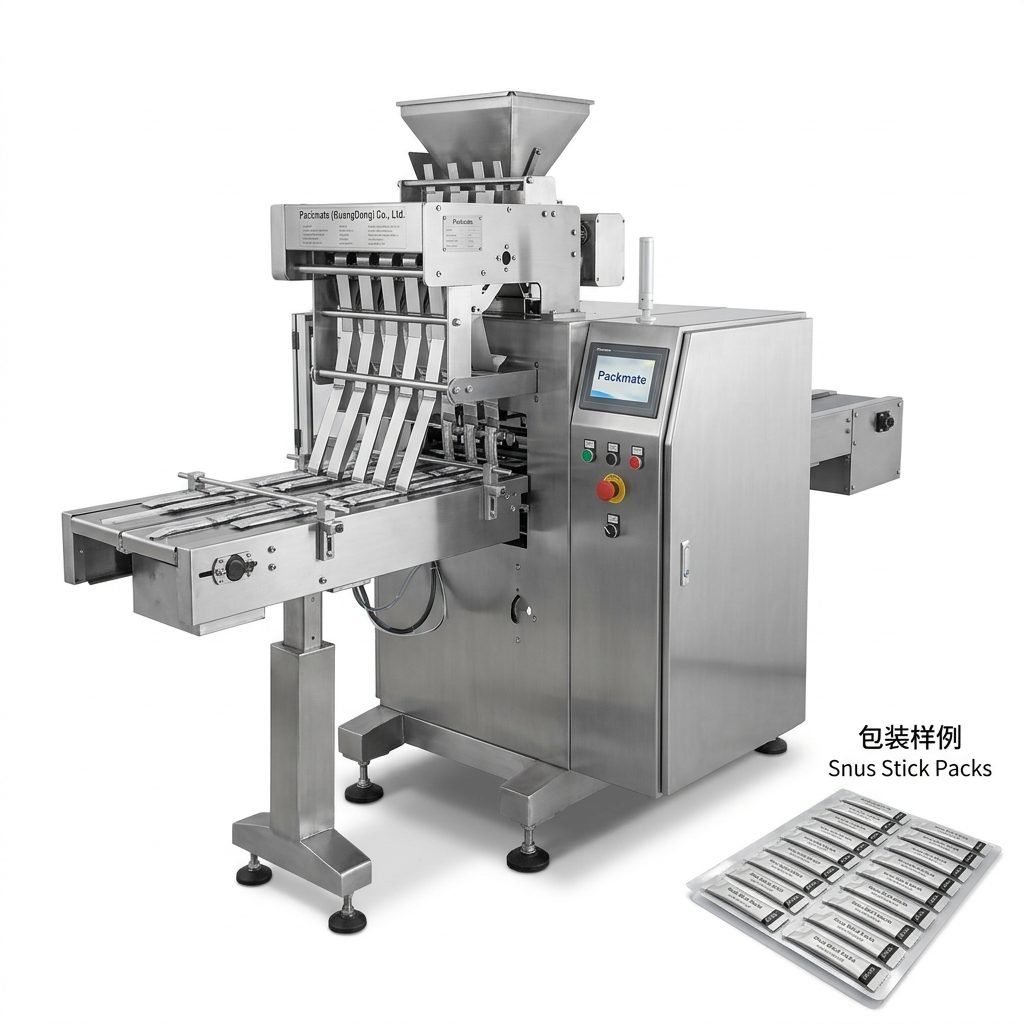
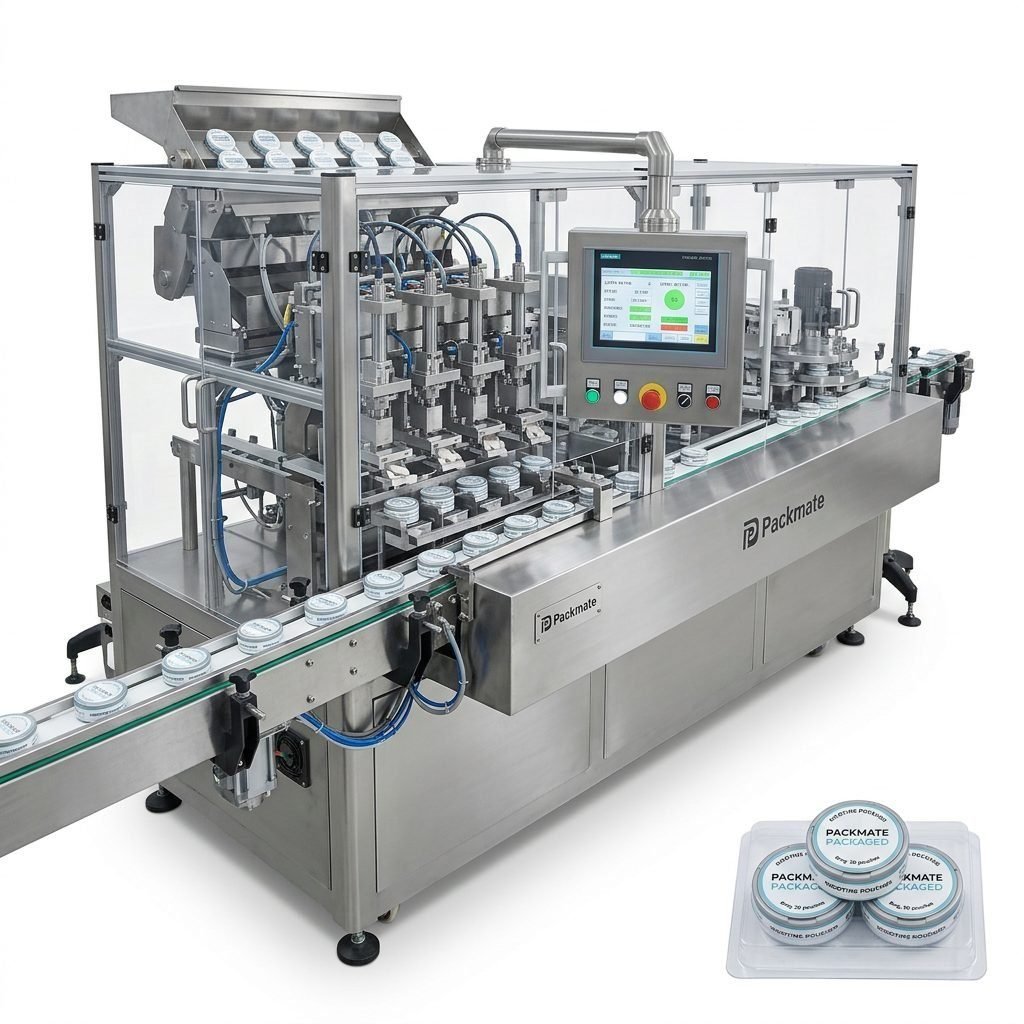
Choosing the right nicotine packaging machinery for production in Kazakhstan requires a clear understanding of your product format, production targets, regulatory constraints, and long-term service needs. This guide walks you through the essential technical, operational, and commercial factors to help you select equipment that balances efficiency, compliance, and return on investment.
Understand Your Product and Production Targets
Start by defining the exact nicotine product you plan to package: nicotine pouches (snus), sachets, stick packs, or pouch-in-can systems. Each format has distinct machine requirements. Also determine your production scale — pilot runs, small-batch regional supply, or full-scale commercial output — because machines range from single-lane testers to high-speed multi-lane lines.
Key specification to define: target pieces per minute/hour/day, pouch size and format, powder/granule/liquid fill type, and packaging material (laminated film, foil, paper).
Match Machine Type to Format
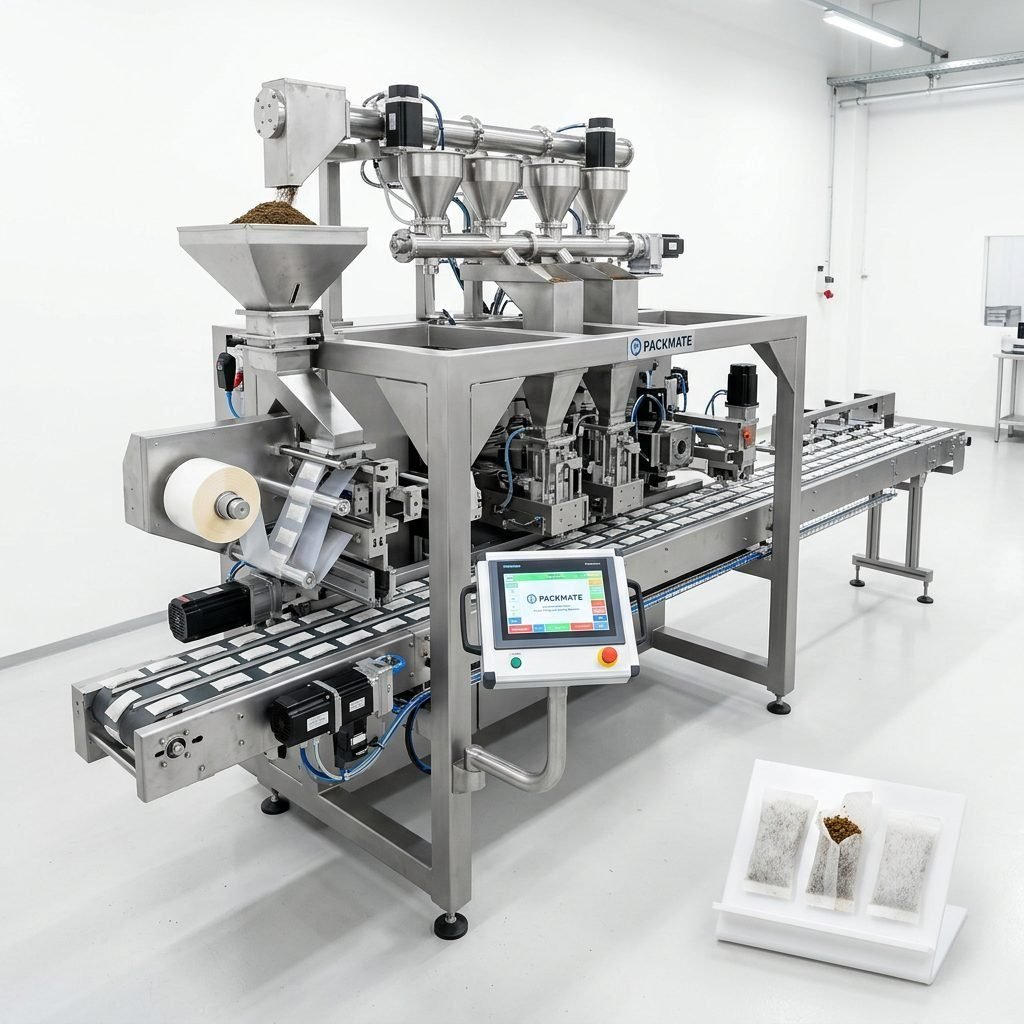
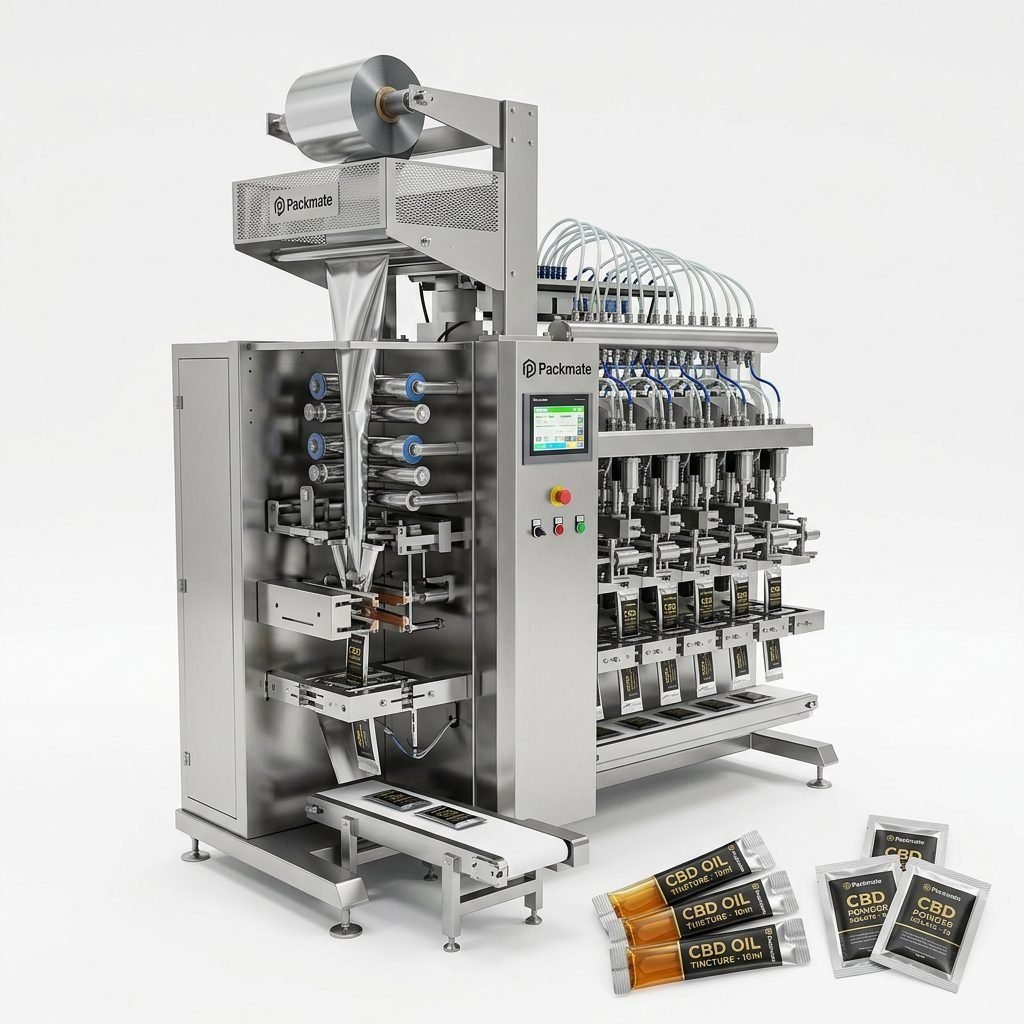
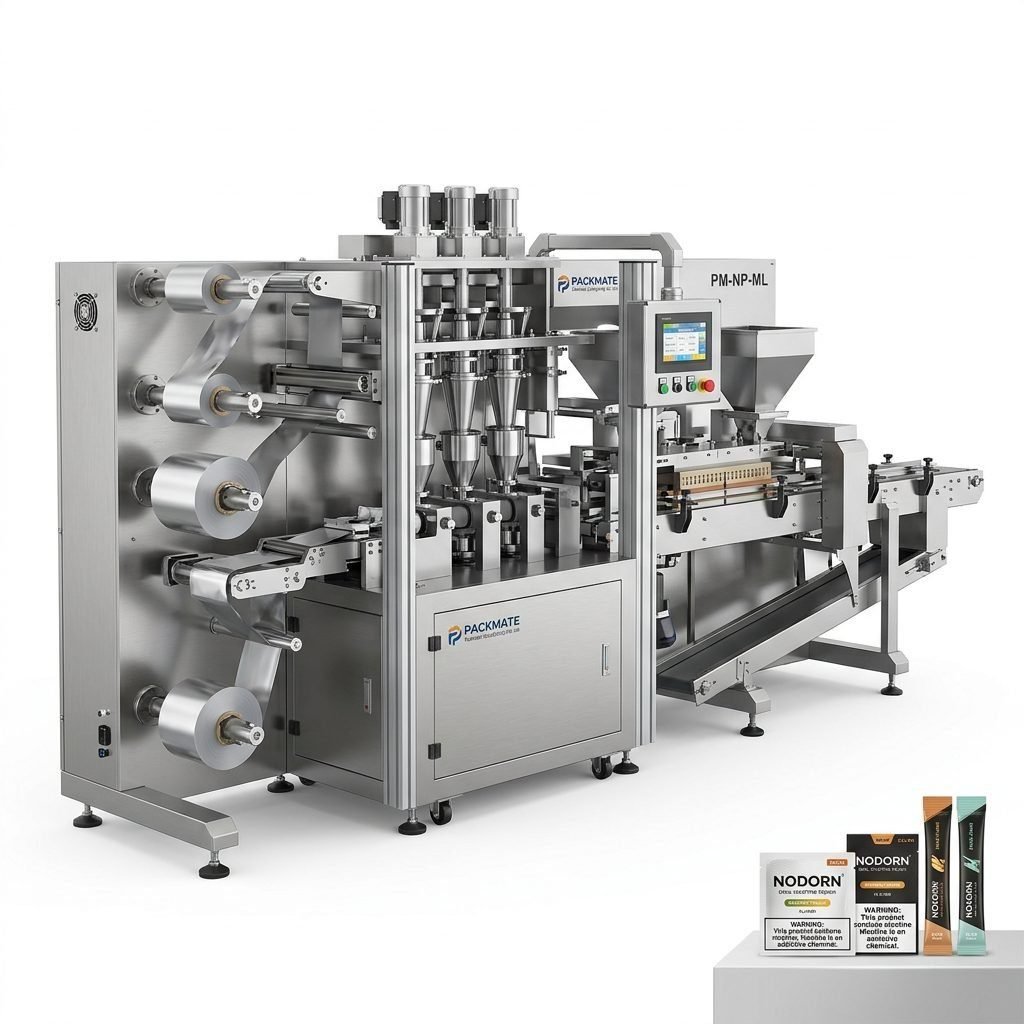
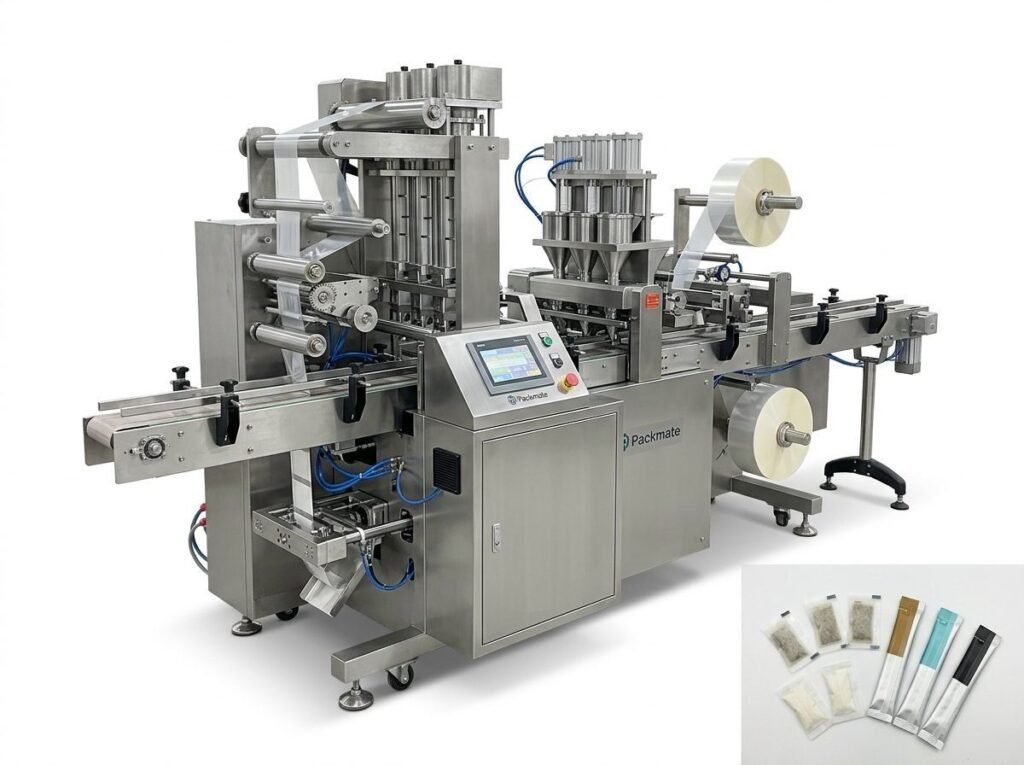
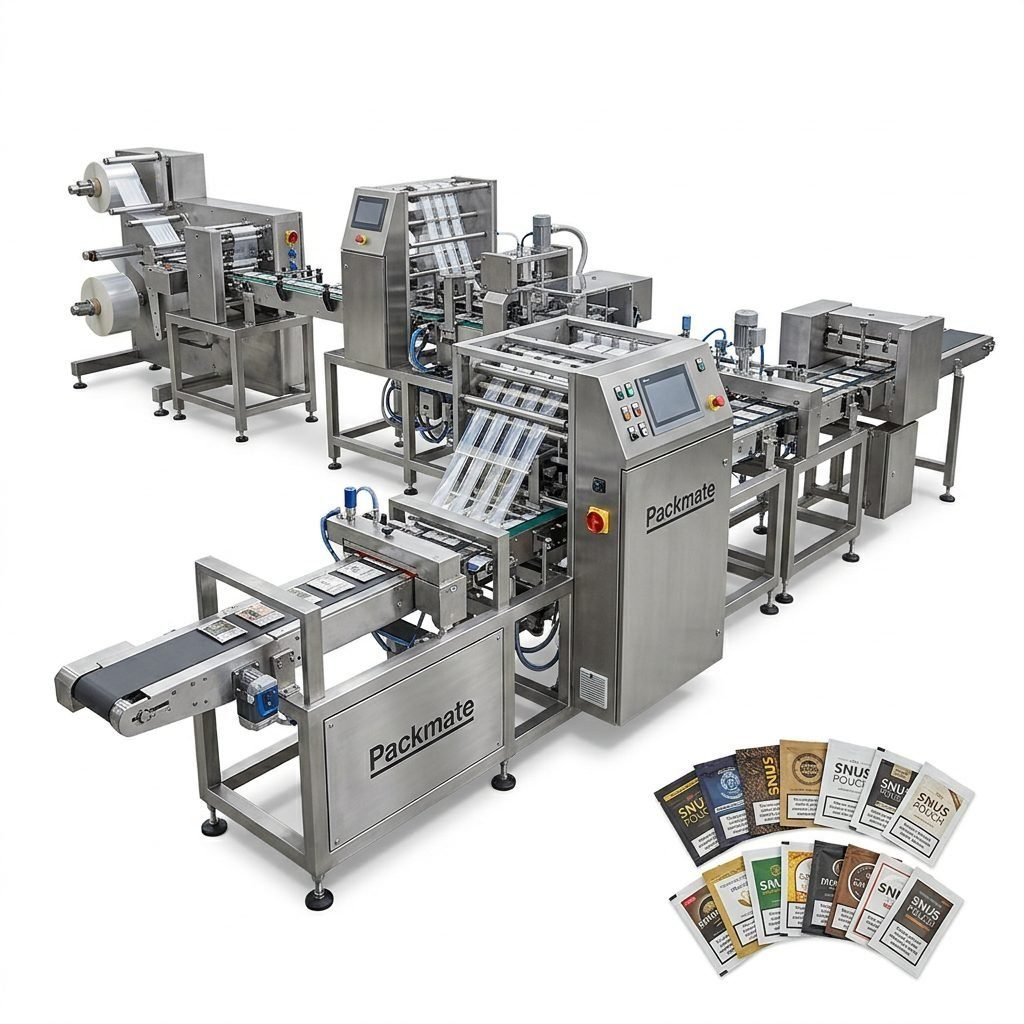
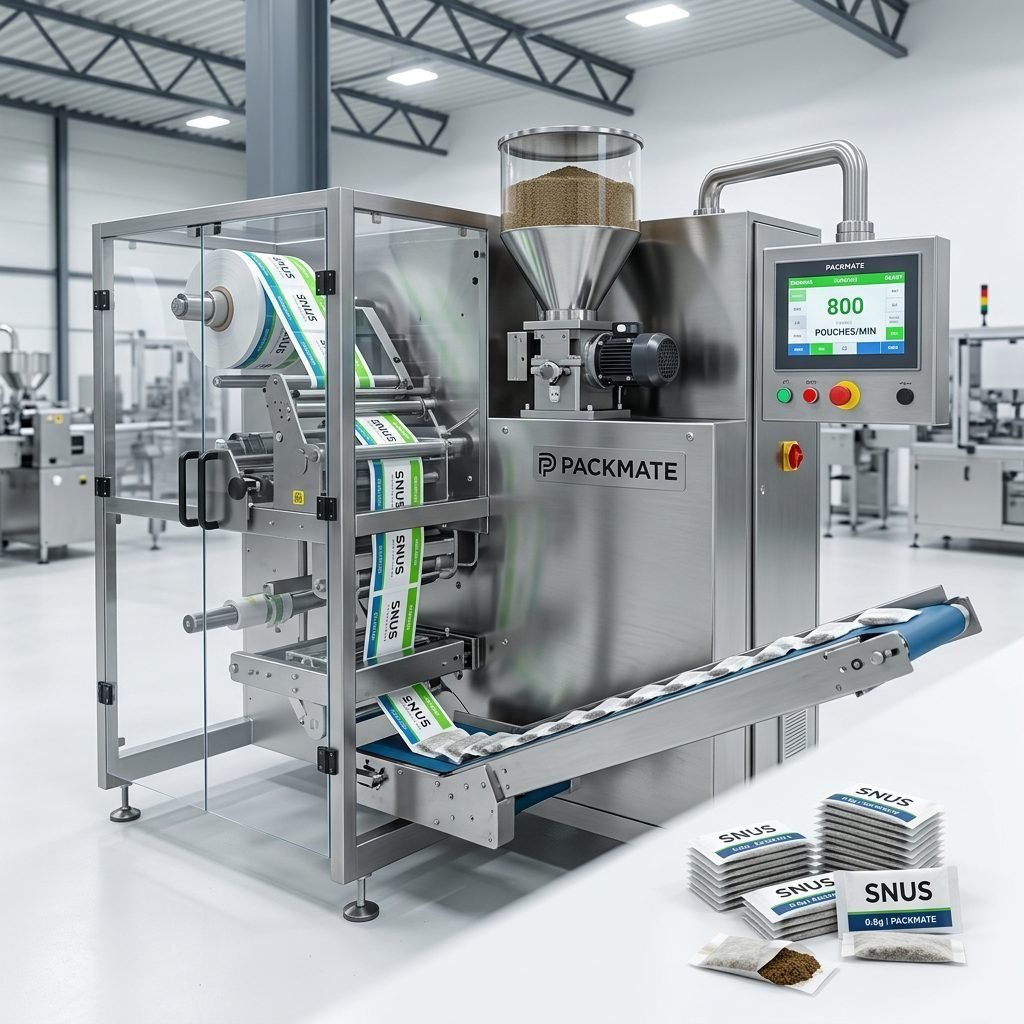
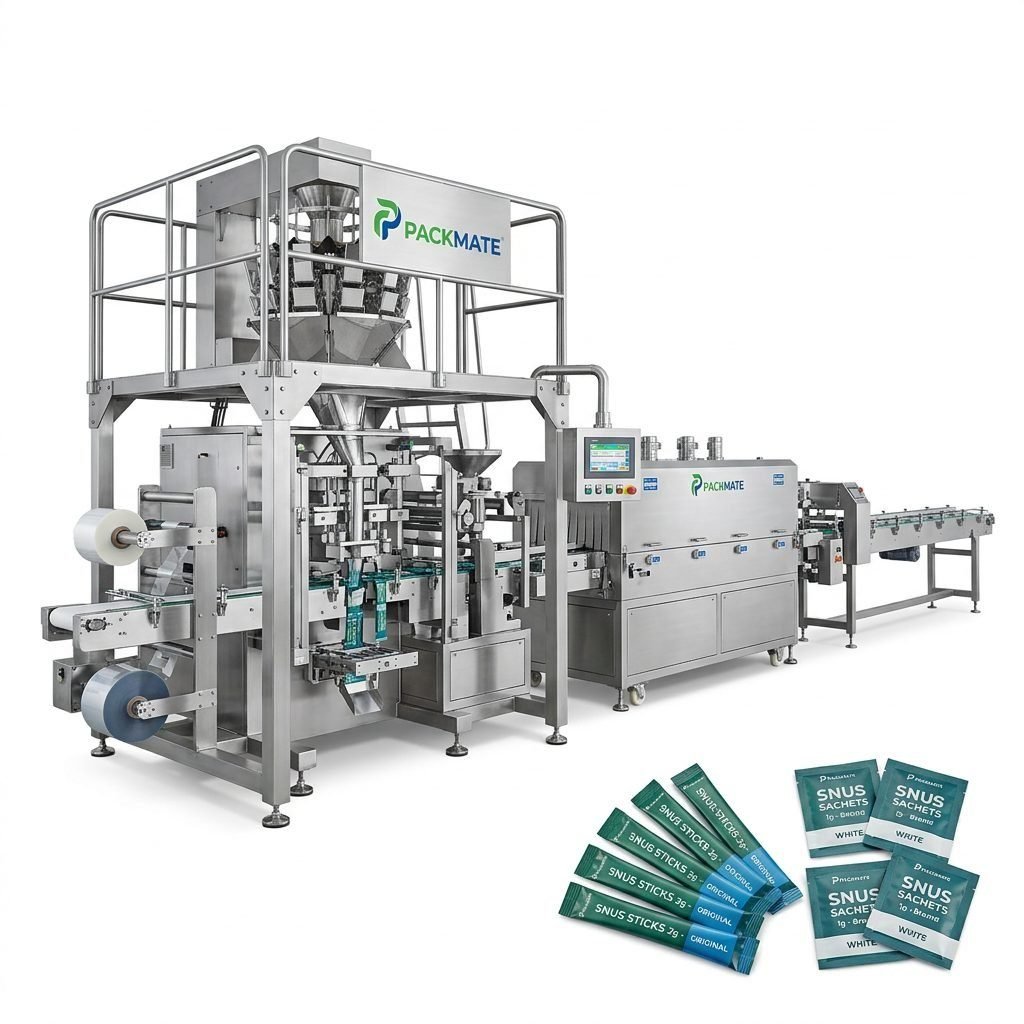
If you produce nicotine pouches or snus, look at specialist snus and nicotine pouch packaging machines that handle precise micro-dose filling and gentle pouch forming. For stick packs and single-dose sachets, sachet and stick pack machines are the ideal choice. For end-to-end solutions that include dosing and filling, evaluate filling & packaging lines that integrate weighing and dosing systems.
Explore relevant equipment pages to compare capabilities:
Snus & Nicotine Packaging Machines,
Sachet & Stick Pack Machines, and
Filling & Packaging Lines.
Production Capacity and Multi-Lane Options
Multi-lane systems amplify throughput without increasing cycle speed. For Kazakhstan markets where demand may quickly scale, consider machines that offer modular lanes (2, 4, 6, 8 lanes). This enables phased capacity increases while keeping operator training and spare parts consistent.
🔧 Tip: Choose a multi-lane design with independent lane control for greater flexibility and easier maintenance.
Filling Accuracy, Dosing Systems and Material Handling
Nicotine pouch and snus products require tight dosing tolerances. Evaluate volumetric, gravimetric, or auger dosing systems depending on the product physical properties. High-accuracy weighing systems and closed dosing solutions reduce waste and ensure regulatory compliance.
Material considerations
Packaging film compatibility (heat-seal, cold-seal, laminated barrier films) is critical for shelf life and product safety. Make sure the machine supports your chosen film width and sealing method and has easy setup for film reels and splicing.
Regulatory Compliance and Certification
Kazakhstan and export markets require adherence to international safety and quality standards. Machines certified to CE and ISO standards are preferable since they demonstrate manufacturing quality and simplify approvals for exporting. Always request conformity documentation and test protocols.
ℹ️ Must-have: certification copies (CE/ISO), factory test reports, machine FAT videos, and material certificates for food/pharma contact surfaces.
Hygiene, Materials and Maintenance
Choose stainless steel (304/316 where required) contact parts, hygienic designs with minimal crevices, and easy-to-clean access. Machines designed for quick changeovers and tool-less maintenance reduce downtime. Check spare parts availability and lead times — local or regional stocking makes a big difference for production continuity.
After-sales Support and Training
Reliable service networks, remote diagnostics, operator training, and on-site commissioning are essential. Suppliers that offer preventive maintenance plans and fast spare parts dispatch in Eurasia are preferred. Consider vendor reputation and existing global case studies when evaluating support capability.
Review real-world cases to understand performance: Case.
Automation Level and Integration
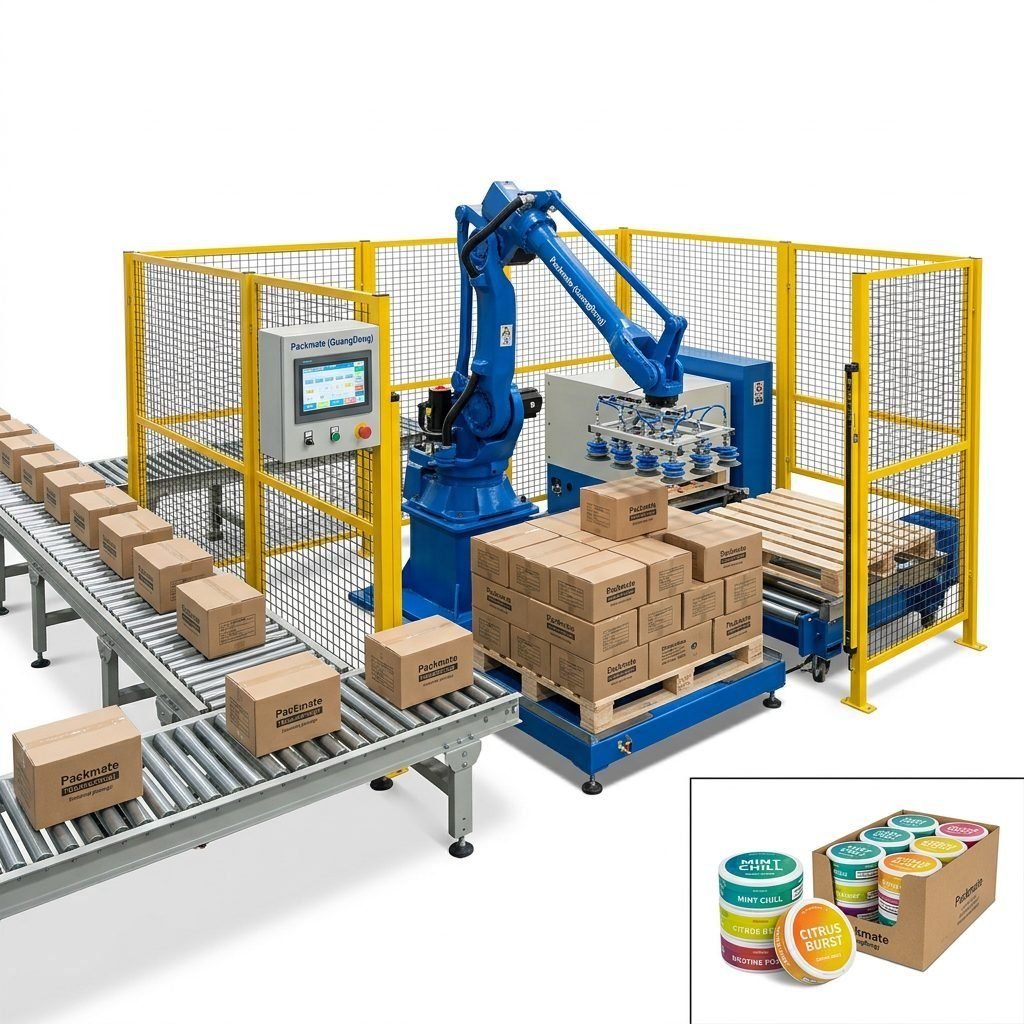
Decide how much automation you need. Fully automated lines with infeed, dosing, sealing, labelling and end-of-line packing reduce labor costs and variability but require higher initial capital. Semi-automatic systems offer lower upfront costs and flexible manual steps. Verify compatibility with upstream dosing/weighing and downstream cartoning or secondary packaging equipment.
Connectivity and Industry 4.0
Modern machines support PLC/HMI interfaces, remote monitoring and data logging for production analytics. These features help optimize yield, reduce waste, and provide traceability for regulatory audits.
Footprint, Utilities and Environmental Controls
Check machine footprint and required utilities: power, compressed air, chilled water, and extraction. Nicotine handling may require controlled environments, ventilation and local exhaust. Plan factory layout for material flow, maintenance access and future capacity expansion.
✅ Practical check: Confirm required utility specs and spare part lists before factory acceptance testing (FAT).
Total Cost of Ownership and ROI
Don’t focus solely on purchase price. Calculate total cost of ownership including installation, training, downtime, consumables, energy and spare parts. Higher initial investment in more reliable equipment often yields lower lifetime costs and faster ROI through reduced waste and higher uptime.
Selecting a Vendor — What to Ask For
When vetting suppliers, request the following:
- Detailed technical specifications and machine layout drawings;
- Factory acceptance test (FAT) videos and performance data;
- References from customers in similar markets or with similar products;
- Warranty terms, spare parts policy and response times;
- On-site installation and commissioning scope, plus training plans.
Consider suppliers with long industry experience and a strong manufacturing base. For example, Packmate Snus Machine highlights over 30 years of engineering experience and a 20,000㎡ facility supporting turnkey solutions. Learn more about company capabilities and services: About Packmate and Service.
Factory Acceptance Testing and Commissioning
Insist on FAT prior to shipment to verify performance with your product. FAT should include run time tests, dosing accuracy checks, sealing quality inspections, and operator training. After shipment, on-site commissioning ensures the line integrates with your utilities and floor plan.
Local presence and exhibitions
Meeting suppliers at exhibitions or requesting live demonstrations is extremely useful. Check upcoming events where suppliers exhibit: Our Exhibition.
Practical Checklist Before Purchase
🔍 Pre-purchase checklist: product samples for testing; defined production targets; regulatory compliance plan; spare parts list and lead times; FAT acceptance criteria; training and maintenance plan.
If you need tailored solutions, consider vendors that provide full turnkey lines and customization options. Explore additional product categories for integrated solutions: Weighing & Packaging Systems and Auxiliary Packaging Equipment.
Conclusion
Selecting the right nicotine packaging machinery in Kazakhstan involves aligning product type, throughput, regulatory needs and service expectations. Prioritize dosing accuracy, hygienic design, multi-lane scalability, strong vendor support, and verifiable FAT outcomes. A well-chosen machine reduces waste, increases uptime, and secures faster ROI while keeping your operation compliant and ready for market growth.
Frequently Asked Questions
Q1: What machine type is best for nicotine pouches?
A1: Specialized snus and nicotine pouch machines with precise micro-dosing and pouch forming are ideal. Look for equipment designed for small-dose consistency and gentle handling.
Q2: How do I ensure regulatory compliance in Kazakhstan?
A2: Choose machines with CE and ISO certifications, request material contact certificates, and document FAT results. Work with local regulatory consultants to confirm labeling and product-specific rules.
Q3: Is multi-lane machinery worth the investment?
A3: Yes, for medium to high production demands multi-lane systems significantly increase throughput and are more cost-effective than adding multiple single-lane machines.
Q4: What service and spare parts considerations matter most?
A4: Fast spare parts supply, on-site commissioning, remote diagnostics, and local or regional service partners reduce downtime and protect production continuity.
Q5: How can I evaluate a supplier’s credibility?
A5: Review years of experience, factory capabilities, customer case studies, certifications, and their willingness to provide FAT, references, and on-site demonstrations. For more vendor information and contact options visit Contact Us.