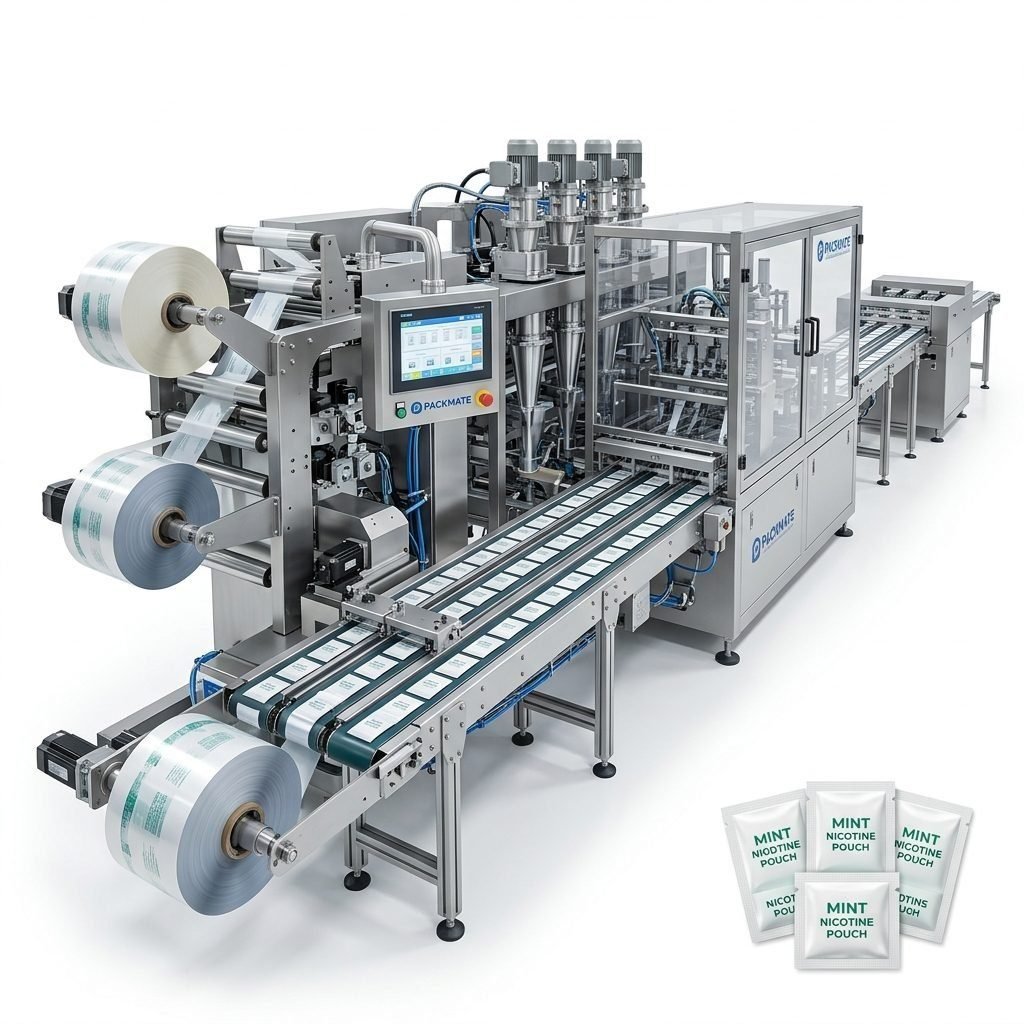
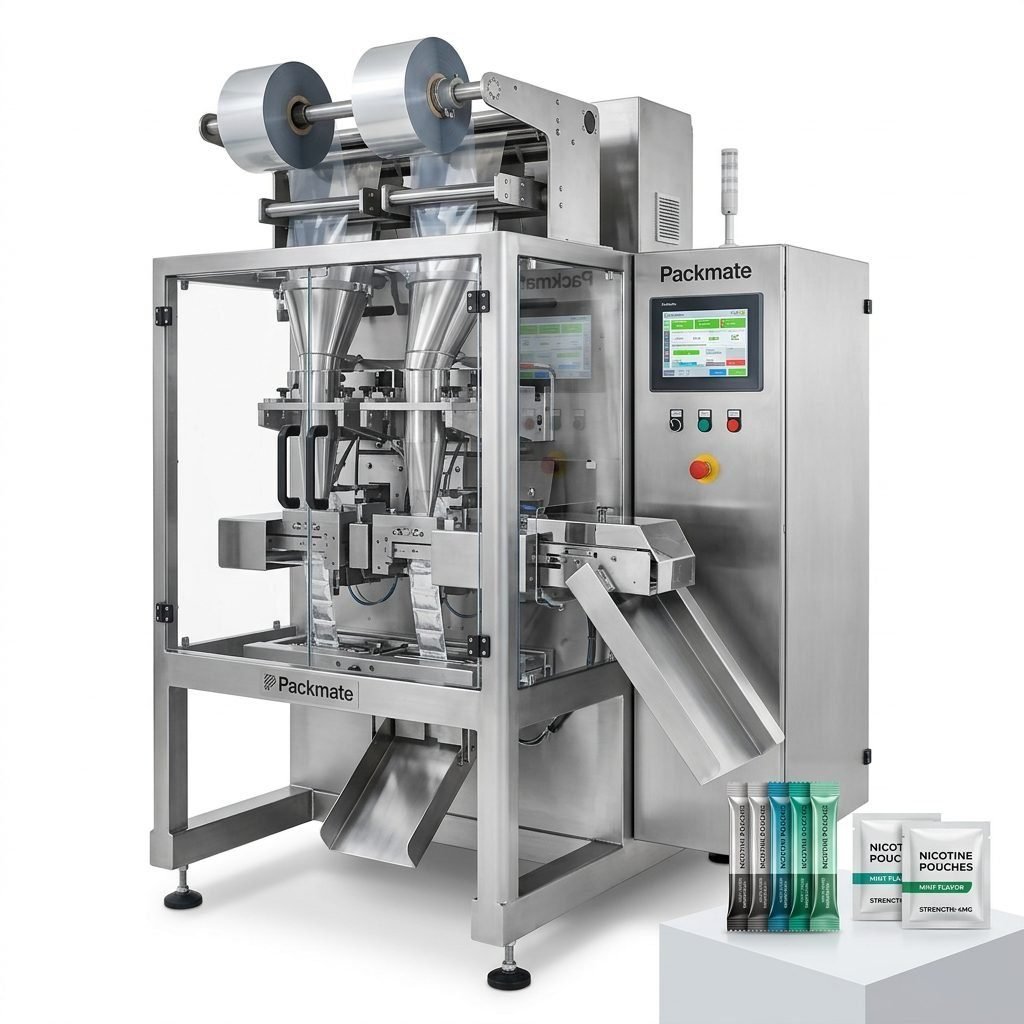
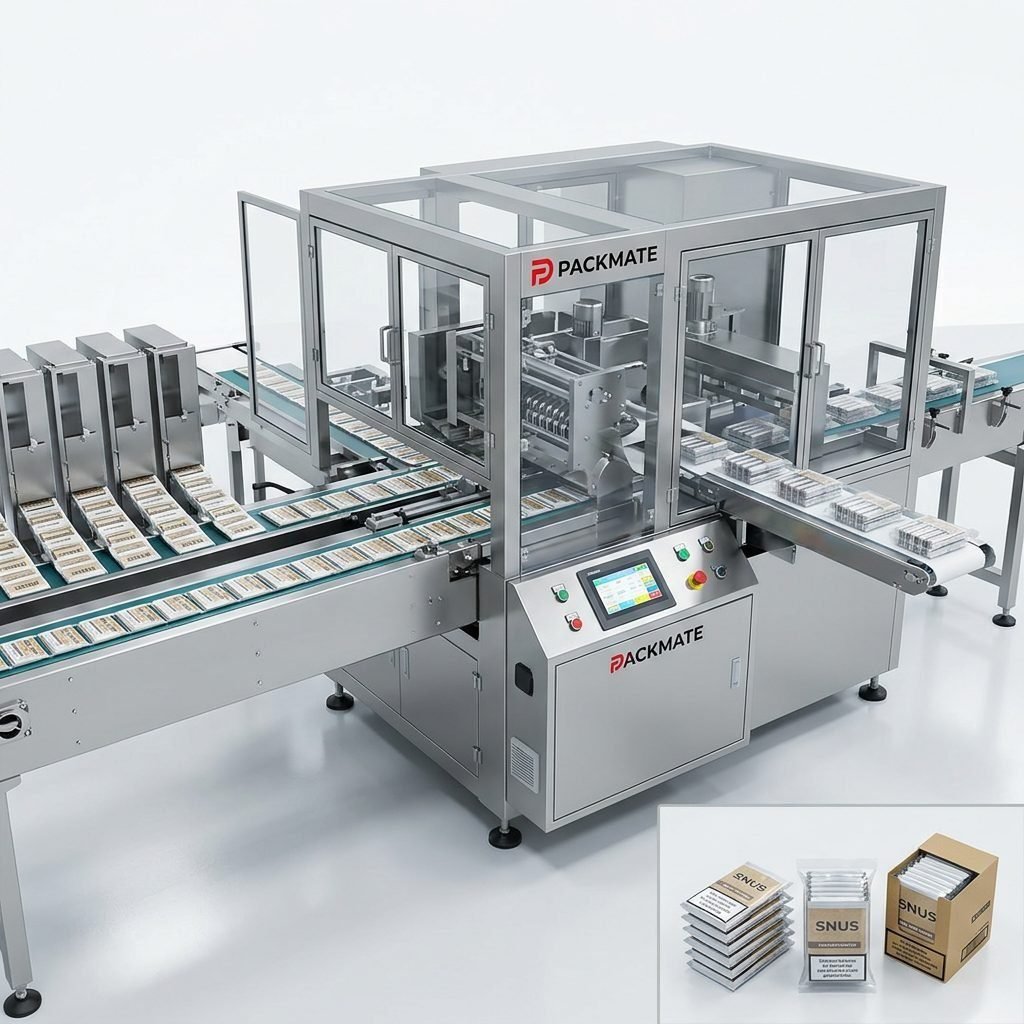
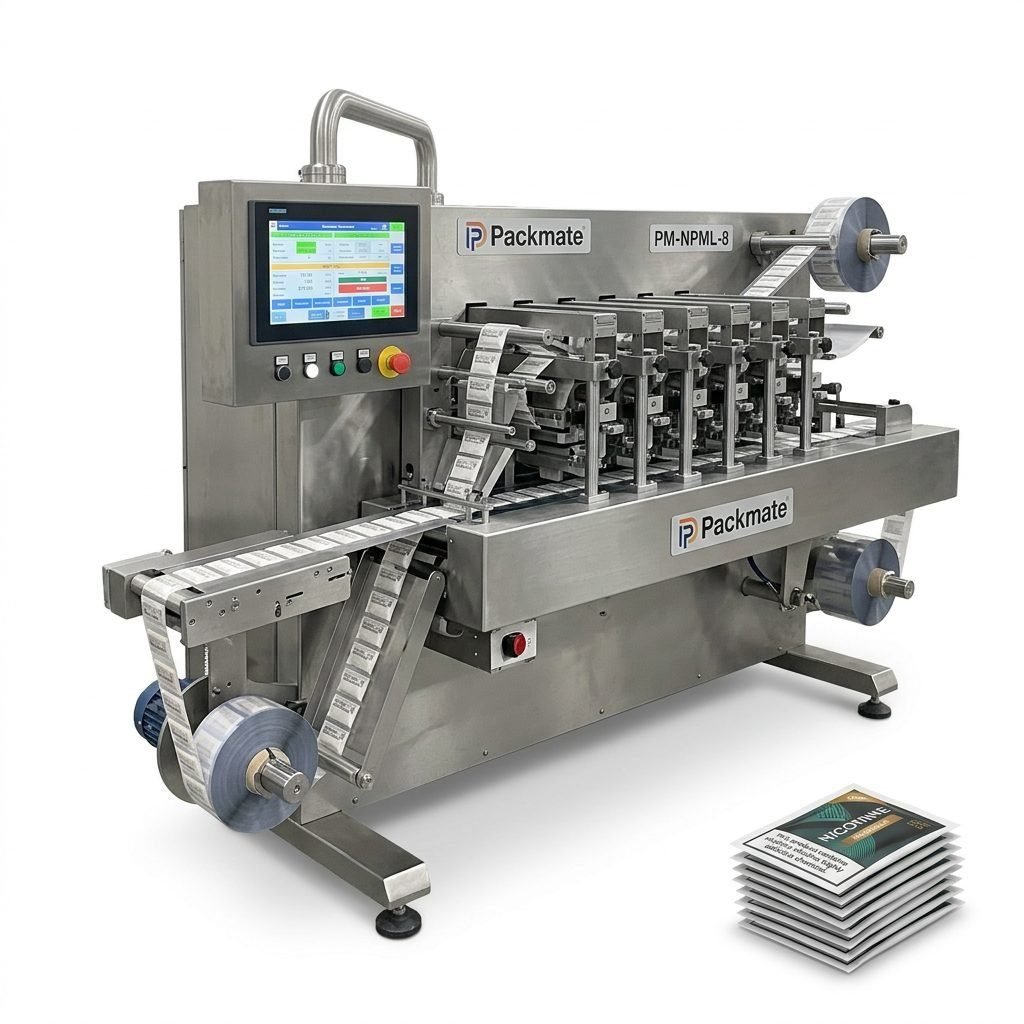
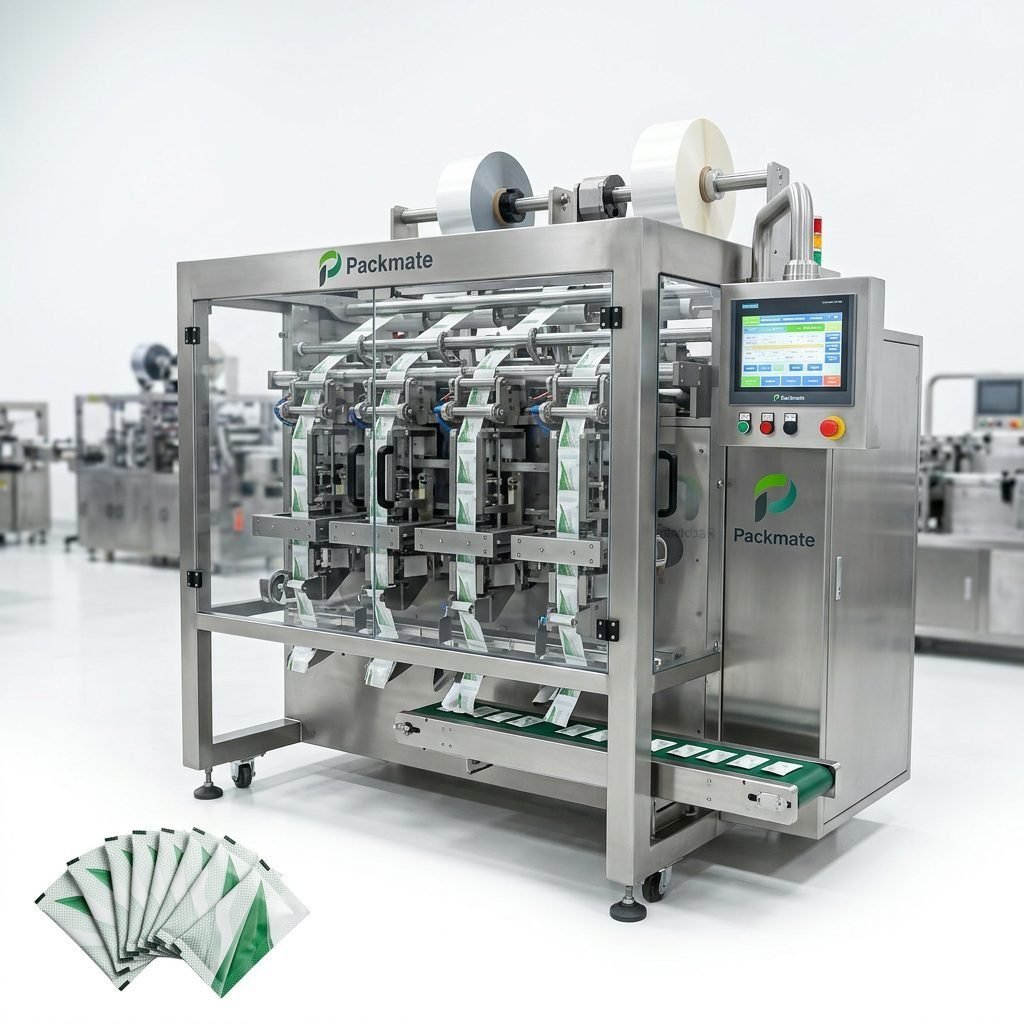
In today’s fast-moving nicotine pouch market, manufacturers demand packaging systems that deliver high throughput, consistent pouch quality, and flexible product handling. This article explains complete nicotine pouch production equipment and turnkey pouch-making line solutions designed to meet industrial needs — from single-lane sachet machines to multi-lane high-efficiency lines with integrated weighing, filling, and secondary packaging.
Overview of a Complete Nicotine Pouch Production Line
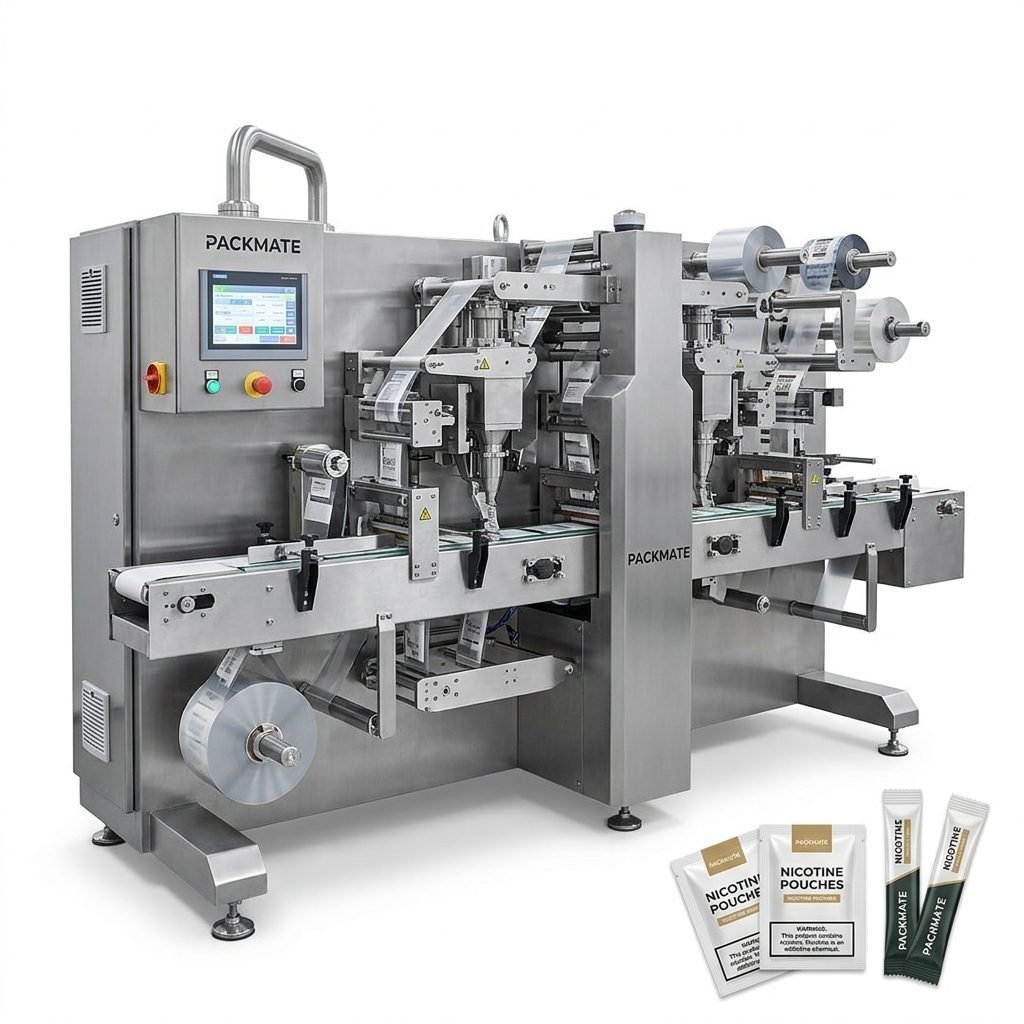
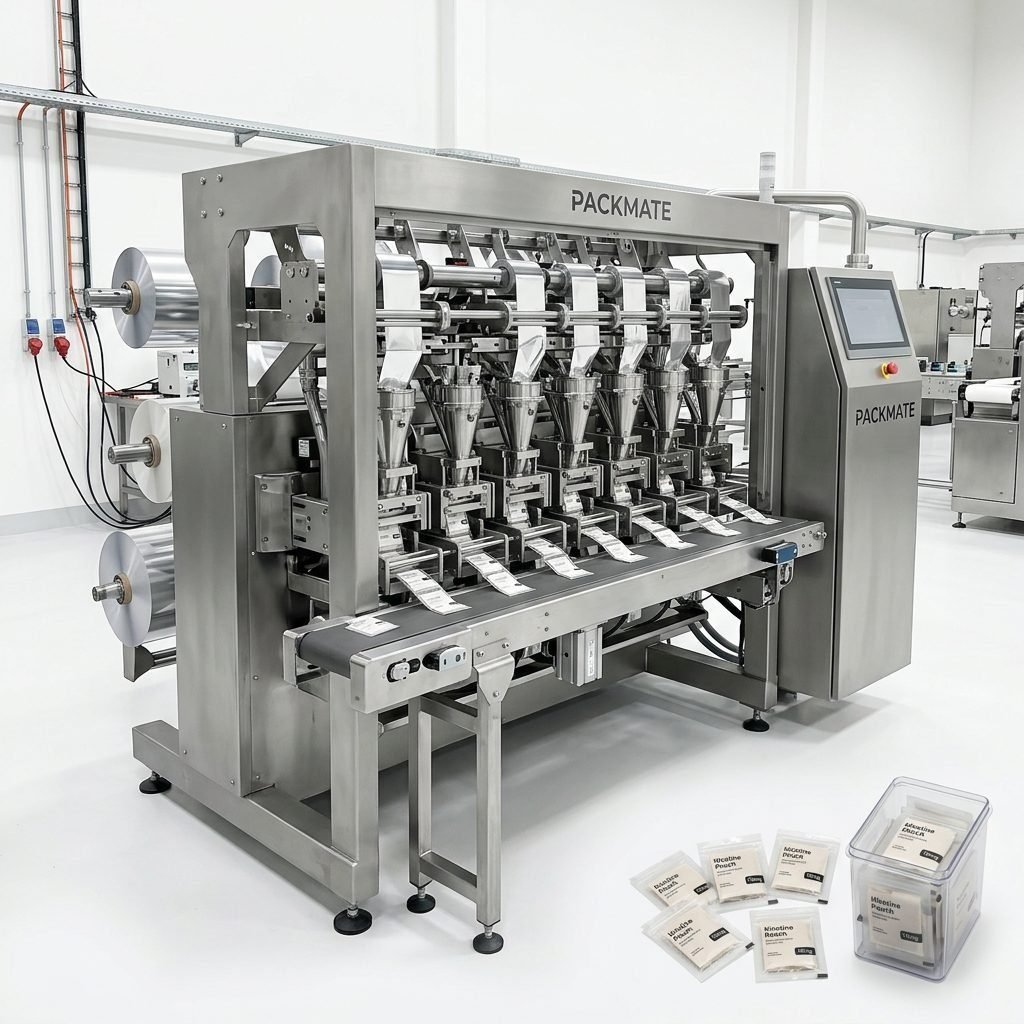
A modern nicotine pouch production line is a coordinated system of machines that takes raw material — typically powdered or granulated nicotine blend and pouch substrate — and produces finished, sealed pouches ready for secondary packaging and distribution. Key modules include:
🔧 Forming & Pouch Making: Machines that cut, form and seal small-dose pouches (round, oval, or teardrop shapes) with precise dosing tolerance.
⚖️ Dosing & Weighing Systems: High-precision multi-head or single-head weighers ensure each pouch holds the correct dose for compliance and consistency.
🔁 Transfer & Accumulation Conveyors: Gentle transfer mechanisms protect delicate pouches through the line at high speed.
📦 Secondary Packaging: Stick pack, sachet, carton, or tray packaging equipment integrates with the primary line for finished product presentation.
🛠️ Ancillary Equipment: Inspection systems, metal detectors, nitrogen flushing, and labeling modules complete the production ecosystem.
Key benefit: Integrated lines reduce manual handling, improve hygiene, and boost line uptime — crucial for manufacturers scaling production to meet market demand.
Core Components Explained
Pouch Forming & Sealing Machines
The primary pouch machine shapes the substrate (typically water-soluble or fiber-based material), fills the measured dose, and seals the pouch with repeatable accuracy. Modern designs include servo-driven motion control for precise timing, easy tooling changeovers for different pouch shapes, and quick-clean features for GMP compliance.
Dosing and Weighing Systems
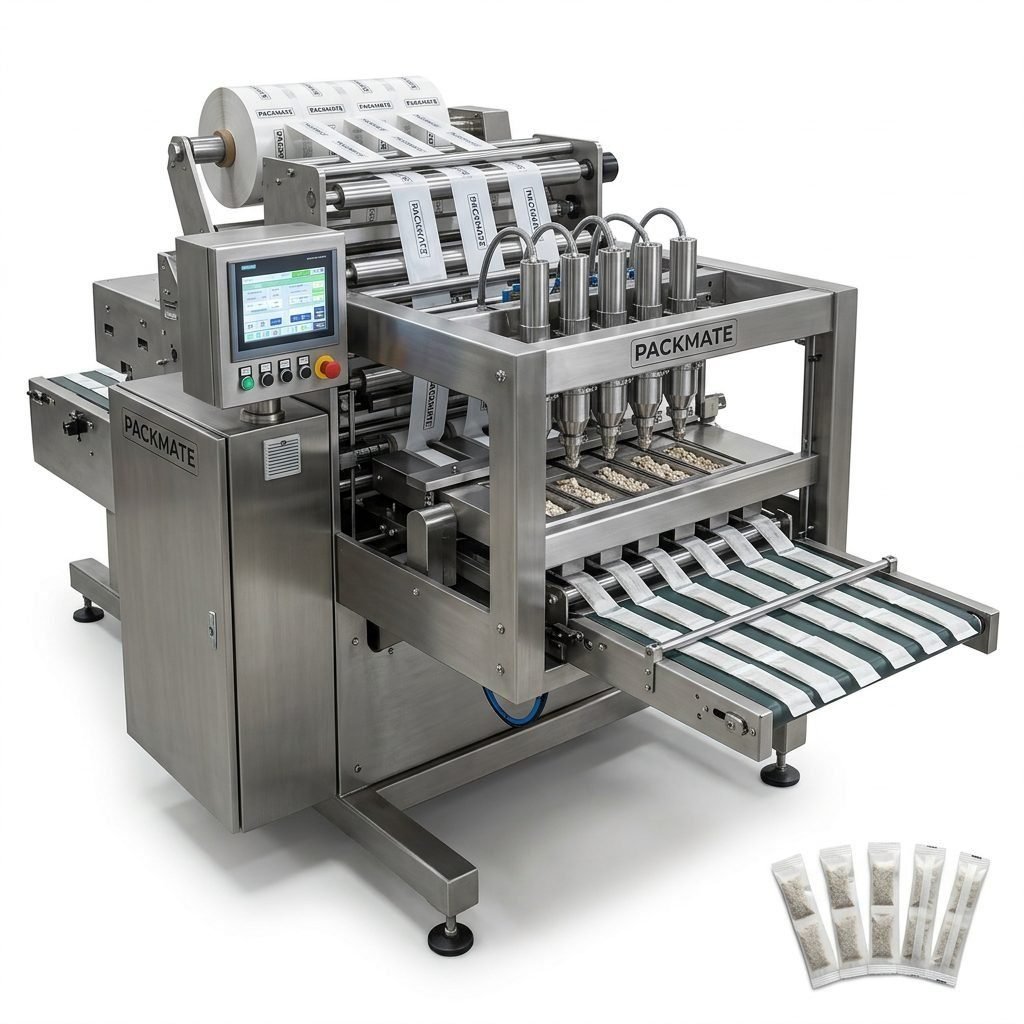
Typical dosing solutions range from vibratory feeders and volumetric dosers for free-flowing granules to auger or loss-in-weight systems for higher precision. For nicotine pouches where dose consistency is critical, multi-head weighers or combination weigh/dose systems deliver sub-1% deviation when properly configured.
Multi-Lane Configurations
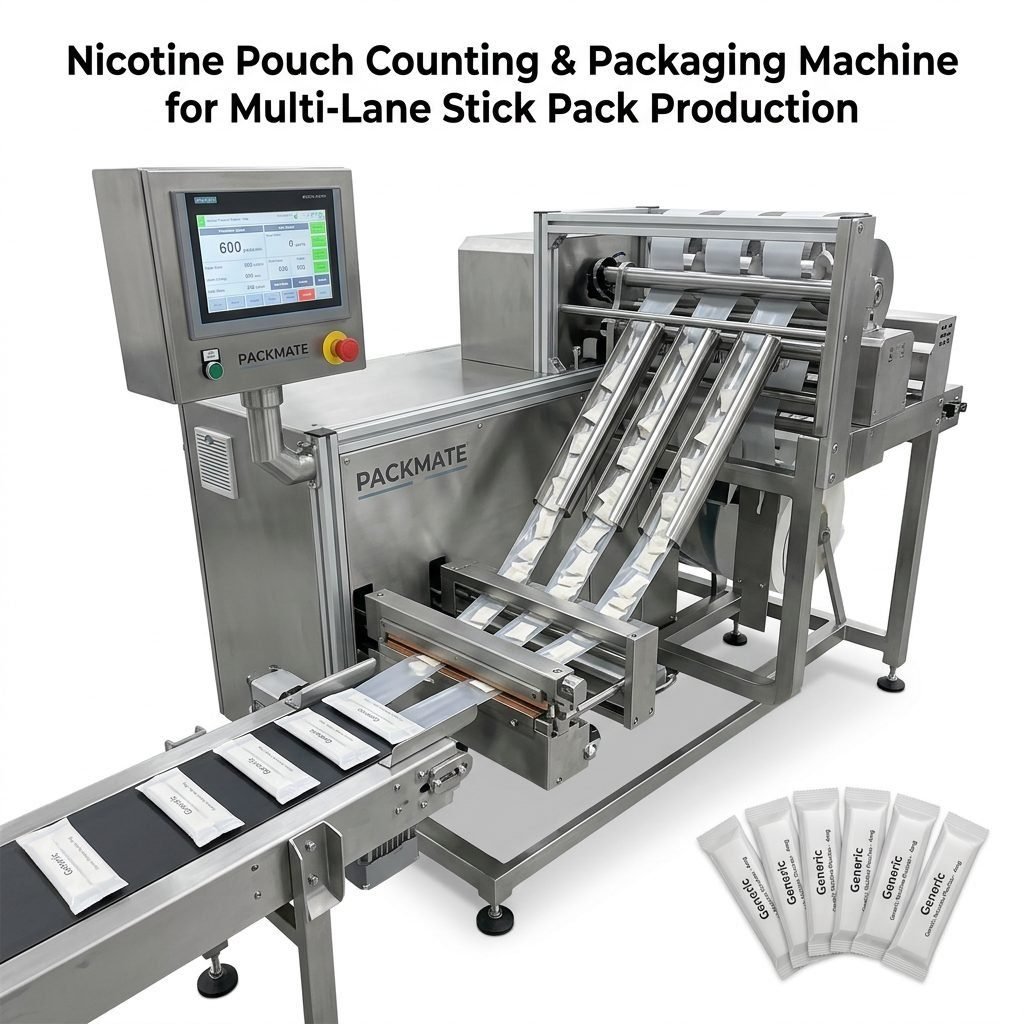
To maximize throughput without compromising footprint, many manufacturers adopt multi-lane pouch lines that run multiple parallel pouch tracks from a single forming head. Packmate’s multi-lane systems exemplify how 4, 8 or more lanes can multiply output while keeping synchronization and indexing tightly controlled.
Tip: When evaluating multi-lane options, confirm changeover time, maintenance accessibility, and spare parts availability — all factors that influence effective OEE (Overall Equipment Effectiveness).
Design Considerations for Nicotine Pouch Lines
Select equipment based on product characteristics, regulatory needs, and production targets. Consider these design elements:
• Hygienic stainless-steel construction and CIP-compatible components for easy sanitation.
• Servo control and HMI-driven recipes for fast changeovers across pouch sizes and fillings.
• Closed dosing systems and local exhaust to reduce operator exposure to powdered nicotine.
• Flexible secondary packaging modules for different market presentations (retail tins, sachets, blister packs).
Compliance, Safety & Certifications
Global customers require equipment that meets CE and ISO requirements, as well as local regulatory expectations for nicotine product manufacturing. Look for:
• Certified electrical and mechanical safety features.
• Documentation for IQ/OQ/PQ validation and traceable material certifications.
• Options for explosion-proof or dust-control features in high-risk environments.
• After-sales service and spare parts agreements to maintain compliance during the machine lifecycle.
Customization & Turnkey Solutions
A true turnkey provider not only supplies machinery but designs a line around product recipes, factory layout, and throughput goals. Customization options include specialized dosing systems, modified pouch shapes, automated case packing, and robotized palletizing. Packmate (GuangDong) Co., Ltd. provides tailored solutions informed by decades of experience, with factory capabilities to build, test and deliver complete production lines.
Why Choose a Turnkey Supplier?
Choosing a single-source supplier reduces integration risk, accelerates commissioning, and simplifies service contracts. A turnkey partner will handle site surveys, utility requirements, factory acceptance tests (FAT), installation, and operator training.
Factory strength: With a 20,000㎡ facility, advanced CNC centers and precision assembly lines, a manufacturing partner can ensure consistent quality and fast lead times.
Case Study Snapshot: Multi-Lane High-Speed Line
Imagine a four-lane nicotine pouch line designed to deliver 200,000 pouches per hour. Key elements include synchronized pouch forming heads, a centralized multi-head weighing unit feeding four lanes, automated pouch orientation, and downstream stick-pack modules. The system uses PLC and HMI for recipe recall and centralized diagnostics that minimize downtime and enable remote support.
Integration with Upstream & Downstream Processes
A full production line integrates with upstream mixing and milling units to ensure raw material homogeneity, and with downstream processes like carton erecting, labeling, and palletizing. Seamless ERP and MES connectivity supports traceability, lot control, and production reporting.
Operation, Maintenance & Training
To protect product quality and maximize uptime, prioritize equipment with:
• Clear daily and preventive maintenance plans.
• Quick-change tooling and modular parts for rapid product swaps.
• On-site commissioning and operator training by experienced engineers.
• Remote diagnostics and spare parts stocking for reduced MTTR (mean time to repair).
Selecting the Right Supplier
When evaluating suppliers, consider these vendor attributes:
• Proven industry experience and wide machine portfolio.
• Manufacturing capacity and quality control systems.
• Certification and compliance documentation.
• Strong global after-sales network and spare parts availability.
Packmate’s product lines — from Snus & Nicotine Packaging Machines to Bag & Pouch Packaging Machines and Sachet & Stick Pack Machines, demonstrate a wide range of solutions tailored to nicotine pouch manufacturers.
After-Sales & Global Support
A reliable supplier offers spare parts, rapid technical support, remote troubleshooting, and periodic maintenance visits. As you scale production, consider agreements that include preventative services, training refreshers, and software upgrades. Check a supplier’s exhibition presence and customer case studies for real-world performance — Packmate regularly showcases equipment at global exhibitions and publishes case examples.
For additional resources on specific subsystems, explore their equipment pages such as Filling & Packaging Lines and Weighing & Packaging Systems.
Company note: With over 30 years of engineering experience and a 20,000㎡ manufacturing facility, Packmate offers 50+ machine models and custom turnkey solutions that meet CE and ISO standards.
Cost Factors & ROI
Initial investment includes machinery, installation, validation, and staff training. Operating costs include consumables, energy, maintenance, and spare parts. Key drivers of ROI:
• Production speed and yield improvements.
• Reduced labor through automation.
• Lower waste and better material utilization with precise dosing.
• Faster time-to-market due to turnkey integration and supplier support.
Getting Started: Practical Steps
1. Define production targets, pouch formats, and regulatory constraints.
2. Request machine specifications, references, and FAT videos from suppliers.
3. Plan your factory layout and utilities with supplier input.
4. Negotiate acceptance tests, commissioning timelines, and training packages.
5. Implement a spare parts and preventive-maintenance strategy before full production begins.
Useful Links
Learn more about supplier capabilities and services at their About Packmate page and view live demonstrations by visiting Our Exhibition. For project inquiries, use the Contact Us portal.
Final Considerations
Selecting the right nicotine pouch production equipment requires balancing throughput, product variability, regulatory compliance, and total cost of ownership. A trusted partner with deep experience in snus and nicotine packaging can simplify that process and deliver a reliable, high-efficiency production line.
Common Questions
Q1: How do I choose between single-lane and multi-lane pouch machines?
Consider your target hourly output, available floor area, and product changeover frequency. Multi-lane systems maximize throughput in a compact footprint but may increase complexity for frequent format changes.
Q2: What are the critical maintenance requirements for nicotine pouch lines?
Regular cleaning, inspection of sealing tooling, calibration of dosing systems, and replacement of wear parts are essential. Establish preventive maintenance schedules and keep critical spares on hand.
Q3: Can the same line handle different pouch sizes and fillings?
Yes — with quick-change tooling, recipe-based PLC/HMI control and modular dosing, a single line can support multiple pouch sizes and filling types with minimal downtime.
Q4: How important is supplier certification and factory validation?
Extremely important. Certifications like CE and ISO confirm safety and quality management; factory acceptance tests (FAT) and validation documentation support regulatory compliance and smoother commissioning.
Q5: What support should I expect after installation?
Look for remote diagnostics, spare parts availability, training refreshers, and scheduled preventive maintenance. A strong after-sales network ensures high uptime and faster issue resolution.