Choosing the right snus packaging machinery manufacturer for production in Israel involves more than comparing prices and lead times. It requires understanding local regulations, consumer preferences, production capacity needs, and long-term service support. This guide walks you through practical steps and decision points to help Israeli manufacturers, importers and contract packers select a partner who delivers reliable snus and nicotine pouch packaging lines that meet both technical and market requirements.
Understand the Israel Market & Local Preferences
The Israeli market has particular habits and regulatory nuances. Consumers value discreet, high-quality packaging and consistent pouch sizing. Local retailers and kiosk networks also expect compact, efficient production runs and packaging formats that travel well through hot climates. When vetting potential manufacturers, prioritize partners who understand these market traits and can adapt machine settings to produce consistent seams, puncture-resistant pouches and accurate fill weights even for small-dose products.
Why local habits matter
In Israel, supply chains run across varied climates and retailers. Machines that can produce robust barrier films, tamper-evident sealing, and a variety of pouch formats will help your product stay intact and attractive on shelves and in transit. Also consider packaging speed and changeover flexibility: many local brands favor seasonal promotions and frequent SKU updates.
: Test how samples behave under Israeli summer temperatures and during long truck routes — your manufacturer should support testing protocols and adjustments.
1. Check Certifications & Regulatory Compliance
Regulatory compliance is essential for nicotine and snus packaging equipment. Look for manufacturers whose machines carry international certifications such as CE and ISO registers, which indicate a baseline for safety and quality. Ensure the manufacturer understands export documentation and sanitary requirements for food-contact surfaces, even if the product is not food — many principles overlap.
Documentation to request
Ask for factory certifications, machine test reports, material certificates for contact parts, and any third-party inspection records. A reputable manufacturer will readily provide traceable paperwork and allow third-party audits.
2. Identify the Right Machine Type & Line Configuration
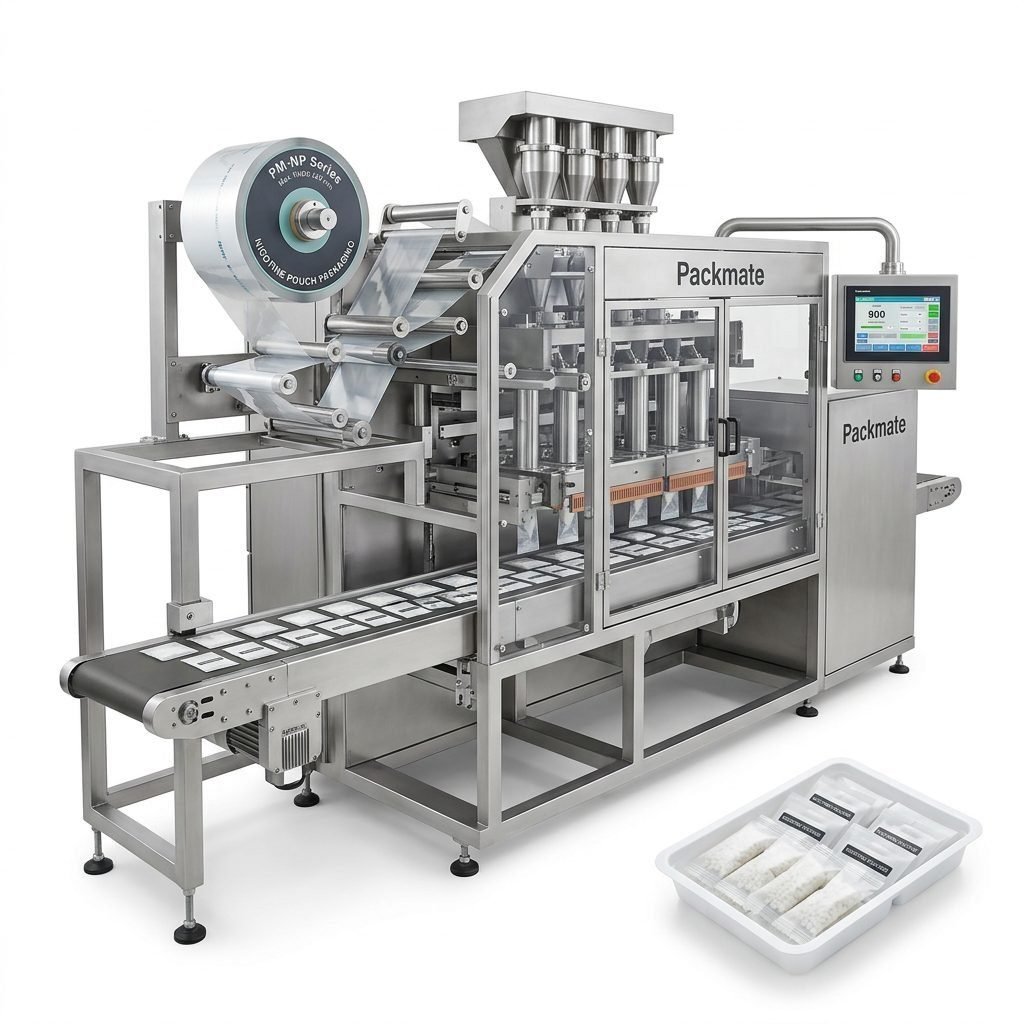
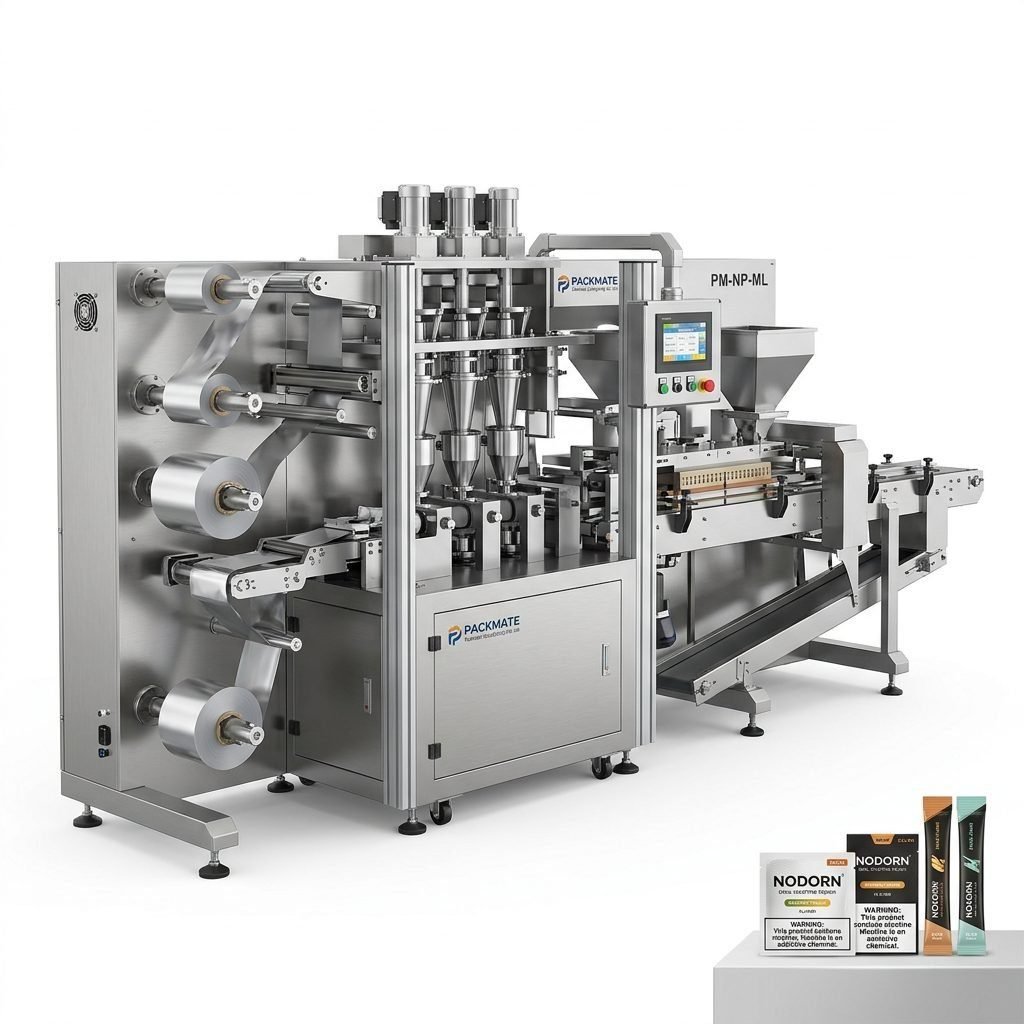
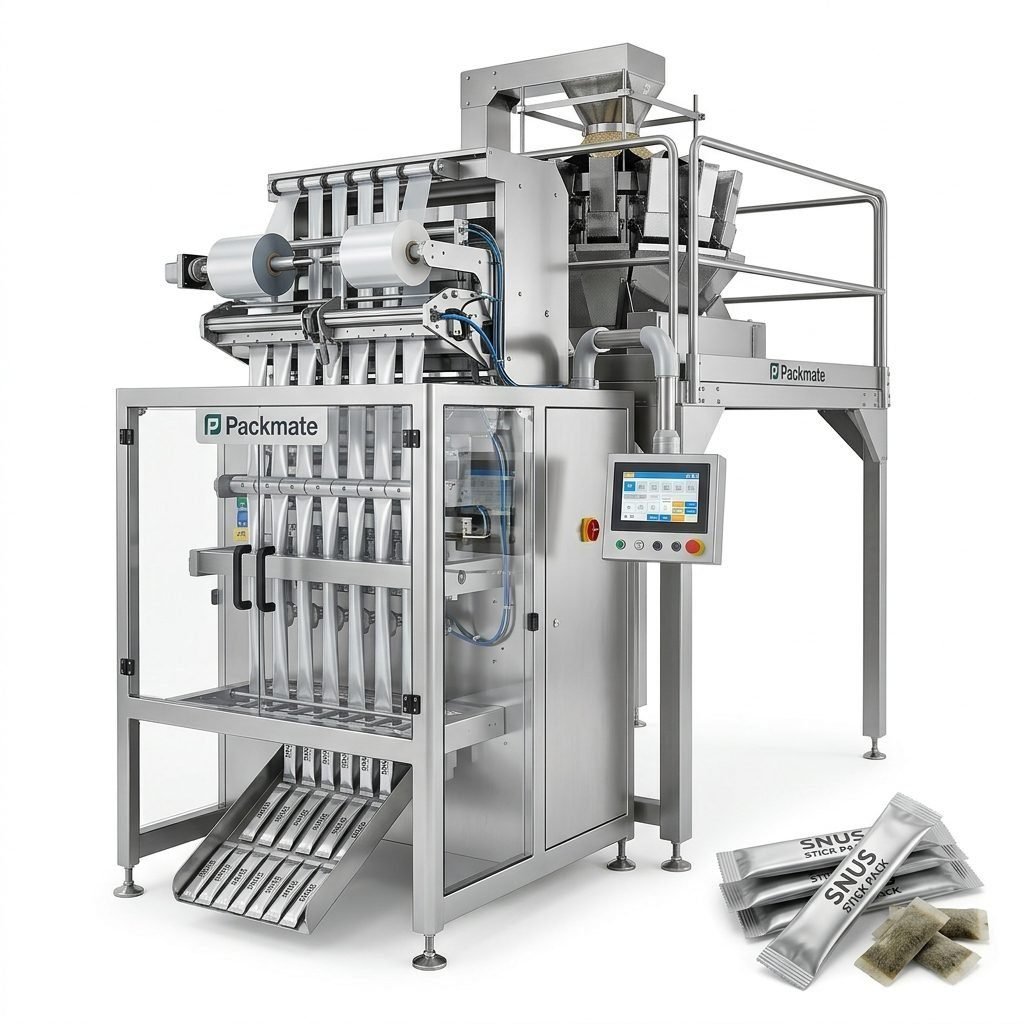
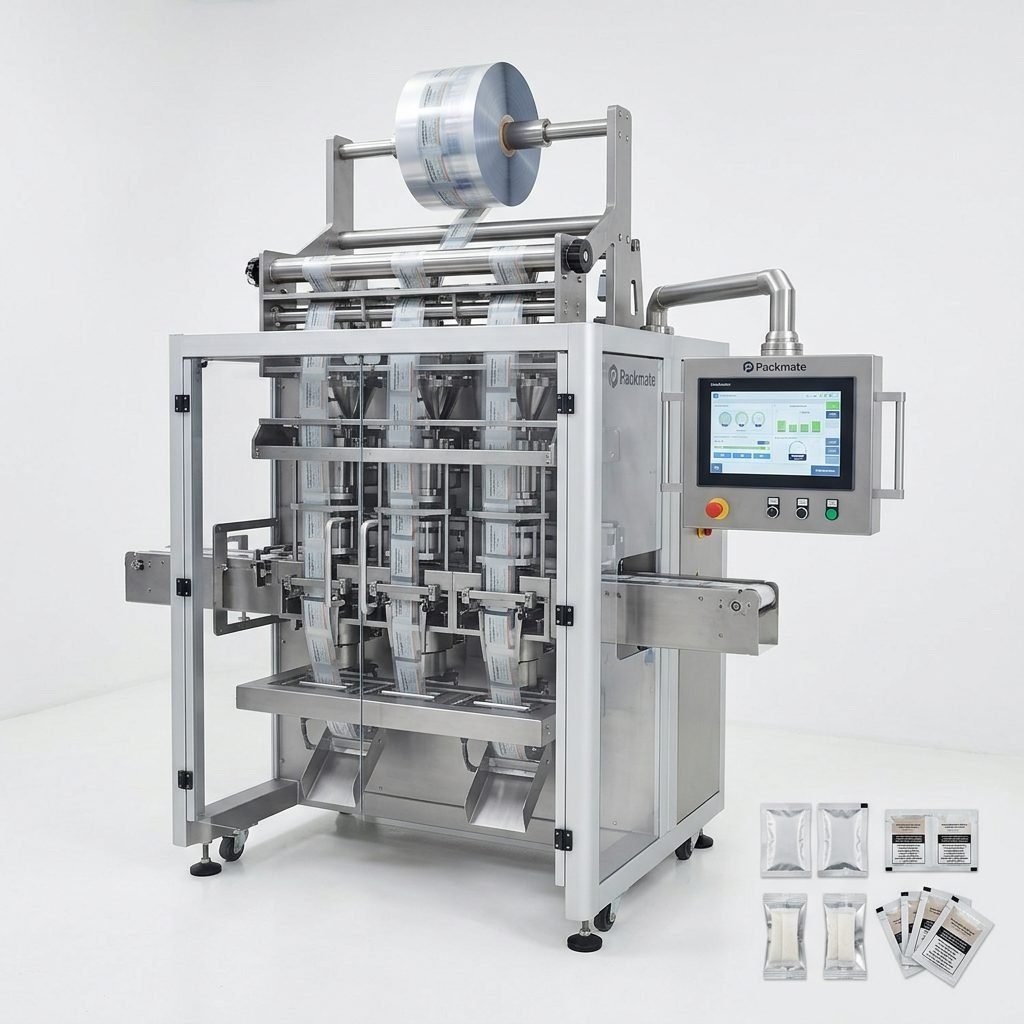
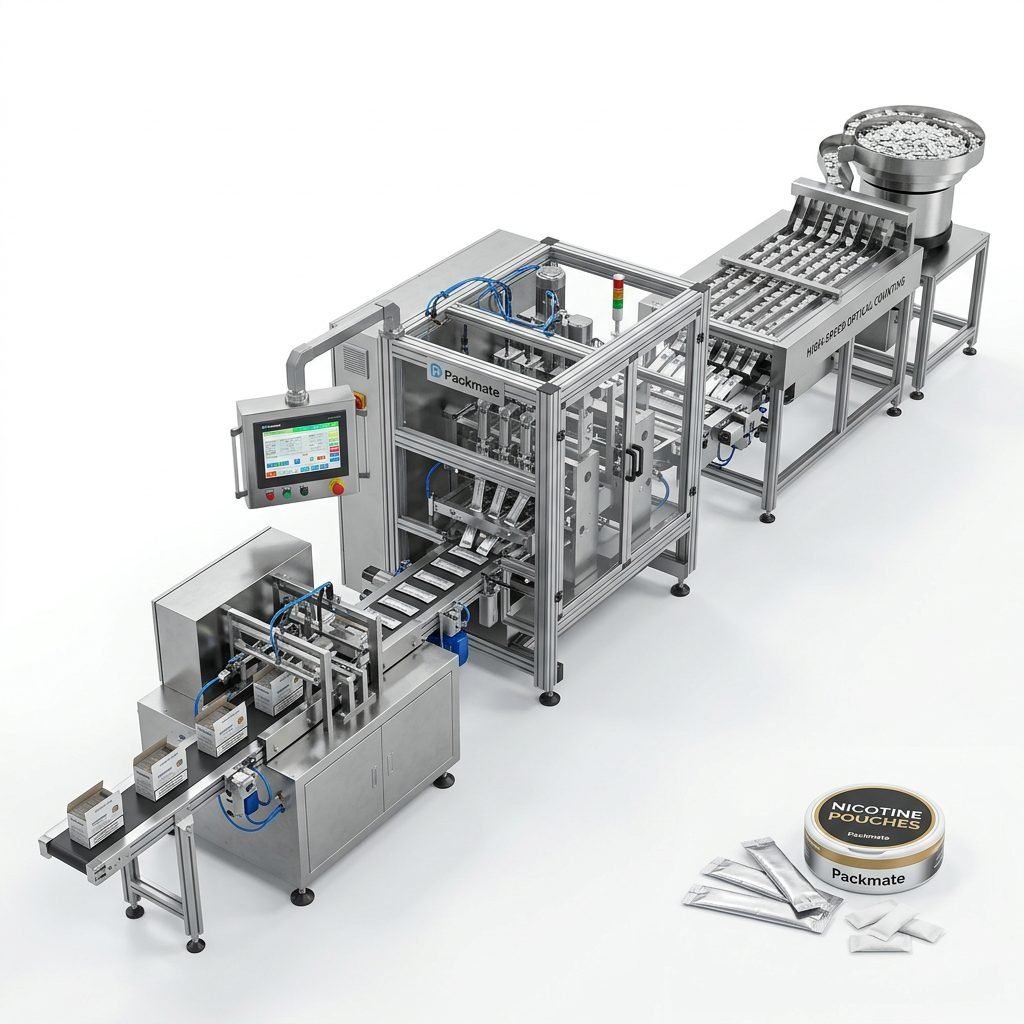
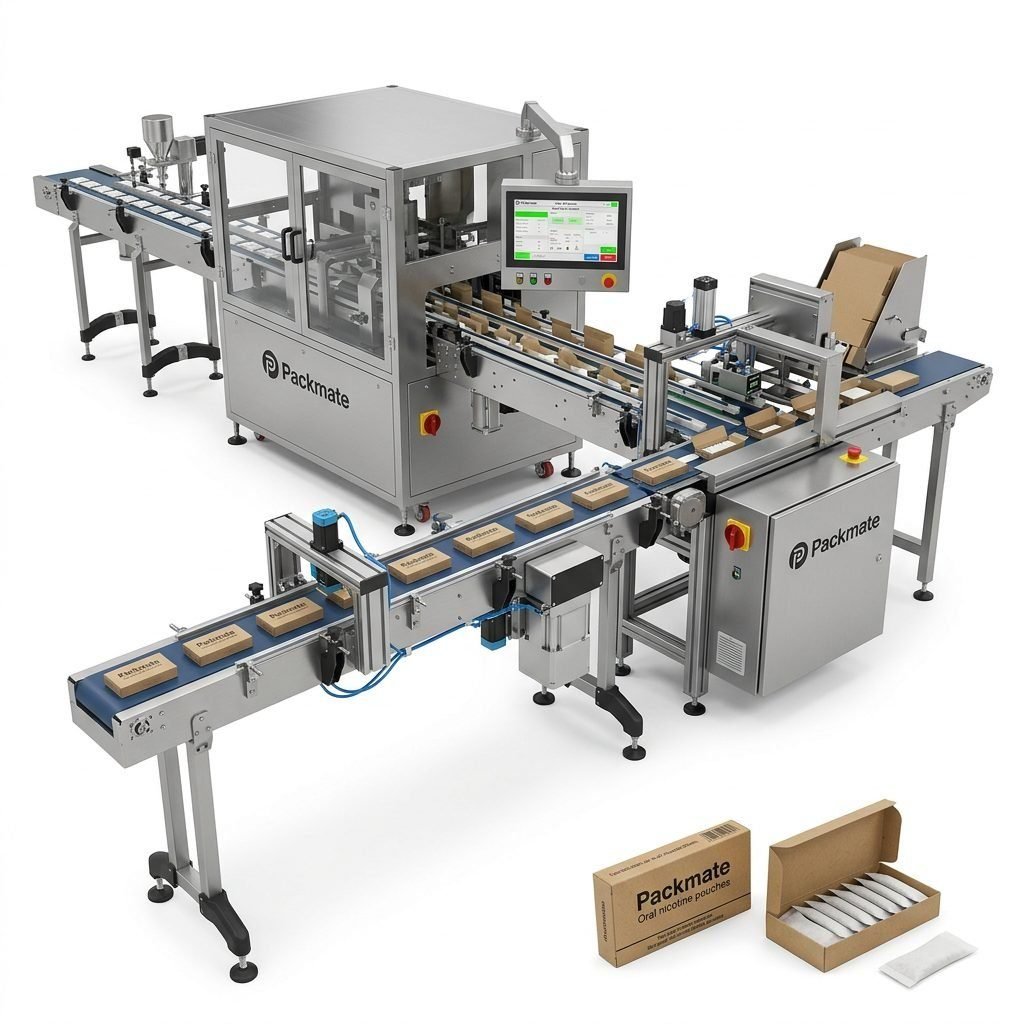
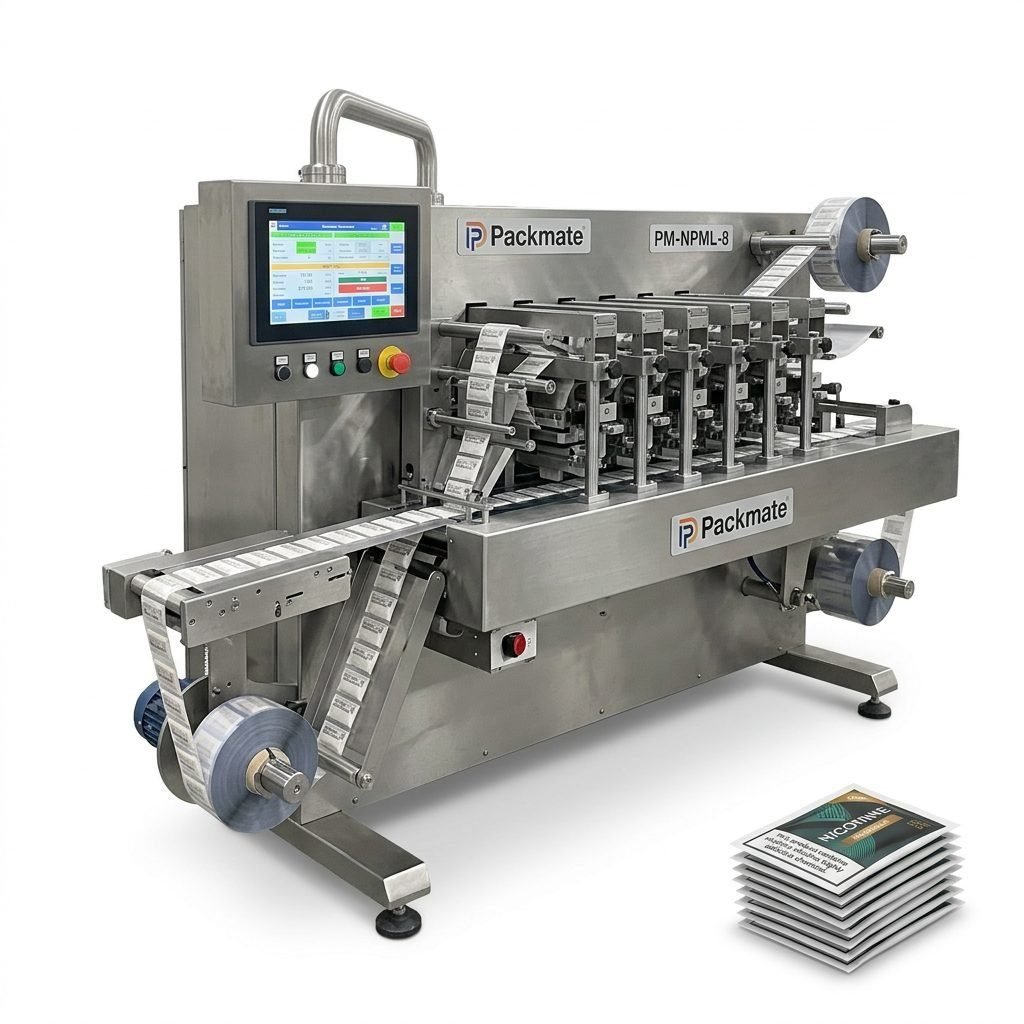
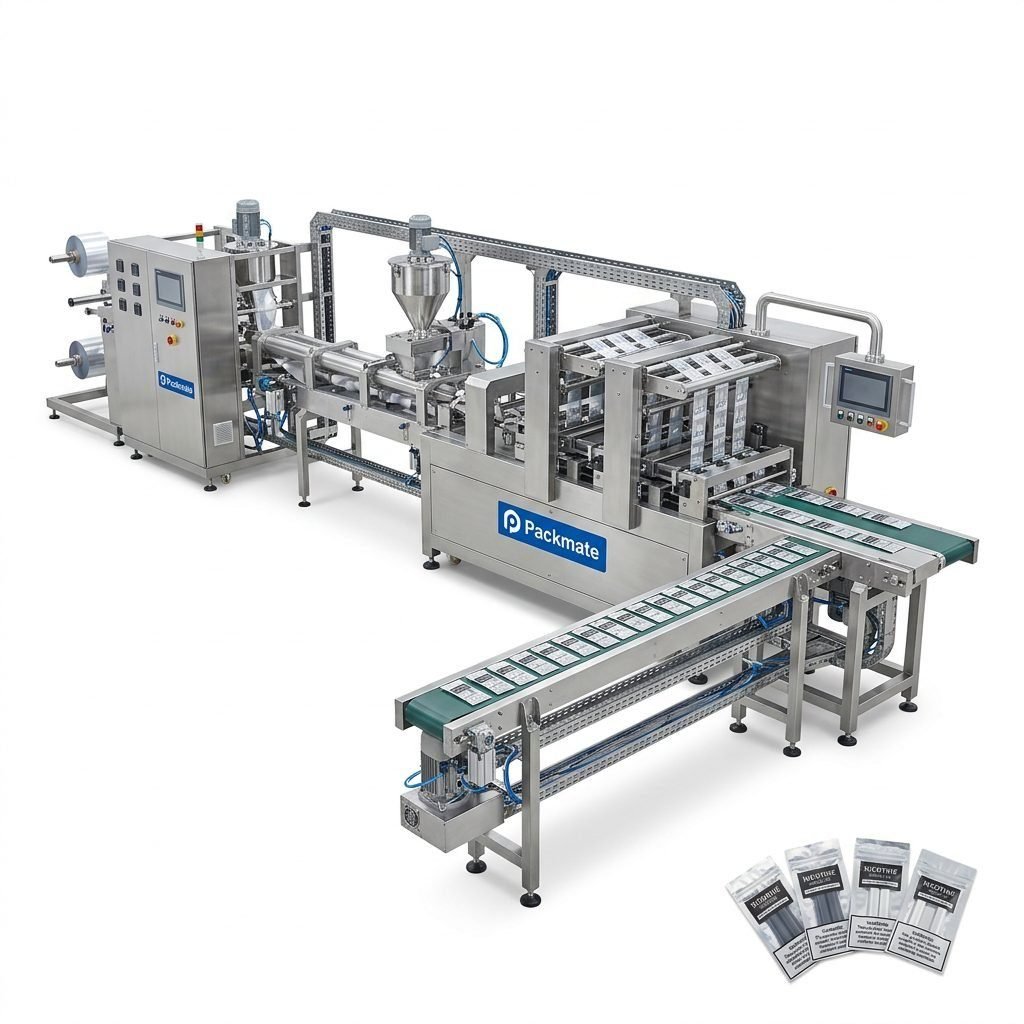
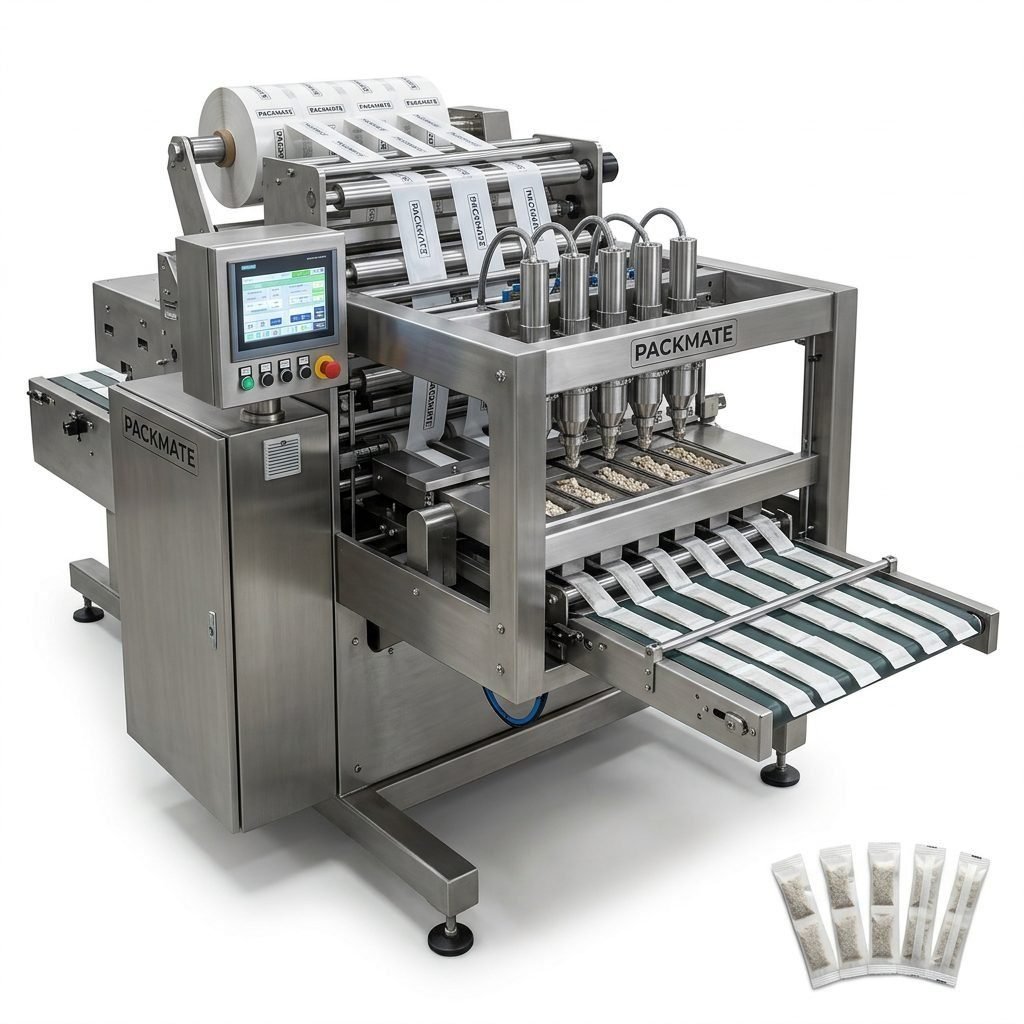
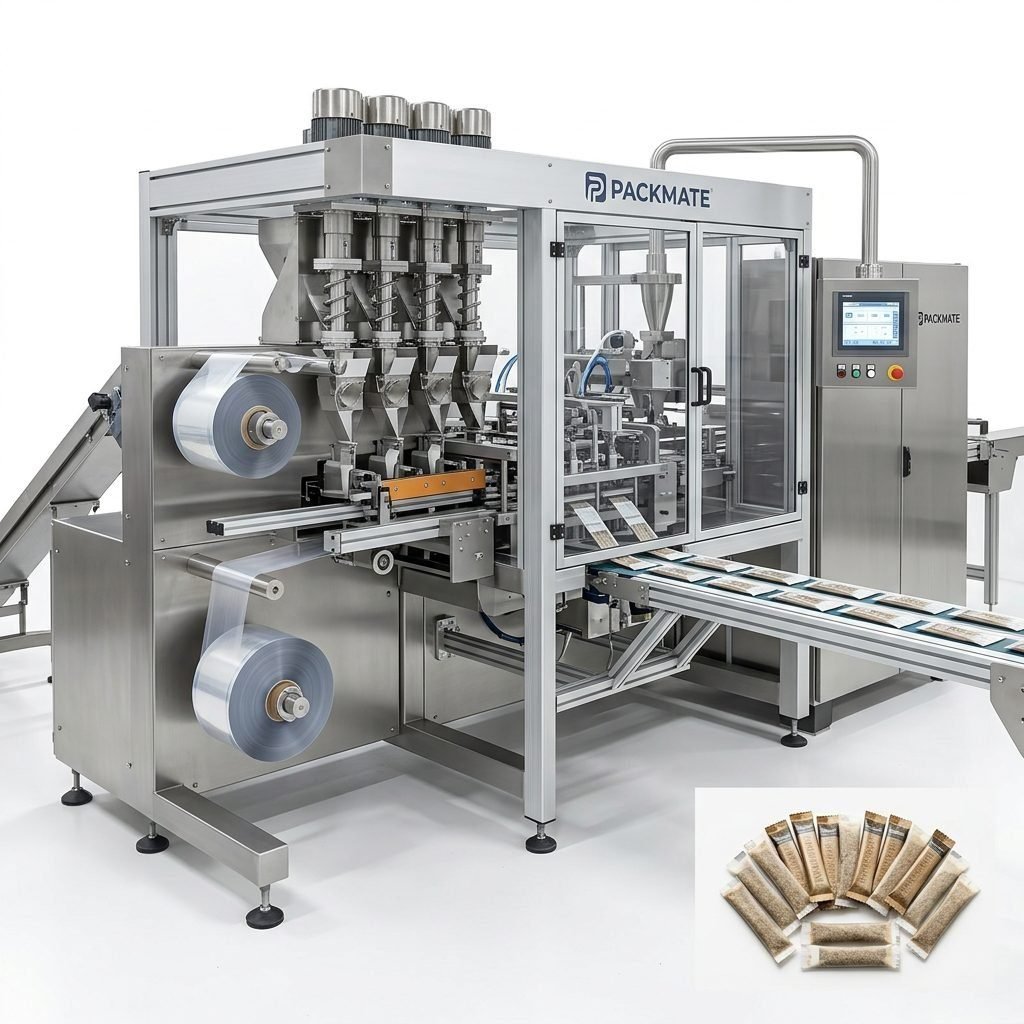
Snus and nicotine pouches can be produced on various machine types: stick pack, sachet, multi-lane pouch machines and fully integrated filling & packaging lines. Match the machine style to your product format and target output. If you need high throughput multi-lane folding and sealing for small-dose pouches, consider advanced multi-lane systems that minimize cross-contamination and maintain dose accuracy.
Explore product categories and models such as Snus & Nicotine Packaging Machines and Sachet & Stick Pack Machines to compare technical capabilities and lane configurations.
: 📦 = packaging format, ⚙️ = mechanical complexity, ✅ = recommended for Israel.
3. Capacity, OEE & Scalability
Consider current demand and future growth. Machine speed isn’t the only metric — Overall Equipment Effectiveness (OEE), changeover time, and availability for preventive maintenance determine real output. A manufacturer should provide performance data from existing lines including uptime, reject rates and average changeover durations.
Ask the supplier for:
– Validated output figures under real product conditions.
– Recommendations for spare parts and maintenance intervals.
– Options to upgrade lanes or integrate additional modules like weighing, metal detection, or secondary packaging.
4. Turnkey Solutions & Customization
Many customers in Israel prefer partners who offer turnkey production lines — from filling to primary pouch packaging and secondary case packing. Check whether the manufacturer provides custom engineering to match your product dosing, pouch materials, and desired secondary packaging. Companies with a broad product range and modular systems, including Filling & Packaging Lines, are usually better equipped to deliver bespoke solutions.
: A clear scope of supply that lists line integration responsibility, SLAs for commissioning, and training programs for your operators and maintenance team.
5. Automation, Controls & Remote Support
Modern snus packaging lines use PLCs, HMI touchscreens and remote diagnostic capabilities. In Israel, the ability to access remote support can cut downtime drastically. Verify that the manufacturer offers:
– Standardized PLC platforms and spare parts availability;
– Remote access tools for troubleshooting and software updates;
– Operator-friendly HMI screens with multilingual options (English and Hebrew are important for local teams).
6. After-sales Service & Spare Parts Logistics
After-sales support matters more than initial price. Confirm the manufacturer’s spare parts lead times to Israel, warranty terms, and availability of local technicians or certified service partners. A machine is only as good as its maintenance program; fast access to genuine spare parts reduces the risk of extended downtime.
Consider manufacturers who can provide service contracts, training sessions for your maintenance team, and clear escalation paths for emergencies. If a supplier lists international exhibitions and case studies — for example on their exhibition page — it’s a sign they invest in global presence and hands-on demonstrations.
7. Proven Case Studies & Client References
Ask for references from clients with similar product profiles or from nearby markets. Request video demonstrations, performance data, and contactable references. Real case studies that highlight long-term reliability are especially valuable — check the manufacturer’s published cases and testimonials.
8. Factory Tour & Acceptance Testing (FAT)
Whenever possible, conduct a factory acceptance test (FAT) at the manufacturer’s site. A FAT demonstrates the machine running your formula and packaging film and allows you to validate performance before shipping. If travel is limited, ask for live-streamed FAT sessions and recorded test runs with your product.
– Run time and stable speed demonstration
– Fill weight accuracy and pouch integrity tests
– Film feed, sealing quality and leak detection verification
– Operator training session and preventive maintenance review
9. Logistics, Installation & Commissioning in Israel
Plan logistics, customs clearance, and on-site installation in advance. Good manufacturers will offer packing and shipping options tailored to your port and will coordinate with local freight forwarders. During commissioning they should provide on-site engineers for final calibration and operator training. For ongoing projects, a clear commissioning timeline avoids delays and budget overruns.
10. Total Cost of Ownership & ROI
Evaluate Total Cost of Ownership (TCO), not just the purchase price. TCO includes energy consumption, spare parts, consumables, maintenance labor, downtime risk and expected useful life. Ask suppliers for energy usage figures, recommended spare-part kits, and average MTTF (Mean Time To Failure) for critical components.
: Prioritize predictable operating costs and high availability over lowest upfront cost for reliable long-term ROI.
11. Sustainability & Waste Reduction
Waste minimization is increasingly important. Choose machinery with accurate dosing, minimal film waste during changeovers and options for recyclable or mono-layer film compatibility. Manufacturers focused on sustainability can reduce your pack material costs and environmental footprint while meeting consumer expectations in Israel and export markets.
12. Practical Procurement Steps
Follow these procurement steps to ensure a smooth purchase:
1. Compile product specs and target outputs.
2. Shortlist 3–5 suppliers with relevant experience.
3. Request detailed proposals including FAT terms, spare parts kit, and training.
4. Schedule a factory visit or remote FAT.
5. Negotiate SLAs, lead times, shipment terms and warranty clauses.
6. Plan installation, commissioning and operator training well ahead of machine arrival.
Local Partner Example & Resources
When considering suppliers, review their company profile, manufacturing capabilities and timeline. For instance, a manufacturer with decades of experience and a large factory footprint often signals manufacturing maturity and parts availability. Learn more about an experienced supplier’s background on their About Packmate page and contact them through the Contact Us link to request tailored advice and machine demos.
Final Checklist Before Signing
– Confirm machine performance on your actual product.
– Verify written warranty and spare parts lead times.
– Ensure local language support for controls and manuals.
– Agree FAT acceptance criteria and penalties for non-performance.
– Schedule commissioning and operator training dates.
Conclusion
Selecting the best snus packaging machinery manufacturer for Israel demands a balanced assessment of technical fit, compliance, after-sales support, and an understanding of local market behavior. Prioritize manufacturers who provide transparent documentation, empirical performance data, turnkey integration options, and strong remote support capabilities. A carefully selected partner will not only deliver reliable equipment but also help you scale production, comply with regulations and optimize long-term costs.
Common Questions
Q1: How important is a factory acceptance test (FAT)?
A1: Extremely important — it validates machine performance with your product before shipping and reduces commissioning risk.
Q2: What certifications should I require for snus packaging lines?
A2: At minimum, request CE and ISO compliance, material contact certificates and documented safety reports. Also confirm that the supplier understands export documentation for Israel.
Q3: How do I ensure quick spare parts delivery to Israel?
A3: Ask the manufacturer about regional warehouses, recommended spare kits, and typical shipping lead times. Negotiate minimum stock for critical wear parts.
Q4: Can manufacturers customize machines for small-batch and seasonal SKU changes?
A4: Yes — seek suppliers who offer modular designs, fast-change tooling and strong engineering teams that support rapid changeovers and pilot runs.