Entering the Ghanaian nicotine pouch (snus) market requires careful selection of packaging equipment that matches local demand patterns, regulatory requirements, and operational realities. This guide explains how to choose the right nicotine packaging machine for manufacturers in Ghana—covering machine types, technical specs, site planning, regulatory considerations, and after-sales support so you can make a practical, future-proof purchase.
Understanding Ghana’s Market & Local Habits
Ghana’s consumer landscape is shaped by urban centers like Accra and Kumasi, lively informal markets, and a growing youth-oriented retail sector. English is the official language for business and labeling, and many retailers use small kiosks or motorcycle couriers for distribution. When choosing packaging machinery, consider:
- Demand variability: Small batches and multiple SKUs are common—machines with quick format changeover reduce downtime.
- Retail formats: Compact stick packs and single-dose pouches are popular for impulse sales; choose machines that can produce frequent small runs efficiently.
- Power stability: Backup power (generators or UPS) is often needed in Ghana—machines with soft-start and robust servo drives tolerate power dips better.
Local Regulations & Labeling
Regulatory oversight can involve Ghana’s Food and Drugs Authority (FDA Ghana) and customs authorities. Ensure your machine can print or apply multilingual labels (English and local languages if required), batch codes, and expiration dates. For some nicotine products, expect inspection for ingredients declaration and safety labeling—incorporate a coding/printing station into your line.
Which Machine Type Fits Your Product?
Nicotine pouch products come in different forms and pack styles. Choose a machine based on final product type:
Common Packaging Machines
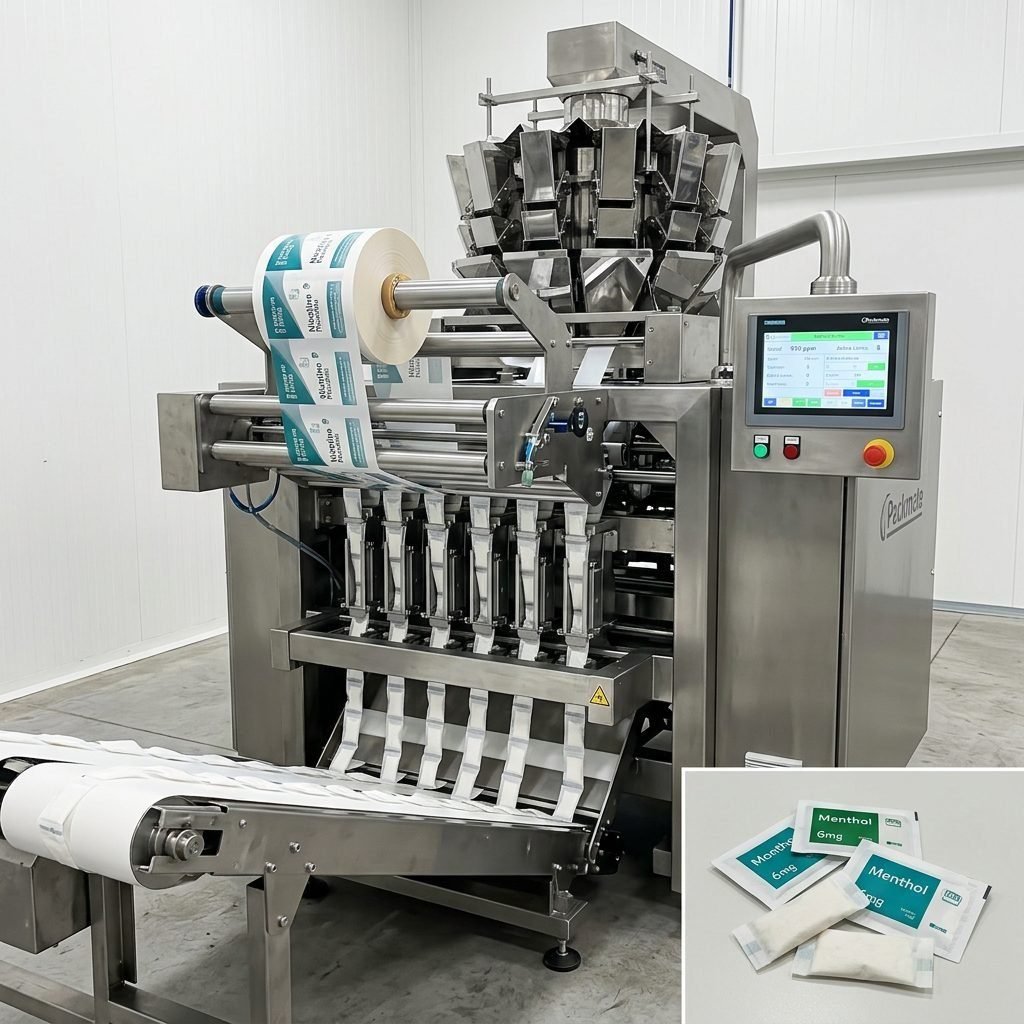
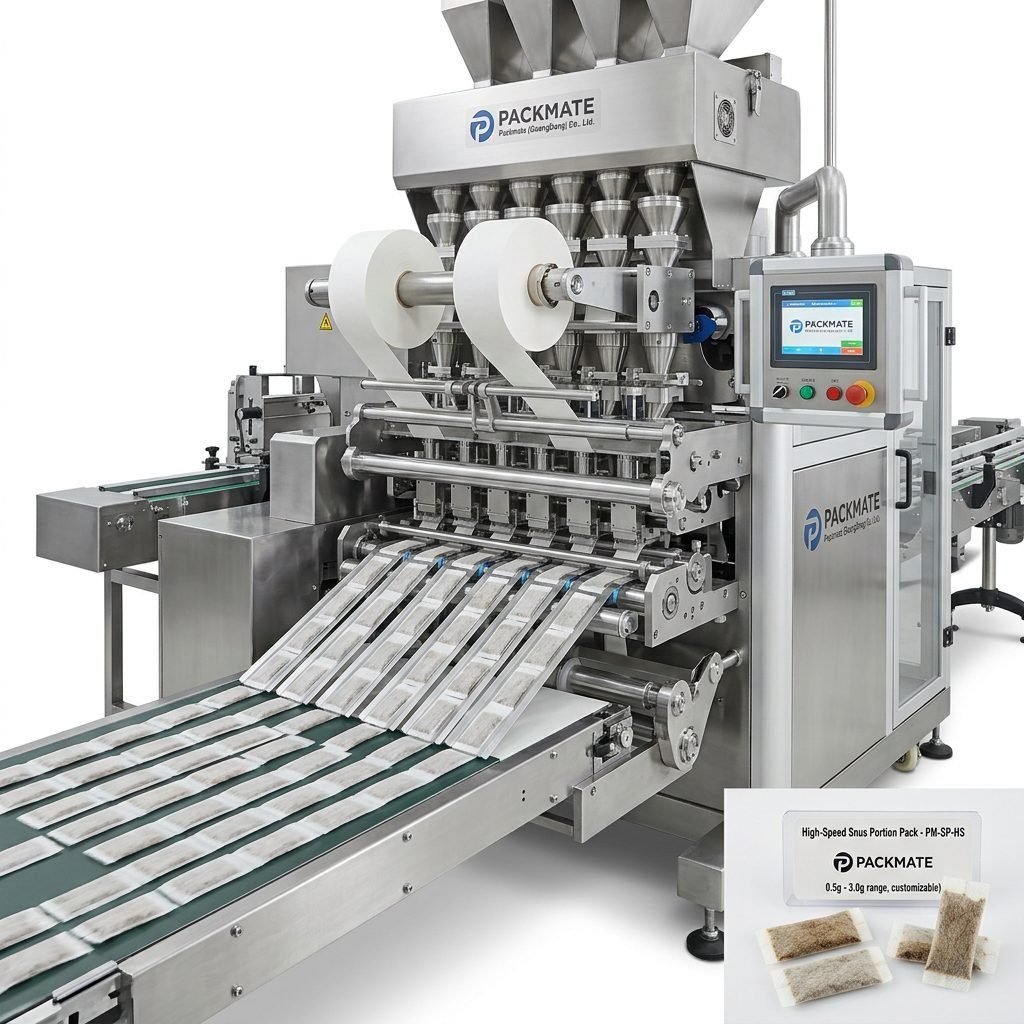
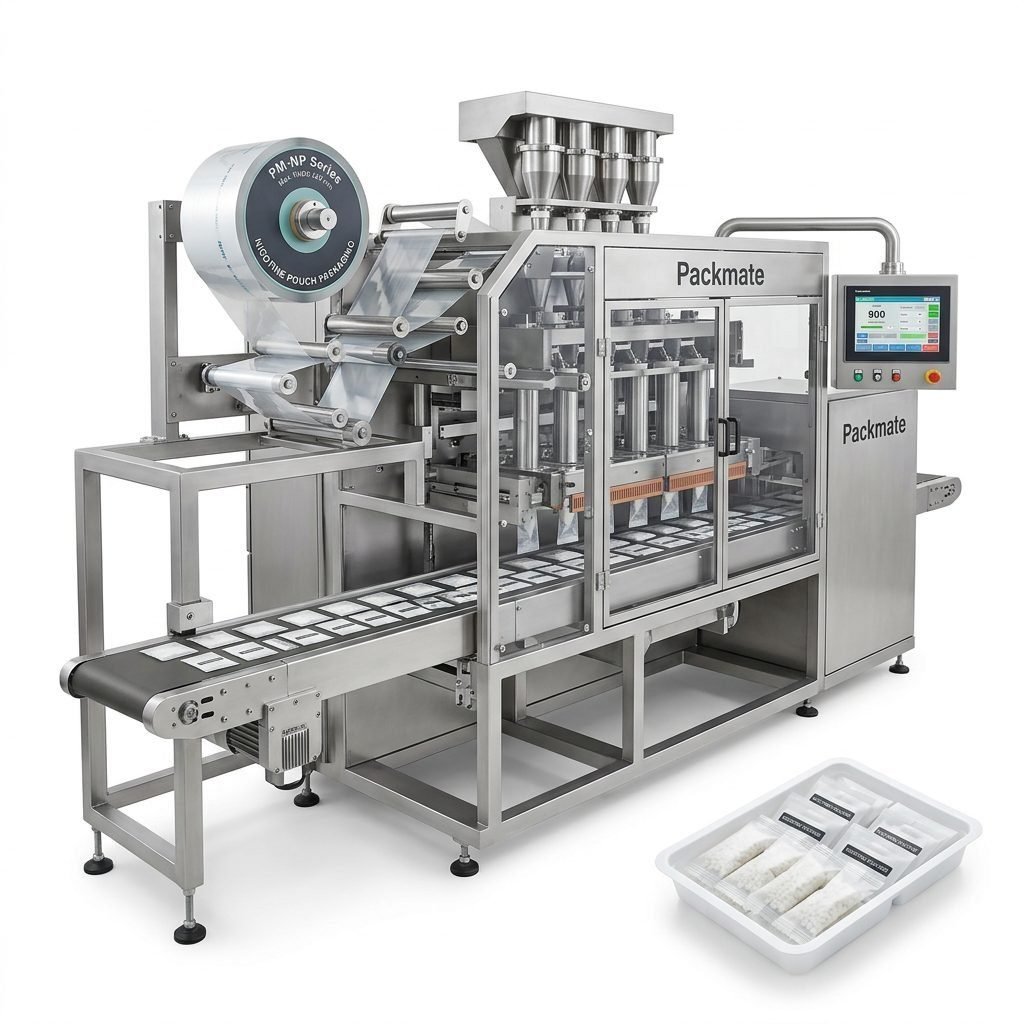
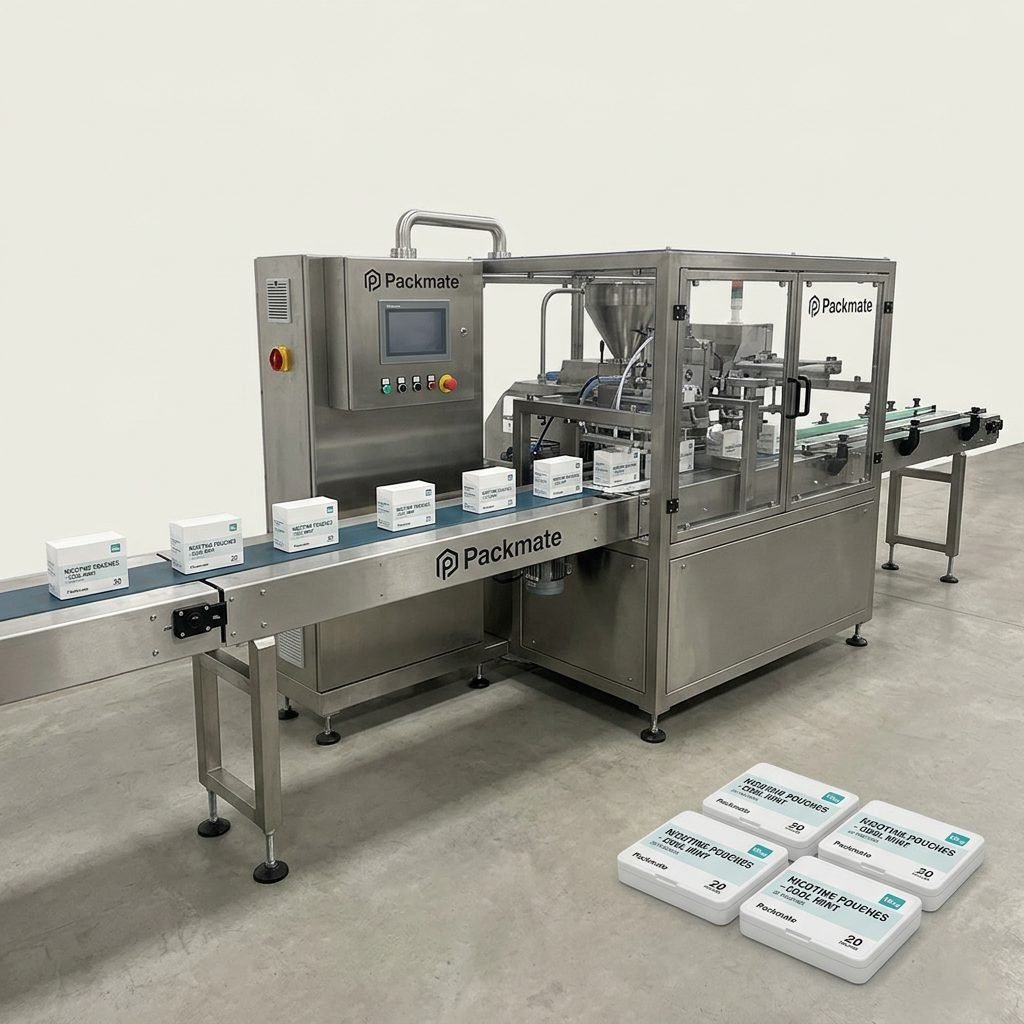
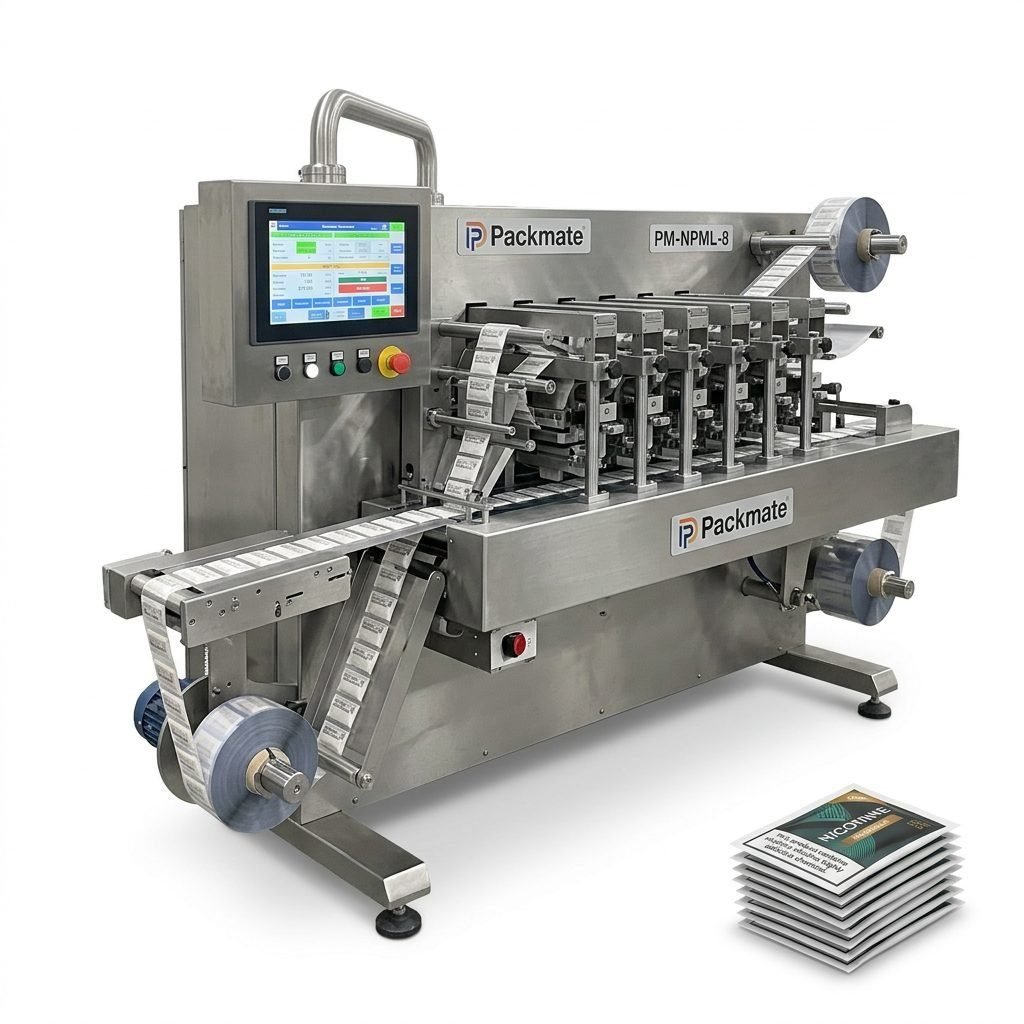
- Snus / Nicotine Pouch Packaging Machines — Ideal for pre-formed pouches and multi-lane pouch formats. (High accuracy dosing for low-weight pouches.)
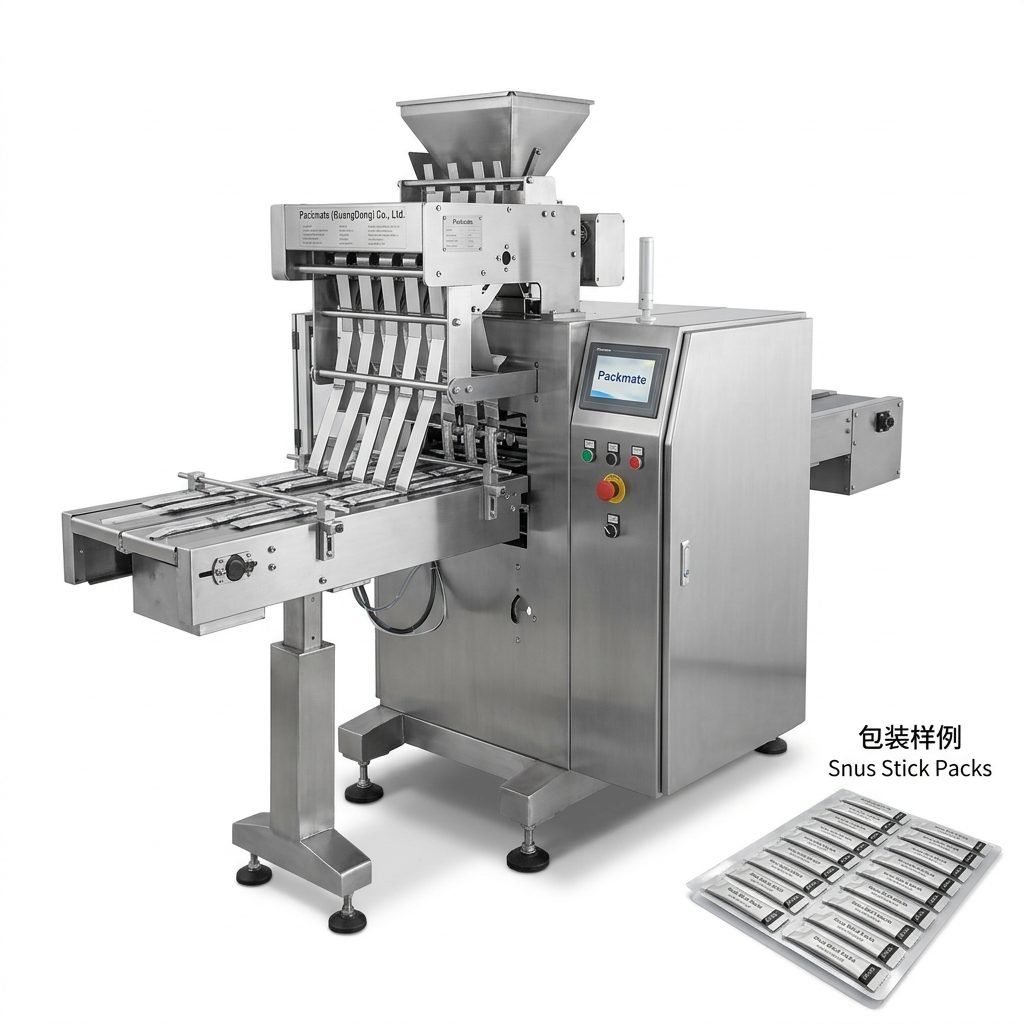
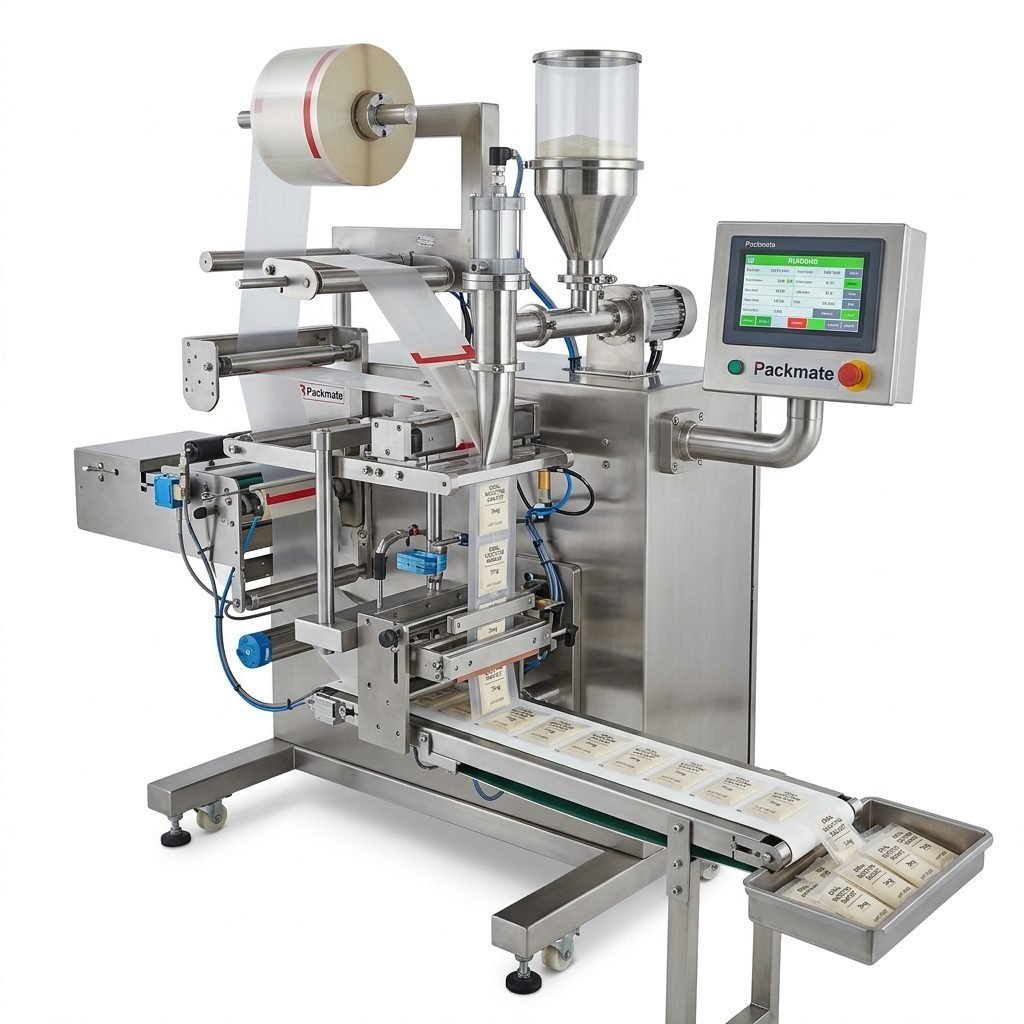
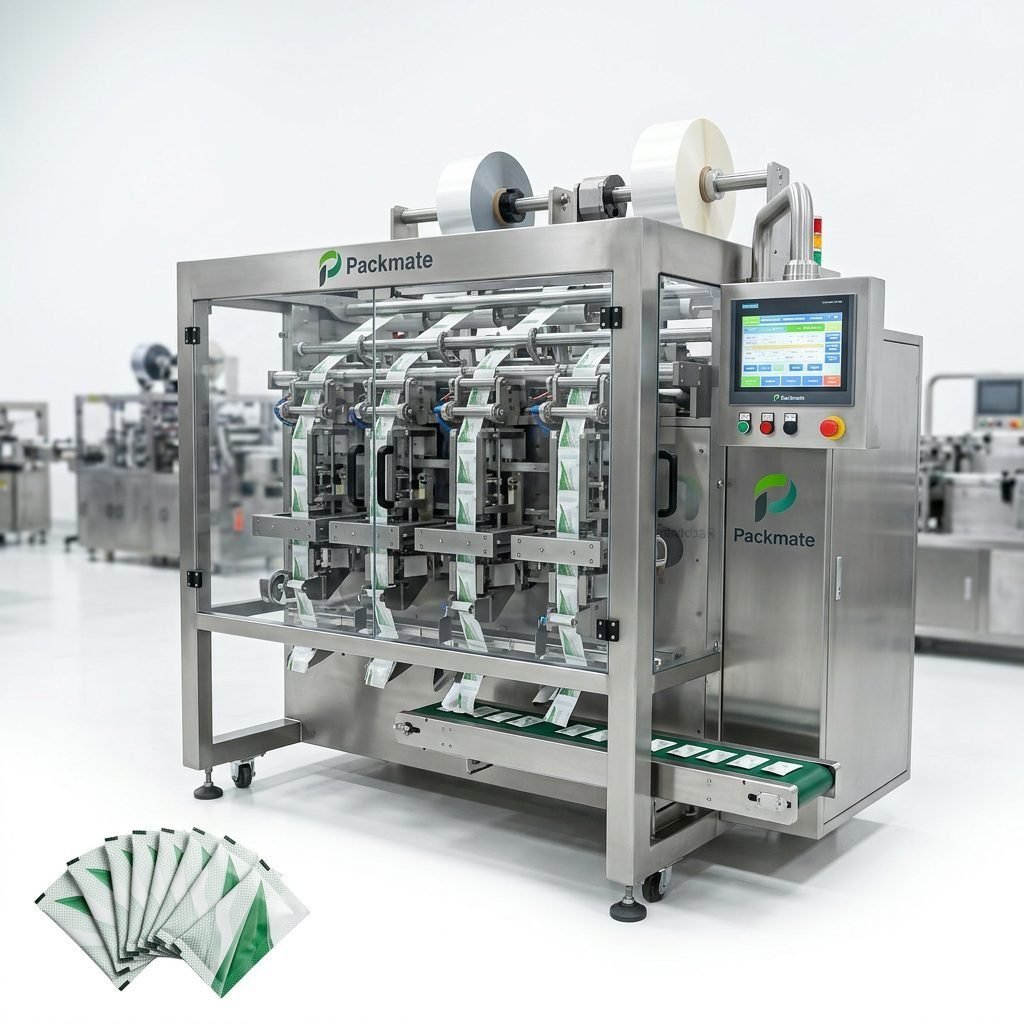
- Stick Pack Machines — Best for single-dose stick packs and small sachets sold individually.
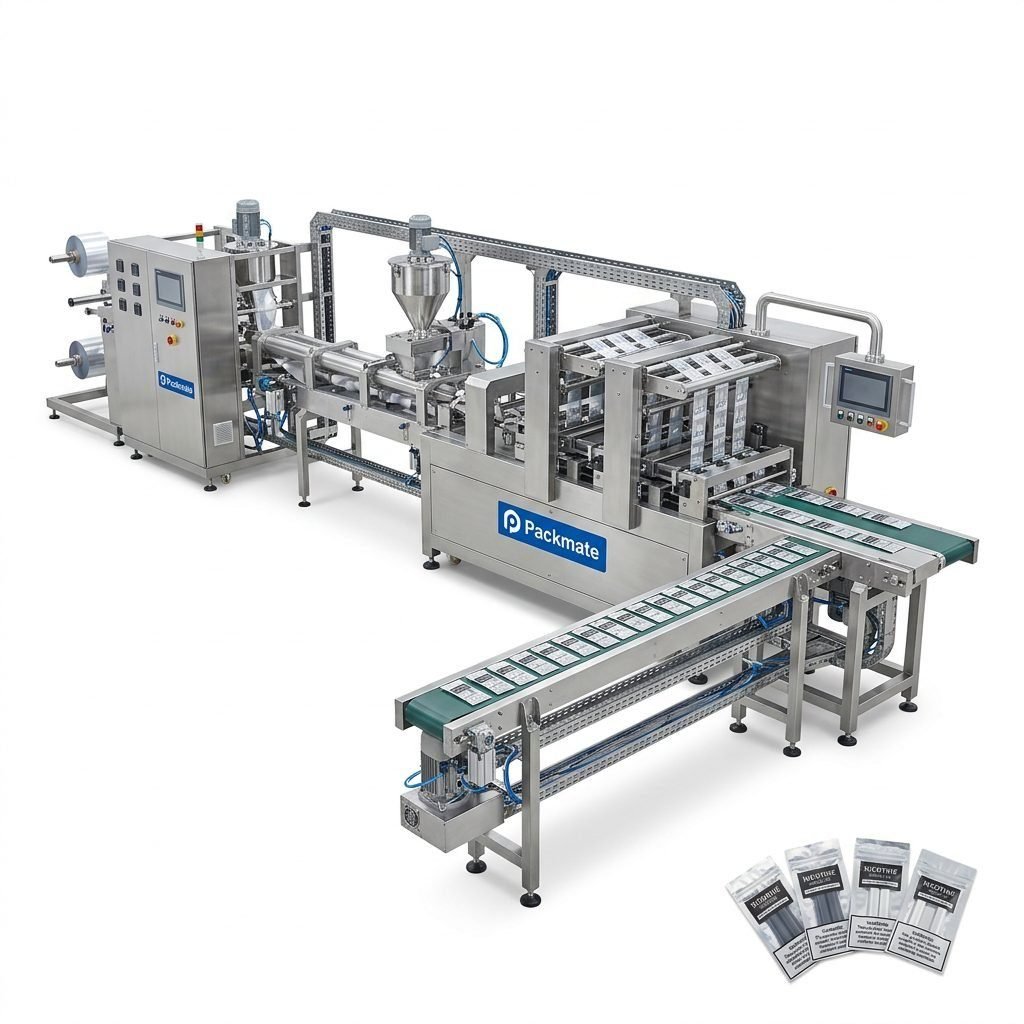
- Sachet & Multi-Lane Machines — Provide high throughput for multiple lanes, suited to scaling production quickly.
Key Technical Specs to Compare
When evaluating models, focus on measurable technical parameters:
- Production speed (packs/min and per-lane capacity)
- Number of lanes — multi-lane lines reduce labor cost per pouch at scale
- Dosing accuracy (mg tolerance for nicotine pouches)
- Changeover time — tool-less or quick-change designs speed SKU swaps
- Material compatibility — laminates, biodegradable films, foil laminates
- Automation & control — PLC, touchscreen HMI, recipe management, remote diagnostics
Evaluate Supplier Capabilities — Why Packmate Matters
Choose a manufacturer with proven experience in snus and nicotine pouch packaging. Packmate Snus Machine brings 30+ years of engineering and more than 50 machine models, offering turnkey lines and multi-lane systems. Look for:
✔️ Proven multi-lane solutions for scaling production efficiently
✔️ Customizable lines for unique pouch shapes and dosing systems
✔️ CE & ISO compliance for global regulatory acceptance
Learn more about machine categories and product lines: Snus & Nicotine Packaging Machines, Sachet & Stick Pack Machines, and Bag & Pouch Packaging Machines.
Site & Layout Considerations for Ghana
Effective site planning avoids installation delays and reduces operational risk:
- Electrical supply: Confirm voltage compatibility and include UPS or generator planning.
- Flooring & load: Check machine footprint and floor load capacity; multi-lane systems may require reinforced areas.
- Environmental controls: Humidity and dust control improve pouch sealing and dosing accuracy.
- Staff training area: Allocate space for operator training and spare parts storage.
After-Sales Service & Local Support
In Ghana, responsive support is crucial given transport times for parts and varying on-site conditions. Prioritize suppliers who offer:
- Spare parts availability — list of critical parts and expected lead times
- Remote diagnostics and PLC access for troubleshooting
- On-site commissioning and operator training packages
- Local partnerships for mechanical and electrical servicing
Packmate provides turnkey solutions and global support—see Case studies and Service offerings here: Case | Service.
Testing, Samples & Acceptance
Request sample runs and Factory Acceptance Tests (FAT) before shipment. Key checks:
- Weighing and dosing precision across multiple cycles.
- Seal integrity on local film materials and humidity conditions.
- Packaging design tests to ensure durability during Ghana’s transport conditions.
- Speed trials matching your target production volumes.
Cost Considerations & ROI
Compare total cost of ownership (TCO) rather than upfront price:
- Initial purchase and shipping to Ghana.
- Installation, commissioning, and training costs.
- Spare parts and expected lifetime wear parts.
- Energy consumption—machines optimized for energy saving reduce generator fuel costs.
- Production throughput vs. target market demand to calculate payback period.
Quick Buyer Checklist (Ghana-focused)
⚠️ Confirm regulatory labeling needs and local language
✔️ Choose multi-lane if you need rapid scale
✔️ Verify dosing accuracy for nicotine control
✔️ Ensure spare parts and remote support available
✔️ Plan for generator and environment control
Customization & Future-Proofing
Opt for modular lines that can be upgraded (additional lanes, inline coding, pouch shapes). Packaging trends in Ghana may shift toward eco-friendly materials—choose machines that handle a variety of films and sealing temperatures.
Logistics, Import & Compliance Tips for Ghana
Shipping large equipment into Ghana requires correct HS codes, commercial invoices, and compliance documentation. Work with freight forwarders experienced with Ghana ports (Tema, Takoradi). Keep CE/ISO certificates and FAT records ready for customs and inspection.
Local Business Culture & Sales Channels
Business in Ghana values relationships and reliability. Consider local agents or distributors for faster market entry and after-sales care. Use storefronts, supermarkets, and the ubiquitous corner kiosk networks for distribution. Mobile money and small-wallet purchases are common—small pack sizes often outperform bulk in many areas.
Practical Steps to Finalize Your Purchase
- Define product formats, target capacity, and acceptable tolerance for dosing and packaging.
- Shortlist suppliers with nicotine/snuspouch experience and request references.
- Ask for FATs, sample packs, and mechanical drawings for factory layout planning.
- Confirm spare parts lead times and remote support SLA.
- Plan for installation, operator training, and a maintenance schedule on delivery.
For technical solutions and product lines, review Packmate’s offerings and company information: About Packmate, and contact their sales team to discuss turnkey options: Contact Us.
Why choose an experienced manufacturer?
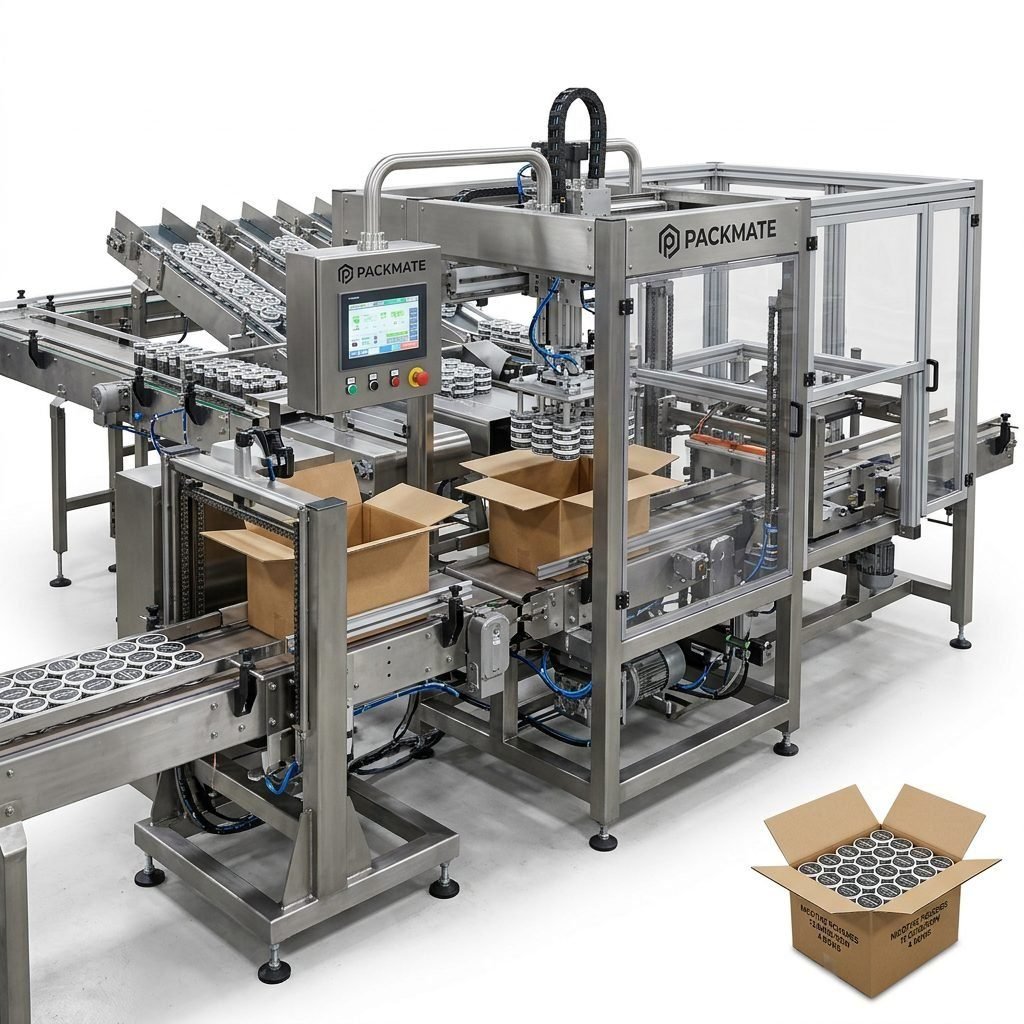
An experienced supplier reduces risk—Packmate’s 30+ years and 20,000㎡ facility, combined with CE/ISO aligned designs, help ensure reliable production and smoother regulatory clearance for Ghana-bound lines. Explore product categories like Weighing & Packaging Systems and Filling & Packaging Lines.
Maintenance & Training Recommendations
Establish preventive maintenance schedules and train local technicians. Keep an inventory of critical wear parts (seals, cutters, belts, sensors). Remote training and spare parts kits shorten downtime—request a training plan from your supplier before acceptance.
Final Checklist Before You Sign
- Confirmed capacity, lane count, and pouch sizes
- Sample approvals and FAT documented
- Clear spare parts & support agreement
- Logistics plan for shipment and customs clearance
- On-site commissioning and operator training included
Need real examples?
View project references and exhibition presence to validate supplier reliability: Our Exhibition | Certificate.
Wrap-up
Selecting the right nicotine packaging machine in Ghana means balancing production needs, regulatory compliance, local infrastructure, and after-sales support. Focus on dosing accuracy, multi-lane scalability, spare parts access, and a supplier with a proven snus packaging track record to reduce risk and speed market entry.
Frequently Asked Questions (FAQs)
Q1: What production speed should I target for a new Ghana operation?
A1: Start by estimating monthly demand—many Ghanaian launches begin with 20,000–100,000 pouches/month; choose a machine that allows 20–30% headroom for growth.
Q2: How important is multi-lane machinery for Ghana markets?
A2: Multi-lane machines reduce per-unit labor and cost at scale, but they require higher initial investment and floor space—choose single-lane for small trials, multi-lane for scaling.
Q3: What local support should I require from the supplier?
A3: Ask for guaranteed spare part availability, remote diagnostics, an initial on-site commissioning visit, and operator training. Local agent partners in Ghana are advantageous.
Q4: Are CE and ISO certifications sufficient for exporting machines to Ghana?
A4: CE/ISO demonstrate manufacturing standards; you should also prepare proper commercial documents, FAT reports, and any product-specific regulatory paperwork required by Ghanaian authorities.
Q5: How do I handle unstable power supplies when operating packaging lines?
A5: Use voltage stabilizers, UPS systems for the control units, and plan generator backup for production. Choose machines with robust servo control and soft-start features to better withstand power fluctuations.