Understanding how snus packaging machines work is essential for manufacturers, engineers, and operations managers who need to convert bulk product into consistent, consumer-ready sachets or pouches. This step-by-step guide walks through the entire snus filling and packing process — from formulation handling to final carton packing — and highlights the key machines, process controls, and quality checks that keep production stable, safe, and efficient.
Overview of the Snus Packaging Process ⚙️
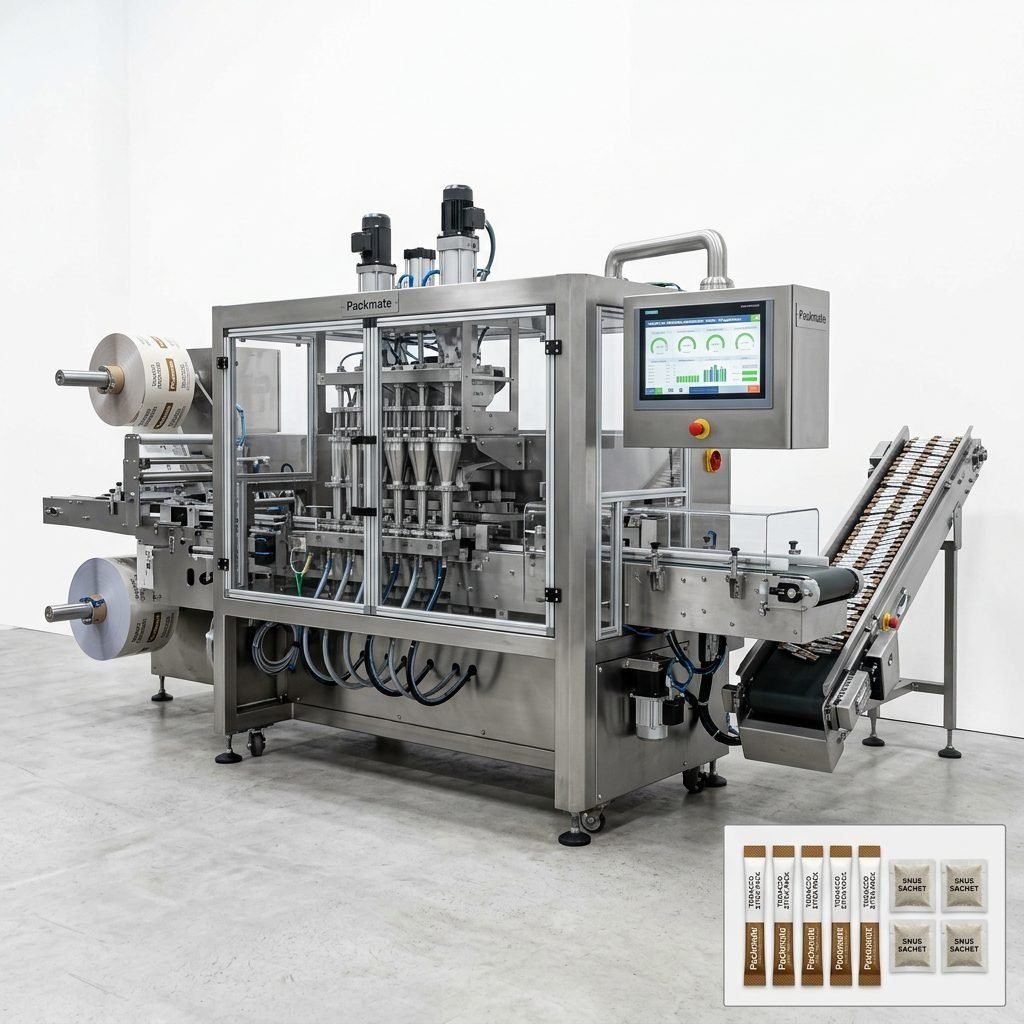
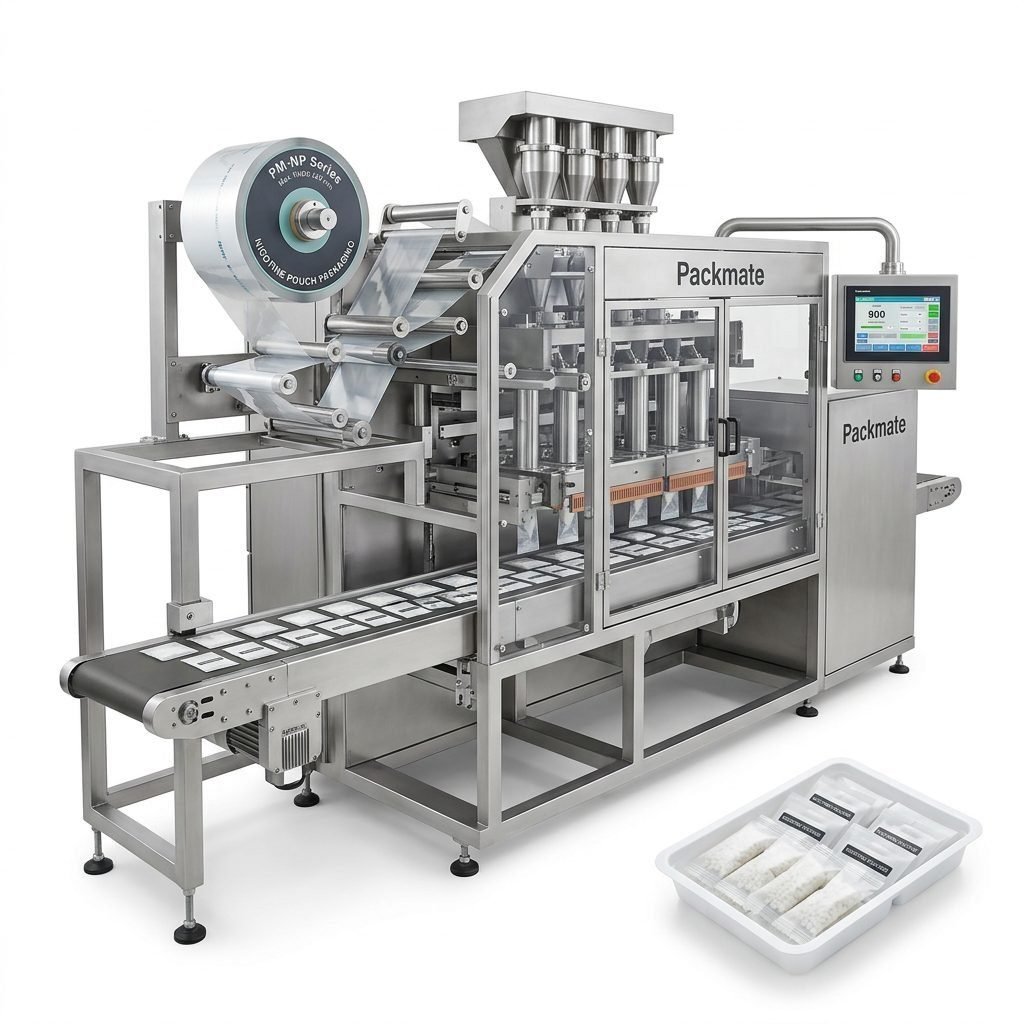
At a high level, a snus production line converts raw blend or pouches into sealed sachets or cans that meet weight, seal integrity, and appearance standards. Typical stages include bulk handling, dosing and filling, pouch forming (if using pre-made pouches or web-based forming), sealing, trimming, inspection, secondary packing, and final case packing. Modern lines are modular and often combine multiple functions into integrated systems for higher throughput and repeatable accuracy.
Key machine categories
Primary equipment: dosing & filling units, form-fill-seal (FFS) modules, multi-lane pouch packers.
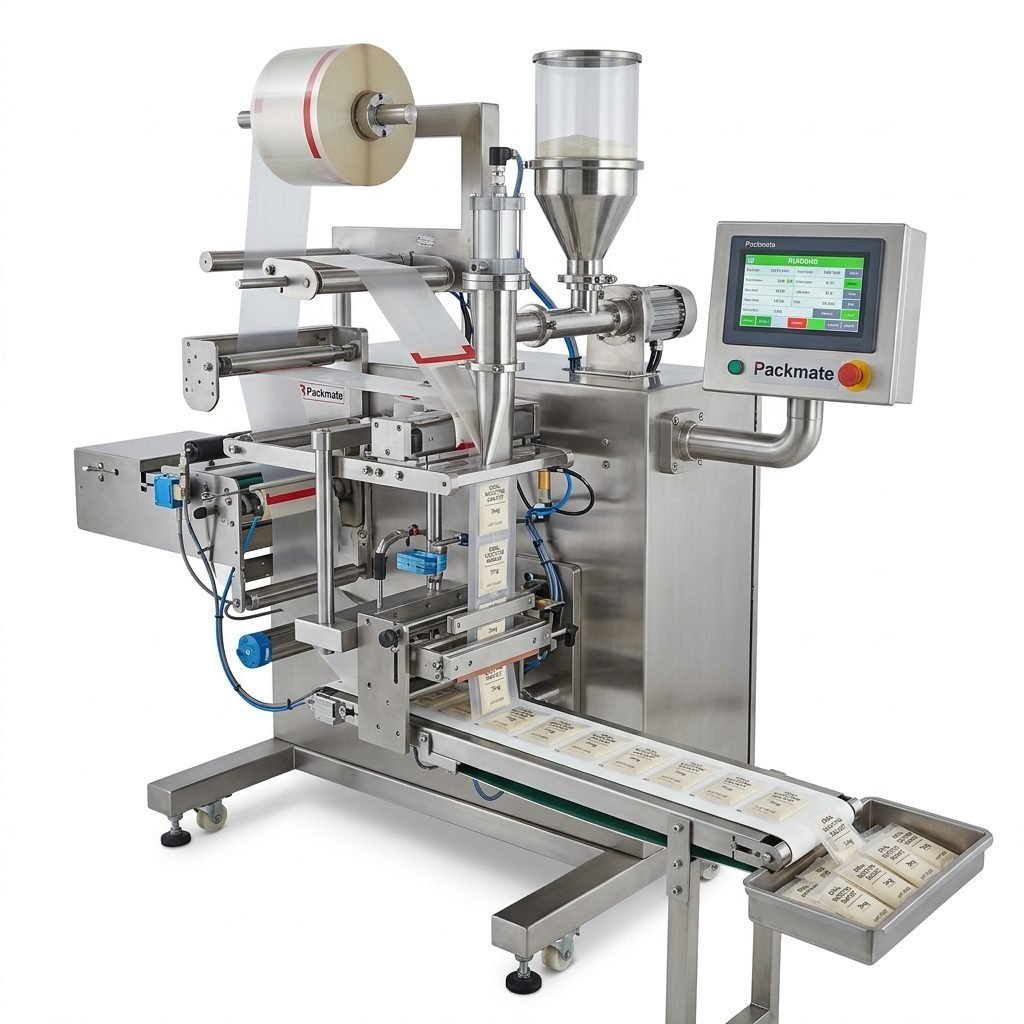
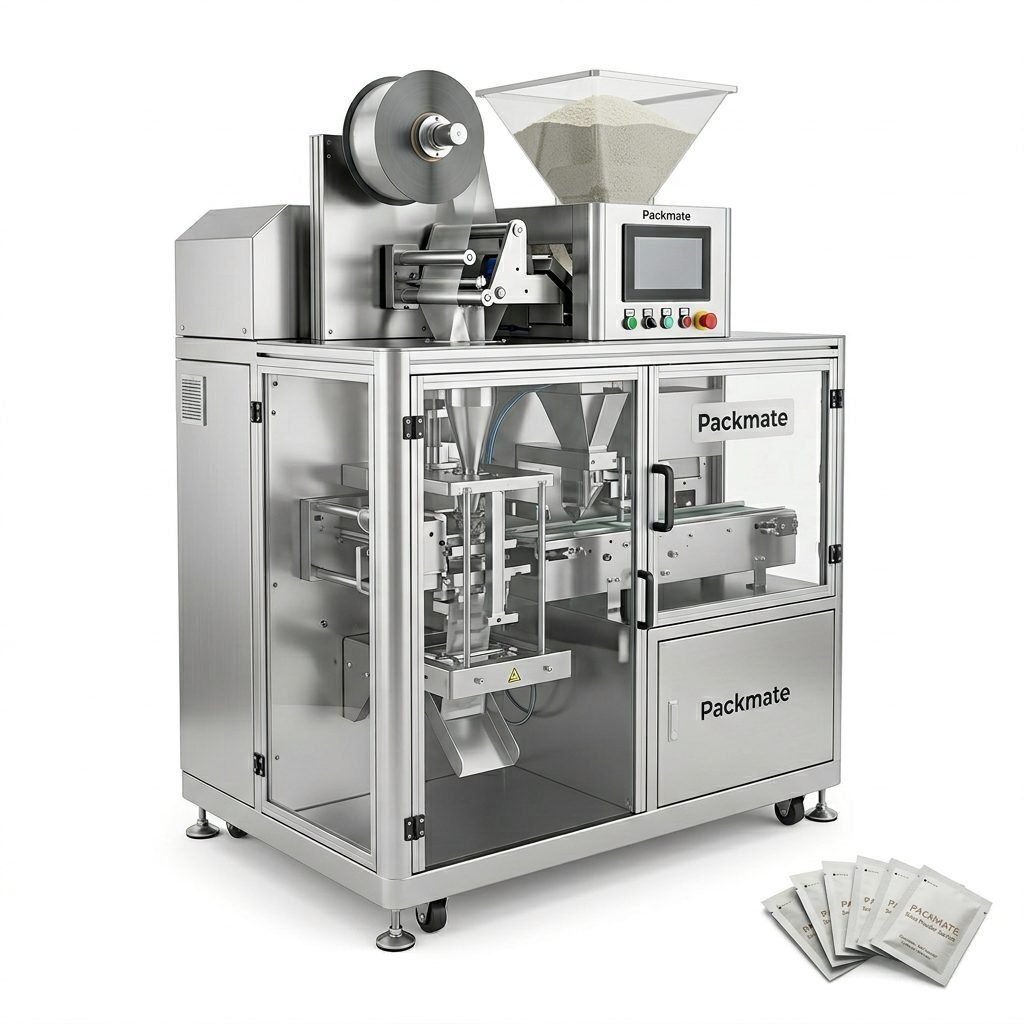
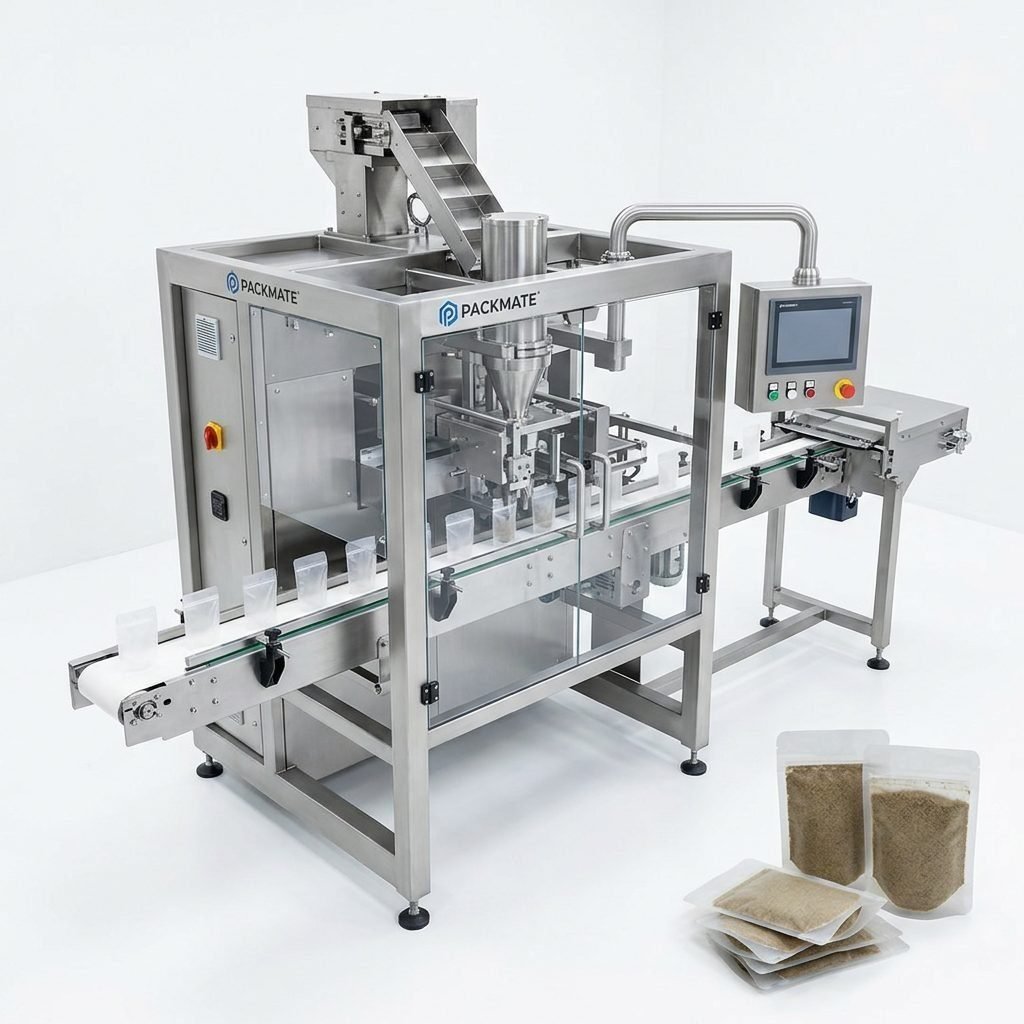
Support equipment: vibratory feeders, weighers, conveyors, vision inspectors, metal detectors, and cartoners. For product examples and machine models, see the Snus & Nicotine Packaging Machines and Sachet & Stick Pack Machines pages.
Pre-Filling Preparation: Raw Material Handling
Raw snus or nicotine pouch blends arrive as bulk batches or pre-formed pouches. Proper conditioning reduces dust, ensures consistent moisture content, and prevents clumping. Typical pre-filling steps include sieving, blending, and transferring product into buffer hoppers that feed the dosing system. Maintaining consistent feed characteristics is critical for repeatable filling accuracy.
Buffering & dosing controls
Dosing systems range from volumetric augers to precision loss-in-weight feeders and multi-head weighers. For low-dose products like nicotine pouches, high-precision weighers or microdosing augers are used to keep variation within specification. Loss-in-weight systems offer continuous compensation for changing hopper levels and are common on high-speed lines.
Tip: Use a loss-in-weight feeder for continuous high-speed lines to minimize fill variance. ⚖️
Step 1 — Filling: Accurate Dose Delivery
The filling station deposits the exact amount of product into each pouch or tray. Two common approaches:
• Volumetric or auger fillers for powders and granules — simple and cost-effective for larger dose ranges.
• Precision weigh-fill systems and multi-head weighers for micro-dosing and multiple-lane output — preferred for nicotine pouches and snus where accuracy is critical.
Common fill issues and fixes
Symptoms: underfill, overfill, inconsistent weights.
Fixes: calibrate feeders frequently, check hopper flow aids, implement in-line check weighing and automatic reject logic.
Step 2 — Pouch or Sachet Formation
Pouch formation depends on whether the line uses pre-made pouches or forms pouches from roll stock:
• Pre-made pouch systems insert product into ready bags using automated loaders. These minimize film handling but require accurate pick-and-place.
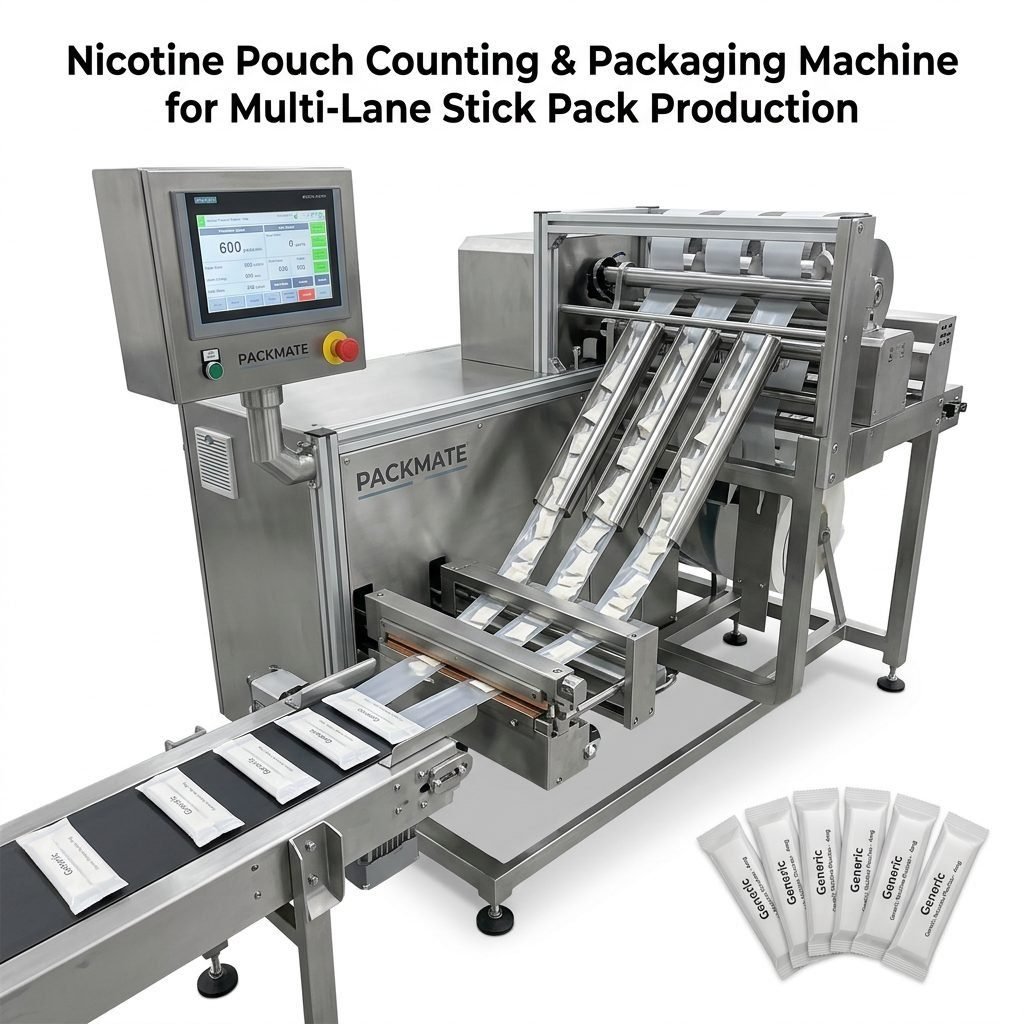
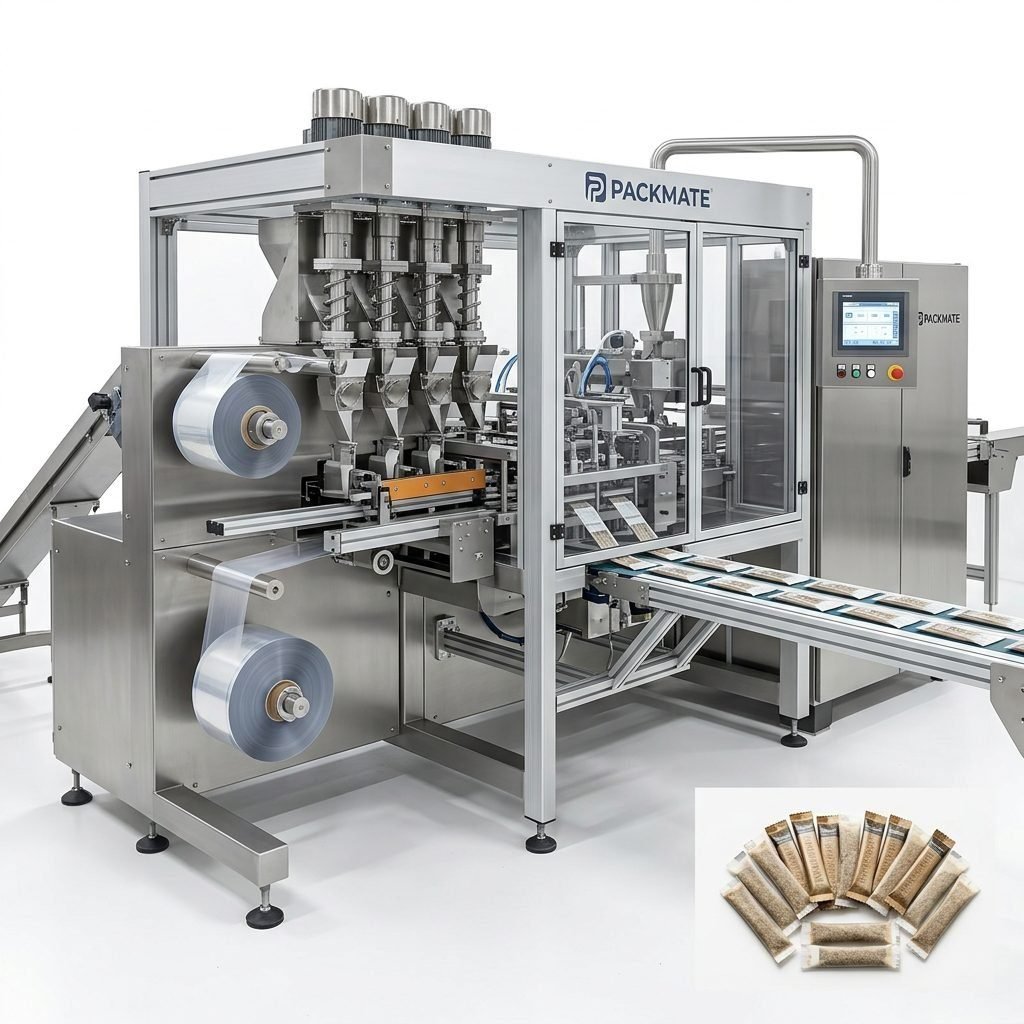
• Form-fill-seal (FFS) systems form pouches from a film web, fill, then seal and cut. FFS is flexible for custom shapes and multi-lane formats and is common in high-volume snus production.
Note: Multi-lane FFS reduces cost per pouch by producing many lanes simultaneously — check the Filling & Packaging Lines catalog for examples.
Step 3 — Sealing, Trimming, and Cut-Off
Once filled, pouches move to sealing stations. Heat-seal jaws, ultrasonic sealing, or impulse sealing methods are used depending on material. After sealing, the machine trims excess film and separates individual pouches. High-speed lines use rotary cutters and servo synchronization to maintain accuracy across lanes.
Quality checkpoints
Visual and mechanical checks include seal width, peel strength (if resealable), and correct cutting alignment. Inline monitoring should flag any seal anomalies for immediate rejection to avoid downstream contamination.
Step 4 — Inspection, Metal Detection & Rejection
After sealing, products pass through inspection systems. Vision systems check print quality, expiration codes, and badge placement; check weighers monitor fill weight; metal detectors or X-ray systems scan for foreign materials. Rejected items are automatically conveyed to a reject bin to prevent contamination of finished goods.
Safety tip: Integrate metal detection ahead of final packing. This minimizes recalls and protects brand reputation. ✅
Step 5 — Secondary Packaging & Cartoning
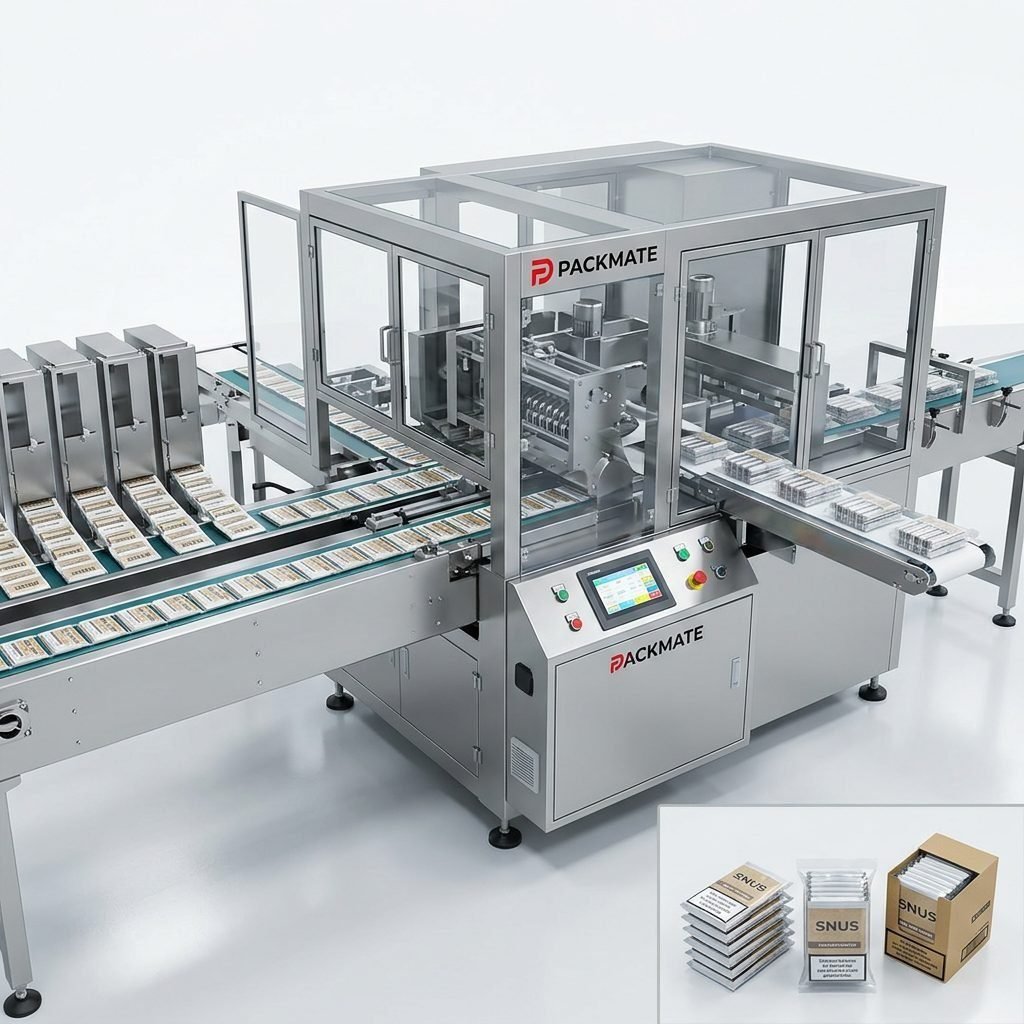
Secondary packers group individual sachets into boxes, cartons, or display packs. Automated cartoners, case packers, and tray packers are synchronized with upstream throughput. Servo-driven systems enable flexible pack patterns and reduce changeover time when switching SKUs.
End-of-line considerations
Palletizing and stretch-wrapping conclude the line. Integration with warehouse systems and traceability (batch codes, RFID) ensures regulatory compliance and inventory accuracy.
Automation & Multi-Lane Systems: Boosting Throughput
Multi-lane packaging machines multiply capacity by producing multiple synchronized lanes. Packmate pioneered high-precision multi-lane systems suited to small-dose pouch production. When planning an automated line, consider lane balancing, servo synchronization, and centralized HMI controls for faster troubleshooting.
For turnkey solutions and multi-lane configurations consult the Bag & Pouch Packaging Machines and Filling & Packaging Lines product pages to evaluate models compatible with your output and product form.
Material & Film Selection: Impact on Performance
Film composition, sealant layers, and barrier properties affect sealing temperature, seal strength, and shelf life. Select films that match sealing method (heat vs ultrasonic) and consider peelable seals when consumer convenience matters. Work with suppliers and machine manufacturers to validate film behavior on your specific sealer.
Pro tip: Conduct film trials at production speed to identify issues like cold-seal bridging or excessive film draw before full production runs.
Maintenance, Reliability & Compliance
A preventative maintenance schedule reduces downtime and extends service life. Routine checks include lubrication, belt tension, alignment, and sensor calibration. Compliance with CE and ISO standards is typical for exported machines; always verify documentation and validate HACCP or GMP processes where applicable.
Packmate Snus Machine emphasizes strict quality testing and advanced CNC manufacturing to deliver stable equipment. Learn more about the company and certifications on the About Packmate and Certificate pages.
Practical Recommendations for New Lines
Start with a process map. Align your product specs, cycle time, and desired throughput. Consider pilot runs to optimize dosing and sealing parameters. Key considerations:
• Choose the right dosing technology for your dose range.
• Validate film and adhesive compatibility.
• Implement inline inspection early to catch faults before secondary packing.
• Train operators on quick changeovers and troubleshooting to minimize downtime.
Operational hint: Keep spare tooling and a small inventory of critical sensors on-site to speed recovery from mechanical issues. 🛠️
Choosing the Right Supplier
When evaluating suppliers, consider manufacturing capability, after-sales service, spare parts availability, and global support. Companies with in-house machining centers, robust QC, and long-term field service teams provide greater uptime and predictable lifecycle costs. For machine portfolios and service options, visit Snus & Nicotine Packaging Machines, Auxiliary Packaging Equipment, and Service pages.
Sustainability & Waste Reduction
Reduce film waste with accurate web tracking, optimize film width for fewer trims, and use intelligent batching to minimize rejects. Recyclable or mono-material films can improve recyclability but must still meet barrier and sealing requirements.
Final Notes: Integration & Turnkey Lines
Fully integrated filling and packaging lines simplify commissioning and validation. Turnkey suppliers deliver coordinated systems that include dosing, filling, sealing, inspection, and end-of-line packing — reducing engineering overhead for manufacturers. Browse Filling & Packaging Lines and Case examples to see implemented solutions and real-world performance metrics.
Where to get help
Contact experienced machine builders for site surveys, FATs (Factory Acceptance Tests), and training. For direct inquiries use the Contact Us page to discuss your product and output goals with technical sales.
Frequently Asked Questions (FAQs)
Q1: What filling tolerance can I expect for nicotine pouches?
A1: With precision weigh-fillers and proper process control, typical tolerances are within ±1-3% depending on dose and line speed. For strict regulatory or label accuracy, specify loss-in-weight or multi-head weigh systems.
Q2: Can one machine handle multiple pouch sizes or formats?
A2: Many modern machines are modular and support quick-change tooling for multiple formats, but extreme size differences may require distinct modules or additional change parts to ensure optimal performance.
Q3: How do I reduce rejects related to seal failures?
A3: Validate film sealing parameters at speed, ensure consistent film tension, and incorporate inline seal monitoring and peel tests into routine checks.
Q4: Where can I view machine case studies or previous installations?
A4: Review the Case examples and Exhibition pages for demonstrations and past installations that show real-world configurations and performance.
Q5: Who provides spare parts and service after installation?
A5: Reputable suppliers offer global service networks and spare parts support; check Service and Contact Us pages to confirm availability in your region.
For more detailed product specifications and model selection, explore: Snus & Nicotine Packaging Machines, Sachet & Stick Pack Machines, Filling & Packaging Lines, and learn about company capabilities on the About Packmate page.