Choosing the right snus packaging machinery for operations in Sudan requires attention to local market needs, regulatory compliance, machine performance, and after-sales support. This practical buyer’s guide helps procurement managers, factory owners, and technical teams evaluate options, compare features, and make informed decisions to ensure reliable production of nicotine pouches and snus products.
Understand Your Production Requirements
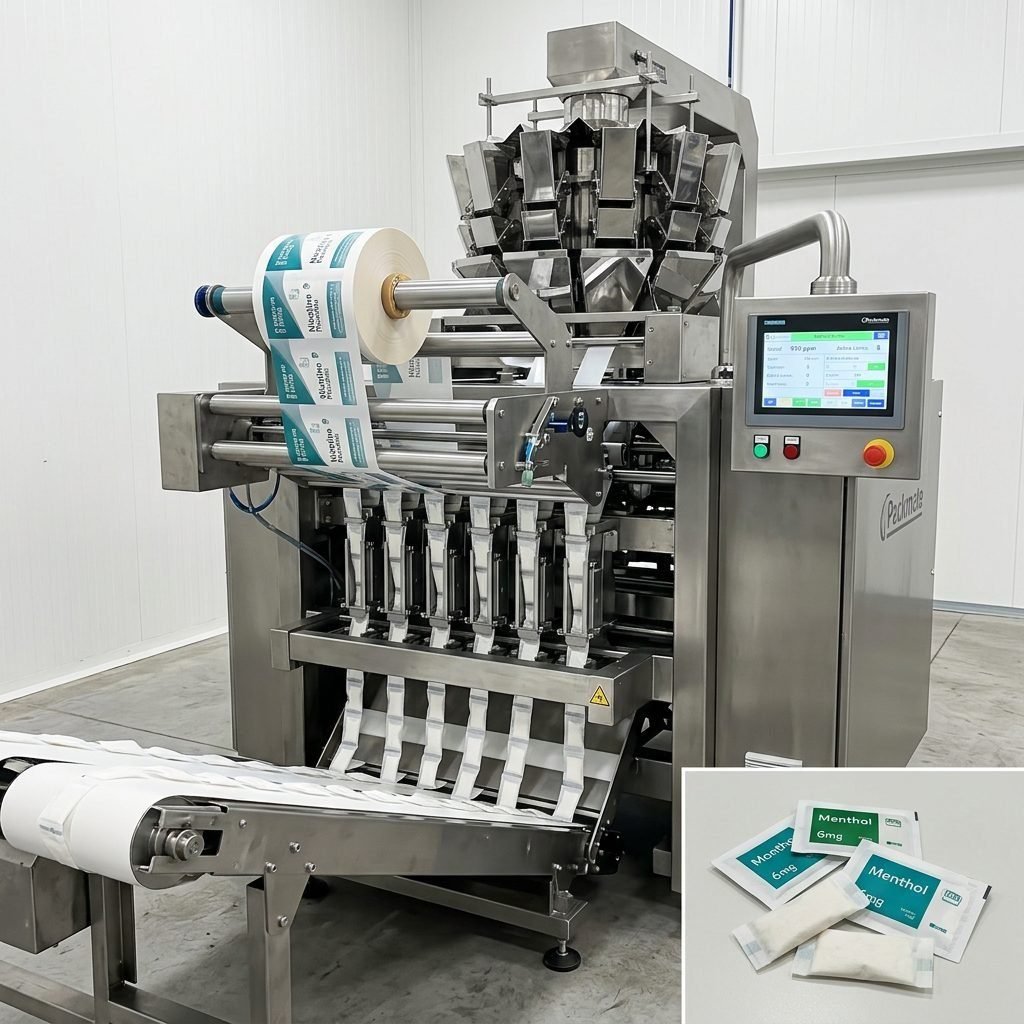
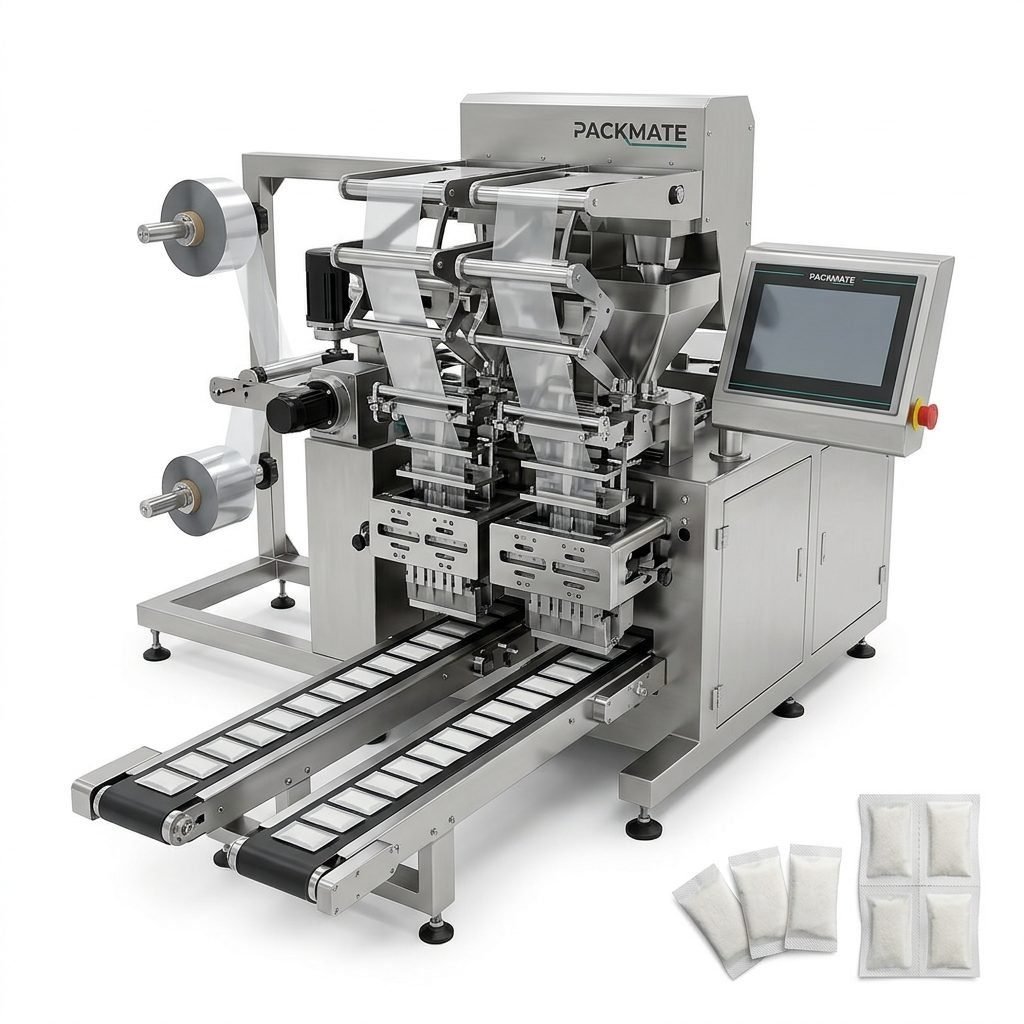
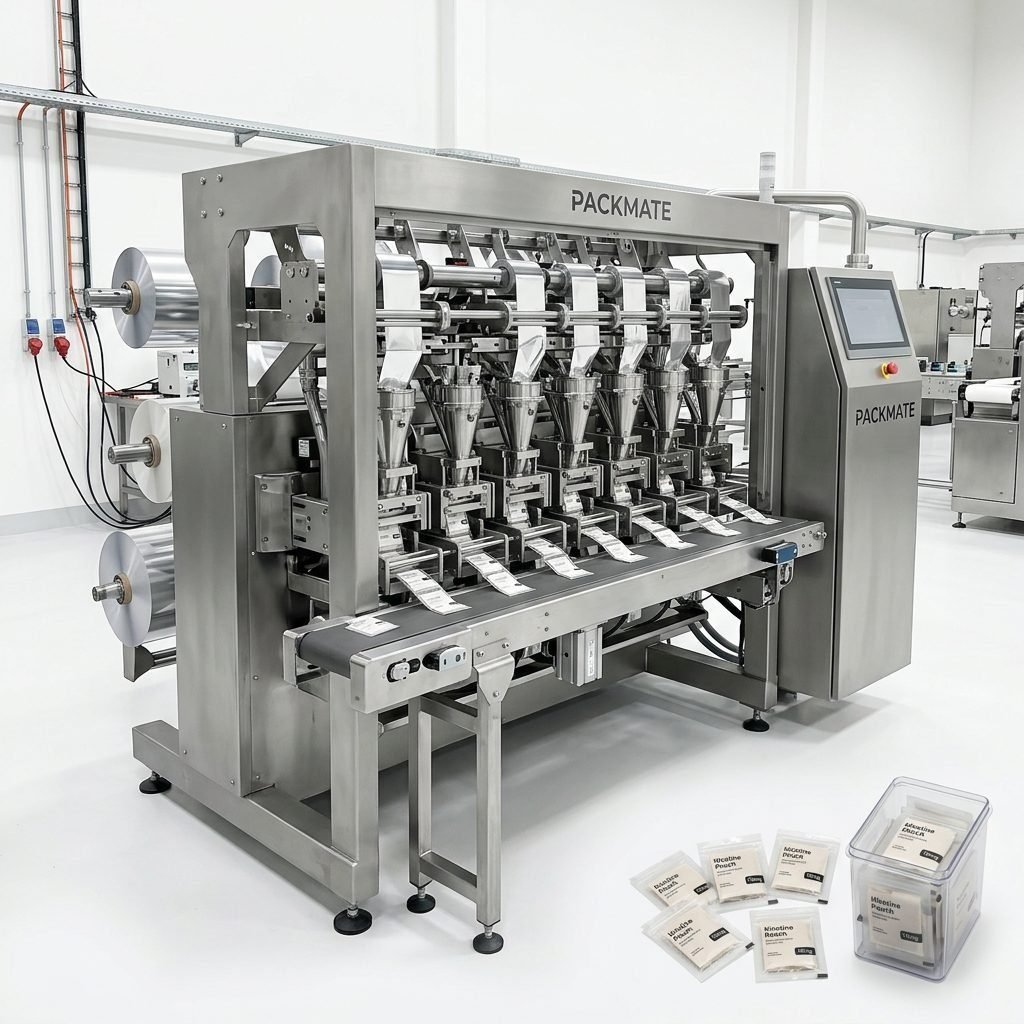
Start by documenting your expected production capacity: daily output, shifts per day, and seasonal fluctuations. Key metrics include pieces per minute (ppm), lanes (single or multi-lane), and required packaging styles (stick pack, sachet, pouch). Machines designed for small-dose nicotine pouches often use high-precision multi-lane systems—if you need high throughput, prioritize multi-lane options that maintain accuracy across all lanes.
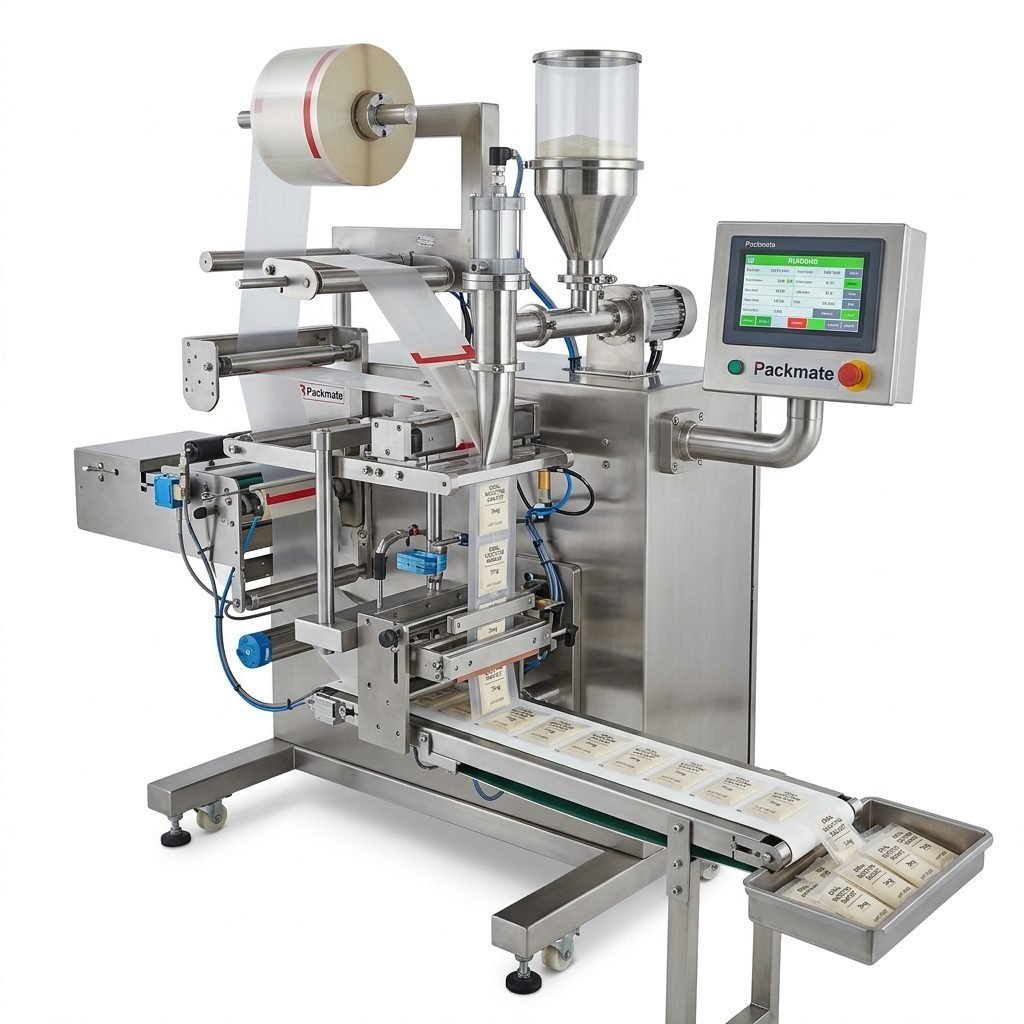
Consider the product form: powdered tobacco, granules, moist snus, or wet nicotine pouches. Filling systems differ: auger fillers for powders, volumetric cups for granules, and liquid dosing modules for wet fillings. Choosing machinery compatible with your product type avoids costly retrofits later.
Key Production Parameters to List
• Target output (pieces/hour) • Number of lanes • Packaging format (pouch, sachet, stick) • Typical pouch dimensions • Filling accuracy tolerance • Materials and film types you plan to use
Tip: When in doubt, request a Factory Acceptance Test (FAT) video showing the machine producing your exact product and pouch format. Real-world demonstration avoids mismatched expectations.
Prioritize Hygienic Design and Regulatory Compliance
Machines used for snus and nicotine pouches must be easy to clean and maintain. Stainless steel contact parts, hygienic sealing, and accessible components reduce contamination risk and downtime. Ensure equipment materials and construction meet international standards—CE and ISO compliance is essential for export and local approvals.
If you plan to operate in regulated markets, confirm the supplier provides documentation for electrical safety, machine guarding, and cleaning protocols. Packmate Snus Machine, for example, lists CE and ISO compliance across its equipment ranges; review certificates before ordering.
Document Requests for Compliance
Request: safety certificates, material declarations, and traceability records for critical components. For nicotine products, also check local Sudanese regulations regarding nicotine handling and packaging labeling.
Evaluate Machine Performance and Reliability
Reliable uptime is vital. Ask suppliers for mean time between failures (MTBF) data, service logs, and references from existing customers. Look for robust engineering features: precision CNC-made parts, high-quality servo motors, and industrial-grade PLC controls. A well-designed machine reduces rejects and maintains consistent weight and seal integrity.
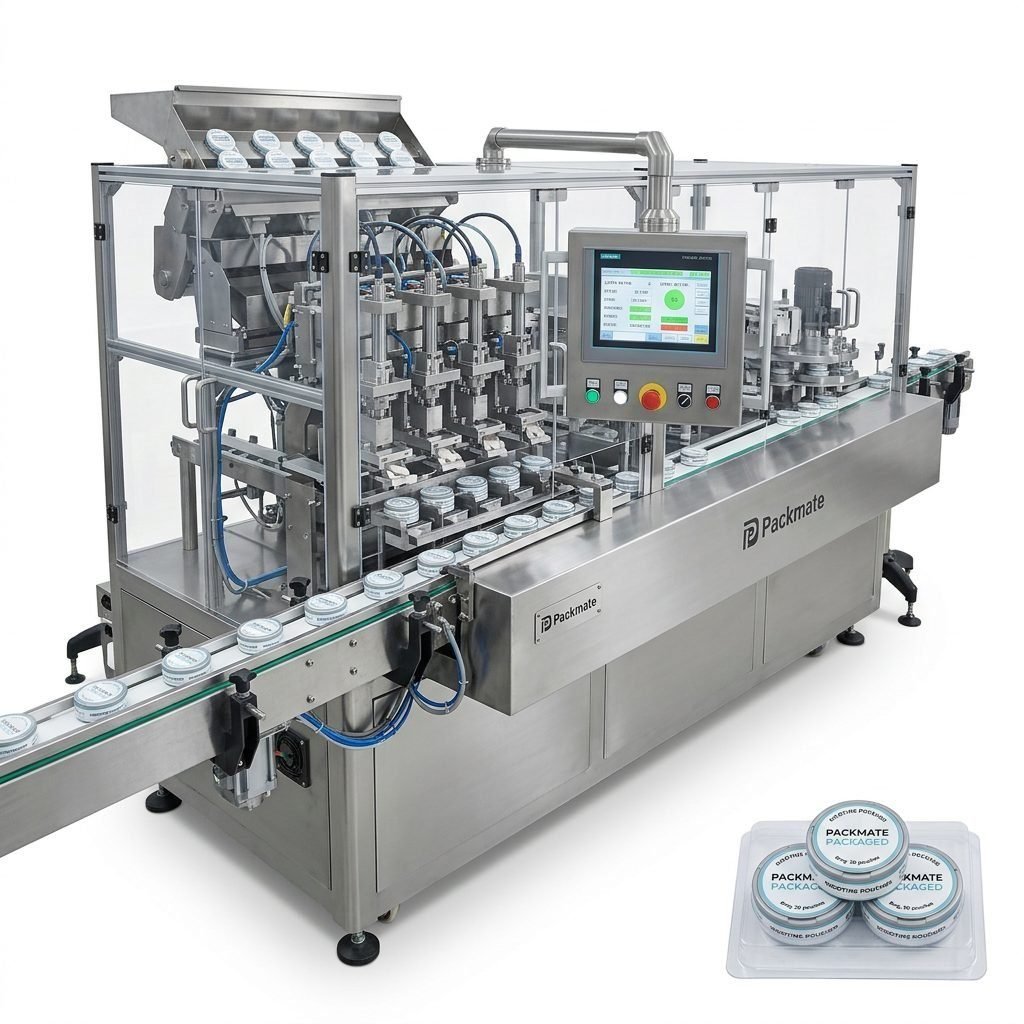
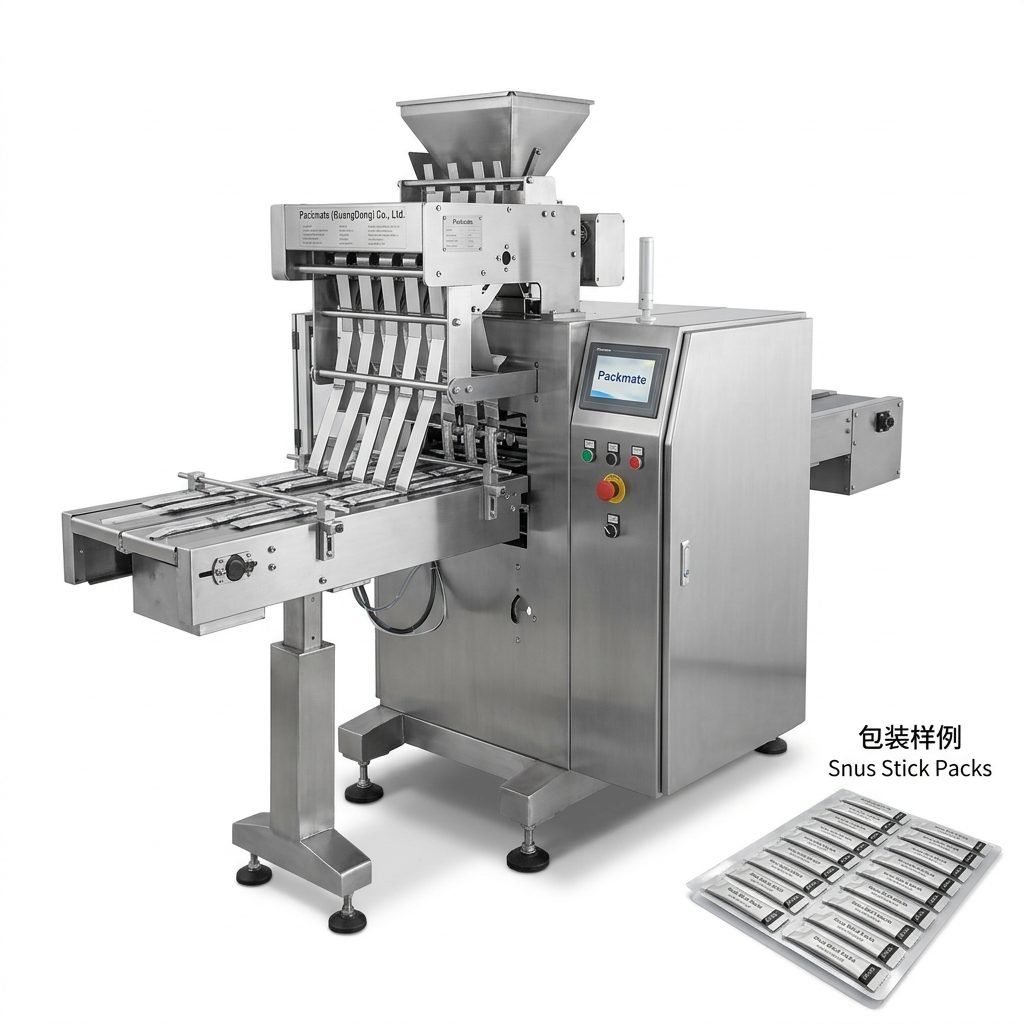
If you need versatile packaging options, select modular systems that support multiple pouch sizes or can be upgraded with additional lanes. Packmate’s range includes multi-lane systems and stick pack machines that serve diverse formats — review product families such as Snus & Nicotine Packaging Machines and Sachet & Stick Pack Machines.
Checklist: request production videos, sample packs from your paste/ powder, and a list of spare parts included in the machine delivery.
Automation Level and Integration
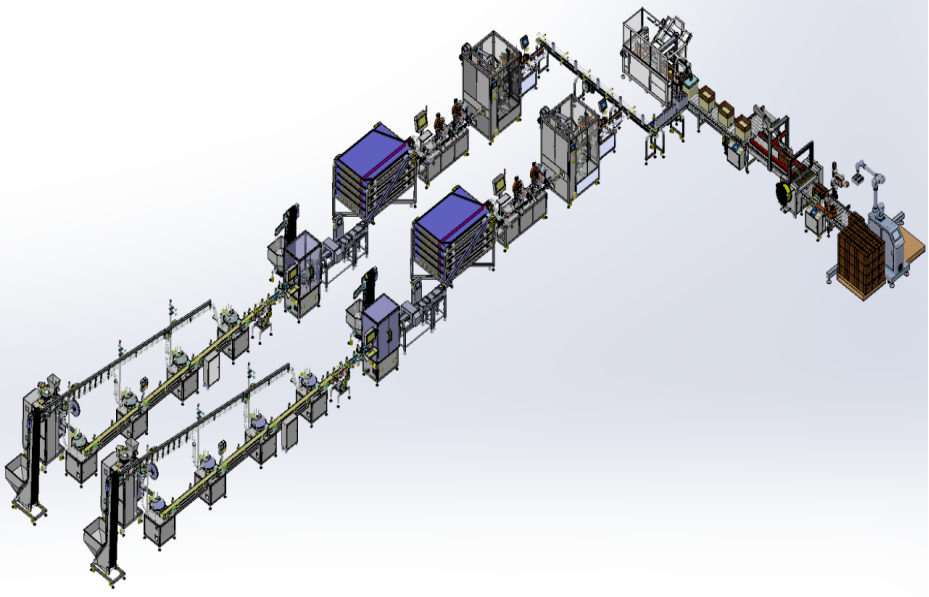
Determine how automated you want your line to be. Fully automated lines include upstream dosing and mixing, packaging, sealing, date-coding, pouch accumulation, and case packing. Semi-automated lines reduce capital cost but increase labor requirements. For a turnkey solution, discuss integrated options with suppliers who provide filling & packaging lines and weighing systems.
If you plan to scale quickly, choose a supplier who can expand your line—adding lanes, upgrading to faster feeders, or integrating automated case packers. Explore Packmate’s full solutions in categories like Filling & Packaging Lines and Weighing & Packaging Systems.
Consider MES and Data Capture
Integration with Manufacturing Execution Systems (MES) allows you to capture production data, trace batches, and monitor OEE. For larger operations, ensure the machine’s control system supports standard communication protocols (Ethernet/IP, OPC-UA).
Service, Spare Parts and Local Support
Local service presence or fast remote support is critical for minimizing downtime in Sudan. Confirm lead times for spare parts and whether the supplier keeps common wear parts in regional warehouses. Ask if installation, commissioning, and operator training are included.
Check the supplier’s global footprint and case studies to verify after-sales reliability. Packmate highlights global cooperation cases and participation in international exhibitions—these signals often correlate with mature service networks. See their cases here: Case.
Important: get a written spare parts and service SLA. Clarify response times for on-site visits and remote troubleshooting.
Total Cost of Ownership (TCO) and ROI
Price is only one component. Calculate TCO including energy consumption, spare parts consumption, operator training, downtime, and expected lifetime. Energy-efficient servo systems and reliable components reduce operating costs. Request estimated OEE and throughput scenarios to calculate payback period.
Also consider financing options, warranty lengths, and whether the supplier offers refurbishment or trade-in programs for used equipment. Long-term relationships often yield better pricing on spare parts and upgrades.
Factory Layout, Installation and Utilities
Prepare a factory layout that includes safety zones, material flow, and maintenance access. Machines require specific utilities: power (three-phase), air pressure, vacuum, and sometimes chilled water. Request a utilities checklist and site preparation guide from the supplier to avoid installation delays.
Consider environmental controls for products sensitive to humidity. Packaging materials and nicotine pouches benefit from controlled humidity and temperature to ensure seal integrity.
Pre-Delivery Checklist
• Confirm utilities and foundation requirements • Verify forklift and crane access for installation • Schedule installation and staff training dates • Agree on FAT acceptance criteria
Choosing a Trustworthy Supplier
Look for manufacturers with strong engineering backgrounds, a wide product range, and verifiable customer references. Packmate Snus Machine is positioned as a specialist in snus and nicotine pouch equipment with over 30 years of engineering experience and a 20,000㎡ manufacturing facility. Validate claims by requesting factory photos, CNC machining evidence, and past project documentation.
Useful links to review supplier offerings include their product categories for Snus & Nicotine Packaging Machines, Bag & Pouch Packaging Machines, and About Packmate.
Red flag: suppliers who cannot provide FAT records, machine references, or clear spare parts lists. Reliable manufacturers welcome site visits and question-driven audits.
Purchasing and Contract Negotiation Tips
Negotiate clear terms: delivery schedule, payment milestones, warranty coverage, acceptance tests, and penalties for late delivery. Define acceptance criteria in the contract, including acceptable reject rates and tolerance windows for fill weight and seal quality.
Consider adding a clause for initial on-site support during the first production weeks and remote support hours. Ensure spare parts kits and consumables are included or offered at competitive prices.
Documentation to Secure
• Technical drawings and electrical schematics • Operation & maintenance manuals • Spare parts list with part numbers • FAT and SAT (Site Acceptance Test) records
Final Selection Worksheet
Use a simple scoring matrix to compare vendors: reliability (30%), compliance & hygiene (20%), TCO (20%), service & parts availability (20%), and demo/FAT quality (10%). Weight factors according to your priorities and choose the supplier with the highest composite score.
Before signing, visit the supplier factory if possible or request a live demo at an exhibition. Packmate often showcases machines at global exhibitions—attending these events offers a chance to see machines in operation. Check their exhibition schedule: Our Exhibition.
Quick Action Plan: create a short-list of 2–3 vendors, run FATs with your product, evaluate service terms, and finalize based on TCO and local support readiness.
Next Steps and Contact
After narrowing choices, request quotations with full specifications and delivery timelines. Ask for references from customers in similar climates or regulatory environments. If you need turnkey solutions or auxiliary equipment, explore auxiliary categories such as Auxiliary Packaging Equipment.
For direct enquiries, technical questions, or to schedule a factory visit, contact the supplier through their official channels: Contact Us.
Summary
Selecting the best snus packaging machinery in Sudan demands careful assessment of production needs, hygiene and compliance, machine reliability, integration capability, and local support. Use FAT demos, evaluate TCO, and secure strong service agreements to protect uptime and product quality.
Frequently Asked Questions
Q1: What production capacity should I plan for my first snus line in Sudan? A1: Start by estimating realistic market demand; for small commercial runs 5,000–20,000 pouches/day a single or dual-lane machine may suffice. For larger volumes, consider multi-lane systems.
Q2: How important is FAT before shipment? A2: FAT is critical — it verifies the machine runs your exact product and reduces installation surprises. Request recorded FATs that include fill, sealing, and speed tests.
Q3: What spare parts should I keep on site? A3: Keep consumables (seals, belts), critical sensors, and a small servo motor/PLC spare if feasible. The supplier should provide a recommended spares kit.
Q4: Can machines be upgraded on-site to increase capacity? A4: Many modern systems are modular; you can often add lanes or upgrade feeders, but confirm upgrade paths with the supplier before purchase.
Q5: Where can I find reliable snus packaging solutions and examples? A5: Explore supplier product pages and case studies to compare solutions—use resources such as Snus & Nicotine Packaging Machines and Case links to validate vendor capabilities.