Choosing the right nicotine packaging machine manufacturer in Rwanda is a critical decision for any company entering or expanding within the fast-growing nicotine pouch and snus market. The right partner will deliver reliable equipment, regulatory compliance support, consistent spare parts supply, and responsive after-sales service — all of which directly affect product quality, production uptime, and total cost of ownership. This guide walks you through the practical factors to evaluate, the machine types to consider, and the step-by-step process for selecting a supplier that fits your technical and business needs.
Understand the local market and regulatory landscape
Rwanda’s regulatory environment and import procedures may differ from other markets you know. Before contacting manufacturers, make sure you understand licensing, product registration, labeling, and any local packaging material restrictions. Compliance is not optional — it affects machine specifications (e.g., cleanability, materials, traceability features) and the documentation you’ll need from suppliers during customs clearance.
Key regulatory considerations
ℹ️ Product labeling & material safety: Ensure machines can handle tamper-evident seals, barcodes, and variable datamatrix printing if required.
🔧 Hygienic design: For nicotine and food-contact materials, stainless steel contact points and wash-down features may be necessary.
✅ Documentation: Request CE and ISO certificates, material declarations, and electrical schematics to smooth regulatory review.
Identify the right machine type for your product
Nicotine pouch and snus packaging can be produced on a variety of machines. Matching your product format to the proper machine family is an early and critical decision:
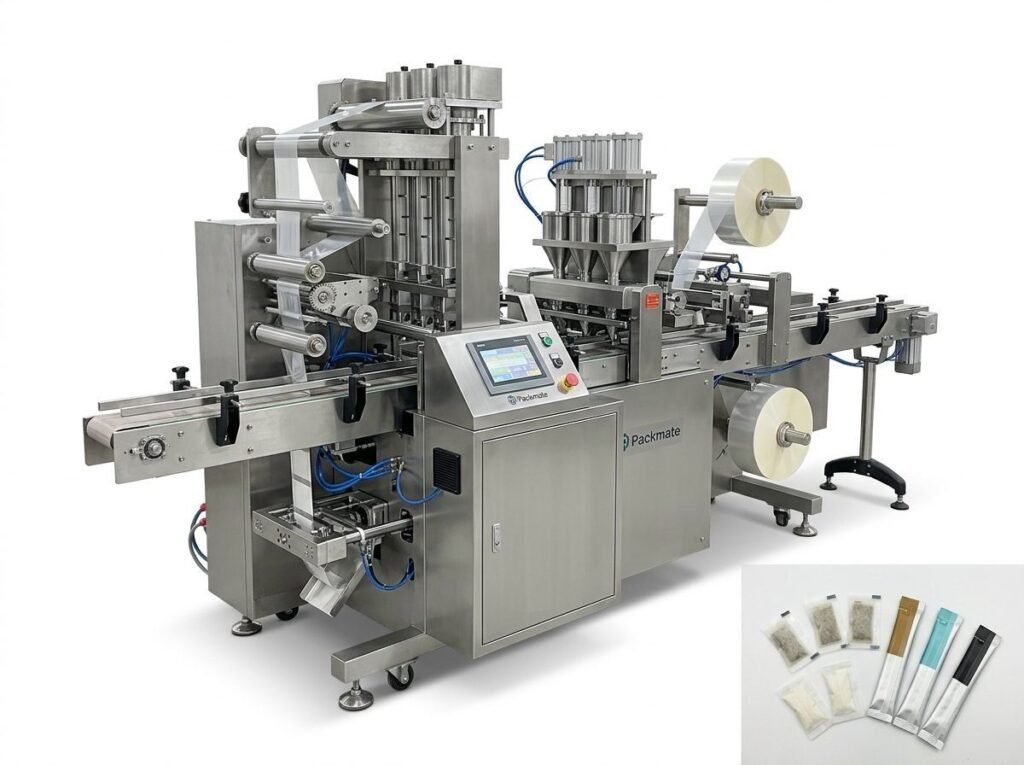
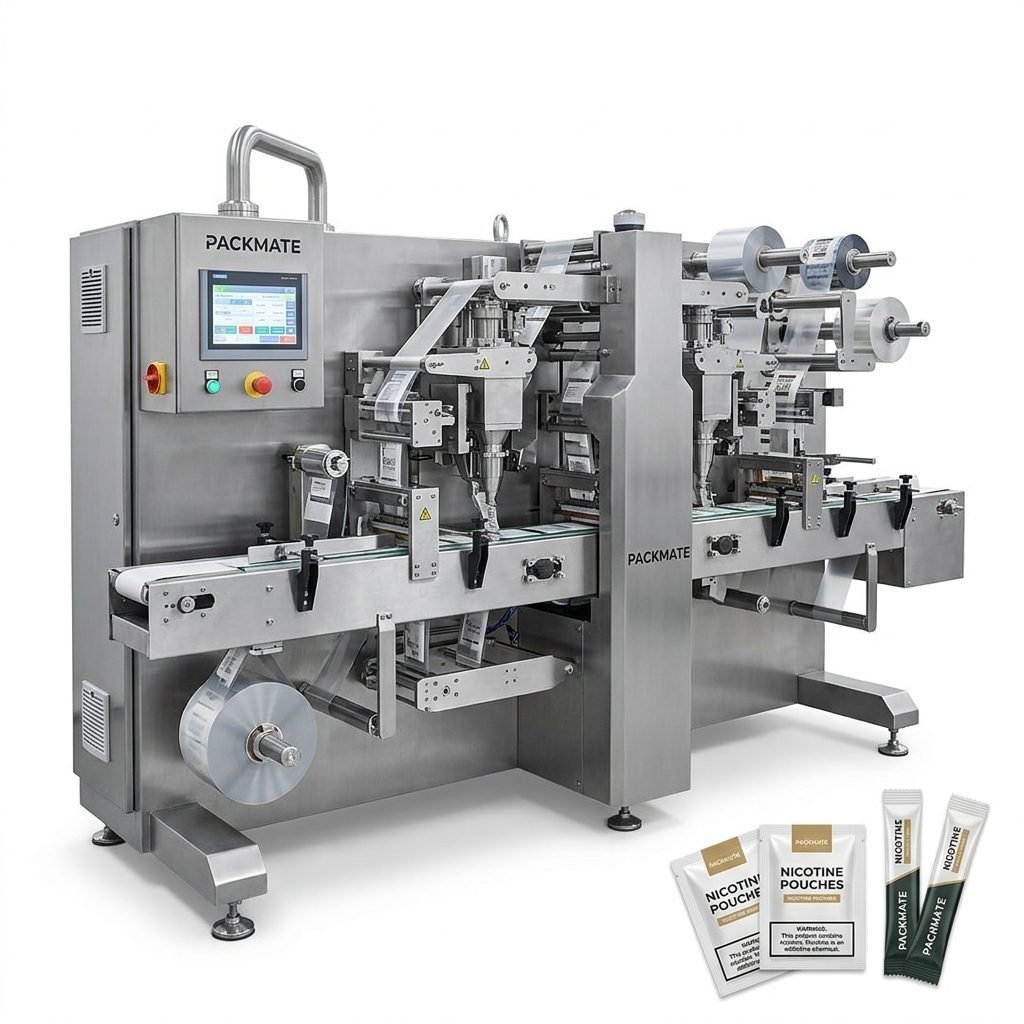
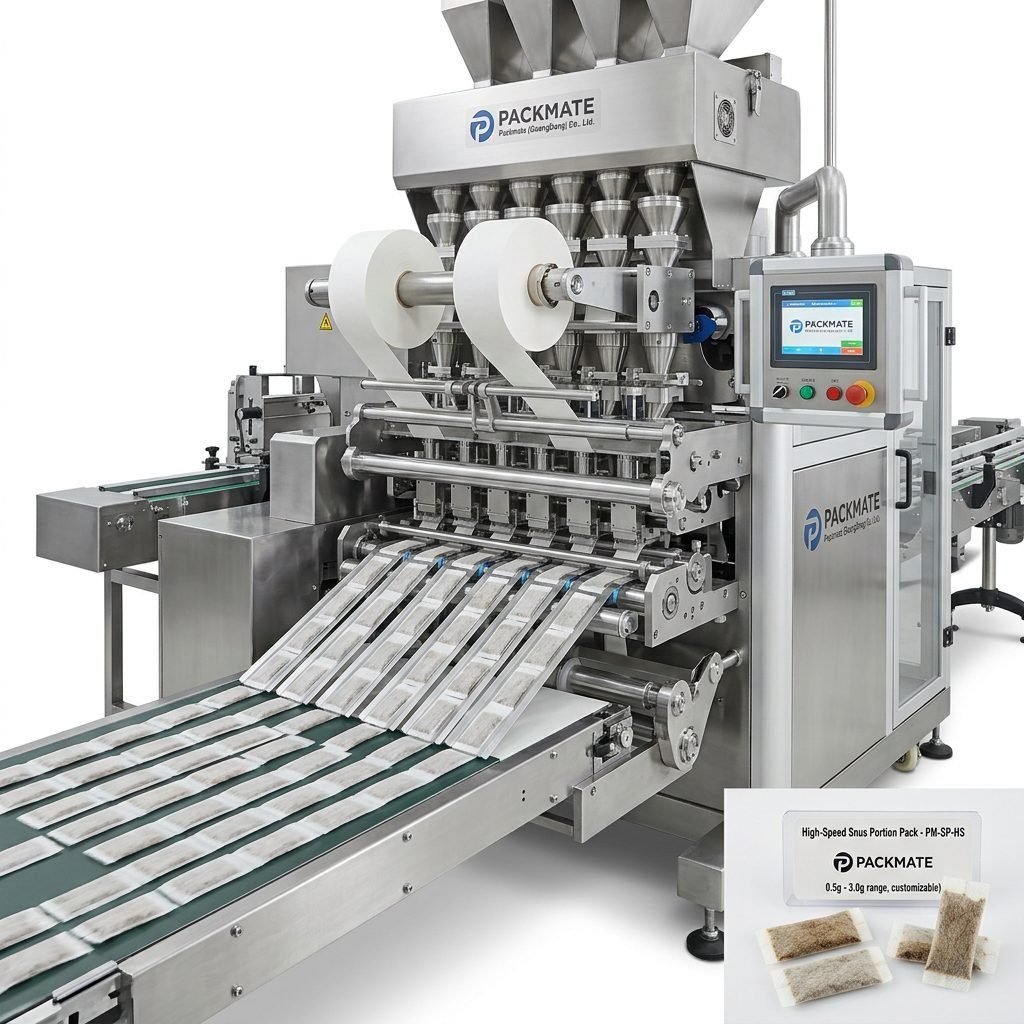
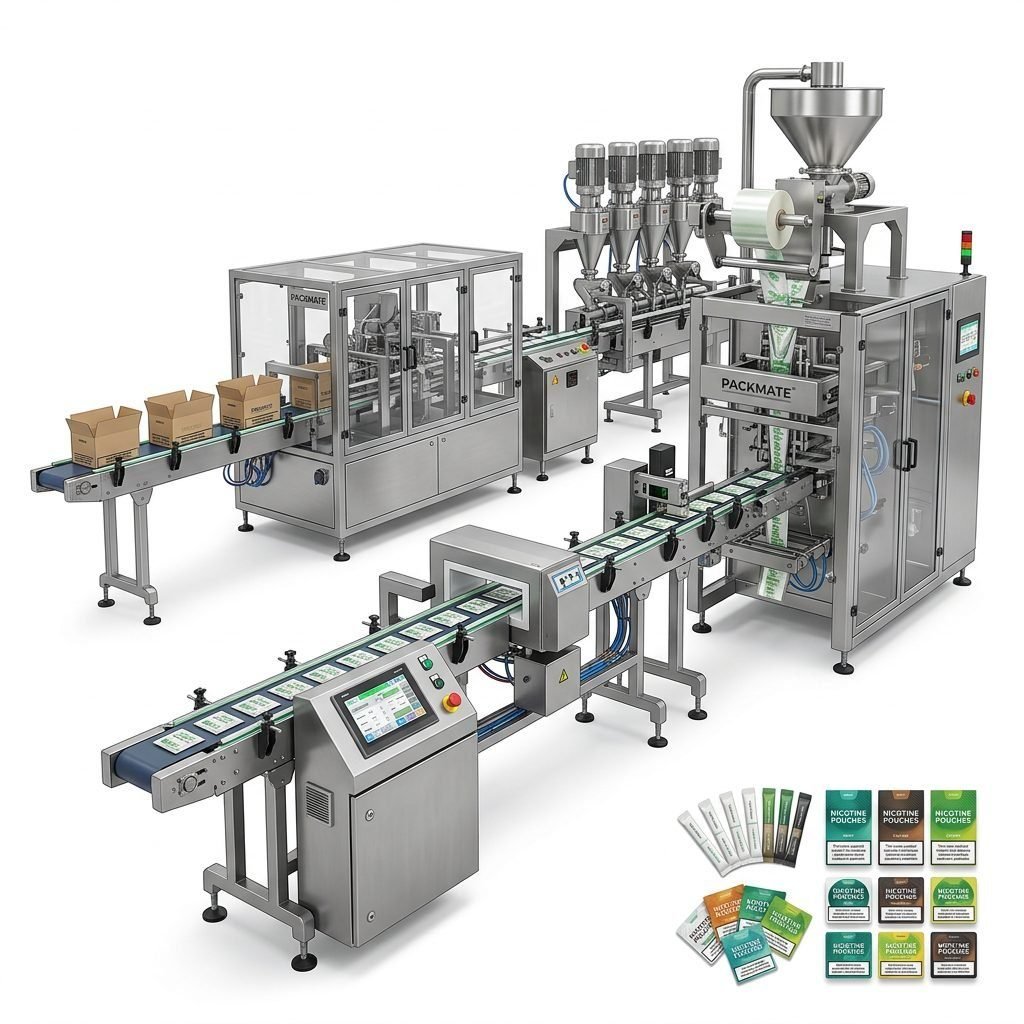
🔹 Snus & Nicotine Pouch Packaging Machines — ideal for single-portion pouches in sealed sachets or cans. (See product examples: Snus & Nicotine Packaging Machines)
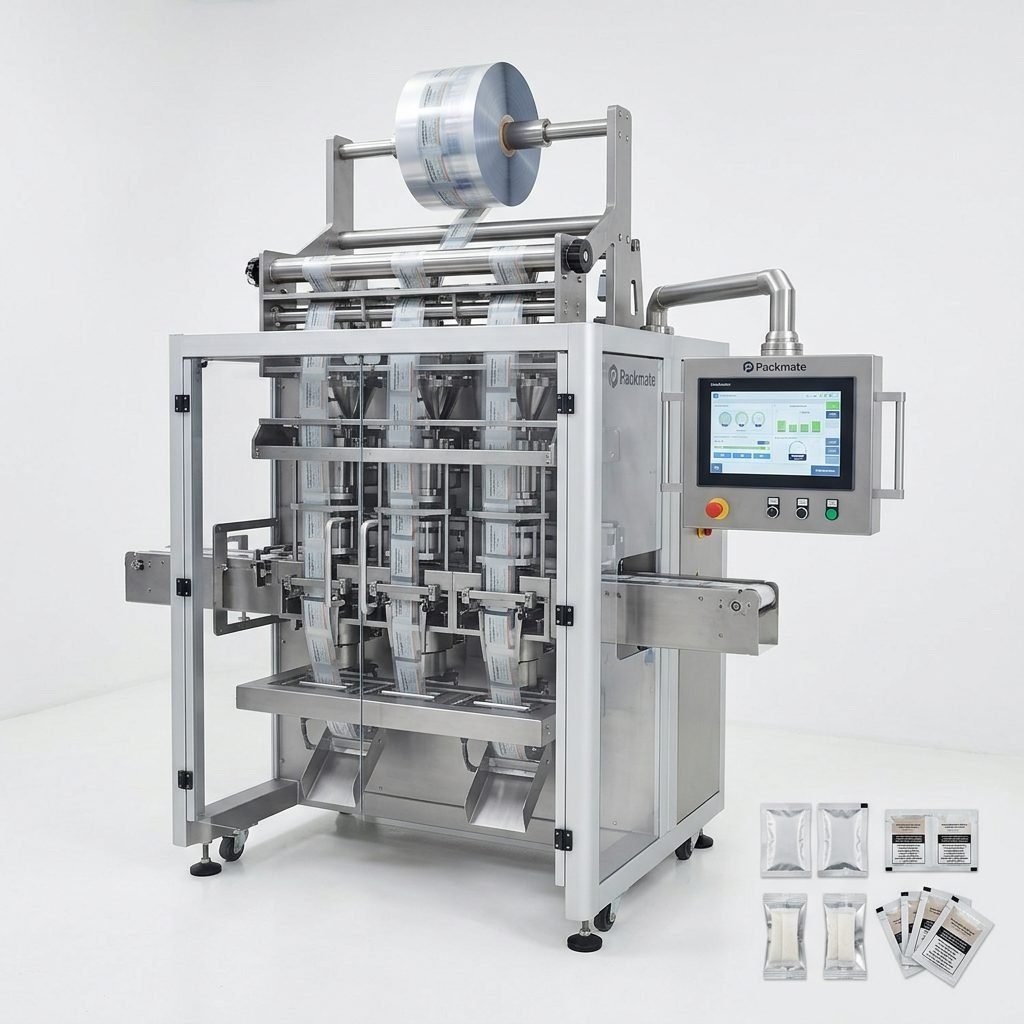
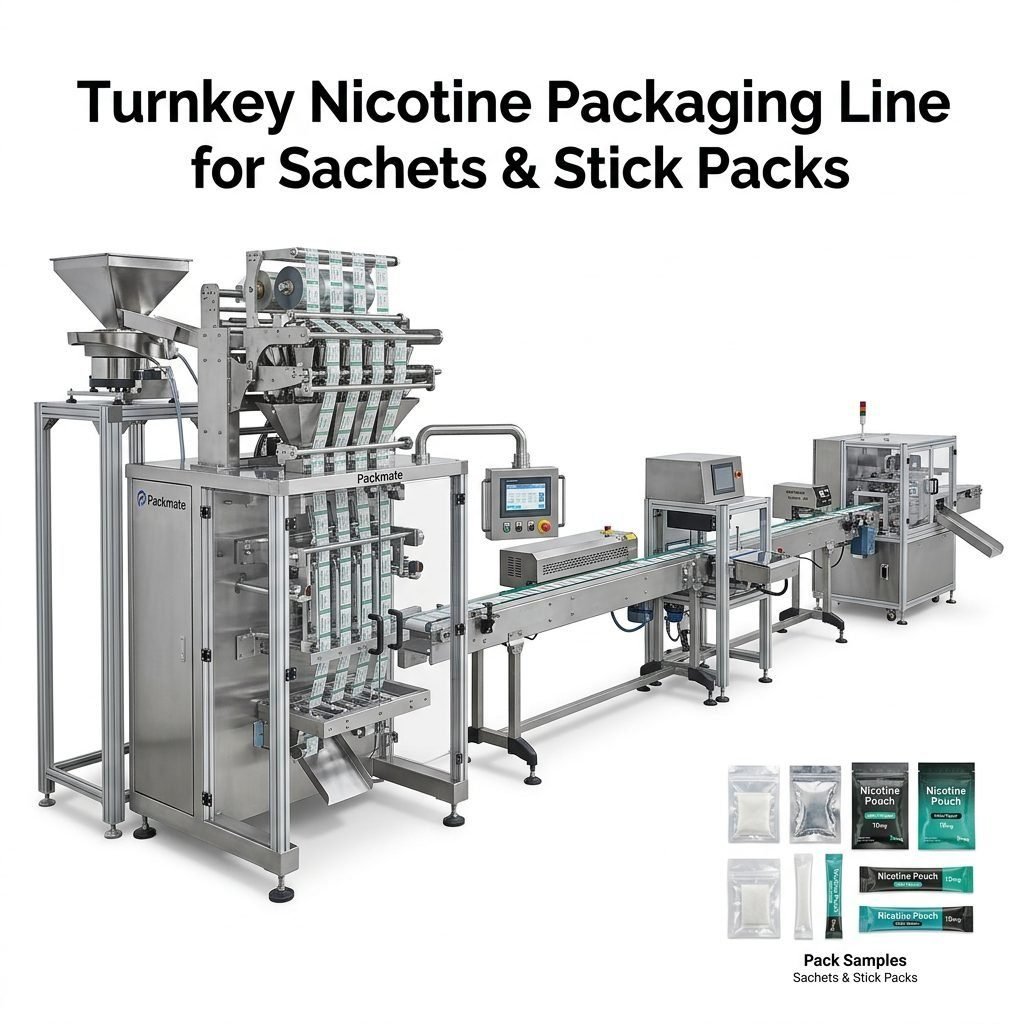
🔹 Sachet & Stick Pack Machines — for stick formats or slim sachets; often used for single-shot doses. (Sachet & Stick Pack Machines)
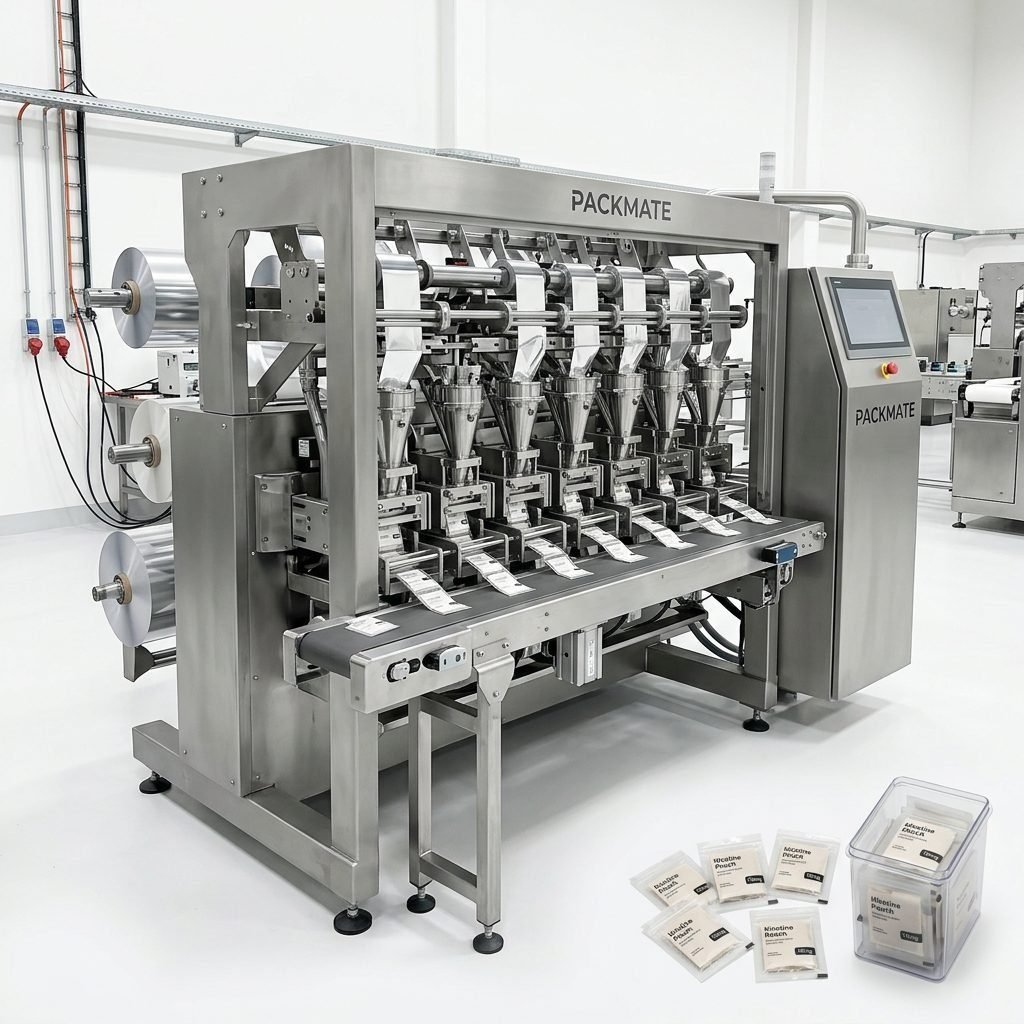
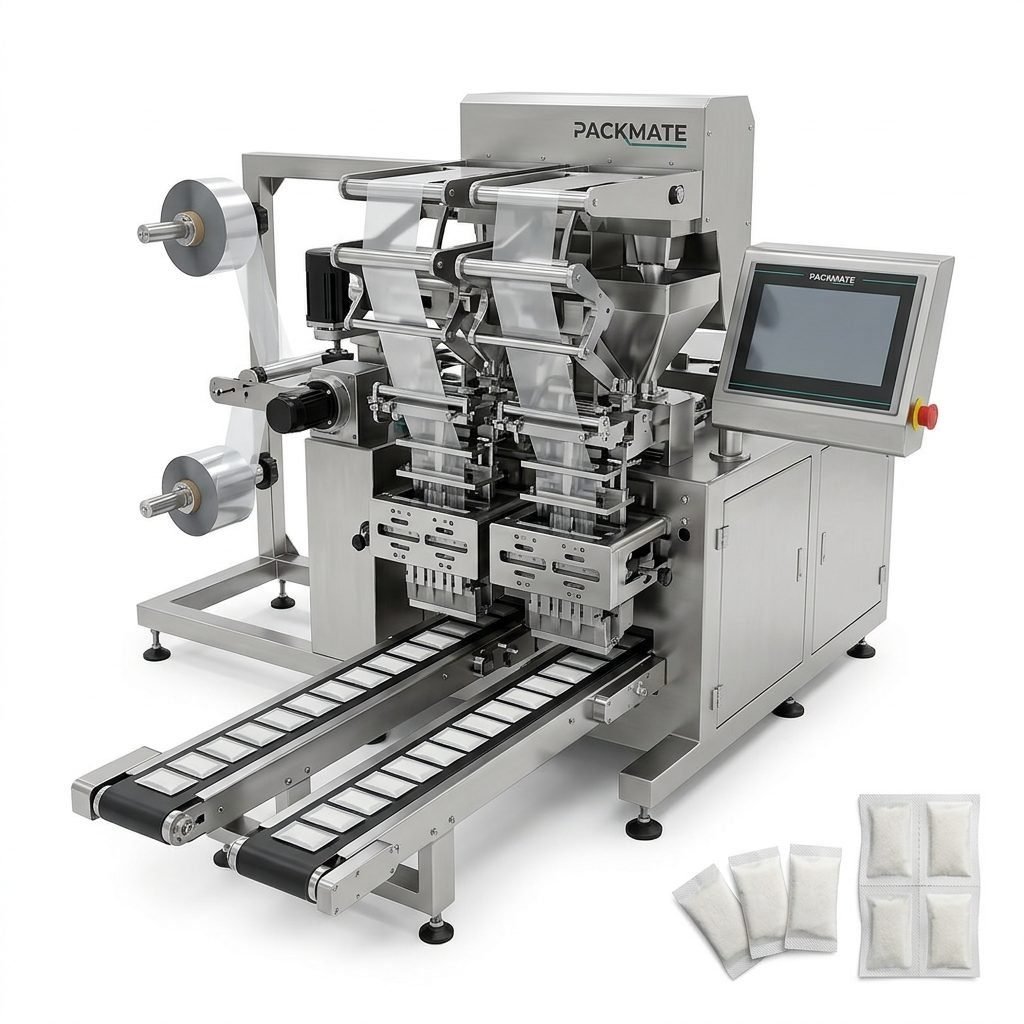
🔹 Multi-lane systems — if you need high throughput and multiple lanes to produce many small pouches in parallel.
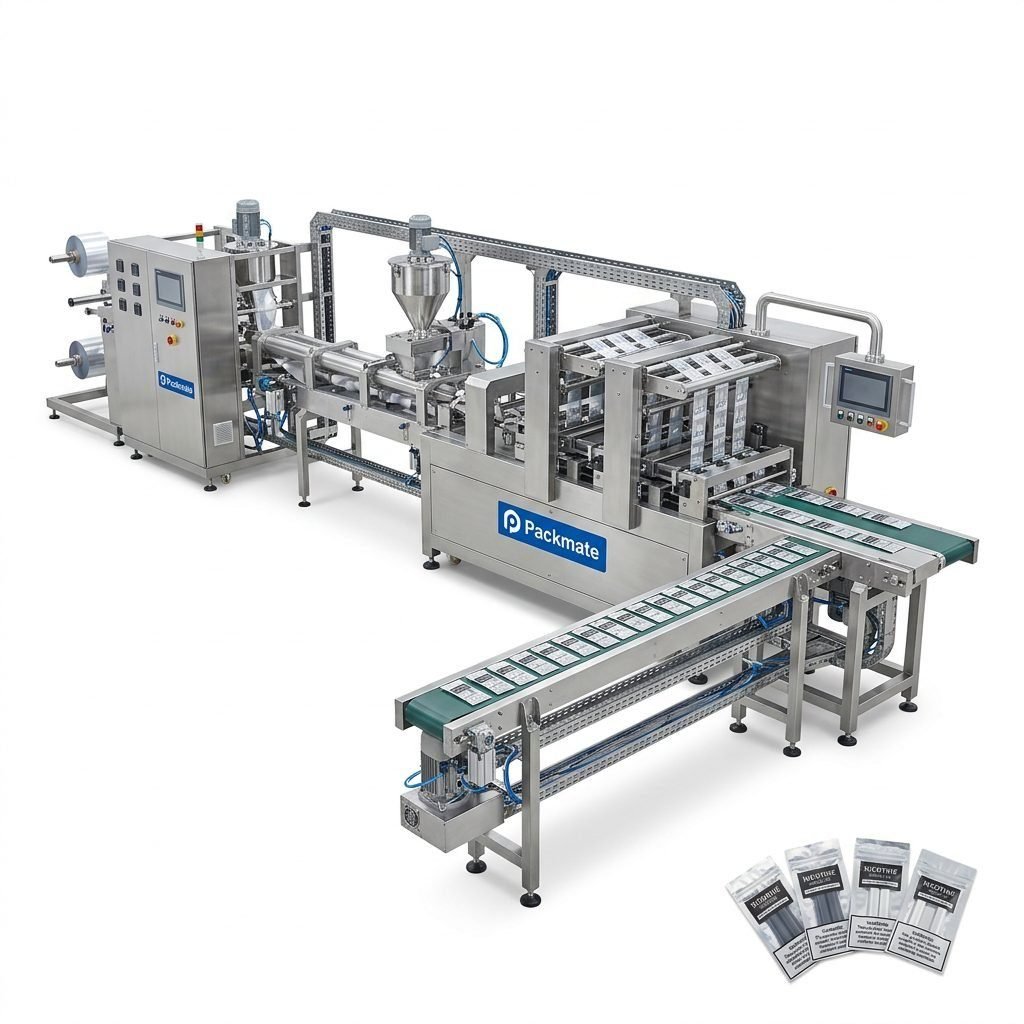
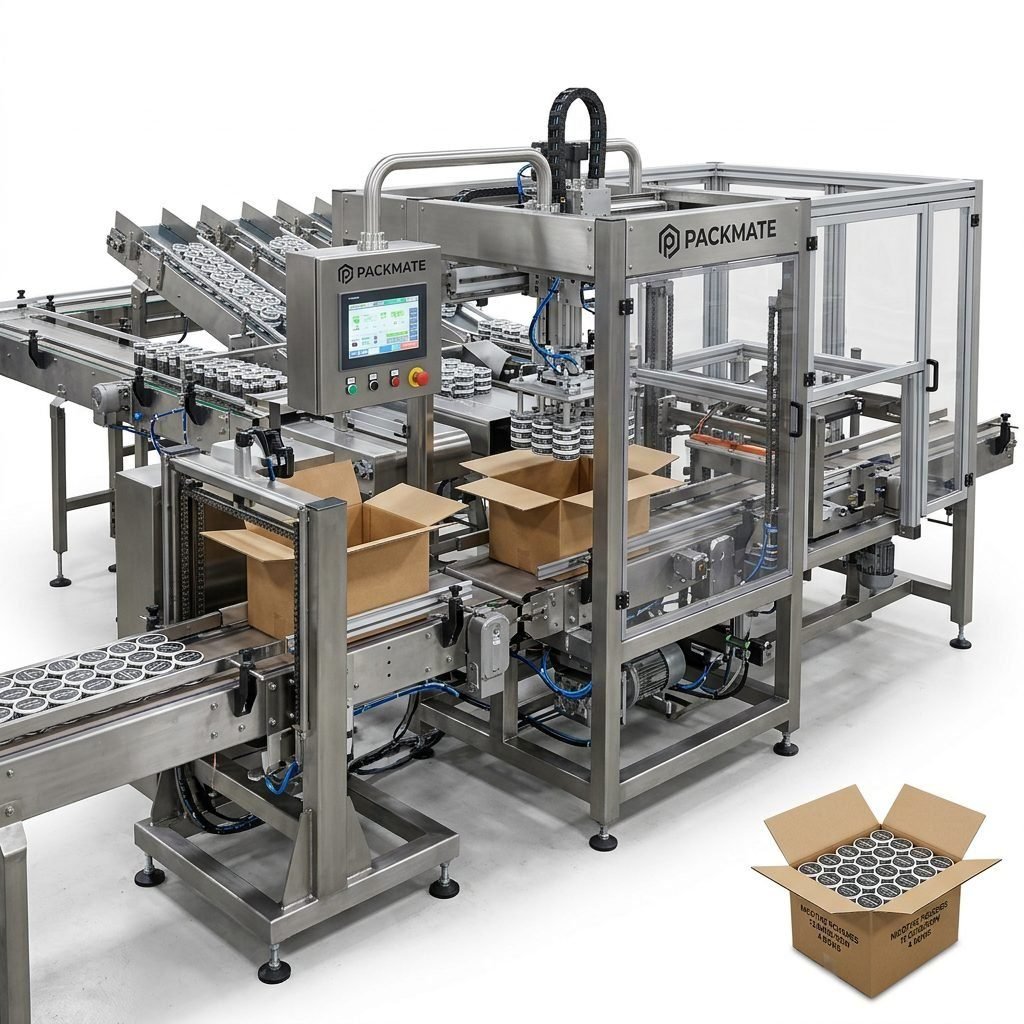
🔹 Auxiliary equipment — conveyors, counting, tray packers and case packers to build a complete line. (Auxiliary Packaging Equipment)
Evaluate manufacturer credentials and factory capability
A manufacturer’s claims matter less than verifiable evidence. Prioritize companies with proven engineering depth and visible factory capacity. Look for:
• Experience & track record: 20+ years or 30+ years indicates mature engineering practices and iterative improvements.
• Factory scale: A large, well-equipped plant with CNC centers and precision assembly lines shows they can maintain quality and produce spares quickly.
• Range of models: A diverse model range (50+ models) means they can adapt machines to your product specifics.
• Certifications: CE and ISO give legal and quality assurance confidence — request copies. (Certificate)
Questions to ask during vendor pre-screening
When you contact suppliers, ask for:
🔎 Factory photos and a virtual tour schedule.
📄 Copies of CE/ISO certificates and material declarations.
🎥 A video of the proposed machine running a sample similar to your product.
🧾 A list of global references and case studies. (Case)
Assess technical fit: customization, tooling, and scalability
Choose a manufacturer who can adapt machines to your exact pouch dimensions, dosing needs, and packaging materials. Key technical checks:
• Changeover time: Fast, tool-free changeovers reduce downtime for multiple SKUs.
• Dosing accuracy: Check weighers or volumetric systems and typical tolerances for your fill weight.
• Modularity: Can you add lanes, sachet formats, or downstream equipment later?
• Control & HMI: Modern PLCs and intuitive HMIs speed operator training and troubleshooting.
• Material compatibility: Ensure compatibility with fibers, films, aluminum laminates, or recyclable films you plan to use.
Quality assurance, testing, and trials
A reliable manufacturer will offer testing with your own product or representative samples. Insist on factory acceptance tests (FAT) and, if possible, a witnessed test run.
✔️ FAT documentation: Detailed test reports, cycle counts, and output metrics.
✔️ Trial production: Off-line trials or a small production batch to validate quality and yields.
✔️ Spare parts kit: Initial spares list and lead times for critical components.
After-sales, training and spare parts
Downtime in packaging lines is costly. Evaluate a supplier’s support network and spare parts policies before signing any contract.
• Local presence: A local agent, distributor, or trained technician in Rwanda reduces support lead times.
• Remote support: Remote diagnostics and software updates help troubleshoot quickly.
• Training: Operator and maintenance training packages are essential for safe, efficient running.
• Spare part availability: Confirm typical lead times and whether stock can be held regionally.
Commercial terms, pricing and total cost of ownership
Don’t make decisions based solely on the lowest quote. Consider the long-term cost of ownership and operational factors.
• Warranty & service contracts: What is covered and for how long?
• Uptime guarantees: SLA commitments for response times.
• Energy & consumables: Estimate operating costs for drives, heaters, and film usage.
• Financing: Some suppliers offer lease or payment terms for capital equipment.
Logistics, installation and commissioning in Rwanda
Clear logistics planning avoids surprises. Confirm shipping methods, customs documentation, and on-site requirements such as power, forklift access, and foundation needs.
• Packing & transport: How are machines crated and insured for sea/air freight?
• Installation scope: Does the supplier include mechanical and electrical installation, or only supervision?
• Commissioning & validation: On-site testing, recipe setup, and operator sign-off should be included.
Verify references, exhibitions, and real-world performance
A reputable manufacturer welcomes visits and reference checks. Seeing equipment in action at an exhibition or an existing customer’s plant is invaluable.
• Exhibition demos: Attend demonstrations or view recorded demos. (Our Exhibition)
• Customer visits: Ask for contactable customers producing similar SKUs.
• Long-term partnerships: Suppliers with global cooperation cases demonstrate staying power.
Step-by-step selection checklist
Use this practical checklist to structure negotiations and comparison between different suppliers:
1) Define product specifications and target output (pouches/min, lanes, packaging material).
2) Request machine datasheets, FAT reports, and sample videos.
3) Compare total cost of ownership, not just purchase price.
4) Schedule factory acceptance tests and in-person or virtual factory tours.
5) Confirm installation, commissioning and training scope.
6) Secure spare parts agreements and warranty terms.
7) Finalize contract with clear milestones, penalties, and payment schedule.
Why Packmate Snus Machine is a competitive choice
When comparing suppliers, consider manufacturers with decades of focused experience in snus and nicotine pouch packaging — from R&D to turnkey lines and global service networks. Companies with a long history of innovation and large manufacturing capabilities can deliver robust machines and tailored solutions more reliably.
Learn more about a specialized provider’s manufacturing strength and company history to evaluate fit. (About Packmate)
Final decision: balance risk, capacity and partnership
The best choice balances technical capability, proven reliability, local support, and transparent commercial terms. A strong supplier will act as a partner — helping you innovate packaging formats, reduce costs, and scale production safely and compliantly in Rwanda. Invest the time upfront in trials and due diligence to avoid expensive rework later.
Next practical steps
📦 Request machine proposals for your SKU and expected throughput.
📹 Ask for sample running videos and FAT reports.
📞 Arrange a technical call and schedule a factory tour or exhibition visit.
🧾 Check certificates and secure a spare parts list and lead-time commitments.
(If you need direct contact details, a manufacturer’s contact page can help. Contact Us)
Closing thoughts
Selecting a nicotine packaging machine manufacturer for Rwanda is more than buying equipment — it’s about establishing a dependable production foundation. Prioritize engineering expertise, documented performance, after-sales support, and alignment with local regulatory requirements. With careful selection and clear performance benchmarks, your packaging line will become a competitive asset that supports quality, safety and business growth.
Frequently Asked Questions
Q: How long does it typically take from order to installation?
A: Lead times vary by model and customization, but typical timelines range from 12 to 24 weeks including FAT and shipping. Expedited options may be available depending on factory capacity.
Q: What certifications should I request from the supplier?
A: Request CE and ISO certificates, electrical schematics, material declarations for parts in contact with products, and any test reports relevant to your market.
Q: How do I validate machine performance before purchase?
A: Insist on a factory acceptance test (FAT) with your product or representative samples, video evidence of production runs, and references from similar customers.
Q: Can machines be scaled later if my volumes increase?
A: Look for modular, multi-lane machines that allow adding lanes or integrating additional downstream equipment to increase capacity.
Q: What after-sales support should I expect?
A: Expect training for operators and maintenance teams, guaranteed response times for support, spare parts availability, and remote diagnostic options.