Choosing the right nicotine packaging machine for a production line in Ireland is a decision that blends technical requirements, regulatory awareness, and long-term business strategy. This guide walks you through practical criteria, compares machine types, and explains how to evaluate suppliers so you confidently select equipment that meets production goals, quality expectations, and compliance needs.
Understand Your Production Needs First
Start by mapping your current and projected volumes. Are you launching small batches for local markets or planning multi-shift high-speed runs? Key capacity metrics include pieces per minute (ppm), number of lanes, and shift uptime targets. For example, a single-lane snus pouch line that runs at 25–40 ppm is very different from a 6-lane high-speed system designed for thousands of pouches per hour.
Also specify product form and dimensions: nicotine pouches, snus sachets, stick packs, or loose powder. Each format changes machine choice: stick pack and sachet machines follow different sealing and forming mechanics than multi-lane pouch systems. If you plan to expand formats later, prioritize modular machines or suppliers offering scalable turnkey lines.
Checklist: Production Requirements
🔧 Target capacity: daily/weekly output targets and ppm goals.
⚖️ Dose accuracy: acceptable weight tolerance per pouch.
🔄 Product formats: pouch sizes, stick packs, or sachets you need now and later.
🧰 Automation level: manual feeding vs fully automated filling and cartoning.
Compare Machine Types Suitable for Nicotine Products
There are several machine families commonly used in nicotine and snus packaging. Below are common types and when they are appropriate:
Snus & Nicotine Pouch Machines
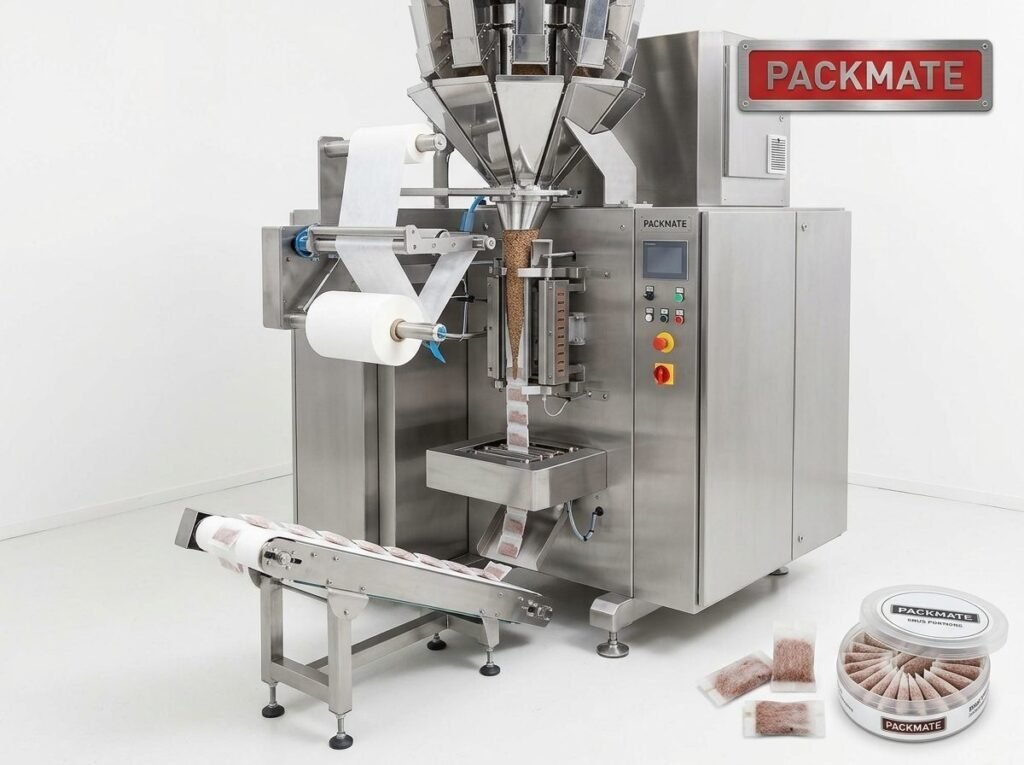
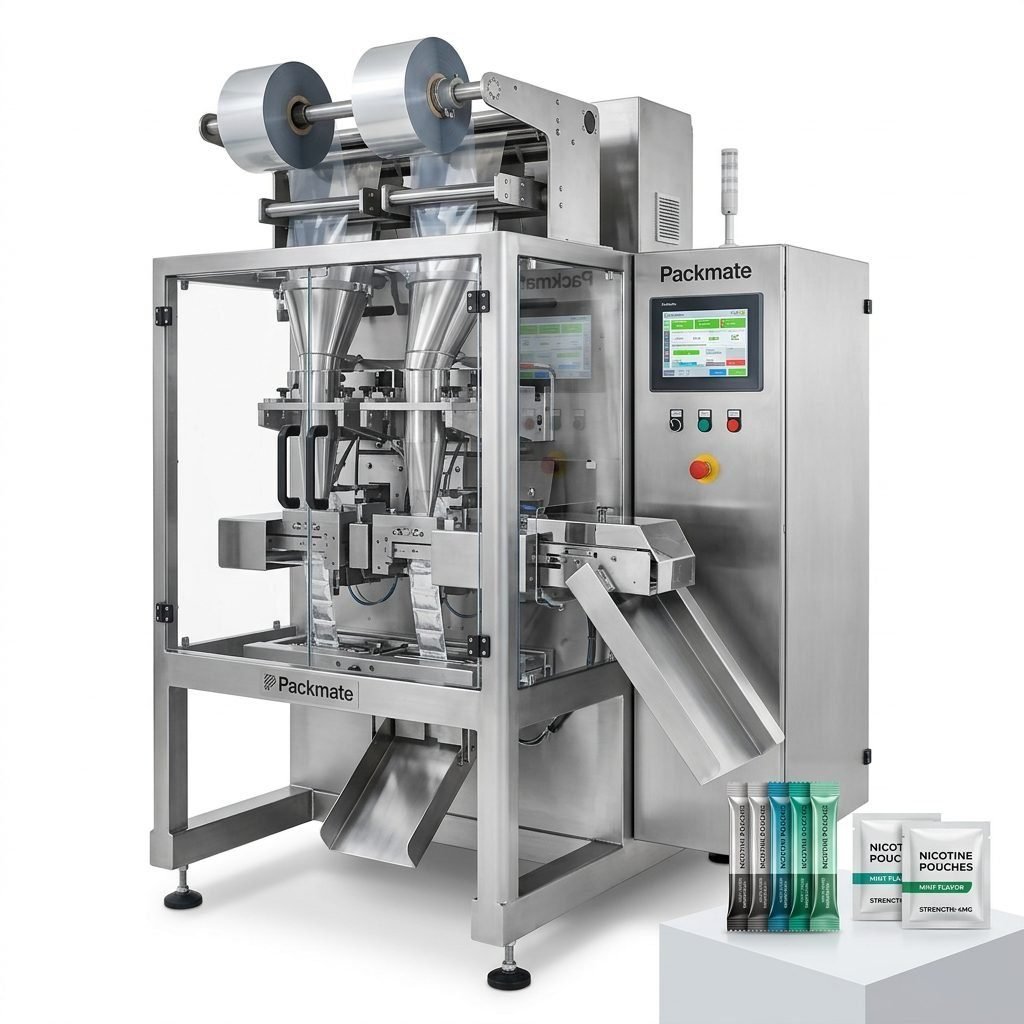
Designed for small-dose pouches and multi-lane production, these machines excel in producing consistent pouch shape and weight. They often integrate dosing, forming, sealing, and cutting in one continuous line. If your primary product is nicotine pouches, prioritize a specialist snus packing machine that supports high-precision dosing and gentle handling.
Sachet & Stick Pack Machines
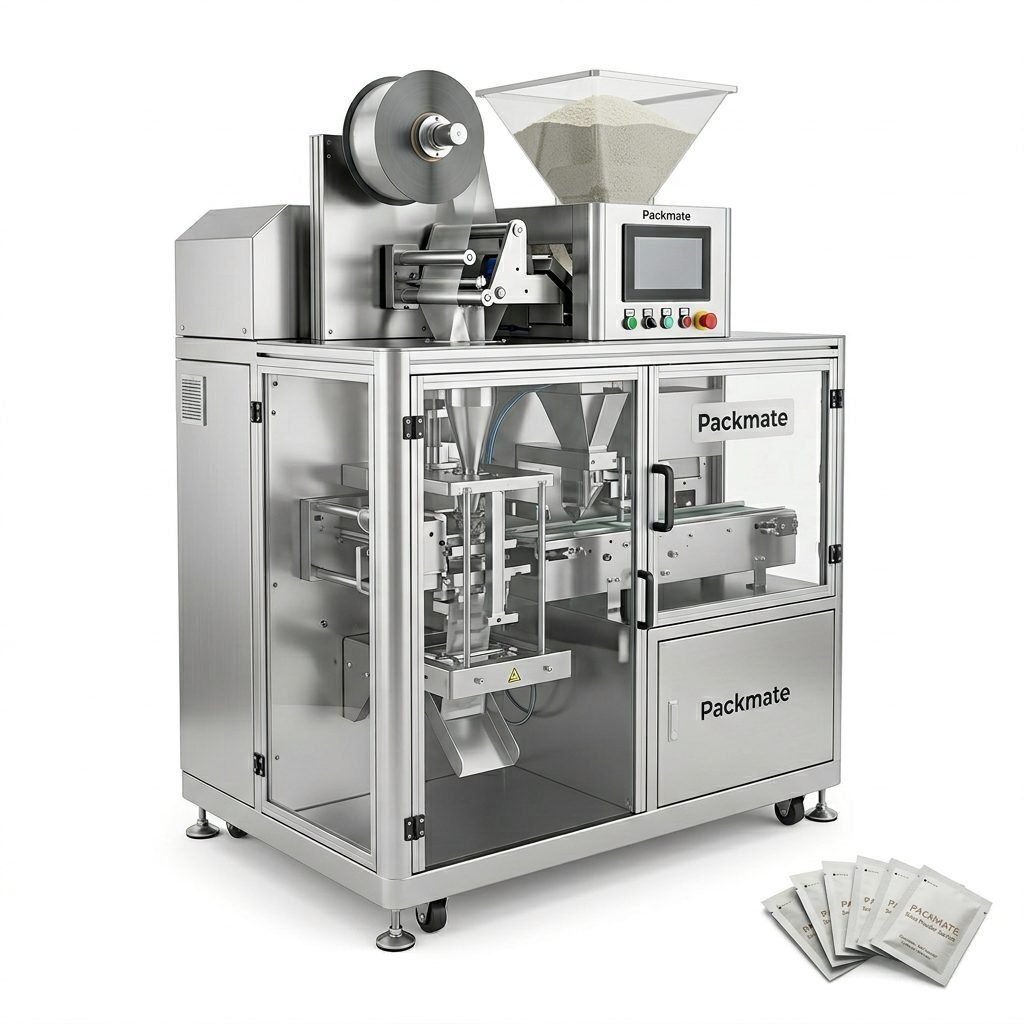
Sachet and stick pack machines are ideal for single-serve formats and can handle powders, granules, or small pouches. They are cost-effective for flexible packaging and smaller pouch sizes. For stick packs used in flavored or nicotine formulations, ensure the machine delivers tight seals and accurate longitudinal sealing.
Multi-Lane Systems
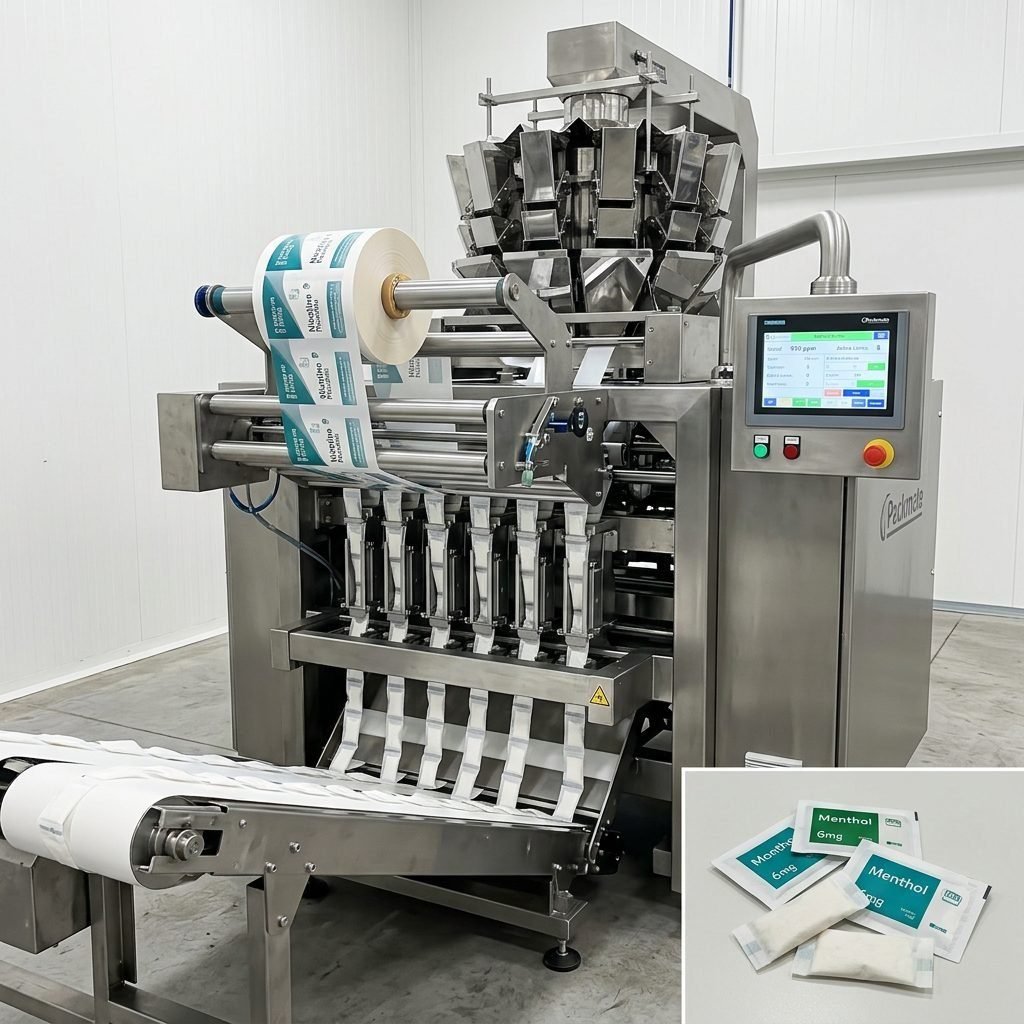
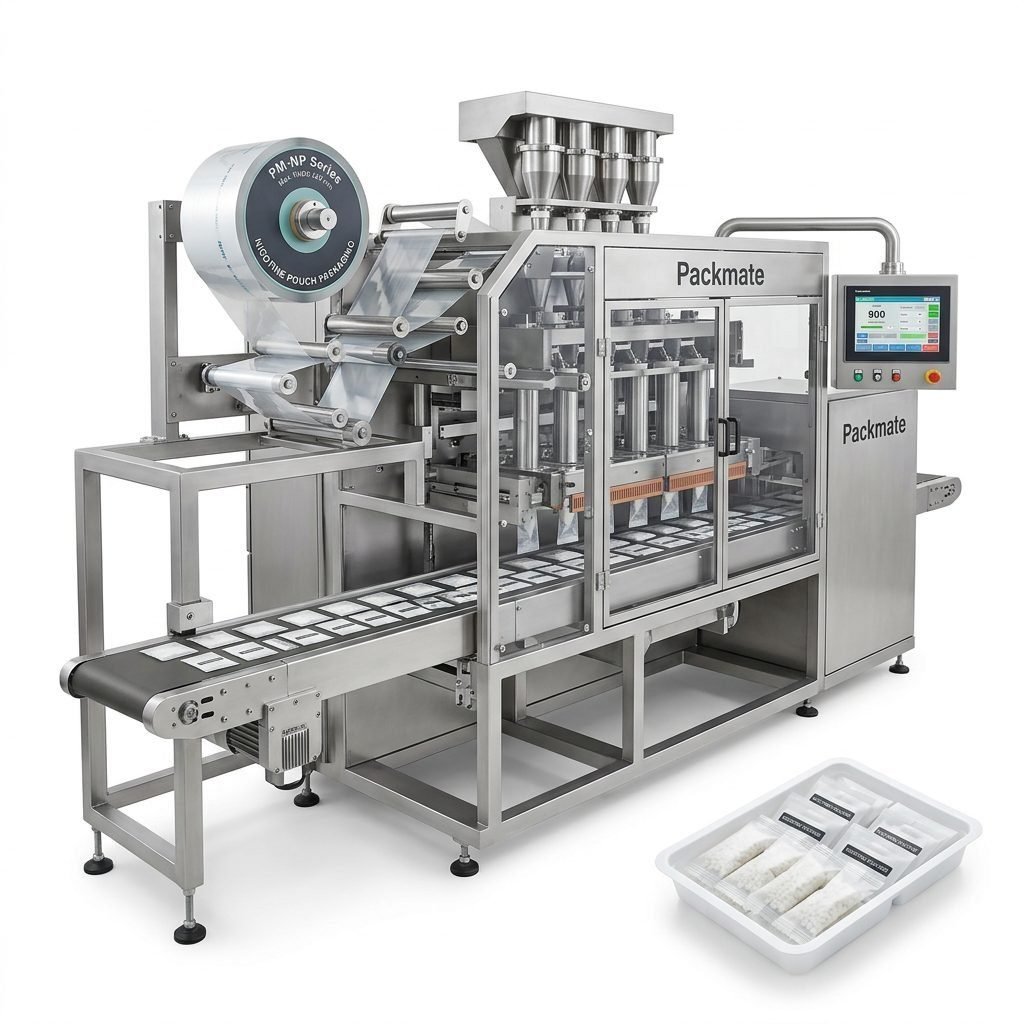
If scale is critical, choose multi-lane systems that multiply throughput without proportional footprint growth. Multi-lane snus machines are engineered for small-dose high-speed runs and often include synchronized dosing, lane balancing, and centralized control interfaces.
Key Technical Specifications to Evaluate
When comparing models, focus on measurable specifications rather than marketing claims. Below are essential technical parameters to request and benchmark.
- Speed (ppm) under realistic product conditions.
- Filling/dosing accuracy and standard deviation per pouch.
- Number of lanes and ability to change lane configuration.
- Material compatibility (paper, laminate, foil, films) and recommended web widths.
- Changeover time for formats and tools required for size change.
- PLC/HMI controls and data logging features for production traceability.
- Integration capability with upstream dosing/weighing systems and downstream cartoning.
Example: Why Filling Accuracy Matters
A machine with ±2% dosing accuracy will reduce product giveaway and maintain regulatory compliance. For nicotine products, tight tolerances are often critical to ensure consumer safety and consistent nicotine levels. Always request a performance report or trial video demonstrating accuracy with your product formulation.
Automation, Integration & Line Planning
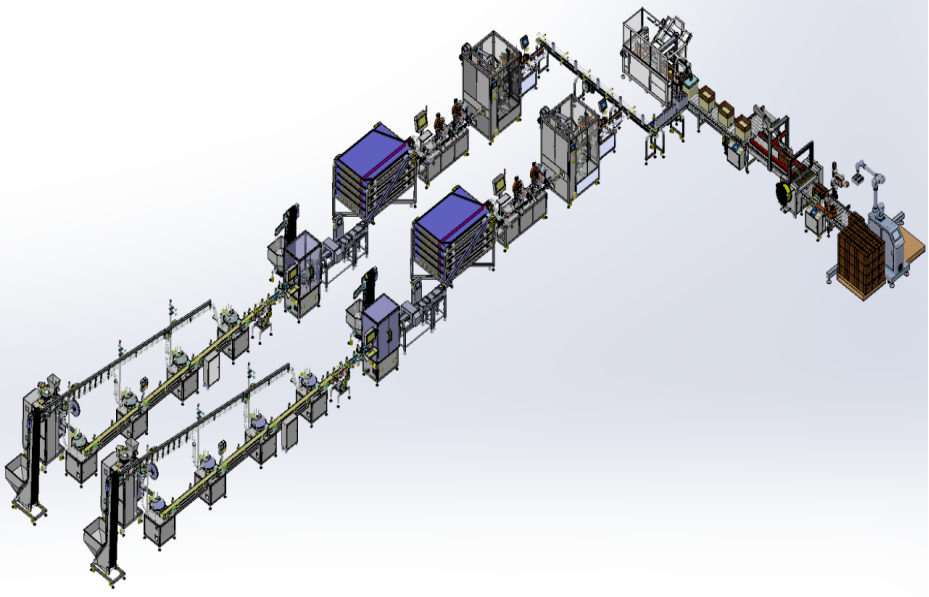
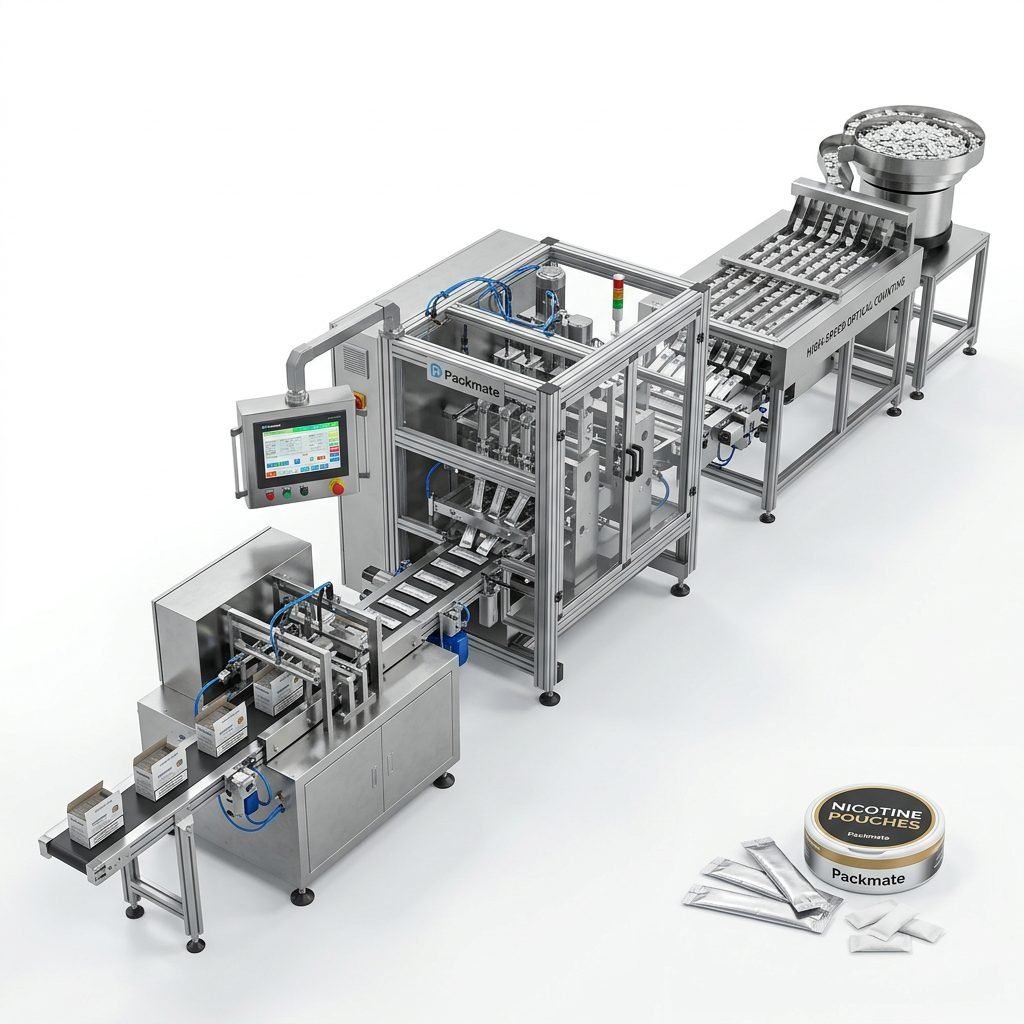
True production efficiency comes from a line-level view: dosing feeders, fillers, pouch/forming machines, metal detectors, checkweighers, and cartoners must interoperate. Consider vendors who offer integrated filling & packaging lines or compatible auxiliary equipment for a turnkey solution.
For suppliers, look for references to multi-component lines such as weighing & packaging systems and filling & packaging lines that demonstrate their ability to deliver synchronized solutions. Packmate’s portfolio, for instance, includes integrated options across Snus & Nicotine Packaging Machines and Weighing & Packaging Systems that reduce integration risk.
Material Selection & Consumables
Film type, lamination, and barrier properties affect machine setup and seal quality. Ensure the chosen packaging materials are compatible with machine sealing methods (heat seal, ultrasonic, etc.) and with nicotine’s chemical properties. Ask suppliers for validated material lists and trial history with similar films.
⚠️ Tip: Run a sample trial with your actual film and product to confirm sealing integrity, pouch appearance, and dosage accuracy before purchase commitment.
Quality, Safety & Certification Considerations
Machines used in nicotine product packaging should comply with international safety and quality standards. Look for CE and ISO certifications as baseline assurances that the equipment meets electrical safety and quality management standards. Also verify that the manufacturer follows documented quality testing and offers factory acceptance testing (FAT).
Request documentation: CE certificates, ISO factory credentials, and test reports that include throughput, weight accuracy, and sealing integrity for your product type.
Manufacturer Selection: Why Experience and Factory Strength Matter
When evaluating suppliers, prioritize proven track records in nicotine/snUS packaging. A manufacturer with decades of experience and a large, well-equipped facility can deliver stable machines, advanced customizations, and reliable spare parts supply. Packmate, for example, highlights over 30 years of engineering background, a 20,000㎡ manufacturing facility, and 50+ machine models — indicators of maturity and production capacity.
Ask for case studies, references, and exhibition visits where you can see live demos. Vendors that participate in international exhibitions and provide global cooperation cases can be more confident partners for export and compliance matters.
After-Sales Service, Spare Parts & Training
After-sales support is as important as the machine itself. Verify the supplier’s spare parts lead times, availability of consumables, and whether they offer remote diagnostics, on-site service, and operator training. A strong service network reduces downtime and protects production continuity.
Consider partners who provide documented service plans and local support options in Europe. Contact points, installation guidance, and preventive maintenance schedules are essential deliverables in the purchase contract.
Total Cost of Ownership (TCO) — Beyond Purchase Price
Evaluate TCO: initial capital, installation and commissioning, tooling and changeover time, spare parts, energy consumption, and expected lifetime. High-efficiency machines with better accuracy often reduce product giveaway and operating costs, offsetting higher upfront costs over time.
✅ Cost Tip: Request a 5-year cost projection including spare parts, consumables, and energy to compare vendors realistically.
Site Requirements & Installation Planning
Plan for factory utilities, floor load capacity, and clean area requirements. Machines may require compressed air, specific voltage, drainage, and controlled humidity. Early coordination with the supplier ensures a smooth installation and minimizes downtime during commissioning.
Request pre-installation checklists and a proposed layout from the vendor. For turnkey lines, include conveyor routing, safety zones, and maintenance access in your factory plan.
Regulatory Awareness for Ireland & EU Markets
Nicotine-containing products are subject to regulatory oversight. While packaging machinery itself is not regulated in the same way as the product, consistent dosing, traceability, and material safety contribute to regulatory compliance. Work with legal and regulatory advisors to ensure your packaging materials, labeling workflows, and batch traceability meet Irish and EU expectations.
How to Run Effective Supplier Evaluations
Use a structured RFP with required technical specs, trial requests, FAT acceptance criteria, delivery timelines, warranty terms, and training scope. Ask for sample videos, client references, and an invitation to witness an FAT. Prioritize suppliers with demonstrable experience in nicotine/snUS packaging and turnkey capability.
To explore specialized options, review product pages such as Snus & Nicotine Packaging Machines and Sachet & Stick Pack Machines. Learn about the manufacturer’s background on their About Packmate page, and reach out via Contact Us for custom quotes and trials.
Decision Roadmap — Steps to Purchase
1. Define capacity, product formats, and regulatory constraints.
2. Shortlist vendors with relevant case history and certifications.
3. Request trials with your product and validated material lists.
4. Compare total cost of ownership and service agreements.
5. Plan site utilities, FAT, and commissioning milestones before signing.
📌 Final Recommendation: Choose a supplier that combines proven snus/nicotine machine designs, strong factory support, and turnkey integration capability to reduce risk and accelerate time-to-market.
Common Mistakes to Avoid
Rushing decisions based solely on quoted top speed, ignoring dosing accuracy, or underestimating spare parts lead times are frequent pitfalls. Also, avoid skipping a real-material production trial — many issues only become visible under actual product conditions.
Useful Resources & Next Steps
If you want to review solutions or request a quote, explore product categories and case studies to see how lines are implemented: Snus & Nicotine Packaging Machines, Sachet & Stick Pack Machines, and Case examples for insight into real deployments.
FAQs — Common Questions When Choosing a Nicotine Packaging Machine
Q1: How do I confirm a machine’s dosing accuracy with my product?
A1: Request a trial run or sample videos using your exact formulation and film. Insist on a FAT that measures weight accuracy, sealing quality, and throughput under your conditions.
Q2: What certifications should I require from manufacturers?
A2: Require CE for machinery safety and ISO for quality management. Also ask for documented test reports and third-party inspections where available.
Q3: Is it better to buy a single-vendor turnkey line or assemble from multiple suppliers?
A3: Turnkey vendors reduce integration risk and typically provide better compatibility and single-source responsibility. However, strategic reasons may justify best-of-breed components — ensure rigorous integration planning if you mix vendors.
Q4: How long is a typical lead time and what affects it?
A4: Lead time depends on customization, production schedules, and spare part availability. Standard models ship faster; fully customized multi-lane turnkey lines can take several months. Confirm lead times and delivery milestones in the contract.
Q5: Where can I view machines or discuss customized solutions?
A5: Visit manufacturer exhibition pages or contact their sales directly. For example, view exhibitions and contact details on the supplier’s Our Exhibition and Contact Us pages to arrange demos and factory visits.