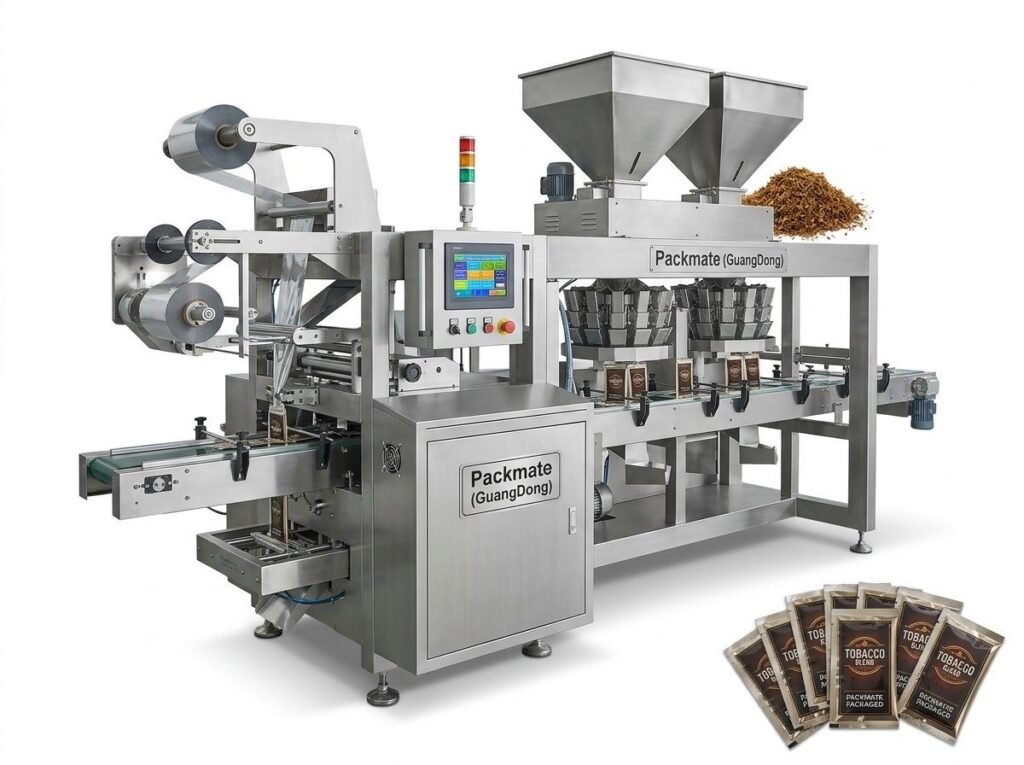
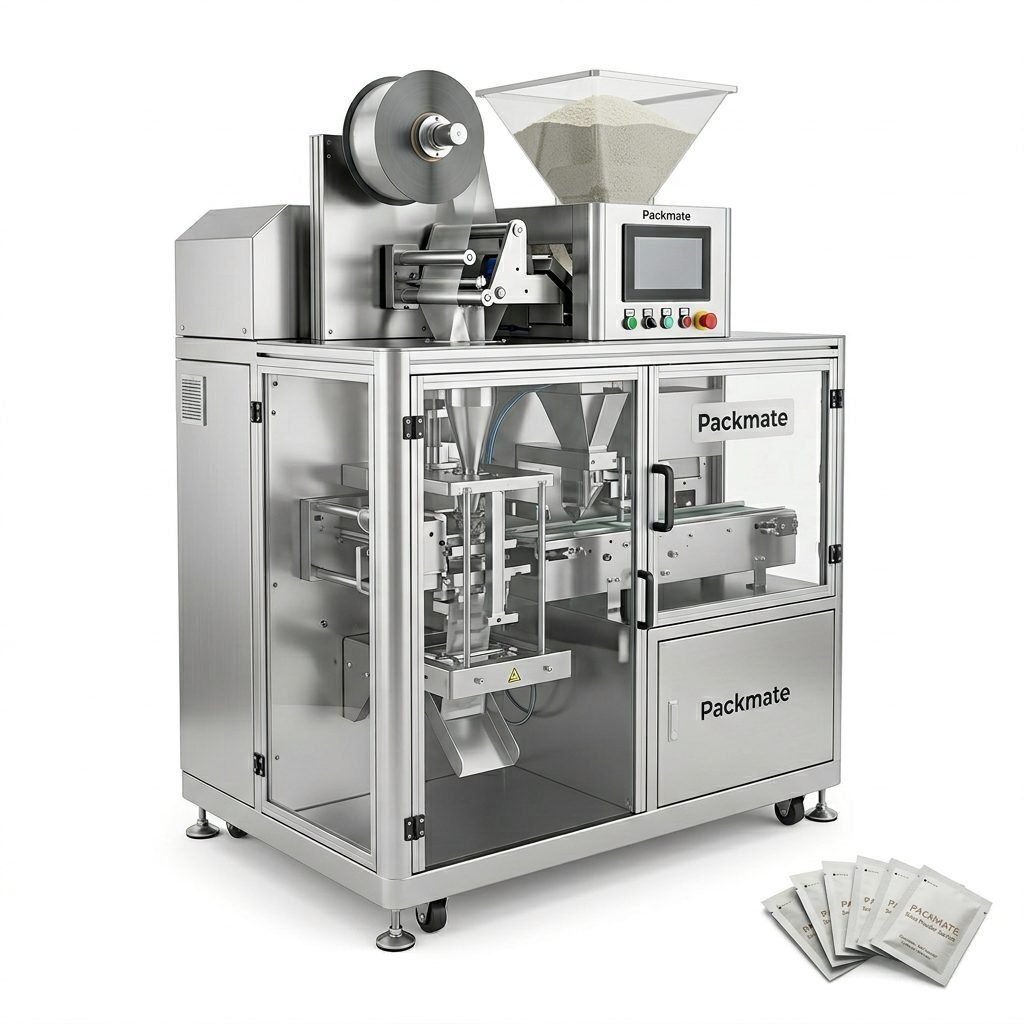
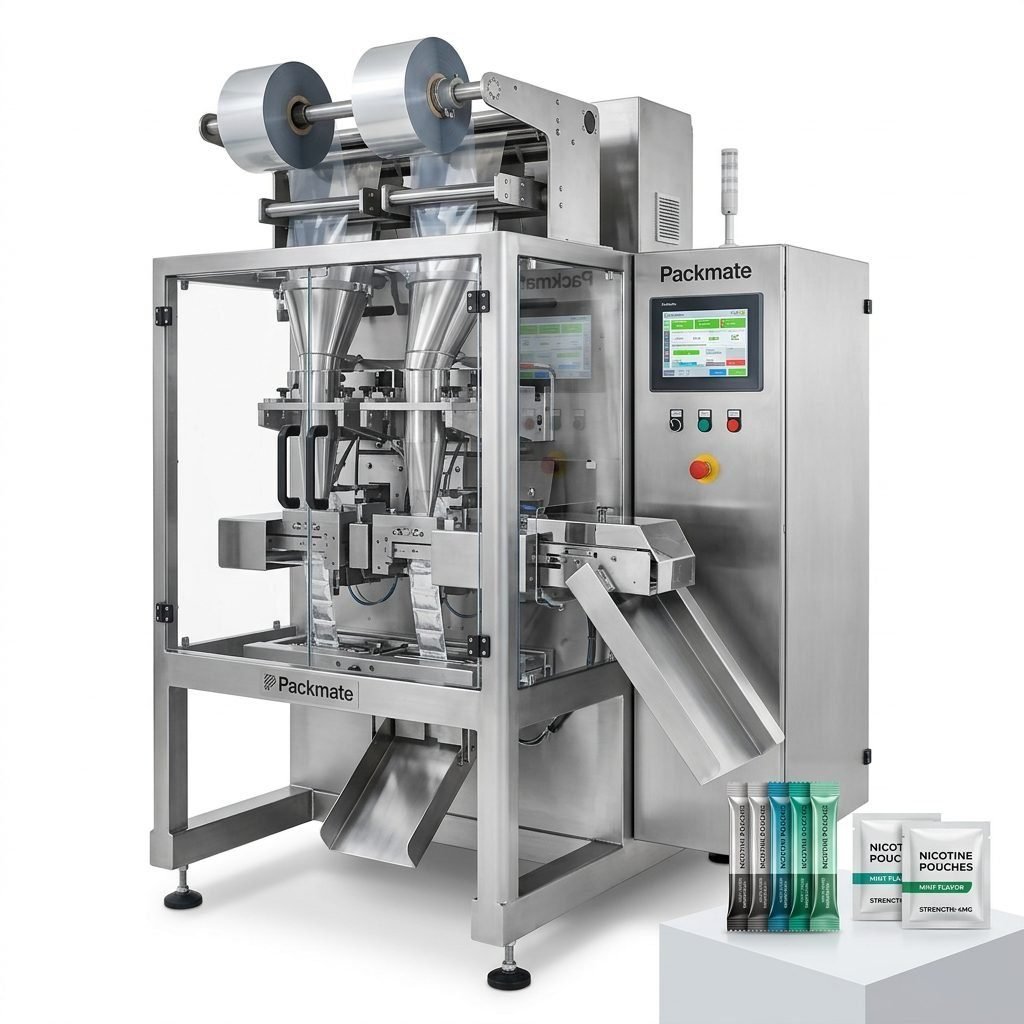
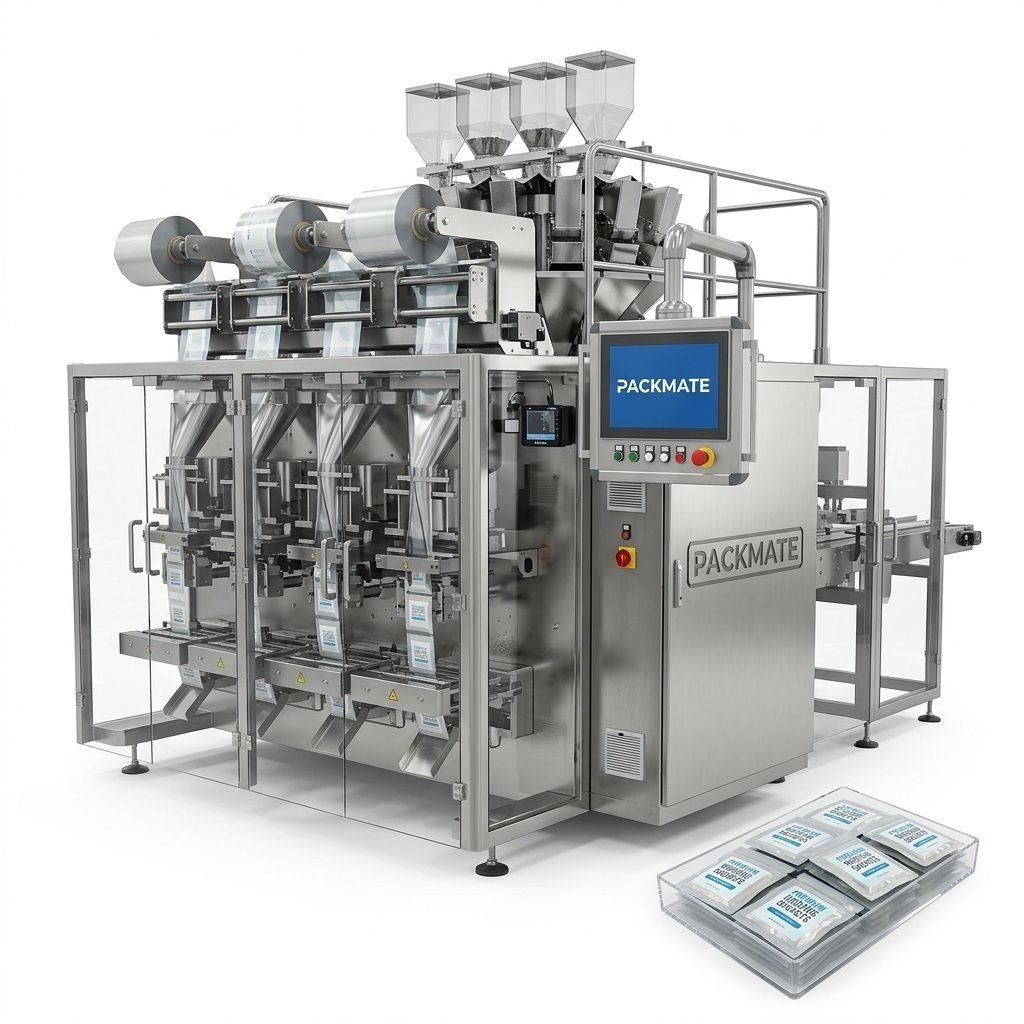
Choosing the right snus packaging machine for your production line in Jordan can make or break your operational efficiency, product quality, and regulatory compliance. This guide walks you through the practical steps, technical considerations, and supplier criteria to help you pick the best snus or nicotine pouch packaging solution that matches your production goals and market needs.
Understand Your Production Requirements 🧭
Before evaluating machines, clarify your core needs: daily output targets, pouch formats (loose snus, nicotine pouches, sachets), product form (powder, granule, paste, or liquid), and any special packaging features such as multi-lane lanes or pillow/rectangular sachets. Make a simple matrix of production capacity, package format, and product characteristics — this becomes the backbone of selecting equipment.
Key questions to answer
🛠️ How many pouches per minute do you need?
🧾 What pouch size ranges are required?
⚖️ Is precise dosing needed (mg-level control)?
🔄 Do you plan multiple product SKUs on a single line?
📦 Are secondary packaging and case packing required?
Document current bottlenecks and growth forecasts. Machines matched to future volume avoid costly upgrades.
Types of Snus Packaging Machines and When to Use Them
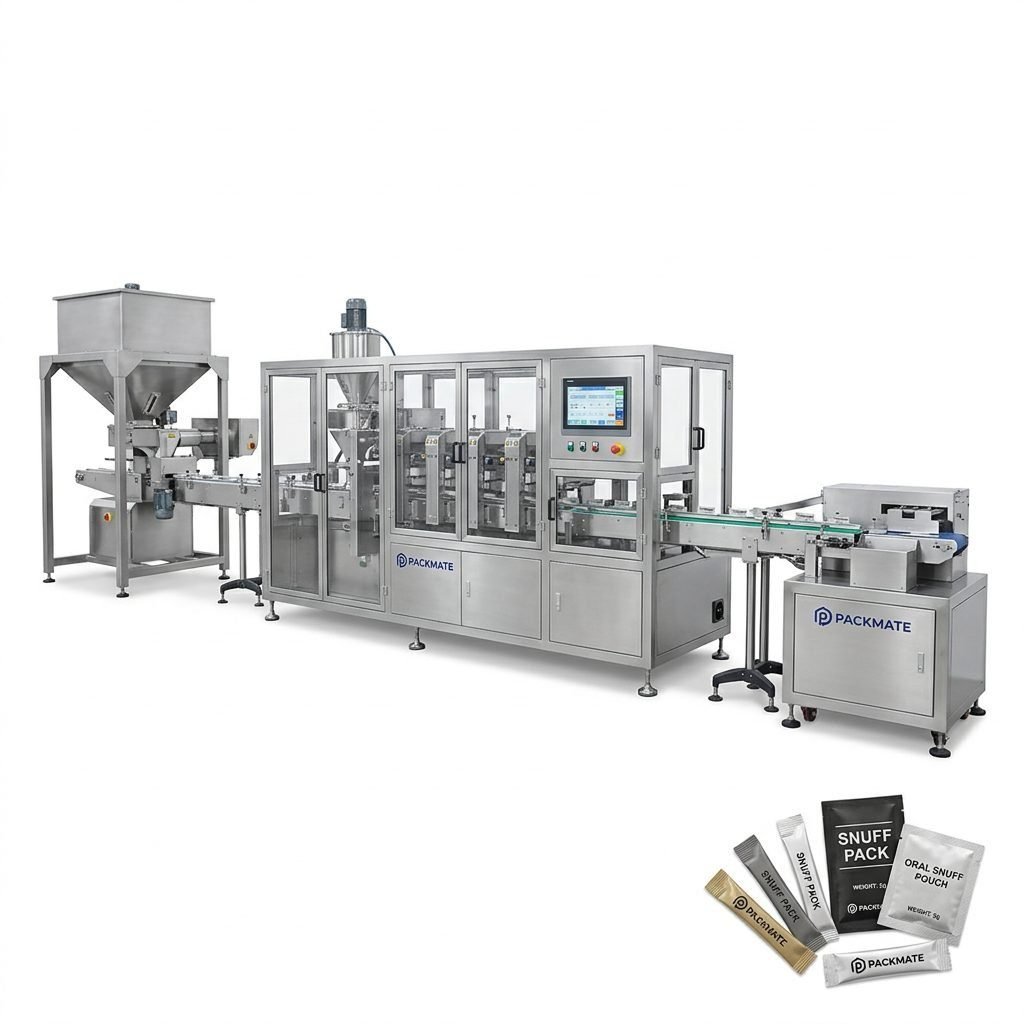
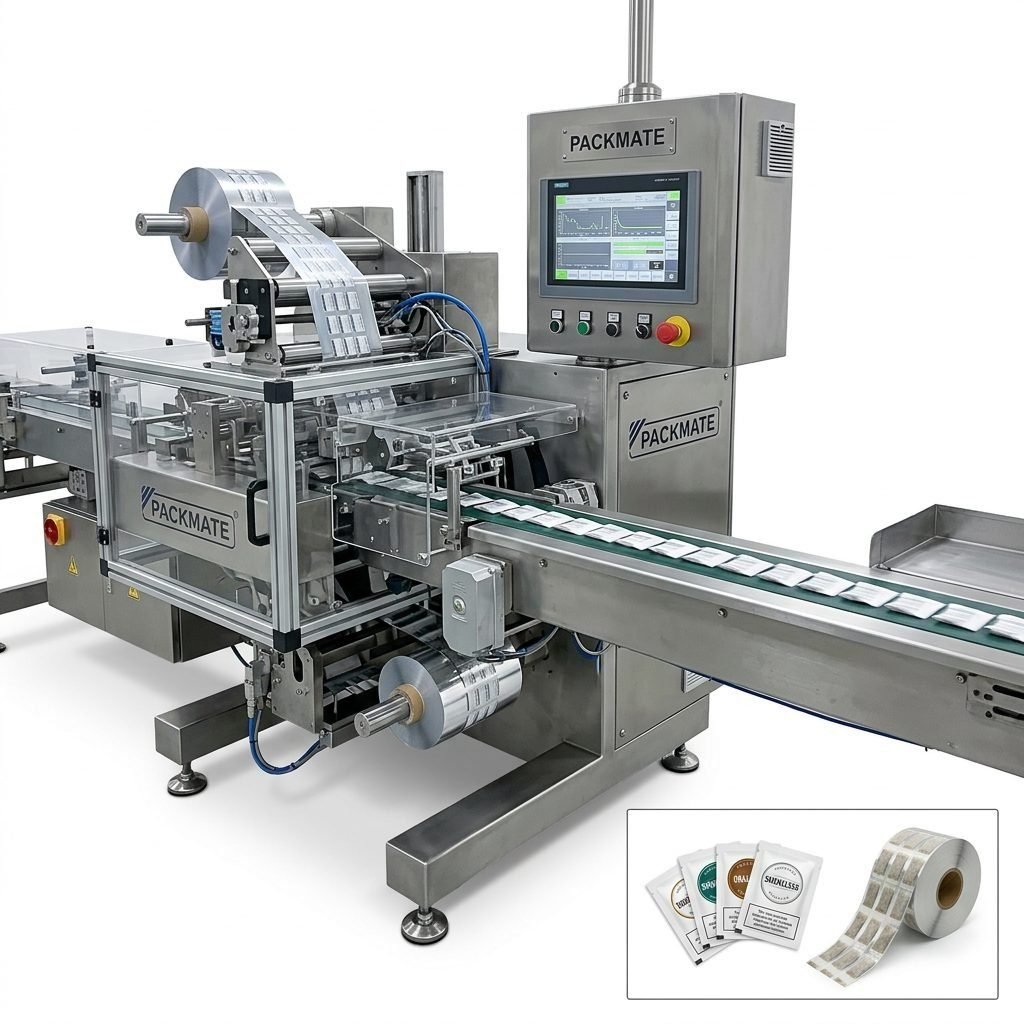
Sachet & Stick Pack Machines
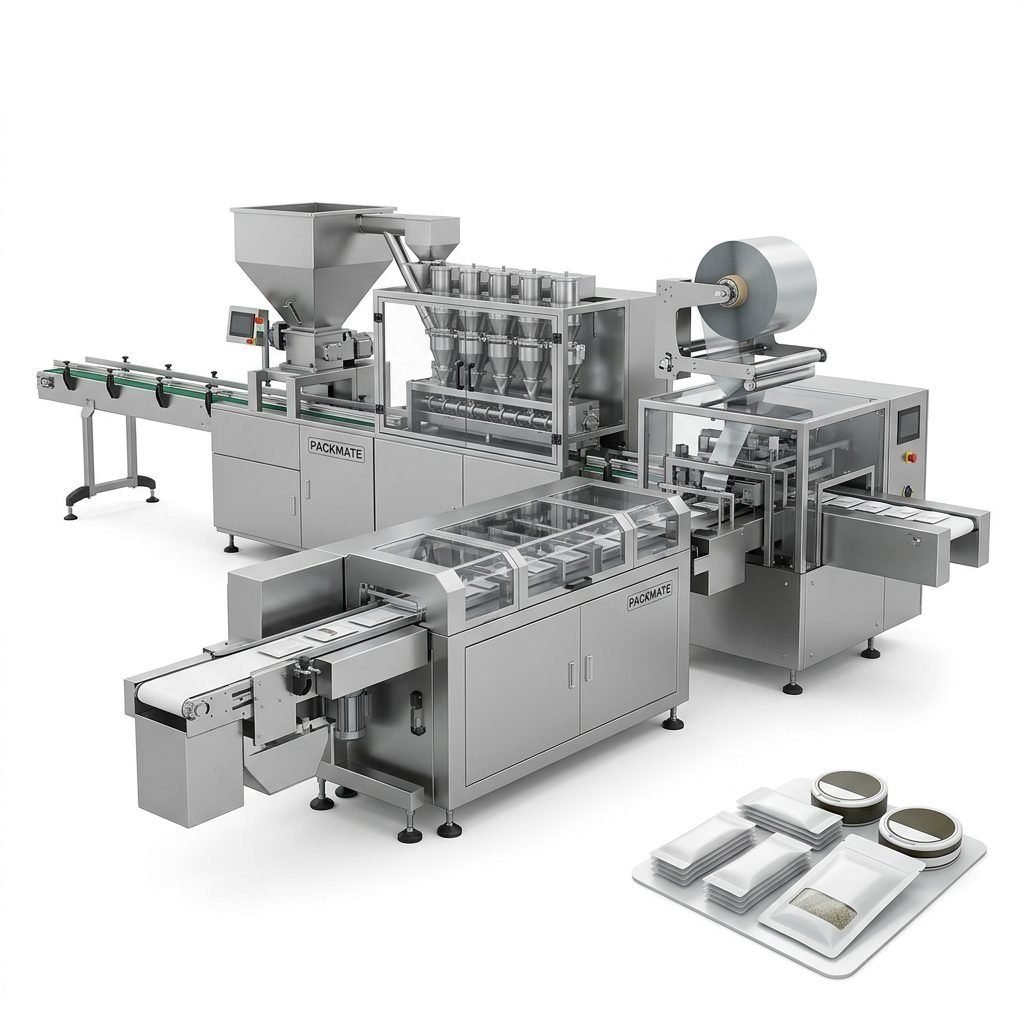
Sachet and stick pack systems are ideal for single-serve formats and bite-size pouches. They are typically compact, cost-effective, and suitable for higher speed production of uniform pouches. If your product is a dry powder or small granules, sachet & stick pack machines are a common choice.
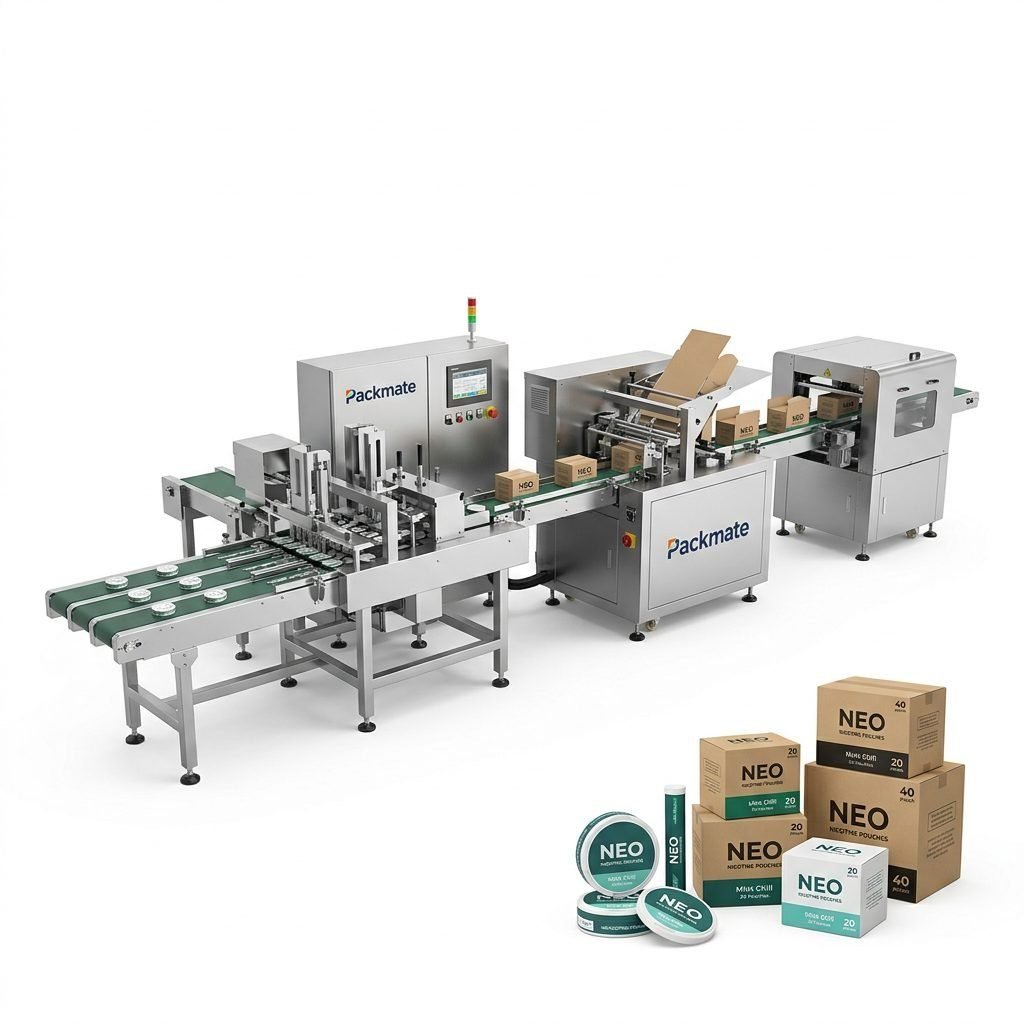
Multi-lane Snus / Nicotine Pouch Packaging Machines
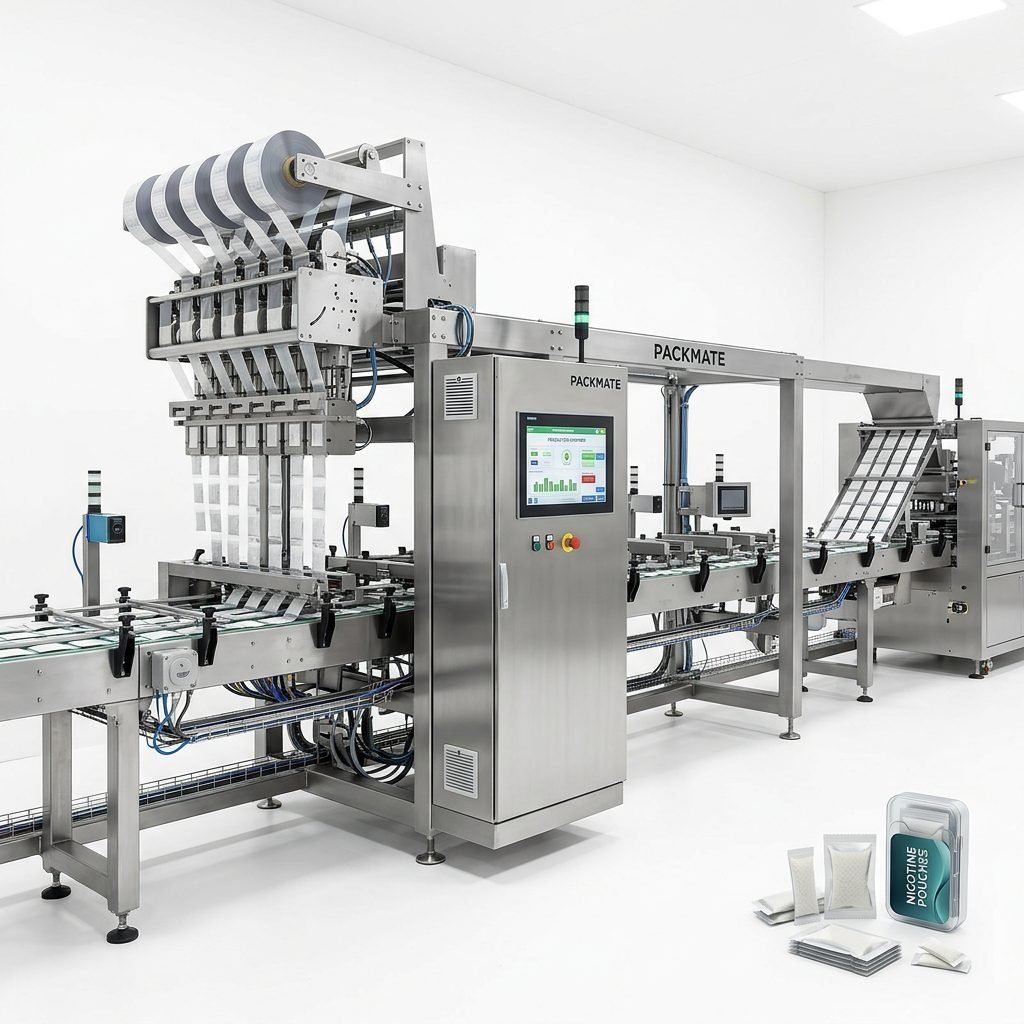
Multi-lane systems deliver high throughput by running several lanes in parallel — excellent for medium to large scale manufacturers. These machines often accommodate delicate pouch handling and offer synchronized dosing for each lane, maximizing efficiency without compromising accuracy. Consider multi-lane if you need to scale rapidly while maintaining compact floor space.
Bag & Pouch Packaging Machines
For retail-ready stand-up pouches or resealable packages, bag & pouch machines are the go-to. They handle zipper attachment, gusset forming, and secondary labeling. See options on the bag & pouch packaging page if you need consumer-oriented packaging.
Critical Technical Specifications to Compare
When comparing models, focus on measurable specs rather than marketing claims. Key parameters include:
- Production speed (pouches/min per lane and total output)
- Filling accuracy and dosing system type (volumetric, auger, weigh-scale)
- Compatible pouch dimensions and materials (laminate films, foil, paper laminates)
- Changeover time between SKUs
- Automation level: PLC/HMI, servo controls, remote diagnostics
- OEE-related features: quick maintenance access, CIP compatibility, dust control
Ask for real-world data — actual speed with your product and film, and repeatability statistics from similar installations.
Automation, Controls & Integration ⚙️
Modern packaging lines should integrate with upstream and downstream equipment. Look for:
• Servo-driven components for precise motion control and smoother changeovers.
• A user-friendly HMI with recipe management to switch SKUs fast.
• Data connectivity (OPC-UA, Ethernet/IP) for production monitoring and traceability.
• Options for remote support and predictive maintenance alerts.
Compliance, Safety & Certifications
In Jordan and export markets, compliance is vital. Machines with CE and ISO certification reflect adherence to international safety, electrical, and quality norms. Always request certificates and ask about local regulatory support for nicotine-related products. Packmate’s equipment commonly comes with CE and ISO credentials — a key factor when choosing a reliable supplier. Learn more here.
Supplier Selection: Why Manufacturer Strength Matters
Selecting a supplier with engineering depth, production capacity, and after-sales network reduces installation risk. Evaluate:
- Factory scale and machining capabilities (CNC centers, assembly lines)
- Track record: years in industry and case studies in similar markets
- Model range and customizability (do they offer turnkey lines?)
- Spare parts availability, training, and onsite commissioning services
A manufacturer with a 20,000㎡ facility, advanced CNC, and a wide model range can offer faster spare part delivery and tailored solutions for local market requirements.
Cost Considerations & ROI Analysis 📈
Total cost of ownership (TCO) includes machine price, installation, tooling, spare parts, maintenance, and energy consumption. Balance capital spend with expected gains:
- Calculate payback period based on increased throughput and reduced labor.
- Estimate downtime cost and include service SLA in contracts.
- Consider modular investment: start with a core packing machine and add lanes or modules later.
Installation, Commissioning & Local Support in Jordan
For international purchases, ensure the manufacturer provides:
- On-site commissioning and operator training
- Local spare parts stocking or fast shipments
- Remote troubleshooting and software updates
Reach out to suppliers with regional experience — ask for references of installations in the Middle East and details on shipping timelines and customs support. For more information about a supplier’s background and global presence, you can review company details About Packmate.
Customization & Future-Proofing
Modern manufacturers offer modular systems, allowing you to add lanes, integrate weighing systems, or adapt to new pouch styles. Evaluate:
• Interface flexibility (PLC, I/O expandability).
• Mechanical adaptability (toolkits for different pouch dies).
• Upgrade paths for automation and vision-inspection systems.
If you need integrated weighing and filling for variable-dose products, check weighing & packaging systems to ensure compatibility.
Maintenance & Spare Parts Strategy
A proactive maintenance plan reduces unplanned downtime:
- Create a critical-spares list at installation: wear parts, sensors, belts.
- Negotiate spare parts kits and lead times in the purchase contract.
- Schedule periodic calibration and software backups.
Choose a vendor offering long-term spare part support and remote diagnostic tools to minimize mean time to repair (MTTR).
Real-World Case Examples & Exhibitions
Reviewing case studies and attending live demos helps validate supplier claims. Many manufacturers showcase installations and machine demos at global events — a good supplier will have exhibition records and customer references. See examples and exhibition history on the supplier’s case studies and exhibition pages.
Step-by-Step Selection Checklist
1. Finalize product specs and target throughput.
2. Shortlist machine types (sachet, multi-lane, bag/pouch).
3. Request machine trials or videos with your product.
4. Compare TCO, spare parts policy and SLAs.
5. Validate certifications, factory capabilities and references.
6. Confirm installation, training and remote support packages.
7. Negotiate warranty, consumable kits and lead times.
Prioritize consistency of output and ease of maintenance over marginal cost savings on initial purchase.
How to Engage with Suppliers — Practical Steps
Send a clear Request for Quotation (RFQ) that includes: product specs, expected outputs, film types, target runtimes, environmental considerations (dust control, explosion-safe areas if applicable), and installation site photos. Ask for:
- Detailed machine datasheet and layout drawings
- Reference installations and contactable clients
- Service contract options and spare part lists
When ready, contact the manufacturer’s sales or service team — you may start with general inquiries via their Contact Us page for local support and quotes.
Why Packmate Snus Machine is a Viable Option
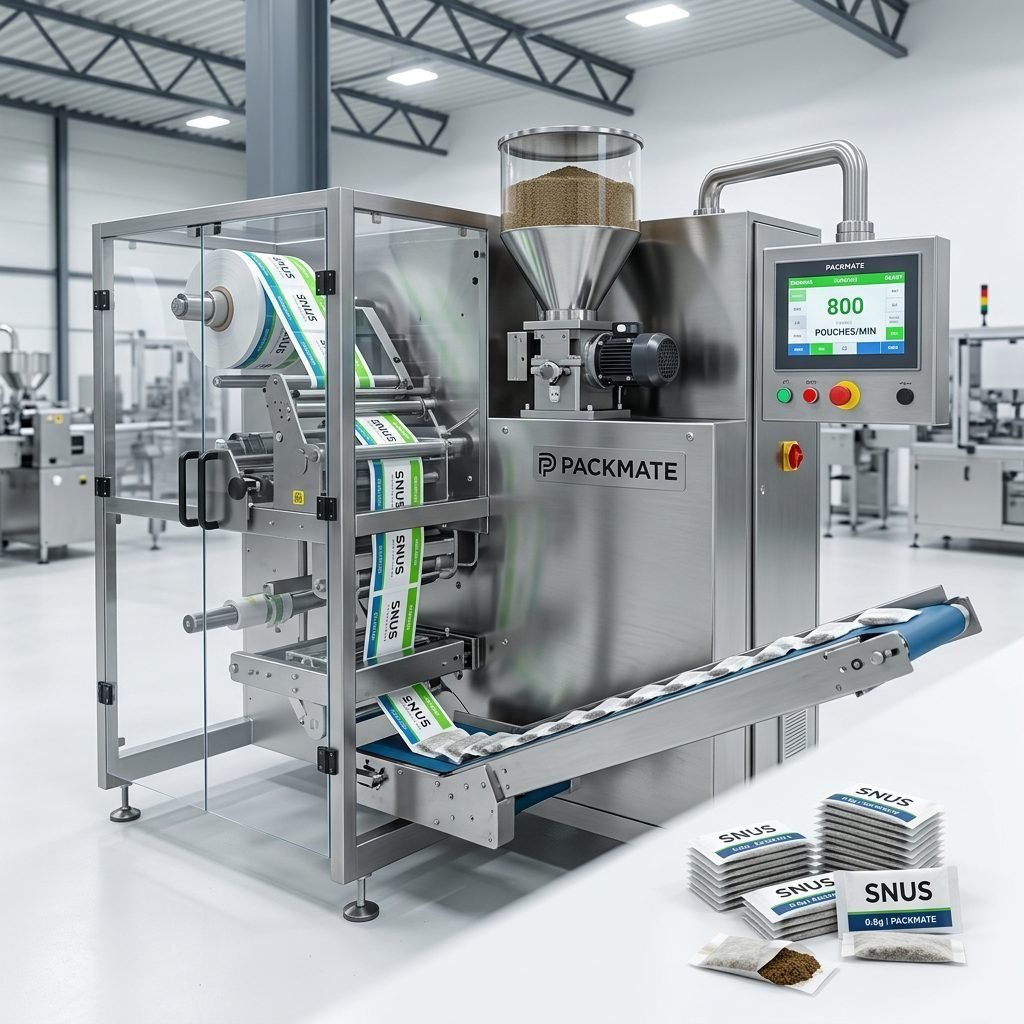
Packmate offers a wide portfolio including snus & nicotine packaging machines, stick pack, sachet, and multi-lane systems tailored to small-dose pouch production. With over 30 years of engineering experience, advanced manufacturing facilities, and global turnkey solutions, Packmate is positioned to support manufacturers in Jordan seeking reliable, scalable packaging lines. Explore their snus solutions here.
Wrapping Up — Practical Decision Drivers
In summary, choose a machine based on matched throughput, precise dosing capability, adaptability to your pouch material, and the supplier’s capacity to provide local support and spare parts. A good balance of automation, modularity and verified service will deliver predictable production and long-term value.
Frequently Asked Questions
Q1: What machine type is best for nicotine pouches with very small dosages?
A1: Multi-lane machines with precision dosing systems (weighing or high-resolution volumetric/auger) provide the best accuracy for small-dose products.
Q2: How important are CE and ISO certifications when importing into Jordan?
A2: Very important — they demonstrate compliance with international safety and quality standards and simplify acceptance by local regulators and partners.
Q3: What is a reasonable lead time for a customized snus packaging line?
A3: Lead times vary; a standard model may ship faster, while customized turnkey lines typically require longer (several months) due to design, testing, and factory scheduling.
Q4: Can I upgrade a single-lane machine to multi-lane later?
A4: Some modular platforms support lane expansion, but verify with the manufacturer before purchase — physical footprint and control architecture must support upgrades.
Q5: Where can I see machine demos and get supplier references?
A5: Request onsite demo videos, visit exhibitions where the manufacturer participates, and review published case studies and reference contacts found on their website.