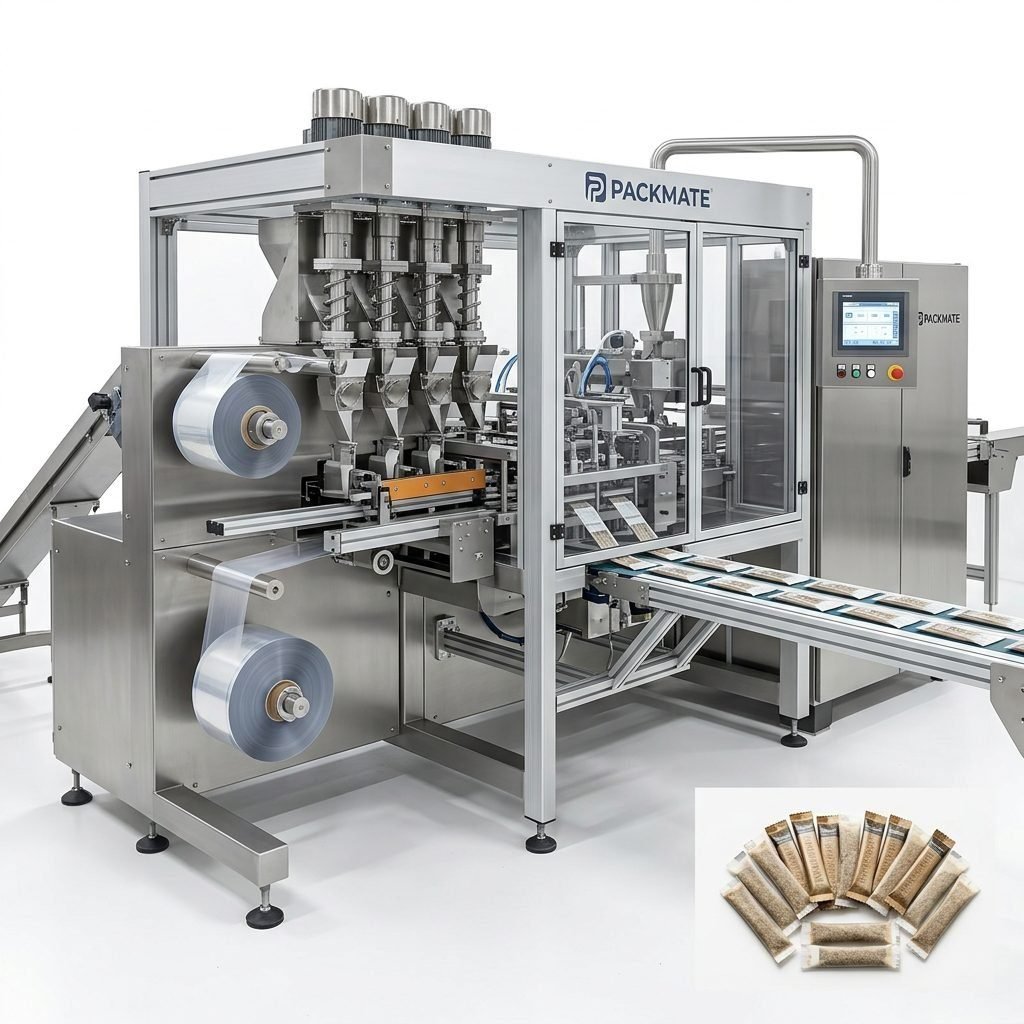
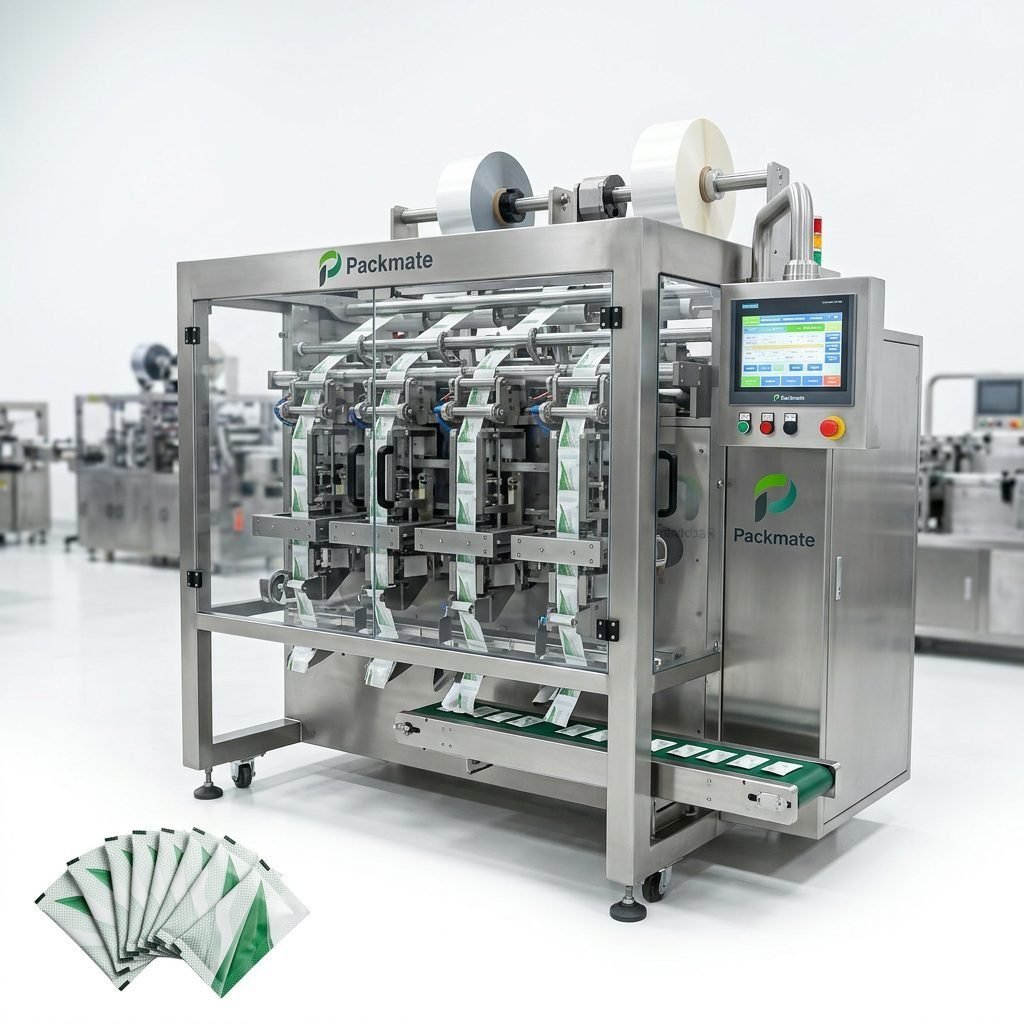
Entering the nicotine pouch market in Paraguay requires careful equipment selection to ensure product quality, regulatory compliance, and long-term profitability. This guide walks you through practical steps and decision points for selecting the right nicotine packaging machine for your production needs, from machine types and capacity planning to supplier evaluation and after-sales support.
Assess Your Production Needs First
Start by defining your target output and product formats. Ask yourself: How many pouches per minute do you need? What pouch sizes and materials will you use? Will your line need to handle multiple SKUs or flavors? Clear answers to these questions shape machine selection, layout, and budget.
Key parameters to define
Daily production target: calculate weekly and monthly volumes to determine machine uptime and number of lanes.
Product formats: tobacco-free nicotine pouches come in different shapes — single-dose sachets, stick packs, or multi-lane strips — each requiring specific packaging solutions.
Material compatibility: film types (PE, PET, foil laminates) and barrier needs affect sealing technology and machine tooling.
Understand the Main Machine Types
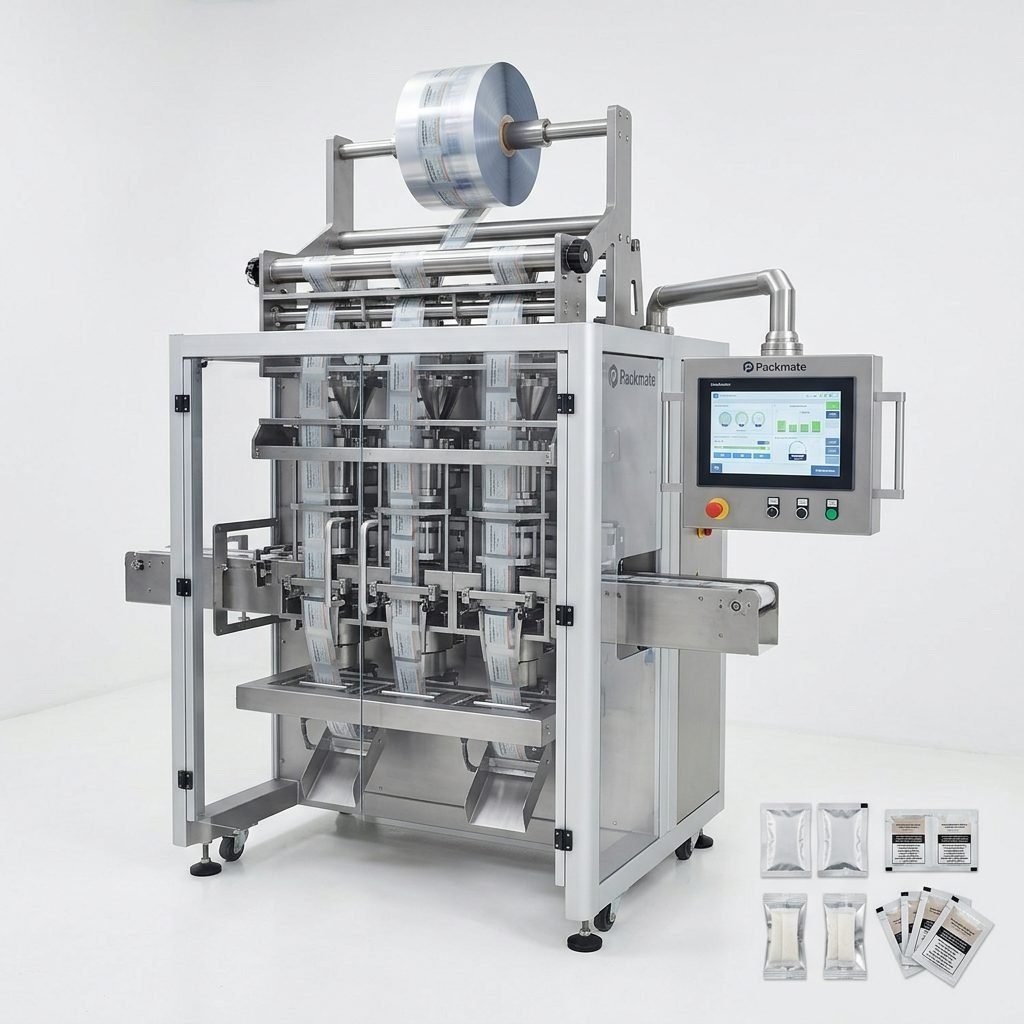
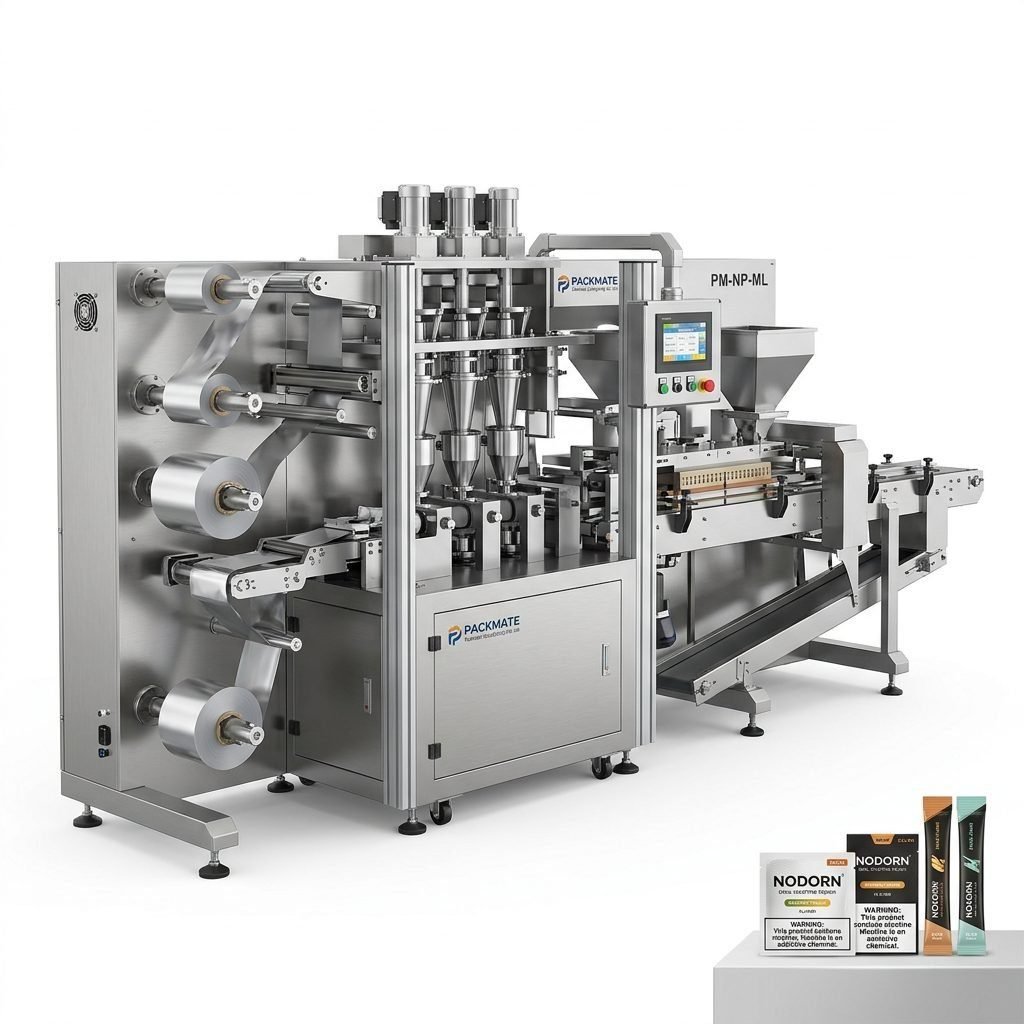
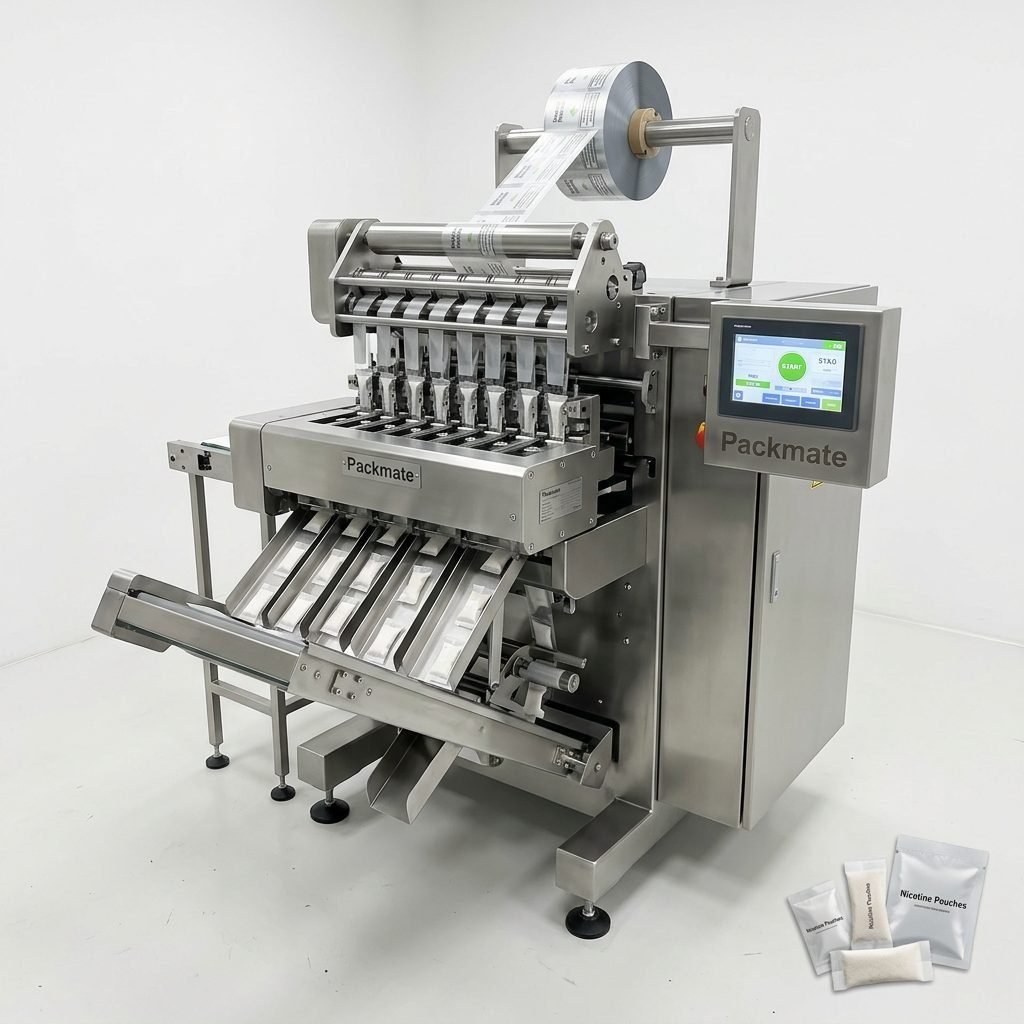
Packaging lines for nicotine pouches vary from compact single-lane machines to high-speed multi-lane systems. Knowing the pros and cons helps you match equipment to business strategy.
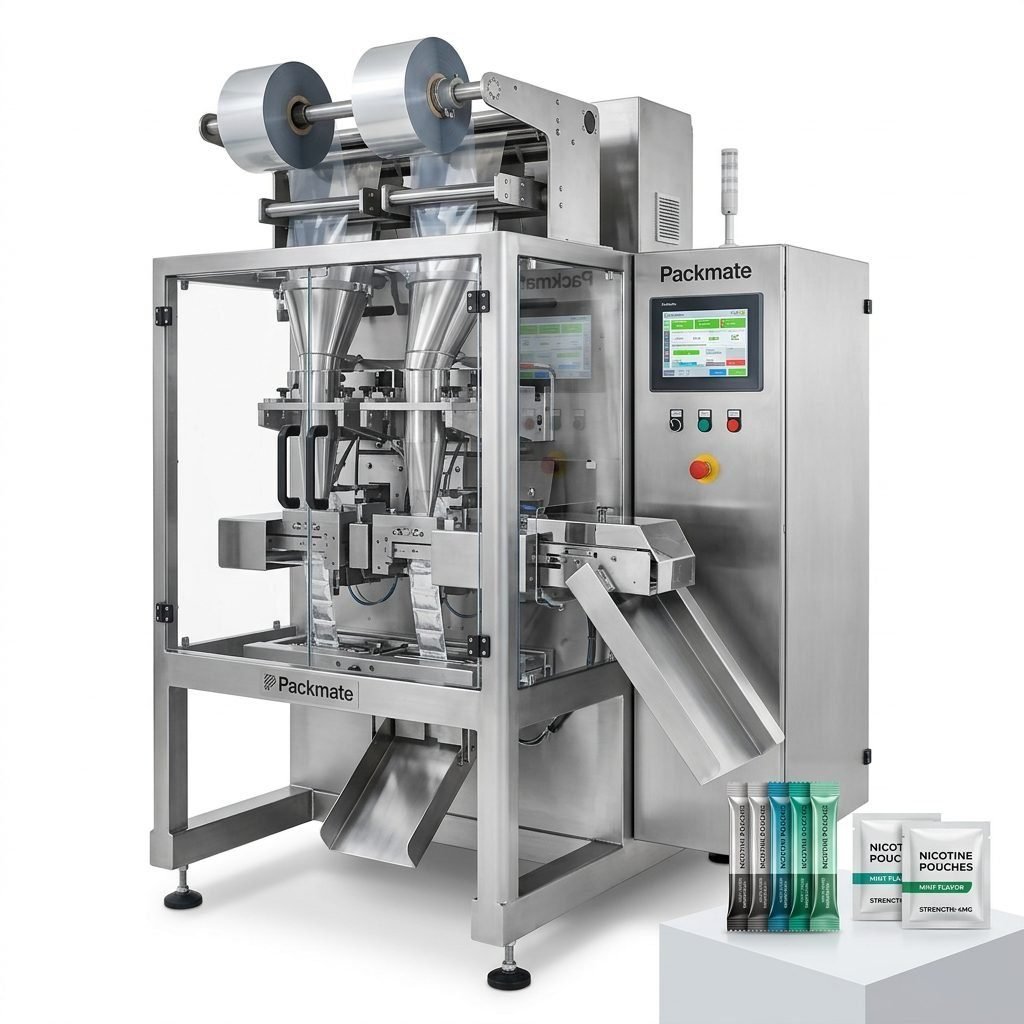
Single-lane machines — ideal for startups and small batches. Lower capital cost and simpler operation, but limited throughput. ⚙️
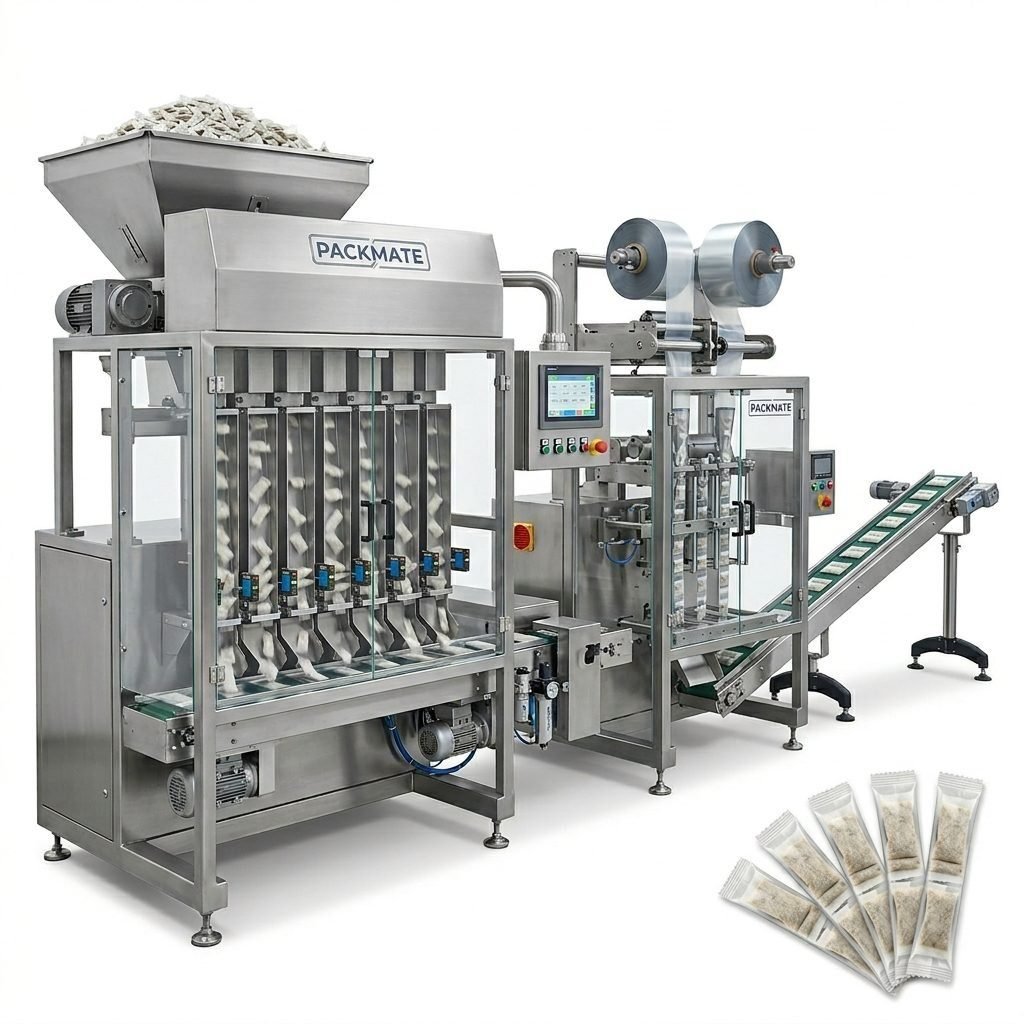
Multi-lane machines — best for mid-to-high volume. They multiply output without a proportional increase in floor space; suitable for exporters and contract manufacturers. 🚀
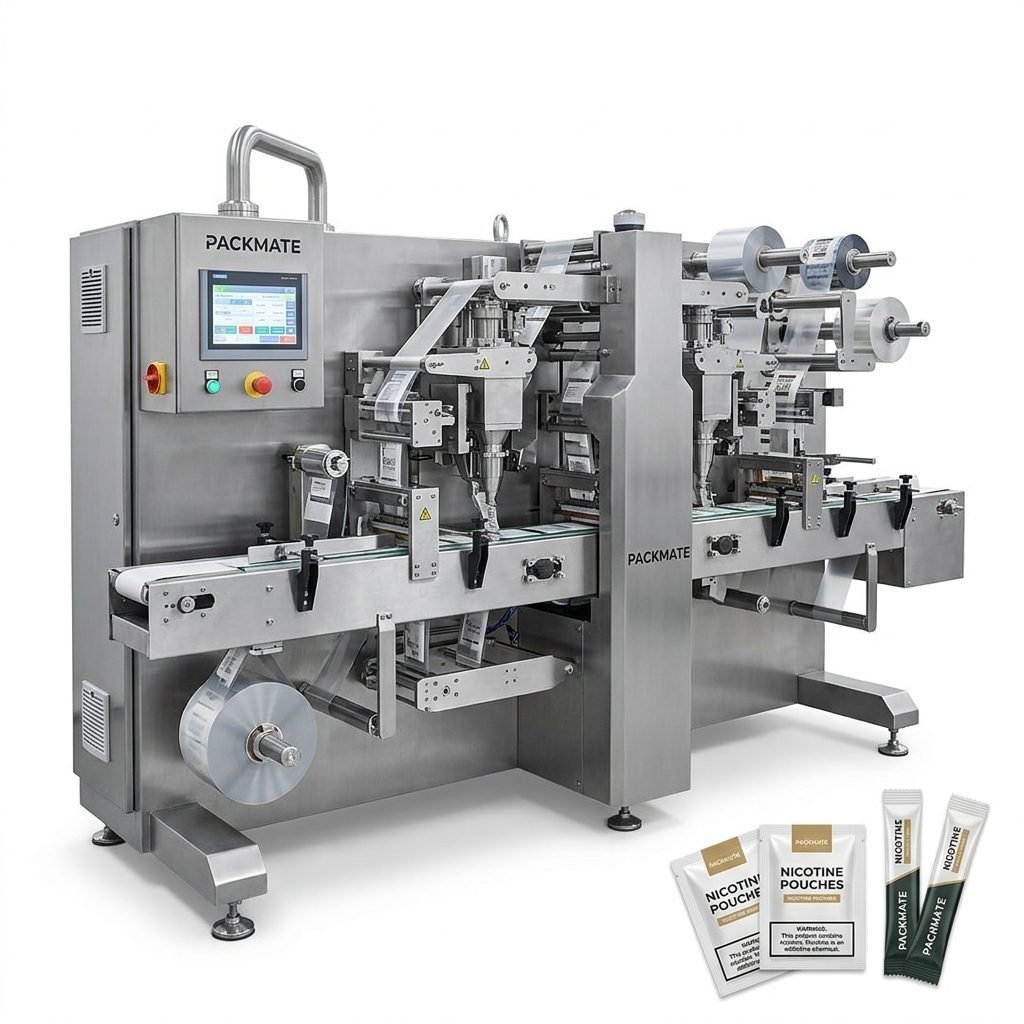
Stick pack & sachet machines — flexible for both single-dose and portion formats; visit product lines such as Sachet & Stick Pack Machines to explore options.
When to choose custom or turnkey solutions
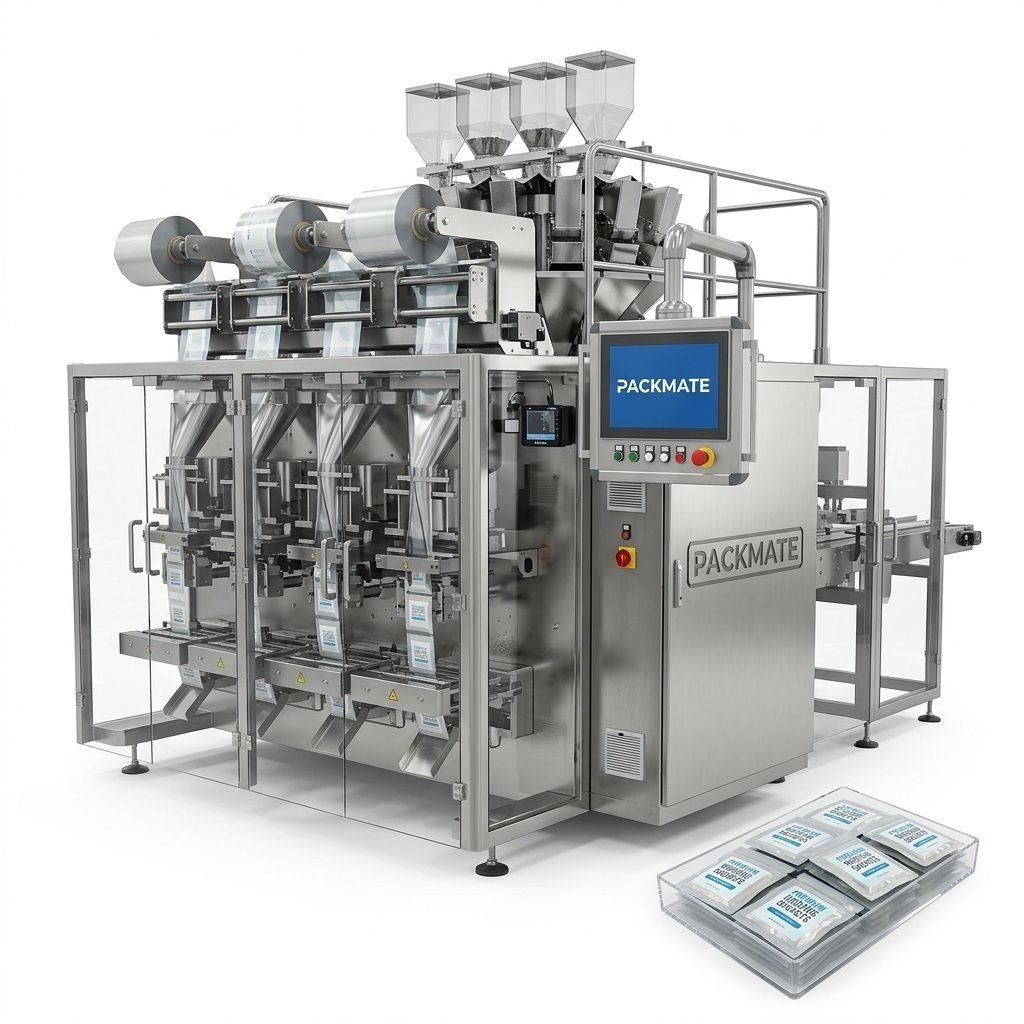
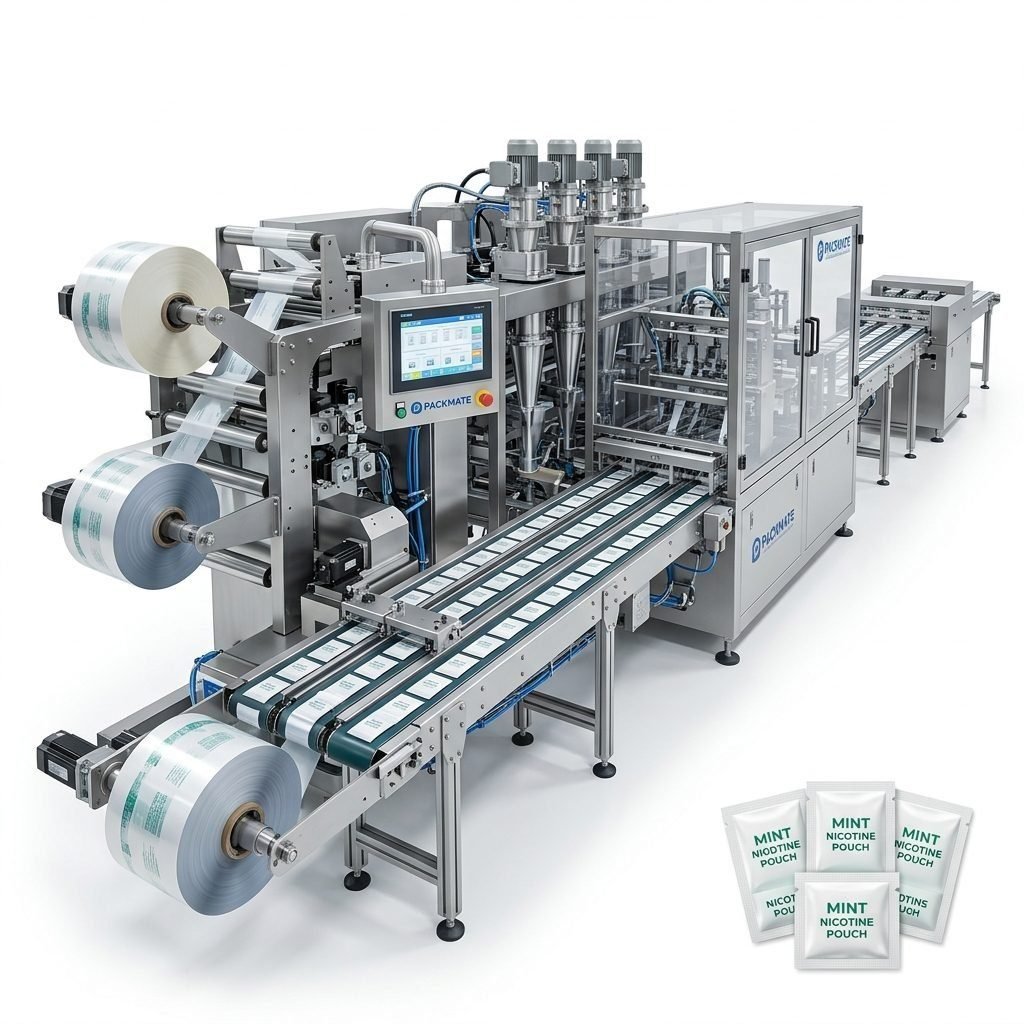
If you plan to scale quickly, require special dosing, or want integrated weighing and secondary packaging, consider turnkey systems that combine filling, pouch forming, and case packing. Packmate’s full production lines include Filling & Packaging Lines and Weighing & Packaging Systems for complete automation.
Capacity, Speed and Throughput Planning
Translate your production target into machine specifications. Consider planned uptime (shifts per day), expected yield (reject rates), and seasonal peaks.
Throughput example: If you need 300,000 pouches/month and plan 22 working days, aim for machines that can reliably produce a buffer above your target (e.g., 200–300 pouches/minute multi-lane) to allow for maintenance windows.
Cycle time vs. lane count
A slightly slower multi-lane machine often outperforms a faster single-lane in flexibility and cost per pouch. Decide whether a higher lane count with moderate speed or fewer lanes with high speed fits your maintenance and operator skill profile.
Automation, Integration and Industry 4.0
Modern packaging equipment offers PLC controls, HMI touchscreens, recipe management, remote diagnostics and data logging. These features reduce changeover time, improve traceability, and simplify compliance reporting.
Tip: prioritize controllers with remote support capability — this is especially valuable in Paraguay where rapid on-site OEM support may take time.
Quality, Safety and Certifications
Choose machines built to international standards. CE and ISO certifications indicate safety and manufacturing consistency, which matters for both local compliance and international exports. Check supplier documentation and factory audits.
Learn more about supplier credentials and certificates on their profile pages such as Certificate and company overview like About Packmate.
Materials and hygiene
Stainless-steel contact parts, easy-clean design and accessible guards reduce contamination risk and shorten sanitation cycles. For nicotine products, anti-corrosion finishes and sealed electronics are essential.
Factory Capabilities and After-sales Support
A strong manufacturing partner provides reliable spare parts, commissioning, operator training and preventive maintenance. Evaluate lead times for spare parts shipment to Paraguay and availability of local technicians.
Ask for: factory acceptance test (FAT) reports, site acceptance tests (SAT), training videos, parts catalogs and a clear service contract. View real-world implementations in the supplier’s Case section.
Exhibitions and demonstrations
Seeing machines running at exhibitions or on-site demonstrations helps verify build quality and format changeover speed. Check exhibition schedules such as Our Exhibition.
Budgeting: Beyond the Purchase Price
Total Cost of Ownership (TCO) includes installation, commissioning, operator training, spare parts inventory, power consumption, and downtime risk. Investing slightly more in robust automation and service agreements can lower long-term cost per pouch.
Budget checklist
– Purchase price vs. delivery lead time.
– Installation and electrical/mechanical site prep.
– Spare parts kit and tooling for format changes.
– Warranty terms and service response times for Paraguay.
Factory Layout, Utilities and Local Conditions in Paraguay
Evaluate facility constraints: ceiling height, door sizes for equipment delivery, floor load capacity, and utility supply. Also consider local climate control for hygroscopic fillings and secure storage for nicotine materials.
Coordinate with the supplier on installation requirements and verify whether they provide on-site installation support or remote commissioning. Use the supplier’s Contact Us page early to align schedules.
Logistics and customs
High-value machines may require special insurance and careful customs documentation. A supplier experienced in global shipping and export compliance will reduce delays and hidden costs.
Customization, Upgrades and Scalability
If you foresee new SKUs or higher volumes, choose modular machines that support additional lanes, upgraded feeders, or inline secondary packaging. Custom tooling and software recipes enable faster changeovers and consistent product quality.
Scalability tip: favor systems with standard interfaces (mechanical and electrical) so you can add conveyors, checkweighers, or cartoners without major redesign.
Integration with auxiliary equipment
For complete lines, consider auxiliary devices such as labeling, metal detection, checkweighing, or case packers. Explore categories like Auxiliary Packaging Equipment.
Supplier Selection Criteria
Selecting the right partner is as important as choosing the machine. Prioritize manufacturers with domain experience, transparent testing, and strong references in nicotine/snusi packaging.
Evaluate:
Experience: years in snus/nicotine pouch machinery and published case studies.
Factory capability: machining centers, assembly lines and quality tests that ensure consistent machine builds.
After-sales: spare parts lead times, remote support and training. See manufacturer examples and company history on pages such as About Packmate.
Red flags to avoid
– No factory visit or FAT option.
– Vague spare parts delivery commitments.
– No documented warranty or service level agreement.
Quick Buying Checklist
✔ Define monthly/annual output and required uptime.
✔ Pick machine type (single-lane vs multi-lane) based on growth plan.
✔ Confirm material compatibility and sealing method.
✔ Verify certifications (CE/ISO) and FAT/SAT processes.
✔ Ensure spare parts availability and local support strategy for Paraguay.
Final Considerations
Choosing the right nicotine packaging machine is a balance between current needs and future scalability. Prioritize suppliers with proven snus/nicotine packaging experience, clear documentation, and reliable after-sales support. For example, manufacturers offering specialized snus lines and robust manufacturing capabilities can reduce risk and accelerate time-to-market.
If you want to evaluate machine families suited to nicotine pouches, start with product categories such as Snus & Nicotine Packaging Machines and Bag & Pouch Packaging Machines to compare speeds, lane options and integration features.
Common Questions
Q1: How do I estimate the right capacity for my first line in Paraguay?
A1: Base your estimate on conservative sales forecasts, then add a 20–30% buffer for downtime and future growth. Consider multi-lane machines if you expect rapid scale-up.
Q2: What certifications should I require from a nicotine packaging machine supplier?
A2: Require CE and ISO as minimum, and request FAT documentation. If exporting, check destination country requirements and ask for compliance evidence.
Q3: Is it better to buy a used machine or invest in a new turnkey line?
A3: Used machines lower upfront cost but may increase downtime and spare parts risk. New turnkey lines provide higher reliability, warranty and easier integration—preferred for fast-growing operations.
Q4: How important is local after-sales service in Paraguay?
A4: Extremely important. Prioritize suppliers who provide spare parts kits, remote diagnostics and clear service agreements to reduce repair time and production losses.
Q5: Where can I see real-world examples and request quotations?
A5: Visit supplier case studies and contact pages to request FAT demos and quotations. Explore resources like Case and Contact Us.