Choosing the right nicotine packaging machine for your production line in Kuwait is more than a procurement decision — it’s a strategic investment that affects product quality, regulatory compliance, throughput, and long-term operating costs. This guide walks you through practical criteria, machine types, integration considerations, and vendor evaluation to help you select the best snus and nicotine pouch packaging solution for your facility.
🔎 Understanding the Kuwait Market and Production Needs
Before evaluating machines, define your local market and manufacturing requirements. Consider current and projected daily output targets, target pouch sizes and materials, batch changeover frequency, and any specific labeling or traceability requirements imposed by Kuwaiti importers or regional regulators.
Key questions to answer:
✅ What is your target hourly throughput? (e.g., single-lane 30–60 pouches/min vs. multi-lane 500–1,000+ pouches/min)
✅ Which pouch formats will you run? (e.g., round nicotine pouches, sachets, stick packs)
✅ Do you need weighing, dosing, or special fillers?
🏷️ Packaging Machine Types to Consider
There are several machine families commonly used for nicotine pouch packing. Each has strengths and trade-offs depending on dosage accuracy, speed, and flexibility.
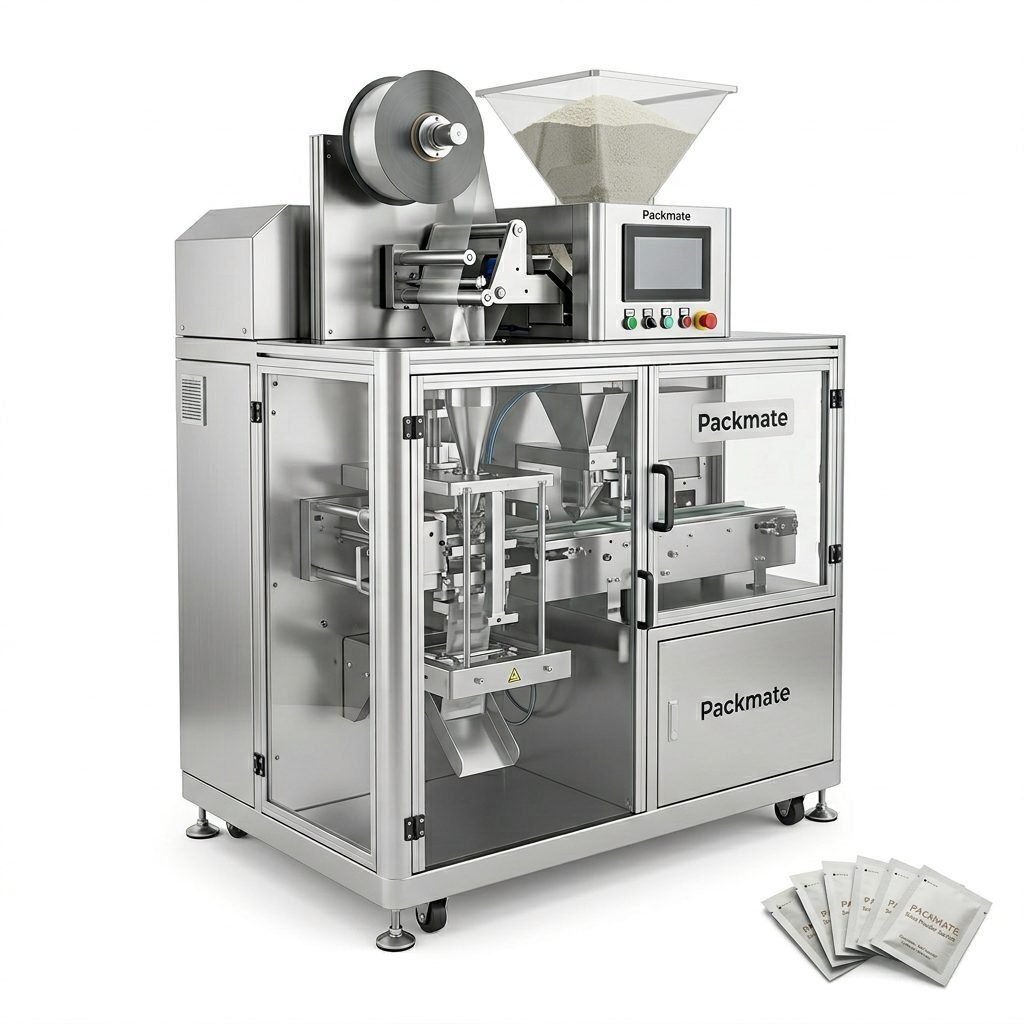
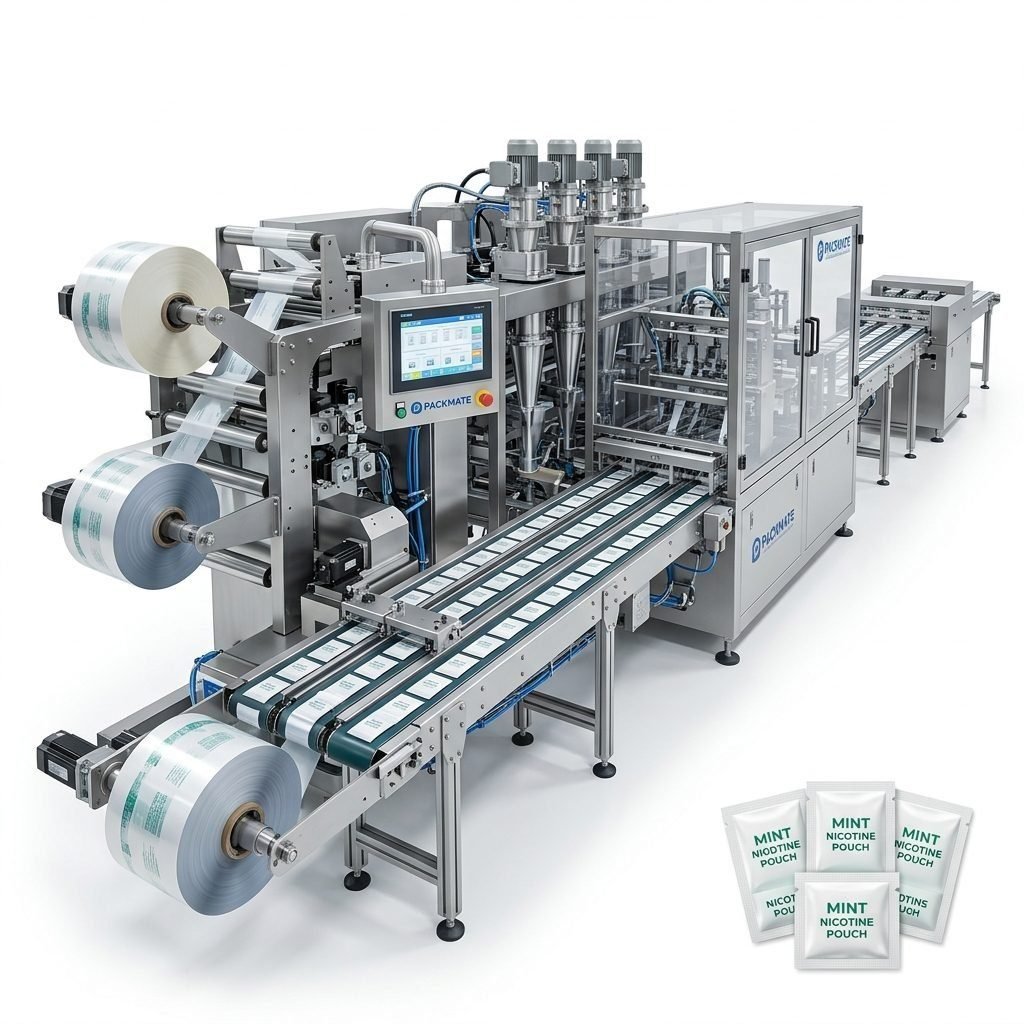
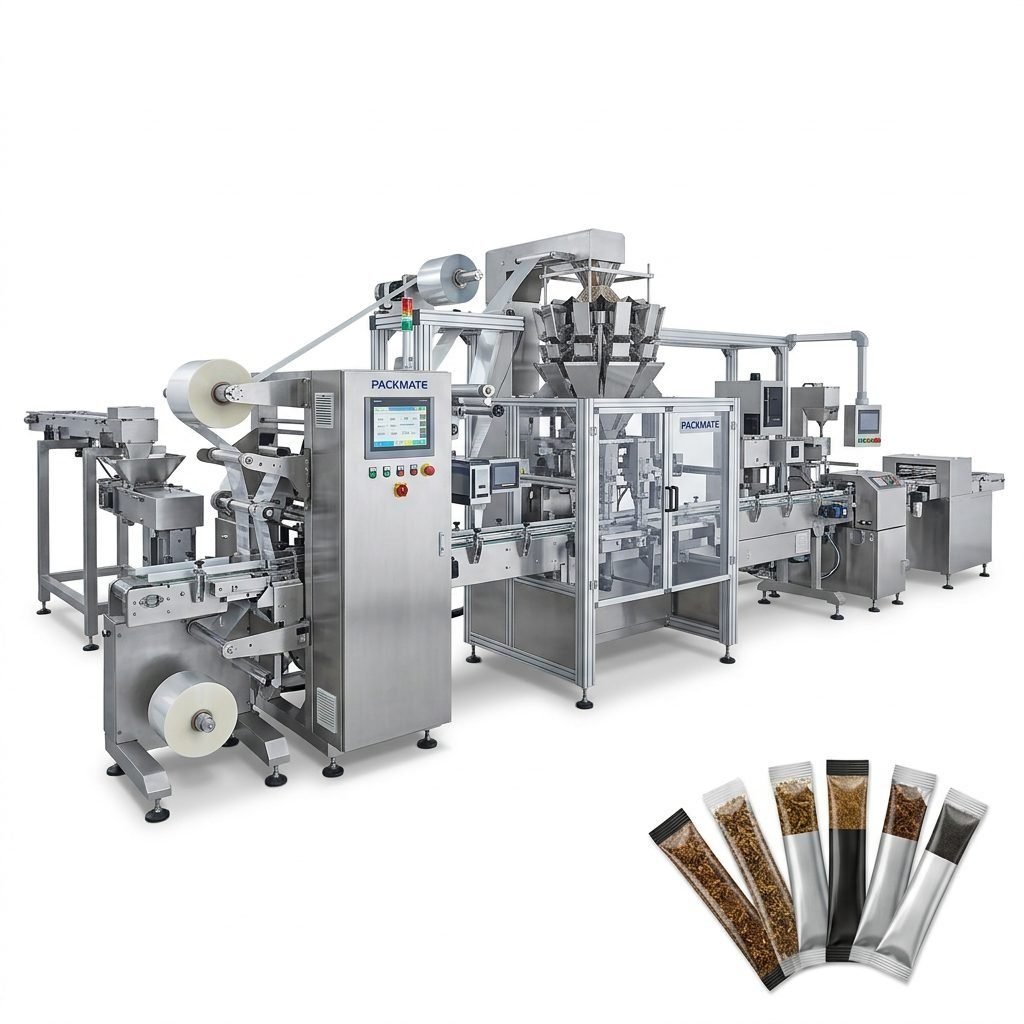
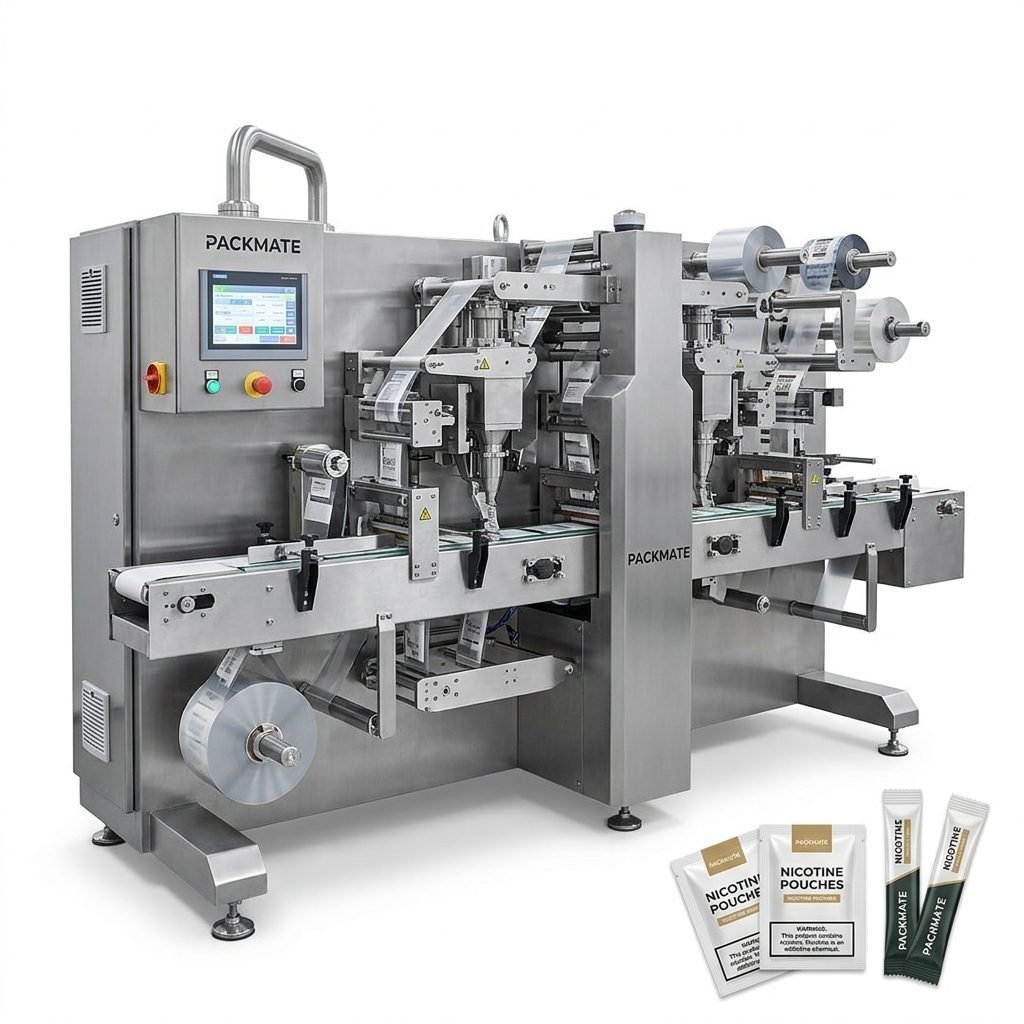
Stick pack & Sachet machines: Ideal for single-dose, sealed pouches. They are often used for nicotine pouches and snus when presented as individual sachets. Good for medium speeds and flexible packaging materials.
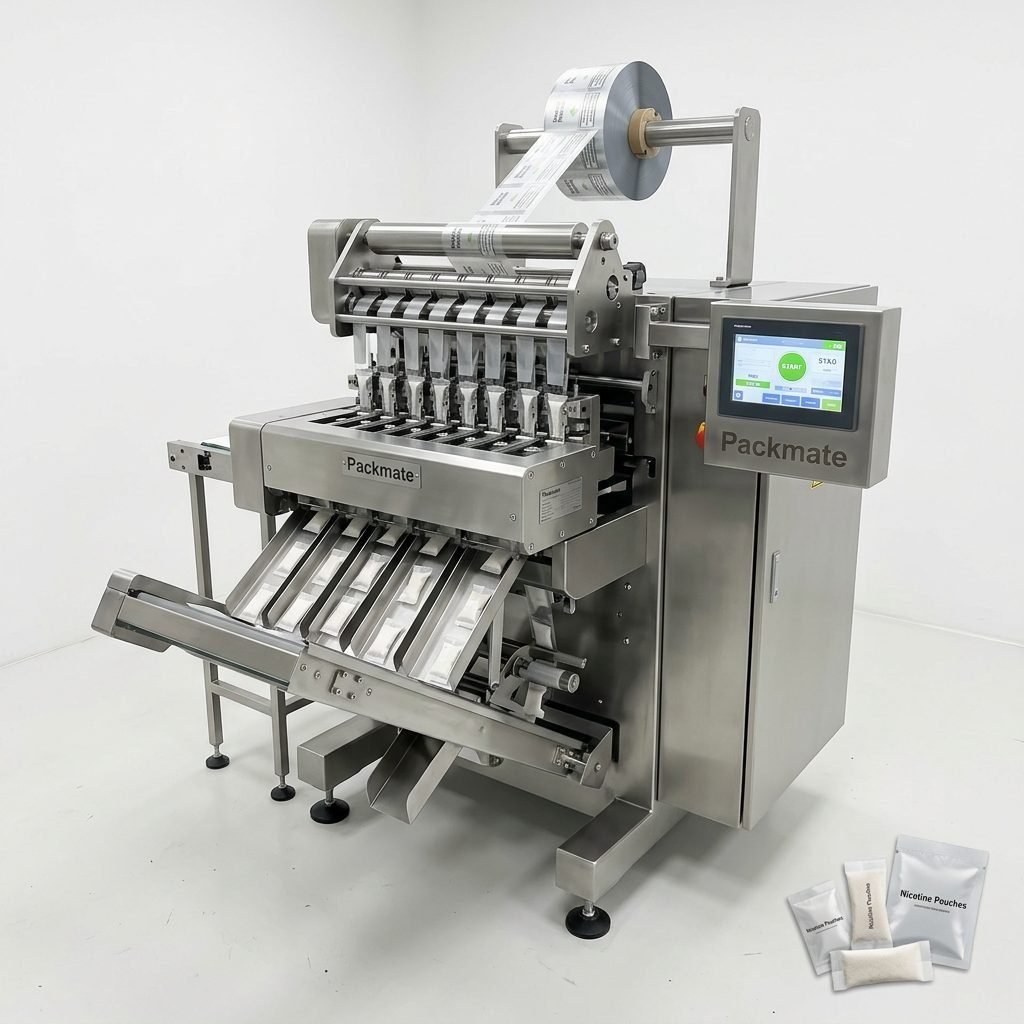
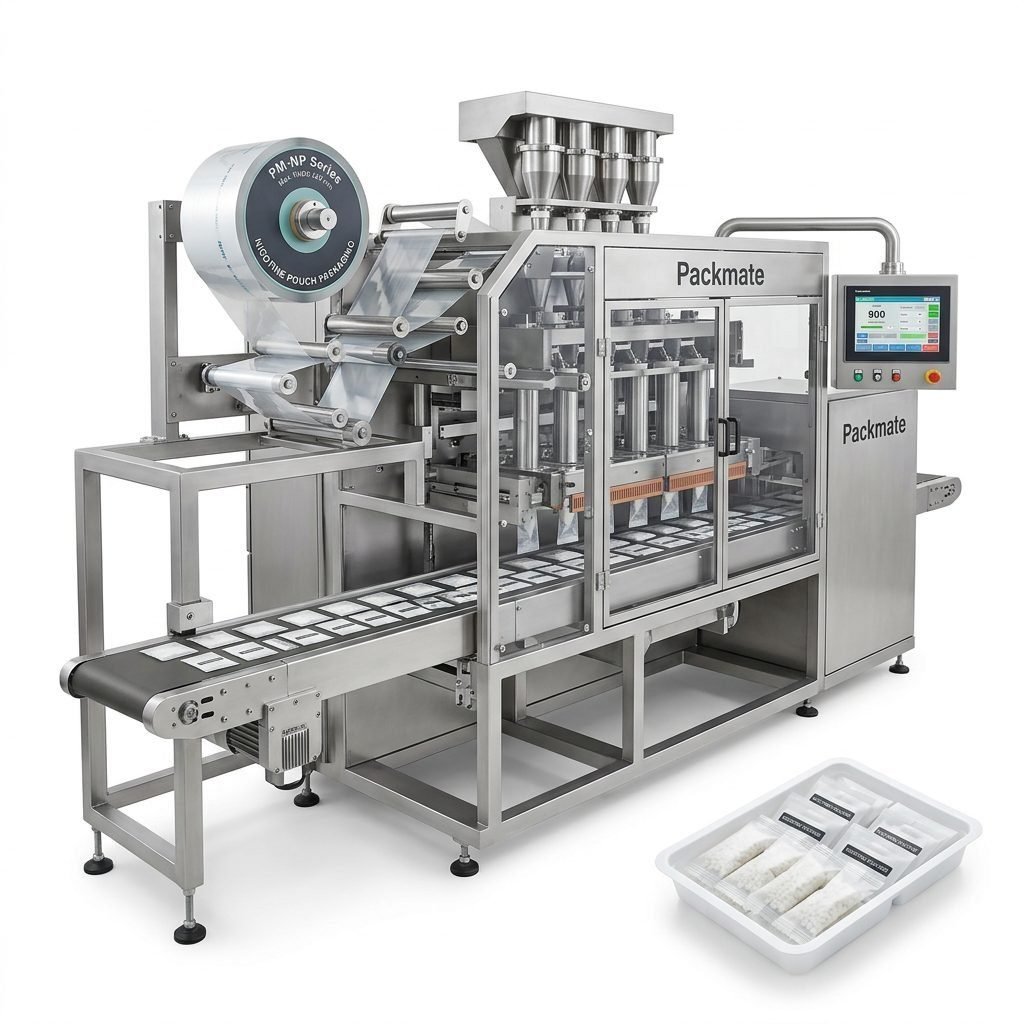
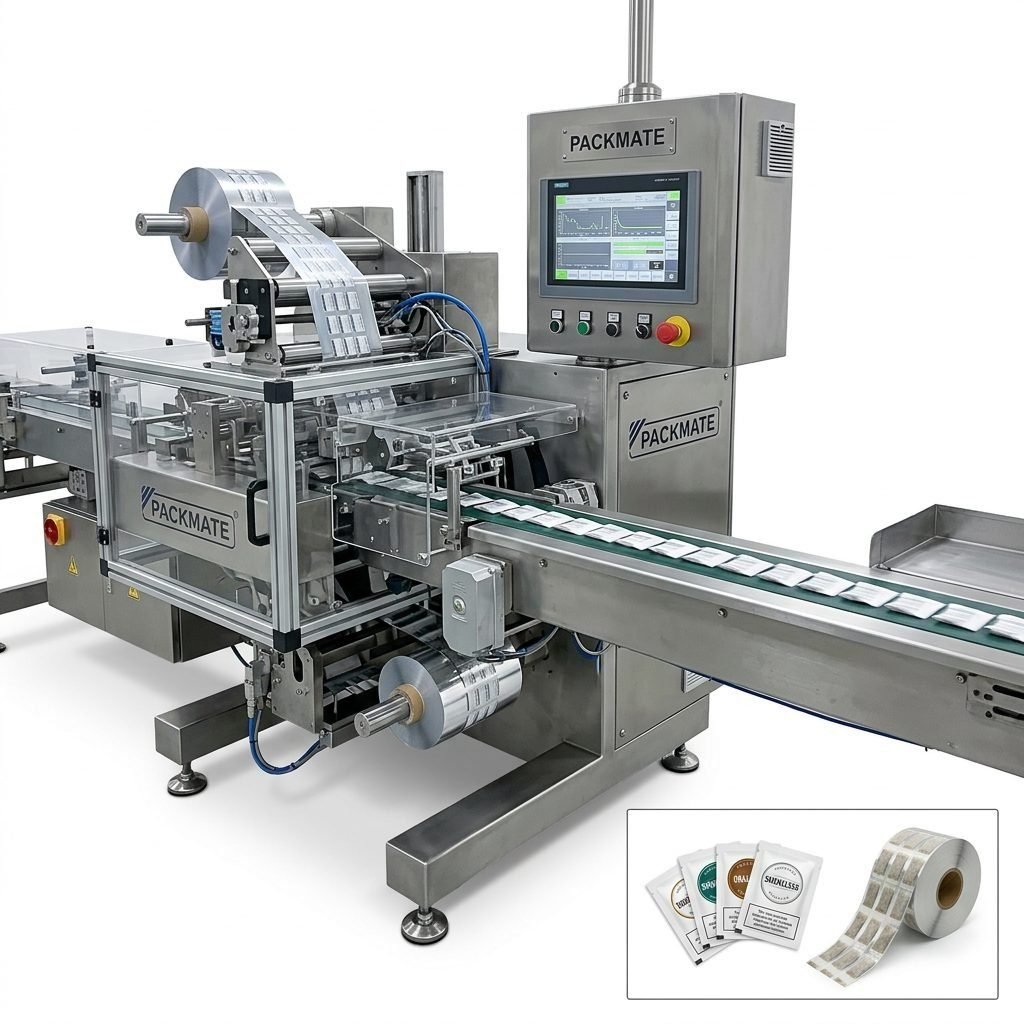
Multi-lane snus pouch machines: Designed for high throughput, these machines run multiple lanes simultaneously to multiply output without increasing footprint proportionally.
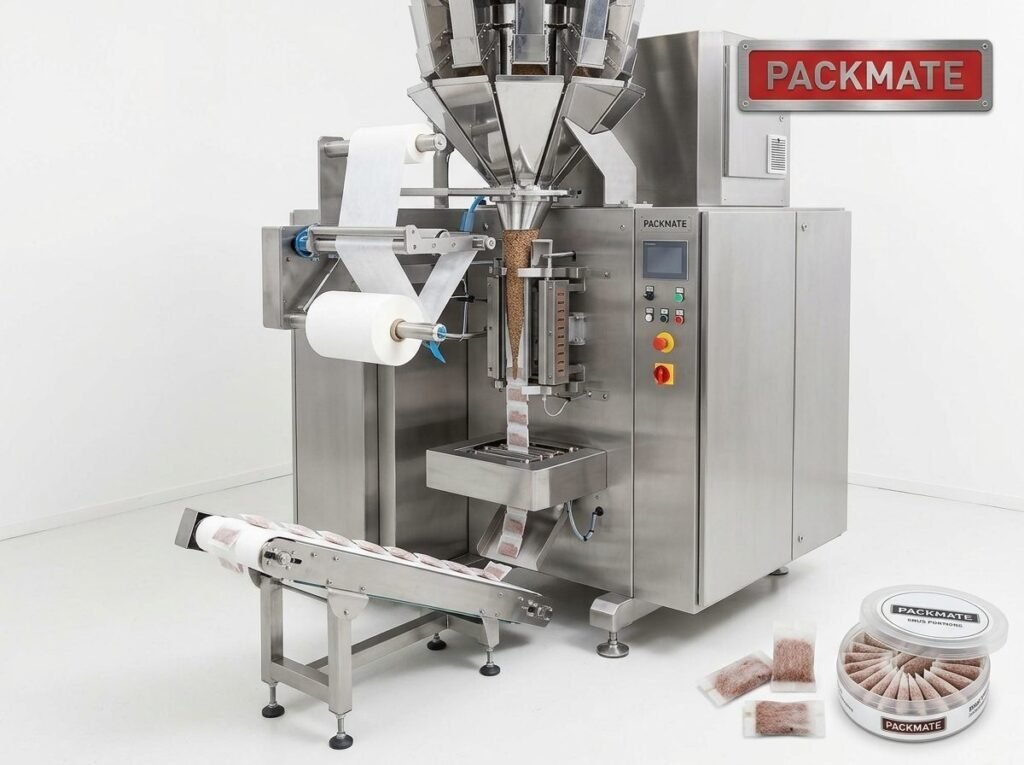
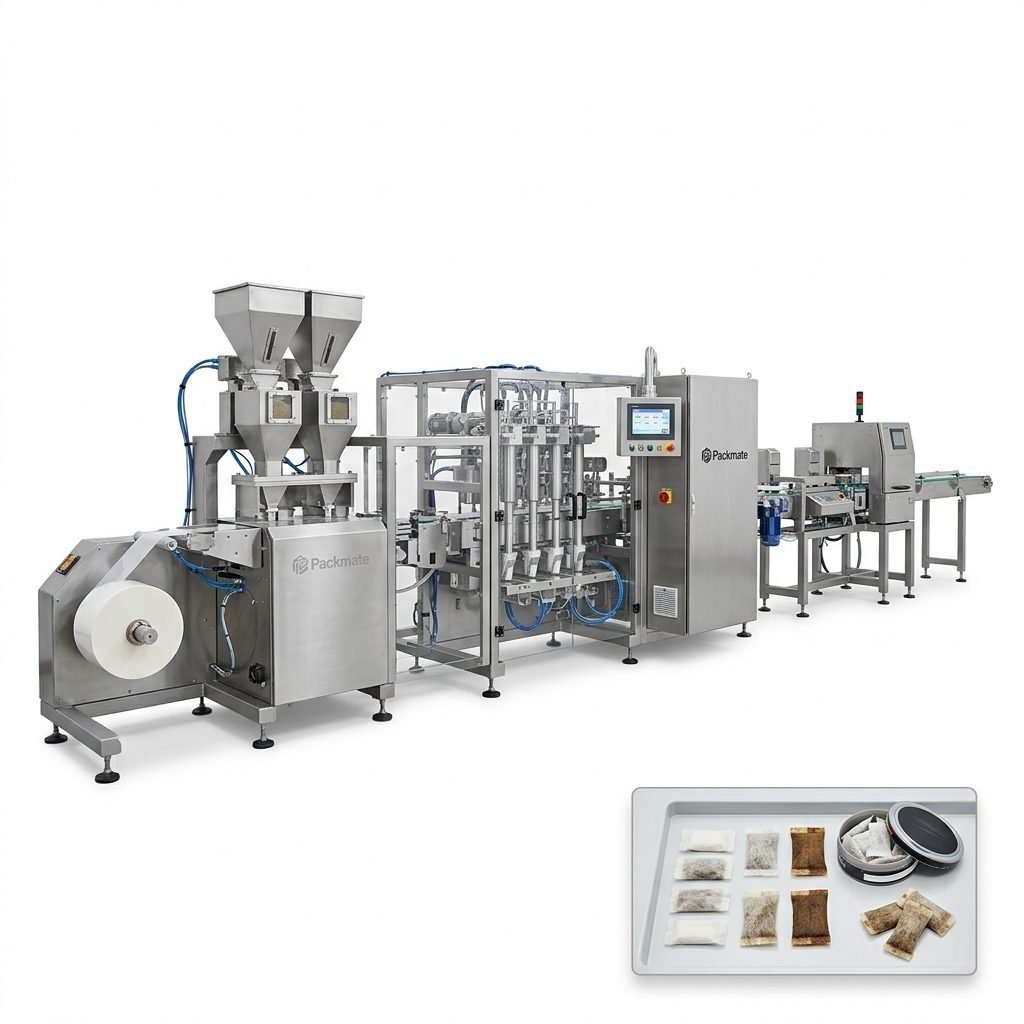
Integrated filling & weighing systems: When precise nicotine mass dosing is required, combining multi-head weighers or auger fillers with the packaging machine ensures product consistency and regulatory compliance.
📐 Key Technical Specifications to Evaluate
When comparing quotes and datasheets, focus on the specifications that determine real-world performance.
• Throughput (pouches/min or pouches/hour): Match to your production plan and peak demand.
• Accuracy of filling (mg tolerance): Critical for nicotine dosing and quality control.
• Changeover time: Shorter changeovers increase flexibility and reduce downtime.
• Compatibility with pouch materials and barrier films: Ensure the machine handles your chosen laminate or paper materials.
• Automation & HMI features: User-friendly controls reduce operator training time and error rates.
🔧 Build Quality, Serviceability, and OEM Strength
The manufacturer’s engineering capability affects long-term uptime and total cost of ownership. Look for companies with experienced R&D teams, CNC machining, and well-documented quality systems. A strong supplier will provide clear spare parts lists, local support options, and training.
Packmate Snus Machine, for example, offers extensive experience in snus and nicotine pouch solutions with a sizable 20,000㎡ facility and 30+ years of engineering background — factors that can translate into reliable equipment and scalable solutions for Kuwaiti processors. For product lines and machine models, you can review product categories like Snus & Nicotine Packaging Machines and Sachet & Stick Pack Machines.
⚖️ Compliance, Certification, and Material Safety
Regulatory compliance is non-negotiable. Verify that machines and components comply with relevant international certifications (CE, ISO) and that contact parts are food-grade and corrosion-resistant. Machines used for nicotine pouch production should minimize contamination risk and be easy to clean.
Important certification checks:
• CE compliance — indicates adherence to EU safety standards, often accepted in Gulf markets;
• ISO quality systems — shows manufacturing consistency;
• Material safety declarations for contact surfaces.
🏭 Layout, Integration, and Floor Space Planning
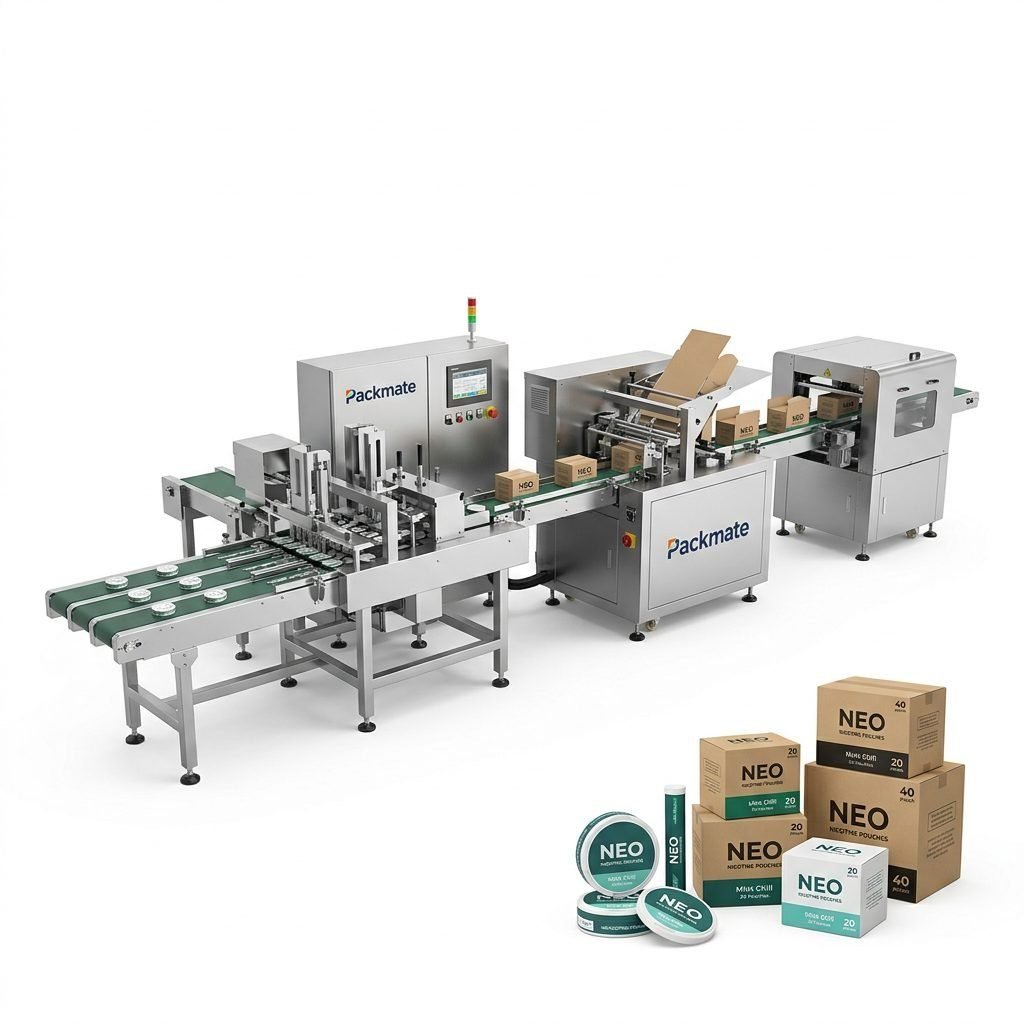
Consider the full line: upstream feeding, dosing or weighing units, the wrapping/packaging machine, downstream conveyors, inspection systems, and secondary packaging. Multi-lane machines save floor space for high output, but require precise feed systems and maintenance pathways.
Ask suppliers for a recommended layout drawing and utilities list (power, air, floor anchors). Confirm access for maintenance and spare parts replacement.
💸 Total Cost of Ownership and Return on Investment
The cheapest initial quote may not be the best value. Evaluate:
• Energy consumption and utilities
• Spare parts lead time and cost
• Service contract availability and response time
• Estimated ramp-up time to full efficiency
A realistic ROI calculation should include average yield, scrap rates, downtime allowances, and labor savings due to automation.
📋 Vendor Selection Checklist
When evaluating suppliers, use a consistent checklist:
🔧 Experience with nicotine/snux applications
📦 Availability of machine models and spare parts
🧰 Local installation & technical support options
📝 Case studies and references from similar projects — request real-world uptime figures and contactable references.
🔁 Warranty and preventive maintenance plans
📚 Case Studies and Proven Deployments
Reviewing successful installations helps validate supplier claims. You can find examples and customer cases at vendor case pages. For a quick reference, see the supplier’s case collection at Case.
🔌 Installation, Commissioning and Training
Confirm what the supplier includes: onsite installation, FAT/SAT (Factory/ Site Acceptance Tests), operator training, and initial spare parts. Well-documented commissioning reduces startup delays and helps your team reach stable output faster.
Ensure training covers routine maintenance, troubleshooting, and safety procedures. Ask if training materials are provided in English and Arabic if needed.
🔁 After-sales Service and Spare Parts Strategy
Strong after-sales service is essential. Prioritize suppliers that can provide:
• Remote diagnostics and phone support
• Regional technicians or authorized service partners
• Fast-moving spare parts kits and clear part numbering
• Preventive maintenance schedules and consumable lists
🤝 Selecting a Trusted Partner: Questions to Ask Potential Suppliers
When speaking with vendors, ask direct questions to reveal capabilities:
• Can you provide references for installations in the nicotine or oral product sector?
• What is your average lead time for machines and spare parts?
• Do you offer turnkey lines including weighing, conveying, inspection, and case packing?
• What compliance documentation and material certifications are provided?
• Can you support installation and training in Kuwait, or through a certified local partner?
🔗 Useful Resource Links
– Explore detailed product categories: Snus & Nicotine Packaging Machines
– For pouch and bag equipment options, review Bag & Pouch Packaging Machines
– Learn more about the manufacturer and company profile at About Packmate
– Reach out directly for inquiries or a quote: Contact Us
✅ Practical Buying Checklist (One-Page Summary)
• Define production targets and pouch formats
• Decide between single-lane flexibility or multi-lane high throughput
• Verify dosing accuracy and compatibility with nicotine formulations
• Confirm CE/ISO certification and food-contact materials
• Review OEM experience in snus/nicotine packaging and request references
• Confirm spare parts availability, regional service, and training
• Assess total cost of ownership, not just purchase price
📞 Final Recommendations
Start with a clear technical brief for suppliers, including target speeds, pouch specs, dosing tolerances, and any regulatory documentation you require. Invite shortlisted vendors to present a line layout and sample outputs. Prioritize suppliers who demonstrate application experience, transparent spare parts management, and documented case studies.
When you are ready to evaluate turnkey solutions, consider reviewing full production lines such as Filling & Packaging Lines or discussing auxiliary equipment at Auxiliary Packaging Equipment for a complete, integrated solution.
❓ Frequently Asked Questions
Q1: What machine speed should I choose for a new nicotine pouch line in Kuwait?
A1: Choose based on projected demand — start with your weekly output goal and factor in operating hours. For small-scale runs a single-lane machine (30–120 pouches/min) may suffice; for commercial volumes, multi-lane systems deliver better economy of scale.
Q2: Are multi-lane machines harder to maintain?
A2: Multi-lane machines are mechanically more complex, but reputable manufacturers design them for accessibility. Adequate training and preventive maintenance plans reduce downtime risks.
Q3: Do suppliers support commissioning in Kuwait?
A3: Many global suppliers provide regional partners or travel technicians for commissioning. Confirm service options, local partner presence, and remote support availability before purchase.
Q4: How important is dosing accuracy for nicotine pouches?
A4: Extremely important. Nicotine content must be consistent for safety and regulatory reasons. Integrated weighing or precision dosing systems are highly recommended.
Q5: Where can I see examples of installed lines and customer references?
A5: Request case studies and references from potential suppliers; many maintain published case pages with project summaries and contactable references. Also check exhibition participation details at Our Exhibition.