Choosing the right nicotine packaging machinery in Portugal is a strategic decision that affects product quality, regulatory compliance, production efficiency, and overall return on investment. Whether you are launching a small-batch nicotine pouch line or scaling to a multi-lane automated production facility, this guide will walk you through practical considerations, machine types, technical requirements, and vendor selection tips so you can make an informed choice tailored to your production needs.
Understand Your Product and Production Goals
Before comparing machines, clearly define what you need the equipment to do. Nicotine pouches, snus, and similar products come in a variety of formats — single-dose sachets, multi-pouch cartons, stick packs, and resealable pouches. Important variables include: pouch format, target throughput (units per minute/hour), dosing accuracy, desired packaging materials, and the degree of automation you require.
Key production questions to answer
– What is your start-up capacity and 12–24 month target growth?
– Do you need single-lane precision dosing or high-speed multi-lane systems?
– Are you using moisture-sensitive blends that require inert gas or controlled environments?
– What packaging formats will you offer (foil sachets, stick packs, pouches, cartons)?
📌
Tip: For small-dose nicotine pouches, precision multi-lane systems are often the most cost-effective long-term investment — they increase throughput while maintaining dosing accuracy.
Types of Nicotine Packaging Machinery
Understanding machine categories helps you match equipment capabilities to product needs. Common machine types used in the nicotine pouch and snus market include:
Sachet & Stick Pack Machines
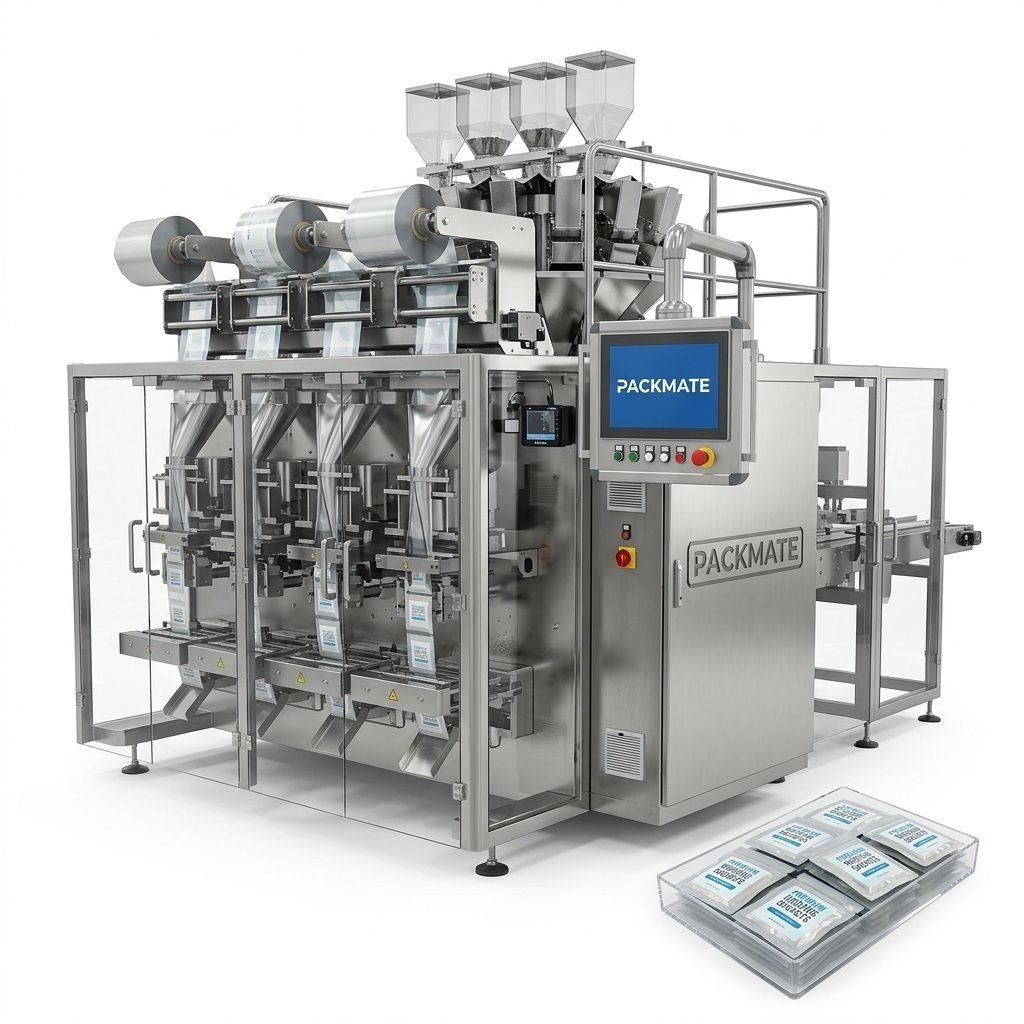
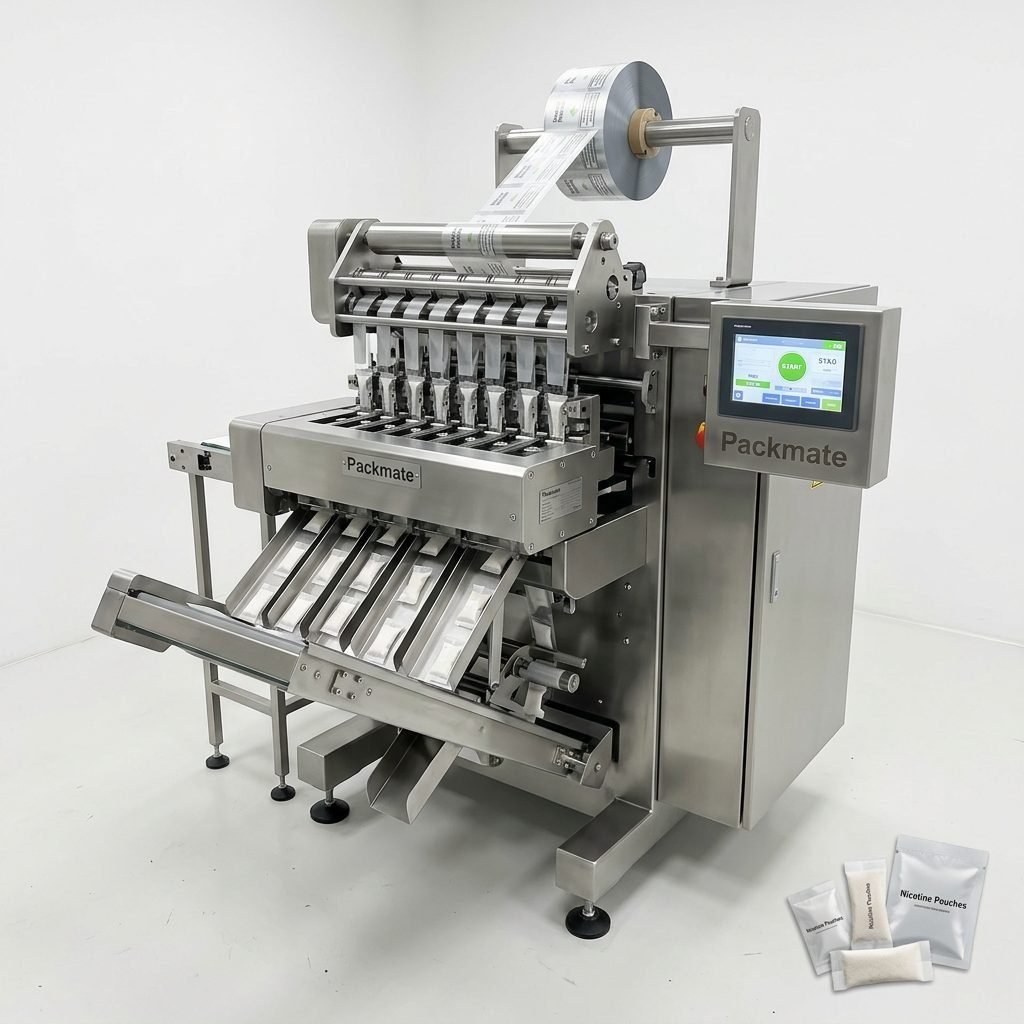
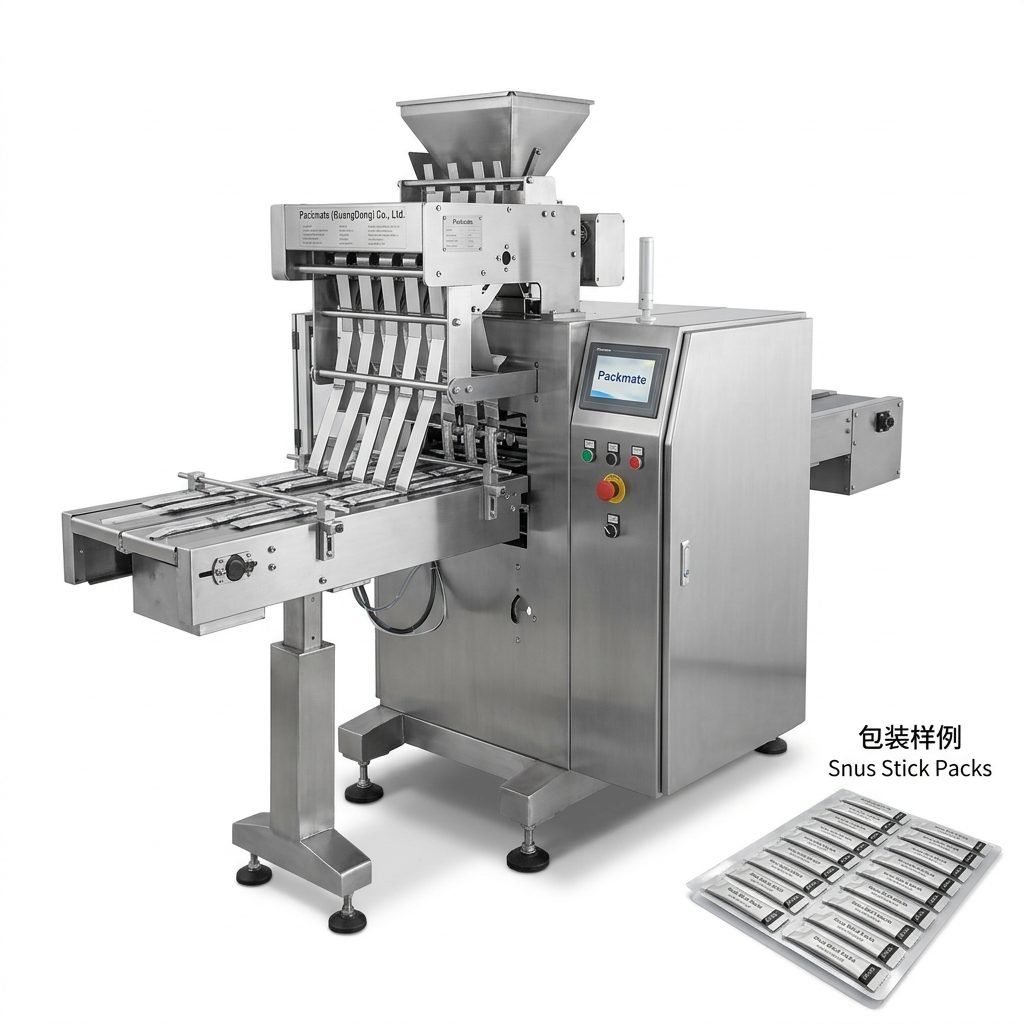
Sachet and stick pack systems are ideal for single-dose portions and offer excellent sealing and material flexibility. They can work with powders, granules, and small textile pouches. If your offering includes slim, single-dose packs, a high-quality stick pack machine is essential.
Multi-Lane Snus / Nicotine Pouch Systems
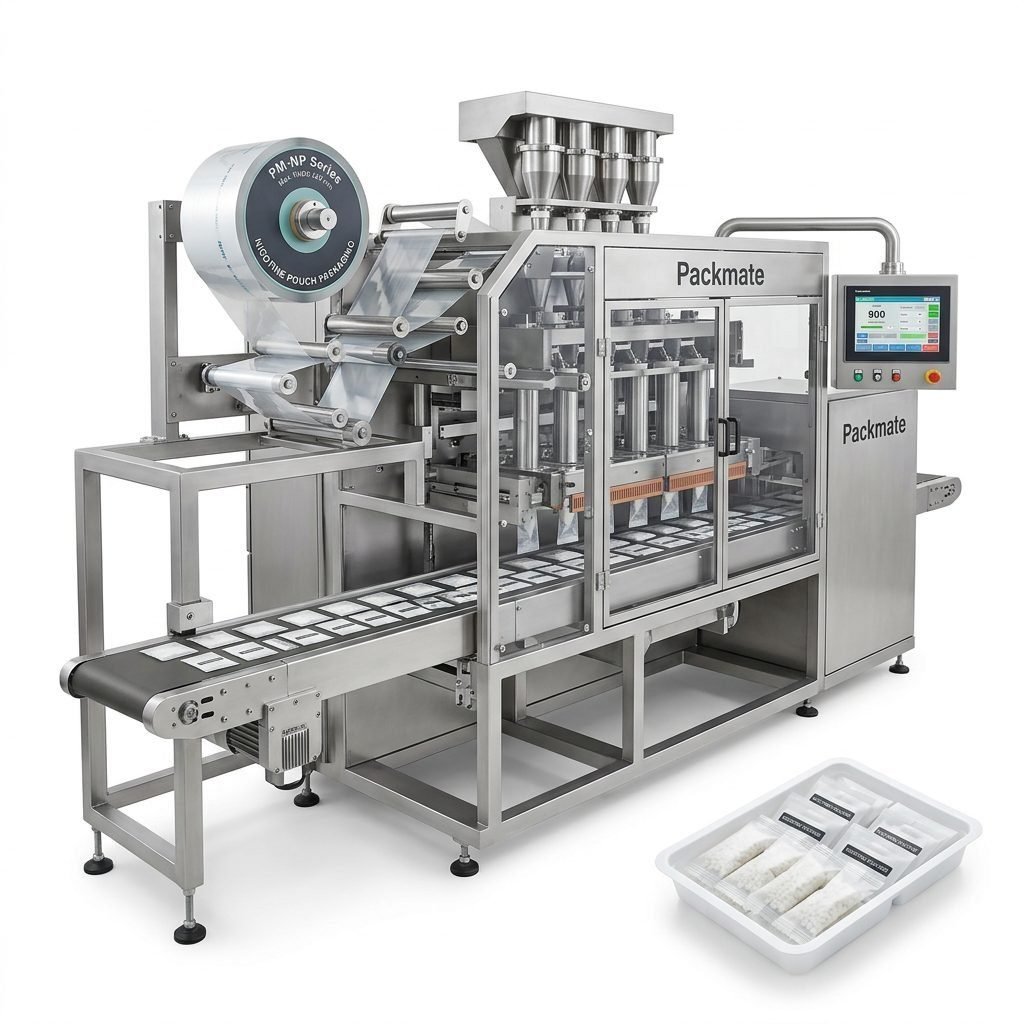
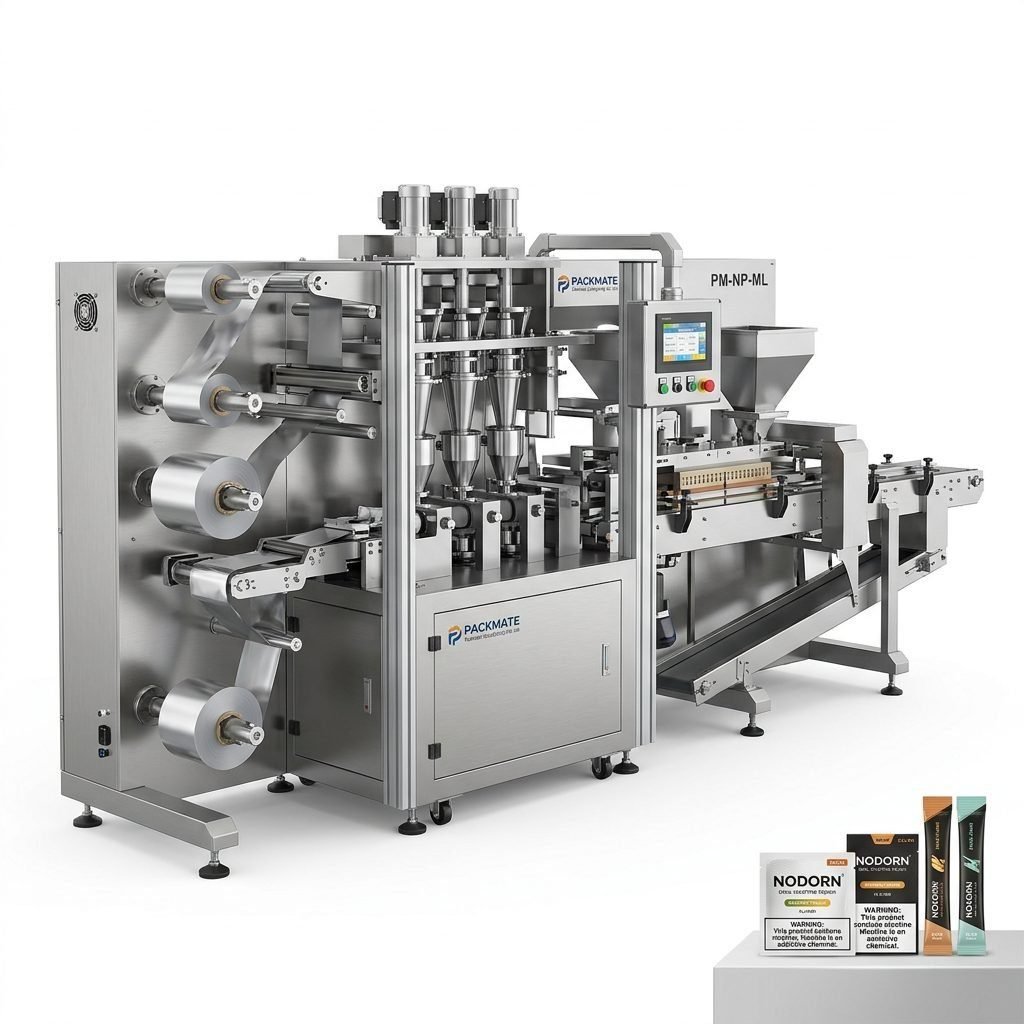
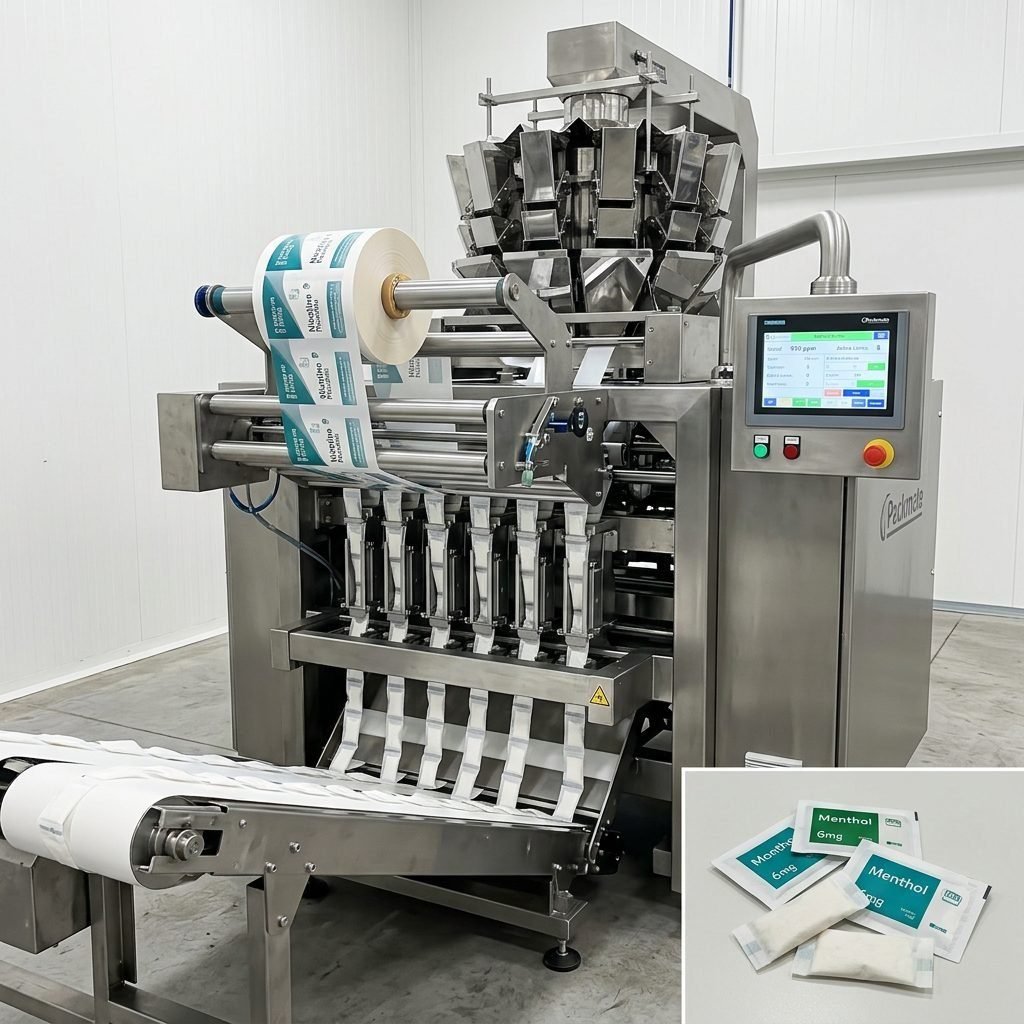
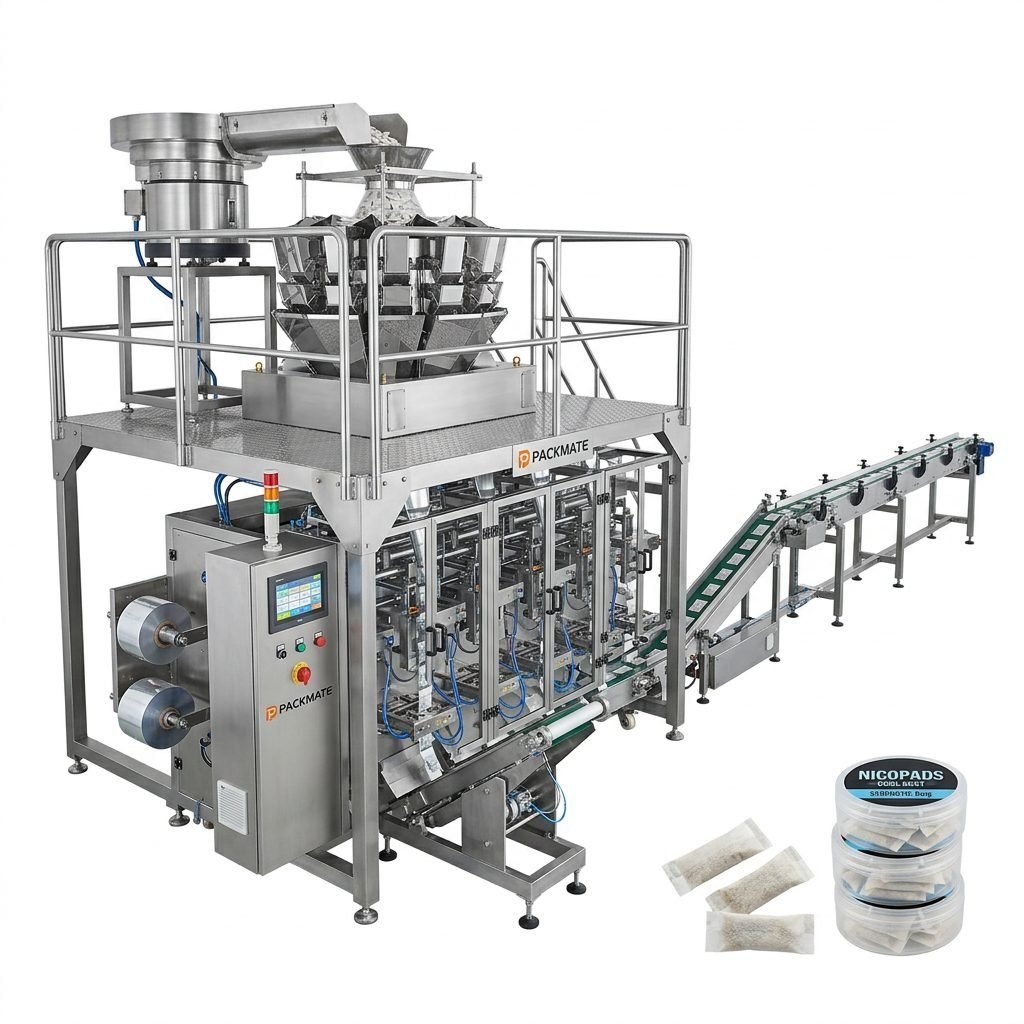
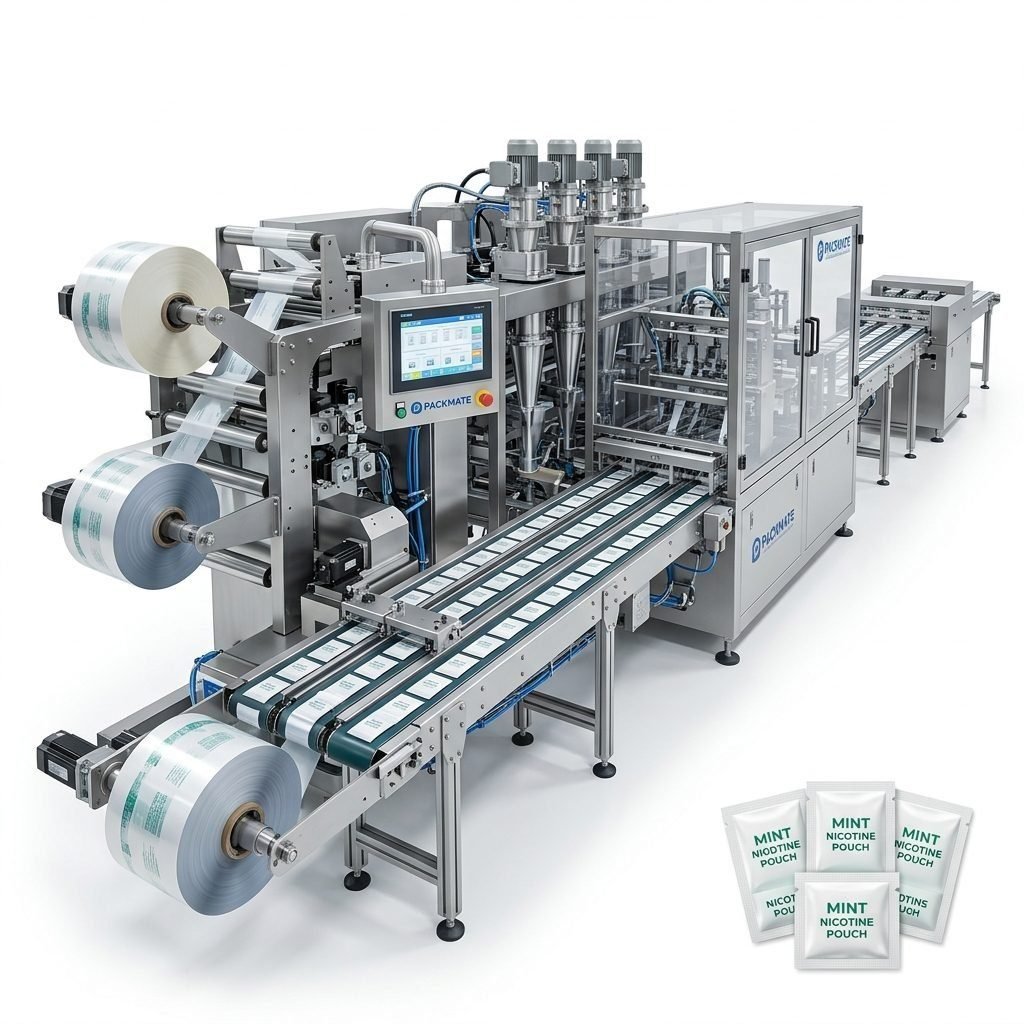
Multi-lane lines are engineered for small-dosage pouches and snus. They combine filling, pouch forming, sealing, and sometimes secondary packaging into compact production cells. These are recommended for medium-to-high-volume operations targeting consistent dosing across lanes.
⚙️
Example: Packmate Snus Machine offers multi-lane pouch packaging lines specifically designed for nicotine pouches, combining dosing precision with scalable throughput.
Critical Technical Specifications to Compare
When evaluating equipment, examine the technical specifications carefully — small differences can have large operational impacts.
Throughput and Scalability
Throughput is measured in units per minute or hour. Determine both your immediate needs and future growth. Choose machines that offer modular upgrades or multi-lane configurations if you expect to increase capacity.
Dosing Accuracy and Weighing Systems
Nicotine pouch dosing must be precise and consistent. Look for machines with integrated weighing and check-weigh systems, servo-driven dosing, and feedback loops that maintain tight tolerances. For products where milligram accuracy is critical, opt for systems with high-resolution dosing and automatic correction features.
Material Compatibility and Sealing
Not all packaging materials behave the same. Ensure the machine supports the films and laminates you plan to use and provides reliable heat or ultrasonic sealing solutions. For moisture-sensitive nicotine products, ask about barrier films and nitrogen flushing options.
✅
Must-have feature: Integrated quality inspection (vision systems, leak detection) reduces waste and ensures regulatory compliance.
Operational Considerations and Factory Readiness
Selecting the best machine also depends on facility constraints and operational readiness. Evaluate the following:
Floor Space, Utilities, and Layout
Measure available floor area and ceiling height. Larger multi-lane systems require more floor space and service access for maintenance. Check power, compressed air, vacuum, and if needed, nitrogen supply requirements.
Operator Training and Spare Parts
Operator skill level affects uptime. Ensure the manufacturer provides comprehensive training, user-friendly controls (HMI), and clear maintenance documentation. Also verify spare parts availability and lead times, especially if you are located in Portugal and need local support options.
Regulatory Compliance and Certifications
Nicotine products are regulated differently across markets. Confirm the equipment complies with international standards (CE, ISO) and supports traceability features that help meet local Portuguese and EU regulations.
Evaluating Suppliers and Warranties
The manufacturer or supplier you partner with can determine the long-term success of your line. Assess their experience, references, and after-sales service network.
📄
Checklist for supplier evaluation: manufacturer history, case studies, CE/ISO certification, exhibition presence, local support, spare parts policy, warranty terms, and installation & commissioning services.
Packmate Snus Machine (Packmate) is an example of a supplier with deep industry experience and global turnkey capabilities. With 30+ years in packaging machine design, a 20,000㎡ manufacturing facility, and a portfolio of snus and nicotine pouch systems, Packmate illustrates the type of vendor profile you should seek. You can review more about their Snus & Nicotine Packaging Machines here:
– Snus & Nicotine Packaging Machines
– Sachet & Stick Pack Machines
– About Packmate • Contact Us
Cost Considerations and Total Cost of Ownership (TCO)
Purchase price is only part of the equation. Consider the total cost of ownership: installation, operator training, consumables, energy, maintenance, downtime impact, and upgrade paths. Lower-cost machines may carry higher running costs and less reliability.
💡
Financial tip: Ask suppliers for a TCO projection over 3–5 years. Include expected parts replacement, estimated downtime, and operator costs.
Commissioning, Validation, and After-Sales Support
Smooth installation and robust after-sales support reduce ramp-up time. Confirm the supplier provides on-site commissioning, performance validation, training, and a clear escalation path for technical issues. Remote diagnostics and software support can significantly speed up problem resolution.
Documentation and Spare Parts Strategy
Detailed documentation (electrical, mechanical, PLC code) and a spare parts kit for critical wear items will minimize downtime. Negotiate spare parts lead times and consider maintaining a local stock for high-usage items.
Practical Steps to Select the Best Machine in Portugal
Follow a structured procurement process to reduce risk and ensure the chosen equipment meets your objectives.
- Define product specifications, target throughput, and regulatory requirements.
- Shortlist experienced suppliers with proven nicotine pouch references and certifications.
- Request factory acceptance test (FAT) videos or live demonstrations — ideally view machines running similar products.
- Obtain detailed TCO estimates, spare parts lists, and references from customers in similar markets.
- Plan site readiness: utilities, logical layout for material flow, and operator training schedules.
🔍
Deal breaker if missing: No onsite verification or performance demonstration — always insist on FAT or a comparable live demo to validate claims.
Case Study Snapshot
A medium-sized nicotine brand in Europe upgraded from single-lane stick pack machines to a 4-lane snus pouch line and realized: a threefold increase in throughput, 25% reduction in material waste, and higher dosing consistency — resulting in faster ROI and lower per-unit production costs. You can explore similar implementations and case references to compare solutions here:
– Case • Our Exhibition
Final Checklist Before Purchase
– Production capacity verified against your forecasts.
– Dosing accuracy and inspection systems tested.
– Spare parts and service response times confirmed.
– Clear documentation for operation and maintenance provided.
– Warranty, installation, and training included in the contract.
📞
Next step: Reach out to vendors for tailored proposals and request FAT schedules — and if you need a technology partner with deep snus packaging expertise, review potential partners such as Packmate on their product pages.
Common Questions
Q1: How do I choose between single-lane and multi-lane systems?
A1: Choose single-lane for lower volumes or specialized small runs; choose multi-lane for volume scaling, better throughput per footprint, and improved cost efficiency for high-demand SKUs.
Q2: What certifications should I look for from a packaging machine vendor?
A2: Look for CE and ISO certifications, robust quality control documentation, and references demonstrating experience with nicotine pouch production.
Q3: How important is local service and spare parts availability in Portugal?
A3: Very important — local or regional support reduces downtime and shipping delays. Verify the supplier’s spare parts network and consider stocking critical wear parts locally.
Q4: Can I validate machine performance before purchase?
A4: Yes. Insist on a Factory Acceptance Test (FAT), live demonstrations, or video evidence of similar product runs. FAT is essential to confirm dosing accuracy and operational stability.
Q5: Where can I find more detailed product and service information?
A5: Visit manufacturer product pages and contact vendors directly for catalogs, technical sheets, and quotations. For more information on snus and nicotine packaging solutions, check manufacturer resources.