Choosing the right snus packaging machine is a critical decision for manufacturers in Asia’s rapidly growing nicotine pouch market. This guide walks you through machine types, key technical features, production planning, quality and compliance considerations, after-sales service expectations, and cost vs. value trade-offs so you can select a system that matches your product, budget, and long-term growth plans.
Understand the main snus packaging machine types
Before you evaluate vendors, clarify which machine architecture fits your product format and production goals. Common categories include:
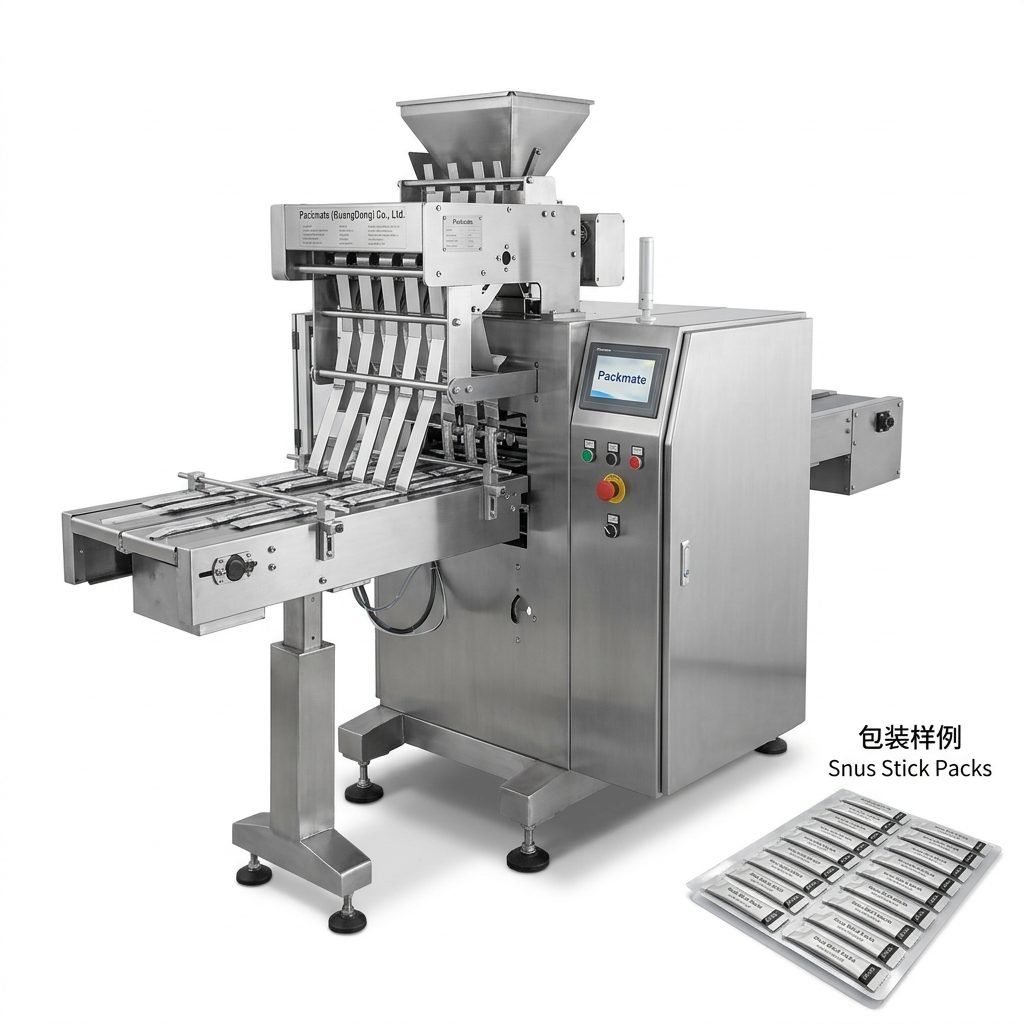
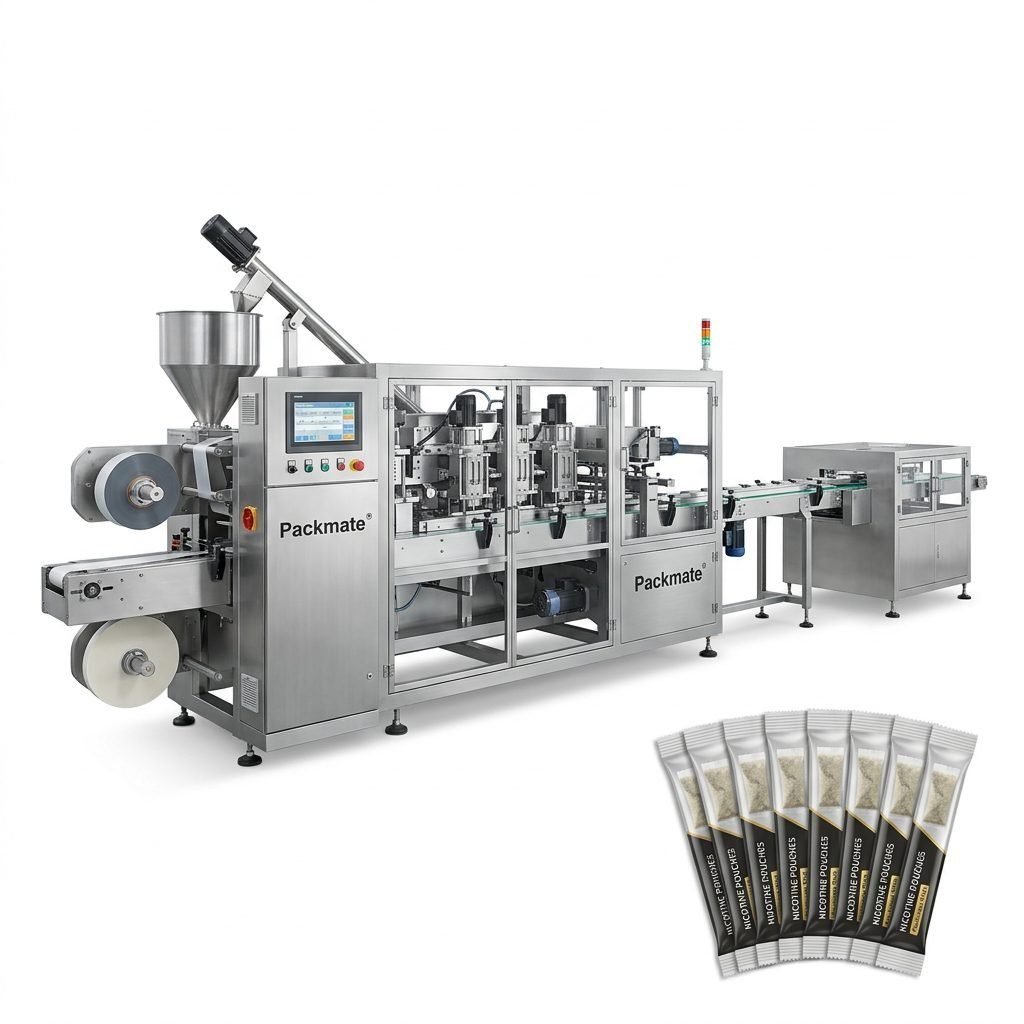
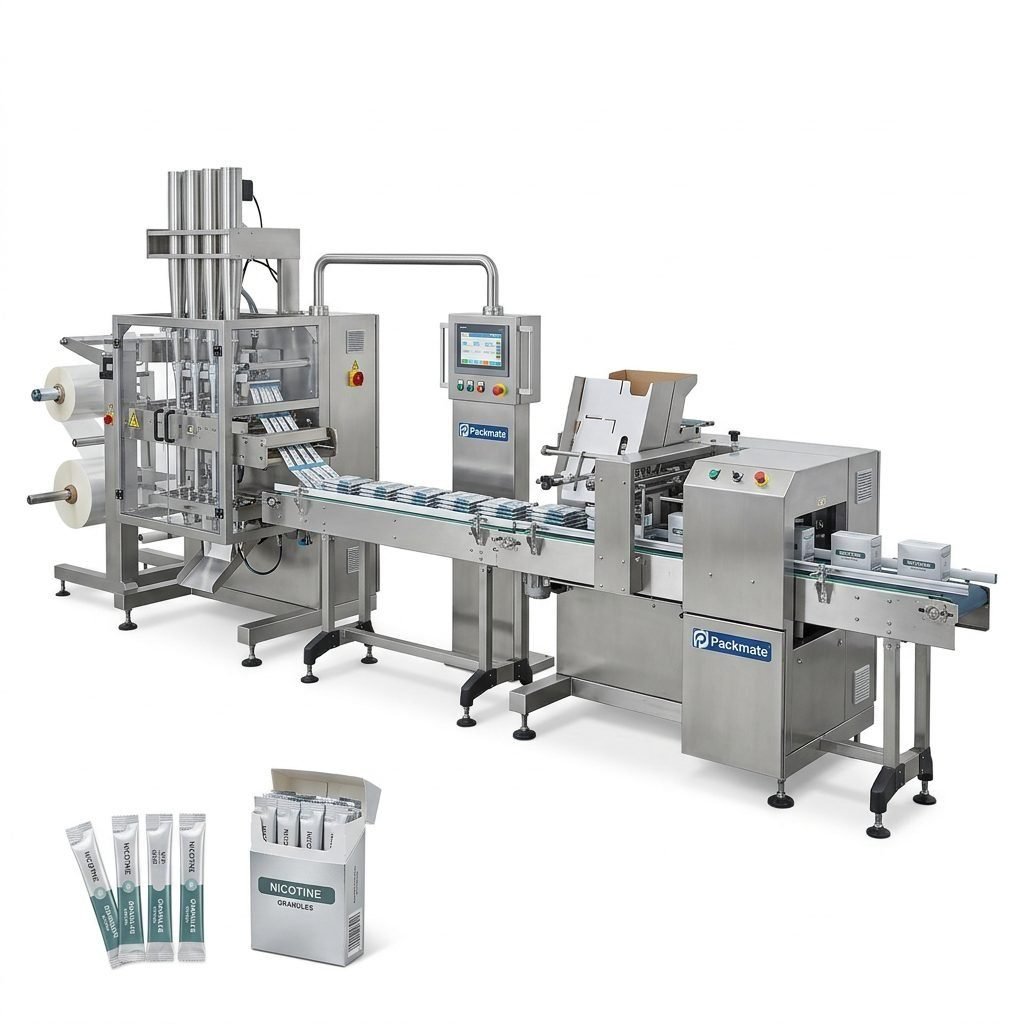
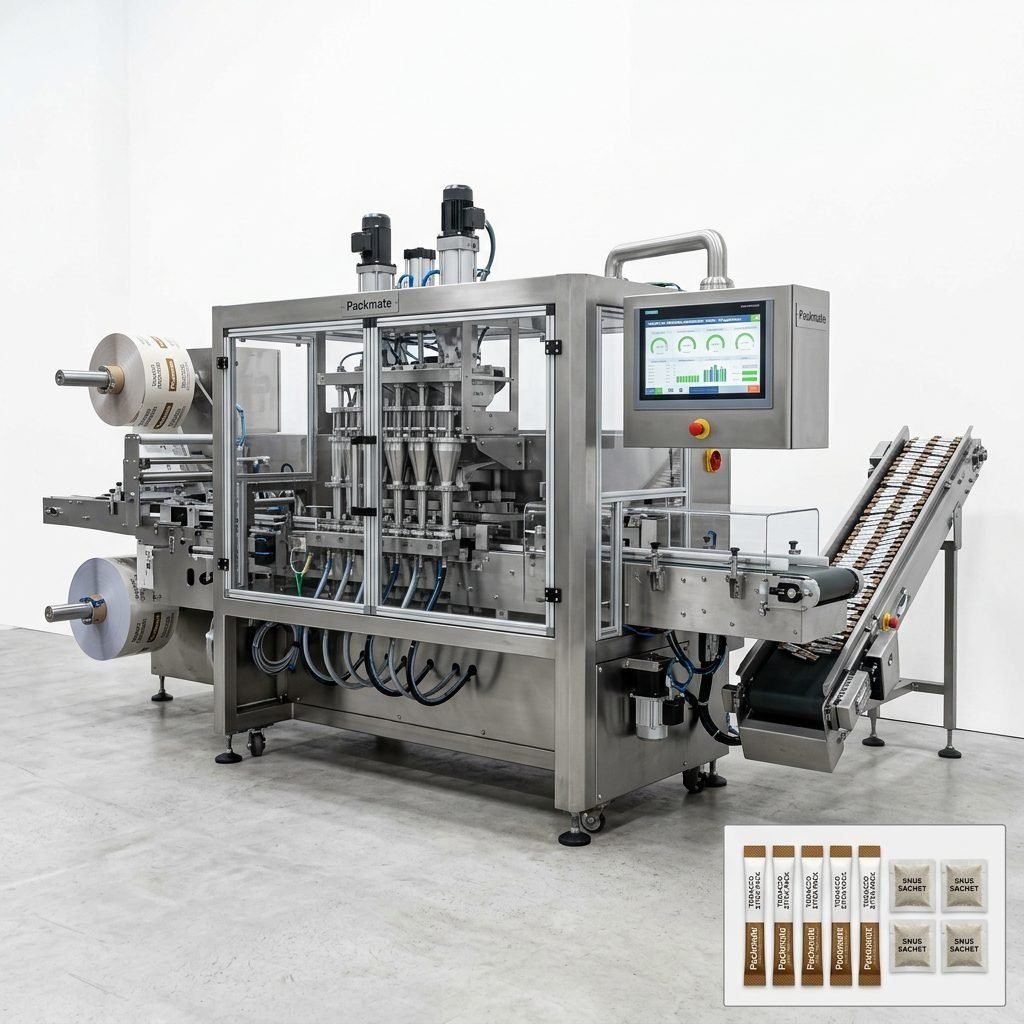
Stick pack and sachet machines — ideal for single-dose pouches or small sachets, offering compact footprints and consistent sealing. See examples in the Stick Pack & Sachet family: Sachet & Stick Pack Machines.
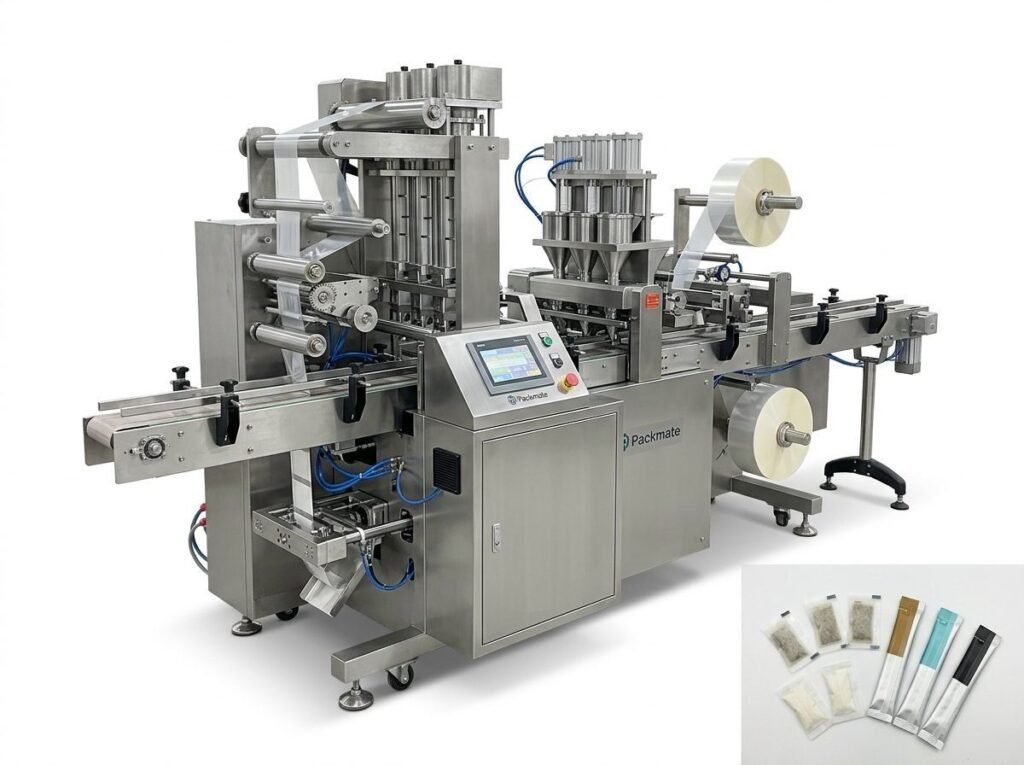
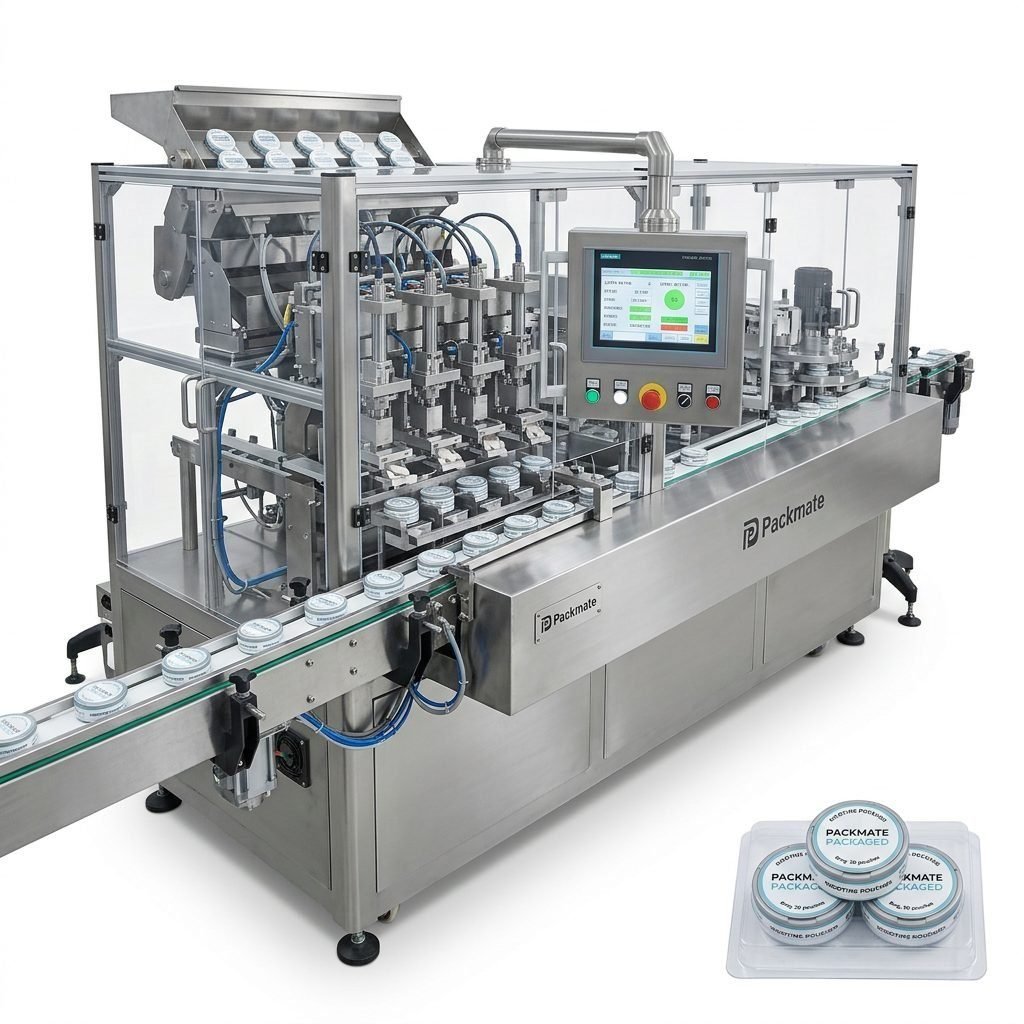
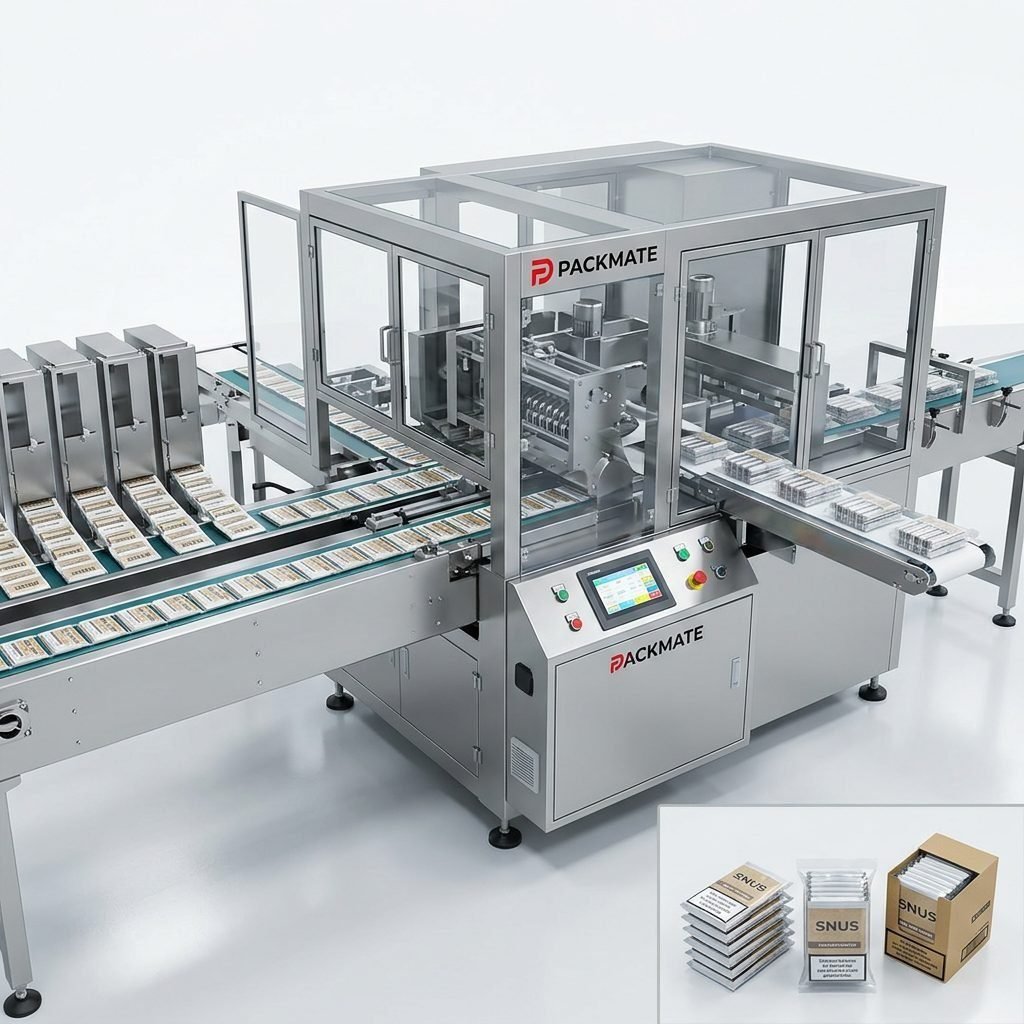
Multi-lane systems — best for high-output nicotine pouch lines. Multiple lanes run in parallel to multiply throughput while keeping footprint efficient. These systems are often the fastest way to scale production in limited factory space.
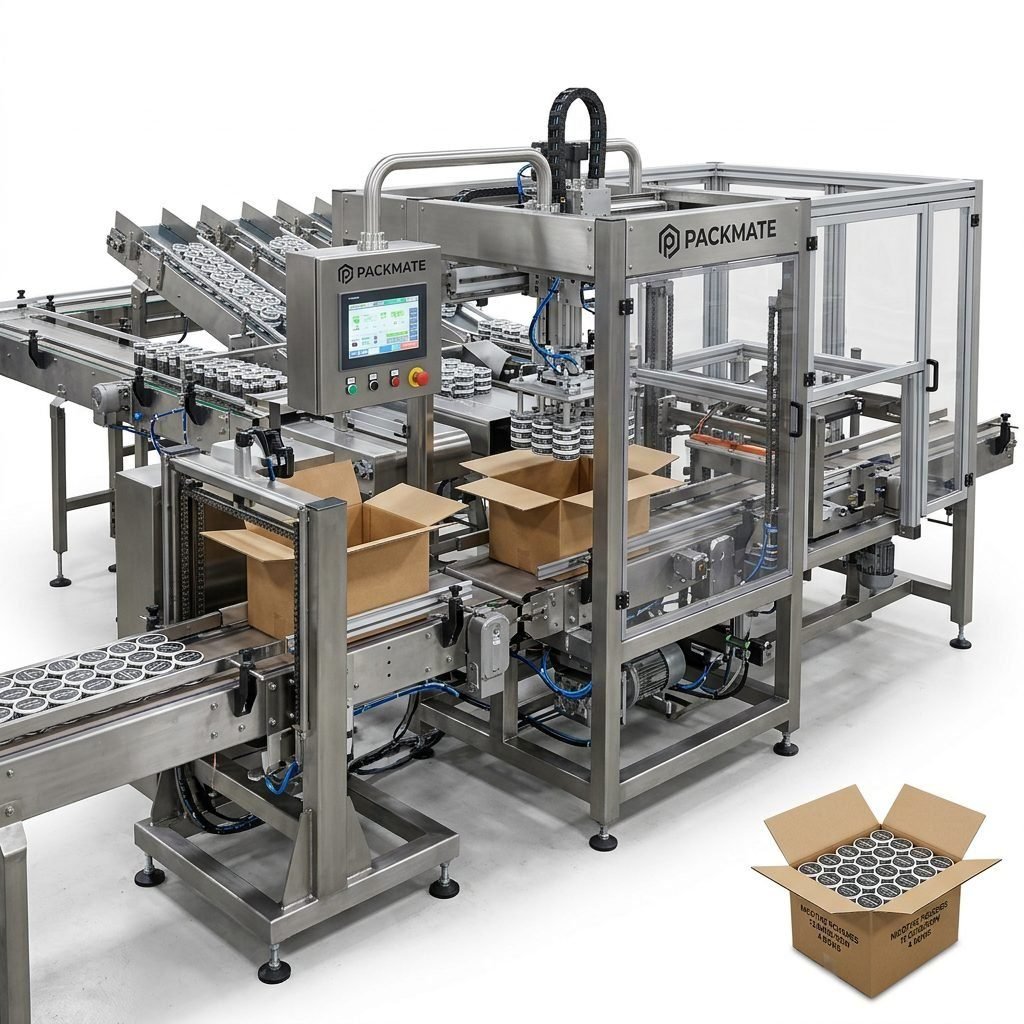
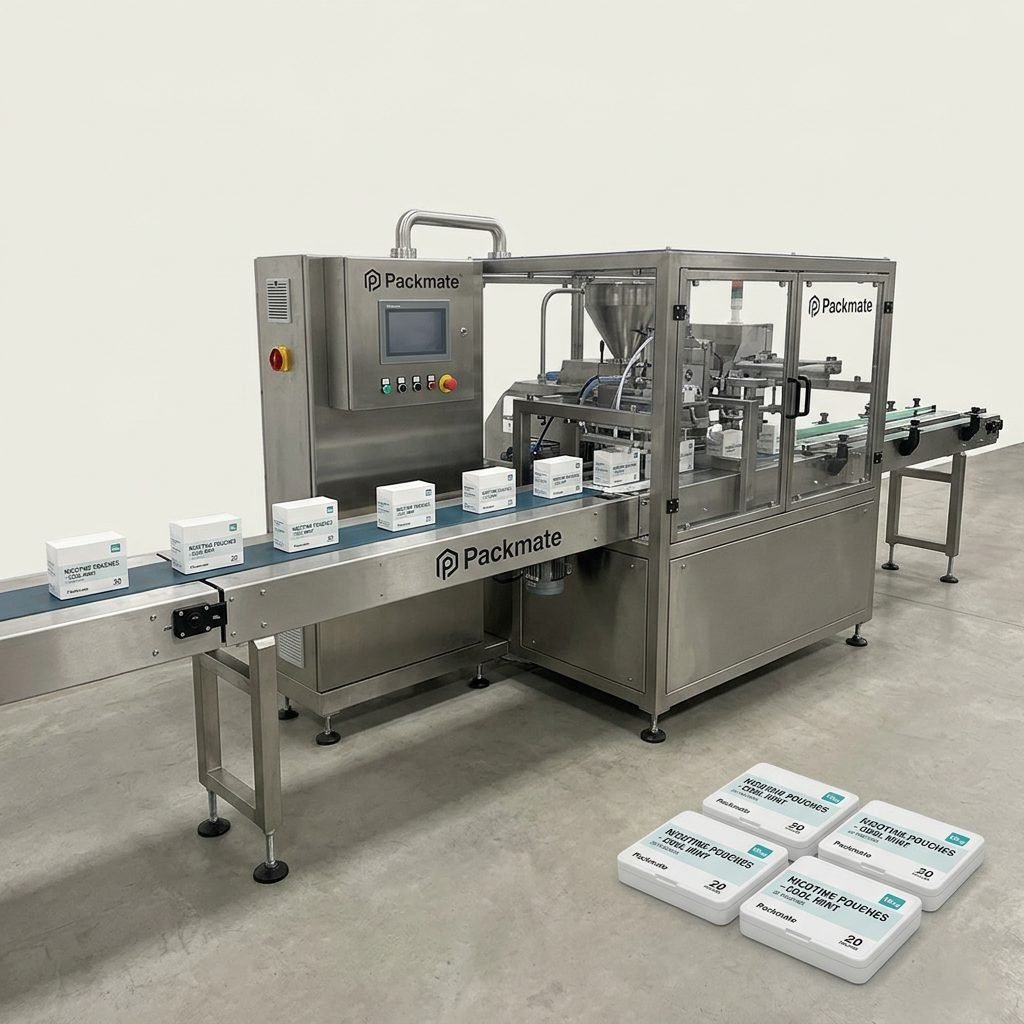
Bag & pouch solutions — for secondary packaging, zipped pouches, or outer bags that collect several single-dose pouches into retail-ready formats. Explore options here: Bag & Pouch Packaging Machines.
Key performance parameters to evaluate
When comparing machines, focus on measurable performance metrics rather than glossy marketing claims. The most important parameters are:
- Production rate (units/min and units/hour) — ensure the machine meets both current and forecasted demand.
- Filling accuracy and repeatability — critical for nicotine dosing and regulatory compliance.
- Changeover time — how quickly the line can switch between SKUs or pouch sizes.
- Uptime and mean time between failures (MTBF) — indicates reliability and maintenance needs.
- Material compatibility — some machines handle powders, others are optimized for moist snus or pouches with membranes.
⚙️ Quick tip: Ask suppliers for real-world performance logs and references. A machine rated at 200 units/min on paper may run lower if auxiliary systems (weighing, feeding) are not optimized.
Technical features that make a machine best-in-class
High-quality snus packaging machines combine mechanical precision with smart controls. Look for these features:
Servo-driven motion control for accurate indexing and faster, predictable changeovers.
Multi-head or multi-lane dosing systems to distribute fill material consistently and increase throughput without sacrificing accuracy.
Automatic format parts or quick-change tooling that reduce downtime when switching pouch sizes or styles.
Integrated weighing and check-weighing to monitor each pouch and divert out-of-spec units — often paired with Weighing & Packaging Systems: Weighing & Packaging Systems.
Automation and Industry 4.0 readiness
Machines that support remote diagnostics, collected OEE data, and recipe management save time and reduce production risk. If you plan to scale, prioritize suppliers that can integrate PLC/HMI data export and provide cloud-based support.
Capacity planning: calculate what you really need
A practical capacity calculation ensures you buy neither an underpowered machine nor an oversized line that drains capital. Use this simple approach:
1) Forecast monthly unit demand. 2) Divide by planned production days. 3) Factor in realistic shift utilization (e.g., 80–85% uptime). 4) Add 15–30% headroom for growth and unexpected demand spikes. This gives a target units/hour number to match with machine specs.
📦 Capacity example: If target is 2 million pouches/month and you produce 22 days/month across two shifts, you may need a multi-lane line capable of sustained high-speed output — often found in commercial lines from established manufacturers.
Material and pouch compatibility
Different pouches (non-woven, fiber, membrane or sealed pouches) and different product textures (powder, granular, moist snus) require tailored handling. Verify that:
- The feeder and dosing system is compatible with your product state (e.g., powders vs. moist blends).
- Sealing temperatures and pressure ranges match your film laminate.
- Options for oxygen or nitrogen flushing are available if you need modified atmosphere packaging.
Compliance, safety, and certificates
Purchasing equipment that meets international standards reduces legal and operational risk. Confirm certifications and quality systems such as CE and ISO compliance. Vendors with documented factory audits and certificates demonstrate consistent manufacturing standards — see Certificate references: Certificate.
Factory capability and supplier track record
A machine is only as good as the company that builds and supports it. Evaluate the supplier’s:
- Manufacturing capacity and toolroom sophistication (CNC, precision assembly).
- Years of experience in snus/nicotine packaging specifically.
- Reference installations and case studies across markets — view manufacturer cases here: Case.
Packmate Snus Machine, for example, brings over 30 years of engineering experience and a 20,000㎡ manufacturing facility with advanced CNC and assembly systems, supporting over 50 machine models and turnkey lines.
Service, spare parts and training
After-sales support determines how quickly you can recover from downtime. Ask about:
- Spare parts lead times and stocked wear parts.
- On-site commissioning and operator training plans.
- Remote support, diagnostics, and warranty terms.
Look for suppliers offering local representation or reliable remote service to minimize production interruptions.
Total cost of ownership (TCO) vs. upfront price
An attractive initial quote can hide long-term costs. Evaluate TCO by considering:
- Energy consumption and compressed air usage.
- Maintenance frequency and spare parts costs.
- Expected machine lifetime and resale value.
- Impact on labor — automation reduces headcount but may increase skill requirements.
✅ Value reminder: A well-engineered multi-lane line often delivers lower cost-per-unit over its life, even if initial cost is higher.
Customization and turnkey solutions
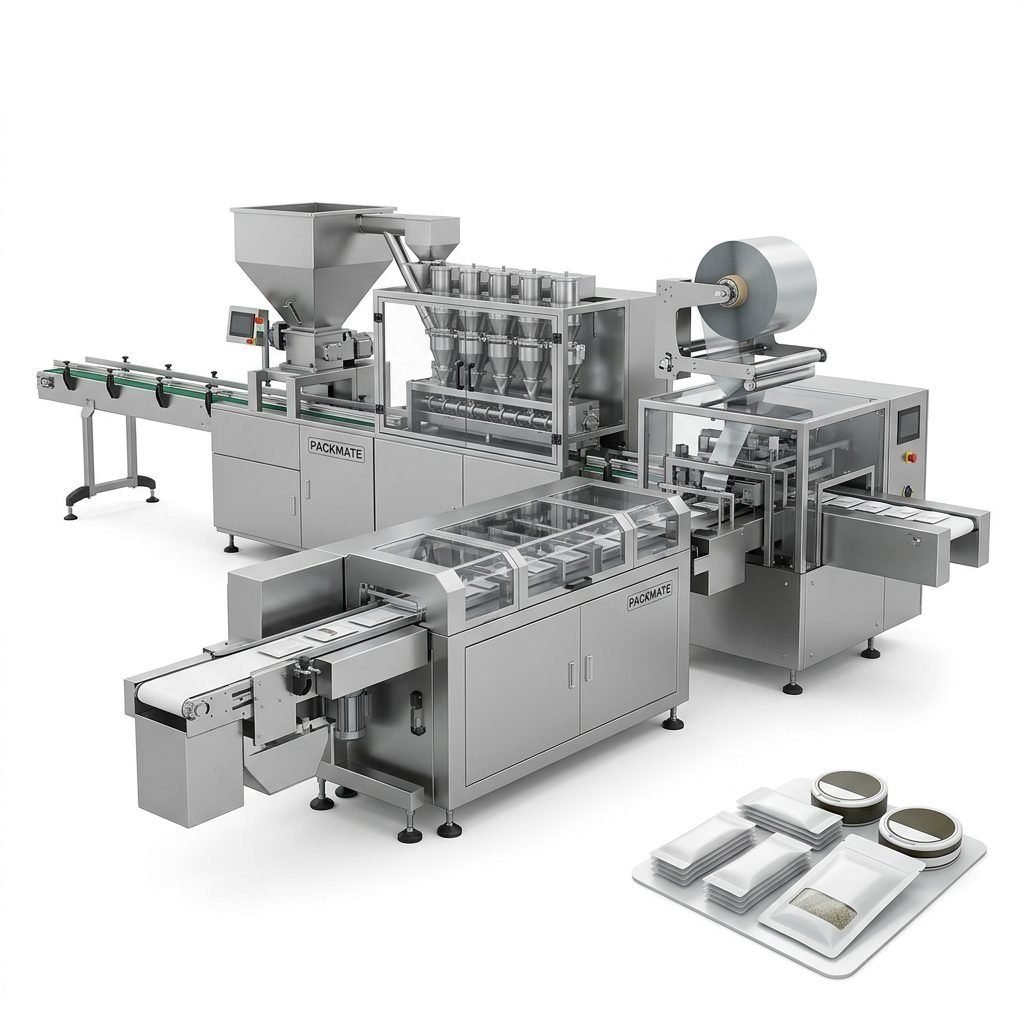
If your product or packaging is non-standard, choose a supplier that offers customization — from special dosing systems to inline secondary packaging. Suppliers that provide turnkey lines including filling, weighing, packaging, and auxiliary equipment simplify integration and reduce project risk. Explore full-line options: Filling & Packaging Lines.
Project timeline and milestones
Demand a clear project roadmap from the vendor: design approval, FAT (Factory Acceptance Test), shipping, installation, SAT (Site Acceptance Test), and training. Transparency on lead times avoids costly delays.
Factory acceptance testing (FAT) and validation
A proper FAT ensures the machine meets agreed specifications before shipping. FAT should include:
- Test runs with your product or a validated simulant.
- Verification of dosing accuracy, seal integrity, and OEE metrics.
- Documentation package including drawings, PLC program listings, parts list, and maintenance guides.
Choosing the right partner: questions to ask suppliers
When you shortlist manufacturers, ask these practical questions:
- Can you provide installed performance data and customer references in Asia?
- What are typical lead times and what affects them?
- How is spare parts availability handled regionally?
- Do you support remote monitoring and software updates?
- What warranty and after-sales support packages are offered?
Why consider Packmate and similar established manufacturers
Established manufacturers with decades of experience provide design maturity, proven multi-lane solutions, and global service networks. Packmate’s background — originating from R&D in 1993 and formal company establishment in 2003 — illustrates the long-term evolution needed to refine snus packaging technology. Learn more about the company and capabilities: About Packmate.
🚚 Global reach: Reputable vendors participate in international exhibitions and show real case studies across Europe, Asia, and the Americas — check exhibition records for machine demos: Our Exhibition.
Final checklist before purchase
Use this checklist to finalize your choice:
- Verified throughput and dosing accuracy with your product.
- Clear FAT and SAT plans with acceptance criteria.
- Service and spare parts commitments in your region.
- Documentation, training, and warranty terms spelled out in contract.
- Alignment on payment terms, lead times, and delivery milestones.
Contact and next steps
When you are ready, reach out to suppliers with your product specifications, target output, and desired packaging formats. A detailed request for quotation (RFQ) with sample pouches or product data speeds up technical validation. For direct contact and service options, see: Contact Us and available services: Service.
Common questions (FAQs)
Q1: What is the best machine type for a startup focused on small-dose nicotine pouches?
A1: For startups, a reliable stick pack or single-lane pouch machine often fits budget and space constraints. Choose a machine with easy format changeovers and good dosing accuracy, and consider future-proofing by ensuring the supplier can upgrade to multi-lane lines.
Q2: How do I evaluate a supplier’s machine reliability?
A2: Request MTBF statistics, customer references, and on-site performance records. Insist on a thorough FAT and trial runs using your actual product to confirm performance.
Q3: Are multi-lane systems worth the investment for medium-scale producers?
A3: Yes, multi-lane systems typically reduce cost-per-unit and maximize floor-space efficiency. If you expect substantial growth, starting with a multi-lane-capable vendor reduces future migration pain.
Q4: What certifications should I insist on for export markets?
A4: CE and ISO are baseline requirements for many markets. If you target markets with specific regulatory needs, verify any additional certifications or documentation required.
Q5: How important is vendor proximity for spare parts and service?
A5: Very important. Shorter spare part lead times and local or regional service presence minimize downtime. Confirm regional stocking arrangements or fast shipping options for critical components.