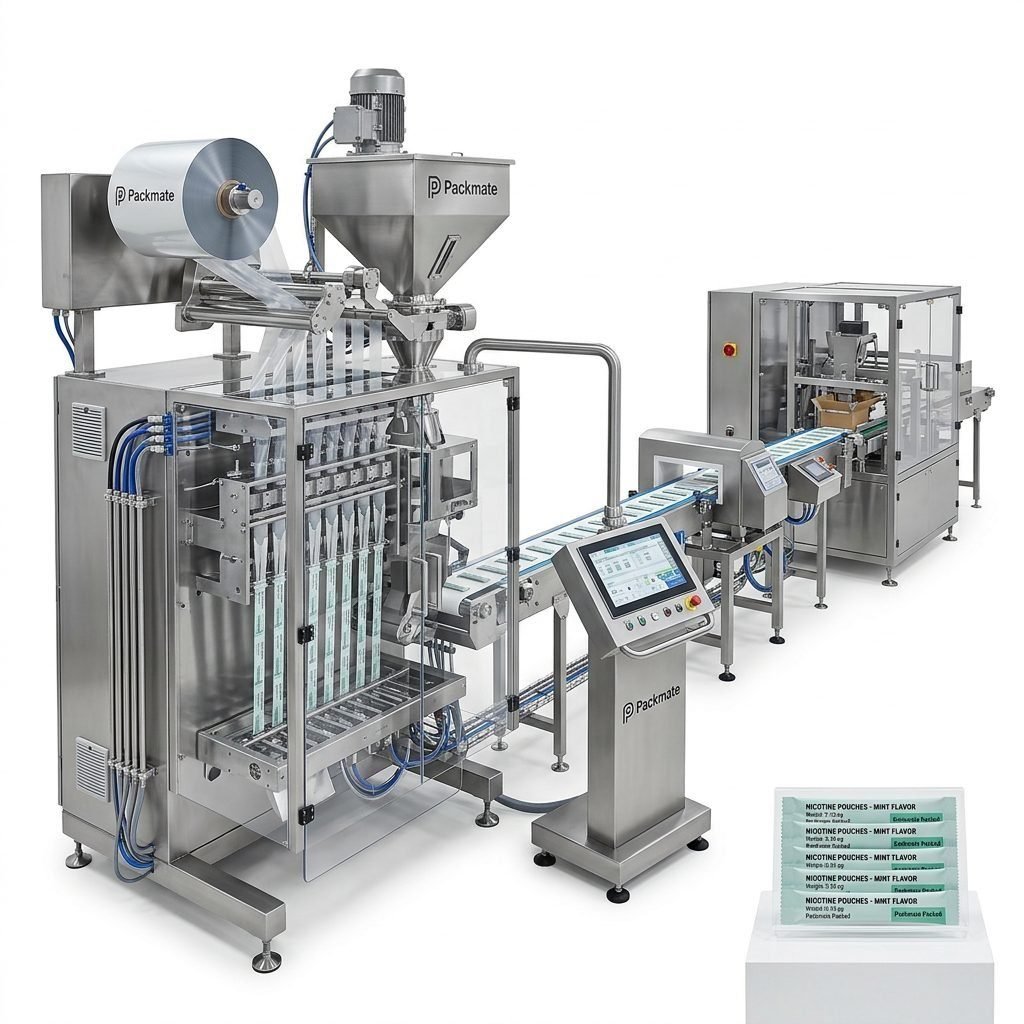
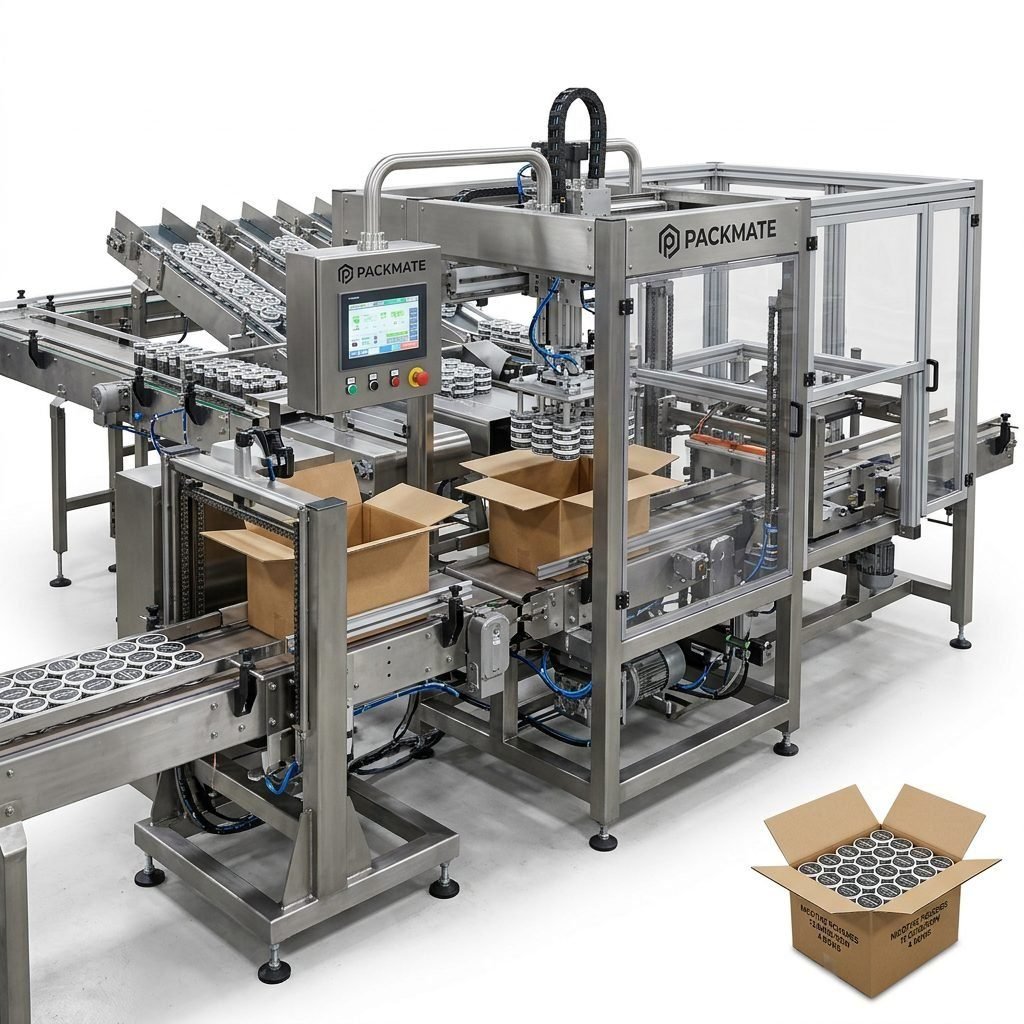
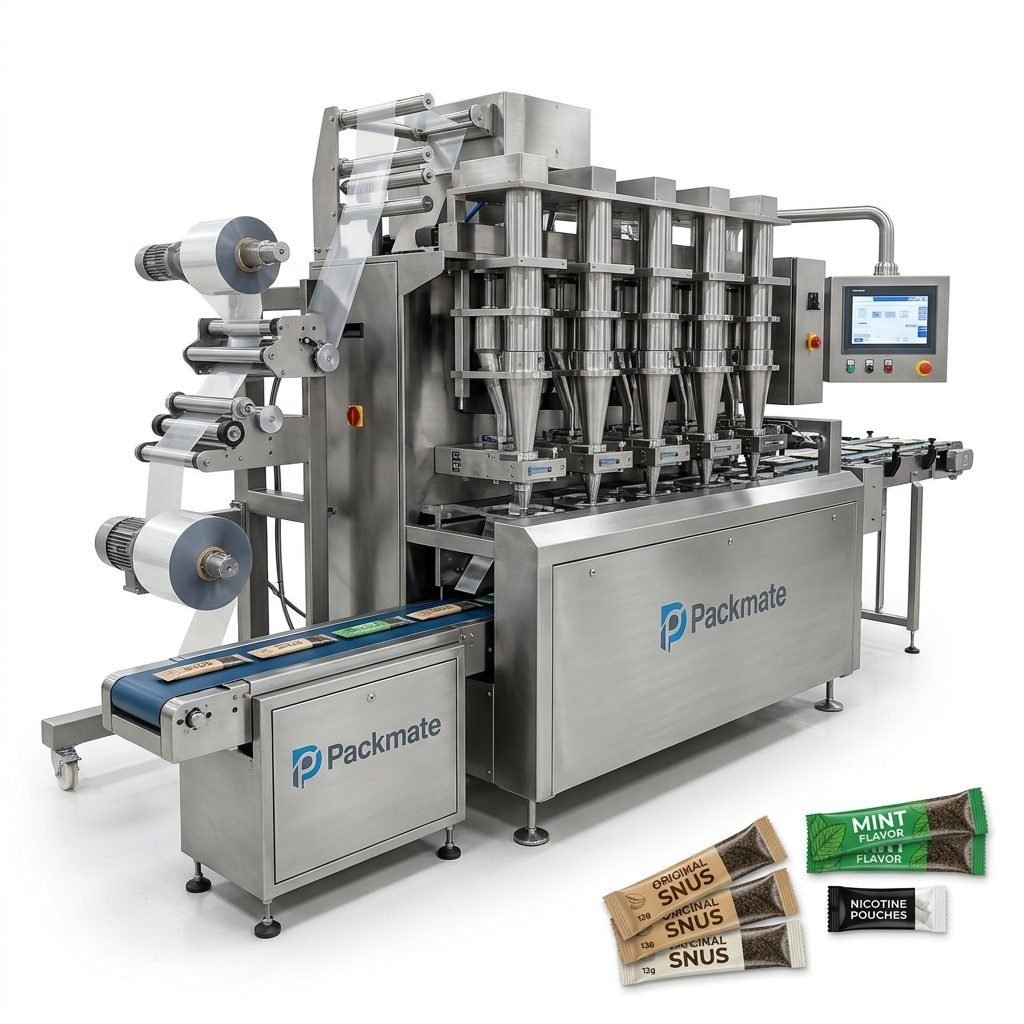
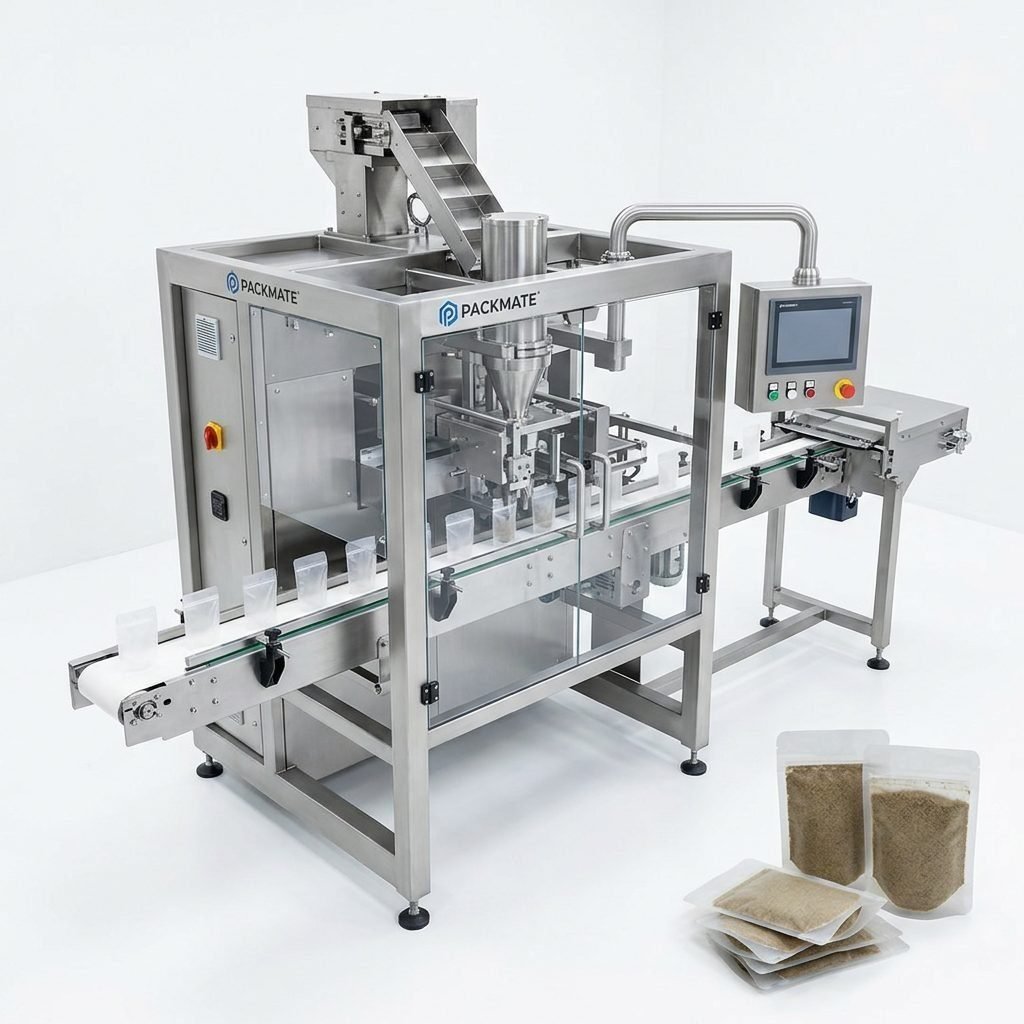
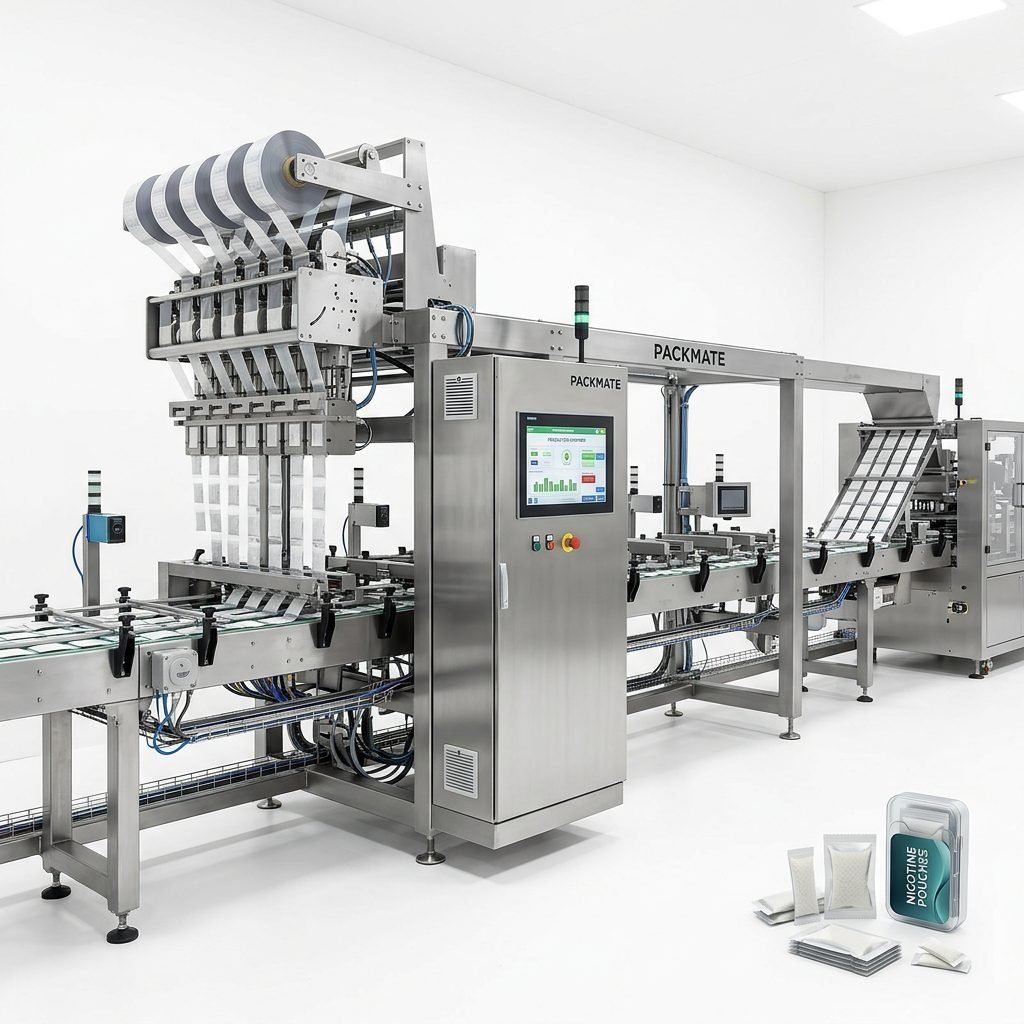
Choosing the right nicotine packaging machine manufacturer in Malaysia is a critical decision that affects product quality, regulatory compliance, production efficiency, and long-term costs. This guide walks you through practical steps, key evaluation criteria, and useful questions to ask potential suppliers so you can confidently select a partner that meets your technical requirements and business goals.
Understand Your Production Requirements
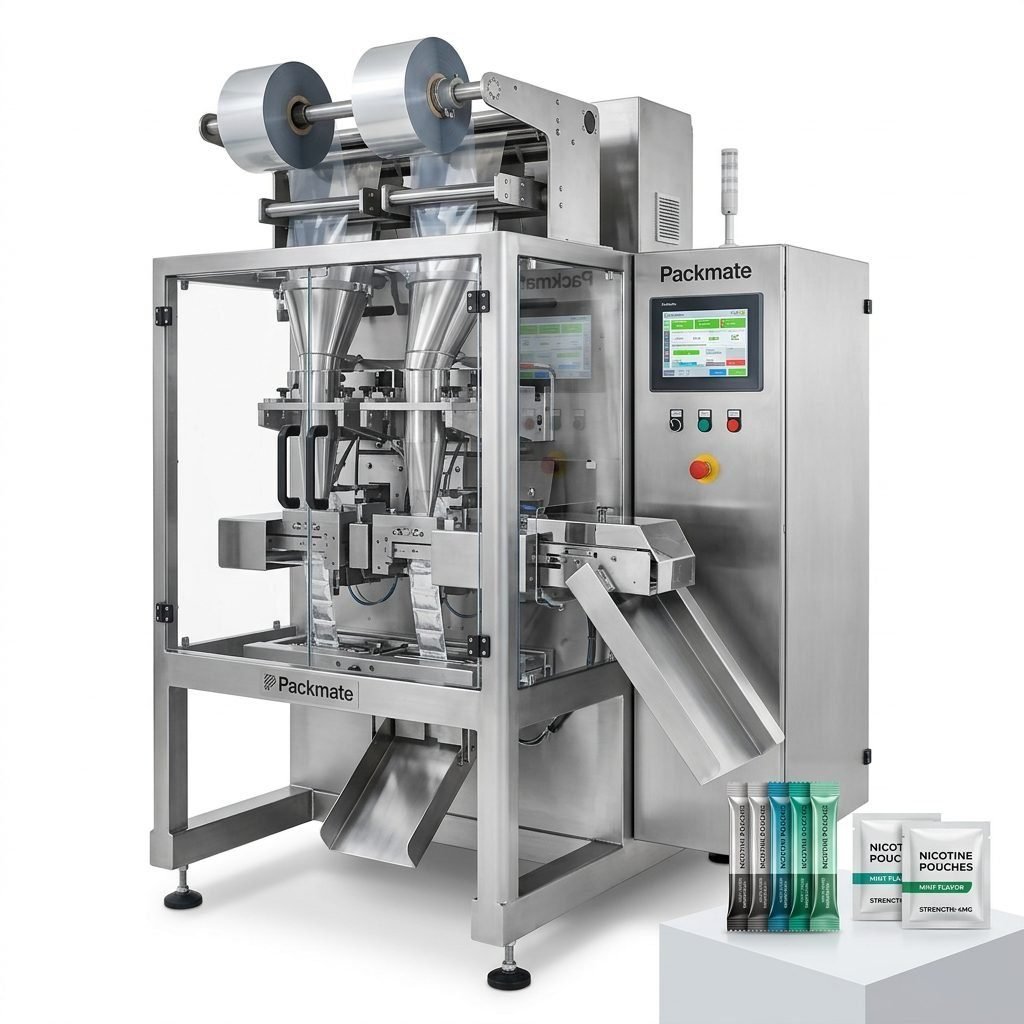
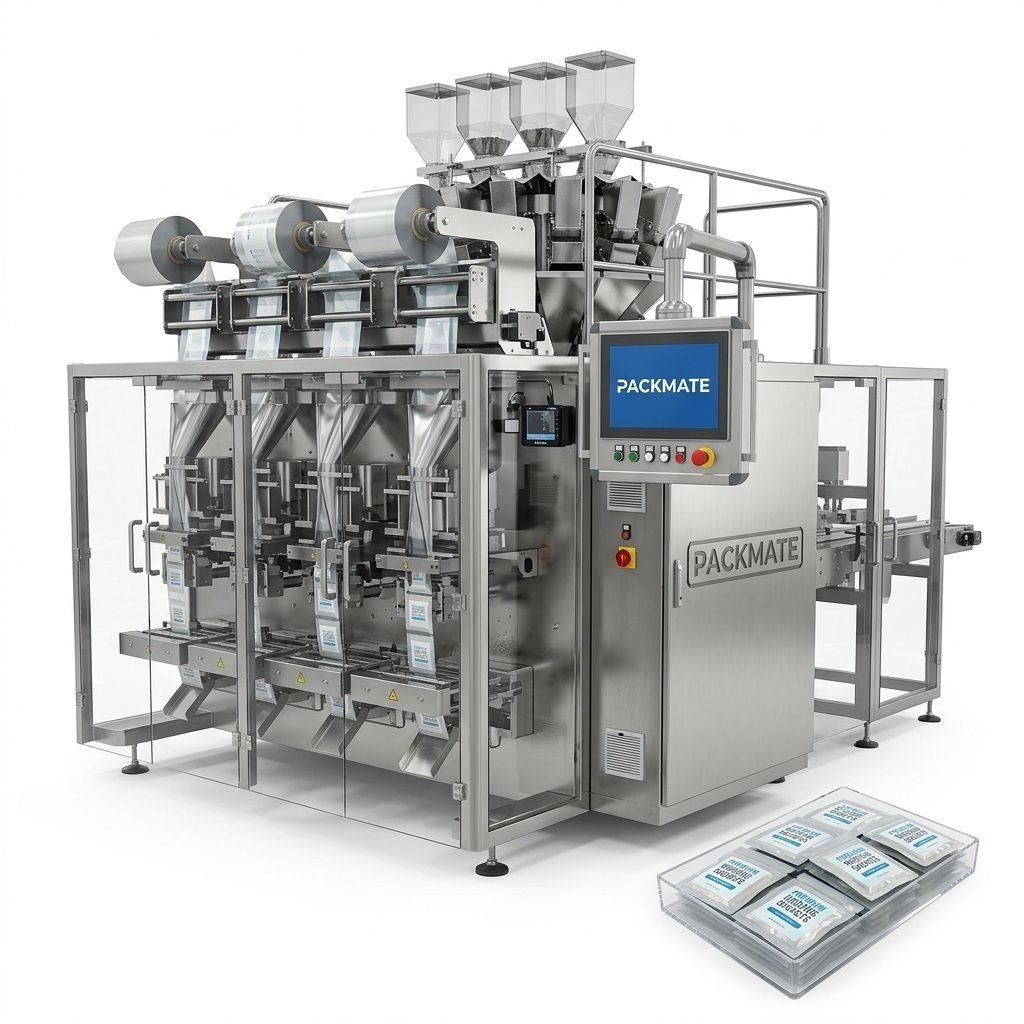
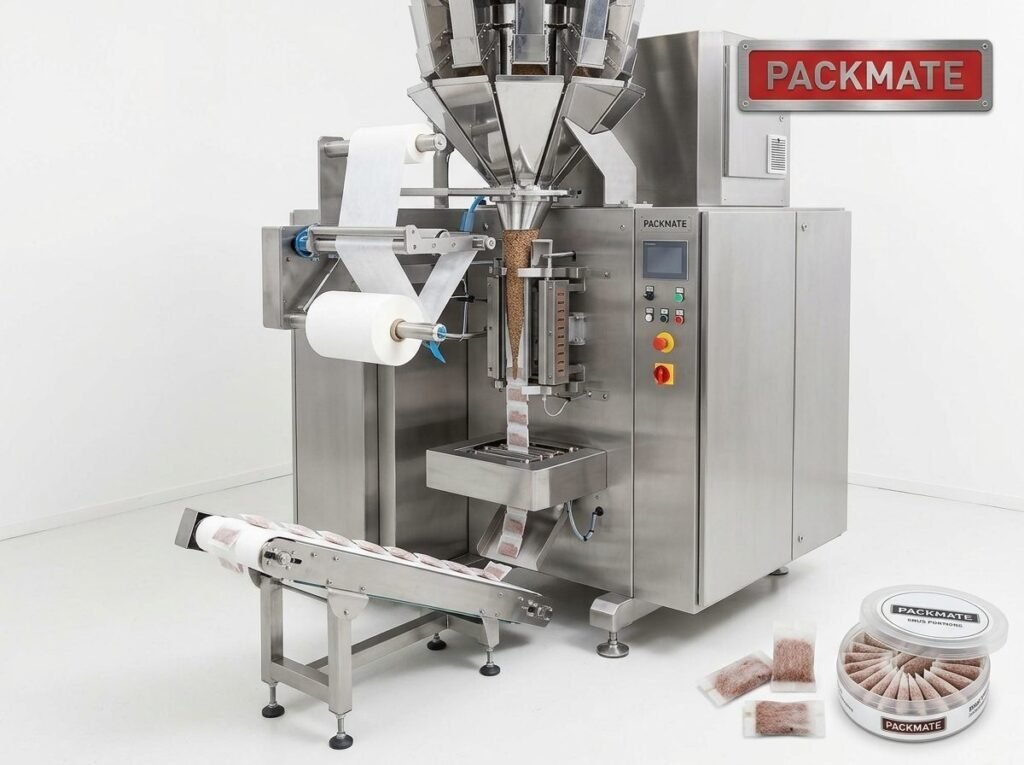
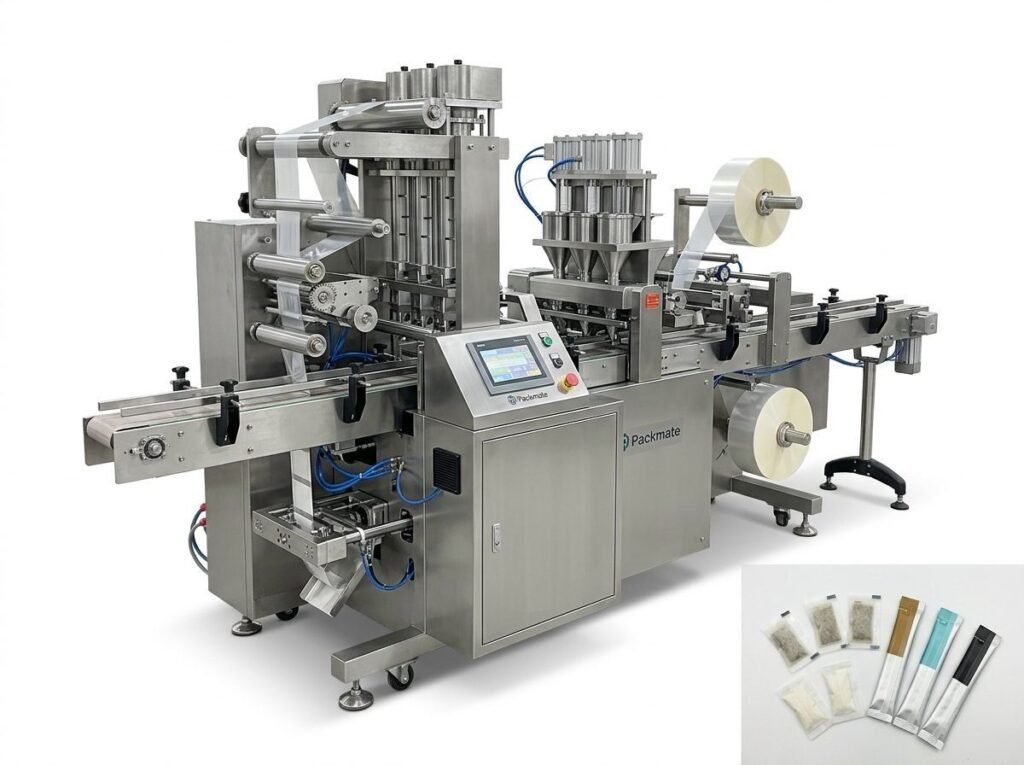
🔍 Product format: Are you producing nicotine pouches, snus sachets, stick packs, or multi-lane small-dose pouches? Different formats need different machine types and tooling options. For a quick product-to-machine mapping, review specialized solutions such as Snus & Nicotine Packaging Machines and Sachet & Stick Pack Machines.
⚙️ Capacity & lanes: Define required output (units/min) and whether multi-lane systems are needed for higher throughput. Higher-lane machines require stricter synchronization and quality control.
🧪 Product properties: Powder, granules, or wet-fill liquids each demand different dosing and sealing technologies. Ensure the manufacturer has experience with your specific product formulation.
Why a clear specification matters
Providing a detailed spec up front shortens lead times, reduces change orders, and enables accurate quotations. Include pouch dimensions, filling weight tolerance, packaging materials (laminate films, paper, foil), desired labeling/printing, and any downstream requirements such as cartoning or case packing.
Manufacturer Qualification Checklist
Below are practical checkpoints when evaluating manufacturers. Use them as a scoring tool to compare suppliers objectively.
✔️ Experience & track record: Prefer manufacturers with significant industry experience. Companies with 15–30+ years in packaging machinery will have solved a broad set of technical challenges. For example, Packmate Snus Machine combines over 30 years of engineering experience with specialized snus solutions.
📐 Manufacturing capability: Verify factory size, advanced CNC machining centers, and precision assembly lines. A well-equipped 20,000㎡ facility with modern CNC equipment is an indicator of stable quality and the ability to custom-manufacture parts.
🛠️ Model range & customization: Look for vendors offering a wide model range (50+ models is a strong sign) and flexibility to deliver turnkey lines including filling, weighing, and auxiliary equipment. See product categories such as Filling & Packaging Lines and Weighing & Packaging Systems.
✅ Quality & certifications: Ask for CE, ISO certificates, and quality inspection records. Compliance with international standards reduces risk when exporting finished products.
🤝 After-sales support: Evaluate installation, commissioning, training, spare parts availability, and remote technical support options. A manufacturer with global exhibition presence and case studies indicates active post-sale engagement. Explore their cases at Case.
Key Technical Features to Compare
When comparing quotations, pay attention to these technical items rather than only the headline price.
Sealing & material handling
Heat sealing consistency: Uniform seal heat controls to prevent cold seals or burnt film. Check if the supplier provides temperature zoning and intelligent PID control for film-sensitive materials.
Dose accuracy & dosing systems
Dosing precision: For nicotine pouch or snus products where dosage consistency is critical, confirm dosing tolerance and repeatability metrics. Ask for test data or live demos.
Control system & HMI
PLC & HMI capabilities: Modern PLC control with recipe storage, fault logs, and intuitive HMI reduces operator errors. Remote diagnostics capability is a major plus.
Cleanability & maintenance
Easy maintenance: Quick-change tooling, accessible motors and belts, and clear maintenance manuals reduce downtime. Verify the availability of spare parts and typical lead times.
Commercial & Contract Considerations
Price is important, but contract terms, warranty, lead time, and acceptance testing are equally crucial.
📄 Acceptance & FAT: Insist on a Factory Acceptance Test (FAT) and define acceptance criteria in the contract. FAT should include production of representative samples at rated speed and documented performance metrics.
⏱️ Lead time & delivery: Confirm realistic manufacturing and shipping lead times. For customized lines, expect longer lead times—plan accordingly to avoid production delays.
🔧 Warranty & spare parts: Clarify warranty period, what is covered, and the supplier’s spare-part policy. A supplier with global logistic support often shortens spare-part turnarounds.
What to Ask During Supplier Discussions
Use the questions below when speaking with a potential manufacturer. They help reveal the vendor’s depth of knowledge and real-world experience.
📌 Can you provide references or site visits? Ask for current customers producing similar products and, if feasible, arrange site visits or video demonstrations.
📌 What is your typical installation & commissioning process? Request a timeline and responsibilities for installation, training, and initial production runs.
📌 Do you offer turnkey solutions? If you prefer a single vendor to handle filling, pouch forming, and case packing, confirm integrated solutions such as combined filling & packaging lines and auxiliary equipment: Auxiliary Packaging Equipment.
Evaluate communication & technical responsiveness
A supplier that responds quickly with clear technical answers demonstrates professionalism. Evaluate proposal quality—detailed drawings, machine layout, and clear specifications indicate a serious, capable partner.
Factory Visit Checklist
If you can visit the factory (or request a live video walk-through), inspect these areas closely.
🏭 Production lines & assembly: Observe assembly processes, part traceability, and cleanliness. Check whether machining centers and jigs are modern and well-maintained.
🧾 Testing & QC lab: Verify in-house testing capacities, run-off benches, and quality documentation for performance validation.
👥 Training facilities: Ensure there is adequate training space and documented operator training plans for smooth knowledge transfer at installation.
Balancing Cost vs Long-Term Value
A lower initial price can lead to higher operating costs from unplanned downtime, poor spare-part availability, or inadequate performance. Prioritize long-term reliability, energy efficiency, and parts access.
💡 Total Cost of Ownership (TCO): Evaluate energy consumption, mean time between failures (MTBF), and spare-part costs. A well-built machine with solid service support often yields a lower TCO despite a higher purchase price.
Decision & Procurement Steps
Follow a structured purchasing process to reduce risks:
1) Finalize specifications and required acceptance criteria.
2) Request detailed quotations including FAT, training, warranty, and spare parts list.
3) Score vendors against the qualification checklist.
4) Negotiate contract terms and delivery schedule.
5) Plan site preparation, utility requirements, and operator training dates.
Partnering with an experienced supplier
An ideal partner provides not only machines but also engineering guidance on line optimization, packaging material compatibility, and regulatory compliance. Learn more about a manufacturer’s background at their company profile such as About Packmate.
📞 Next steps: Shortlist 2–3 suppliers, request FAT videos or samples, and schedule negotiations. If you need further assistance, contact the manufacturer’s sales or service team directly: Contact Us.
Closing thoughts
Selecting the best nicotine packaging machine manufacturer in Malaysia requires a balance of technical fit, proven manufacturing capability, documented quality, and strong after-sales support. Prioritize suppliers that demonstrate transparent testing, clear performance commitments, and a track record of serving global markets.
For additional product categories and technical options that might impact your decision, explore related offerings such as Bag & Pouch Packaging Machines and detailed catalogs available on the Catalog.
Frequently Asked Questions
Q1: How long does it take to get a custom nicotine pouch line?
A1: Typical lead times vary based on customization level. Standard machines may ship in 8–12 weeks; customized turnkey lines can take 16–28 weeks including FAT and modifications. Confirm exact timelines with the supplier.
Q2: What certifications should I expect for export markets?
A2: Look for CE and ISO certifications as a baseline. Additional certifications or documentation might be needed depending on the destination market and product regulations—discuss regulatory support with your supplier.
Q3: Can the manufacturer provide on-site commissioning and training?
A3: Reputable manufacturers include installation, commissioning, and operator training in their service offering. Remote commissioning and support are also common and can reduce travel-related costs.
Q4: What spare parts should I keep on hand initially?
A4: Keep critical wearing parts such as sealing jaws, belts, sensors, and key electronic components. Your supplier should provide a recommended spare-parts list and expected consumption rates.
Q5: How can I verify machine performance before purchase?
A5: Request a Factory Acceptance Test (FAT) showing representative production at rated speeds, sample pouch production, and documented measurement of speed, fill accuracy, and seal integrity.