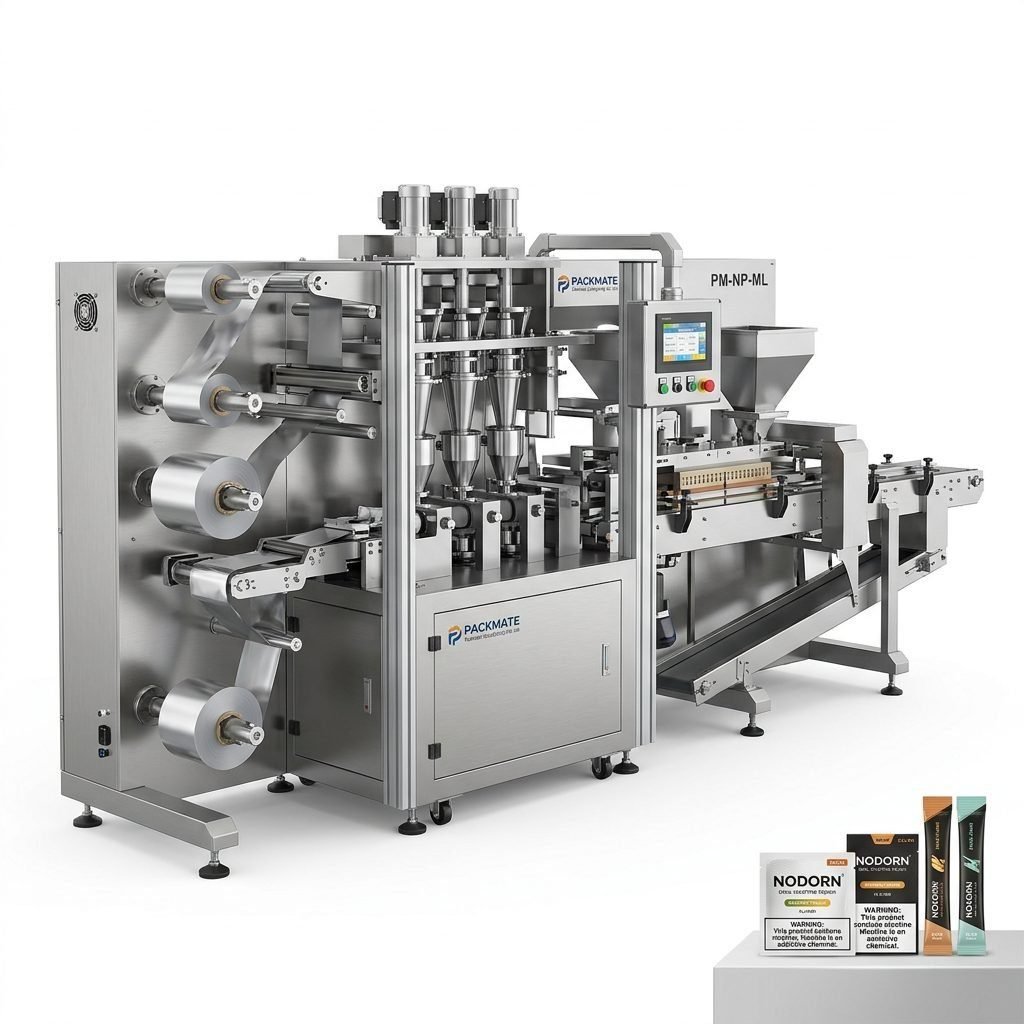
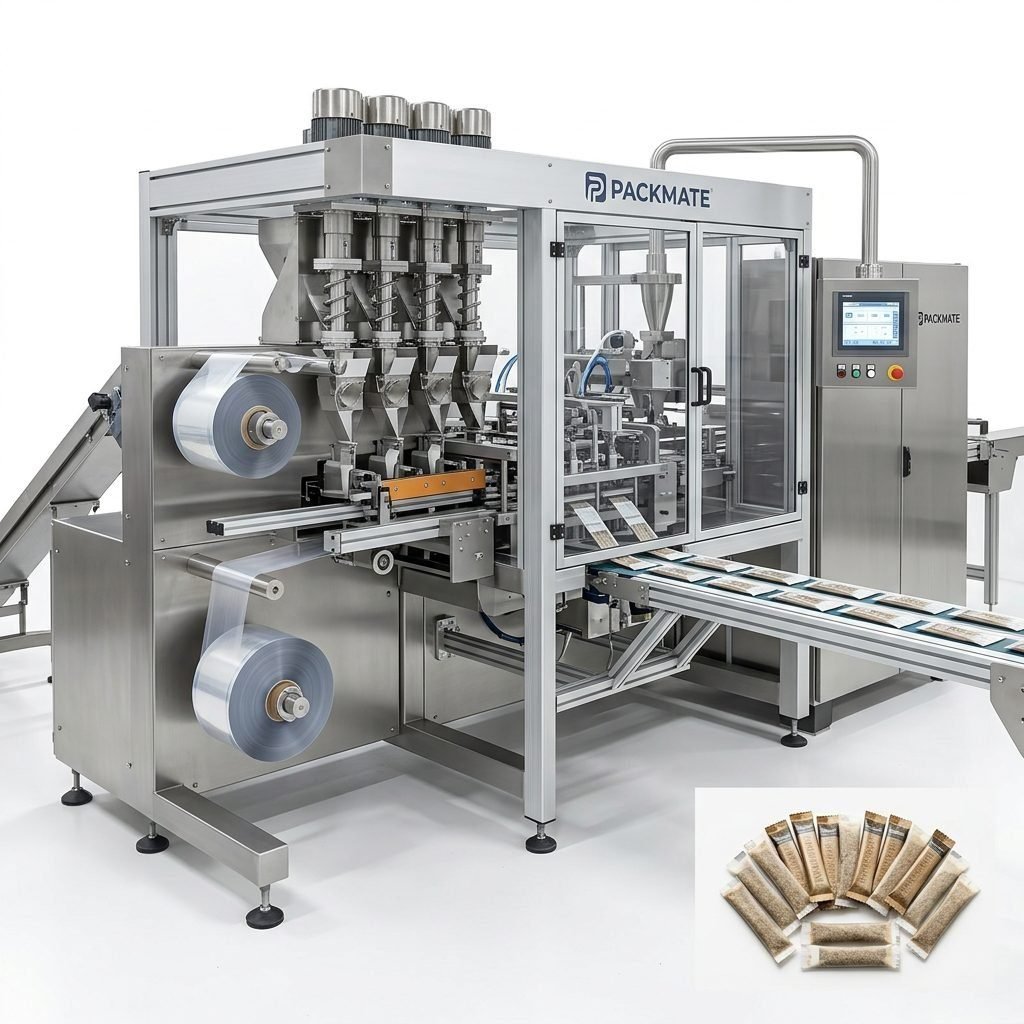
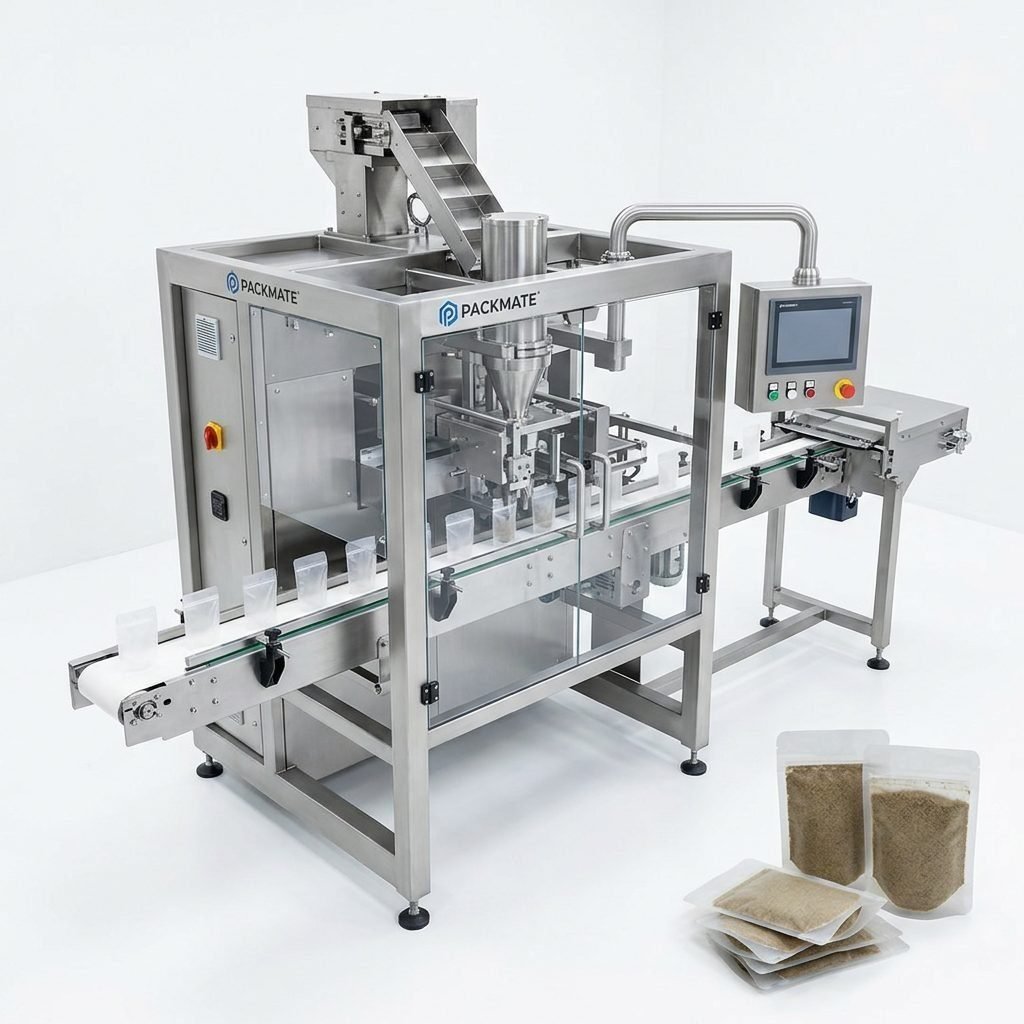
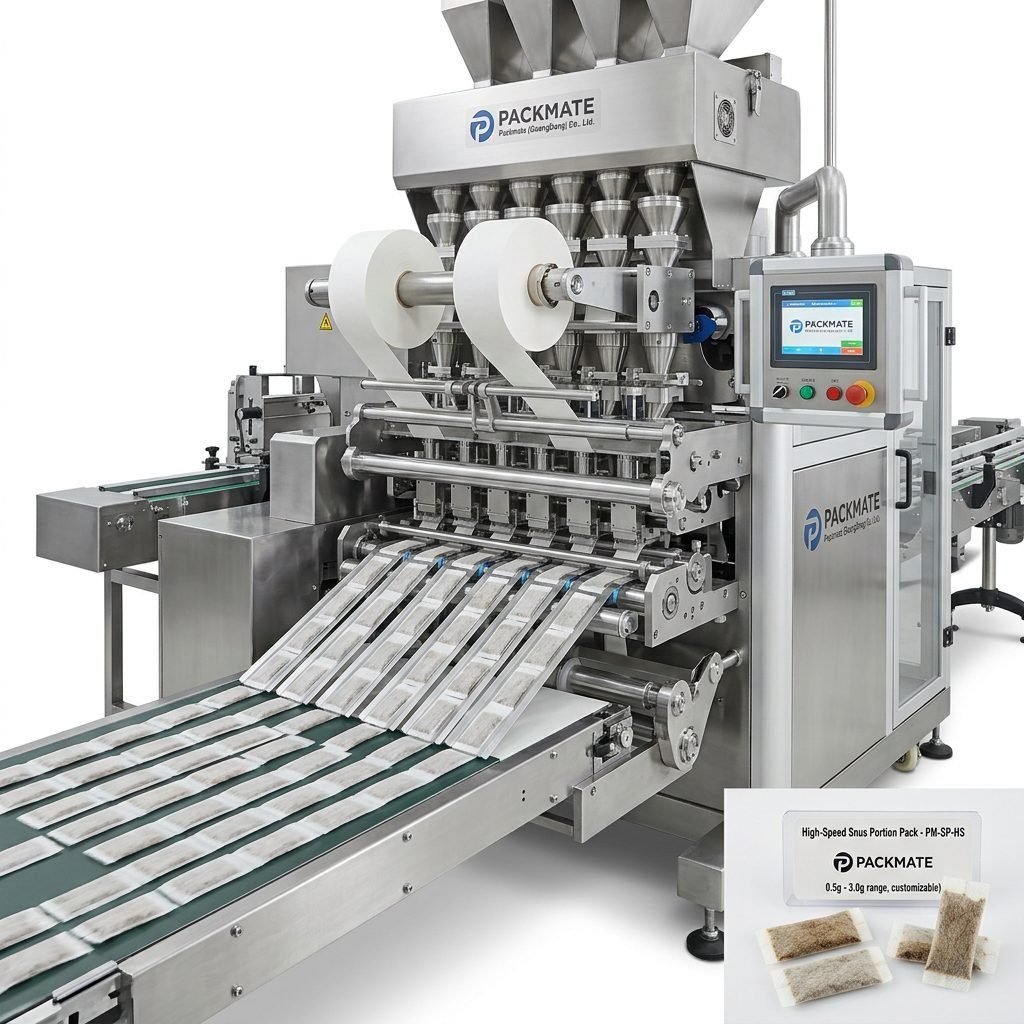
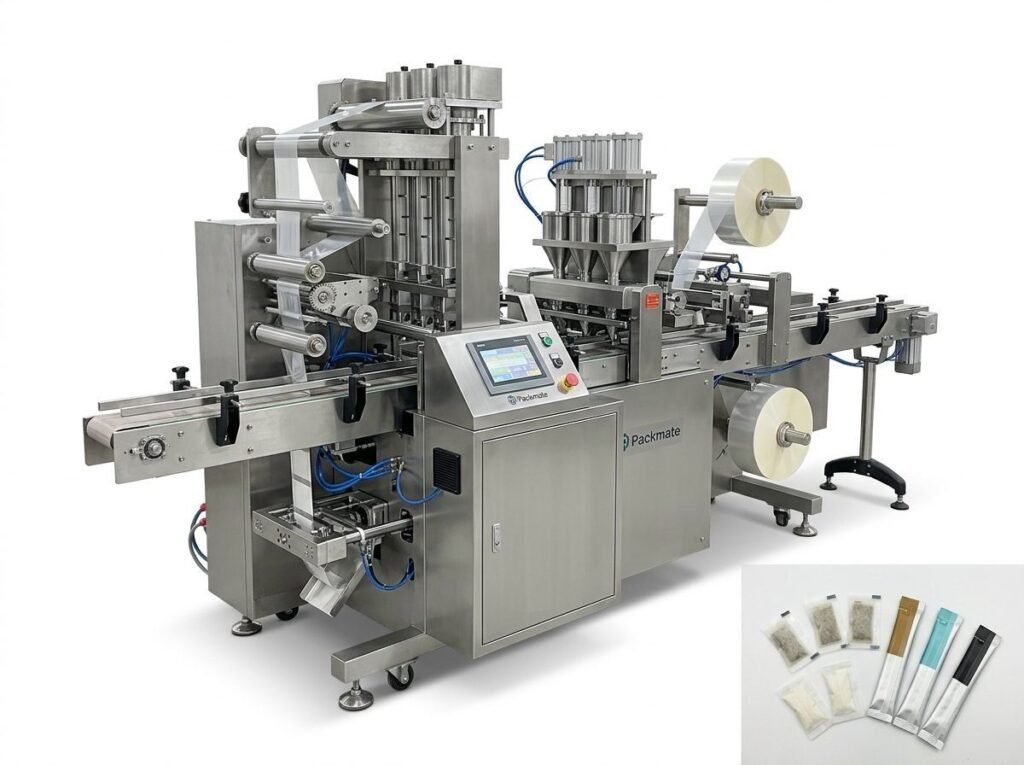
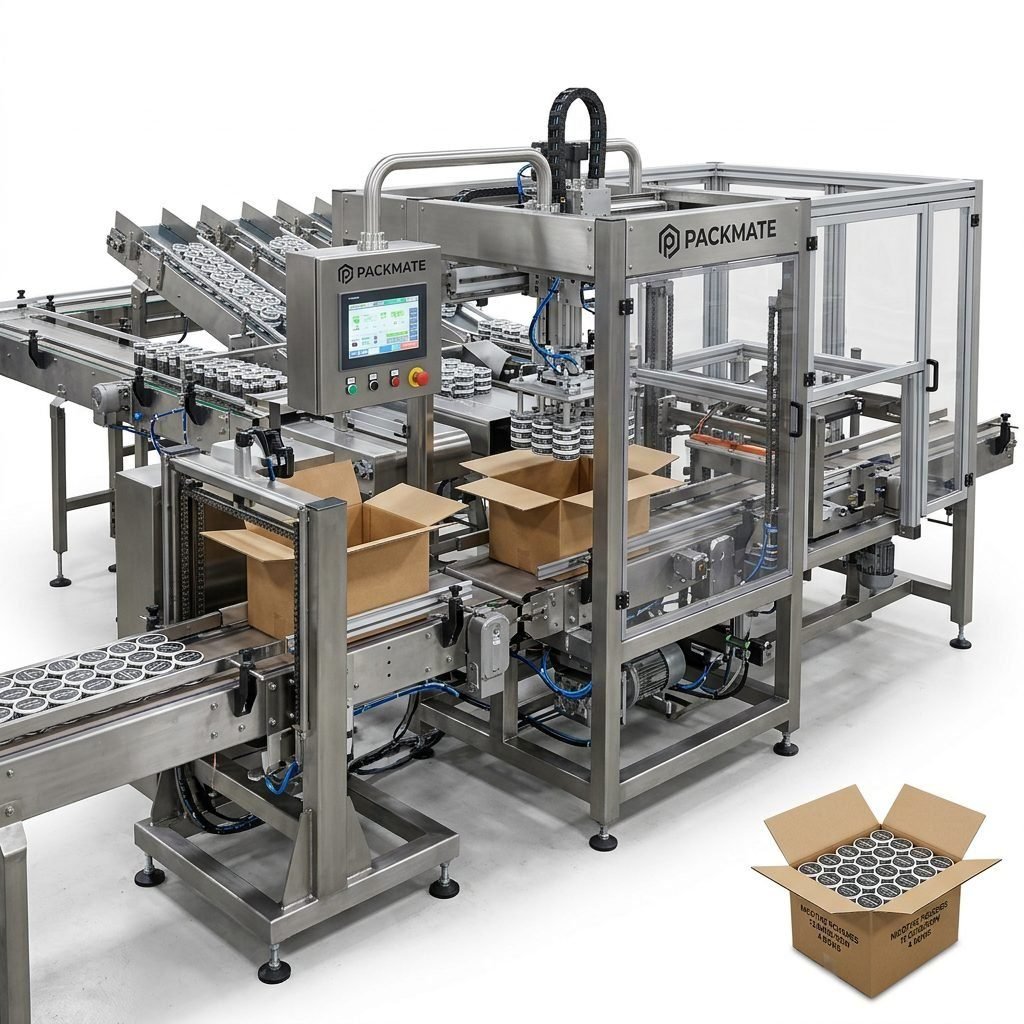
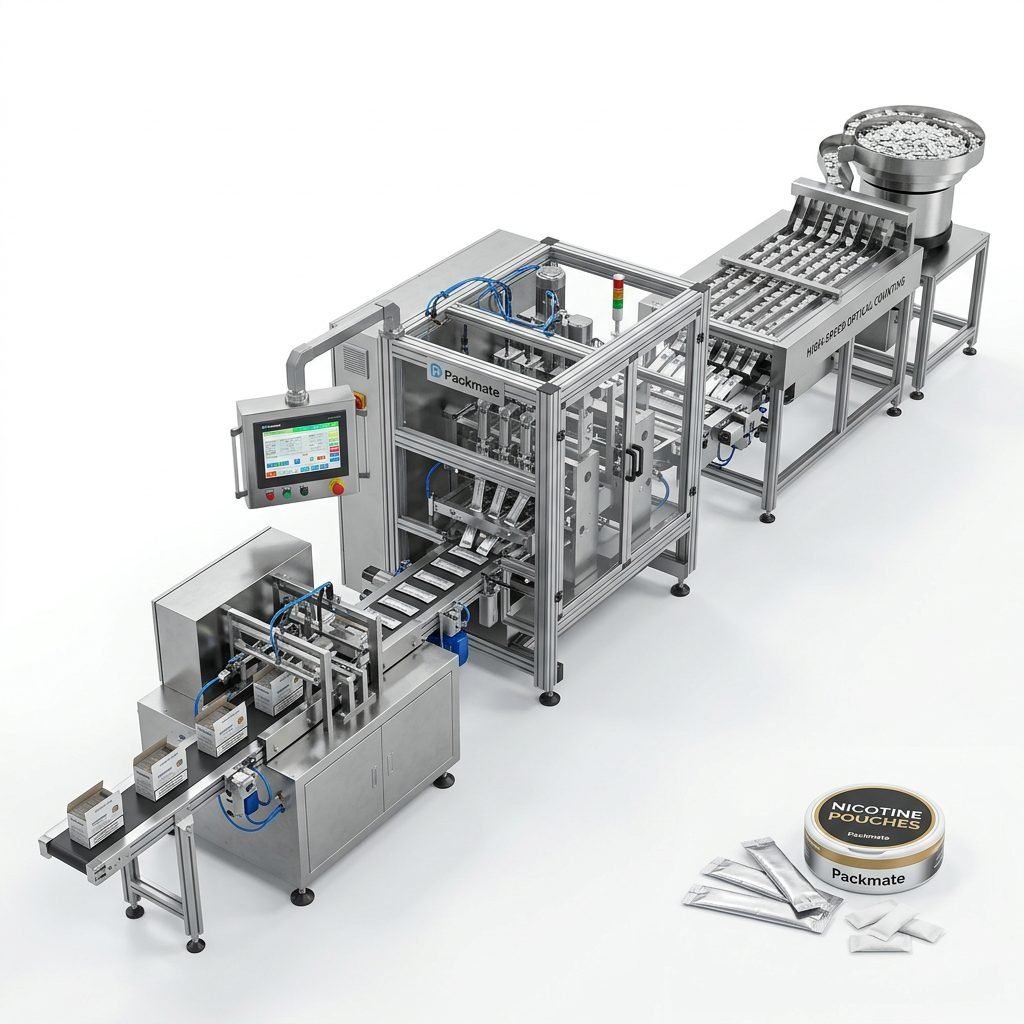
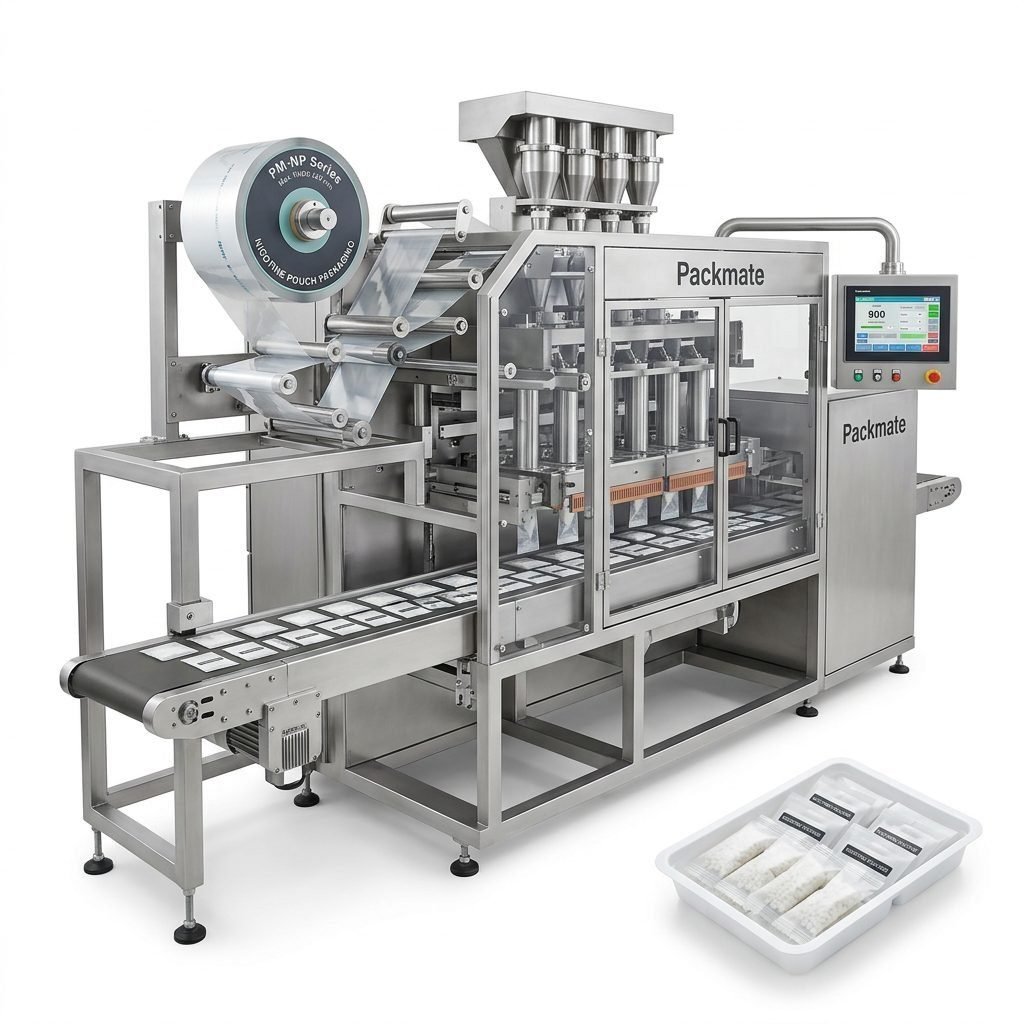
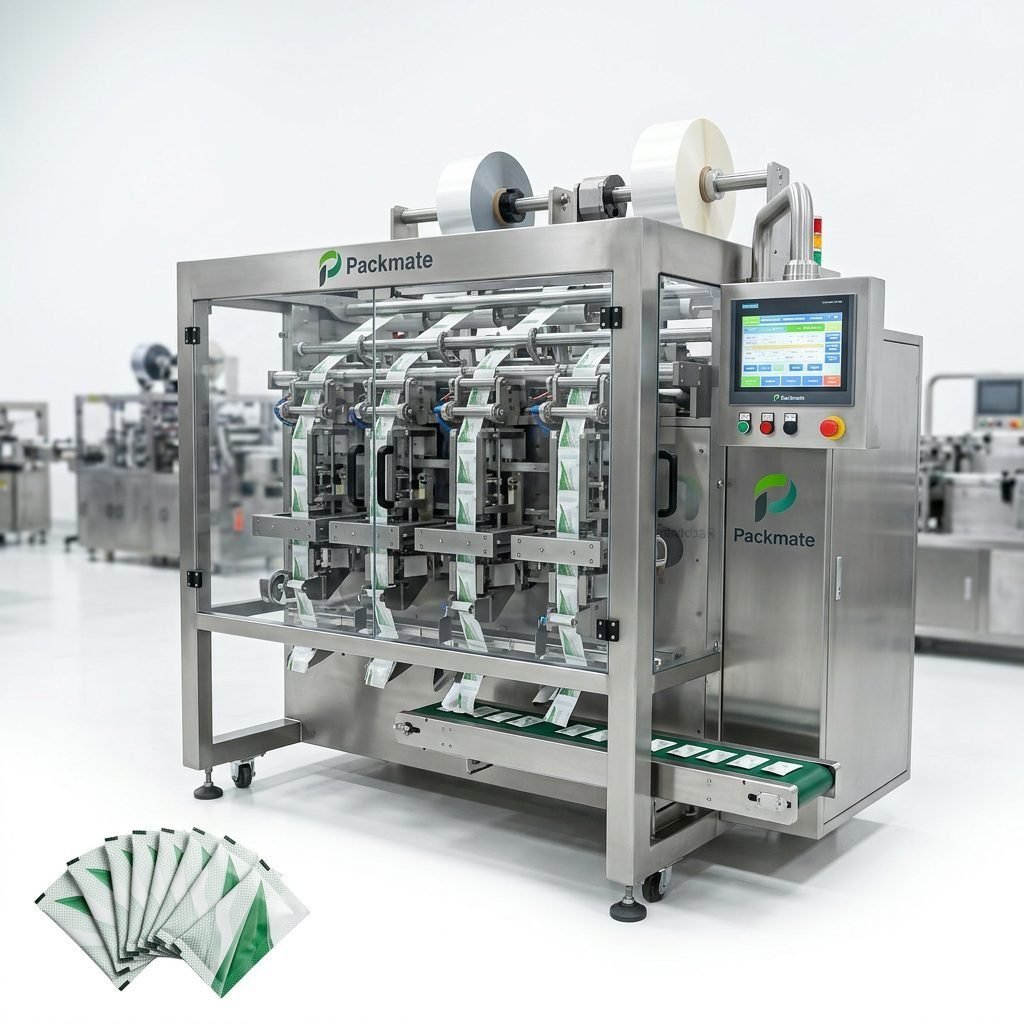
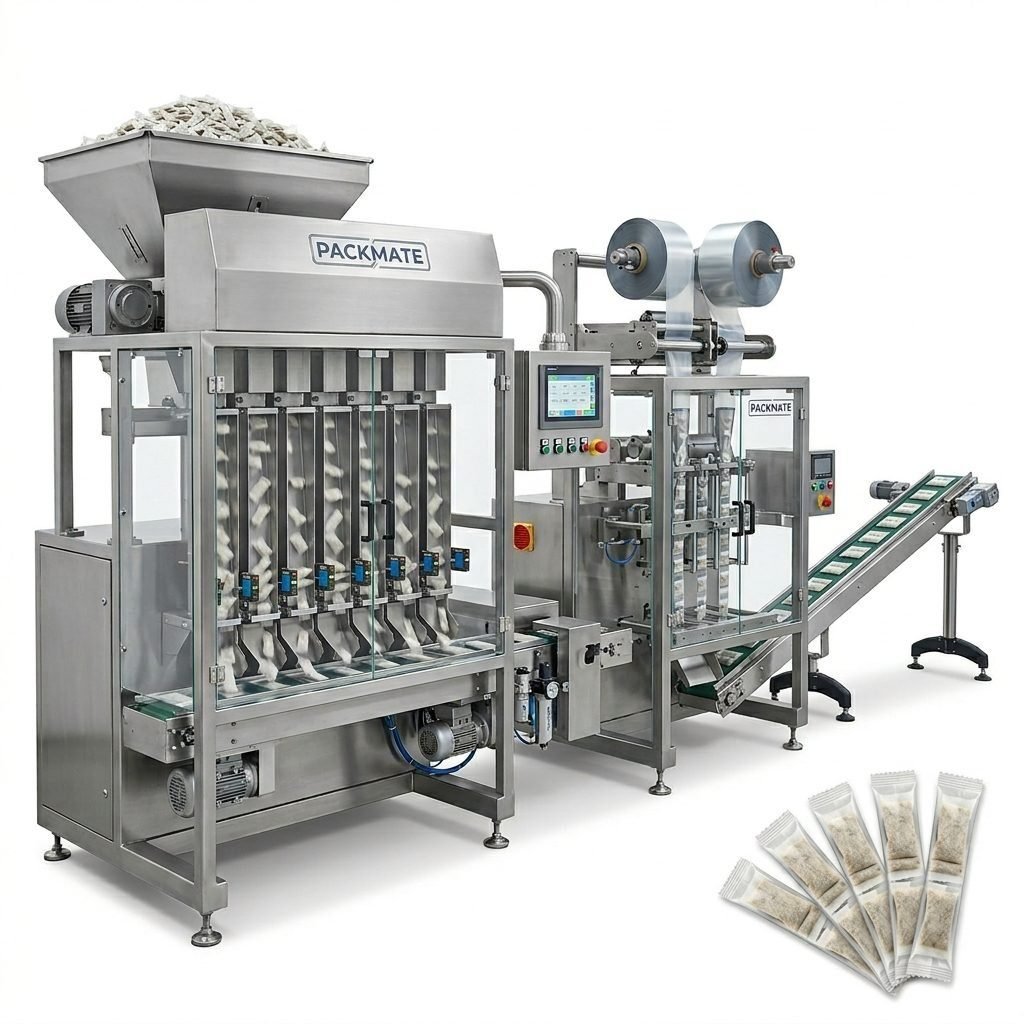
Maintaining a nicotine pouch (snus) packing machine is critical to ensuring stable output, product consistency, and long-term return on investment. This guide covers practical maintenance routines, common failure modes, and preventive tips tailored to high-speed multi-lane snus packaging equipment used in modern production lines. Whether you operate a single stick-pack unit or a fully automated multi-lane nicotine pouch line, these recommendations will help reduce downtime and improve uptime performance.
🔧 Why Regular Maintenance Matters
Regular maintenance prevents unscheduled stoppages and preserves product quality. For machines handling small-dose nicotine pouches, even tiny variances in dosing, sealing, or pouch formation can lead to significant waste. Consistent maintenance ensures accuracy, reduces scrap, and extends component life. It also helps meet regulatory and hygiene standards across food, pharmaceutical, and chemical-packaging applications.
🛠️ Key Benefits
– Reduced downtime and lower maintenance costs over time
– Improved sealing integrity and dose accuracy
– Extended lifetime for belts, bearings, and film-handling components
– Better compliance with CE/ISO requirements for production equipment
⚠️ Operator checks at shift start are the first defense against defects — confirm film alignment, dosing weight, and safety interlocks before running production.
Daily Maintenance Checklist
A short daily routine keeps machine performance predictable. Aim for a 10–20 minute check at the start and end of each shift.
Start-of-shift
– Verify emergency stops and safety guards are engaged.
– Inspect film path and unwind tension; ensure no wrinkles or foreign material.
– Check dosing hopper levels and sifters for blocking material.
– Run a short dry cycle to confirm sealing temperature is stable and sensors respond.
End-of-shift
– Remove product residues from feed areas and dosing chutes.
– Wipe down sealing jaws and cooling bars with approved cleaners.
– Log any alarms or irregularities in the machine history log.
✅ Quick tip: Use a standardized checklist posted at the machine to ensure nothing is skipped by shift operators.
Weekly & Monthly Maintenance Tasks
Weekly and monthly inspections require slightly deeper interventions that should be performed by trained technicians.
Weekly
– Inspect belts, pulleys, and guides for wear; replace or realign as needed.
– Check and tighten electrical connectors and pneumatic fittings.
– Clean and inspect photoelectric sensors and encoder disks.
– Test backup and safety circuit functions.
Monthly
– Calibrate weighing systems and dosing augers to ensure dose accuracy.
– Verify servo and stepper motor parameters and backlash; perform tuning if necessary.
– Inspect heating elements and thermocouple readings across all sealing zones.
– Replace lubrication per the manufacturer’s schedule for bearings and chains.
Common Issues and How to Troubleshoot
High-speed nicotine pouch machines exhibit a handful of recurring issues. Below are symptoms, likely causes, and targeted corrective actions.
Symptom: Inconsistent pouch weight
Likely causes: hopper bridging, faulty dispenser, or calibration drift. Action: clear hopper, inspect & clean dispenser parts, recalibrate scales and dosing systems. If using multi-lane systems, check lane balancing and distribution manifolds.
Symptom: Poor seal or film delamination
Likely causes: wrong temperature profiles, worn sealing jaws, contamination on film. Action: clean sealing surfaces, replace worn jaw inserts, adjust sealing time/temperature curves. Use sample testing to verify hermetic seals for nicotine pouch shelf life.
Symptom: Film wrinkles or alignment drift
Likely causes: incorrect unwind tension, worn guide rollers, or misaligned dancer arm. Action: balance unwind tension, inspect roller bearings, replace or realign guides. Confirm tension values against machine settings.
🔎 Diagnostic approach: Start from the last known good point (feed, dose, form, seal, cut) and isolate the lane or subsystem that shows deviation.
Preventive Tips to Avoid Unplanned Downtime
Preventive maintenance is more economical than reactive fixes. Below are proven practices for nicotine pouch packaging lines.
Spare parts strategy
Keep critical spares on hand: sealing jaw inserts, PTFE covers, sensor modules, belts, and common electronics (power supplies, I/O modules). For tailored solutions and spare kits, consult your machine supplier or explore the Snus & Nicotine Packaging Machines product resources.
Cleaning & hygiene
Use approved, non-corrosive cleaners and avoid water ingress into bearings and electrical cabinets. Regularly clean dust, powder residues, and adhesive buildup from film areas to prevent sealing defects.
Lubrication and alignment
Follow manufacturer lubrication charts. Over-lubrication attracts dust; under-lubrication increases wear. Ensure chain tools and timing belts are tensioned per specifications and that servo encoders are zeroed after major interventions.
Calibration & Validation
For nicotine pouch production, dosing accuracy and seal integrity should be periodically validated. Keep calibration records and validate after component replacement or software updates.
Best practices
– Perform scale calibrations with certified weights and document results.
– Use protocol-driven checks (IQ/OQ/PQ) when implementing new pack styles or materials.
– Re-validate following any change to film suppliers or film thickness.
📋 Record keeping: Maintain a simple digital log for maintenance actions, spare part swaps, and alarm histories to spot recurring problems early.
Safety & Training
Machine safety is paramount. Ensure every operator and maintenance technician is trained on lockout-tagout, emergency stop procedures, and safe handling of nicotine products and machine chemicals.
Training checklist
– Basic machine operation and changeover procedures
– Daily cleaning and inspection items
– Alarm interpretation and first-response troubleshooting
– How to escalate issues to service teams or suppliers (for example, see Service for support options)
When to Contact OEM Support
Some issues require OEM-level diagnostics or replacement electronics. Contact your supplier when you encounter:
- Unresolved servo errors or encoder faults after basic resets
- Persistent product quality deviations after calibration
- Power supply or PCB failures
- Machine alarms that halt multiple lanes and cannot be cleared
For OEM resources, spare parts, and full production solutions, refer to the company profile and machine families such as Sachet & Stick Pack Machines and Filling & Packaging Lines.
Optimizing Lifecycle Costs
Lifecycle cost optimization combines preventive maintenance, spare-part management, and operator competency. Investing in training and a small inventory of critical spares frequently pays back by preventing long downtimes on multi-lane nicotine pouch lines.
🌍 For global OEM support, certifications and exhibition presence (see Our Exhibition and Certificate) can be indicators of supplier capability and after-sales reach.
Final Checklist Before Production Ramp-Up
Before increasing speed or launching a new SKU, run these final checks:
Pre-flight validation
– Confirm all safety interlocks, sensors, and guarding are operational.
– Run a full-rate trial for at least one production hour to verify stability.
– Record sample pouches for weight, seal strength, and appearance.
– Ensure sufficient spares and lubricant are in stock for the planned run.
Conclusion
Well-structured maintenance routines combined with proper training, documentation, and a pragmatic spare-parts policy dramatically reduce operational risk for nicotine pouch packing machines. By following daily, weekly, and monthly tasks, validating critical parameters, and engaging OEM resources when needed, producers can maintain high throughput, consistent product quality, and safe operation across their packaging lines.
Frequently Asked Questions (FAQs)
Q1: How often should I replace sealing jaw inserts on a high-speed snus machine?
A1: Replace inserts based on visible wear or every 3–6 months under heavy use; always keep spares on hand to avoid production gaps.
Q2: What is the best cleaning agent for film-contact areas?
A2: Use non-abrasive, non-corrosive cleaners approved by your hygiene department; avoid solvents that can damage PTFE or seals.
Q3: Can I perform calibration in-house or do I need OEM service?
A3: Routine calibration (scales, dosing) can be done in-house with certified weights and trained staff; complex servo or electronics issues should be handled by OEM technicians.
Q4: Where can I find replacement parts and service information?
A4: Contact your machine supplier or visit the manufacturer pages such as Contact Us and About Packmate for authorized support and spare-part catalogs.