Choosing the right nicotine packaging machinery for a small market like Kiribati requires more than just picking the most advanced machine on the market. You must balance regulatory compliance, climate resilience, shipping and import logistics, local power constraints, production volume, and long-term serviceability. This guide walks you through practical steps and critical questions to ask so your investment delivers reliable output, consistent product quality, and a clear pathway to scale. Whether you plan to package nicotine pouches, snus, or related formats, understanding these factors up front will save time and money.
Understand Local Regulations and Market Demand 🔍
Before evaluating any machinery, research Kiribati’s import rules, labeling requirements, and age-restriction laws for nicotine products. Regulations can affect package sizes, warning label placement, and allowable product claims. If your product will be sold regionally, consider neighboring markets’ rules as well to avoid rework.
Estimate demand carefully: will you run a low-volume artisan line or a medium-scale commercial line? Production volume dictates the machine type — single-lane stick/sachet machines for small runs, multi-lane systems for higher throughput. Knowing the expected monthly units is essential when comparing models and ROI.
Choose the Right Machine Type: Formats and Capacity ⚙️
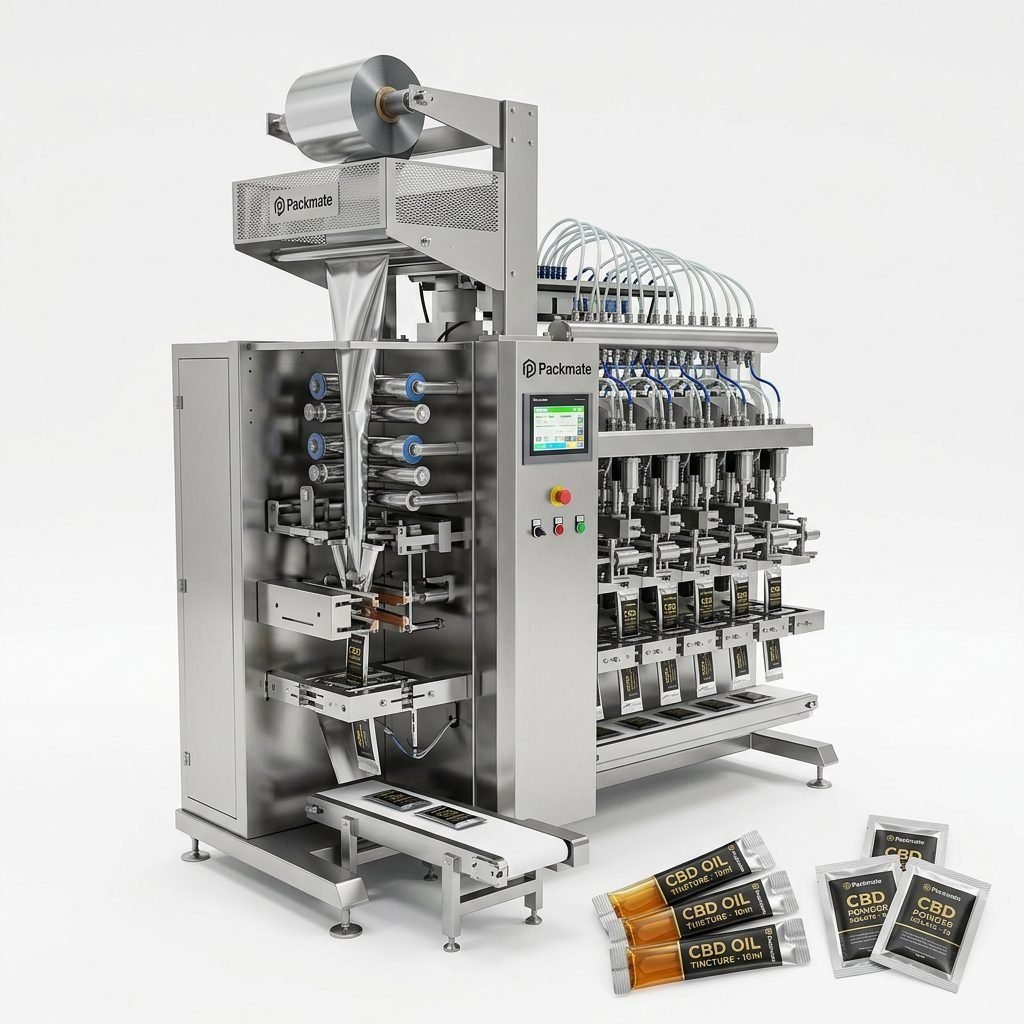
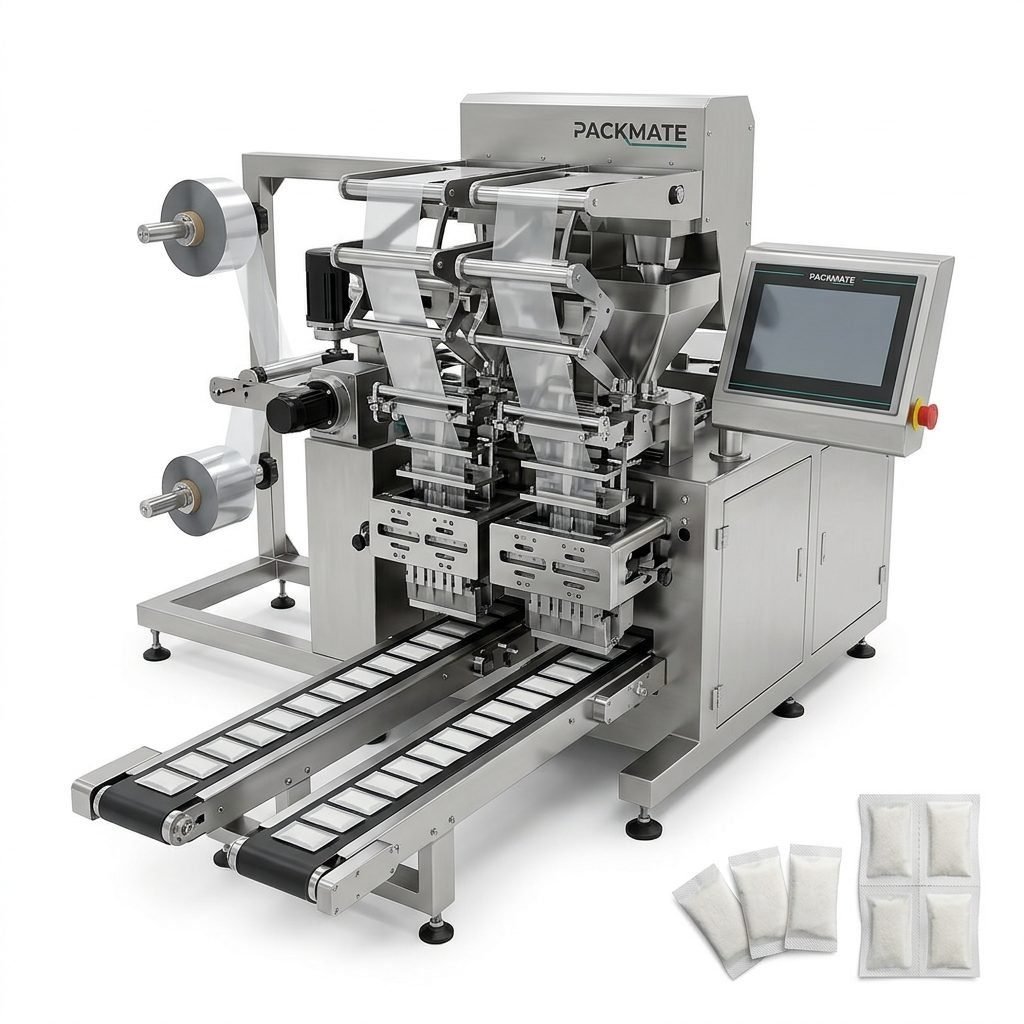
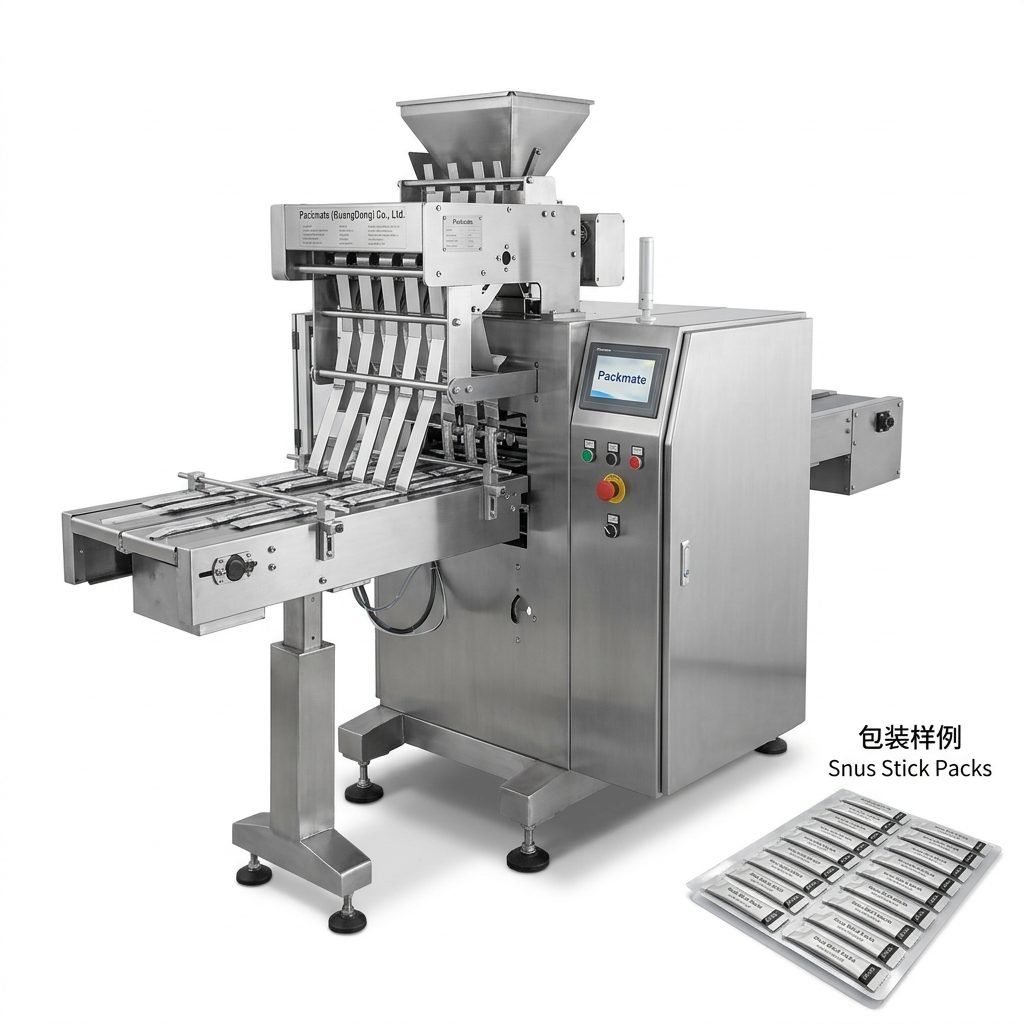
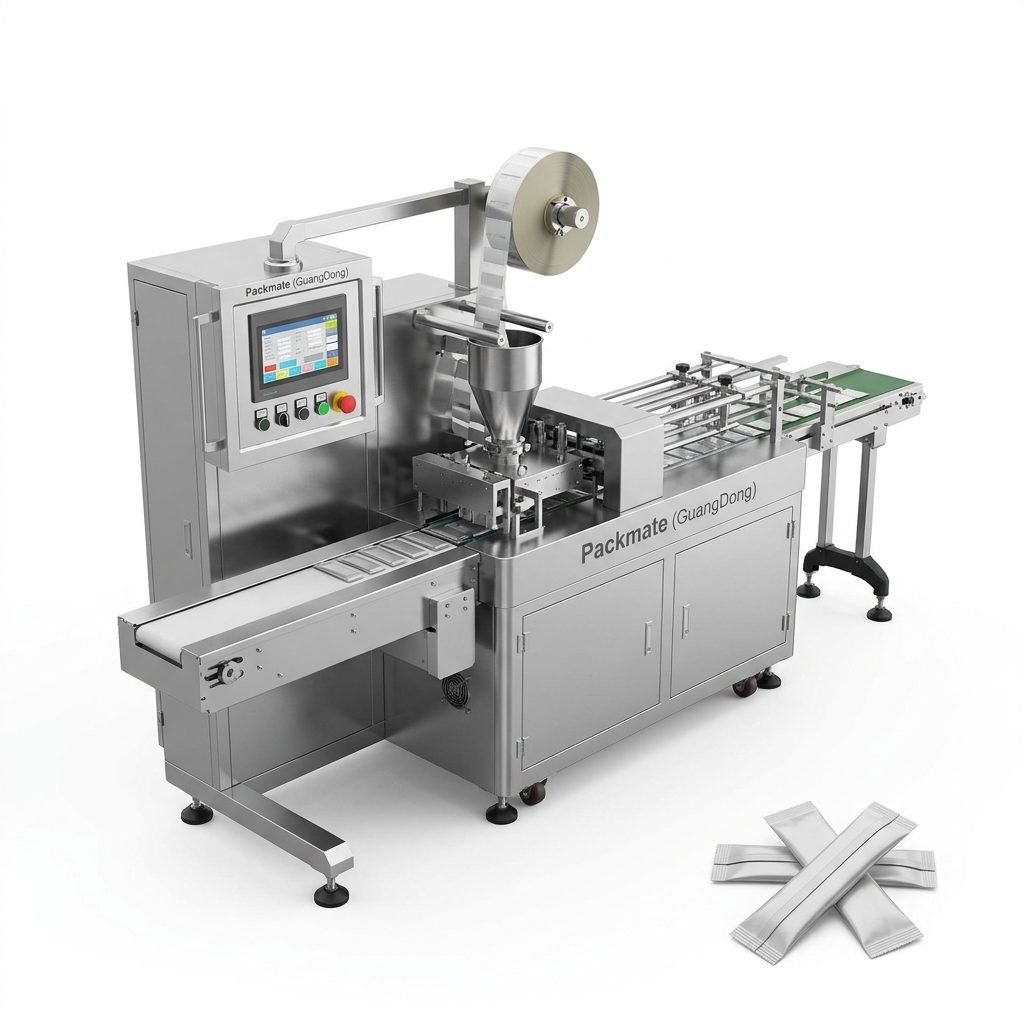
Nicotine pouch and snus packaging commonly use several formats: stick packs, flat sachets, and multi-lane pouch systems. Each format has different mechanical complexity and speed capabilities.
– Stick/sachet machines: Ideal for single-dosage pouches and small-scale lines. Easier to operate and maintain, with lower initial cost.
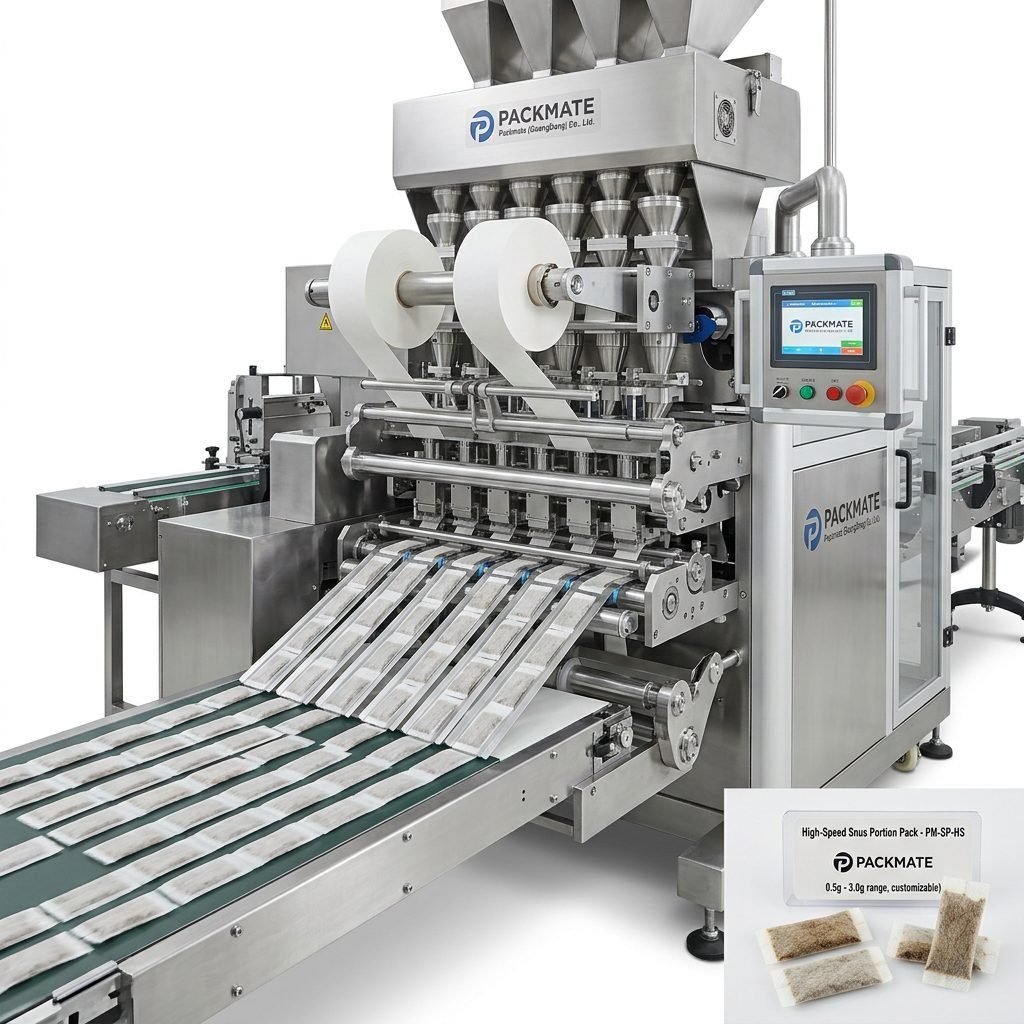
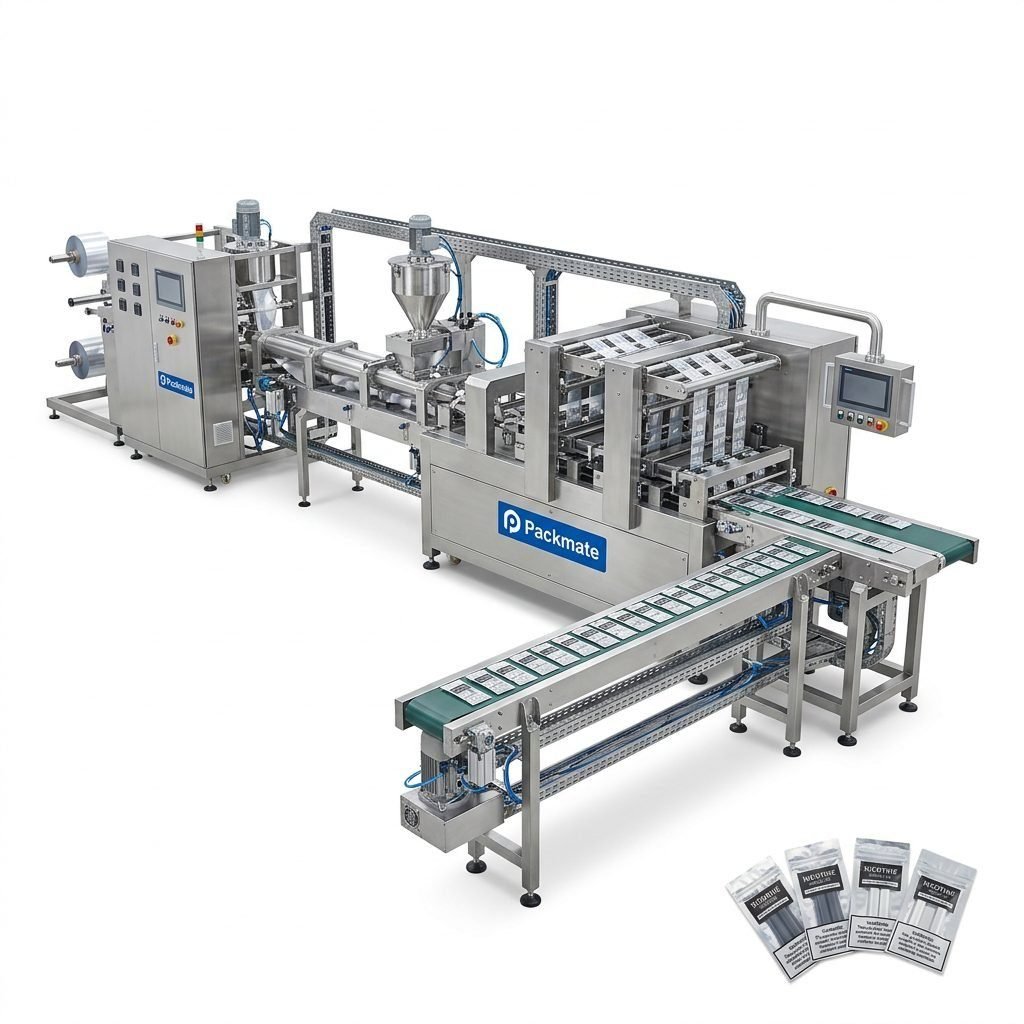
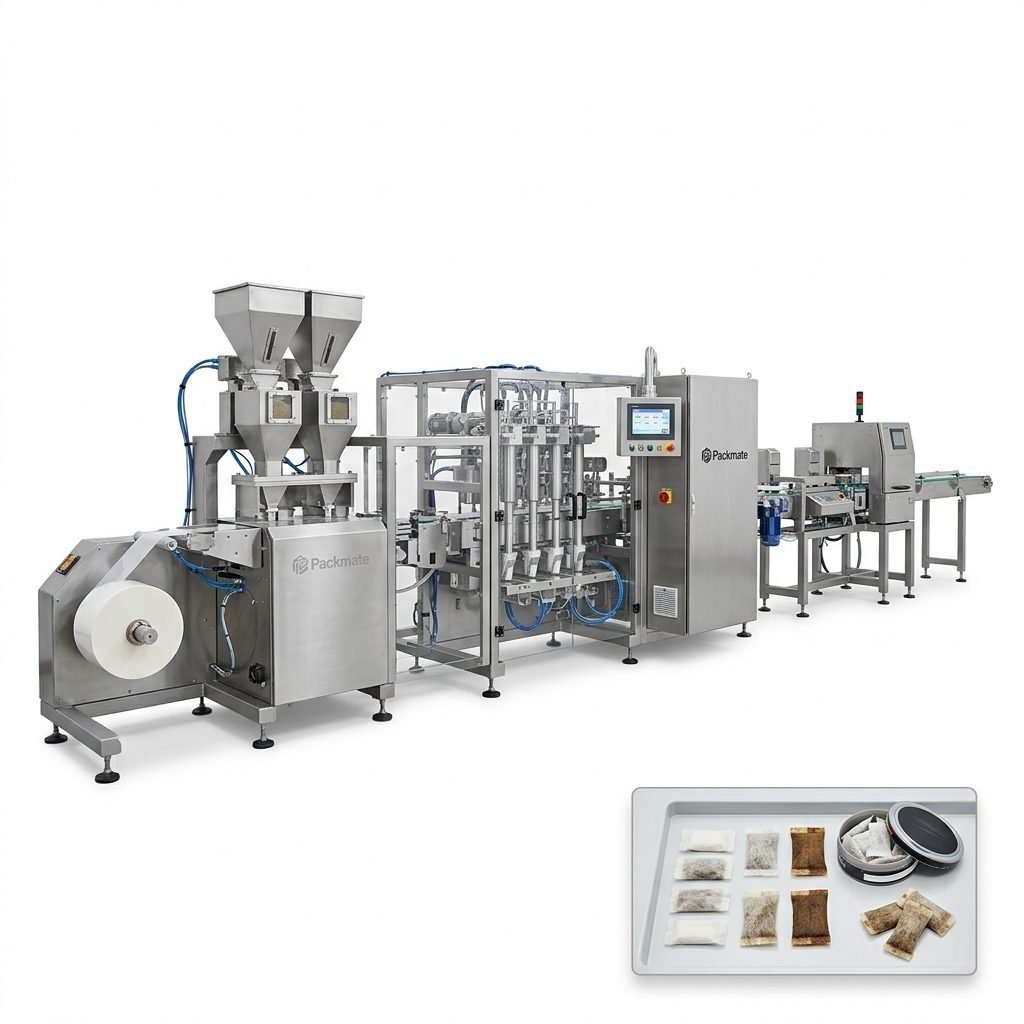
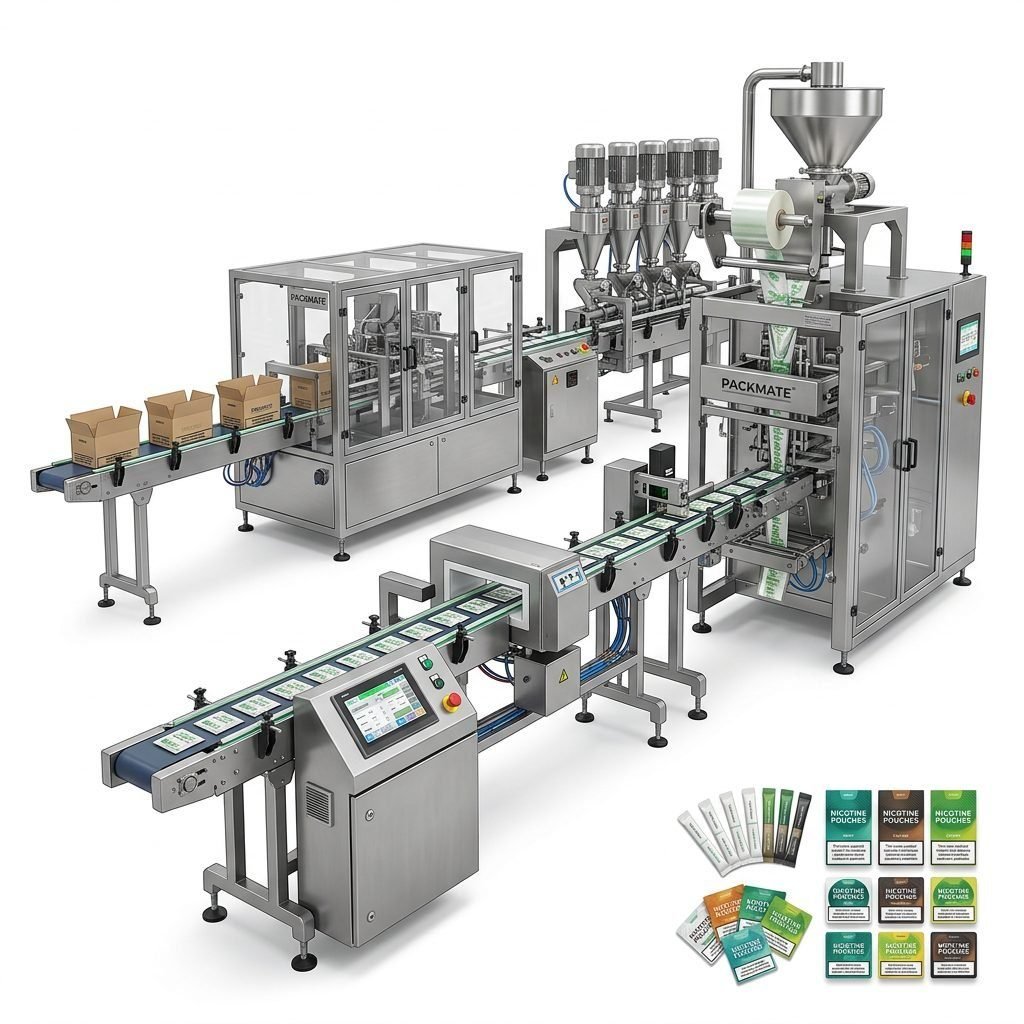
– Multi-lane snus pouch machines: Designed for small-dose, high-volume pouch production. They can run multiple lanes simultaneously to multiply output without significantly increasing floor footprint.
When reviewing vendor specs, pay attention to “pouches per minute” and consider real-world throughput (allowing for changeovers, cleaning, and downtime). A machine rated for peak speed does not necessarily deliver consistent daily output under local conditions.
Machine Features to Prioritize
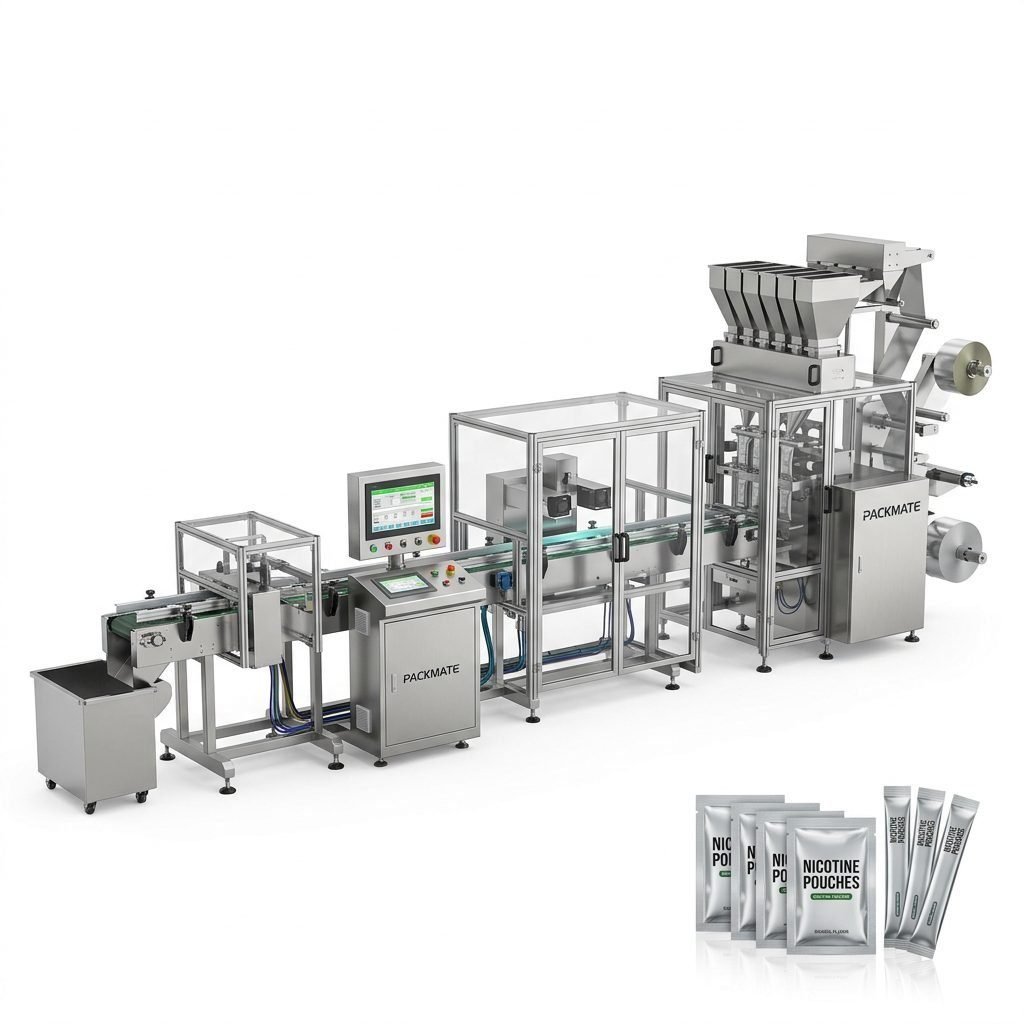
Focus on machines with robust controls, easy changeover, and reliable dosing systems. For nicotine pouches, dosing precision is critical — inconsistent fill weights lead to regulatory and customer issues. Look for machines with advanced weighing/infeed options or integrated weighing & packaging systems when accuracy matters.
⚠️ Tip: If you need to switch between formats (stick to sachet, for example), choose modular machines or vendors that offer quick-change kits. This reduces downtime and future-proofs your line.
Consider Climate, Power, and Site Conditions 🌡️
Kiribati’s humid, salt-air coastal environment can accelerate corrosion and affect electronic components. Select equipment with corrosion-resistant materials or protective coatings, and insist on sealed electrical cabinets and IP-rated components when possible.
Evaluate your available electrical supply: many small islands have limited power infrastructure. Machines from reputable manufacturers allow configuration for different voltages and phases, but you should plan for stable power (voltage regulators, UPS for PLCs, and surge protection). Discuss local site adaptation with the supplier.
Shipping, Installation, and Local Handling
Shipping machines to Kiribati requires planning: container sizes, port handling, and customs clearance. Ask suppliers for complete packing dimensions, weight, and recommended handling procedures. Choose a supplier experienced with international shipping or one that provides pre-shipment inspections and crate specifications.
📦 Logistics Checklist: Packing list, spare parts list, operator manual, electrical wiring diagram, and a suggested installation plan. These documents will save hours during on-site setup.
Assess Supplier Reliability and After-Sales Support ✅
An excellent machine can be rendered useless without good support. Prioritize manufacturers who offer clear warranties, remote diagnostics, parts availability, and training. Long-term relationships matter more than short-term savings.
A supplier with proven global deployments and multiple machine models indicates maturity and service experience. For example, Packmate Snus Machine offers a range of machines and turnkey solutions backed by 30+ years of engineering experience, advanced CNC manufacturing, and international certifications such as CE and ISO. Refer to the company profile and case studies when evaluating technical depth and field reliability.
Linking to manufacturer resources helps you compare options: explore product families like Snus & Nicotine Packaging Machines, Bag & Pouch Packaging Machines, and Sachet & Stick Pack Machines for matched capabilities and reference configurations.
Spare Parts, Consumables, and Maintenance Planning 🛠️
Plan spare parts inventory according to critical wear items: cutting blades, belts, sensors, dosing components, and PLC spare modules. Negotiate lead times with the supplier and keep a minimum stock of fast-moving spares locally to avoid long downtime while waiting for shipments.
Schedule preventive maintenance: lubrication, alignment checks, and electrical inspections. Ask the vendor for recommended maintenance intervals and create a simple checklist for local technicians. If possible, get remote training or arrange periodic field service visits.
🛒 Spare Parts Advice: Ensure the supplier ships a startup kit of wear parts with the machine. This kit bridges the gap until spare orders arrive and keeps your line running smoothly.
Quality, Certification, and Compliance 📈
International standards such as CE and ISO are indicators of manufacturing quality and safety. For export-oriented operations, these certifications simplify market entry. Request certificates and test reports for the machines, and ask whether the manufacturer provides hygiene-compliant designs for food-contact parts if your product requires it.
If you plan to scale or export, consider full line validation and quality control checks at the supplier’s factory. Many experienced manufacturers provide FAT (Factory Acceptance Testing) and videos of test runs — ask for them before shipment.
Total Cost of Ownership (TCO) and Financing Options 💡
Beyond the purchase price, calculate installation costs, freight, duties, customs clearance, spare parts, training, and expected electricity/consumables. A cheaper machine with higher downtime or inefficient energy use can cost far more over its lifetime.
Discuss financing or leasing alternatives with suppliers. Some manufacturers offer staged payments tied to delivery milestones or provide turnkey quotes that include installation and commissioning. Transparency on hidden costs helps you budget realistically.
Evaluate ROI Scenarios
Build simple ROI models with conservative uptime assumptions (e.g., 70–80% of rated speed) and factor in local costs for labor, utilities, and materials. This exercise highlights the machines that provide the best combination of performance and long-term value.
Customization and Future-Proofing 🔧
Your product recipes and packaging styles may evolve. Choose manufacturers that provide modular options and easy software updates. Discuss upgrade paths: can a single-lane machine be expanded to multi-lane, or can a dosing system be swapped without major rebuilds?
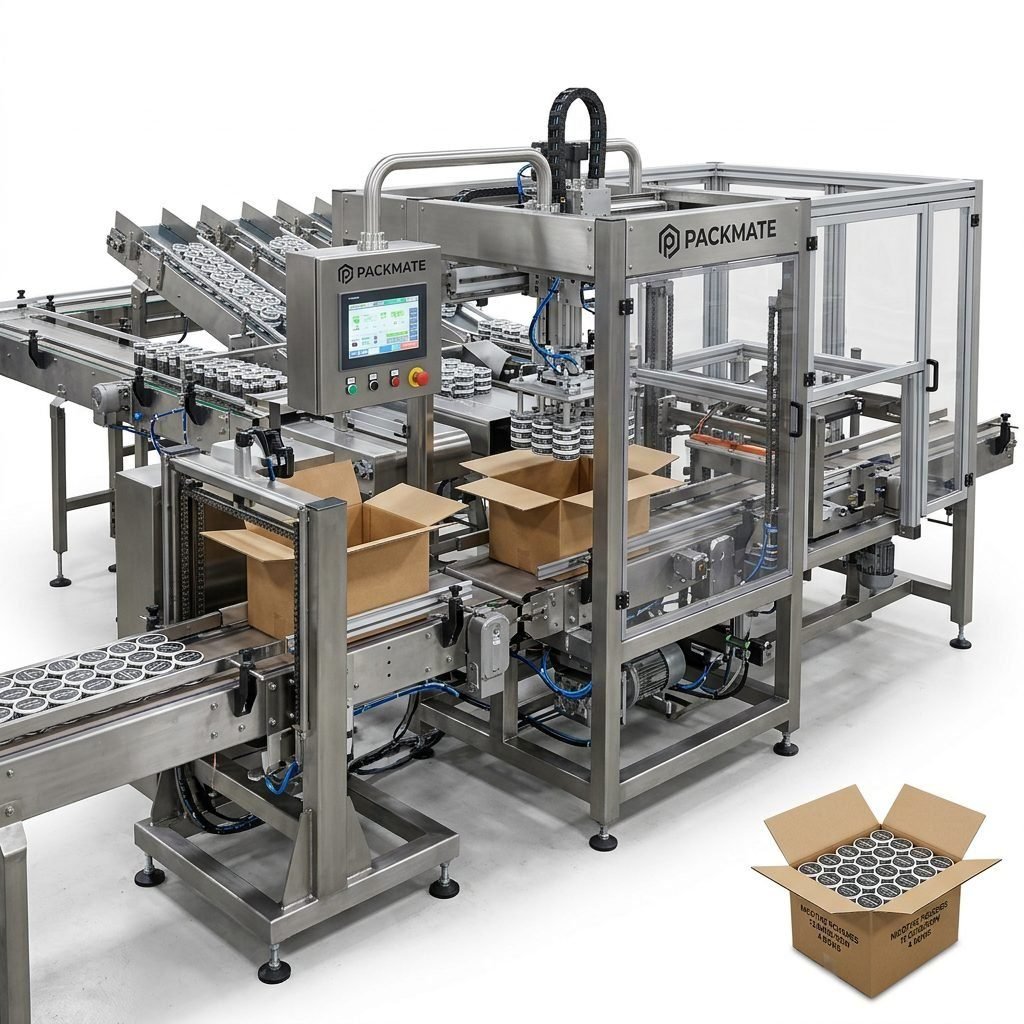
Ask about spare tooling, secondary equipment, and compatibility with auxiliary machines like cartoners, case packers, and metal detectors. Integrated solutions reduce integration headaches and ensure synchronized throughput.
Factory Visit, References, and Live Demos 🎯
If feasible, visit the supplier’s factory or attend an exhibition to watch live demonstrations. Vendors often showcase multiple models and run different product types during shows. You can inspect build quality, machine access, and ergonomics firsthand.
Request references in similar climates or island logistics contexts. Speak to operators and maintenance staff from existing customers to understand real-world reliability.
For a balanced evaluation, check the manufacturer’s case studies online to assess deployed systems and customer feedback. See real examples and services in the provider’s Case pages or request specific references for your region.
Installation, Training, and Commissioning 📘
Well-executed installation and operator training are critical. Ask the supplier to include on-site commissioning and hands-on operator training in the contract. Remote training and commissioning via video calls are valuable too, particularly where travel is limited.
Ensure the machine arrives with clear electrical and mechanical diagrams, spare parts list, and a troubleshooting guide. These will empower your team to handle minor issues and reduce dependency on external technicians.
📞 After-Sales Checklist: Warranty terms, remote support hours, lead times for spares, and availability of replacement modules. Get commitments in writing to avoid ambiguity later.
Final Selection and Purchase Steps 📝
1) Compile your requirements: formats, capacity, min/max batch sizes, power, and site constraints. 2) Shortlist vendors with relevant machine families and proven tropical/island service records. 3) Request detailed quotations including freight, installation, training, and spare parts. 4) Insist on FAT or video evidence of your product being run, and clarify warranty and service terms.
When negotiating, prioritize clarity on lead times for both machines and essential spares. A reliable supplier will supply an install package and a realistic timeline for delivery to Kiribati ports. For turnkey options and integrated lines, explore full Filling & Packaging Lines packages if your operation needs upstream dosing and downstream case packing.
Why Choose Established Manufacturers
Manufacturers with decades of experience, advanced manufacturing facilities, and a broad model range offer stability. For instance, a supplier with 20,000㎡ manufacturing capacity, advanced CNC machining, and a history dating back to the 1990s demonstrates scale and repeatable quality. Established vendors are more likely to have developed reliable multi-lane systems specifically for small-dose pouch production, which is especially relevant to nicotine pouch lines.
If you need more information about supplier capabilities, certifications, exhibitions, or services, check the manufacturer’s About Packmate, exhibition history, and certification pages to validate claims and to plan a selection visit.
✅ Quick Selection Summary: Identify required format and capacity, confirm climate-proofing and power compatibility, prioritize dosing and accuracy, verify supplier support and spare parts, and validate through FAT or demo runs before shipment.
Common Pitfalls and How to Avoid Them
– Underestimating the impact of local humidity and salt air on electronics and mechanical parts — specify corrosion protection.
– Overlooking spare parts lead times — keep a starter kit and maintain reorder thresholds.
– Choosing peak-speed specs without validating consistent throughput — request real-world performance data and reference sites.
Next Steps: Getting Quotes and Running Trials
Contact shortlisted suppliers with a clear request for proposal (RFP). Include product specs, expected production volumes, site power details, and environmental conditions. Ask for FAT videos, references, detailed spare parts lists, and warranty/service terms. If possible, run a sample production trial at the supplier’s facility or ask for sample videos showing your exact product format.
For additional resources, vendor catalogs and auxiliary equipment options help create a complete, integrated production line. Look at Auxiliary Packaging Equipment to ensure smooth material flow and packaging downstream.
Frequently Asked Questions (Common Questions)
Q1: How do I know whether to buy a single-lane or multi-lane machine?
A1: Base the decision on your projected monthly output, floor space, and budget. Multi-lane machines are more efficient for high-volume small-dose pouches, while single-lane stick/sachet machines are suitable for lower volumes and simpler operations.
Q2: What spare parts should I stock locally in Kiribati?
A2: Prioritize critical wear parts such as cutting blades, belts, dosing elements, sensors, and a PLC spare module. Ask the supplier for a recommended startup spare kit.
Q3: Are there special considerations for humidity and salt air?
A3: Yes — specify corrosion-resistant materials, sealed electrical cabinets, and IP-rated components. Regular maintenance and protective coatings help prolong machine life in coastal climates.
Q4: How important are certifications like CE and ISO?
A4: Certifications indicate compliance with international manufacturing and safety standards and can simplify market acceptance and export compliance. Verify certificates and request relevant test reports.
Q5: What level of after-sales support should I require?
A5: Require clear warranty terms, remote diagnostic support, lead times for spares, and options for on-site service visits. Ensure the supplier provides training materials and operation manuals in accessible formats.