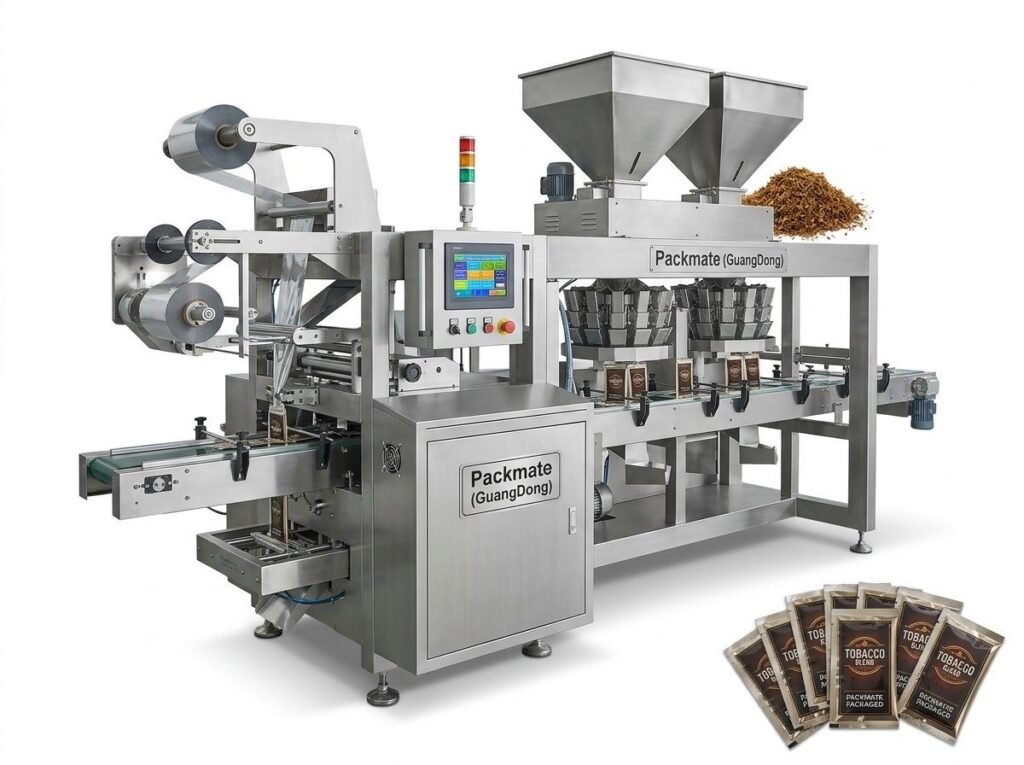
In the rapidly evolving nicotine pouch and snus market, a reliable, high-throughput Snus Pouch Filling Line is critical for manufacturers who need consistent product quality, efficient production, and regulatory compliance. This article explains the complete automatic production solution for nicotine pouch manufacturing, covering machine components, workflow, customization options, quality control, and how to choose the right partner for turnkey packaging lines.
Overview: What a Snus Pouch Filling Line Delivers ⚙️
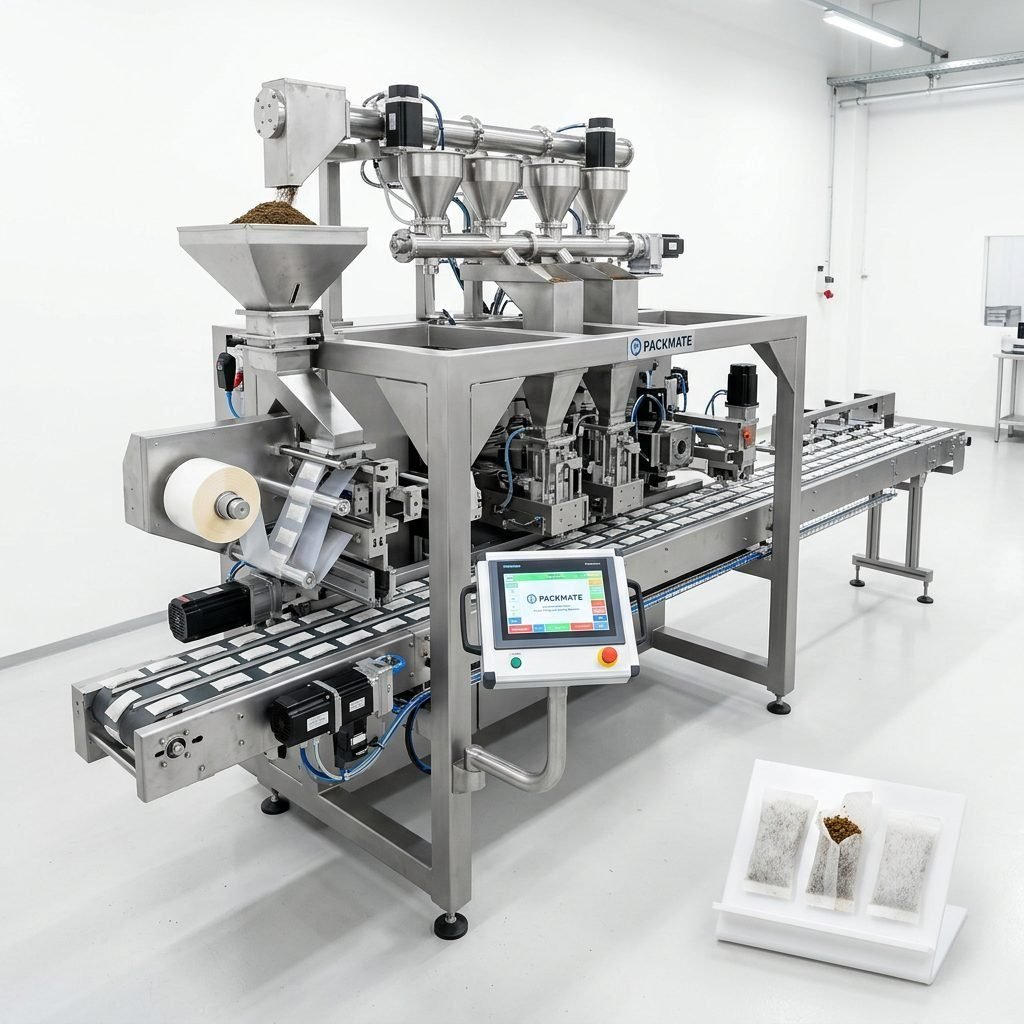
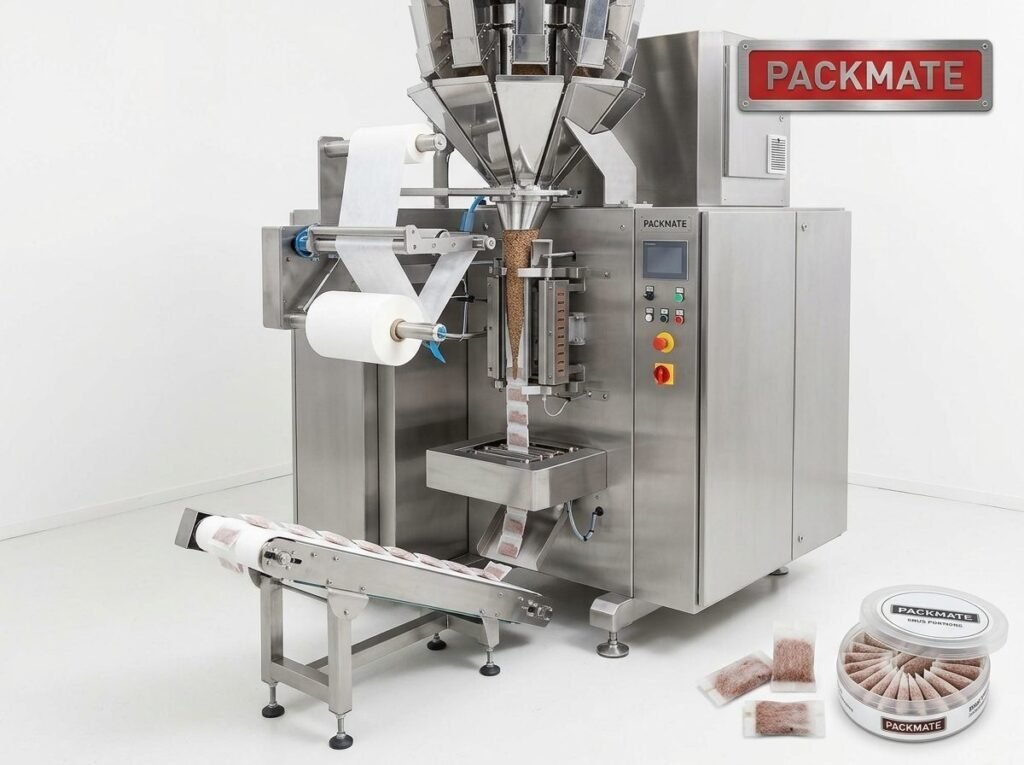
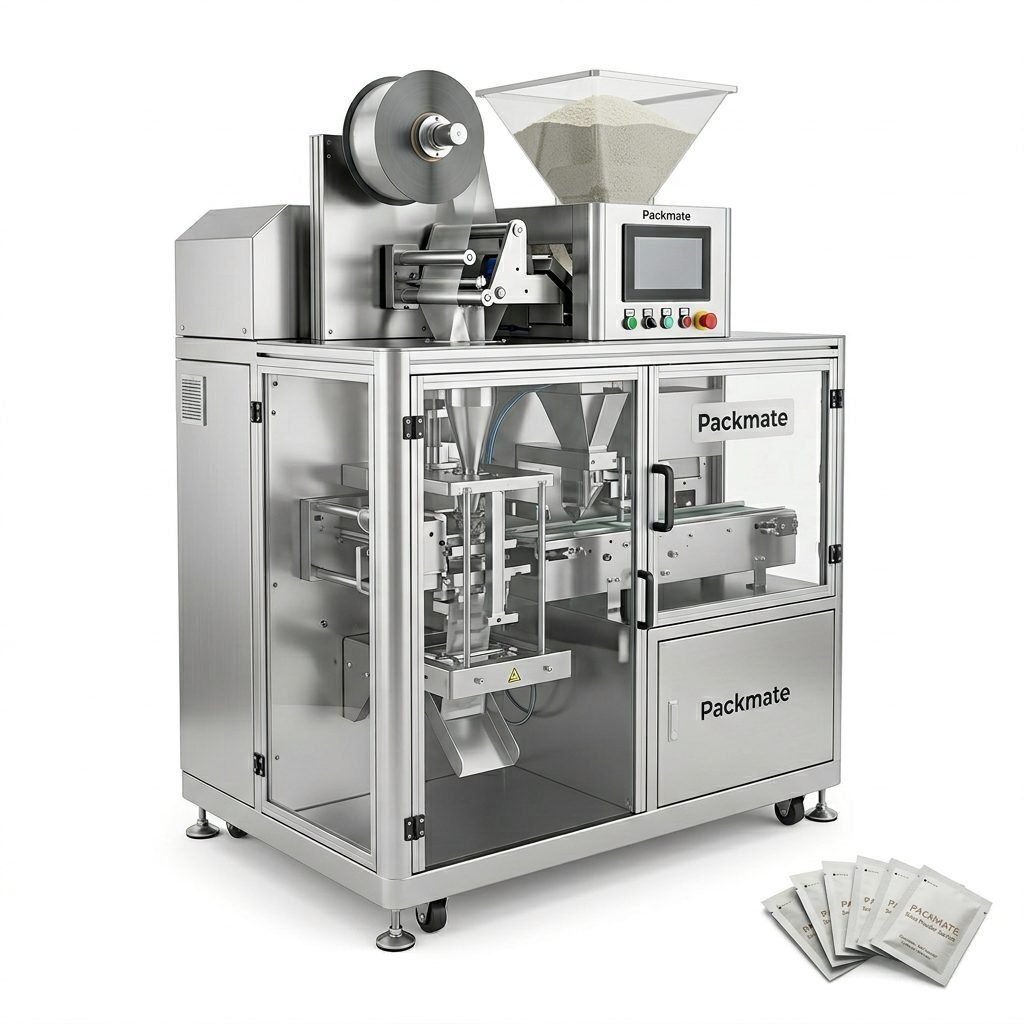
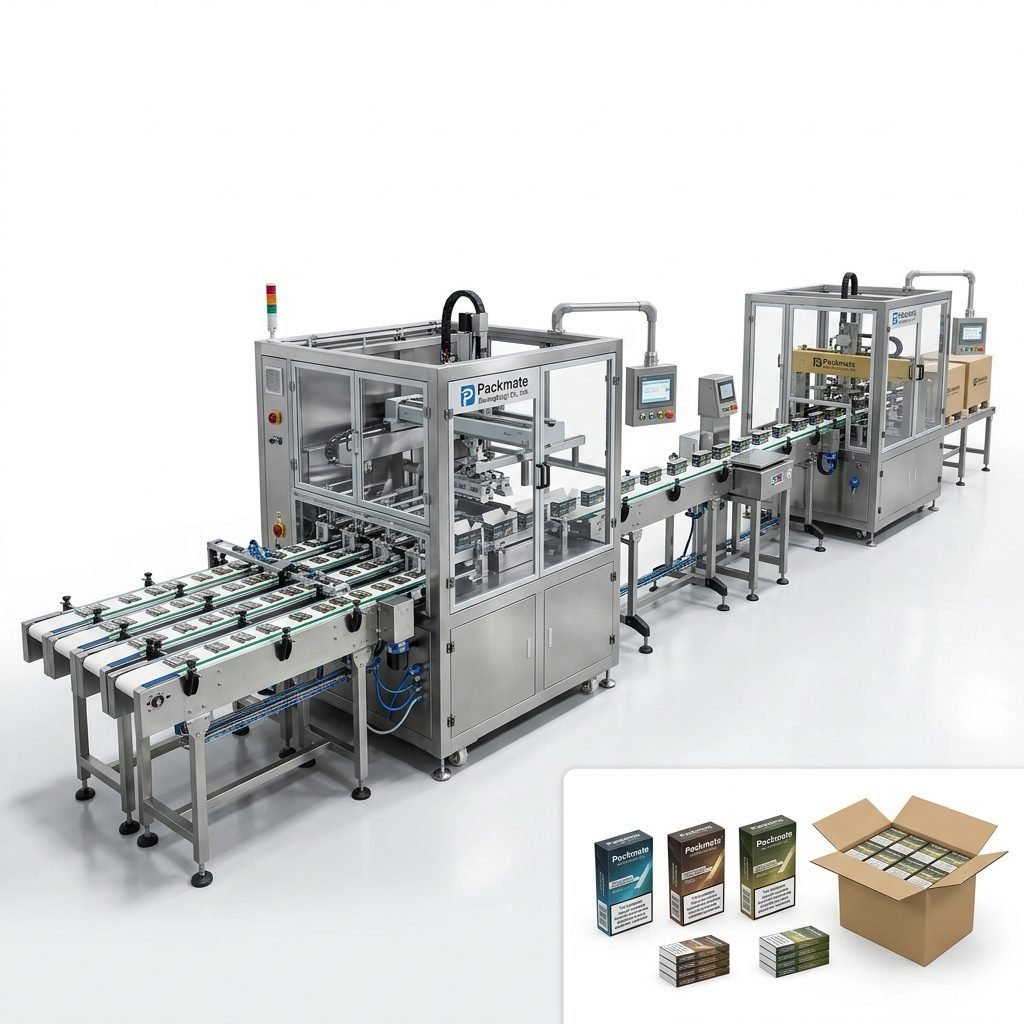
A complete Snus Pouch Filling Line integrates upstream material handling, precise dosing, pouch forming or loading, sealing, ancillary systems, and downstream inspection and packaging. Modern lines aim to deliver high accuracy dosing, multi-lane throughput, and easy sanitary maintenance to meet both productivity and hygiene standards.
Core Modules of a Typical Line
Each automated production solution is composed of interlinked modules that together ensure stable and repeatable pouch production:
⚙️ Feeding & Bowl Systems — gentle and continuous feeding for blends and powders to ensure homogenous fill material flow.
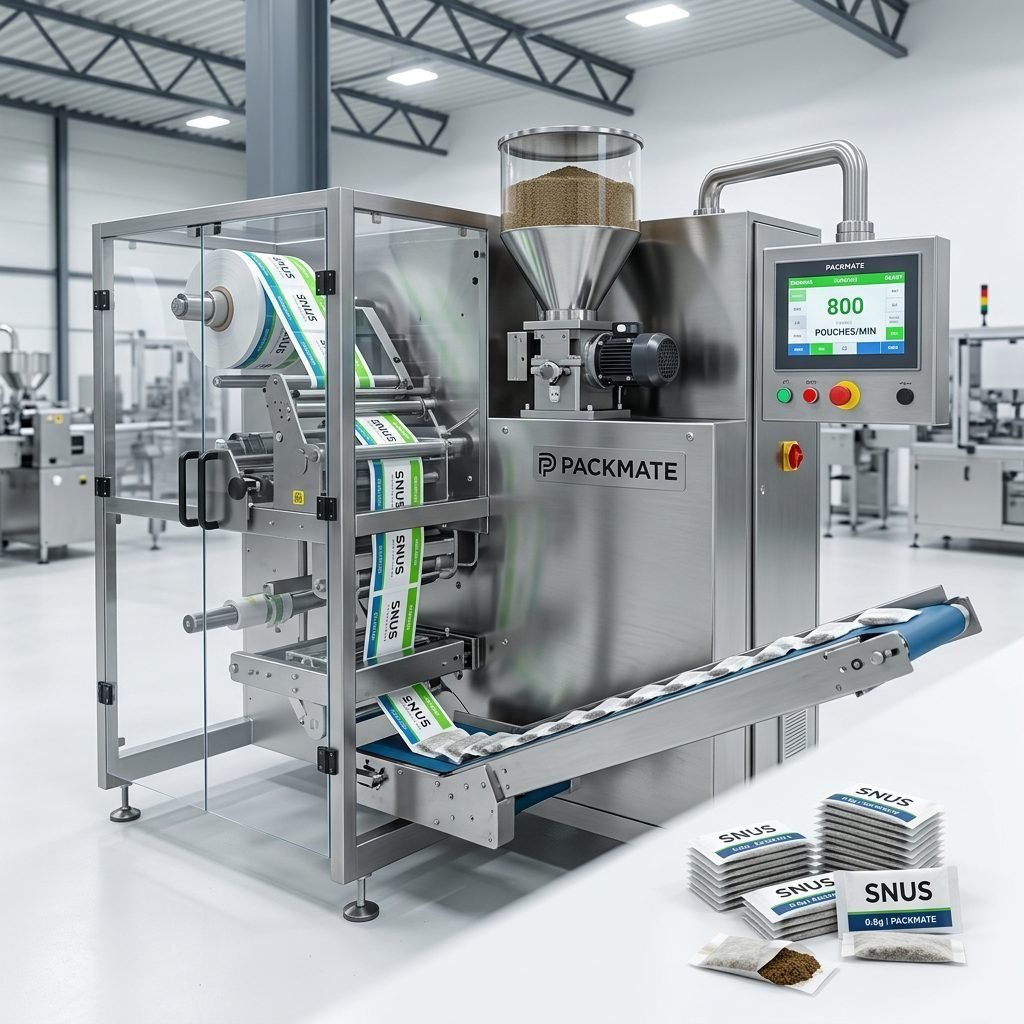
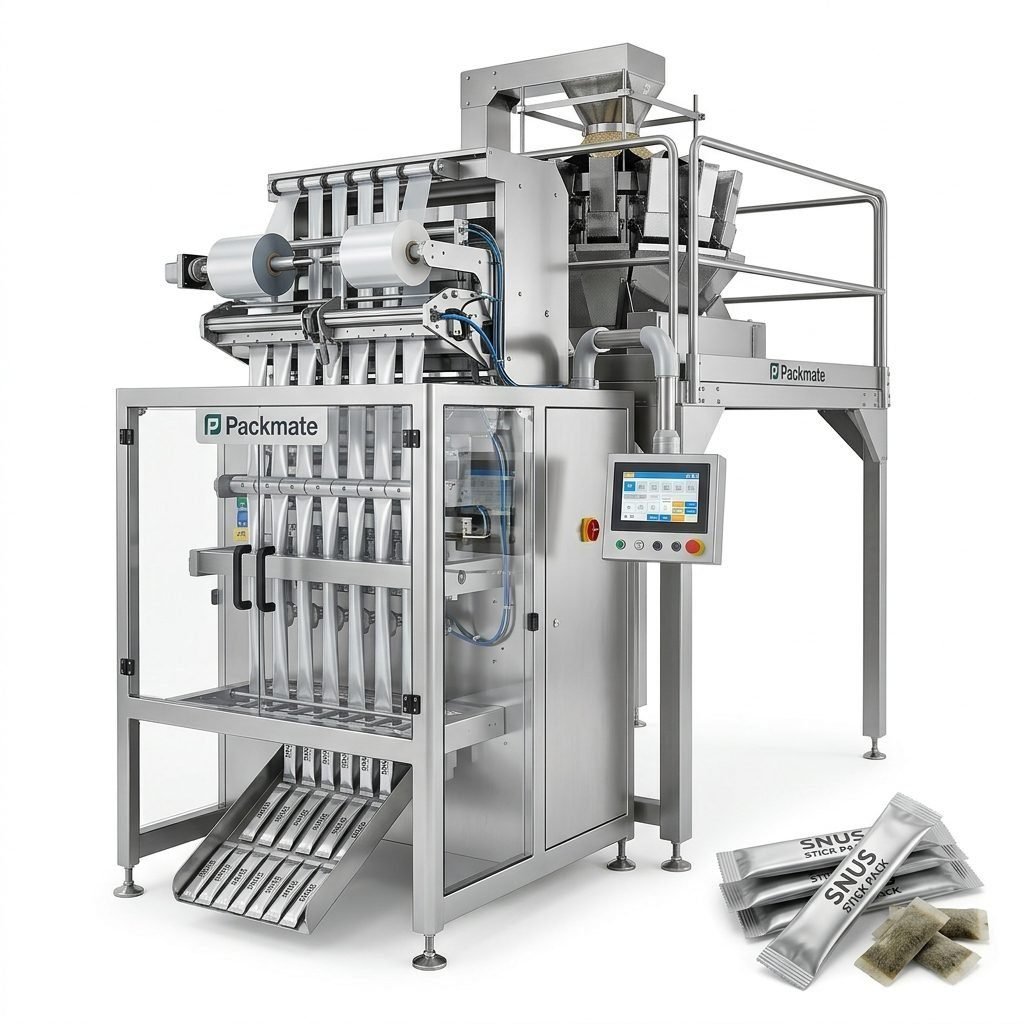
⚙️ Weighing & Dosing Units — multi-head weighers or volumetric/piston fillers tuned to pouch dosing requirements for precision within tight tolerances.
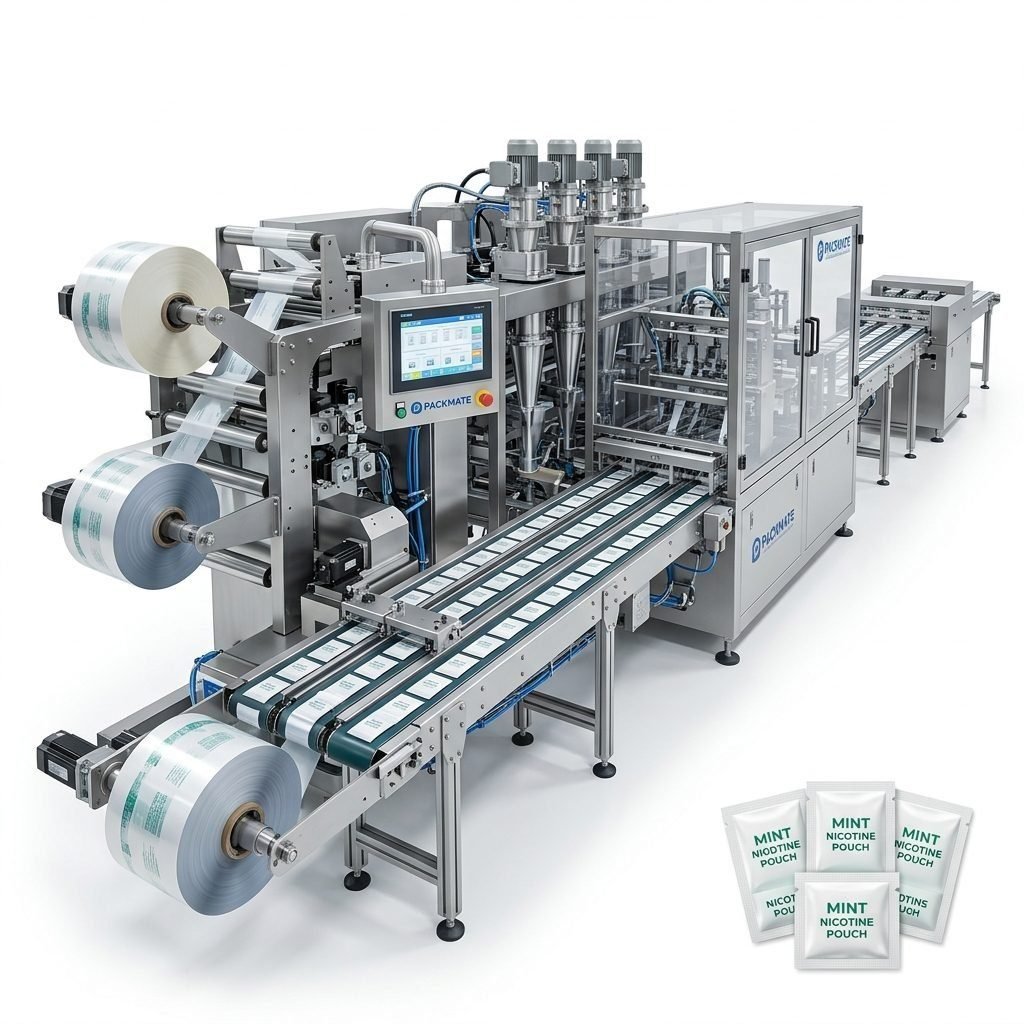
⚙️ Pouch Loading / Forming Machines — bespoke solutions for pre-made pouch loading or form-fill-seal systems for custom laminated films.
⚙️ Sealing & Cutting Stations — ensure hermetic sealing, tamper evidence, and clean cutting for consistent presentation.
⚙️ Quality Inspection — metal detection, vision systems, and weight verification to remove defects before secondary packaging.
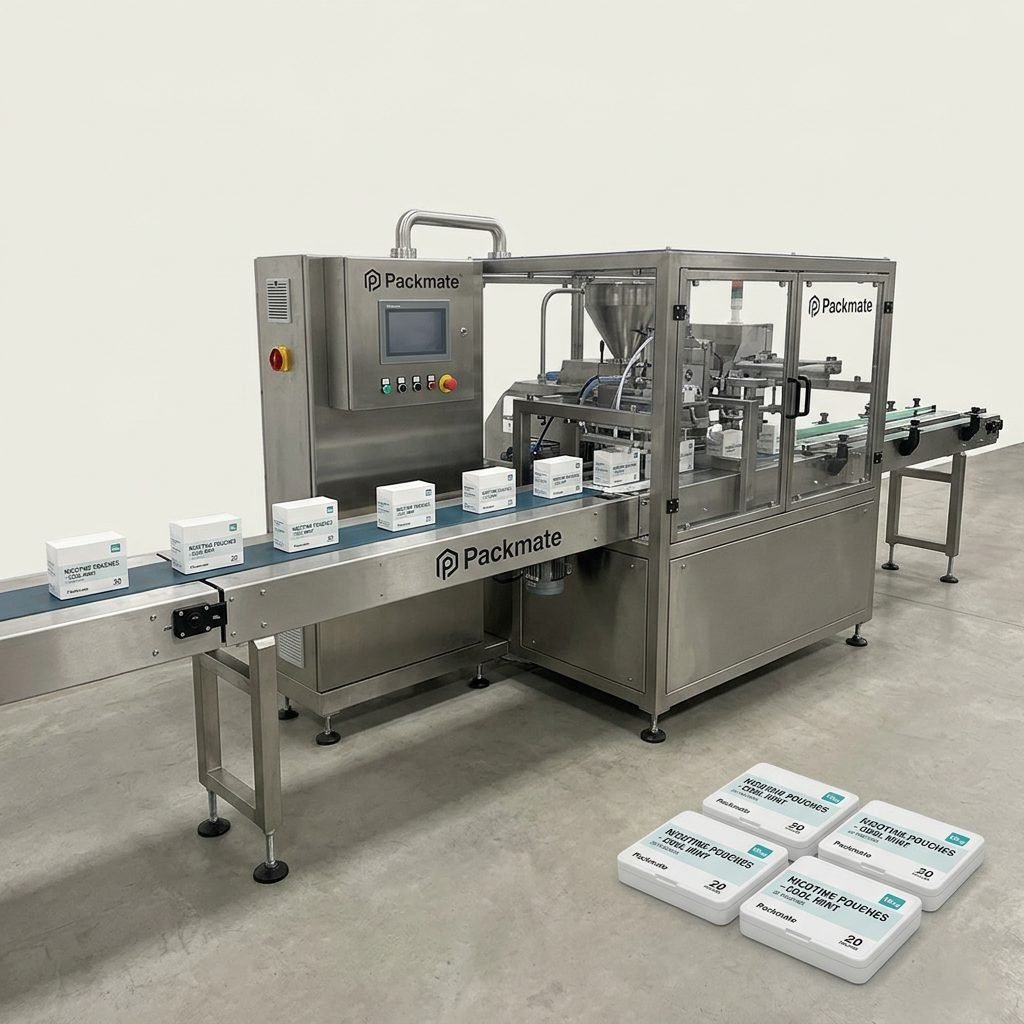
⚙️ Cartoning / Secondary Packaging — automatic collating and cartoning to prepare consumer-ready packs.
Why Multi-Lane Systems Matter
High-demand nicotine pouch producers favor multi-lane filling systems to increase throughput without proportionally increasing floor space or manual handling. A well-designed multi-lane Snus Pouch Filling Line can run dozens of lanes concurrently to produce thousands of pouches per minute while maintaining uniform dosing across lanes.
Material Compatibility and Hygiene Considerations
Because nicotine pouches contain active ingredients, the line must be designed for easy cleaning, minimal cross-contamination, and safe operator interaction. Common features include GMP-compatible contact parts, quick-release components, and CIP-friendly designs on liquid or binder lines.
Key Technologies for Accurate Filling and Pouch Integrity 📦
Accurate filling and consistent pouch integrity are achieved through a combination of precision mechanics and smart automation:
– Multi-head Weighers with dynamic feed control to minimize weight deviation.
– Servo-driven dosing for repeatable volumetric or piston fills across all lanes.
– Temperature-controlled sealing and adaptive seal pressure to suit different film laminates and prevent seal failure.
– Inline vision systems for seal integrity checks, logo alignment, and batch code verification.
Automation, HMI and Industry 4.0
Modern Snus Pouch Filling Lines include intuitive HMIs, recipe management, fault diagnostics, and remote connectivity for data logging and predictive maintenance. These capabilities lower downtime and help manufacturers scale quickly.
Designing a Turnkey Nicotine Pouch Production Line
A turnkey project includes conceptual design, equipment supply, on-site installation, commissioning, operator training, and after-sales support. Reliable suppliers provide fully documented FAT/SAT procedures, spare parts kits, and training programs to reduce the learning curve for production teams.
Customization Options
Manufacturers can request customization for:
• Lane count and layout to match target throughput.
• Material handling for custom blends, humidity control, or cold handling.
• Integration with upstream mixers, dryers or granulators and downstream cartoning and case packing.
• Special marking, laser coding, or serialization for regulatory compliance and product traceability.
Quality Control and Compliance ✅
Quality control on a nicotine pouch line must address dosing accuracy, foreign material detection, seal integrity, and labeling accuracy. Compliance with local and international standards is essential: invest in validated processes, regular calibration routines, and traceable quality records.
Manufacturers often require equipment adhering to CE and ISO criteria. Choosing a supplier with certified design and documented QA processes reduces the risk of regulatory delays and facilitates export to regulated markets.
Case Example & Global Reach 🌍
Packmate Snus Machine combines over 30 years of experience to deliver high-precision multi-lane systems used by clients across Europe, Asia, and the Americas. Example installations include turnkey lines integrated with multi-head weighers, automatic pouch loaders, and inline inspection systems that achieved stable outputs and lower product giveaway.
Operational Considerations and Maintenance 🔧
Preventive maintenance is vital for uptime. Recommended actions include scheduled inspection of wear parts, lubrication points, and sealing elements; vibration monitoring on motors and gearboxes; and regular calibration of weighing systems. Suppliers should offer maintenance training and a clear spare parts roadmap.
Spare Parts & After-sales Service
A strong after-sales program provides rapid spare part delivery, remote diagnostics, and local service partners. This ensures production continuity and protects ROI over the equipment lifecycle.
Return on Investment and Throughput Planning 📈
ROI depends on throughput, yield, labor savings, and the degree of automation. Multi-lane pouch lines dramatically reduce per-unit labor and increase packing speeds. When planning capacity, consider seasonality, SKU diversity, changeover times, and potential expansions.
Practical note: manufacturers targeting different regional markets should balance lane count and flexibility. For markets with many SKUs and smaller batches, modular design reduces changeover time and reduces initial investment risk.
Choosing a Supplier: What to Look For
When selecting a supplier for a Snus Pouch Filling Line, evaluate technical capability, manufacturing scale, service network, and track record. Key indicators include:
• Proven multi-lane designs and flexible machine architecture.
• On-site support and training capacity to shorten commissioning time.
• Manufacturing facility scale and CNC precision parts for durability.
• Transparent references and case studies from similar projects.
Suggested Resources
Discover product ranges and specifications through targeted catalogs and product pages. For example, explore Packmate’s dedicated product pages for Snus & Nicotine Packaging Machines and complete Filling & Packaging Lines to match your production goals and request a site-specific consultation.
Useful links: Snus & Nicotine Packaging Machines, Filling & Packaging Lines, About Packmate, Contact Us.
Installation, Commissioning and Training
A thorough installation and commissioning plan minimizes downtime—this includes layout verification, utility checks, electrical and pneumatic integration, FAT and SAT execution, and operator training. On-site training should cover routine cleaning, mechanical adjustments, troubleshooting, and basic PLC/HMI operations.
Tip: request a training curriculum and certified operator competency checklist to ensure consistent handover from suppliers to your production team.
Local Considerations and Market Practices
Different regions have varying regulatory and cultural practices related to nicotine product packaging and labeling. For example, European markets often emphasize strict traceability and packaging warnings, while emerging markets may prioritize cost-effective primary packaging. A supplier experienced with global deployments will help align the line configuration with regional requirements.
Why Packmate Snus Machine Is a Common Choice
Packmate brings decades of design experience, a large factory footprint with advanced CNC machining, and a diverse product portfolio covering snus / nicotine pouch machines, stick pack machines, sachets, and auxiliary systems. Their approach emphasizes performance, customization, and compliance—making them a practical partner for global operators.
For more product details and case references, you can consult Packmate’s product catalog and case pages that document installations and machine models tailored for nicotine pouch production.
Final Recommendations Before Purchase
– Define target SKUs, batch sizes, and lane requirements up front.
– Request site layout and utility requirements early.
– Prioritize modular designs and easy changeover features if you expect SKU variety.
– Confirm spare parts lists and lead-times to avoid production interruptions.
Summary: Strategic Benefits
Investing in a complete automatic Snus Pouch Filling Line delivers consistent dosing, higher throughput, reduced labor, and better product traceability. Choosing an experienced supplier ensures faster commissioning, validated quality systems, and long-term support for continuous production growth.
Frequently Asked Questions
Q1: What is the typical throughput of a multi-lane snus pouch line?
Most multi-lane systems can range from several hundred to several thousand pouches per minute depending on lane count and pouch size. Precise throughput figures depend on dosing method, pouch format, and downstream packing.
Q2: How do I ensure dosing accuracy and minimize giveaway?
Use high-precision multi-head weighers or servo-driven volumetric systems, implement in-line weight checks, and tune feed systems for consistent material flow. Regular calibration and trained operators also reduce giveaway.
Q3: Can the line handle different pouch materials and sizes?
Yes. Most modern lines are designed for material flexibility. Ensure the supplier provides recipe-driven settings, easy-change mold sets, and adjustable sealing parameters for different laminate structures and pouch geometries.
Q4: What support is provided after installation?
Reputable suppliers offer commissioning, operator & maintenance training, spare parts packages, and remote diagnostics. Confirm service agreements and local support options during contract negotiation.
Q5: How can I learn more about specific machine models and case studies?
Visit product and case sections online to review specifications, example installations, and performance data. For tailored consultations, reach out directly via the supplier’s contact channels.