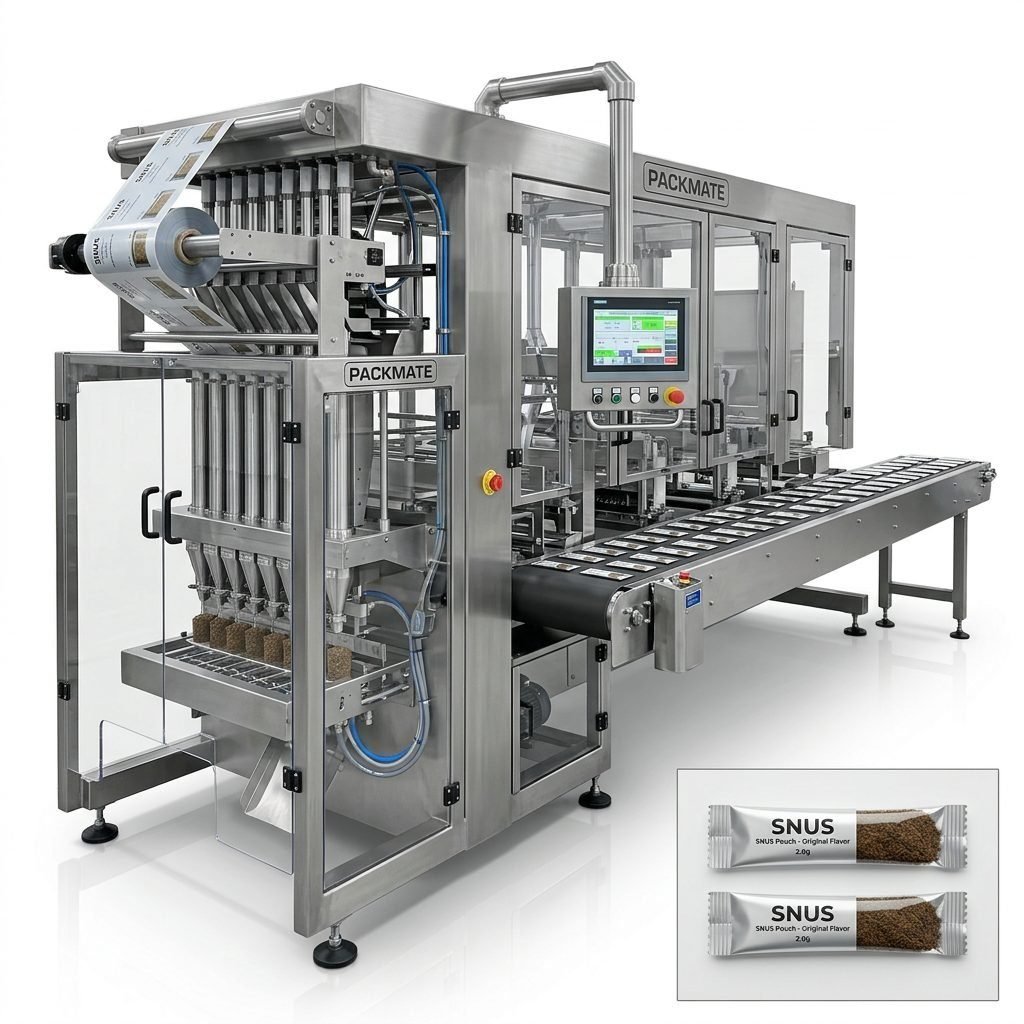
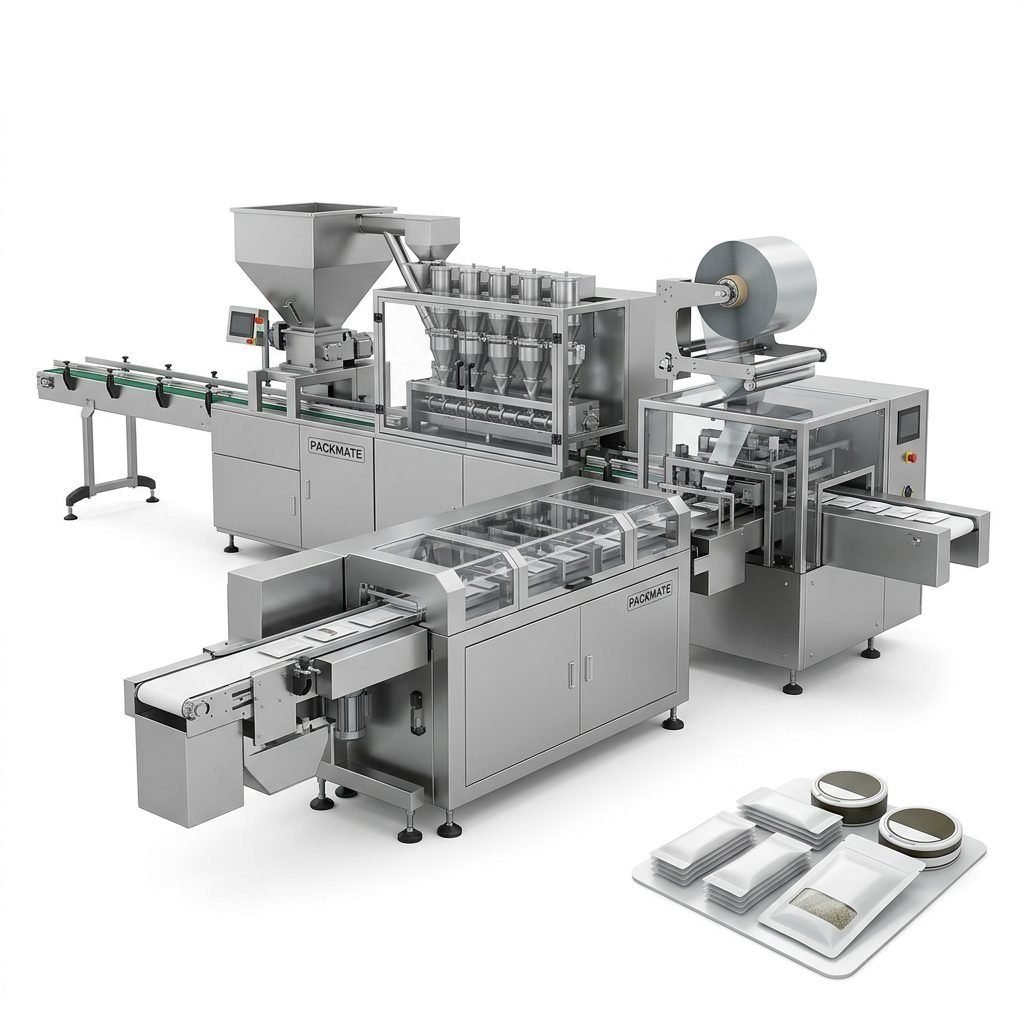
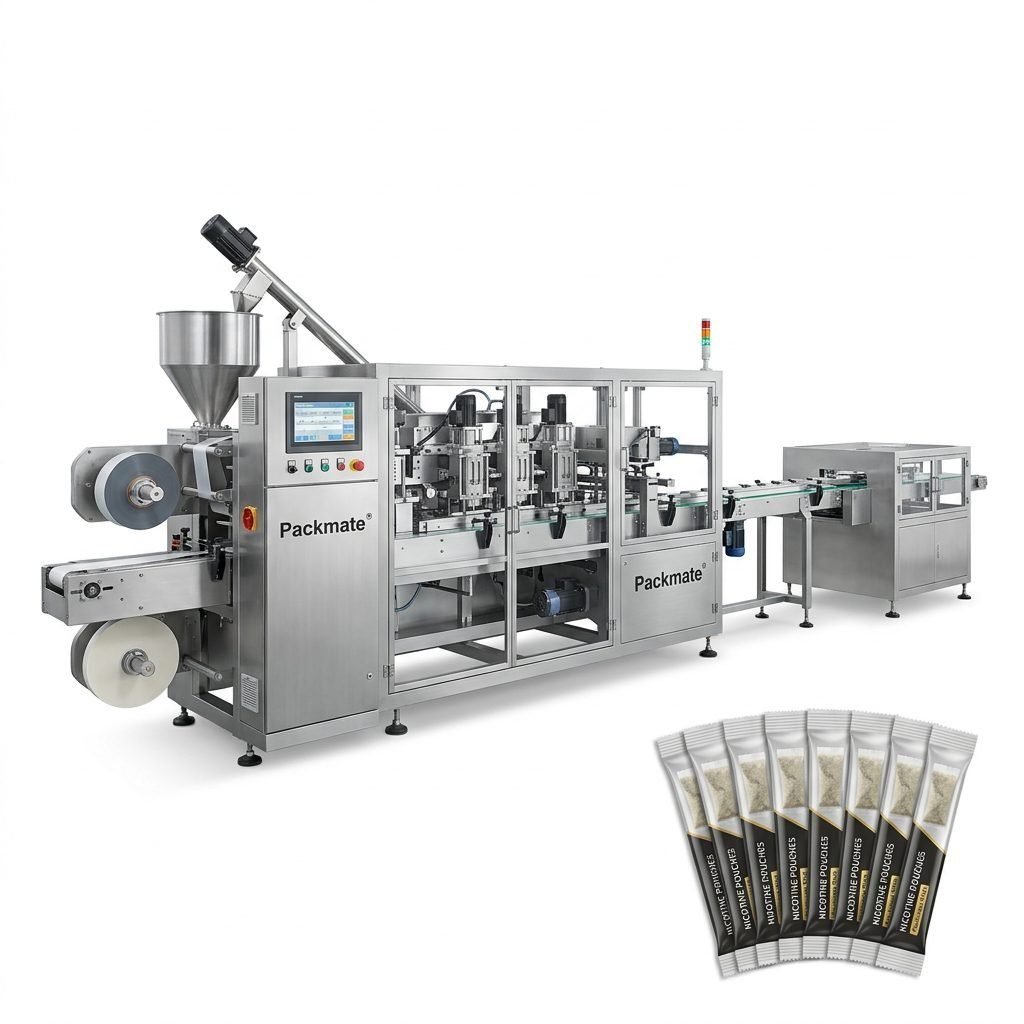
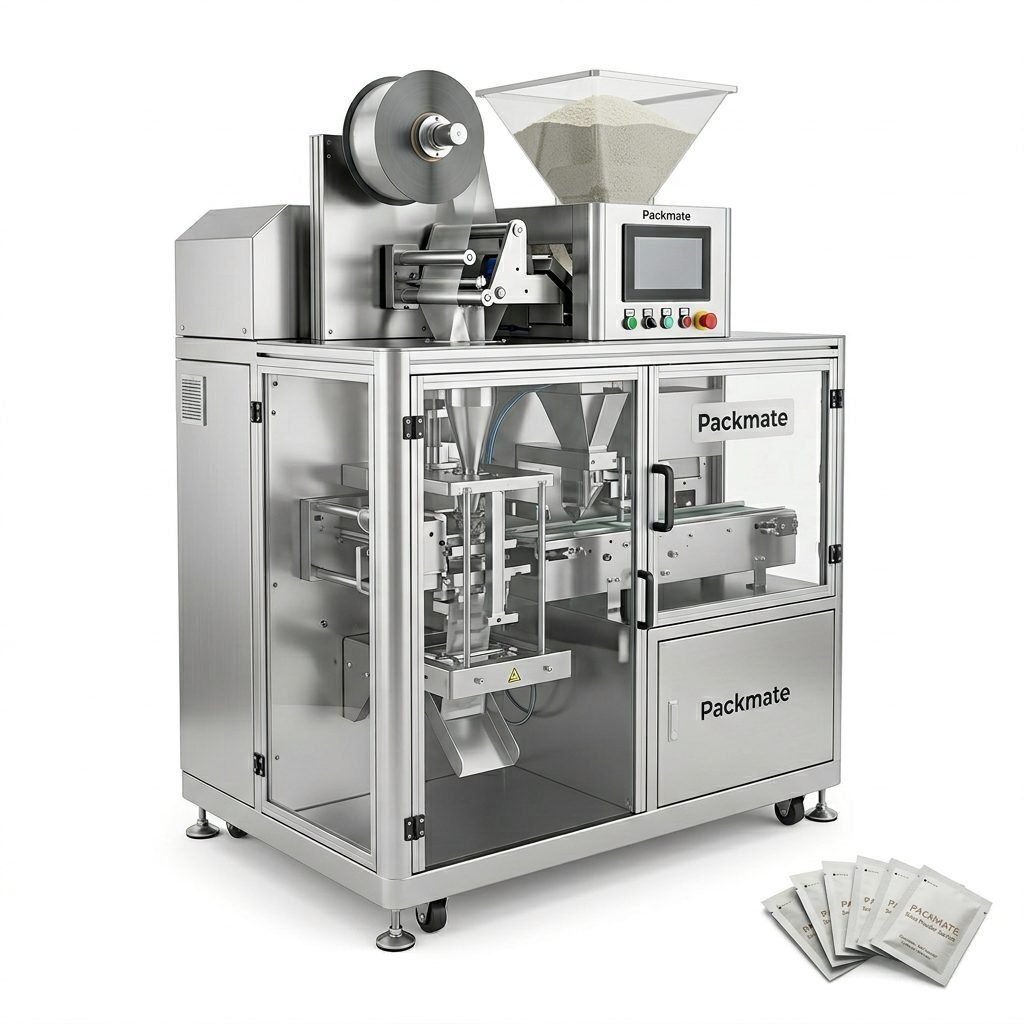
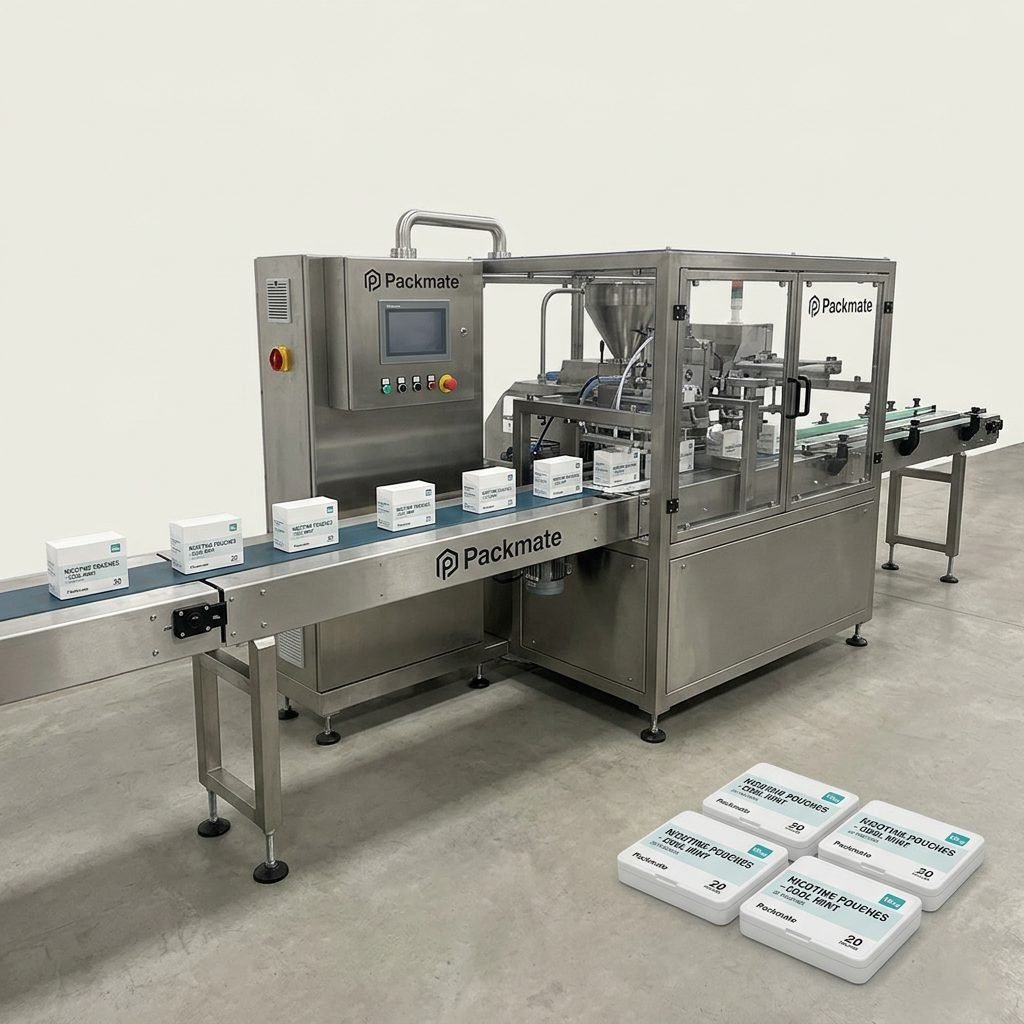
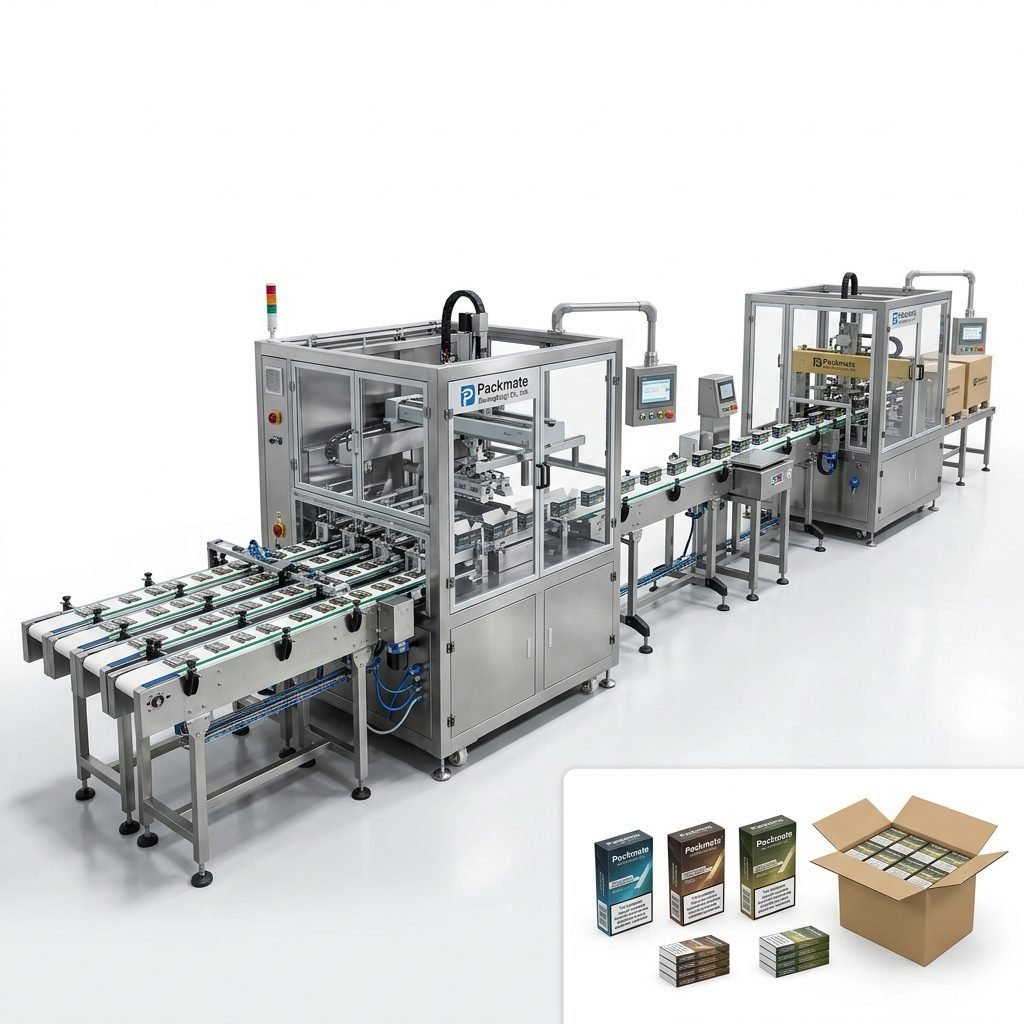
Welcome to a practical, production-focused guide on implementing a Snus Production Line Solution. This article walks through the complete equipment setup, automated manufacturing process, factory capabilities, and practical considerations for launching or upgrading a snus / nicotine pouch production line. Whether you are evaluating single machines or a turnkey automated line, this guide provides an industry-oriented roadmap based on proven engineering and manufacturing practices.
🔧 Overview: What a Modern Snus Production Line Includes
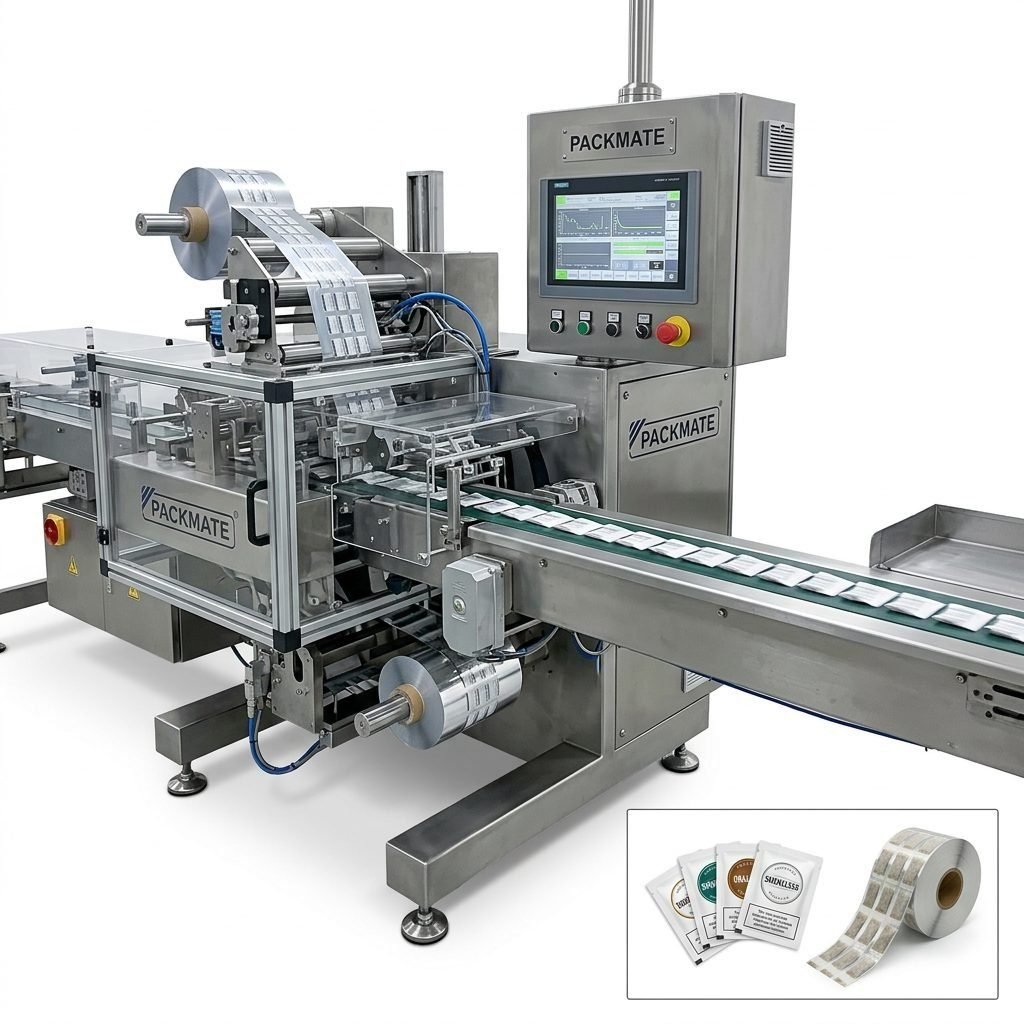
A complete snus production line integrates multiple subsystems to transform raw material into finished, packaged nicotine pouches. The typical workflow includes: raw material handling and dosing, filling and pouch forming, sealing and cutting, secondary packaging (cartoning or shrink-wrapping), and end-of-line palletizing. For modular purchasing, manufacturers may select specific machines such as stick pack equipment, sachet machines, or specialized multi-lane snus machines to meet capacity and product format needs.
📦 Core Equipment Components
Key equipment you will commonly evaluate includes:
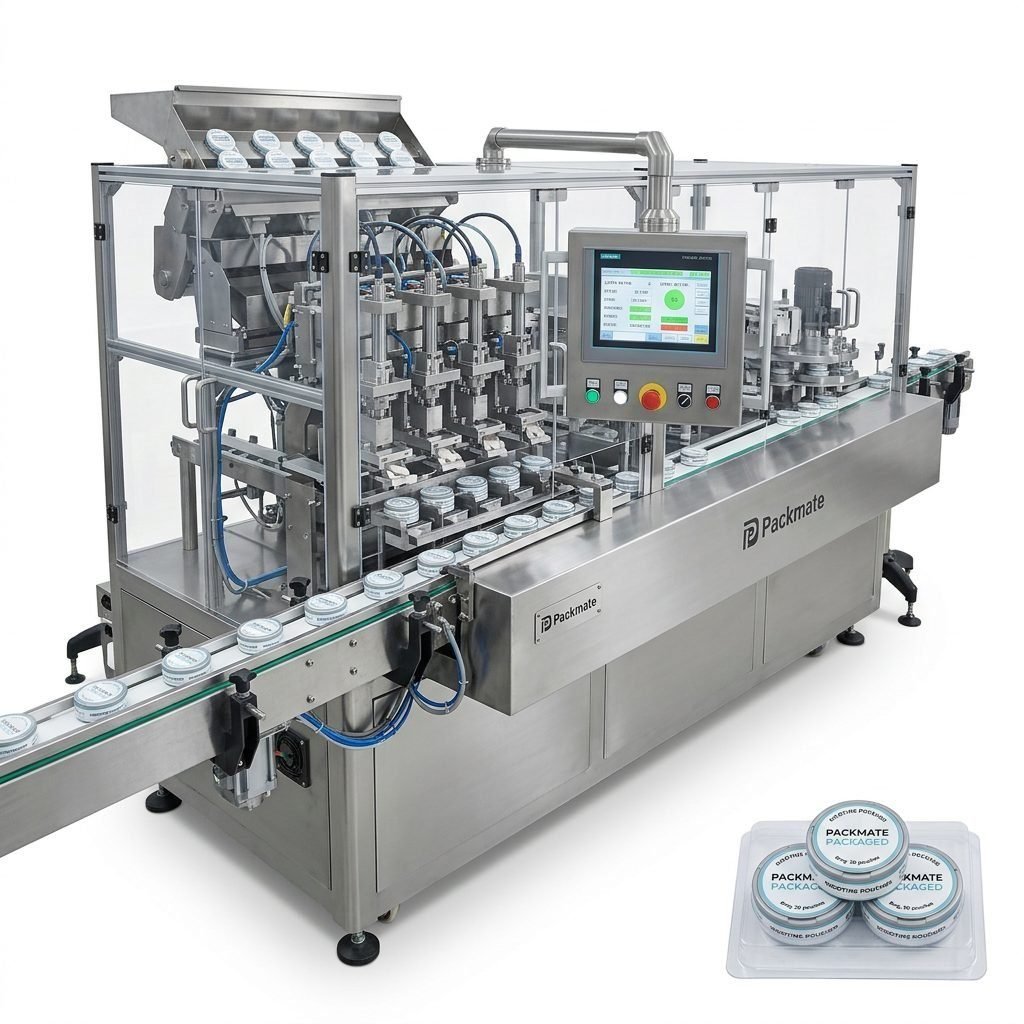
– Filling & Packaging Lines for accurate dosing and sealing.
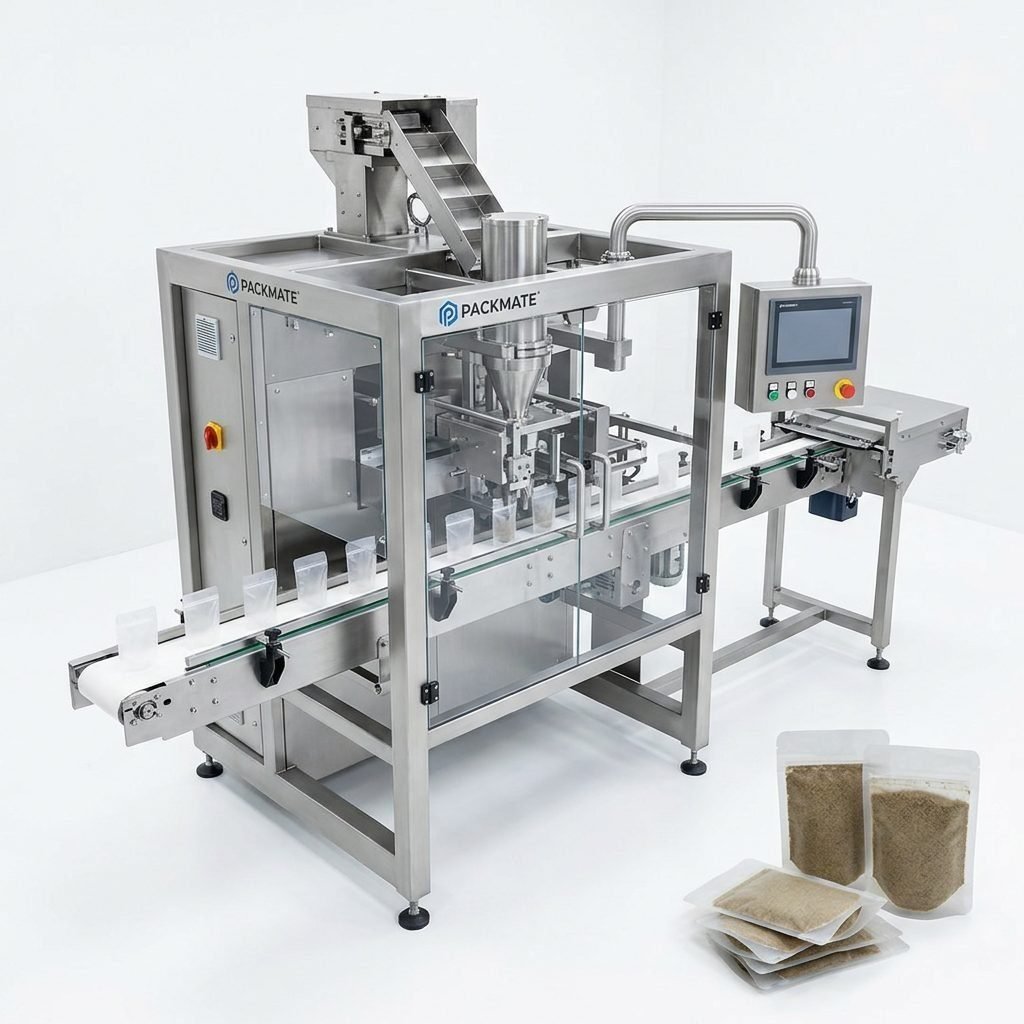
– Snus & Nicotine Packaging Machines for sachet-style or multi-lane pouch formats. (Snus & Nicotine Packaging Machines)
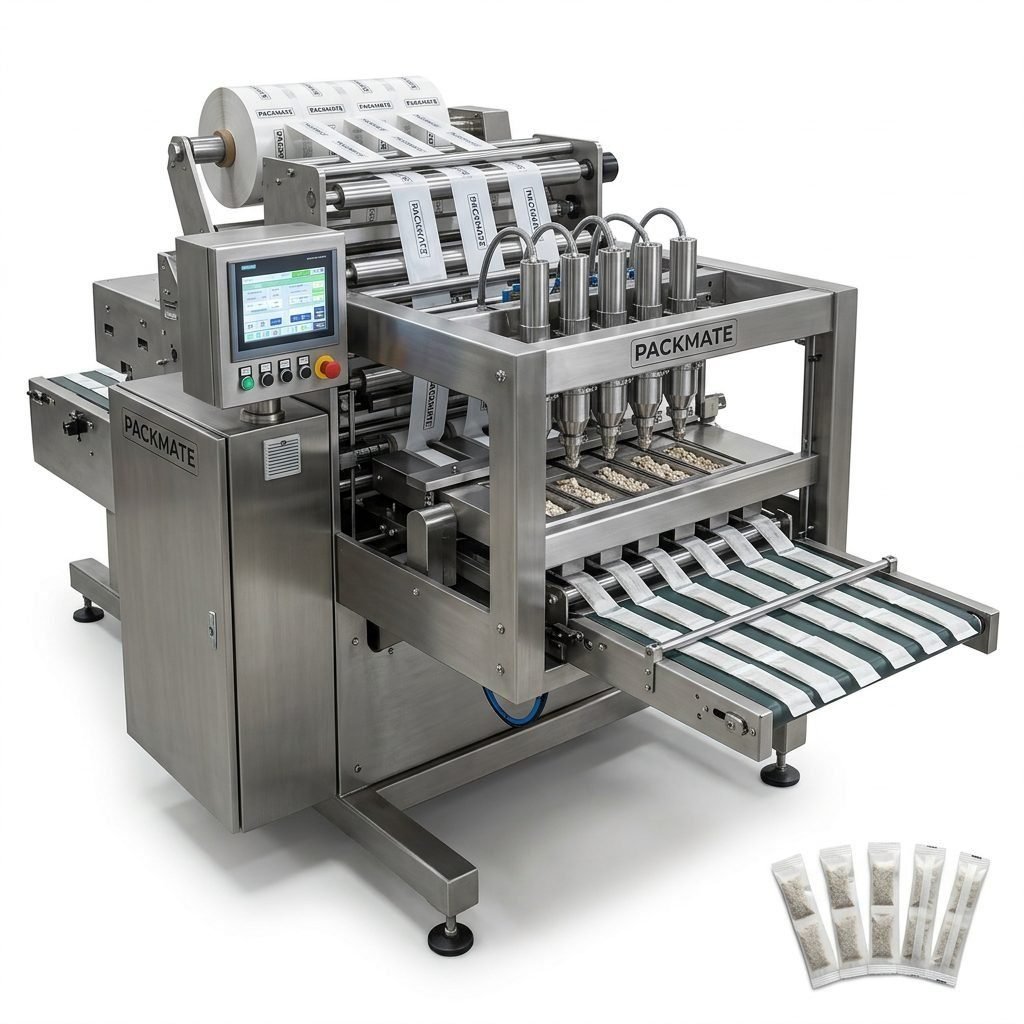
– Sachet & Stick Pack Machines for single-serve formats. (Sachet & Stick Pack Machines)
– Weighing & Packaging Systems for blending and high-precision dosing. (Weighing & Packaging Systems)
– Auxiliary Packaging Equipment such as conveyors, metal detectors, and checkweighers. (Auxiliary Packaging Equipment)
Key takeaway: Selecting machines that match your product format (single-dose pouches, multi-lane webs, or stick packs) is critical. The right combination determines throughput, quality consistency, and future flexibility.
⚙️ Typical Automated Process Flow
An automated snus production line follows a sequential process that can be optimized for speed, hygiene, and minimal human intervention:
1) Raw Material Handling & Preparation
Raw tobacco or nicotine pouch blends are stored in silos or hopper systems. Automatic conveyance and controlled feeding ensures consistent weight and moisture profiles. Weighing & Packaging Systems are often used here to precisely dose powders, granules, or blends before they are fed into the filling machine.
2) Dosing & Filling
The filling module can be volumetric or gravimetric depending on accuracy needs. For nicotine pouches, gravimetric systems are preferred for tight weight tolerances. Multi-head weighers or auger fillers feed the correct portion into pouch forming stations in real time.
3) Pouch Forming, Sealing & Cutting
Pouch forming machines shape the substrate (paper, textile, or film), deposit the filling, then seal and cut to final dimensions. High-speed multi-lane machines multiply throughput by producing several pouches simultaneously on parallel lanes—ideal for small-dose snus products.
4) Secondary Packaging & Cartoning
Finished pouches are collected into trays, cartons, or boxes depending on market requirements. Automated cartoners, tray packers, and case packers reduce manual handling and maintain sanitary conditions.
5) Inspection, Labelling & Palletizing
Quality inspection (vision systems, checkweighers, metal detectors) is integrated before labelling and palletizing. Robotic palletizers or semi-automatic palletizers finalize the packaged units for distribution.
Automation highlight: Combining multi-lane pouch forming with synchronized dosing and inline inspection yields high throughput with consistent weight control and minimal waste.
🧭 Choosing the Right Line: Capacity, Format, and ROI
Selecting equipment starts with a clear specification of target capacity, product formats, and allowable tolerance. Consider these decision drivers:
- Production capacity (pieces per minute / per hour)
- Product format (single pouch, multi-lane, stick pack)
- Material compatibility (powder, granular, liquid, fiber)
- Regulatory and hygiene requirements
- Future scaling and modular upgrades
For clients seeking turnkey solutions, Packmate offers end-to-end design and equipment suites including Filling & Packaging Lines tailored to snus and nicotine products.
🔎 Quality Assurance and Regulatory Compliance
Quality control is central to snus production due to product safety and regulatory oversight. An effective QA program integrates:
– Inline checkweighers and vision inspection to detect underfill, foreign particles, and seal defects.
– CIP (clean-in-place) compatible components and hygienic design to reduce contamination risk.
– Traceability systems for lot numbers, production timestamps, and ingredient sourcing.
– Compliance with CE, ISO, and local regulatory frameworks; machine suppliers should provide certificates and testing documentation. (Certificate)
🏭 Packmate Factory Capabilities & Experience
Packmate Snus Machine brings over 30 years of engineering experience and a 20,000㎡ manufacturing facility to the table. Strengths include advanced CNC machining, precision assembly lines, and a catalog of 50+ machine models. These capabilities enable highly customized turnkey solutions for customers in Europe, Asia, and the Americas.
Company facts: 30+ years industry experience, 20,000㎡ factory, CE & ISO compliance, global turnkey solutions.
📈 Turnkey Project Execution: From Design to Commissioning
A successful turnkey snus line project follows structured phases:
Phase 1 – Requirements & Layout
Define product SKUs, hourly output targets, factory layout constraints, and utilities (compressed air, power, clean water). A site survey determines machine footprint and material flow.
Phase 2 – Engineering & Customization
Based on requirements, engineers configure machine modules (multi-lane modules, dosing systems, sealing technologies) and validate with process simulations or factory acceptance tests (FAT).
Phase 3 – Production, Testing & Installation
Manufacturing proceeds in precision assembly lines with strict QC. After internal testing and FAT, equipment is shipped, installed, and commissioned onsite. Training for operators and maintenance teams is included as standard practice.
Phase 4 – After-Sales Service & Spare Parts
Reliable after-sales service includes spare parts supply, remote troubleshooting, and scheduled maintenance programs. For long-term reliability, choose vendors offering clear support channels. (Service)
💡 Practical Tips for Smooth Implementation
– Validate product samples on the selected machine before full-scale procurement.
– Prioritize modular designs to allow capacity upgrades with minimal disruption.
– Ensure spare parts availability and a local service plan to reduce downtime.
– Request FAT and acceptance protocols to confirm that performance targets are met prior to shipment.
Pro tip: Multi-lane systems greatly reduce per-unit labor and footprint, but ensure your dosing accuracy scales with lane count to maintain product quality.
📚 Case Studies & Global Deployments
Packmate has deployed packaging lines worldwide, serving snus and nicotine pouch producers with solutions ranging from single-machine upgrades to comprehensive turnkey lines. For reference projects and application examples visit the company case page. (Case)
📞 Next Steps: How to Evaluate Suppliers
When evaluating suppliers, request: detailed machine specifications, FAT procedures, references from existing customers, and certifications. Also review product catalogs to compare models and optional features. (Catalog) For company background and contact details, see the About and Contact pages. (About Packmate, Contact Us)
✔️ Final Thoughts
A well-designed snus production line balances throughput, product quality, and operational reliability. Investing in modular, high-precision equipment from experienced manufacturers reduces risk and shortens time to market. Consider end-to-end providers for simplified project coordination and long-term support.
Frequently Asked Questions (FAQs)
1) What production capacities can multi-lane snus machines achieve?
Answer: Multi-lane systems vary by model, but high-performance lines can reach several hundred to thousands of pouches per minute depending on lane count and pouch size. Capacity is a function of lane number, filling speed, and sealing rate.
2) How do I ensure dosing accuracy for small-dose nicotine pouches?
Answer: Use gravimetric dosing or multi-head weighers integrated with the packaging machine. Regular calibration and inline weight checks (checkweighers) maintain tight tolerances.
3) What certifications should the equipment have for export and regulatory compliance?
Answer: CE and ISO certifications are commonly required for global markets. Additionally, suppliers should provide documentation for electrical safety, material compliance, and machine performance testing. (See Certificate)
4) Can Packmate provide turnkey solutions including installation and training?
Answer: Yes. Packmate offers turnkey project services from system design and manufacturing to installation, commissioning, and operator training. For service details see Service and Contact Us.
5) How do I start a procurement discussion or request a quote?
Answer: Prepare product specifications (pouch size, fill weight, target capacity), factory utilities, and regulatory region. Share these details with prospective suppliers through their contact channels to receive tailored proposals.