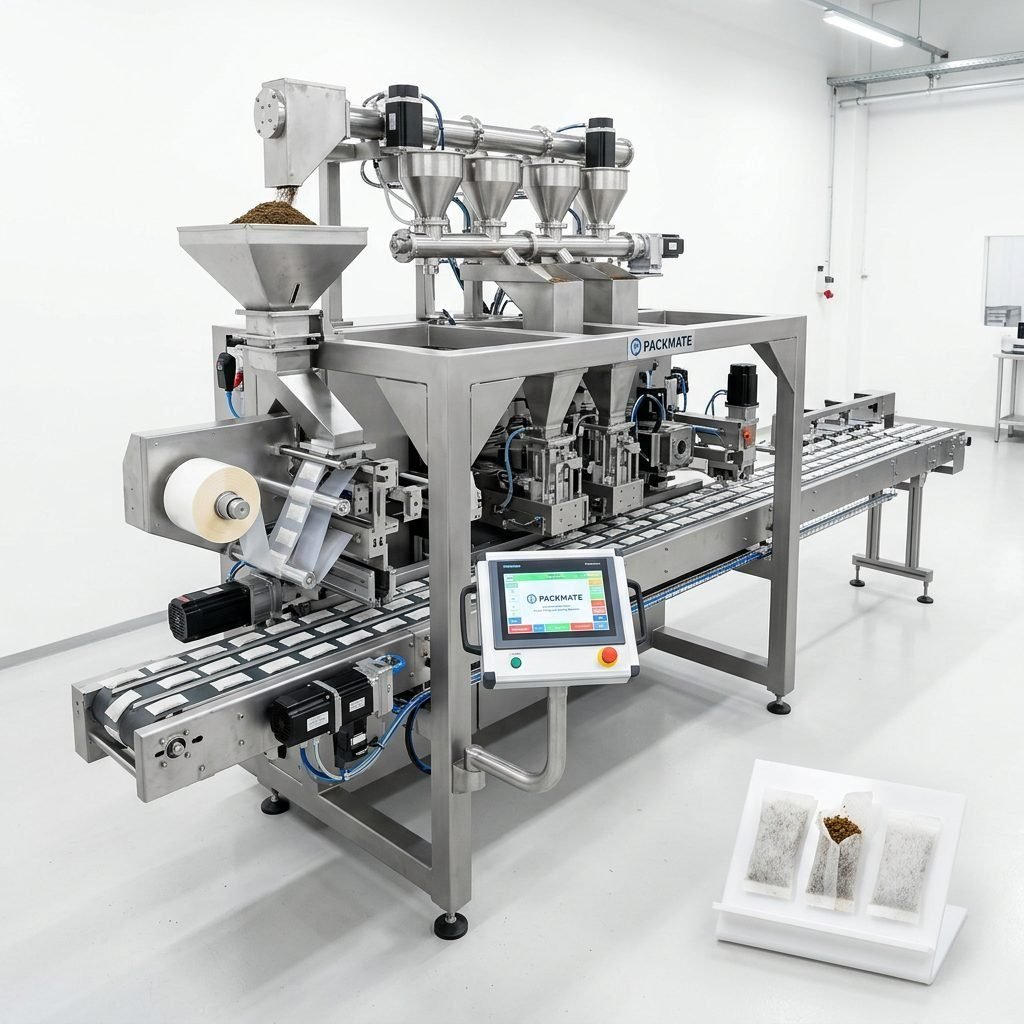
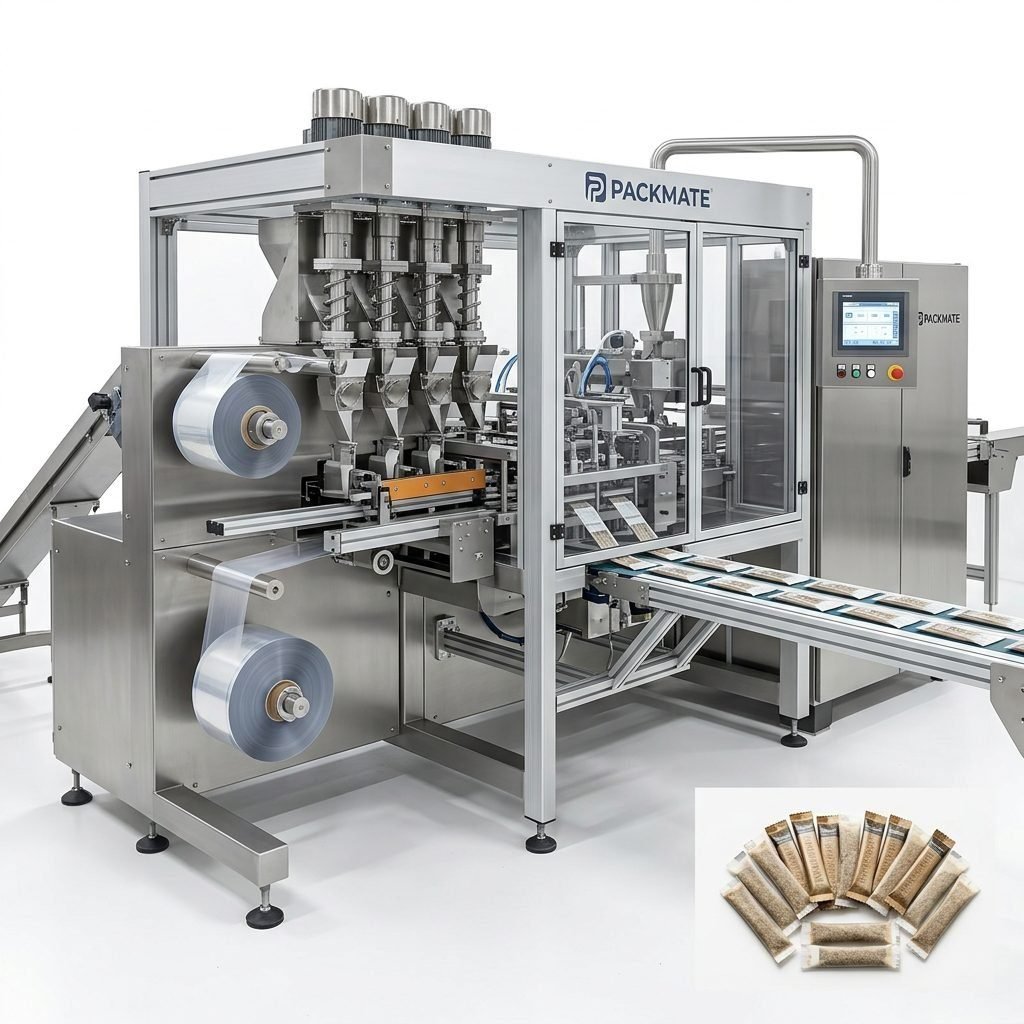
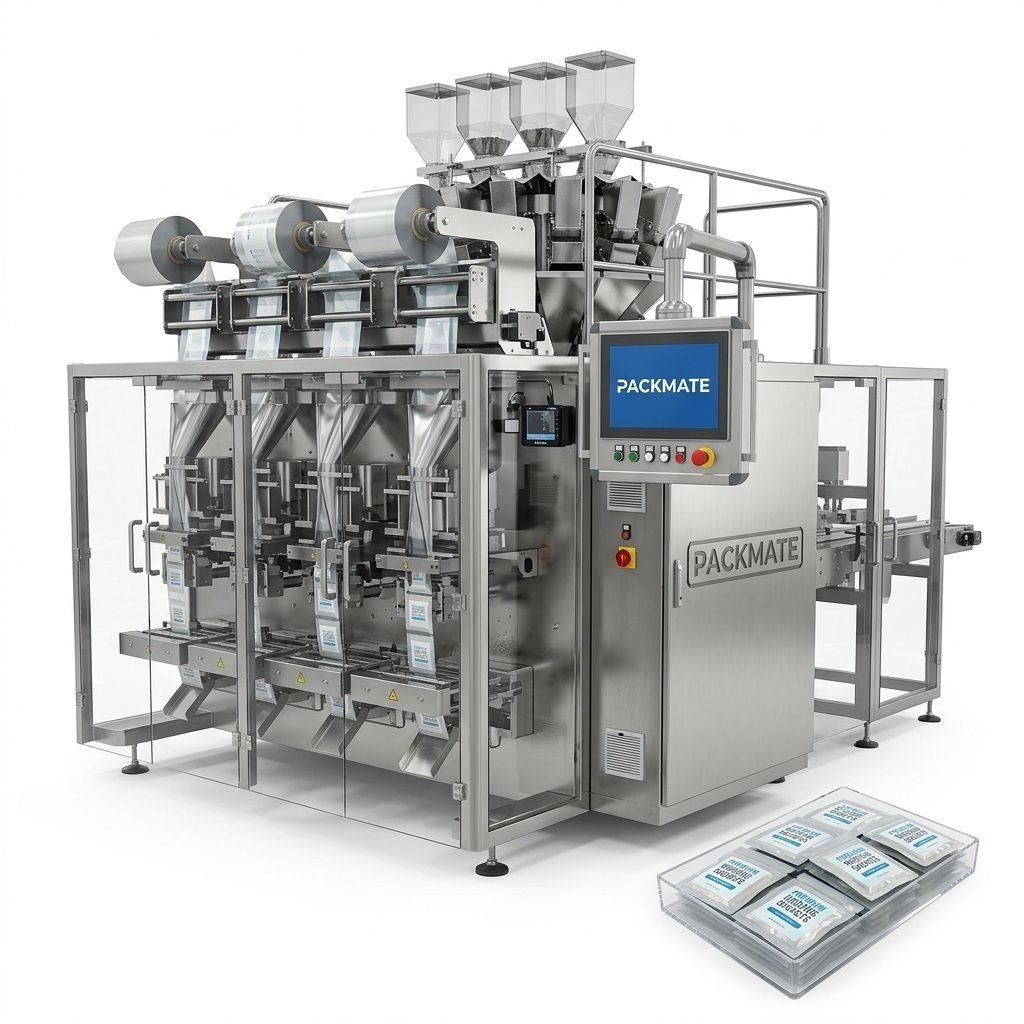
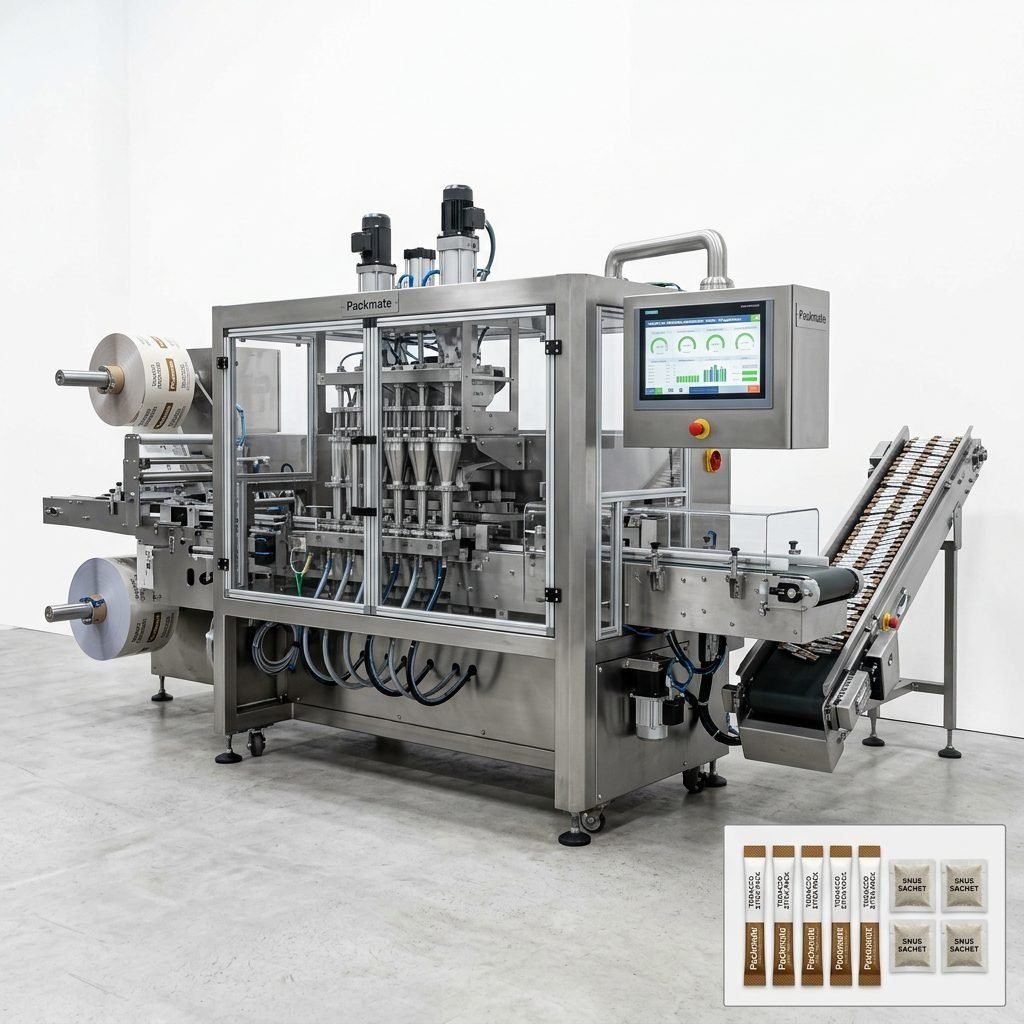
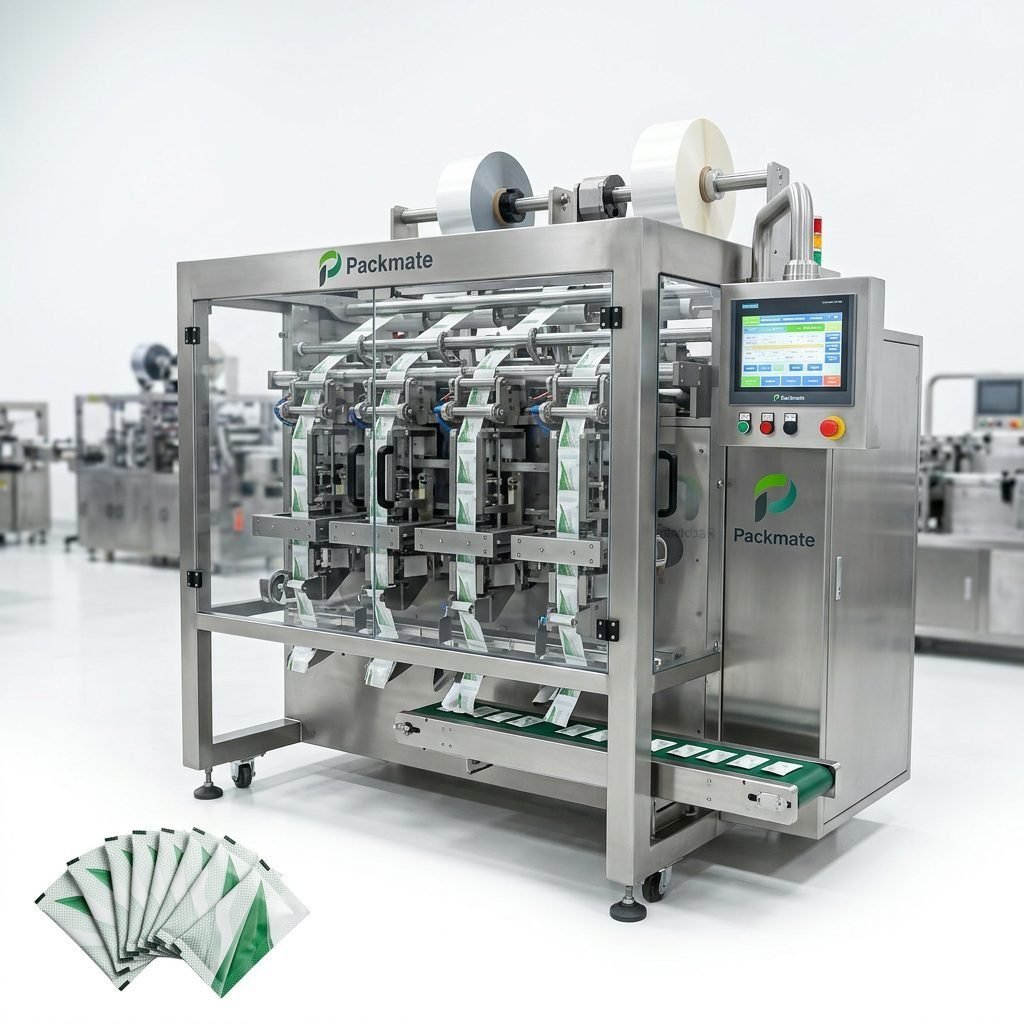
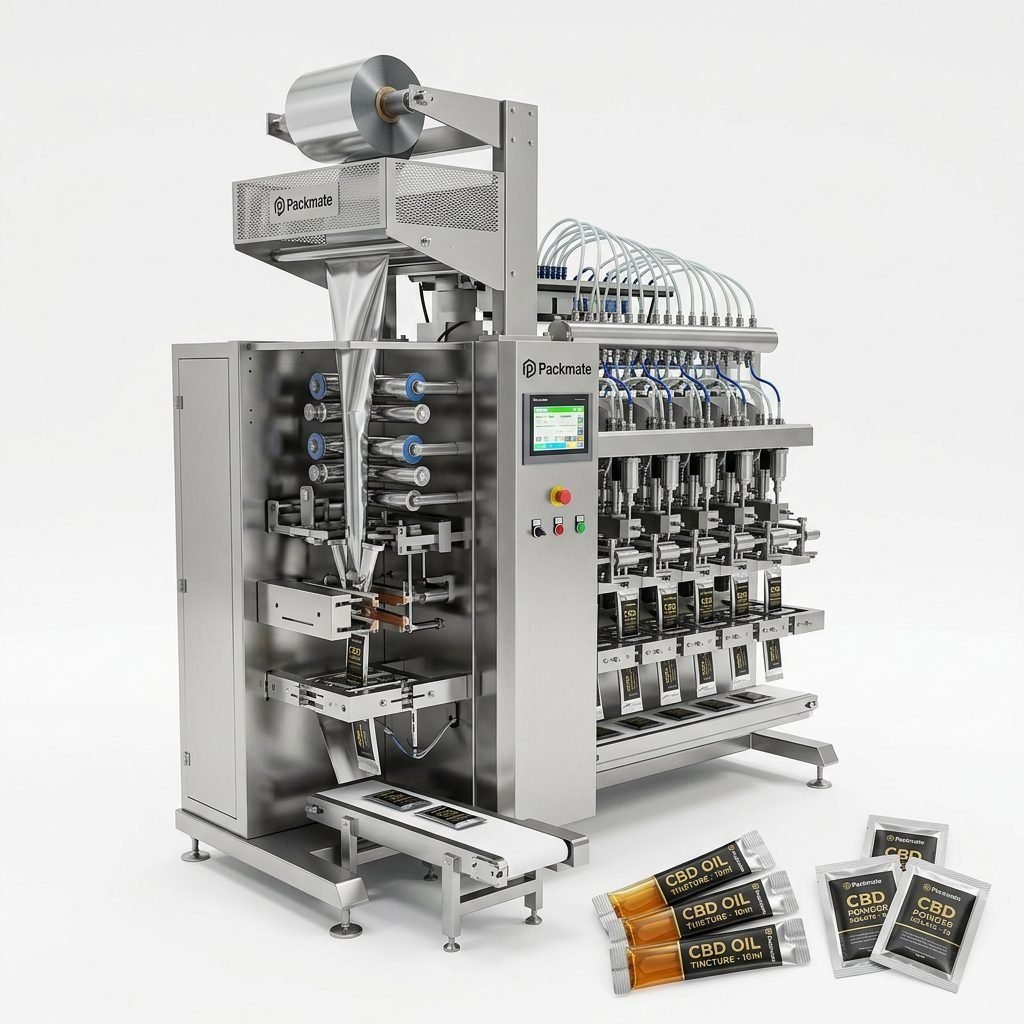
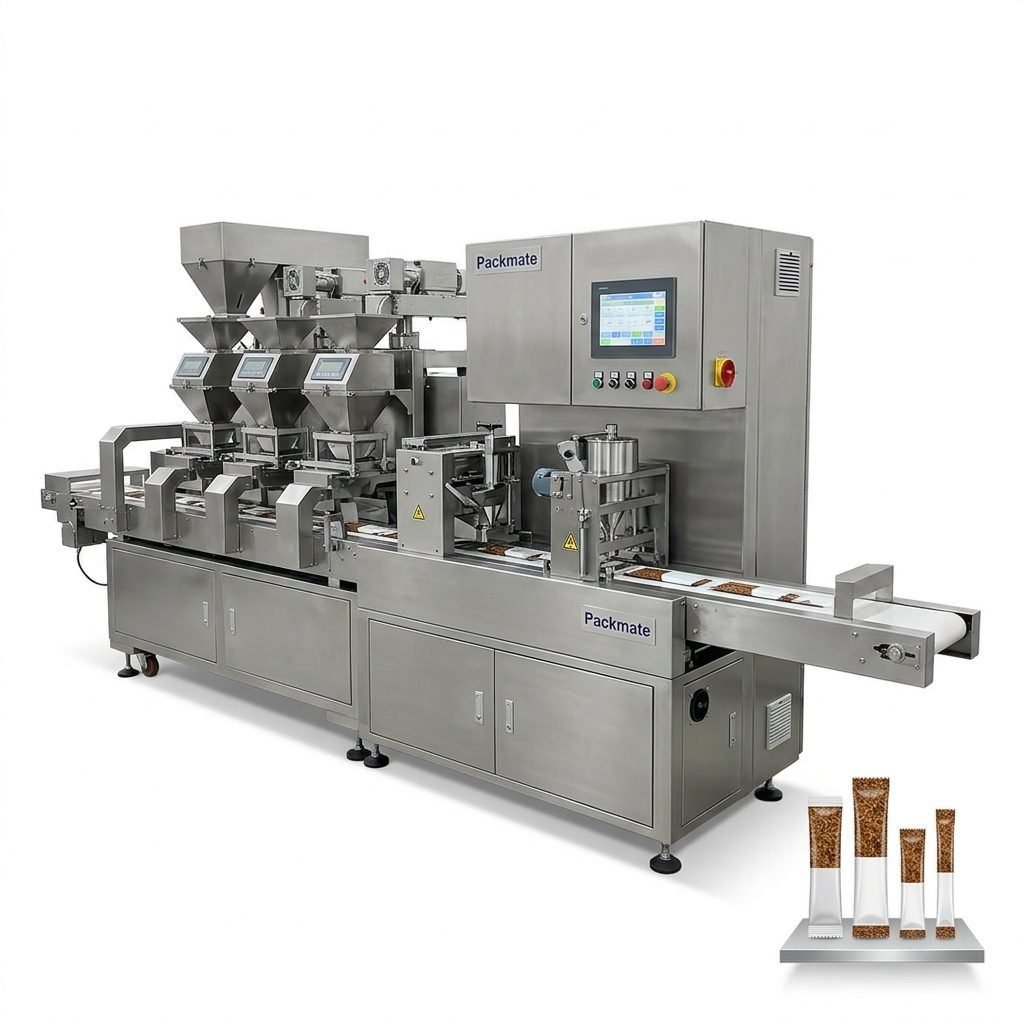
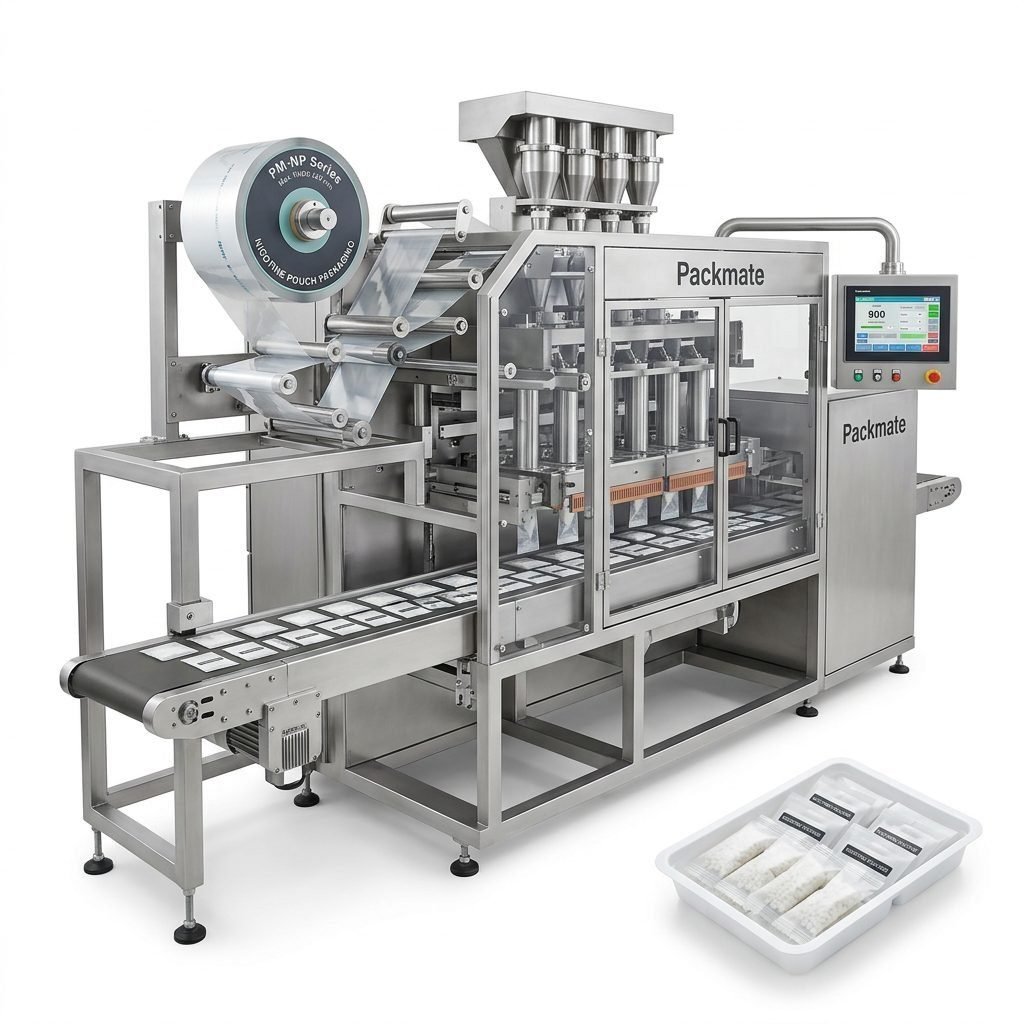
The nicotine pouch production line has become a specialized sector of modern packaging manufacturing. From raw material handling and portion forming to sealing, secondary packaging, and quality inspection, every stage matters for product safety, consistency, and cost-efficiency. This guide breaks down the complete manufacturing process, practical equipment selection tips, and a realistic cost overview to help packaging engineers, production managers, and procurement teams make informed decisions.
Overview of a Nicotine Pouch Production Line
A complete nicotine pouch production line generally consists of the following core modules:
⚙️ Raw material preparation — tobacco or nicotine blend conditioning, fillers, and humectants.
🔧 Portion forming — metering, dosing and portion shaping for consistent weight and feel.
📦 Primary packaging — pouch forming, filling, sealing (single-dose pouches or multi-lane sachets).
✔️ Secondary packaging — cartons, trays and retail-ready formats with labeling and serialization options.
Step-by-Step Manufacturing Process
1. Raw Material Handling & Conditioning
Proper raw material handling ensures consistent pouch quality. Nicotine pouches often use finely milled fillers mixed with nicotine, flavorings, and humectants. Key considerations:
Controlled humidity and temperature—critical to avoid clumping or drying. Use closed conveying systems, vibratory feeders, and high-precision mixers for homogeneity. Inline weighing systems monitor batch consistency and minimize waste.
2. Portioning and Dosing
Portioning accuracy impacts product weight tolerance and regulatory compliance. Options include single-lane auger fillers for powders and multi-lane volumetric or multi-head weighers for higher throughput.
📌 Tip: Multi-lane systems dramatically increase capacity without a linear increase in footprint, ideal for small-dose pouch formats.
3. Forming, Filling & Sealing
Choose between pre-made pouch feed systems and vertical form-fill-seal (VFFS) depending on product shape and material. Typical methods:
– Pouch machines that handle pre-made pouches are flexible for custom shapes. VFFS is efficient for high-volume, uniform sachets and stick packs. Heat-sealing jaws, ultrasonic sealing, or adhesive-based sealing options are selected based on film structures and barrier requirements.
4. Inspection & Quality Control
Inline checkweighers, vision systems for seal integrity, and metal detectors are mandatory to catch defects early. A closed-loop feedback system that adjusts dosing based on weight variance reduces give-away and improves yield.
5. Secondary Packaging & Palletizing
Automated collators, cartoners, and case packers move packaged pouches into retail-ready formats. Integration with labeling, coding, and serialization provides traceability and compliance with market regulations. Robotic palletizers speed up final logistics stages.
Selecting the Right Equipment
Equipment selection depends on production targets, product format, facility constraints, and budget. Evaluate machines across these dimensions:
Throughput & Scalability
Start by calculating target pouches per minute (PPM). For low volumes, modular single-lane machines reduce upfront costs. For commercial scale, multi-lane systems with synchronized feeders are more cost-effective per pouch. Consider future expansion — choose platforms that support additional lanes or faster sealing heads.
Automation & Integration
End-to-end automation reduces labor and improves hygiene. Look for machines with PLC controls, recipe management, and industry-standard communication protocols (e.g., OPC-UA, Ethernet/IP) to integrate with upstream and downstream equipment. Suppliers offering turnkey solutions simplify commissioning and reduce system integration risk.
Hygiene & Materials Compatibility
Stainless steel (304/316) construction, sanitary fittings, and easy-clean designs are essential for nicotine-related products to prevent cross-contamination and ease maintenance. Sealing technologies must suit laminated barrier films and foil laminates commonly used for pouches.
After-sales Support & Certification
Choose manufacturers with proven global service networks, spare parts availability, and compliance certifications (CE, ISO). Consider suppliers with industry experience — for example, Packmate Snus Machine offers specialized snus and nicotine packaging equipment and turnkey lines, supported by decades of engineering know-how. For machine options, reference product categories such as Snus & Nicotine Packaging Machines and Bag & Pouch Packaging Machines.
Equipment Types & Their Roles
Below are common machine types you will encounter when building a nicotine pouch line:
- High-precision mixers & blenders for homogeneous nicotine blends
- Multi-head weighers or auger fillers for accurate dosing
- Pouch forming/fill-seal machines (pre-made pouch feed or VFFS)
- Checkweighers, vision inspection, metal detectors
- Cartoners, case packers, and palletizers for final packaging
Quality & Compliance Considerations
Regulatory expectations vary by market. Common requirements include product traceability, accurate labeling of nicotine content, and robust quality control records. Consider the following:
🔍 Traceability: Batch coding and serialization for recalls and track-and-trace programs.
🧾 Documentation: IQ/OQ/PQ documentation, preventive maintenance plans, and quality records.
🌍 Certifications: Compliance with CE and ISO standards streamlines international shipments.
Cost Guide: Capital & Operating Expenses
Budgeting for a nicotine pouch production line requires separating capital expenditures (CAPEX) and operating expenditures (OPEX). Below is a practical breakdown:
Capital Costs
CAPEX includes machinery, installation, tooling, and factory modifications. Typical ranges:
– Small modular line (pilot to small commercial): low six-figures USD.
– Medium multi-lane automated line: mid six to low seven-figures USD.
– Full turnkey high-speed plant with auxiliary systems: seven-figures USD and above depending on customization and automation level.
Operating Costs
OPEX covers labor, utilities, spare parts, maintenance, packaging materials, and quality control. Cost drivers:
- Packaging material cost (films, foils, cartons) — often a major recurring cost.
- Labor and shifts — automation reduces direct labor but increases need for skilled technicians.
- Maintenance & consumables — regular preventive maintenance avoids costly downtime.
How to Reduce Costs Without Sacrificing Quality
– Invest in robust automation and process control to reduce variability and give-away.
– Choose multi-lane systems to increase output per operator and per square meter.
– Negotiate long-term contracts with material suppliers and standardize pouch sizes to leverage bulk pricing.
– Use predictive maintenance and remote diagnostics to reduce downtime and spare-part inventories.
Case Study Snapshot
A mid-sized producer upgraded from single-lane pouch machines to a three-lane synchronized dosing and sealing line. Results after optimization:
✔️ Output increased by 220% with a 40% lower labor cost per pouch.
✔️ Product variance reduced by 60% through closed-loop dosing control.
✔️ Faster changeovers led to more flexible SKU production and reduced inventory.
For real-world examples and machine lines, explore manufacturer cases and machine catalogs to compare configurations and throughput options: Case and Catalog.
Supplier Evaluation Checklist
When selecting a supplier, use this checklist:
- Industry experience and references in nicotine/snuff packaging.
- Factory capabilities: CNC machining, assembly lines, and QA systems.
- Compliance certifications (CE, ISO) and commissioning support.
- Spare parts availability and service agreements.
- Turnkey integration capability, if required.
Packmate Snus Machine, for example, provides a wide range of snus and nicotine packaging machines, from single-lane machines to multi-lane high-performance systems — see About Packmate and their product portfolio for reference.
Practical Tips for Commissioning
– Conduct a factory acceptance test (FAT) with your product to verify dosing accuracy and sealing performance before shipment.
– Plan for operator training sessions and create SOPs for routine tasks.
– Reserve a budget for spare parts and an initial stock of consumables (sealing jaws, belts, sensors).
– Use pilot runs to finalize packaging film structures and seal parameters.
Useful Resources & Next Steps
Begin by defining your target output, product formats, and packaging materials. Reach out to experienced manufacturers to request line layouts and budgetary quotes. Useful reference pages include product categories like Filling & Packaging Lines and Weighing & Packaging Systems.
Final Recommendations
– Prioritize systems that balance robustness with flexibility.
– Use multi-parameter acceptance tests during vendor evaluation.
– Consider lifecycle costs, not just purchase price — uptime, service, and material efficiency drive profitability.
Frequently Asked Questions
Q1: What is the typical throughput for a multi-lane nicotine pouch line?
A: Throughput varies widely. A typical three-lane high-efficiency line can reach several hundred pouches per minute total, depending on pouch size and dosing method.
Q2: How do I ensure dosing accuracy for small-dose pouches?
A: Implement closed-loop weighing feedback with high-precision multi-head weighers or gravimetric feeders and perform regular calibration and verification checks.
Q3: What are the main recurring costs to budget for?
A: Film and foil materials, sealing consumables, spare parts, and maintenance labor are the main recurring costs. Material choice heavily influences per-pouch cost.
Q4: Can suppliers provide turnkey lines and commissioning support?
A: Yes. Reputable suppliers offer turnkey solutions including FAT, site acceptance tests, training, and long-term service agreements. Review their global service footprint and references.