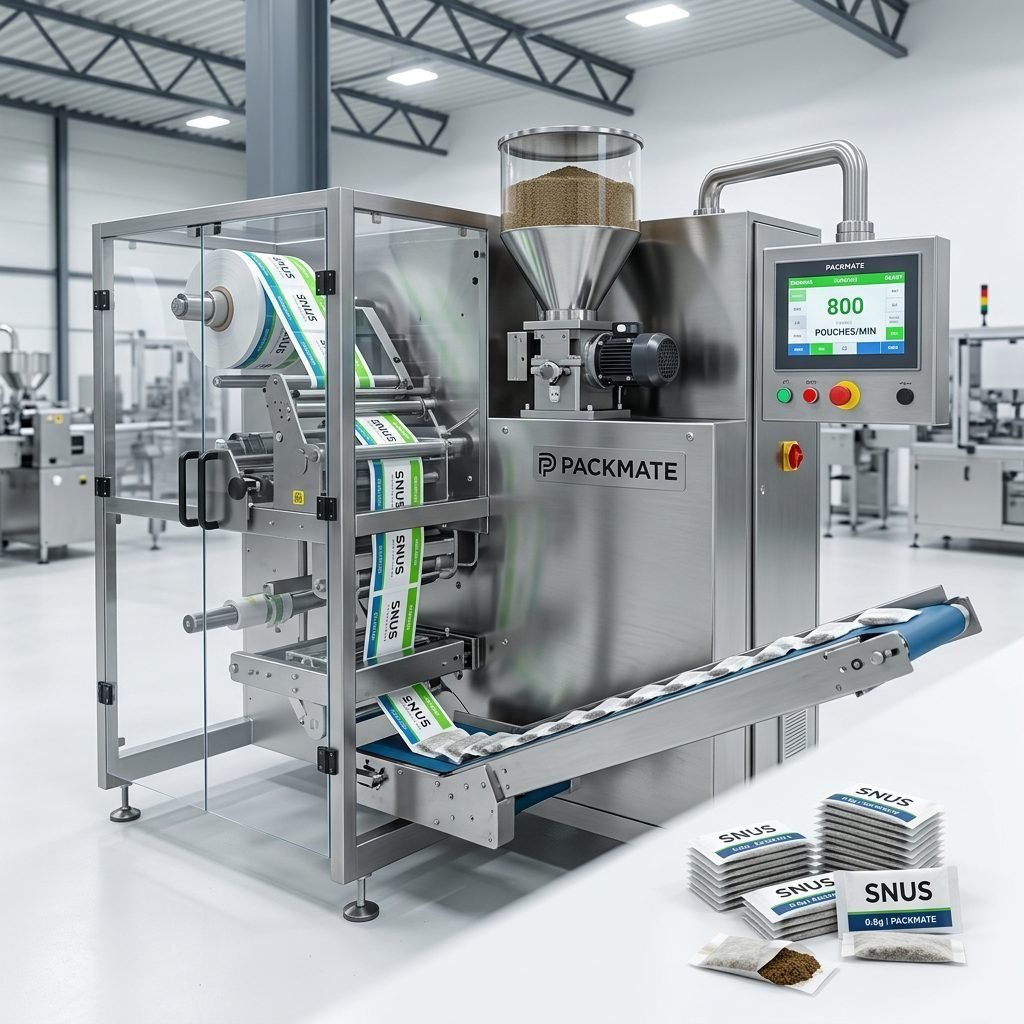
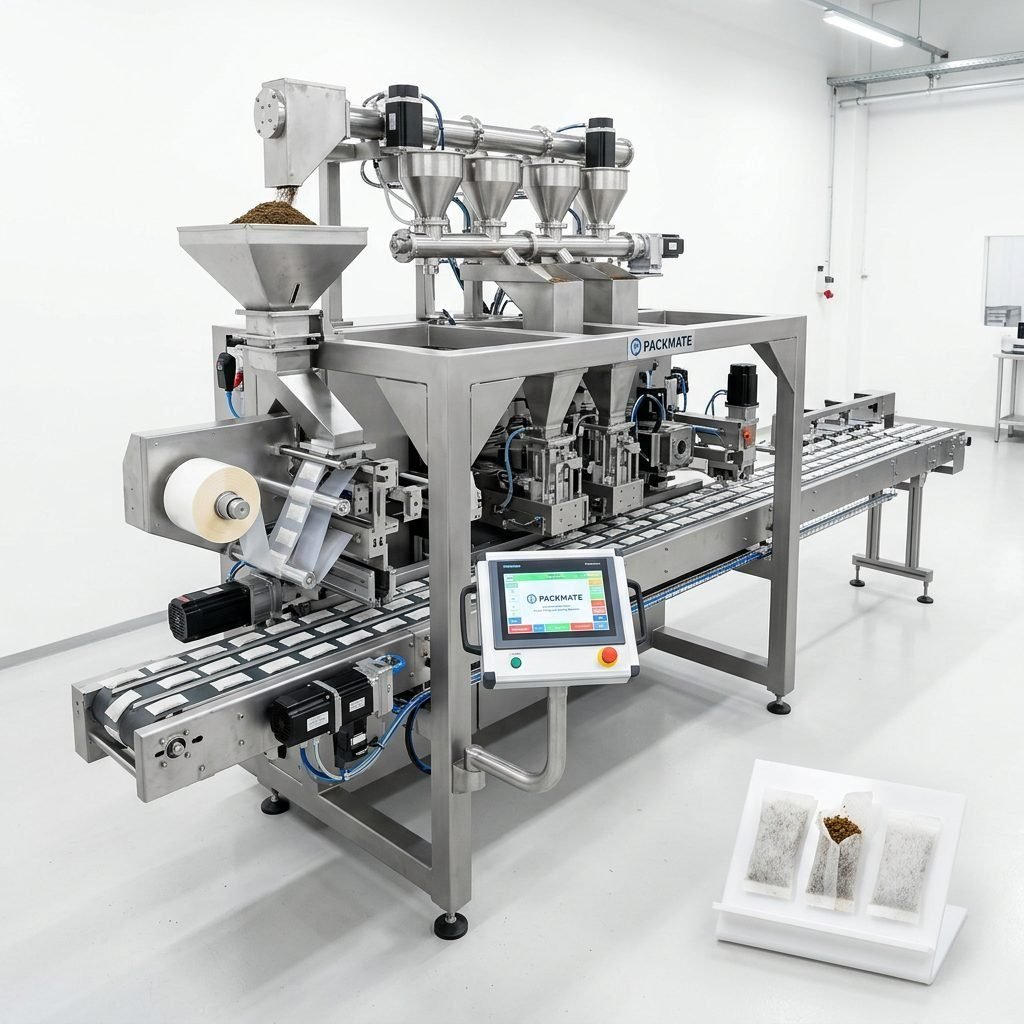
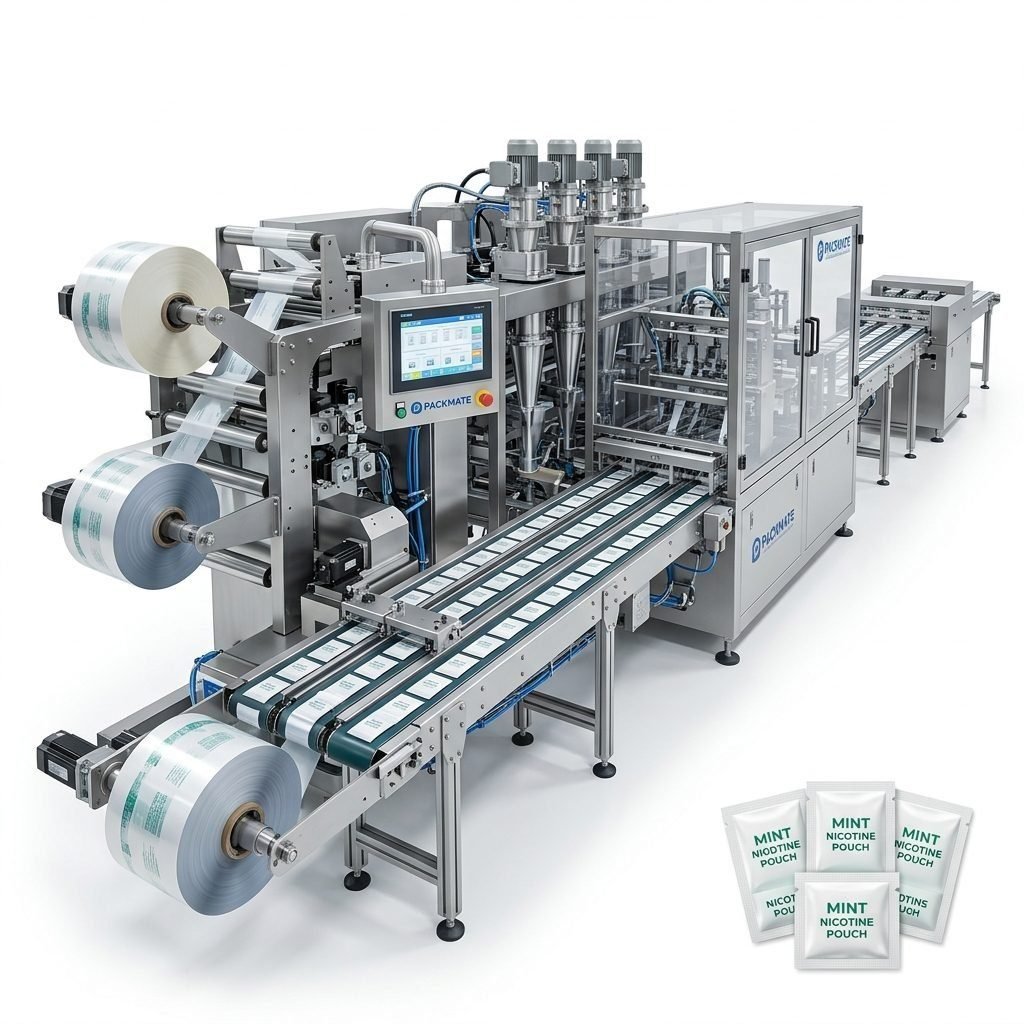
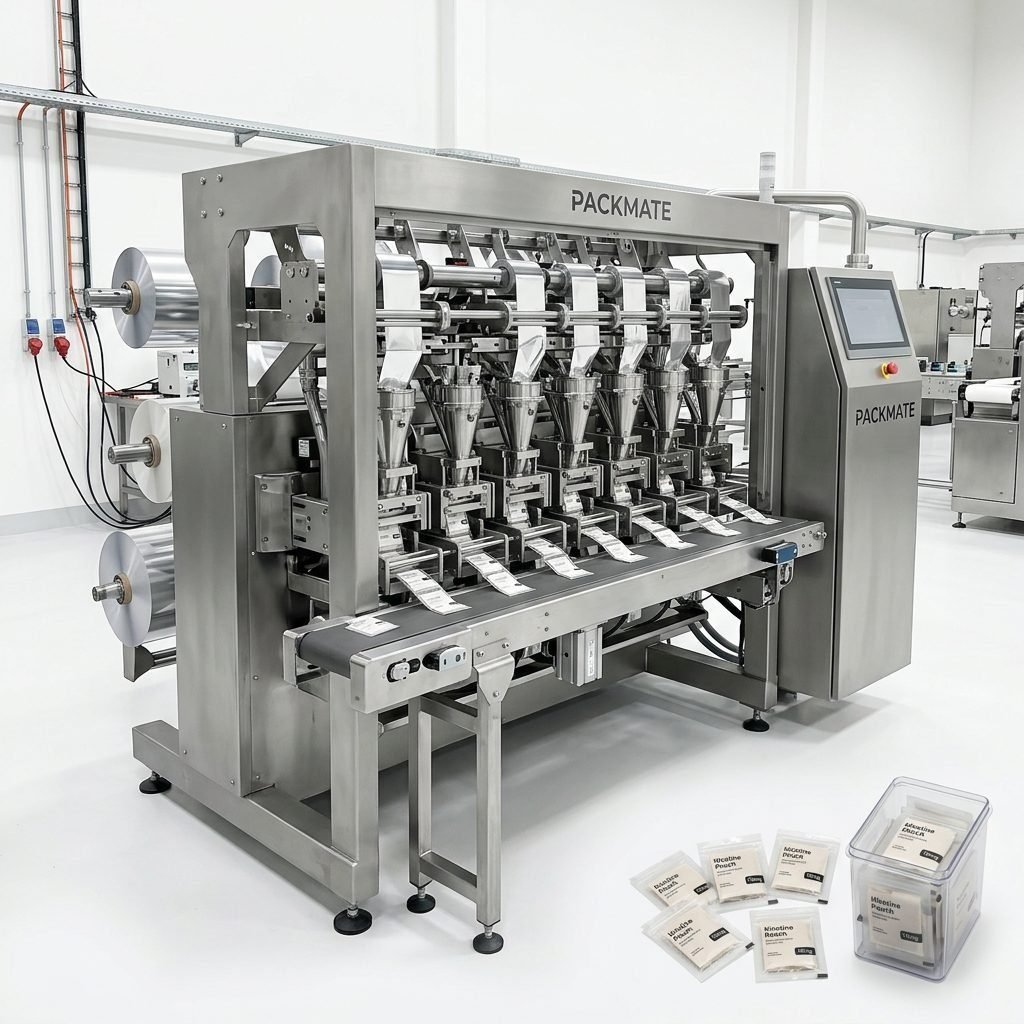
In a competitive nicotine pouch market, choosing the right automatic packing equipment can determine production efficiency, product consistency, and long-term profitability. This guide explores how modern nicotine pouch machines work, what features matter most for factory-scale operations, and why partnering with an experienced manufacturer can fast-track your line from prototype to high-speed mass production. Whether you are scaling an existing snus product, launching a new brand, or evaluating turnkey packaging solutions, this article gives you a practical roadmap to select the best automatic packing solution for your factory.
Why automatic nicotine pouch machines matter for your factory
Automating pouch packaging delivers predictable throughput, reduces labor variability, and improves hygiene and traceability. Modern machines are engineered to handle small-dose pouches with high accuracy and minimal waste. Key benefits include reduced downtime through reliable components, repeatable sealing/labeling accuracy, and integrated quality checks that protect brand reputation. For factories producing thousands to millions of pouches each month, automation is not a luxury—it’s a requirement to remain competitive.
Top business outcomes from automation
✅ Consistent pouch weight and dose accuracy that reduce rework and regulatory risk.
⚙️ Faster changeovers and flexible format options to support seasonal SKUs or promotions.
📦 Lower labor costs per unit and higher line utilization for improved margins.
🌍 Easier compliance with export markets thanks to standardized electrical and safety certifications.
Machine types and how they meet different needs
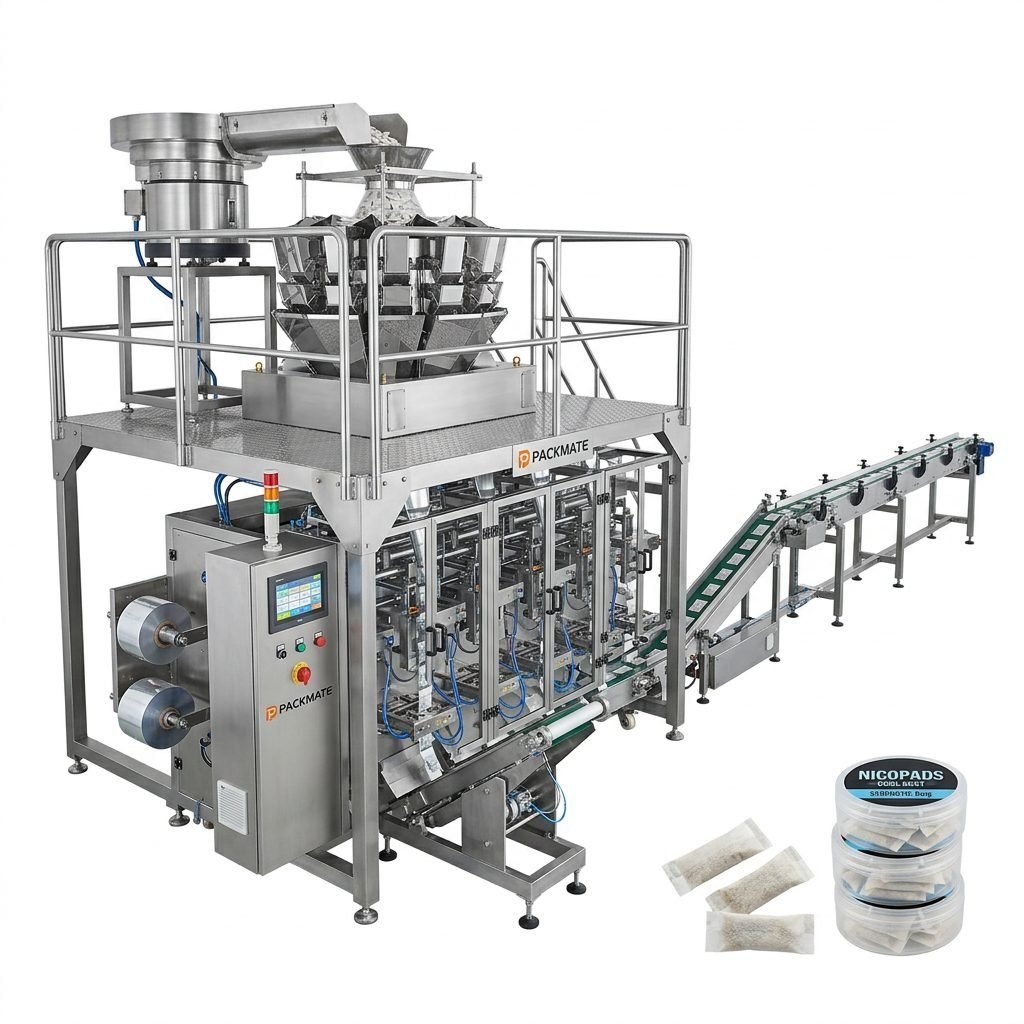
Nicotine pouch lines come in several formats. Choosing the right type depends on product form, desired output speed, pouch design, and downstream packing. Understanding each machine class helps you match capability to your business plan.
Multi-lane systems
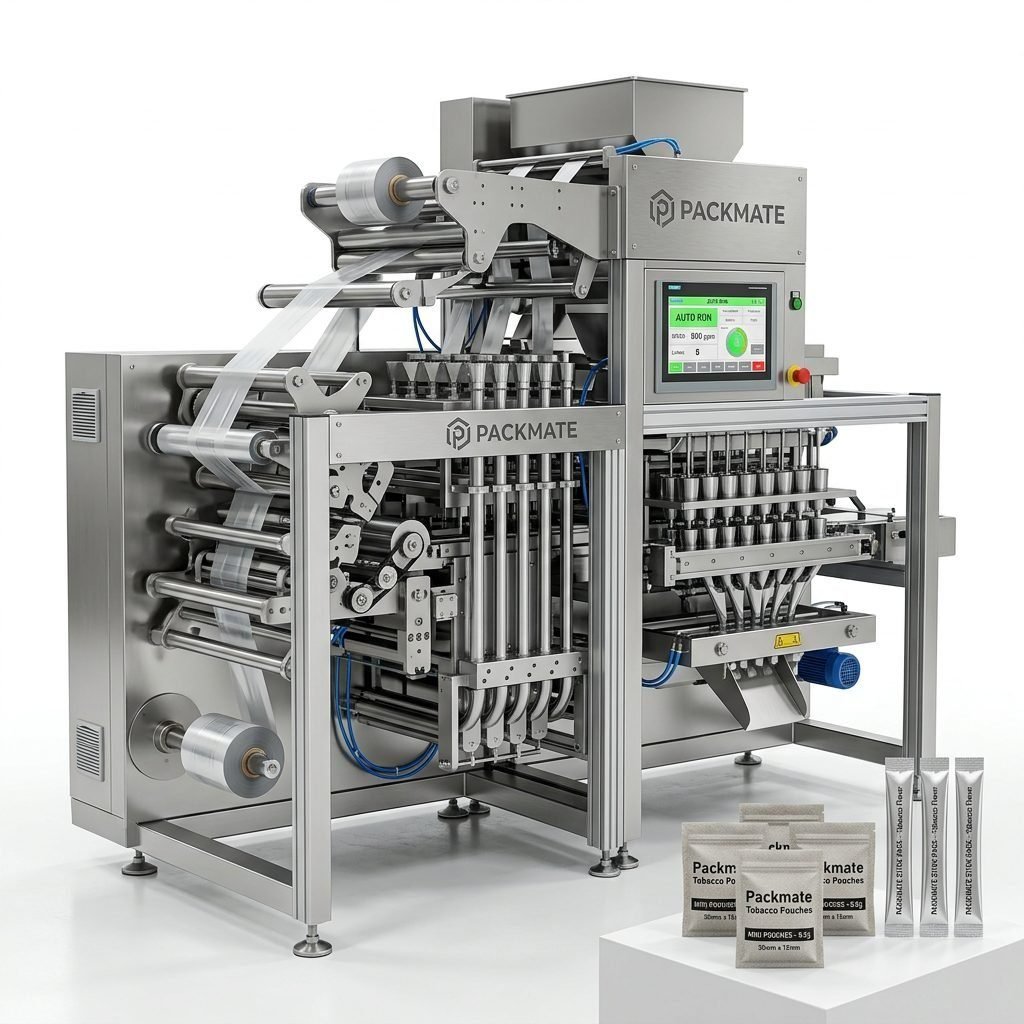
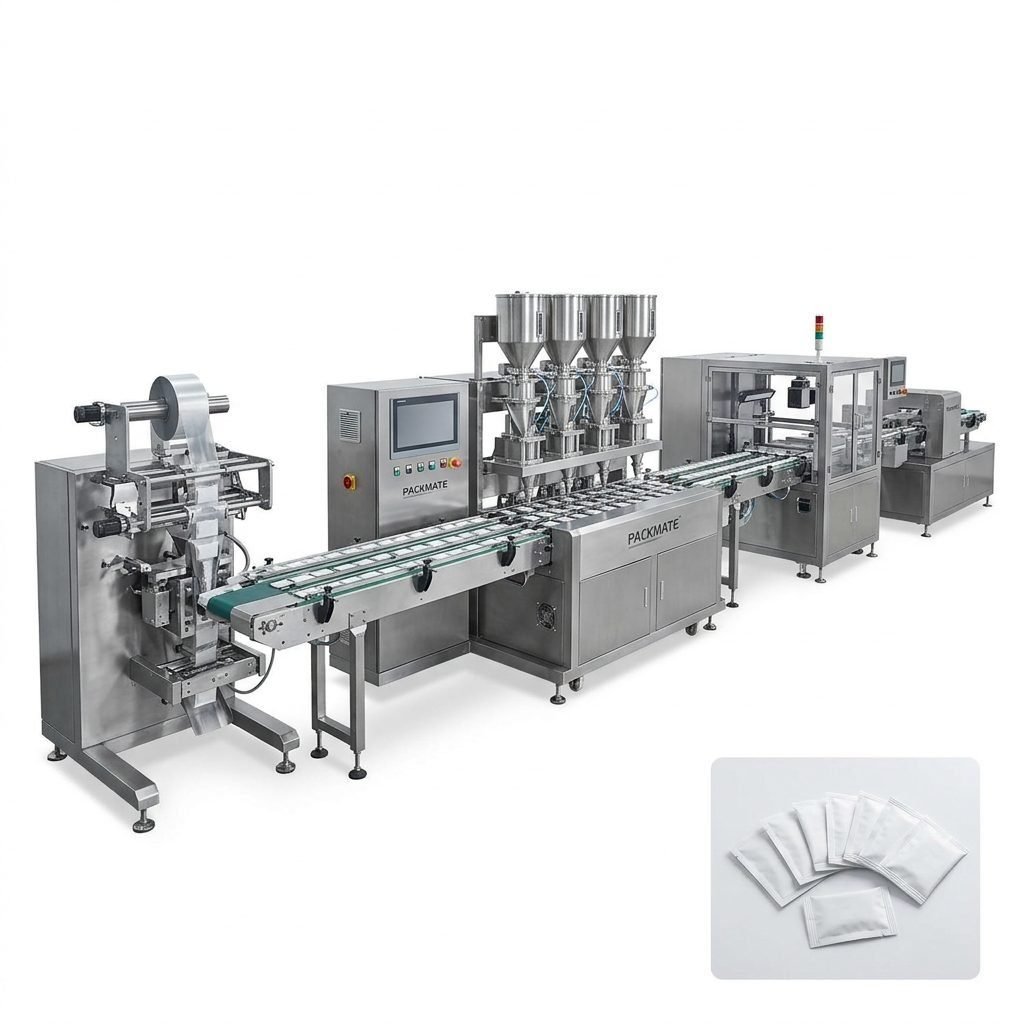
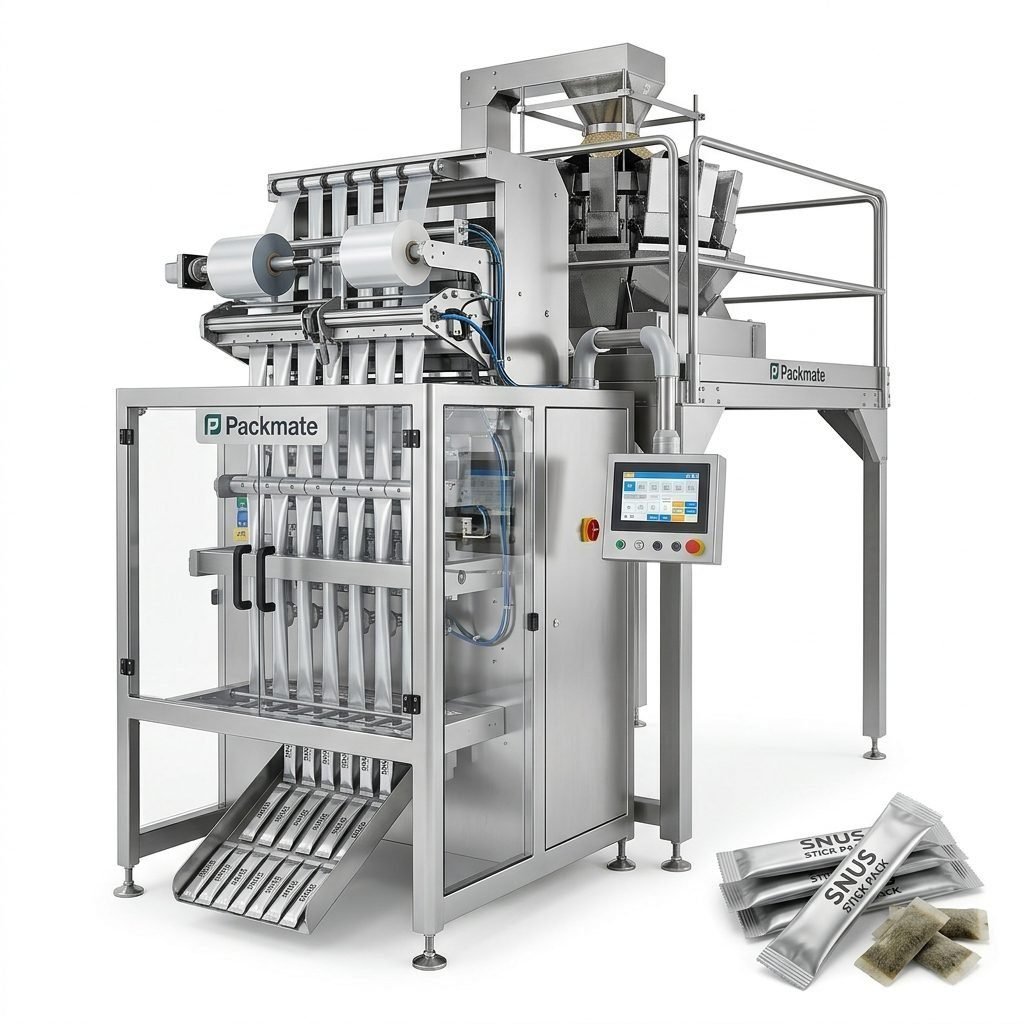
Multi-lane machines multiply output by running several pouch lanes in parallel — ideal for small-dose pouches where single-lane speeds would limit throughput. These systems are engineered for precise filling, synchronized sealing, and minimal product loss. If your factory aims for high-volume production with consistent pouch geometry, multi-lane is often the best investment.
Stick pack and sachet machines
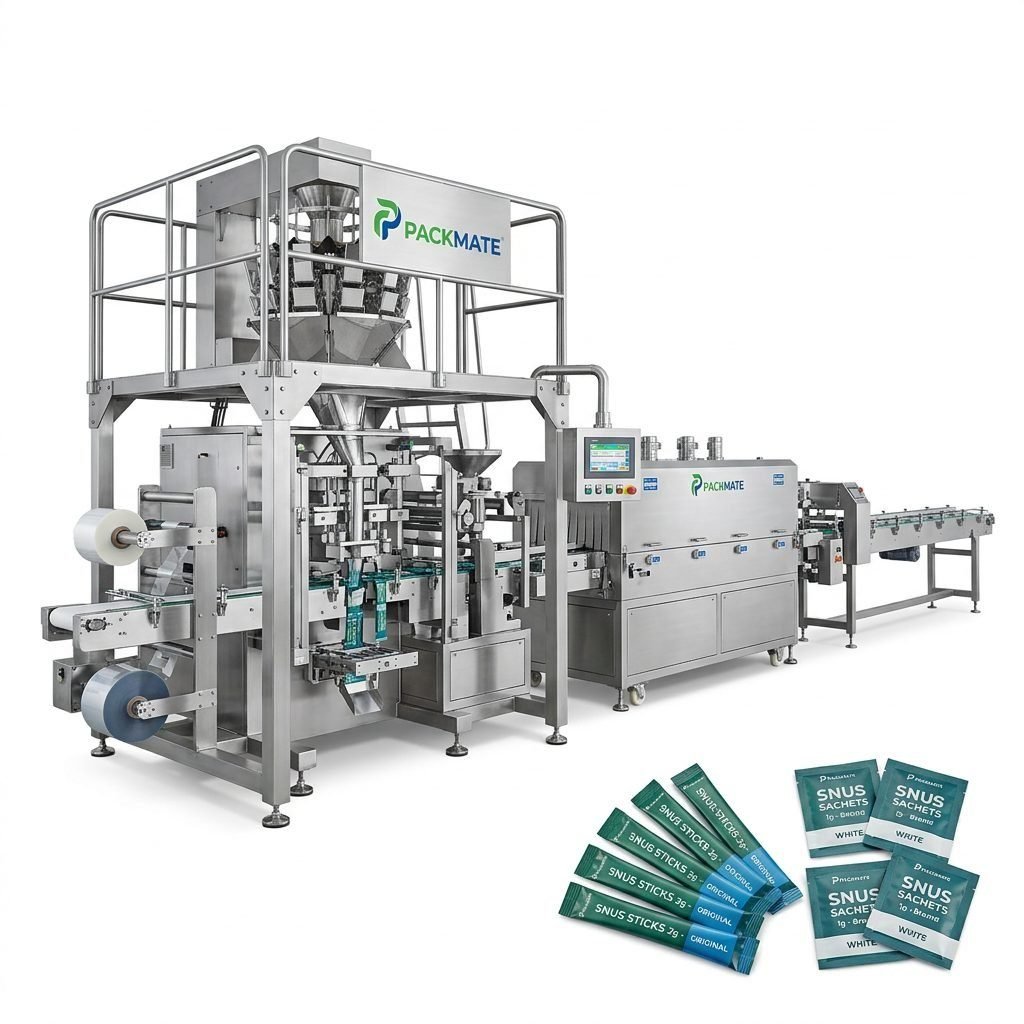
Stick pack and sachet machines offer alternative formats for nicotine or oral products. Stick packs deliver easy single-serve formats while sachets accommodate powder or granular fills. Machines designed for these formats provide fast forming, precise cutting, and reliable sealing — critical when packaging hygroscopic or fine-grained materials.
For more details on model types and specifications, manufacturers often list machine families and options. See a broad selection of specialized equipment at Snus & Nicotine Packaging Machines to compare features and line capabilities.
Factory & manufacturing strength (why it matters)
Choosing a manufacturer with deep engineering experience and strong production capabilities reduces your time-to-market and ensures machine reliability. Look for:
• Proven CNC and precision assembly facilities that produce repeatable tolerances.
• A wide model range (50+ models) for simpler customization.
• A track record of turnkey lines, from filling to primary pouch packaging and secondary case packing.
Learn more about a supplier’s background and capabilities at About Packmate, where factory scale and development history are detailed.
Key features to evaluate when selecting a nicotine pouch machine
Not all machines are built equally. Focus on features that influence uptime, quality, and operator ergonomics.
⚙️ Filling precision: High-accuracy weighers and volumetric modules ensure dosage consistency — a must for regulated products.
🔧 Sealing technology: Reliable heat-seal or ultrasonic methods for airtight, tamper-evident closure with consistent temperature control.
🧭 PLC & HMI integration: Intuitive human-machine interfaces and PLC controls reduce training time and allow quick recipe changes and data logging.
🔍 Quality inspection: Integrated metal detection, vision systems, or weight checks minimize recalls and ensure compliance.
🔁 Changeover efficiency: Tool-free or fast-adjust mechanisms for converting between pouch sizes or lane counts help maintain line flexibility.
Turnkey solutions and system integration
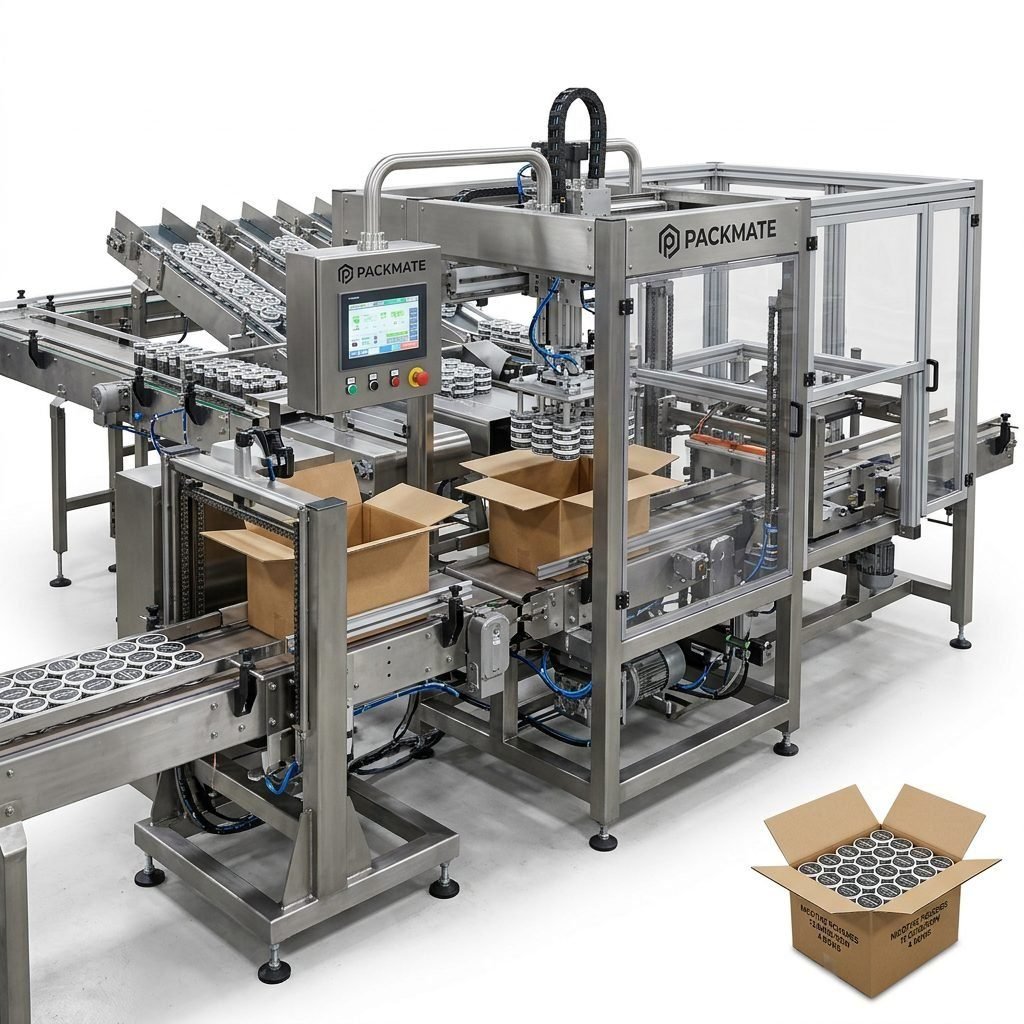
Full production lines often include upstream dosing/weighing, the primary snus or nicotine pouch packer, and downstream cartoning, case packing, and palletizing. Selecting a supplier that delivers integrated lines reduces compatibility risks and shortens installation time. Consider modular suppliers who can provide auxiliary systems such as conveyors, metal detectors, weighing & packaging systems, and secondary packaging so your factory can run smoothly from raw material to pallet.
If you need matched solutions for filling, weighing, and secondary packing, review offerings under Bag & Pouch Packaging Machines and Weighing & Packaging Systems to see how components interconnect.
Certifications, service, and global support
CE and ISO certifications are essential signals of compliance with international safety and quality standards. A manufacturer that supports commissioning, start-up training, spare parts, and long-term service contracts reduces the hidden cost of ownership. Prioritize suppliers with documented global installations and exhibition presence, so you can validate machine performance and ask for references from similar production scenarios.
After-sales and spare parts
Fast spare-part availability and remote support cut downtime. Evaluate suppliers for stocked critical spares, detailed manuals, and remote diagnostic tools. Strong partners often provide on-site commissioning teams and tailored service plans to meet production SLAs.
Return on investment: calculating real-world costs and benefits
ROI depends on capital cost, operating expenses, yield improvement, and production speed. Consider these elements when modeling payback:
• Throughput gains from multi-lane operation and shift utilization.
• Waste reduction from improved fill accuracy and sealing.
• Labor savings from automation and reduced manual packaging tasks.
• Downtime costs minimized by robust components and local service.
Checklist: how to evaluate a supplier quickly
1. Production experience: Has the supplier built lines for nicotine pouches or snus? (30+ years or demonstrable project records are ideal).
2. Model range and customization: Can they tailor lane counts, pouch types, and dosing systems?
3. Factory capability: Do they have CNC machining centers and precision assembly to ensure part repeatability?
4. Certifications and references: Can they provide CE/ISO certificates and case studies from similar markets?
5. After-sales: What is their spare parts lead time and remote support policy?
Practical installation and factory planning tips
Plan layout early: leave clearance for maintenance, enable linear material flow, and segregate dust-prone areas. Coordinate utilities (compressed air, power, exhaust) and ensure proper floor load and anchoring points. Schedule operator training and start-up testing with the supplier present to validate recipes and quality controls before full production.
Case selection and references
Review case studies from manufacturers to learn how similar factories achieved target throughput, reduced waste, and improved ergonomics. When possible, ask for factory visits or live demonstration footage. You can view sample installations and successful projects under Case and Our Exhibition to help inform your selection process.
Common customization requests for nicotine pouch lines
Manufacturers often customize fill systems for different nicotine formulas, add humidity control, modify pouch geometry for branding needs, or integrate serialization and batch coding. Requesting a customized R&D plan early saves engineering cycles and ensures production readiness when your product reaches scale.
How to get a quote and next steps
Prepare a brief that includes expected daily output, pouch format, product characteristics (moisture, granule size, viscosity), and any regulatory or labeling requirements. Share your ideal timeline and budget range. Manufacturers typically respond with model recommendations, optional modules, layout drawings, and high-level CAPEX/OPEX estimates. For direct contact and tailored proposals, use the supplier’s Contact Us page to request a site audit or quotation.
Final thoughts
Investing in a well-engineered nicotine pouch machine pays dividends through improved quality, predictable throughput, and simplified compliance. Focus on machine precision, vendor experience, turnkey integration, and post-sale service when evaluating suppliers. A strategic purchase today secures your factory’s ability to scale, adapt, and compete in dynamic consumer markets.
Helpful resources
Browse product families and technical details at Snus & Nicotine Packaging Machines and Bag & Pouch Packaging Machines to compare configurations and standard options. When you’re ready to discuss line-level integration, reach out via Contact Us for a consultation and site survey.
Frequently Asked Questions
Q1: How long does it take to install a complete nicotine pouch line?
A: Typical installation and commissioning for a turnkey line ranges from 6 to 12 weeks after final design approval, depending on customization, shipping, and local factory readiness. Pre-shipment FAT (Factory Acceptance Testing) shortens on-site time.
Q2: What should I budget for spare parts and maintenance?
A: Annual spare parts budgets vary by utilization; plan for an initial critical spares kit (belts, sensors, seals, heaters) equal to 3–6% of machine cost, and a replenishment plan based on runtime hours and maintenance intervals.
Q3: Can machines handle different nicotine formulas and humidity-sensitive blends?
A: Yes. Many systems include climate control, gentle material handling, and specialized dosing systems for hygroscopic or low-flow materials. Discuss product specifics with the supplier to specify appropriate modules.
Q4: How do I verify a manufacturer’s credibility before purchase?
A: Ask for CE/ISO certificates, documented case studies, references, and, where possible, a visit to an existing installation or a live demo at an exhibition. Suppliers with extensive machining and assembly facilities typically provide more consistent quality.
Q5: Where can I see model options and request a quote?
A: View product ranges and request quotes through the manufacturer’s product pages and Contact Us portal to arrange a tailored proposal and site assessment.