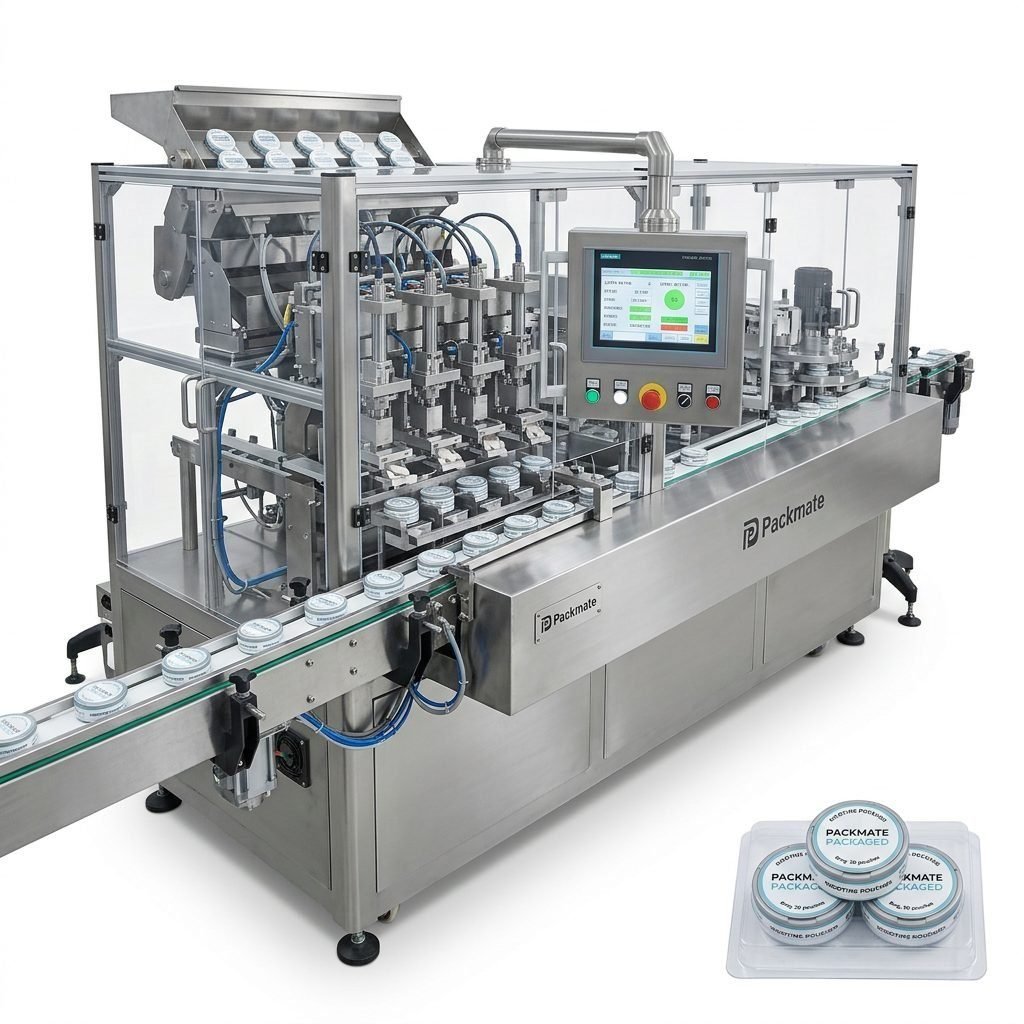
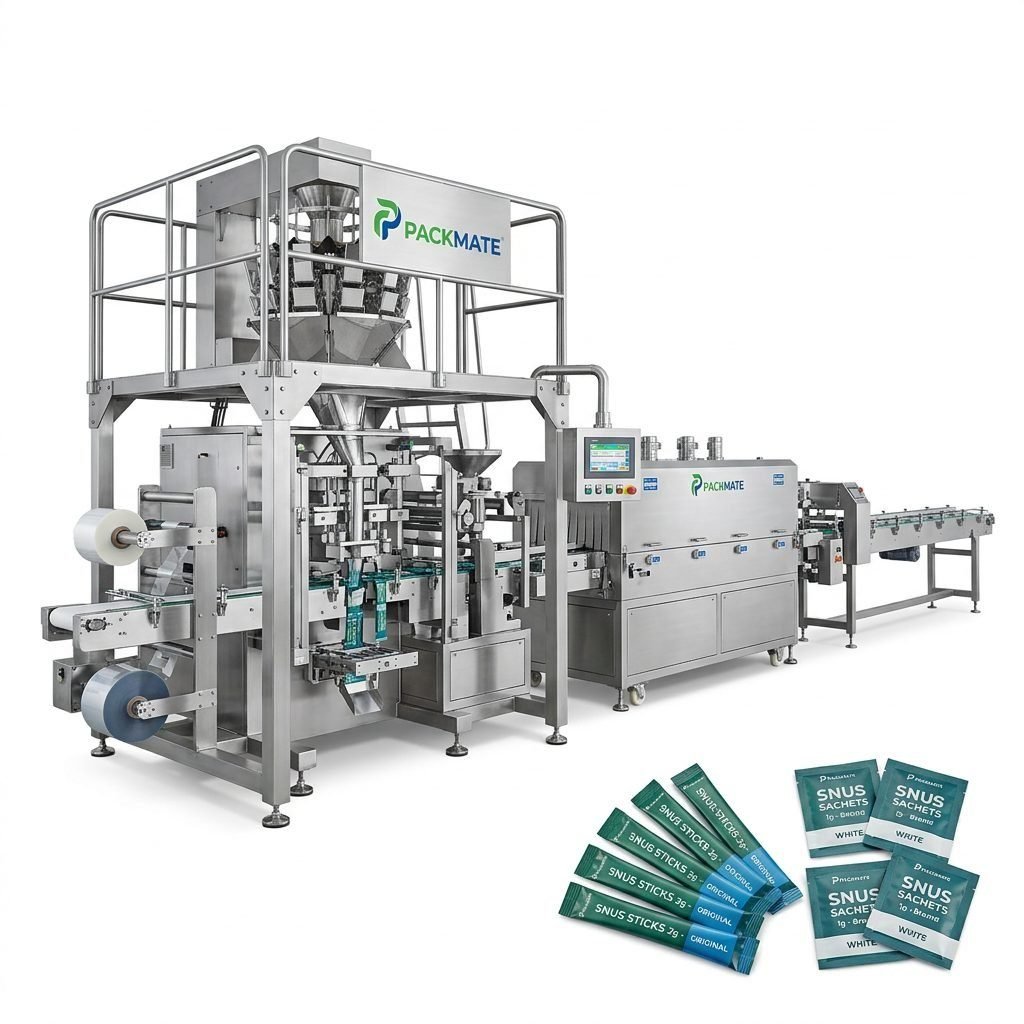
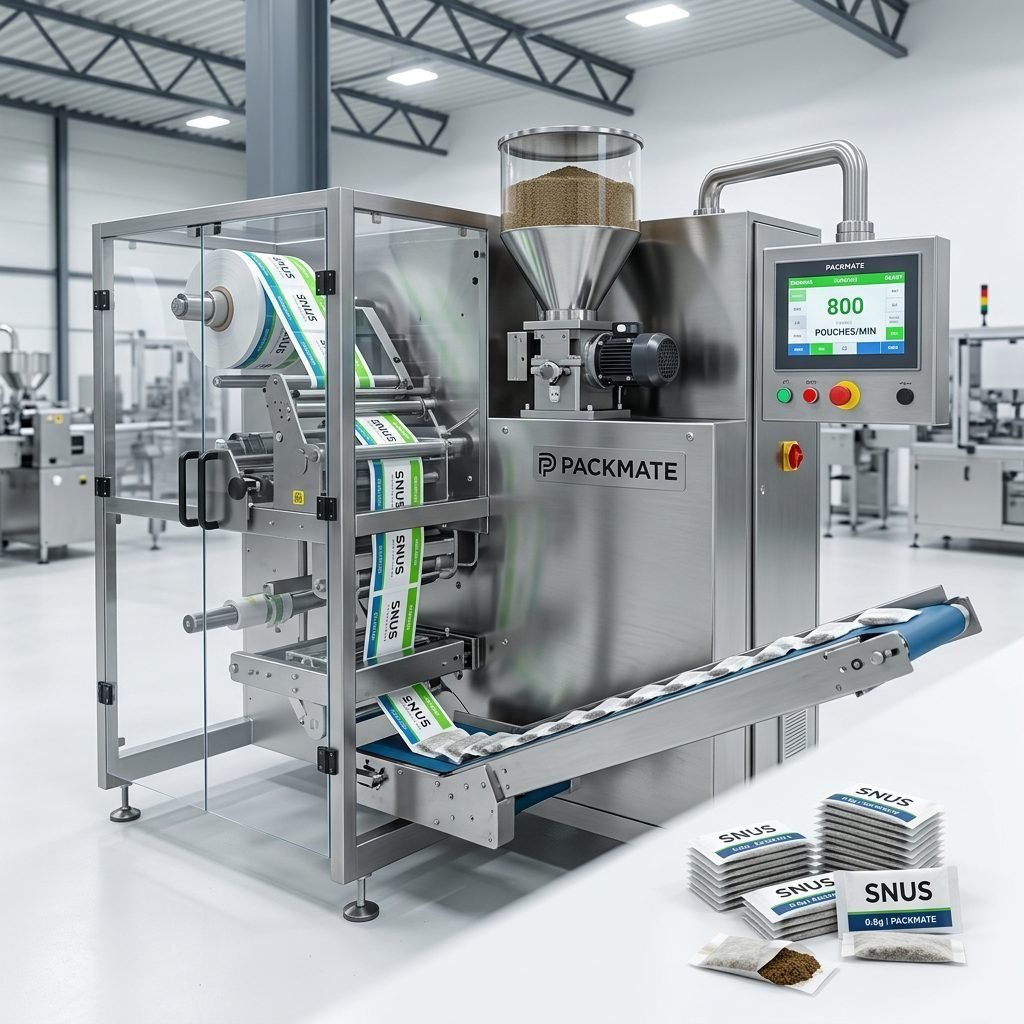
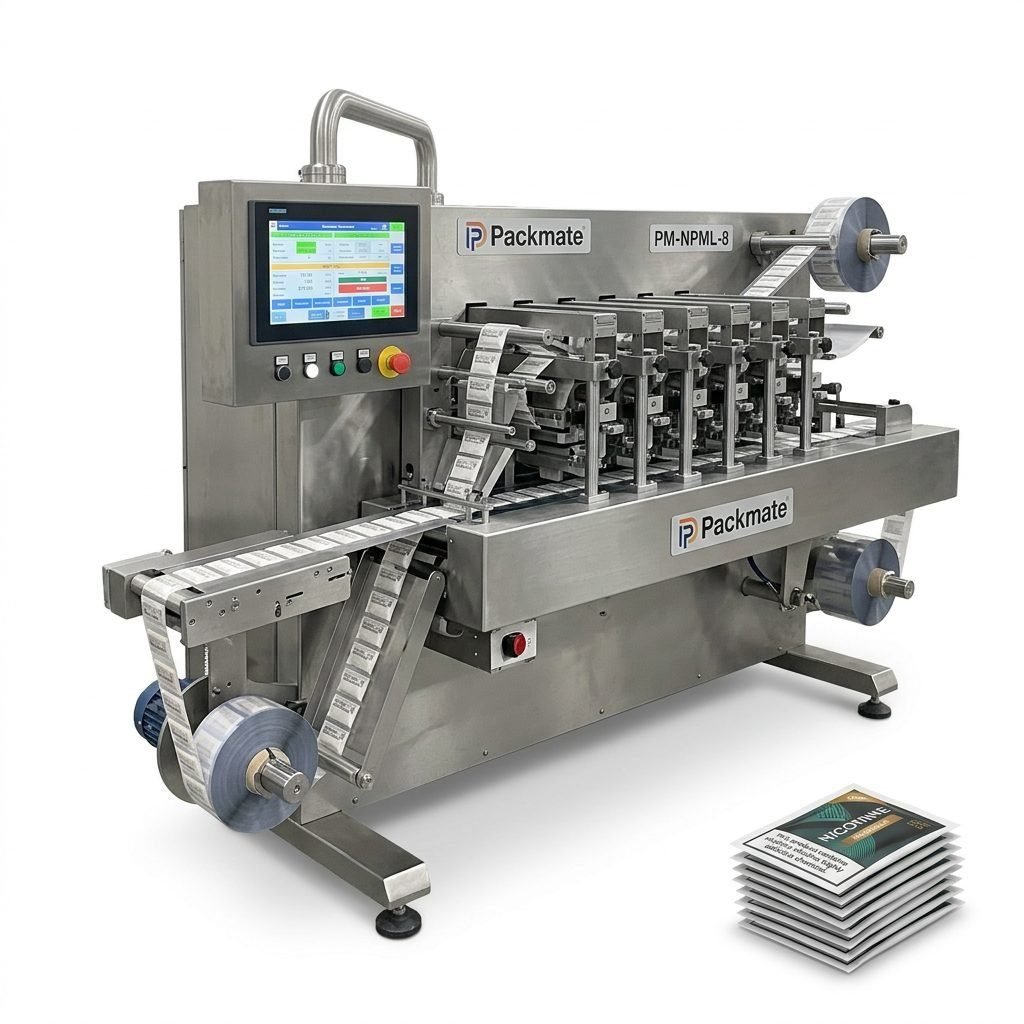
In the fast-growing snus and nicotine pouch market, manufacturers need a reliable, high-efficiency packing line that delivers consistent product quality, regulatory compliance, and fast time-to-market. This article explains a complete Snus Packing Line Solution — from core equipment and layout to customization, quality assurance, and after-sales support — to help production managers, engineers, and procurement teams make informed decisions.
Overview of a Complete Snus Packing Line Solution
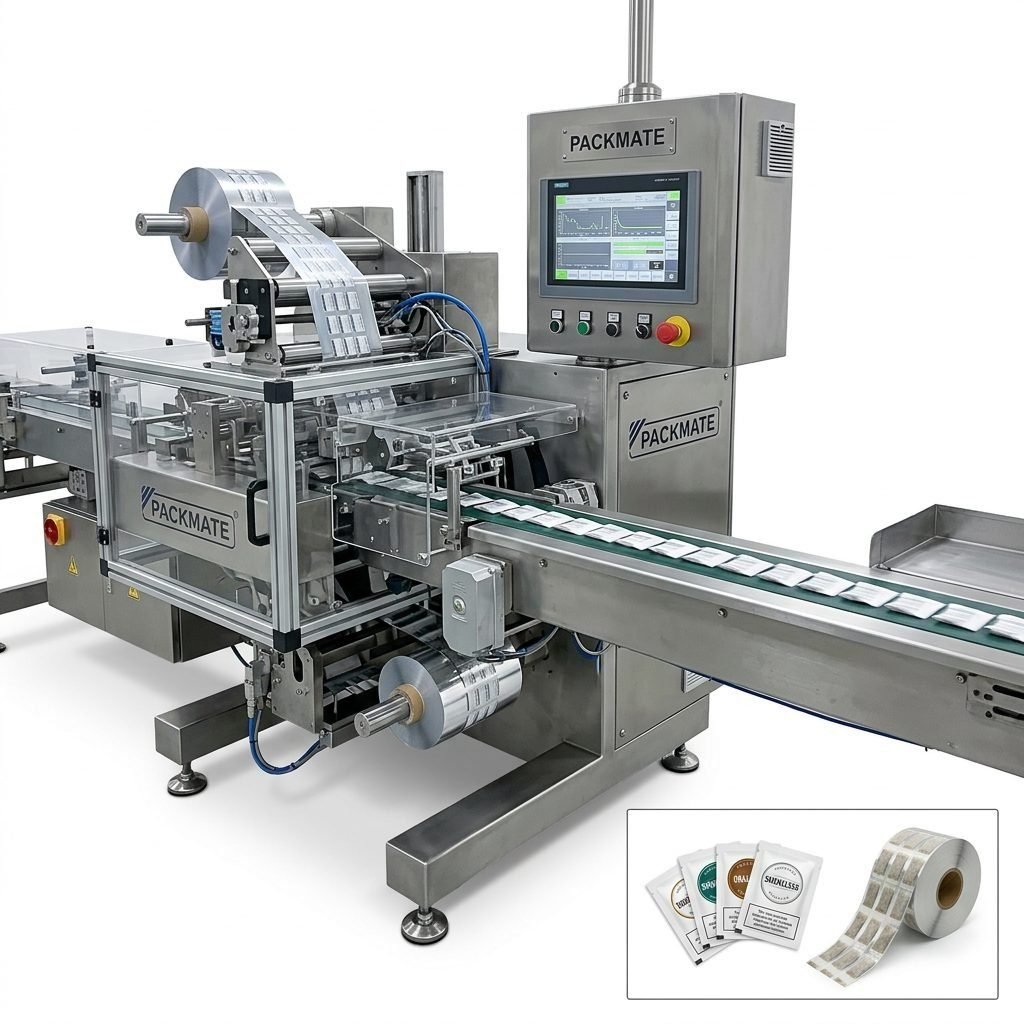
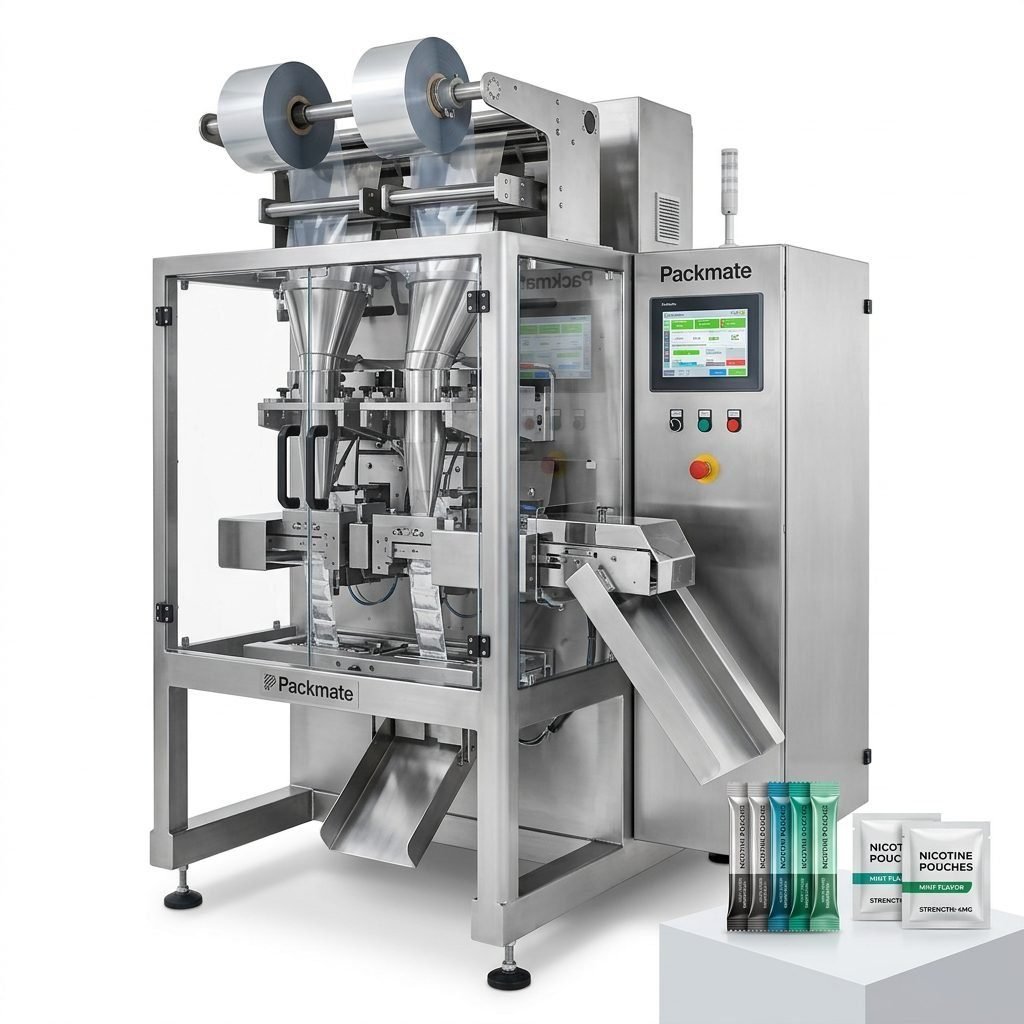
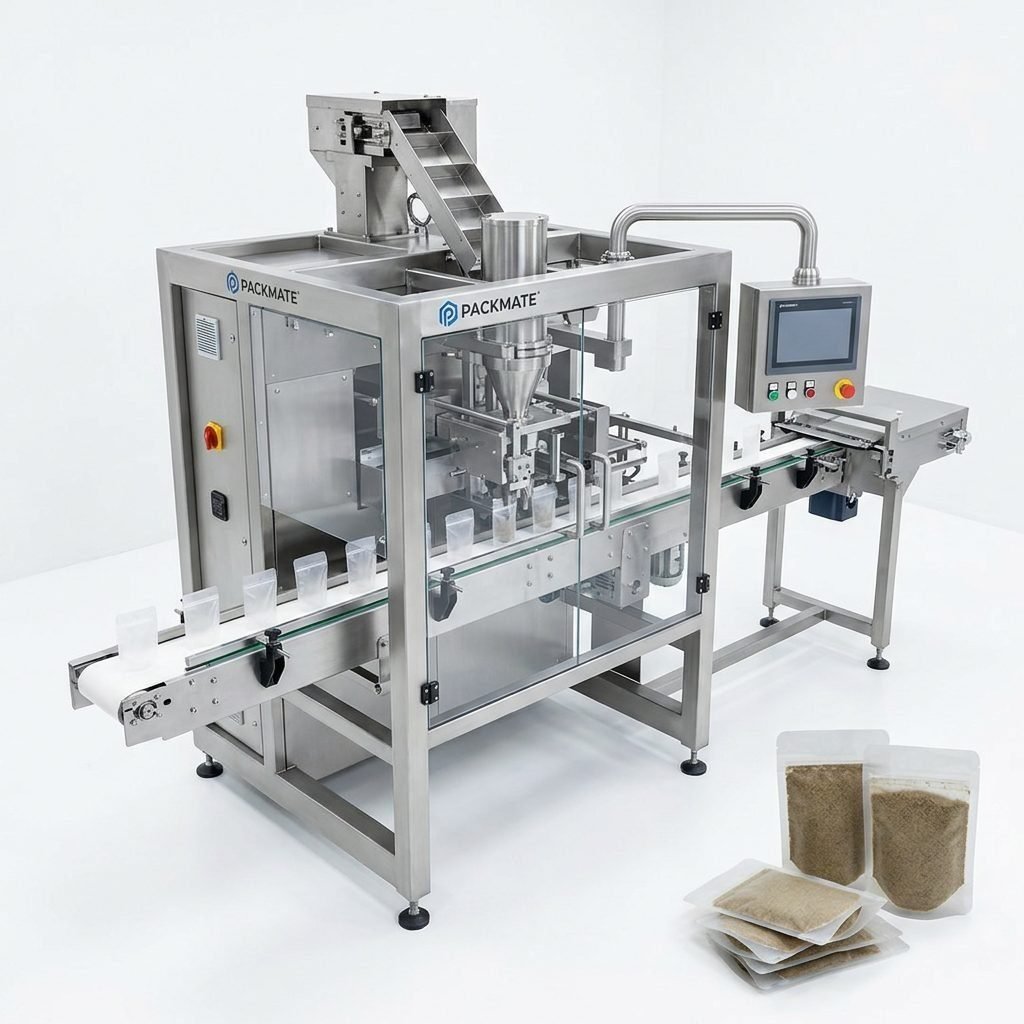
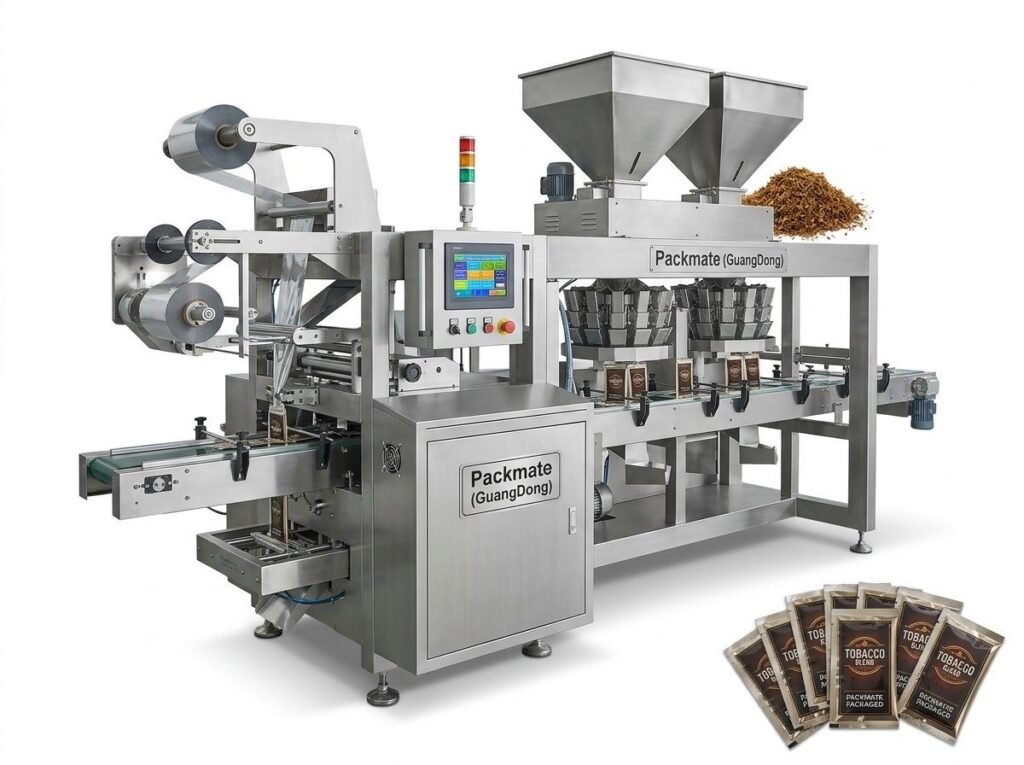
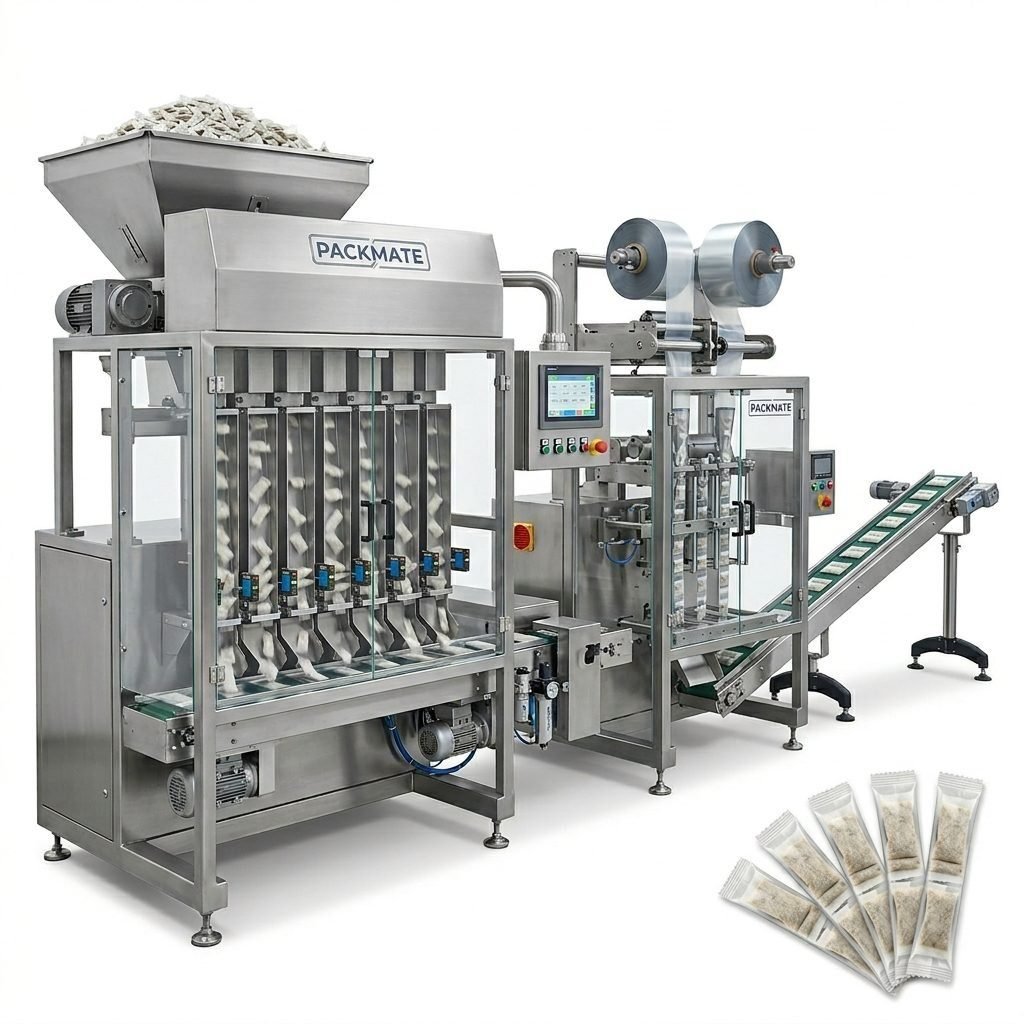
A full snus packing line typically integrates feeding & dosing systems, multi-lane pouch forming & sealing (stick pack or sachet), secondary packaging, and inline check systems. The goal is a fully automated production flow that minimizes manual intervention while maximizing uptime and throughput. Leading suppliers offer turnkey services that include engineering, factory layout, installation, and operator training.
Why choose an integrated line?
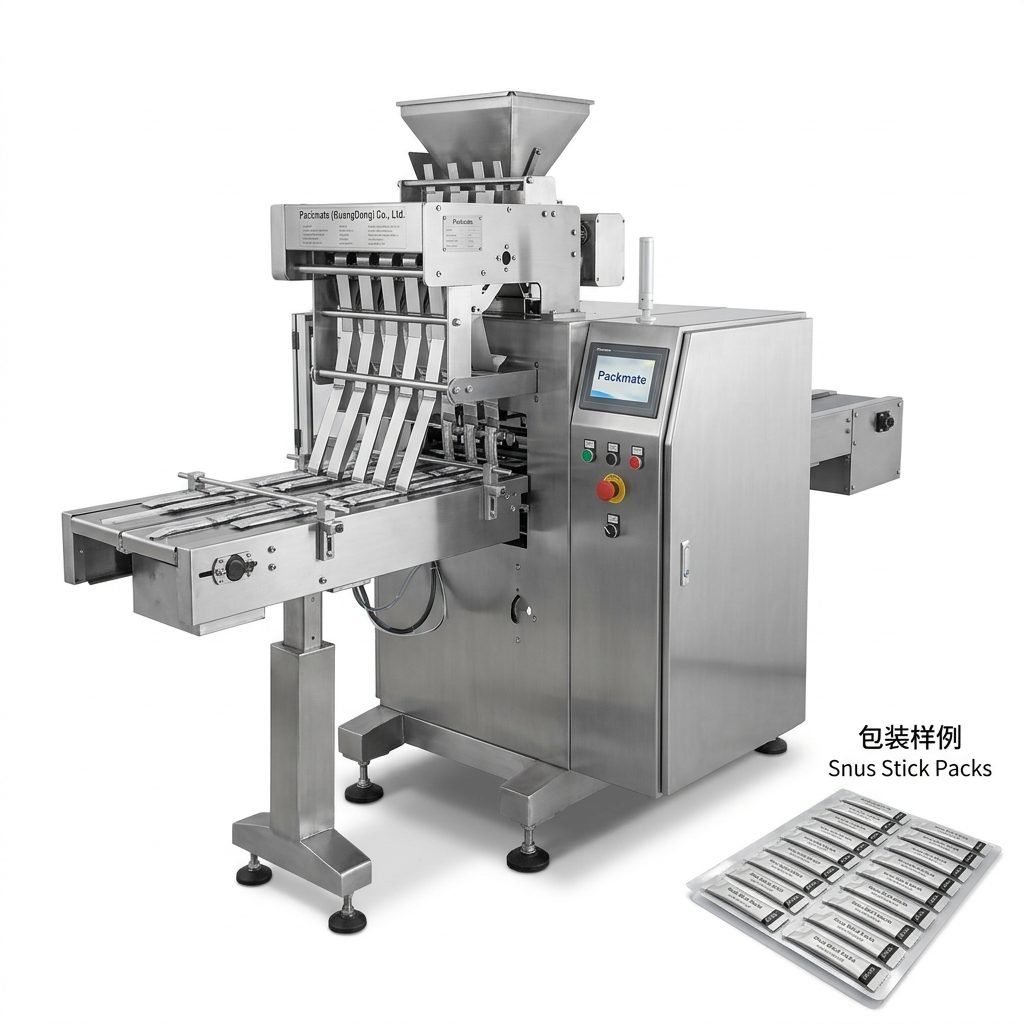
Integrated lines reduce handling errors, shorten cycle times, and enable synchronized changeovers. For snus manufacturers producing small-dose pouches, multi-lane systems can multiply output per machine footprint while keeping dose accuracy and quality stable.
Key Benefits at a Glance ⚙️
Higher throughput through multi-lane systems, consistent dosing with precision feeders, and reduced labor via full automation. Improved traceability and compliance-ready documentation help meet global regulatory needs.
Core Components of a Snus Packing Line
A typical snus packing line comprises modular equipment that can be combined or expanded as production demands change. Below are the most common components and their roles.
1. Feeding & Weighing Systems
⚖️ Precision feeders and multi-head weighers provide accurate portioning of tobacco, nicotine powder, or blend materials. Stable dosing is critical for small-dose pouches where gram-level variation affects product performance and compliance.
2. Pouch Forming & Sealing Units (Stick Pack / Sachet / Multi-lane)
These machines create the pouch shape, fill the measured dose, and complete the seal in high-speed cycles. Advanced models support multi-lane formats that multiply output without sacrificing precision. Explore tailored machine types at Snus & Nicotine Packaging Machines and Sachet & Stick Pack Machines.
3. Secondary Packaging & Cartoning
📦 Secondary machines pack finished pouches into cartons, trays, or display packs and can include inline labeling, serialization, and batch coding. These systems are often synchronized with the upstream line to prevent bottlenecks.
4. Inspection & Quality Control
Cameras, checkweighers, and metal detectors help ensure each pouch meets specs. Reject stations and data logging enable manufacturers to maintain traceability and perform rapid root-cause analysis.
Technical Advantages and Performance Highlights
Modern snus packing lines incorporate robust mechanical design, precision CNC components, and intelligent controls. Below are technical advantages that matter most for high-volume snus production.
Precision & Repeatability: Servo-driven dosing and sealing systems ensure pouch weight and seal integrity stay within narrow tolerances.
High Throughput: Multi-lane configurations increase throughput without expanding floor space excessively.
Ease of Maintenance: Quick-change parts, modular design, and clear access panels reduce downtime for cleaning and changeover.
Customization & Turnkey Services
Every snus product and regional regulation can require unique packaging solutions. Leading manufacturers provide tailored options including material compatibility, lane counts, dosing methods, and bespoke cartoning modules. For combined filling and packaging systems review the Filling & Packaging Lines.
✅ Typical turnkey scope: layout engineering, machine supply, electrical & pneumatic integration, FAT (Factory Acceptance Test), installation, start-up, and operator training.
Factory Strength, Quality and Compliance
Manufacturers with deep engineering roots and advanced machining capabilities deliver more reliable systems. A 20,000㎡ factory housing CNC centers and precision assembly lines ensures consistent build quality and faster lead times. For certification details visit Certificate.
Testing and Traceability
Robust testing includes pressure/temperature validation for sealing, endurance runs, and inline QA verification. Trace logs for batch codes, operator actions, and equipment status are provided to support audits and regulatory submissions.
Installation, Training and After-sales Service
Effective installation and operator training reduce commissioning time. Reputable suppliers include structured training programs, remote diagnostics, spare parts packages, and service agreements. For global support and contact details see Contact Us and Service.
Typical Production Scenarios & Case Insights
From start-ups seeking flexible small-batch capabilities to established brands expanding capacity, snus packing lines can be scaled. Case studies showcase lines installed in Europe, Asia, and the Americas, demonstrating improved yield, reduced scrap, and faster changeovers. See real-world deployments at Case.
📈 Example outcome: A multi-lane snus line doubled output per shift while lowering per-unit labor by over 60% after automation and process standardization.
How to Choose the Right Snus Packing Line
Selecting the best solution requires aligning production goals, budget, material types, and regulatory needs. Consider the following decision points:
⚙️ Production volume targets — estimate daily, weekly and peak capacities.
🧩 Flexibility — need for multi-format runs, lane reconfiguration, or quick-change tooling.
✅ Compliance & traceability — serialization, batch coding, and QA integration.
🔧 Service & spare parts availability — consider supplier proximity and support network.
Return on Investment and Operational Efficiency
Investment in automation should be measured against labor savings, yield improvements, and increased throughput. Many manufacturers achieve payback within 18–36 months when lines are correctly sized and processes optimized. Key metrics to track include OEE (Overall Equipment Effectiveness), reject rate, and changeover minutes.
🔎 Tip: Run a pilot or FAT to validate line capacity, dosing accuracy, and packaging integrity before full-scale deployment.
Partnering with an Experienced Manufacturer
Long-standing engineering experience, a broad product portfolio and manufacturing scale reduce project risks. Suppliers with demonstrated multi-lane expertise and global turnkey references can provide valuable insights into line optimization and lifecycle support. Learn more about the company behind many solutions at About Packmate.
Exhibitions and Demonstrations
Attending live demonstrations and visiting exhibitions allows teams to see machine performance firsthand and compare models. For upcoming events and demonstrations see Our Exhibition.
Conclusion
A complete Snus Packing Line Solution brings together precision dosing, high-speed pouch forming, reliable sealing, and integrated quality control to meet the demands of modern nicotine pouch manufacturing. By selecting an experienced partner with a strong manufacturing base, modular product range, and proven service network, manufacturers can reduce risk, increase productivity, and ensure long-term compliance.
Frequently Asked Questions
Q1: What production capacity can a multi-lane snus line achieve?
A: Capacity depends on lane count, pouch format and cycle speed. Multi-lane systems can multiply single-lane throughput several times; typical industrial lines are engineered to meet specific daily output targets agreed during project scoping.
Q2: How do you ensure dosing accuracy for small-dose pouches?
A: Accuracy is achieved with precision feeders, servo control, multi-head weighers or screw-based dosing depending on material properties. Regular calibration and in-line checkweighers maintain consistency.
Q3: What compliance documentation is typically provided?
A: Suppliers provide CE/ISO certificates where applicable, FAT reports, electrical and pneumatic schematics, IQ/OQ documentation, and traceability records for key components.
Q4: Can lines be upgraded over time?
A: Yes. Modular designs enable lane expansion, new filling modules, or upgraded control systems to be integrated as production needs evolve.
Q5: How do I start a project for a new snus packing line?
A: Begin with a requirements brief outlining product specs, target capacity, packaging formats and regulatory markets. Engage a supplier early for layout planning, feasibility assessment and budgetary estimates. For direct inquiries and next steps contact your chosen supplier or visit the service pages linked above.