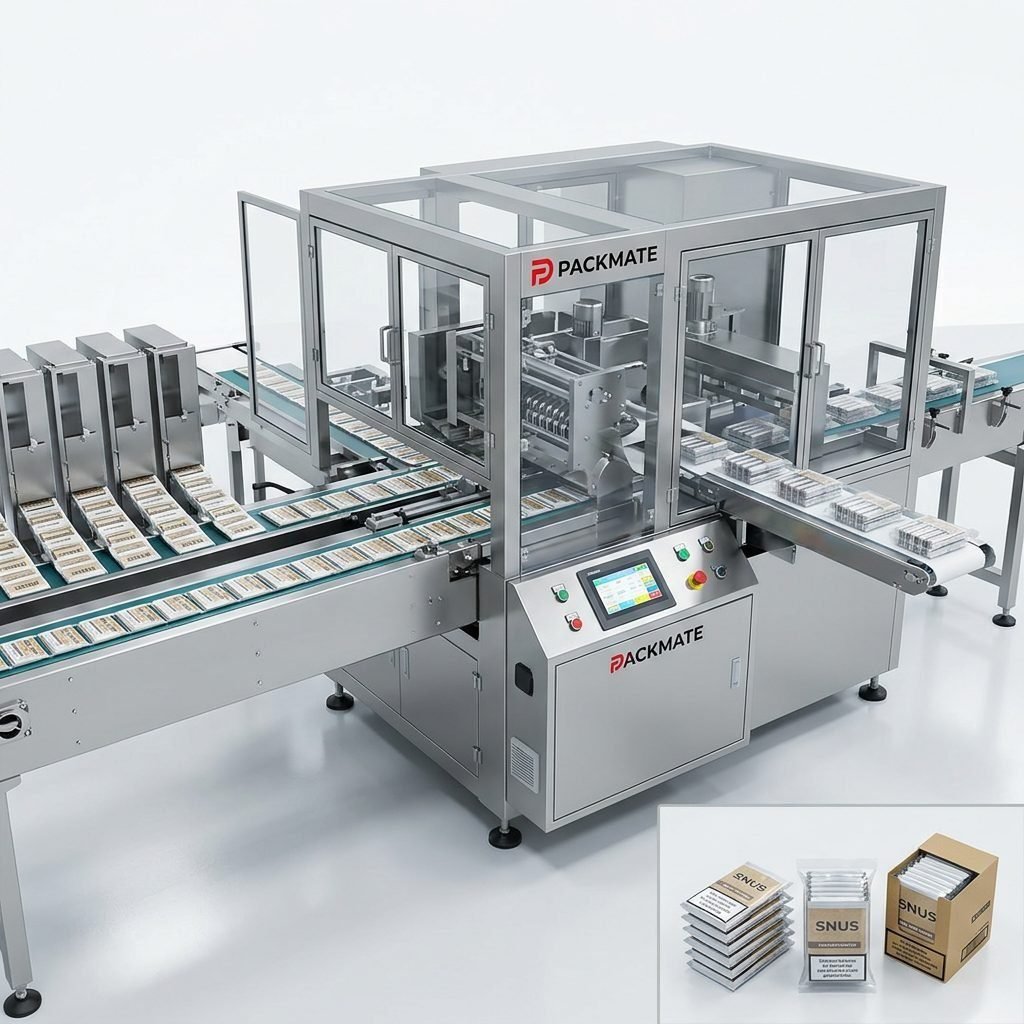
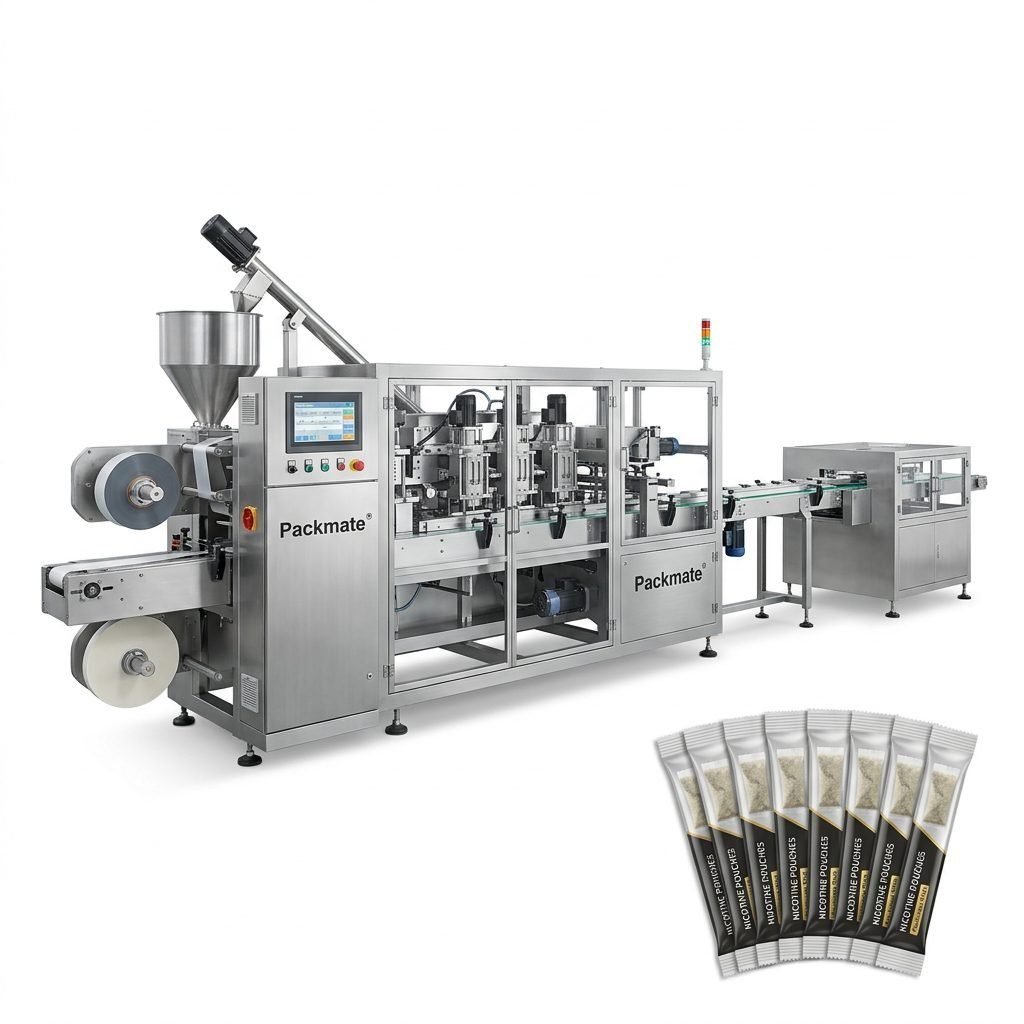
In a rapidly evolving nicotine pouch and snus market, manufacturers demand packaging solutions that deliver consistency, speed, and regulatory compliance. A Professional Nicotine Pouch Packing Line is a complete automatic packaging solution engineered for high-efficiency production, precise dosing, and reliable sealing performance. This article explores the design principles, equipment modules, production workflows, customization options, and real-world benefits that modern snus and nicotine pouch producers can expect from an integrated packing line.
Why Choose a Fully Automatic Nicotine Pouch Packing Line?
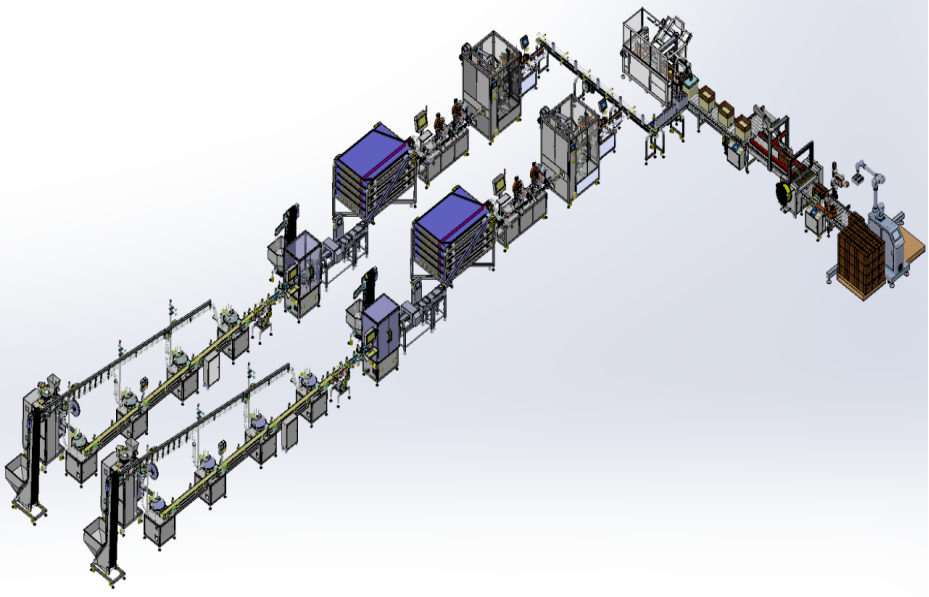
Modern demand requires packaging lines that reduce manual labor, improve hygiene, and scale up throughput without sacrificing pouch quality. A fully automatic packing line accomplishes this by integrating upstream weighing and dosing, multi-lane forming and filling, precision sealing, and downstream inspection and cartoning. Manufacturers save on labor and reduce packaging defects while maintaining compliance with international standards such as CE and ISO.
Key benefits at a glance:
✓ Higher throughput across multi-lane modules,
✓ Consistent pouch fill and weight accuracy,
✓ Reduced contamination risk with enclosed systems.
Core Components of a Professional Packing Line
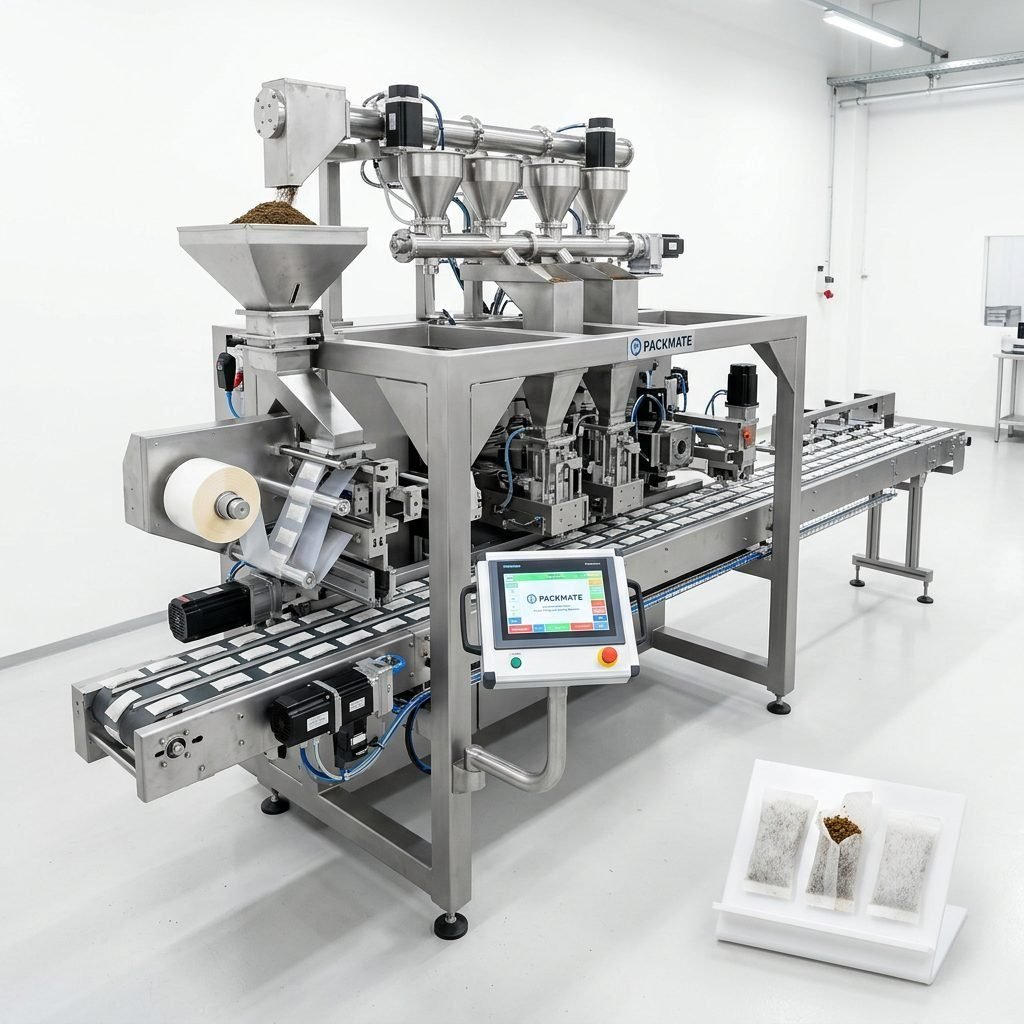
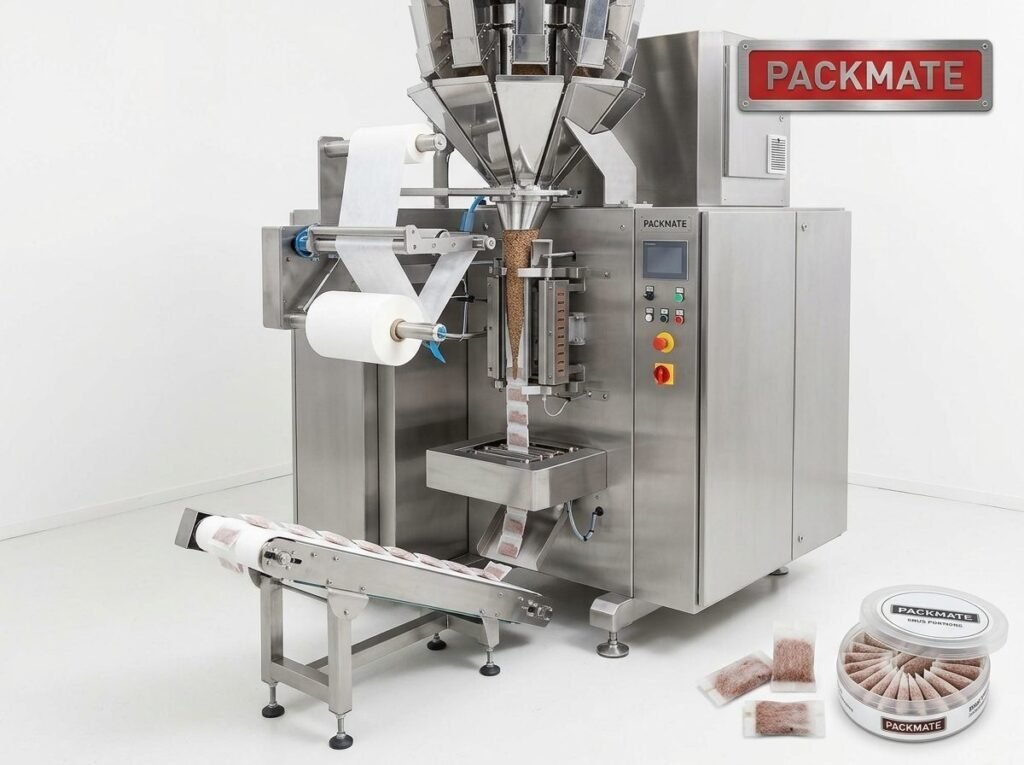
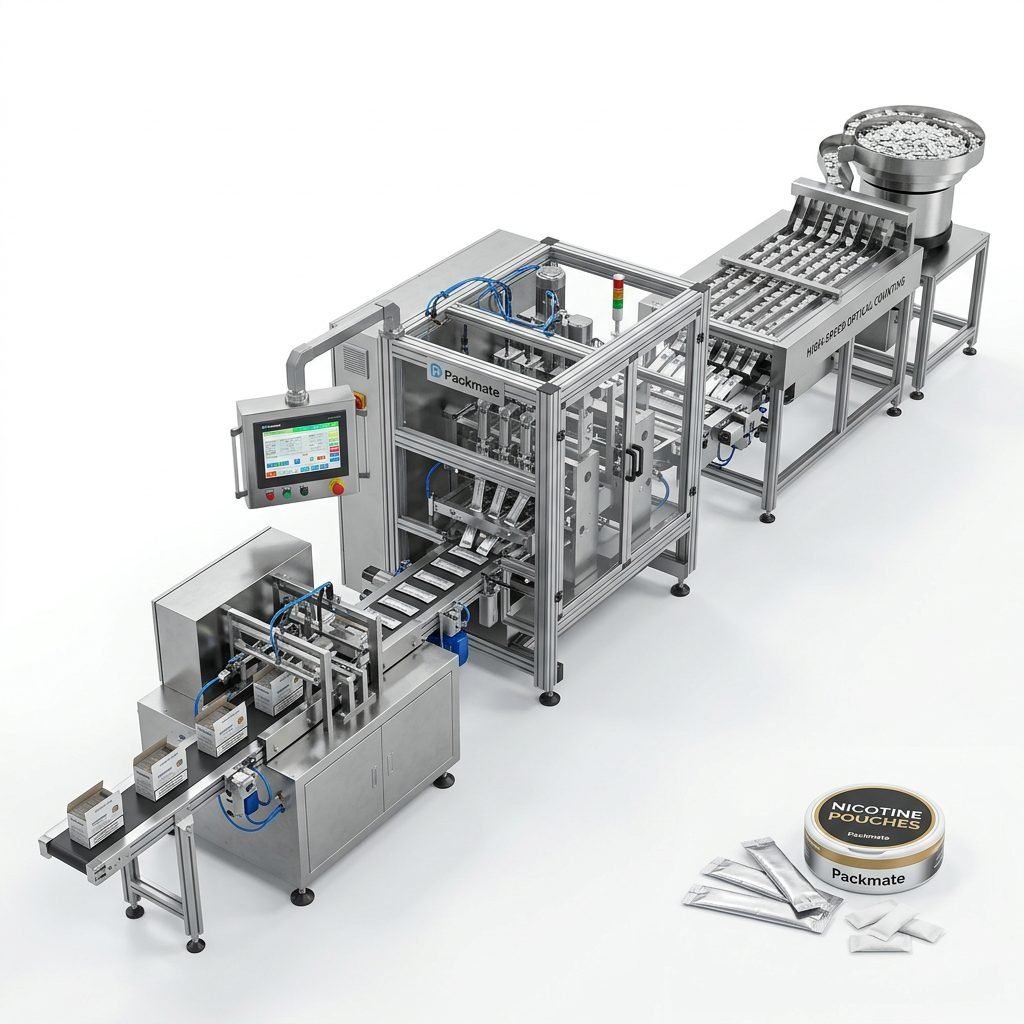
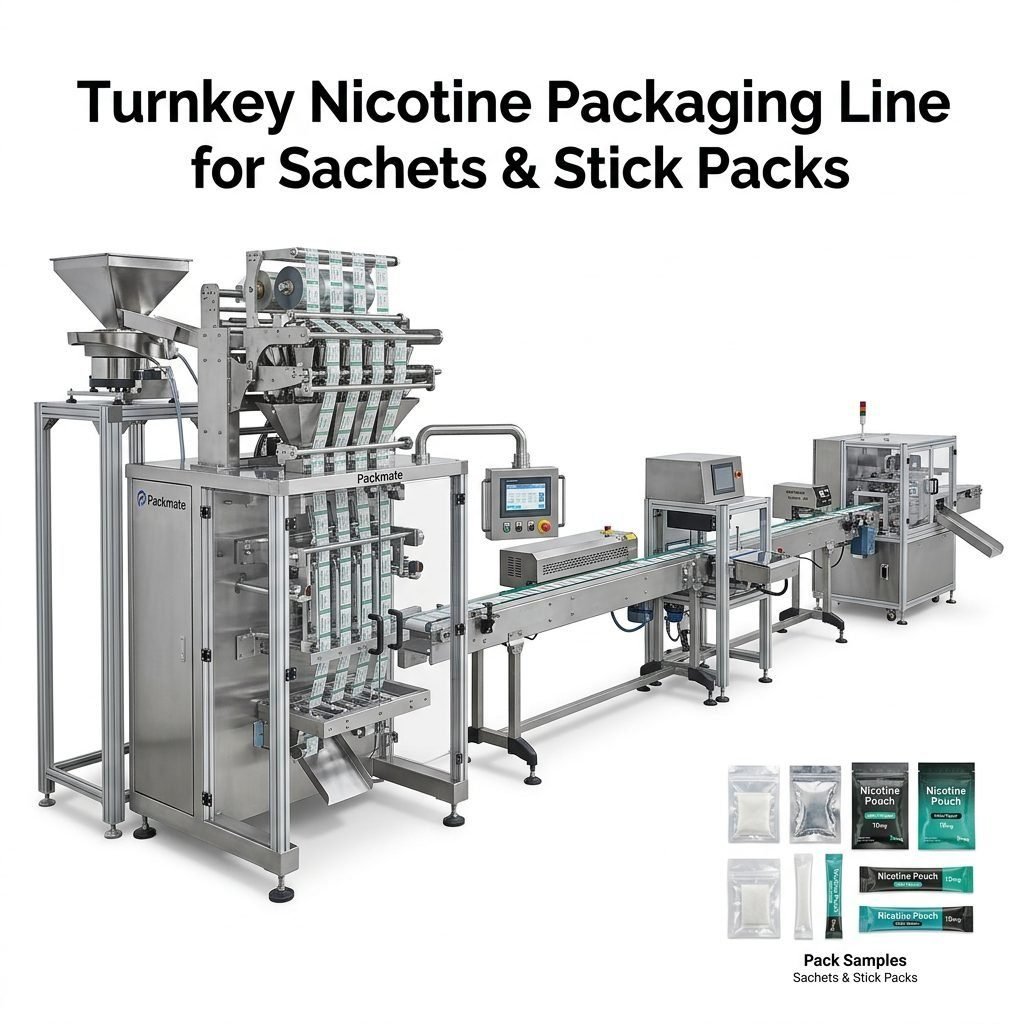
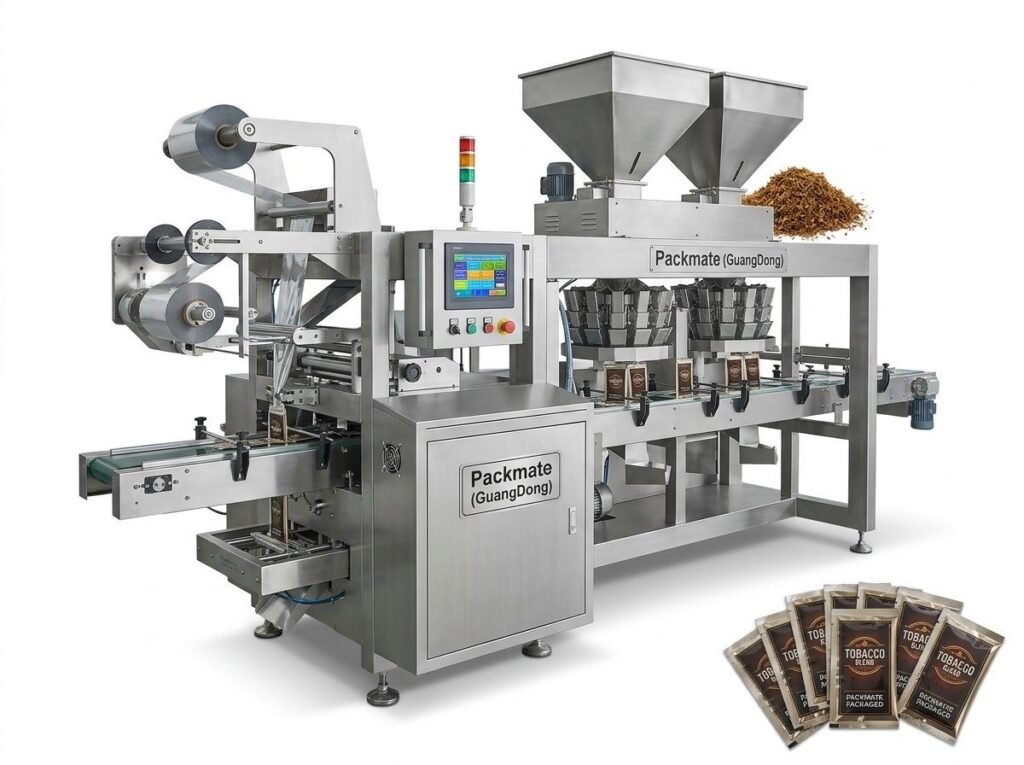
A complete nicotine pouch packing line typically consists of several synchronized machines: an automatic feeding and dosing system, an electronic multi-head weigher or volumetric doser (for blends or granular fillings), a pouch-forming and filling machine (multi-lane if needed), a high-precision sealing unit, an automatic counting and cartoning station, and a final metal detector and checkweigher for quality assurance. Each component can be tailored to the product form — powder, granule, or moist pouch.
1. Feeding & Pre-treatment
Feeding systems include vibratory conveyors, screw feeders, and dosing hoppers designed to handle nicotine blends and tobacco-free pouch materials gently. Hygienic design with easy-to-clean surfaces is essential for nicotine products to avoid cross-contamination and ensure operator safety.
2. Weighing & Dosing
Precision weighing equipment, such as multi-head weighers or volumetric fillers, ensures each pouch meets tight weight tolerances. This is critical for nicotine pouches where small deviations can affect product compliance and consumer experience. For complex blends or micro-doses, electronic dosing provides repeatability and traceability.
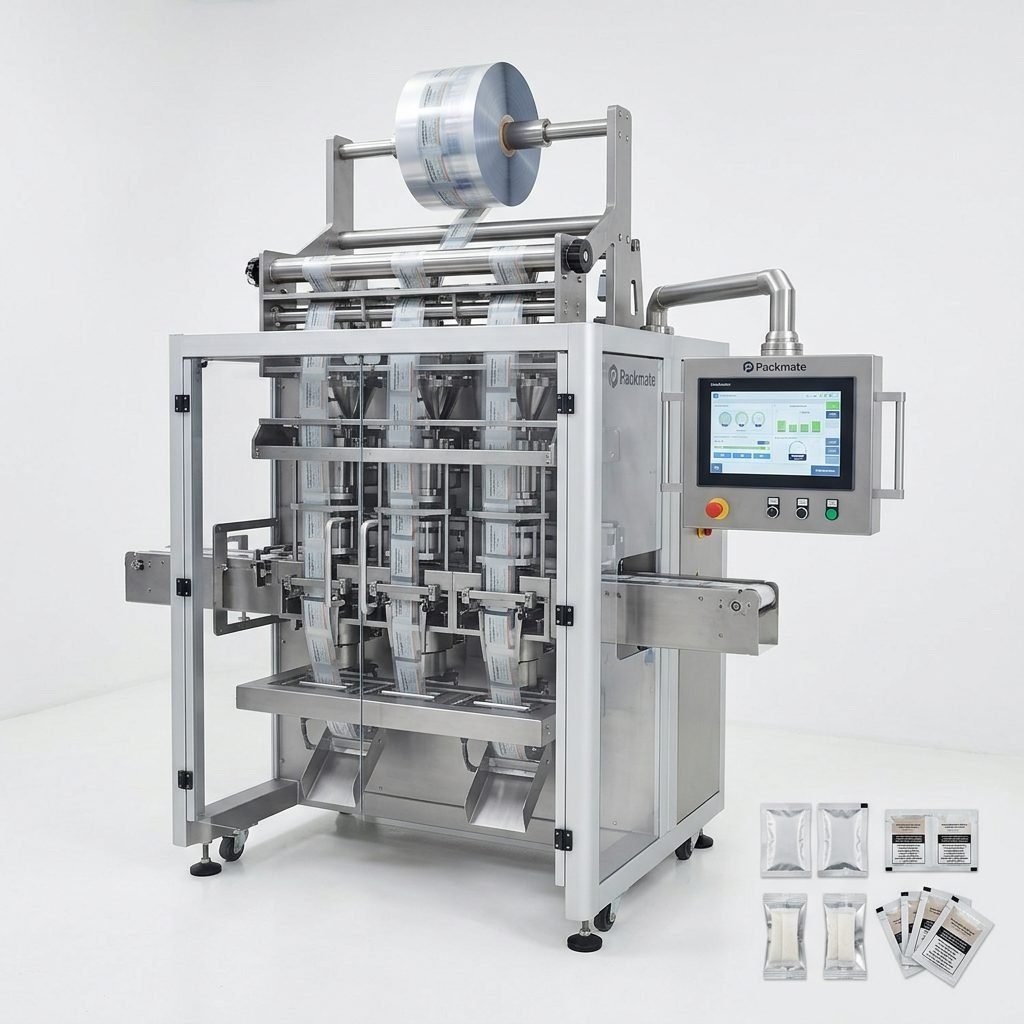
3. Pouch Forming, Filling & Sealing
The pouch machine forms web material into uniform pouches, fills them with the measured content, and seals them using heat or ultrasonic sealing depending on film composition. Multi-lane technology allows several parallel streams of pouches to be produced simultaneously, boosting capacity without increasing footprint.
Important: Use compatible packaging films and sealing parameters to protect flavor and moisture — improper sealing can lead to product spoilage or regulatory non‑conformance.
Design Flexibility: From Stick Packs to Sachets and Pouches
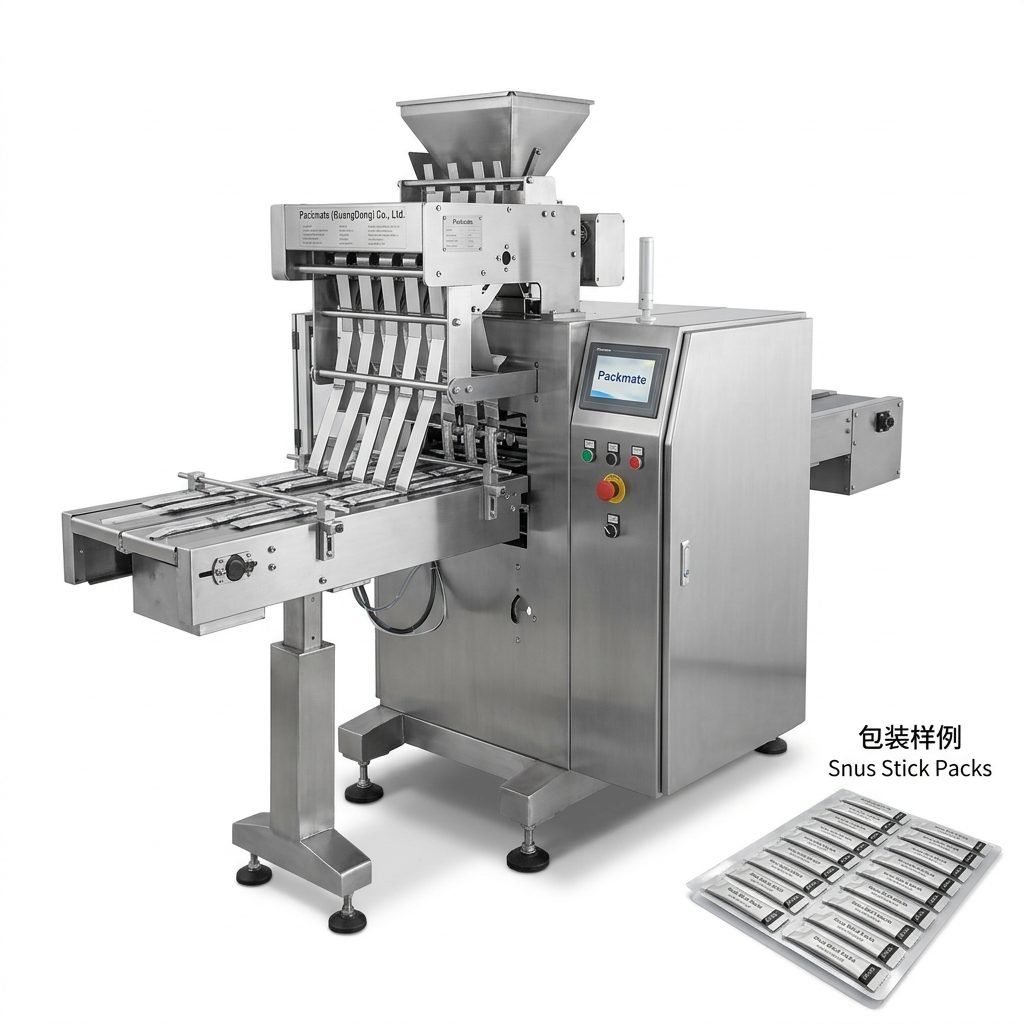
Leading suppliers, such as Packmate Snus Machine, offer a portfolio of equipment optimized for different formats: stick packs for single-dose convenience, sachets for larger servings, and multi-lane small-dose pouches for nicotine products. You can explore product lines and configurations directly through the manufacturer’s product pages like the Snus & Nicotine Packaging Machines and Sachet & Stick Pack Machines which show typical configurations and technical parameters.
For comprehensive integration, manufacturers often combine pouch machines with upstream weighing systems and downstream auxiliary equipment; see options under Weighing & Packaging Systems and Auxiliary Packaging Equipment.
Engineering & Manufacturing Capacity
A reliable supplier demonstrates robust manufacturing capabilities — advanced CNC machining centers, precision assembly lines, and stringent QA testing. With a 20,000㎡ facility and over 30 years of engineering experience, Packmate provides both standard machines and fully customized turnkey solutions for global markets. Customers benefit from proven assembly practices and factory acceptance tests that verify performance before shipment.
Factory facts: 50+ machine models, CE & ISO certifications, global exhibition presence. Learn more in the About page or view real-world installations in the Case section.
Customization & Turnkey Integration
Every production line is unique. Customization options include lane counts, pouch dimensions, in-line printers for batch and date codes, nitrogen flushing for shelf-life extension, and GMP-compliant hygienic designs for pharmaceutical-grade operations. A full turnkey supplier will assess your product characteristics, required throughput, packaging materials, and regulatory needs to deliver a line that meets production and budget goals.
Case Example: Multi-Lane Snus Line
A typical multi-lane snus line might deliver thousands of pouches per minute across 4–8 lanes, utilizing synchronized indexing to maintain fill accuracy. Such lines are ideal for small-dose nicotine pouches where high-speed and minimal footprint matter. The integration of automatic pouch feeders and robotic cartoners can further reduce labor.
Compliance, Safety & Quality Control
Compliance is non-negotiable. Equipment should align with CE and ISO guidelines, offer electrical safety, safe access panels, and clear lockout/tagout procedures. On the quality front, inline vision systems, checkweighers, and metal detectors ensure each package meets internal and regulatory standards. For product traceability, integrate batch printing with your ERP or MES systems.
Tip: Configure automatic rejection and alarm thresholds to reduce downtime. Regular calibration of weighing systems preserves accuracy over time.
Installation, Commissioning & After-Sales
Professional suppliers provide installation, commissioning, and operator training. Choose vendors that offer fast spare parts supply and remote troubleshooting. For global customers, local support channels and clear service plans reduce the total cost of ownership and maximize uptime. See the Service and Contact pages to discuss installation packages and warranty coverage.
For pre-sale questions and technical clarifications, consult product documentation or the FAQs hosted on the manufacturer’s site: FAQs.
Economic Impact & Return on Investment (ROI)
Investing in a professional packing line reduces per-unit labor costs, minimizes waste from packaging errors, and improves throughput to meet market demand. ROI calculations should include equipment amortization, maintenance costs, labor savings, and increased yield. High-efficiency lines typically show payback within a few years for medium to large production volumes.
Scaling Production
When planning expansion, consider modular designs that allow lane additions or the integration of extra modules like stick packers or secondary packaging machines. This flexibility protects your initial investment and enables incremental scaling as demand grows.
Global Markets & Cultural Considerations
Different regions have varying regulatory stances and consumer habits regarding nicotine pouches and snus. For example, Northern European markets have a long-standing snus culture with a strong preference for discreet, well-sealed portions, while in some Asian markets, demand is growing for flavored micro-pouches and travel-friendly stick packs. A trusted manufacturer should advise on regional packaging preferences and compliance requirements.
To review global exhibition demos and regional case studies, check the exhibition schedule and past showcases here: Our Exhibition and the company profile at About Packmate.
Choosing the Right Supplier
When evaluating suppliers, prioritize proven engineering experience, a broad product range (from single machines to turnkey lines), strong manufacturing infrastructure, and transparent quality documentation. Verify references and ask for factory acceptance tests (FAT) to validate performance before dispatch. A reliable vendor will provide detailed documentation, spare parts kits, and training to ensure a smooth ramp-up.
Supplier checklist:
• Engineering track record (30+ years),
• On-site testing & FAT,
• Global service and spare parts.
Conclusion
Investing in a professional nicotine pouch packing line is a strategic move for manufacturers aiming to scale production, maintain product quality, and meet diverse regulatory requirements. By selecting the right combination of weighing, forming, filling, and sealing technologies — and partnering with an experienced supplier with global turnkey capabilities — your operation will be poised for efficient, compliant, and profitable production.
Further resources
For more detailed product specifications and machine models, explore the Snus & Nicotine Packaging Machines and Filling & Packaging Lines pages to identify the right equipment family for your application:
Snus & Nicotine Packaging Machines |
Filling & Packaging Lines.
Common Questions
Q1: What is the typical throughput of a multi-lane nicotine pouch packing line?
Throughput depends on lane count and pouch format. A 4–8 lane multi-lane line can reach several thousand pouches per minute in aggregate. Exact numbers vary by pouch size, filling weight, and the chosen filling system.
Q2: How do I ensure regulatory compliance for nicotine pouch packaging?
Work with a manufacturer that provides CE/ISO compliant machinery, integrate traceability and batch printing, and consult regional regulatory bodies for labeling and composition rules. Hygienic design and documented QA procedures are essential.
Q3: Can the line handle flavored or moisture-sensitive formulations?
Yes — options include nitrogen flushing, barrier films, and controlled-environment filling zones to protect aroma and moisture-sensitive ingredients. Work with your supplier to select appropriate films and sealing methods.
Q4: What after-sales support should I expect?
Expect installation, commissioning, operator training, spare parts supply, remote troubleshooting, and optional annual maintenance plans. Verify service SLAs and local support capabilities before purchase.
Q5: How do I start a conversation about a customized turnkey solution?
Contact the manufacturer with product specifications, desired throughput, pouch formats, and any regulatory constraints. Most suppliers offer consultations, layout drawings, and feasibility assessments; learn more on the Contact Us page.