
Product Introduction
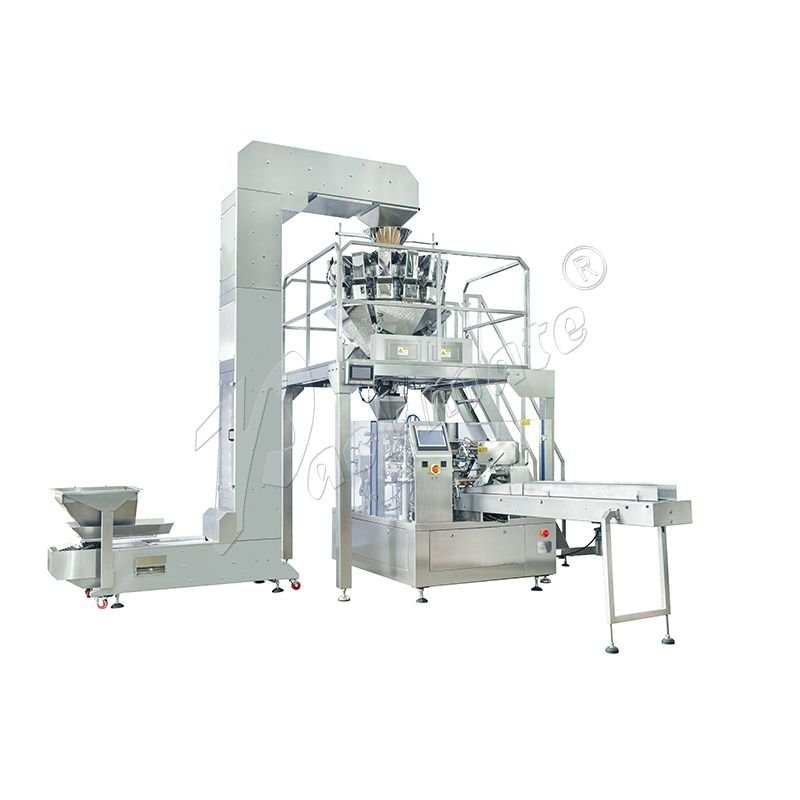
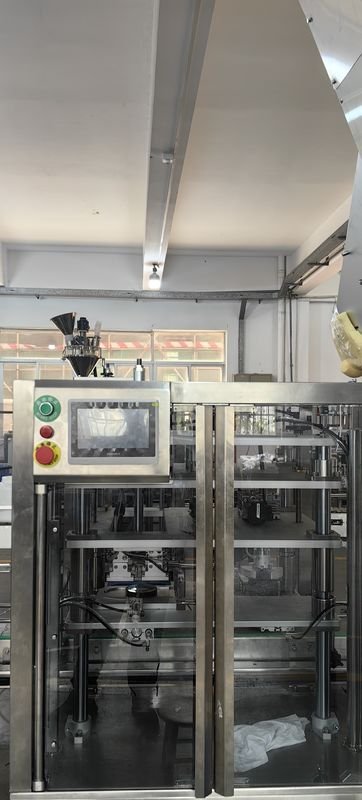
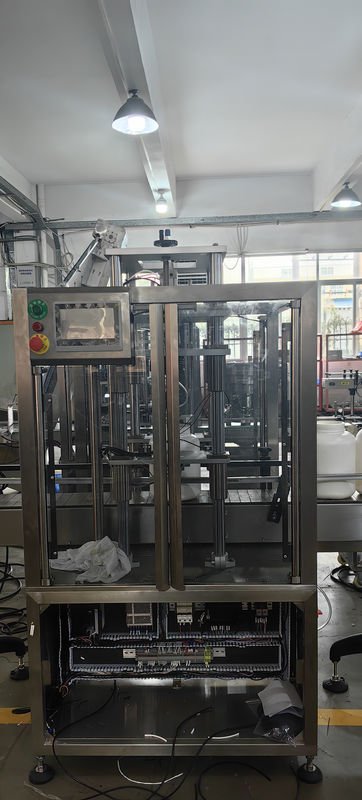
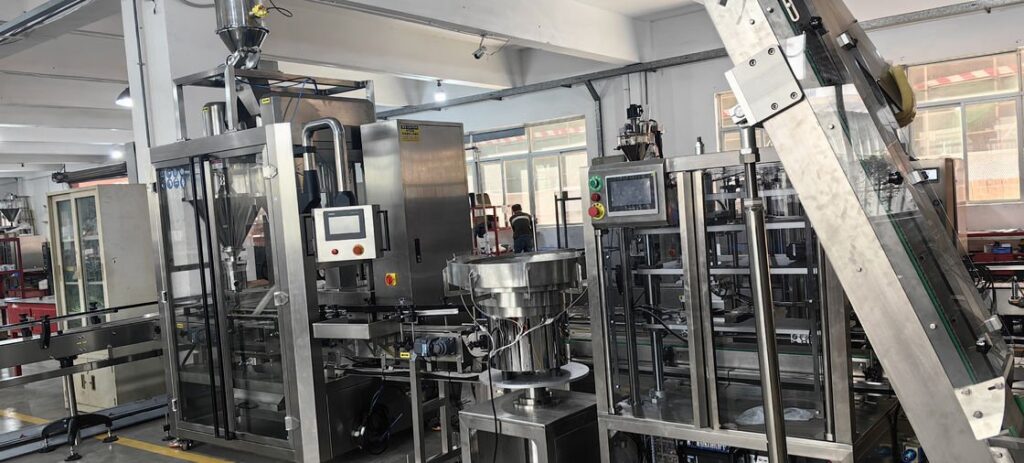
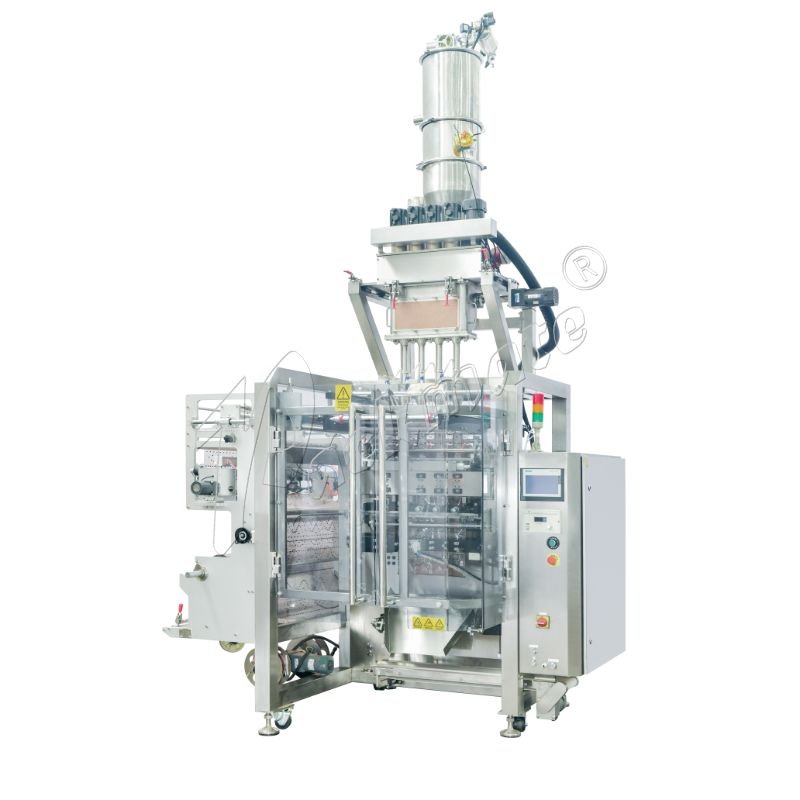
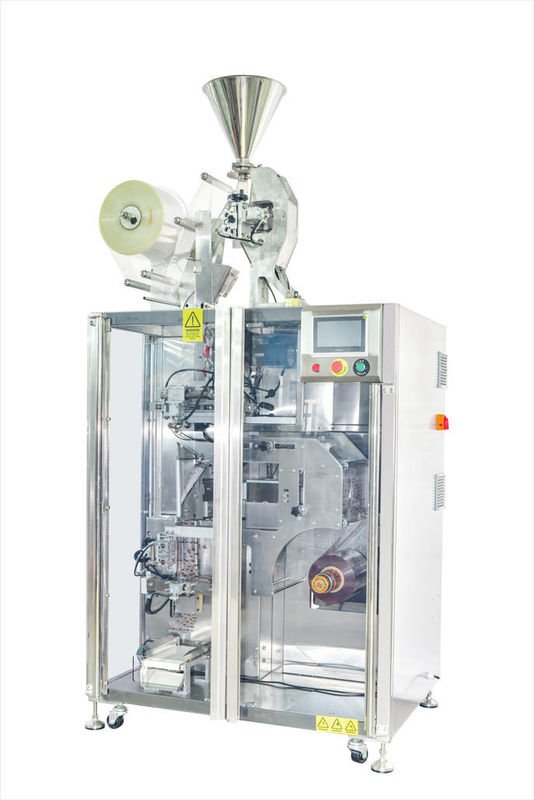
The Nicotine Pouch Can Line Machine (4-Lane Pouch-to-Can Packaging Line) is a fully integrated, high-throughput solution engineered for packaging wet granules or other moist particulate materials into small sachets and automatically loading them into cans/jars. The line unifies four-lane ultrasonic back-seal pouch forming and filling, precision rotary-disk dosing, sachet counting and accumulation, jar unscrambling, automatic can feeding, and capping into one synchronized process. Designed for stable operation and repeatable small-dose output, it supports modern manufacturing goals such as reduced labor dependency, cleaner production, and consistent pack presentation. Optional GMP-oriented construction and hygienic material-contact designs help the system fit nicotine pouch-related supply chains and other granule-sachet products requiring controlled dosing, reliable seals, and automated can/jar handling.
Product Features
Four-Lane Ultrasonic Sealing for Consistent Sachet Quality
The packaging module employs ultrasonic transverse sealing with a defined diagonal mesh pattern to deliver strong, uniform seals on suitable composite films (such as BOPP/PE). The back seal mesh structure and left/right fold seals contribute to tidy sachet edges and consistent shape, improving downstream conveyance, counting accuracy, and final can/jar loading reliability. Independent flat-mouth cutting (per sample requirement) helps maintain clean cuts and stable separation between sachets across all lanes.
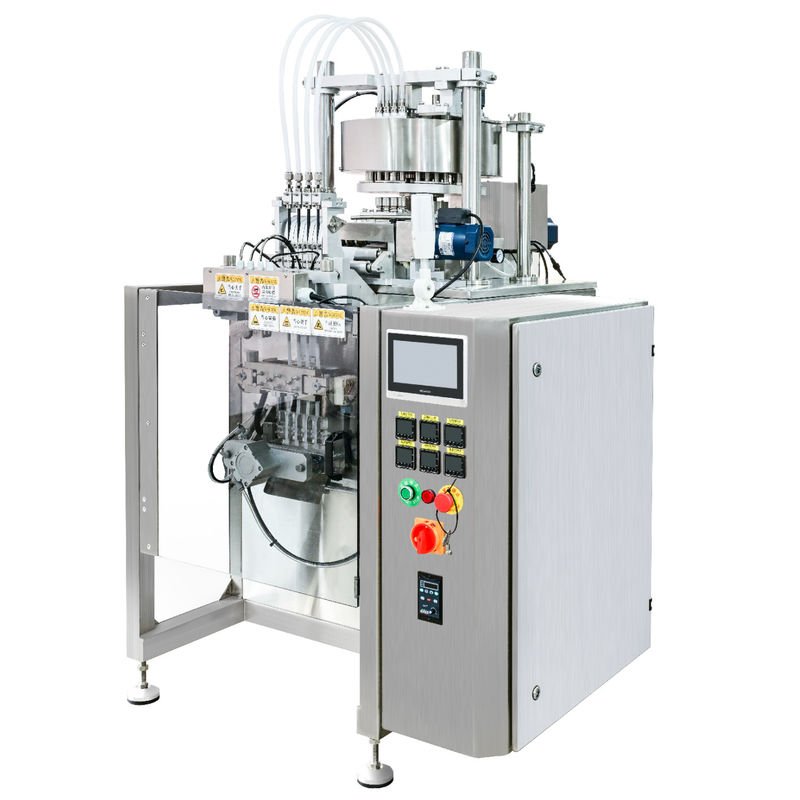
Rotary-Disk Metering Optimized for Wet Granules
For moist particles within the supported humidity window, the dedicated 4-column rotary disk measuring device uses adjustable measuring cups to match target fill weights (typ. 0.4–0.6 g per sachet). A rotary dispersing mechanism inside the hopper promotes smoother feeding and reduces bridging, improving repeatability during continuous operation. Auxiliary blowing and discharging functions are regulated via a precision throttle valve, helping stabilize dosing when handling wet, slightly adhesive, or flow-variable granules.
Stable Automation with Servo-Controlled Film Pulling
Servo-driven bag pulling on the cross-seal section enhances motion consistency and synchronization across the four lanes, supporting uniform pouch length control and stable cycle-to-cycle operation. The control system uses a PLC with a 7-inch color HMI and provides fault prompts and self-diagnostic functions to reduce troubleshooting time and improve uptime. Integrated speed coordination allows the pouching, counting, and canning stages to work as a balanced line rather than as isolated machines.
Operator-Friendly Changeover and Maintenance Design
To support fast commissioning and efficient daily operation, the line includes automatic web guiding (deviation correction), a waste-bag removal device for setup/commissioning, and a quick film splicing/connecting table for smoother roll changes. The metering unit is designed for easy disassembly and cleaning, while the longitudinal sealing structure uses a quick-disconnect concept to simplify maintenance and shorten changeover time when switching materials or servicing sealing components. A cross-seal dust removal arrangement (including vacuum support) helps keep the sealing area cleaner during production.
Hygienic Build Options for Food/Pharma-Adjacent Environments
The machine frame and electrical cabinet can be supplied in 304 stainless steel or aluminum alloy configurations, and all product-contact parts are made of 304 stainless steel for improved sanitation and corrosion resistance. These design choices support cleaner production practices and align with common GMP-style expectations where hygiene, cleanability, and material traceability are emphasized.
Integrated Counting, Jar Handling, and Capping Workflow
Downstream of pouch forming, sachets are transferred to a point-stop bucket counting conveyor that accumulates preset counts (e.g., 20 sachets per bucket, 140 sachets per can per sample requirement). An automatic jar unscrambler delivers containers in a stable orientation to the conveyor interface, after which the feeding/pressing and capping modules complete the pack with controlled handling and coordinated electrical integration. This end-to-end design reduces manual counting and loading while improving consistency of fill counts and finished pack appearance.
Technical Specifications
| Module | Model | Key Specifications |
|---|---|---|
| 4-Lane Ultrasonic Back-Seal Packaging Machine | PM180LUD4-SYB |
Applicable material: wet granules/particles, humidity approx. 10%–35% (per sample) Dose range: 0.4–0.6 g/bag Measurement accuracy: ≤ ±10% Speed: 30–40 bags/min (single lane) × 4 lanes Bag format (per sample/stock parts): single-row bag length 34 mm; single-row film width 30 mm; reference bag width parts 12.3–25 mm Film width: 120 mm Longitudinal sealing: back-seal mesh (per sample) + left/right fold seal; sealing width 6 mm Transverse sealing: ultrasonic; diagonal mesh 1.2 mm; sealing width 4 mm Cutting: independent flat-mouth cutting (per sample bag) Film: composite materials such as BOPP/PE Power: AC 220V / 50Hz, 3 kW Air consumption: 6 kg, 0.6 m³/min Configuration highlights: Inovance HMI + PLC (Chinese UI), fault prompts & self-diagnosis; Airtac pneumatics; 4-way temperature control; auto web guiding; commissioning waste-bag removal; Schneider/OMRON electrics; 4-row cutter wheel splitting; gravity active feeding; servo-controlled pull; quick film splicing table; safety door switch (Panasonic); quick-disconnect longitudinal seal; cross-seal dust removal device (incl. vacuum); photoelectric function: none |
| 4-Column Rotary Disk Measuring Device (Wet Granules) | SYB-4-R |
Measuring range: 0.4–0.6 g/bag Adjustment method: rotary disk with adjustable measuring cup Accuracy: ±1–10% (dependent on material characteristics and filling speed) Drive: CAM divider Auxiliary blowing/discharging: precision throttle valve control Hopper: rotary dispersing device for improved flow and dosing stability Materials: 304 SS or aluminum alloy; product-contact parts 304 SS Design: easy disassembly and cleaning Air consumption: 6 kg, 0.8 m³/min Power: AC 220V / 50Hz, 0.4 kW |
| Point-Stop Bucket Counting Conveyor | ZG135-75-01-00 |
Counting material: granule sachets (per sample) Counting setup (example): 20 sachets/bucket; 140 sachets/can Function: fixed-stop conveyor buffers and releases completed counts Belt/bucket: food-grade PVC belt + stainless steel bucket Features: automatic positioning device; docking interface for packaging machine discharge |
| Automatic Jar Unscrambler | LP-750-00 |
Jar size: Ø75 × 135 mm (per sample) Turntable diameter: 750 mm Power: AC 220V / 50Hz, approx. 0.2 kW (VFD speed control) Integration: conveyor docking for stable container transfer |
| Automatic Capping Machine | LHJ-SV-80 |
Capping speed: 30–40 cans/min (VFD speed control) Cap specification: per customer sample Power: AC 220V / 50Hz, approx. 0.4 kW Air consumption: 6 kg, 0.2 m³/min Infeed: lifting conveyor with center-of-gravity identification Control: coordinated with automatic feeding & capping unit Electrical components: Schneider or Omron |
| Automatic Feeding & Capping Unit (Incl. Conveyor) | ZG135-75-00 |
Production speed: 1–15 cans/min Jar size: Ø75 × 135 mm (per sample) Power: AC 220V / 50Hz, approx. 0.4 kW Air consumption: 6 kg, 0.3 m³/min Pressing method: pneumatic positioning gland Conveyor length: approx. 2 m Electrical components: Schneider or Omron |
Application Areas
Nicotine Pouch and Sachet-to-Can/Jar Packaging
Ideal for small-dose sachet production followed by automated counting and loading into cans/jars, supporting stable throughput and consistent pack counts for nicotine pouch-related workflows and comparable consumer products.
Wet Granule and Moist Particulate Packaging
Suitable for wet particles within the specified humidity range where stable metering and ultrasonic sealing are required, especially for gram-level micro-dosing applications demanding repeatability across multiple lanes.
Food, Functional, and Consumer Granule Products
Applicable to granule sachets made from composite films (e.g., BOPP/PE) and to downstream container handling processes including unscrambling, buffering, feeding, and capping—supporting semi-automatic to highly automated production lines.