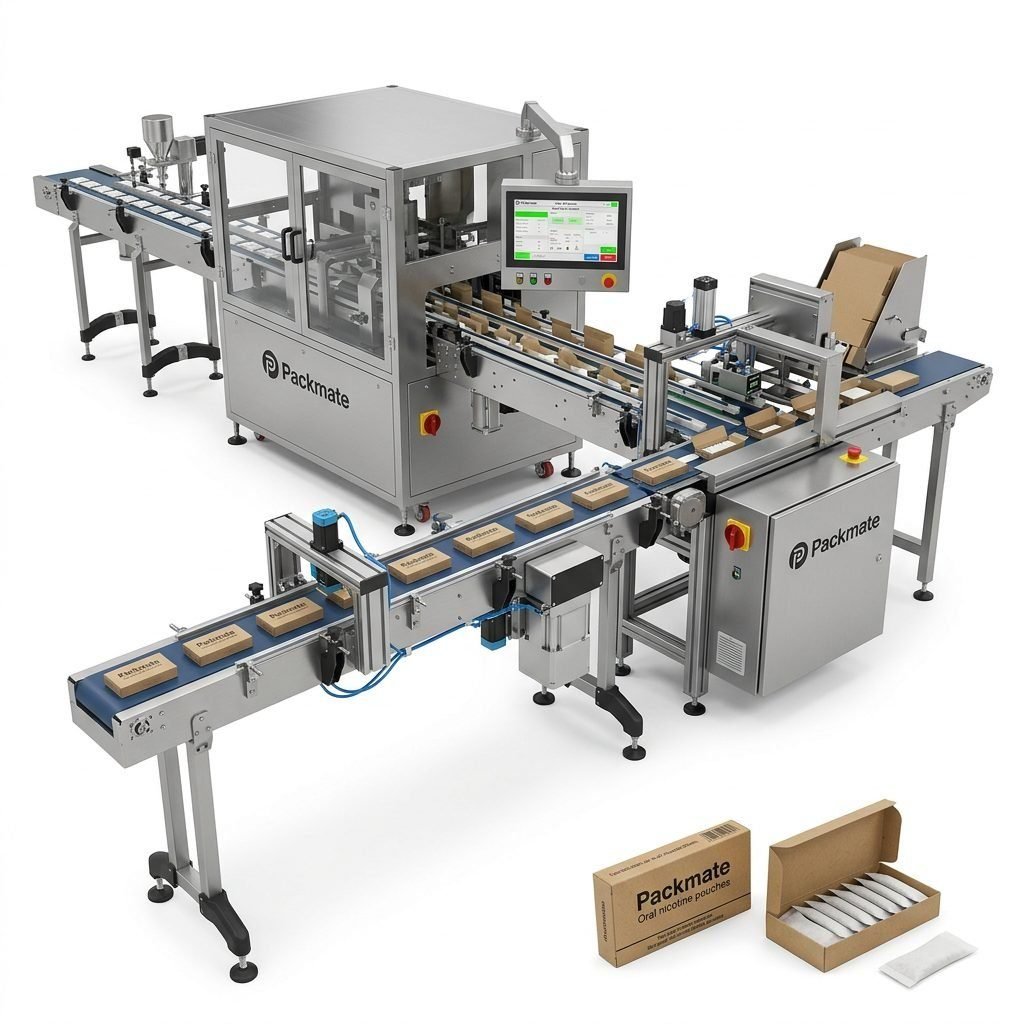
Industrial nicotine pouch manufacturing has matured into a highly specialized field that demands precision mechanical design, consistent dosing and sealing, and seamless integration into downstream packaging lines. This article dives into automated solutions for high-efficiency pouch manufacturing, exploring machine types, production workflows, technical features, factory capabilities, compliance considerations and ways to choose a reliable partner for turn-key systems.
Market Drivers and Opportunity
The global nicotine pouch market is expanding rapidly as consumers seek smoke-free, discreet nicotine delivery formats. Manufacturers must scale production while maintaining product consistency and regulatory compliance. Automated pouch machines are central to this transformation, enabling multi-lane throughput, precise dosing, and low labor dependency — all critical for competitive manufacturing.
Who benefits most?
✓ Startups transitioning to commercial volumes, established tobacco alternatives manufacturers, and contract packaging providers all gain from investing in high-efficiency pouch lines. The right equipment reduces waste, improves speed-to-market, and supports diverse pouch formats.
Core Machine Types for Nicotine Pouch Production
Choosing the correct machinery depends on desired pouch format, output rate and product characteristics. Typical categories include:
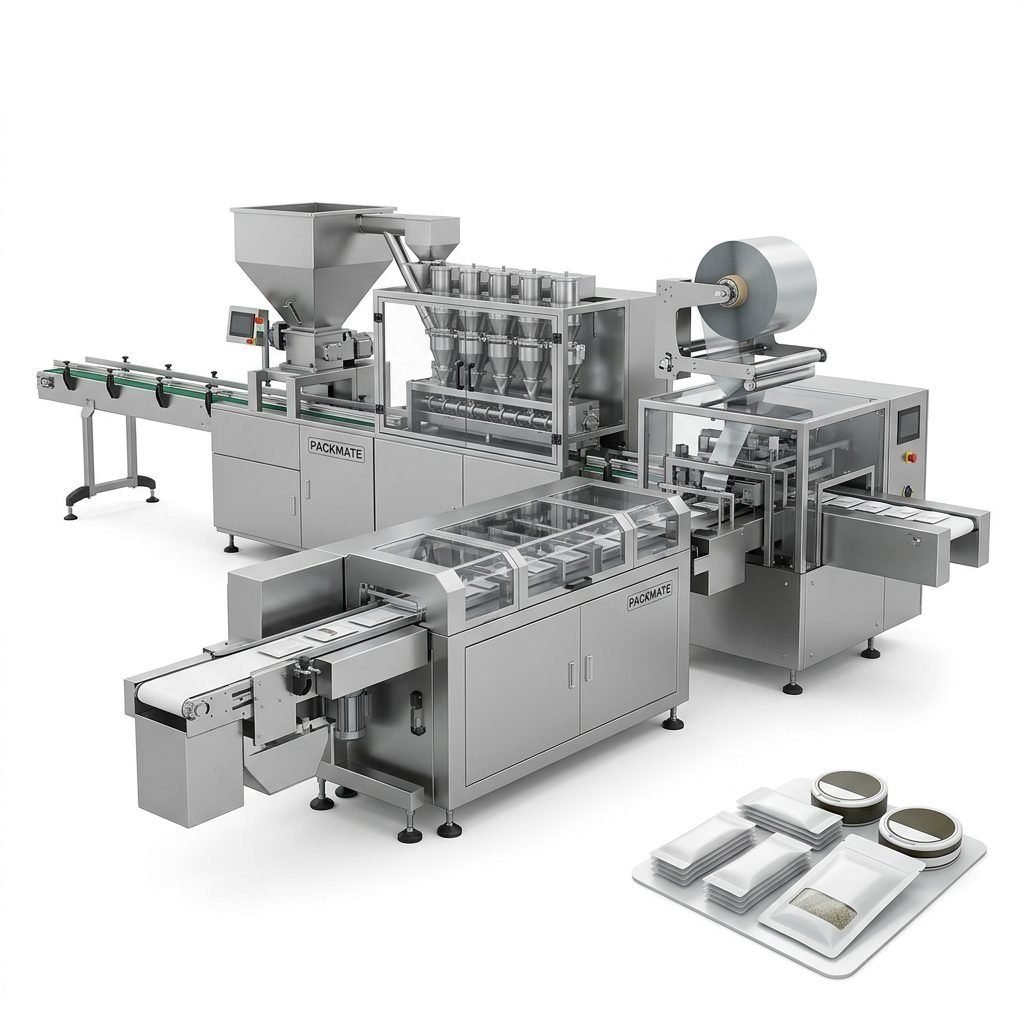
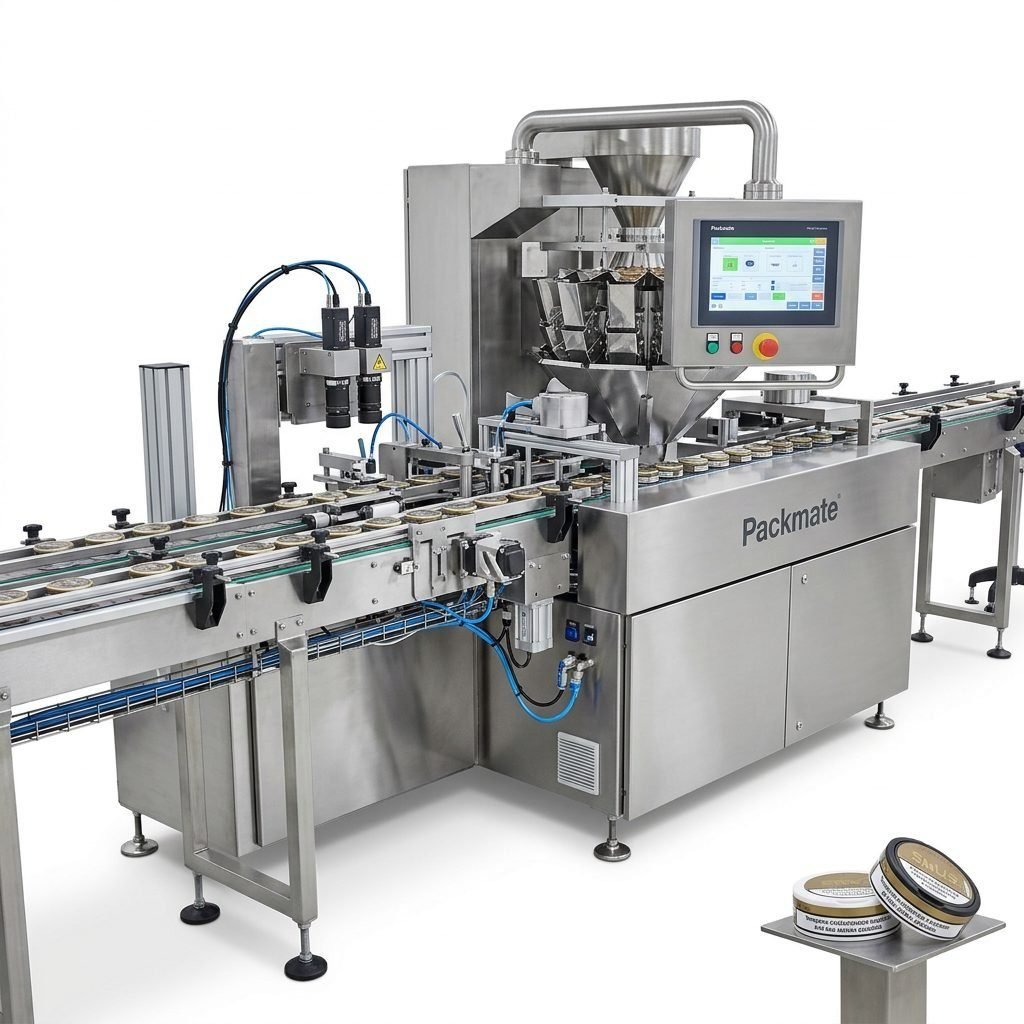
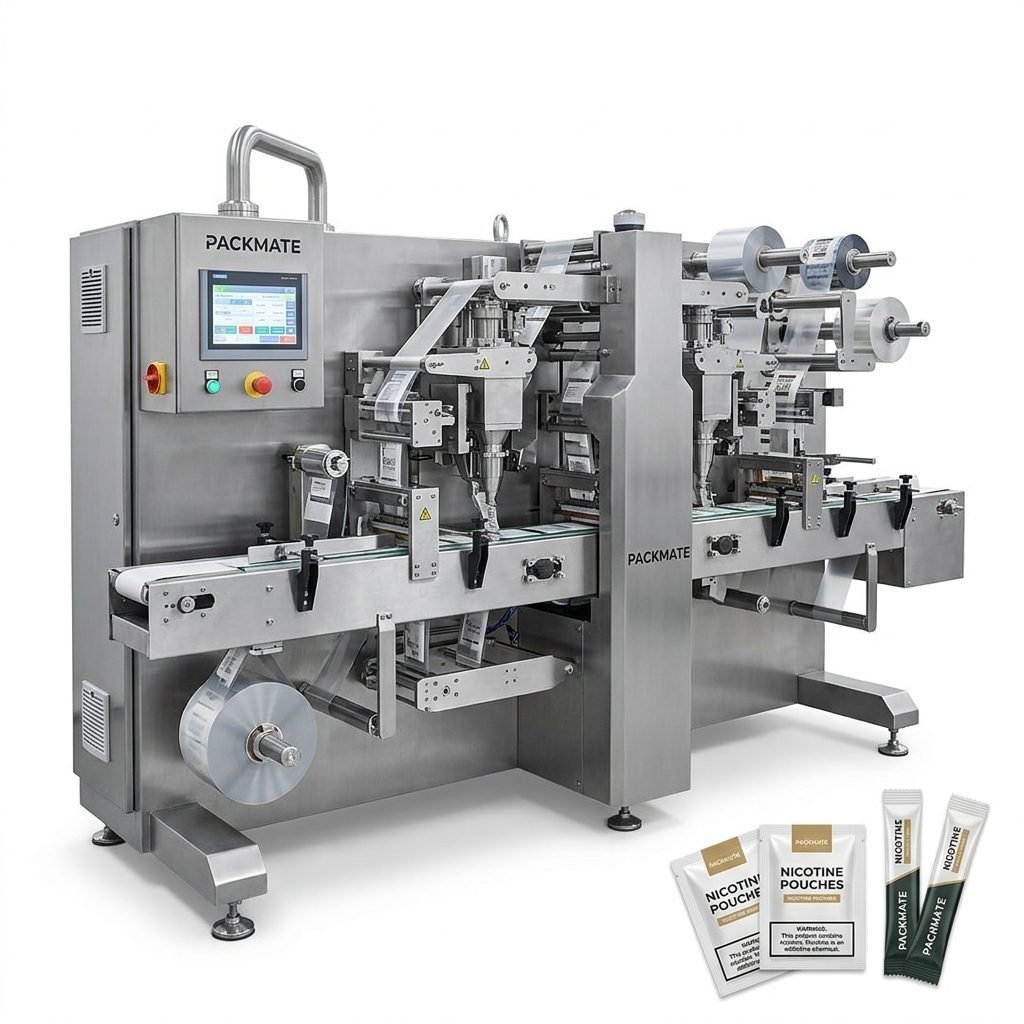
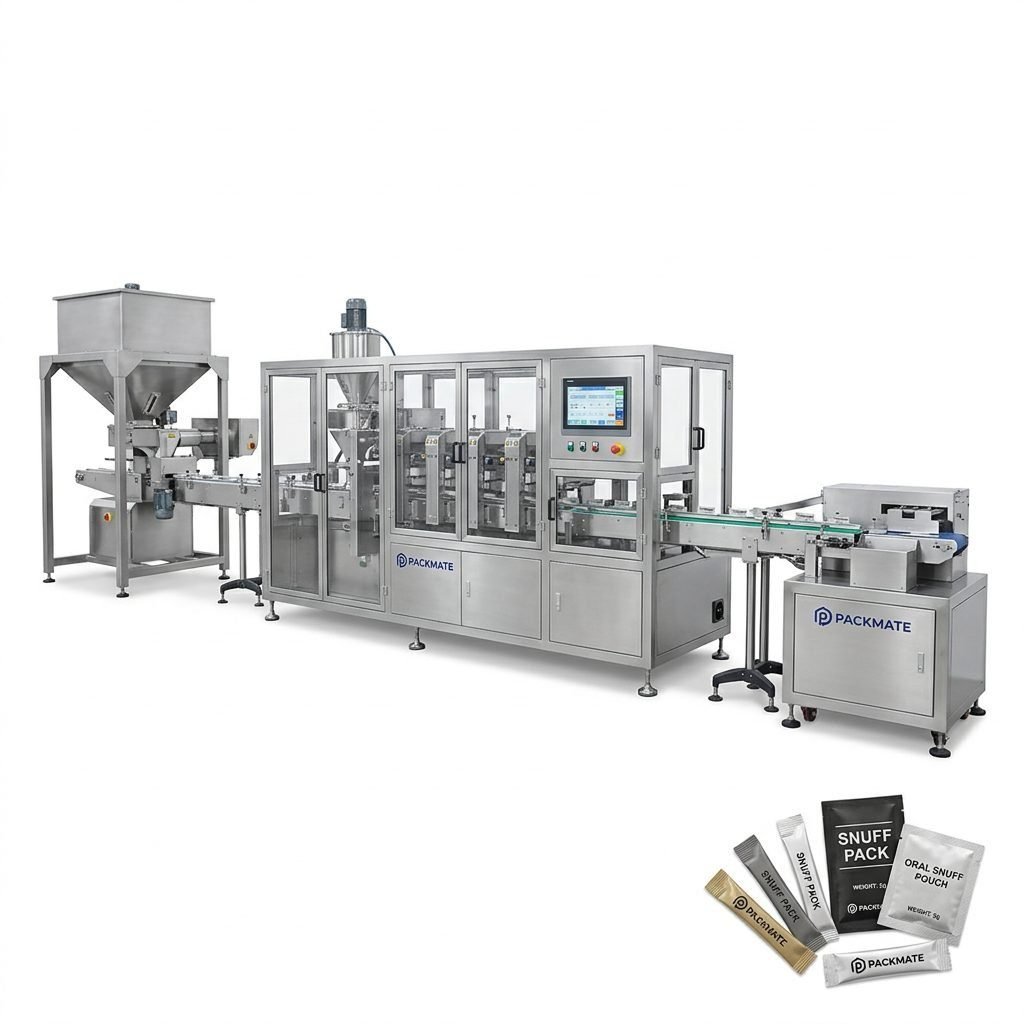
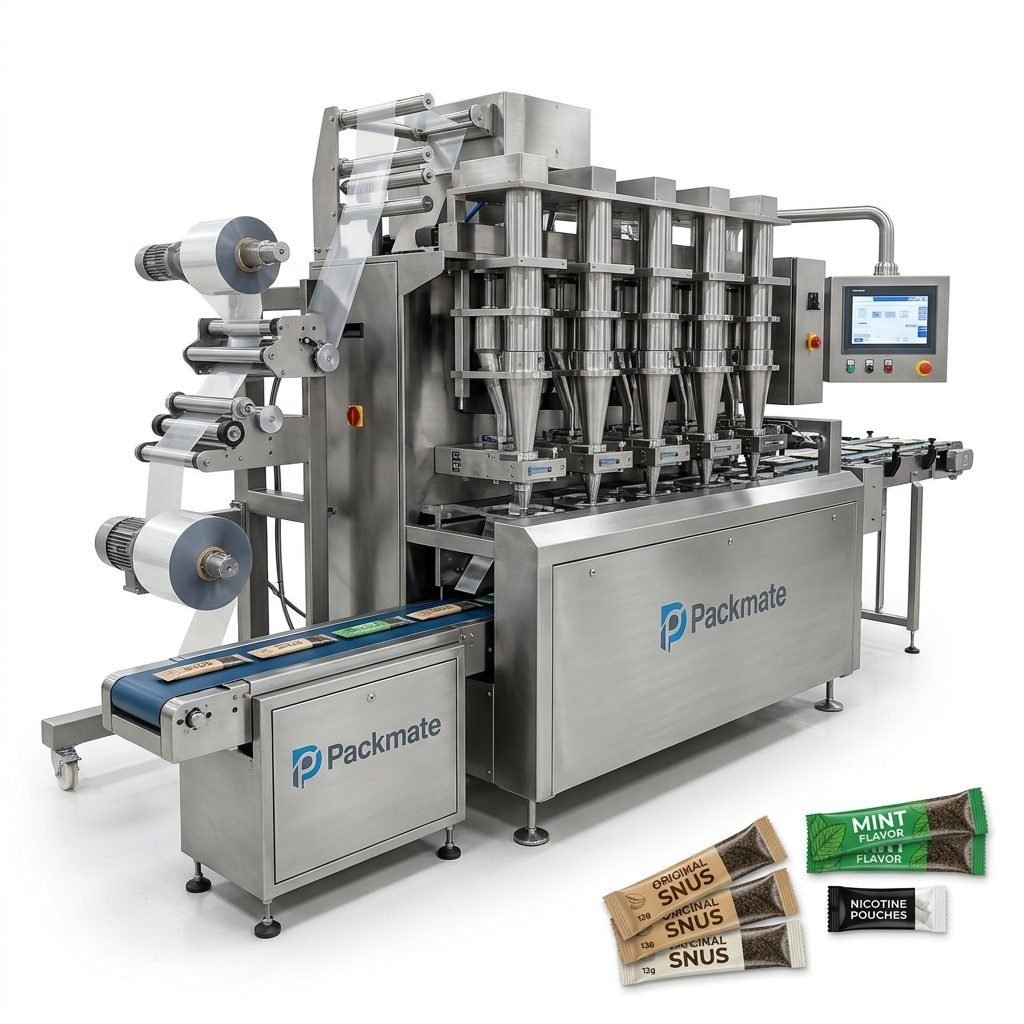
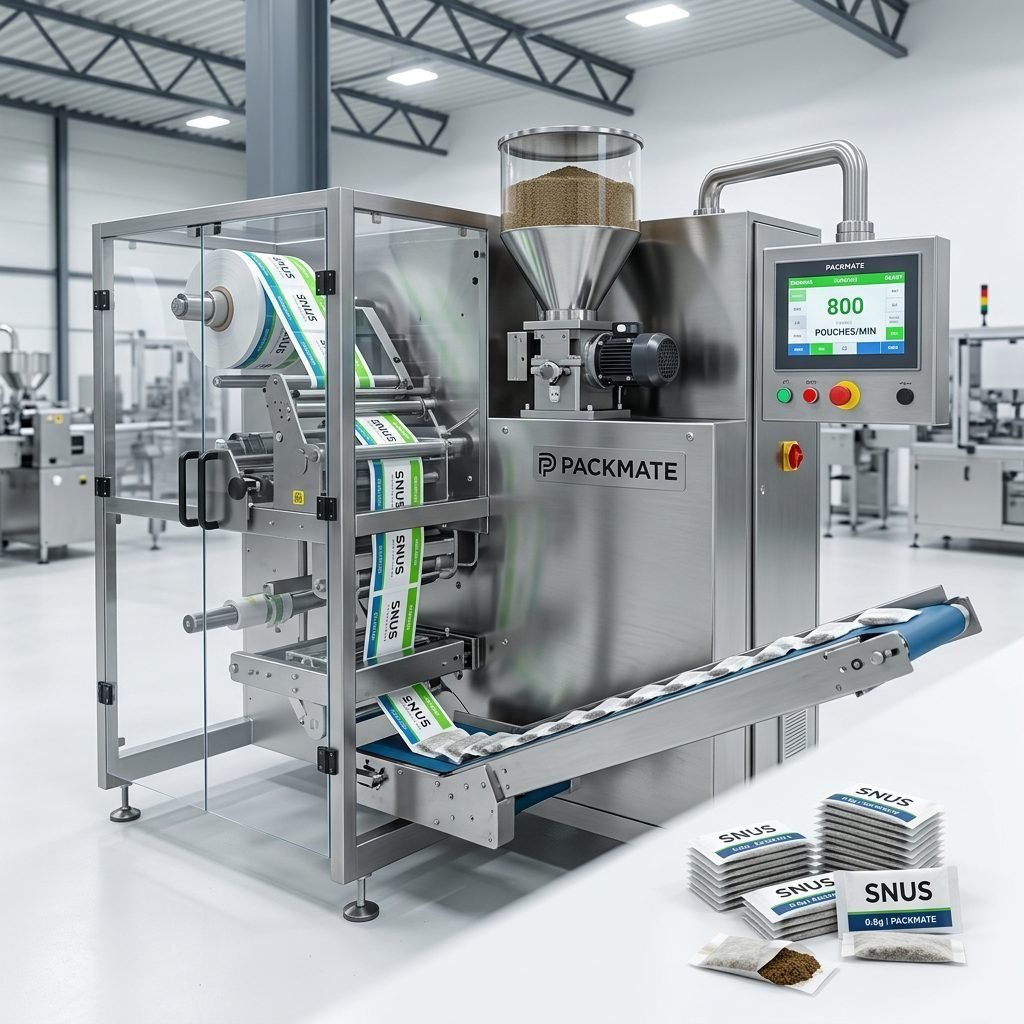
⚙️ Multi-lane snus & nicotine packaging machines — optimized for small-dose pouches across multiple lanes; ideal for high throughput. See examples at Snus & Nicotine Packaging Machines.
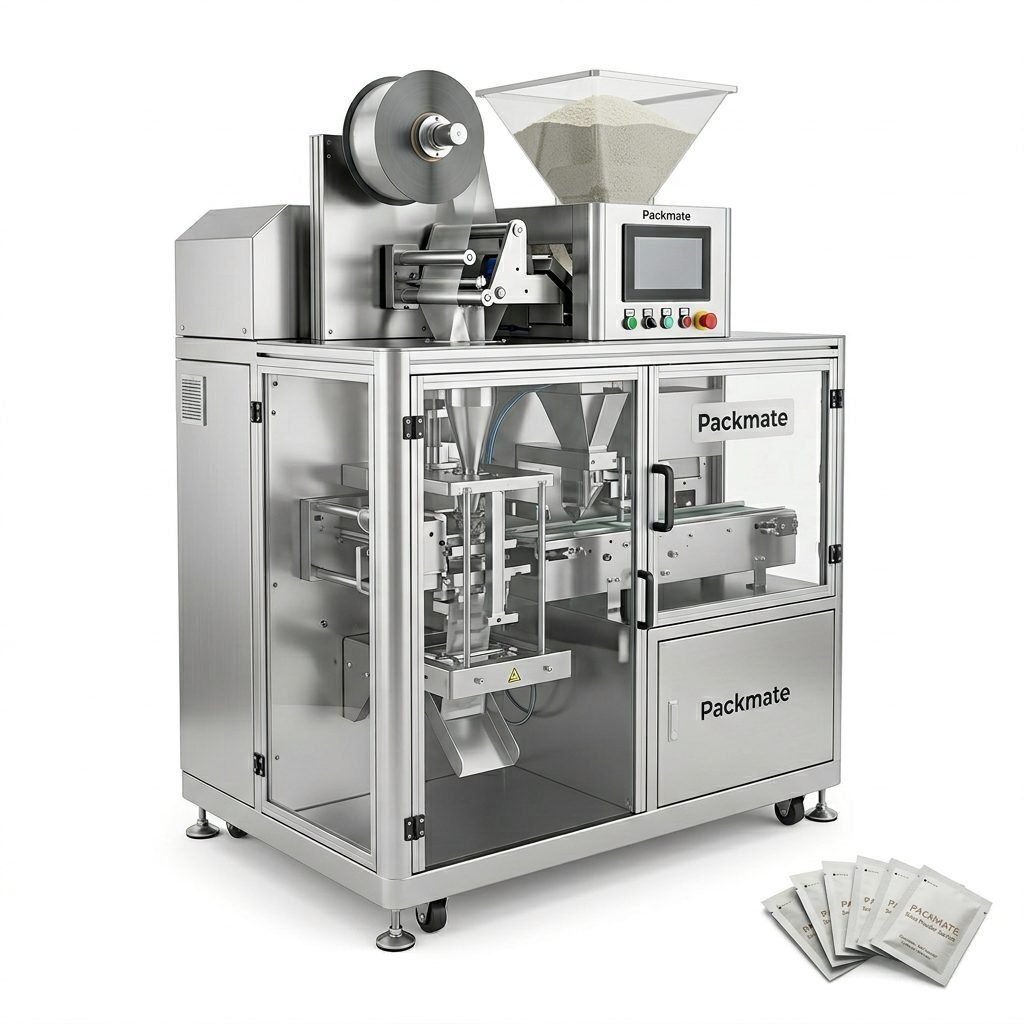
⚙️ Bag & pouch packaging machines — for finished pouches into master bags, display trays or retail packaging. These systems can be synchronized with pouch makers: Bag & Pouch Packaging Machines.
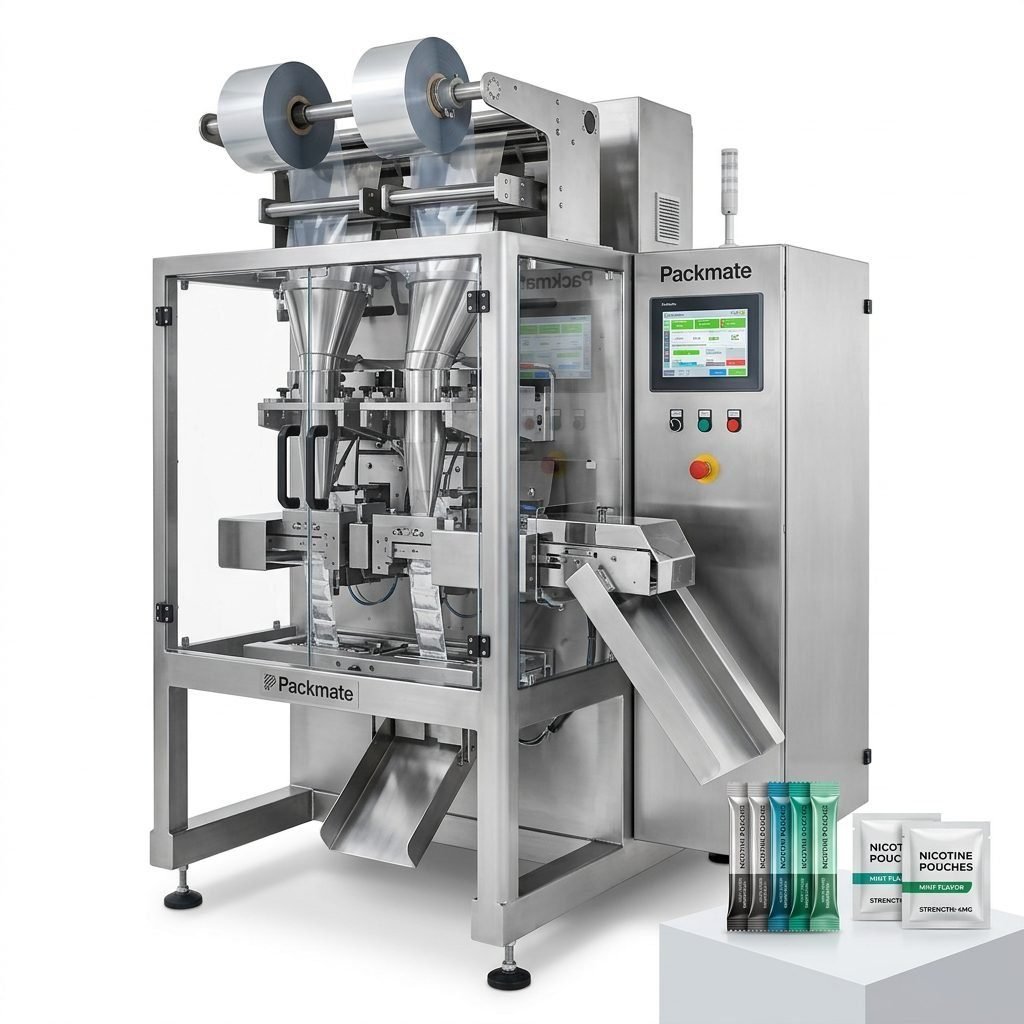
⚙️ Sachet & stick pack systems — although more common for powders and liquids, certain nicotine formulations use sachet-based formats; explore Sachet & Stick Pack Machines.
Key takeaway: Select machines that match your target pouch size, lane count and future expansion needs. Modular multi-lane platforms typically offer the best balance of scalability and cost-efficiency.
Essential Technical Features and Performance Metrics
A high-efficiency nicotine pouch line must guarantee dosing precision, sealing integrity and stable web handling at speed. Below are features that matter most:
• Accurate micro-dosing systems — electronic or servo-driven weighing and auger dosing to control nicotine and filler weight within tight tolerances.
• Multi-lane synchronization — independent lane control, lane jump detection and automatic correction ensure consistent pouch counts across lanes.
• Precision sealing and cutting — high-frequency or thermal sealing heads and turret cutting for clean, reproducible pouch edges and minimal dust.
• HMI and Industry 4.0 readiness — touch panels, recipe management, remote diagnostics and data logging support quality control and traceability.
• Sanitary design and cleanability — stainless steel frames, easy-to-remove product contact parts and washdown-capable components reduce contamination risk.
Performance Indicators
Evaluate machines against throughput (pouches/min per lane and total lanes), dosing accuracy (mg variance), downtime (MTTR/MTBF) and scrap rate. A reliable system will minimize variation and maximize effective throughput.
Typical Production Workflow
Understanding the full production sequence helps optimize line layout and material handling. A standard industrial nicotine pouch line follows these steps:
1) Raw material handling and blending — controlled mixing of tobacco-free nicotine matrices, fillers and flavorants.
2) Dosing and filling stations — micro-dosing modules deposit the precise mass into web or pre-formed pouches.
3) Sealing and cutting — forming, sealing and cutting into individual pouches with concurrent inspection.
4) In-line inspection — weight checks, vision systems and leak detection ensure quality before downstream packing.
5) Secondary packaging — flow wrappers, baggers or tray packers consolidate pouches for retail or bulk distribution.
Production tip: Integrate in-line weighing with PLC interlocks to stop the line automatically if dosing drifts outside predefined tolerances, avoiding large-volume scrap.
Factory Capabilities and Quality Assurance
When selecting a supplier, inspect their manufacturing footprint and quality systems. A reputable manufacturer will demonstrate:
• Robust machining & assembly facilities — CNC centers, precision welding and controlled assembly environments.
• Comprehensive testing — functional tests, endurance runs and calibration protocols for every machine before shipment.
• Certifications and compliance — CE and ISO adherence signal compliance with international safety and quality standards. Learn more about certifications at Certificate.
Automation, Integration and Data
Modern systems emphasize connectivity. Key capabilities include:
• Recipe-based control for instant changeovers between pouch formats.
• Remote diagnostics to reduce service response times and support predictive maintenance.
• Quality data logging — auto-capture weights, rejection rates and run-time statistics to comply with traceability requirements.
Customization and Turnkey Solutions
Many manufacturers prefer turnkey suppliers who provide complete lines from dosing to final packaging. Customization options often include:
• Special materials handling for hygroscopic or sticky formulations.
• Custom pouch formats, printing and labeling modules.
• Integration with upstream blending systems and downstream cartoning or case-packing stations. For examples of turnkey offerings and product ranges, see Filling & Packaging Lines and Weighing & Packaging Systems.
Compliance, Safety and Documentation
Nicotine-containing products fall under stringent regulatory frameworks in many jurisdictions. The packaging line should support:
• Labeling and serialization support for track-and-trace where required.
• Full equipment documentation, validation records and change control logs for audits.
• Safety features such as interlocks, guarded access points and emergency stop systems to protect operators and meet CE directives.
Case Studies and Proven Deployments
Look for suppliers with documented global deployments across different markets. Real-world examples demonstrate the ability to solve production challenges and deliver ROI. View project highlights and customer stories at Case.
Installation, Training and After-Sales Service
Effective commissioning and operator training are essential to achieve target throughput. Critical service elements include:
• On-site installation and full performance validation.
• Hands-on training programs and SOP documentation for operators and maintenance teams.
• Spare parts kits and rapid remote support to minimize downtime. Explore service offerings at Service.
Practical advice: Negotiate clear KPIs in the contract — expected uptime, yield and acceptance criteria — and include penalties or remediation plans for unmet targets.
Selecting a Reliable Supplier
Evaluate vendors across technical competence, manufacturing capacity and service network. Key questions include:
• Does the supplier build machines in-house with CNC capability and structured QA processes?
• Can they provide references and site visits to existing installations?
• Do they support turnkey implementation, from line design to automation and packaging integration? Learn about a manufacturer profile at About Packmate.
Return on Investment and Cost Considerations
While capital investment can be significant, the long-term benefits often justify the expenditure. Evaluate ROI using:
• Labor savings from automation and reduced manual handling.
• Reduced material waste from accurate dosing and in-line quality checks.
• Increased throughput and faster changeovers enabling more SKUs from the same footprint.
Conclusion
Investing in an industrial nicotine pouch machine is a strategic decision that impacts product quality, regulatory compliance and production economics. Prioritize suppliers with strong engineering experience, in-house manufacturing capacity and proven turnkey capabilities. With the right line in place, manufacturers can scale efficiently to meet growing market demand while maintaining consistent product quality.
Common Questions
Q1: What throughput can I expect from a multi-lane nicotine pouch machine?
A1: Throughput depends on lane count and pouch size. Typical multi-lane systems deliver anywhere from a few hundred to several thousand pouches per minute in aggregate. Discuss your target SKU mix with the supplier for precise estimates.
Q2: How is dosing accuracy maintained for very small nicotine doses?
A2: High-precision dosing uses servo-controlled augers or micro-weighers with closed-loop feedback. In-line weight checks and automatic corrections ensure tight tolerances and minimal drift.
Q3: Do turnkey suppliers handle regulatory documentation and validation?
A3: Many experienced suppliers provide full documentation packages, FAT/SAT support and can assist with validation protocols. Confirm deliverables during contract negotiation and include acceptance tests in the agreement.
Q4: How quickly can a production line be commissioned?
A4: Lead times vary by customization level and factory workload. Standard modular lines may ship in a few months, while fully customized turnkey solutions can take longer. Plan for on-site commissioning and operator training that typically spans days to weeks.
Q5: Where can I see installed equipment or request references?
A5: Ask suppliers for customer references and case studies. You can also visit exhibition demos to see machines in action; see exhibition information at Our Exhibition or contact the manufacturer through Contact Us.