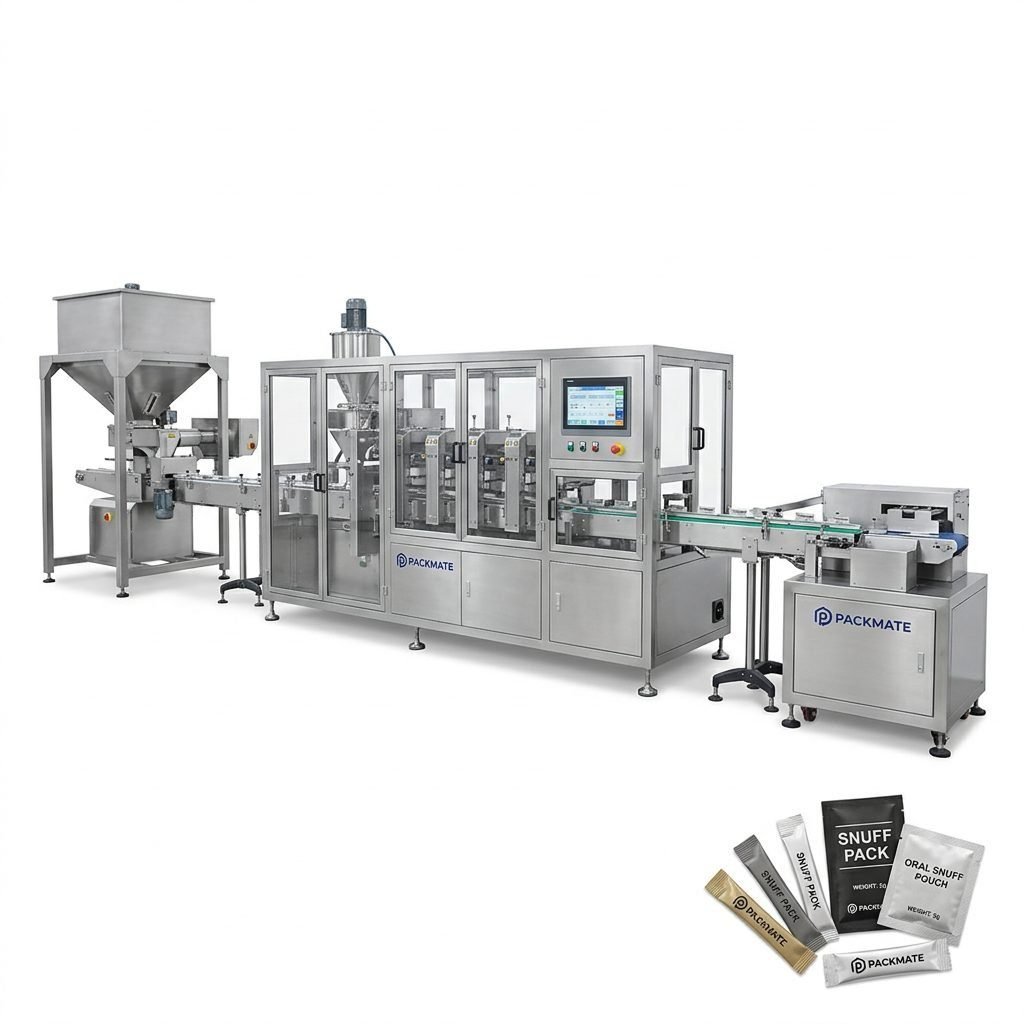
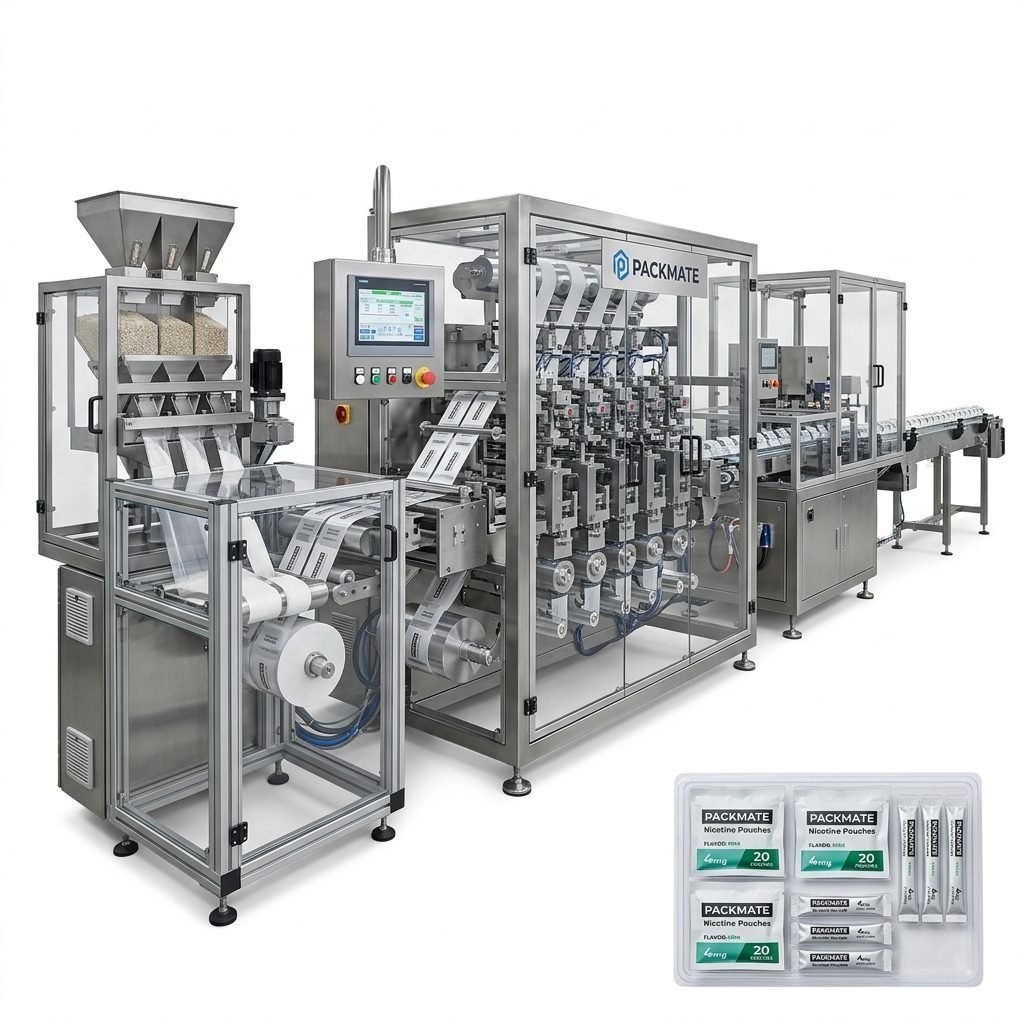
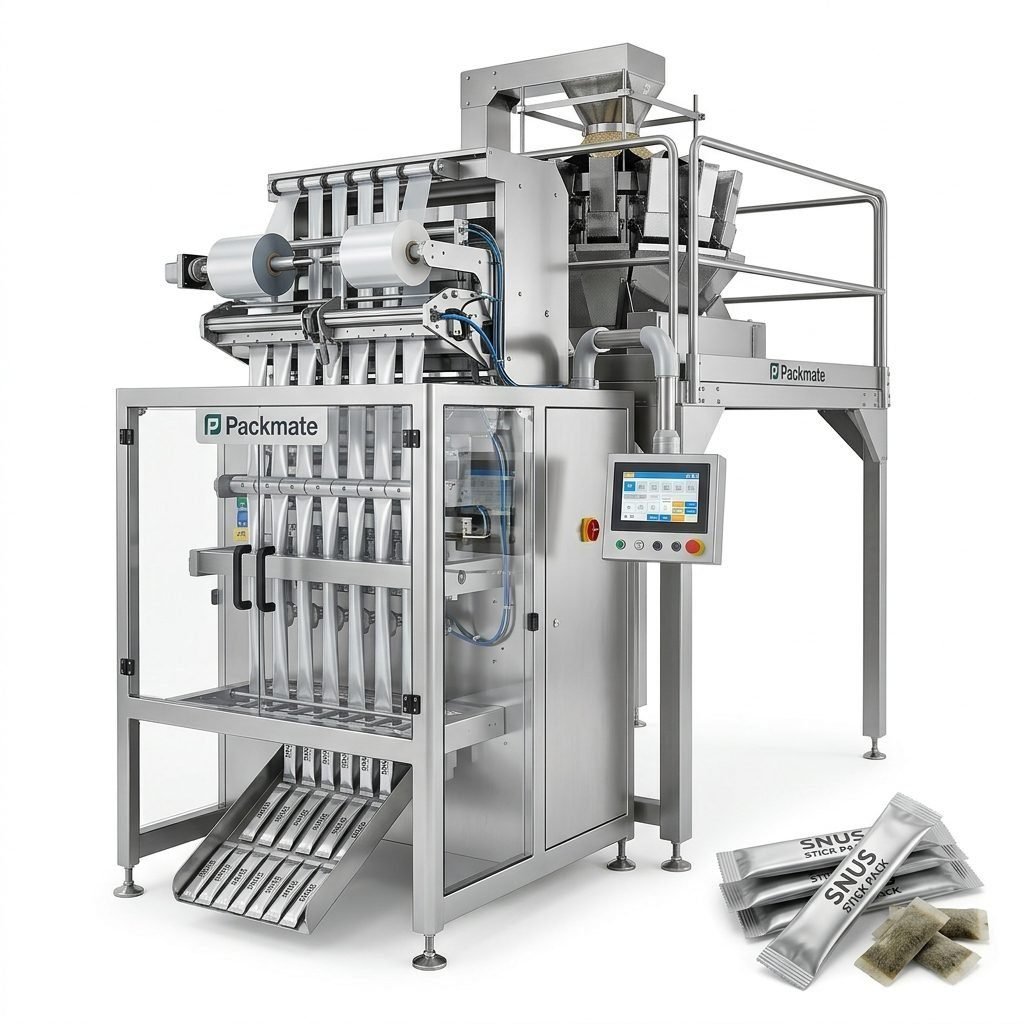
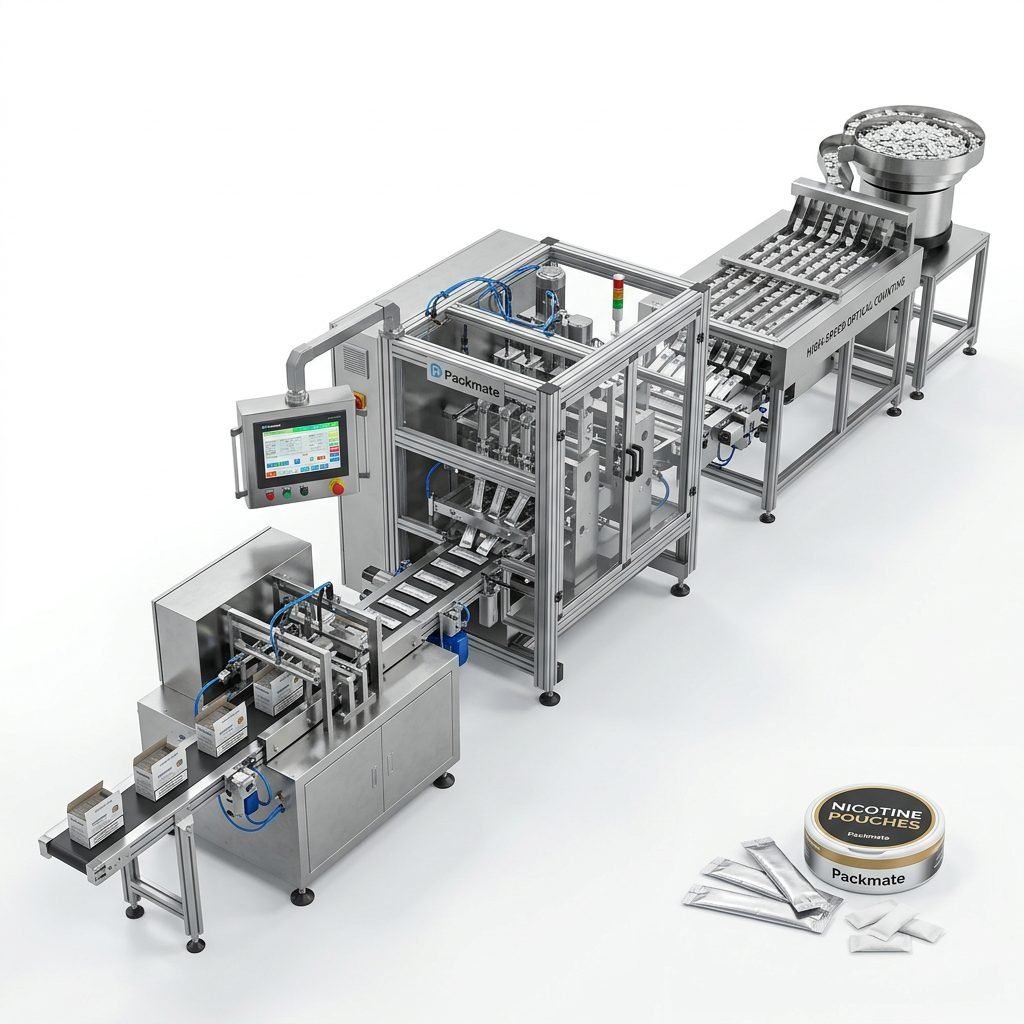
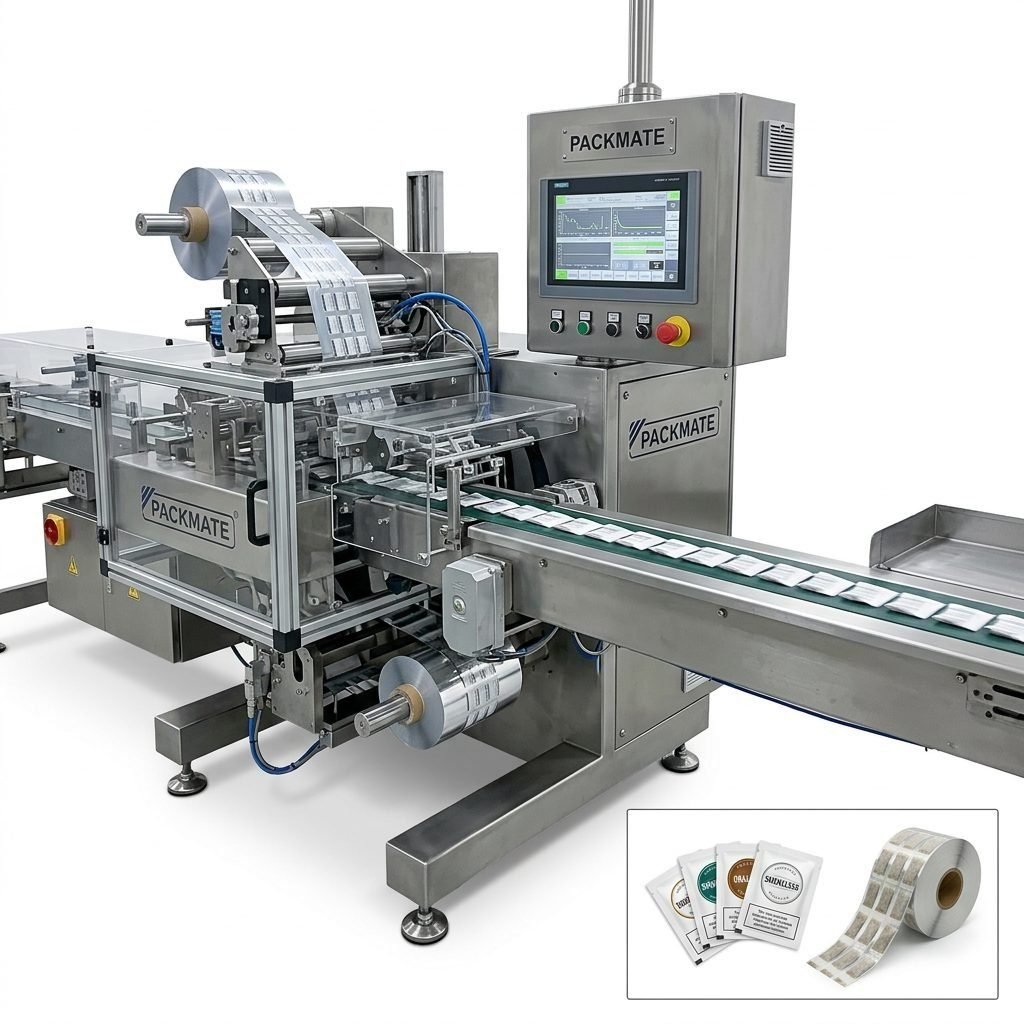
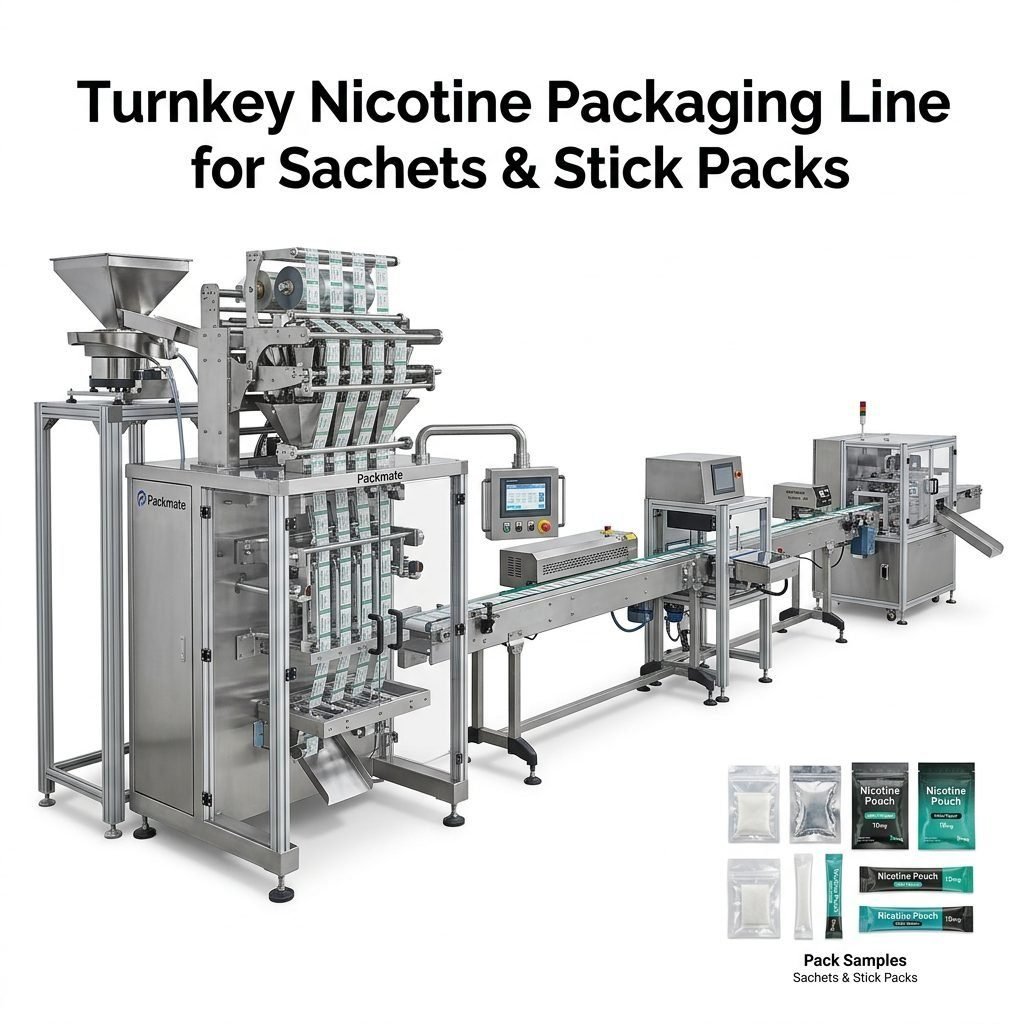
Choosing the right nicotine packaging machinery in Myanmar is a strategic decision that affects product safety, production efficiency, regulatory compliance, and long-term business growth. This practical guide walks you through the essential technical, operational, and commercial considerations when selecting machines for nicotine pouches, snus, sachets, stick packs, and related products — with clear steps to match equipment to your production goals in Myanmar’s market environment.
Understanding the Myanmar Market and Regulatory Context
Myanmar’s tobacco and nicotine product sector is evolving. Before investing in packaging machinery, you must confirm local regulatory requirements for nicotine-containing products, labelling rules, and import permits. Compliance is not optional: non-compliant lines can face seizures or costly retrofits. Work with local legal advisors and consider machines that support flexible labelling and tamper-evident sealing to meet changing rules.
Key regulatory checklist
Confirm product classification, nicotine concentration limits, labelling language requirements, health warnings, and import documentation. Ensure your supplier can provide CE/ISO certificates and technical files for customs and local authorities.
Define Your Production Goals and Throughput Needs
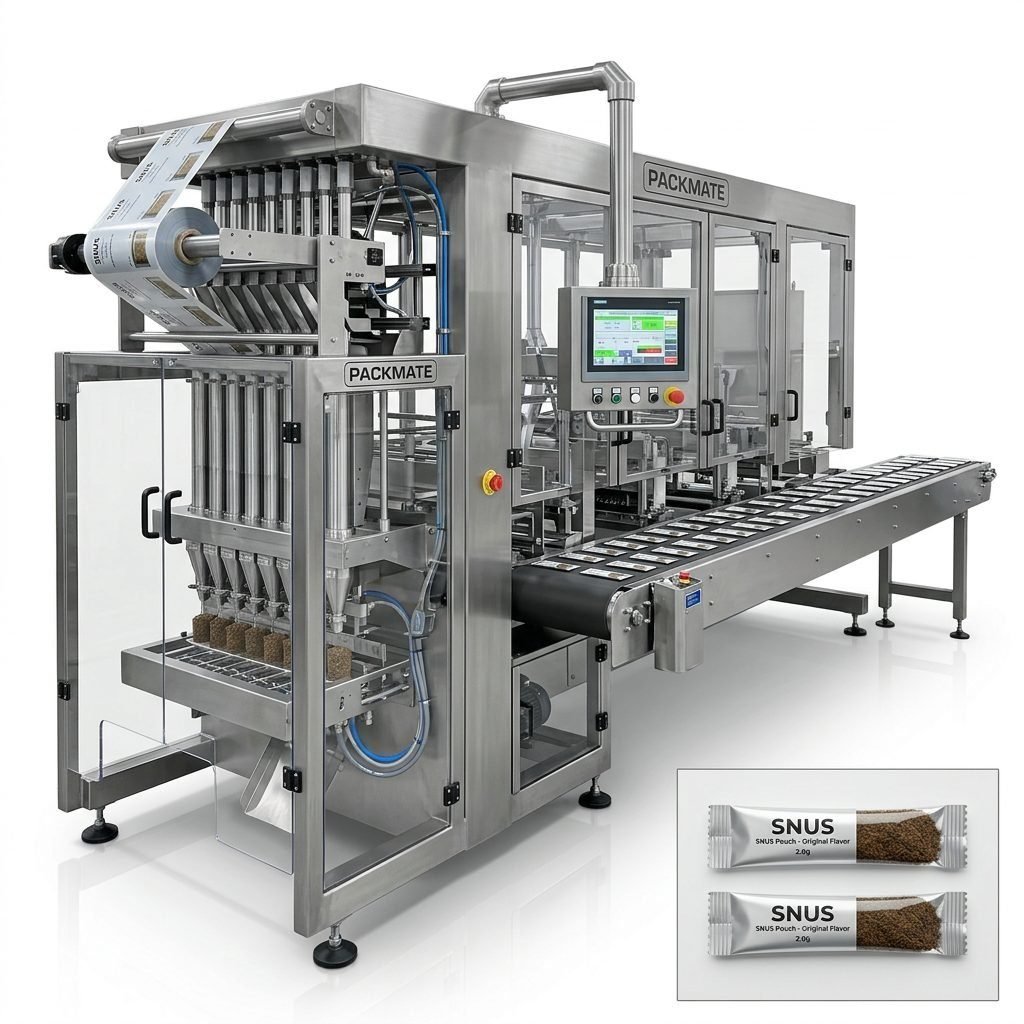
Start with a clear production plan: daily output target, pouch format (loose pouch, can, sachet, stick), lanes (single vs multi-lane), and desired speed (pouches per minute). Production targets determine whether you need a compact single-lane system or a high-speed multi-lane line. For example, small-scale new brands often choose single- to four-lane machines, while established producers aim for 8–12 lanes or more.
Must-have note: If you plan to scale within 12–24 months, invest in modular multi-lane systems or machines that can be upgraded to additional lanes — upgrading later is usually more cost-efficient than replacing equipment.
Choose the Right Machine Type for Your Product
Know the common machine categories:
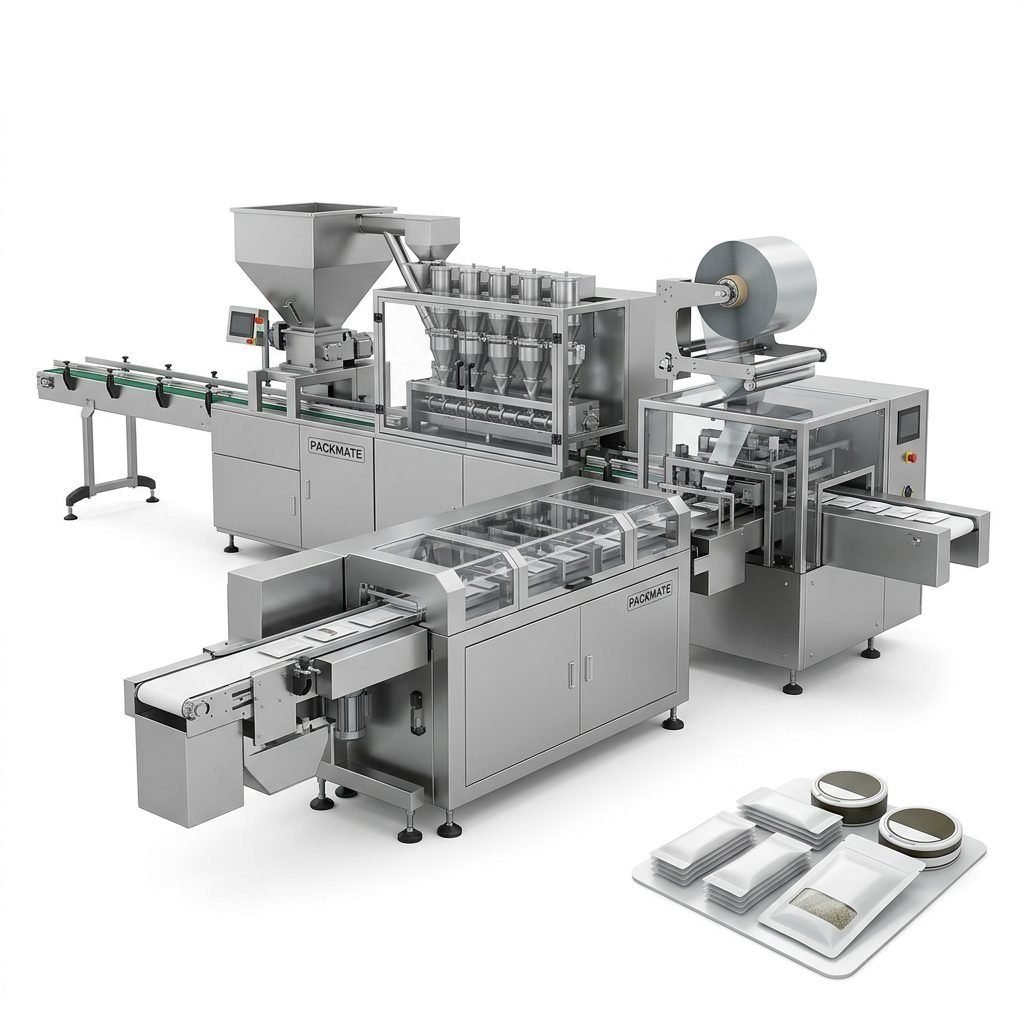
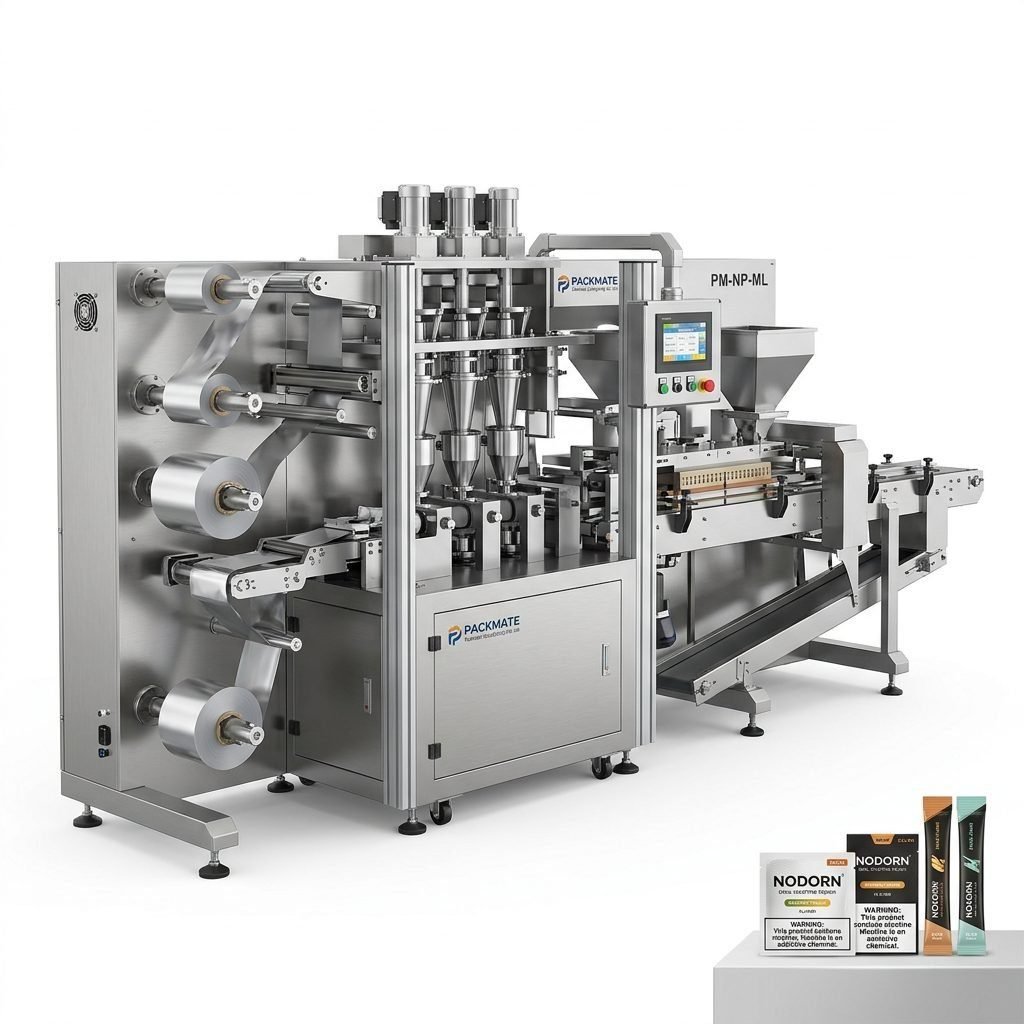
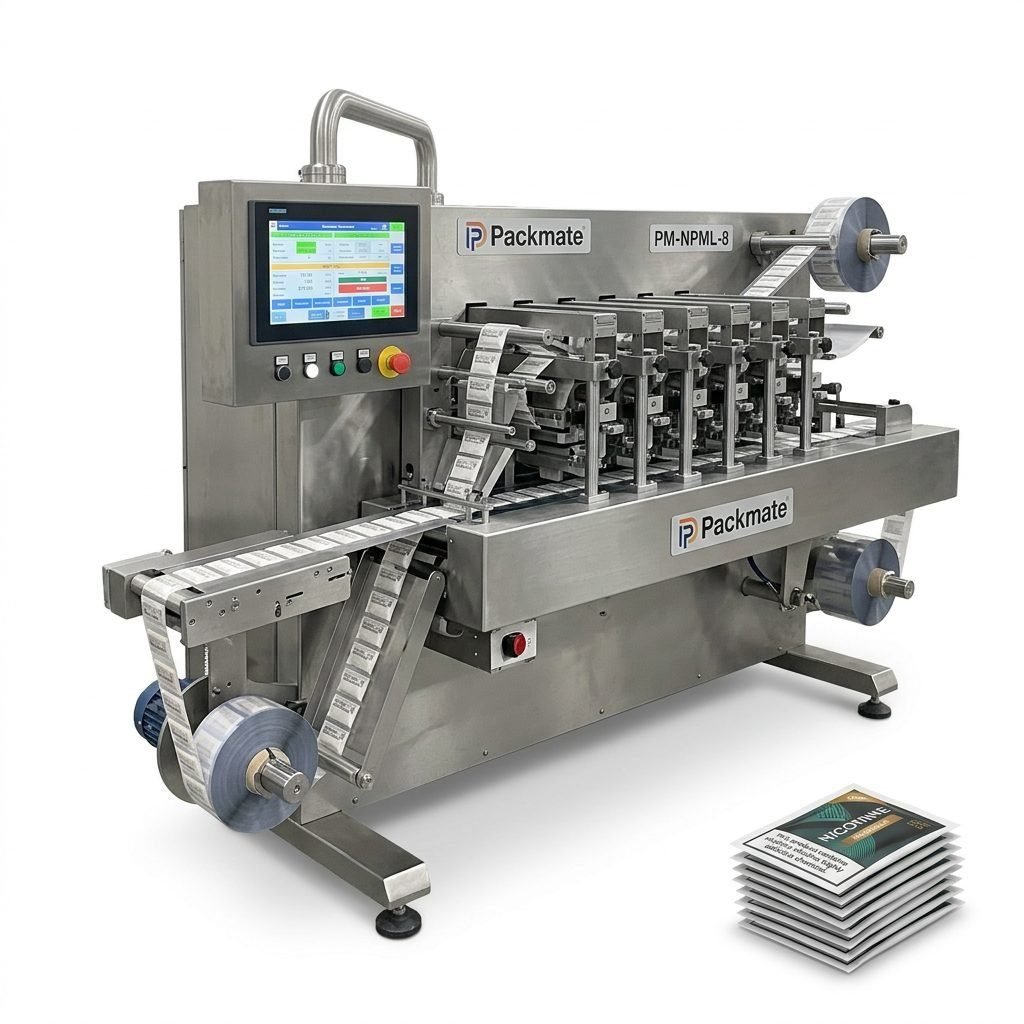
– Snus & Nicotine Pouch machines for round or flat pouches (precision dosing, sealing, and portion control).
– Sachet & Stick Pack machines for single-serve or tear-open formats (ideal for flavored nicotine sachets).
– Bag & Pouch packaging machines for outer packaging, overwrapping, and multi-pouch bundling.
For a comprehensive look at machine families and technical specs, explore a professional product range such as the Snus & Nicotine Packaging Machines or Bag & Pouch Packaging Machines and Sachet & Stick Pack Machines which outline speeds, lane counts, and configuration options.
Visit: Snus & Nicotine Packaging Machines, Bag & Pouch Packaging Machines, Sachet & Stick Pack Machines.
Technical Considerations: Accuracy, Materials, and Integration
When evaluating machinery, focus on fill accuracy, material compatibility, sealing quality, and the control system:
– Precision dosing systems reduce waste and ensure consistent nicotine dosage per pouch — choose machines with proven weighing/volumetric heads or electronic feeders.
– Material handling should accommodate common pouch substrates (paper-foil, PET/AL/PE laminates). Verify seal bar temperatures and dwell control for clean seals.
– HMI and PLC integration provide recipe storage, quick changeovers, and remote diagnostics — essential for busy lines and for reducing downtime.
If you need full-line automation with weighing and filling, consider combined solutions that include Weighing & Packaging Systems and Filling & Packaging Lines for seamless integration.
Factory Capabilities and Supplier Credentials
Select vendors with proven manufacturing capability, traceable quality control, and the ability to supply spare parts. Look for factories with advanced CNC machining, assembly lines, and testing centers. Suppliers with decades of experience in snus and nicotine packaging — and a large model range — will better support custom needs and future upgrades.
Example: A manufacturer with 30+ years of engineering experience, 20,000㎡ production area, and CE/ISO certifications is more likely to deliver reliable machinery and global after-sales support. Learn more About Packmate.
Quality, Certification and Safety
Prioritize machines with international certifications (CE, ISO). Safety features such as emergency stops, interlocked guards, and compliant electrical components are required for operator protection and local approvals. Also ensure proper documentation for commissioning and validation if you operate under strict quality management systems.
Layout, Utilities, and Site Preparation
Proper factory layout optimizes workflows and hygiene. Consider:
– Power requirements and stable voltage supply; ask for power consumption data.
– Compressed air quality and volume; many dosing heads and pneumatic components require clean, dry compressed air.
– Floor layout for feeding, inspection, and downstream packaging (case packing, labelling).
Confirm that the supplier provides detailed installation drawings and commissioning support to avoid delays during setup.
Maintenance, Spare Parts and After-Sales Support
Reliable after-sales service in Myanmar or nearby regions will reduce downtime. Ask potential suppliers about:
– Local agent or technical representative coverage.
– Spare parts lead times and recommended spare kits.
– Training for operators and maintenance staff. Suppliers that provide remote diagnostics, on-site commissioning, and comprehensive manuals help your team reach stable production faster.
Cost Considerations and Total Cost of Ownership
The lowest purchase price rarely equals the best value. Evaluate:
– Investment cost vs throughput. A higher-speed, multi-lane machine may reduce labour and packaging material costs over time.
– Energy and maintenance costs. Efficient machines with reliable components lower operating expenses.
– Resale value and upgrade paths. Choose suppliers who offer retrofits or modular upgrades.
Testing, Pilot Runs and Acceptance Criteria
Before final acceptance, require FAT (Factory Acceptance Test) and SAT (Site Acceptance Test) with your actual product and packaging materials. Agree on performance metrics: speed, rejection rate, fill precision, and seal integrity. A clear acceptance checklist prevents disputes after delivery.
Local Logistics and Installation in Myanmar
Plan for shipping, customs clearance, and local transport. Work with a supplier experienced in international shipments to Myanmar to avoid unexpected costs. Confirm that installation teams will be available for on-site commissioning and operator training.
Tip: Choose a vendor with global exhibition and case experience so you can review real-world installations and customer feedback. See customer cases and exhibition presence for reassurance: Case and Our Exhibition.
Selecting a Long-Term Partner: Questions to Ask Your Supplier
When evaluating vendors, ask:
– Can you provide references and site visits for similar lines?
– What is your warranty, spare parts policy, and service SLA?
– Do you support customized pouch sizes, logos, and labelling formats?
– Are machine manuals and software available in English, and do you provide operator training locally?
Why Choose an Experienced Manufacturer
An experienced manufacturer brings process knowledge, proven designs, and reliable after-sales support. Manufacturers with extensive product ranges and a robust factory footprint can deliver both standard and bespoke solutions. For example, companies offering a full line of Snus / Nicotine Pouch Packing Machines and auxiliary equipment can reduce integration headaches and accelerate time-to-market. Explore product lines such as Auxiliary Packaging Equipment and Weighing & Packaging Systems for integrated solutions.
Final Checklist Before Purchase
– Clear production target and product specifications.
– FAT / SAT and acceptance criteria agreed in writing.
– Warranty, spare parts, and service level commitments.
– Local regulatory compliance and labelling flexibility.
Quick summary: Match machine type to product, plan for scalability, verify supplier credentials and certifications, require FAT/SAT with production samples, and confirm strong after-sales support in Myanmar.
How to Get Started: Practical Next Steps
1) Prepare product samples and target output. 2) Contact experienced suppliers with clear technical briefs. 3) Request video demos, technical drawings, and references. 4) Arrange FAT with your materials. 5) Plan commissioning and operator training.
If you are ready to evaluate turnkey lines or want tailored advice, reach out to the manufacturer for a detailed proposal, machine selection, and site planning. Learn about full production capabilities and services through the manufacturer’s Service and Contact pages.
Helpful links: Filling & Packaging Lines, Service, Contact Us.
Conclusion
Choosing the right nicotine packaging machinery in Myanmar requires balancing technical performance, compliance, vendor reliability, and total cost of ownership. Prioritize suppliers with proven snus and nicotine packaging experience, robust factory capabilities, and strong after-sales support to ensure your production line achieves safety, consistency, and scalability.
Common Questions
Q1: What certifications should I require from machinery suppliers?
Require CE and ISO certifications as a baseline. Also ask for detailed electrical and safety documentation, material compliance statements, and FAT reports. Certification evidence helps with customs clearance and local approvals.
Q2: Can machines be upgraded from single-lane to multi-lane?
Some manufacturers design modular systems that can be upgraded, but not all machines are upgradable. Confirm upgrade paths and estimated costs before purchase to avoid incompatible designs.
Q3: How long does installation and commissioning typically take?
Installation time varies by machine complexity. Single-lane systems may be commissioned within a few days, while full multi-lane production lines with upstream and downstream integration can take several weeks. Plan for training and validation time as well.
Q4: What after-sales support should I expect?
Expect a warranty period, spare parts availability, remote technical support, and optional on-site service. Confirm lead times for critical spare parts and response times for technical issues in your service contract.
Q5: How do I validate machine performance before accepting delivery?
Conduct FAT with your product and materials, review speed, accuracy, rejection rate, and seal quality. After delivery, perform SAT on-site to confirm performance under real production conditions and sign off only after agreed criteria are met.