The nicotine pouch and snus market in Algeria is evolving rapidly, and choosing the right packaging machinery is a critical decision for any manufacturer or new entrant. This guide walks you through the practical steps and technical considerations needed to select the correct nicotine packaging machine for your operation in Algeria. It covers regulatory concerns, machine types, production planning, quality and safety certifications, supplier evaluation, and long-term service expectations so you can make a confident purchase decision.
Market and Regulatory Context in Algeria
📌 First, understand the local regulatory landscape for nicotine products. Algeria has specific rules for tobacco-related products, labeling, and health warnings. Compliance with local labeling and packaging requirements is non-negotiable and should drive your machine specification (e.g., printing, coding, and label application capabilities). Work with legal advisors or local consultants to confirm requirements before finalizing equipment choices.
Why certification matters
✅ Machines with international certifications such as CE and ISO are preferable because they demonstrate compliance with safety and quality standards. Certifications simplify customs clearance and improve buyer confidence if you plan to export. Seek machines from manufacturers who can provide test reports and validation documents.
🔍 Quick tip: Ask for references and case studies from the supplier—real-world performance evidence is invaluable. Packmate Snus Machine, for example, provides global case examples and a full factory profile which can help you validate production claims.
Choose the Right Machine Type for Your Product
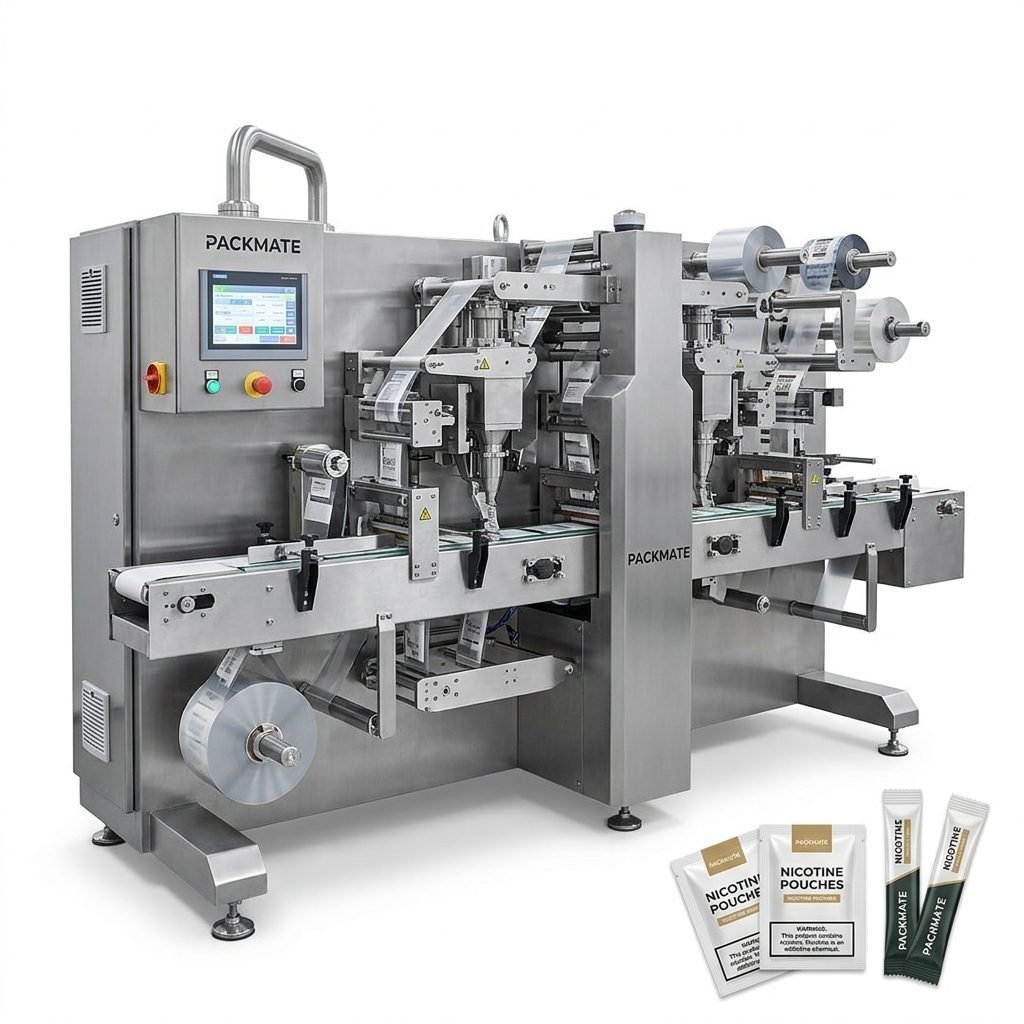
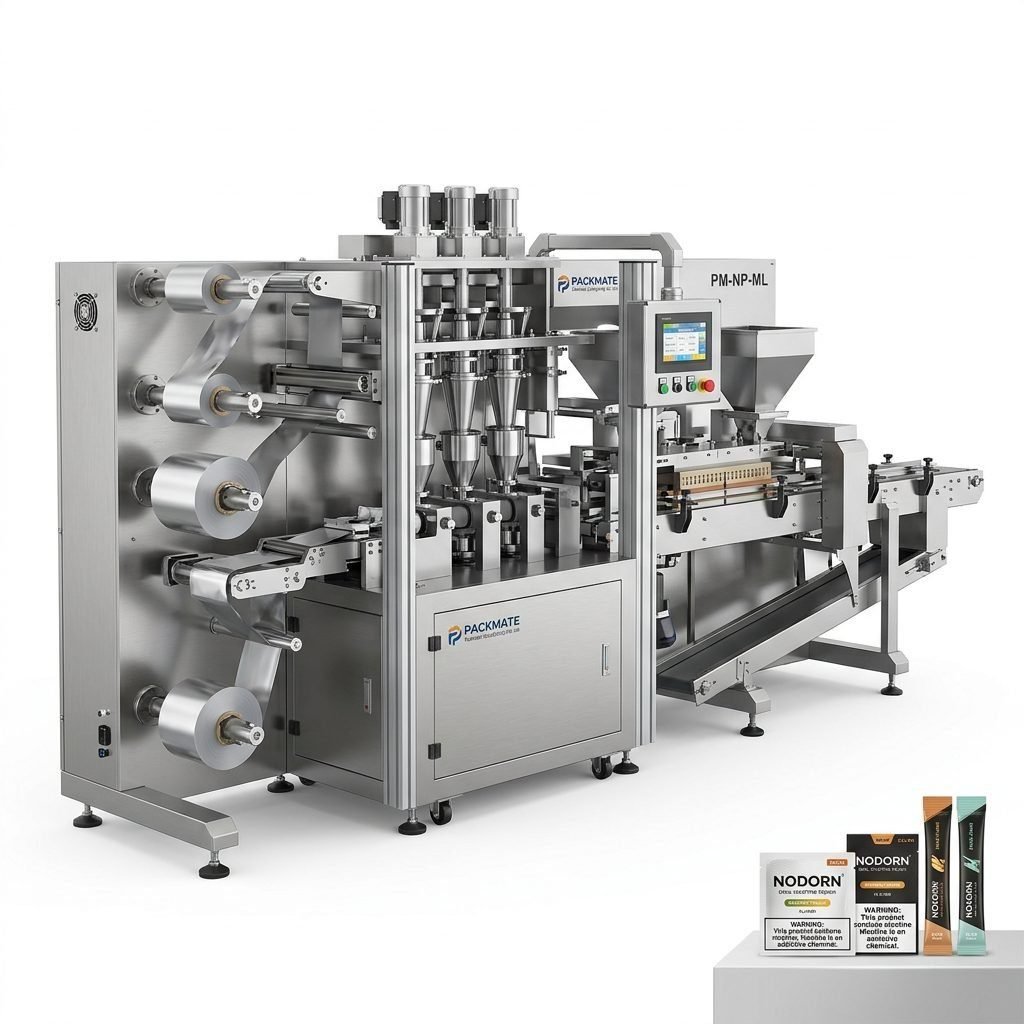
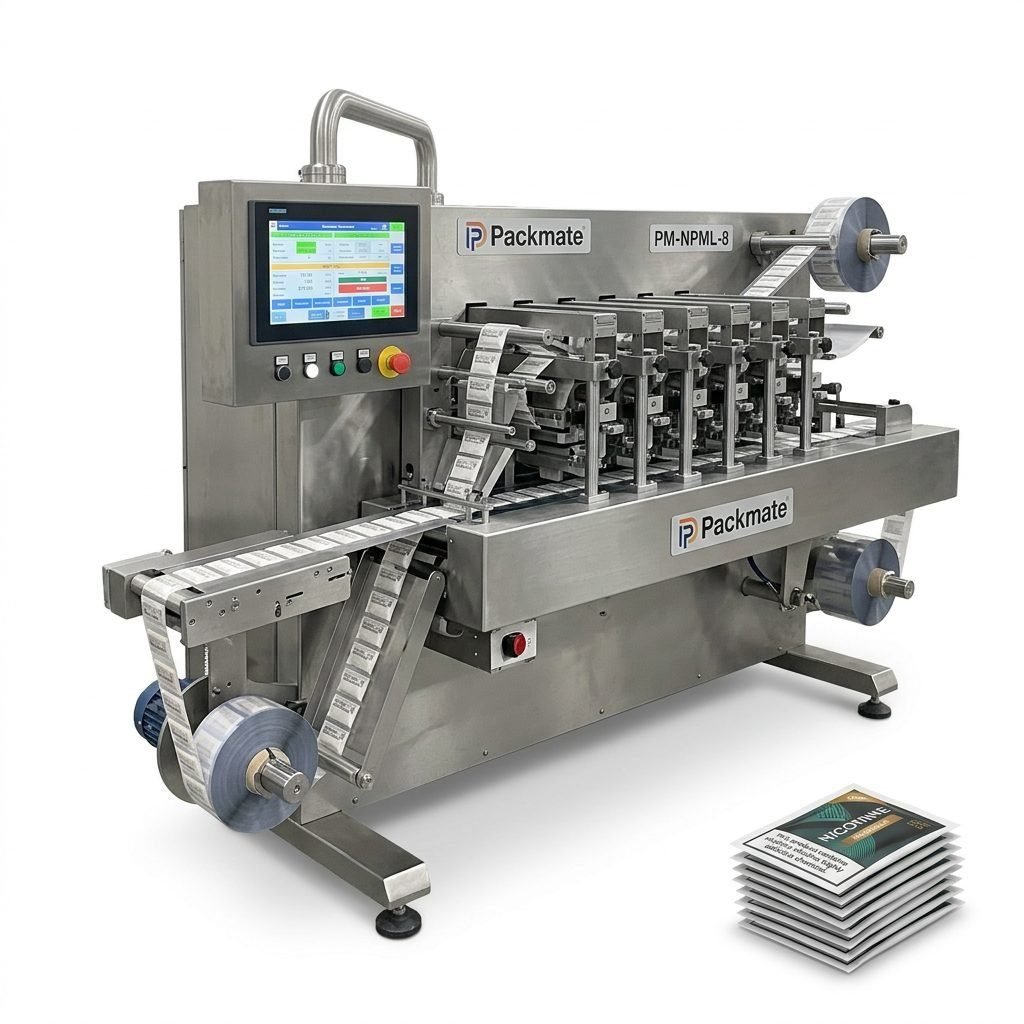
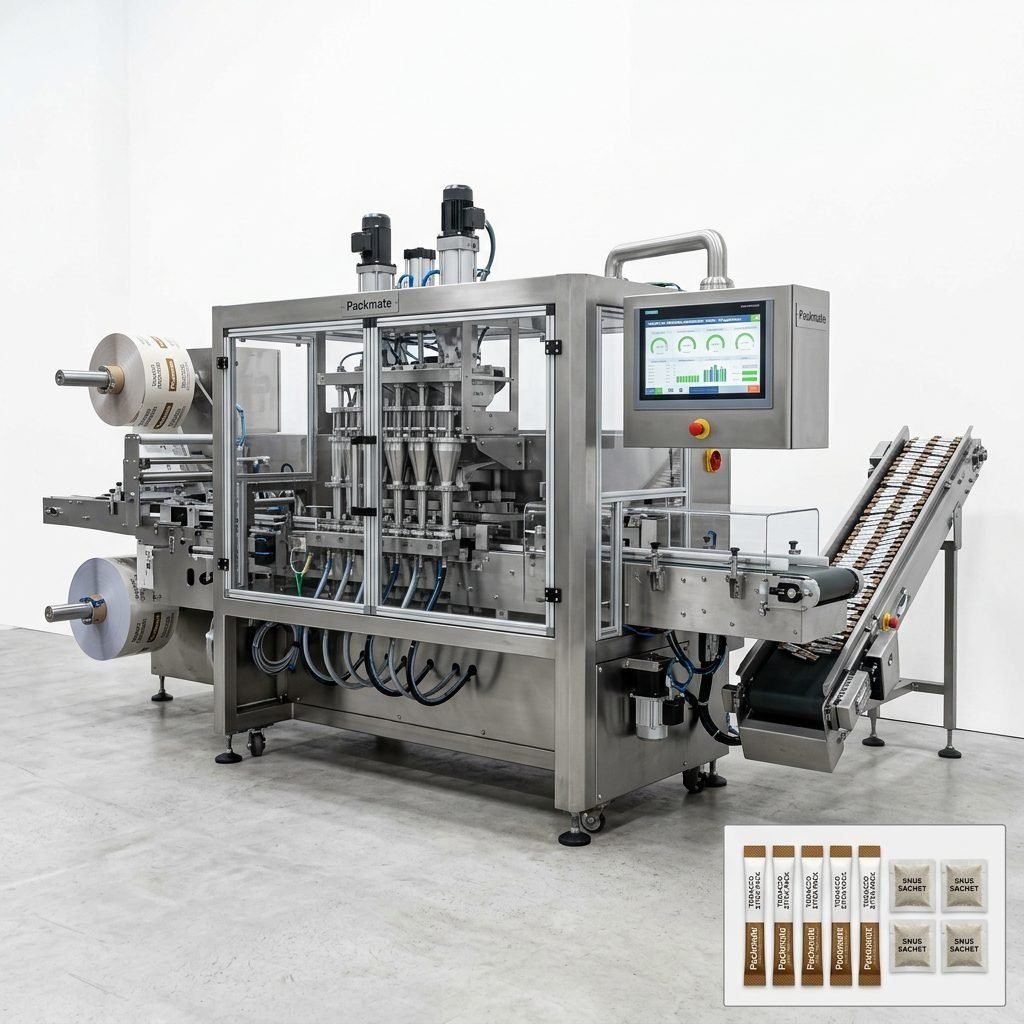
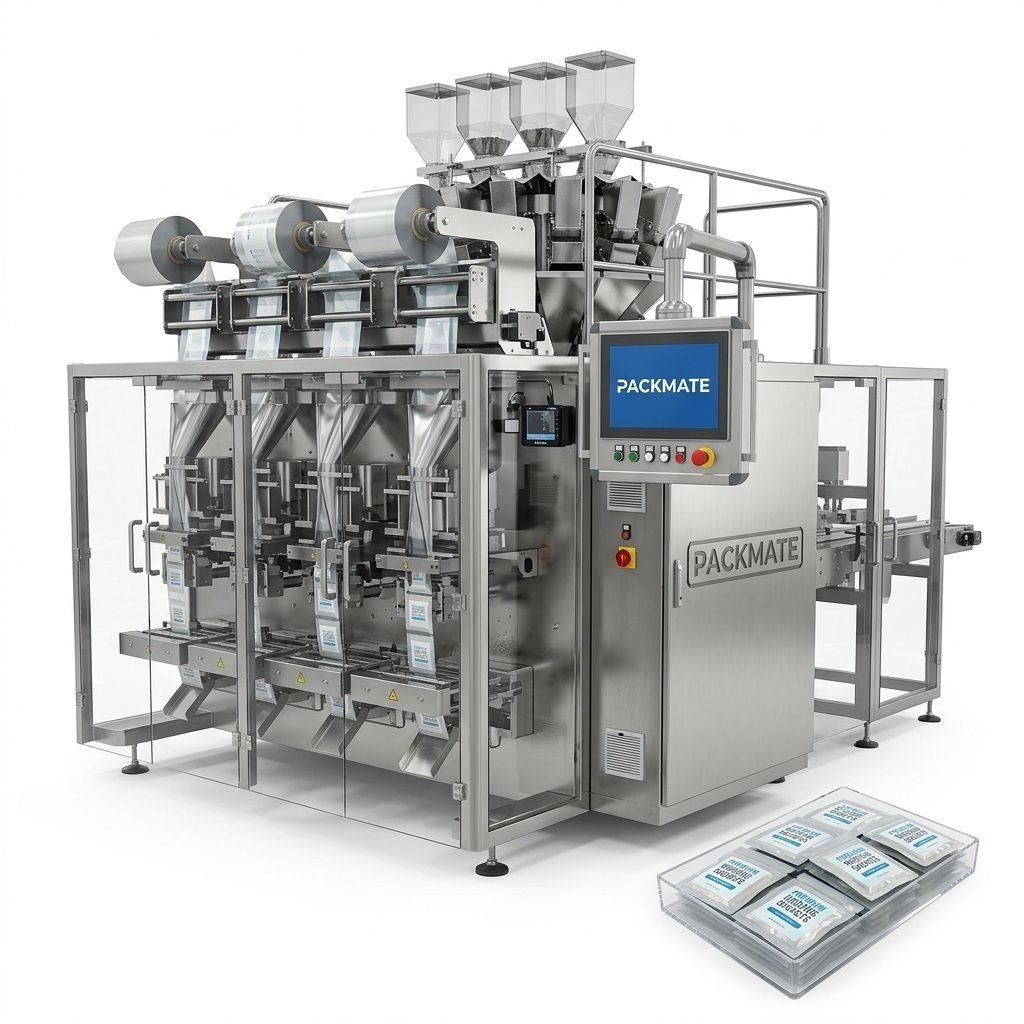
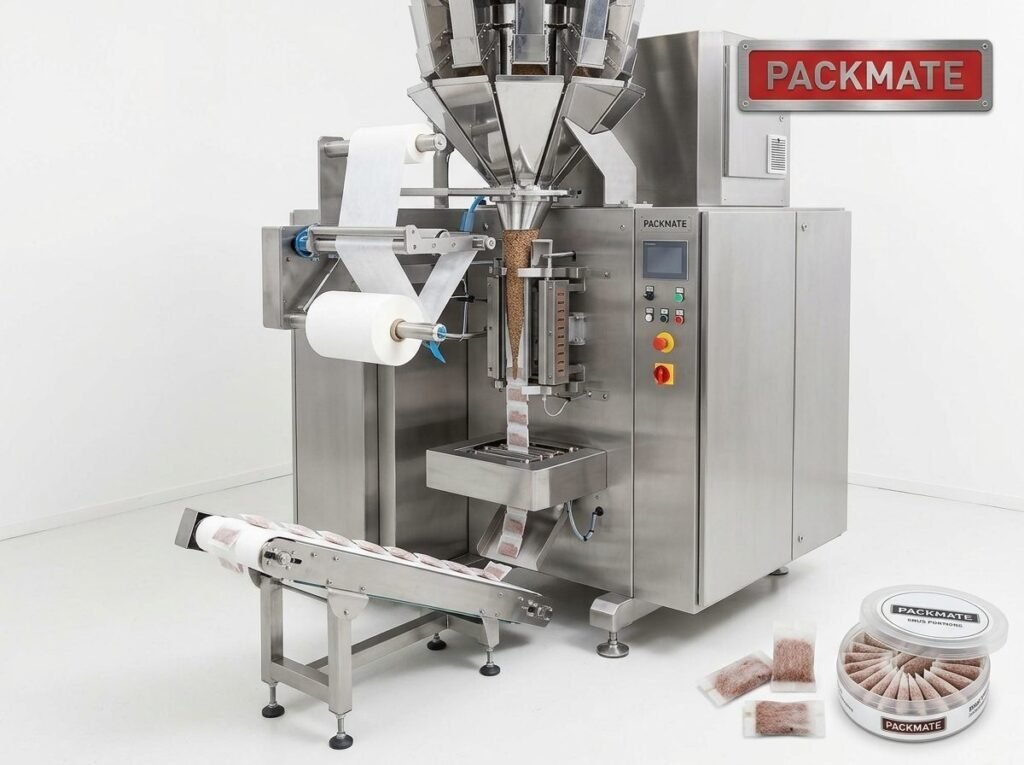
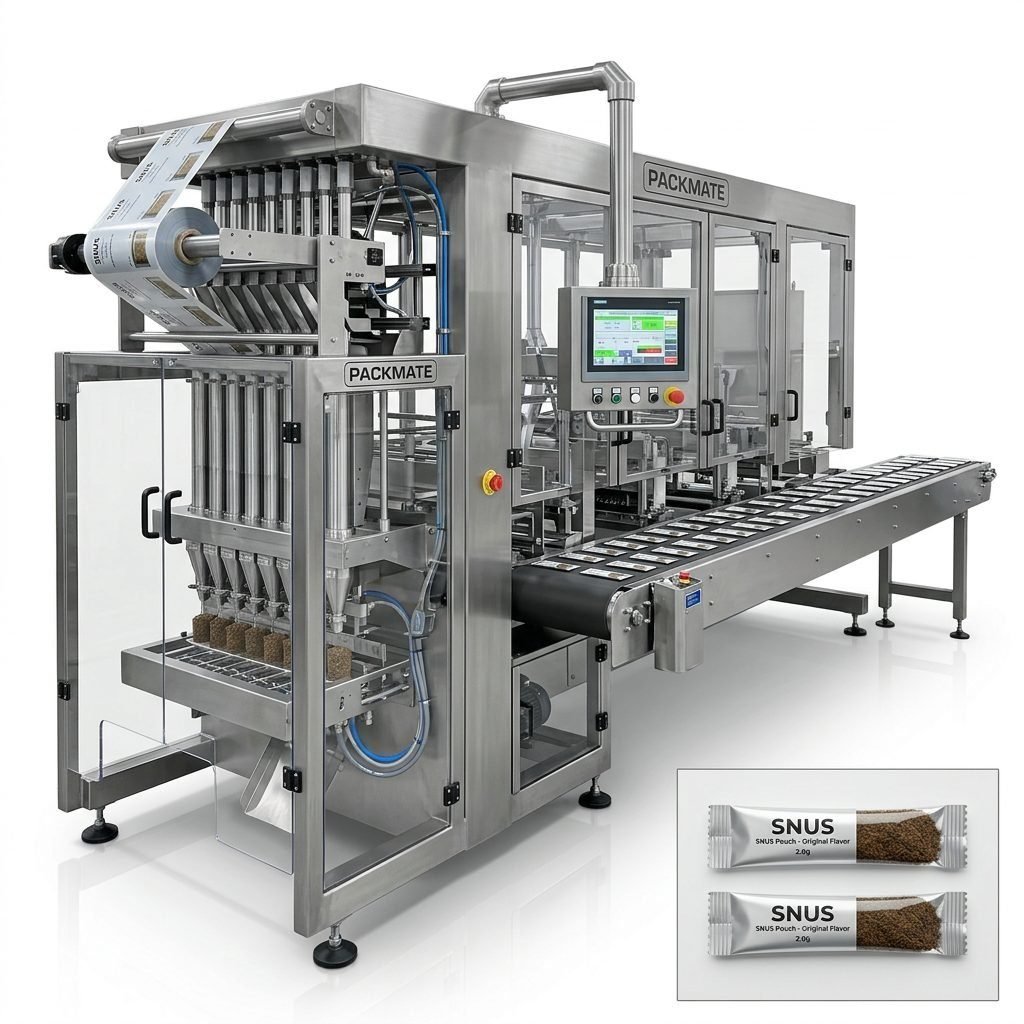
Nicotine pouch products come in various formats: single pouches, stick packs, sachets, multi-lane pouches, and flow-pack formats. Select the machine type based on your product format and target packaging style. For small-dose nicotine pouches and snus, high-precision multi-lane snus packaging machines are often ideal because they deliver accuracy and high throughput with minimal waste.
Common machine types
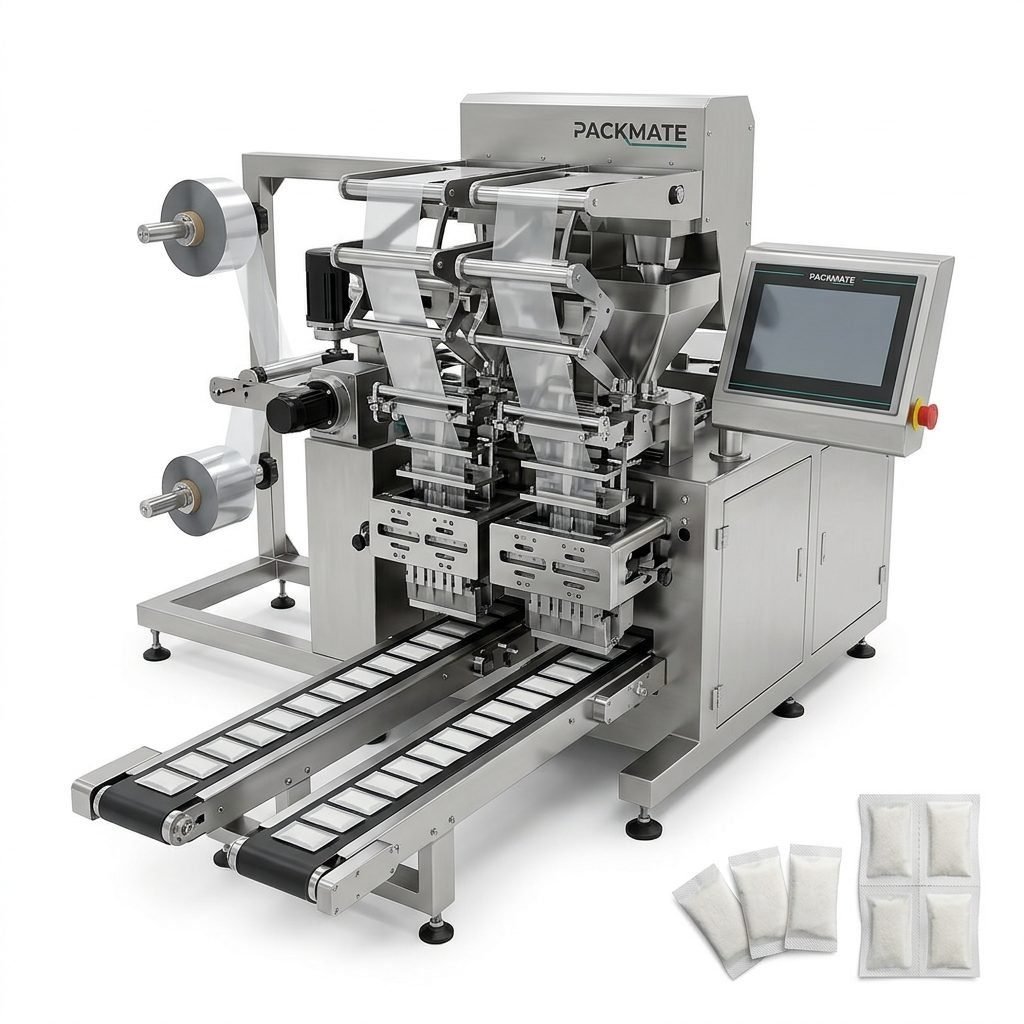
– Stick pack machines and sachet machines for single-dose segments.
– Multi-lane snus/nicotine pouch machines for small-dose multi-channel production.
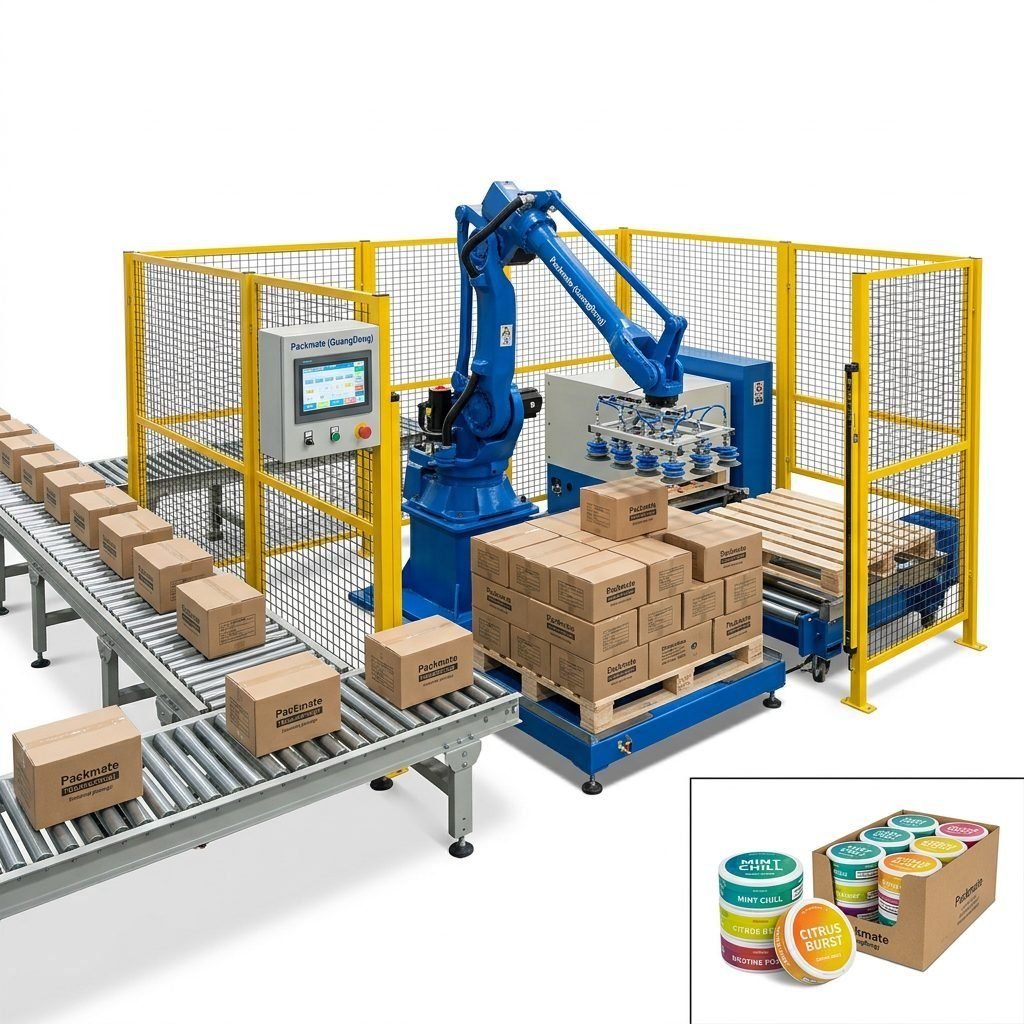
– Bag and pouch machines for outer packaging and bundling.
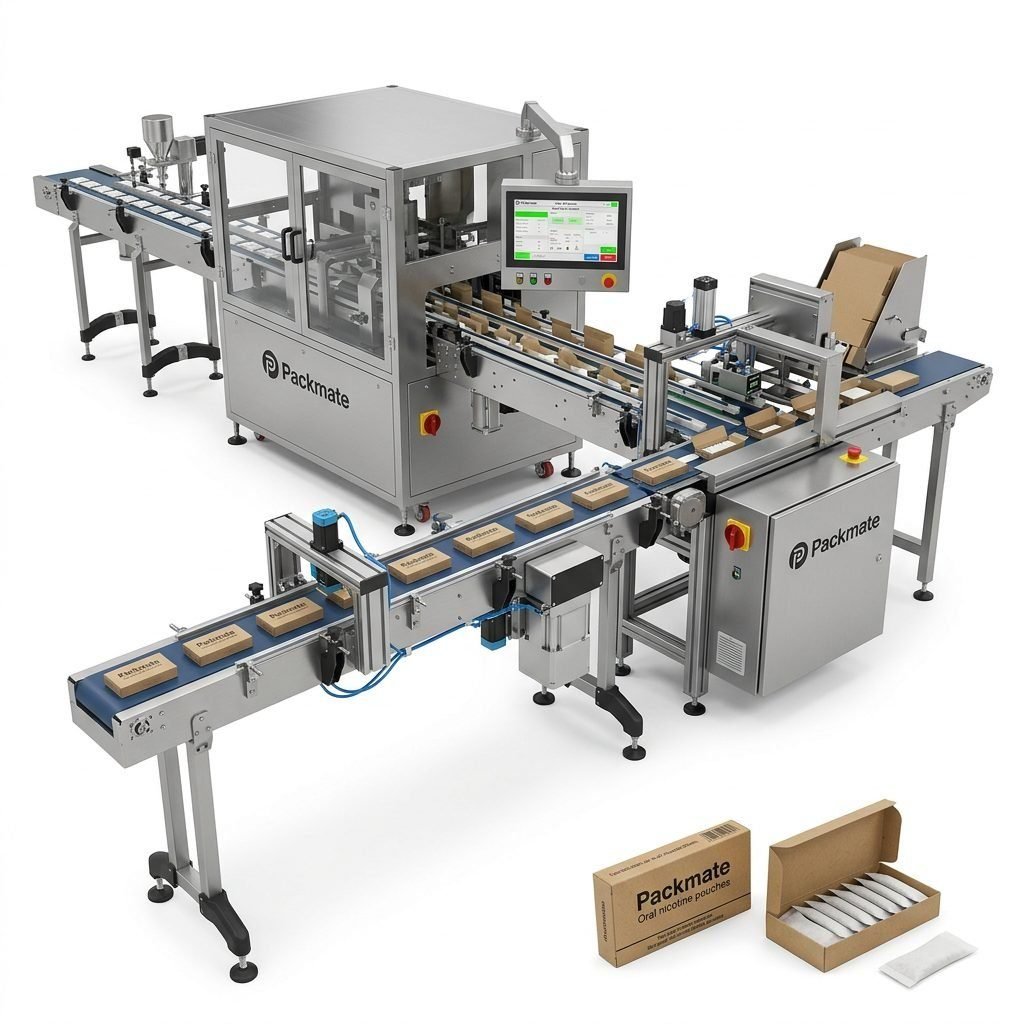
Consider modular lines that combine filling, sealing, and secondary packing for a complete production flow. For product options and models, explore Packmate’s range such as their Snus & Nicotine Packaging Machines and Sachet & Stick Pack Machines.
Production Capacity, Speed and Scalability
🔧 Determine your required throughput in units per minute and daily production volumes. Machines are typically rated by pouches per minute or per lane. Choose a machine with headroom for growth; a modest initial investment in a slightly higher-capacity machine can avoid costly upgrades later. Consider multi-lane systems when your plan includes scaling up without expanding factory footprint.
💡 Capacity checklist: current peak demand, projected 12–36 month growth, planned SKUs, and changeover time targets. Machines from experienced manufacturers often support faster format changes and modular upgrades.
Material Compatibility and Packaging Formats
Material compatibility is crucial—your selected machine must be able to handle the pouch film, laminate layers, and sealing temperatures required by your packaging materials. Verify that the machine supports the substrate thickness, heat-seal characteristics, and barrier requirements for nicotine products. If you use printed films, ensure the machine’s registration and printing systems can maintain label alignment.
Sealing and hygiene
Ensure hygienic design for easy cleaning, with food-grade contact parts and accessible sealing areas. Machines with stainless steel construction and IP-rated electrical panels will be more durable in humid or dust-prone factory environments.
Automation, Controls and Production Monitoring
⚙️ Modern nicotine packaging lines often include PLC controls, touch-screen HMI, recipe management, and data logging for batch traceability. Look for features such as automatic film tracking, web guide systems, error detection, and remote diagnostics. These reduce rejects and downtime and are especially useful for compliance-driven markets where traceability matters.
Connectivity and Industry 4.0
Machines with Ethernet, OPC-UA, and remote service access provide long-term value—allowing predictive maintenance and quick troubleshooting without waiting for on-site visits. Ask about software upgrade policies and compatibility with your MES or ERP system.
Quality, Testing and Validation
📋 Require a FAT (Factory Acceptance Test) and a clear validation protocol before shipment. FAT should simulate your product and film to confirm speed, seal integrity, and dimensional accuracy. Machines should include quality inspection options such as checkweighers, metal detectors, vision systems for print inspection, and pouch integrity testing.
✅ Must-have tests: seal strength, dimensional checks, visual inspection, and functional runs at target speed. Insist on documented test reports.
Supplier Selection: Beyond the Price Tag
Supplier reputation and after-sales support are as important as machine specs. Choose a manufacturer with proven experience in snus and nicotine pouch machines. Packmate Snus Machine, for instance, emphasizes over 30 years of engineering experience and turnkey packaging lines—look for similar credentials when evaluating vendors. Visit the manufacturer’s factory if possible and review their case studies and exhibition presence.
Useful links to review product ranges and capabilities: Snus & Nicotine Packaging Machines, Bag & Pouch Packaging Machines, and About Packmate.
Installation, Training and Spare Parts
🔧 Confirm installation support, operator training, and spare parts availability. Machines shipped without clear spare parts plans can lead to long downtimes. Ensure the supplier offers local or regional support, and ask for lead times on critical spare parts. A robust training program for operators and maintenance staff will reduce initial startup issues and improve OEE.
Service contracts and warranties
Secure reasonable warranty terms and consider a service contract for the first 12–24 months. Remote support, service exchange units, and field service response times should be specified in the agreement.
Total Cost of Ownership and Financing
💰 Look beyond the purchase price. Evaluate energy consumption, maintenance hours, spare part costs, and expected MTBF (mean time between failures). Factor in installation, training, and potential civil works. Some manufacturers provide financing options or leasing—compare those to your capital plan. Consider potential cost savings from higher automation and reduced labor.
Layout, Utilities and Factory Readiness
📐 Prepare a detailed factory layout showing the machine footprint, access aisles, material infeed and finished goods flow. Confirm utility requirements: power supply, compressed air quality and pressure, vacuum, and drainage. Discuss environmental controls if nicotine sensitivity requires dedicated HVAC or fume extraction.
📌 Pro tip: Keep an installation buffer for unexpected civil or utility work, and schedule installation during low-production periods to minimize disruptions.
Case Studies and Proven Solutions
Real cases are the best proof. Look for suppliers who can share production cases similar to your needs. Packmate’s documented global cooperation cases and exhibition presence indicate practical industry experience. Review documented installations and request contactable customer references for machines of a similar scale and product type.
Final Checklist Before You Buy
🔎 Before signing a purchase order, verify the following: machine capability vs. SKU requirements, FAT procedure, warranty and spare parts agreement, on-site installation and training plan, certification documents, lead times, and payment milestones. Confirm intellectual property and software licensing terms for HMI/PLC systems.
If you need to review product ranges and technical brochures, explore the Filling & Packaging Lines and Weighing & Packaging Systems for integrated solutions. For questions on service and support, check the manufacturer’s Service page or contact them directly.
Summary
Choosing the right nicotine packaging machinery in Algeria combines regulatory compliance, accurate production planning, careful material compatibility checks, and a strong supplier partnership. Prioritize certified machines with proven case history, robust after-sales support, and realistic total cost calculations. A structured evaluation and FAT-backed acceptance will reduce risk and accelerate time-to-market.
Frequently Asked Questions
Q1: How important is CE certification for machines imported into Algeria? — A1: Very important. CE and ISO certifications help ensure machine safety and reliability, simplify customs and regulatory checks, and provide reassurance on manufacturing standards.
Q2: Can a single packaging line handle multiple pouch formats? — A2: Many modern lines are modular and can handle multiple formats with format change kits and recipe management. Confirm changeover time and format ranges with the supplier to ensure it meets your SKU plan.
Q3: What spare parts should I stock initially? — A3: Stock wear parts (sealing jaws, belts, sensors), critical electrical components (PLCs, servos), and consumables (filtration, gaskets). Your supplier should recommend a spare parts list tailored to the chosen machine.
Q4: How long does lead time typically take for high-precision snus packaging machines? — A4: Lead times vary by model and customization, but expect anywhere from a few weeks for standard models to several months for fully customized turnkey lines. Confirm lead times and shipping plans early in negotiations.
Q5: What after-sales support should I require? — A5: Require installation and commissioning support, training for operators and maintenance staff, a clear spare parts supply plan, remote diagnostics, and defined response times for field service visits.