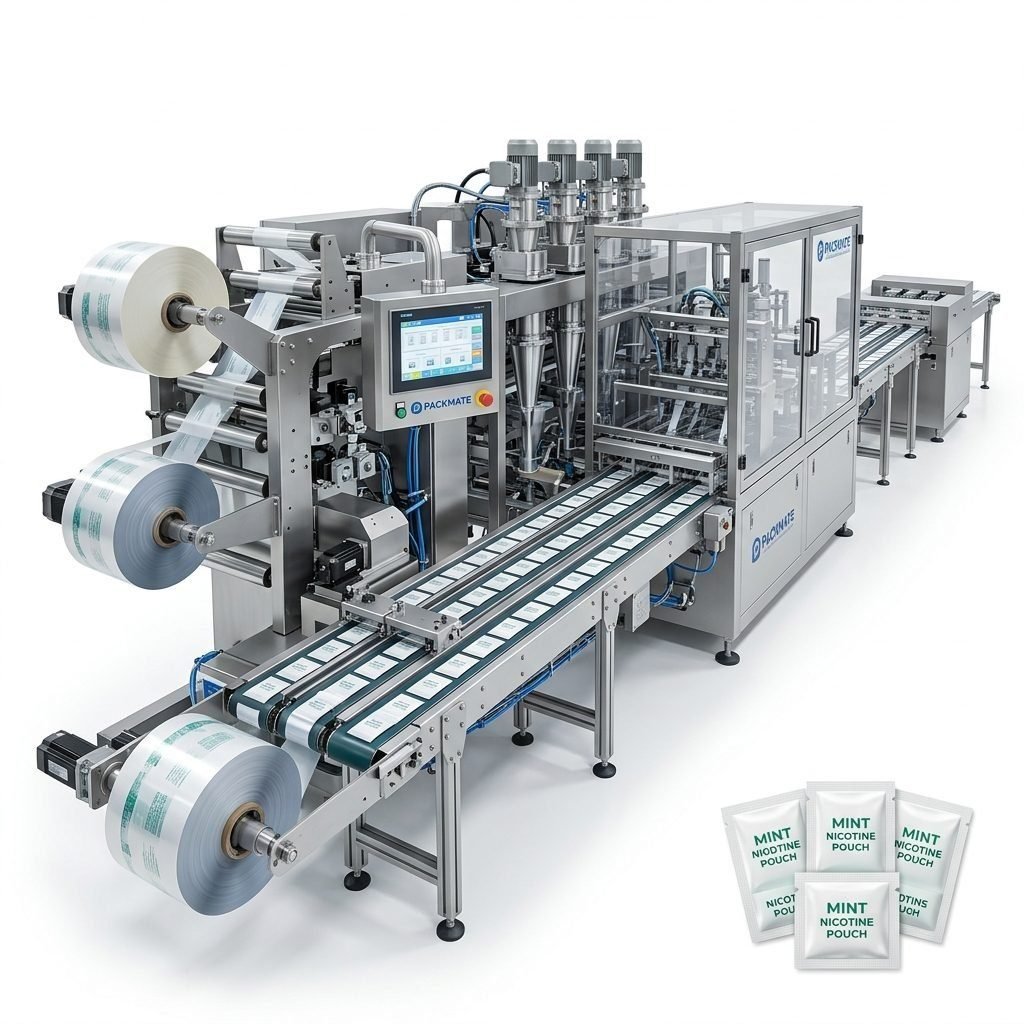
Choosing the right snus packaging machinery in a compact market like Liechtenstein requires more than a quick price check. Manufacturers and packagers must weigh technical performance, regulatory compliance, supplier reliability, and lifecycle costs. This guide breaks down the practical steps, criteria, and supplier evaluation methods you can use to select a machine that fits your production volume, product format, and long-term business goals.
Understanding the Local Market & Production Needs
Liechtenstein’s small but sophisticated market often favors high-quality products and tight supply chains. Before comparing machines, clarify your production profile:
- Target daily or hourly output (units/hour)
- Preferred formats: pouches, sachets, stick packs or multi-lane strips
- Product composition: powder, granules, moisture levels, or nicotine pouches
- Packaging materials and barrier requirements
- Quality control and traceability needs
Why format matters
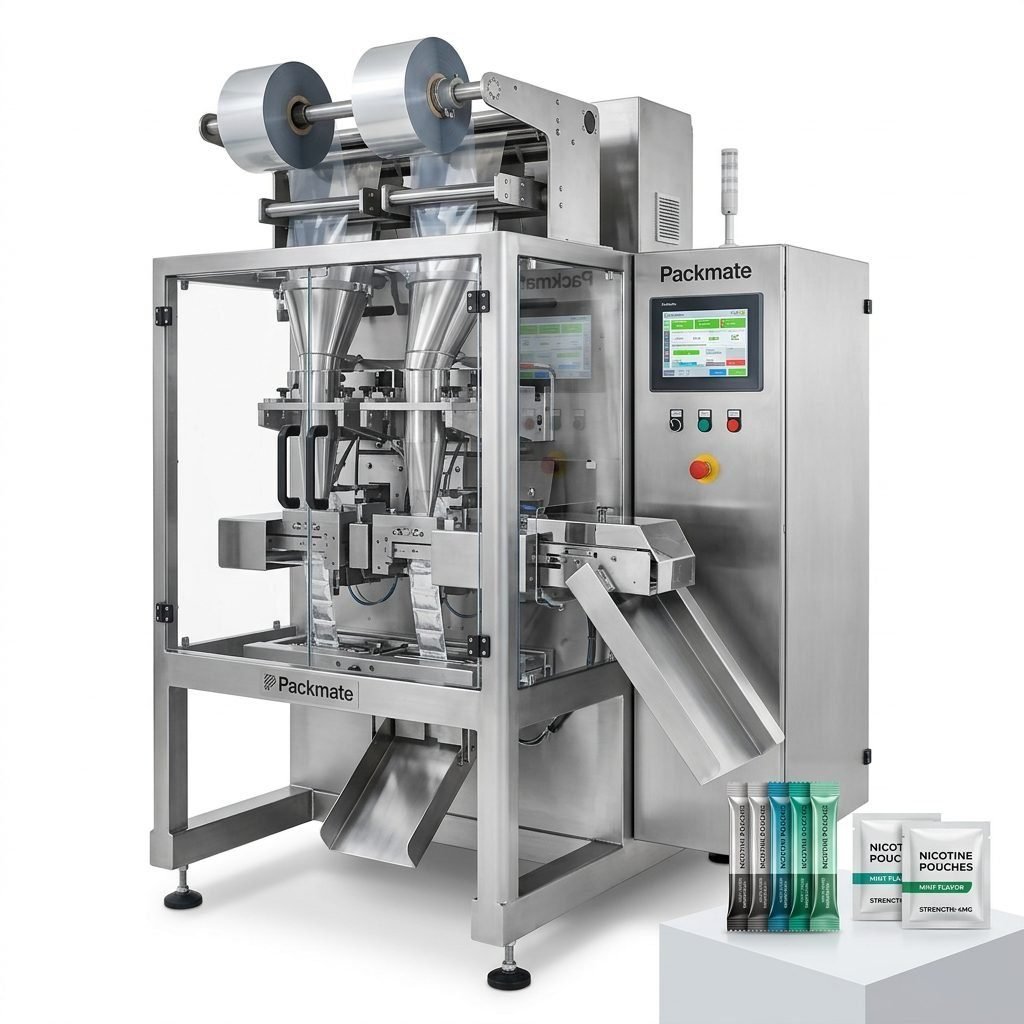
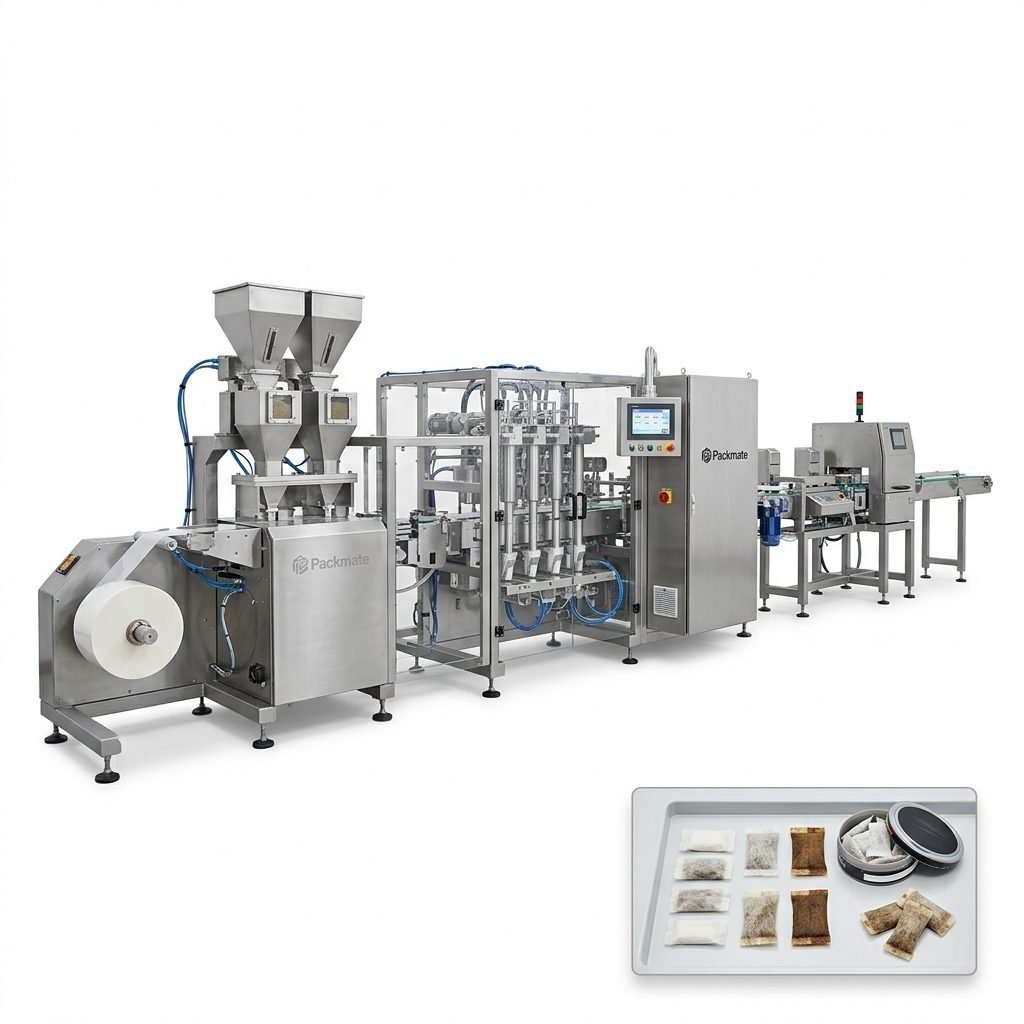
Different formats demand different filling and sealing systems. For example, multi-lane nicotine pouch lines are optimized for small-dose repeatability, whereas stick pack machines prioritize longitudinal sealing and fast cut-off. Matching machine type to format avoids unnecessary retrofits and reduces downtime.
Key Machine Types to Consider
A quick inventory of common snus packaging machinery types helps you shortlist suitable options:
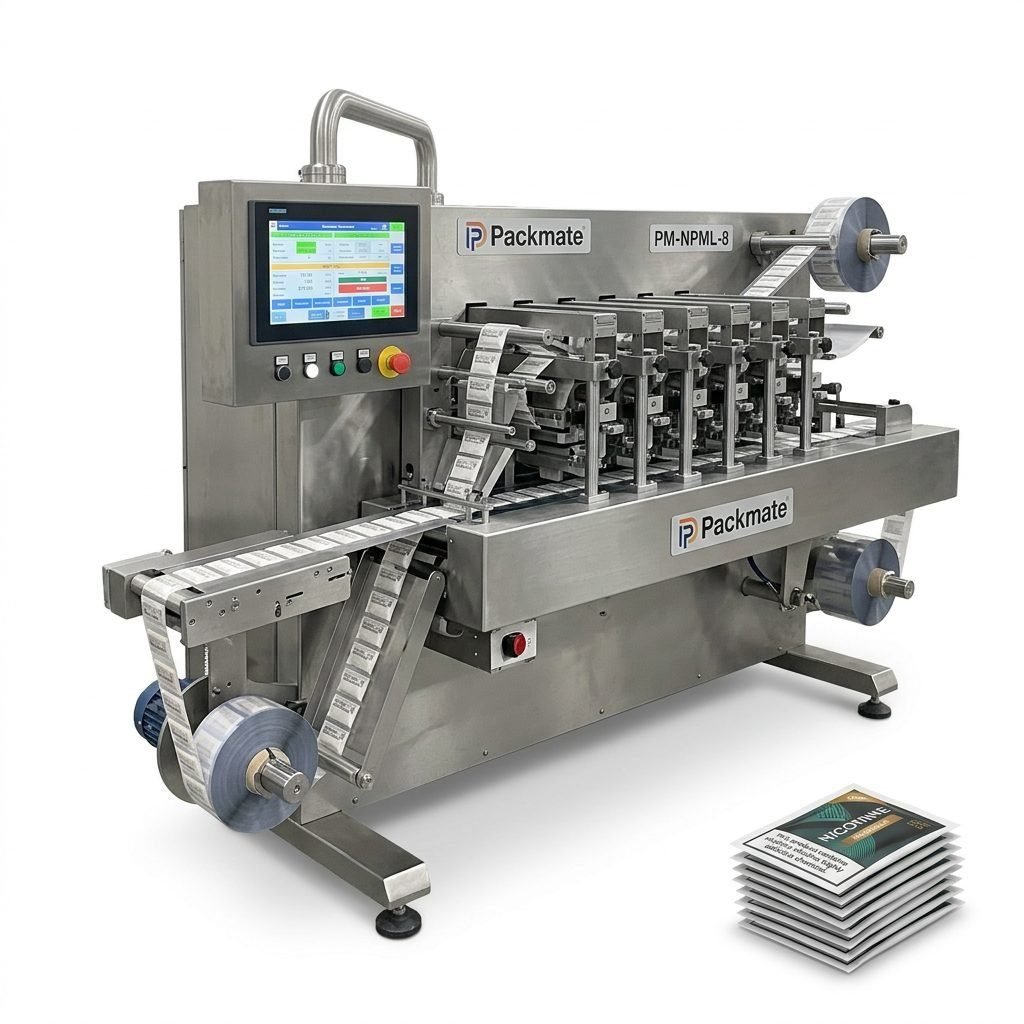
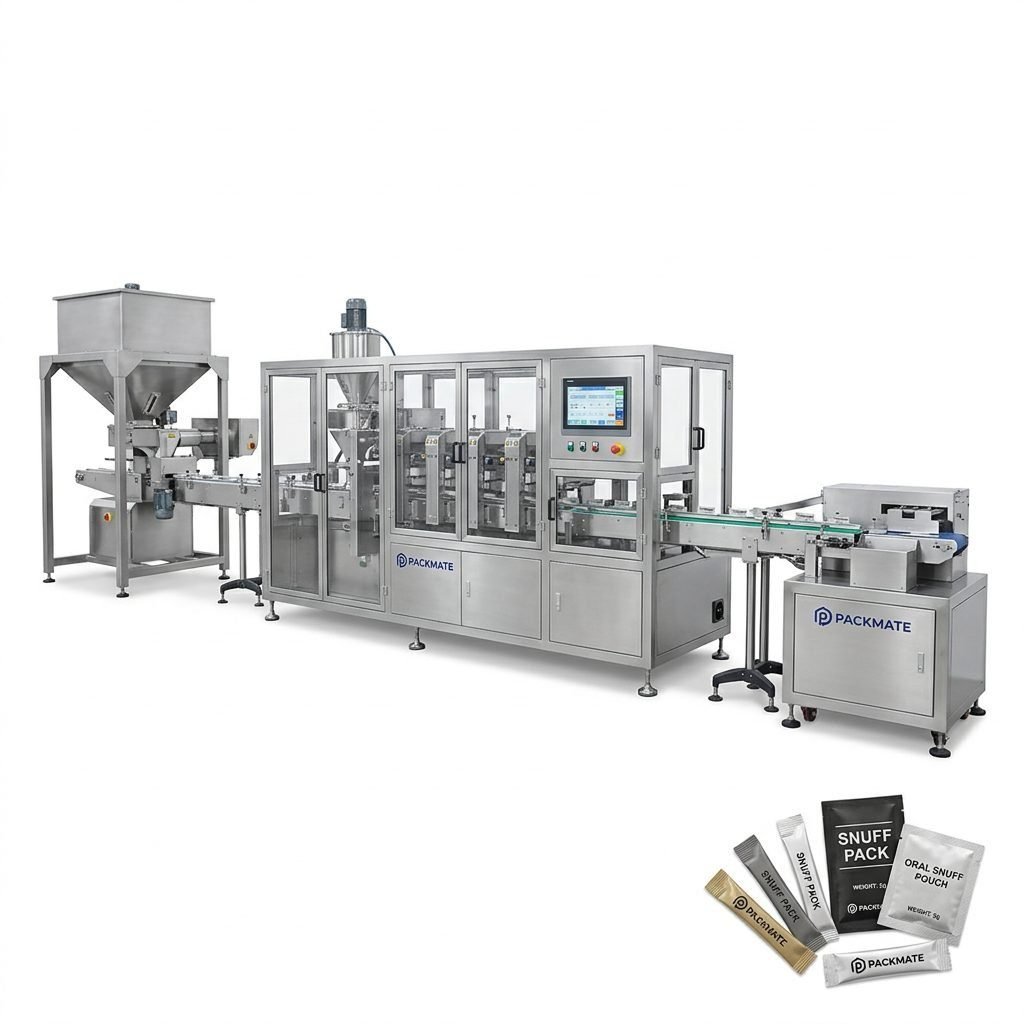
- Multi-lane snus / nicotine pouch machines — ideal for small-dose, high-precision pouches
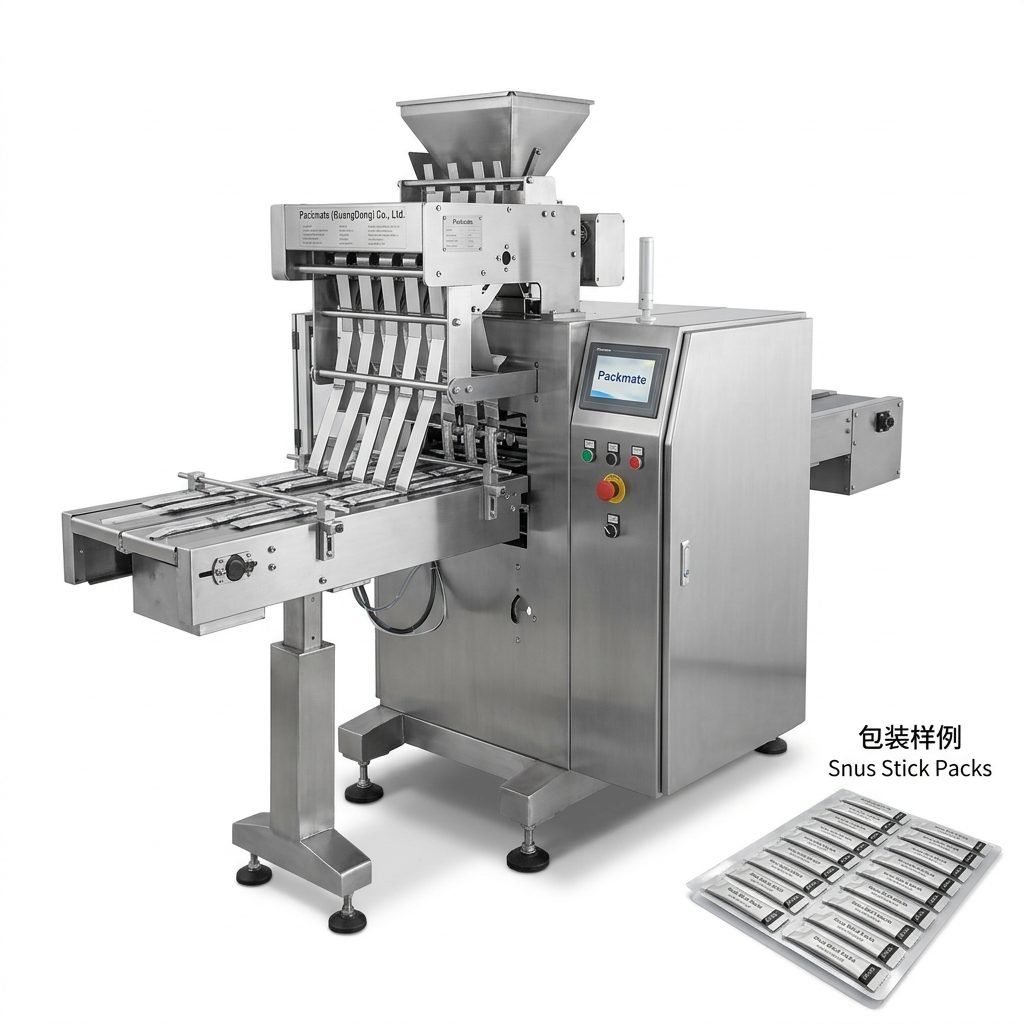
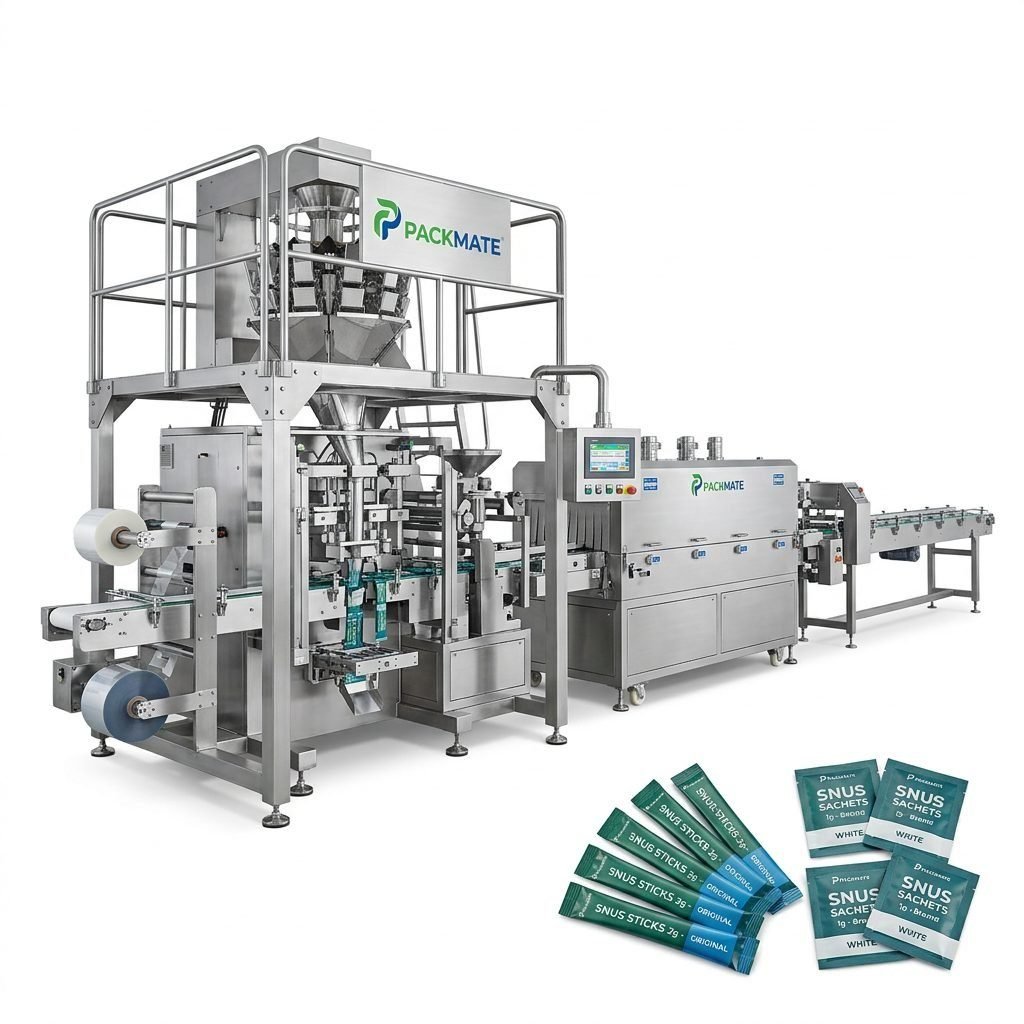
- Stick pack machines — best for single-dose stick formats with fast output
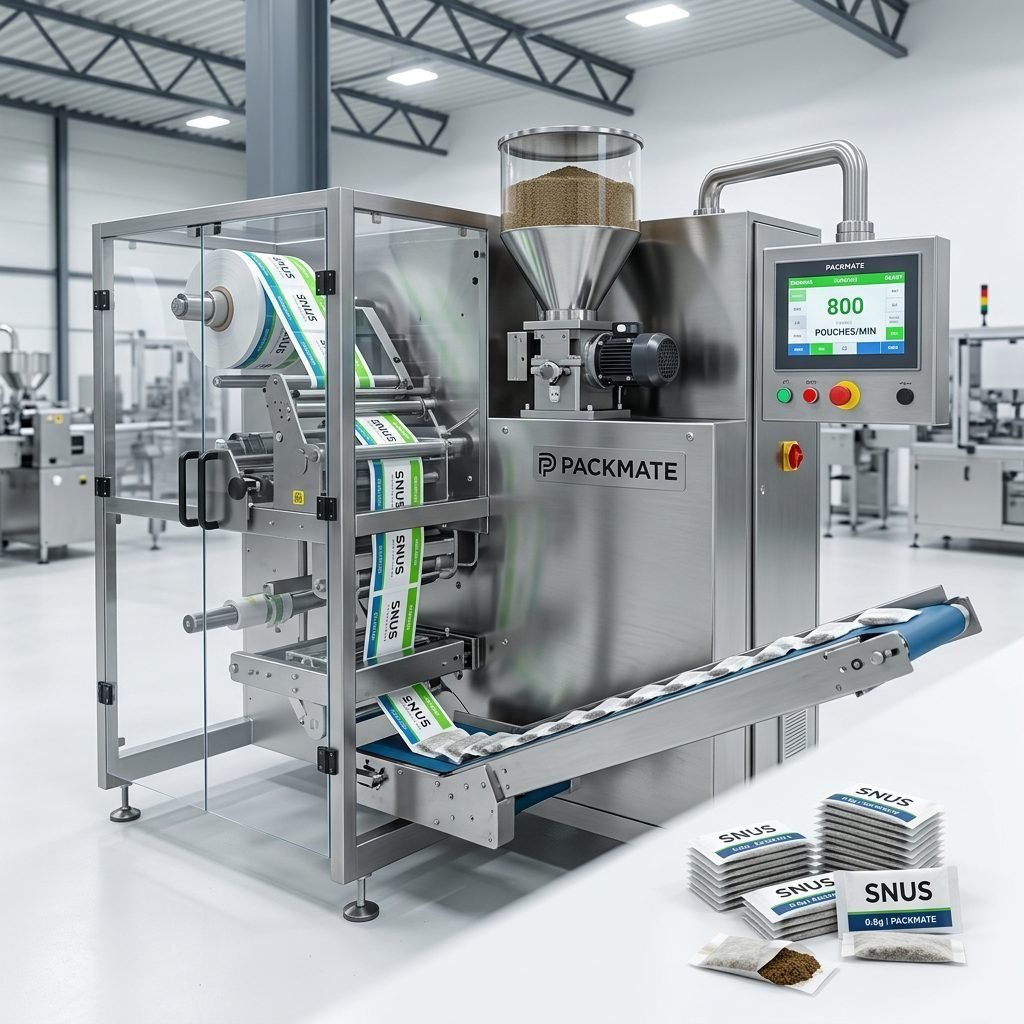
- Sachet packaging machines — flexible for tea, powder and single-serve snus sachets
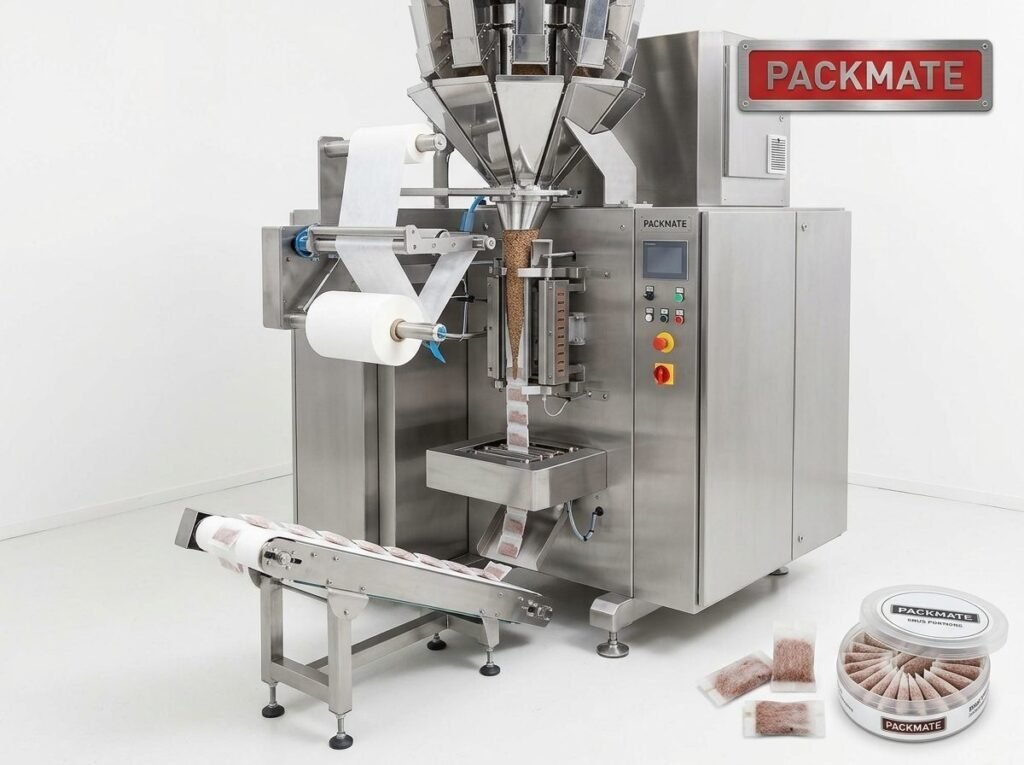
- Weighing & packaging systems — integrated dosing for powders and granules
- Auxiliary equipment — capping, feeding, metal detection and secondary packaging
For an overview of specialized equipment, review product categories such as
Snus & Nicotine Packaging Machines,
Sachet & Stick Pack Machines, and
Weighing & Packaging Systems.
Essential Technical Criteria
1. Speed and Throughput
Match machine rated speed (units/hour) to your required output with some buffer for peak demand. Consider how multi-lane machines, while compact, can multiply throughput and reduce footprint.
2. Filling Accuracy & Dosing
Consistent nicotine or fill weight is critical for regulatory compliance and brand consistency. Look for dosing systems with high repeatability, easy calibration, and automatic corrective feedback.
3. Material Compatibility & Seal Quality
Confirm compatibility with your chosen pouch materials and barrier films. Evaluate seal integrity under expected storage conditions and ask for sample tests to verify long-term performance.
4. Changeover Time & Flexibility
If you run multiple SKUs, prioritize machines designed for quick mechanical changeovers and modular tooling. This reduces downtime and helps respond to seasonal demand shifts.
Tip: Request real sample runs from the manufacturer using your actual product and material. This step avoids unwelcome surprises after purchase.
Automation, Controls & Safety
Modern snus packaging lines integrate PLC controls, recipe management, and HMI touchscreens that simplify operation. Evaluate:
- Ease of use and operator training requirements
- Remote diagnostics and IoT-enabled support
- Safety interlocks and guarding suitable for EU standards
- Traceability features: batch coding, serialization and audit logs
Supplier Reliability & Factory Capability
The manufacturer’s engineering depth, production capacity, and after-sales service determine long-term uptime. Key indicators:
- Years in business and product specialization
- Factory area, CNC capabilities, and production volume
- Model range and turnkey solution offerings
- Certifications such as CE and ISO
For example, Packmate Snus Machine highlights their 30+ years of engineering experience, a 20,000㎡ manufacturing facility with advanced CNC machining centers, and a portfolio of 50+ machine models — all useful signals of capability. Learn more about the company profile and background at
About Packmate.
Service, Spare Parts & Training
After-sales support is often the deciding factor between a good and a great supplier. Confirm:
- Availability and lead time for critical spare parts
- Remote troubleshooting and local service partners
- Training packages for operators and maintenance teams
- Warranty terms, preventive maintenance plans and service SLAs
Reminder: Ask for a spare parts kit tailored to the machine and a recommended stock level list. Unexpected downtime in a small market has disproportionate impact.
Certifications & Regulatory Compliance
Machines must meet applicable international and regional standards. Confirm CE marking, ISO quality management evidence, and food-contact material certifications if applicable. A reliable supplier will proactively share certificate copies—see examples on their certificate page:
Certificate.
Evaluating Total Cost of Ownership (TCO)
Purchase price is only part of the equation. Estimate TCO over 3–7 years by considering:
- Maintenance and spare parts expenses
- Energy consumption and utilities
- Operator labor and training costs
- Expected uptime and yield (reject rates)
- Resale or upgrade value
A simple ROI check
Calculate how many additional units per day you’d need to offset higher-priced machinery with better uptime or lower waste. Often, improved dosing accuracy and quicker changeovers pay for themselves through reduced rejects and faster SKU transitions.
Factory Acceptance Tests & Site Installation
Insist on factory acceptance testing (FAT) with your materials. FAT should demonstrate sustained running at target speed, sealing quality, and data logging. For site installation, review electrical, compressed air, and floor loading requirements in advance.
Real-Life Case Studies & References
Ask suppliers for recent references or case studies in similar markets or product categories. Packmate publishes project examples and global cooperation cases that illustrate turnkey solutions for snus lines—see practical examples at
Case.
Checklist before signing: FAT results, spare parts list, training schedule, commissioning plan, and a clear maintenance SLA.
Integration with Downstream & Upstream Systems
Consider how the new machine will fit existing upstream fillers and downstream cartoning or case-packing equipment. Integrated lines improve efficiency but require careful mechanical and control-system compatibility checks.
Explore related product offerings such as
Bag & Pouch Packaging Machines and
Auxiliary Packaging Equipment to ensure smooth line integration.
Negotiation & Purchase Tips
When you are ready to negotiate, aim to secure:
- Detailed technical specification and acceptance criteria
- Fixed lead times and delivery milestones
- Clear warranty and service response times
- Training and startup assistance included
- Payment terms linked to FAT and successful commissioning
Planning for Growth & Upgrades
Choose machines with upgrade paths—additional lanes, higher speed kits, or modular feeders. This protects your capital investment and lets you scale production without full replacement.
How to Contact Suppliers & Get Quotes
Provide a concise request for quotation (RFQ) including product specs, target throughput, materials, desired layout constraints, and preferred delivery window. Use supplier contact channels and request preliminary 3D layout drawings. For direct inquiries and support, you can reach manufacturers through their contact pages such as
Contact Us.
Final Practical Checklist
- Confirm packaging format and required throughput
- Validate dosing accuracy and sealing with samples
- Check factory capabilities and certifications
- Confirm spare parts availability and lead times
- Get a clear FAT plan and commissioning timeline
- Secure operator training and a maintenance SLA
Important: Always request a live run with your actual product samples before final acceptance — it is the single most reliable predictor of in-plant performance.
Conclusion
Selecting the best snus packaging machinery for Liechtenstein means aligning technical requirements, supplier reliability, and service capability with your production roadmap. By focusing on dosing precision, material compatibility, changeover flexibility, and strong after-sales support, you minimize long-term risk and maximize ROI. Use factory tests, documented references, and clear contractual terms to secure a machine that will support growth and maintain quality.
Frequently Asked Questions (FAQs)
Q1: What is the minimum information a supplier needs for an accurate quote?
A1: Provide target throughput, product format, fill material description (weight, particle size, moisture), film type and thickness, and any regulatory labeling or coding requirements.
Q2: How important is FAT before shipment?
A2: FAT is crucial—insist on running your materials at target speeds with documented acceptance criteria to avoid installation surprises and to streamline commissioning.
Q3: What lead times should I expect for custom snus lines?
A3: Lead times vary by complexity and customization level; expect several months from order to FAT for bespoke multi-lane systems. Confirm scheduling during RFQ.
Q4: Are spare parts typically stocked locally in Europe for global manufacturers?
A4: Many reputable suppliers maintain regional warehouses or partner distributors in Europe. Confirm spare parts kits and expected delivery times as part of the purchase agreement.
Q5: Where can I see examples of turnkey snus production lines?
A5: Supplier case pages and exhibition demos often showcase turnkey lines; for instance, Packmate shares case studies and exhibition demos that illustrate integrated snus packaging solutions.