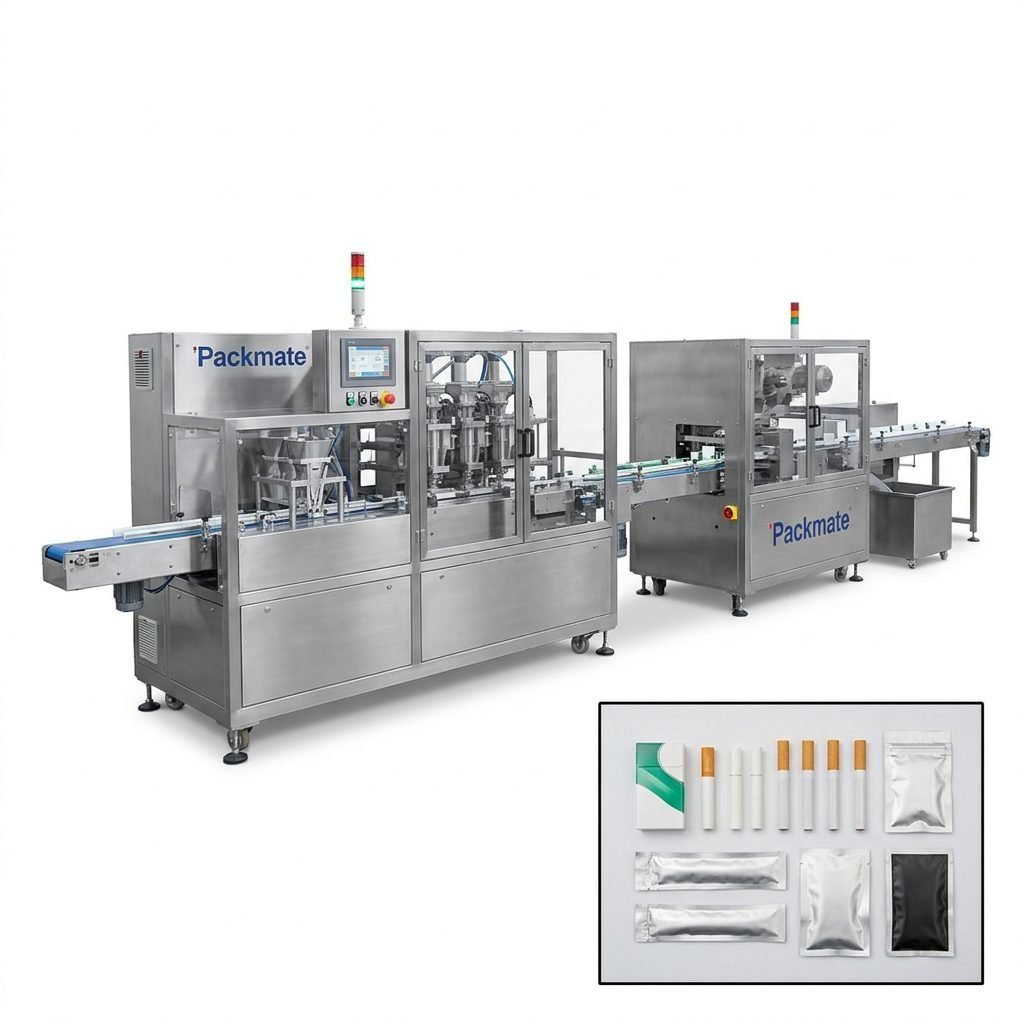
Choosing the right snus packaging machinery in Kyrgyzstan requires a mix of technical understanding, regulatory awareness, and supplier evaluation. This guide walks you through machine types, production planning, supplier credentials, installation and maintenance considerations, and practical tips to ensure you invest in equipment that delivers stable performance, regulatory compliance, and long-term value.
Understanding the Kyrgyz Market and Regulations
Kyrgyzstan’s tobacco and nicotine-related product market is evolving. Before purchasing machinery, verify local regulations for nicotine pouches and snus packaging, including labeling rules, permitted ingredients, and import requirements. Non-compliance can lead to costly delays at customs or product recalls. Work with legal counsel or local compliance partners to confirm product classification and necessary certifications.
Why compliance matters
Manufacturing and packaging equipment that supports traceability and consistent labeling will help you meet regulatory expectations. Investing in machines that can integrate with inspection cameras and serialization systems saves time and reduces recall risk.
Check Kyrgyz customs and national standards for nicotine/pouch imports before finalizing your machine order.
Types of Snus Packaging Machinery
There are several machine families tailored to nicotine pouches and snus. Selecting the right type depends on pouch format, production speed, and degree of automation.
Sachet & Stick Pack Machines
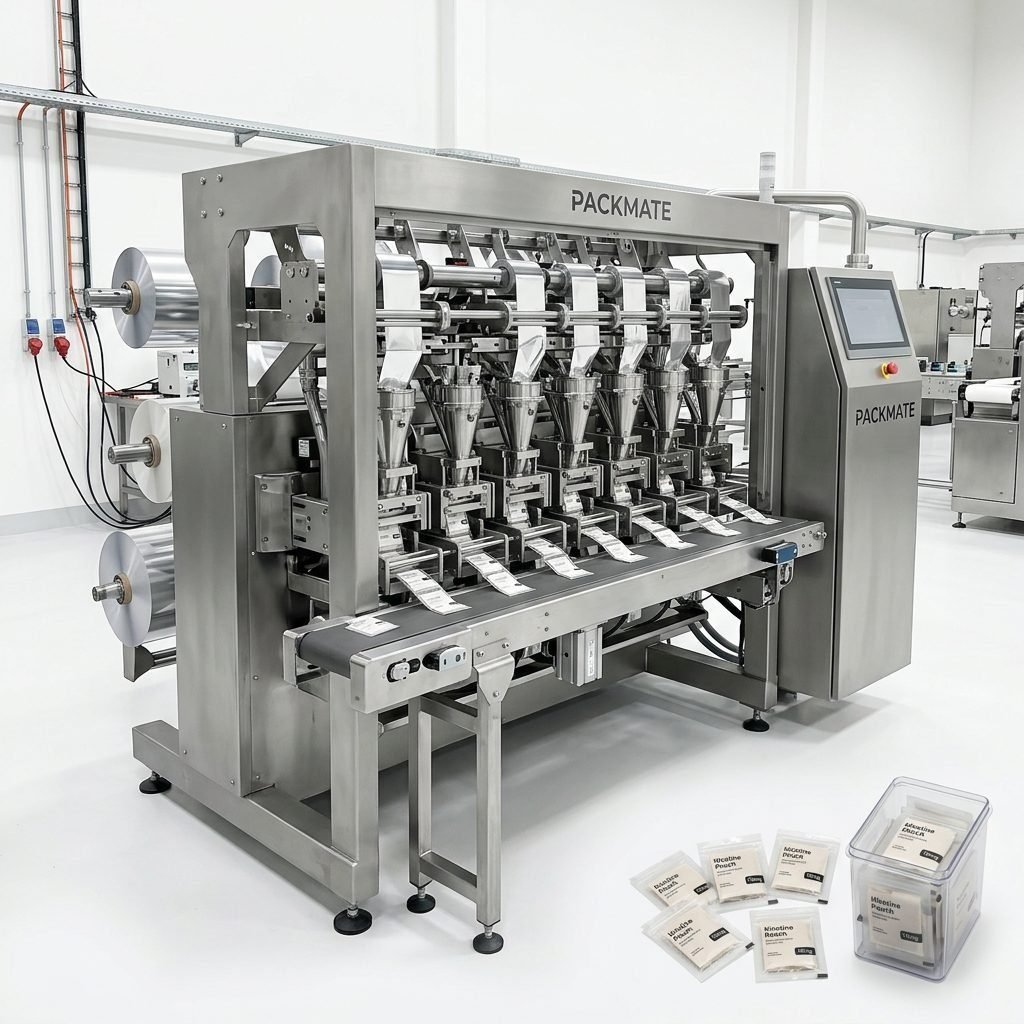
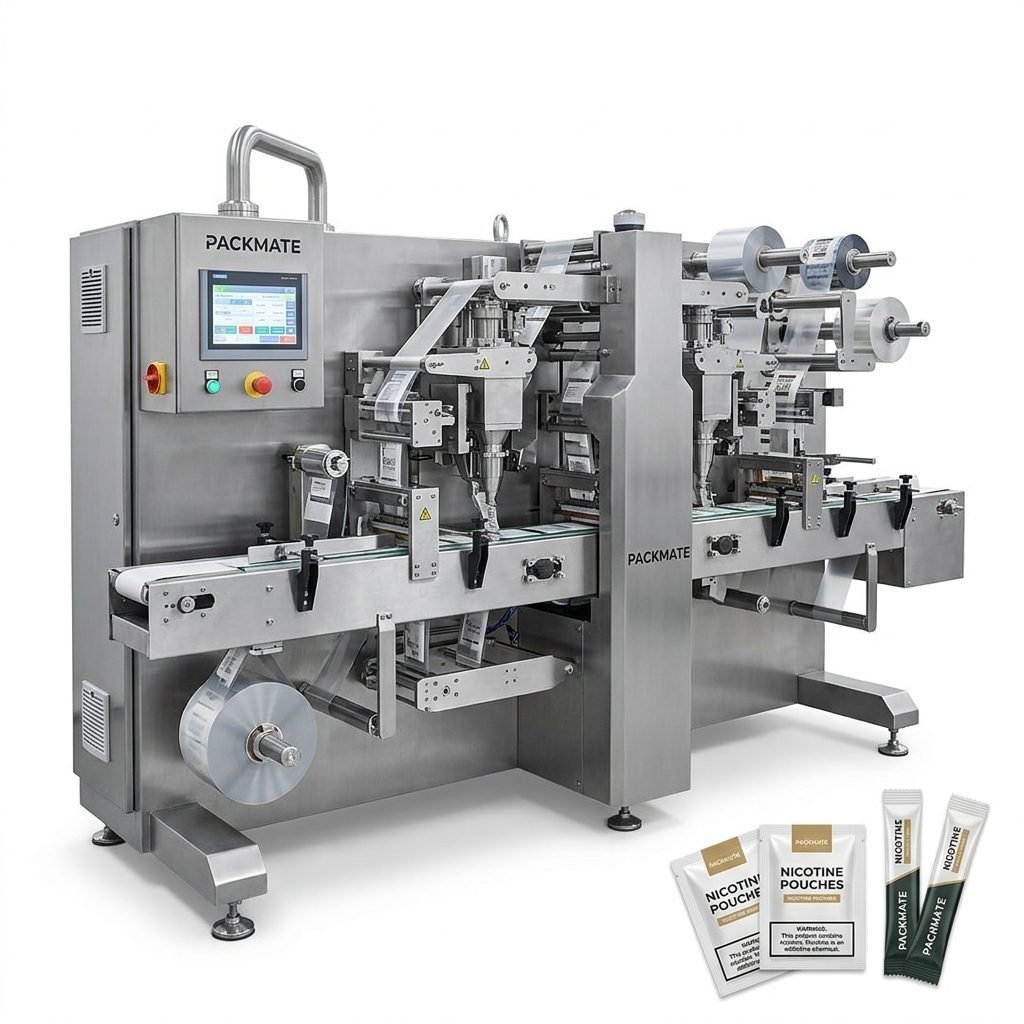
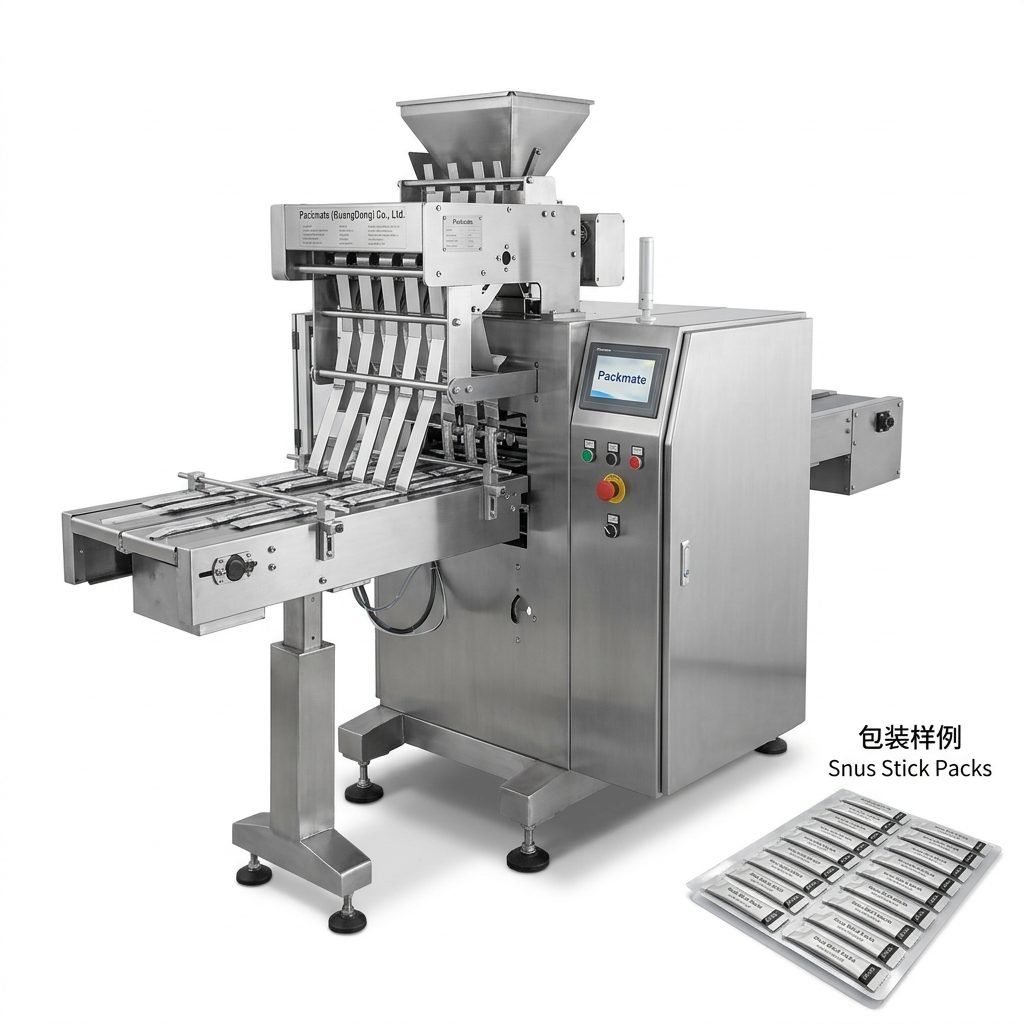
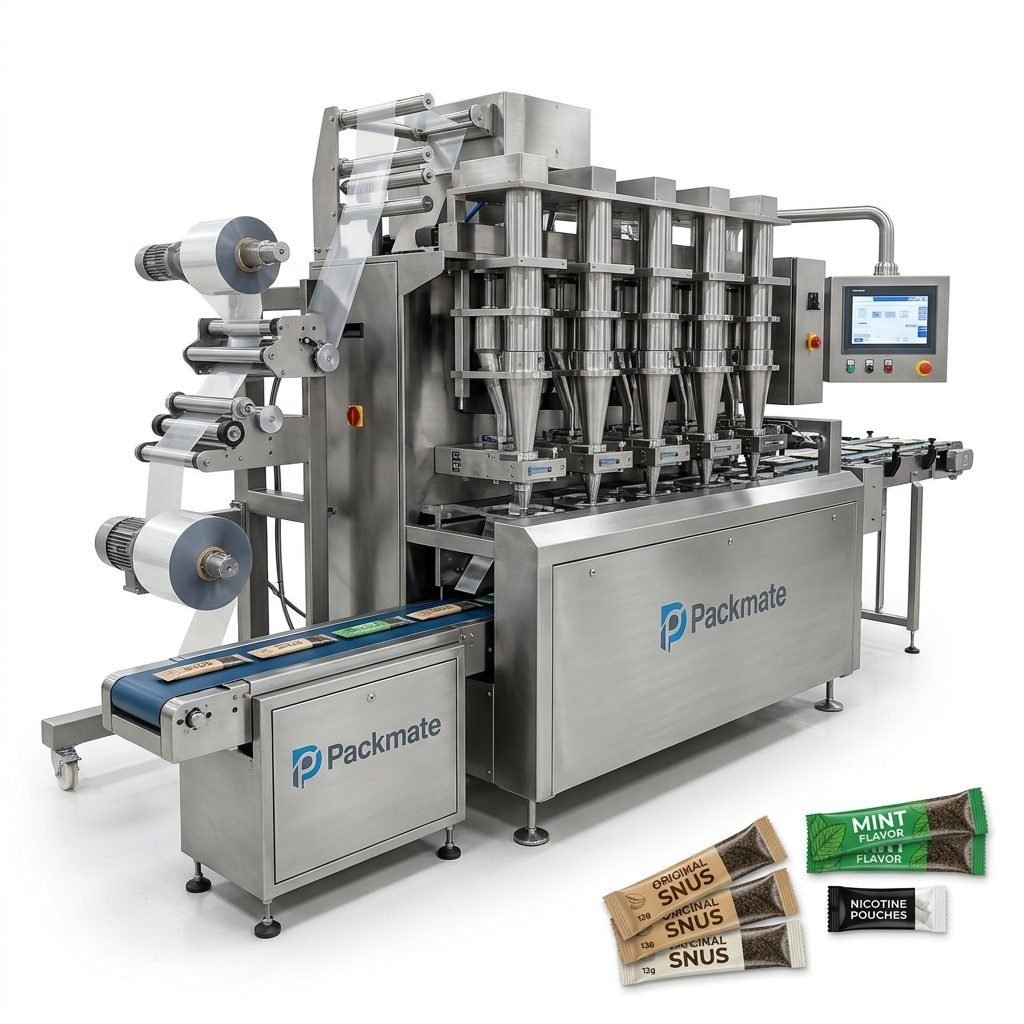
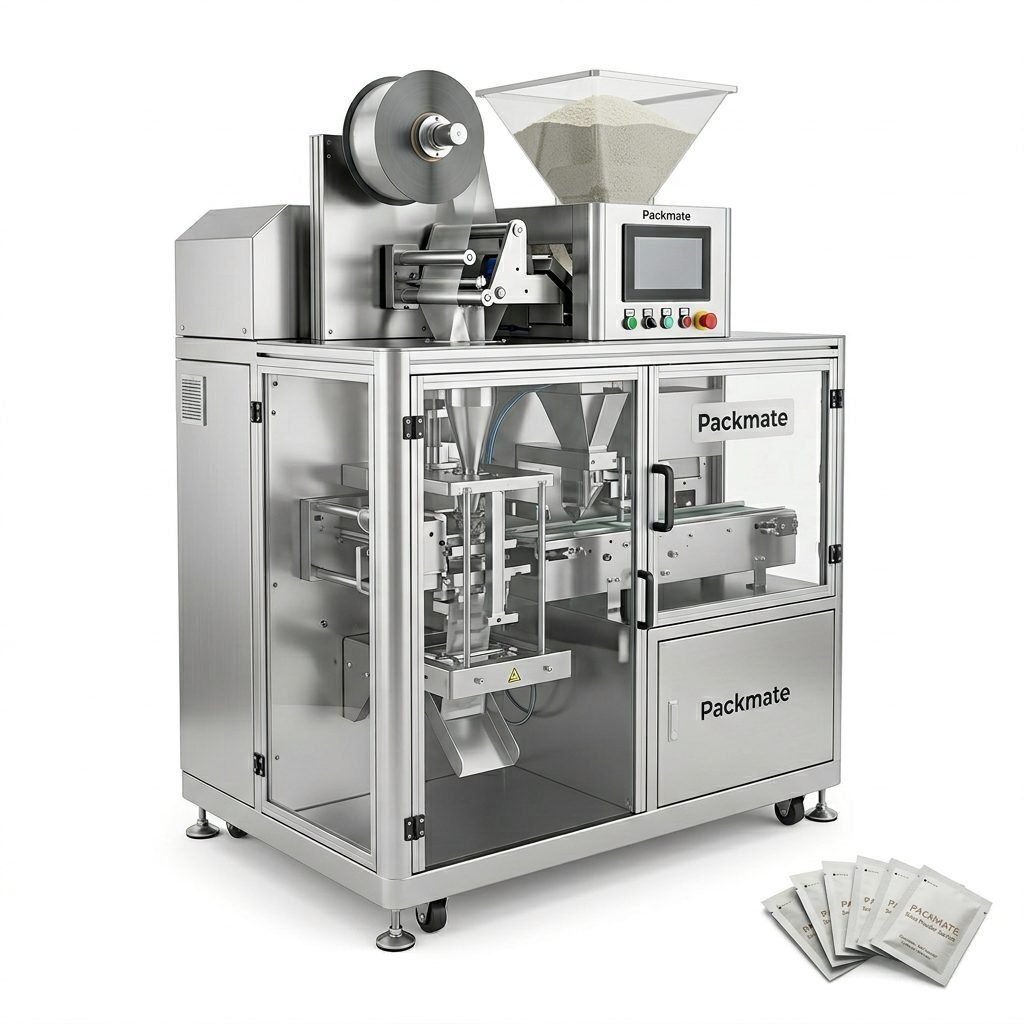
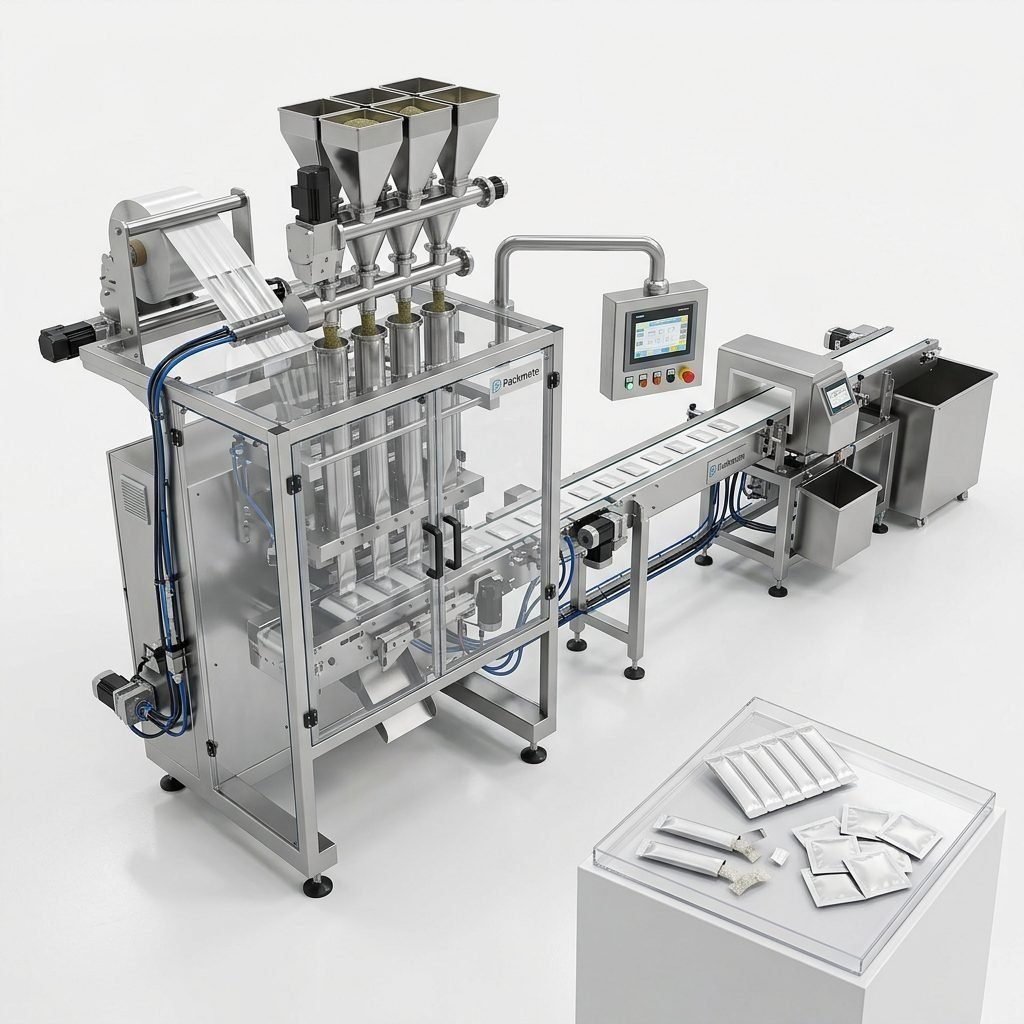
Stick pack and sachet machines are ideal for single-dose sachets or elongated stick pouches. They are flexible for flavored pouches and are often used for high-speed packaging of small-dose products. See typical models and configurations on the Sachet & Stick Pack Machines page.
Multi-lane Snus / Nicotine Pouch Machines
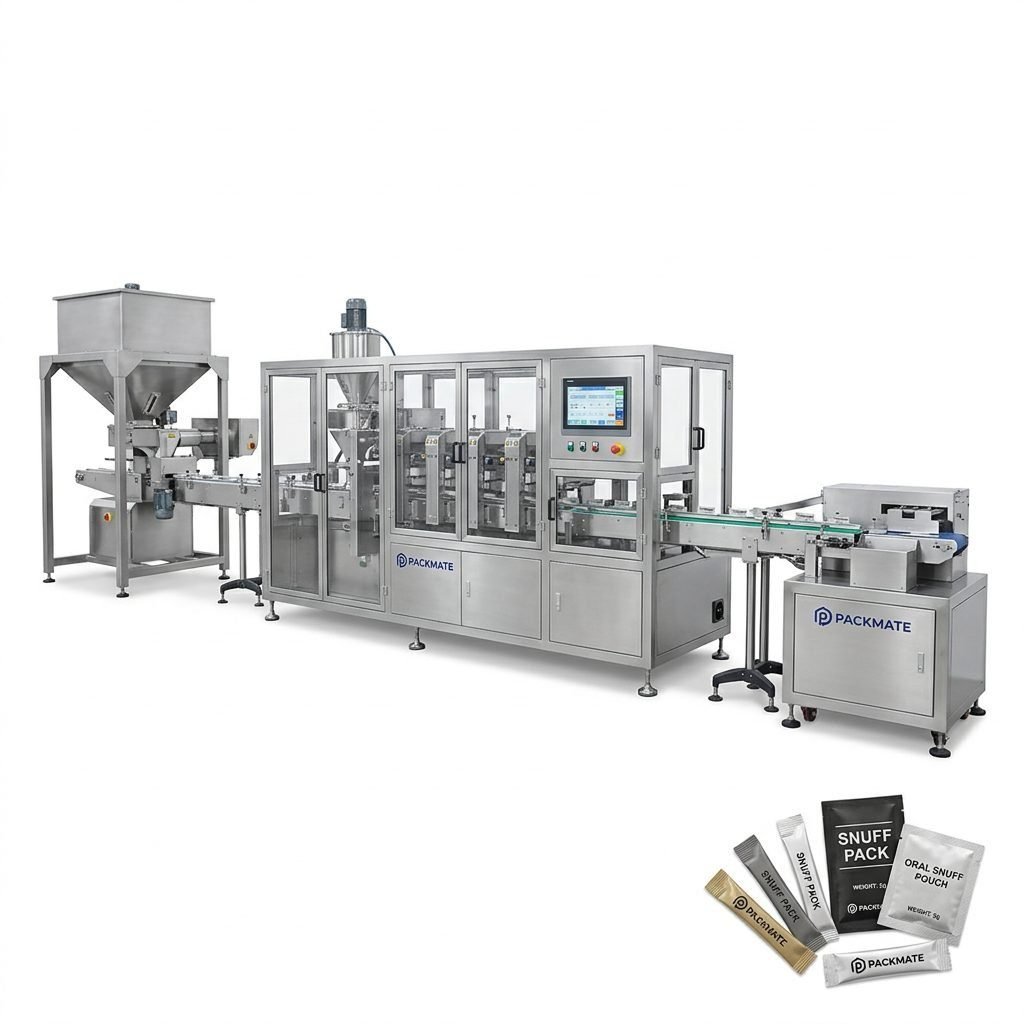
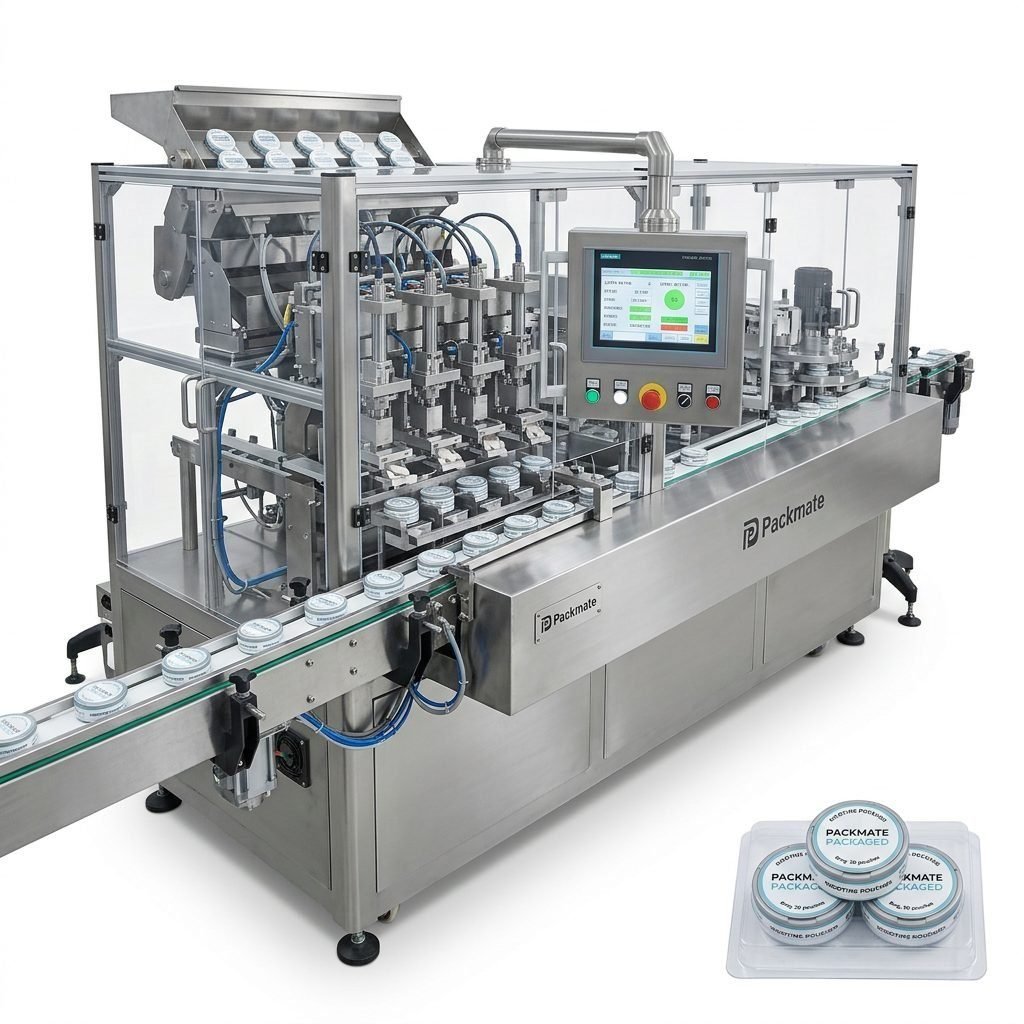
For high-volume production of small-dose snus or nicotine pouches, multi-lane lines deliver throughput efficiency and space savings. These systems can produce dozens of pouches per stroke while maintaining consistent weight and sealing quality. Explore Snus & Nicotine Packaging Machines for multi-lane options.
Bag & Pouch Packaging Machines
If your product requires outer bags, pre-made pouches, or secondary packing, integrated bag & pouch machines can handle feeding, filling, and sealing of outer packaging. These options are useful when you need both primary pouch sealing and customer-facing secondary packaging. See Bag & Pouch Packaging Machines for details.
- Output capacity (pouches/min or pouches/hr)
- Number of lanes and ability to expand lanes
- Compatibility with pouch materials and shapes
- Filling accuracy for low-dose products
- Automation level: infeed, dosing, feeding, sealing, and inspection
Production Planning: Capacity, Speed and Layout
Start with a realistic forecast of daily production volumes and desired growth over 1-3 years. Machines should be sized to meet peak demand without excessive idle capacity. Consider line layout early: utilities, access for maintenance, and material flow influence machine choice.
Throughput vs. Flexibility
High-throughput multi-lane systems provide lower unit costs at volume but may be less flexible for frequent format changes. Single-lane systems and modular designs are better for small batches and many SKUs. A modular line that combines high-speed filling with flexible secondary packing can give the best of both worlds.
Material Compatibility and Consumables
Snus and nicotine pouches use specific substrate films, often multi-layer laminated materials. Ensure the selected machine supports your film thickness, sealant layers, and any cold-seal or heat-seal requirements. Ask about spare parts for jaws, cutters, and guides, since these wear over time.
Request sample runs using your exact film and pouch format before final purchase to validate sealing, appearance, and dosing.
Supplier Evaluation: What to Ask and Verify
Choosing a reliable supplier is as important as selecting the machine model. Evaluate manufacturing capability, certifications, service networks, and references.
Factory and Experience
Prefer suppliers with demonstrated experience in snus/nicotine pouch lines and a certified manufacturing facility. For example, Packmate Snus Machine has a 20,000㎡ factory with advanced CNC and assembly systems and 30+ years of engineering experience. Review factory photos, capability statements, and production capacity.
Certifications and Standards
Ensure the supplier holds international certifications like CE and ISO and can provide compliance documentation for exported machinery. You can check Certificate records or ask for copies to verify compliance.
References, Cases and Exhibitions
Ask for case studies from similar markets and past customers. Visiting live demonstrations at exhibitions provides direct insight—review Our Exhibition listings or Case pages to see real-world deployments.
- Factory size and machining capabilities
- Years of focused R&D on snus packaging
- Available spare parts and lead times
- Local service partners or remote support options
- Reference installations and exhibition demos
After-sales Support, Installation & Training
Proper installation and operator training are essential for achieving promised uptime and quality. Clarify what the supplier includes: on-site installation, commissioning, operator training, and remote technical support. Confirm spare part kits and recommended preventive maintenance schedules.
Warranty and Spare Parts
A clear warranty and fast access to spare parts are vital. Ask for a list of wear parts, expected lifetimes, and pricing. For international buyers, confirm shipping times and customs handling for replacement parts.
Integration with Weighing, Filling and Inspection Systems
For accurate dosing and regulatory compliance, integrate the packaging machine with weighing and fill control systems. Automated inspection systems such as vision cameras, foreign object detection, and seal integrity checks reduce risk. Explore Weighing & Packaging Systems and Filling & Packaging Lines for compatible modules.
Cost Considerations and ROI
Evaluate total cost of ownership (TCO): machine price, shipping, customs, installation, training, spare parts, and energy consumption. Balance upfront cost with expected efficiency gains and reduced labor. Higher automation often delivers faster payback in high-volume production.
(Annual labor & material savings + increased revenue from capacity) ÷ Total project cost = Payback period (years).
Logistics: Shipping, Customs and Local Installation in Kyrgyzstan
Plan lead times for manufacturing and international shipping. Discuss CIF or DDP terms—DDP reduces administrative burden for first-time importers. Ensure you have local riggers and qualified technicians for unpacking and positioning heavy equipment. Coordinate with the supplier to provide detailed installation drawings and power/water/air requirements.
Factory Acceptance Test (FAT) and Site Acceptance Test (SAT)
Insist on a FAT where the supplier demonstrates the line using your materials. FAT minimizes surprises at arrival. After installation, conduct a SAT to verify performance on-site. Both tests should include performance documentation, acceptance criteria, and a punch list for corrective actions.
Selecting a Trusted Partner: Packmate Example
A partner with dedicated experience in snus machinery like Packmate Snus Machine brings advantages: focused R&D, proven multi-lane solutions, and a large model portfolio. Packmate offers a wide range of machines and turnkey solutions, backed by CE/ISO compliance and a global customer base. Learn more About Packmate or get in touch via Contact Us.
Practical Checklist Before You Buy
- Define target daily production and scheduled growth.
- Confirm pouch format, film specs and sealing method.
- Request FAT with your materials and sample reports.
- Verify certifications (CE/ISO) and factory capabilities.
- Agree on installation, training and spare parts policy.
- Plan logistics and customs documentation for Kyrgyzstan.
Common Pitfalls and How to Avoid Them
Many buyers underestimate spare-part needs, machine ergonomics, or local utility compatibility. Avoid these by requesting detailed BOMs, ergonomic layout reviews, and electrical schematics. Also confirm language support for controls and manuals.
Buying the highest speed machine without ensuring available workforce or materials to run it at rated capacity.
Next Steps: Requesting Quotes and Samples
Prepare a request for quotation (RFQ) with detailed specs: target output, pouch format, film type, dosing accuracy, footprint constraints, utilities, and desired delivery timeline. Ask suppliers for sample runs, FAT videos, and references. If you want to explore product lines and accessories, review Filling & Packaging Lines and Auxiliary Packaging Equipment pages.
Contact and follow-up
After narrowing vendors, visit the factory if possible or request a live demo. Confirm terms of payment, warranty, and lead times. Use Contact Us to arrange factory visits or virtual demonstrations.
Conclusion
Selecting the right snus packaging machinery in Kyrgyzstan balances technical needs, regulatory compliance, and supplier reliability. Prioritize machines that match your long-term production plan, verify material compatibility with sample runs, and choose a supplier with proven experience, robust after-sales support, and clear certifications.
Useful links
– Explore product ranges: Snus & Nicotine Packaging Machines
– For stick and sachet options: Sachet & Stick Pack Machines
– Learn about the manufacturer: About Packmate
– Certifications and compliance: Certificate
Frequently Asked Questions
Q1: What machine type is best for a small start-up in Kyrgyzstan?
For a start-up, consider modular single-lane sachet or stick-pack machines that offer low initial cost and flexibility for multiple SKUs. These machines can be scaled with additional lanes or integrated filling systems as demand grows.
Q2: How do I ensure dosing accuracy for small nicotine pouches?
Use precision dosing systems (dosing augers, multi-head weighers, or vibratory feeders with closed-loop feedback). Request a FAT with your actual pouch materials to measure variance and ensure the supplier provides documentation of dosing accuracy.
Q3: What certifications should the packaging machine have for international trade?
Standard certifications include CE for European markets and ISO quality management compliance. Check the supplier’s Certificate documentation and verify export compliance for Kyrgyzstan.
Q4: How long is the typical lead time for custom snus packaging lines?
Lead times vary by complexity and customization. Standard models may ship within weeks, while turnkey multi-lane custom lines often require several months for manufacturing, FAT, and shipping. Confirm timelines in the RFQ stage.
Q5: Where can I see real-world machine demonstrations?
Attend industry exhibitions or request live demos from suppliers. Visit the Our Exhibition page for scheduled events and contact suppliers to arrange factory or virtual demonstrations.