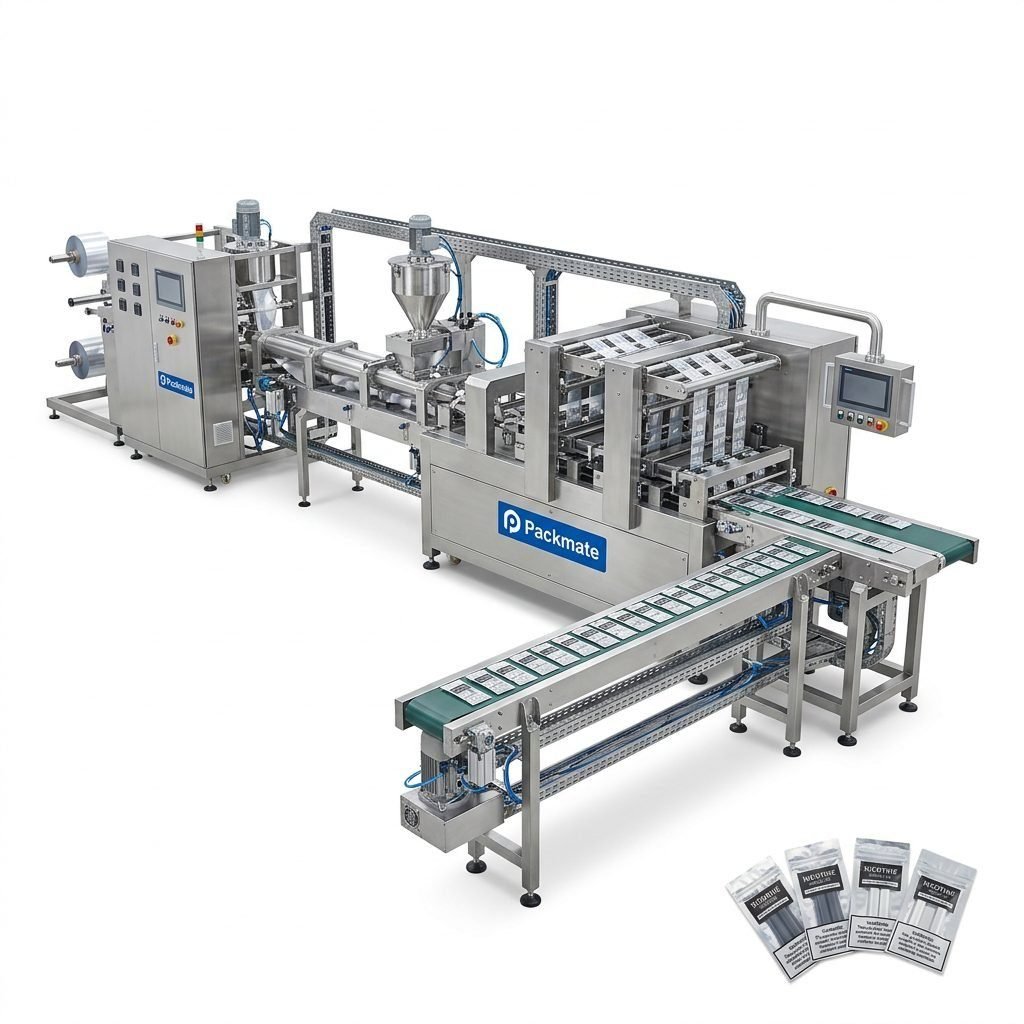
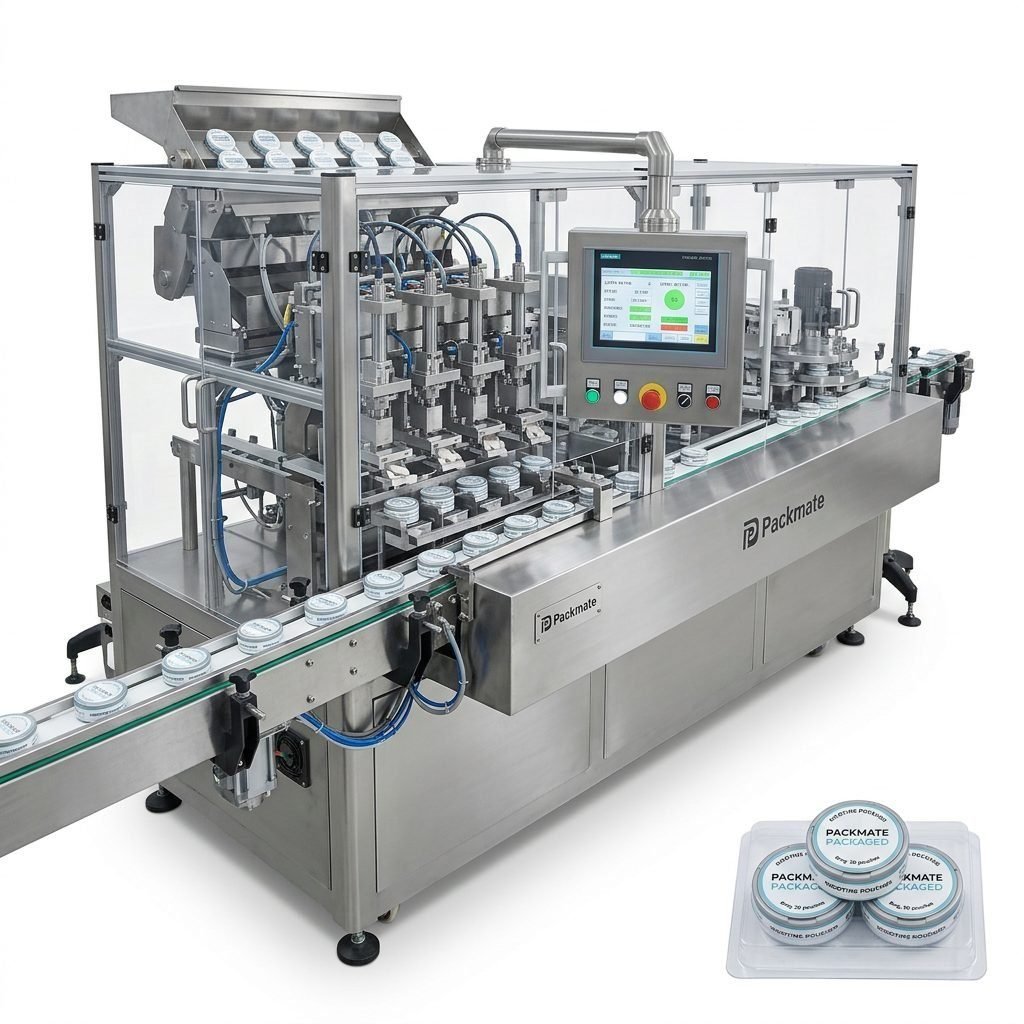
Choosing the right snus packaging machine supplier for your factory in Togo is more than a purchase — it is an investment in production reliability, product safety, and long-term business relationships. This guide walks you through the practical, cultural, and technical factors to consider so you can make an informed decision that fits the Togolese market, local business patterns, and your factory’s growth plan.
Understand Togo’s Market Context and Business Culture
Togo is a Francophone country in West Africa with a growing import-driven manufacturing sector centered on Lomé and industrial zones nearby. When sourcing equipment, remember that local business culture values trust, clear communication in French, and in-person follow-ups whenever possible. Customs clearance at the Port of Lomé and import duties can affect lead time and landed cost, so confirm shipping terms and documentation early.
Regulatory attention to nicotine products varies across West Africa. Before finalizing any equipment order, verify local regulations for snus and nicotine pouches, packaging labeling rules, and any required approvals. A dependable supplier should help you navigate documentation for customs and provide certificates needed for import.
Top Technical Criteria: What Your Factory Really Needs
Machines must match your product format, expected throughput, and quality standards. Prioritize suppliers who provide clear specifications for:
🔍 Speed & Capacity: hourly output (pouches/min or lanes × speed) and ability to scale up.
📦 Multi-format Flexibility: support for snus/nicotine pouches, stick packs, sachets and future product tweaks.
⚙️ Accuracy & Waste Reduction: filling precision, sealing quality, and material usage optimization.
Material Compatibility and Hygienic Design
Verify that the machine materials and contact parts are suitable for your product (corrosion resistance, easy cleaning). For snus and nicotine pouches, compact dosing systems and gentle handling are important to maintain product integrity. Ask for sanitary design features and cleaning procedures that align with your factory’s GMP practices.
Packaging Formats: Match Machine Type to Your Product
Different packaging styles require different technologies. If you plan to produce multiple SKUs, prioritize suppliers with modular lines or machines that can switch formats quickly.
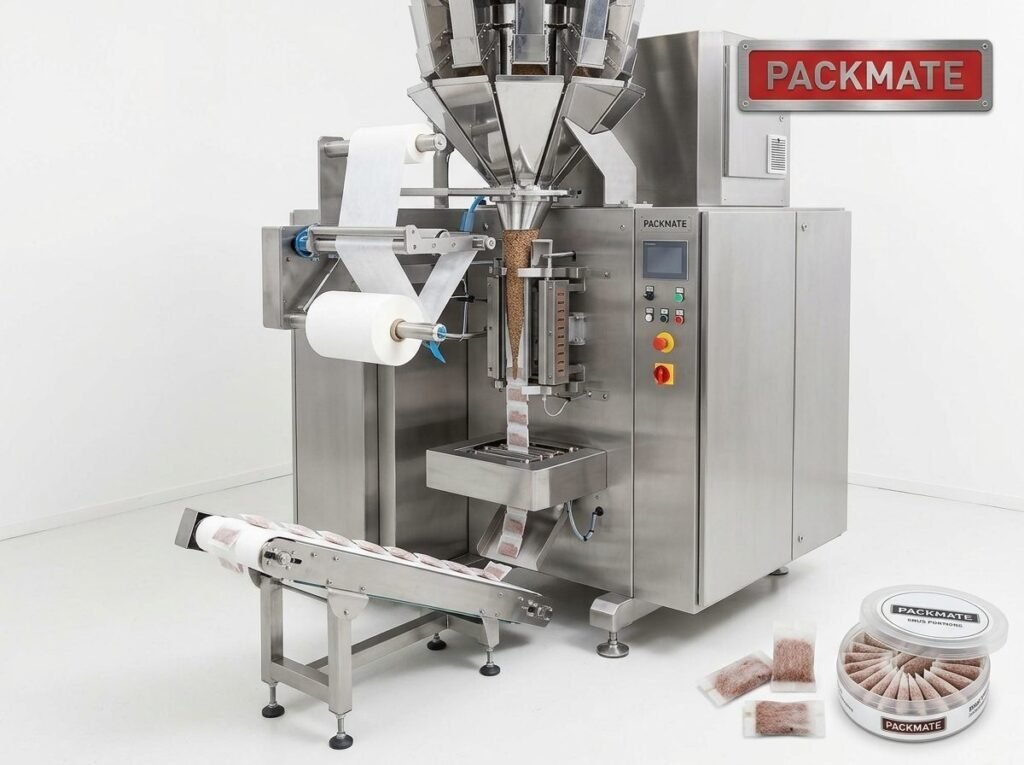
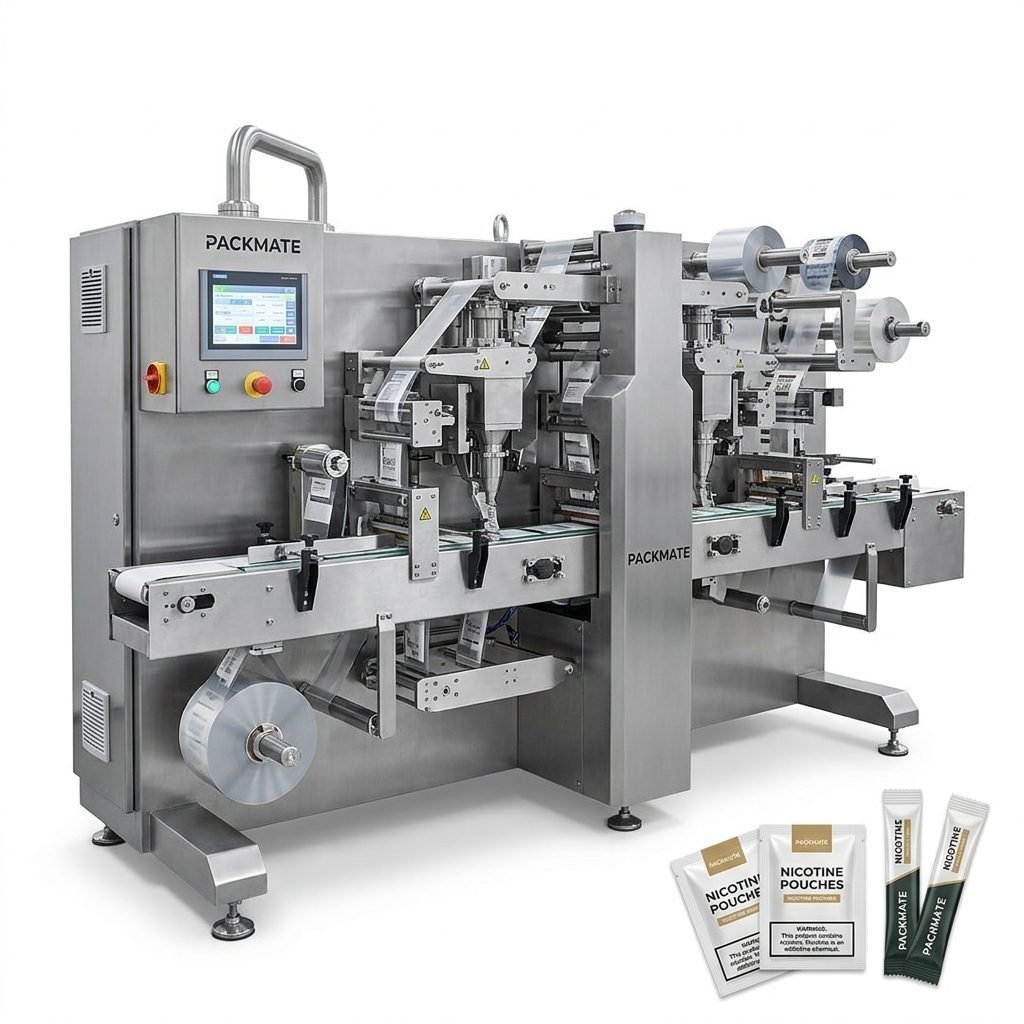
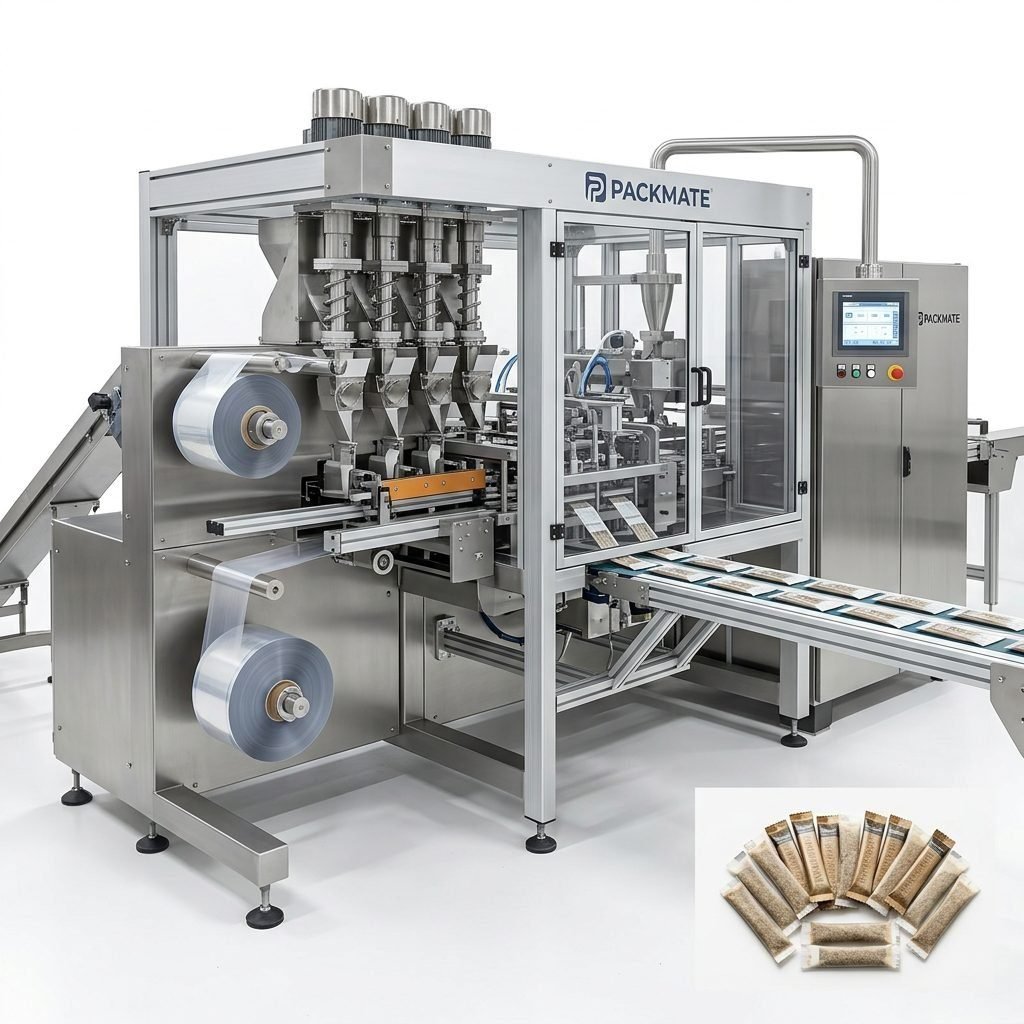
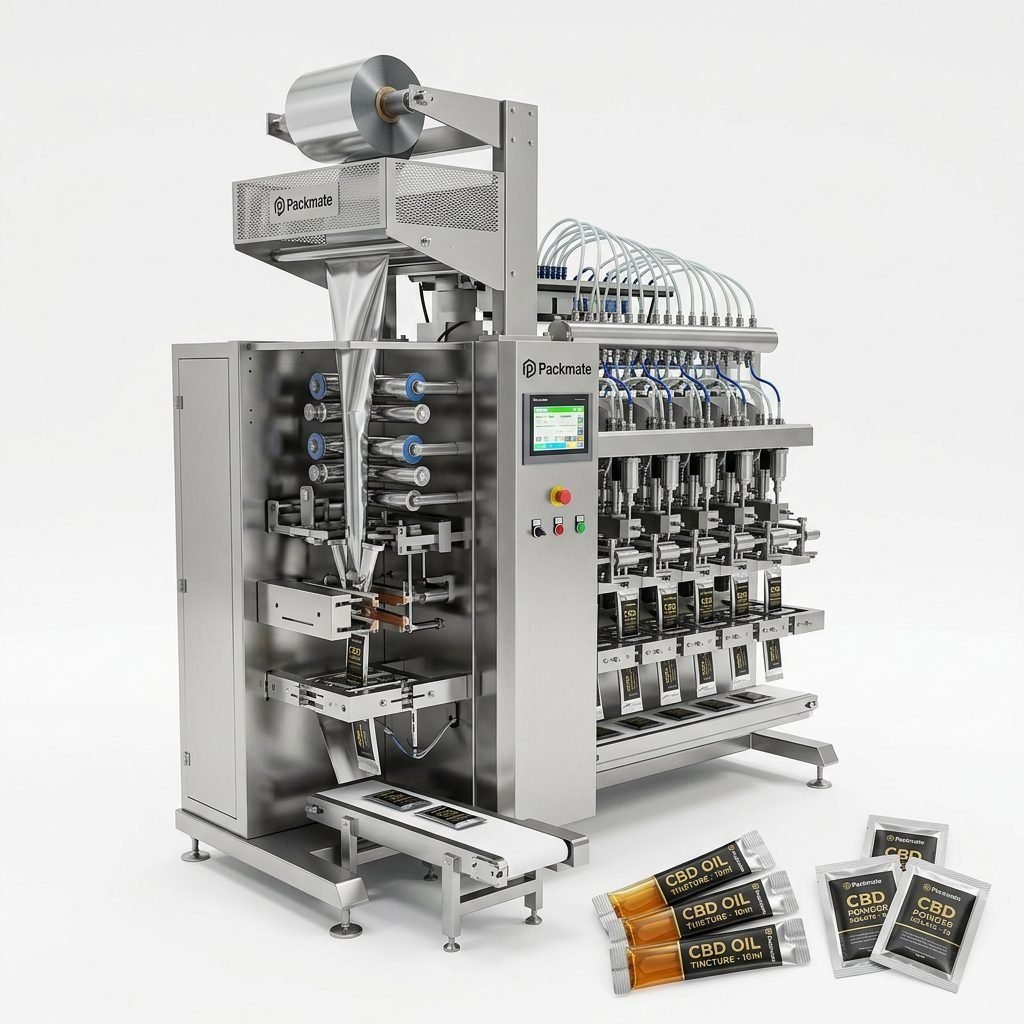
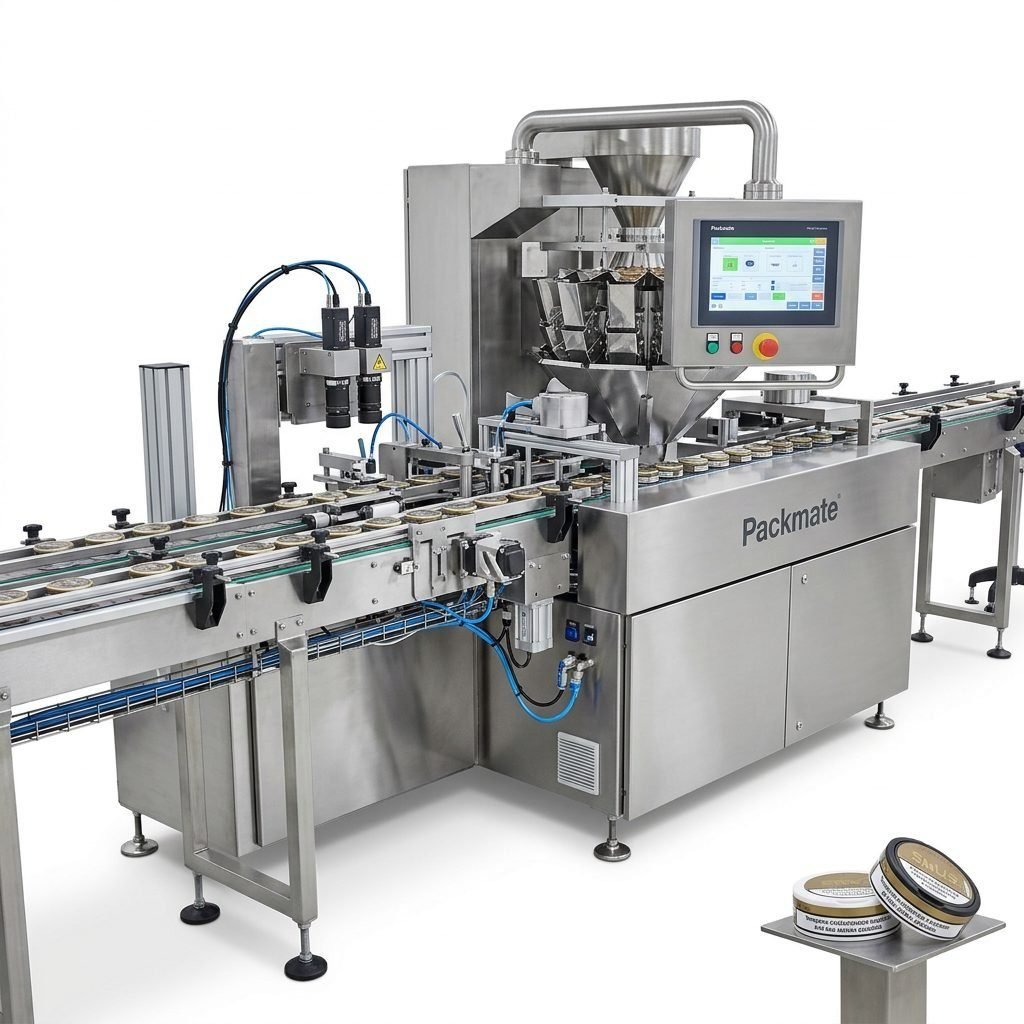
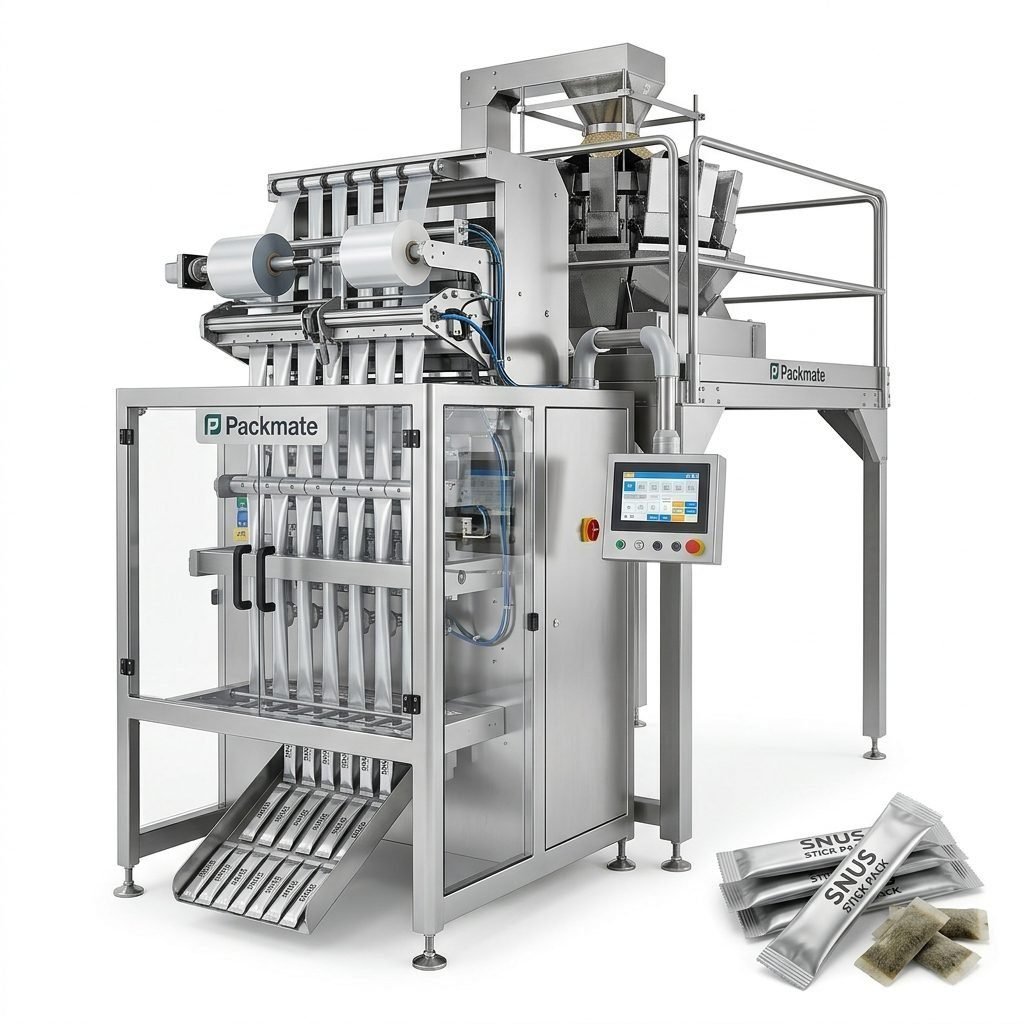
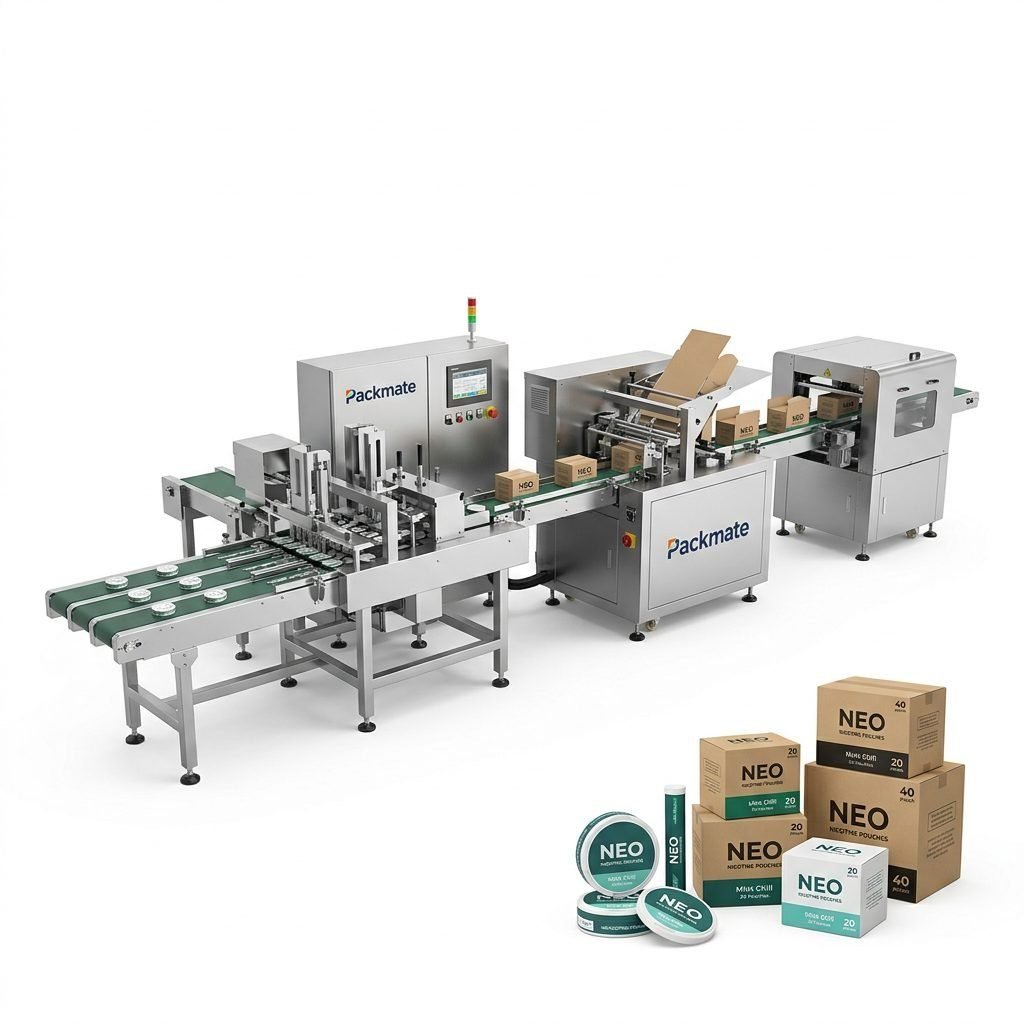
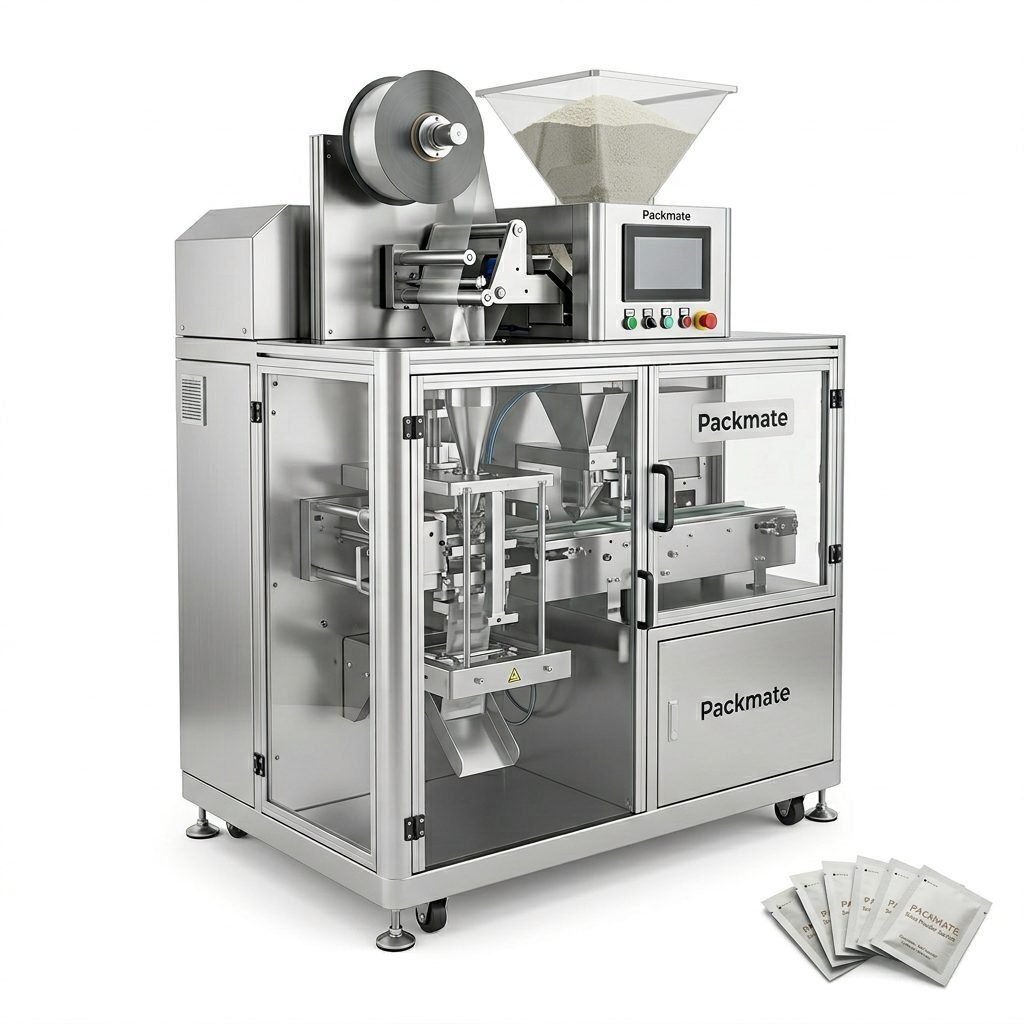
For reference on machine types, review supplier product portfolios such as Snus & Nicotine Packaging Machines and Sachet & Stick Pack Machines.
Supplier Qualifications: Documentation, Factory Capacity, and Certifications
A strong supplier should share verifiable credentials: factory size, years in operation, ISO/CE certificates, and case studies. Suppliers with full workshop capabilities, CNC machining, and precision assembly lines can offer better consistency and faster spare-part turnaround.
📑 Key documents to request: CE/ISO certificates, factory photos, machine datasheets, and FAT (Factory Acceptance Test) videos.
🔗 Helpful links: company overview and past projects — About Packmate and Case Studies.
Factory Visits and Third-Party Inspections
If possible, schedule a factory visit or appoint a local inspector to review production lines. Packmate’s 20,000㎡ facility, CNC capacity, and 30+ years of engineering history are examples of attributes that support consistent manufacturing quality.
After-Sales Service: The Decision-Maker for Long-Term Success
Machines are complex and require timely technical support. In Togo, where travel time and customs can delay repairs, prioritize suppliers offering:
• Local or regional spare-part stocking guidance — ask for recommended part lists and minimum inventory.
• Remote support & training — video-guided maintenance, remote diagnostics and on-site commissioning plans.
Confirm guaranteed response times for critical issues, training scope for operators and maintenance staff, and availability of consumables.
Costing: Beyond the Purchase Price
Consider total cost of ownership (TCO): shipping, insurance, import duties, installation, commissioning, operator training, spare parts, and energy consumption. Import duties at Lomé and clearance times can be substantial, so ask suppliers about Incoterms, consolidated shipping, and documentation to avoid inland delays.
Financing & Phased Investment
If capital is limited, explore phased deployment: start with a core high-throughput line and add auxiliary equipment (weighers, case packers) later. Review suppliers’ leasing or payment terms and viability of upgrading existing lines to reduce initial capex.
Contract Terms, Warranty and Acceptance Testing
Negotiate clear contracts that include warranty periods, warranty scope (parts, labour), acceptance testing (FAT and SAT), penalty clauses for late delivery, and training commitments. A detailed Acceptance Test Plan ensures the delivered machine meets promised speeds and quality before final payment.
✔️ FAT items to confirm: production speed, sealing quality, weight accuracy, sensor function, and recipe memory.
✔️ SAT items: installation, operator training, and local process integration.
Local Partnerships: Build a Reliable Supply Chain in Togo
Successful production depends on more than machines: source compatible films and materials, local maintenance technicians, and freight forwarders familiar with the Port of Lomé. Consider partnerships with local packaging suppliers and logistics providers to shorten lead times.
Remote Evaluation Checklist: How to Vet Suppliers from Afar
When you cannot visit a factory, use a structured remote evaluation:
- Request high-resolution factory and assembly-line videos; ask to see machines running with your product or a similar product.
- Ask for client references in similar markets and contact them for feedback on reliability and after-sales service.
- Verify certificates and request a video walk-through of finished machines and test reports.
- Review product pages and case studies for real installation examples — check Snus machines and Bag & Pouch equipment.
Why a Supplier Like Packmate Might Fit Togo’s Needs
Suppliers with long engineering experience, a broad model range, and turnkey line capability can help Togolese factories reduce risk. Packmate offers decades of packaging expertise, a large manufacturing footprint, and international certifications — traits that help ensure stable delivery, consistent quality, and global after-sales practices.
For more direct supplier information, see Packmate’s company overview and support resources: About Packmate, product portfolios and case references at Case Studies, and reach out via Contact Us.
Practical Next Steps for Togolese Buyers
1) Define product formats, target output and shift patterns; 2) prepare a minimum spare-parts list; 3) request FAT videos and a mock-up of your primary SKU running; 4) confirm local regulatory compliance and import documentation; 5) agree acceptance criteria and a timeline with penalties for delayed delivery.
Quick Checklist — Key Questions to Ask Suppliers
✔️ Can you demonstrate running my SKU?
✔️ What is the lead time and what Incoterms do you offer?
✔️ Do you provide installation, training, and spare-part kits?
✔️ Can you provide client references in similar regions or industries?
Final considerations
In Togo, strong relationships, clear communication in French, and reliable logistics are as important as machine specifications. Choose a supplier who demonstrates technical competence, transparent documentation, reliable after-sales service, and a willingness to support customs and commissioning locally. These factors combined will minimize downtime and protect your investment.
Frequently Asked Questions (FAQs)
Q: What certifications should I request from an international snus machine supplier?
A: Ask for CE and ISO certificates, electrical safety documentation, and machine-specific reports showing speed and accuracy. Request FAT videos and performance data for your product format.
Q: How do I reduce customs delays and extra costs when importing to Togo?
A: Use an experienced freight forwarder familiar with Lomé port, confirm Incoterms that suit your logistics plan, ensure paperwork (commercial invoice, packing list, certificate of origin, CE/ISO docs) is complete, and pre-clear duties if possible.
Q: What spare parts should I stock locally for snus packaging lines?
A: Keep critical wear parts (seals, belts, sensors), a set of commonly replaced mechanical parts, and consumables like feeding hoses and filters. Get a recommended spare-parts kit from the supplier based on your throughput.
Q: Can suppliers train my local staff in Togo?
A: Many suppliers provide on-site commissioning and training. If travel is limited, request remote training sessions, video tutorials, and detailed maintenance manuals in French.
Q: Should I prioritize price or long-term reliability?
A: Prioritize long-term reliability and total cost of ownership. A slightly higher upfront investment in a reliable, service-oriented supplier typically reduces downtime and saves money over the machine’s lifetime.