Entering the snus and nicotine pouch market in Togo demands a careful approach to equipment selection. This buyer’s guide walks you through the practical factors, machine types, production planning, and after-sales considerations you need to evaluate when choosing the best snus packaging machine for your operation in Togo. It blends technical guidance with business insights so you can make an informed, long-term investment decision.
Understand Your Product and Market Needs
Start by defining the exact product format: loose snus pouches, nicotine pouches, tea sachets, or single-dose stick packs. Different product forms require different filling mechanisms, pouch materials, and sealing technologies. Consider the expected shelf life, moisture sensitivity, and whether your pouches require an inner liner or barrier film. Market preferences in Togo and the wider West African region can influence packaging design — lightweight, tamper-evident pouches with good barrier performance are often preferred.
Key product questions to answer
✅ What is the target daily/weekly/monthly output?
✅ What pouch sizes and dose variations will you offer?
✅ Will you run single-shift or multi-shift production?
✅ Do you need multi-lane machines for high-volume runs?
Machine Types and Their Advantages
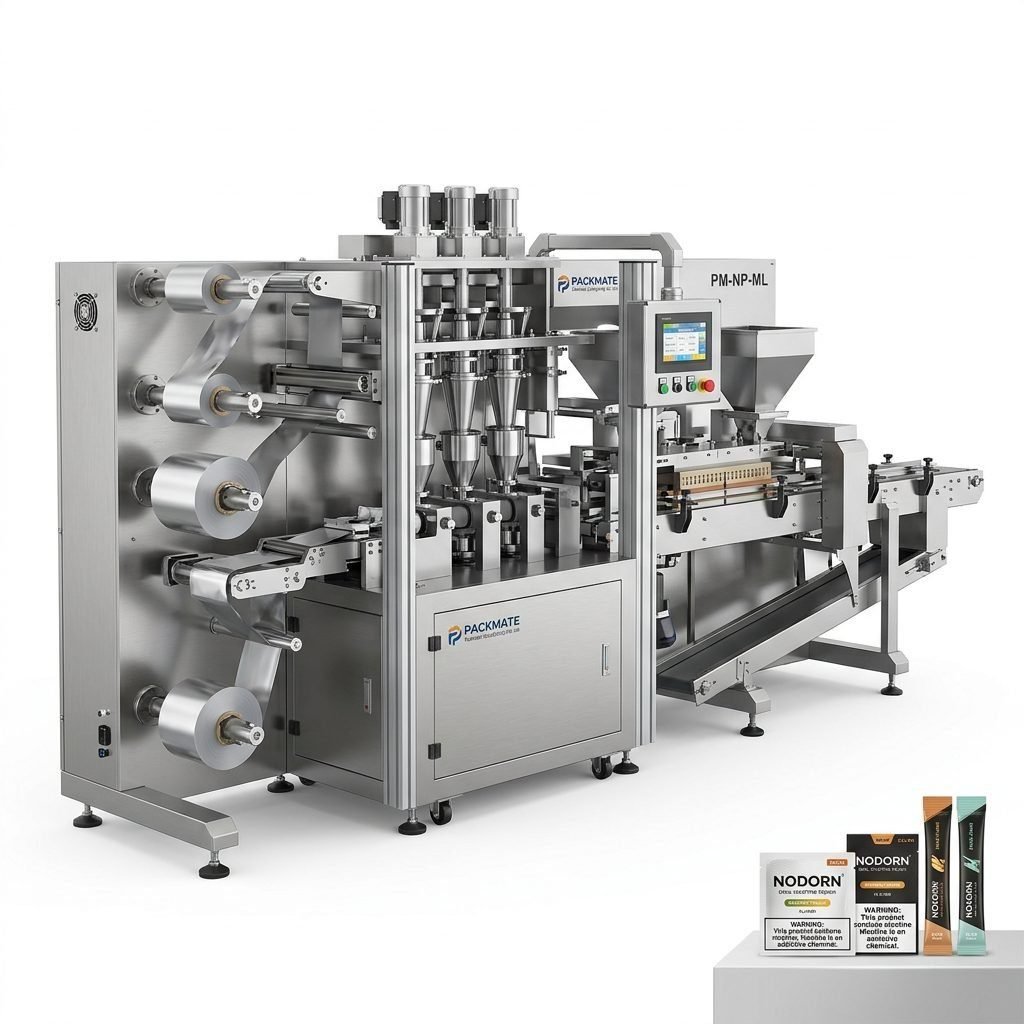
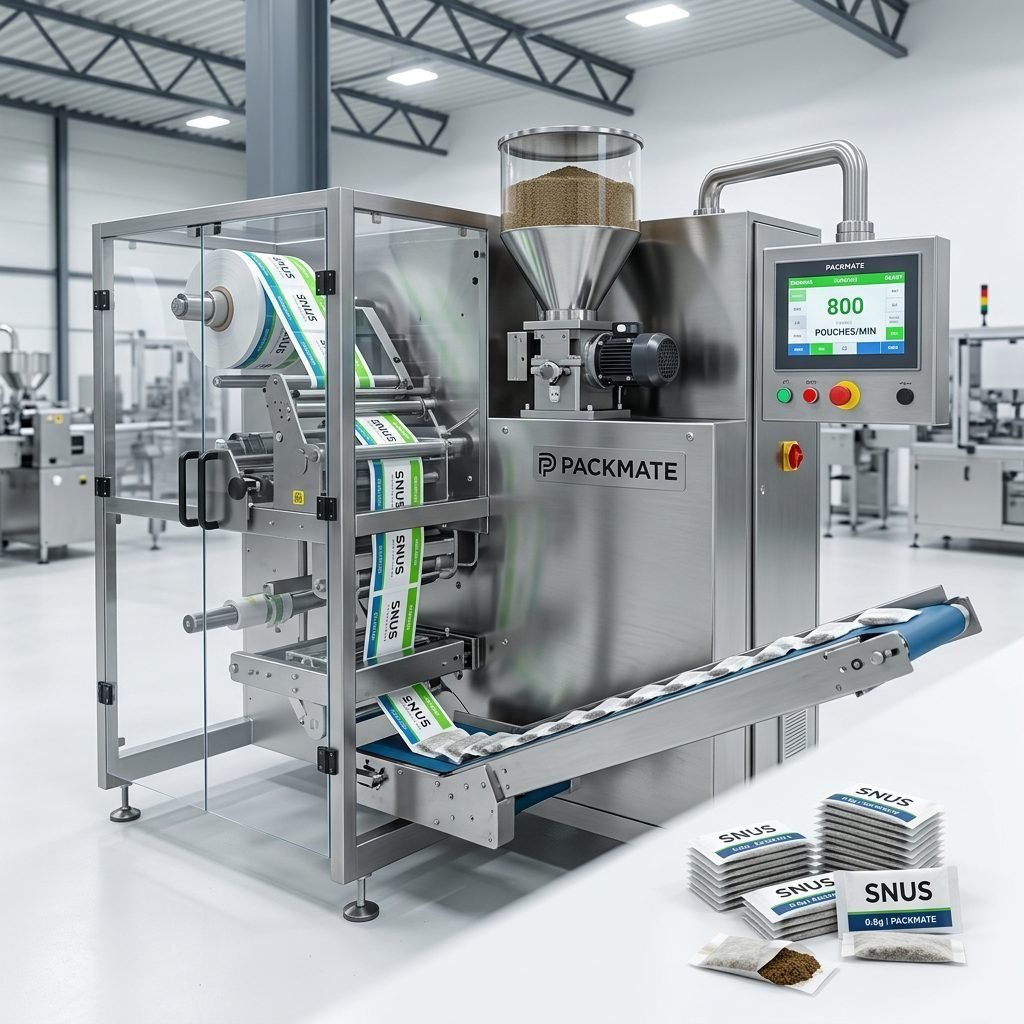
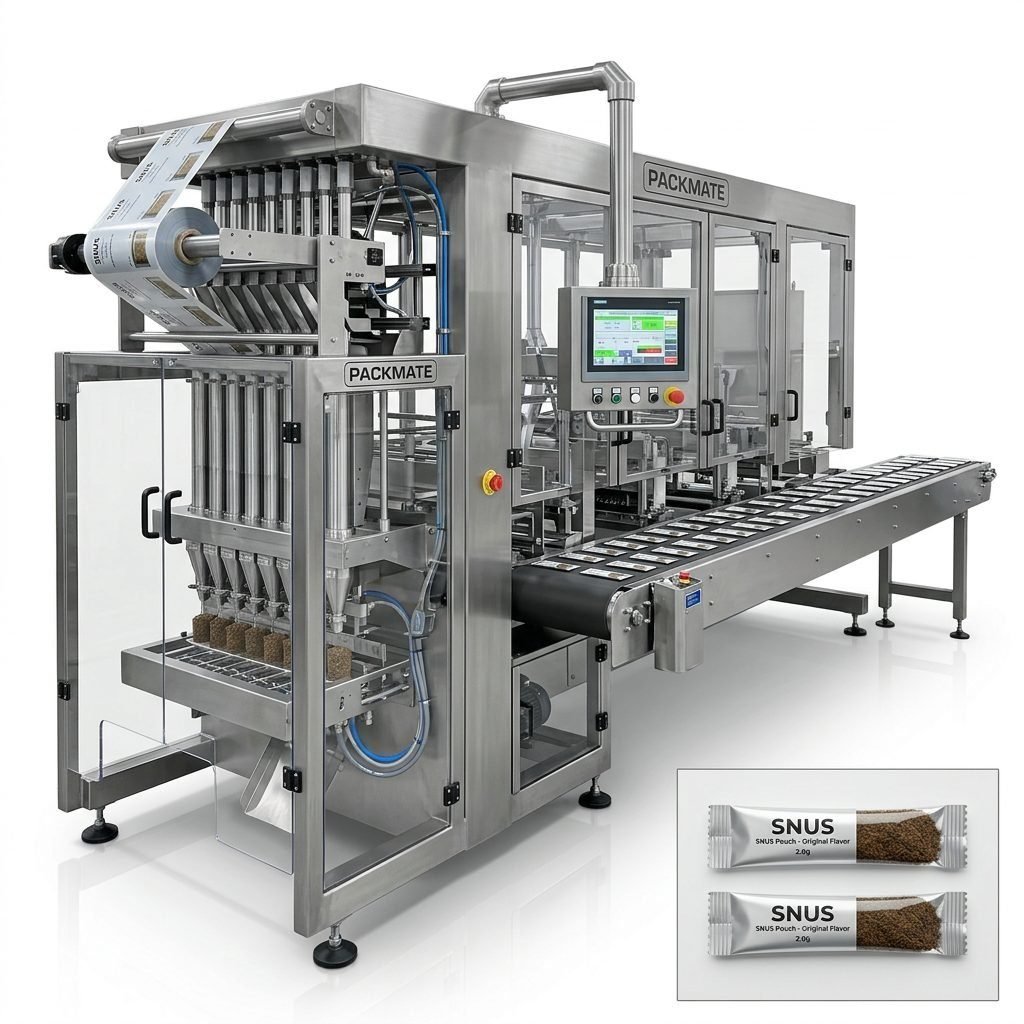
Packaging equipment falls into categories based on pouch format and throughput. Popular choices for snus and nicotine pouches include vertical form-fill-seal (VFFS) sachet machines, multi-lane stick pack systems, and fully integrated pouch lines. If you are focused on specialized nicotine pouch production, look for machines purpose-built for small-dose pouches with precise volumetric or weigh-fill systems.
Common machine categories
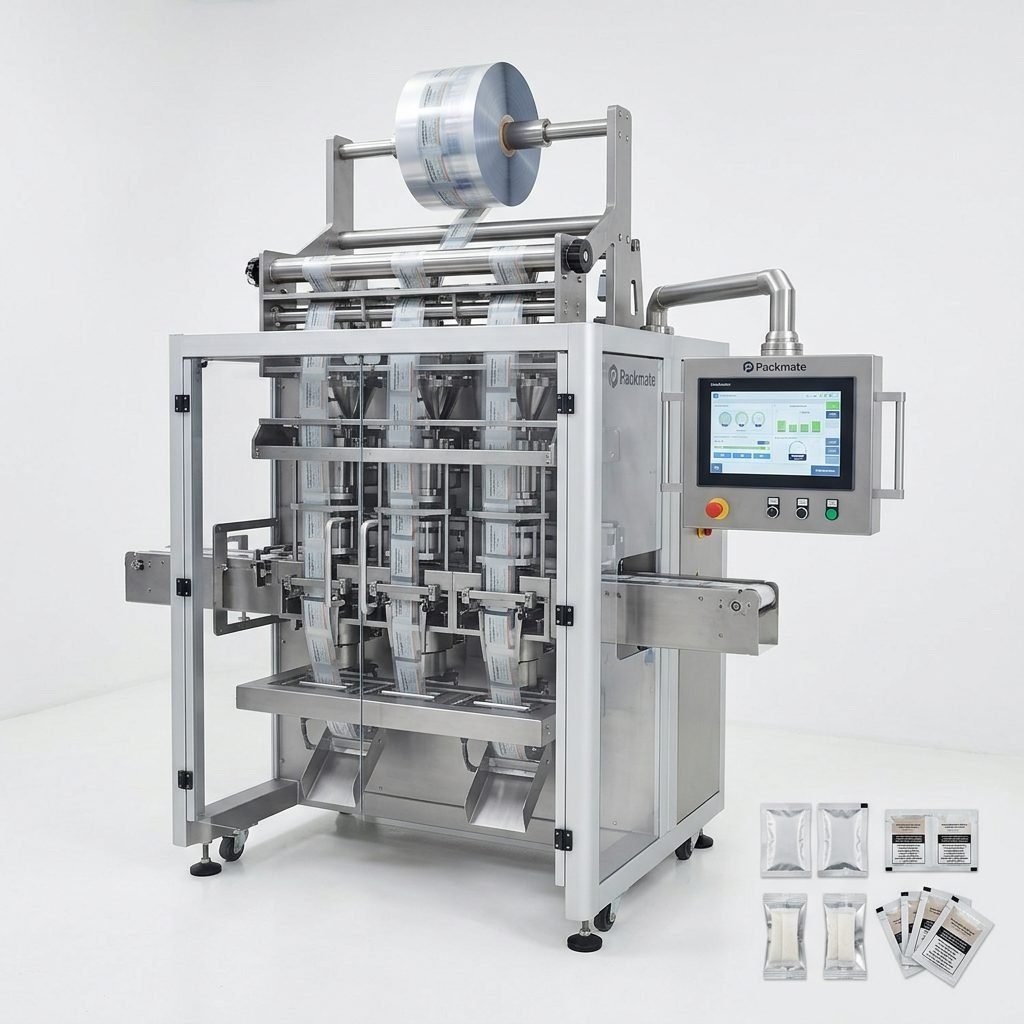
– Sachet & stick pack machines: high speed, suitable for single-dose stick packs and sachets — ideal for consumer-facing retail packs. Explore examples at Sachet & Stick Pack Machines.
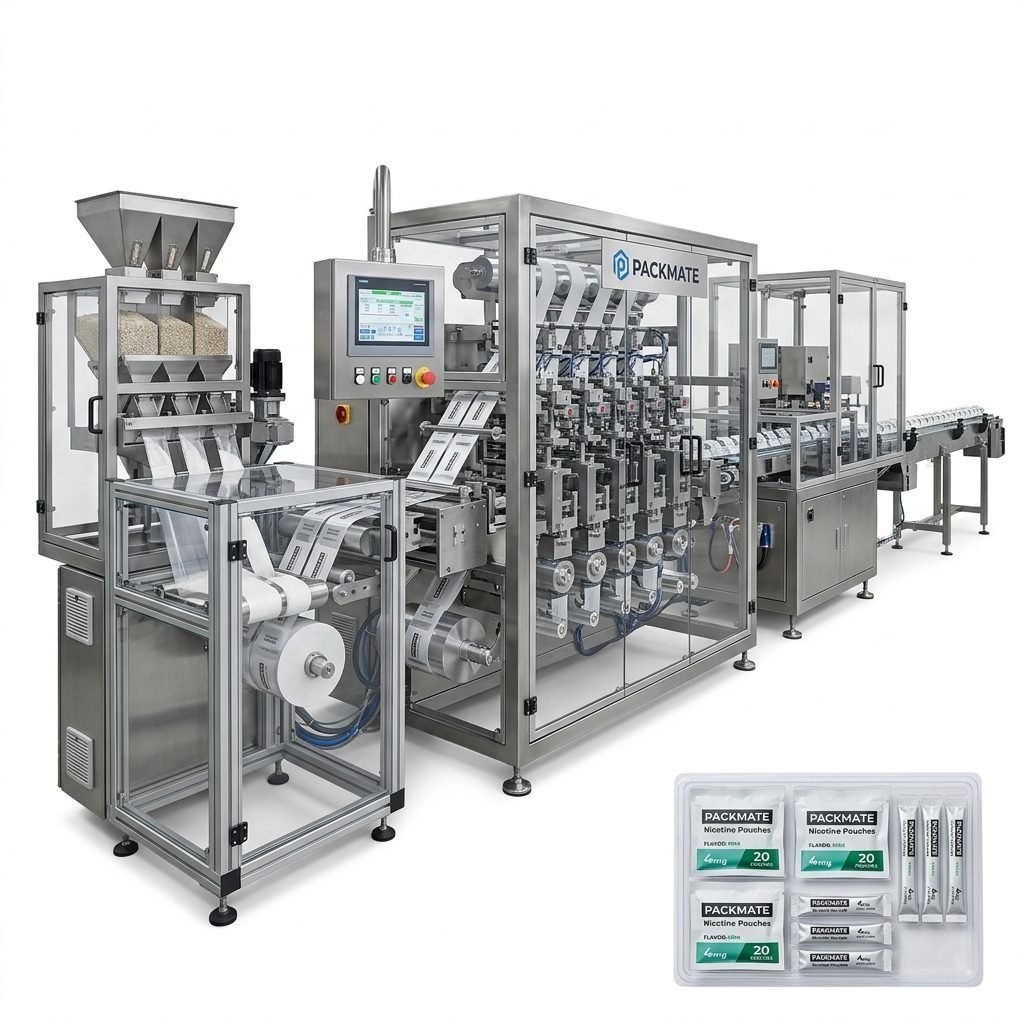
– Multi-lane snus packaging machines: optimized for small pouches across several lanes to maximize throughput per footprint — common in nicotine pouch factories.
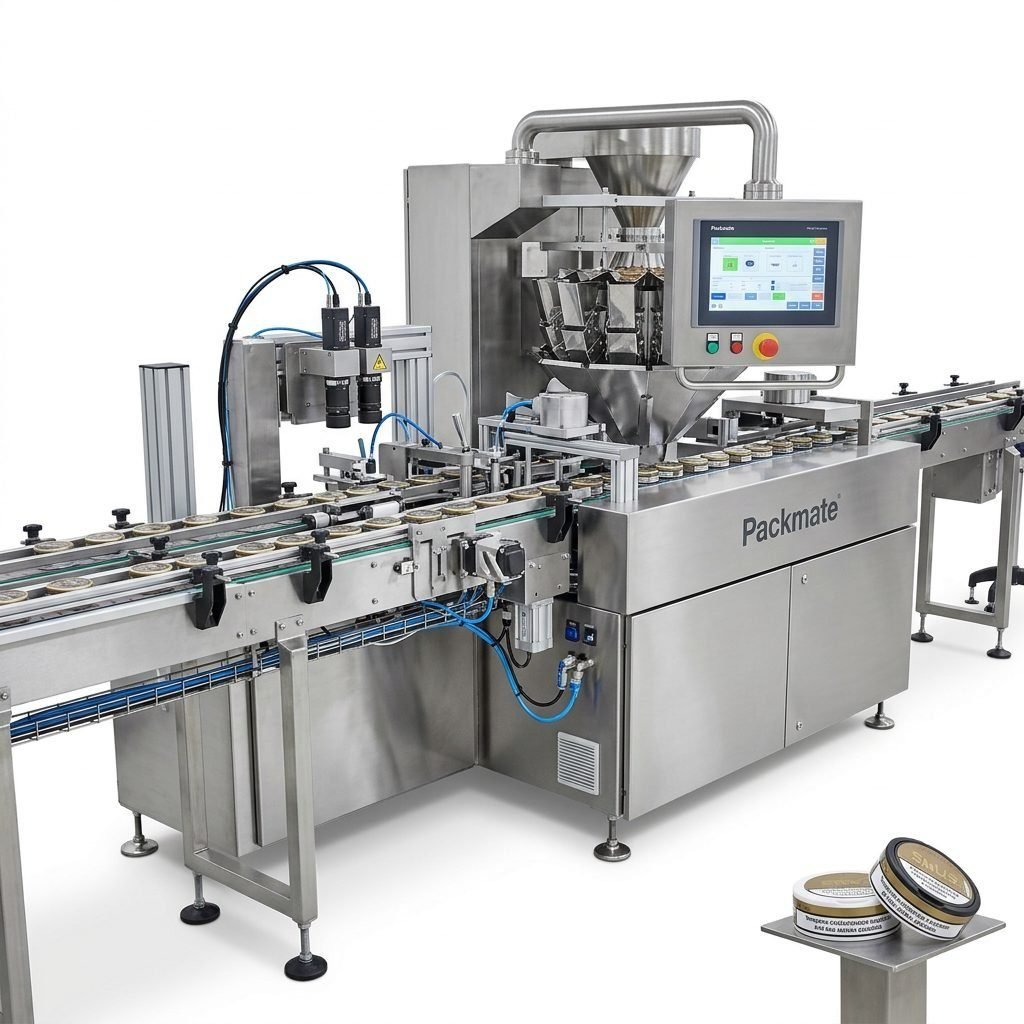
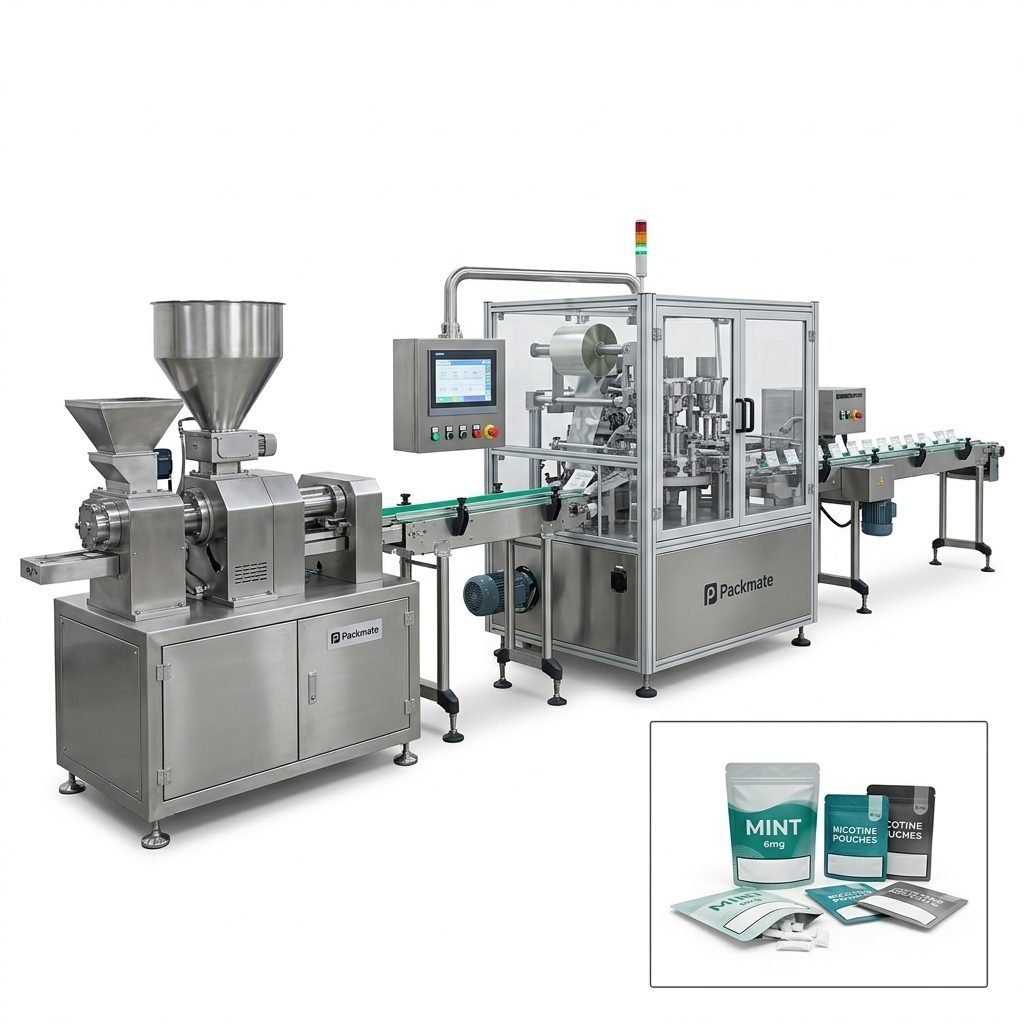
– Fully automated pouch lines: combine weighing, dosing, sealing, and end-of-line solutions for turnkey production. See Filling & Packaging Lines for integrated approaches.
Throughput and Scalability Considerations
Determine realistic throughput goals and buy a machine that supports your growth strategy. Machines are rated by pouches-per-minute or packs-per-hour. When evaluating throughput, factor in changeover times, maintenance windows, and quality inspection steps. If you expect rapid expansion, choose scalable systems such as modular multi-lane platforms that let you add lanes or auxiliary modules (weighers, conveyors) as demand rises.
Tip: A machine that is slightly over-capacity today can prevent costly upgrades within 12–24 months. However, avoid overspending on unnecessary peak capacity if your market is still testing product acceptance.
Production layout and footprint
Evaluate factory floor space in Togo: ceiling height, power supply, ventilation, and workflow around raw material storage, machine operation, quality control, and packing. Multi-lane machines save floor space per unit output but need well-planned material feeding and finished goods handling.
Automation, Control Systems, and User Interface
Modern snus packaging machines feature PLC control, touchscreens, recipe management, and remote diagnostics. Prioritize user-friendly HMI (Human-Machine Interface) with local language options and clear alarm logs. Remote support capabilities allow faster troubleshooting and reduce downtime — a major benefit when operating in regions with limited local service engineers.
🔧 Essentials: PLC + HMI, recipe memory, servo drivers for precision feed and sealing, and Ethernet/remote support port for diagnostics.
Material Compatibility and Seal Integrity
Packaging film selection — laminated barriers, heat-sealable layers, or paper-based pouches — directly affects machine design. Ensure the machine supports the film thickness and material type. Seal quality is crucial for product freshness and regulatory compliance. Look for machines with precise temperature control, consistent pressure systems, and inspection systems that detect weak seals or incomplete cuts.
Quality, Certifications, and Compliance
Choose a manufacturer with proven quality systems and relevant certifications. CE and ISO compliance indicate adherence to international safety and quality protocols, which simplifies export and regulatory inspections. Ask the supplier for test reports, validation documents, and real-case performance data for nicotine pouch production lines.
Packmate Snus Machine has strong credentials in this sector — consider reviewing their factory capabilities and certifications at About Packmate and Certificate pages to verify standards and factory scale.
Spare Parts, Local Support, and After-Sales Service
Reliable after-sales support is essential when operating in Togo. Confirm spare parts availability, lead times, and whether the manufacturer offers on-site commissioning, operator training, and preventive maintenance schedules. Remote troubleshooting via secure connections can accelerate repairs. Evaluate options for local partners or regional service centers that can reduce downtime and logistic costs.
ℹ️ Ask suppliers: average lead time for spare parts, recommended service intervals, training package details, and warranty coverage.
Total Cost of Ownership (TCO)
Initial price is only part of the equation. Evaluate TCO including energy consumption, maintenance labor, spare parts, tool wear, consumables (films, adhesives), and downtime costs. Energy-efficient servo-driven systems and smart sleep modes reduce operational costs. Ask suppliers for sample energy consumption figures and maintenance checklists to better estimate long-term expenses.
Financing and ROI
Calculate return on investment based on realistic sales forecasts, cost savings from automation, and quality improvements. Explore financing options, leasing alternatives, or pay-per-output agreements offered by some manufacturers to ease upfront capital requirements.
Factory Acceptance Test and Site Commissioning
Insist on a Factory Acceptance Test (FAT) with your product or a close simulant before shipment. FAT verifies machine performance, speed, sealing integrity, and recipe repeatability. After shipment, a Site Acceptance Test (SAT) and commissioning by manufacturer engineers ensure the line performs under real factory conditions in Togo.
✅ Include FAT acceptance criteria in the purchase agreement: throughput, acceptable rejects rate, and packaging quality standards.
Choosing a Trusted Supplier
Work with an experienced manufacturer who understands snus and nicotine pouch production. Look for companies with a strong engineering background, global case studies, and a wide model range. Review documented projects and ask for references. You can see real world cases and solutions at Case and evaluate product lines across categories such as Snus & Nicotine Packaging Machines.
✅ Checklist for supplier evaluation: factory tour capability, 30+ years of engineering experience, customizable solutions, available training, and international exhibition presence.
Practical Steps to Finalize Your Purchase
1) Define product specifications and target output clearly.
2) Request proposals and FAT plans from 2–3 reputable suppliers.
3) Compare total cost of ownership, spare parts policy, and service agreements.
4) Verify certifications and request client references.
5) Arrange FAT, negotiate delivery and commissioning timelines, and include acceptance criteria in the contract.
Local Considerations for Togo
When sourcing equipment for Togo, consider import regulations, customs clearance support, and local power standards. Verify the supplier can assist with documentation, spare parts shipment, and training of local operators. Building a relationship with a supplier that offers strong remote support and periodic on-site visits will significantly improve production reliability.
If you need to explore product variations or complementary equipment, check Bag & Pouch Packaging Machines and Weighing & Packaging Systems for auxiliary modules and end-of-line integration.
Final selection summary
Choose a machine that fits your product format and expected throughput, offers robust sealing and material compatibility, provides accessible spare parts and service in Togo, and comes from a manufacturer with proven experience in snus packaging. Emphasize modularity and remote support to protect uptime and enable growth.
Frequently Asked Questions
Q1: What is the best machine type for small-dose nicotine pouches?
A1: Multi-lane snus packaging machines or specialized small-dose pouch lines with precision weigh-fill or volumetric dosing and tight sealing control are ideal.
Q2: How important is FAT before shipment?
A2: Extremely important — FAT confirms machine performance, throughput, and packaging quality before the unit leaves the factory, preventing costly site issues.
Q3: What after-sales services should I prioritize?
A3: Spare parts availability, remote diagnostics, operator training, preventive maintenance contracts, and responsive technical support are top priorities.
Q4: Can machines be customized for local packaging preferences in Togo?
A4: Yes — reputable manufacturers provide customization options for pouch sizes, printing registration, and additional modules for labeling or cartoning.
Q5: Where can I find more technical details and product catalogs?
A5: Visit the supplier’s catalog and service pages for detailed specs and support options: Catalog and Service.