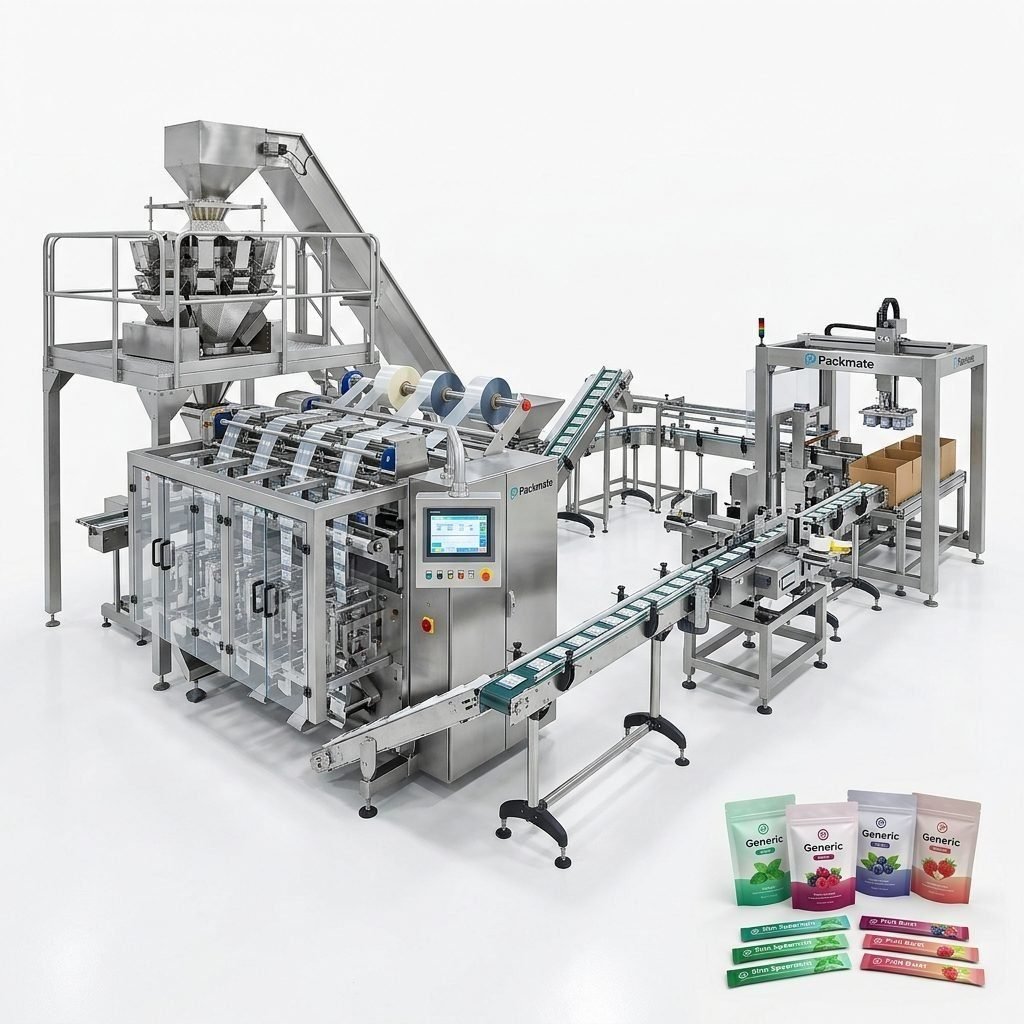
Sweden has one of the most mature snus markets in the world, with deep cultural roots and strict product expectations. Choosing the right snus packaging machine for a Swedish production line means balancing tradition, regulatory compliance, and modern manufacturing efficiency. This guide walks you through practical selection criteria, local considerations, machine features, and how to evaluate suppliers so your investment delivers consistent quality, uptime, and a fast return on investment.
Understand the Swedish Snus Market and Consumer Habits
Sweden’s snus culture is unique: many consumers expect well-dosed, moisture-stable pouches with reliable flavor profiles and discreet packaging. Manufacturers must deliver products that hold moisture, resist leakage, and maintain consistent weight and portion size. Regulations emphasize hygiene, traceability, and accurate labeling — all important when specifying a machine.
Key local points to consider
• Traditional preferences for small-dose, multi-portion pouches mean high precision filling.
• Climate and storage expectations require packaging that controls moisture and preserves flavor.
• Swedish buyers typically value energy efficiency, CE/ISO compliance, and strong after-sales support.
🔍 Tip: For Sweden, prioritize machines with excellent portion accuracy and gentle handling of moist tobacco or nicotine pouches to avoid weight variation and product damage.
Decide Production Capacity and Speed Requirements
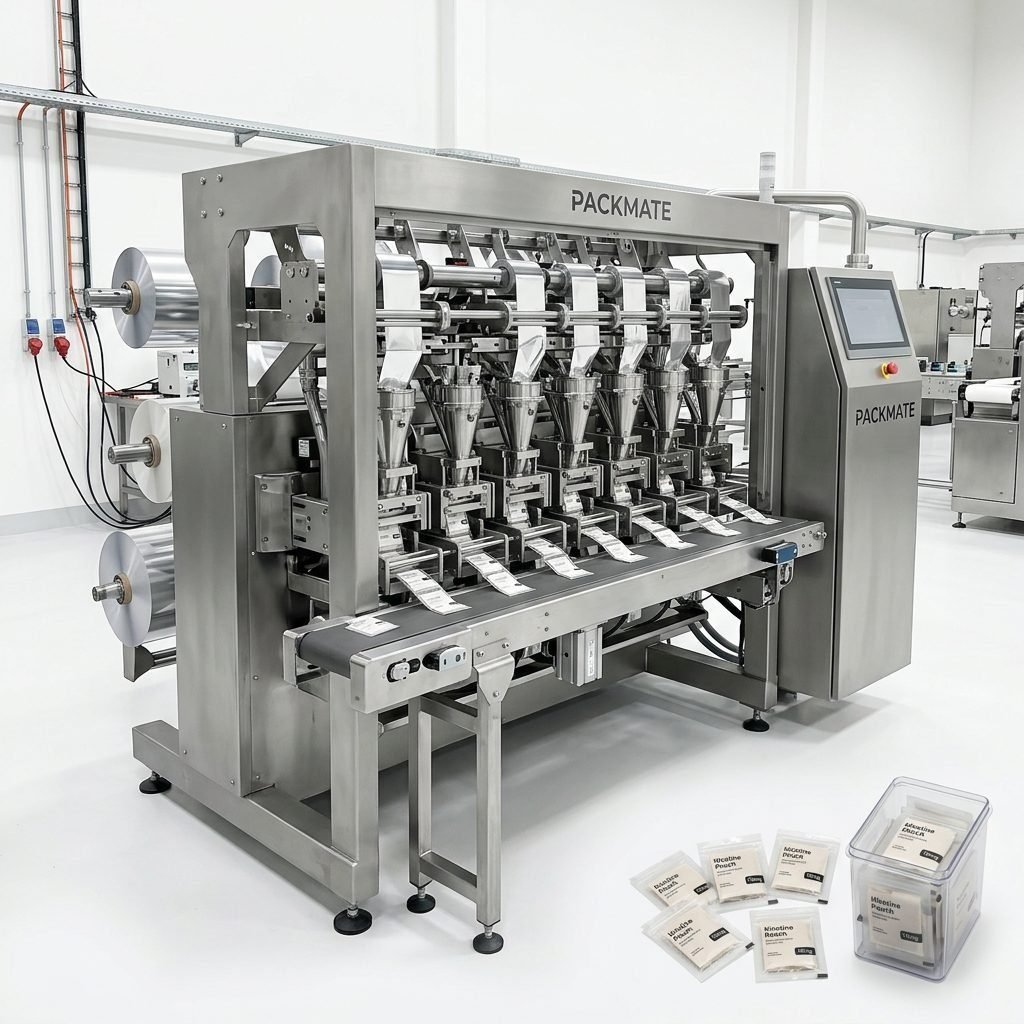
Your target throughput drives the choice of single-lane vs multi-lane systems and the level of automation. Small craft brands may run a single-lane sachet or stick pack machine, while large-scale producers in Sweden often deploy multi-lane systems to achieve tens of thousands of pouches per hour.
• If you plan to scale, select modular machines that can upgrade lanes and add modules such as inline weighing or metal detection.
• For continuous runs, look for robust feeding systems and continuous motion sealing to minimize downtime.
Choose the Right Packaging Format
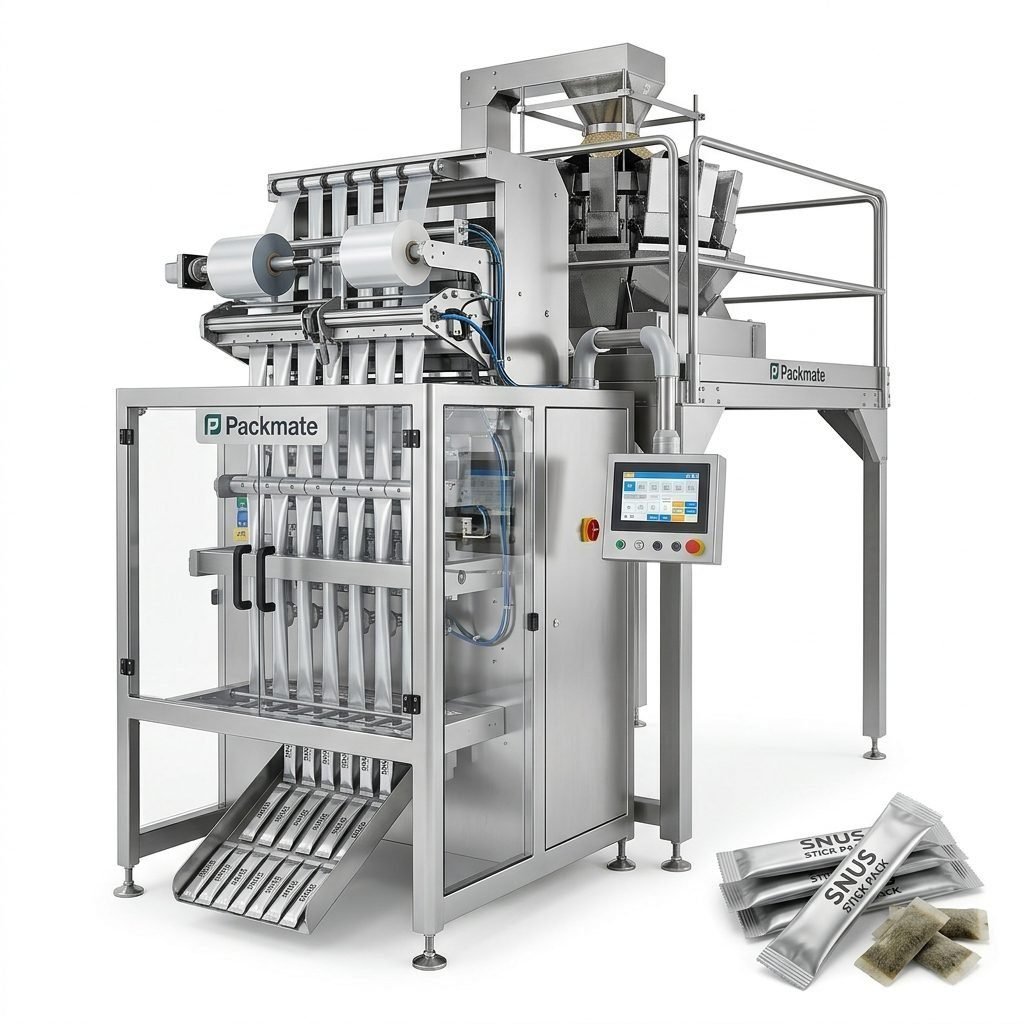
Snus producers in Sweden commonly use pouch formats such as sachets, stick packs, or multi-dose cans and sachet pouches. The machine you choose must support your desired format and any secondary packaging steps (tray packing, cartoning, or labelling).
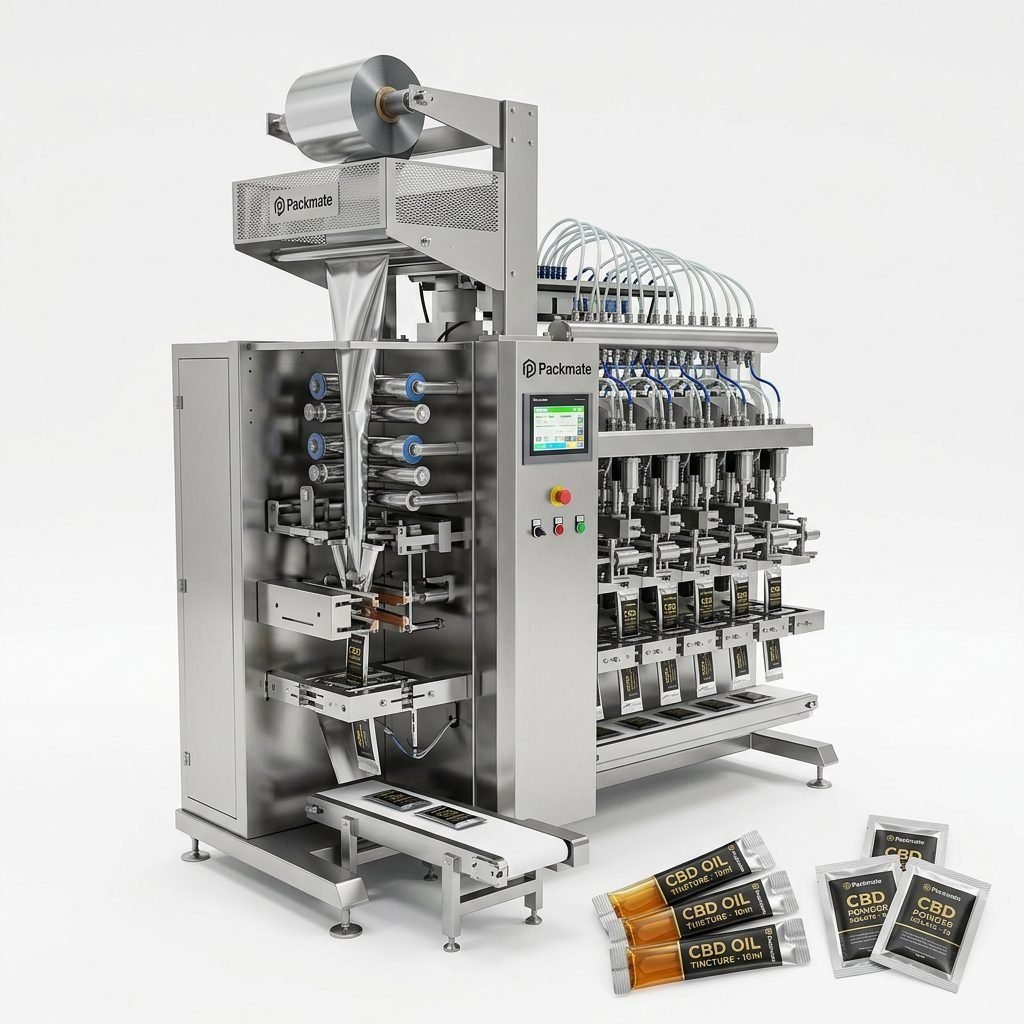
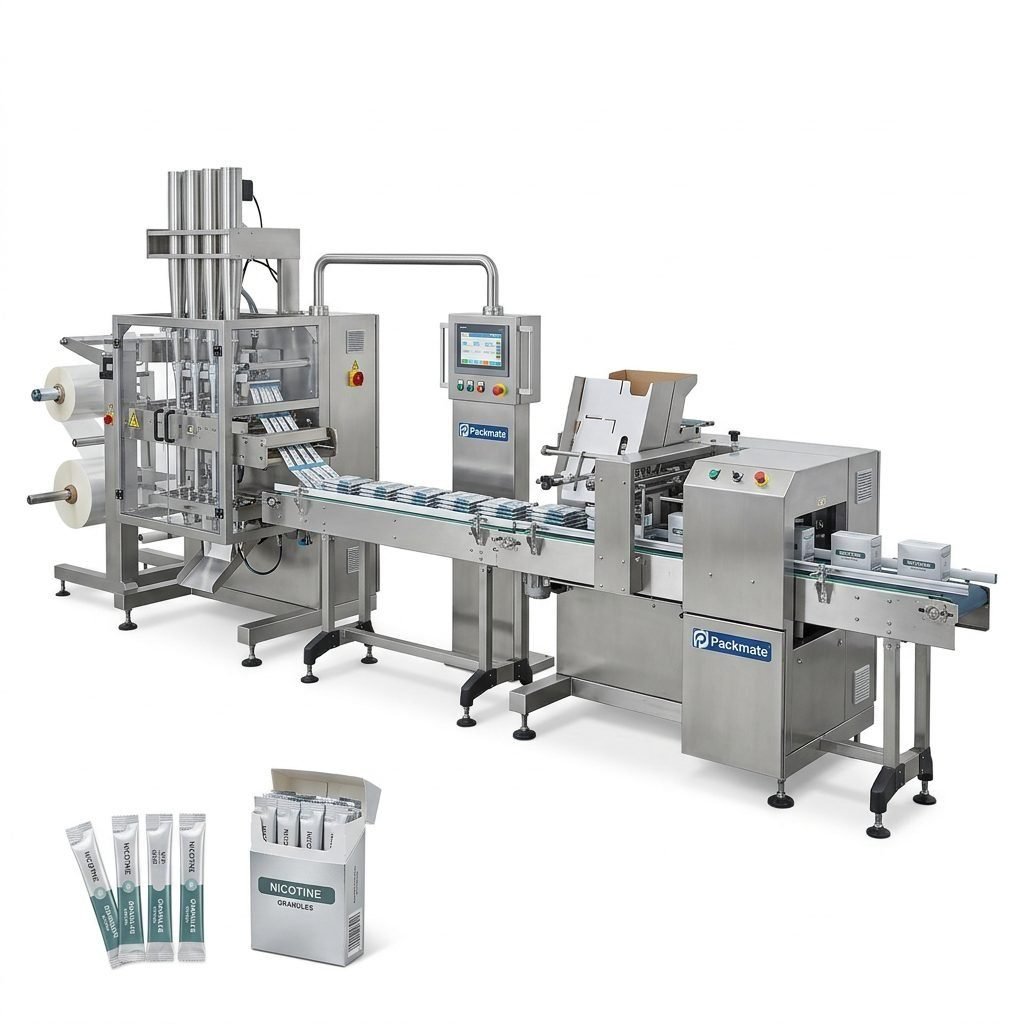
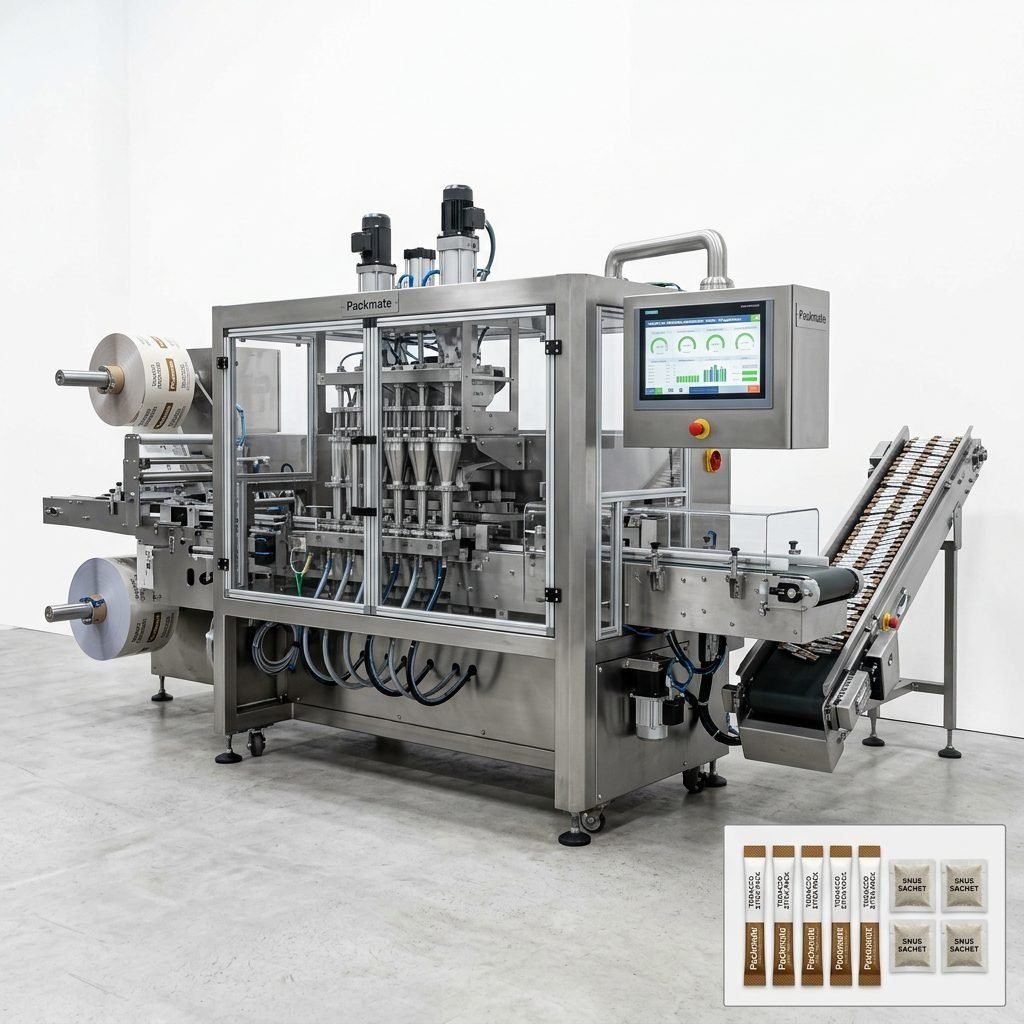
• Sachet & stick pack lines are ideal for single-portion pouches and fast changeovers. See examples of suitable equipment here: Sachet & Stick Pack Machines.
🛠 Practical note: If your product is moisture-sensitive, consider heat-seal systems with moisture barrier films and integrated nitrogen flushing options to extend shelf life.
Material Compatibility and Hygienic Design
Snus and nicotine pouches require machines that handle moist, sometimes sticky materials. Prioritize stainless steel contact parts (304 or 316 where needed), smooth surfaces, and designs that simplify cleaning and CIP procedures.
• Look for machines with quick-release parts, hygienic guards, and accessible belts.
• Certifications like CE and ISO are expected in Sweden — choose manufacturers who can provide documentation. Packmate’s certificate portfolio is available at: Certificate.
Precision Filling and Weighing Options
Accuracy is the backbone of snus production: underfilling wastes margin, overfilling risks regulatory issues. Decide whether volumetric dosing, auger filling, or integrated weighing is best for your formulation.
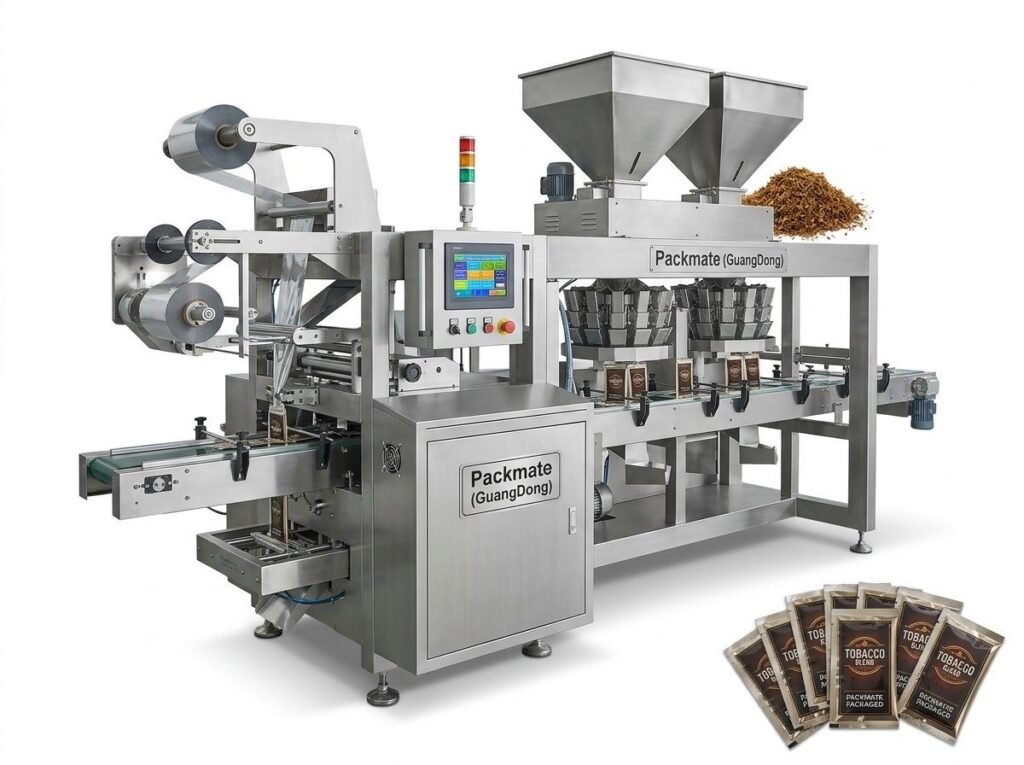
• Powders or fine tobacco mixes often use auger or vibratory feeders; multi-head weighers deliver the best accuracy for complex blends. For combined solutions, view Weighing & Packaging Systems.
Inline Quality Controls
Integrating checkweighers, metal detectors, and vision systems reduces recalls and maintains the trust of Swedish consumers. Machines that support plug-and-play QA modules are preferable for future upgrades.
Automation Level and Integration with Your Line
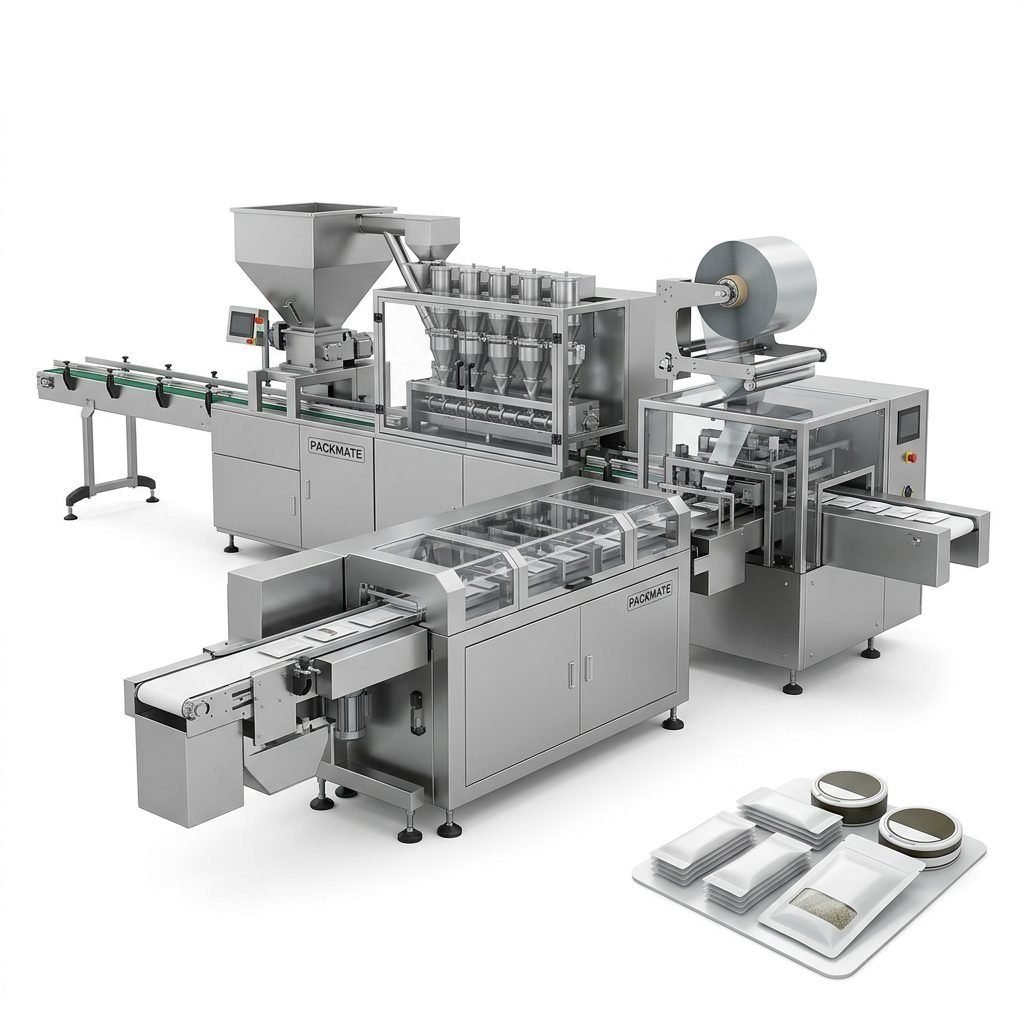
Choose between semi-automatic machines for low-volume flexible production and fully automated turnkey lines for large volumes. Evaluate how the packaging unit integrates with upstream filling and downstream cartoning or case packing.
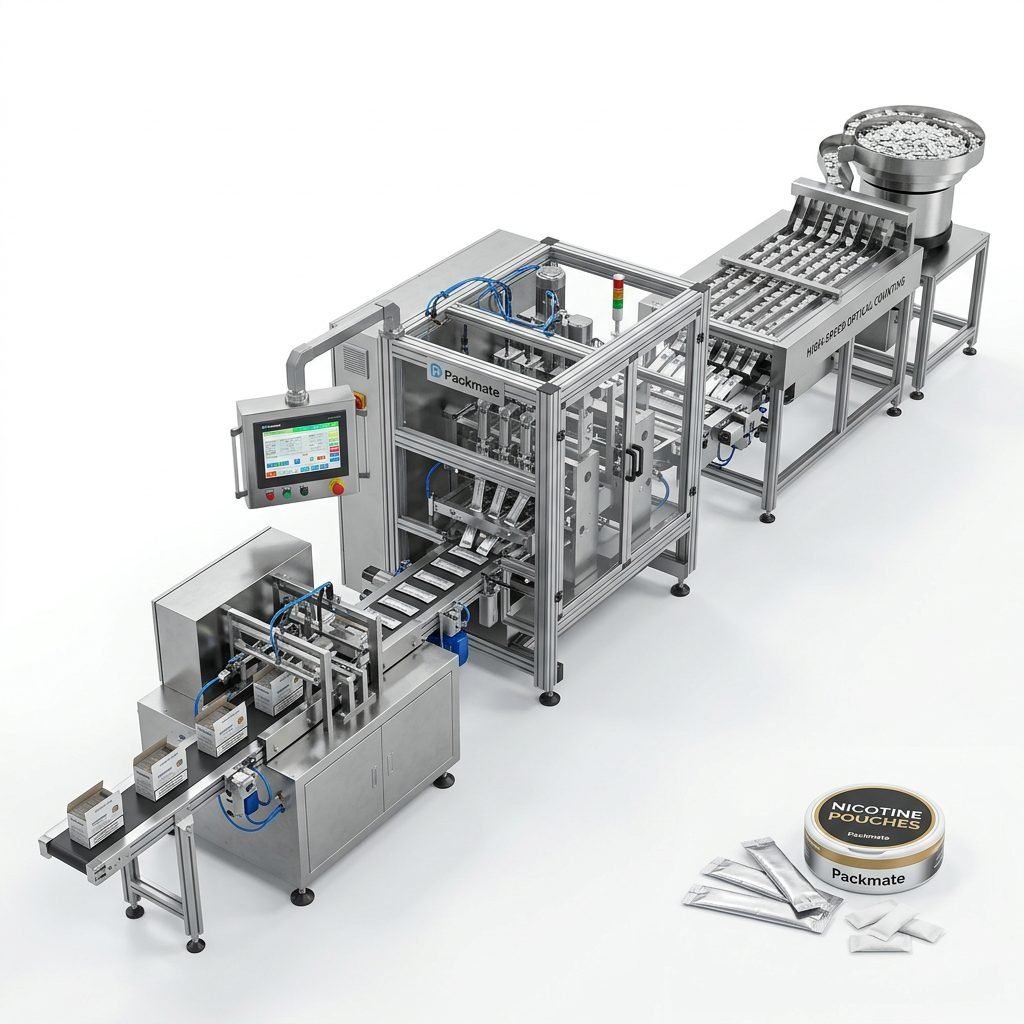
• For high-speed operations, synchronous multi-lane systems reduce cycle times. Packmate offers full production line options, described here: Filling & Packaging Lines.
✅ Efficiency checklist: PLC/HMI control, recipe management, remote diagnostics, and frequency-controlled motors improve uptime and reduce operator error.
Electrical, Safety and Regulatory Compliance
Verify machine compliance with EU/Swedish safety standards, CE marking, and relevant electrical directives. Look for clear documentation, machine guarding, emergency stops, and safety interlocks.
• Ensure the supplier offers factory acceptance testing (FAT) and on-site commissioning support. Packmate’s global service capabilities and exhibition presence can help validate product performance: Our Exhibition.
Evaluate Supplier Experience and After-Sales Support
Long-term performance depends on spare parts, training, and technical support. Prefer manufacturers with decades of experience, stable supply chains, and a clear service network.
• Packmate highlights: 30+ years of engineering, large-scale factory capability, and turnkey solutions. Learn more about the company here: About Packmate.
Spares, Training and Remote Support
Confirm spare parts lead times, availability of training (onsite and virtual), and remote troubleshooting tools. In northern climates like Sweden, minimizing downtime during holidays and winter is critical.
Total Cost of Ownership (TCO) and ROI
Look beyond purchase price: evaluate energy consumption, maintenance intervals, consumables cost (sealing films, nozzles), and expected uptime. Faster machines can justify higher capital expense through labor reduction and increased throughput.
💡 ROI pointer: Calculate ROI using realistic operating hours (consider Swedish holidays) and incorporate spare parts contracts to avoid surprise costs.
Customization, Turnkey Lines and Future-Proofing
As your product line diversifies, choose systems that can accept new tooling, software recipes, and lane-addition modules. A modular supplier with turnkey experience helps reduce integration risk.
• If you need a full production line including auxiliary and packing systems, explore complementary equipment and cases at: Auxiliary Packaging Equipment and Case.
Installation, Commissioning and Validation
Plan for factory acceptance testing (FAT), on-site installation, and process validation per Swedish regulatory needs. Proper documentation simplifies audits and export compliance.
• Ensure the supplier provides commissioning protocols, training records, and spare parts lists as part of delivery.
Sustainability and Energy Use
Swedish customers often prioritize sustainable operations. Ask about energy-saving modes, efficient drives, and recyclable packaging compatibility to align with local market expectations.
Making the Final Decision: A Checklist
🔎 Quick checklist:
• Capacity: meets current and projected throughput
• Format flexibility: supports your pouch types and future SKUs
• Hygiene: stainless steel construction and easy cleaning
• Precision: filling accuracy and inline QA tools
• Support: spare parts, training, remote diagnostics
• Compliance: CE/ISO and documentation for regulatory audits
How to Contact and Validate Suppliers
Reach out to potential suppliers for technical datasheets, video demos, and references from European clients. Arrange FAT or on-site visits where possible. For direct contact or to request a catalogue, see: Contact Us and Catalog.
Final thoughts for Swedish Producers
Choosing a snus packaging machine in Sweden blends technical specification with cultural sensitivity. Machines should protect flavor and moisture, ensure precise dosing, and be backed by strong documentation and support. Investing in modular, hygienic, and energy-efficient equipment will position your brand for long-term success in a discerning market.
Ready to explore options?
If you need full packaging line solutions or want to see case studies of completed installations, review Packmate’s complete product range: Snus & Nicotine Packaging Machines and contact the manufacturer to schedule a consultation.
Common Questions
Q1: How do I know whether to choose single-lane or multi-lane machines?
A1: Base the decision on current throughput needs, future growth plans, and available floor space. Multi-lane systems are ideal for high-volume producers; single-lane is flexible for smaller, craft operations.
Q2: What maintenance is required for snus packaging machines?
A2: Regular cleaning, inspection of wear parts (nozzles, belts, sealing dies), lubrication per manufacturer guidance, and scheduled calibration of dosing systems. A spare parts plan reduces downtime.
Q3: Can machines handle both nicotine pouches and traditional Swedish snus formats?
A3: Many modern systems are versatile; confirm with suppliers that tooling and dosing modules match your formulations. Some machines are specifically optimized for low-moisture vs high-moisture products.
Q4: What certifications should I ask for when buying a machine for Sweden?
A4: CE marking, relevant ISO standards, and supplier-provided material certificates for contact parts. Also request FAT documentation and user manuals in your language.
For more detailed answers or to arrange a demonstration, visit the supplier FAQ or support pages: FAQs and Service.