Choosing the right snus packaging machine for production in El Salvador requires more than a simple supplier search. It demands a practical analysis of your product format, production targets, regulatory needs, and long-term service expectations. This guide walks production managers, plant engineers, and business owners through every key decision point so you can select a solution that delivers reliability, compliance, and cost-efficiency.
Understand Your Product and Market Requirements
Before evaluating machines, document the product specifications: pouch size, fill weight (mg/g), moisture content, whether your snus is powdered, granulated, or has aerosolized flavor, single-lane or multi-lane outputs, and final packaging format (stick, sachet, flow-wrapped pouches, or tins). These variables directly determine the equipment type, auxiliary systems, and in-line quality controls you will need.
Pouch dimensions • Fill type (powder/granule/liquid) • Desired output (bags/min) • Packaging material compatibility
Common Snus Packaging Machine Types and When to Use Them
There are several machine classes commonly used in snus and nicotine pouch production. Knowing the strengths of each helps you match technology to demand and budget.
Stick Pack and Sachet Machines
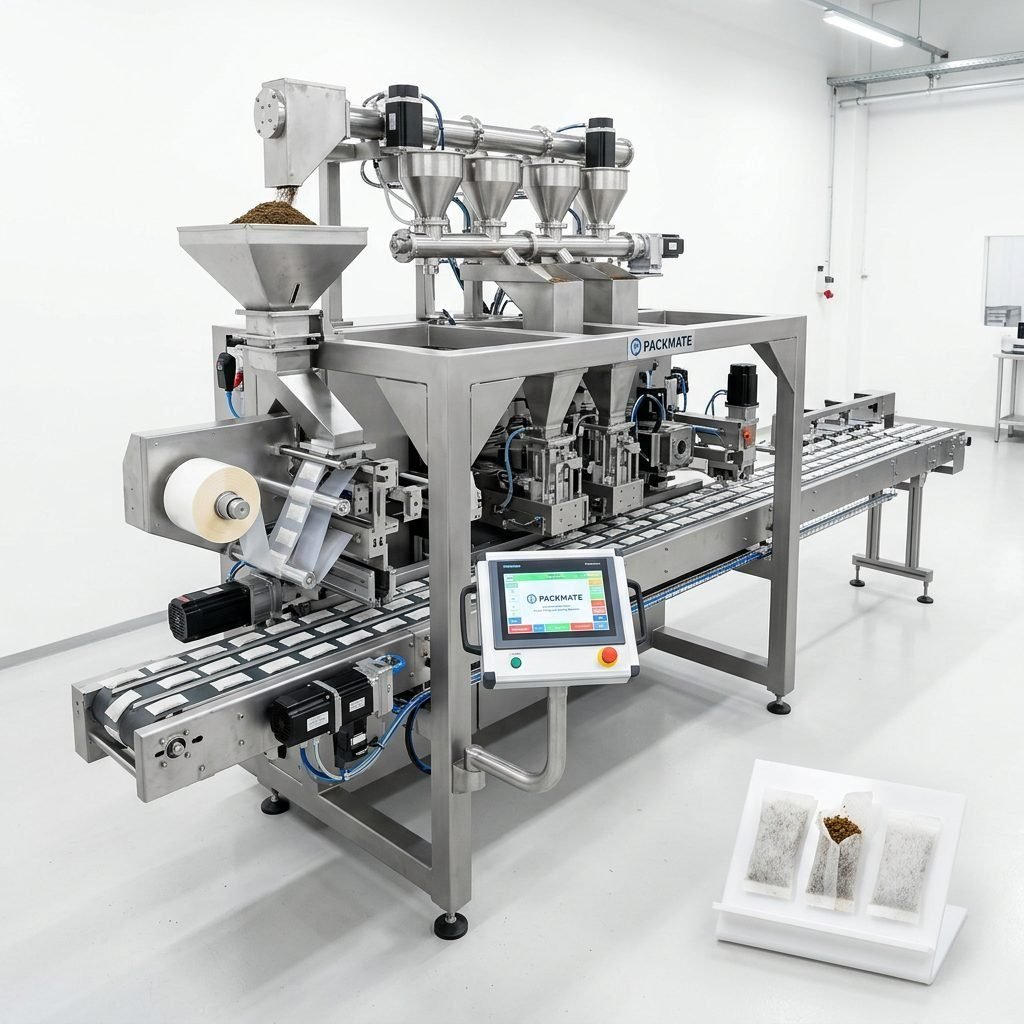
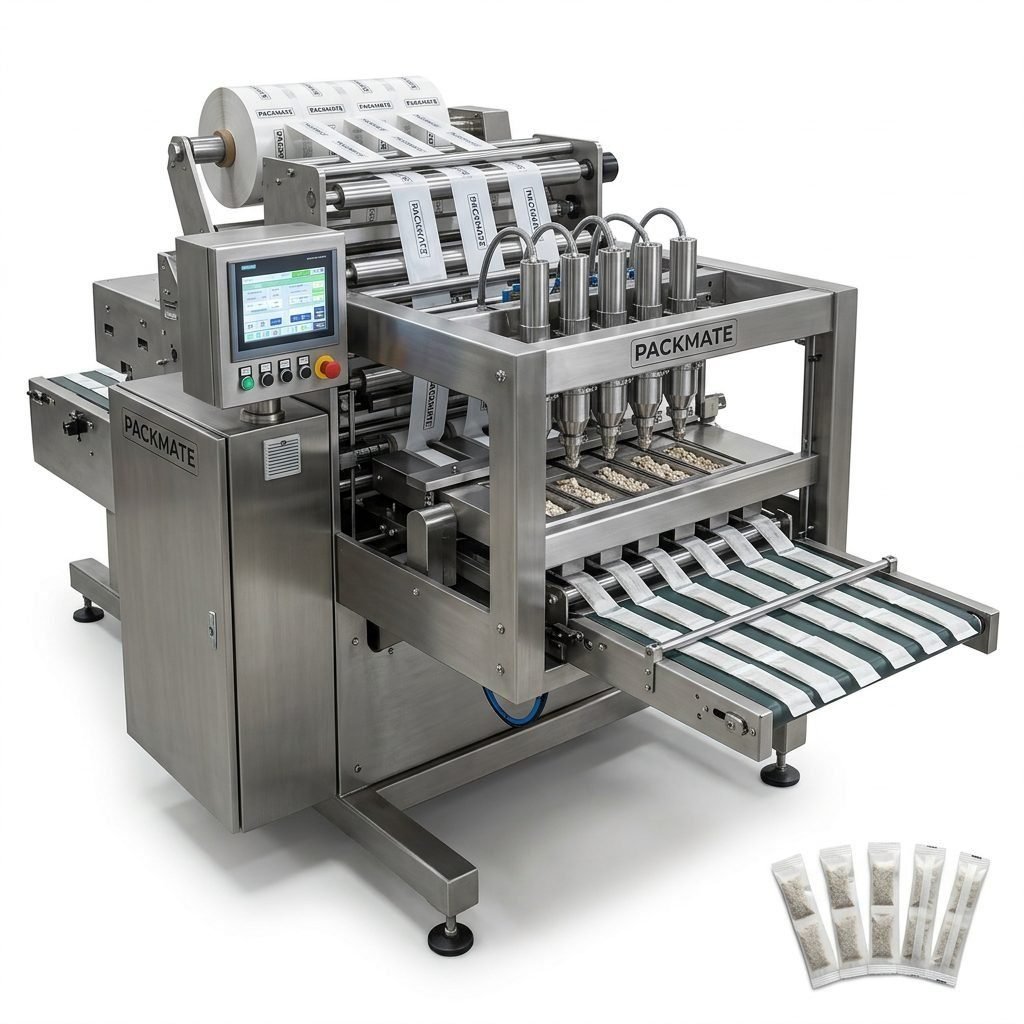
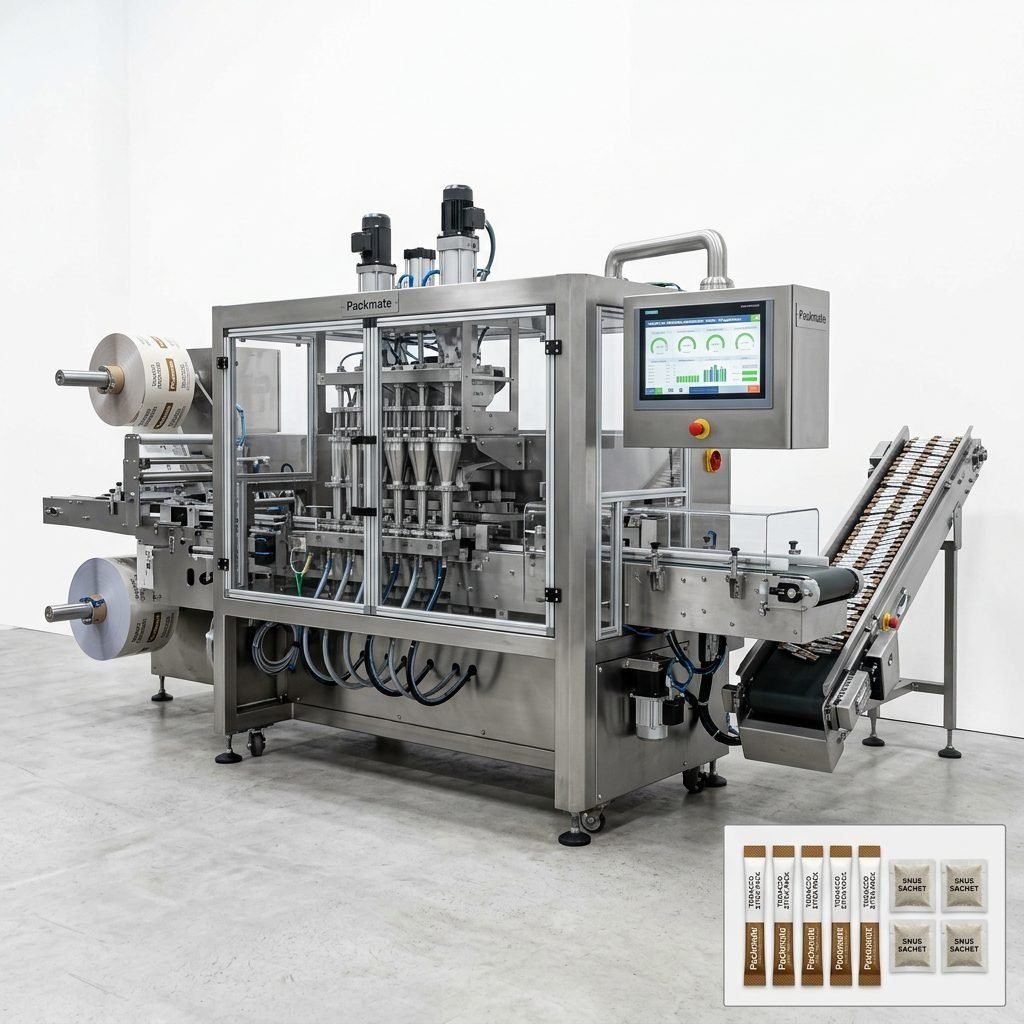
Stick pack and sachet machines are ideal for single-dose pouches and sachets. They offer excellent portion control and fast changeovers for multiple flavors. If your business focuses on consumer single-use doses, these machines provide the precision necessary for consistent weight and seal integrity.
Multi-lane Systems
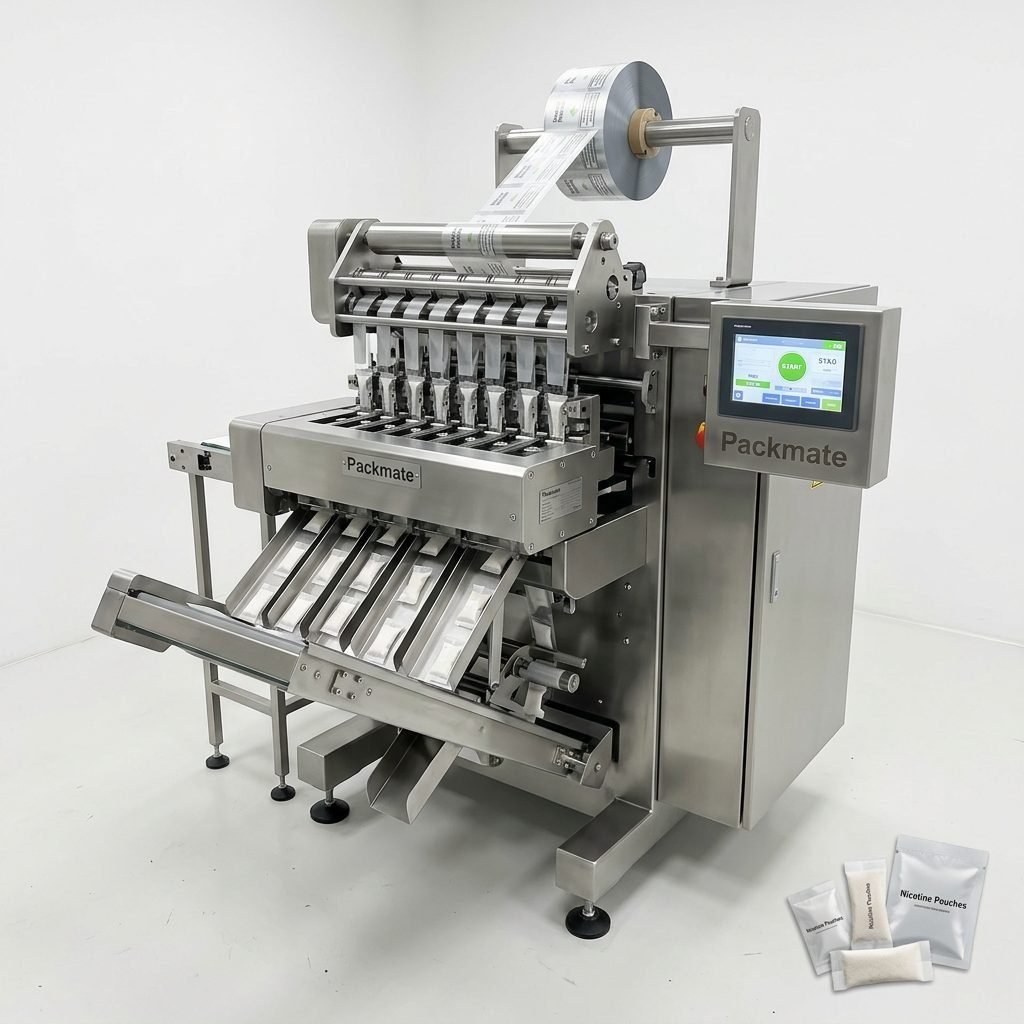
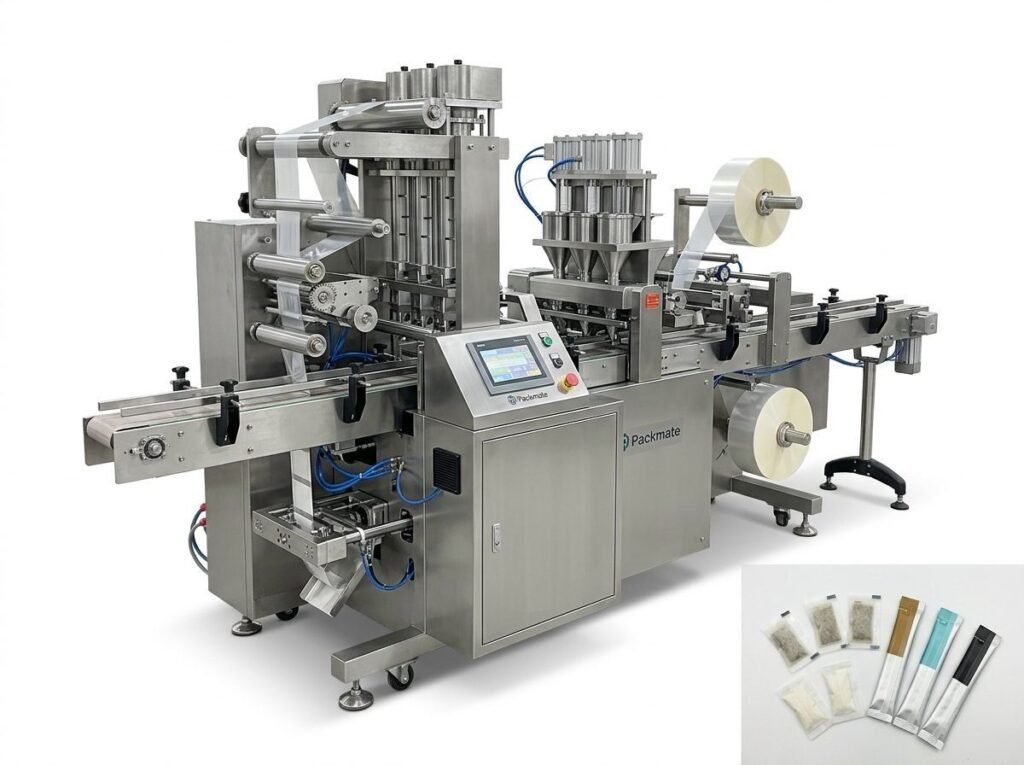
When demand increases and space is limited, multi-lane packaging machines multiply throughput without a linear increase in footprint. These systems are well-suited to small-dose nicotine pouch production where lane synchronization and uniform dosing are critical.
Integrated Filling & Packaging Lines
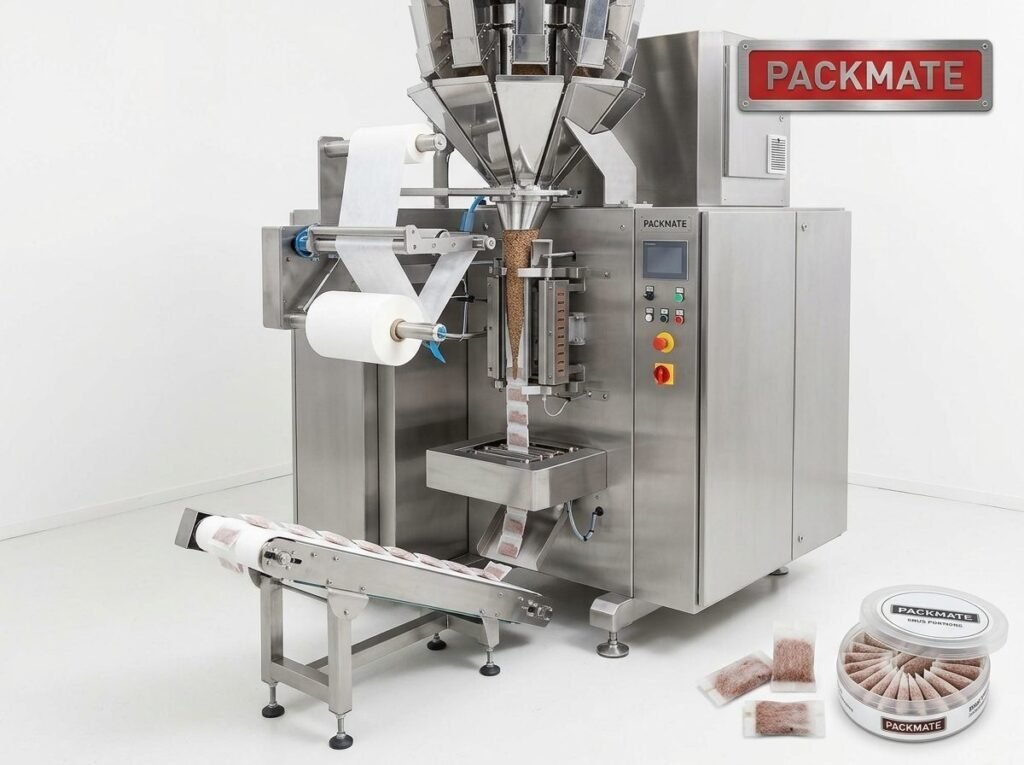
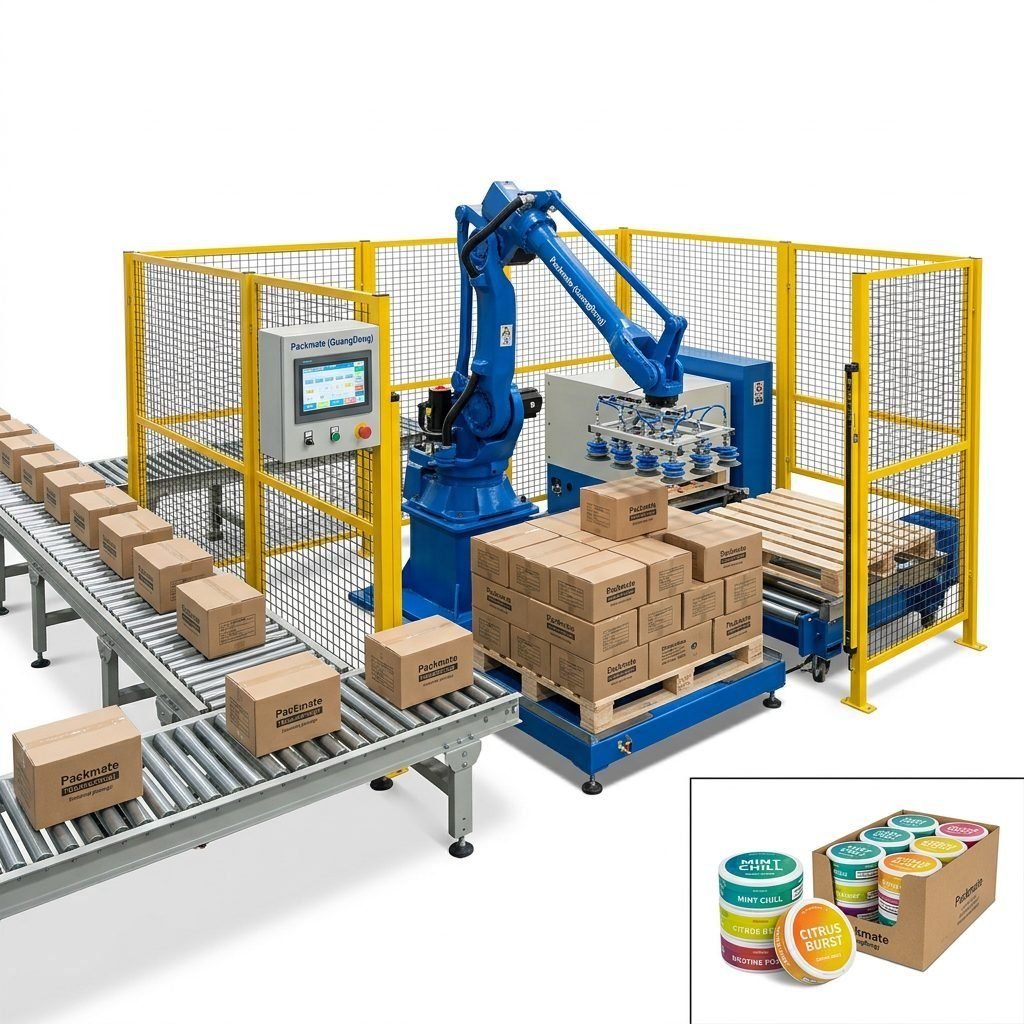
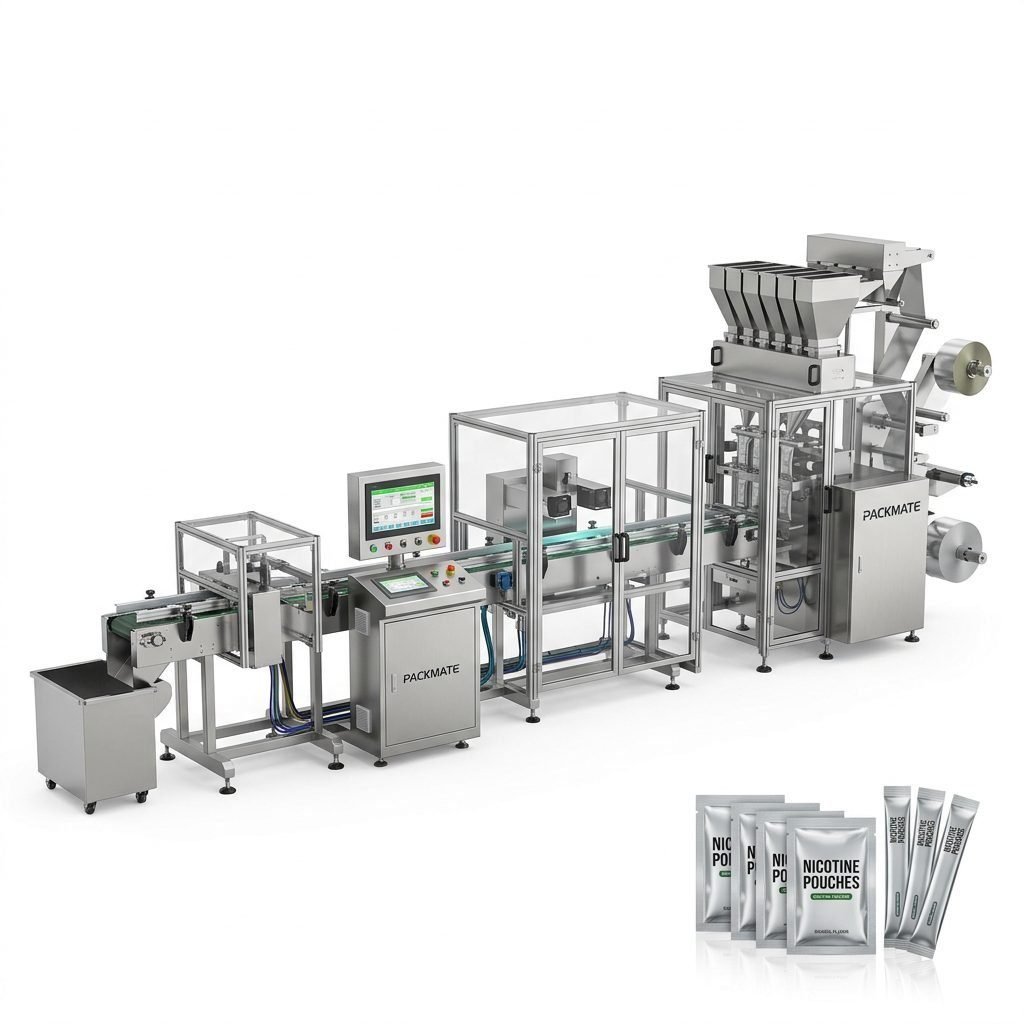
For higher automation and reduced manual handling, consider a complete filling and packaging line that includes weighing, dosing, pouch forming, sealing, and secondary packaging. Integrated lines reduce labor, minimize contamination risk, and simplify quality tracking across the production cycle. See examples of complete lines for reference at Filling & Packaging Lines.
Start with a modular approach: secure a reliable primary packaging machine now and add multi-lane or automation features as volumes grow.
Calculate Output Needs and Machine Speed
Match machine speed to realistic production goals rather than theoretical maximums. A machine rated at 300 pouches/min may not provide that rate with viscous or sticky products, or if frequent flavor changeovers are required. Consider peak demand, average daily output, and downtime for maintenance and cleaning when specifying machine speed.
Production Example
If your target is 1,000,000 pouches per month with 22 working days, you’ll need around 4,545 pouches/day. If a machine actually runs at 200 pouches/min (allowing for setup and stops) and operates 8 hours/day, it produces about 96,000 pouches/month — plan accordingly for the number of shifts or parallel lanes required.
Material Compatibility and Packaging Film Choices
The film materials (PET/PE, laminated films, barrier foils) affect sealing temperature, seal integrity, and oxygen/moisture barrier. Ensure the machine’s sealing system supports your selected films and that your quality team tests seal strength and barrier performance under realistic storage conditions.
Incorrect film selection is a common source of rejects and recalls. Ask suppliers for successful case studies using your film type or request test runs.
Automation, Controls and Integration
Consider HMI quality, recipe storage, servo-driven accuracy, and industry 4.0 readiness. Modern snus machines offer recipe recall for rapid product changeovers, remote diagnostics, and data logging for traceability — vital features when scaling production or exporting to regulated markets.
Connectivity and Traceability
Look for machines that support CIP (Clean-In-Place) concepts where applicable, allow serial number/lot printing, and integrate with your ERP or MES. These features reduce errors and simplify product recalls if needed.
Quality, Testing and Regulatory Compliance in El Salvador
Even though local regulations vary, internationally certified equipment (CE, ISO) is preferred by importers and large distributors. Machines built to these standards often include safety enclosures, emergency stops, and validated processes that expedite regulatory approvals and customer audits.
If export is part of your plan, verify that the supplier provides documentation for compliance. Packmate Snus Machine, for example, lists CE and ISO compliance credentials and frequently exhibits at global trade shows — useful if you want vendor transparency: Certificate • Our Exhibition.
Layout, Utilities and Installation Considerations
Evaluate power requirements, compressed air quality and pressure, floor load, and ceiling height. Multi-lane and integrated lines may need dedicated foundations and precise leveling. Request a site survey from the manufacturer to confirm fit, and plan for ancillary equipment like metal detectors, check weighers, and carton packers.
After-Sales Support, Spare Parts and Training
Reliable local or regional support reduces downtime. Confirm the supplier offers installation support, commissioning, operator and maintenance training, and documented spare parts lists. If possible, visit the manufacturer’s factory or watch live demos — Packmate provides factory tours and case examples you can review: Case.
- Installation & commissioning support
- Operator & maintenance training sessions
- Fast access to spare parts and technical documentation
- Remote troubleshooting and software updates
Budgeting and Total Cost of Ownership
Initial purchase price is only one part of the equation. Consider energy consumption, consumables (films, inks), maintenance intervals, spare parts pricing, and expected machine lifetime. A slightly higher initial investment in a robust, modular machine often results in lower cost per pouch over time.
Selecting a Trusted Supplier — What to Ask
When evaluating suppliers, ask for: performance data from similar installations, a list of international customers, service network in Central America, on-site acceptance tests, and references you can call. A supplier with 30+ years of engineering experience and a large model range demonstrates depth — you can learn about a typical manufacturer profile here: About Packmate.
Must-have questions to the vendor
• Can you provide performance data and a video of the machine running with product similar to ours?
• What warranty and post-warranty support options exist?
• What spare parts are critical and what are lead times?
• Are there local partners for service in Central America or the nearest regional hub?
Case Study Snapshot
A medium-sized snus brand expanded into single-dose pouches and needed to triple output within 18 months. They chose a modular multi-lane system with integrated weighing and in-line checkweigher. With supplier-led commissioning and operator training, they reached target output within two months and reduced rejects by 40% through improved dosing accuracy.
Inspection and Acceptance Criteria
Before final payment, perform Factory Acceptance Tests (FAT) — or have your QA representative do so — including sealing tests, speed trials with representative film and product, checkweigher accuracy, and safety verifications. Ensure documentation for electrical diagrams, pneumatic schematics, and spare parts lists are included.
Production target • Product compatibility • Automation level • Compliance & certification • After-sales support • TCO analysis
Additional Resources and Machine Families
If you want to explore machine families and auxiliary equipment, see these product groups for inspiration and technical specifications: Snus & Nicotine Packaging Machines, Bag & Pouch Packaging Machines, and Auxiliary Packaging Equipment. These pages show typical configurations and integration options.
Final Recommendations
1) Begin with a clear product specification and realistic production profile.
2) Prioritize machines that allow modular upgrades (lanes, automation modules).
3) Validate film compatibility and perform FAT with your actual product.
4) Choose suppliers with proven global turnkey experience and accessible service networks.
5) Factor lifecycle costs, not only purchase price.
Frequently Asked Questions
Q1: What is the best machine type for small-scale snus brands?
For small batches and frequent flavor changes, stick pack or single-lane sachet machines offer flexibility and lower initial investment. Ensure the machine handles your dosing accuracy and film choice.
Q2: How important is multi-lane technology?
Multi-lane systems multiply throughput without requiring additional floor space for full parallel lines, making them ideal when volume growth is anticipated and space is constrained.
Q3: What after-sales services should I demand?
Request installation, operator and maintenance training, spare parts lists, uptime guarantees, and remote diagnostic support. Local or regional service partners greatly reduce response times.
Q4: Can I see references or factory tours?
Reputable manufacturers provide case studies, FAT videos, and factory visits or virtual tours. For more information on a manufacturer’s history and factory capabilities, see About Packmate.
Q5: Where can I find product catalogs and technical specifications?
Manufacturers typically offer catalogs and datasheets for download. Check the product catalogs and specific machine product pages like Sachet & Stick Pack Machines for model comparisons and technical details.