Entering or expanding a nicotine pouch or snus production line in Thailand means choosing the right packaging machinery for consistent product quality, regulatory compliance, and efficient throughput. This guide walks production managers, engineers, and procurement teams through the practical steps to select the best nicotine packaging machinery for your factory — from machine types and output targets to supplier evaluation and after-sales support.
Understand the Thai market and regulatory landscape
Thailand’s tobacco and nicotine-related regulations influence how products are packaged, labeled, and transported. Before specifying equipment, verify local labeling requirements, material restrictions, and any customs or import rules that affect machinery or raw materials. Working with a supplier who understands international standards (CE, ISO) and global nicotine packaging trends reduces compliance risk.
Key compliance considerations
• Ensure machinery supports tamper-evident features and precise label placement.
• Confirm equipment and electrical components meet local safety standards and can be certified if needed.
• Plan for traceability: many markets require batch codes and lot tracking printed on pouches or cartons.
Tip: Choose machines compatible with automated printing and inspection modules so you can add serialization or anti-counterfeit marks without extensive retrofitting.
Match machine type to product format and throughput
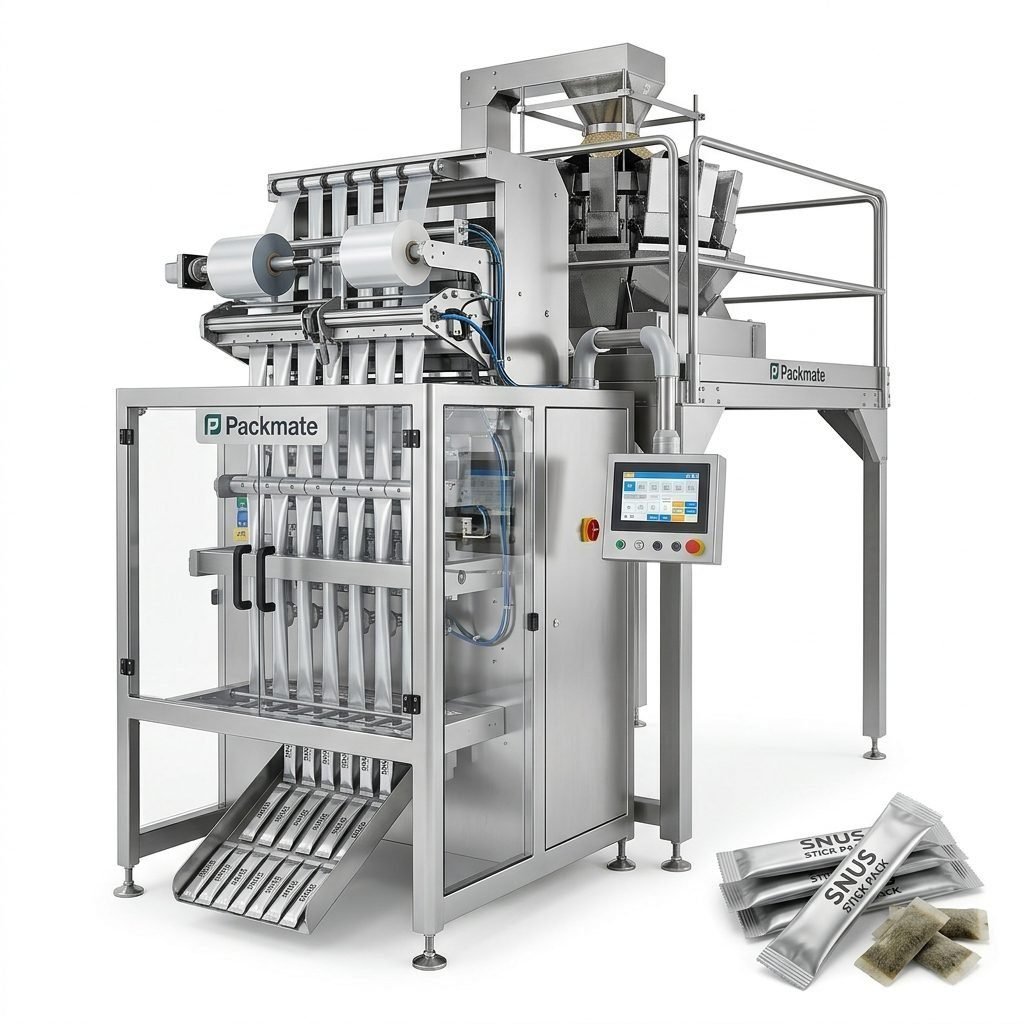
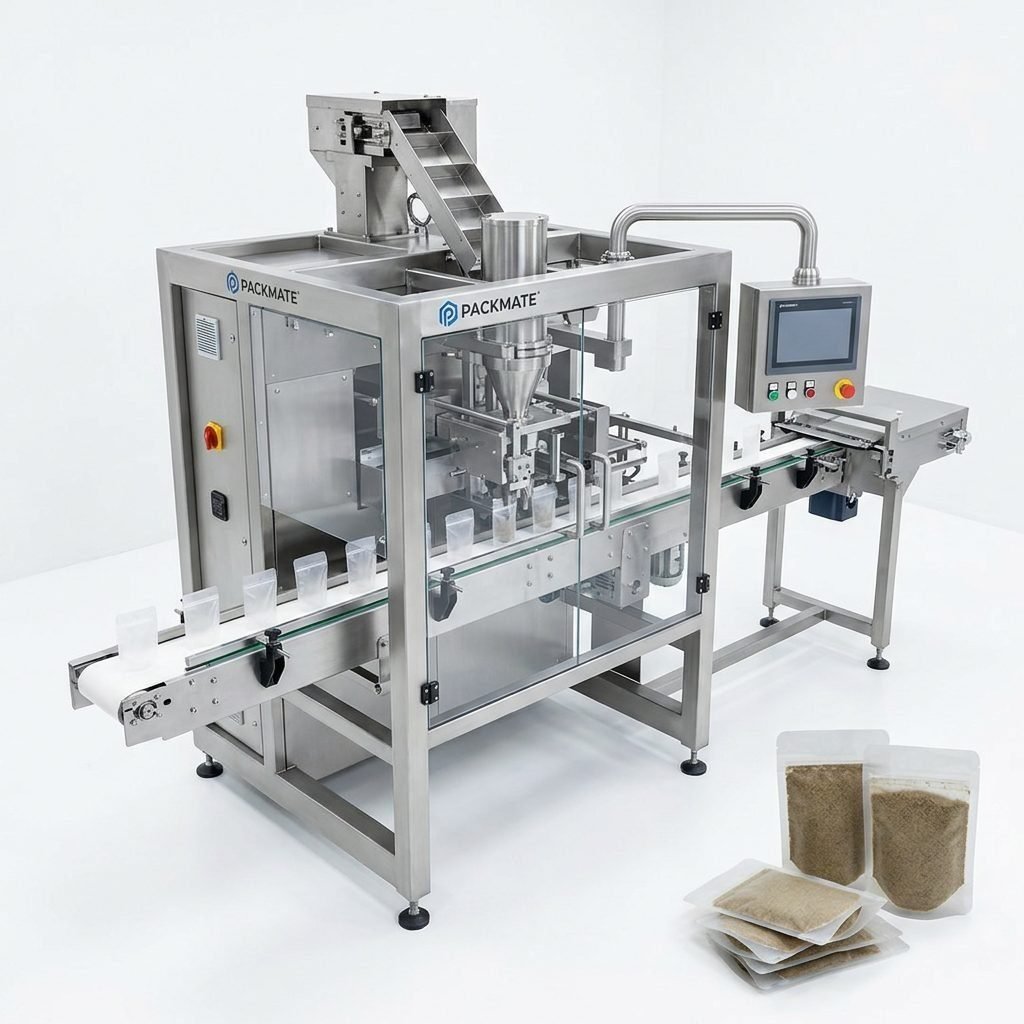
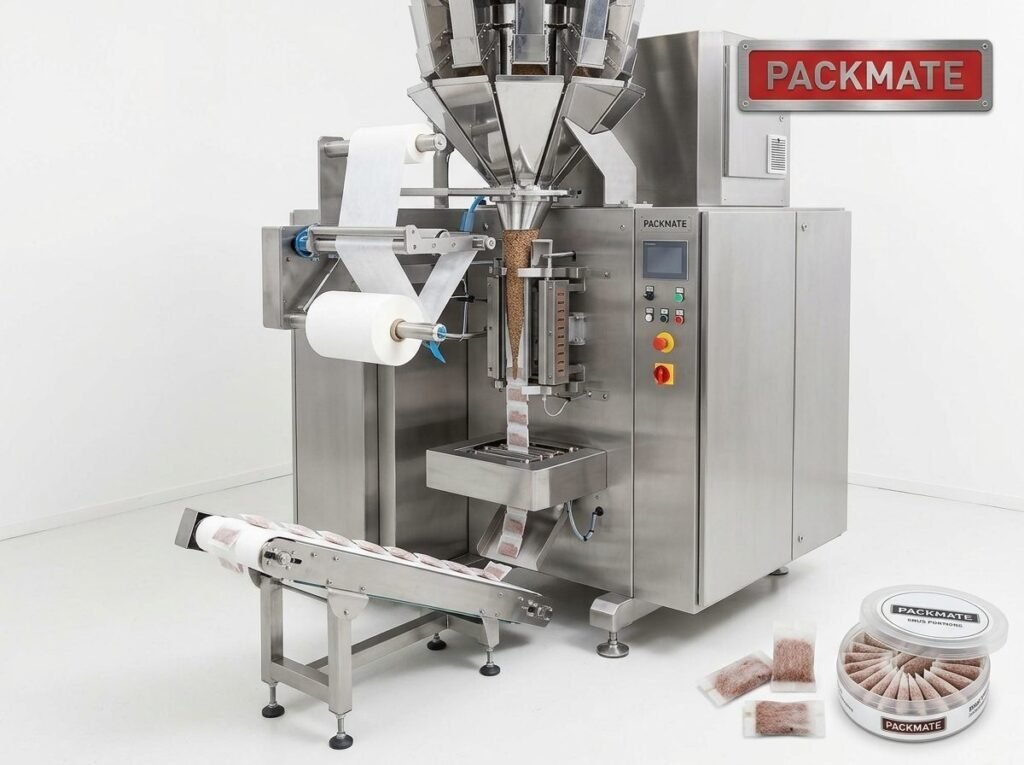
Nicotine pouches and snus products are packaged in a variety of formats: stick packs, sachets, small pouches, multi-lane strips, or pre-formed cups. Choosing the right base machine determines production speed, space requirements, and downstream processing.
Common machine families
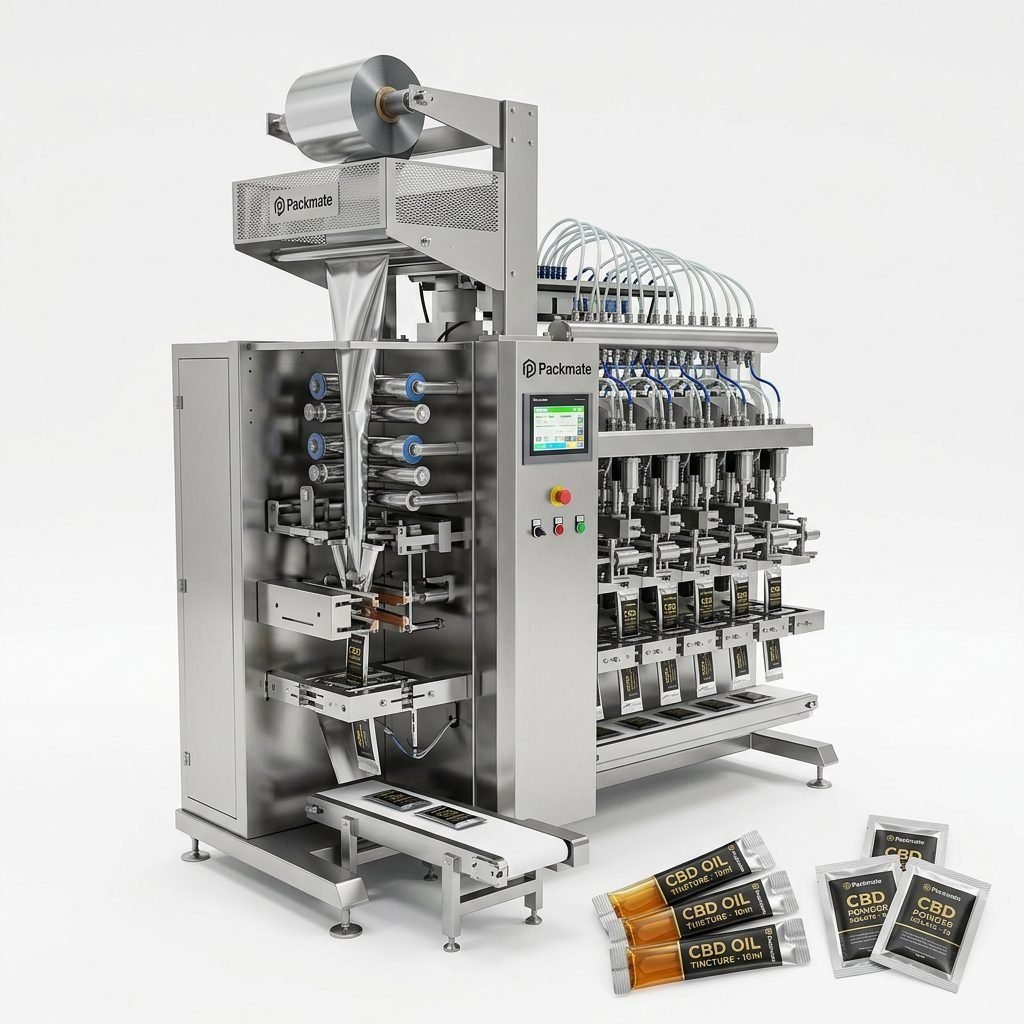
• Sachet & Stick Pack Machines for individual-dose packaging — ideal for single-portion products. See examples for high-speed stick and sachet solutions. Sachet & Stick Pack Machines
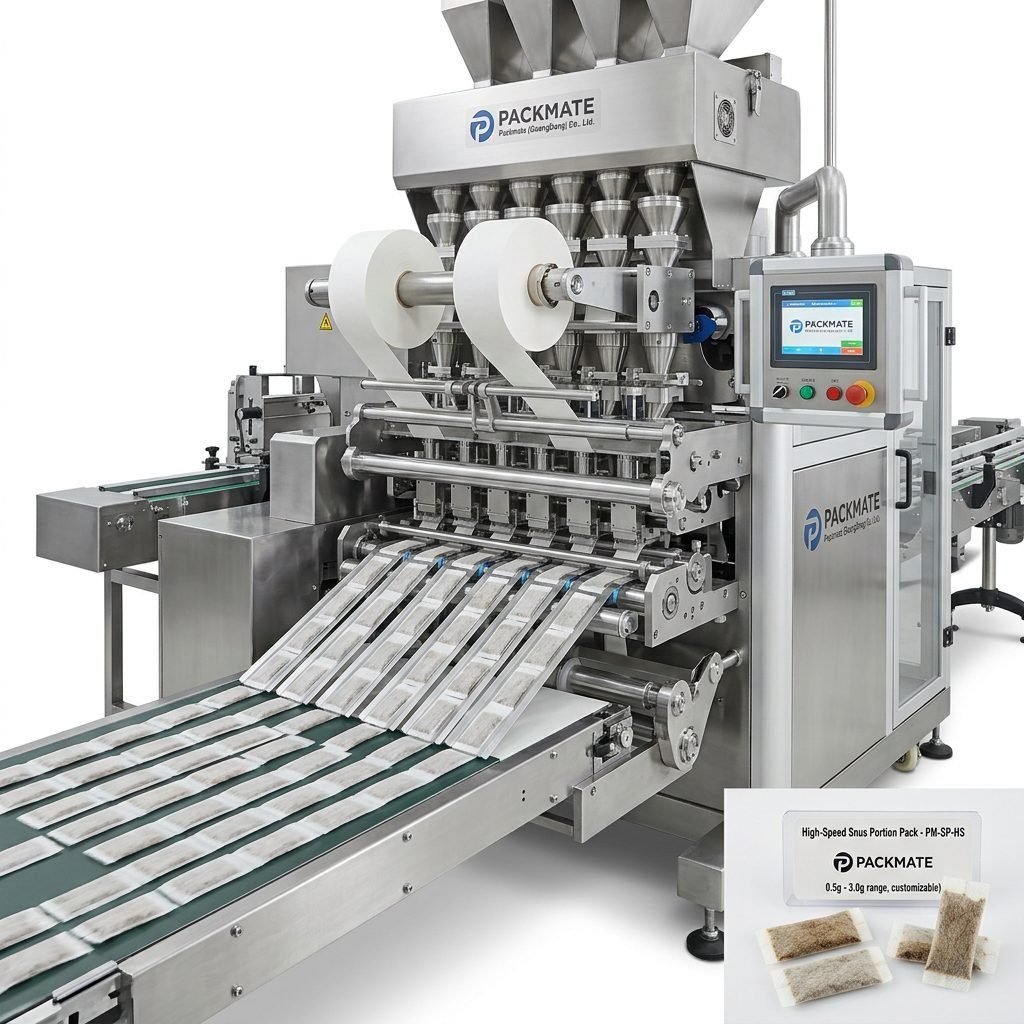
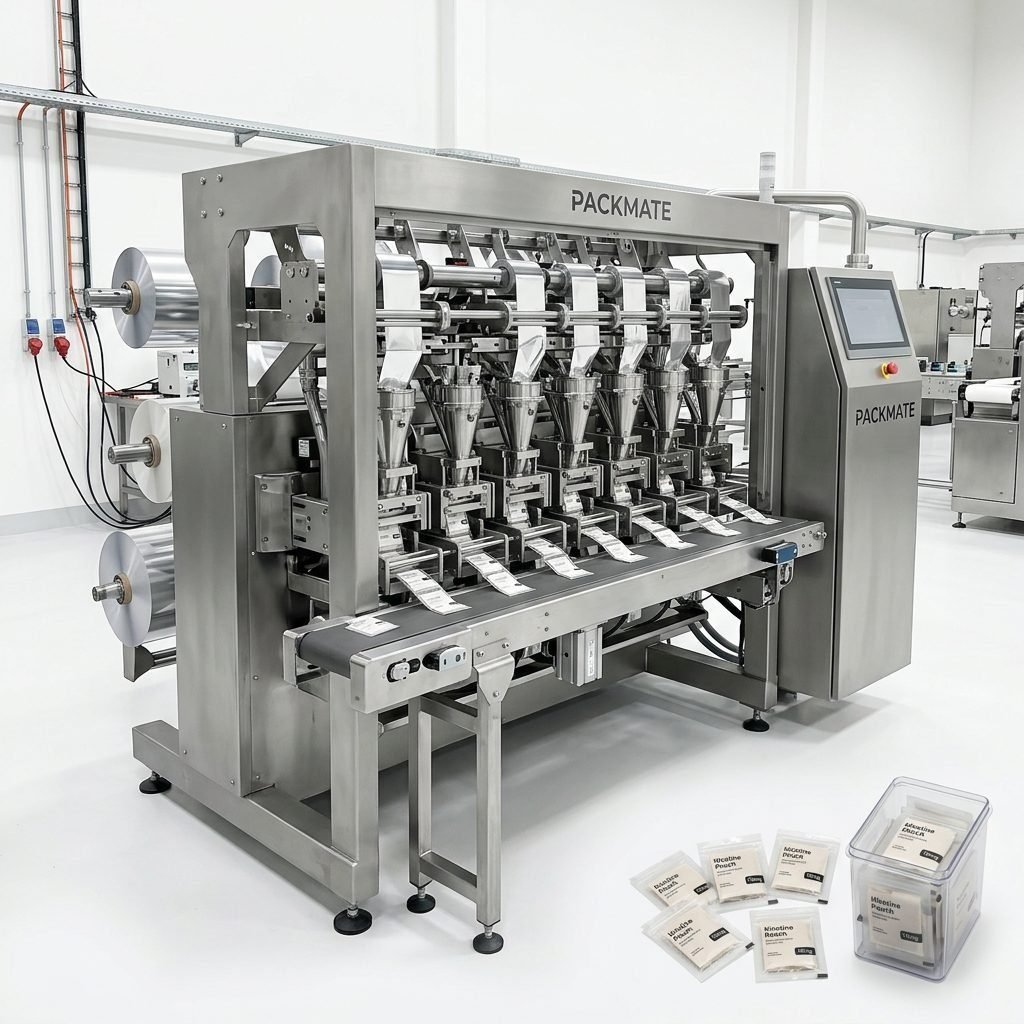
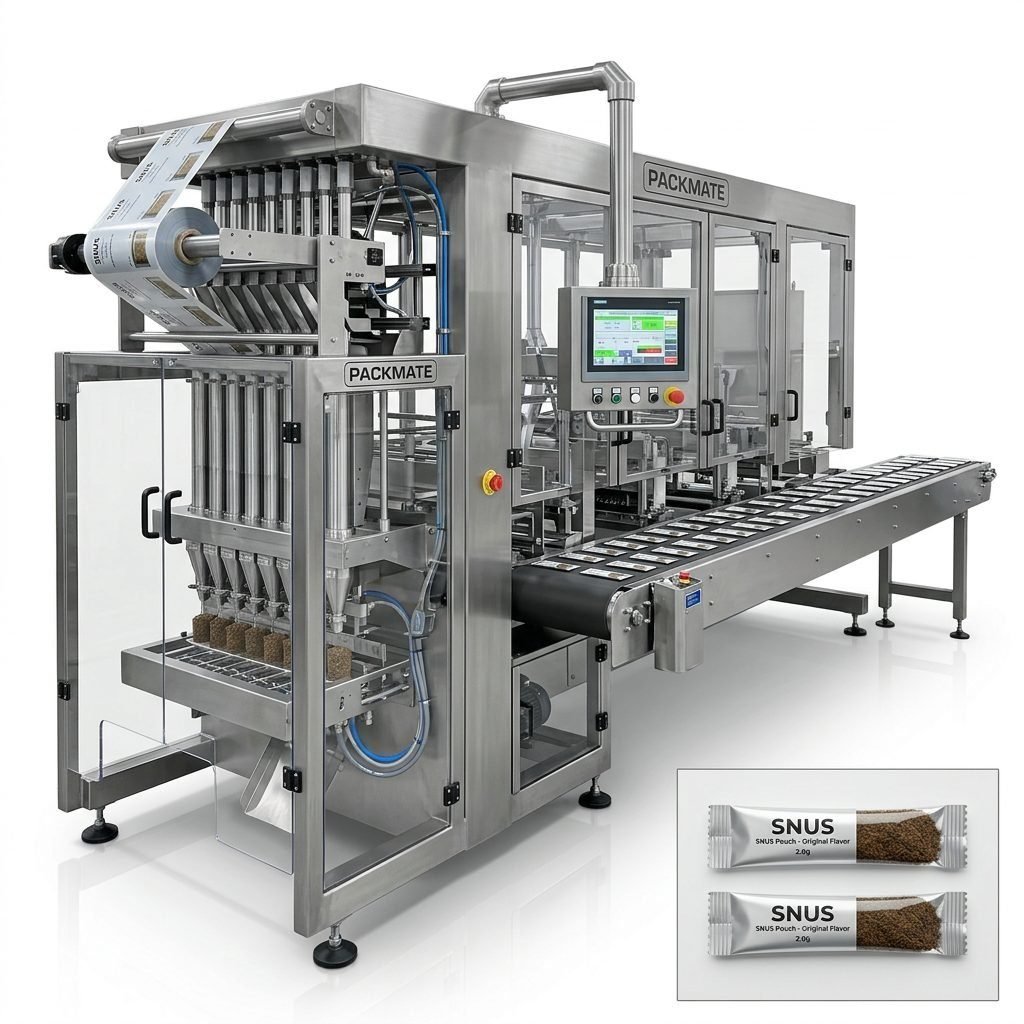
• Multi-lane Snus / Nicotine Packaging Machines for small-dose pouches — best for compact product designs and very high throughput. Snus & Nicotine Packaging Machines
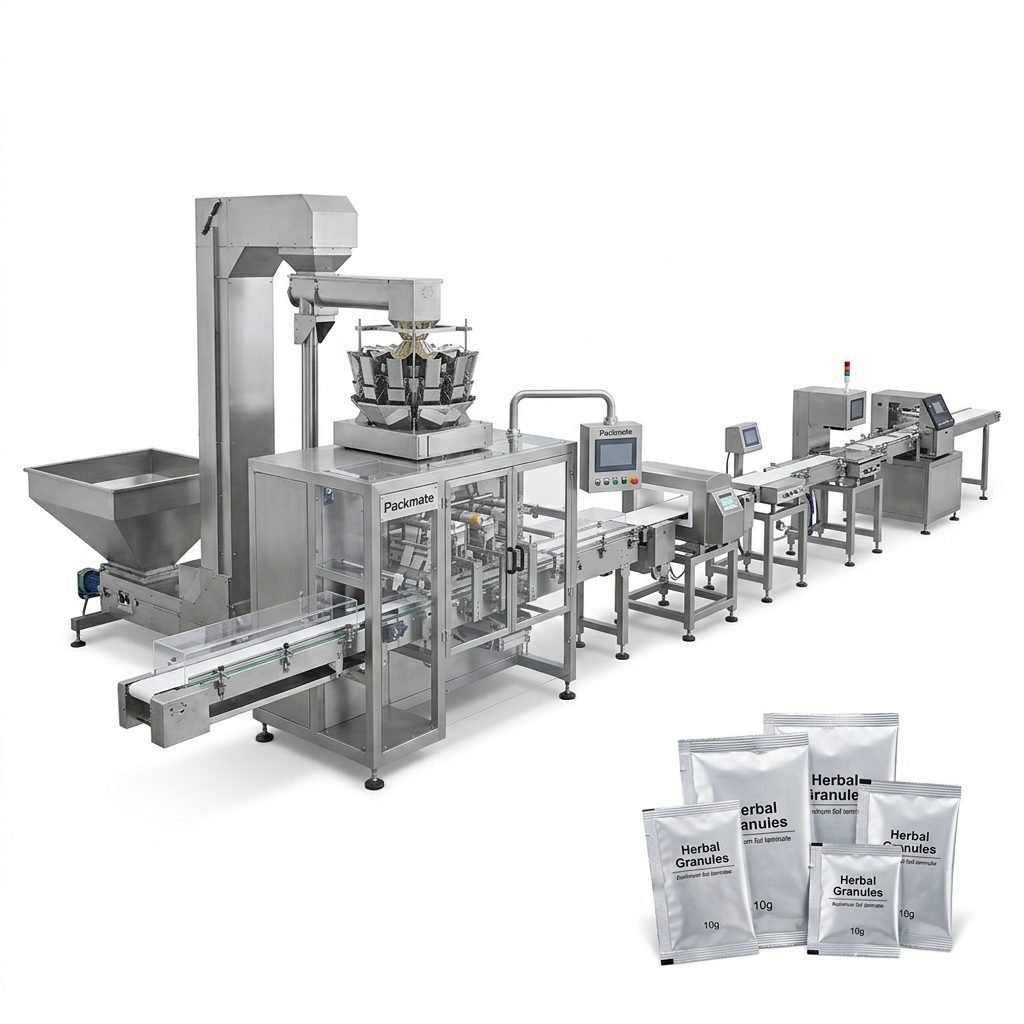
• Filling & Packaging Lines that integrate dosing, sealing, and outer packing for a turnkey solution. Filling & Packaging Lines
Quick guide: If your target is >100,000 pouches/day, prefer multi-lane systems; for more flexible SKUs and lower volumes, sachet/stick pack machines may be optimal.
Capacity, speed and OEE — realistic production targets
Define production KPIs: nominal speed (pouches/min), expected uptime, changeover time, and overall equipment effectiveness (OEE). Don’t select machines just by maximum speed; evaluate sustained speeds under real operating scenarios with material variability and operator shifts.
Questions to answer
• What is your daily/weekly target output?
• How many SKUs and format changes per day will you run?
• Do you need room for future capacity expansion or parallel lines?
Material compatibility and pouch structure
Nicotine pouch materials vary in film structure, thickness, and barrier requirements. Machines should handle your chosen film types (single- or multi-layer laminates), dosing medium (powder, granule, fiber), and sealing requirements (hot seal, ultrasonic, or crimp).
Evaluate test runs with your exact film and product. Request sample runs or pilot tests from suppliers to verify seal integrity, pouch shape, and dosing accuracy. Suppliers with in-house testing facilities or demo lines offer a major advantage.
Automation, integration and Industry 4.0 readiness
Modern packaging lines benefit from integrated weighing, metal detection, vision inspection, and PLC/SCADA control for production monitoring. Ask about standard interfaces for MES or ERP systems and data logging capabilities to analyze downtime and throughput.
Must-have features: remote diagnostics, recipe memory for quick SKU changeover, and automatic fault alarms to minimize stoppages.
Evaluating suppliers — beyond the machine specs
A reliable supplier provides experienced engineering support, spare parts availability, and training. Check the manufacturer’s track record, factory capability, certifications (CE, ISO), and presence at exhibitions or customer references. Packmate Snus Machine, for example, lists multi-decade engineering experience, a 20,000㎡ facility, and multiple machine models — useful indicators when vetting vendors. About Packmate
Questions to ask potential vendors
• Can you provide customer case studies or arranged visits? Case
• What is lead time for delivery and installation?
• How is spare parts stocked and shipped to Thailand?
• What training and commissioning services are included?
Cost of ownership: CAPEX and OPEX considerations
Purchase price is only part of the equation. Calculate total cost of ownership including installation, electrical and utility upgrades, spare parts, consumables, maintenance labor, and energy consumption. High-efficiency machines often deliver lower OPEX despite higher initial CAPEX.
Financial checklist: compute ROI for realistic throughput and factor in spare part lead times (especially for overseas suppliers).
Installation, training and commissioning
Professional installation ensures machine alignment, utility hookups, and calibration. Confirm whether the vendor offers onsite commissioning in Thailand and operator/maintenance training. A vendor that provides comprehensive start-up support reduces ramp-up time and production risk.
After-sales service and spare parts strategy
Fast access to critical spare parts can be the difference between a few hours and multiple days of downtime. Ensure the supplier has an agreed SLA for parts shipping and remote troubleshooting. Consider stocking consumables like sealing jaws, belts, and sensors locally.
Remote support and training
Remote diagnostics, video troubleshooting, and scheduled virtual training sessions are cost-effective ways to maintain uptime. Confirm the vendor’s service packages and pricing for extended support.
Factory layout and utilities planning
Plan your plant layout to include material staging, infeed conveyors, metering stations, packaging machines, inspection, and packing lines. Verify compressed air requirements, electrical distribution, and exhaust or dust-collection needs. Machines with compact footprints and modular design offer flexibility for future reconfiguration.
Case study: small-dose nicotine pouch line
A mid-sized manufacturer in Southeast Asia needed a multi-lane pouch line with integrated dosing, sealing, and carton packing. After piloting a multi-lane snus packaging machine, they achieved stable production at target throughput, and the modular design allowed a second lane to be added six months later with minimal downtime.
Suppliers like Packmate offer industry-specific experience in snus and nicotine pouch systems and can provide turnkey solutions — from individual machines to full automated lines — which reduces integration risk. Snus & Nicotine Packaging Machines
Pre-purchase checklist — 12 essential questions
1. What is your realistic daily production target? 🔧
2. Which pouch format(s) will you produce and how often will you change SKUs? 🔁
3. Are your films and fillers compatible with the proposed sealing and dosing systems? 🧪
4. Does the supplier offer pilot runs or sample testing? ✅
5. What is the lead time for delivery, installation, and training? ⏱️
6. What warranties and spare-part guarantees are provided? 🛠️
7. Is remote support and troubleshooting included or available? 💻
8. Can the machine integrate with your MES/ERP? 🖥️
9. What spare parts should be stocked locally and why? 📦
10. How energy-efficient is the proposed equipment? ⚡
11. What are the noise, dust, and safety implications onsite? ⚠️
12. Are there references or factory tours available?
Supplier highlight: check manufacturer certifications and exhibition participation for credibility. Visit their exhibition page or request live demos. Our Exhibition
Implementation timeline and milestones
A realistic implementation plan includes ordering and manufacturing lead time, shipping and customs, onsite installation, mechanical and electrical commissioning, trial runs, operator training, and final acceptance testing. Build contingency time into each phase to mitigate delays.
Sustainability and environmental considerations
Choose energy-efficient drives, low-waste film handling, and easy-to-clean designs to reduce material loss and environmental impact. Some suppliers support recyclable film formats and optimized packaging to minimize material use.
Final procurement tips
• Use pilot runs to validate performance before full acceptance.
• Negotiate a service package and spare-parts list in the contract.
• Consider phased investment: start with a core line and add modules later.
• Verify local installation partners or the supplier’s presence in the ASEAN region for faster response.
If you want more technical details or a turnkey quotation, contact the manufacturer’s sales team to share product specs, desired outputs, and site constraints. A well-vetted supplier will provide engineering drawings, power requirements, and a clear timeline to help your planning. Contact Us
Conclusion
Selecting the best nicotine packaging machinery in Thailand requires a balance of product-fit, supplier reliability, compliance readiness, and total cost of ownership. By defining production targets, validating materials, demanding pilot testing, and ensuring robust after-sales support, you can minimize risk and maximize uptime. Choosing an experienced supplier with turnkey capabilities will accelerate ramp-up and secure long-term operational performance.
Frequently Asked Questions
Q1: How long does it take to install a multi-lane snus packaging line?
A1: Typical installation and commissioning vary by complexity but expect 4–10 weeks after delivery for full mechanical, electrical, and control commissioning plus trial runs.
Q2: Can machines handle multiple pouch materials and weights?
A2: Most modern lines are designed to be flexible; however, you should request material compatibility tests and recipe settings to confirm performance across your chosen films and dosing ranges.
Q3: What spare parts should be stocked locally in Thailand?
A3: Keep critical wear parts on hand: sealing jaws, belts, sensors, PLC modules, and any custom tooling. The supplier can recommend a tailored spare-parts kit.
Q4: Does the supplier offer pilot production or sample runs before purchase?
A4: Reputable manufacturers provide pilot testing or sample runs — request documented results and video evidence of the trial. See available product lines and testing services. Weighing & Packaging Systems
Q5: How do I ensure regulatory compliance for labeling and serialization?
A5: Integrate printing and vision-inspection modules into the line and work with a supplier experienced in global compliance to implement batch coding, barcodes, or 2D codes as required.