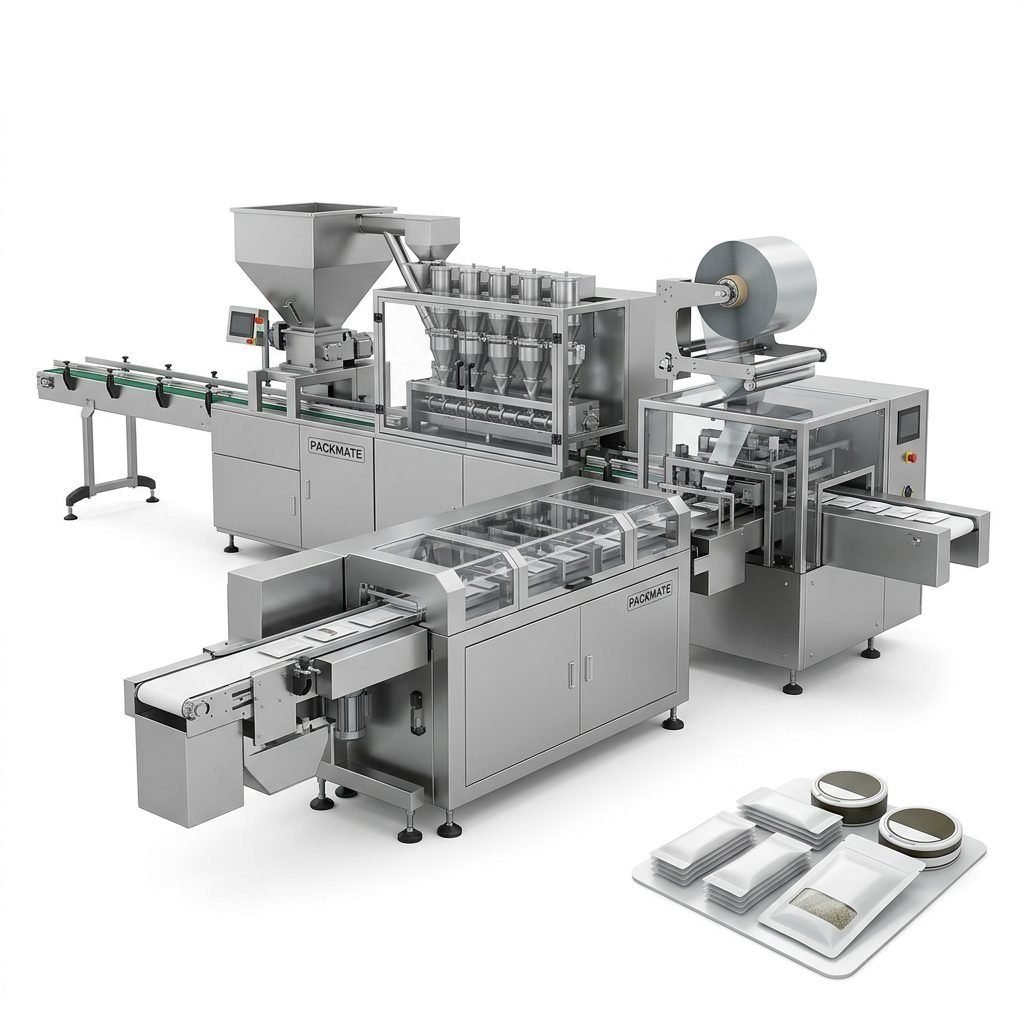
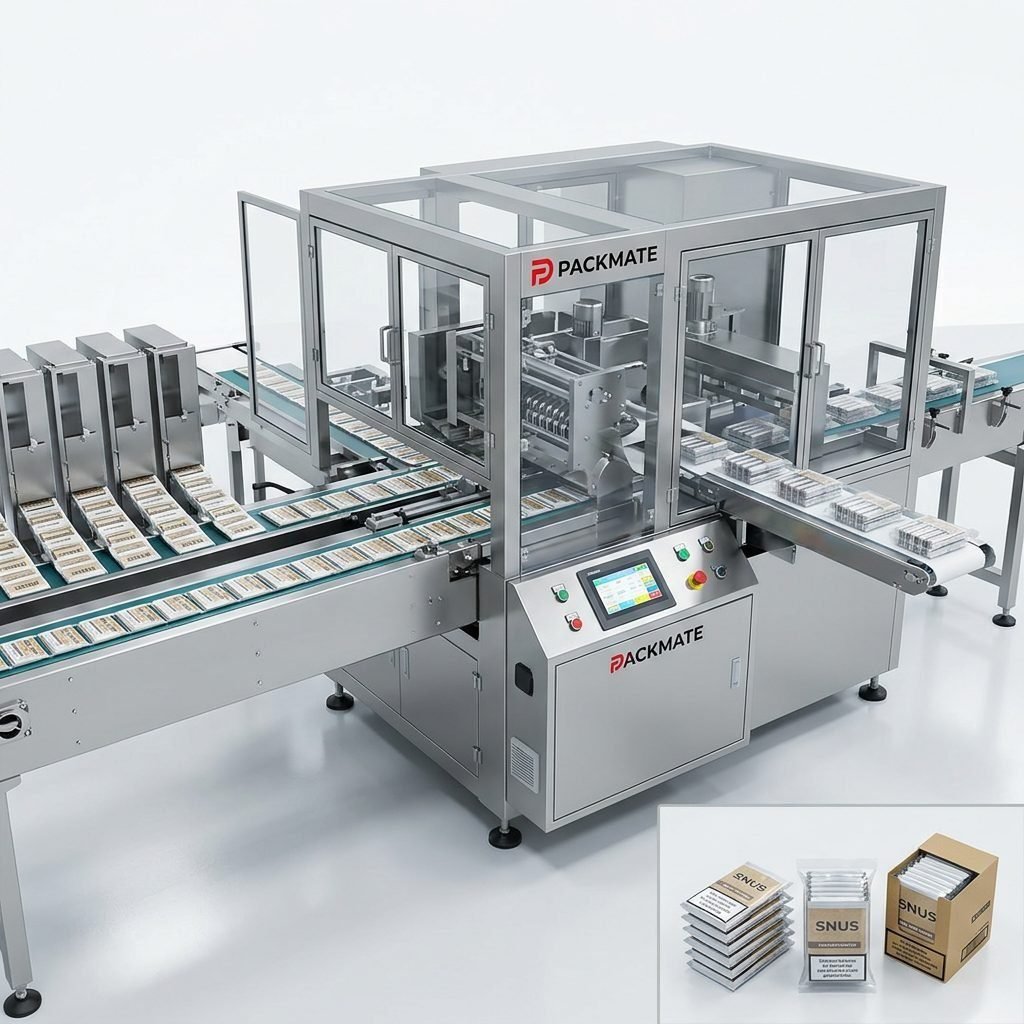
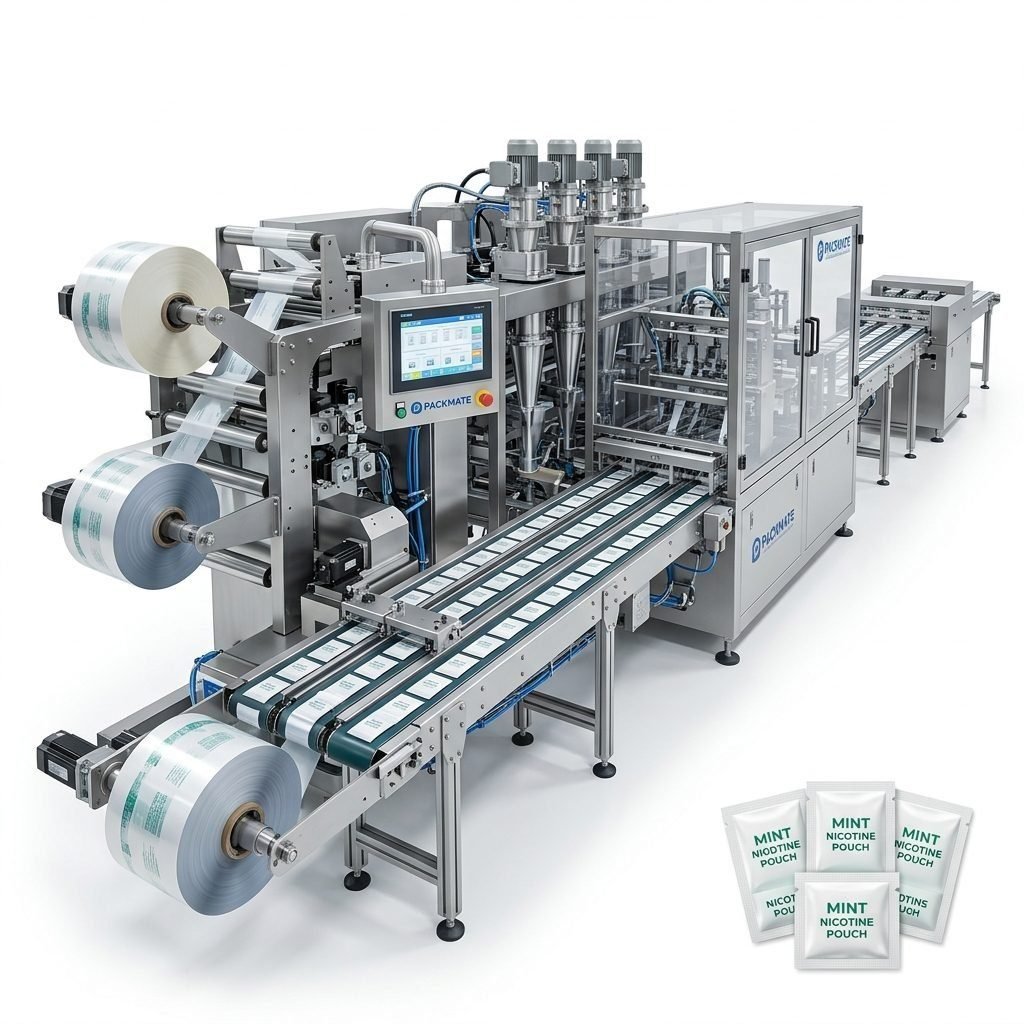
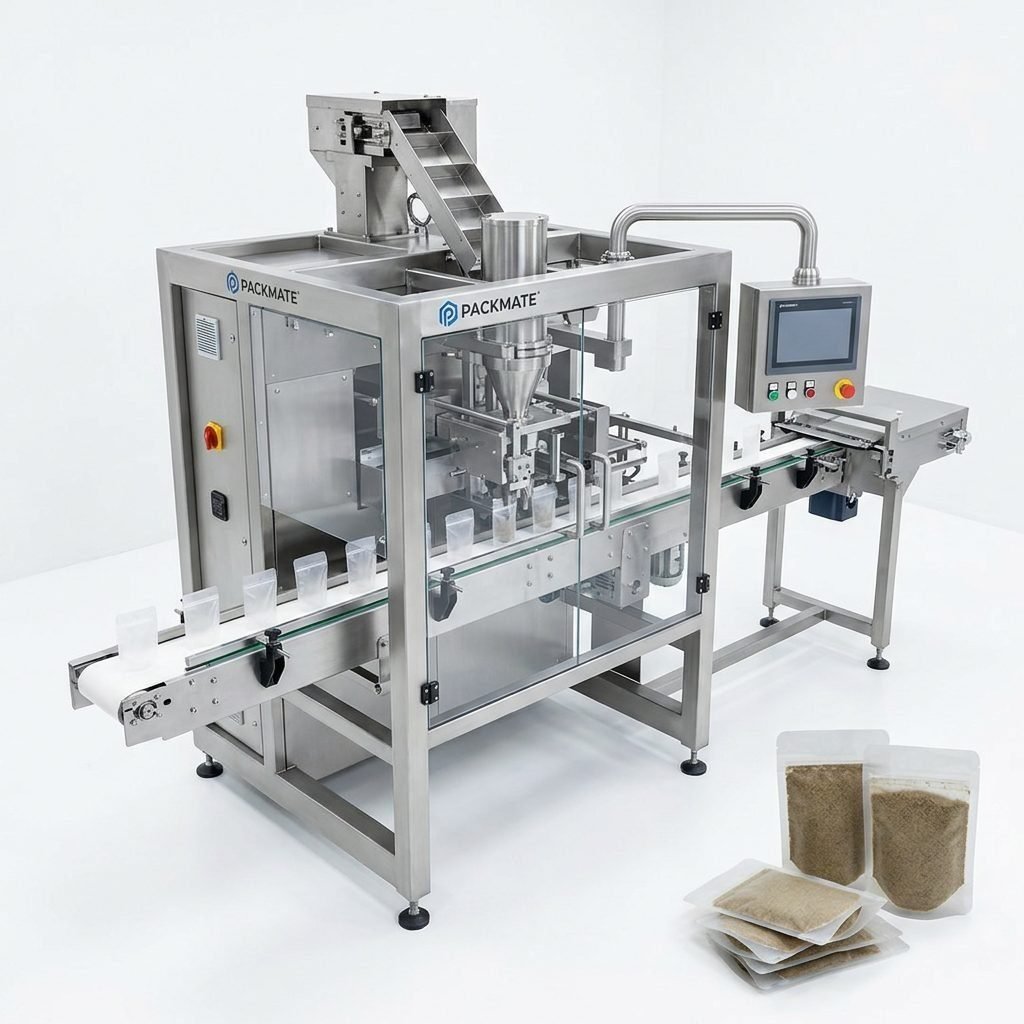
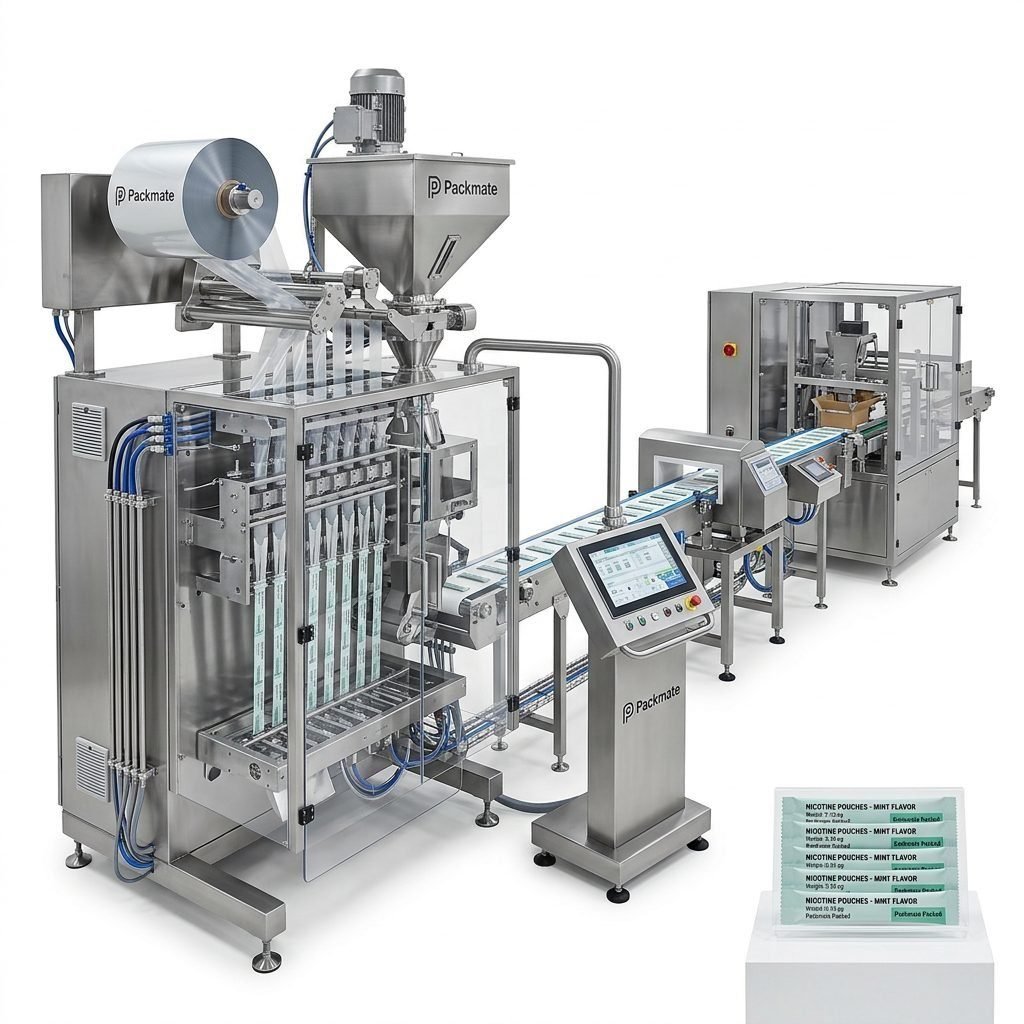
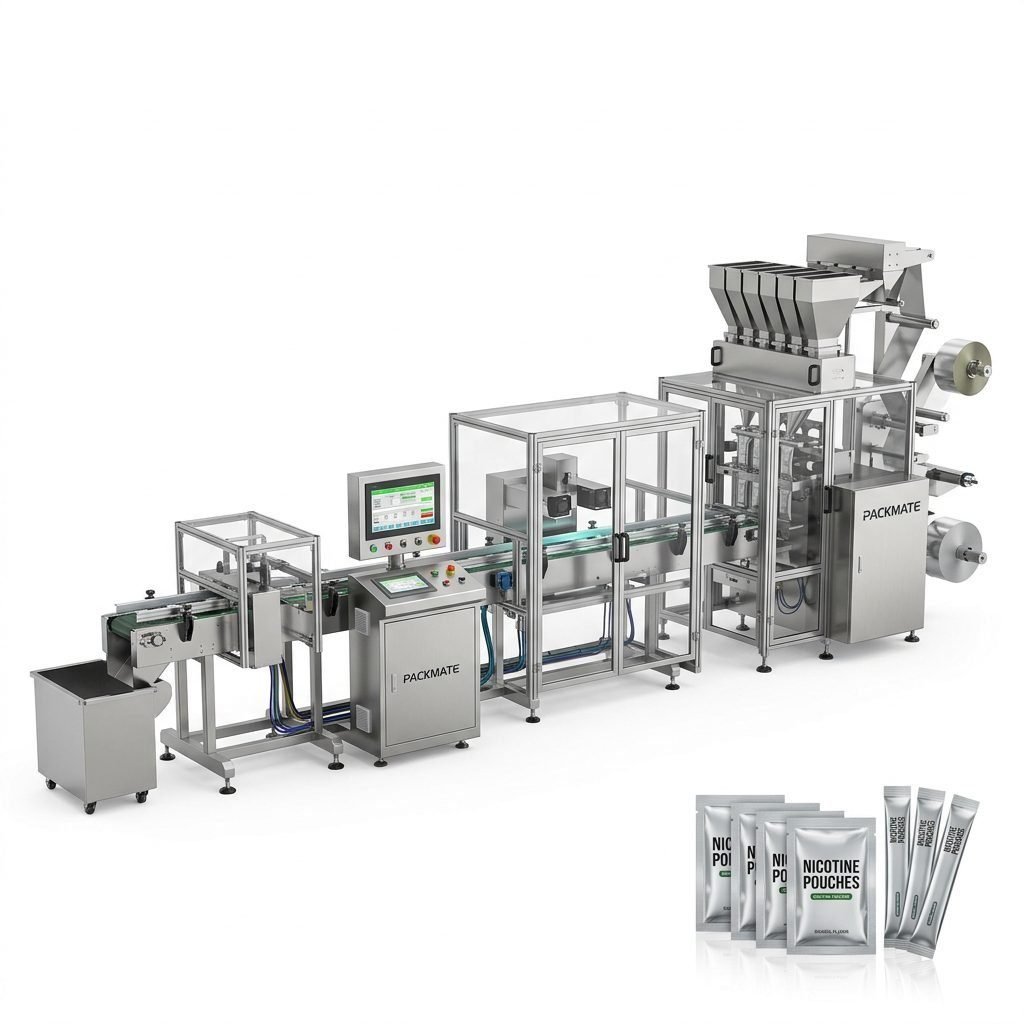
Choosing the right nicotine packaging machinery in Japan requires a careful balance of technical performance, local regulatory awareness, production planning, and long-term service support. This guide walks manufacturing decision-makers through practical steps to evaluate and select high-performance snus and nicotine pouch packaging equipment that fits Japanese market habits, hygiene expectations, and production objectives.
Understand the Japanese market context and consumer habits
Japan’s consumers prioritize high product quality, discreet packaging, and compliance with strict safety and labeling rules. In urban retail environments and vending channels, neat single-dose pouches or multi-pouch packs are preferred for portability and discretion. For manufacturers, this translates into a need for packaging lines that deliver consistent sealing, precise dosing, and visually flawless packs at medium to high speeds.
Focus on machines that guarantee hygiene, precise weight control, and clean sealing—attributes highly valued by Japanese distributors and retailers.
Local regulations and compliance considerations
Regulations around nicotine products can be strict and region-specific. Ensure your equipment and process documentation support traceability, cleanroom or GMP-adjacent workflows, and easy cleaning protocols. Machines with CE and ISO certifications are easier to validate during internal audits and third-party inspections.
Define your production needs before selecting a machine
Start by listing concrete production targets: required output per shift, pouch format(s), dose accuracy, allowable downtime, integration with upstream/downstream equipment, and future expansion plans. Accurate requirements stop overspecification that inflates cost, and prevent underpowered systems that limit growth.
Production planning checklist
🔧 Expected daily / monthly production capacity
🔧 Pouch types: single-dose nicotine pouches, snus sachets, stick packs, or multi-lane strips
🔧 Dose range and weighing precision (mg accuracy required)
🔧 Required packaging materials (barrier films, lidding, foil, paper) and sealing types
🔧 Desired automation level: manual feeding vs. fully automated lines
For manufacturers in Japan, consider compact multi-lane machines to save floor space while maintaining high throughput for urban facilities where real estate is costly.
Compare machine types and configurations
There are several machine architectures commonly used for nicotine pouch packaging. Each has pros and cons depending on product form, dose, and speed requirements:
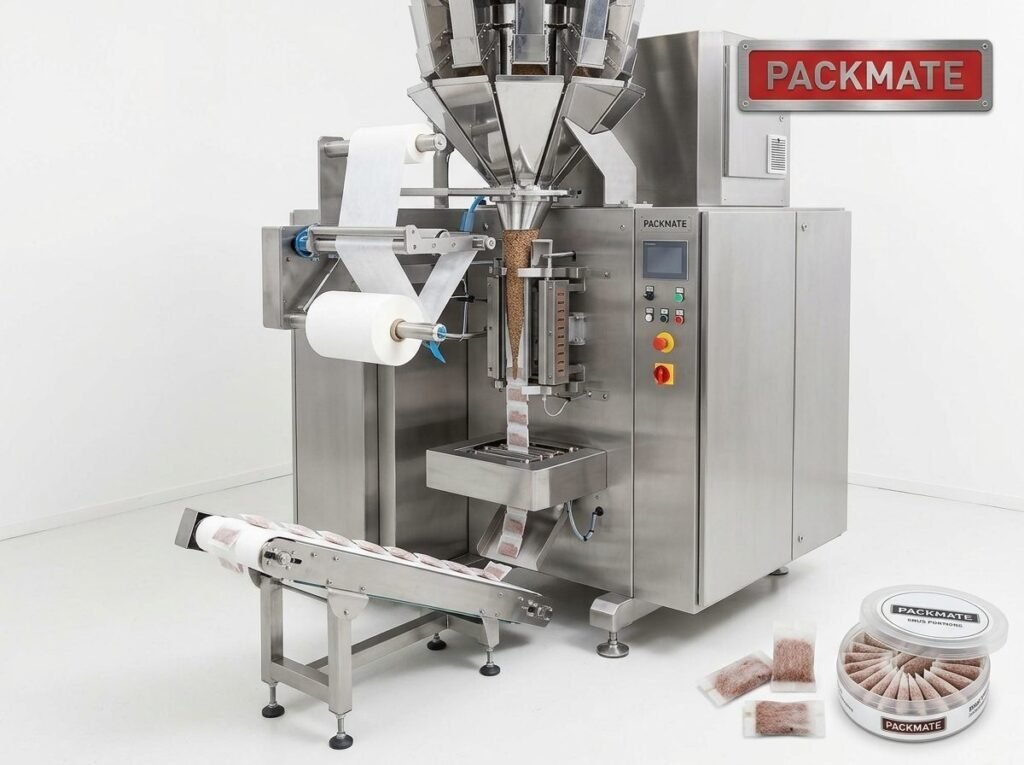
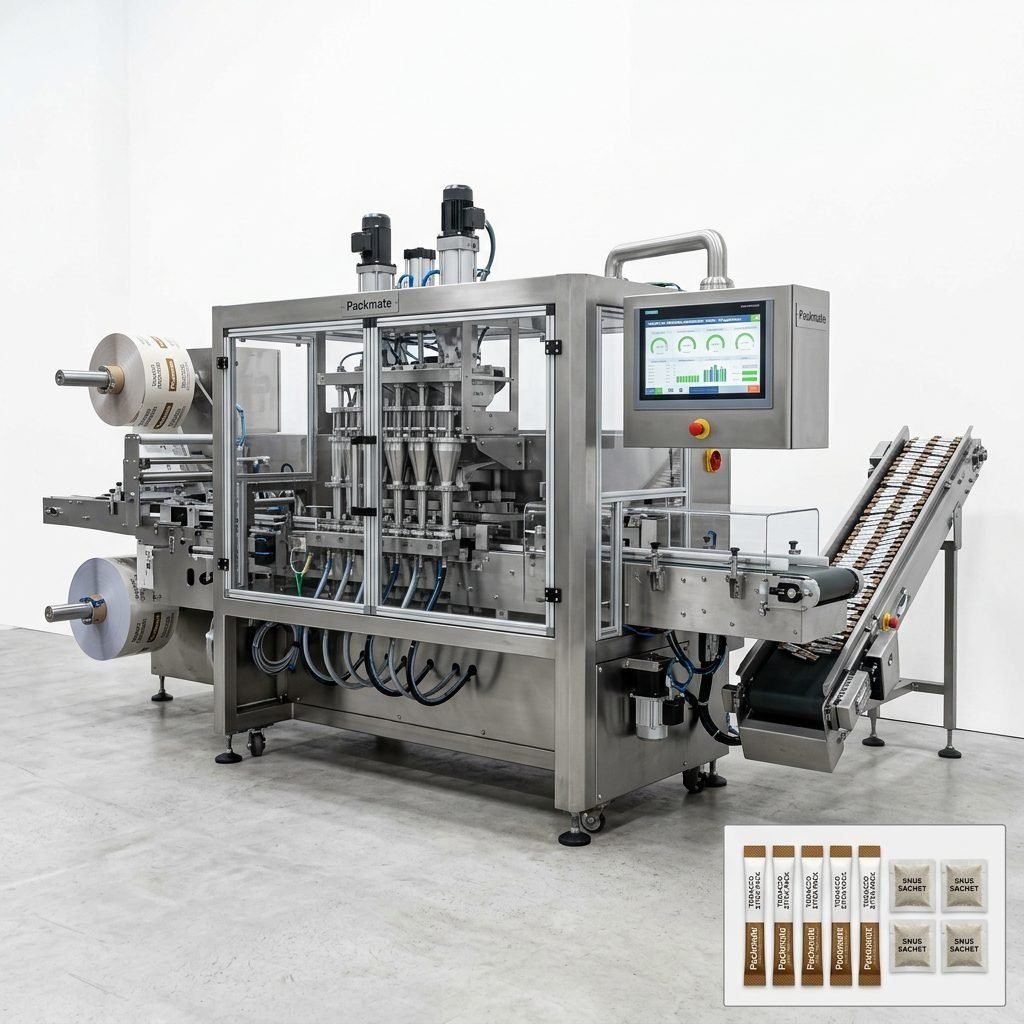
Stick pack machines
Stick pack systems are suitable for single-portioned products. They are compact and can run at high speeds for simple, single-dose pouches. If your Japanese product positioning emphasizes single-use convenience, a high-precision stick pack line can be ideal.
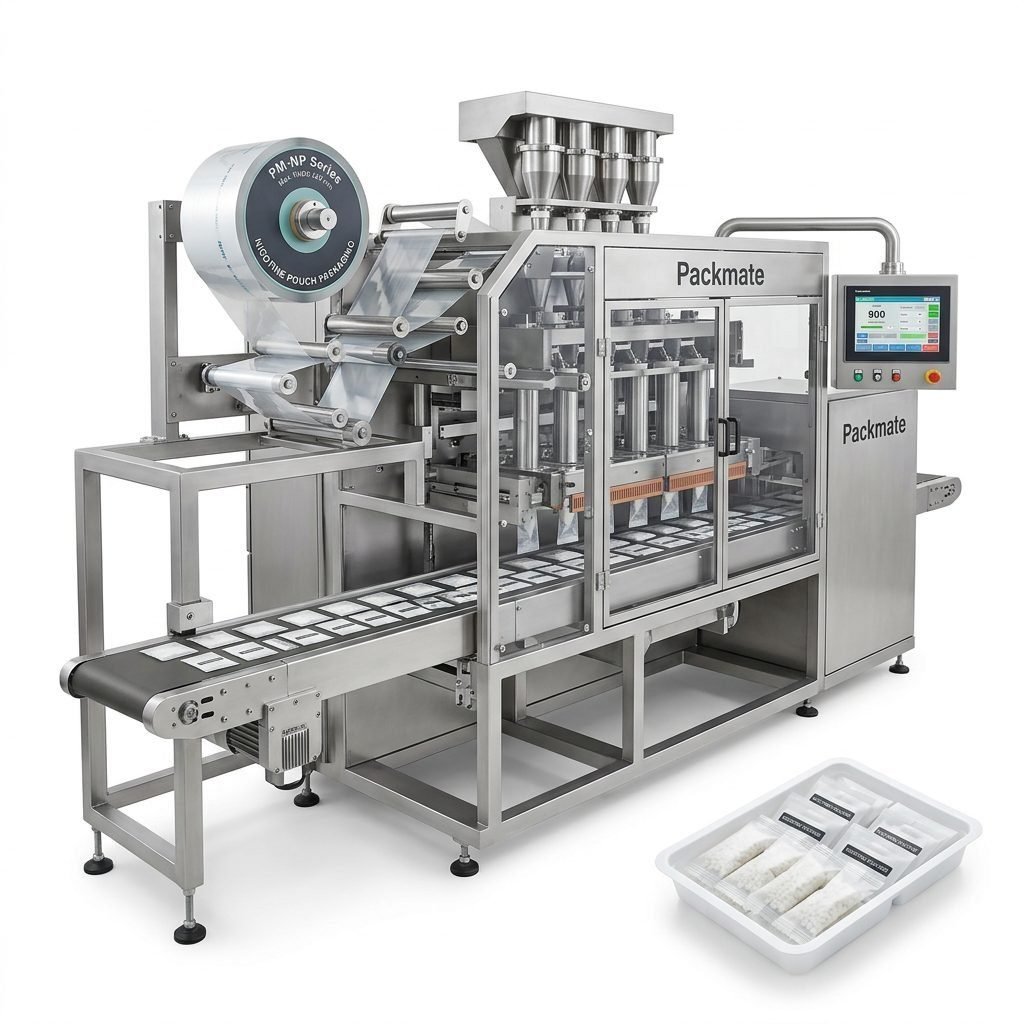
Sachet and pouch machines (including snus)
Sachet and pillow pouch machines can handle a variety of fill materials from powders to moist pouches. Look for machines engineered for small-dose stability and moisture control—especially important for nicotine pouches that must maintain consistent texture and flavor.
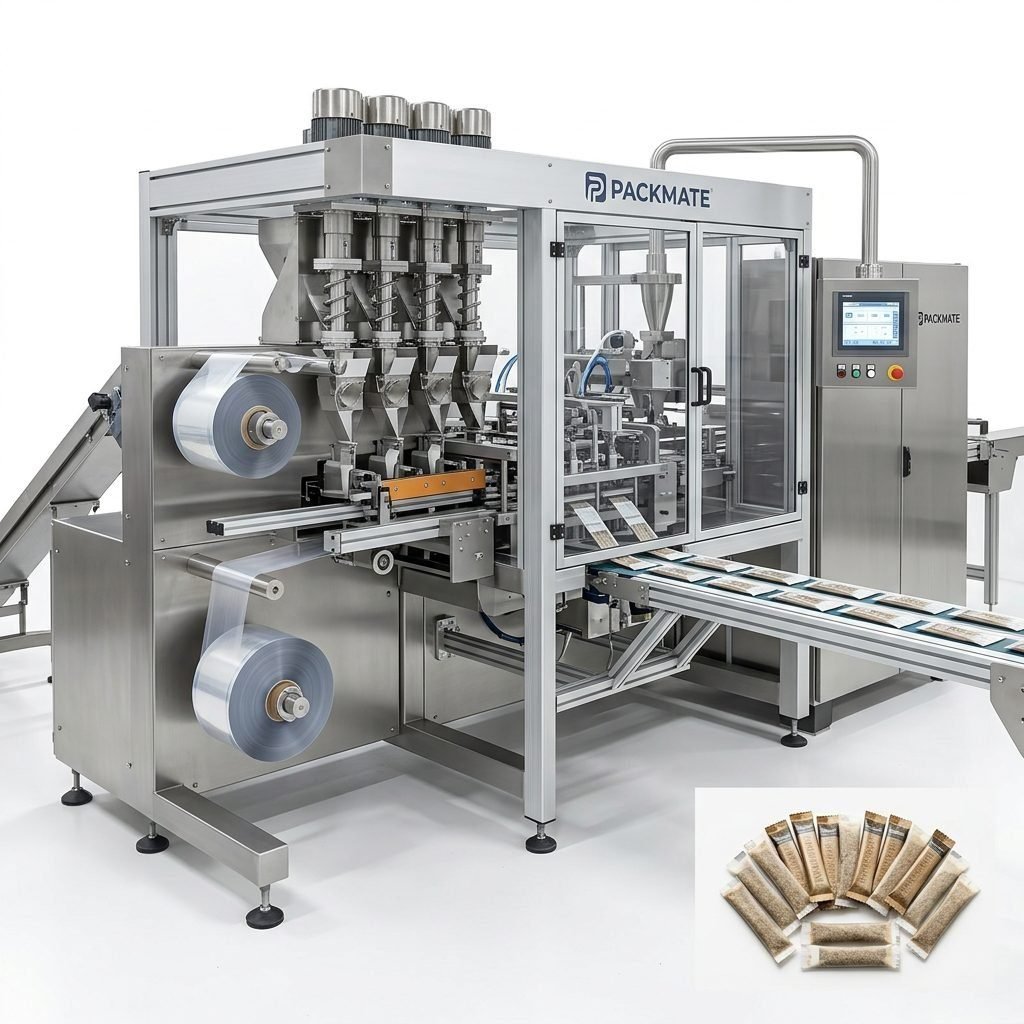
Multi-lane systems and high-speed lines
Multi-lane machines multiply throughput by running several lanes in parallel. They are ideal for companies scaling up in Japan and exporting to nearby markets. Ensure lane synchronization, uniform dosing across lanes, and accessible maintenance points for quick changeovers.
If you’re exploring specialized options, see examples of industry-proven models on the manufacturer pages like Snus & Nicotine Packaging Machines and Bag & Pouch Packaging Machines.
Assess manufacturer credentials and facility capabilities
A reliable supplier must combine engineering experience, production capacity, and quality assurance. Prioritize vendors with:
- 30+ years of industry experience — shows maturity in problem-solving and continuous improvement.
- A sizable manufacturing facility with CNC and precision assembly — indicates strong in-house capabilities to build and test machines.
- CE / ISO certification and documented testing procedures — helps with regulatory compliance and risk mitigation.
- Turnkey packaging solutions and integration services — important when combining filling, weighing, and packaging into a single production line.
A manufacturer with a 20,000㎡ factory, a range of 50+ machine models, and a global footprint can supply both standard machines and customized lines—useful for Japanese customers with unique packaging formats.
Evaluate customization, spare parts, and after-sales service
Customization is often required to meet specific pouch sizes, film types, or dosing profiles. Prioritize suppliers offering:
- Rapid access to spare parts and wear components
- Local or regional technical support with English/Japanese communication capability
- On-site installation, commissioning, and operator training
- Remote diagnostic tools and preventive maintenance contracts
If the supplier can demonstrate global exhibition presence and case studies, it indicates strong product validation—see sample implementations on their Case page and read about their global reach on the About Packmate page.
Integration with weighing, filling and auxiliary equipment
Packaging performance is only as good as the weakest link. If your nicotine product requires precise micro-dosing, pair the pouch machine with high-accuracy weighing and filling systems to ensure consistency. Look for compatible modules like multi-head weighers, auger fillers, and rotary dosing heads.
Check integrated solutions sections such as Weighing & Packaging Systems and Filling & Packaging Lines for complete line examples.
Layout, hygiene and cleanability
Japanese production culture places a premium on clean factories and fast sanitation. Equipment should feature easy-to-clean surfaces, quick disassembly points for washing, and minimal horizontal surfaces where dust or residue can accumulate.
Calculate total cost of ownership and ROI
Purchase price is only a part of the decision. Include installation, training, spare parts consumption, energy usage, expected uptime, and production yield losses in your ROI calculations. Well-engineered machines may cost more upfront but deliver better uptime and lower waste, which is crucial in tight-margin nicotine product lines.
- Projected throughput vs. actual tested speed
- Yield and scrap rates at target settings
- Mean time to repair (MTTR) and availability SLA
- Long-term consumable costs
Installation, commissioning and operator training in Japan
For smooth commissioning in Japan, choose a supplier that offers English/Japanese manuals, local language training sessions, and experienced engineers who understand local power standards and factory practices. A clear service agreement specifying response times and spare parts logistics is essential.
Service & support features to request
✅ On-site installation and test runs
✅ Operator and maintenance training in Japanese or via interpreter
✅ Local spare parts kits and express shipping options
✅ Remote support with PLC and HMI backup procedures
Pilot runs, FAT and SAT: insist on performance testing
Factory Acceptance Tests (FAT) and Site Acceptance Tests (SAT) should verify speed, dosing accuracy, sealing integrity, and product appearance under real materials. If possible, run a pilot with your actual film, pouch materials, and nicotine mix to validate long-term stability and yield.
Why Packmate-style suppliers are often a good fit
Suppliers with deep experience in snus and nicotine pouch packaging, broad product portfolios, and proven manufacturing facilities can deliver both standard and customized solutions. Their ability to provide full packaging lines including auxiliary systems reduces integration risks and accelerates time-to-market.
Learn more about supplier capabilities, certificates, exhibitions, and services on official pages such as Certificate, Our Exhibition and Service.
Common pitfalls to avoid
⚠️ Buying the fastest machine without a realistic plan for raw material control and yield optimization.
⚠️ Overlooking spare parts lead time and consumable costs.
⚠️ Choosing a vendor without documented FAT results or real-world case studies in similar products.
Invest in a validated, well-supported packaging line that fits your Japanese production culture: clean, precise, and reliable operation with fast maintenance support.
Final selection checklist before purchase
Use this final checklist to compare quotes and proposals:
- Performance verification: FAT reports, videos, and pilot batch results.
- Compliance: Certifications (CE/ISO) and cleaning documentation.
- Service & parts: Spare parts list, lead times, and local support options.
- Integration: Compatibility with weighing, filling and packaging systems.
- Commercial terms: Warranty, installation, training, and payment milestones.
Conclusion
Selecting the best nicotine packaging machinery for Japan requires technical scrutiny and an understanding of local production customs. Prioritize proven suppliers with strong engineering backgrounds, rigorous testing protocols, and local-ready service options. When you align production goals, product formats, and service expectations, you will secure a line that meets Japanese market quality, hygienic standards, and delivery timelines.
Frequently Asked Questions
Q1: What machine type is best for small-batch nicotine pouch production in Japan?
A1: For small batches and flexible SKUs, a modular sachet or single-lane pouch machine is often best—easy to set up, clean, and changeover. Multi-lane machines make sense when scaling to consistent high-volume production.
Q2: How important are FAT and pilot runs before accepting a machine?
A2: Extremely important. FAT and pilot runs validate real-world performance with your materials, minimizing risk and ensuring the line meets accuracy, speed, and sealing quality requirements.
Q3: What after-sales support should we demand from the supplier?
A3: Demand clear SLAs for spare parts, remote diagnostics, on-site commissioning, operator training (preferably in Japanese), and preventive maintenance plans.
Q4: Are customizations expensive and how early should they be discussed?
A4: Customizations can add cost but are often necessary for specialized dosing or packaging styles. Discuss customization requirements as early as possible—during RFQ and design review—to control cost and lead time.
Q5: Where can I get more case studies and contact supplier support?
A5: Explore supplier case studies and contact options on their website for specific examples and direct inquiries: Contact Us.