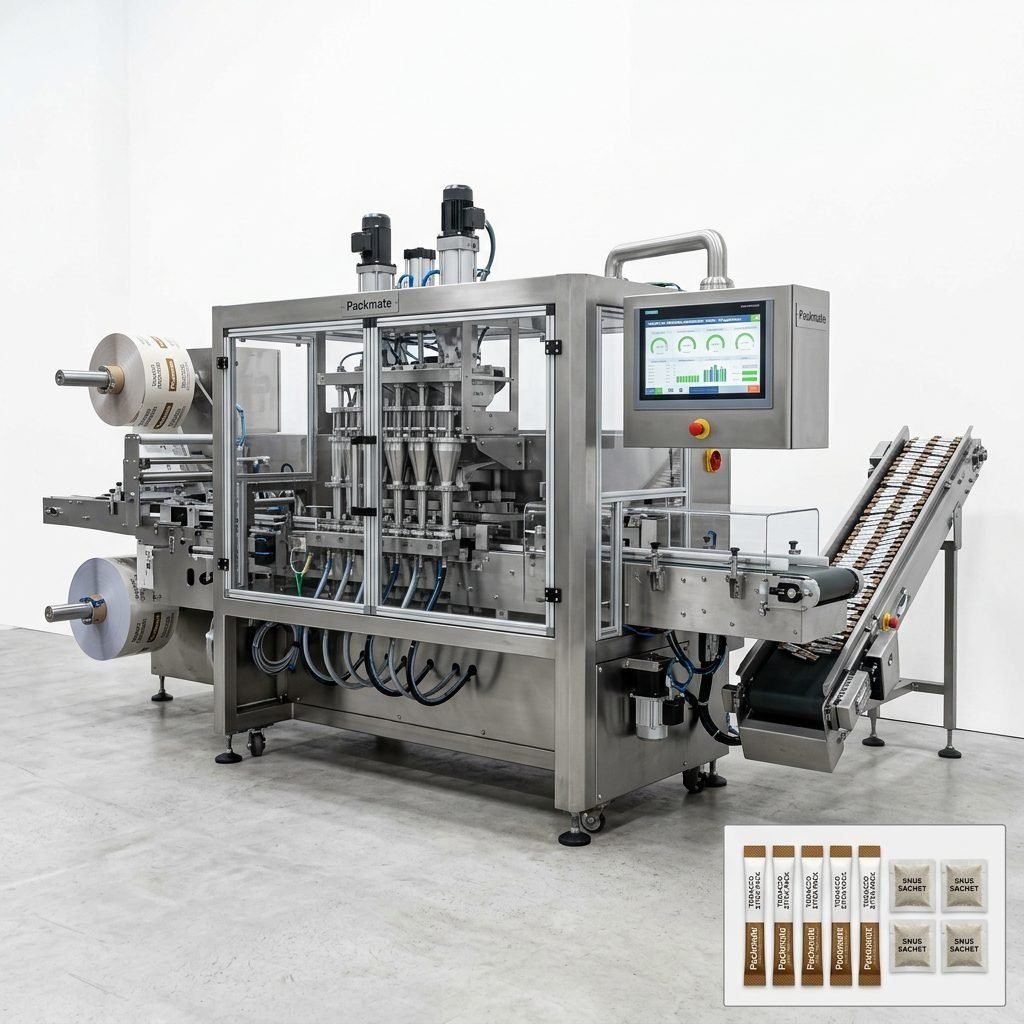
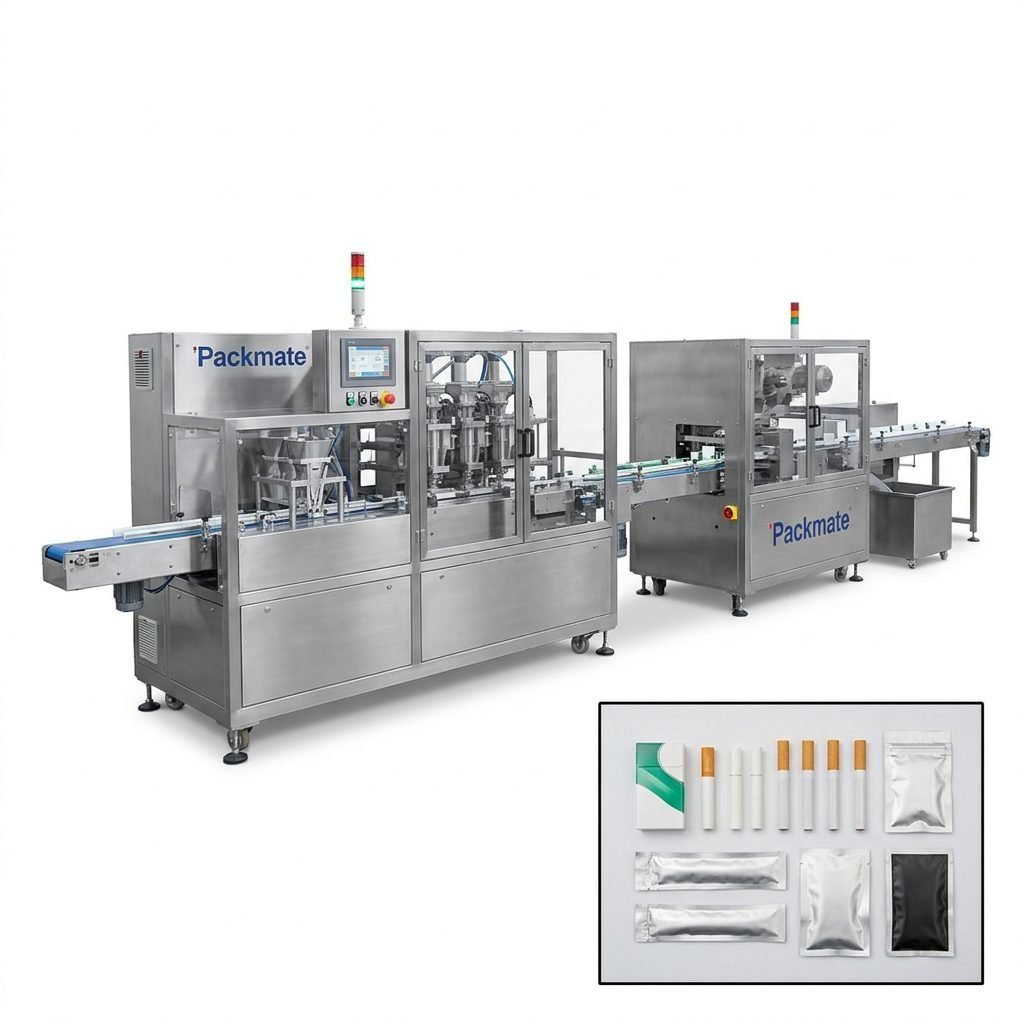
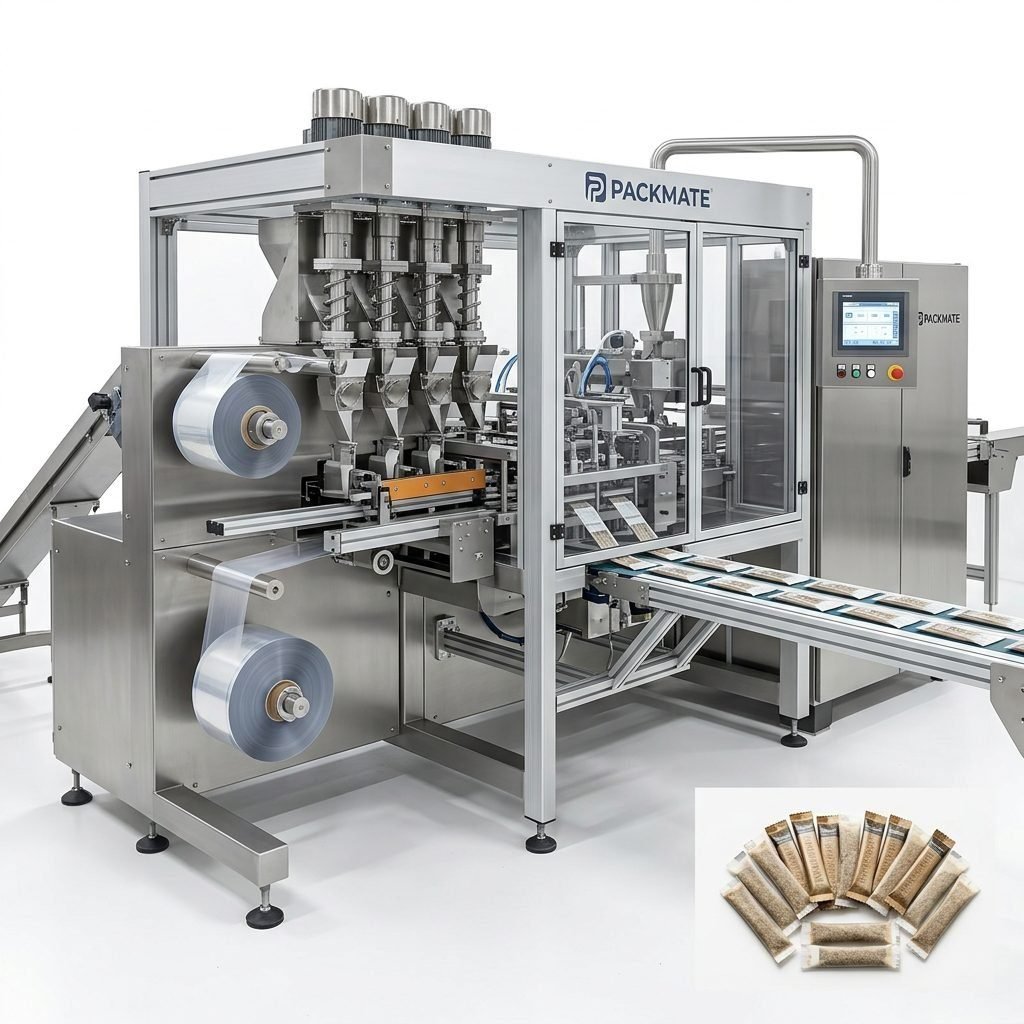
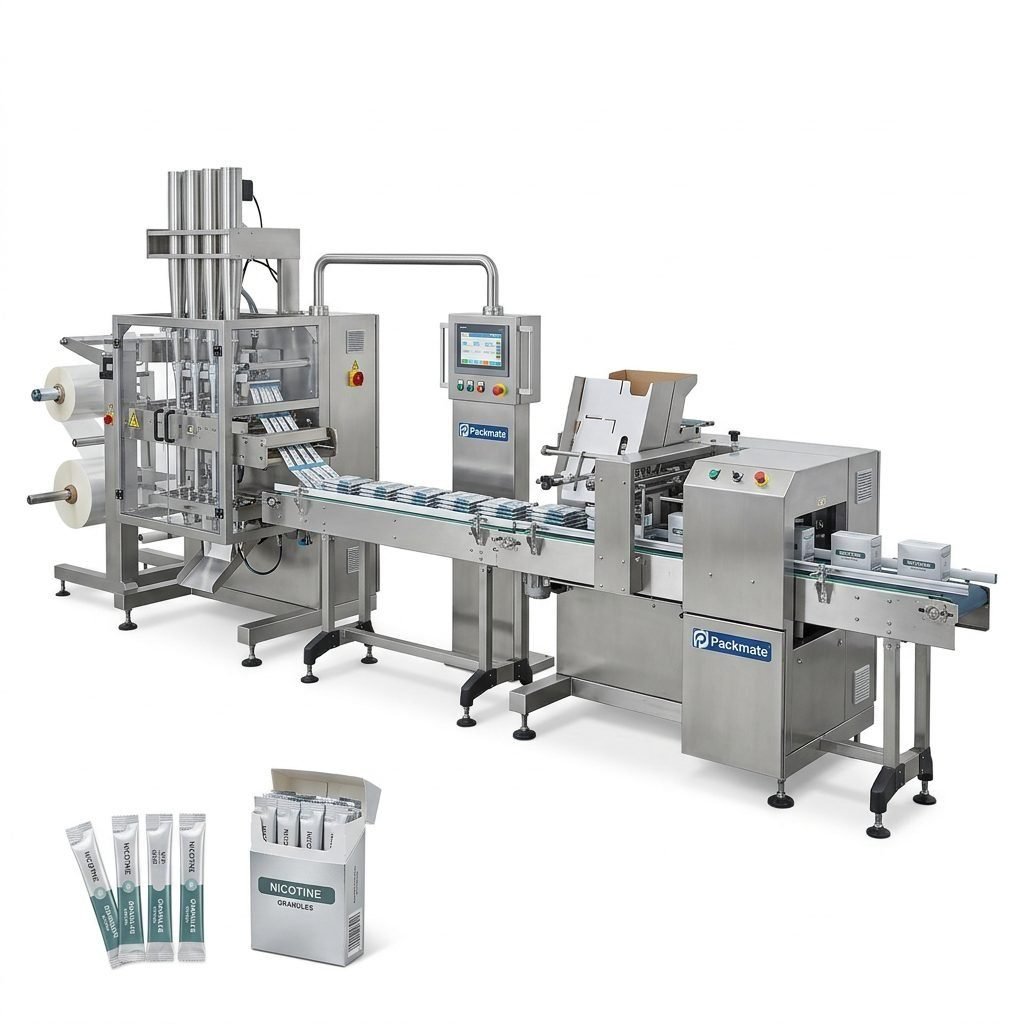
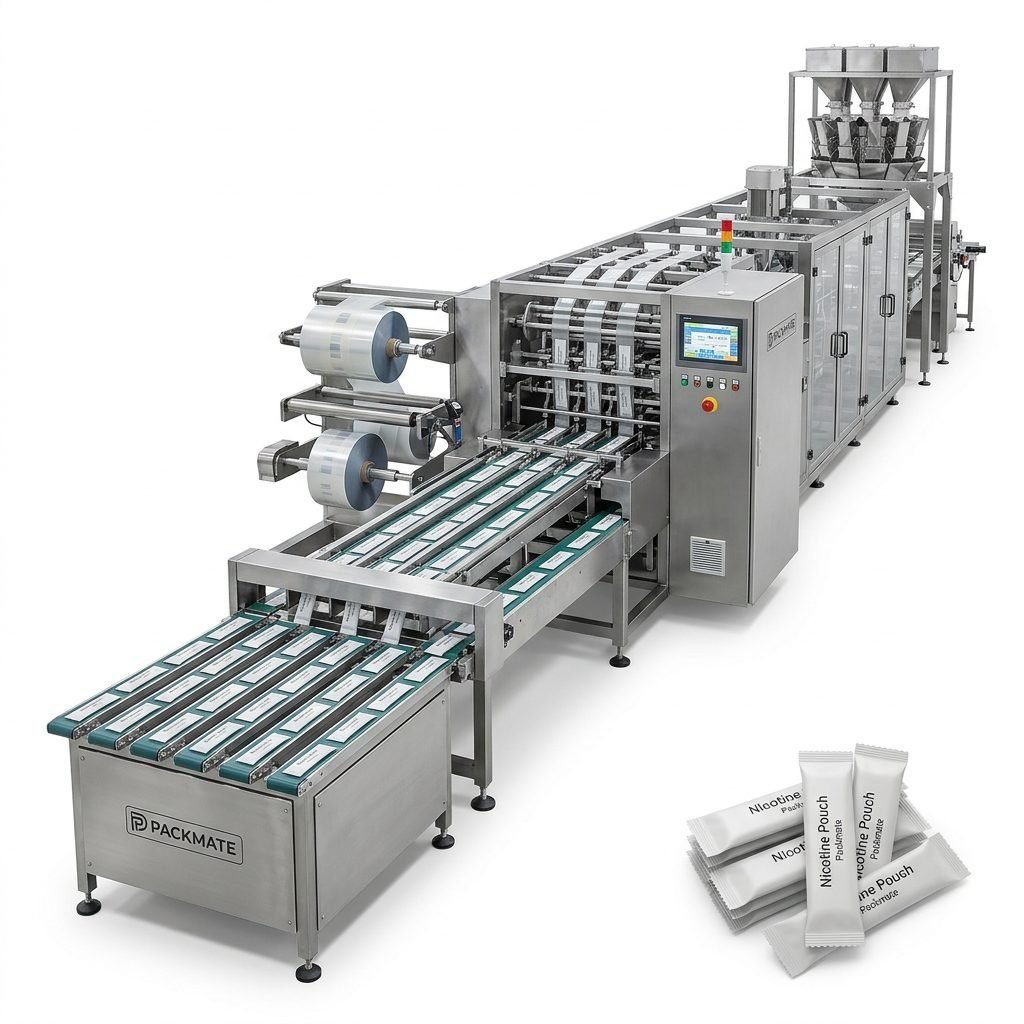
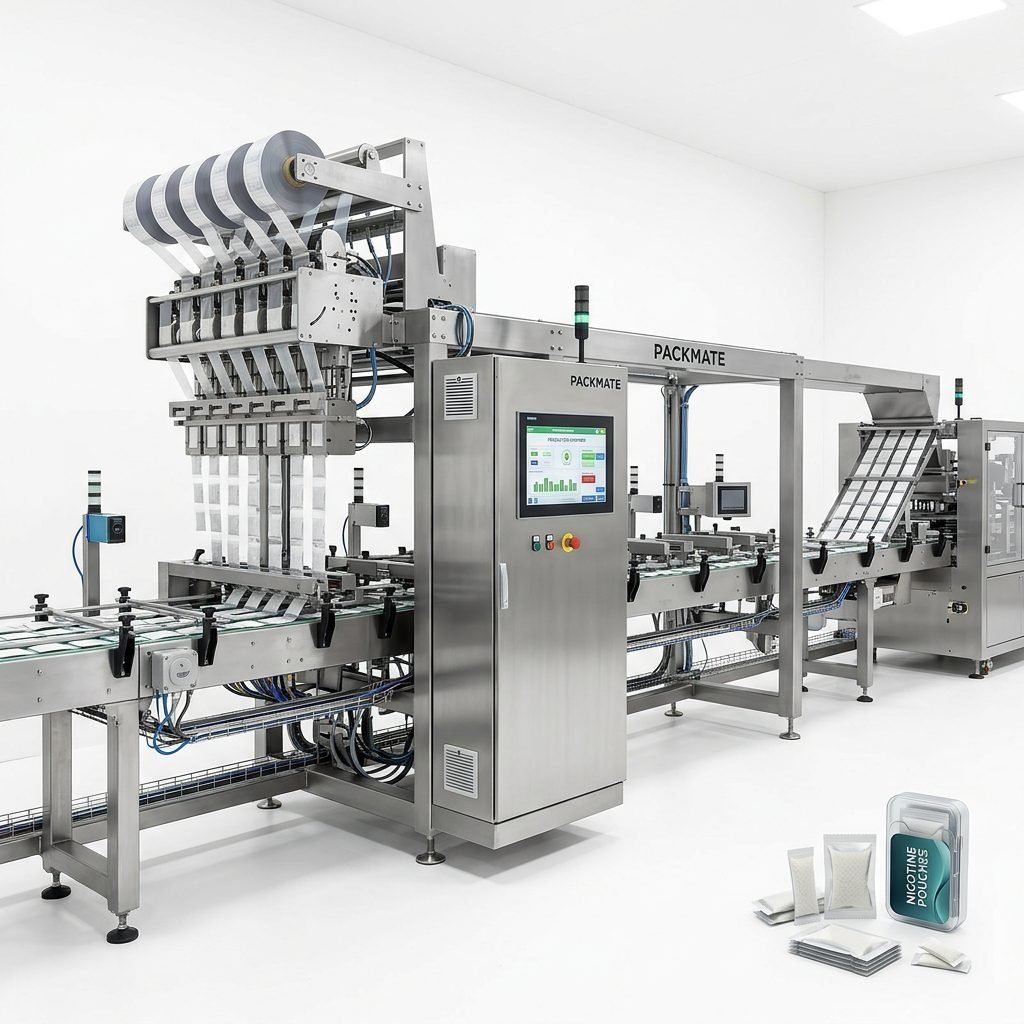
Choosing the right nicotine packaging machine manufacturer in Oman is a strategic decision that affects product quality, regulatory compliance, production efficiency, and long-term costs. This guide walks you through the critical factors to evaluate manufacturers — from technical specifications and machine reliability to after-sales service and global track record — so you can confidently select a supplier that aligns with your business goals. Whether you are launching nicotine pouches, snus, or upgrading an existing line, the right partner will help you scale while ensuring safety and consistent output.
Understand Your Production Needs
Before you evaluate manufacturers, clarify your production targets. Ask: what is your target output per shift? Do you need single-lane or multi-lane systems for small-dose pouches? What product forms will you run — powder, granules, liquid, or stick packs? These answers determine the machine family and features you should prioritize.
If you expect rapid growth, prioritize modular systems that allow lane expansion or easy integration of auxiliary equipment. For niche nicotine pouch formats, precision and dosing consistency are essential — look for machines with advanced weighing and filling subsystems.
Key Technical Specifications to Compare
When comparing manufacturers, focus on measurable technical specifications rather than marketing claims. The following checklist helps you evaluate practical capacity and performance:
✅ Throughput (pouches/min): Does the machine meet your hourly output targets under real production conditions?
✅ Multi-lane capability: Multi-lane systems dramatically increase yield for small-dose pouches. Confirm lane count and compatibility with your pouch sizes.
✅ Dosing precision: Look for ppm or gram-level accuracy specifications and evidence from test runs or case studies.
✅ Changeover time: Fast and tool-less changeovers reduce downtime and increase flexibility.
✅ Material compatibility: Ensure the machine supports the film types and laminate thicknesses you plan to use.
ℹ️ Tip: Request an on-site or virtual machine demonstration using your actual product and packaging film. Performance data from real product runs is the most reliable indicator of fit.
⚙️ Ask for technical datasheets and OEE (Overall Equipment Effectiveness) estimates. Compare actual uptime percentages, mean time between failures (MTBF), and recommended maintenance intervals.
Quality, Compliance & Certifications
Nicotine products face strict safety and hygiene standards. Verify that any manufacturer you consider adheres to international certifications such as CE and ISO and can provide documentation for electrical safety, machine guarding, and material contact surfaces.
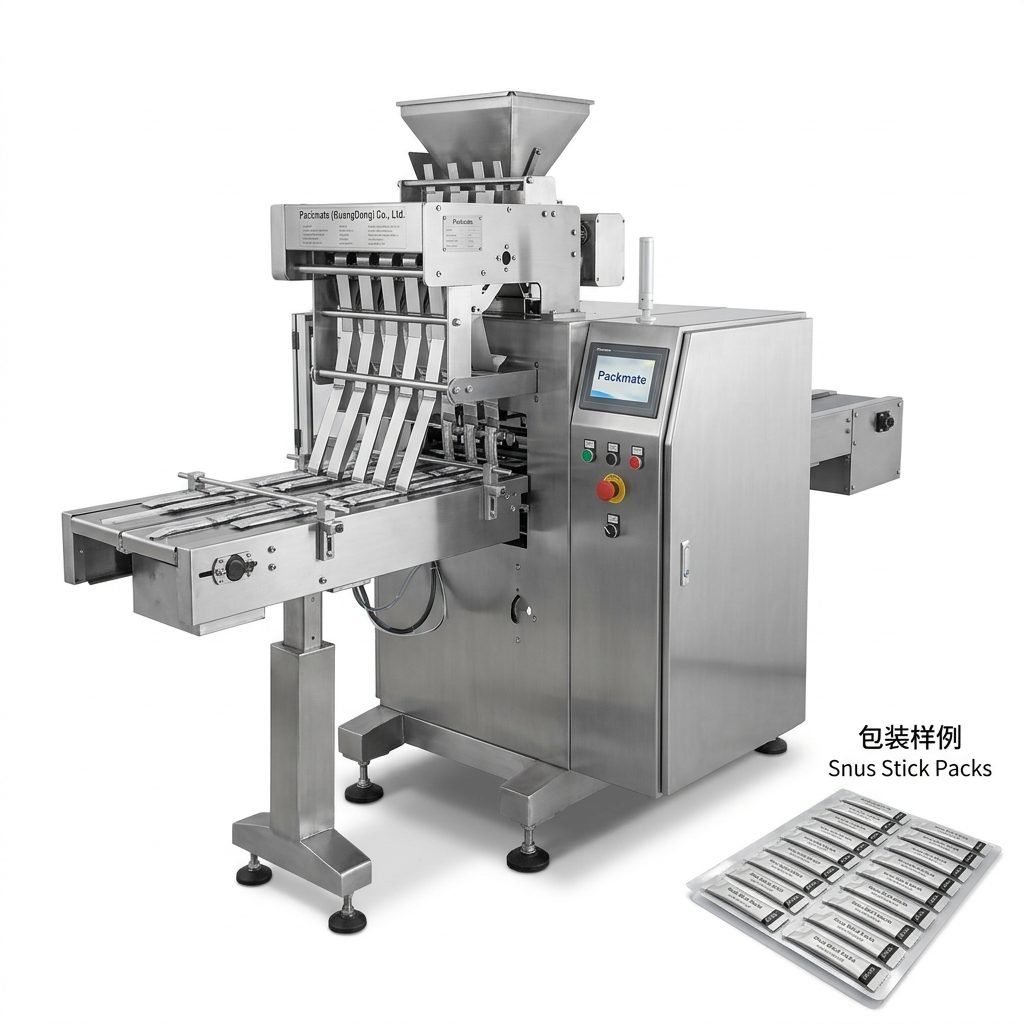
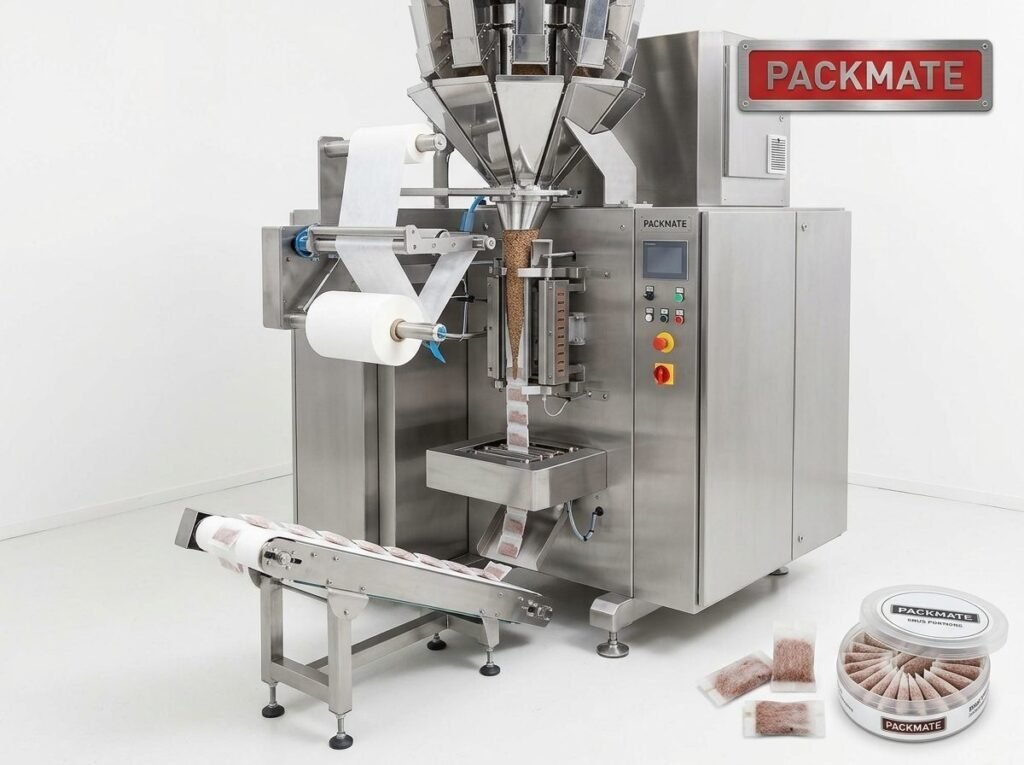
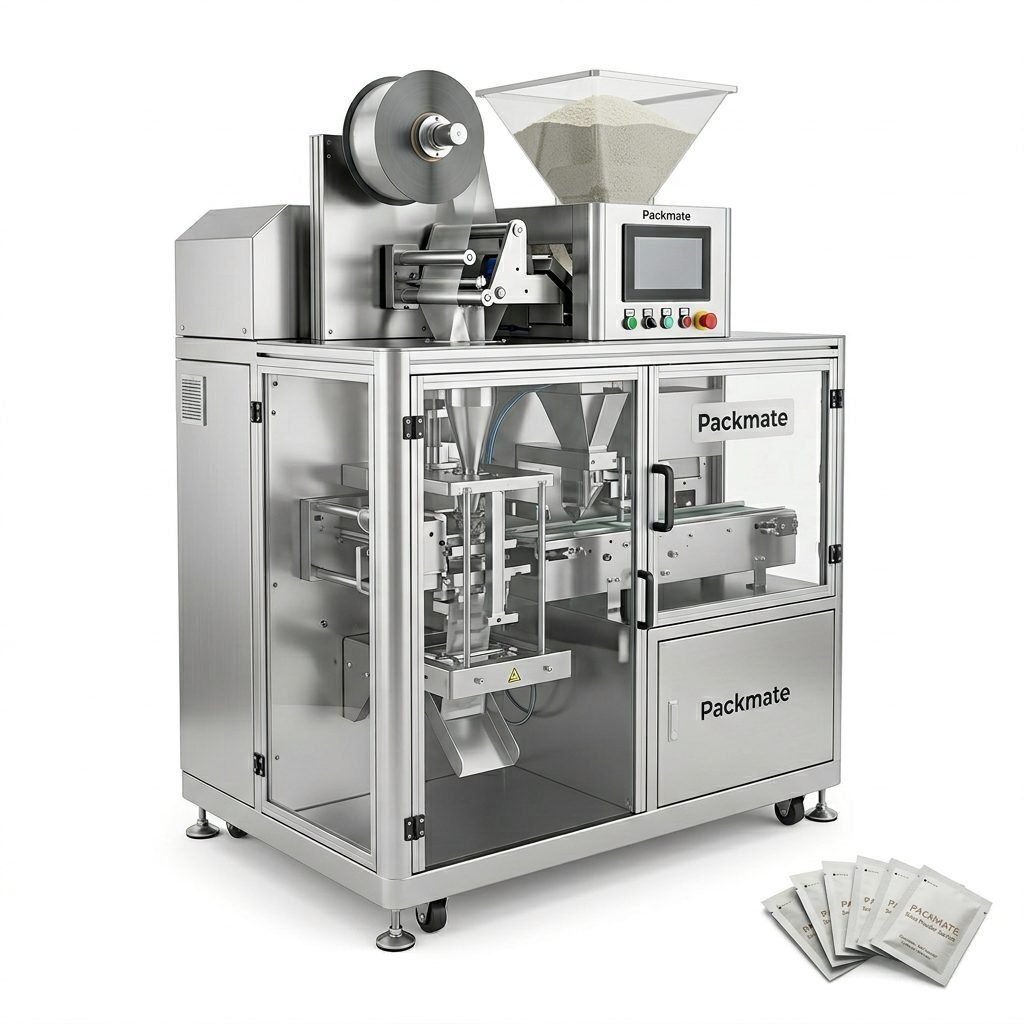
Packmate Snus Machine, for example, lists CE and ISO compliance across its product line, reflecting a commitment to international regulatory standards. Evaluate whether the supplier can support validation, traceability features, and GMP-aligned practices if required by your market.
After-Sales Service & Spare Parts Availability
A reliable after-sales program is as important as the machine itself. Downtime in nicotine packaging lines directly impacts revenue and regulatory timelines. Ask potential manufacturers about:
🔧 Local support in Oman: Do they have a local agent, trained technicians, or a partner network for quick response?
🔧 Spare parts lead times: Are critical parts held in regional warehouses or shipped from overseas?
🔧 Training & commissioning: Is on-site commissioning included? What training is provided for operators and maintenance staff?
✔️ Service Agreements: Consider negotiating an SLA that defines guaranteed response times, spare parts stock levels, and preventive maintenance schedules.
Customization, Integration & Turnkey Solutions
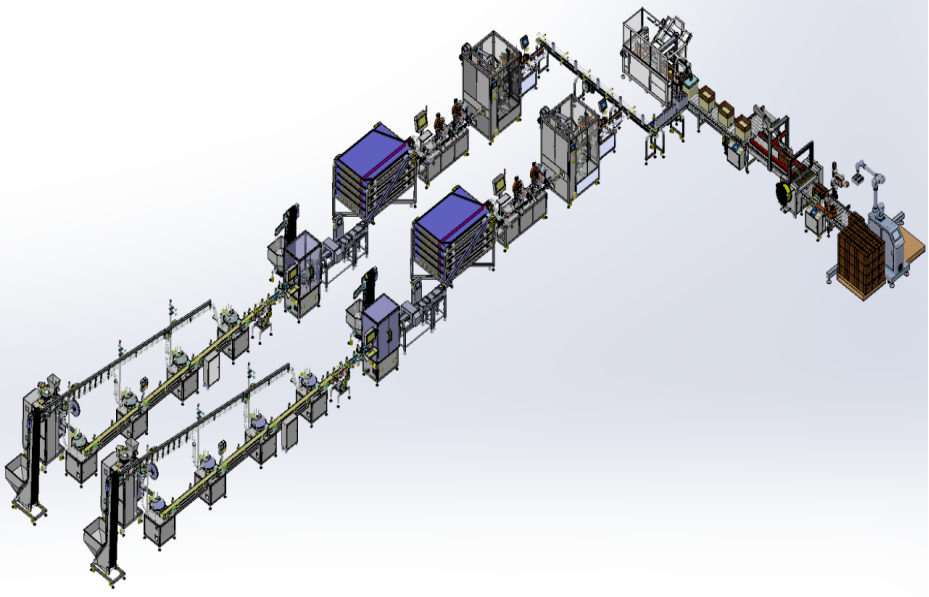
Your nicotine packaging project might need more than a single machine — consider upstream and downstream integration such as feeding systems, multi-head weighers, cartoning, case packing, and robotics. Suppliers that offer turnkey lines reduce integration risk and single-source accountability.
Packmate emphasizes full packaging production lines, including stick pack, sachet, multi-lane systems and auxiliary equipment. When assessing vendors, request references for similar turnkey projects and review completed case studies to verify on-time delivery and production ramp-up support. See sample projects here: Case.
Evaluate Manufacturer Reputation & Track Record
A manufacturer’s longevity, export footprint, and exhibition presence are strong indicators of stability. Firms with 20+ years of engineering experience and a large factory footprint are often better positioned to support long-term customers.
Packmate’s history — from small workshop beginnings in 1993 to a 20,000㎡ manufacturing facility and global turnkey solutions — demonstrates scale and sustained technical development. Explore their product portfolio and company overview: About Packmate and Snus & Nicotine Packaging Machines.
Total Cost of Ownership (TCO) vs. Upfront Price
Price is important, but the lowest bid may cost more over time. Evaluate energy consumption, consumable usage, spare parts cost, expected lifetime, and productivity losses from downtime. A higher-quality machine with robust support often delivers lower TCO.
Ask suppliers for lifecycle cost estimates and real-world efficiency data. Where possible, request references from clients in similar markets to understand long-term performance and maintenance realities.
Factory Inspection & Acceptance Tests
Before finalizing a purchase, conduct a factory inspection or virtual factory acceptance test (FAT). Witness assembly methods, component sourcing, CNC machining quality, electrical wiring standards, and test runs using your product.
A comprehensive FAT should include performance runs at target speeds, changeover demonstrations, and verification of safety interlocks. Ensure acceptance criteria are documented in the purchase contract.
📌 Checklist for FAT: runtime at operational speed, pouch integrity checks, dosing accuracy reports, noise/vibration observations, and control system diagnostics.
Logistics, Installation & Training
Consider installation logistics for Oman: shipping times, customs clearance, local handling, and VIP installation support. Confirm what is included in the supplier’s scope — mechanical installation, electrical integration, PLC/HMI setup, and operator training.
Sustainability & Energy Efficiency
Energy-efficient drives and intelligent control systems reduce long-term operational costs. Ask about energy consumption per 1,000 pouches and whether the vendor offers efficiency upgrades or regenerative systems.
Financing & Lead Times
Discuss payment terms, lead times, and possible financing options. Manufacturers with larger production capacity and existing stock of standard modules can often deliver faster. For bespoke turnkey projects, confirm realistic timelines and milestone payments.
How to Create a Shortlist & Make the Final Decision
1) Compile a shortlist of 3-5 suppliers with relevant experience in nicotine pouch lines. 2) Score each vendor against objective criteria: performance, compliance, service, references, TCO, and lead time. 3) Request formal proposals and FAT invitations. 4) Validate claims via references and factory visits.
Helpful resources and product pages to begin your vendor assessment: Bag & Pouch Packaging Machines, Sachet & Stick Pack Machines, and Weighing & Packaging Systems.
✅ Final Decision Tip: Favor suppliers who demonstrate transparency, provide verifiable performance data, and offer robust local or regional support in Oman.
Next Steps & Contact
Start by documenting your production requirements, desired timeline, and budget range. Reach out to shortlisted suppliers for detailed proposals and FAT invitations. If you need a partner with a strong global presence and turnkey solutions for snus and nicotine pouch production, explore Packmate’s offerings and contact channels: Contact Us.
Common Questions
Q1: How long does it typically take to install a nicotine pouch packaging line?
A1: Installation timelines vary by scope. For a standard single/multi-lane line with onsite commissioning, plan for 4–8 weeks from shipment arrival to handover. Turnkey projects with integration and custom automation can take several months; confirm milestone schedules with the supplier during contracting.
Q2: What documentation should I require from the manufacturer before purchase?
A2: Obtain machine datasheets, electrical and pneumatic diagrams, CE/ISO certificates, FAT protocols, spare parts lists, wiring labeling schemes, and a clear warranty/service agreement. Ensure acceptance criteria for performance tests are contractually defined.
Q3: Can manufacturers in China provide reliable after-sales service in Oman?
A3: Yes — many established manufacturers maintain regional partners, spare parts warehouses, or dedicated field service teams. Verify local representation, average response times, and whether training and remote diagnostics are included. Review customer references in the MENA region where possible.
Q4: How do I ensure regulatory compliance for nicotine pouch packaging equipment?
A4: Work with manufacturers that provide CE/ISO certifications and support GMP practices. Ensure material contact surfaces are specified appropriately, and request documentation for electrical safety, machine guarding, and any regional regulatory compliance your market requires.
Q5: Where can I see examples of completed nicotine pouch packaging lines?
A5: Review vendor case studies and exhibition demos. Packmate’s global cases and exhibition presence are useful references: Our Exhibition and Case.